Badlands
Badlands, United States
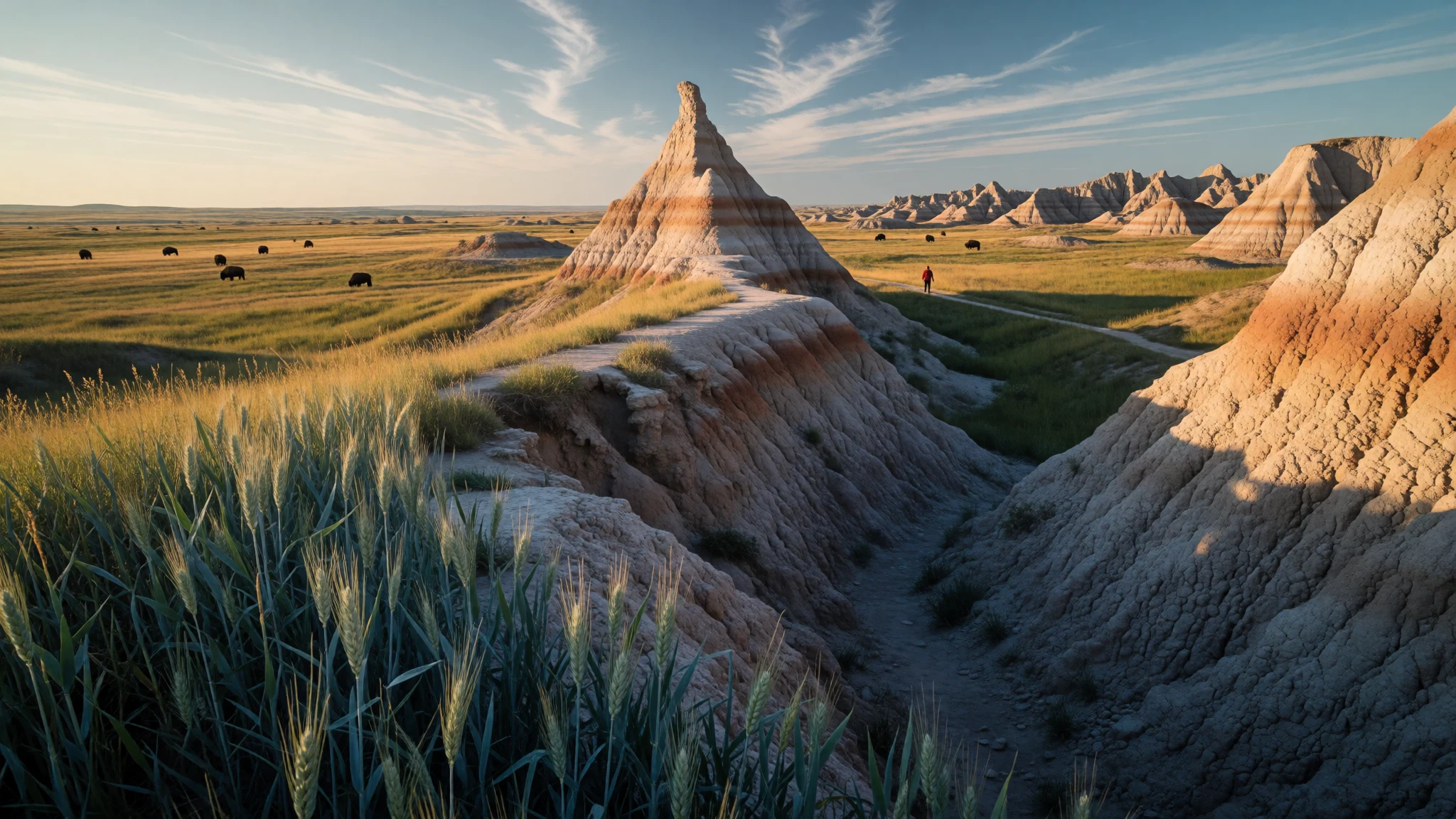
Badlands is a striped maze of eroded spires set in open prairie, with bison, bighorn sheep and Lakota history close at hand.
The place
Badlands National Park sits in southwestern South Dakota, where the flat grassland of the northern Great Plains suddenly breaks into a maze of striped buttes, spires and gullies. The rock is soft, so rain and frost keep carving it, and the shapes shift from one decade to the next. Around the formations, the park protects a large stretch of mixed-grass prairie, and the contrast between the two is the whole point: pale ridges and banded clay above, grass moving in the wind below. The park has two main parts. The North Unit holds the main visitor centre, the scenic road and most of the overlooks, and part of it is designated wilderness. The South Unit, also called the Stronghold District, lies on land of the Oglala Lakota, who co-manage it with the National Park Service; it is rougher, quieter and far less visited. The place was a national monument first and became a national park in 1978, and the facts record its founding as 1939. Wildlife includes bison, bighorn sheep, prairie dogs and the black-footed ferret, which has been reintroduced here after coming close to extinction. Rapid City, to the west, is the nearest large town. Summers are hot and dry with sudden thunderstorms, and winters are cold. Most people drive the main road in half a day, though the landscape rewards slower attention at dawn and dusk, when the colours deepen and the day-trippers have gone.
Its story
Badlands National Park occupies ground that people have hunted and camped on for more than ten thousand years. Early peoples, and later the Arikara, sheltered in hidden valleys with water and game, and the stream banks still give up charred stones from their fires, along with arrowheads and butchering tools. The high wall of the formations worked as a lookout for spotting herds and rivals, and groups headed back to their river villages before the worst of winter. The Lakota, who came to dominate the northern prairie, named the country makȟóšiča, literally 'bad land', for its heat, cold, scarce water and broken footing. French-Canadian trappers reached a similar verdict in their own language, calling it bad country to cross. Into the twentieth century, homesteaders arrived and tried to farm the margins of the White River valley, while the United States government confined Lakota people to reservations and took most of their land. In 1890 Chief Big Foot led his band through a pass in these formations on a desperate journey that ended at Wounded Knee. Later chapters were quieter: protection as a national monument, then national park status in 1978, and a stretch of the South Unit used for decades as an air force bombing and gunnery range. Today the Oglala Lakota share management of the South Unit, and the older name is a reminder that 'bad' was a traveller's judgement, not a description of an empty place.
What to see
- Ben Reifel visitor centre — North Unit
The natural starting point in the North Unit, with exhibits on wildlife, geology and fossils, a bookshop run by a non-profit association, and parking for coaches and campervans. Pick up current road and weather information here, refill water bottles in season, and ask rangers which routes are passable after rain.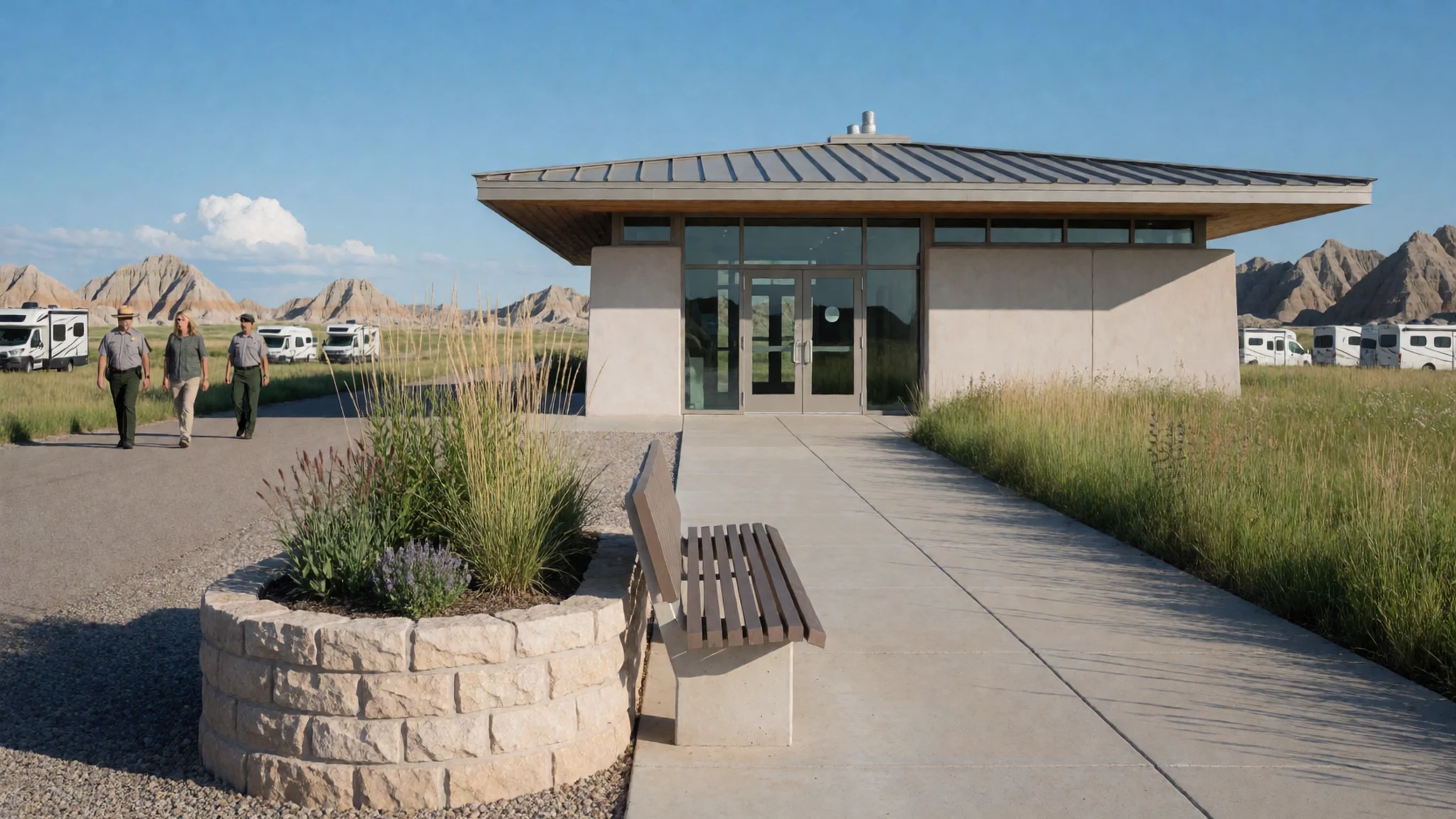
- Badlands Loop Road — North Unit
The scenic route through the North Unit, though not a true circuit. Drive it from either end, or close the loop using the interstate or the state route. Overlooks with car parks come one after another, and most people stop far more often than they planned to.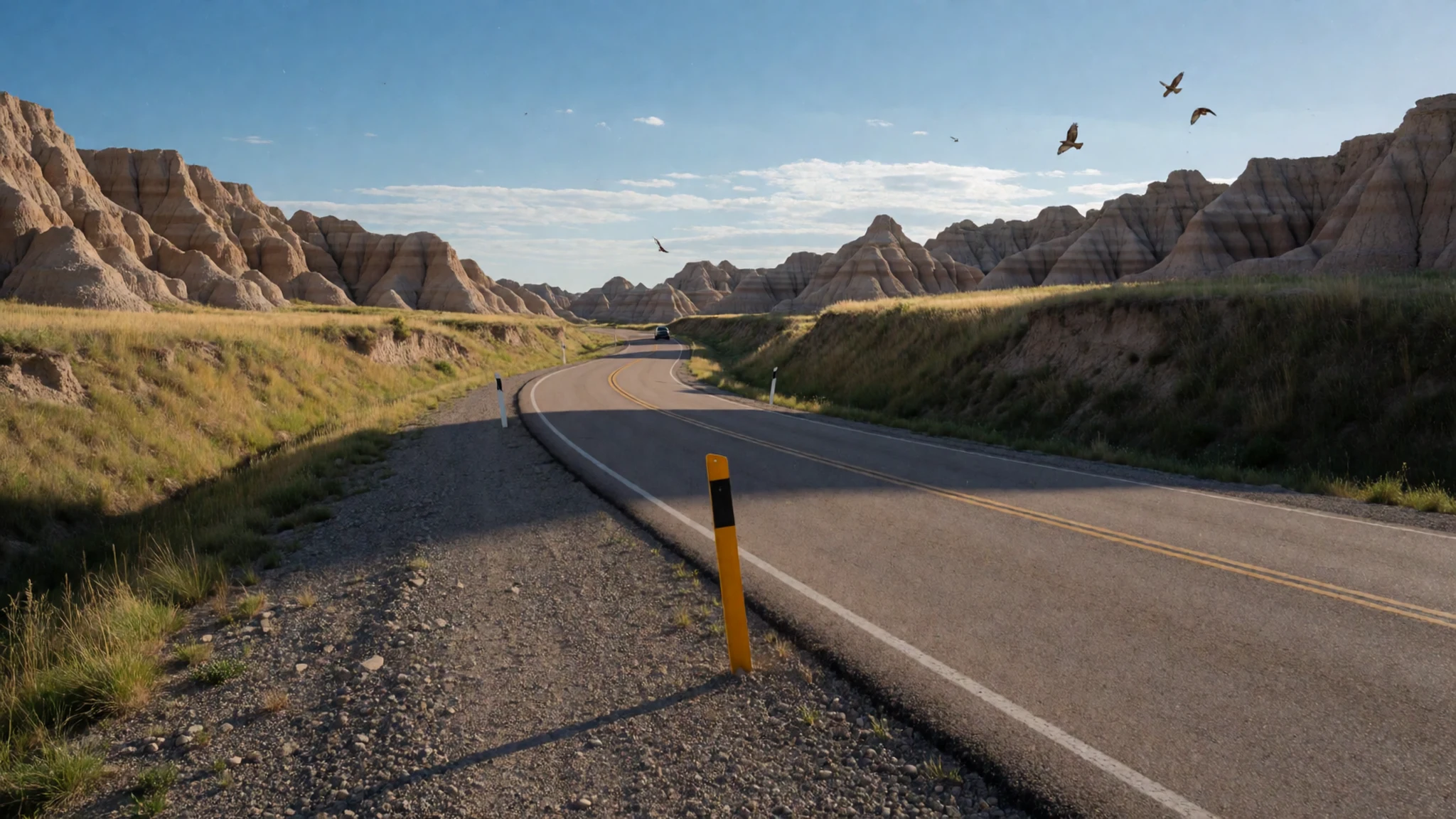
- Pinnacles Overlook — North Unit, western end
Pinnacles Overlook sits towards the western end of the loop road and gives a wide view of eroded spires and ridges, with the prairie stretching beyond them. It is close to the Pinnacles entrance, so it suits arrivals from the interstate and anyone short of time.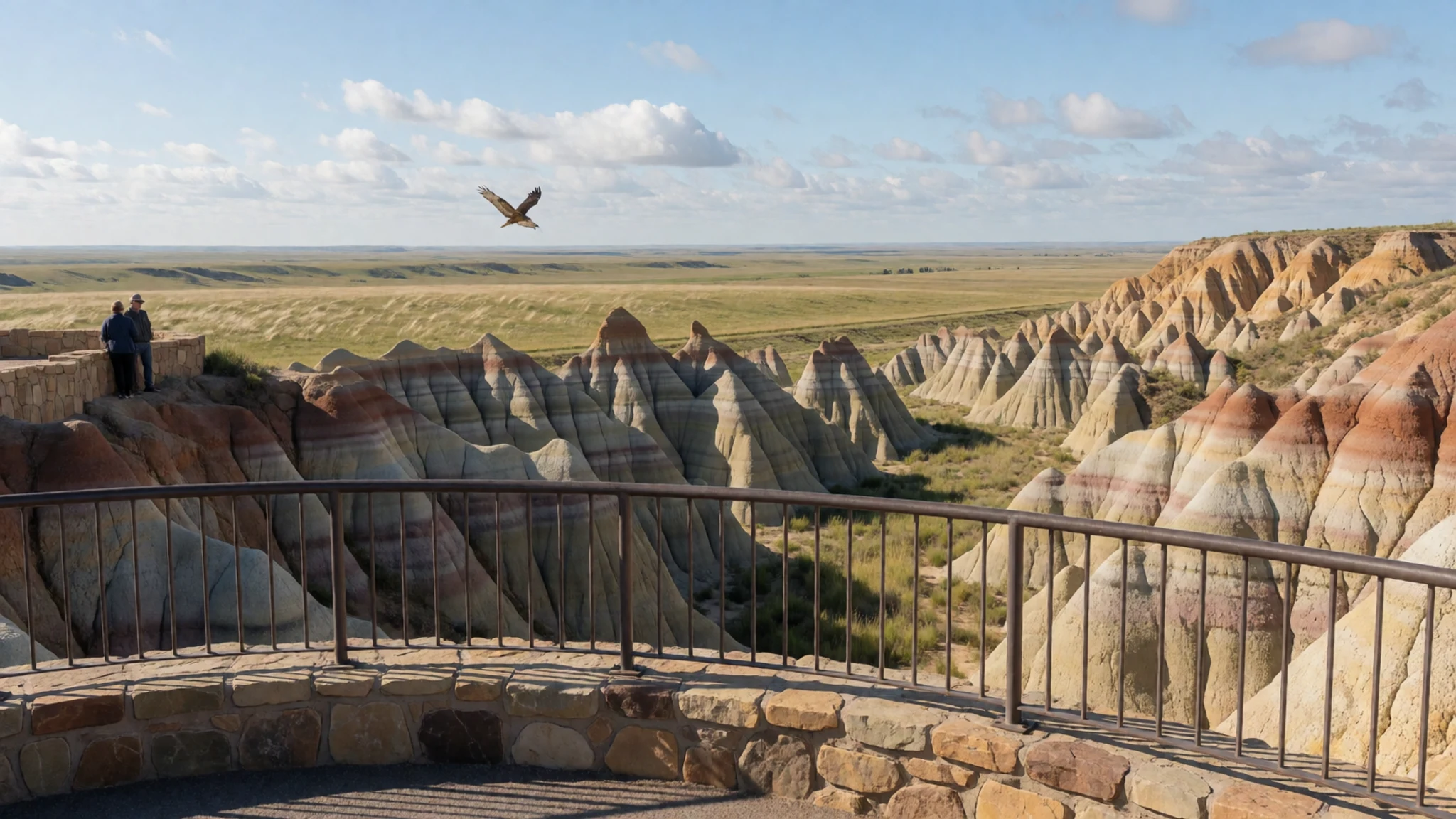
- Yellow Mounds Overlook — North Unit
Yellow Mounds Overlook shows a band of bright yellow rock, one of the older layers exposed in the park, set against red and grey stripes. Late afternoon light strengthens the colours, which makes this a good stop towards the end of the day.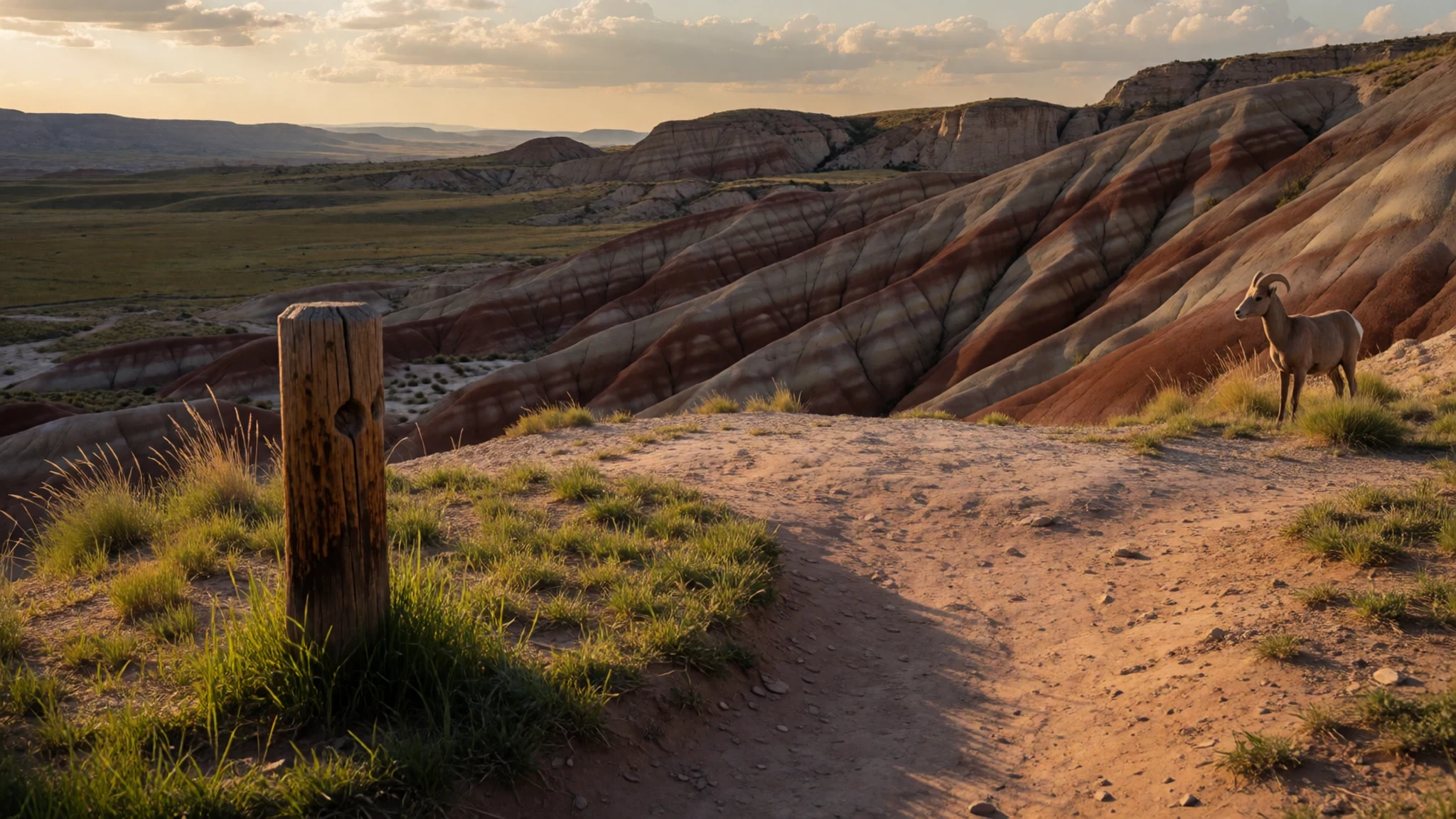
- Homestead Overlook — North Unit
Homestead Overlook looks across the margins of the White River valley, where settlers tried to make a living from farming in the twentieth century. Thin soil and uncertain rain make the ambition look hard to sustain, and the view helps explain why the Lakota name for the region stuck.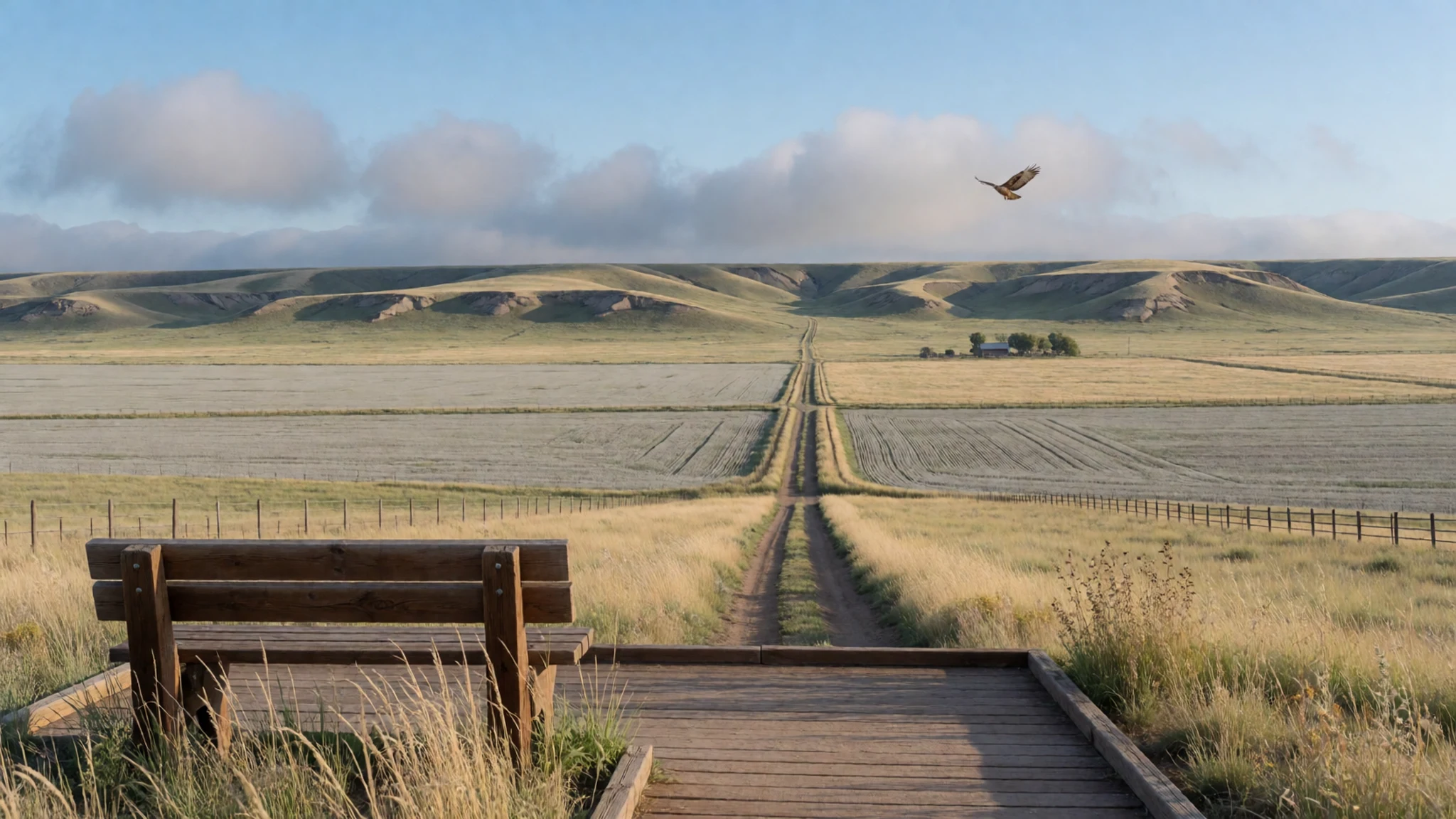
- Big Foot Pass Overlook — North Unit, eastern end
Big Foot Pass Overlook marks the route Chief Big Foot's band took through the formations in 1890, on the way to Wounded Knee. There are picnic tables here, but no water, and fires are not allowed. The mood is quiet, and it suits a few minutes of reflection.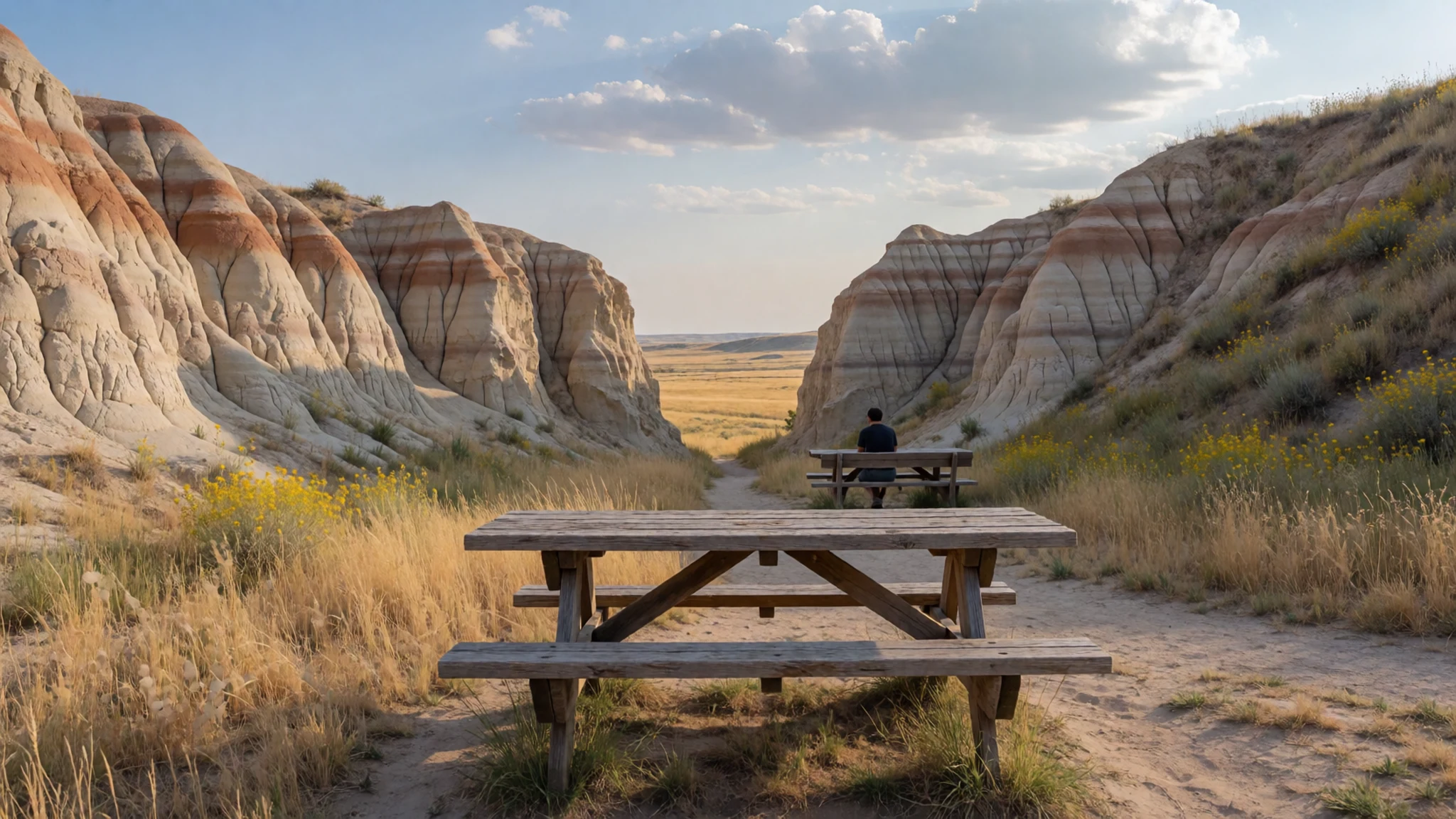
Culture
Badlands National Park lies on Lakota land, and its history is lived rather than only remembered. The Oglala Lakota share management of the South Unit, which sits within the Pine Ridge Reservation, and the Lakota name, makȟóšiča, is the older label for the place. The South Unit holds sites linked to the Ghost Dance gatherings of the late nineteenth century, and Big Foot's flight towards Wounded Knee passed through the formations, so this is a landscape of sorrow as well as scenery. Tribal members run cultural centres, craft stalls and guided tours on and near the reservation, and spending there supports the community directly. The wider region has a ranching and farming culture too: small towns on the interstate, roadside diners, rodeos and church suppers, all shaped by the descendants of homesteaders. The park also appears on screen. Dances with Wolves and Thunderheart were both partly filmed here, which brings some visitors looking for those scenes, though the real story is more complicated than either film. Palaeontology matters as well, since the eroding rock continually exposes fossils of animals that lived long before people arrived, and rangers take that responsibility seriously. A visit goes best with some curiosity about both the Lakota present and the deep past. Do not remove fossils, stones or artefacts from the park, and ask permission before photographing Lakota people, ceremonies or memorial sites.
What to wear
Badlands National Park sits in Lakota country, where traditional dress is made from tanned hide, wool trade cloth, porcupine quillwork and glass beadwork. Women's dresses and men's shirts are decorated with beaded or quilled bands, and ribbon shirts, with ribbons in bright colours, are worn at gatherings and ceremonies. Eagle feathers carry deep meaning and are earned, not worn casually. Star quilts, with their large patterns of coloured diamonds, are given at births, graduations and memorials. Full regalia appears at powwows and community events, not on ordinary days. Everyday clothing in the region is practical ranch and small-town wear: jeans, work shirts, boots, caps and cowboy hats, with fleeces and heavy coats in winter. Visitors need clothes for weather rather than for custom. Wear light, breathable layers for hot summer days, with a warm layer for fast-dropping evening temperatures and a waterproof jacket for sudden storms. A wide-brimmed hat, sunglasses and strong sun protection matter because there is almost no shade. Sturdy shoes with thick soles are the single most useful item, since prickly pear cactus hides in the grass and the clay surfaces turn slick after rain. No special dress code applies at the overlooks, though modest, respectful clothing suits visits to memorial sites and community events on the reservation.
What to eat
- Bison burger — The park lodge restaurant and diners in Wall and Interior
Bison meat is lean and slightly sweeter than beef, and it is now common across the northern Plains. Look for it at the restaurant inside the park's lodge, at diners in the towns on the interstate, and at roadside cafés towards Rapid City.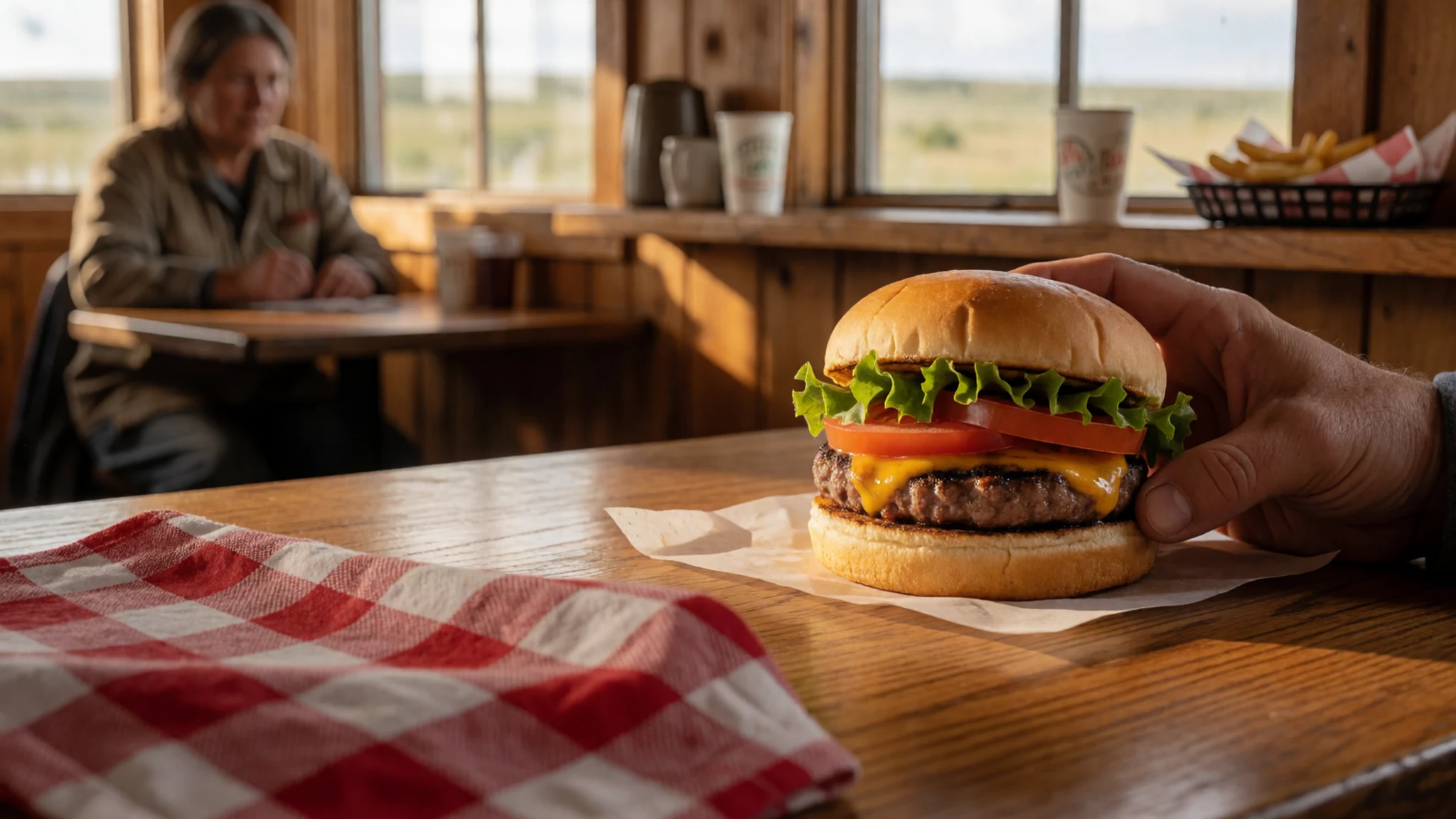
- Indian taco — Powwow stalls and community events on the reservation
A round of Lakota-style fry bread topped with beans, seasoned minced meat, lettuce and cheese, usually eaten with a fork. It turns up at powwow food stalls, community events on the reservation and some cafés in the towns around the park, mostly in summer.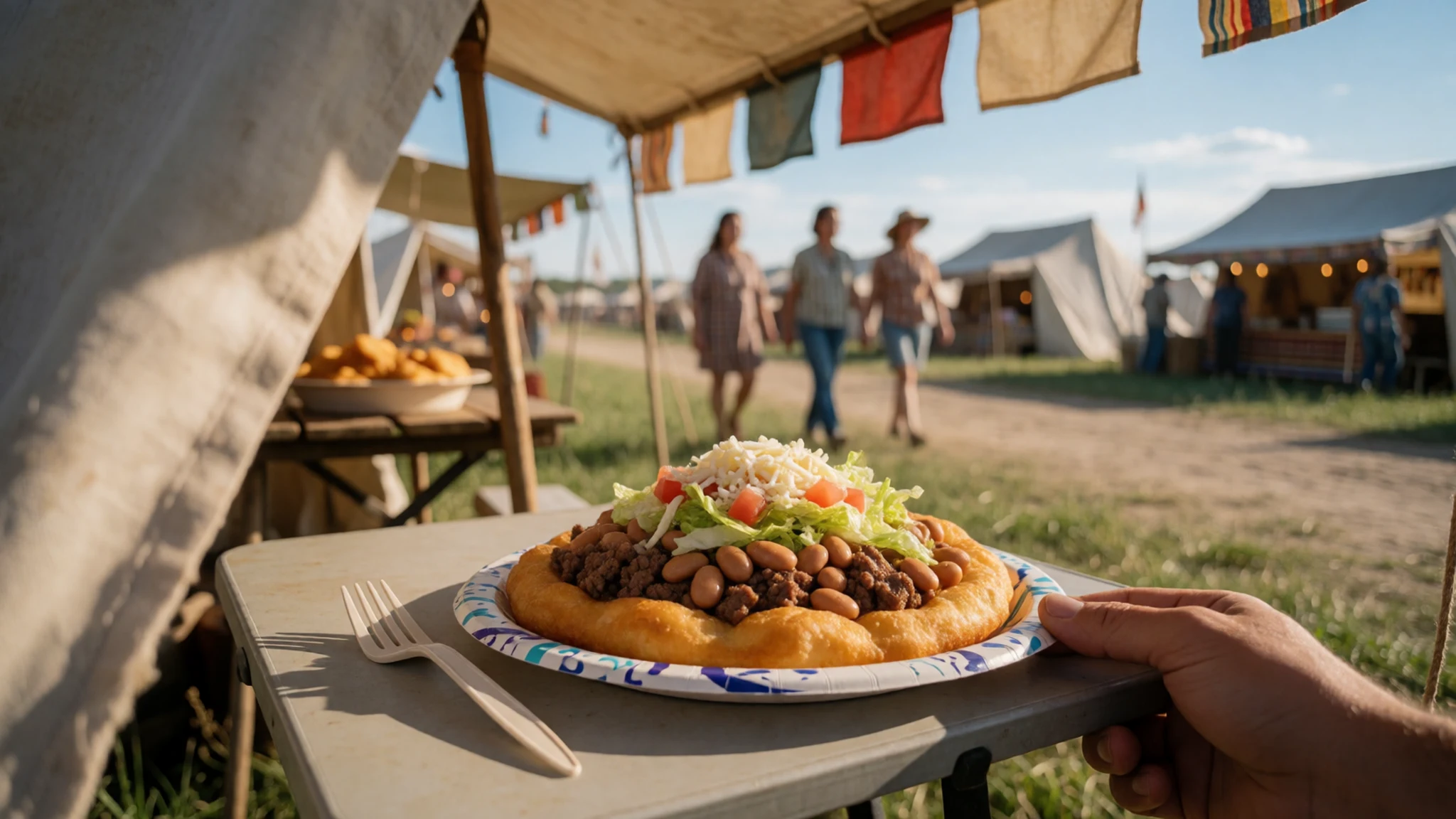
- Wojapi — Native-run stalls and craft shops near the reservation
A thick berry sauce, traditionally made with chokecherries or other wild fruit, and served with fry bread or alongside meat. Ask at Native-run stalls and craft shops around the reservation, as availability depends on the season and the harvest. - Chislic — Small-town pubs and bars along the approach roads
Cubes of grilled or fried red meat, often lamb or beef, skewered and eaten with salt and a dip. It is a classic South Dakota bar snack, so try it in a small-town pub on the drive in or out of the park. - Kuchen — Small-town bakeries and café counters in the farm towns
A custard-filled fruit pastry brought by German-Russian settlers, made with peaches, plums or rhubarb depending on the season. Slices turn up in small-town bakeries and café counters in the farm towns east of the park, usually with coffee.
Plan it
Best time. Late May to June for green grass and wildflowers, though May is the wettest month and storms build fast; September to early October for cooler days and softer light. July and August are hot and dry, and winters are cold with sudden blizzards.
How long. 1–2
Getting there. Fly to Rapid City Regional Airport (RAP), which has nonstop flights to hubs such as Minneapolis, Denver and Chicago, and hire a car there. The park lies east of the city; the interstate reaches the Pinnacles and Northeast entrances, and the state route reaches the Interior entrance. Greyhound serves Rapid City, but getting around the park itself needs a car.
Budget. mid
Tips
- Start early or stay for sunset, when the light is soft and the heat and crowds ease
- Carry plenty of water, as none is available at most overlooks and taps at the visitor centres and campground run only in season
- Check the forecast before setting out, since thunderstorms and blizzards can arrive suddenly and rain makes many routes impassable
- Wear thick-soled shoes and watch your step for prickly pear cactus and prairie rattlesnakes
- Check the official site, https://nps.gov/badl, for road conditions, fees and visitor centre opening times
Etiquette
- Keep well back from bison, which can be dangerous and are not tame
- Stay on marked trails and never remove fossils, stones or artefacts
- Ask before photographing Lakota people or ceremonies
Nearby
Sources
- Wikidata Q306216 (CC0)
- Wikipedia: Badlands National Park (rev 1386041699) (CC BY-SA 4.0)
- Wikivoyage: Badlands National Park (rev 5394193) (CC BY-SA 4.0)
- Photo: Badlands National Park, Martin Kraft (CC BY 3.0)
- Photo: Relief location map of the USA, Uwe Dedering (CC BY 3.0)
- Photo: View from Harney Peak, Navin75 (CC BY-SA 2.0)
- Photo: Badlands NP 2006-09-03, KimonBerlin (CC BY-SA 2.0)
- Photo: White River Badlands of South Dakota panorama, James St. John (CC BY 2.5)
- Photo: Badlands in South Dakota, National Park Service (D. Luchsinger) (Public domain)
- Photo: South Dakota - Sylvan Lake through Bad Lands, NARA (Public domain)
- Photo: Bighorn Sheep in the Badlands National Park, Martin Kraft (CC BY 3.0)


Wildlife
- American bison (animal)
The American bison, often called a buffalo, is North America's great shaggy grazer, rather like a wild cow grown enormous. It is one of the wildlife you may hope to meet in Badlands. A local guide or ranger is the best person to ask where and when to look on the day. Keep a generous distance, stay quiet and calm, and never feed it, so that it carries on grazing undisturbed.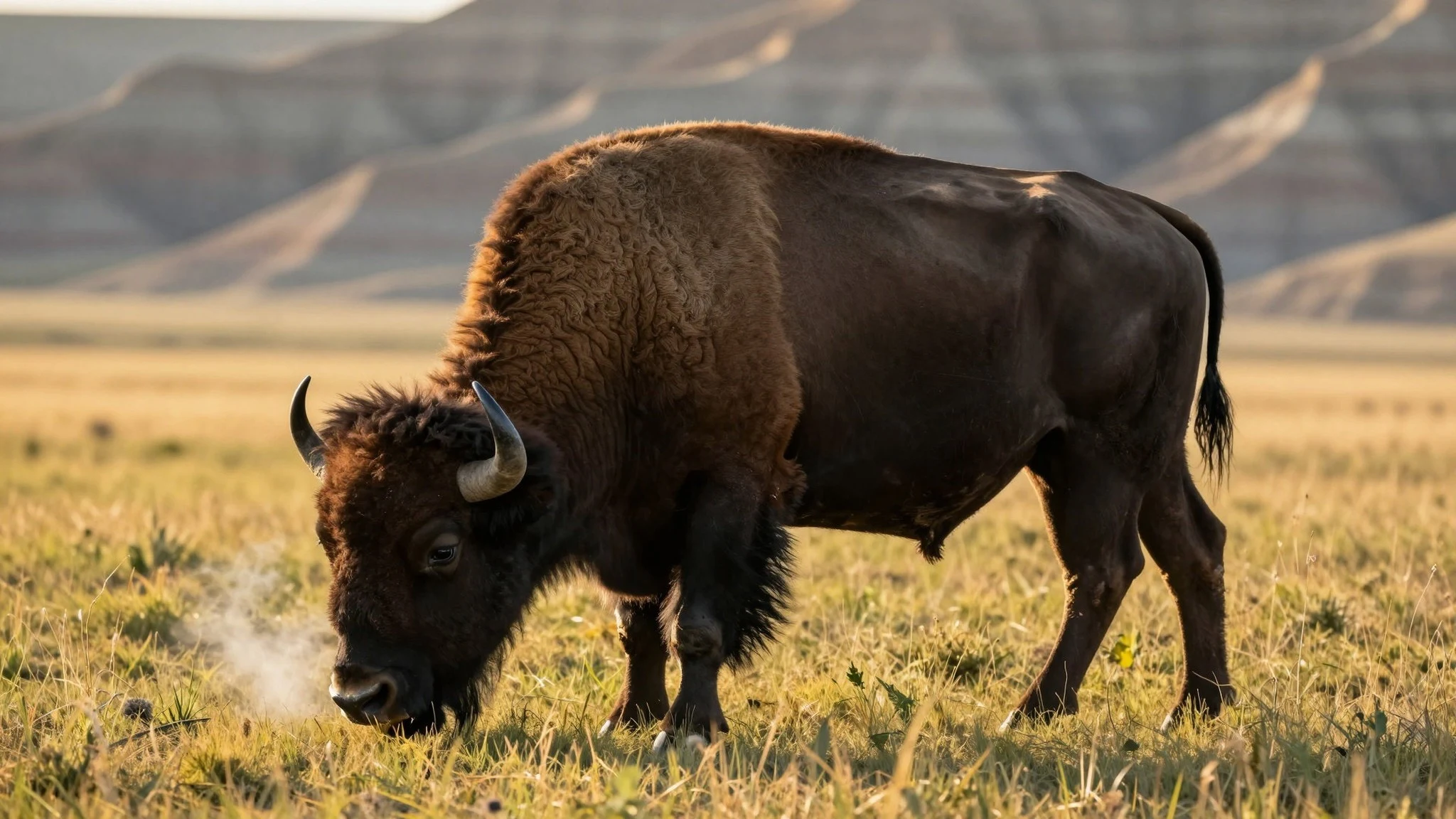
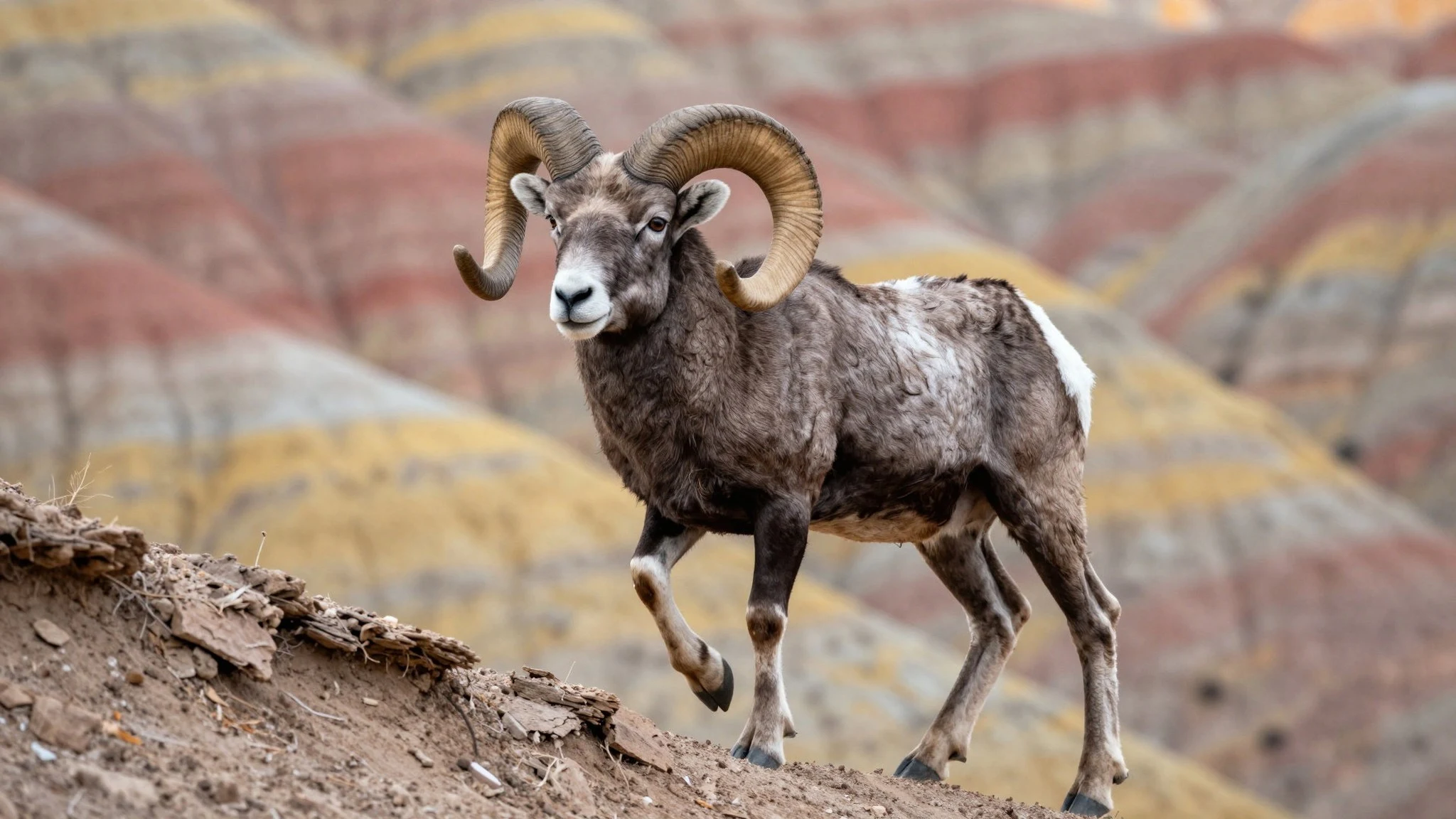
- Bighorn sheep (animal)
The bighorn sheep is a wild sheep named for its enormous horns, so you can remember it as a sheep wearing a heavy crown. It is among the wildlife of Badlands, and a guide or ranger can tell you where and when to look. Watch from far off, speak softly, keep still, and never offer food. Sheep left in peace behave naturally, which gives you the best chance of a long, rewarding look.