Atchafalaya Basin
Atchafalaya Basin, United States
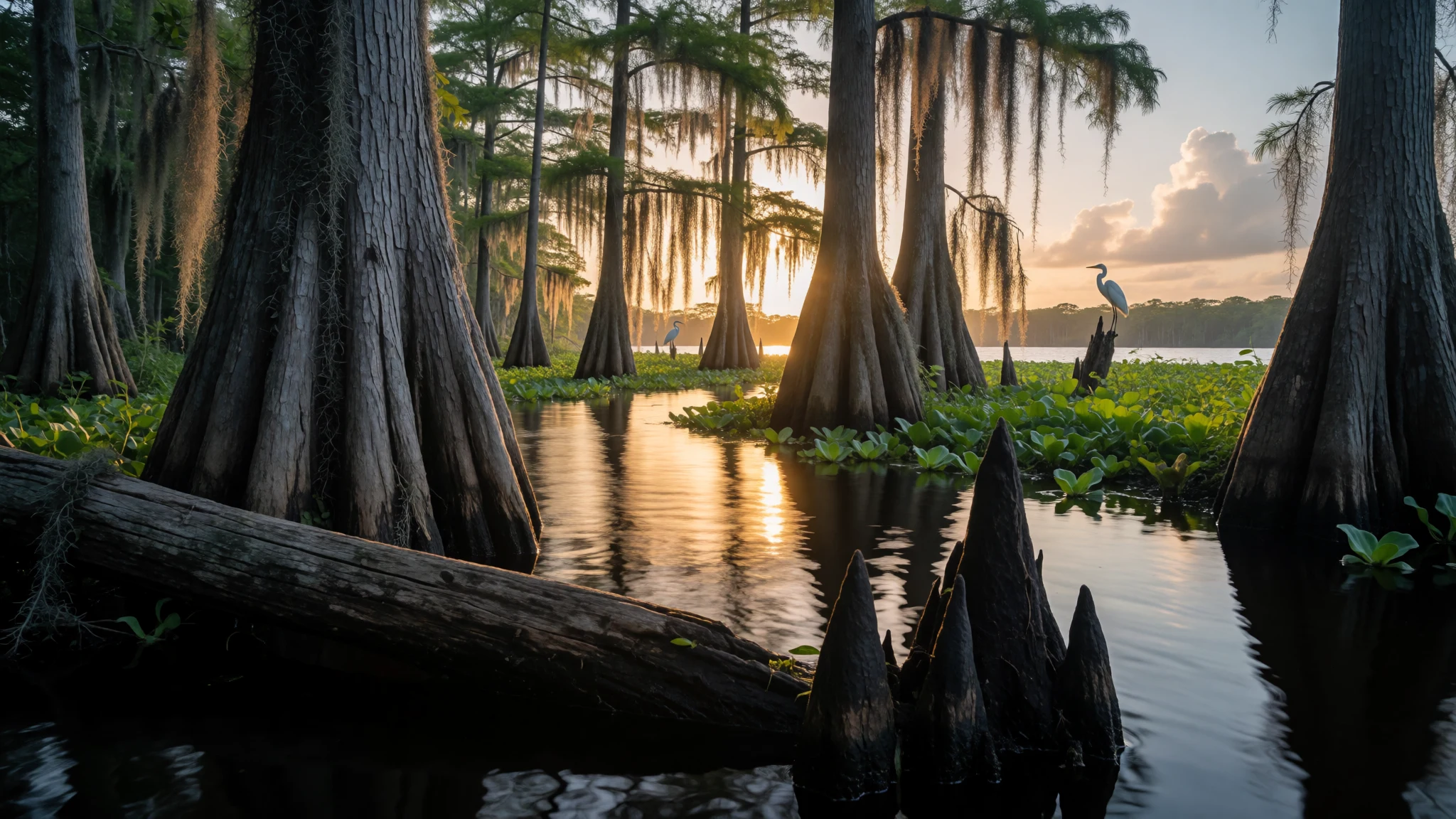
Atchafalaya Basin is the largest swamp in the United States, a maze of cypress, black water and birdlife best met slowly, from a boat.
The place
The Atchafalaya Basin lies in south-central Louisiana, where the Atchafalaya River runs towards the Gulf of Mexico and spreads into a maze of bayous, lakes, backwaters and forest. The largest swamp in the United States stretches from close to Simmesport in the north down to Morgan City near the coast, passing through portions of eight parishes. About 70% of the basin is forest and about 30% is marsh and open water, so a view from a boat is mostly trunks and canopy rather than reeds. Bald cypress and tupelo define the look, with Spanish moss hanging over channels that twist for long distances. The cypress forest alone covers about 110,000 hectares, a continuous tract of coastal cypress. Unusually among Louisiana's basins, this one has a growing delta, and its wetlands are close to stable rather than shrinking. Wildlife is plentiful: black bears, white-tailed deer, bobcats, foxes, swamp rabbits, bald eagles, ospreys, swallow-tailed kites and wood ducks, with almost 200 bird species recorded. The waters hold more than 85 fish species, including largemouth bass, catfish and bluegill, plus the crawfish that feed a local industry. Most of the swamp is hard going without a shallow-draft boat, so most people see it from the elevated interstate or on a guided tour. Heat and humidity set the mood, strongest through the summer months.
Its story
The Atchafalaya Basin has always been a working landscape rather than an untouched wilderness. French-speaking trappers once made a good living here from mink, otter and beaver, and the place name itself survives in Louisiana French. Trapping continues, though on a much smaller scale. Fishing and crawfish harvesting have carried on alongside it, and families in fringe towns such as Henderson and Krotz Springs still earn a living from the water, whether by selling the catch or taking visitors out in boats. Ownership of the land is a patchwork. Sherburne Wildlife Management Area combines holdings of the State of Louisiana, the US Fish and Wildlife Service and the US Army Corps of Engineers, which shows how many agencies have a hand in managing the water and the woods. Engineers have mapped the basin for generations, and a surveyors' map made under the orders of a Union general survives in the national archives. The twentieth century added the long elevated interstate between Baton Rouge and Lafayette, named the Louisiana Airborne Bridge to honour soldiers of US Army Airborne units. It lets drivers cross the swamp without ever touching the water. Restoration work continues too, such as the Big Island Mining Project at Atchafalaya Bay, where the delta meets the Gulf and sediment is used to rebuild land. The story here is one of people living with a river that keeps moving.
What to see
- Atchafalaya National Wildlife Refuge — Northern basin, near Livonia
This refuge protects bottomland hardwood forest and bald cypress and tupelo swamp on the northern side of the basin. It suits slow, patient visits for birdwatching and quiet paddling rather than a checklist of sights. Check the official refuge pages for access points and any seasonal closures before setting out. - Lake Fausse Pointe State Park — Western edge, southeast of Lafayette
On the western side of the swamp, southeast of Lafayette, this park offers canoes and kayaks to rent and cabins built on stilts over the water. It is a gentle way to paddle among cypress without a guide. Book cabins well ahead and check the park's website for current details. - Atchafalaya Landing and Airboat Tours — Henderson, beside Interstate 10
A boat launch with a large car park for trailers, and a choice of swamp tours in big slow boats or fast airboats. The slow boats allow time to spot herons, turtles and alligators. There is a bar on site. Check the operator's own site for tour times and prices. - McGee's Swamp Tours — Henderson, beside Interstate 10
Another launch near Henderson, with a large trailer car park and tours by slow boat or airboat. A store and gift shop sit on site. Airboats are noisy, fast and pricier; slower boats are quieter and better for wildlife and photographs. Confirm times and fares directly with the operator.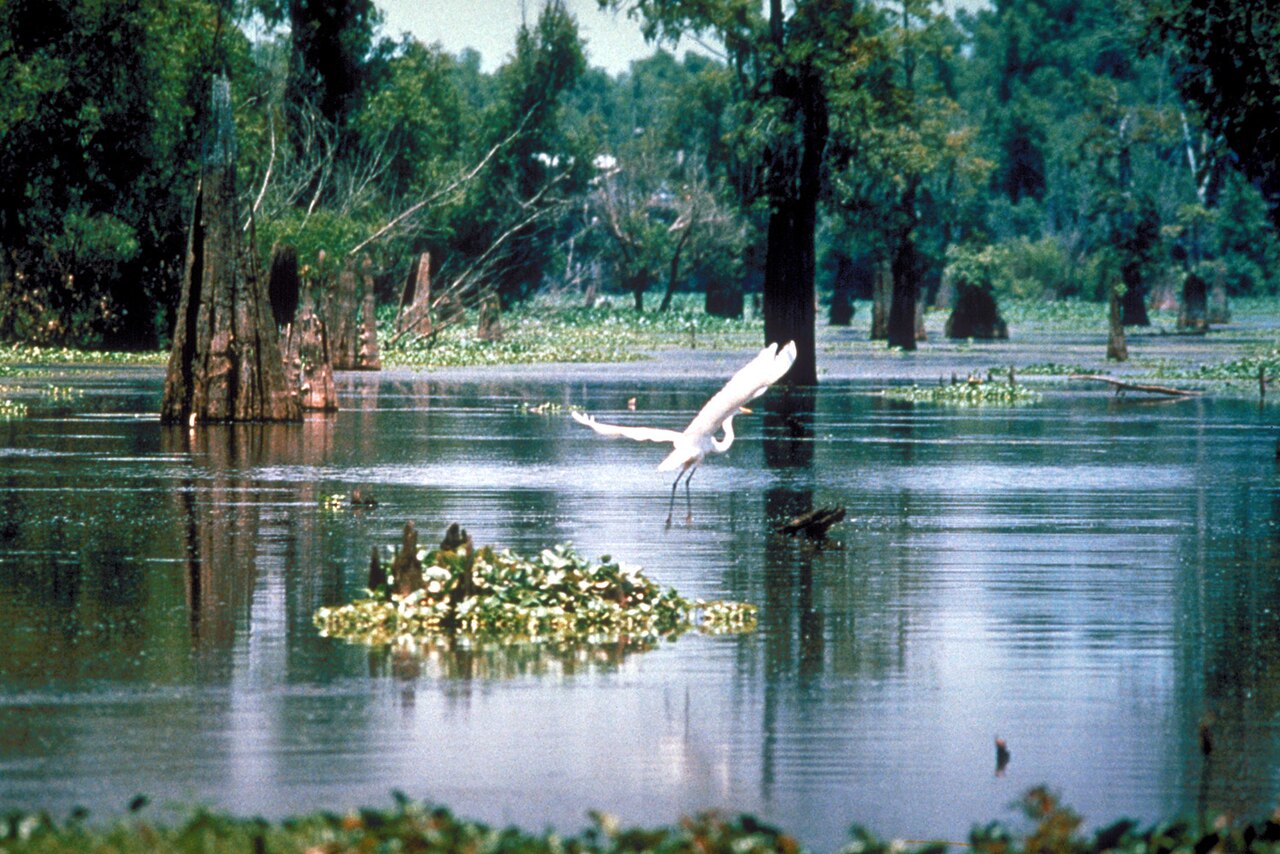
- Sherburne Wildlife Management Area — Northern basin, west of Baton Rouge
This stretch of wetland forest covers land owned by the State of Louisiana, the US Fish and Wildlife Service and the US Army Corps of Engineers. It is mostly used for public hunting, so check seasons and safety notices before visiting. Outside those periods it is a quiet place for birds and big trees. - The I-10 Atchafalaya Basin Bridge — Interstate 10, between Baton Rouge and Lafayette
The elevated interstate that carries traffic between Baton Rouge and Lafayette is the way most people meet the swamp. From the road the cypress forest stretches away on both sides. Pull off at the Atchafalaya Welcome Centre or the boat ramps to stand beside the water.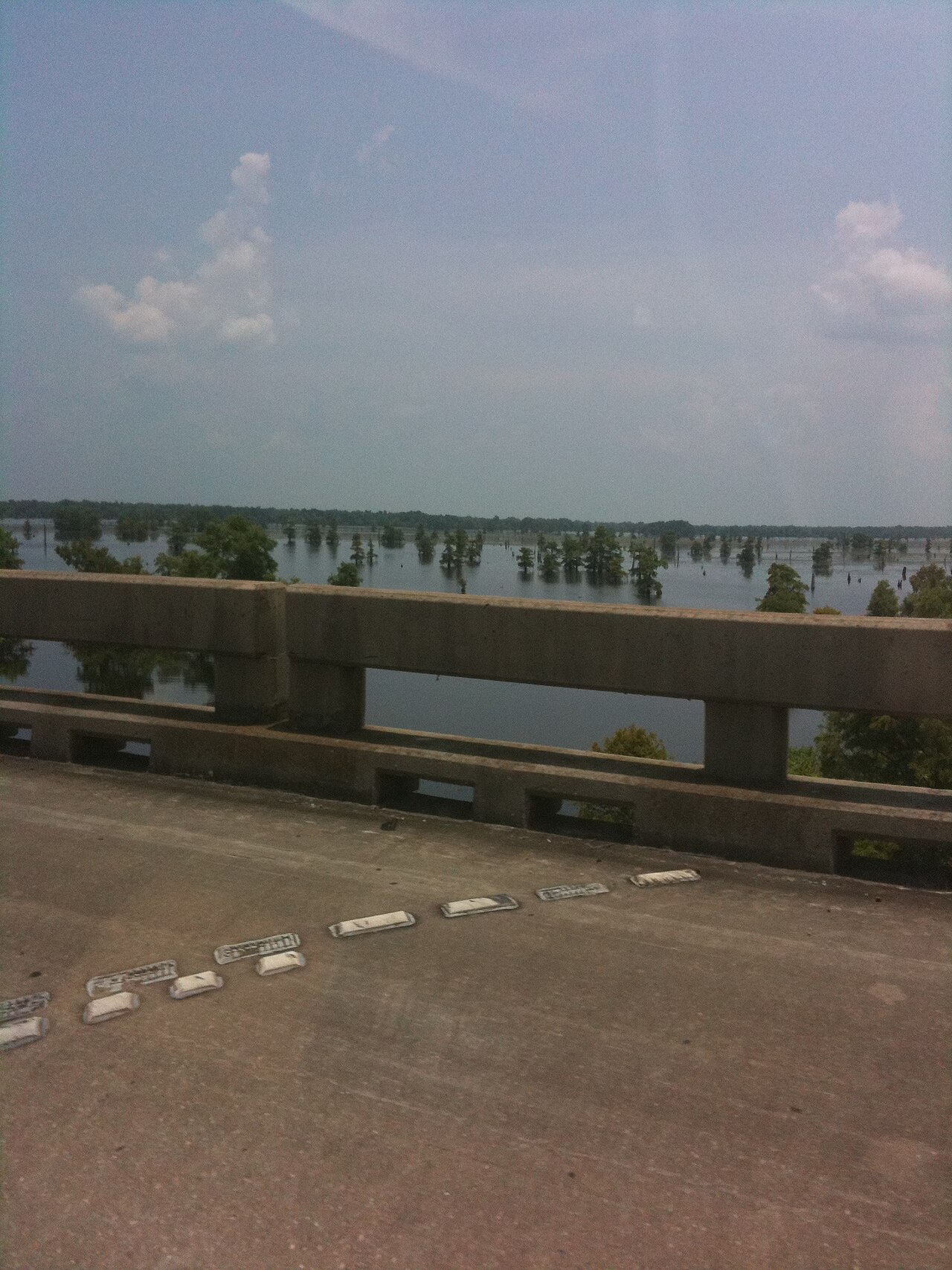
Culture
The Atchafalaya Basin sits at the heart of Cajun Louisiana, where French is still heard and life has long been tied to water. Families here have fished, trapped and harvested crawfish for generations, and the swamp is a workplace as well as a landscape. Camps on stilts and small boat launches are part of daily life, and many are private. Hunting is a normal, regulated activity in parts of the basin, particularly in the wildlife management areas, so seasons matter. Music and storytelling run through the surrounding towns, with accordion-led dance music a familiar sound at local halls and festivals. Hospitality is warm and conversation comes easily; asking a boat captain about the water, the birds or the seasons often brings stories no guidebook has. The swamp also carries heavy environmental pressure, from flood management to restoration projects, and locals have strong views about both. Listening before offering opinions goes down well. Guides take pride in the wildlife, and the basin works best with calm voices and little hurry. Alligators and snakes are part of the scenery rather than a spectacle, and they should be left alone. Pack out all rubbish, keep voices low on the water, and never feed or approach wildlife, however tame it seems.
What to wear
Atchafalaya Basin has no formal costume of its own, but the Cajun communities around it have a working-dress tradition rooted in practicality. Historically that meant homespun cotton, often naturally coloured, along with wool for colder months, sewn at home into shirts, skirts and trousers. Today such clothing mostly appears at heritage events, festivals and folk-life displays, and dance halls see the occasional vintage-style outfit. In daily life people wear what suits heat, mud and water: lightweight cotton shirts, jeans or work trousers, caps against the sun, and rubber boots or waders for fishing and trapping. Hunting season brings camouflage and bright orange. Dress is casual almost everywhere, including restaurants and eateries, and a clean shirt is usually enough. Visitors should dress for a hot, humid, insect-heavy landscape. Loose, long-sleeved cotton or quick-drying fabric works better than shorts, as it protects from sun and mosquitoes. Wear a wide-brimmed hat, sunglasses and closed shoes with grip for boat decks and muddy landings; sandals are a poor choice. In cooler months bring a light waterproof layer, because wind on open water can bite. Some boat operators supply life jackets, but check in advance. Carry insect repellent and sunscreen in all seasons, and keep a spare dry set of clothes in the car.
What to eat
- Crawfish boil — Seafood shops and community gatherings in towns around the basin
Red swamp crawfish are boiled in a big pot with spices, potatoes and corn, then tipped onto a table. It is a social, messy meal and the season is a highlight of the year. Look for it at roadside seafood shops and community gatherings near the basin. - Crawfish étouffée — Family-run eateries in Henderson, Breaux Bridge and Lafayette
Crawfish tails are smothered in a thick, buttery roux-based sauce with onion, pepper and celery, then served over rice. It is a comforting, rich plate that appears on almost every local menu. Try it at family-run eateries around Henderson and Lafayette. - Gumbo — Local diners, dance halls and Cajun restaurants in Lafayette
This stew starts with a dark roux and holds seafood, sausage or chicken, often with okra, and is served over rice. Every household has a version. Order a bowl at a diner or at a Cajun dance hall lunch and compare. - Fried catfish — Fish shacks and casual restaurants near the boat launches
Freshwater catfish from the basin's rivers and lakes is coated in cornmeal and fried until crisp, usually with fries and hushpuppies. It tastes best near the water. Look for fish shacks and casual restaurants close to the boat ramps. - Boudin — Roadside meat markets and petrol station delis near Interstate 10
A spiced pork and rice sausage that Cajun country sells warm from the counter. It is a snack for the road, eaten straight from the casing. Stop at a roadside meat market or petrol station deli along the interstate corridor.
Plan it
Best time. March–April and October–November, when the heat and humidity ease and birdlife is active; summer is hot and very humid, with strong sun and plenty of insects.
How long. 2–3
Getting there. Fly into Baton Rouge or Lafayette, then drive; Interstate 10 crosses the basin between the two cities, with exit 121 for the Atchafalaya Welcome Centre and exit 127 for boat ramps. Most tours launch from Henderson, directly on the interstate.
Budget. mid
Tips
- Book swamp tours and stilt cabins ahead, especially for weekends in spring and autumn
- Take a slow boat for wildlife and photographs; airboats are faster and noisier
- Do not rely on a mobile phone signal; carry a printed map and tell someone your route
- Bring your own drinking water, sunscreen and insect repellent
- Use a guide if you are inexperienced; much of the swamp is hard to navigate
Etiquette
- Leave no trace: pack out all rubbish and never feed wildlife
- Check hunting seasons and keep clear of private camps
- Keep voices down on the water so wildlife stays calm
Nearby
Sources
- Wikidata Q753927 (CC0)
- Wikipedia: Atchafalaya Basin (rev 1378626933) (CC BY-SA 4.0)
- Wikivoyage: Atchafalaya Basin (rev 5325319) (CC BY-SA 4.0)
- Photo: Atchafalaya Basin, U.S. Army Corps of Engineers (Public domain)
- Photo: Atchafalaya Basin map, War Department, Office of the Chief of Engineers (Public domain)
- Photo: Atchafalaya Bay, NOAA Restoration Center, Erik Zobrist (Public domain)
- Photo: I-10 bridge, Samlikeswiki (Public domain)


Wildlife
- American alligator (animal)
The American alligator is a big, armoured reptile, a cousin of the crocodile, and it is bigger than the only other alligator in the world, which lives in China. In the Atchafalaya Basin it belongs to the scenery, a quiet part of the swamp rather than a show put on for visitors. Season and hour are not recorded here, so ask your guide. Watch from a respectful distance, stay calm and quiet, never feed it, and simply leave it alone.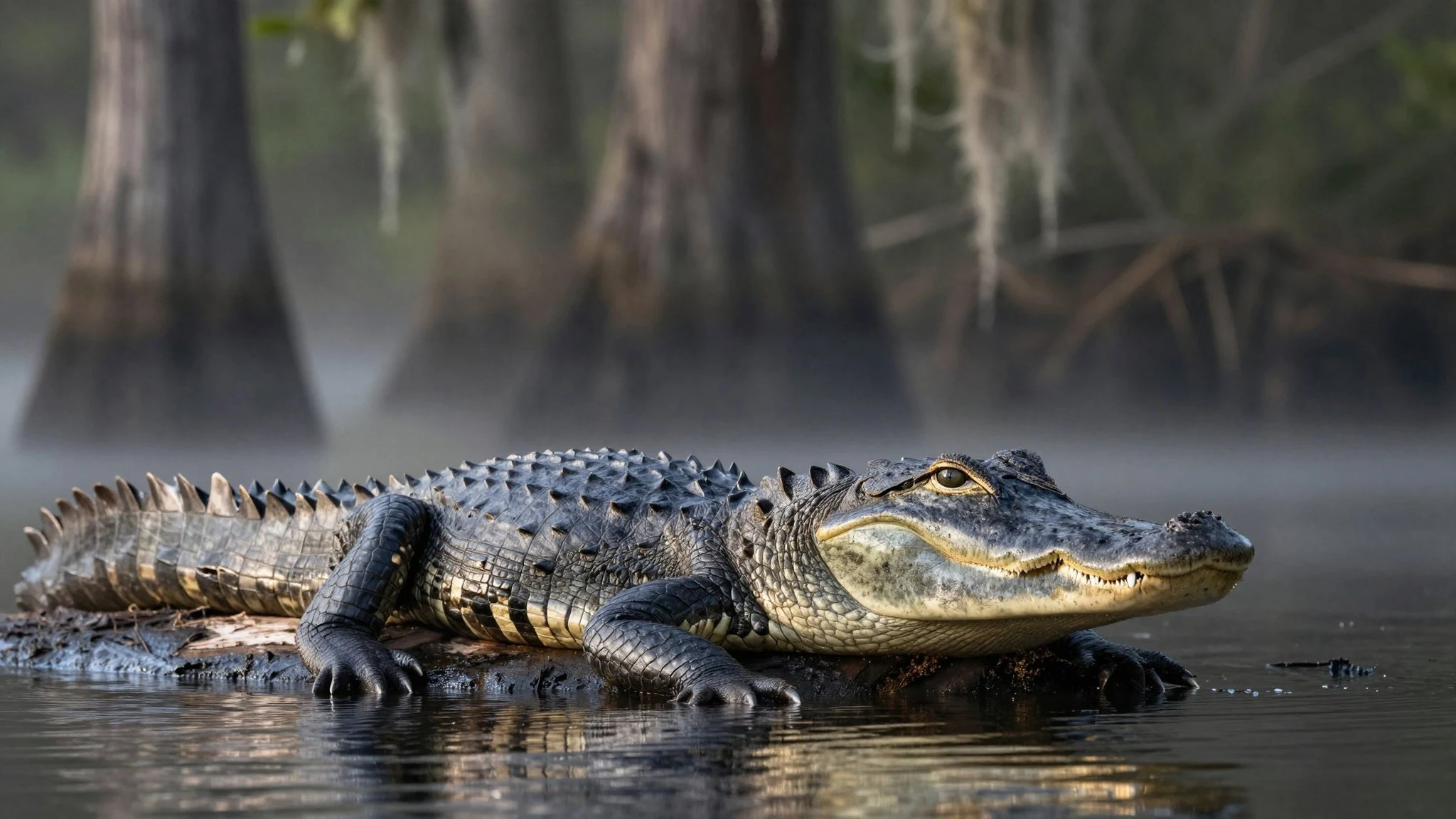
- Bald eagle (animal)
Think of the bald eagle as a great fishing hawk of the water's edge: a large bird of prey that settles where lakes and rivers offer food and old trees offer a nest. Bald eagles are counted among the Atchafalaya Basin's plentiful wildlife, though the notes do not say which season or hour suits them best. A guide will know. Keep a good distance, use binoculars, stay quiet so nesting birds are not disturbed, and never offer food.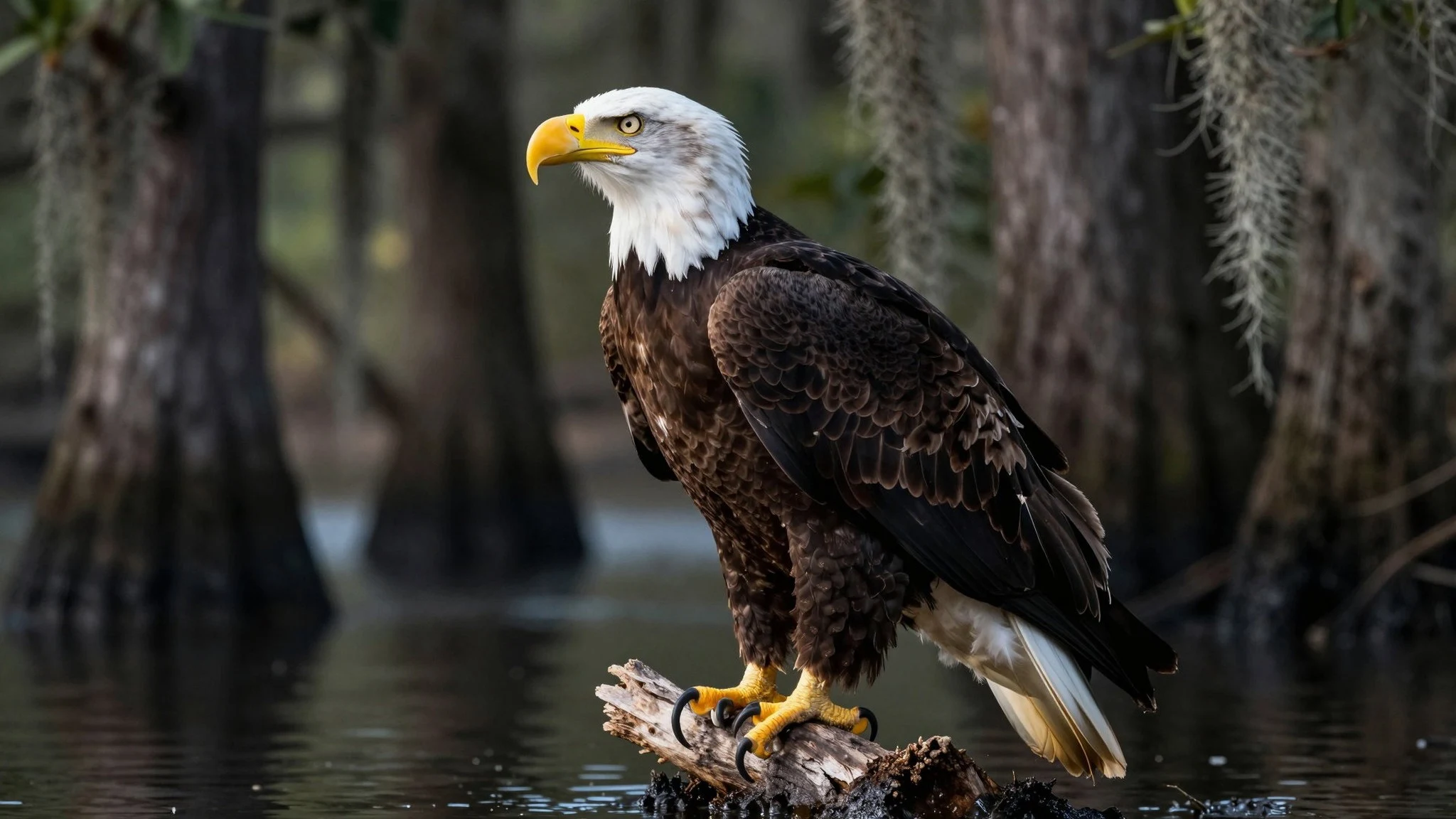
- Bald eagle (bird)
Think of the bald eagle as a great fishing hawk of the water's edge: a large bird of prey that settles where lakes and rivers offer food and old trees offer a nest. Bald eagles are counted among the Atchafalaya Basin's plentiful wildlife, though the notes do not say which season or hour suits them best. A guide will know. Keep a good distance, use binoculars, stay quiet so nesting birds are not disturbed, and never offer food. - Swallow-tailed kite (bird)
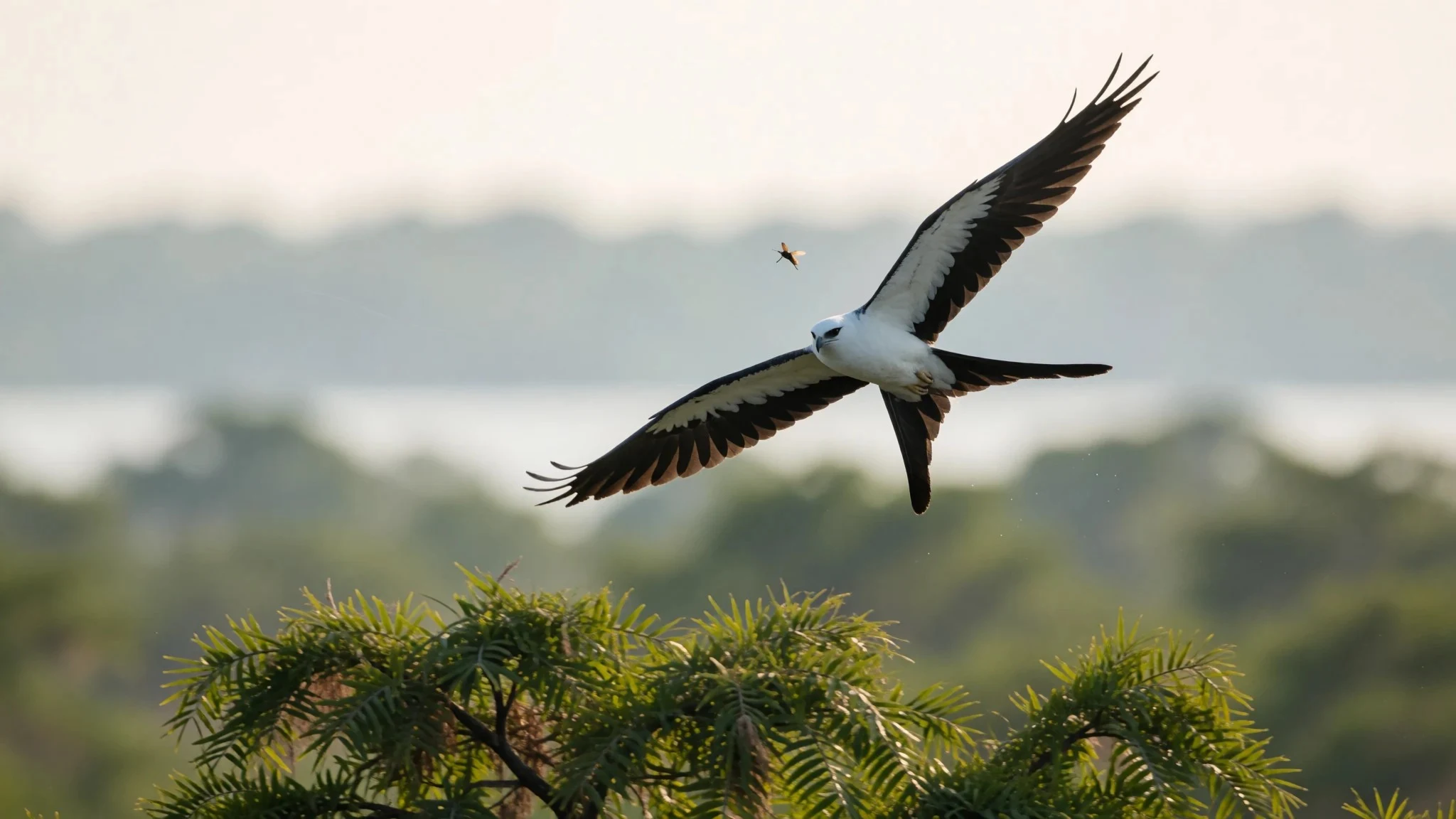
The swallow-tailed kite is a graceful bird of prey that rides the air, and it is the only member of its own small family group. It is listed among the Atchafalaya Basin's birds. It breeds in the southeastern United States, but most spend winter far away in South America, so ask a guide when to look. Watch from a distance with binoculars, stay quiet and still, and never feed it.