Astoria
Astoria, United States
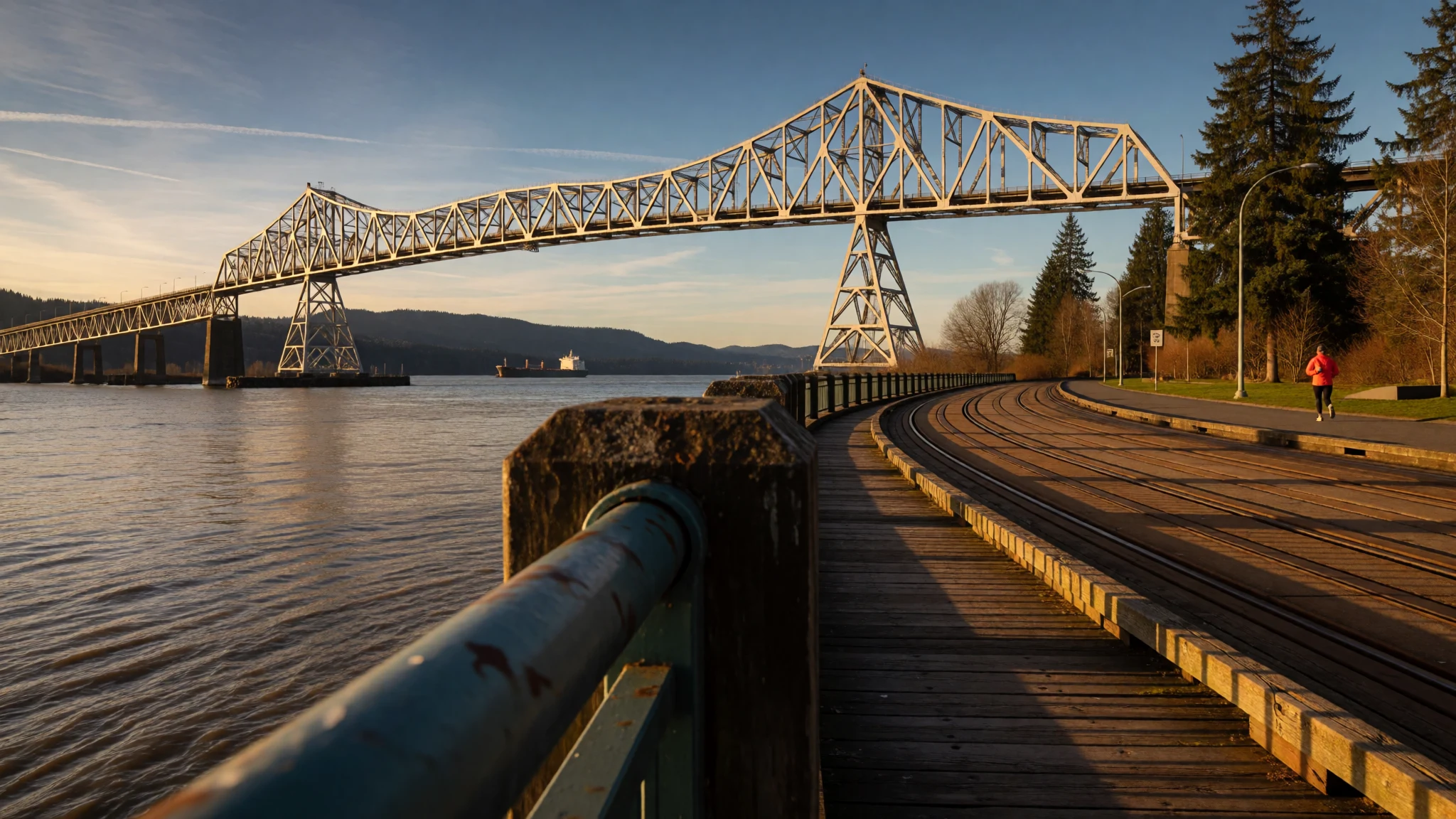
Astoria is a steep Columbia River port town where the river meets the Pacific, with fishing-boat suppers, Victorian houses and rain-washed history.
The place
Astoria is a small port city on the south bank of the Columbia River, in the north-west corner of Oregon, close to where the river empties into the Pacific. About 10,000 people live here (10,181 at the 2020 census), and the city is the county seat of Clatsop County. It stands only about 7 metres above sea level, yet its streets climb steeply up the hillside behind the waterfront, so a view of the river opens at almost every corner. Ships set the rhythm of the place. Cargo vessels use the deepwater port, and Astoria is home to the Columbia River Bar Pilots, the specialists who guide vessels across the shifting sandbar at the river mouth. The long Astoria–Megler Bridge carries traffic over the water to Washington state, and a heritage trolley runs along the riverfront past old canning-era piers. The airport sits across Youngs Bay in Warrenton, so most visitors arrive by road. The climate is maritime: cool, damp and often foggy, with the clearest and driest weather in summer. Summer weekends bring the biggest crowds, with queues at the best-known food spots and busy car parks near the Astoria Column. Film fans come for the Goonies connection, but the town has plenty to offer others: museums, brewpubs, quiet residential streets lined with painted wooden houses, and a working harbour that still feels lived in rather than staged.
Its story
Astoria began as a fur-trading outpost. In 1811 the Pacific Fur Company's ship, the Tonquin, brought a party to the river mouth to build Fort Astoria, named after the New York investor John Jacob Astor, whose American Fur Company stood behind the venture. The British explorer David Thompson, the first European known to have travelled the whole length of the Columbia, arrived at the half-built fort shortly afterwards. His timing mattered: the fort made Astoria an American settlement rather than a British one and gave the United States a foothold on the Pacific coast. The place was already old in human terms. A large trading network linked peoples of the Columbia Plateau and the coast long before any fort existed, and excavations around Astoria and nearby Fort Clatsop have turned up trade goods such as glass beads and small falconry bells. Just south-west of the modern town, the Lewis and Clark expedition endured a miserable, rain-soaked winter at Fort Clatsop, hoping in vain for a ship to carry them home. A replica of that log fort now forms part of Lewis and Clark National Historical Park. Later, salmon canning and shipping shaped the waterfront, and the Victorian houses on the hill date from that prosperous, fish-fuelled era. The city was incorporated in 1876, and its fur-trade roots remain visible in the name.
What to see
- Astoria Column — Coxcomb Hill, above downtown Astoria
The Astoria Column is a tall painted tower on the hilltop above town, listed on the National Register of Historic Places. A spiral stair leads to a viewing platform looking over the river, the bridge and the Pacific. Go early on a clear day, as fog can erase the view entirely.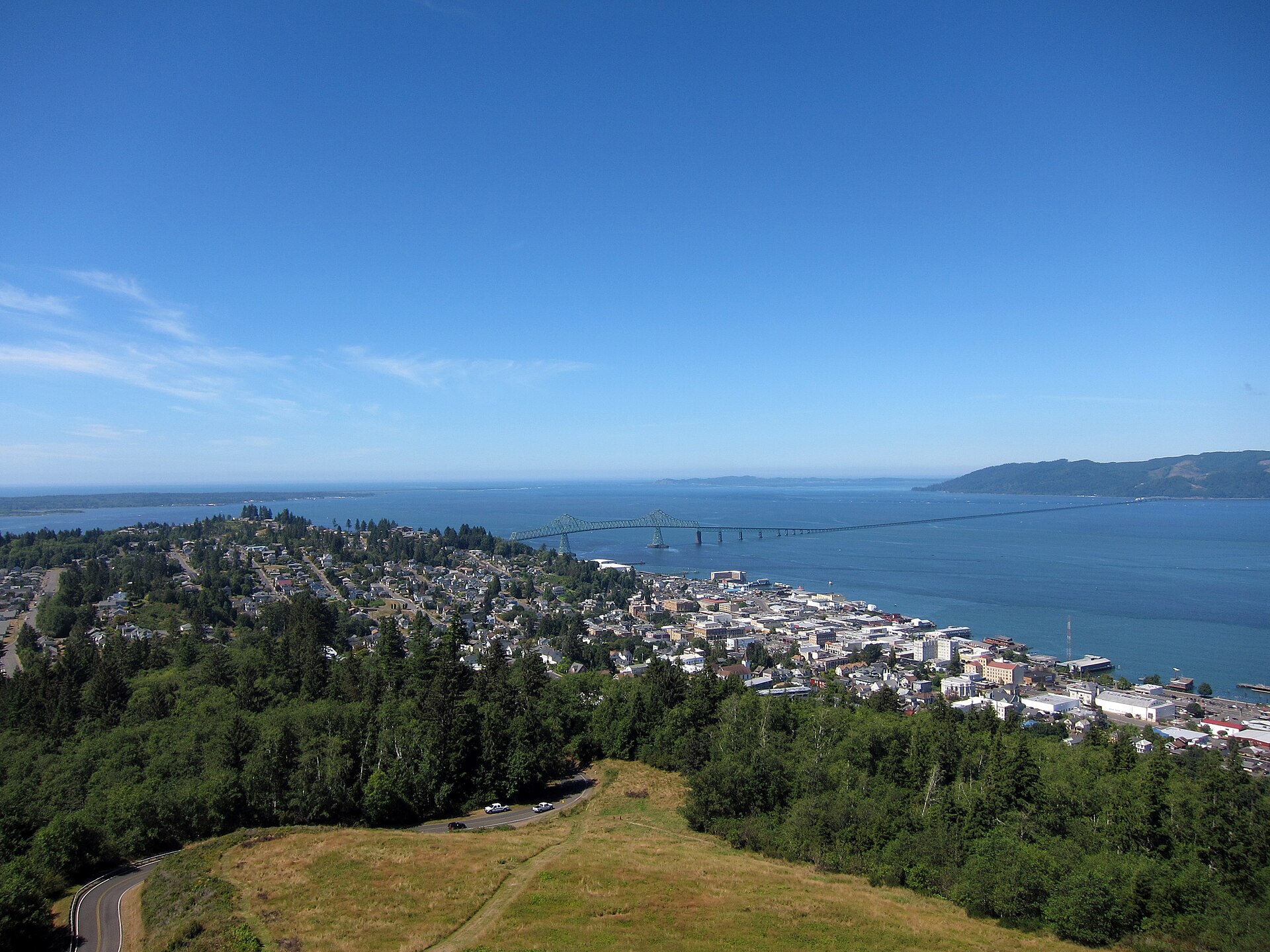
- Columbia River Maritime Museum — Downtown waterfront
This museum on the waterfront explains the working life of the Columbia and its dangerous bar through interactive displays. The renovated building has large windows facing the river, so passing ships become part of the exhibition. It suits a wet afternoon, which Astoria often supplies. - Oregon Film Museum — Downtown
Housed in the former Clatsop County Jail, this small museum celebrates filmmaking in Oregon. The building appears in the opening scene of The Goonies, which draws many visitors. Families can make a short film of their own on one of the sets. Expect a short, light visit rather than a deep one. - Flavel House Museum — Downtown, a short walk uphill from the waterfront
Flavel House is a Queen Anne-style home built for a river-bar pilot and shipping magnate, Captain George Flavel, and restored to show Victorian domestic life. Its ornate rooms hint at how much money the river once generated. A visitor centre and museum shop sit next door in the family's former carriage house. - Uppertown Firefighters Museum — Uppertown, east of downtown
This museum fills a historic fire station with vintage and antique engines and equipment used by the Astoria Fire Department. It is modest, quick to see and pleasantly old-fashioned. Combine it with a walk or trolley ride along the riverfront, since it lies at the eastern end of the waterfront.
Culture
Astoria's culture grows out of its river, its fishing and its habit of quietly celebrating its own history. The old working waterfront has become a walkable string of museums, pubs and heritage buildings, and locals tend to be proud of it without being showy. The Astoria Sunday Market fills streets with stalls, the restored Liberty Theatre hosts films and live shows, and the Museum of Whimsy offers a deliberately eccentric counterpoint to the maritime displays. Every year a musical called Shanghaied in Astoria retells the town's rougher past, when sailors could be tricked or forced onto ships leaving the river. Film is a second local identity: The Goonies was shot here, and fans often seek out the former jail, now the Oregon Film Museum. The Heritage Museum in the old City Hall covers local life more broadly, while Fort Astoria, Fort Stevens and Fort Clatsop show the military and fur-trade layers beneath the Victorian paint. Craft beer is part of social life, with several brewpubs serving a mix of locals, anglers and visitors. The tone is relaxed, a little weathered and strongly community-minded, and many people working in cafés and museums are happy to chat about the town. Etiquette: queue patiently at popular food carts and market stalls, keep your voice down in residential streets near the Victorian houses, and ask before photographing people at work on the docks.
What to wear
Astoria has no single formal costume, and its clothing history is practical. The Indigenous peoples of the Pacific Northwest coast, including those around the Columbia mouth, traditionally wove hats and capes from cedar bark and spruce root, materials suited to constant rain, and weaving is still practised and taught by tribal communities. Later, the fishing and canning trades brought oilskins, wool and rubber boots, a working wardrobe that still shapes local style. Today people dress for weather first. Waterproof jackets, fleece, flannel shirts, wool jumpers, jeans and sturdy boots or trainers are normal everywhere, from the docks to the theatre, and few places expect anything smarter than neat casual wear. Hats and beanies are common, umbrellas less so because of the wind. A visitor should pack layers whatever the month. Bring a proper rain shell, a warm mid-layer, and shoes with good grip, since pavements are steep and often wet and the Astoria Column has a spiral stair. Summer can be mild, but evenings by the river turn cool quickly, and wind off the water makes a bridge or pier feel colder than the forecast. There are no religious dress codes to worry about, though modest, tidy clothes are sensible for museums and historic houses. Sunglasses help on bright days, as the river reflects strongly.
What to eat
- Albacore tuna fish and chips — A converted fishing-boat food cart on the downtown waterfront
Battered albacore tuna with thick-cut chips is the local signature, served from a food cart set in a converted gillnet boat near the waterfront. Lines form at busy times, so arrive early or accept a wait. Eat it outside if the weather allows. - Columbia River salmon — Casual grills and seafood restaurants along the downtown waterfront
Salmon is the historic food of the river and appears grilled, smoked or baked on waterfront menus. Ask what is in season and how it was caught. Casual grills in town often add paper tablecloths and crayons, which keeps children entertained. - Brewpub supper with a harbour view — A brewpub on the slope just above the town centre
Astoria's craft breweries serve beer alongside hearty pub food, and one has tall windows over the harbour so diners can watch ships pass. It is a good late-afternoon stop after the hill climb. Ask for a tasting flight if undecided. - Tuscan-style pasta — A casual Italian restaurant in the downtown centre
A casual Italian restaurant in town offers a wide menu of pasta and steak with a slightly upscale feel but relaxed service. It is a useful change from seafood and suits groups with mixed tastes. Bookings are sensible on summer weekends. - Locally themed desserts — A brewery on the downtown waterfront
One waterfront brewery pairs American-style food with desserts named and themed after local history and landmarks. They are generous, sweet and made for sharing. Pair one with coffee or a dark beer while looking out at the river.
Plan it
Best time. June to September is the driest and mildest stretch, with the best chance of clear views from the Astoria Column; July and August are busiest. Winters are cool, wet and grey, but quieter and cheaper, and good for storm-watching and museums.
How long. 2–3
Getting there. Fly to Portland, then drive north-west along the Columbia River highway, which ends in Astoria; allow a couple of hours. Astoria Regional Airport lies across Youngs Bay in Warrenton, but most visitors arrive by road. From Washington state, the Astoria–Megler Bridge crosses the river into town. The last leg is a short walk or trolley ride along the waterfront.
Budget. mid
Tips
- Book rooms early for summer weekends and for festival dates; check the official site, https://www.astoria.or.us/, for events.
- Visit the Astoria Column early in the morning, before fog and crowds build.
- Carry a waterproof jacket in every season, plus layers for the cool evenings.
- Expect queues at the famous fish-and-chips boat, so go outside peak lunch and supper hours.
Etiquette
- Queue patiently at food carts and give working fishermen room on the docks.
- Keep noise low in residential streets near the Victorian houses.
- Ask before photographing people at work or museum staff.
Nearby
Sources
- Wikidata Q490724 (CC0)
- Wikipedia: Astoria, Oregon (rev 1374755109) (CC BY-SA 4.0)
- Wikivoyage: Astoria (rev 5393954) (CC BY-SA 4.0)
- Astoria, OR from the Astoria Column — aselfcallednowhere (CC BY 3.0)
- Astoria Riverfront Trolley on trestle — Steve Morgan (CC BY 3.0)
- John Jacob Astor Hotel in Astoria — Another Believer (CC BY 3.0)
- Fort Astoria replica 2011 — Another Believer (CC BY 3.0)
- Relief location map of the USA — Uwe Dedering (CC BY 3.0)
- (1882) Astoria, Oregon, entrance to Columbia River (Public domain)
- Salmon cannery at Astoria, Oregon (retouched) — NOAA Historic Fisheries Collection (Public domain)
- Port of Astoria Oregon Signs (CC BY 3.0)


