Wisconsin Dells
Wisconsin Dells, United States
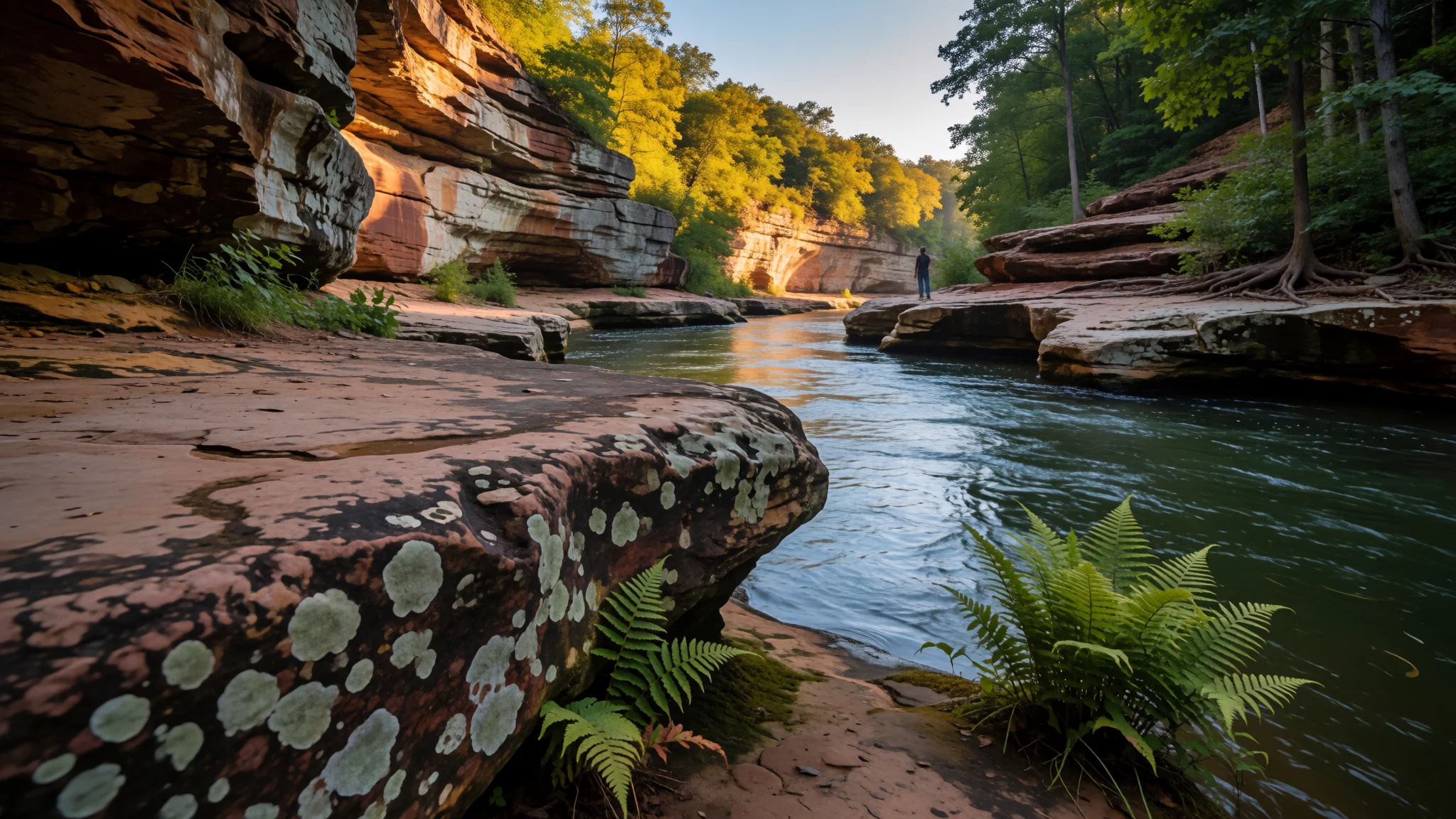
Wisconsin Dells pairs a sandstone river gorge with a summer holiday strip of water parks and mini-golf, cheerful, loud and easy for families.
The place
Wisconsin Dells is a small city of about 2,900 people, 277 metres above sea level on the Wisconsin River in the south-central part of the state. Its name comes from the river gorge beside it, where soft sandstone has been carved into bluffs, ledges and narrow side canyons. Around that gorge a whole holiday economy has grown: indoor and outdoor water parks, mini-golf courses, go-karts, museums, haunted-house gimmicks and boat tours, strung along a busy road known as the Parkway. After boundary changes the city spreads across four counties, though most of it lies in Columbia County, and the neighbouring village of Lake Delton shares much of the tourist strip. Madison, the state capital, is the nearest big city, with Milwaukee further east and Chicago beyond, which is why the Dells works as a weekend break for families from across the Midwest. The place has two moods. In summer it is loud, crowded and cheerful, with slow traffic on the Parkway and queues at the slides. Out of season it is far quieter, many outdoor attractions close, and the river and bluffs are what remain. A dam splits the river here into the upper and lower Dells, and boat operators work both stretches. The humid continental climate means hot, sticky summers and properly cold winters; the highest temperature ever recorded in Wisconsin, 46 °C, was set here in 1936.
Its story
Wisconsin Dells takes its name from dalles, a word early French explorers used for narrows where a river runs fast between rock walls. The Ho-Chunk name, Nįįš hakiisųc, means rocks close together, and the area is ancestral land of the Ho-Chunk and Menominee peoples. The United States obtained it through treaties with the Ho-Chunk in 1837 and the Menominee in 1848. Many Ho-Chunk people resisted removal and kept returning, eventually securing small homesteads of their own. A long-told story has the Sauk leader Black Hawk sheltering near the Dells in 1832, at the end of the war that bears his name; newer research suggests the original account misread the place. The town itself began as a business venture. A dam-building and land company laid it out in the mid-nineteenth century and called it Kilbourn City, after the head of a railroad company planning to link Milwaukee and La Crosse across the river. The route caused real bitterness. Speculators had already backed a rival settlement, Newport, a short way downstream, and it had drawn well over a thousand residents before the railway's choice of crossing decided which town would thrive. The place later dropped the railway man's name for that of the scenery that was drawing visitors, and tourism has been its trade ever since.
What to see
- Boat tours on the Wisconsin River — Wisconsin River, downtown
Boat trips on the Wisconsin River are the reason the Dells exists as a destination. Operators work the upper and lower stretches either side of the dam, passing sandstone bluffs, ledges and narrow side canyons. Trips vary in length and route, so compare options, check the season and book ahead for summer weekends.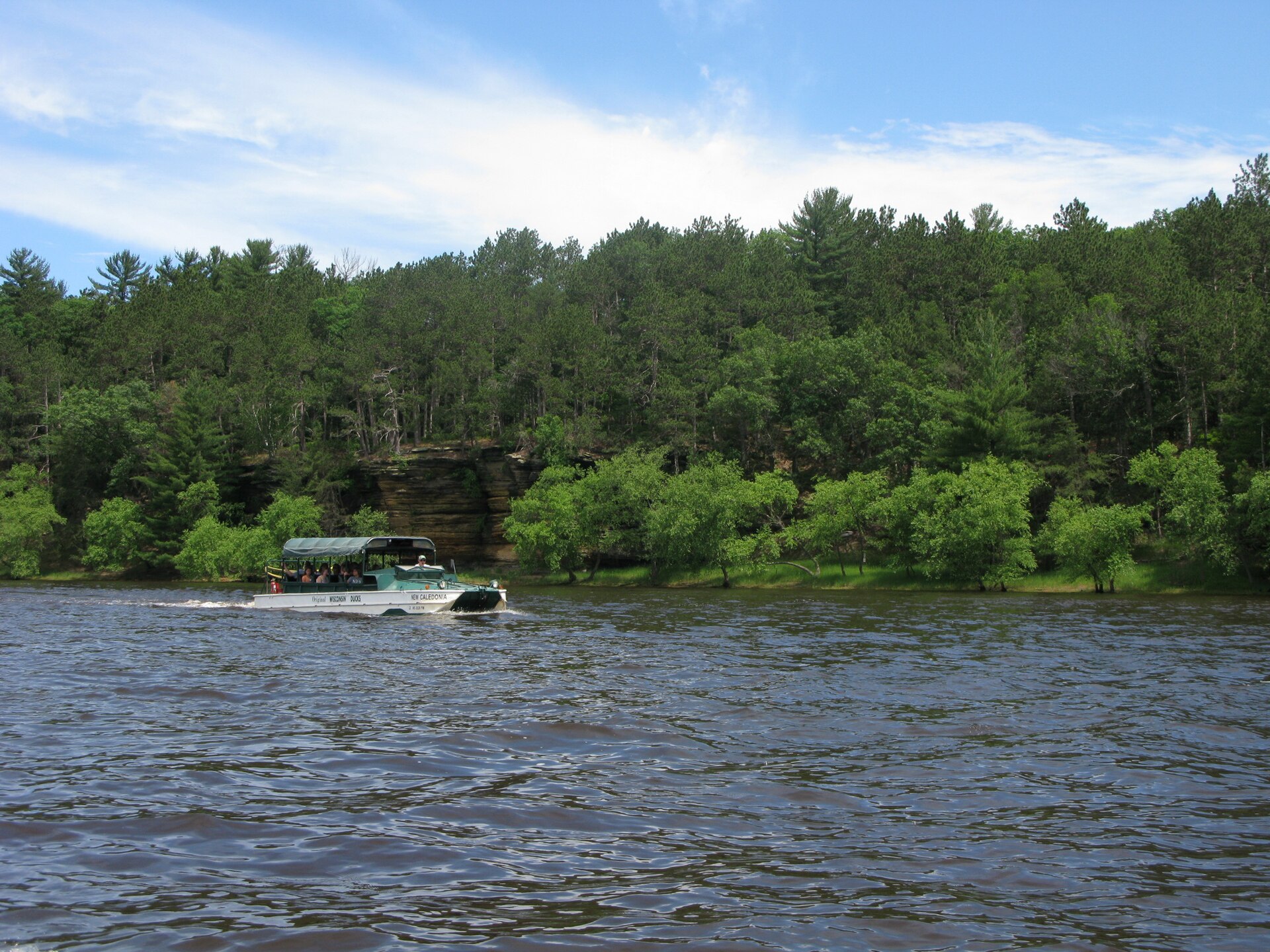
- The dam and the river gorge — Downtown, on the river
The hydroelectric dam at Wisconsin Dells marks the line between the upper and lower Dells and helps power the city. The structure and the water above it make a simple viewpoint over the river, with the older streets close by. It is a short stop rather than a full outing, best on a clear morning.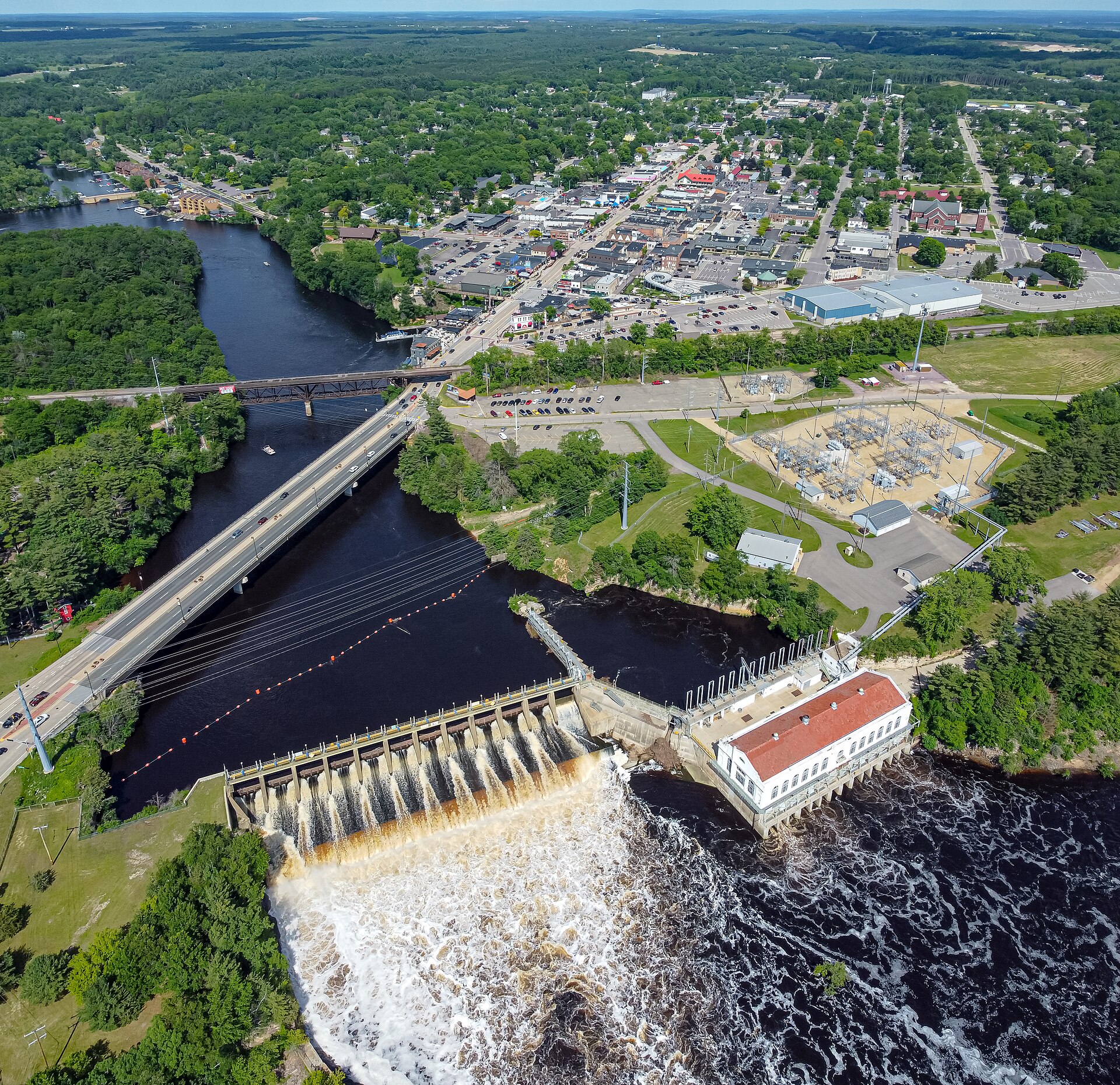
- Mt. Olympus Water and Fun Park — Wisconsin Dells Parkway
Mt. Olympus Water and Fun Park is one of several big parks along the Parkway, mixing dozens of slides, go-karts and an indoor water park. Outdoor areas are seasonal, while the indoor section gives a rainy-day option. Expect queues at midday in July and August, and check the official site for opening dates.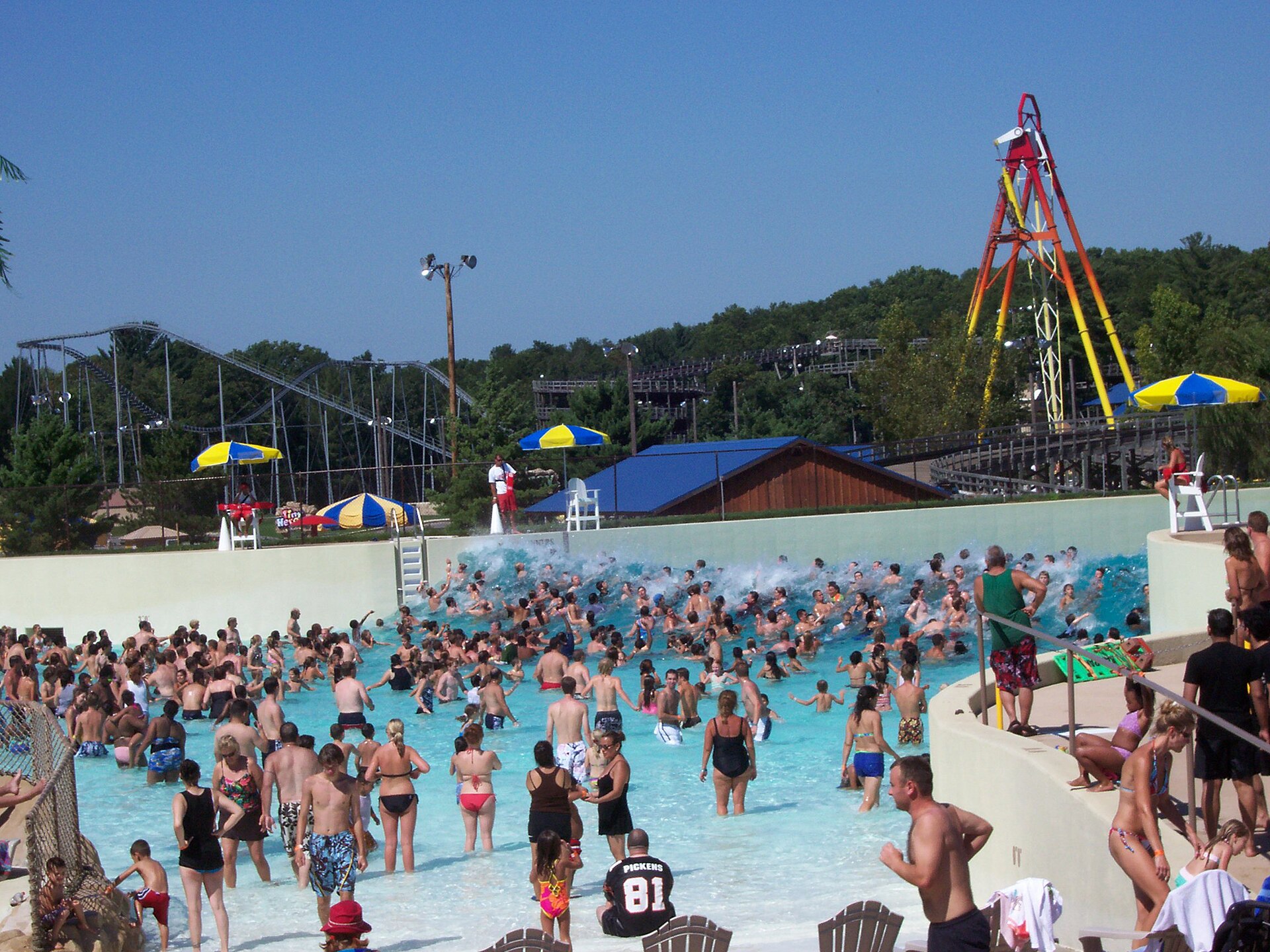
- Noah's Ark Waterpark — South of downtown, near the Parkway
Noah's Ark Waterpark is a large outdoor park just off the main strip, built around slides and pools for families. It is a summer day out: arrive at opening, bring sun cream and a change of clothes, and check the official site for dates and ticket options before driving over. - Circus World Museum — Baraboo, south of the Dells
Circus World Museum is in Baraboo, a short drive south of the Dells, and makes a calmer change from the water parks. It looks back at the travelling-circus tradition associated with the town. Check the official site for the season and any live shows before making the trip. - Mid-Continent Railway Museum — South-west of the Dells
Mid-Continent Railway Museum, south-west of the Dells, runs short heritage train rides through farmland and woods, a gentle outing for rail fans and children after days of slides. Operating days are limited, so check the official site before building a plan around it.
Culture
Wisconsin Dells is built around the family holiday. Generations of Midwestern households have driven here for a few days of water slides, mini-golf and boat rides, and the town's character comes from that: souvenir shops, themed attractions, motels with outdoor pools and restaurants serving big portions without fuss. The humour is broad, and coupon books and discount cards circulate widely, so bargain-hunting is part of the ritual. Beneath the entertainment is an older story. The land is ancestral Ho-Chunk and Menominee territory, and the Ho-Chunk name for the place, Nįįš hakiisųc, describes the rock narrows that visitors now cruise through. Wisconsin more widely has a strong regional identity built on cheese, beer, supper clubs and Friday fish fries, and Green Bay Packers shirts turn up everywhere. People are friendly and chatty, small talk with staff is normal, and the pace outside peak summer is unhurried. Weekends in July and August are busy and loud, with families heading for arcades and dinner as the evening comes on, while the shoulder seasons feel more like an ordinary small Midwestern town. Tip restaurant staff and boat-tour guides as is customary across the United States, rather than treating the printed bill as the final amount.
What to wear
Wisconsin Dells has no single local costume, but the Ho-Chunk, whose ancestral land this is, have a distinctive dress tradition. Ribbon appliqué, in which layers of silk or satin ribbon are cut and stitched in bold repeating patterns onto skirts, shirts and blankets, is a hallmark, alongside beadwork on bags, sashes and moccasins. This regalia is worn at powwows and ceremonies rather than on the street. Day to day, dress is relaxed: shorts, t-shirts, swimwear under cover-ups, baseball caps and trainers in summer, with sports-team shirts, especially for the Green Bay Packers, everywhere. Evenings stay casual, even in restaurants. Winters call for padded coats, hats and boots. Visitors should dress for the weather and for water. In summer pack swimwear, a quick-dry towel, sunscreen, a hat and sandals that stay on in wet areas, as water parks and boat decks are slippery; some parks have rules on swimwear fabrics, so check before packing. A light layer helps on river trips, where wind off the water can feel cool even on a hot day. Between October and April bring a warm coat, gloves and waterproof footwear. There are no dress codes for sightseeing, though a light cover-up is useful in indoor attractions with strong air conditioning.
What to eat
- Char-grilled burger — Saloon-style grills and family restaurants on the Parkway and downtown
A thick char-grilled burger is the standard Dells dinner, usually served with fries and a cold drink. Saloon-style grills and family restaurants along the main strip all do their own version, often with a house name and a generous size. - Pancakes, waffles and blintzes — Long-established family breakfast restaurants near the Parkway
Pancakes, waffles and omelettes make a traditional holiday breakfast here, often piled with fruit, chocolate sauce or sweet cheese-filled crêpes called blintzes. Queues form on summer weekend mornings, so arriving early helps. - Cheese curds — Bar menus and snack stands around town
Fresh cheese curds, mild and squeaky, are a Wisconsin snack, eaten plain or deep-fried in batter. They turn up on bar menus, at snack stands and at fairs across the state, and make a cheap, filling starter to share. - Friday fish fry — Supper clubs and taverns in and around the Dells
A Friday fish fry, usually battered fish with potatoes, coleslaw and rye bread, is a Wisconsin ritual, and supper clubs and taverns in the area keep it going. Menus differ from kitchen to kitchen, so look for the weekly special. - Local craft beer — Brewpubs in downtown and along the Parkway
Brewpubs pour house-made beers from tanks on site, usually with pizza and burgers alongside. Sampling flights of small glasses are a good way to try several styles, and they suit a hot afternoon after the water parks.
Plan it
Best time. June to August for warm weather, open water parks and the full boat-tour season; early September is calmer with cooler days. Summers are hot and humid, winters cold, and many outdoor attractions shut or cut hours outside the summer season.
How long. 2–3
Getting there. Dane County Regional Airport in Madison is the nearest major airport, roughly an hour away by road; Chicago O'Hare and Milwaukee Mitchell are further. Amtrak's Empire Builder and Borealis stop at Wisconsin Dells station. By car, a main interstate passes right by with several exits to the Dells, and Greyhound buses stop at a roadside stop on the edge of town.
Budget. mid
Tips
- Book lodging well ahead for July and August weekends and school holidays
- Pick up a free guide on arrival and compare coupon books and discount cards before buying park tickets
- Arrive at water parks at opening, carry water and sunscreen, and expect queues from midday
- A car makes the spread-out Parkway and Baraboo much easier, though the downtown river area is walkable
- Check each attraction's official site for dates and hours, as many operate seasonally
Etiquette
- Tip restaurant staff and tour guides as is customary in the United States
- Queue patiently at rides and on boat docks, and keep to posted safety rules around water
- Remember the Dells is ancestral Ho-Chunk and Menominee land and treat cultural sites and events with respect
Nearby
Sources
- Wikidata Q913413 (CC0)
- Wikipedia, Wisconsin Dells (rev 1378276461) (CC BY-SA 4.0)
- Wikivoyage, Wisconsin Dells (rev 5422673) (CC BY-SA 4.0)
- Photo: Wisconsin Dells, Wisconsin (Wikideas1) (CC0 1.0)
- Photo: Relief location map of the USA (Uwe Dedering) (CC BY 3.0)
- Photo: Wisconsin Dells, Memorial Day Weekend 2014 (atramos) (CC BY 2.5)
- Photo: Wisconsin Dells boat tour (Sergey Subbotin) (CC0 1.0)
- Photo: Poseidon's Rage Surf Pool at Mt. Olympus (Royalbroil) (CC BY-SA 2.5)
- Photo: The Amtrak station in Wisconsin Dells (Steve Wilson) (CC BY 2.5)
- Photo: Horace A. J. Upham House (Jeff the quiet) (CC0 1.0)
- Photo: Old maps of Wisconsin Dells from 1940 (H. C. Amundson) (Public domain)


