Wasaga Beach
Wasaga Beach, Canada
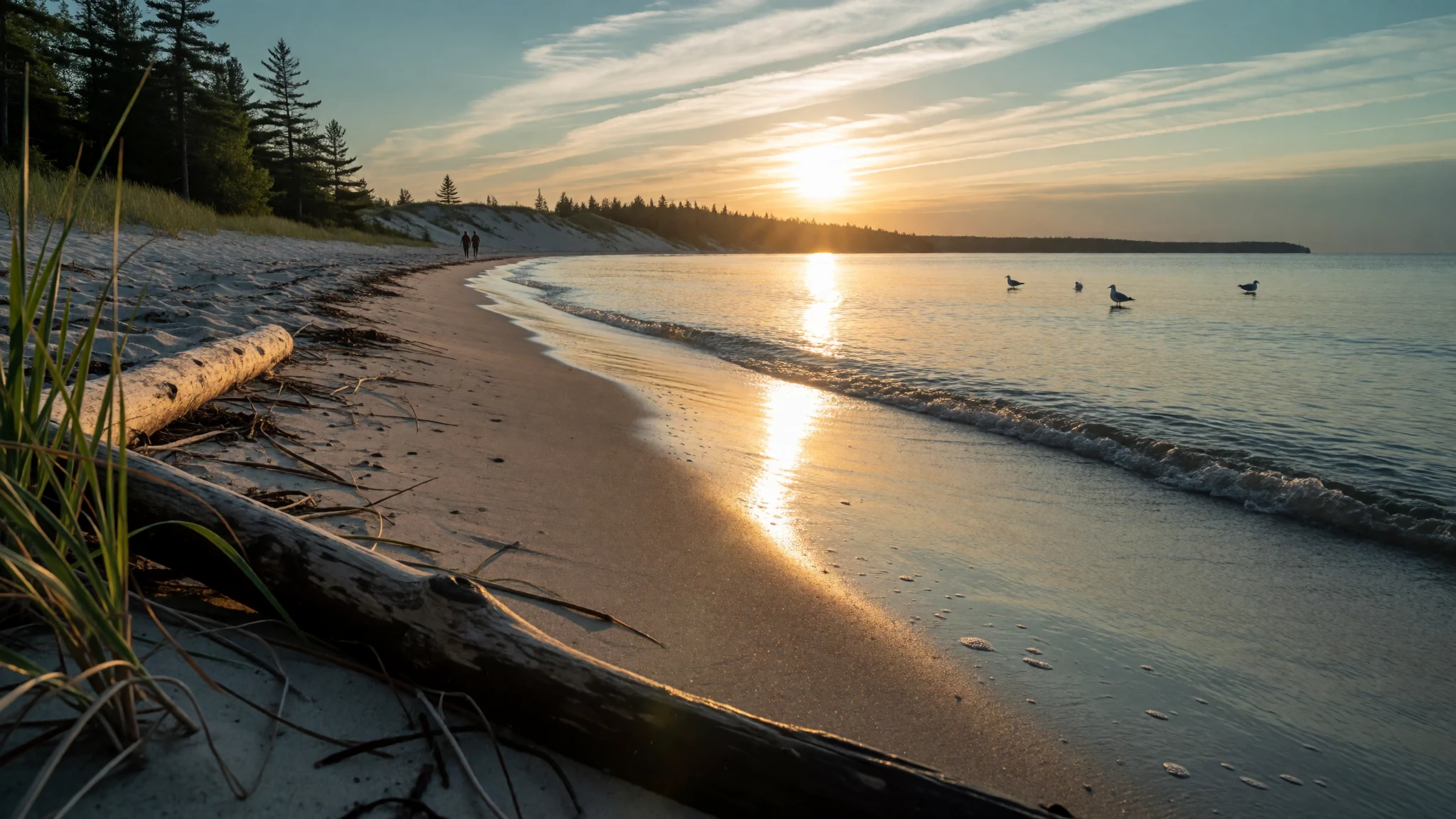
Wasaga Beach is an easy Ontario summer beach: a long sandy shore on Georgian Bay, with ice cream, sunsets and a lively, changing waterfront.
The place
Wasaga Beach is a town on the southern shore of Nottawasaga Bay, the inner corner of Georgian Bay, in Simcoe County, Ontario. It sits roughly 150 km north of Toronto, with Barrie to the southeast. The draw is a long strip of pale sand, much of it running between the bay and the Nottawasaga River, and the shoreline is managed as Wasaga Beach Provincial Park. Behind the sand the town is flat, and the soil is so thin and free-draining that lawns struggle, which is one reason the area never became farmland. About 25,000 people live here through the year, but cottagers and day-trippers swell that sharply from early summer, and the mood changes with them. A July weekend brings queues of cars, loud music and crowded sand near the main beach, while a quiet weekday in September can feel like another town entirely. The beach is split into numbered sections, each with parking and toilets, and the liveliest stretch is at the eastern end. Collingwood and the Blue Mountains, a short drive west, give the wider area a winter and shoulder-season life as well. Wasaga's economy leans heavily on a short summer, and the town has spent years trying to shed its party-town reputation and grow a proper downtown. Anyone expecting wild coastline should adjust: this is a classic Ontario beach holiday of sand, volleyball, cottages and sunsets over the water.
Its story
Wasaga Beach stands on land the Huron-Wendat lived on for generations, until 1649, when Haudenosaunee forces drove them out. The town's name is a shortened form of Nottawasaga, a word usually explained as Algonquin and linked to the river mouth and to the Iroquois; scouts are said to have used it as a warning when raiding parties approached. During the War of 1812 the river mouth mattered because it led towards Fort Willow and the Nine Mile Portage, a supply route for British forces heading to posts far to the north and west. The Royal Navy schooner HMS Nancy was sunk in the Nottawasaga, though accounts differ on whether she was scuttled or hit by American fire. For the rest of the nineteenth century timber was the business: logs were floated down the river into the bay and gathered at ports for local sawmills. Farmers mostly stayed away, because the sandy ground grew little, and surveyors in the 1820s found land selling cheaply. Tourism took over in later years, and the municipality took its present form in 1974. The recent story is one of repeated reinvention. A blaze in November 2007 swept through a block of main-beach shops. A temporary entertainment dome built in 2008 lost its cover in a storm in 2011 and was cleared away the following year. A grand redevelopment scheme collapsed with its developer's bankruptcy in 2010. Photographs from 2025 show demolition and a raised beachfront road as a newer plan takes shape.
What to see
- Beach One and the boardwalk — Eastern end of the main beach
Wasaga Beach's Beach One is the busiest and most commercial section, with bars, beach-themed shops and fast food, and it draws mostly young adults. A boardwalk runs along much of it and the neighbouring beach. Go for the people-watching and volleyball, and expect noise and crowds on summer weekends.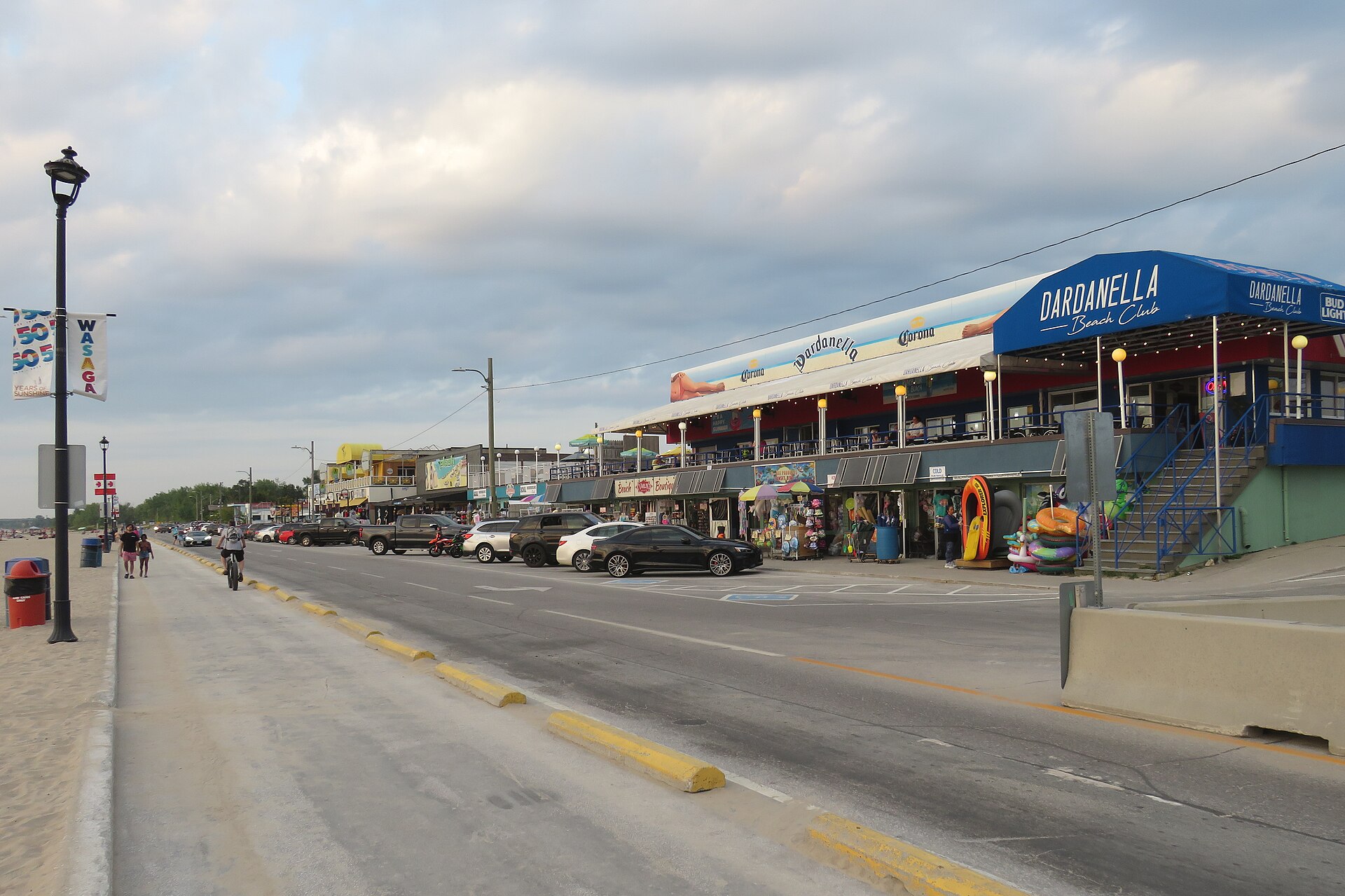
- Beaches Two to Four — Central beachfront
Moving west from the main strip, Wasaga Beach becomes calmer. These sections have shade trees, a bike trail and a playground, which suits families who want sand without the bar scene. Each has its own parking area and toilets, so a day here is easy to organise.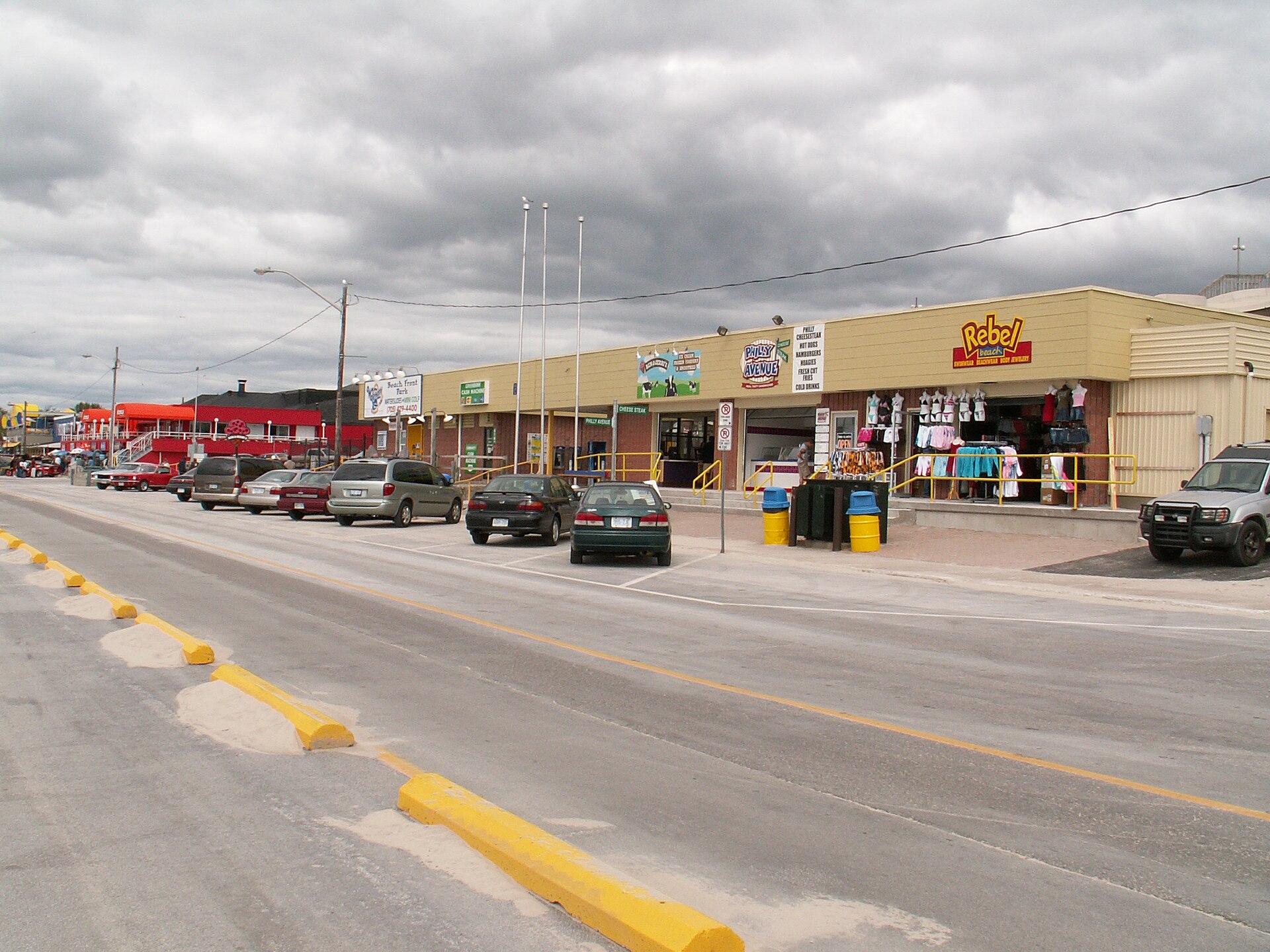
- The western beaches and Shore Lane — Western beaches
Further west, Wasaga Beach's shoreline is lined with seasonal cottages between the public park areas, and fewer visitors make it this far. Shore Lane Road is popular for jogging, cycling and rollerblading. It is a good choice for a long, quiet walk when the eastern end is packed.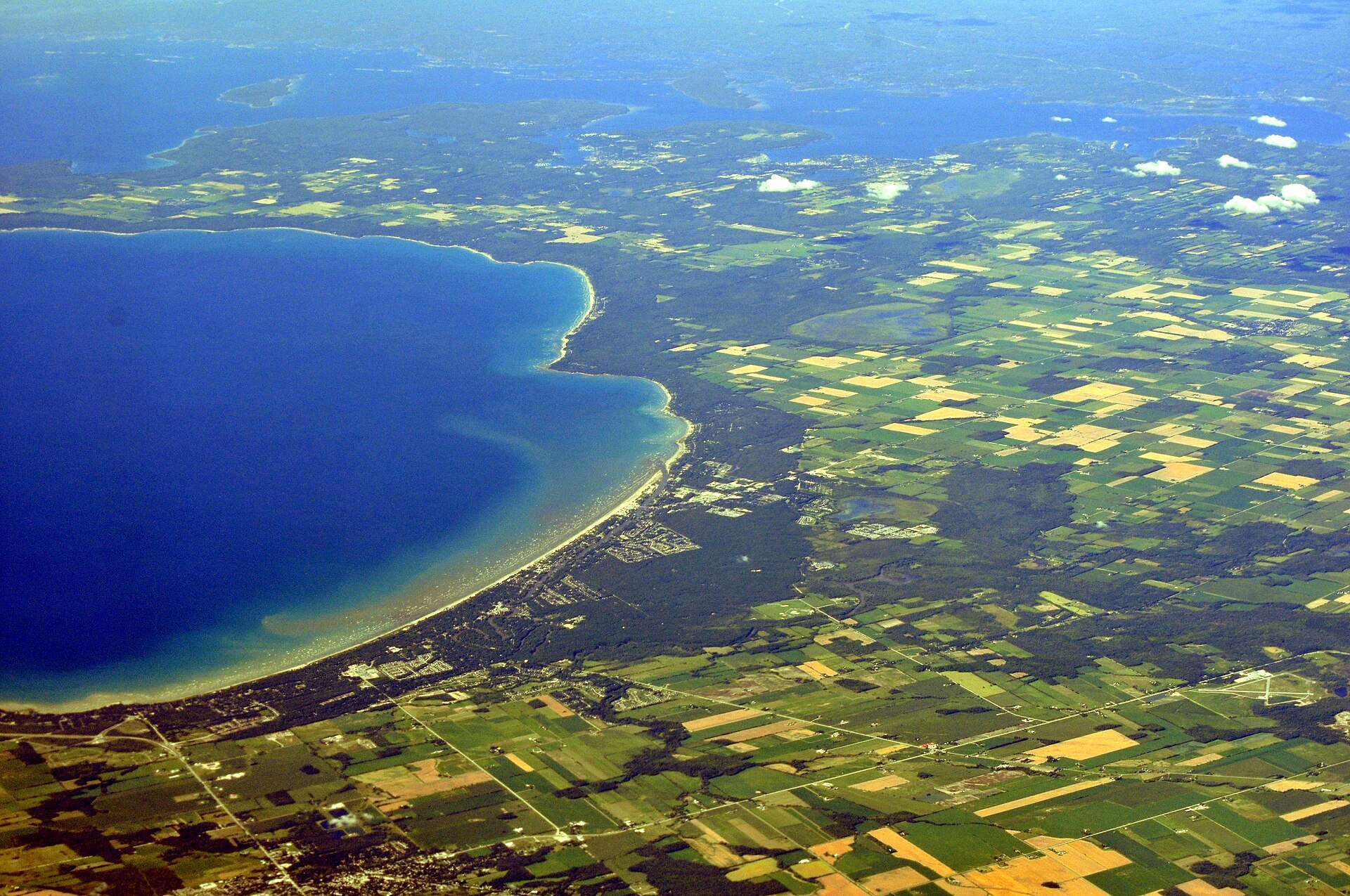
- Nottawasaga River mouth — Eastern edge of town
The Nottawasaga River meets the bay at Wasaga Beach, and this is where the town's War of 1812 story belongs, including the sunken schooner HMS Nancy. The river also cuts off two further beaches, New Wasaga Beach and Allenwood Beach, which are mostly residential and quieter. - Sunset and night on the sand — Any public beach access
Wasaga Beach faces west across the bay, so evening is when the shore works best. Once the shops close and the crowds thin, walking the sand at dusk is calm and unhurried. Bring a light layer, as the breeze off the water cools quickly after sunset.
Culture
Wasaga Beach is a place of seasonal rhythms. For many Ontario families it means cottage weeks, long weekends, ice cream and volleyball, and the town fills and empties with the calendar. Beneath the holiday surface lies older history: the area was Huron-Wendat land for generations, and the name Nottawasaga comes from Algonquin. The beach culture is casual and sociable, and the main strip has long carried a youthful, party-town image that residents and planners have tried to soften. Development is a live topic. Photographs from recent years show residents protesting redevelopment plans, then demolition and road-raising work on the main beachfront, so visitors may find building sites beside the sand. Locals tend to be practical and friendly about the crowds, since summer pays for the rest of the year. Beyond the shore, Collingwood has its own festivals, including a summer Elvis event, and the wider region mixes cottage country with ski-resort life. A visitor who comes outside July and August will find a smaller, slower town where much is closed but the beach itself stays open and quiet. Take all rubbish with you or use the bins provided, keep music at a sensible volume near the cottages, and give seasonal residents and the dune edges the space they need.
What to wear
Wasaga Beach has no everyday traditional costume of its own, but the Indigenous peoples of the region, including the Huron-Wendat and Anishinaabe, have long made clothing from tanned hide and later wool, decorated with beadwork, ribbon work and quillwork. These pieces are mostly seen today as ceremonial regalia at powwows and cultural events, and not as daily wear. What people actually wear in town is simple summer clothing: swimwear, shorts, T-shirts, flip-flops and caps on the beach, with hoodies and jeans once the evening breeze comes in. The main strip is relaxed, and nobody dresses up. Cottage-country style leans towards fleeces, rain jackets and sturdy trainers for the cooler shoulder seasons. A visitor should pack for changeable weather. In midsummer, light cotton, a sun hat, sunglasses and high-factor sun cream matter, as the sand reflects strong sun. Bring a towel, a light jumper for evenings and a rain layer, since the bay can turn cool and breezy quickly. Sandals are fine for the sand and boardwalk, but sturdier shoes help on the bike trail and in the forest sections of the park. Beachwear is accepted on the sand and boardwalk, but cover up with a shirt and footwear when going into shops and restaurants. Visitors outside summer need proper warm layers, a hat and gloves.
What to eat
- Butter tarts — Sweet shops and bakeries near the main beach
A small pastry with a sweet, gooey filling, this is the classic Ontario treat, and Wasaga Beach's sweet shops sell them as holiday souvenirs. Look near the main beach, where sweet shops and bakeries cluster. Choose a plain one first, then try versions with raisins or nuts. - Ice cream and frozen yoghurt — Beachfront parlours and kiosks along the main strip
Cold desserts are the town's signature snack, and on a hot July afternoon the queues prove it. Parlours near the beachfront scoop ice cream and serve frozen yoghurt with toppings. Eat it quickly, because the sun is strong and the gulls are watching. - Fudge — Sweet shops and treat stores near the boardwalk
Fudge is a seaside tradition here, sold in slabs and cut to order in beach-town sweet shops. Flavours range from plain chocolate to maple and nut. A small box is an easy souvenir, and it travels well in cooler months, though it softens in hot cars. - Pizza and doner kebab — Takeaway shops near the main beach and town centre
Takeaway pizza by the slice and doner kebabs in warm flatbread are the practical choice after a long beach day. Several casual takeaways sit near the main beach and keep long hours in summer. Expect generous portions and plenty of napkins. - Beach fast food — Fast-food outlets and stalls around Beach One
Chips, burgers and hot dogs fill the stalls and fast-food places around Beach One, aimed at the young crowd and families who want something cheap and quick. It is not refined cooking, but it suits a day on the sand.
Plan it
Best time. June to early September for swimming, sun and a full set of open shops; August is the warmest and October is the wettest. September is quieter and still pleasant, while winter is cold and most beach businesses close.
How long. 1–2
Getting there. Fly into Toronto Pearson, then drive north towards Barrie and follow the signs west to Wasaga Beach, about an hour and a half in light traffic. There is no direct rail service, so a car is the easiest way; check the town website for coach options.
Budget. mid
Tips
- Arrive early on summer weekends, as parking fills and roads back up near the main beach
- Weekdays and September are far quieter than July and August
- Carry some cash and a card, since small kiosks and sweet shops may prefer one or the other
- Bring sun cream, water and a hat, as shade is limited on the open sand
- Check the official site, wasagabeach.com, for events, parking and construction updates, as the beachfront is being redeveloped
Etiquette
- Take your rubbish with you or use the bins, and keep clear of dune edges and planted areas
- Keep music low near the seasonal cottages, especially in the evening
- Check posted swimming and lifeguard notices before entering the water
Nearby
Sources
- Wikidata Q3047234 (CC0)
- Wikipedia: Wasaga Beach (rev 1378267154) (CC BY-SA 4.0)
- Wikivoyage: Wasaga Beach (rev 5421942) (CC BY-SA 4.0)
- Photo: Wasaga Beach 2 db.jpg (CC BY 3.0)
- Photo: Beach One in Wasaga Beach, Ontario in 2024 (Transportfan70) (CC0 1.0)
- Photo: Location map of Southern Ontario (NordNordWest) (CC BY 3.0)
- Photo: Aerial view of Wasaga Beach (Joe Mabel) (CC BY-SA 2.0)
- Photo: Residents protesting development plans (Transportfan70) (CC0 1.0)
- Photo: Demolition at the main beach (Transportfan70) (CC0 1.0)
- Photo: Beach Drive raising construction (Transportfan70) (CC BY 4.0)
- Photo: Playtime Casino in Wasaga Beach (Transportfan70) (CC0 1.0)


