Walden Pond
Walden Pond, United States
Walden Pond is a small glacial lake near Boston where Thoreau's two-year experiment in simple living still shapes a swim and a woodland walk.
The place
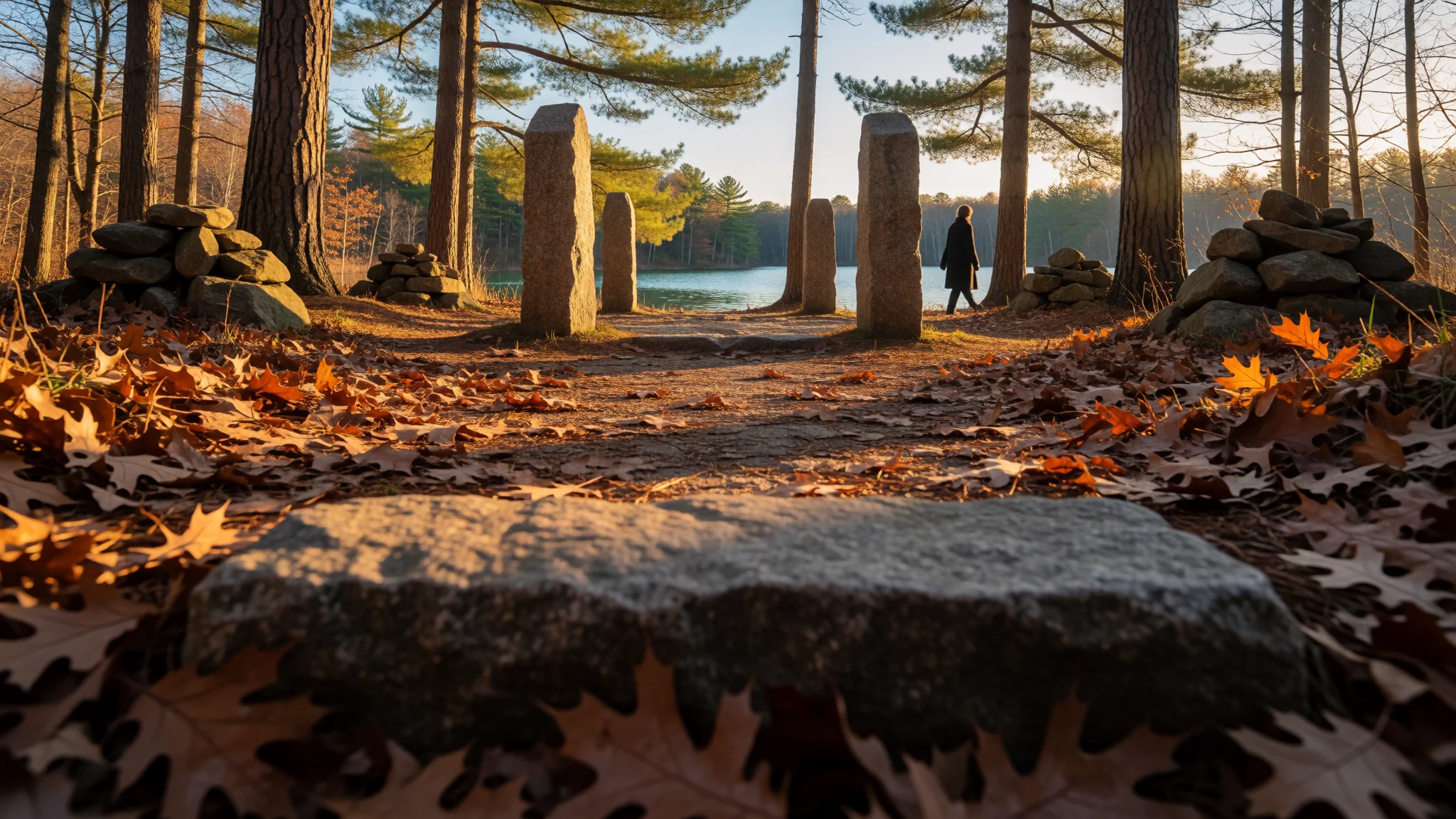
Walden Pond lies in Concord, Massachusetts, a short drive from Boston, and it is a kettle lake: a hollow left when a block of glacial ice, buried in gravel at the end of the last ice age, melted and the basin filled with water. That origin explains the steep sides, the lack of any big stream feeding it, and the clear, cold look of the water in summer. The pond sits inside Walden Pond State Reservation, a state park run by the Massachusetts Department of Conservation and Recreation. Woods of oak and pine surround it, and a path loops the whole shoreline, climbing and dropping above small coves. The main beach is at the south-eastern end, beside the bathhouse buildings and a newer visitor centre designed to run without fossil fuel. The car park is across the road from the pond, and a ramped footpath leads down to the water. On the northern side, granite posts mark where Henry David Thoreau's cabin stood, and a replica of the cabin, with a statue of him, can be seen nearby. The reservation is a National Historic Landmark, so it works as a swimming spot and a literary pilgrimage at once. It is open all year for day use, but overnight camping is not allowed. Summer weekends are busy, and winter is quiet, with walkers on the shore and sometimes ice on the pond.
Its story
Walden Pond became known because of one long experiment in simple living. In the summer of 1845, Henry David Thoreau, a Concord writer, philosopher and Transcendentalist, moved into a small cabin on the northern shore and stayed for two years. He grew a few crops, walked the woods, watched the pond change through the seasons and wrote. The book that came out of it, Walden; or, Life in the Woods, appeared in 1854 and has been read ever since as an argument for living with less and paying closer attention. The legend of the hermit is overdone: the town was an easy walk away and he went there often. Nor was he the first person to make a modest living at the edge of Concord's common land. Zilpah White, a formerly enslaved woman, lived alone in a one-room house beside Walden Road and supported herself by spinning flax into linen fibres. Few women in Concord managed that kind of independence then, and Thoreau drew inspiration from her. In the twentieth century the pond's meaning shifted again. It was recognised as a National Historic Landmark in the early 1960s because of its link to Thoreau, and later federal law helped secure its preservation. Walden Pond now holds two readings of the same water, Thoreau's quiet attention and the summer crowd of swimmers, and most visitors enjoy both in a single day.
What to see
- Thoreau's cabin site — Northern shore, Walden Pond State Reservation
The site of Thoreau's cabin, a short way north of Walden Pond, is marked by a row of granite posts set in the woodland. Little remains except the outline and a heap of stones left by visitors, yet it is why most people come. A replica of the cabin and a statue stand nearby. Go early for quiet.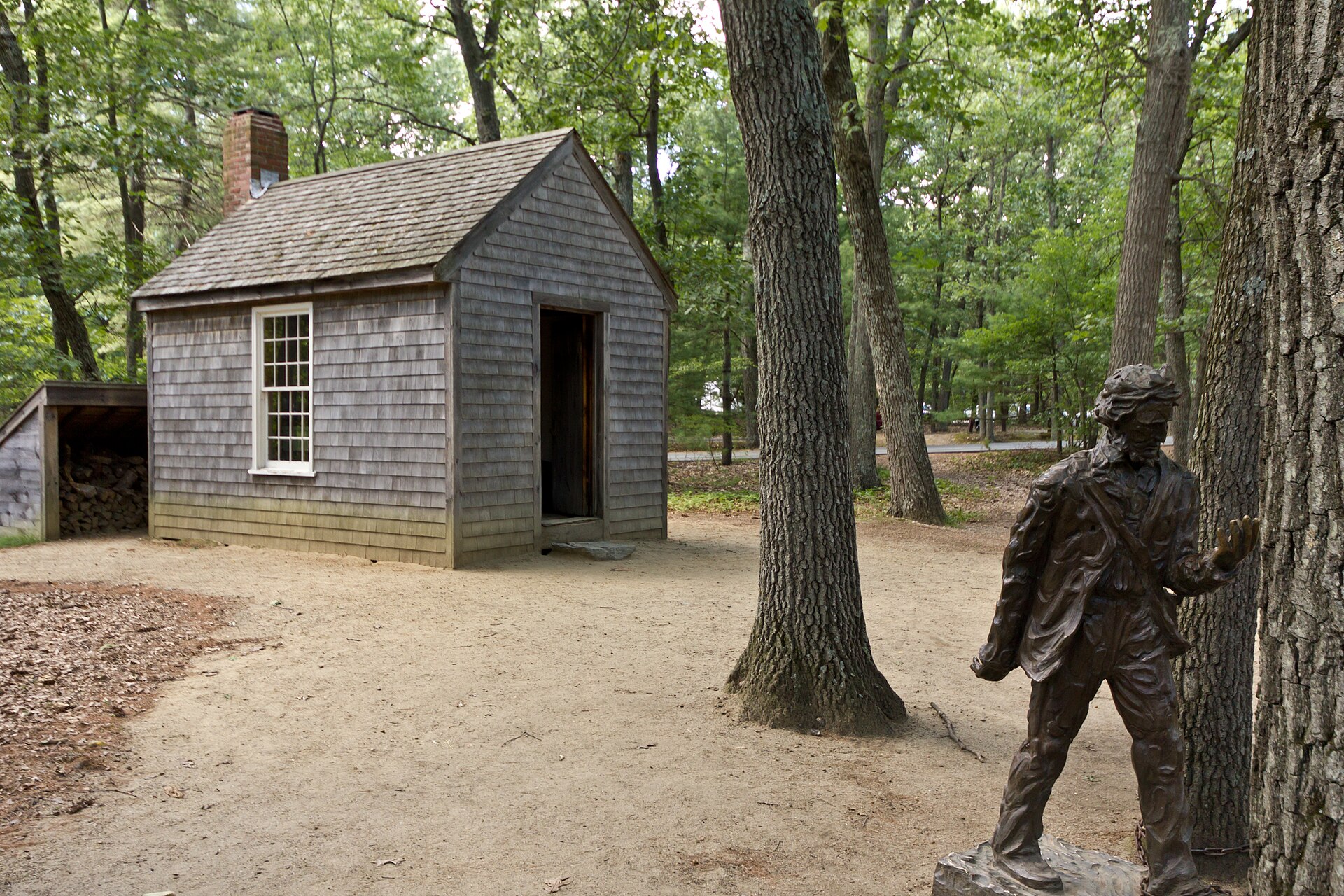
- Main beach and shoreline path — South-eastern shore, Walden Pond State Reservation
The main beach at the south-eastern end of Walden Pond is where summer swimmers gather, with the bathhouse buildings close by. For quiet, walk the path round the shore instead: parts are sandy beach, other parts drop steeply to the water, and small coves give walkers somewhere to sit. The loop is easy, though roots and slopes make trainers sensible.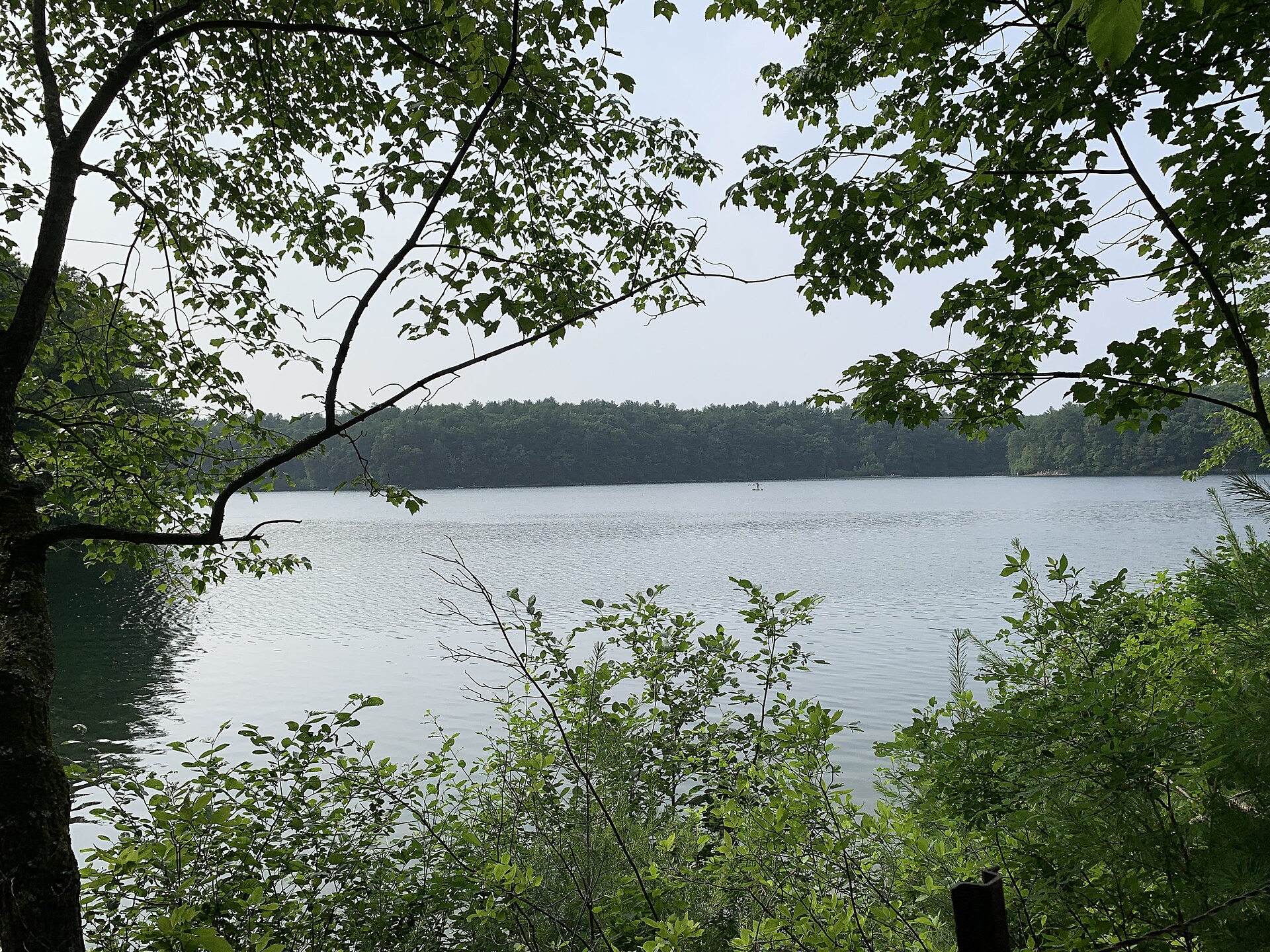
- Walden Pond Visitor Centre — Near the main beach, Walden Pond State Reservation
The Walden Pond Visitor Centre, designed by Maryann Thompson, uses no fossil fuel and shows how a modern building can sit lightly among trees. It is a sensible first stop for orientation and for information on trails and swimming conditions. Check the state park's official page for opening times before planning around it.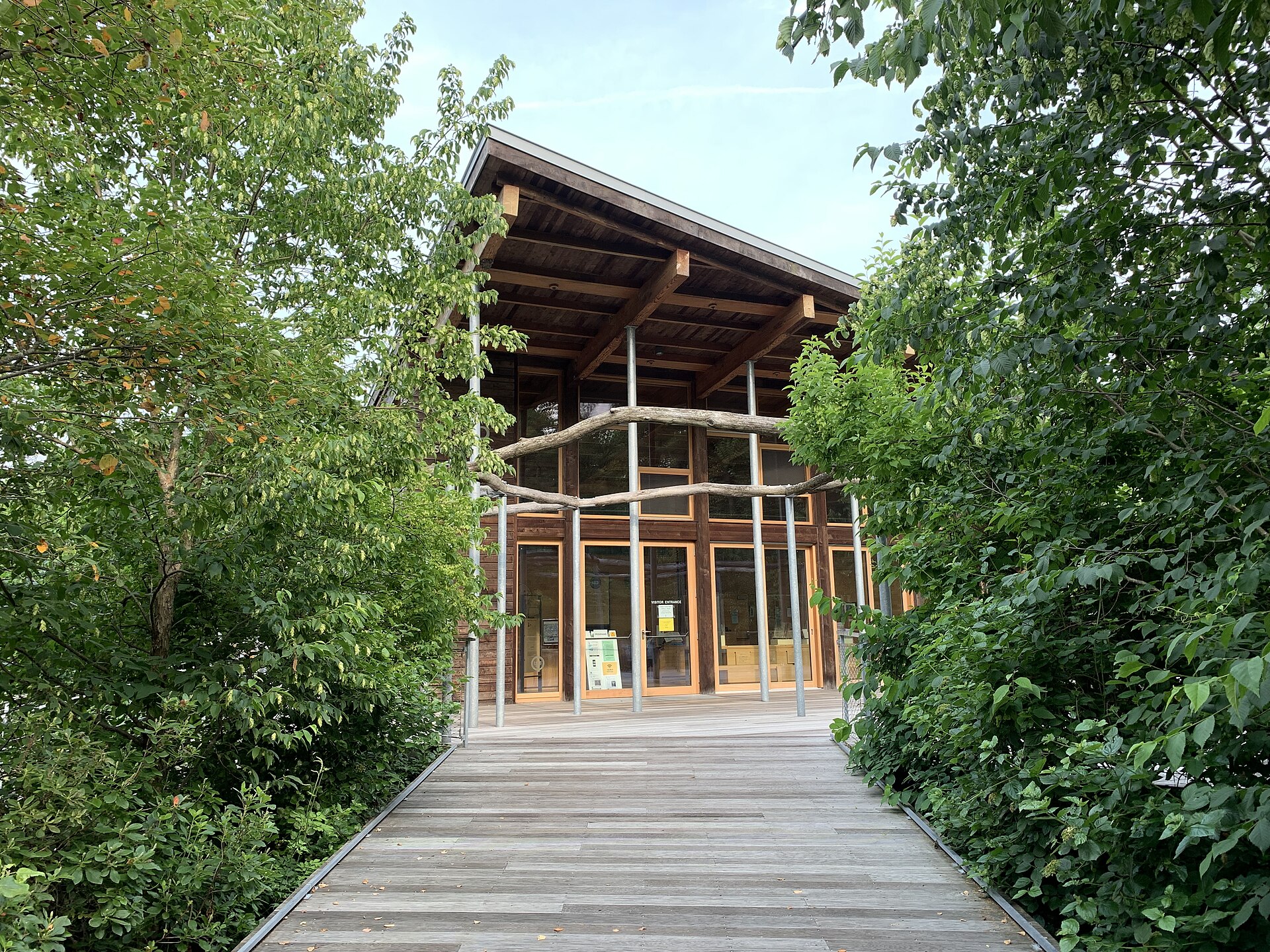
- Sleepy Hollow Cemetery — Concord town
Sleepy Hollow Cemetery in Concord is the resting place of Henry David Thoreau, and of Ralph Waldo Emerson, Nathaniel Hawthorne and Louisa May Alcott, all on the same quiet hillside. Visitors often leave pencils, pens or small stones on the graves. It is an easy short detour from the pond by car or bicycle. - Concord Museum — Concord town centre
The Concord Museum, in the town centre, gathers the local story around Emerson, Thoreau and their neighbours. It is a sensible wet-weather stop and gives context that the walk round the pond cannot. Check the museum's official site for opening times and tickets before going. - Orchard House — Lexington Road, Concord
Orchard House was the home of the Alcott family and is the setting of Little Women. Tours run at varying times depending on the season, so check the official site before travelling. With Emerson's house and the Wayside close by, it makes a pleasant literary afternoon in Concord after a morning at the pond.
Culture
Walden Pond carries the culture of Concord, a small New England town that was a centre of American writing and reform in the nineteenth century. Thoreau, Ralph Waldo Emerson, Nathaniel Hawthorne and Louisa May Alcott all lived here, and their houses and graves are still part of the town's character. Transcendentalism, the loose philosophy Thoreau belonged to, valued independent thought, nature as a teacher and simple living, and those ideas still shape how people behave at the pond. Visitors tend to walk slowly, read the quotation sign near the path and add a stone to the heap at the cabin site. Alongside the pilgrims, local families treat the pond as a summer swimming hole, and school groups and joggers share the shore path. Conservation is taken seriously: the reservation is protected state land, and federal preservation law has backed that protection. Concord also carries Revolutionary history, with Minute Man National Historical Park a short drive away, so conversation in the town often drifts from literature to the start of the American war of independence. Keep to the marked paths, swim only in the designated areas and take your rubbish home, so the shore stays as quiet as Thoreau described it.
What to wear
Walden Pond sits in New England, which has no single national costume, so the traditional clothing of Thoreau's Concord was ordinary working dress of the nineteenth century: wool coats and trousers, linen shirts, cotton dresses and hard-wearing homespun. Linen mattered locally, since Zilpah White earned her living spinning flax into linen fibres on Concord's common land. Period dress is seen today mainly on guides and re-enactors at the historic sites around the town. What people wear now is plain and practical: swimwear and towels in summer, fleeces, waterproof jackets and trainers or walking shoes for the rest of the year, with caps and sunglasses common on bright days. Nobody dresses up for the pond. Visitors should dress for the weather and the terrain. In summer, bring swimwear, a hat and sandals or water shoes for the shore, and wear long trousers and socks on the woodland paths as protection against ticks and mosquitoes. In spring and autumn, pack layers, since mornings are cool. In winter, a warm coat, hat, gloves and boots with good grip are needed for icy paths. No special modesty rules apply at the pond, though swimwear belongs at the beach and not in the town's museums, cafes and shops.
What to eat
- Slow-rise bread — A bakery in West Concord
Loaves made with a slow rise and a homegrown yeast starter, sold at a bakery in the West Concord village. Buy a loaf and some pastries on the way to the pond and picnic on the shore afterwards. - Farm-stand baking and prepared food — A farm stand on the edge of Concord
Seasonal produce, baked goods and ready-made dishes, good for assembling a picnic. The farm stand is on the outskirts of Concord and stays open through the year, so it works in winter as well as summer. - New England seafood — A seafood market in West Concord
Fish and shellfish bought at a seafood market that also serves a few dishes at outdoor tables. Seating is limited, so expect to take food away or eat quickly, and be ready for a short queue at lunchtime. - Comfort-food breakfast — A cafe near West Concord station
A cooked breakfast or hearty lunch at a cafe near the West Concord railway station: eggs, sandwiches and plain comfort food. Good fuel before walking the full pond loop, or before a cycle ride out from the station. - Pizza and local beer — A brewpub or Italian eatery in south Concord
Pizza, Italian dishes and beer from a local brewpub, in the south of Concord near the pond. A relaxed way to end a day of swimming and walking, and busy on warm weekend evenings, so arrive early.
Plan it
Best time. Late May to June and September to early October: the water is swimmable in summer, the woods are green or turning to autumn colour, and crowds are thinner than on July and August weekends. Winter is cold and quiet, and the pond can freeze.
How long. 1–2
Getting there. Fly into Boston Logan, then take the Fitchburg Line commuter train from North Station to Concord centre. The station is a fair walk from the reservation, so plan a taxi, ride-share or bicycle for the last stretch. By car, take the main highway that crosses Concord and follow signs to the reservation; the car park is across the road from the pond. Most station parking is reserved for Concord residents.
Budget. mid
Tips
- Arrive early on summer weekends, when the reservation fills quickly
- Check the official Massachusetts state parks page for parking, swimming and opening conditions before travelling
- Overnight camping is not allowed, so stay in Concord or Boston
- Carry water, a towel and insect repellent, and check for ticks after woodland walks
- Pair the pond with Concord town centre, where the museum, cemetery and writers' houses are close together
Etiquette
- Stay on the marked paths and off the shoreline banks
- Swim only in the designated areas
- Take all rubbish home with you
Nearby
Sources
- Wikidata Q2023853 (CC0)
- Wikipedia, Walden Pond (rev 1373471496) (CC BY-SA 4.0)
- Wikivoyage, Concord (Massachusetts) (rev 5434678) (CC BY-SA 4.0)
- Photo: Thoreau's Cove, Concord, Massachusetts (Detroit Publishing Co.) (Public domain)
- Photo: An outlook of Walden Pond (Erik Granlund) (CC BY-SA 4.0)
- Photo: Relief location map of the USA (Uwe Dedering) (CC BY 3.0)
- Photo: Walden Pond Visitor Center (Erik Granlund) (CC BY-SA 4.0)
- Photo: Walden Pond at Dusk, December 24, 2012 (Victorgrigas) (CC BY 3.0)
- Photo: Walden (ptwo from Allahabad, India) (CC BY 2.5)
- Photo: Thoreau quote sign, Walden Pond (Percival Kestreltail) (CC BY-SA 4.0)
- Photo: Replica of Thoreau's cabin near Walden Pond and his statue (RhythmicQuietude) (CC BY 3.0)


