Wakulla Springs
Wakulla Springs, United States
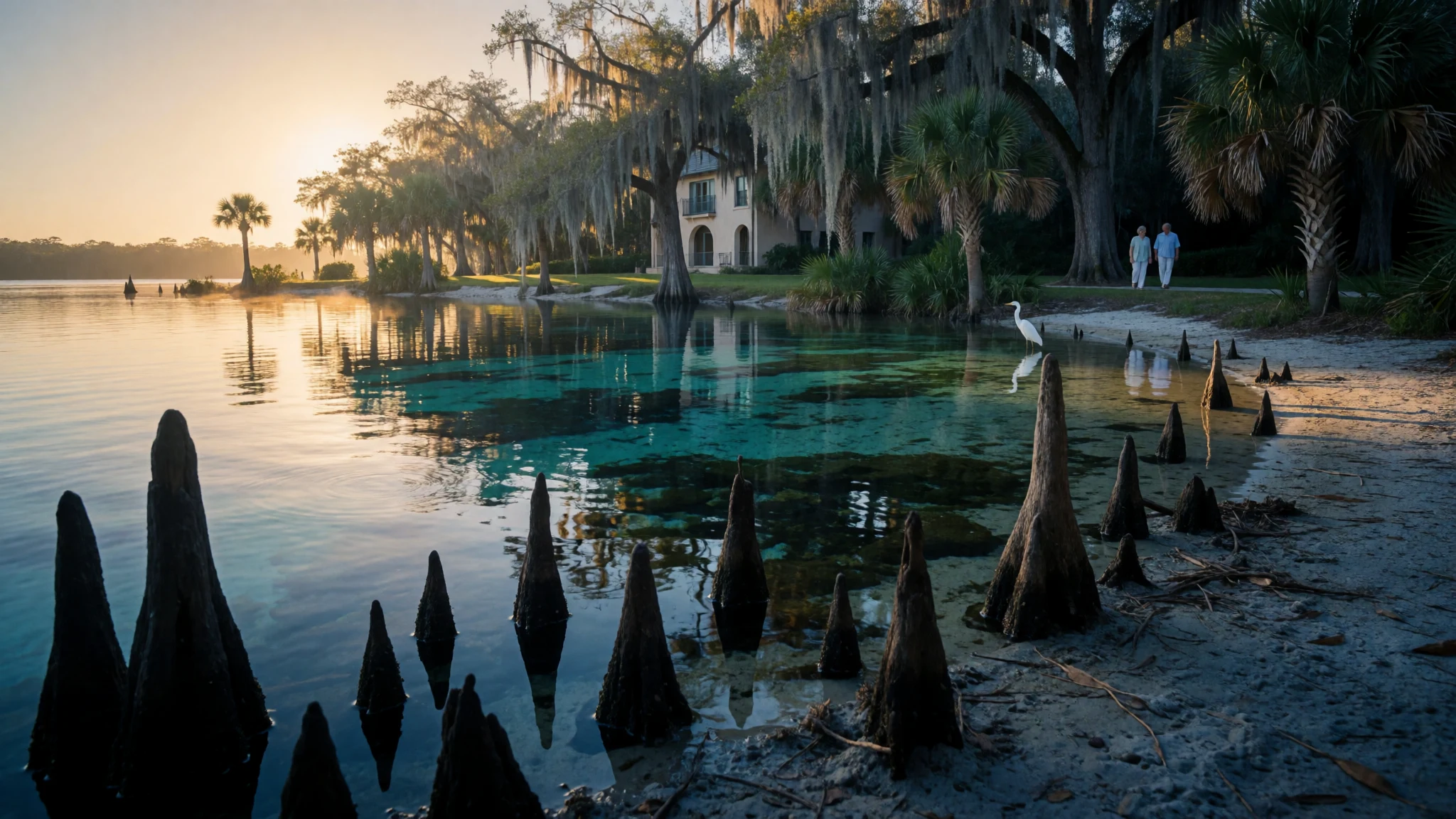
Wakulla Springs offers a slow boat ride through swamp forest above an ancient spring, close to Tallahassee but far from Florida's crowded beaches.
The place
Wakulla Springs, formally Edward Ball Wakulla Springs State Park, sits in Wakulla County on the eastern side of the Florida Panhandle, a short drive south of Tallahassee. It is a wildlife sanctuary built around a large spring whose water rises into a wide basin and flows off as the Wakulla River, winding through swamp forest and cypress towards the Gulf of Mexico coast. The park is on the National Register of Historic Places and is a designated National Natural Landmark, so it earns its protection twice over, for history and for nature.
The surrounding county is quiet by Florida standards. Beaches here lie on long skinny islands across a waterway from the mainland, while much of the coast behind them is swamp, and the towns are small and few. Most holiday traffic heads further west, to places such as Port St. Joe and St George, which leaves this stretch calmer. The state capital, Tallahassee, is the nearest city of any size, and it is where most visitors land and sleep.
The experience is slow and low-key: a boat on the river, a walk beneath old trees, a look at the spring basin from its edge. Wildlife is the draw, and mornings are the best time to see it. A car is essential, since public transport in the region is thin. Summer is humid and hurricane season runs from June to November, so the calendar matters more here than at many parks.
Its story
Wakulla Springs has been a gathering place for people far longer than it has had a lodge or a name on a map. Paleo-Indian hunters camped beside the spring many thousands of years ago, when mastodons and bison still roamed the region. Remains of mastodons, sloths, oversized armadillos and camels have been found on the floor of the basin, a reminder of how different the landscape once was.
Archaeologists have since recorded dozens of sites within the park boundary. Digging at the lodge site turned up layers of occupation stacked one above another, running from the earliest Paleo-Indian visitors through Archaic, Norwood, Weeden Island and Fort Walton cultures, then Seminole and finally twentieth-century life. It reads almost like a timeline of the Southeast in one patch of ground.
The modern chapter belongs to Edward Ball, financial manager for the DuPont family, who owned the land and built the lodge before the Second World War. After his death his trust sold the tract to the state of Florida, which turned it into the park that carries his name. Glass-bottomed boats once showed the spring bed, but water clarity has declined and they no longer run; ordinary boat tours of the spring and river continue through the year. The change is a reminder that springs are living systems, sensitive to what happens in the land around them.
What to see
- The spring basin — Edward Ball Wakulla Springs State Park
The heart of the park is the spring basin, a broad pool where water wells up from underground and the bottom fades into darkness. Swimmers and divers appear in older photographs, but access rules change, so check the official site before planning a dip. Early light on still water is the reward for arriving first.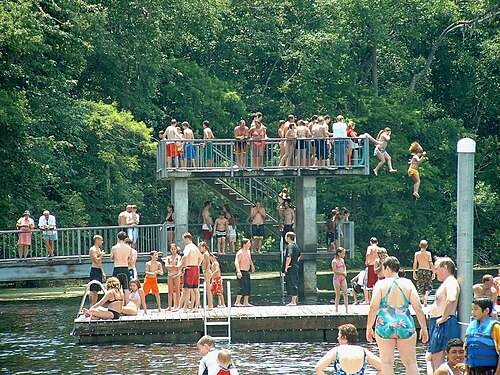
- Boat tour on the Wakulla River — Tour boat dock, Wakulla Springs State Park
Standard boat tours run on the Wakulla River through the year, drifting slowly past cypress, turtles, birds and the occasional alligator. The pace is unhurried and the guides point out what is easy to miss. Glass-bottomed boats have stopped, so the pleasure is the river itself rather than the spring floor. Check times on the official site.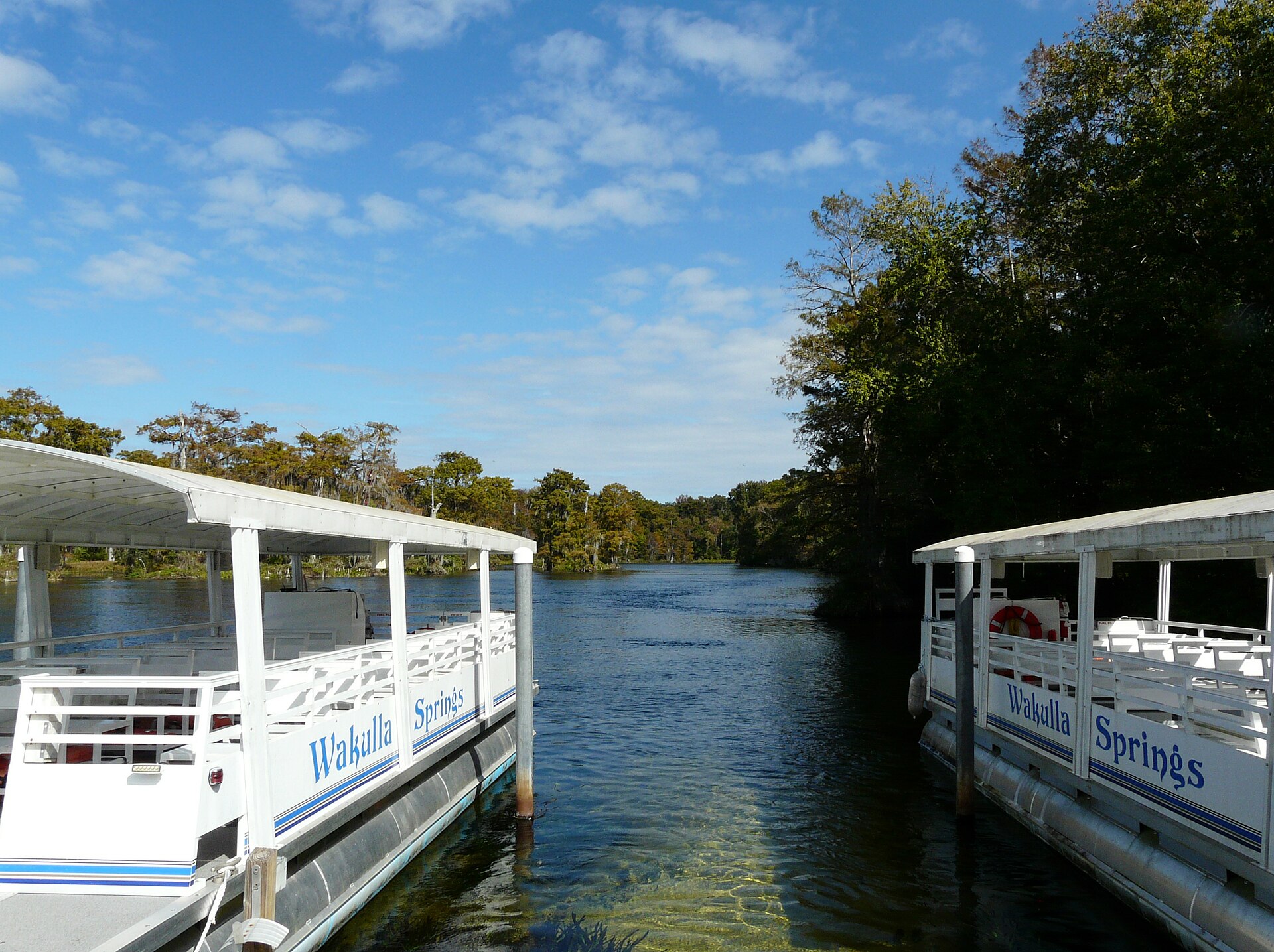
- Wakulla Springs Lodge — Edward Ball Wakulla Springs State Park
The lodge was built by Edward Ball and remains the park's historic centre, set back from the water among old trees. It is a good place to understand how the spring became a protected landscape. Opening arrangements change, so confirm what is on offer with the park before making the drive. - Wakulla River Upper Bridge — Upper Wakulla River, within the park
The Wakulla River Upper Bridge gives a quiet vantage over the river upstream, framed by trees that turn colour in autumn. It suits a short stop with binoculars rather than a long outing, and the water below is calm enough to show reflections. Bring insect repellent in the warmer months.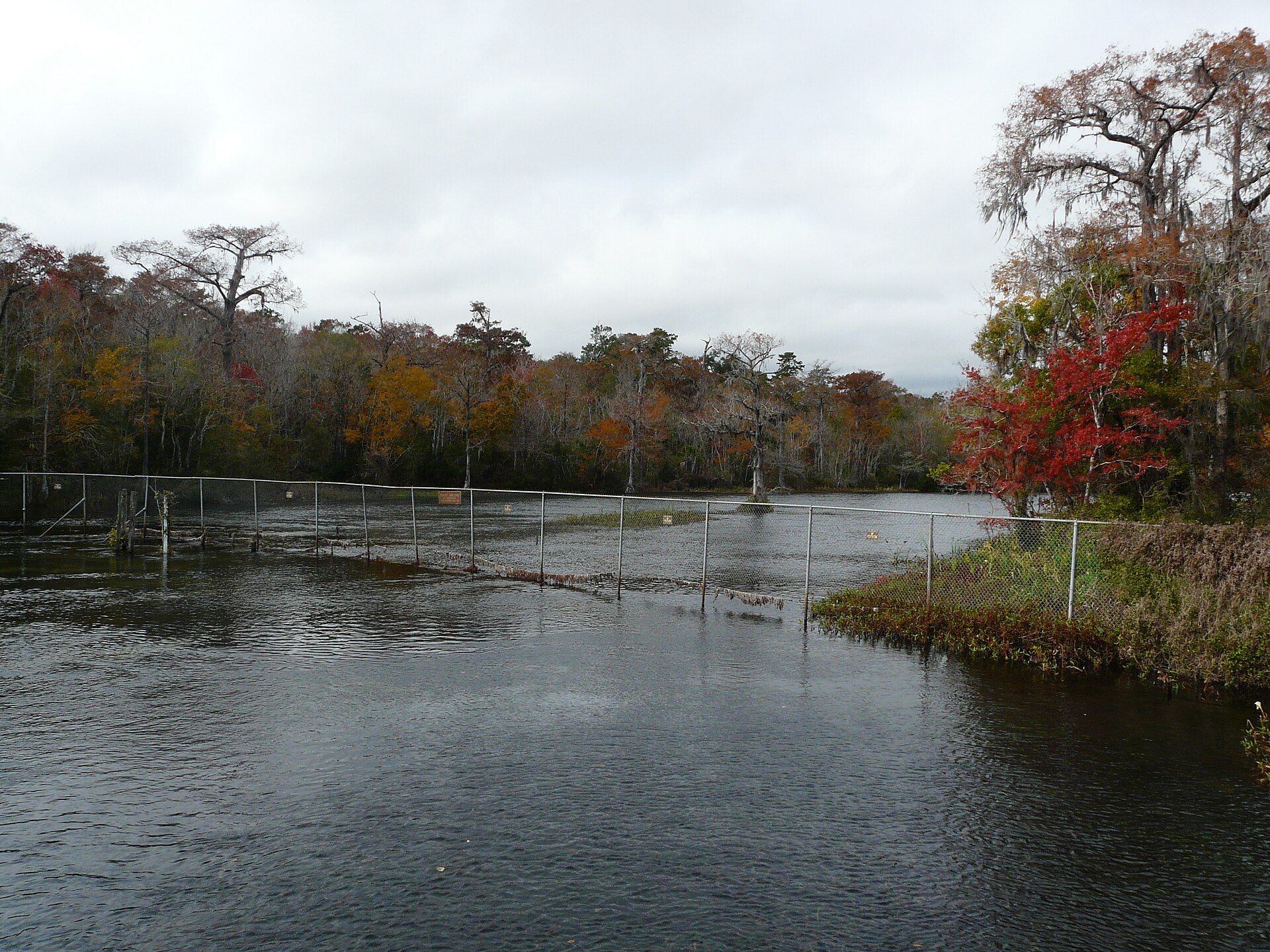
- St Marks Light — St Marks, Gulf coast
St Marks Light stands on the coast within an easy drive of the park and is the one lighthouse in the Forgotten Coast group that visitors cannot climb. It still makes a pleasing short detour for marsh views and coastal birds. Treat it as an add-on to a day at the springs.
Culture
Wakulla Springs sits where the Deep South meets what locals call Old Florida, and its culture is as much about conservation as custom. Families, birders, anglers and school groups from Tallahassee and beyond make up most of the crowd, so the mood is relaxed rather than touristy. Southern manners apply: people greet strangers, small talk comes easily, and 'sir' and 'ma'am' are still in everyday use.
The deeper layer is Indigenous. Seminole and earlier peoples used this spring for thousands of years, and archaeologists have recorded dozens of sites inside the park, so the ground itself is treated as heritage rather than scenery.
Water is the shared concern today. The clarity of the spring has declined, and rangers, scientists and local residents talk openly about runoff and the health of the aquifer; conversation on the boat tours often turns that way. The lodge, built before the Second World War, adds a nostalgic note that many in the region are fond of.
Collecting arrowheads, pottery or bones is against park rules, so leave anything you find exactly where it lies and tell a ranger about it.
What to wear
Wakulla Springs has no single regional costume, but Florida has one distinctive textile tradition: Seminole patchwork. Cotton cloth is cut into narrow strips and pieced into bold bands of colour, then sewn into skirts, jackets and shirts. It is worn at festivals and ceremonies and sold by Seminole makers elsewhere in the state, rather than seen around the springs.
What people actually wear here is practical Southern casual: shorts, T-shirts, caps, sandals or trainers, and fishing shirts with vented backs. Mud and humidity beat fashion, and nobody dresses up for a boat ride.
Visitors should dress for heat, sun and insects. Light cotton or quick-dry fabric, a wide-brimmed hat, sunglasses and repellent make a long day on the water easier. Closed shoes suit the trails, while water shoes help if swimming is allowed. A thin rain jacket is useful in summer storms, and a warm layer helps on winter mornings. There is no dress code for religious sites, but modest clothes suit the small village churches of the county.
What to eat
- Gulf oysters — Oyster bars and seafood eateries in Apalachicola and along the Gulf coast
Oysters from the Apalachicola area are the regional classic, eaten raw, steamed or baked. Look for oyster bars and seafood eateries in Apalachicola and along the Gulf coast, and ask staff what came in that day. They are usually best in the cooler months. - Fried fish and hushpuppies — Casual seafood shacks and fish camps near the coast
Fried fish with hushpuppies, small golden balls of fried cornmeal batter, is a staple of the Gulf coast. Find it at casual seafood shacks and fish camps near the water, where plates usually arrive with coleslaw and fries beside the fish. - Shrimp and grits — Restaurants in Tallahassee and cafés in the small towns of the county
Gulf shrimp over creamy corn grits is a Southern kitchen staple, served in Tallahassee's restaurants and in small-town cafés across the region. Spicing and sauces vary from cook to cook, so ask for a mild version if heat is a worry. - Boiled peanuts — Roadside stalls on the rural roads between Tallahassee and the coast
Boiled peanuts, cooked soft in salty water, are a roadside snack across the South. Look for stalls on rural roads between Tallahassee and the coast, and eat them warm from the paper bag. Expect a texture closer to a bean than a roasted nut. - Smoked barbecue pork — Roadside barbecue places around Tallahassee and in county towns
Slow-smoked pork, pulled or sliced and served with a sweet or vinegar sauce, turns up at roadside barbecue places around Tallahassee and in the small towns of the county. Sides usually include coleslaw, beans and cornbread, and portions are generous.
Plan it
Best time. March–April and October–November for milder weather and, in autumn, colour along the river; summer is hot and humid, and hurricane season runs from June to November, so check forecasts if travelling then.
How long. 1–2
Getting there. Fly to Tallahassee airport, hire a car and drive south into Wakulla County; the park is a short drive from the city. Public transport is thin, so a car is needed for the last leg and for exploring the coast.
Budget. mid
Tips
- Check the official site (https://www.floridastateparks.org/WakullaSprings) for boat tour times, lodge arrangements and what is open before you set out
- Arrive early in the day for calmer water and better wildlife viewing
- Carry water, sun protection and insect repellent, especially from spring to autumn
- If travelling between June and November, watch hurricane forecasts and keep dates flexible
Etiquette
- Keep to marked paths and boat routes and give alligators and nesting birds plenty of room
- Take nothing from the ground or water, including artefacts and shells
Nearby
Sources
- Wikidata Q5341734 (CC0)
- Wikipedia: Edward Ball Wakulla Springs State Park (rev 1370149617) (CC BY-SA 4.0)
- Wikivoyage: Wakulla County (rev 5390146) (CC BY-SA 4.0)
- Photo: USA Florida relief location map, Eric Gaba (CC BY 3.0)
- Photo: USA relief location map, Uwe Dedering (CC BY 3.0)
- Photo: Summer at Wakulla Springs State Park, Tim Ross (Public domain)
- Photo: Eastern end of Wakulla-Arran Road, The Bushranger (CC BY-SA 4.0)
- Photo: Wakulla Park Drive crossing of the Wakulla River, The Bushranger (CC BY-SA 4.0)
- Photo: Wakulla River foliage, The Bushranger (CC BY-SA 4.0)
- Photo: Wakulla River from Wakulla Springs State Park, The Bushranger (CC BY-SA 4.0)
- Photo: Wakulla River upstream from Upper Bridge, The Bushranger (CC BY-SA 4.0)


Wildlife
- Alligator (animal)
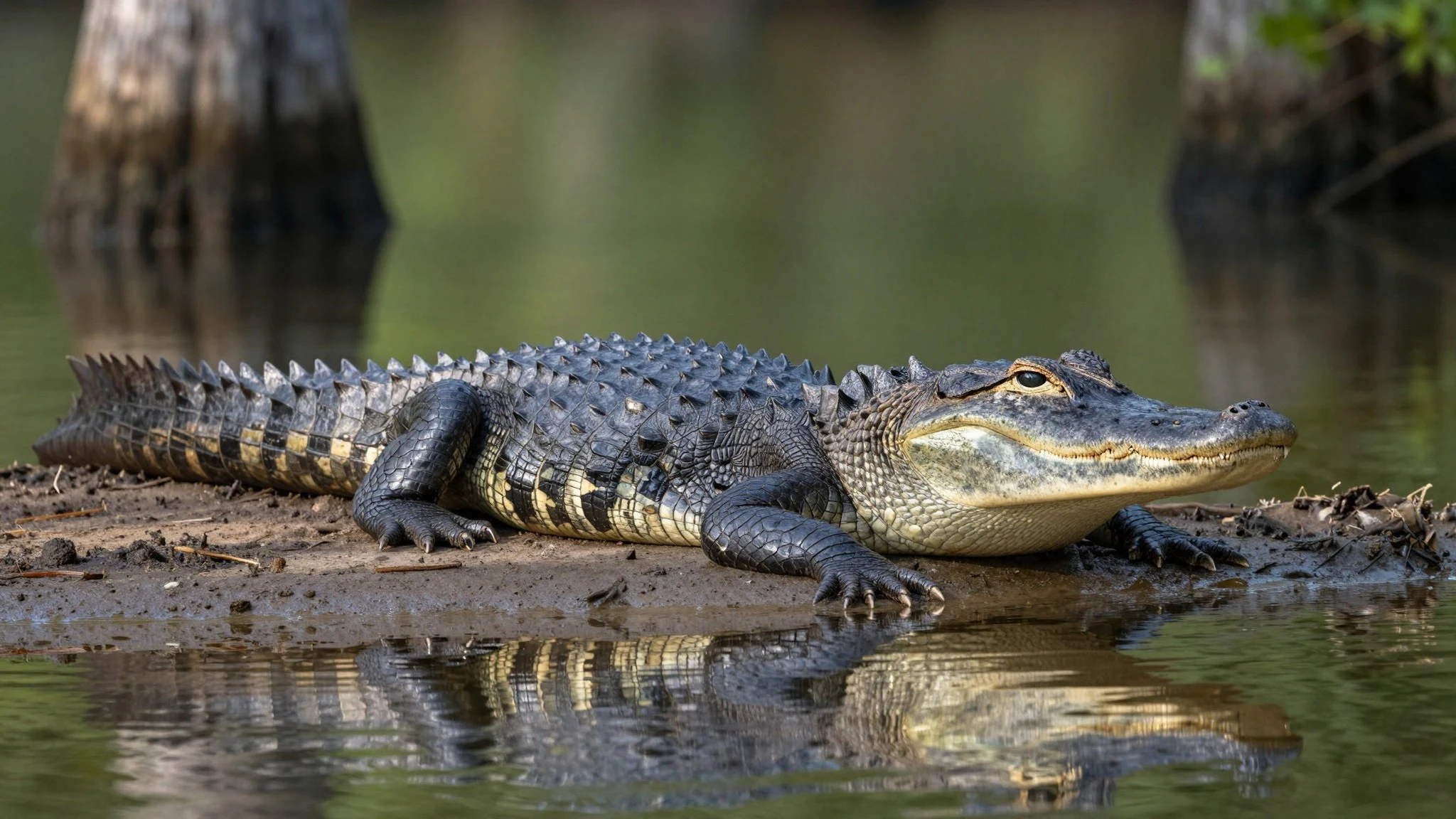
The American alligator is a big reptile of the south-eastern United States, a crocodile cousin that is larger than its only living alligator relative, the one in China. At Wakulla Springs you may spot one from the boat tours on the Wakulla River, which run all year round. The boats glide gently along beneath the cypress trees, so you can look out for a gator among the turtles and birds. Sightings are occasional, so be patient and enjoy the ride.