Viðoy
Viðoy, Faroe Islands
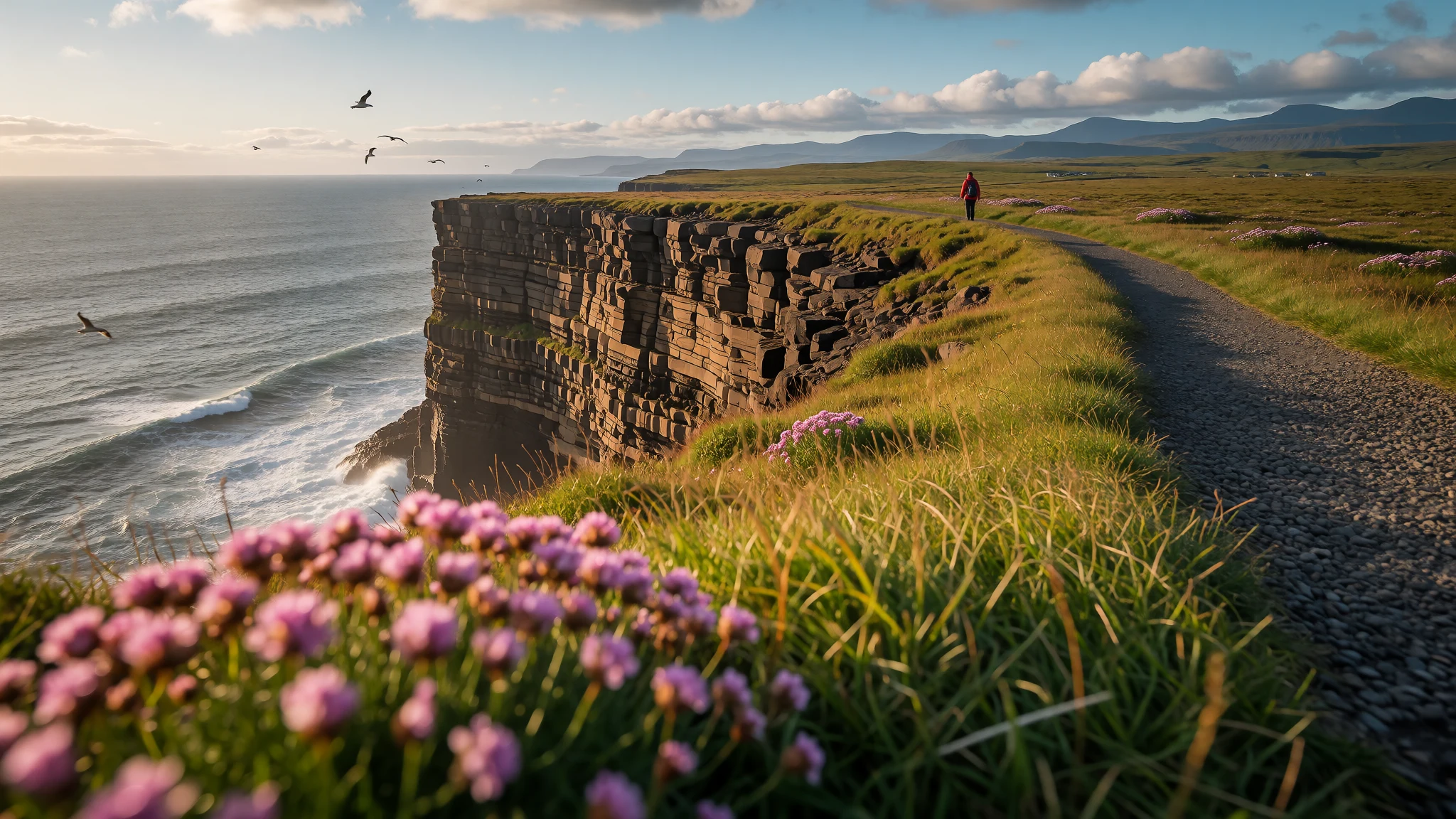
Viðoy is the Faroes' far north: sheer sea cliffs, puffin ledges and a last village at the road's end, reached by an easy causeway.
The place
Viðoy (Viderø in Danish) is the northernmost island of the Faroe Islands, with about 597 residents and mountains rising to 841 m. It sits just east of Borðoy and is tied to it by a road causeway, so reaching it needs no boat. The name means 'wood island', which sounds odd for a place where no trees grow. It refers to the driftwood that arrives on the currents from Siberia and North America. Only two villages exist here. Hvannasund, a ferry port, lies in the south-west, and Viðareiði, the northernmost village in the whole archipelago, lies in the north-west. A single road along the west coast links them. Everything else is open hillside, grazing and sea. The north and east coasts are recognised by BirdLife International as an Important Bird Area, because huge numbers of seabirds breed on the cliffs, including puffins, kittiwakes and guillemots. The island has eleven mountains, and the northernmost of them, Villingadalsfjall, is also the northernmost peak of the Faroes. Weather changes quickly, and the two sides of Viðareiði can feel like different seas: calm on the church side, openly Atlantic on the other. Visitors tend to come for walking, birds and the sense of having reached the end of the road, rather than for any list of attractions. Services are very thin, so the island suits a day trip or a night with supplies.
Its story
The story of Viðoy is one of edges. Its name comes from timber the island never grew: logs carried across the ocean from Siberia and North America washed ashore, and in a treeless country such wood was valuable for building and tools. The settlements grew where a landing place and a little flat grass allowed it. Hvannasund became the ferry port, linking the island to the smaller northern islands of Svínoy and Fugloy, while Viðareiði looked north from the top of the road. Seabirds shaped life too. The cliffs hold colonies of puffins, kittiwakes, guillemots and storm petrels, and for generations birds and their eggs were part of the island economy, alongside sheep and fishing. The Viðareiði church carries a trace of that sea-going past: its silver includes a salver given by the British government in the mid-nineteenth century in thanks for help to shipwrecked sailors. Modern roads and tunnels have changed the pace. The long Northern Islands tunnel from Eysturoy to Klaksvík, and the causeway from Norðdepil to Hvannasund, mean that the journey from Tórshavn is the longest possible in the Faroes without a ferry, yet still an ordinary road trip. Even so, the population is small, and the village rhythm of boats, sheep and weather has not been replaced by tourism.
What to see
- Enniberg cliff — North coast, above Viðareiði
On the north coast, Enniberg drops about 750 m into the sea, a figure the Wikivoyage listing puts slightly higher. It ranks among Europe's tallest sea cliffs by those sources. Reach it on foot from Viðareiði; it is an exposed, unfenced edge, so choose a clear day and keep well back.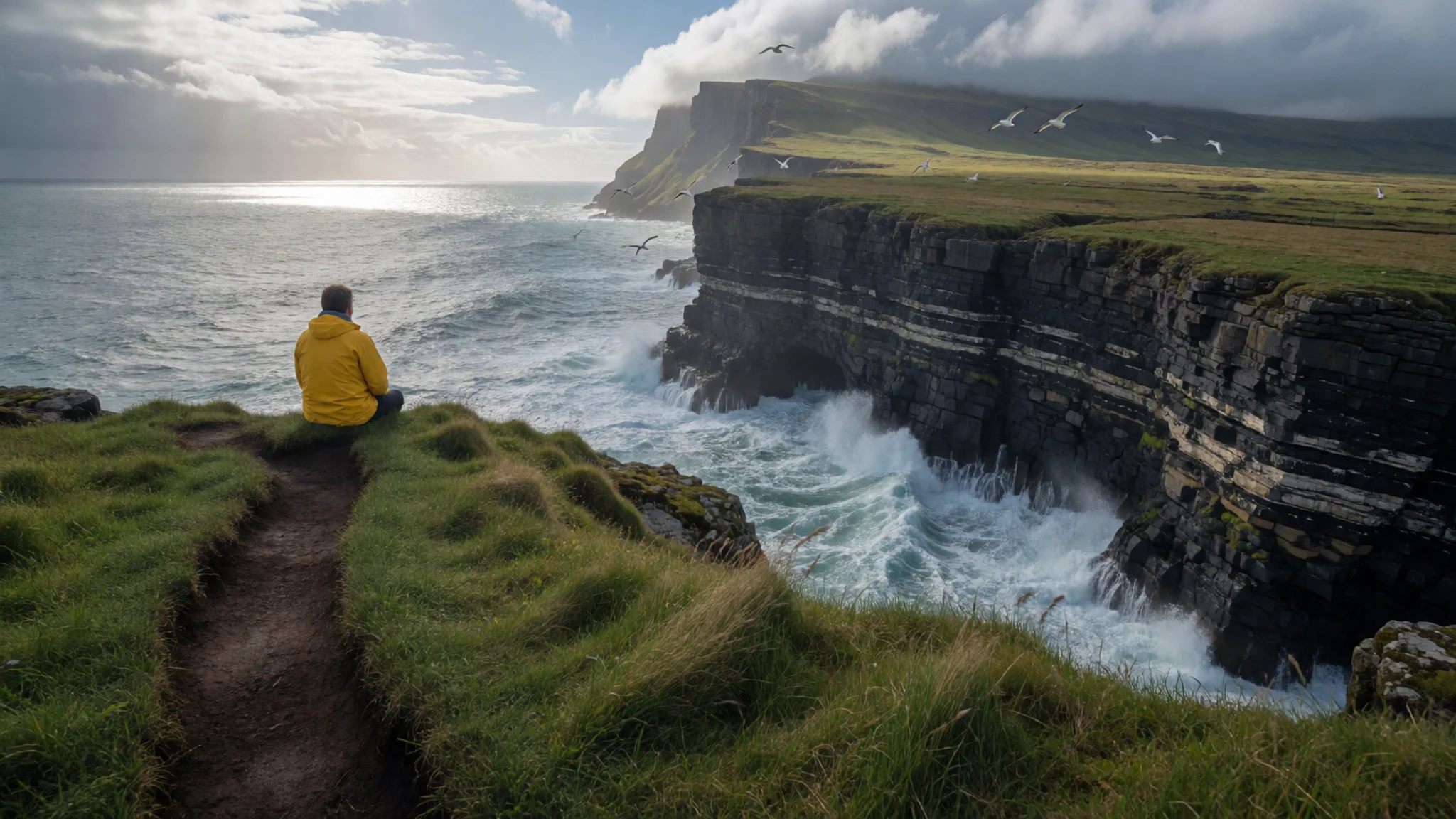
- Villingadalsfjall trail — Viðareiði
The path begins at the northern end of Garðsvegur in Viðareiði and climbs towards Villingadalsfjall, the most northerly summit in the Faroes. It is a quiet, little-used route with long views over the sea. Waterproof boots and a weather check matter; mist can close in fast.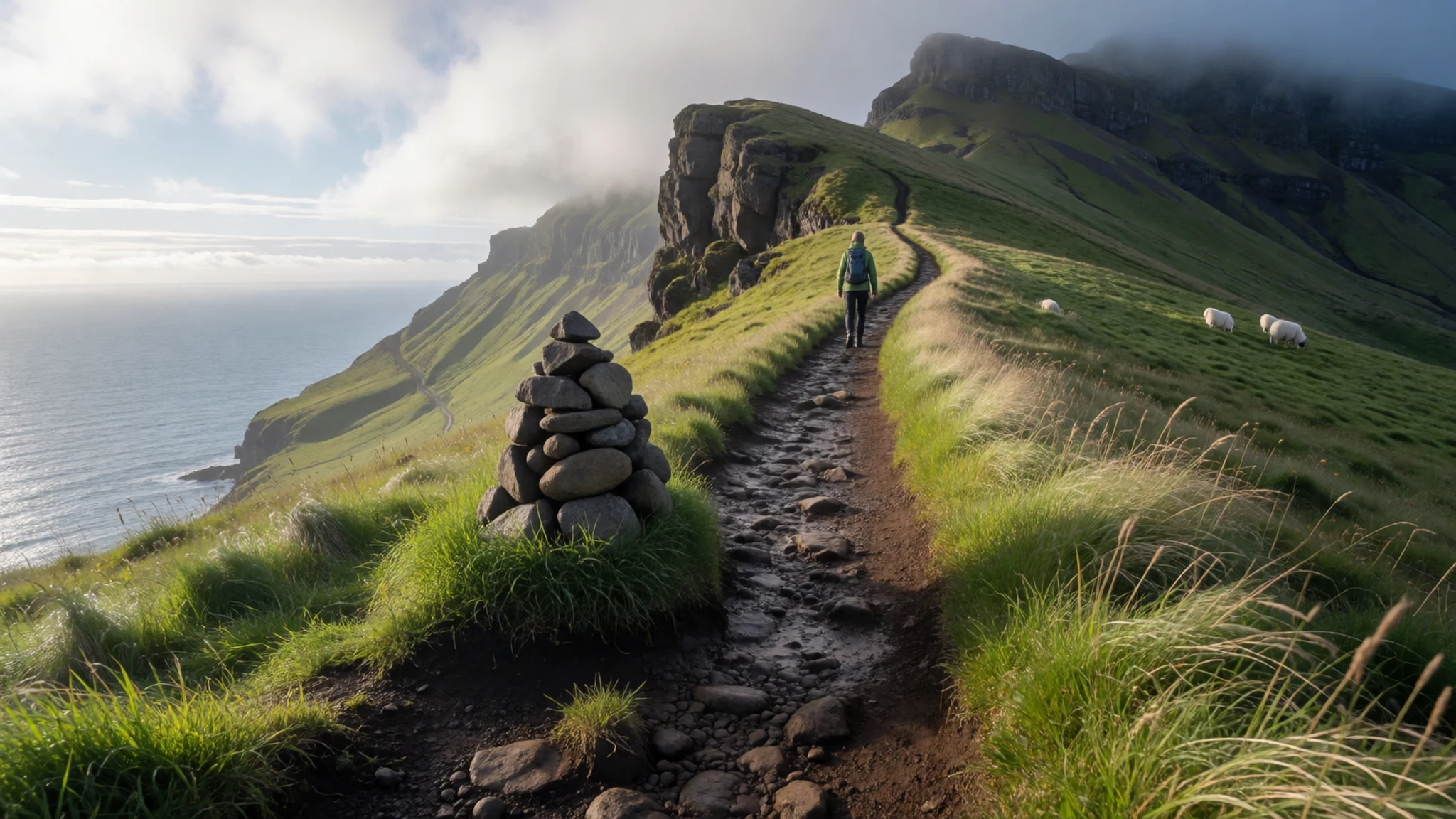
- Viðareiði church — Viðareiði
The village church looks much like others in the islands, but its silver is the reason to step inside, if it is open. Among the pieces is a salver from the British government, given for rescuing sailors from a wreck. Outside, the sheltered shore on this side contrasts with the wild coast behind.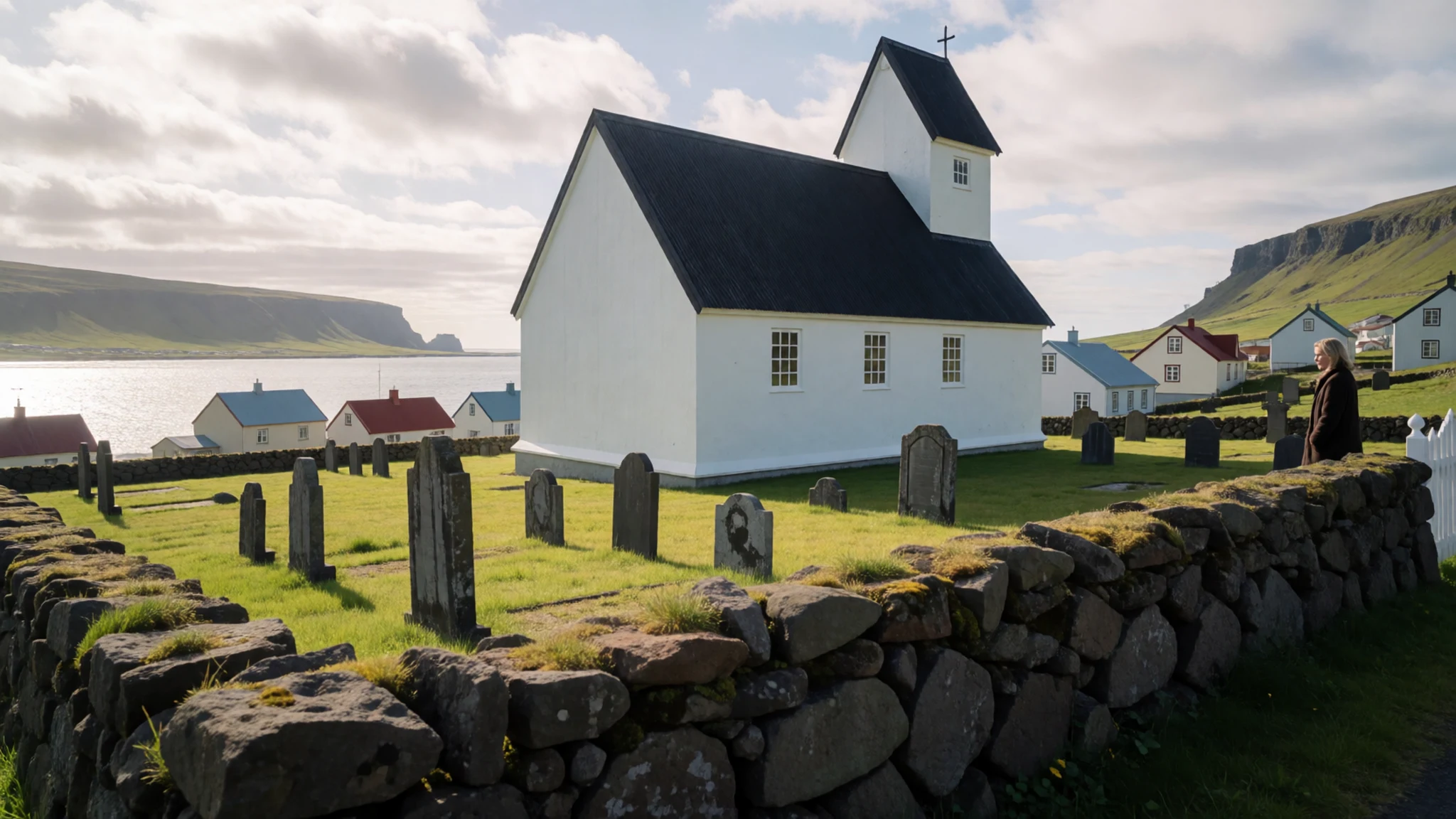
- Seabird cliffs — North and east coasts
The northern and eastern coasts hold breeding colonies of puffins, kittiwakes, guillemots and storm petrels. Summer is the time to see them. Watch from a safe distance on the cliff-top grass, do not approach nesting birds, and bring binoculars, as the best ledges are far below.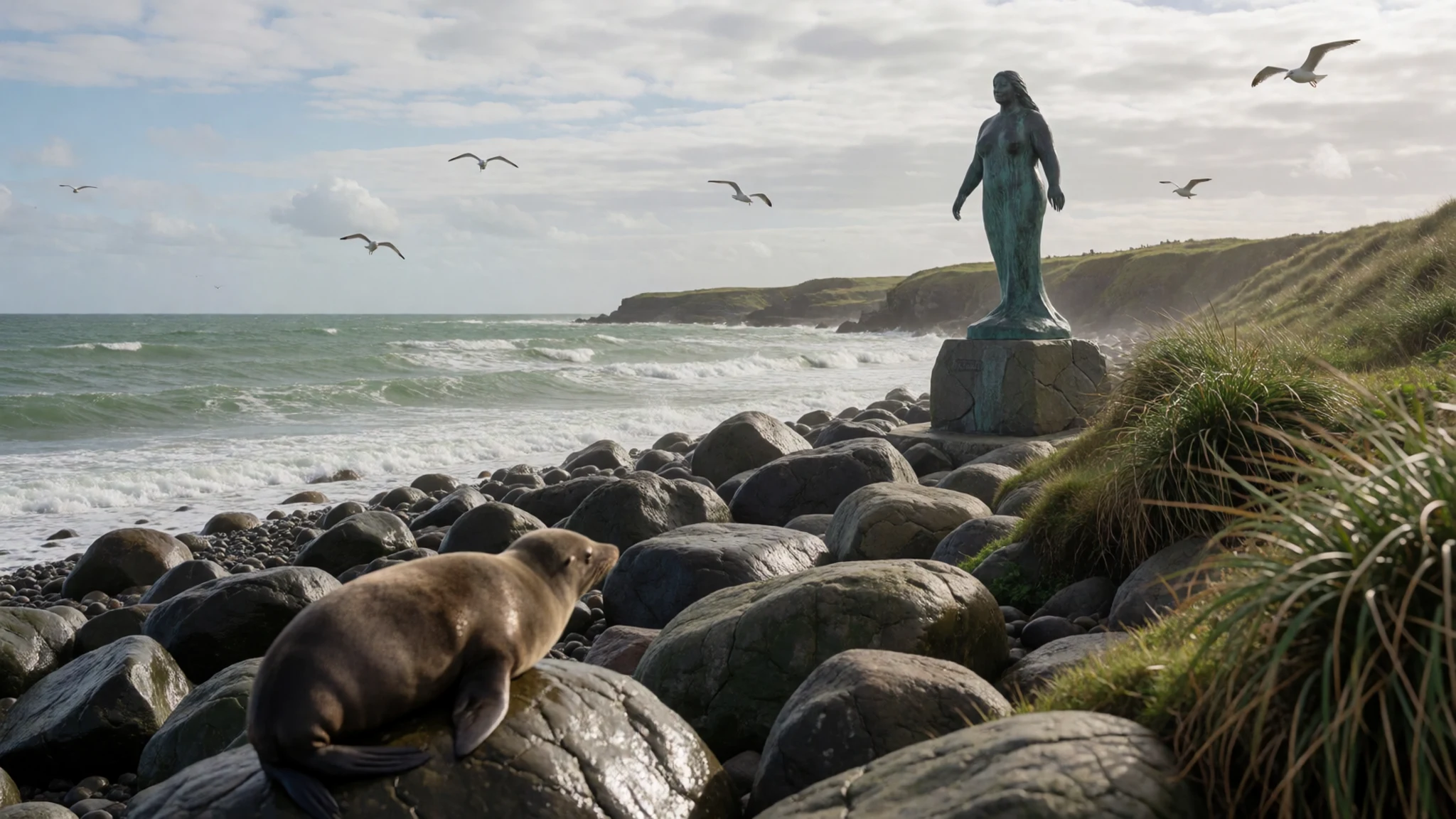
- Kópakonan statue — Northern Islands
A statue of the seal woman, a figure from Faroese folktale, stands near the shore close to Kalsoy's ferry connection. It is a short stop and a good introduction to the islands' stories about seals taking human form. Allow time to read the setting rather than just photograph it.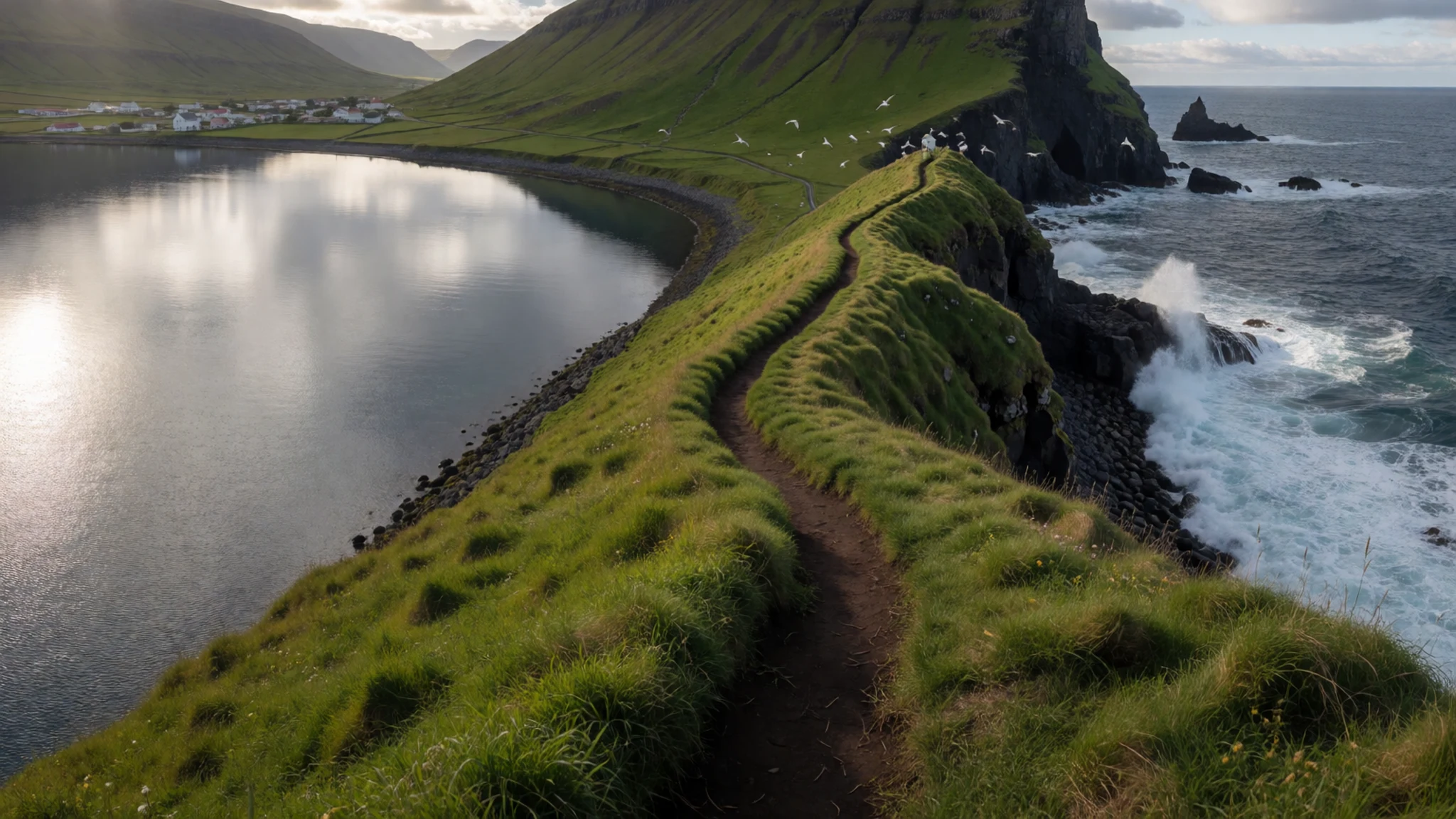
Culture
Viðoy's culture is that of a small Faroese farming and fishing community, where weather, sheep and the sea set the calendar. Faroese is the everyday language, closely tied to Iceland's and Norway's older tongues, and Danish is also understood. Stories matter here: the seal woman of folktale, who sheds her skin to walk on land, is honoured with a statue in the Northern Islands. The church is a focal point of Viðareiði, and many of its fittings were gifts connected to the sea, including silver given in thanks for help to shipwrecked sailors. Self-reliance is part of the character. Fishing, sheep keeping and the use of driftwood have long been part of village life, and the island's name itself records that dependence on what the ocean delivers. Villages are quiet, with few shops and almost no places to eat, so hospitality is personal rather than commercial. Land that looks wild is usually grazed or owned, and the cliffs are nesting ground for thousands of seabirds. Residents accept visitors easily, but they value calm, privacy and care for the fields and animals. Close gates behind you, keep to paths across grazing land, and do not walk through gardens or near nesting birds or sheep with lambs.
What to wear
Traditional Faroese dress is built on wool. The national costume, worn for church festivals, weddings and national occasions, uses dark wool cloth, silver buttons and clasps, and a knitted shawl or cap for women, with knee breeches or dark trousers and a knitted jersey for men. Knitting is central: patterned jumpers, hats, mittens and shawls from the islands' own sheep are still made at home and in small workshops, and the colours come from natural fleece tones and dyes. In daily life, people on Viðoy dress for weather rather than show: waterproof jackets, wool jumpers, sturdy boots and caps, with a good knitted layer under a shell. Dress is practical and understated, and the costume appears mainly on festival days. Visitors should plan for wind, rain and sudden cold even in summer. Bring a waterproof jacket and trousers, a warm mid-layer such as wool or fleece, a hat and gloves, and walking boots with good grip, ideally waterproof, because slopes are steep and wet grass is slippery. Churches have no special rules beyond tidy, modest clothing, so there is nothing particular to pack for them. A knitted jumper bought locally makes a useful, honest souvenir.
What to eat
- Ræst lamb — Eateries in Klaksvík, or at village gatherings
Fermented, wind-dried lamb, a traditional Faroese preservation method. The taste is strong and savoury, somewhere between ham and aged meat. It is usually served in small slices with potatoes. Ask for it at a Klaksvík eatery or a village event.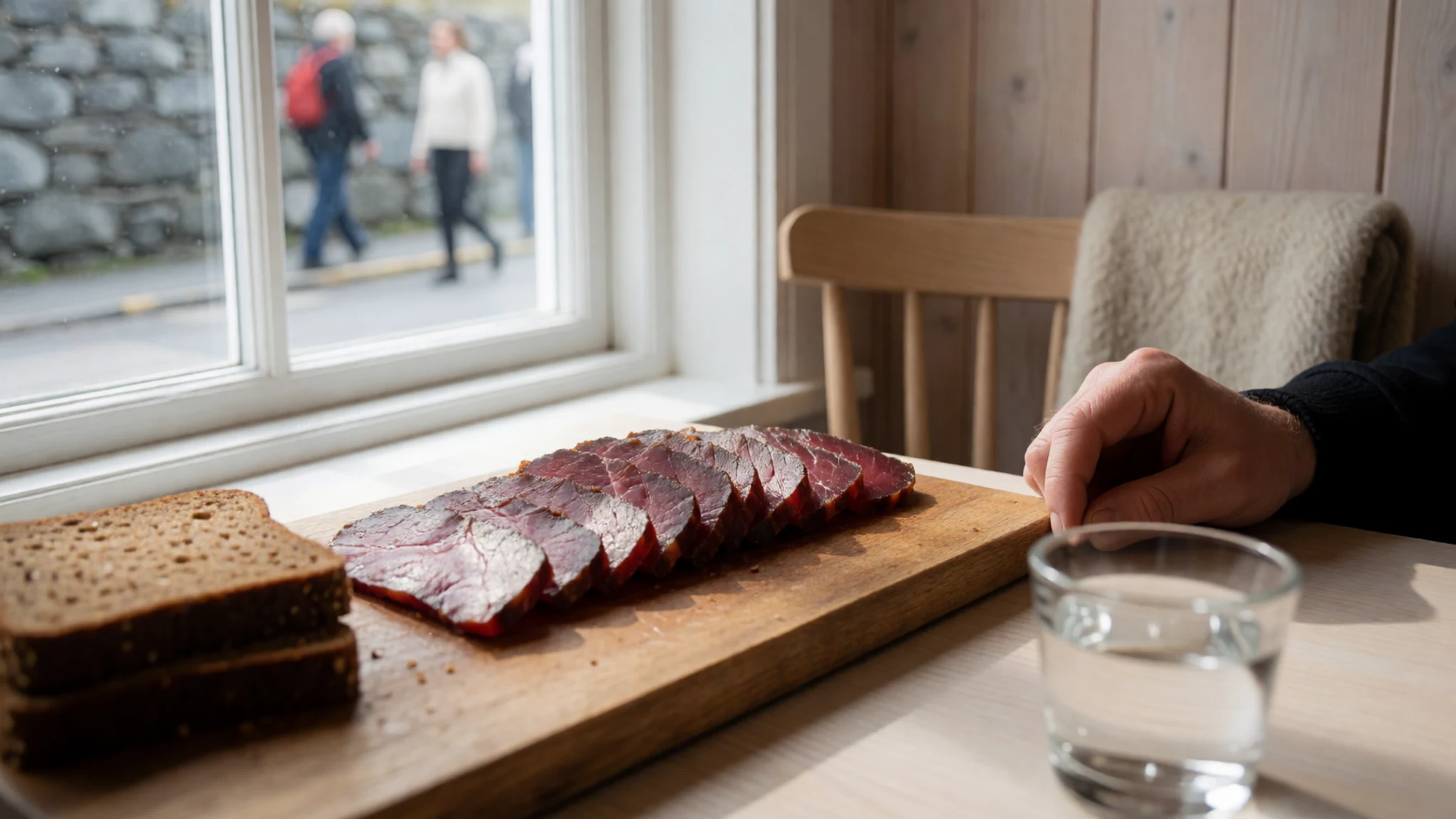
- Skerpikjøt — Traditional eateries in Klaksvík
Wind-dried mutton, hung for months in a ventilated wooden hut until dense and deeply flavoured. It is a classic of Faroese tables, usually thinly sliced. Order it where local food is served, and try a small portion first.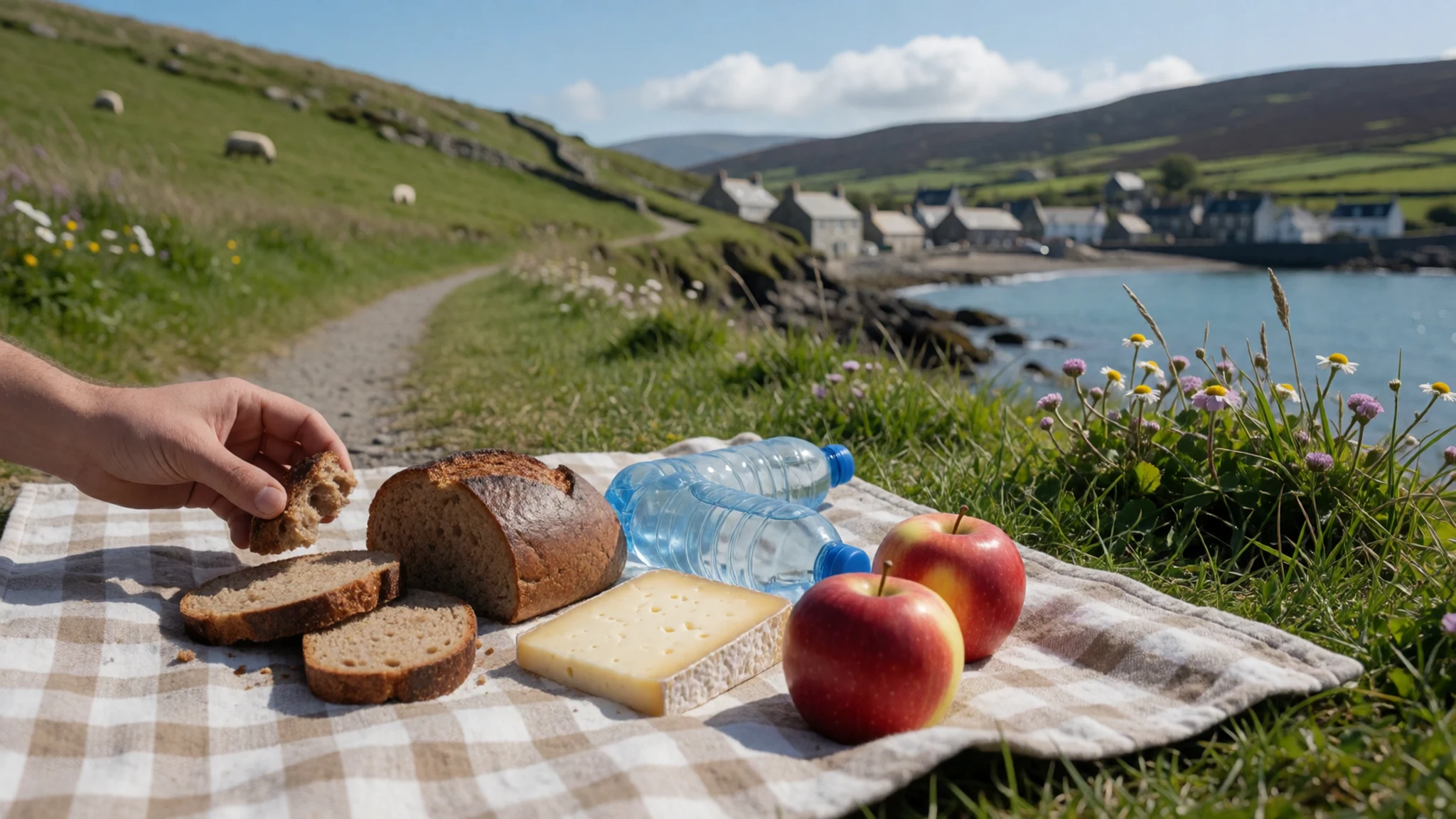
- Fresh fish — Eateries in Klaksvík, or at the harbour
Cod, haddock and other North Atlantic catch are cooked simply, often boiled or pan-fried with potatoes and butter. In a fishing district they are as fresh as it gets. Look for the daily fish on a menu rather than anything elaborate. - Potatoes and root vegetables — Any local eatery or home meal
Potatoes appear beside almost every traditional meal, boiled and plain, with turnips or other roots in season. They suit the cool climate and give the heavier dishes balance. Do not expect spice or sauce; the pleasure is in simplicity. - Lamb dishes — Eateries in Klaksvík
Sheep outnumber people on the islands, so lamb is everywhere, roasted, in stews or in soups. The meat has a distinct grassy flavour from hill grazing. A warming stew is the easy choice after a cold walk.
Plan it
Best time. June to August is the most practical, with the longest daylight, the mildest weather and seabirds on the cliffs. Even then it is cool, windy and changeable, and low cloud can hide the views. Winter is dark, stormy and quiet, with limited services.
How long. 1–2
Getting there. Fly to Vágar airport, then drive or take buses via Tórshavn and the Northern Islands tunnel (Norðoyatunnilin) to Klaksvík. From Klaksvík, a bus crosses the causeway from Norðdepil to Hvannasund on Viðoy. A road along the west coast continues to Viðareiði. The tunnel has a toll for cars, so check the current rate with the operator.
Budget. mid
Tips
- Bring food and water; Viðareiði's two eateries have permanently closed and the only places to eat out are in Klaksvík
- Check the weather and visibility before any cliff walk, as fog arrives quickly
- Wear waterproof boots and carry poles on steep, wet ground
- Check bus times in advance, as services to the north are limited
- Visit the seabird colonies in summer, and watch from a safe distance
Etiquette
- Keep to paths and close gates, as the hillsides are grazed
- Do not approach nesting birds or lambs
- Stay well back from unfenced cliff edges
Nearby
Sources
- Wikidata Q211982 (CC0)
- Wikipedia: Viðoy (rev 1378259047) (CC BY-SA 4.0)
- Wikivoyage: Northern Islands (rev 5412829) (CC BY-SA 4.0)
- Photo: Faroe Islands, eastern shore of Viðoy with Talvborð (Vincent van Zeijst) (CC BY 3.0)
- Photo: Fugloy and Viðoy (Gregor Julien Straube) (CC BY-SA 4.0)
- Photos: Landscape on Vidoy Island 01–06 (Zairon) (CC BY-SA 4.0)


