Fugloy
Fugloy, Faroe Islands
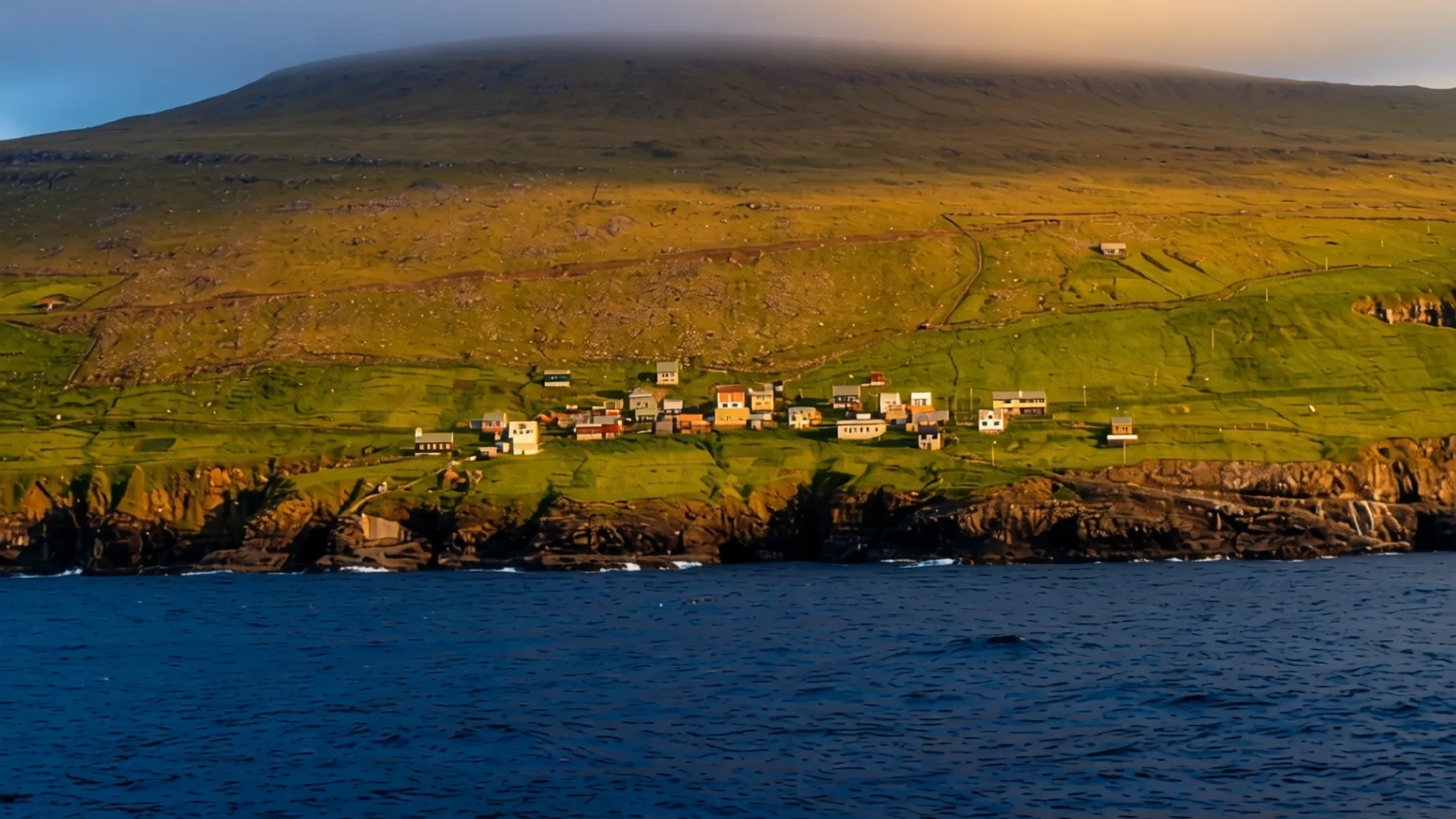
Fugloy is the Faroes' easternmost island: sheer bird cliffs, two tiny villages and a pace of life few places still keep.
The place
Fugloy is the easternmost island of the Faroe Islands, a steep lump of basalt lying off the northern isles. The name means bird island, and the reason is plain from any boat: seabirds crowd the ledges of its cliffs. Only about 40 people live here, spread across two settlements. Kirkja sits on the south coast and Hattarvík on the east. Hattarvík is made up of two small clusters of houses, known locally as Niðri í Húsi and Uppi í Húsi.
The island is hard to describe without the word vertical. Layers of basalt have weathered into slopes and cliffs that leave little flat ground, and the highest point reaches 620 m. Eystfelli, on the east coast, drops 448 m straight into the sea. Close by stands the sea stack Stapin, which carries a lighthouse and, if you squint, a profile that locals and visitors read as an Egyptian pharaoh.
This is not a place of facilities. There is no town, no cluster of cafés and no nightlife. What you get is weather that changes by the hour, grass running to the cliff edge, the noise of birds and the sense of being at the far edge of an already remote archipelago. Fugloy suits people who like walking, watching and doing very little else. It also rewards those who accept that ferries and helicopters, not their own plans, set the schedule.
Its story
People have lived on Fugloy since the Viking Age, and its best-known tale comes from the Middle Ages. The Floksmenn were a band of rebels from the island who, according to the story, controlled and plundered the northern Faroes for a long time. Names attached to them include Høgni Nev, Rógvi Skel, Hálvdan Úlvsson and Sjúrður við Kellingará of Hattarvík. Faroese tradition treats the episode as one of its key separatist myths, a story of defiance towards officials sent from Tórshavn.
The tale has a sombre ending. Sjúrður is remembered as the more thoughtful of the group, pushed towards violence by two companions with a more criminal streak. All four were eventually caught and sentenced to death. Sjúrður was offered mercy, but the story says he could not live with what had been done and asked to share the fate of the others.
In later centuries Fugloy's difficulty was its coast. The harbour has no breakwater, which held back economic growth from the early twentieth century. Farming, some fishing and the catching of seabirds such as puffins kept the island going, and bird catching continues today. At its peak, around the start of the twentieth century, roughly 250–300 people lived here. The Faroese parliament later tried to support the island: electricity arrived in the 1960s, and in the 1980s a road was built between Kirkja and Hattarvík, along with a helicopter route.
What to see
- Hattarvík — East coast
The east-coast village is the island's most photographed spot, built in two small neighbourhoods beneath steep green slopes. Walk between the houses, look at the turf and stone, and notice how close the mountain sits. There is little to do except look, which is the point.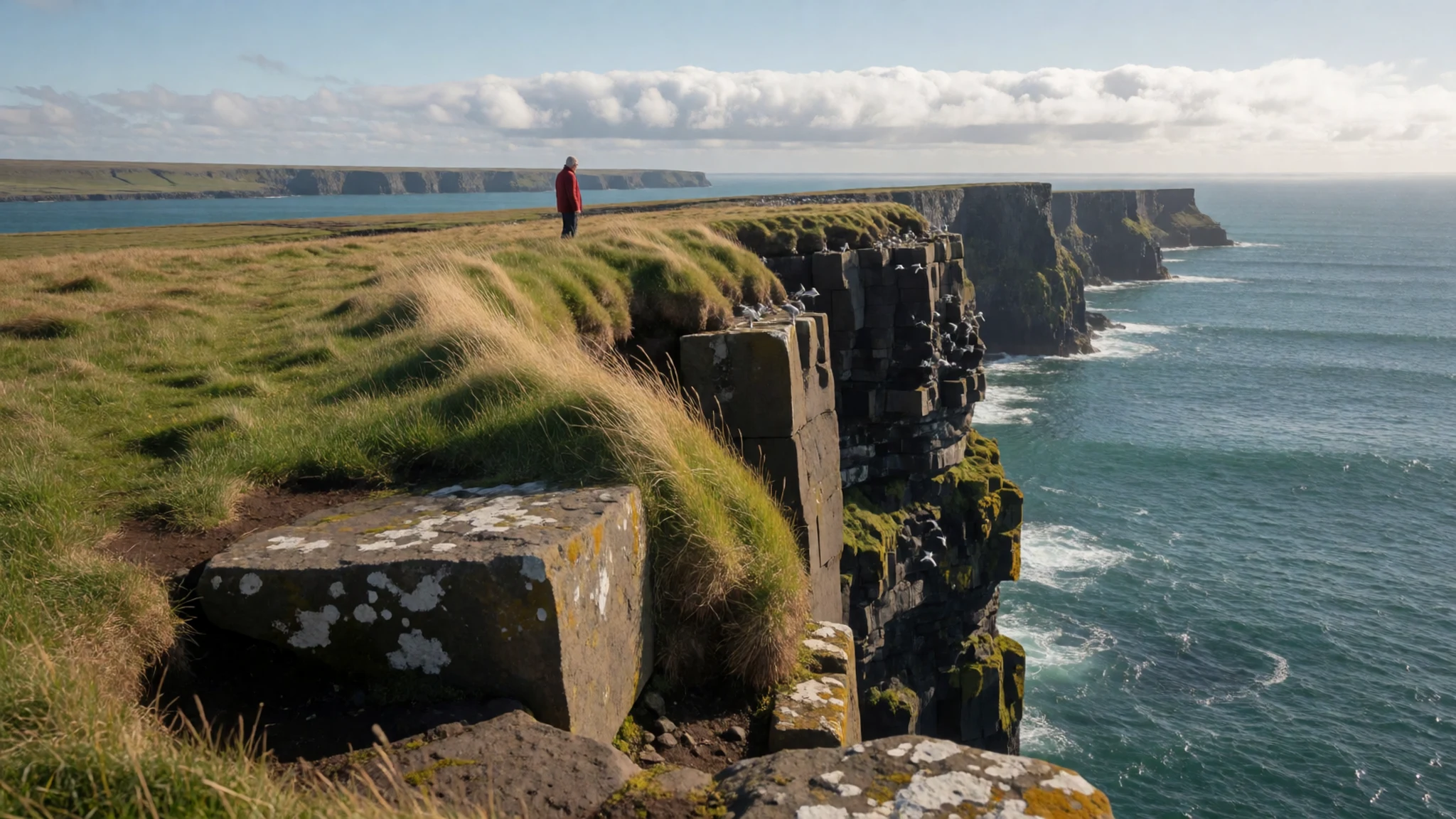
- Kirkja — South coast
The south-coast settlement is where the island's boats and helicopter traffic tend to arrive. It is quiet, with a small cluster of homes and a church that gives the village its name. Use it as a base for walking, and expect nothing open on a whim.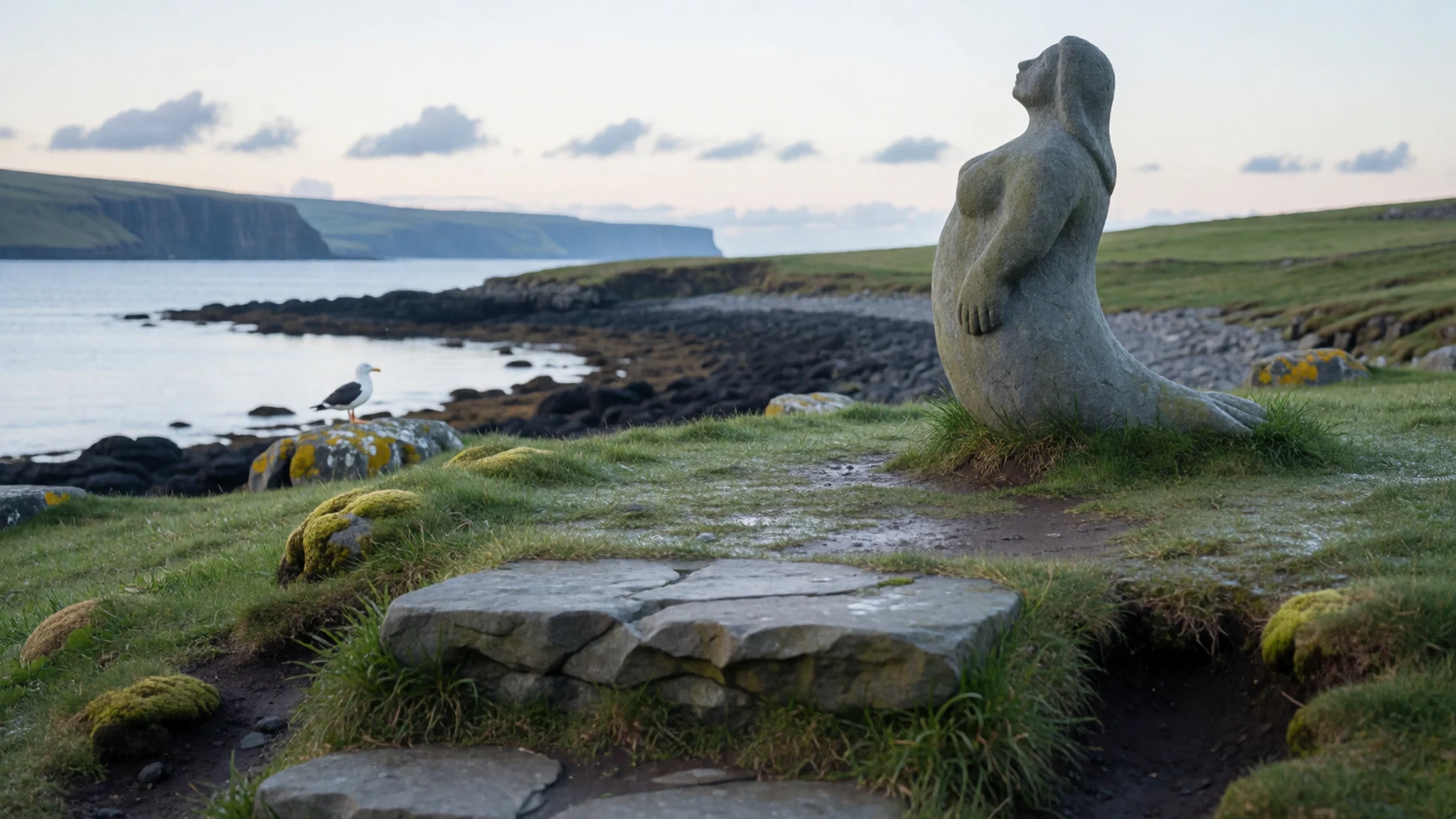
- Eystfelli cliffs — East coast
These sea cliffs on the east coast fall 448 m to the water and hold huge numbers of nesting birds in season. They are best appreciated from the sea or from safe viewpoints. Keep well back from the edge, as wind and wet grass make footing unreliable.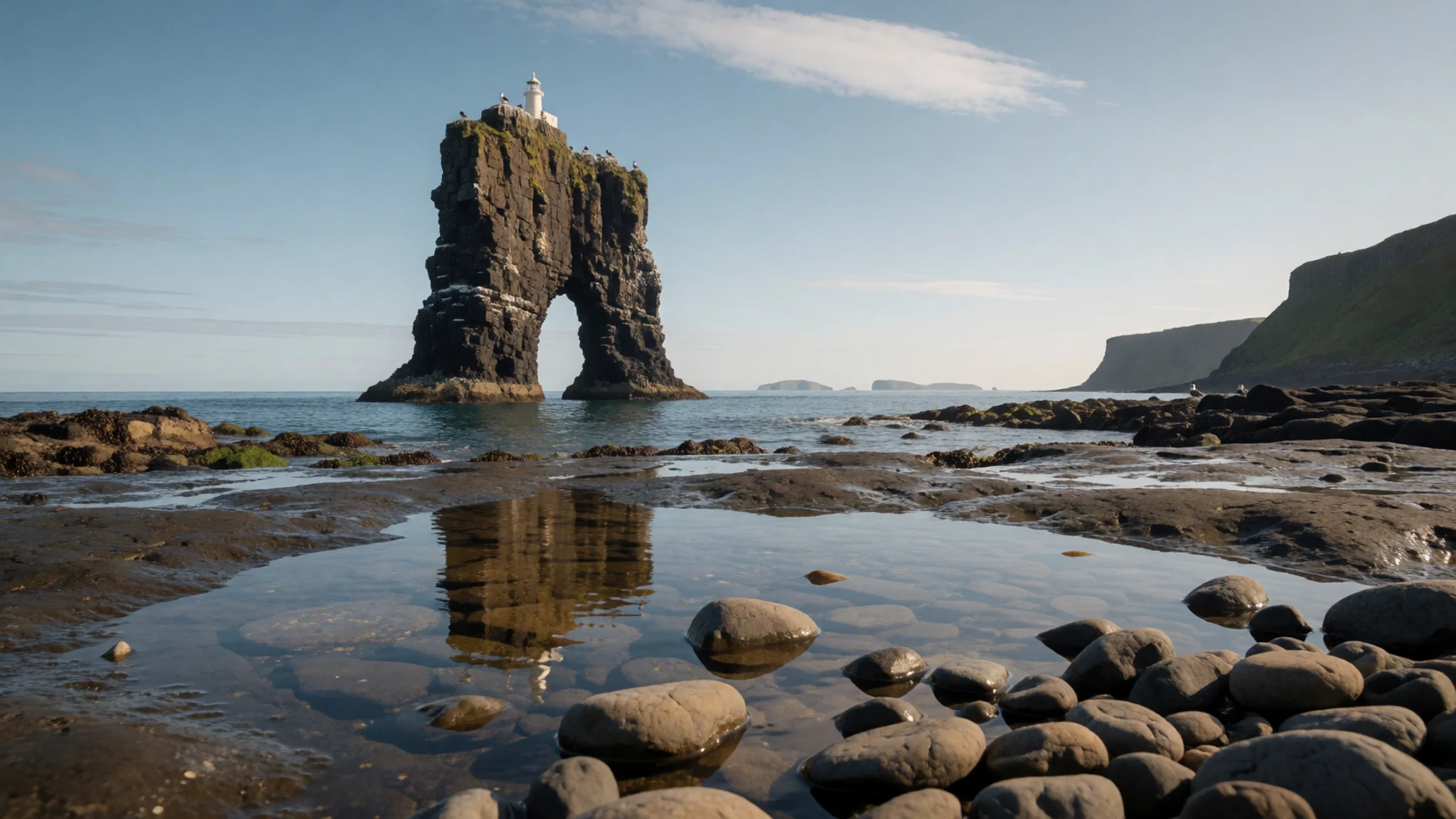
- Stapin sea stack — East coast, offshore
This 47 m stack stands offshore near the Eystfelli cliffs and carries a lighthouse. Nearby are a natural arch and a rock outline said to resemble a pharaoh's face. A boat trip, weather allowing, gives the clearest view of all three.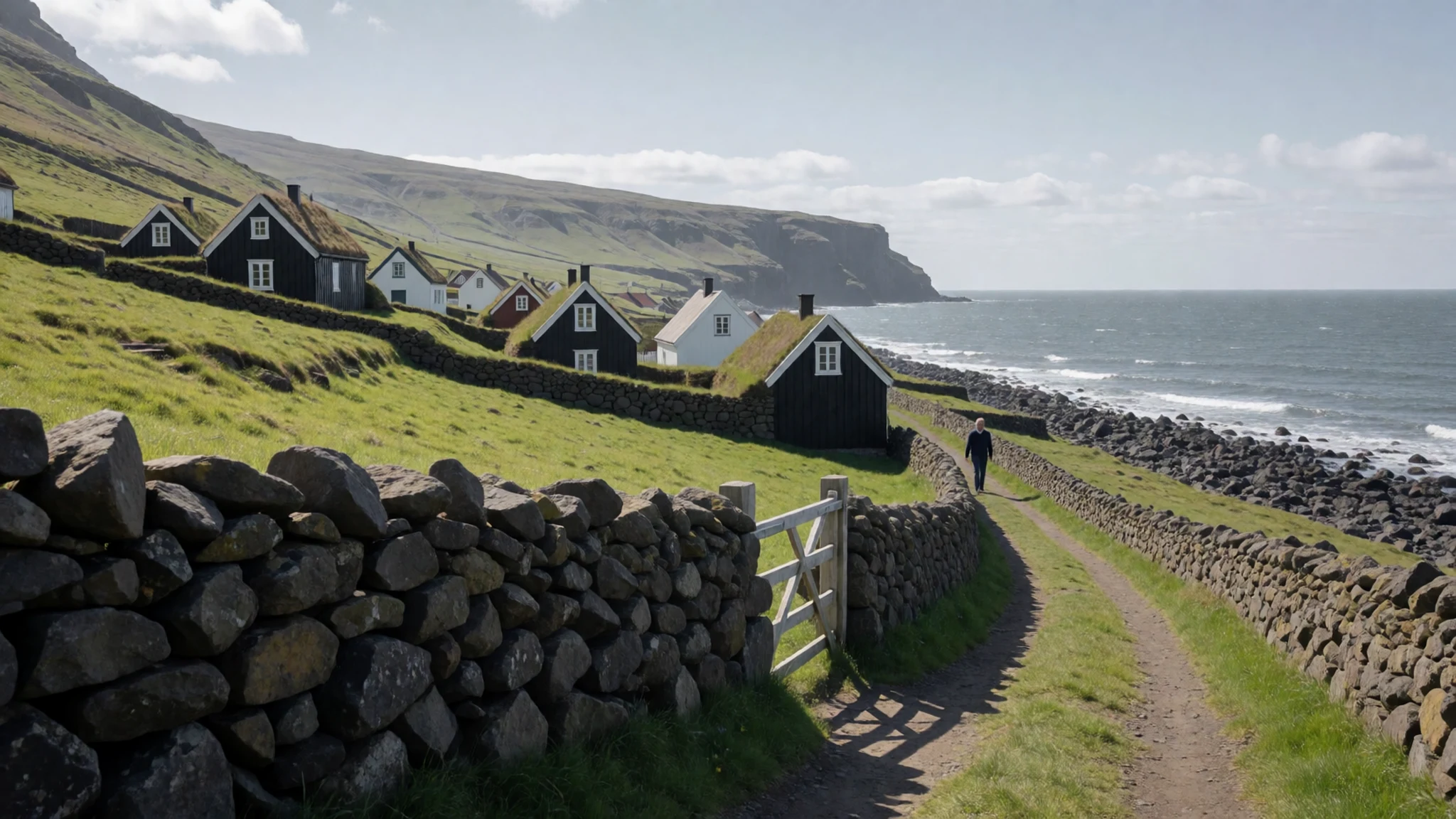
- The bird cliffs on the north side — North coast
Old photographs show men catching seabirds from boats at the foot of Fugloy's northern bird cliffs, using long-poled nets. The tradition is part of island life. From a boat, the scale of the ledges and the sheer numbers of birds make the island's name make sense.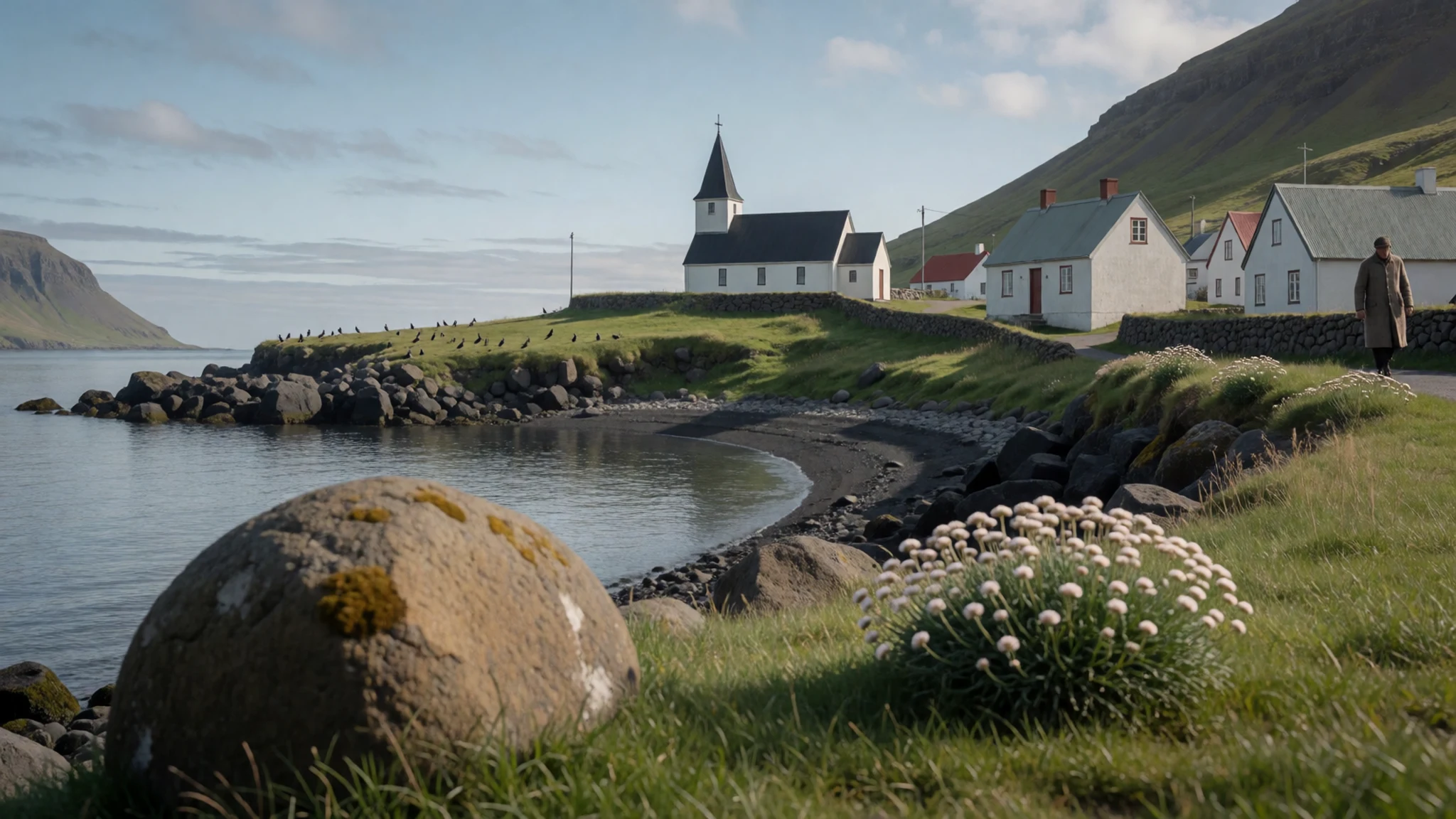
Culture
Fugloy's culture is that of a very small Faroese community, shaped by sea, weather and distance. With about 40 residents, almost everyone knows everyone, and life follows the ferry and helicopter timetable, the seasons and the sheep. Faroese is the language of daily life, and Danish is also understood across the islands, so a few Faroese greetings are appreciated.
Work has long come from the land and the cliffs: farming, some fishing and the catching of seabirds such as puffins. These are practical traditions rather than performances, and people have strong feelings about them. Visitors from elsewhere may find bird catching unfamiliar, but it is a long-standing source of food here and is best met with curiosity rather than judgement.
Stories matter too. The Floksmenn rebels from Hattarvík are still told as a local legend, and Faroese folklore more broadly, including seal-woman tales, runs through the northern islands. The old turf-roofed and weathered houses of Hattarvík and Kirkja are lived in, not museum pieces. Church and community occasions can bring everyone together, and outsiders are welcome if they are quiet and unhurried.
Because the villages are so small, privacy is not an abstract idea. Homes, gardens and boats are working spaces and often right beside the path. Ask before going near anything that looks private, and take your rubbish with you.
Etiquette: treat the villages as people's homes, so stay on the paths, keep your voice low, and ask before photographing residents or entering fields and yards.
What to wear
Fugloy has no distinct dress of its own; its traditional clothing is the Faroese national dress, worn mainly on festive and formal occasions such as weddings, church holidays and national celebrations. It is built around wool, the islands' staple textile, and the outfits include knitted and woven garments with silver fastenings. I have not been given specific details of Fugloy's own variations, so treat this as the general Faroese picture.
In daily life, people wear what the weather demands. Wool jumpers, waterproof jackets, sturdy boots and practical trousers are the norm, and on a working island you will see farm clothes more often than anything smart. Faroese knitwear is a source of local pride and is widely worn.
Visitors should dress for wind, rain and sudden cold, even in summer. Wear layers: a thermal or wool base, a warm mid-layer and a proper waterproof shell with a hood. Waterproof trousers help on wet grass. Footwear matters most. Bring broken-in walking boots with good grip, ideally waterproof, because slopes are steep and slippery. Add a hat, gloves and a buff, even in July, as temperatures can drop quickly on exposed ground.
There are no strict modesty rules for tourists, but plain, tidy clothes are suitable if you step into a church. Pack a small daypack with a spare dry layer, since there are no shops nearby to fix a soaking.
What to eat
- Fresh fish — Home kitchens and guest accommodation on the island
Fish is the backbone of Faroese eating, usually simply boiled or fried and served with potatoes. On Fugloy, meals are typically cooked at home, so ask your host or accommodation what the boats have brought in.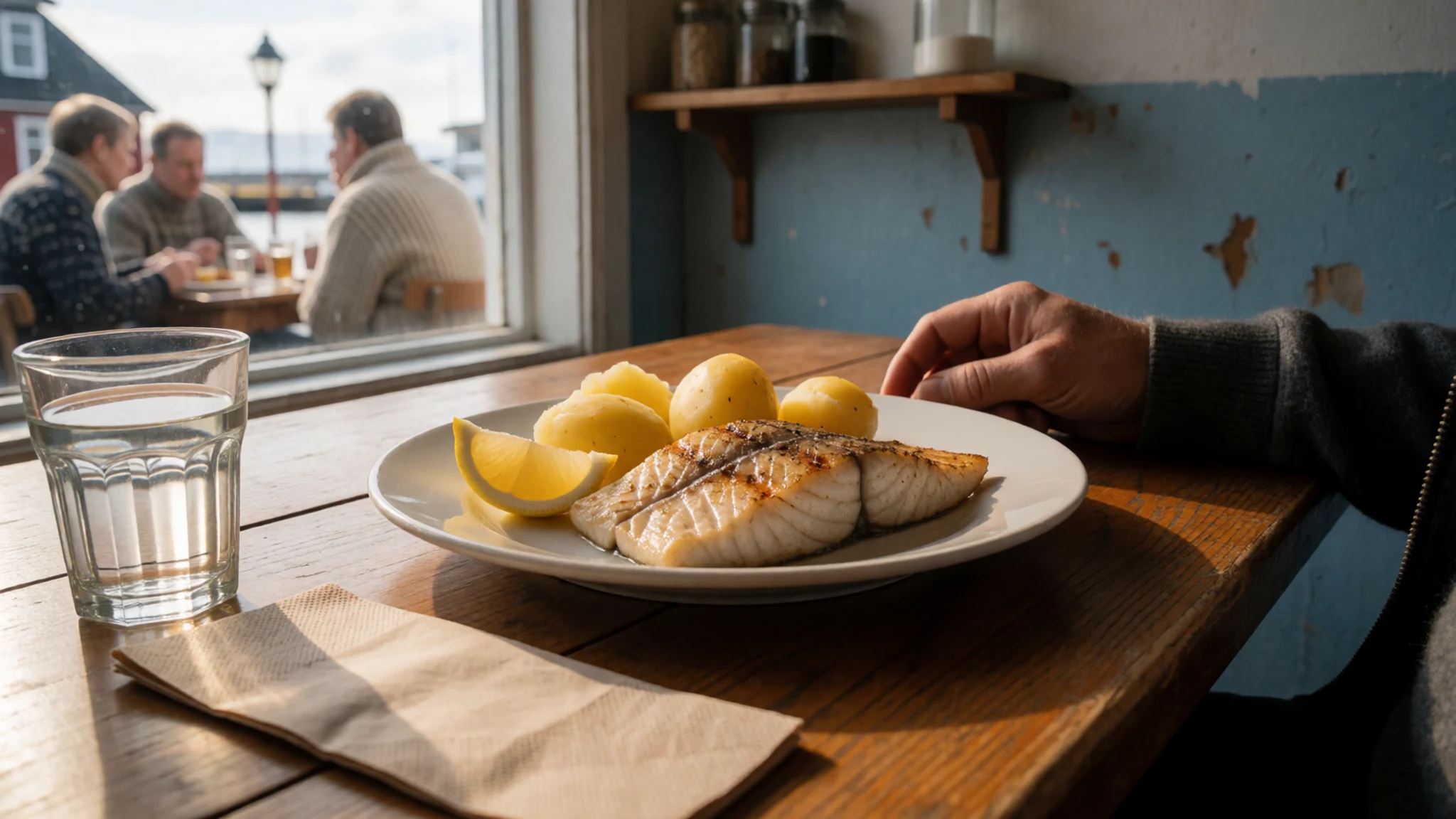
- Lamb and mutton — Island households, and eateries in Klaksvík
Sheep graze the steep slopes and meat is central to Faroese cooking, from fresh roasts to wind-dried and fermented cuts. It is hearty fare that suits cold weather and long walks.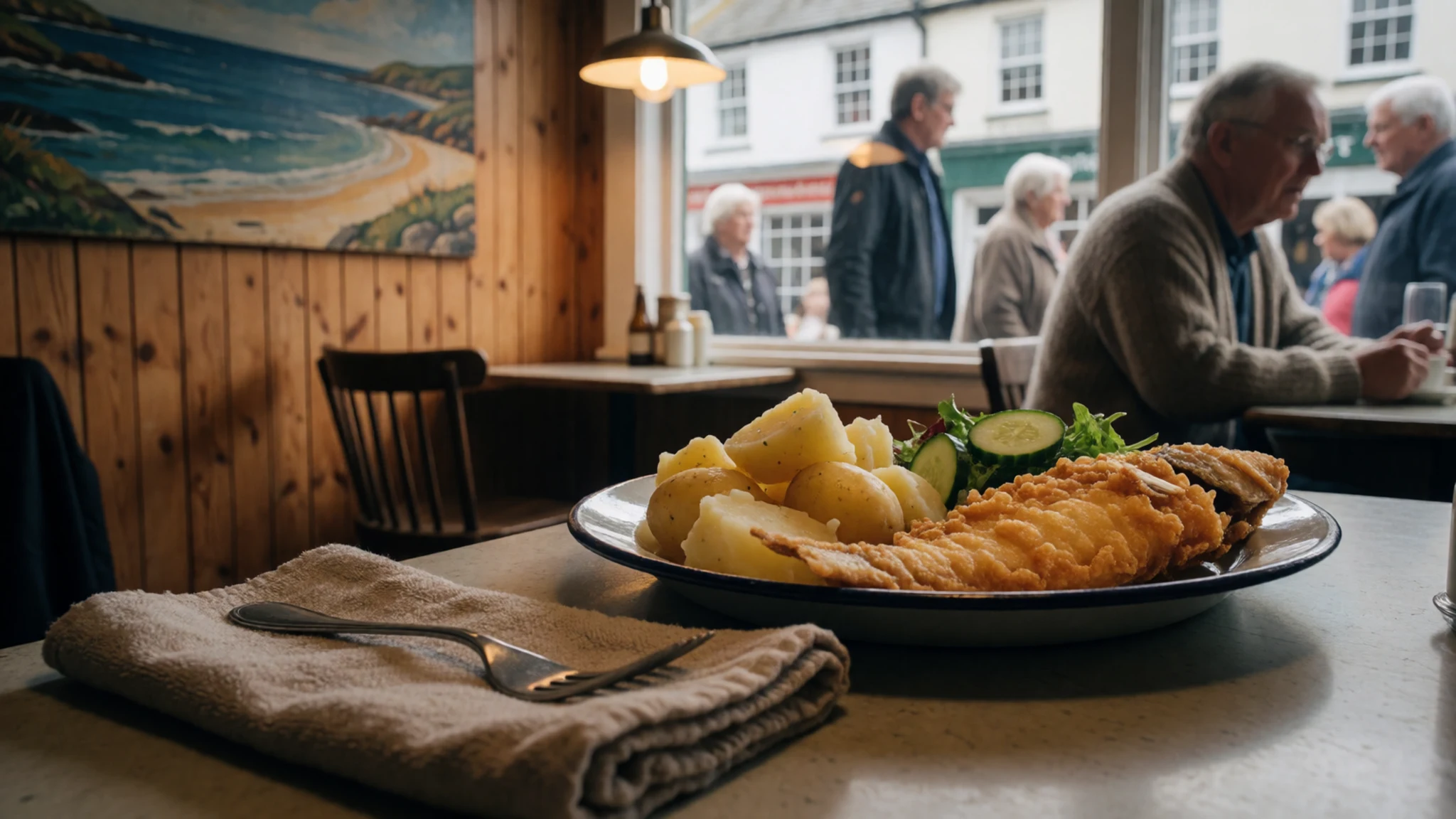
- Seabird dishes — Local homes, by invitation
Puffin and other seabirds have traditionally been caught on Fugloy's cliffs and eaten locally. Whether you try it or not, it explains much about the island's past. Ask politely and let people decide whether to offer it. - Boiled potatoes and root vegetables — Any home-cooked meal on the island
Potatoes are the standard accompaniment to fish and meat, often served plain. They are a reminder of what grows well in short, windy summers. - Café meals in Klaksvík — Klaksvík town centre
The nearest place to sit down in an eatery is the town of Klaksvík, on Borðoy, which has the regional centre's restaurants and cafés. Eat well before you head out and carry snacks.
Plan it
Best time. June to August, when days are long and the weather is at its mildest. Even then expect wind, rain and fog, and treat any forecast as provisional.
How long. 1–2
Getting there. Fly to Vágar Airport, then travel by road through the Northern Islands tunnel to Klaksvík. From Klaksvík take the regular helicopter, or go by road to Hvannasund on Viðoy and catch the ferry to Fugloy. Check the official site, http://www.fugloy.fo/, and visitnorth.fo for current schedules.
Budget. mid
Tips
- Book transport and any bed ahead, as services are limited and fog can delay helicopters and ferries.
- Build slack into your return, because weather can strand you for a day or more.
- Bring food and water, since there are no restaurants or shops to rely on; Klaksvík is the nearest place with eateries.
- Carry cash and a card, but do not assume either will be usable on the island.
- Wear waterproof layers and sturdy boots, and tell someone your walking plans.
Etiquette
- Stay on paths and keep out of fields and yards.
- Ask before photographing people or their property.
- Take all rubbish away and keep clear of cliff edges and nesting birds.
Nearby
Sources
- Wikidata Q210313 (CC0)
- Wikipedia: Fugloy (CC BY-SA 4.0)
- Wikivoyage: Northern Islands (CC BY-SA 4.0)
- Photo 01, Erik Christensen (CC BY 3.0)
- Photo 02, Eileen Sandá (CC BY 3.0)
- Photo 03, Vincent van Zeijst (CC BY-SA 4.0)
- Photo 04, Vincent van Zeijst (CC BY-SA 4.0)
- Photo 05, Vincent van Zeijst (CC BY-SA 4.0)
- Photo 06, Vincent van Zeijst (CC BY-SA 4.0)
- Photo 07, Johannes Klein (Public domain)
- Photo 08, Gregor Julien Straube (CC BY-SA 4.0)


Wildlife
- Puffin (animal)
Picture a seabird in the auk family that stands bolt upright on land, and you have the Atlantic puffin. It breeds in the Faroe Islands, and on Fugloy the cliffs give islanders something useful, for bird catching, puffins included, is part of the island's practical story. At sea the puffin paddles on the surface, then uses its wings to power itself underwater after tiny sea creatures and small fish. Because the species is rated vulnerable, give it room and a gentle, quiet approach.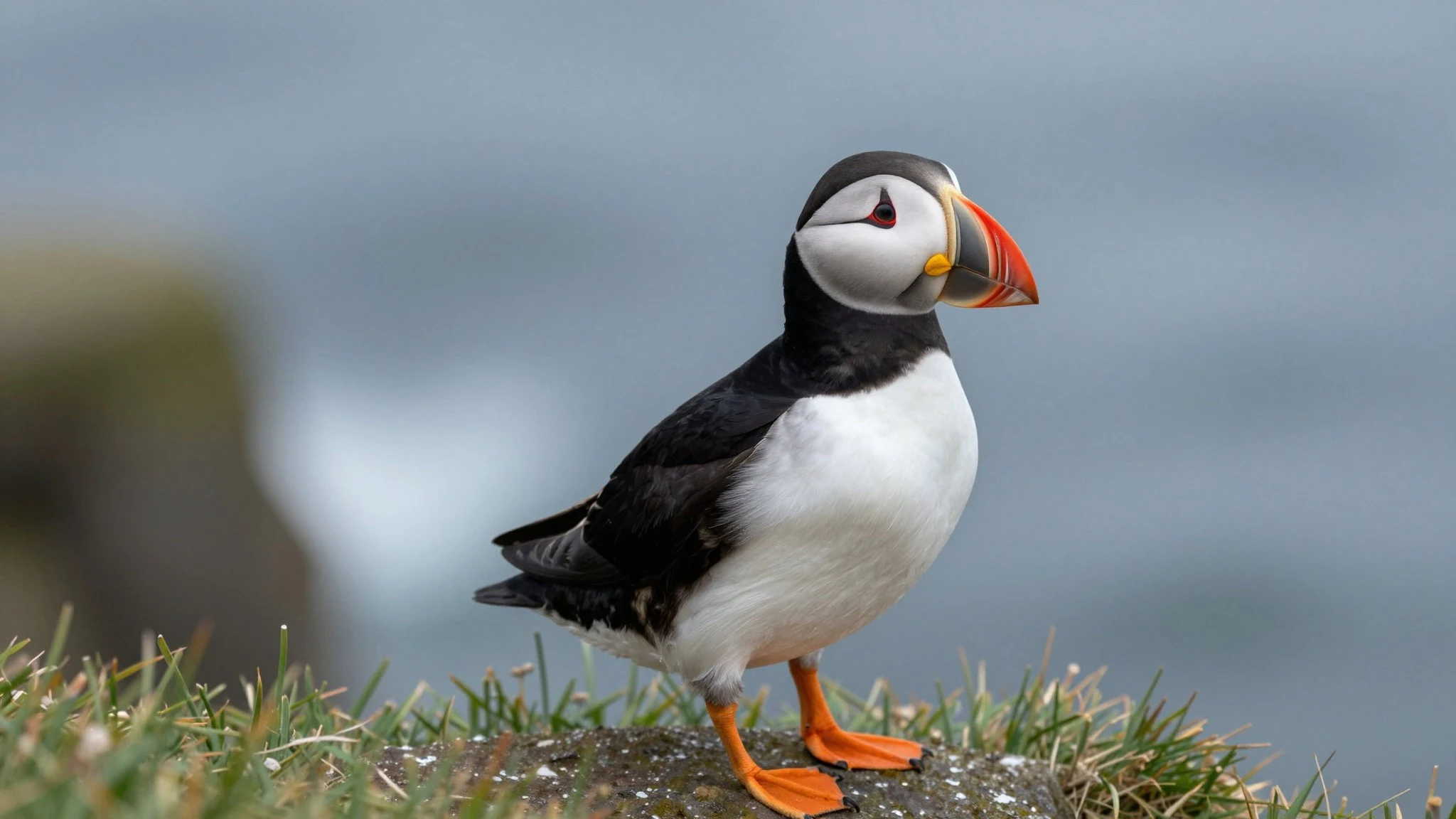
- Atlantic puffin (bird)
Picture a seabird in the auk family that stands bolt upright on land, and you have the Atlantic puffin. It breeds in the Faroe Islands, and on Fugloy the cliffs give islanders something useful, for bird catching, puffins included, is part of the island's practical story. At sea the puffin paddles on the surface, then uses its wings to power itself underwater after tiny sea creatures and small fish. Because the species is rated vulnerable, give it room and a gentle, quiet approach.