Vágar
Vágar, Faroe Islands
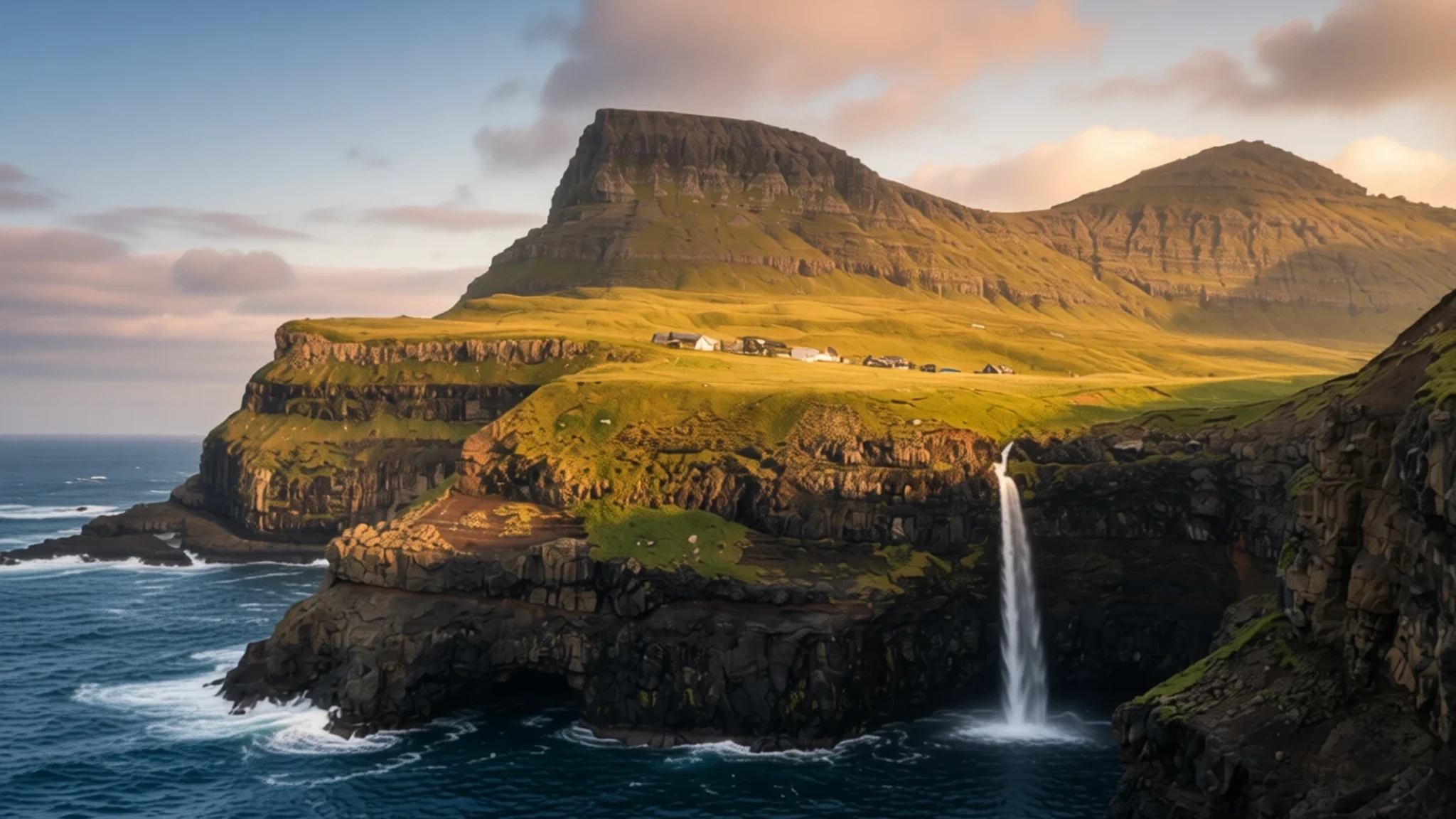
Vágar is where the Faroe Islands begin: an airport island of sea stacks, a lake that seems to hang above the ocean, and a village at the cliff edge.
The place
Vágar is the westernmost of the large islands in the Faroe Islands, home to about 3,426 people. On a map its outline looks like a dog's head, with the fjord Sørvágsfjørður as the mouth and the lake Fjallavatn as the eye. The highest point reaches 722 metres, so even a short drive moves between sea level and bare mountain slopes.
The island is mostly treeless grass and rock, cut by streams that drop into the sea as waterfalls. Villages sit in small pockets of flatter land: Sandavágur, with its red-roofed church, is the first one reached on the road from the airport; Miðvágur is the main service centre, with the tourist office; Sørvágur is the departure point for boats to Mykines; and Bøur and Gásadalur lie out on the western edge, reached by road and tunnel.
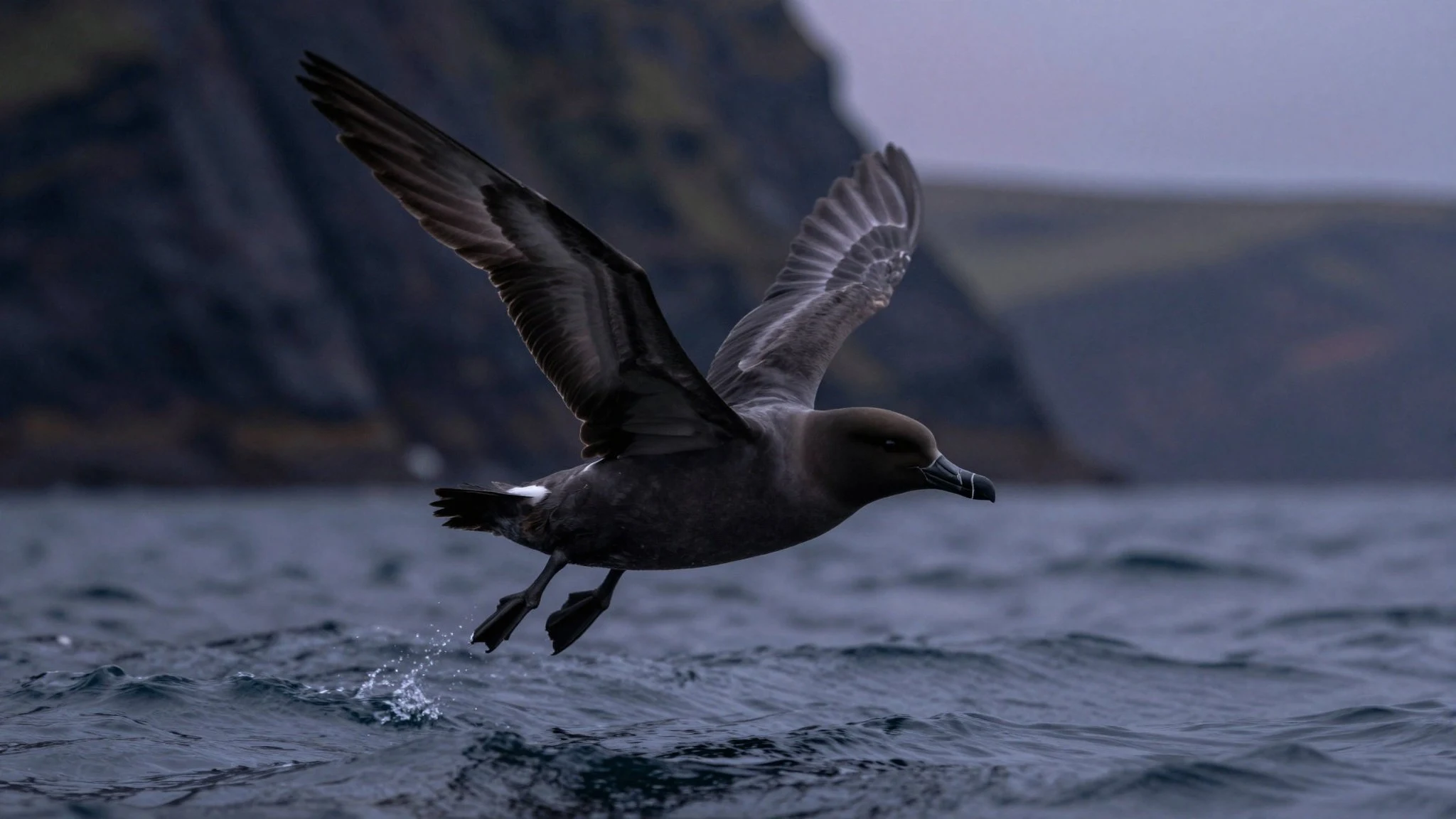
The climate is oceanic and cool: chilly winters, mild summers, rain through the year, and only a dusting of snow between November and April. Cloud can sit on the hills for days, and weather changes within an hour. Seabirds are the real residents. The west and south-west coasts are recognised as an Important Bird Area for fulmars, puffins, kittiwakes, guillemots and others nesting on the cliffs.
Most visitors arrive here without planning to, because the country's only airport is on the island. Many treat it as a transit stop. That is a mistake: Vágar rewards a couple of unhurried days, and in good weather it needs little more than a car, a pair of boots and patience with the clouds.
Its story
Vágar's modern story starts with the war. British forces occupied the Faroe Islands with the islanders' consent, and they built an airfield on Vágar. After the war it lay unused for around 20 years, then returned to service and was expanded and modernised. Today Vágar Airport is the only airport in the Faroes, and in 2016 it handled about 290,000 passengers a year, a large number by Faroese standards.
That traffic put real pressure on the island's links with the rest of the country, and the answer was the Vágatunnilin, a sub-sea road tunnel about 5 km long. It joins Vágar to the two largest islands and so to the capital, Tórshavn. The tunnel changed daily life: people on Vágar can reach the capital's hospital, shops and offices by car, and day visitors can cross in the other direction.
Older layers are still visible. Bøur has been settled since ancient times, and written records name it at least as far back as 1350. Gásadalur, a tiny village of 18 people, was for generations hard to reach and is now linked by tunnel. A small museum in Miðvágur preserves an old Faroese house, and the island also has a war museum that tells of the occupation years.
The sea stacks off the west coast, among them Trøllkonufingur and the Drangarnir, belong to the older, geological story: basalt standing alone after waves have cut away the surrounding cliff. Local names for them carry folklore, which is worth asking about in the villages.
What to see
- Gásadalur and its waterfall — Western Vágar
Gásadalur is a small village on a green shelf at the foot of steep mountains, with a waterfall dropping straight into the sea. A viewpoint above gives the picture the Faroes are known for. The nearby coast has the closest mainland view of Mykines, and puffins can be watched in season.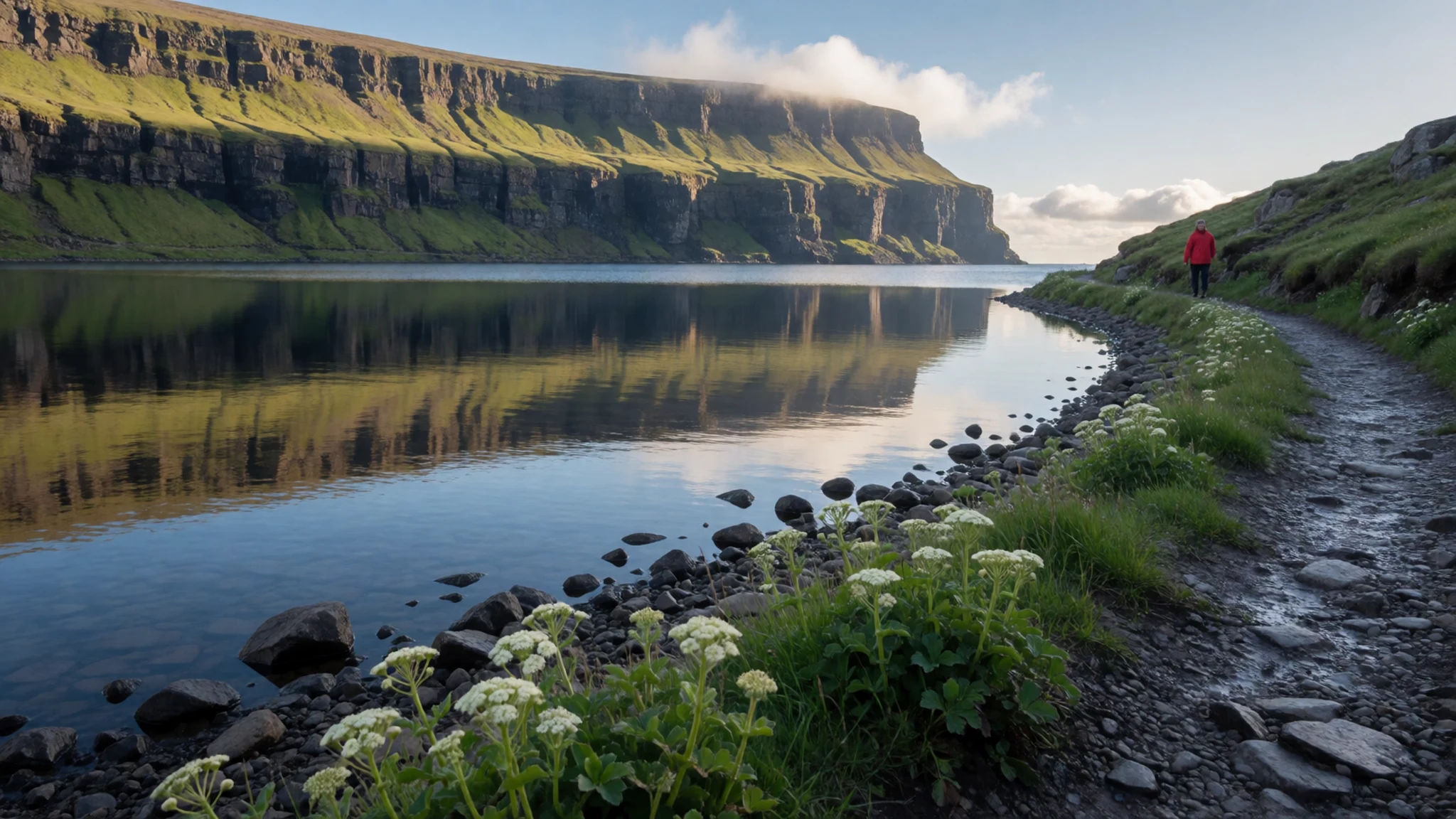
- Sørvágsvatn — Between Sørvágur and Bøur
This is the largest lake in the Faroe Islands, sitting about 40 metres above the sea. Its far end curves close to sheer cliffs, so from some angles the water seems to hang over the ocean. A path along the shore leads to the cliff viewpoints; wear proper boots and take care near the edge.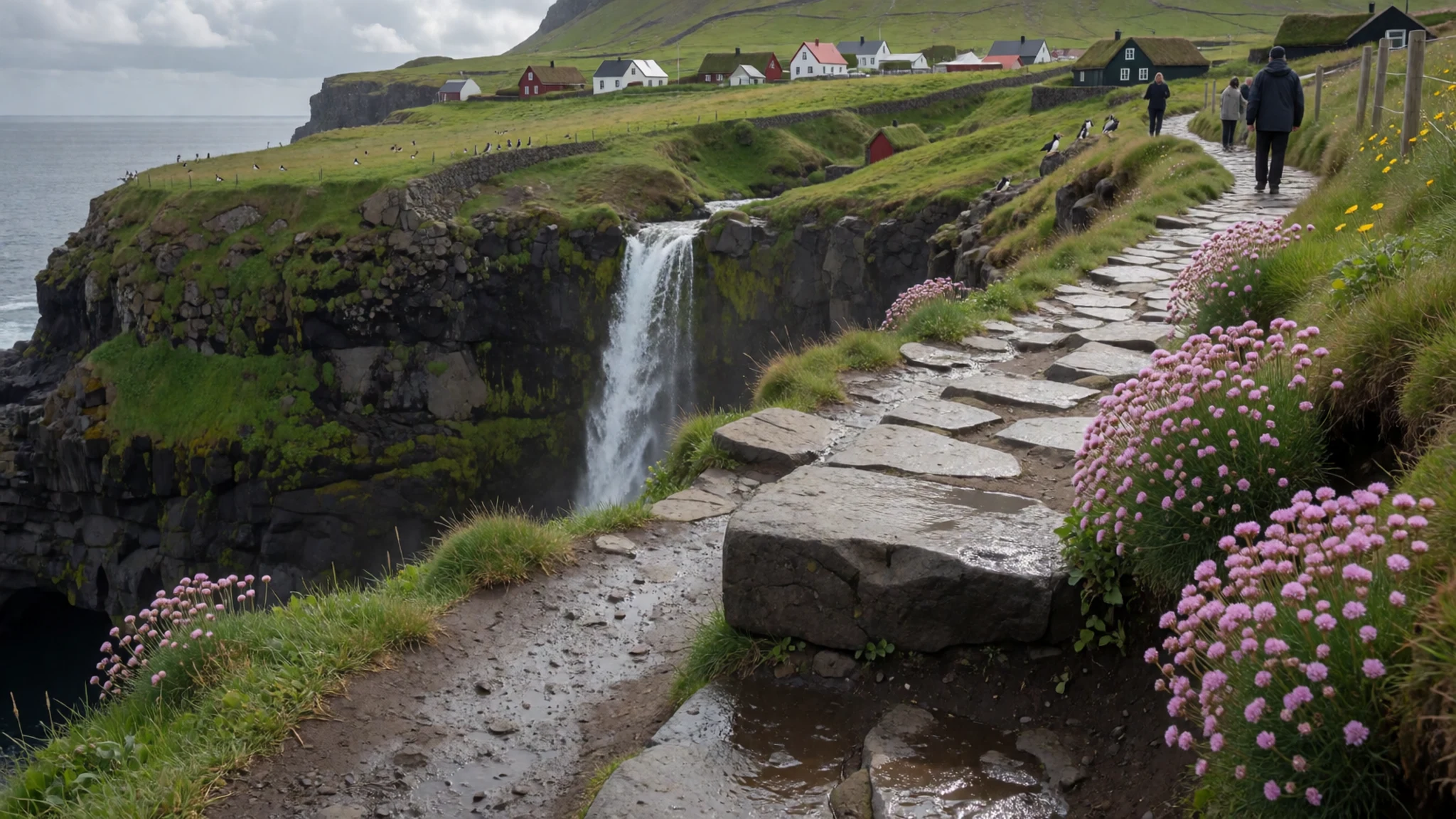
- Bøur and the view to Tindhólmur — Western Vágar
Bøur is an old settlement on the west coast, with turf-roofed houses and a handful of holiday homes for rent. Its main draw is the view across to the jagged island of Tindhólmur and the stacks around it, as good a viewpoint as any in the archipelago. The old storage house, Pakkhúsið, sometimes opens as a café.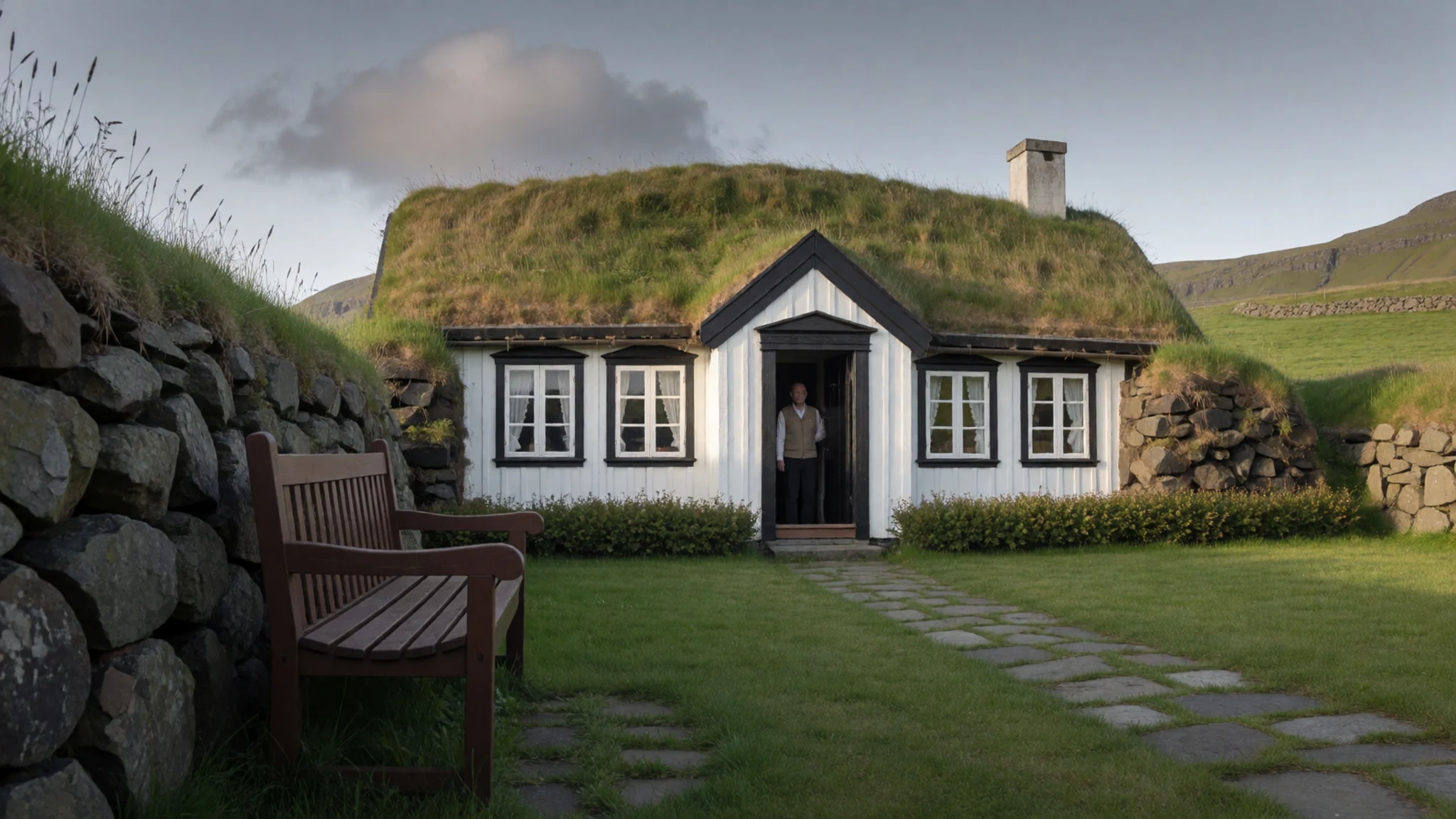
- Miðvágur and Kálvalíð — Central Vágar
Miðvágur is the island's main village and the place for the tourist office. Kálvalíð is a small museum built around an old Faroese house. It is modest, but it gives a useful picture of how islanders lived and what the village itself offers, and it is easy to combine with a coffee stop.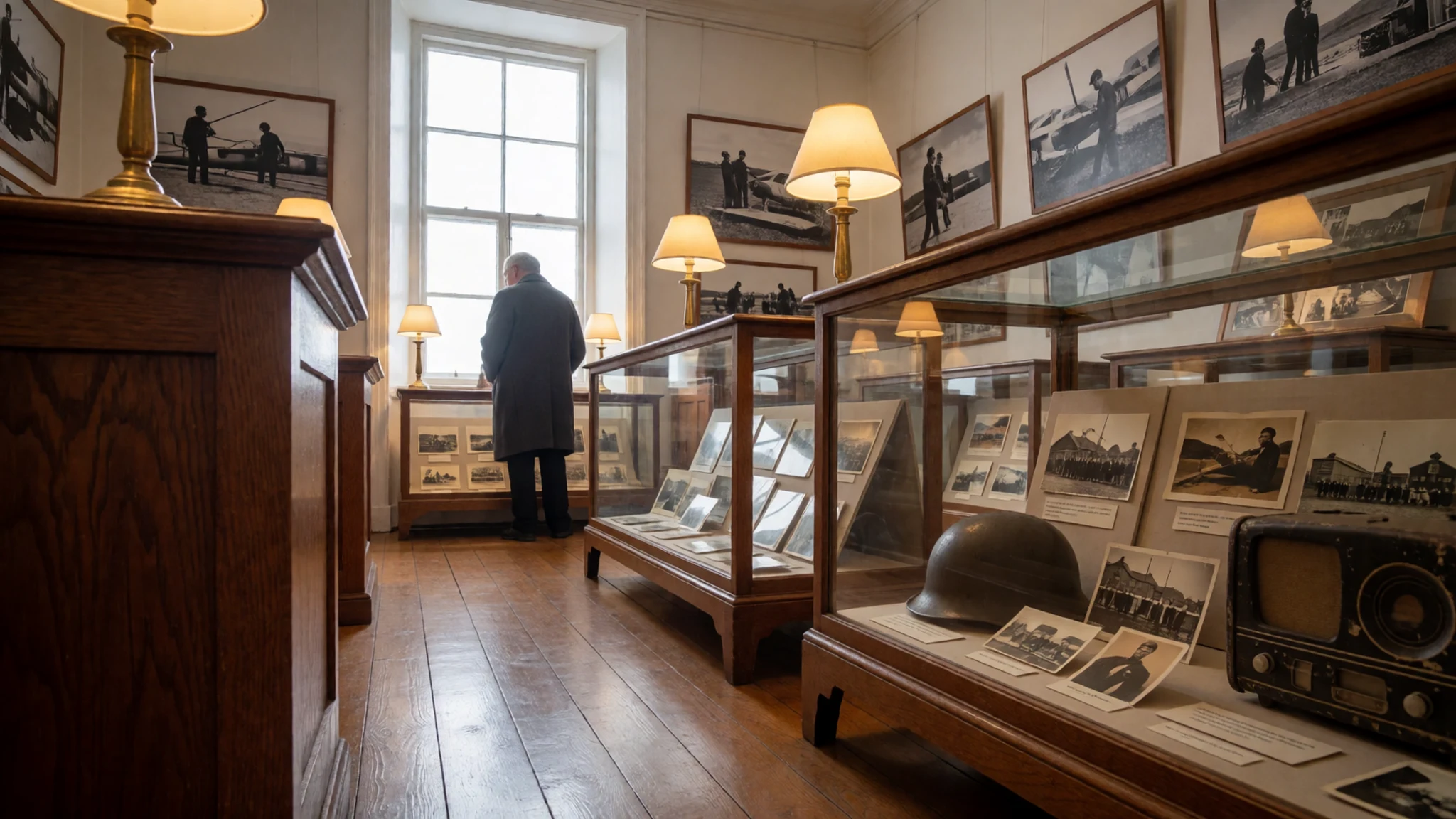
- Faroe Islands War Museum — Near Vágar Airport
Near the airport, this museum records the British occupation during the Second World War, the period when the airfield that now serves the whole country was built. It makes a good first or last stop for anyone with a few hours around a flight, and helps explain why Vágar has the airport.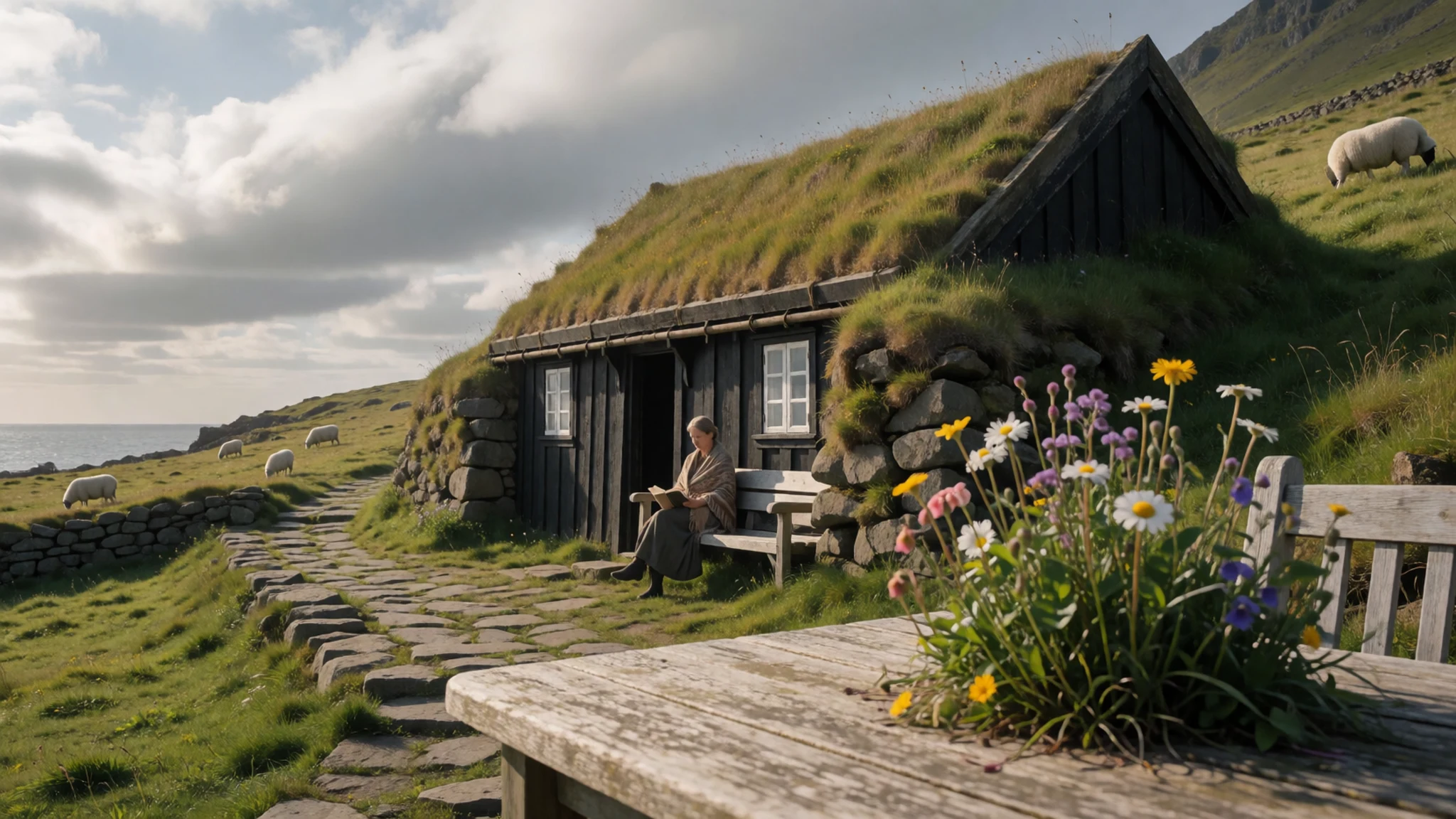
- Sea stacks and Mykines boats — Sørvágur and the west coast
Trøllkonufingur, Dunnesdrangar and the Drangarnir stand off the western coast. From Sørvágur, boats in summer run to Mykines, known for its puffins and its turf-roofed village; a helicopter also flies there. Check schedules carefully, because sailings depend on the weather.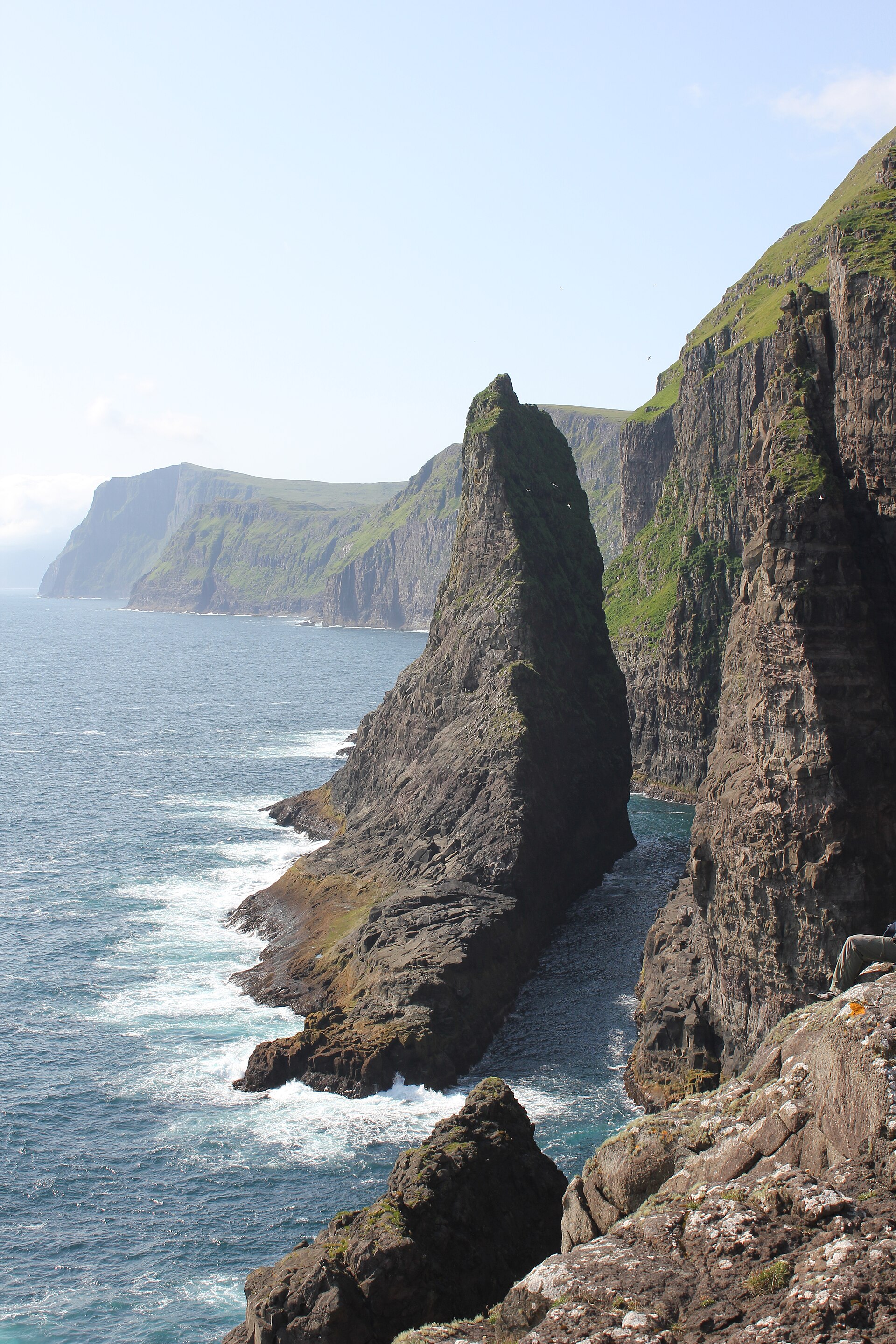
Culture
Vágar's culture is shaped by small communities, sheep, fishing and a long habit of coping with weather. Villages are tight-knit, and many of the houses and storage buildings are traditional, some with turf roofs. Faroese is the everyday language, closely related to Icelandic and Old Norse, and signs and conversations will often be in it, though many people also speak Danish and English.
Heritage is kept alive in practical ways: the museum in Miðvágur preserves an old home, and the war museum keeps memory of the occupation. Football matters locally. The team 07 Vestur, from Sørvágur, plays in the Faroes' top league, with a season from April to October, and a home match is a friendly way to spend an evening.
The landscape itself is partly working land. Grass slopes and paths that look like open hillside are often grazing for sheep or belong to a farm, and the cliff colonies of seabirds are protected breeding sites. Locals are relaxed with visitors but notice careless ones, especially anyone who leaves gates open or crowds into villages that are home to only a few dozen people.
In short, the island is easy to enjoy and easy to disturb. Walk quietly, keep to paths, and treat each village as a place where people live, not a viewpoint.
Etiquette: close any farm gate behind you, keep clear of houses and gardens in villages like Gásadalur, and do not walk on private grazing land or near nesting birds without checking that access is allowed.
What to wear
The traditional Faroese dress is a national costume, worn on festive days, at weddings, at confirmations and on national occasions rather than daily. It is built around wool, the islands' main textile, in dark tones with bright accents, and it is often finished with silver clasps and buttons. Knitting is a long-standing craft, and Faroese jumpers and shawls with patterned yokes are still made at home and sold in craft shops.
What people wear day to day is practical and Scandinavian in style: waterproof jackets, wool jumpers, sturdy boots and layers that can be added or removed. In villages, clothes are plain rather than showy, and nobody dresses up for a café or a walk. A good wool jumper is both a souvenir and a working garment.
For a visitor, the weather decides everything. Cool summers, constant wind and rain at any time of year mean a proper waterproof jacket and waterproof trousers, a warm mid-layer, a hat and light gloves even in summer. Wear walking boots with a good grip for wet grass and slippery rock on the lake and cliff paths, and bring dry socks. Sun can appear suddenly, so sunglasses and a light scarf are useful.
There is no strict dress code at churches, but simple, tidy clothes are polite if you step into a service or a village church such as the one in Sandavágur.
What to eat
- Ræst lamb — Traditional restaurants and village eateries
Fermented, wind-dried lamb or mutton is a Faroese staple with a strong, savoury flavour. It is often served in thin slices with potatoes. Look for it on traditional menus or at village events, and expect a flavour similar to well-aged cured meat.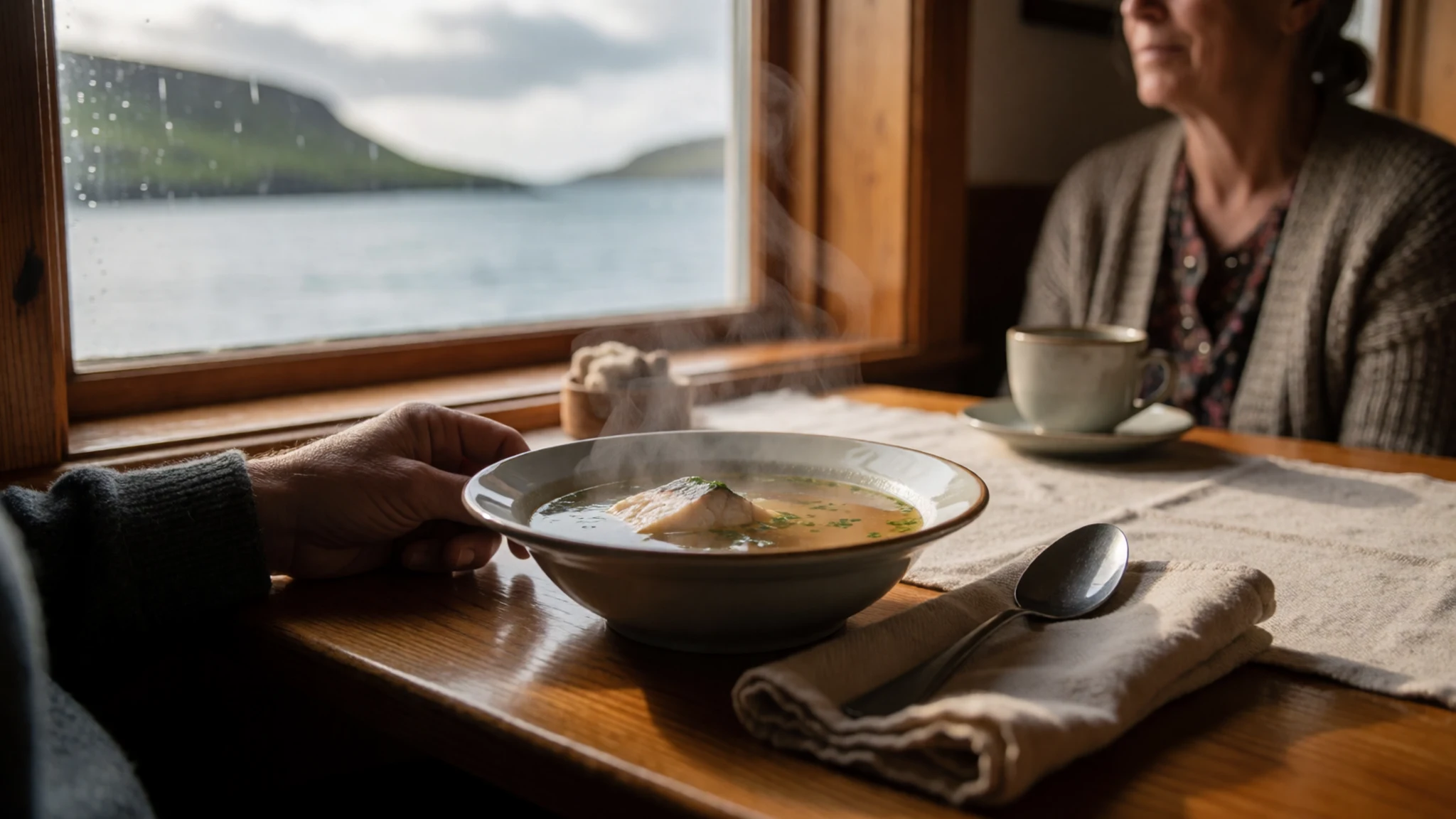
- Skerpikjøt — Local eateries and food shops in Miðvágur and Sørvágur
Wind-dried mutton, hung in a hjallur, a slatted drying shed, through the cool months. It is chewy, salty and intensely flavoured, usually served thinly sliced with potatoes. Visitors who like cured meats will probably enjoy it, though it is an acquired taste.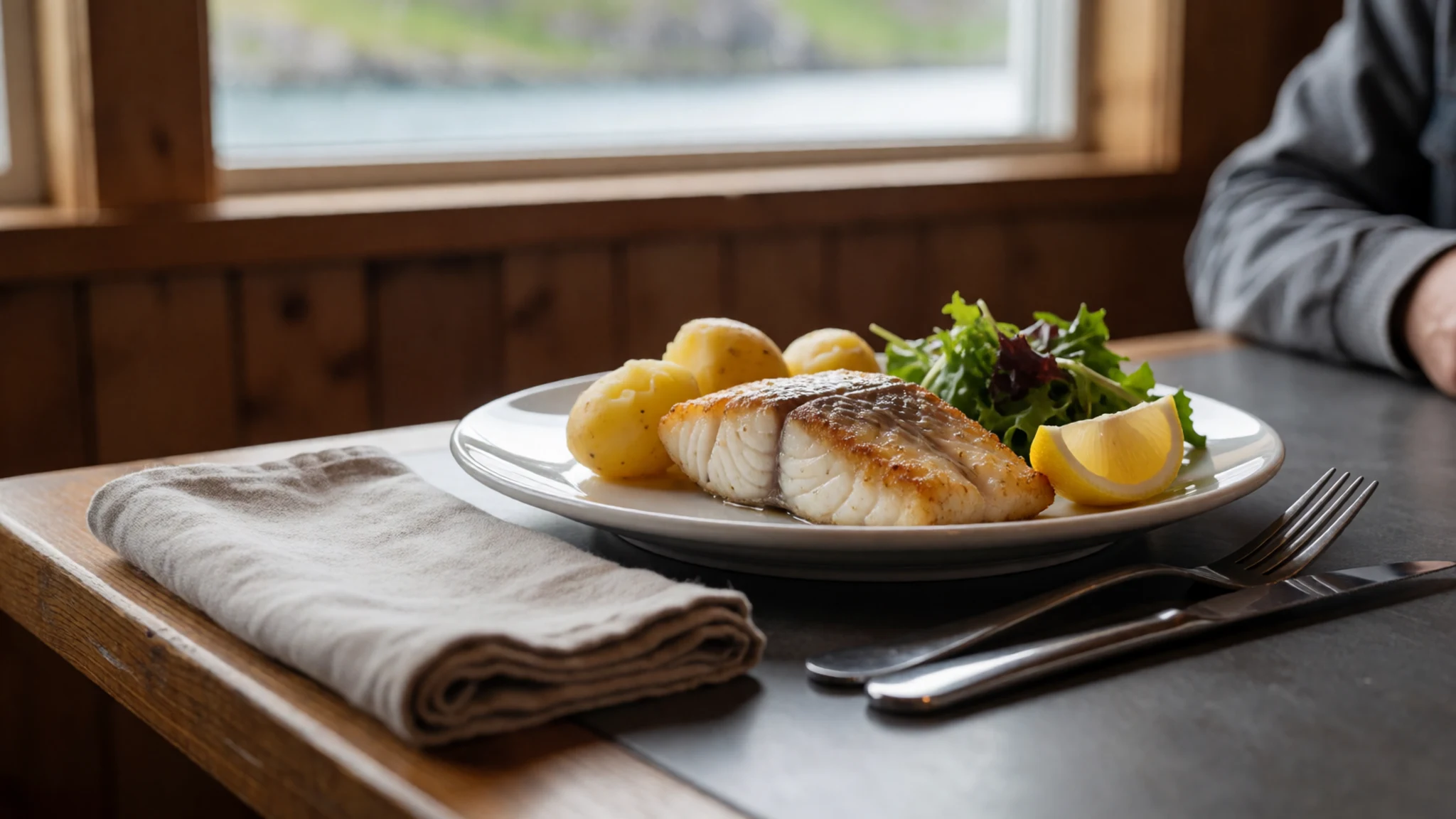
- Fresh fish and fish soup — Cafés and restaurants near the harbour villages
With the Atlantic on every side, fish is central: cod, haddock and salmon, grilled, fried or in a creamy soup. Expect simple preparation with potatoes and butter. Menus change by catch and season, so ask what came in that day. - Lamb and potatoes — Cafés and guesthouse dining rooms
Fresh Faroese lamb, raised on hill pasture, is cooked simply, often roasted or in a stew with root vegetables. The meat is lean and fragrant from the grazing. It is a comforting dish after a wet walk and common in village cafés. - Coffee and cake by the fjord — Cafés in Sørvágur, Miðvágur and Bøur
A café stop is part of every Vágar day. Pollastova, near Sørvágur, offers a quiet room overlooking the fjord, and a football pitch that sometimes interrupts the view. Pair coffee with a slice of home-style cake and watch the weather change.
Plan it
Best time. May to September, when days are long, the weather is at its mildest and the Mykines boats run in summer. Winters are chilly and wet, with only traces of snow from November to April, and many services reduce. Rain can come at any time, so plan flexible days.
How long. 2–3
Getting there. Fly to Vágar Airport (FAE), the only airport in the Faroe Islands; it sits on the island itself, so there is no onward leg. From Tórshavn and the other large islands, the sub-sea Vágatunnilin road tunnel connects by car or bus; check the tunnel toll on the official Faroe Islands pages. A summer ferry and a helicopter link Mykines with Sørvágur and the airport.
Budget. high
Tips
- Hire a car in advance for the western villages and viewpoints, and book early for summer.
- Check the weather and the Mykines boat or helicopter schedule the day before; sailings depend on conditions.
- Carry a waterproof layer and boots every day, even if the morning is clear.
- Visit Gásadalur and Sørvágsvatn early or late to avoid tour groups.
- For accommodation, ask the tourist information in Miðvágur (visitvagar.fo) about holiday homes and hostels.
Etiquette
- Keep to marked paths and close farm gates behind you.
- Respect private homes and grazing land in villages such as Gásadalur and Bøur.
- Keep your distance from nesting seabirds.
Nearby
Sources
- Wikidata Q207675 (CC0)
- Wikipedia: Vágar (rev 1378262384) (CC BY-SA 4.0)
- Wikivoyage: Vágar (rev 5421653) (CC BY-SA 4.0)
- Photo: Gásadalur, Faroe Islands (Erik Christensen) (CC BY 3.0)
- Photo: Miðvágur on Vágar (Erik Christensen) (CC BY 3.0)
- Photo: Gásadalur (Mike Maguire) (CC BY 2.5)
- Photo: Sørvágsvatn (kallerna) (CC BY-SA 4.0)
- Photo: Cottage northwest of Gásadalur (Erik Christensen) (CC BY 3.0)
- Photo: Detailed map Vágar (Anker Eli Petersen) (Public domain)
- Photo: Flying into Vagar Airport (Raki_Man) (CC BY 3.0)
- Photo: Geituskorardrangur (Jonas Søby Pedersen) (CC BY 4.0)


Wildlife
- Atlantic puffin (animal)
Picture a small sea bird that stands tall on shore, paddles on the surface, then dives down for crabs, plankton and little fish: that is the Atlantic puffin. Its numbers have dropped quickly in places, so it deserves gentle care. Look along Vágar's north-west, west and south-west, where seabirds nest. I cannot say which month or hour is best, so ask a guide. Stay well back, stay hushed, and never give it food.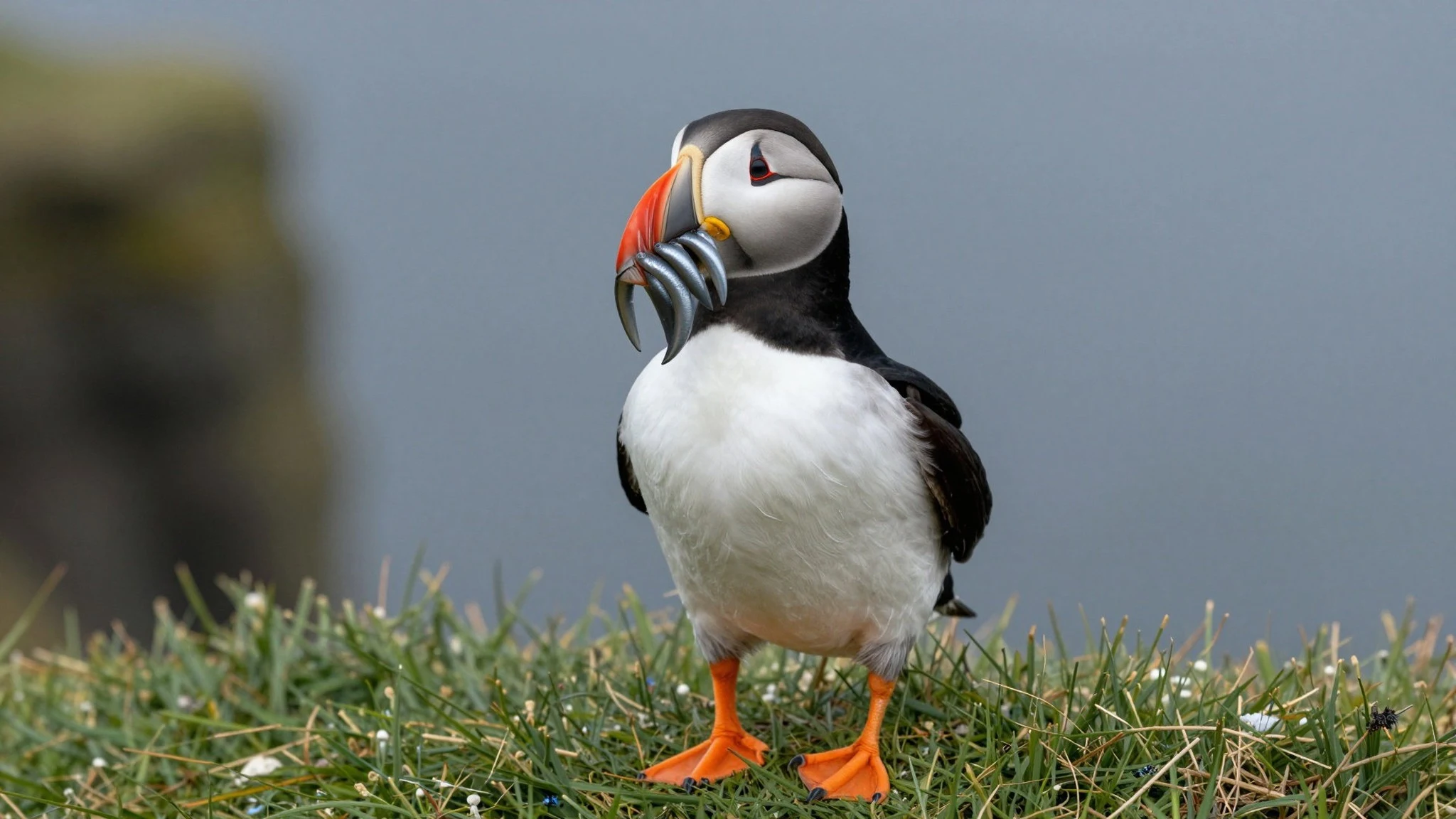
- European storm petrel (animal)
The European storm petrel is a tiny black seabird with a bright white rump, and it flutters through the air a bit like a bat. The Faroe Islands hold some of its largest colonies. On Vágar, the north-west, west and south-west are noted for breeding seabirds, storm petrels included. The notes give no season or time of day, so ask a guide. Keep well back, stay quiet, and never offer food.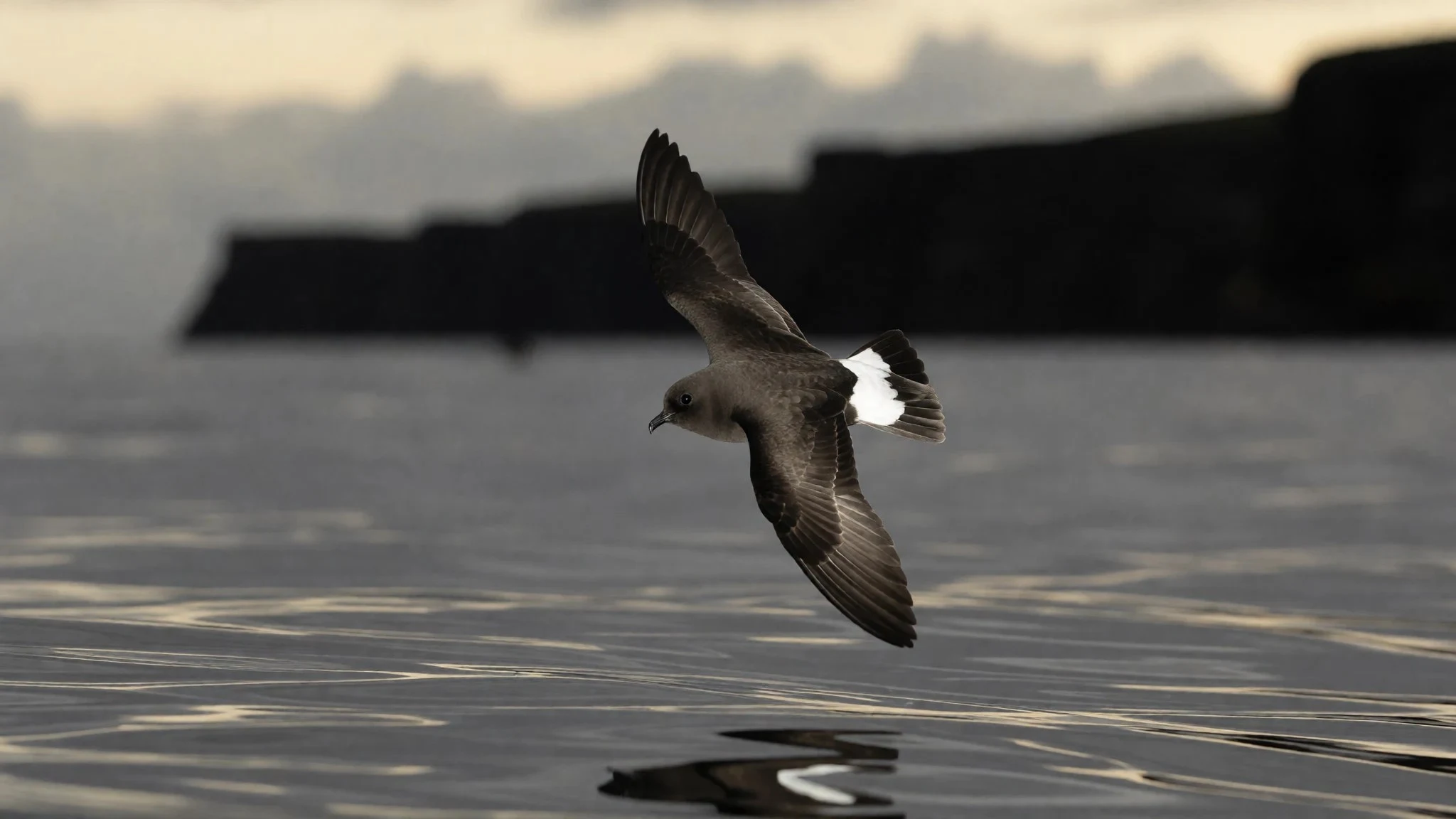
- Atlantic puffin (bird)
Picture a small sea bird that stands tall on shore, paddles on the surface, then dives down for crabs, plankton and little fish: that is the Atlantic puffin. Its numbers have dropped quickly in places, so it deserves gentle care. Look along Vágar's north-west, west and south-west, where seabirds nest. I cannot say which month or hour is best, so ask a guide. Stay well back, stay hushed, and never give it food. - Leach's storm petrel (bird)
Leach's storm petrel is a small ocean bird, named after a British zoologist, and its scientific name nods to its white rump. The notes place breeding storm petrels in Vágar's north-west, west and south-west, though they do not say which kind lives where, nor when or at what hour to look. Ask a local guide. Keep a good distance, move and speak quietly, and never try to feed it.