Stóra Dímun
Stóra Dímun, Faroe Islands
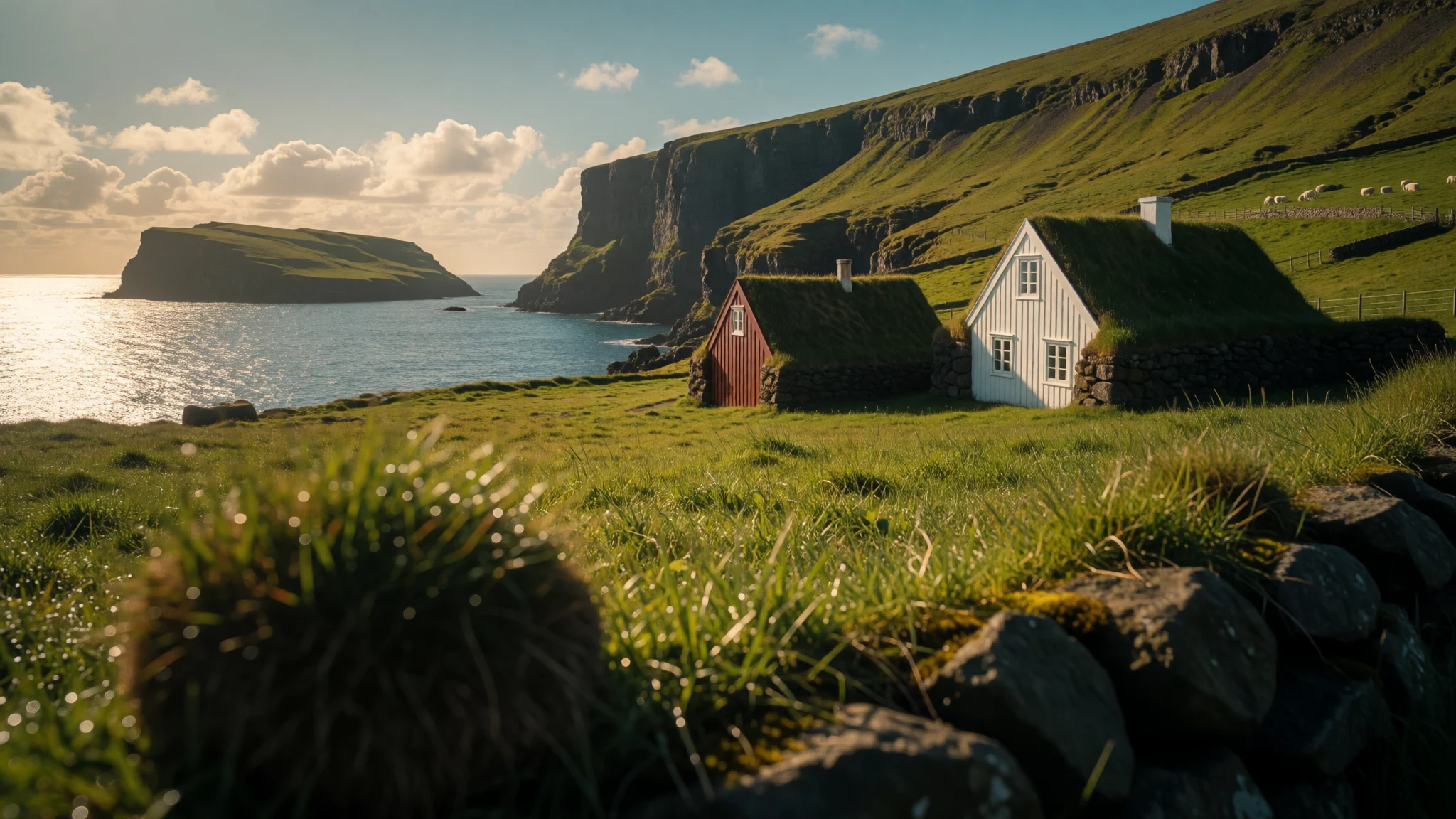
Stóra Dímun is a small island in the southern Faroes, reached by helicopter or calm-weather boat, where about ten people live.
The place
Stóra Dímun sits in the southern Faroe Islands, an island with a population of about ten, part of Skúvoy municipality. People sometimes call it simply Dímun, and Danish maps give it as Stor Dímun. It is small by any measure, and the sea around it decides who comes and goes. Boats can land only when the weather is clear and calm, which in the North Atlantic is a matter of luck rather than planning. For that reason a helicopter service, running twice a week through the year, carries much of the traffic. A lighthouse stands on the island, a reminder that these waters have long needed marking. Photographs show a few houses set on a green shelf of land, with steep cliffs rising behind and the smaller neighbouring island, Litla Dímun, visible across the water. Treeless slopes, grass and bare rock make up the view. There is no town, no shop-lined street and no obvious centre beyond the houses themselves. That is the point of the place, and also its limit. Anyone arriving should understand that this is a home for a handful of people, not an attraction with facilities built around it. Weather can shut the island off for days, so a visit is best treated as something that may be delayed, shortened or cancelled. In return, it offers a strong sense of scale: a few buildings, a lot of sky, and the Atlantic pressing in on every side. It suits people who enjoy quiet, wind and long looks at the sea, and it will frustrate anyone wanting a busy itinerary.
Its story
The story of Stóra Dímun is mostly a story of access. In the southern Faroe Islands, where this island belongs to Skúvoy municipality, the sea has always set the terms, and Stóra Dímun shows it more plainly than most places. A boat can come in only when the water is calm and the air clear, so for long stretches the island is effectively alone. The twice-weekly helicopter changed that rhythm, giving the community a dependable link that does not rely on the swell. With a population of about ten, every arrival and departure is noticed, and supplies, post, visitors and people leaving for school or work all pass through the same narrow gap. The lighthouse belongs to the same logic. It looks outward, serving ships that pass rather than the people who live beside it. Small Faroese islands have traditionally lived from sheep, seabirds and fishing, and the steep ground here suits that kind of life better than any other. Artists have noticed the setting too. A painting by Christian Benjamin Olsen shows the two Dímuns side by side, the larger and the smaller, and the Faroese postal service has put the island on a stamp. Those are modest tributes for a place with no monuments. The honest summary is that Stóra Dímun's history is quiet and local, written in weather, transport schedules and the persistence of a few households, rather than in grand buildings or famous events.
What to see
- The helicopter approach — Approach from the southwest
The helicopter is the dependable way to reach Stóra Dímun, and the approach is a sight in itself. The aircraft comes in over open sea, and the island appears as a green-topped block ringed by cliffs. Flights run twice a week and depend on weather, so keep dates loose and check booking details with the operator.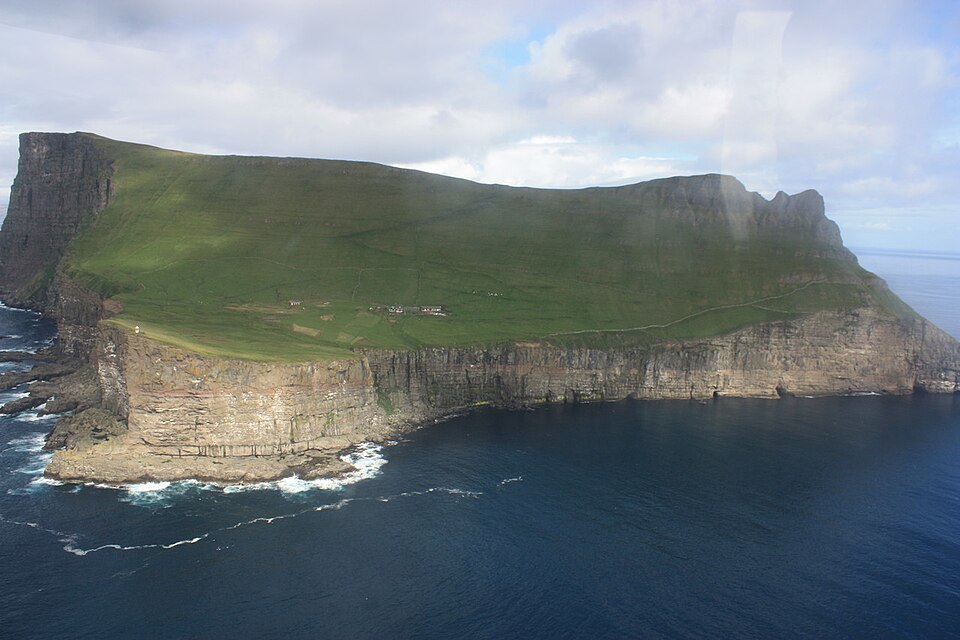
- The houses on the shelf — The settlement
The houses on their shelf of land make up the whole settlement. They sit low against the slope, looking across the water towards Litla Dímun, the smaller island next door. Stand back and take in the view rather than walking between buildings, since these are private homes and working farm buildings. The scale of the group against the cliffs is what stays in the memory.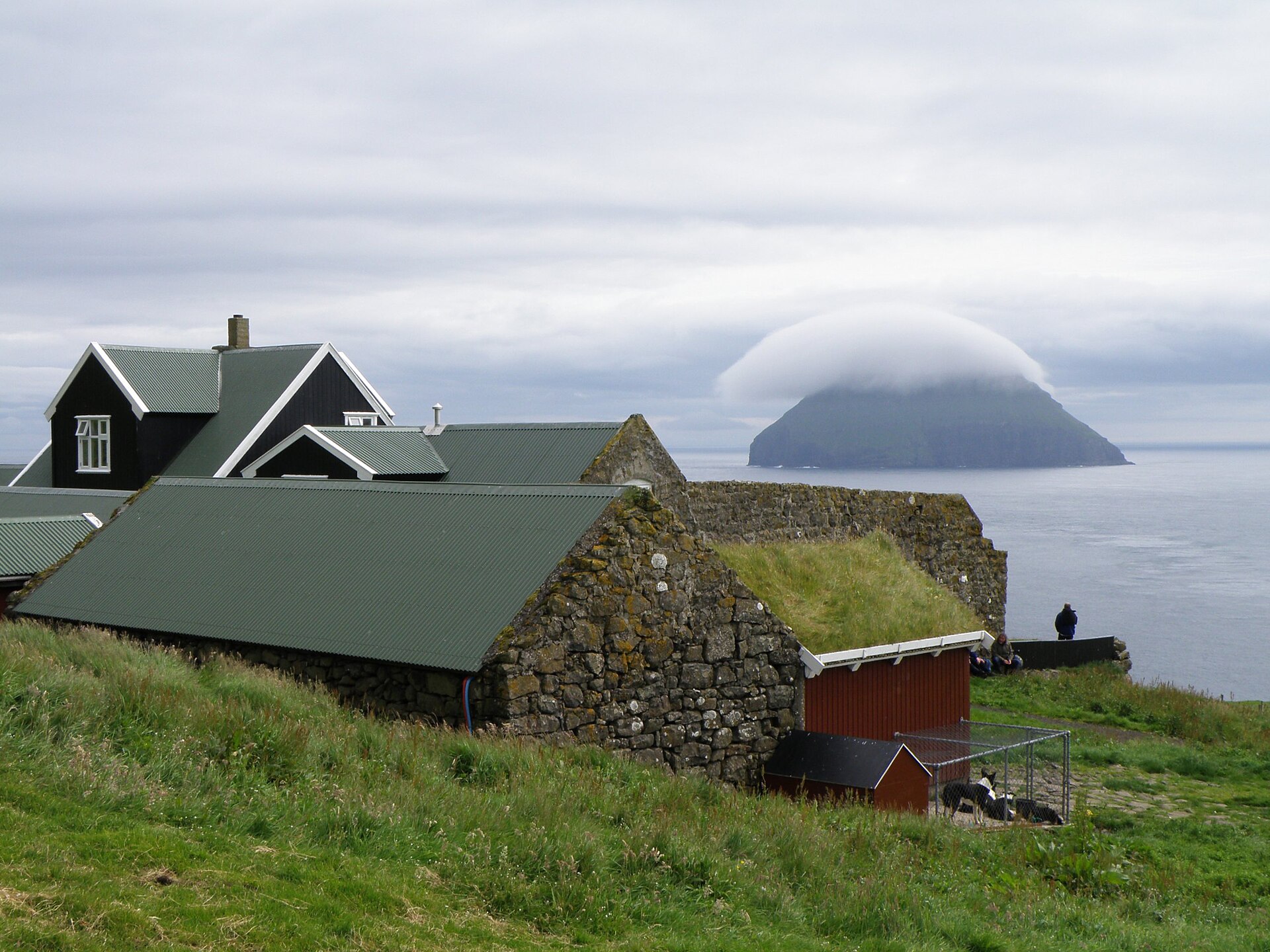
- The cliffs behind the settlement — Slopes above the settlement
The cliffs behind the houses give the island its character. Photographs show a steep, grassy climb to the top, and that route is part of the island's working life. Treat any ascent as a matter for local advice: the ground is slippery when wet and the weather turns quickly. Without a local guide, the safer choice is to look up from below.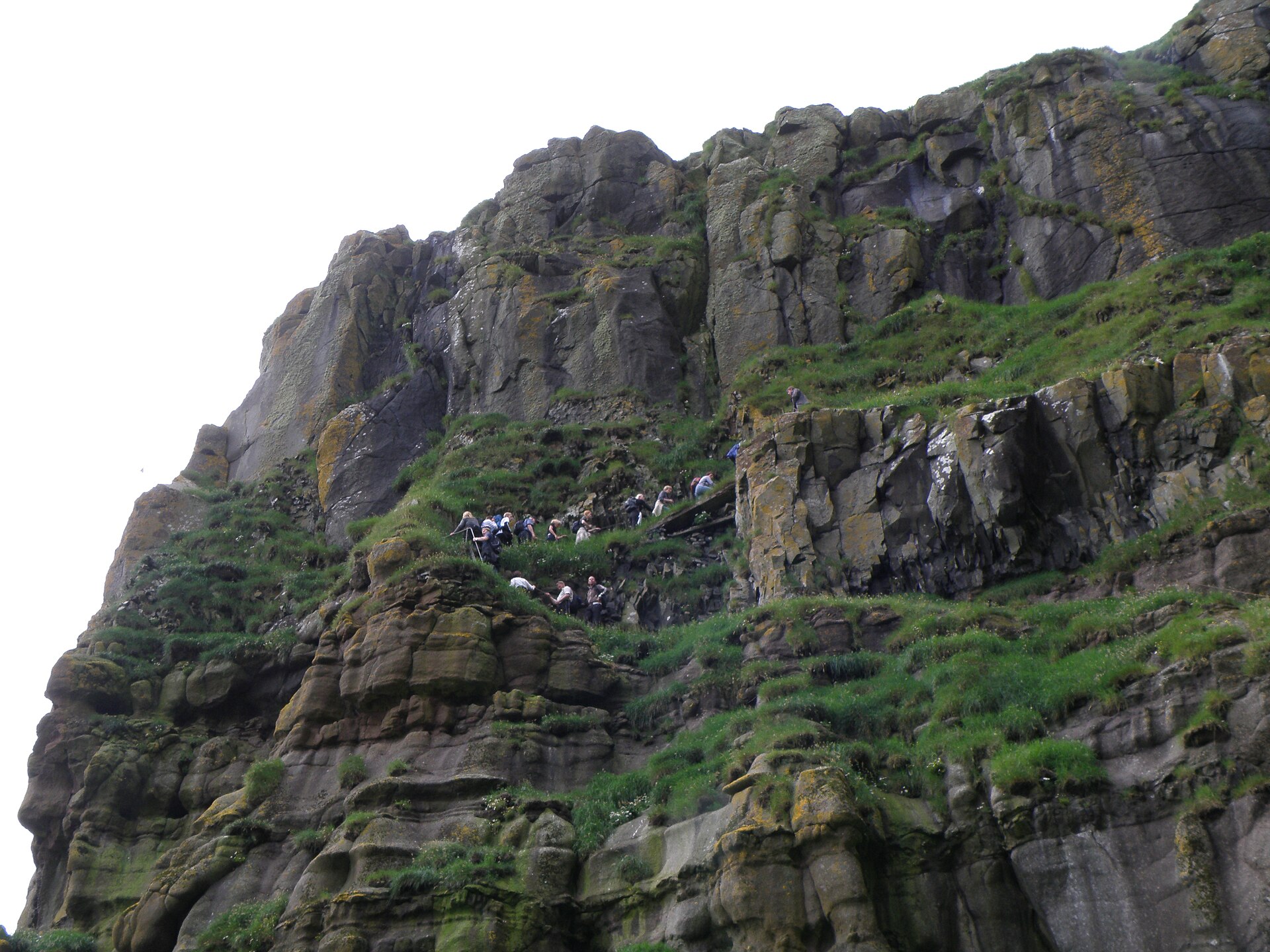
- The lighthouse — The island's coast
The lighthouse is the island's other landmark, built for passing ships rather than residents. Its exact position and whether it can be approached are best confirmed locally on arrival. From the high ground near it, the open Atlantic fills the horizon, and on a clear day the view shows how exposed the southern Faroes are. - The two Dímuns in art and on stamps — Seen from the sea
Christian Benjamin Olsen's painting of Lille and Store Dímon shows the two islands as a single view, the larger with its smaller neighbour. It is worth looking up before travelling, along with the Faroese postal stamps that feature the island, because they give a sense of the profile before the helicopter does.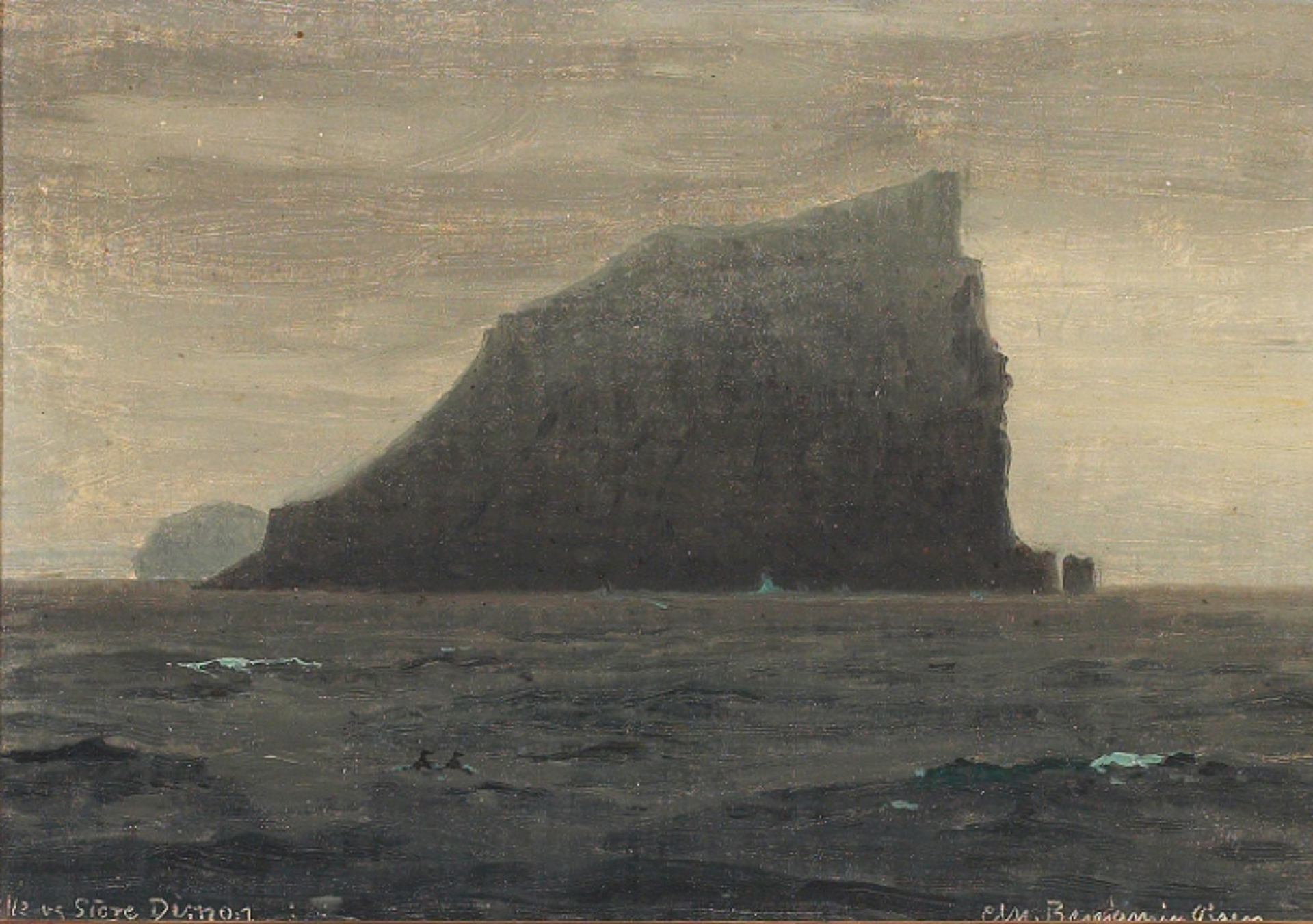
Culture
Stóra Dímun's culture is that of a household-scale community in the Faroe Islands, where the population is about ten and everyone knows everyone. Faroese is the language of daily life across the islands, and Danish is widely understood as well. Life here follows weather and the helicopter calendar more than the clock, and visitors who accept that tend to be welcomed warmly. Sheep farming and a practical, self-reliant outlook shape the Faroese countryside, and small islands depend on neighbours across the water for supplies and help. Faroese tradition also includes chain dancing and ballads, though on an island this size such customs live inside families rather than being staged for visitors. There are no performances or museums to join, so the best cultural experience is to listen, ask politely and accept what is offered. Hospitality here is not a service industry; it is a favour between people, and conversation is unhurried, often about the weather, the sea and the sheep. Ask before photographing people, homes or animals, and keep clear of the houses and farm buildings, which are private.
What to wear
Fashion on Stóra Dímun is shaped by wool and weather. The Faroe Islands have a long knitting and weaving tradition built on local sheep, and the national dress is largely wool: knitted shawls and dark fitted clothing for women, a dark jacket, waistcoat and breeches for men. It is worn at the summer festival Ólavsøka, at weddings and confirmations, and on some church occasions, and pieces are often handed down within families. Day to day, people on an island farm wear practical layers: wool jumpers, waterproof jackets and trousers, wool socks and sturdy rubber boots. Patterned Faroese knitwear is still common, partly out of habit and partly because wind is a constant. The clothes here are tools, not statements. Visitors should dress for a cold, wet and windy island whatever the month. Bring a waterproof shell, wool or fleece mid-layers, a warm hat and gloves, and waterproof walking boots with a good grip for wet grass and rock. Cotton stays damp, so avoid it. There is no formal dress code, but quiet, modest clothing suits a place where the buildings are private homes. Pack in soft bags, and ask the helicopter operator about the luggage allowance.
What to eat
- Skerpikjøt — Home tables across the islands, and delis in Tórshavn
Wind-dried mutton, hung in an airy wooden hut for a long time until it turns dark, dense and savoury. It is sliced thin and eaten with potato or bread. The flavour is strong and salty, a taste of how Faroese households kept meat through the year. - Ræst kjøt — Home meals and traditional restaurants in Tórshavn
Fermented mutton, matured in the same airy sheds. It smells and tastes sharp, a little like a strong cheese, and is an acquired taste. A small piece is the sensible way to try it, usually with boiled potatoes. - Fresh fish and potatoes — Home kitchens, and harbour eateries on the larger islands
Cod, haddock or other fish caught nearby, simply boiled or fried and served with boiled potatoes and butter. On a small island with no town, this plain, reliable meal is the everyday standard, and it tastes best on a windy day. - Mutton and root-vegetable soup — Family kitchens and village cafés
A warming bowl made from the same sheep that graze the hillsides, simmered with potatoes and other root vegetables. It is hearty, unfussy and suits wet, windy weather. Hosts often serve it as a first course or a full meal. - Rhubarb cake — Bakeries and cafés in Tórshavn, and home baking
Rhubarb grows well in Faroese gardens, and it turns up in cakes, crumbles and jam, a sharp contrast to the salty meats. A slice with coffee is a gentle end to a meal and easy to find before the flight out.
Plan it
Best time. May to August, when daylight is longest and the weather is mildest. Even then the helicopter can be cancelled for wind or cloud, and winters are dark, wet and stormy.
How long. 2–3
Getting there. Fly to Vágar Airport, the Faroe Islands' international airport, then continue by road to Tórshavn. The helicopter, which runs twice a week, is the dependable last leg to Stóra Dímun; a boat works only in clear, calm weather. Confirm the schedule, departure point and booking with the official operator.
Budget. high
Tips
- Book the helicopter early and keep your dates flexible, since weather can delay or cancel flights
- Allow slack before any onward international flight in case you are held on the island
- Arrange bed and meals with your host in advance rather than relying on shops
- Bring waterproof layers and sturdy boots whatever the forecast
- Check the luggage allowance with the helicopter operator and pack in soft bags
Etiquette
- Treat the houses and farm buildings as private homes and keep your distance
- Ask before photographing people, homes or animals
- Leave gates as you find them and keep clear of grazing sheep
Nearby
Sources
- Wikidata Q212040 (CC0)
- Wikipedia: Stóra Dímun (rev 1385139978) (CC BY-SA 4.0)
- Wikivoyage: Faroe Islands (CC BY-SA 4.0)
- Photo: Stóra Dímun, Faroe Islands (Erik Christensen) (CC BY 3.0)
- Photo: Stóra Dímun houses, view to Litla Dímun (EileenSanda) (CC BY-SA 4.0)
- Photo: VisitFaroeIslands, Stóra Dímun (Per Morten Abrahamsen) (CC BY-SA 2.0)
- Photo: Approaching Stóra Dímun from southwest (FredVin) (CC BY 2.5)
- Photo: Ascending to Stora Dimun, August 2010 (EileenSanda) (CC BY-SA 4.0)
- Painting: Lille og Store Dimon (Christian Benjamin Olsen) (Public domain)
- Photo: Climbing up the cliffs of Stora Dimun (EileenSanda) (CC BY-SA 4.0)
- Stamps of the Faroe Islands (Post of the Faroe Islands) (Public domain)


