Vieng Xai
Vieng Xai, Laos
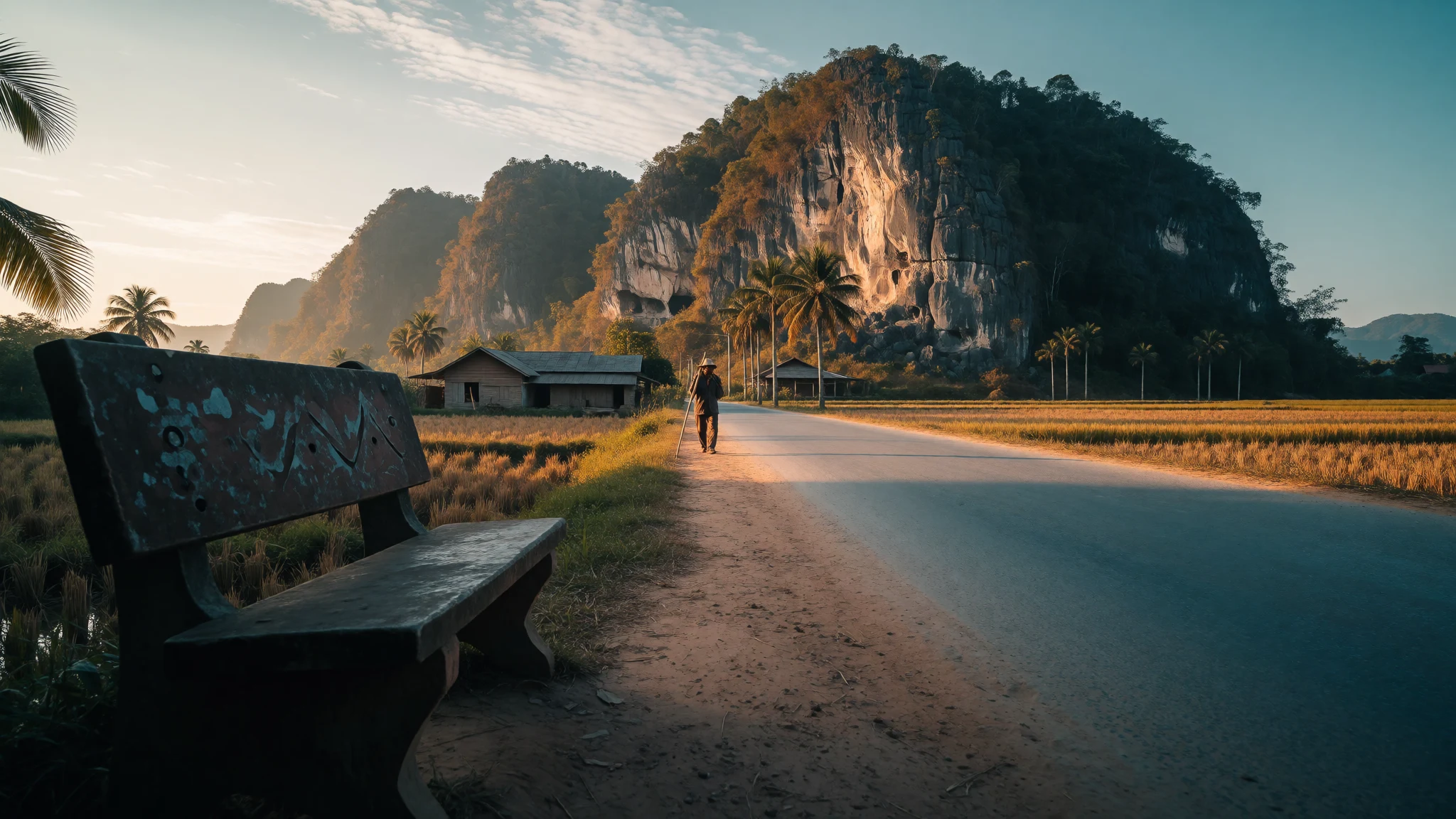
Vieng Xai is a quiet Lao town where a whole wartime government lived inside limestone caves, and where those caves can be walked today.
The place
Vieng Xai is a small town in Houaphan province, in the far north-east of Laos, set among steep limestone hills that rise abruptly from farmland. About 4,000 people live here, on the main road between the provincial capital, Sam Neua, and the Vietnamese border at Na Meo. Sam Neua is roughly 30 km away and the border post about 55 km. The setting looks gentle: rice fields, a pond, low houses and a wide main street with little traffic. The hills hide the reason for coming. Inside the karst are cave networks that served as the headquarters of the Pathet Lao, the communist movement, during the years of American bombing. Offices, a hospital, a theatre and family quarters were fitted into the rock, and these caves are now the heart of any visit. The town itself was laid out after the bombing stopped, so its straight streets and civic scale feel planned rather than grown. Today it is calm, with few visitors and almost no tourist bustle. Mornings are cool and slow, and the market picks up in the afternoon. Facilities are basic, mobile signal can be patchy, and winter nights in the hills are chilly. Many people see it as a day trip from Sam Neua, but staying a night allows the caves to be seen without hurry, and gives time to watch the limestone darken at dusk.
Its story
Vieng Xai owes its place in history to the air war over Laos. From 1964 the United States bombed Pathet Lao strongholds heavily, including Xieng Khouang province, and the movement withdrew east to this valley, where limestone caves offered protection. Over the following nine years a whole administration moved underground. Leaders, soldiers, teachers, doctors and families lived in and around the caves, and as the raids worsened, villagers who had no idea who was attacking them sheltered there too. At its peak the settlement held as many as 23,000 people. Work, school, medical care and trade mostly happened after dark, when moving outdoors was safer, and the caves held a radio station, a theatre, government ministries and barracks. The bombing was part of a covert American campaign linked to the Vietnam War, and it was kept from the American public for years. A ceasefire in 1973 ended the raids, and a new town was built nearby to serve as the capital of the Pathet Lao territories. On 2 December 1975 the Lao People's Democratic Republic was declared and the capital moved to Vientiane, leaving Vieng Xai to settle back into the life of a provincial town. The caves opened to visitors in 2007. Guided visits now explain the period through the rooms where leaders and ordinary people actually lived and worked.
What to see
- Vieng Xai Caves and Visitor Centre — Edge of Vieng Xai town
The Visitor Centre is the starting point for guided cave tours in English, which walk through the rooms used by the Pathet Lao leadership. Tour times and prices change, so check at the centre on arrival. Allow a good half-day, wear sturdy shoes, and expect cool, damp, dimly lit interiors.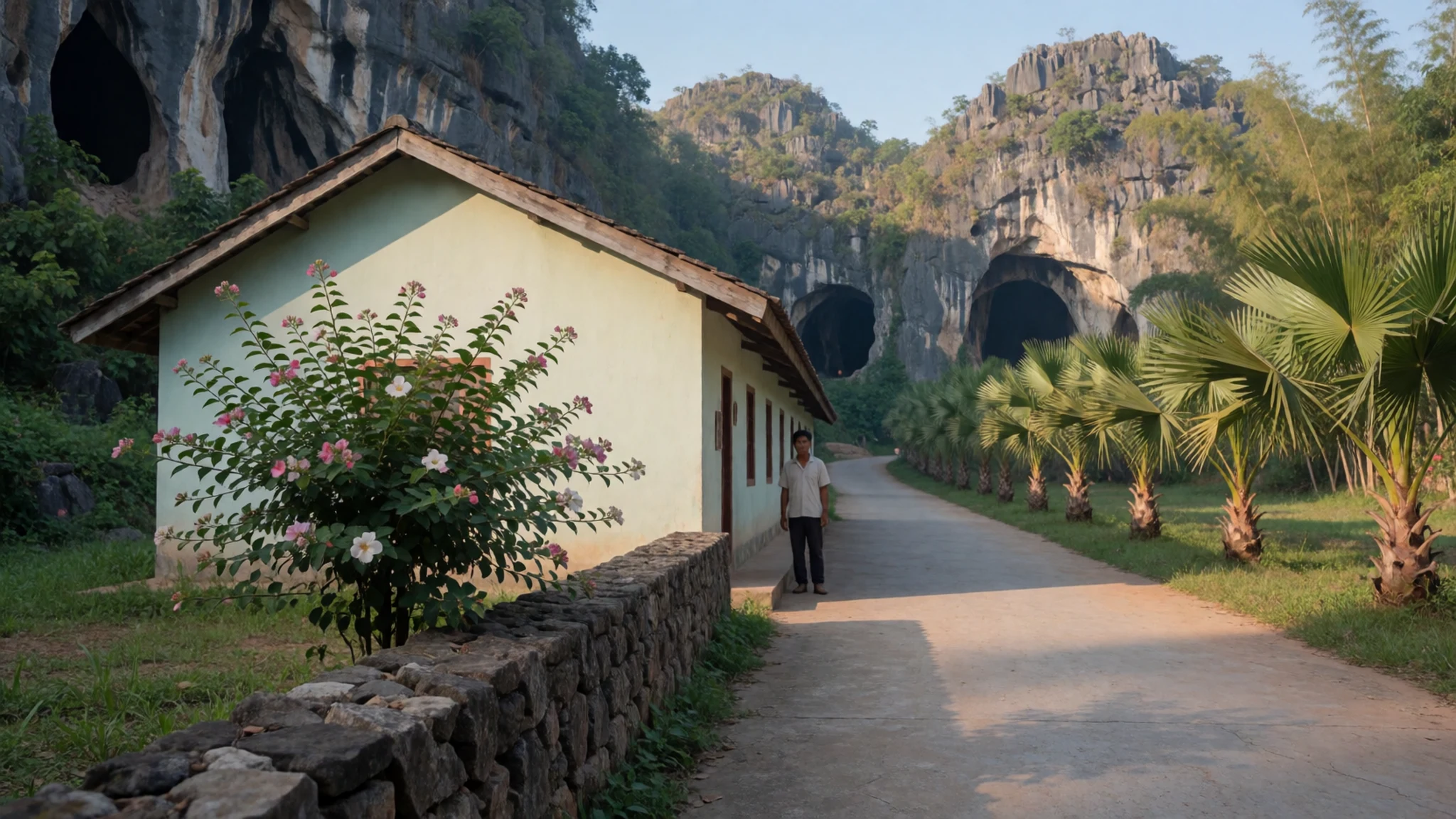
- The theatre cave — Limestone hills around Vieng Xai
One large cave was used for shows, films and even weddings while the town lived under bombing. Standing in the open chamber, it is easy to picture an audience gathering after dark. The scale of the space explains how ordinary social life carried on beneath the hills.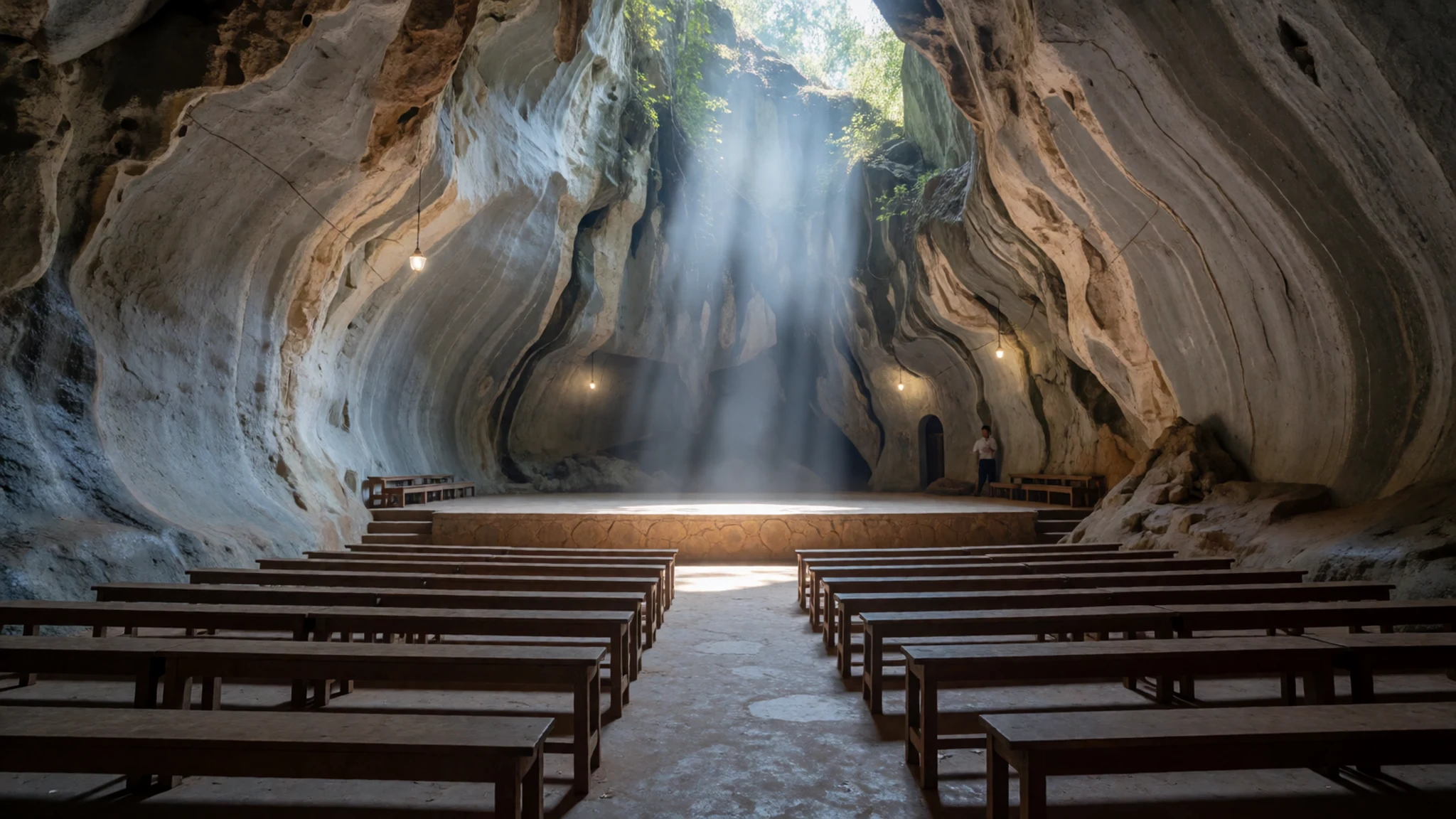
- The anti-aircraft cave viewpoint — Hills above the valley
From the mouth of this cave, guerrillas once watched the skies over the valley. Today the outlook is peaceful: green fields, scattered houses and karst ridges fading into haze. It is a good place to understand why this valley was chosen for shelter.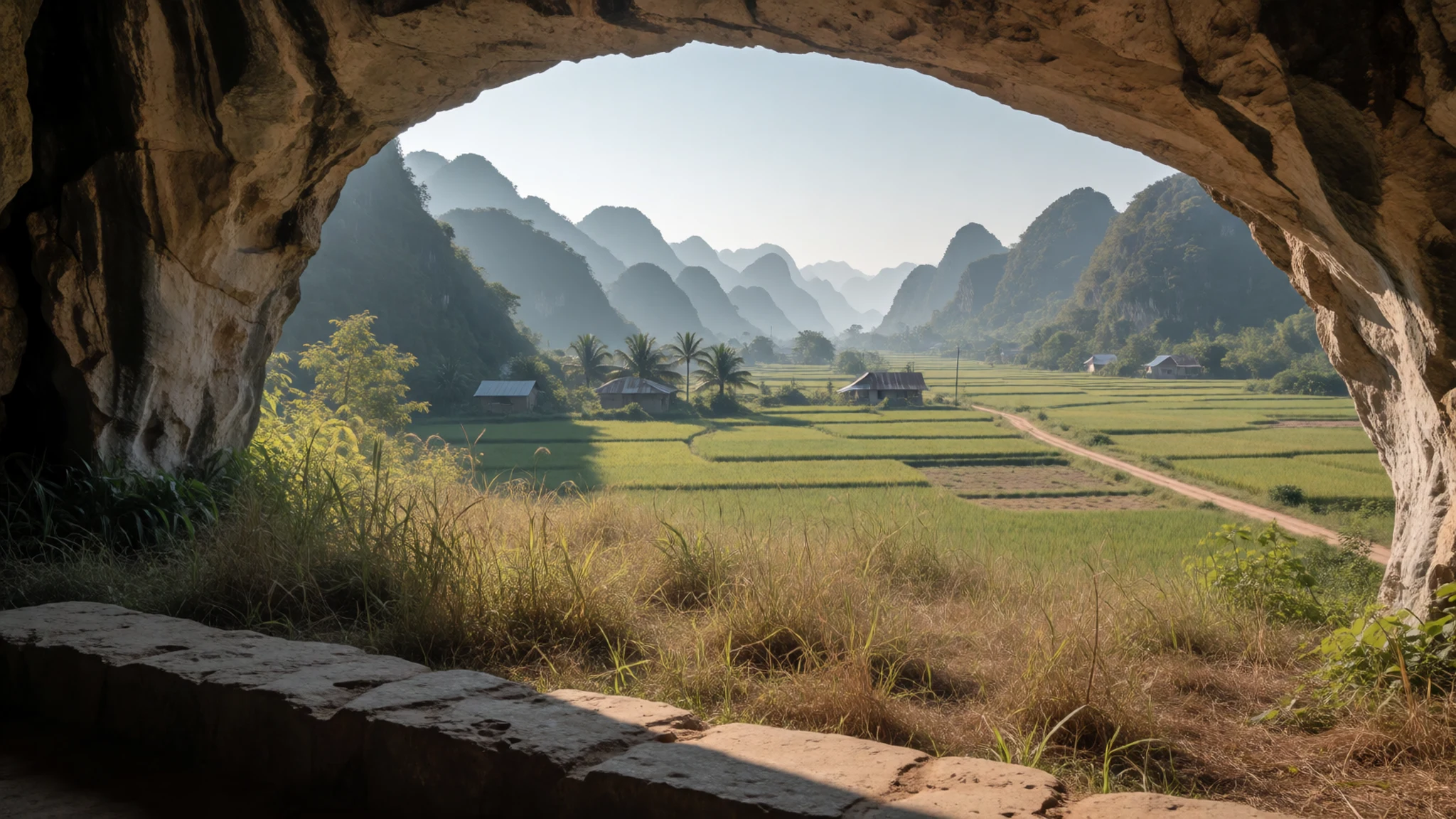
- Main street and the planned town — Town centre
Vieng Xai's wide main street, laid out after the war, is worth a slow stroll. Low shopfronts, a few cafés and the occasional motorbike set the pace. The straight lines of the town contrast with the rough hills behind and show its past as a capital.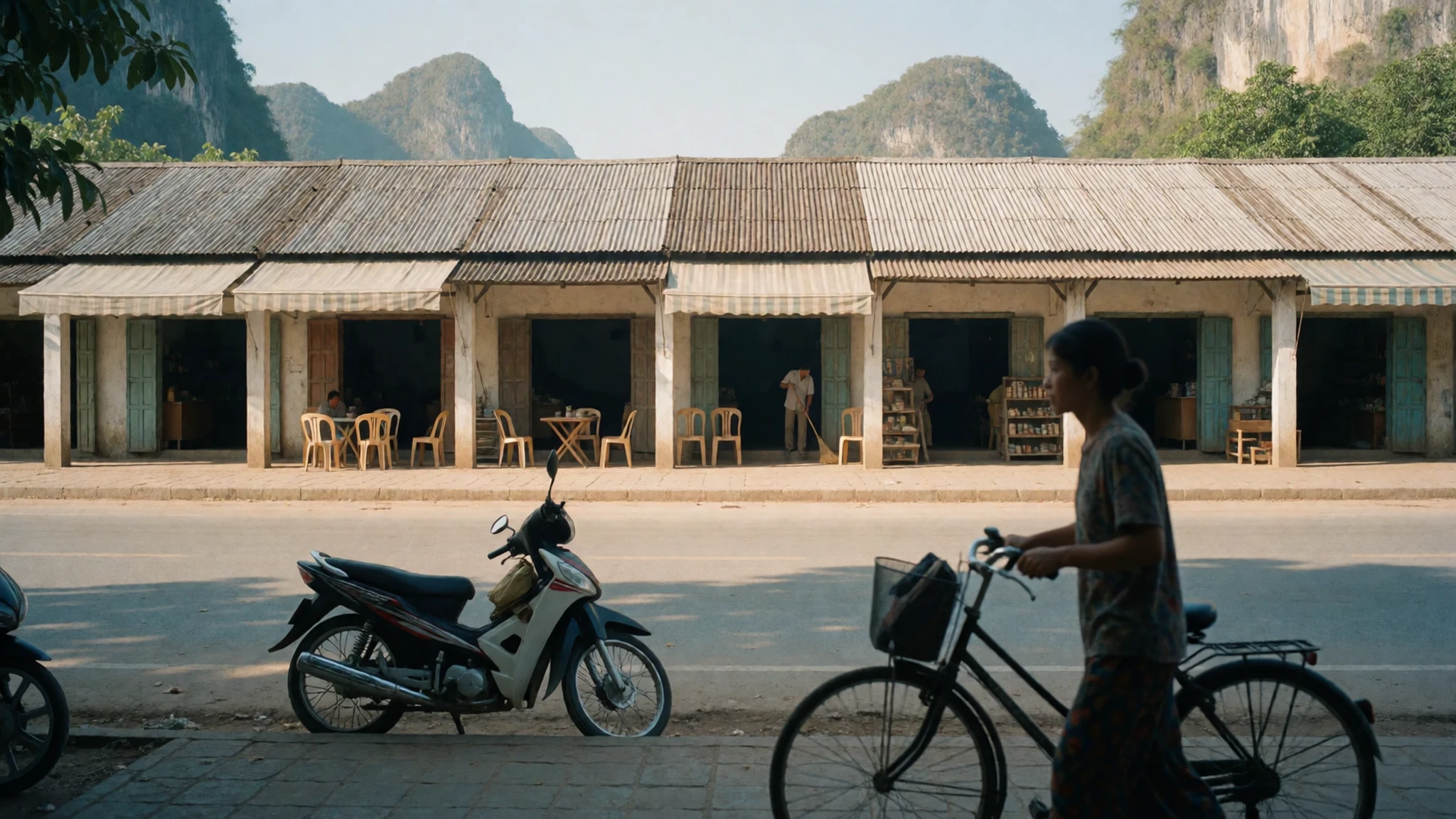
- The town pond at dusk — Edge of town
A pond at the edge of town reflects the karst, and local families gather nearby in the evening. Dusk is the most atmospheric hour, when the heat eases, the hills turn dark and the town quietly closes for the night. It costs nothing and needs no guide.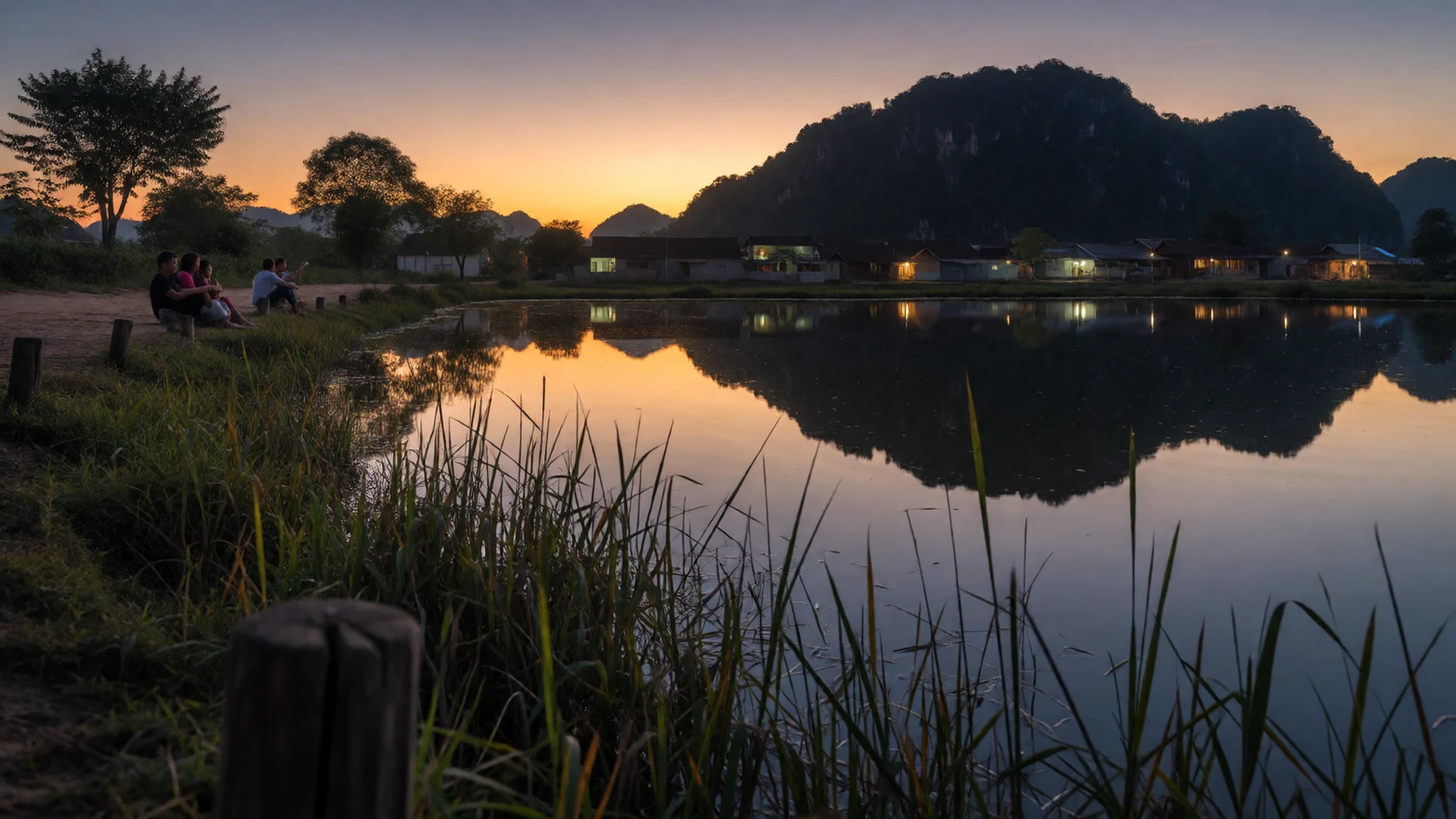
Culture
Vieng Xai sits in Houaphan, a province where several ethnic groups share the hills, among them Tai communities and Hmong families. Lao is the national language and Buddhism shapes the calendar, but northern highland life also carries older spirit beliefs and village customs. Hospitality is unforced. Visitors are likely to be greeted with a smile and the Lao hello, sabaidee, often with palms pressed lightly together. The town's recent history is not remote or abstract. Many older residents lived through the bombing years, and some families have direct memories of life in the caves. Guides present that period with pride in survival as well as with sorrow for the losses, and the story is told from the viewpoint of the winning side of a long conflict. Listening quietly and asking respectful questions goes down better than arguing politics. Daily life is rural and early: markets open at first light, people eat early, and the town is quiet by evening. The country remains affected by unexploded ordnance left from the war, which is one reason walkers are asked to stay on established paths in the countryside around the caves. Visitors should dress modestly, keep to marked paths, speak softly inside the caves and ask permission before photographing people.
What to wear
Vieng Xai and the surrounding province of Houaphan are known for hand-woven textiles. The everyday traditional garment for Lao women is the sinh, a wrapped tubular skirt, usually woven from silk or cotton and finished with a patterned border. It is worn with a blouse and often a shoulder scarf, and it appears at weddings, festivals, temple events and in offices and schools where it serves as a uniform. Tai communities in the north weave with distinctive geometric designs, and Hmong families are known for embroidery and indigo-dyed cloth, though styles differ by village. In daily life, most people in town wear practical modern clothes: jeans or trousers, shirts, T-shirts, and rubber sandals or trainers. Farmers add wide hats against the sun, and in winter jackets and woollen caps appear on chilly mornings. Women in official roles often wear the sinh. Visitors should pack light, breathable clothing that covers shoulders and knees, as the town is conservative and rural. Bring a warm layer for winter evenings and for the cool caves, and a hat and sunscreen for the hot season. Footwear matters more than fashion: closed shoes with grip suit damp cave floors and uneven paths, and sandals are fine for town. A light rain jacket is useful in the wetter months.
What to eat
- Noodle soup — Small eateries near the bus station
A bowl of rice-noodle soup in a clear, savoury broth with herbs, greens and a squeeze of lime is the standard breakfast or lunch. It is easy to find at small eateries around the bus station, and the toppings can be adjusted with chilli and fish sauce.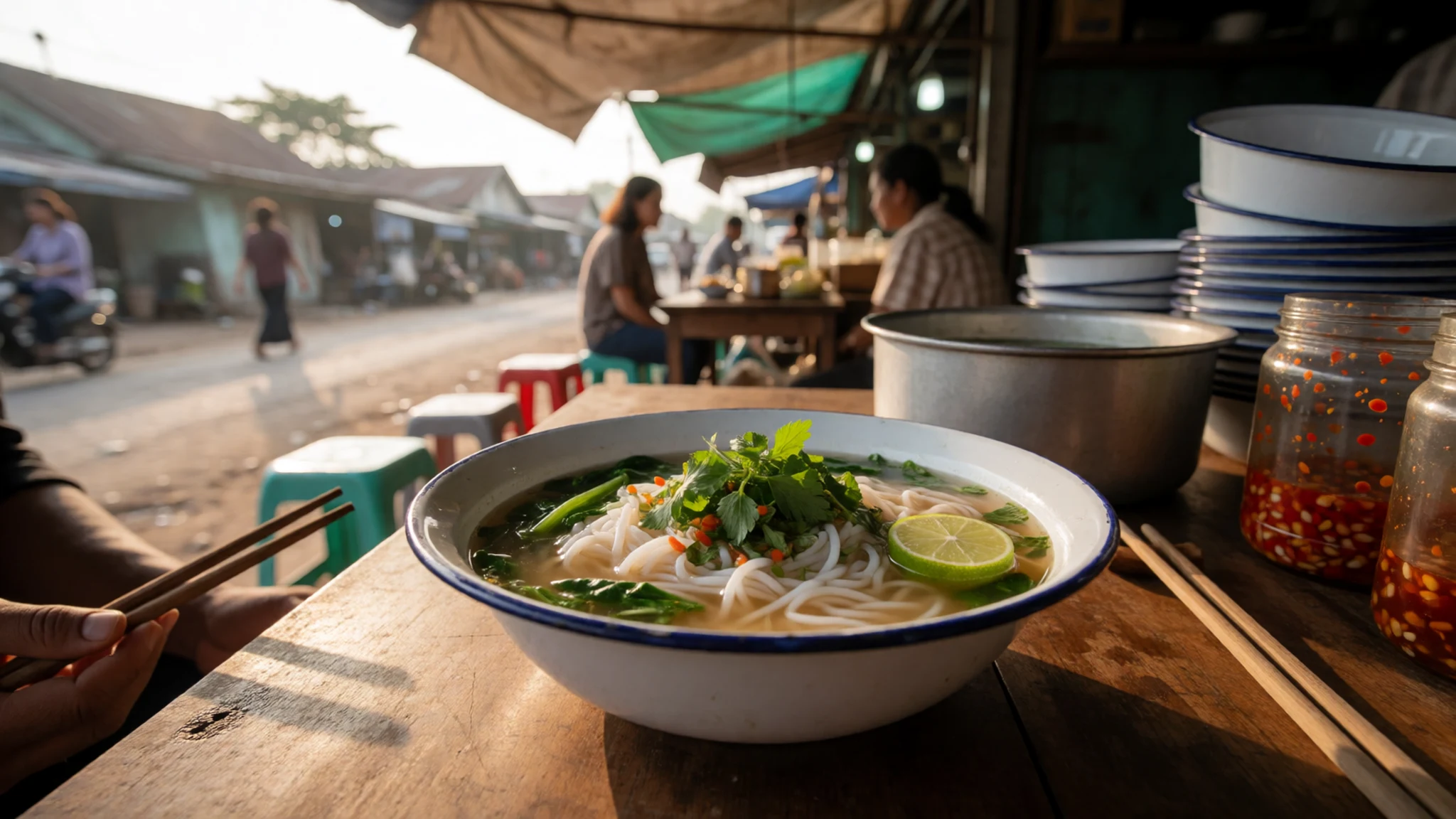
- Sticky rice with grilled meat — Afternoon market and roadside stalls
Sticky rice, eaten by hand from a small basket, is the Lao staple. In Vieng Xai it comes with grilled pork, chicken or sausage and a dark chilli dip. It is a filling, cheap meal for a day of walking.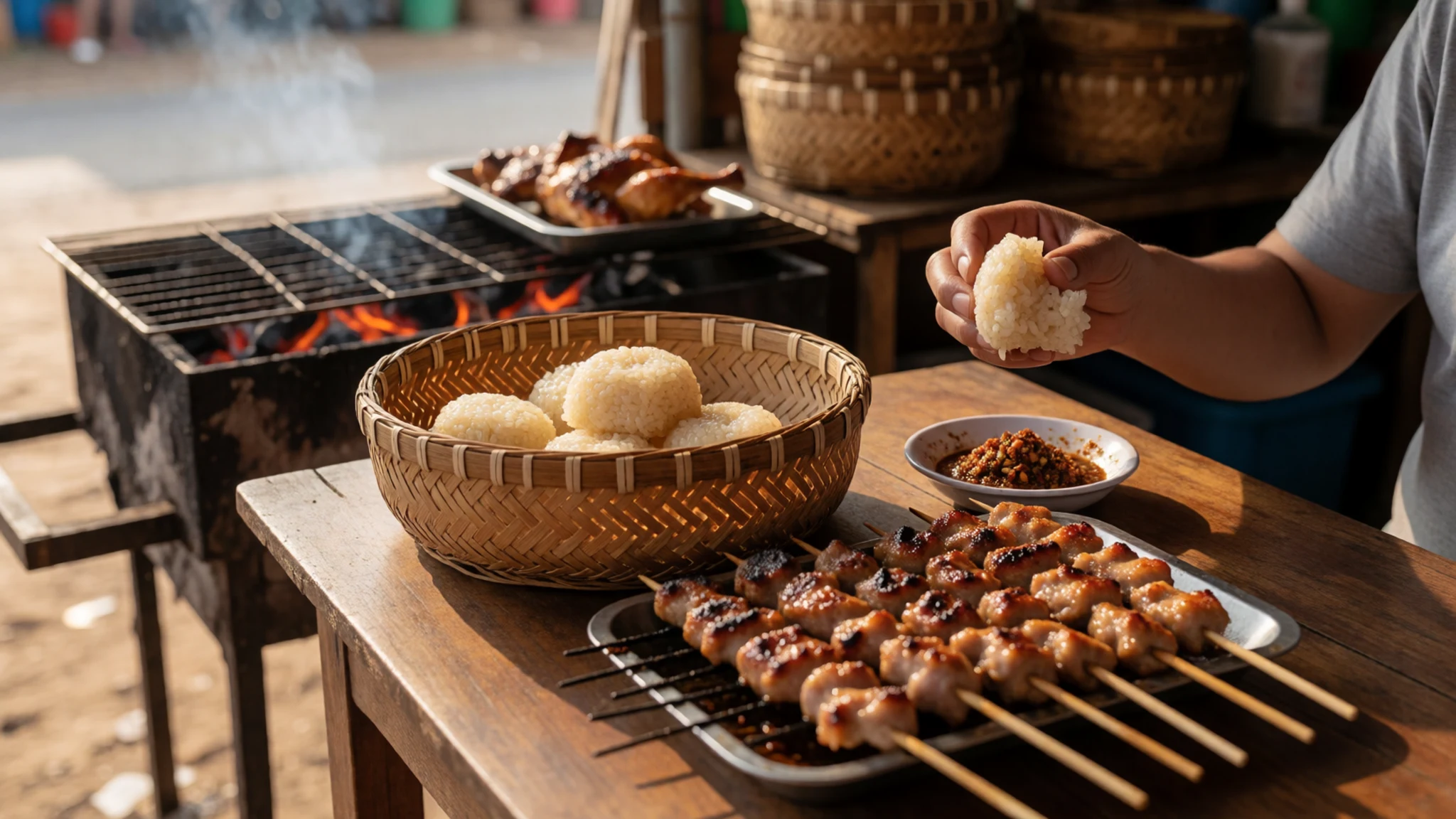
- Larb — Family-run Lao restaurants in town
Larb is a minced-meat salad, tossed with lime, fish sauce, toasted ground rice, mint and spring onion. It is sharp, herby and often hot. Ask for it mild if chilli is a concern, and eat it with sticky rice and raw vegetables. - Indian-style curry and bread — North of the main market
An eatery north of the market serves Indian dishes alongside Lao food, a welcome change for vegetarians or anyone tired of rice. Expect dal, vegetable curries and bread, and English is spoken, which helps with menus. - Market snacks and fruit — The afternoon market
The afternoon market sells grilled skewers, sweet sticky-rice parcels, steamed buns and seasonal fruit. It is the easiest place to assemble a picnic for the caves and to see what local households are actually cooking.
Plan it
Best time. November to February is the best window, with cooler, drier weather that makes cave walking comfortable, though winter nights in the hills can be cold. March to May is hot, and the rainy season, roughly June to October, brings muddy paths and unreliable transport.
How long. 1–2
Getting there. Fly or travel overland to Sam Neua, the provincial capital, which has its own small airport; check current flights. From Sam Neua, local songthaews (shared pick-up trucks) and buses toward the Vietnamese border pass through Vieng Xai in about an hour. Taxis can also be arranged. Ask the driver to drop you in town and confirm the last return service.
Budget. low
Tips
- Check cave tour times and prices at the Visitor Centre on arrival, as they change
- Plan the return to Sam Neua early, because songthaews are sparse in the low season
- Carry cash in small notes, as cards and cash machines are scarce
- Bring water, a torch for dim cave corners, and a warm layer
- Start in the morning to avoid afternoon heat and have time to spare
Etiquette
- Stay on marked paths, as unexploded ordnance remains in the countryside
- Ask before photographing people, and be tactful about politics
- Dress modestly with shoulders and knees covered
Nearby
Sources
- Wikidata Q2523307 (CC0)
- Wikipedia, Vieng Xai (CC BY-SA 4.0)
- Wikivoyage, Vieng Xai (rev 5116579) (CC BY-SA 4.0)
- Christopher Voitus, Vieng Xai main street (CC BY 3.0)
- Sally Meyer, Dusk in Vieng Xai (CC BY-SA 4.0)
- GuillaumeG, Grotte de spectacle (CC BY 3.0)
- Unknown author, Pathet lao 1 (CC BY-SA 2.5)
- Unknown author, Pathet lao 2 (CC BY-SA 2.5)
- Sally Meyer, Pond in Vieng Xai (CC BY-SA 4.0)
- Adam63, Vieng Xai - Laos (CC BY 3.0)
- Adam63, Vieng Xai - Laos02 (CC BY 3.0)


