Uzgen
Uzgen, Kyrgyzstan
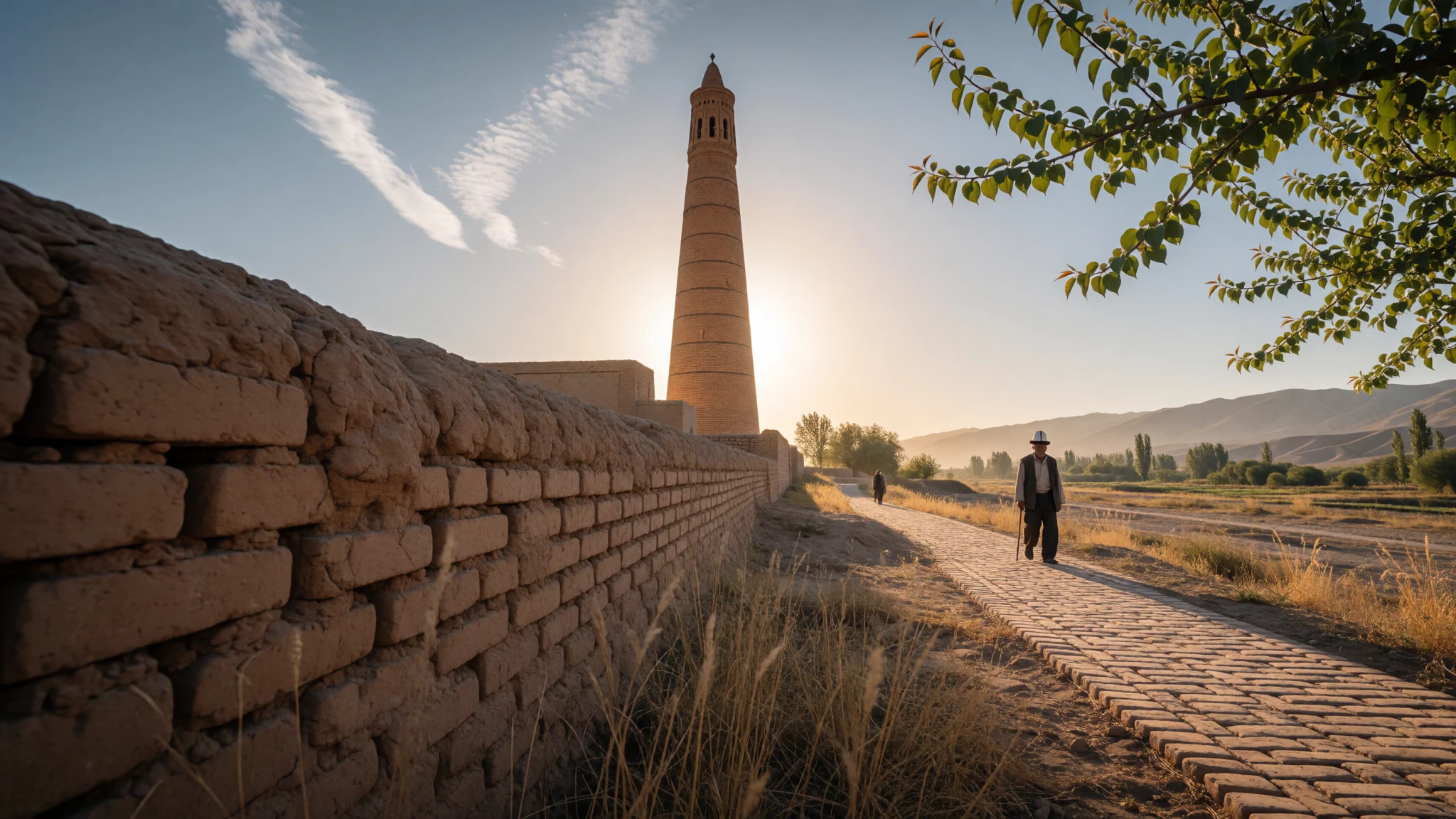
Uzgen keeps a slender medieval minaret and three Karakhanid tombs at the eastern edge of the Ferghana Valley, far from the usual Central Asian circuit.
The place
Uzgen (Özgön in the Kyrgyz spelling, Өзгөн in Cyrillic) is a small city in Osh Region, in the south of Kyrgyzstan, with about 49,000 residents and an elevation of 1,025 m. It sits at the eastern tip of the Ferghana Valley, on the right bank of the Kara-Darya, where the river leaves the hills and starts across the plain. Osh lies to the south-west and Jalal-Abad to the north-west, so Uzgen works as a day trip from either. The setting explains a good deal. Hills close in to the east, the valley opens to the west, and for centuries traders travelling between the valley towns and Kashgar passed through here. The climate is continental: summers are hot and dry, and most of the rain and snow arrives in winter and the months either side. Spring and early autumn are the comfortable seasons for walking round ruins. Today Uzgen is a working district town rather than a resort. It has a bazaar, a bus station, tea houses and the ordinary traffic of a place where farming and trade still matter. The historic core is compact: a tower, tombs and a mosque grouped in one museum complex, with older shrines and ruined earthworks scattered through the wider town. Crowds are rare, and visitors should expect modest facilities rather than a polished heritage site. It suits travellers who enjoy a quiet provincial town with real age behind it.
Its story
Uzgen's story is one of trade and of rulers who wanted a base close to it. Chinese records from the second century BC already mention a town in this part of the valley, which points to a place that mattered to merchants heading east towards Kashgar. By the tenth century, Arab geographers such as Al-Muqaddasi and Ibn Hawqal were describing it in their writings, so its name carried well beyond the valley. Its political high point came under the Karakhanids, a Turkic dynasty that ruled across much of Central Asia. They treated Uzgen as one of their capitals, and when the dynasty split into two branches, a ruler named Muhammad ibn Nasr made the town his seat. What survives from that era is architectural: a minaret built at the start of the twelfth century and three well-preserved mausolea standing close together. Much else, including the fortress, has worn down to mounds and fragments. Later centuries added mosques, and several from the nineteenth century are still standing. The result is layered rather than grand, with a medieval landmark, tombs of rulers and saints, and everyday buildings of a later age, all inside a modest provincial city. Because the written record is thin, historians lean on the buildings and on archaeology, and dates and burials are still debated. The site is best read as evidence of how far long-distance commerce reached into the Ferghana foothills.
What to see
- Uzgen Minaret — Museum complex, central Uzgen
The brick minaret is the town's landmark, rising 44 m and dating from the early twelfth century. Its tapering shaft is the clearest sign of Uzgen's medieval standing and can be seen from across the complex. Late afternoon light brings out the patterned brickwork. Check locally on opening arrangements and the entry fee.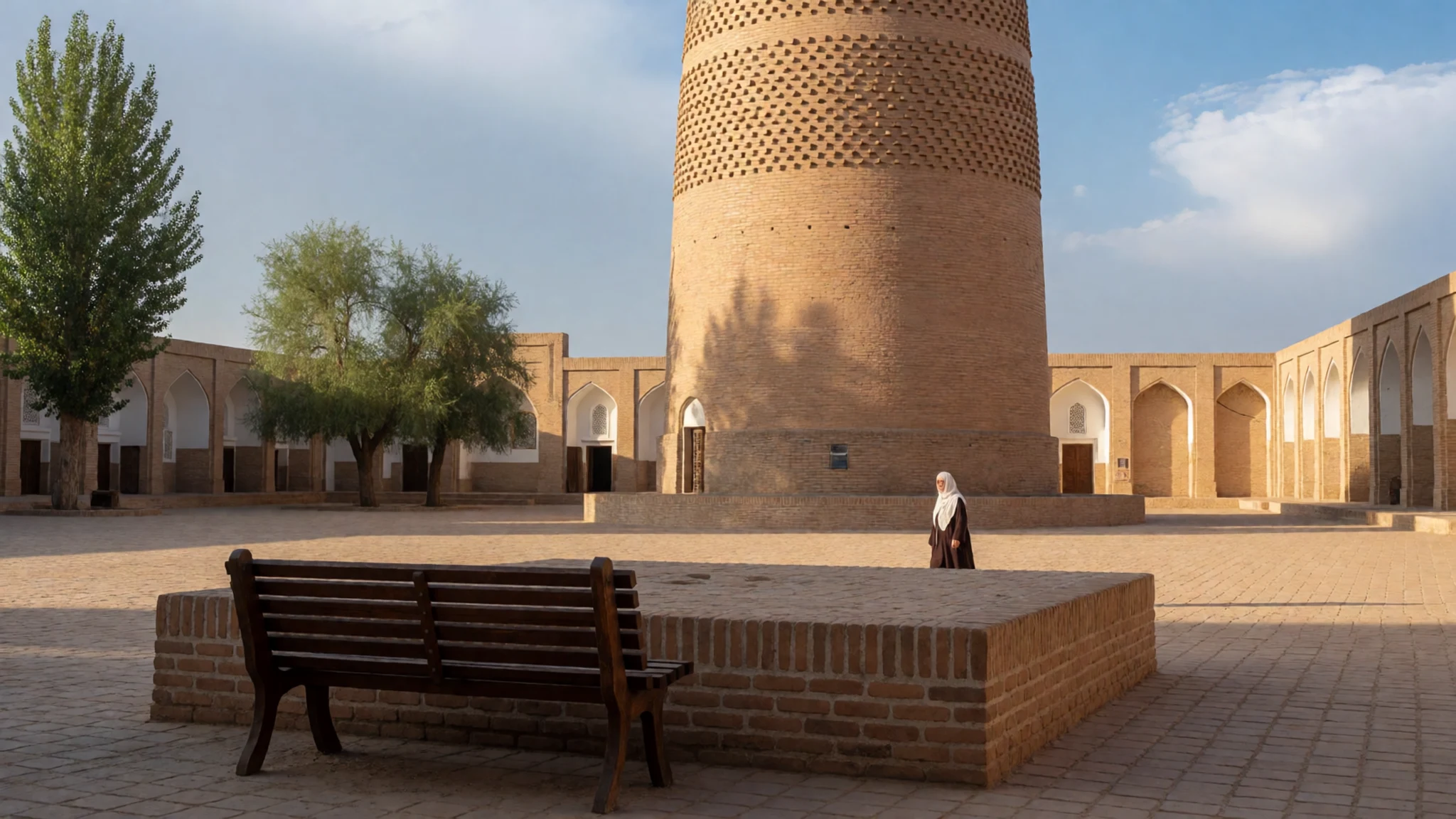
- The Karakhanid mausolea — Museum complex, central Uzgen
Three mausolea of the Karakhanid period stand beside the minaret, built of fired brick and in good condition. Their moulded and carved decoration rewards a slow look up close. Compare their sizes and ornament as you walk round each one. Signage may be minimal, so a little reading beforehand helps.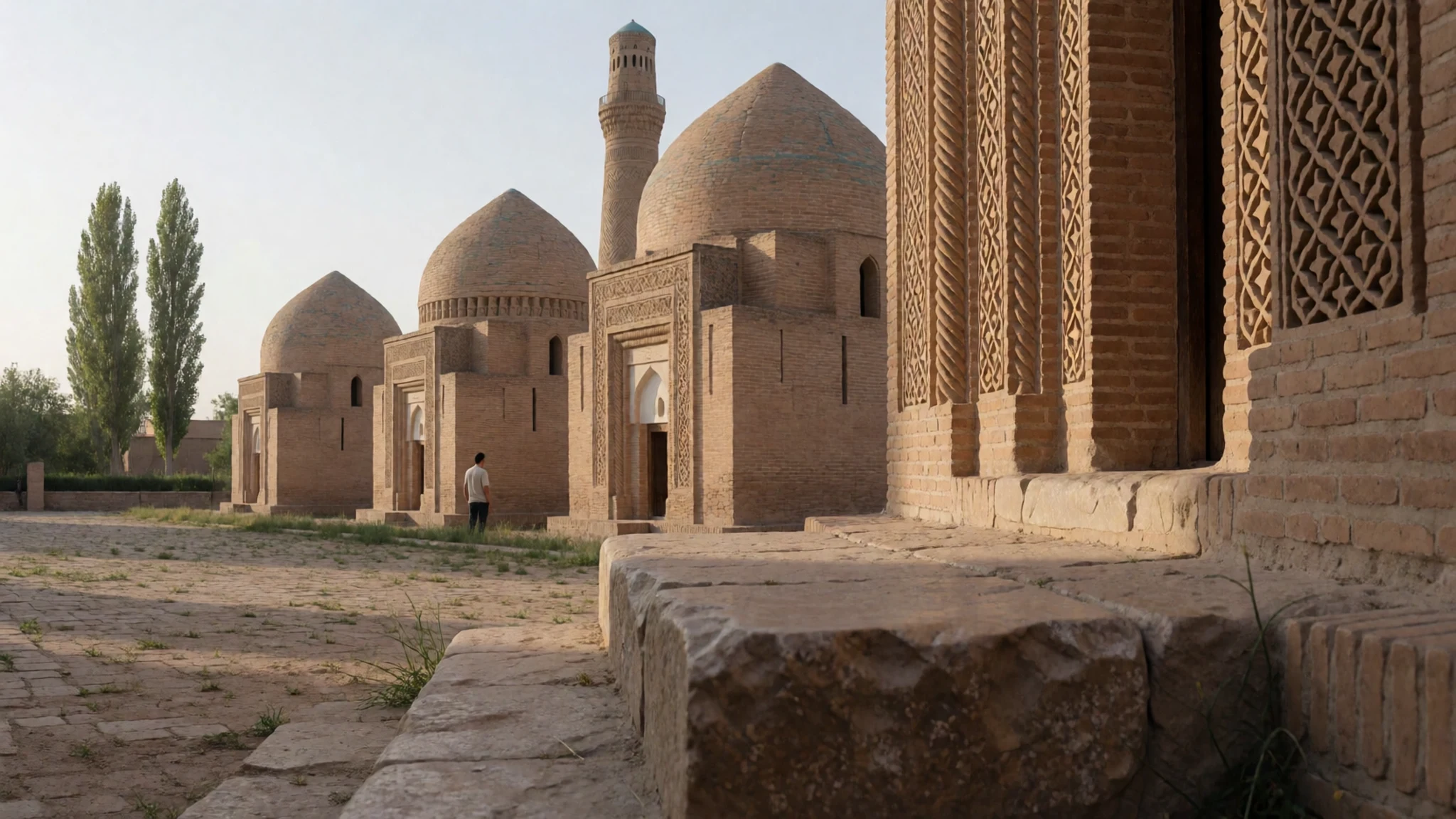
- Mosque and madrasah — Museum complex, central Uzgen
Next to the tower stand a mosque and a madrasah, part of the same museum complex. They give the minaret its context as the centre of a religious and teaching quarter. Treat the mosque as a place of worship first and a sight second, and check whether interiors are open on the day.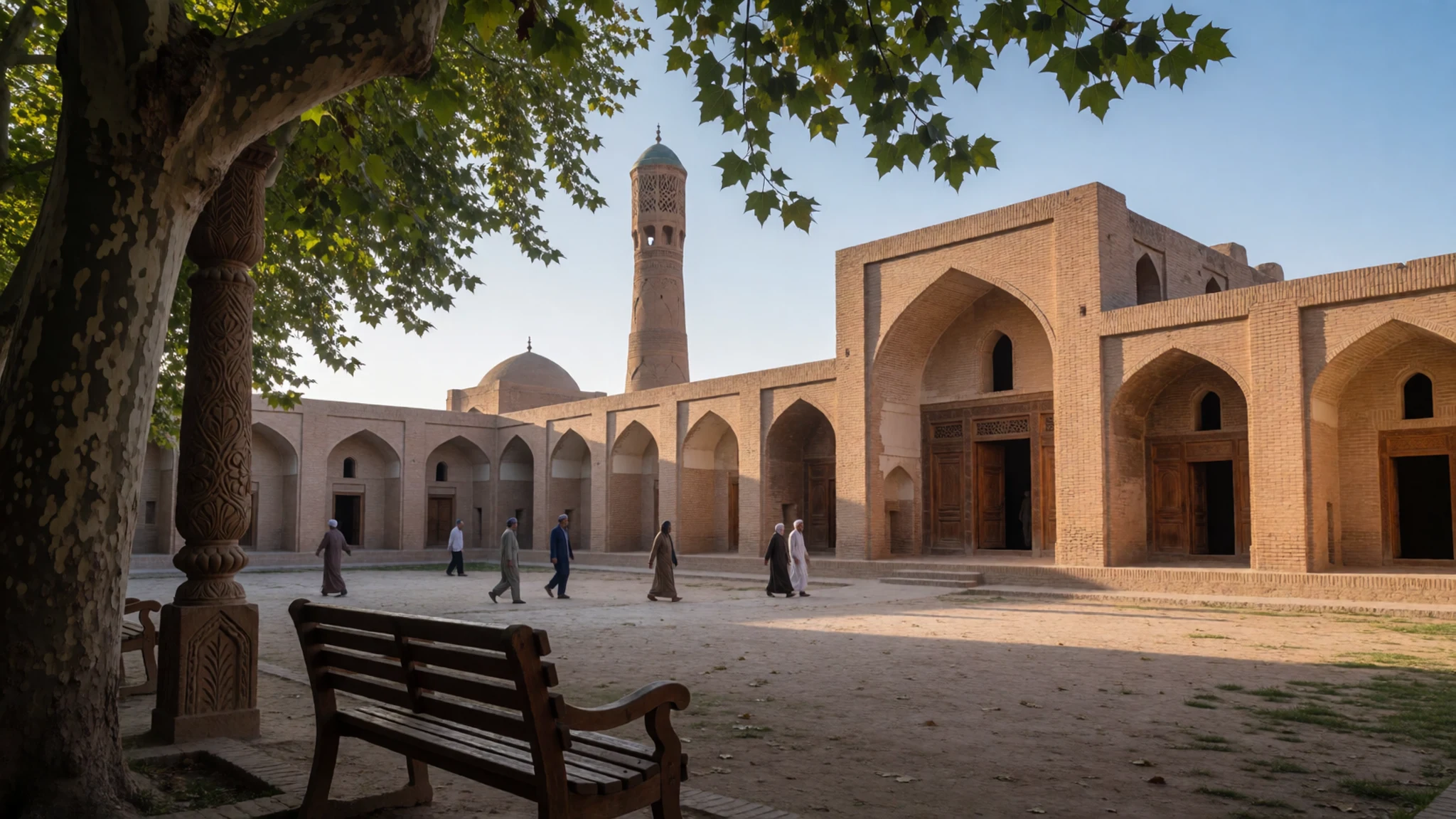
- Fortress remains and mazars — Across Uzgen town
Beyond the main complex, the town holds the remains of a fortress, shrines called mazars, and burials of saints and notable people from the eleventh and twelfth centuries. Finding them takes time, and a local driver or guide helps. Expect low earthworks rather than standing walls, and quiet pilgrims visiting.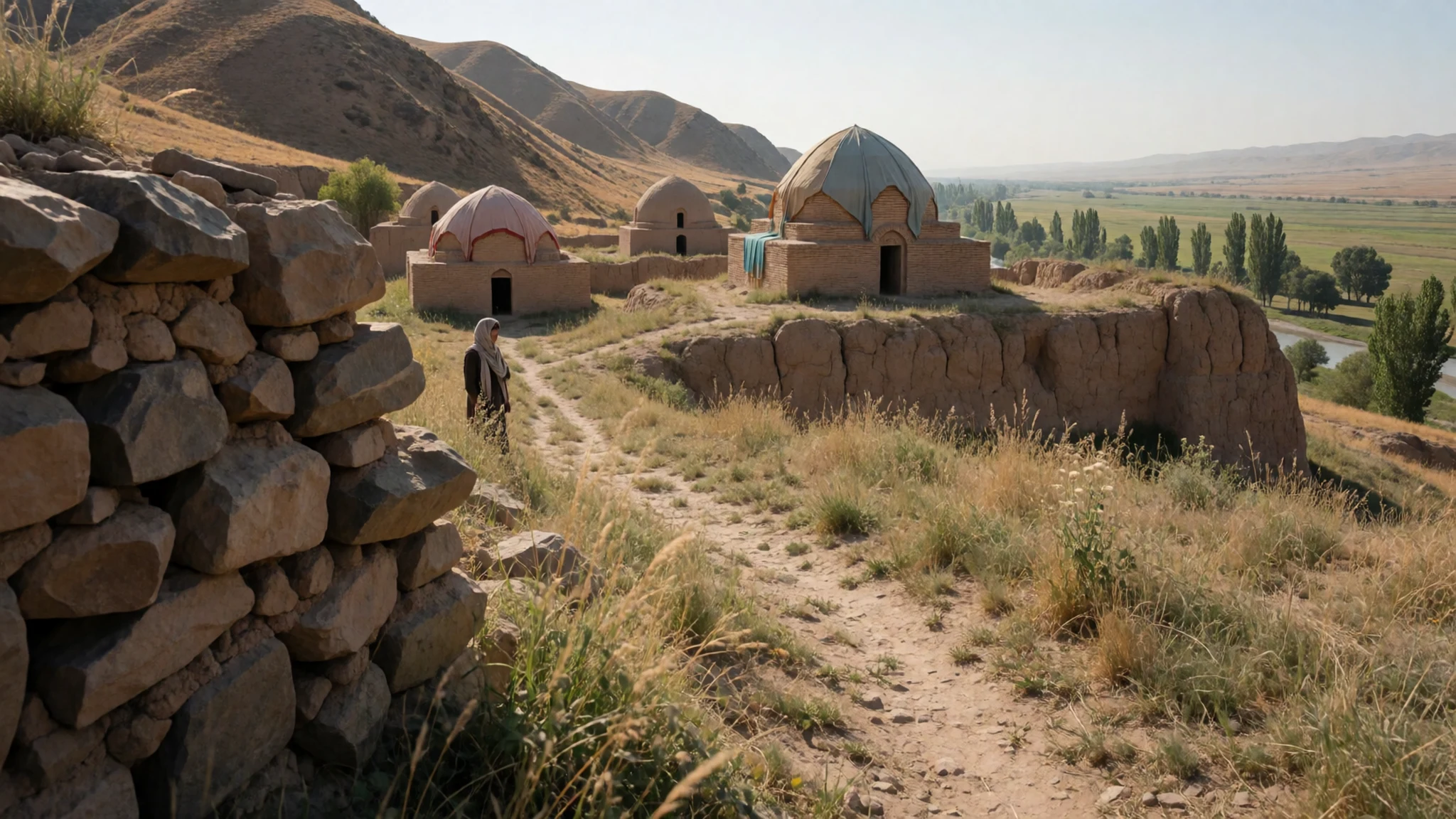
- Nineteenth-century mosques — Residential districts of Uzgen
Several mosques built in the nineteenth century survive in good condition. They show how the town's faith and craftsmanship carried on after the medieval peak. Look for timber details, which are common in valley mosques. Visit between prayer times and ask permission before stepping inside.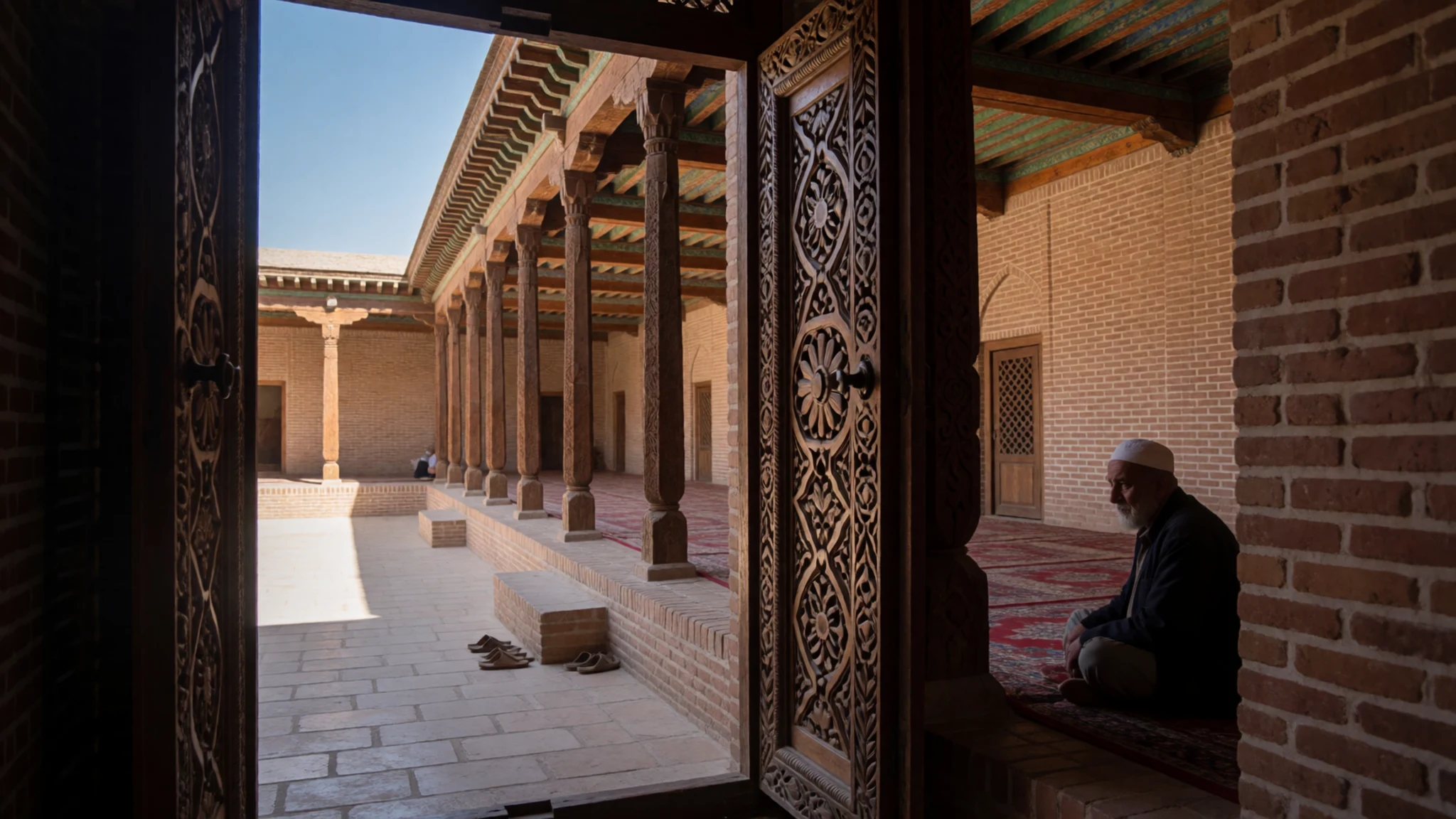
- Kara-Shoro and Salam-Alik — Hills outside Uzgen
Outside town is the Kara-Shoro recreation area, where residents spend summer holidays on the mountain slopes and drink from a natural spring said to have healing properties. A tourist centre called Salam-Alik is nearby. It offers a cooler break from the heat of the valley floor, though facilities vary and are worth checking in advance.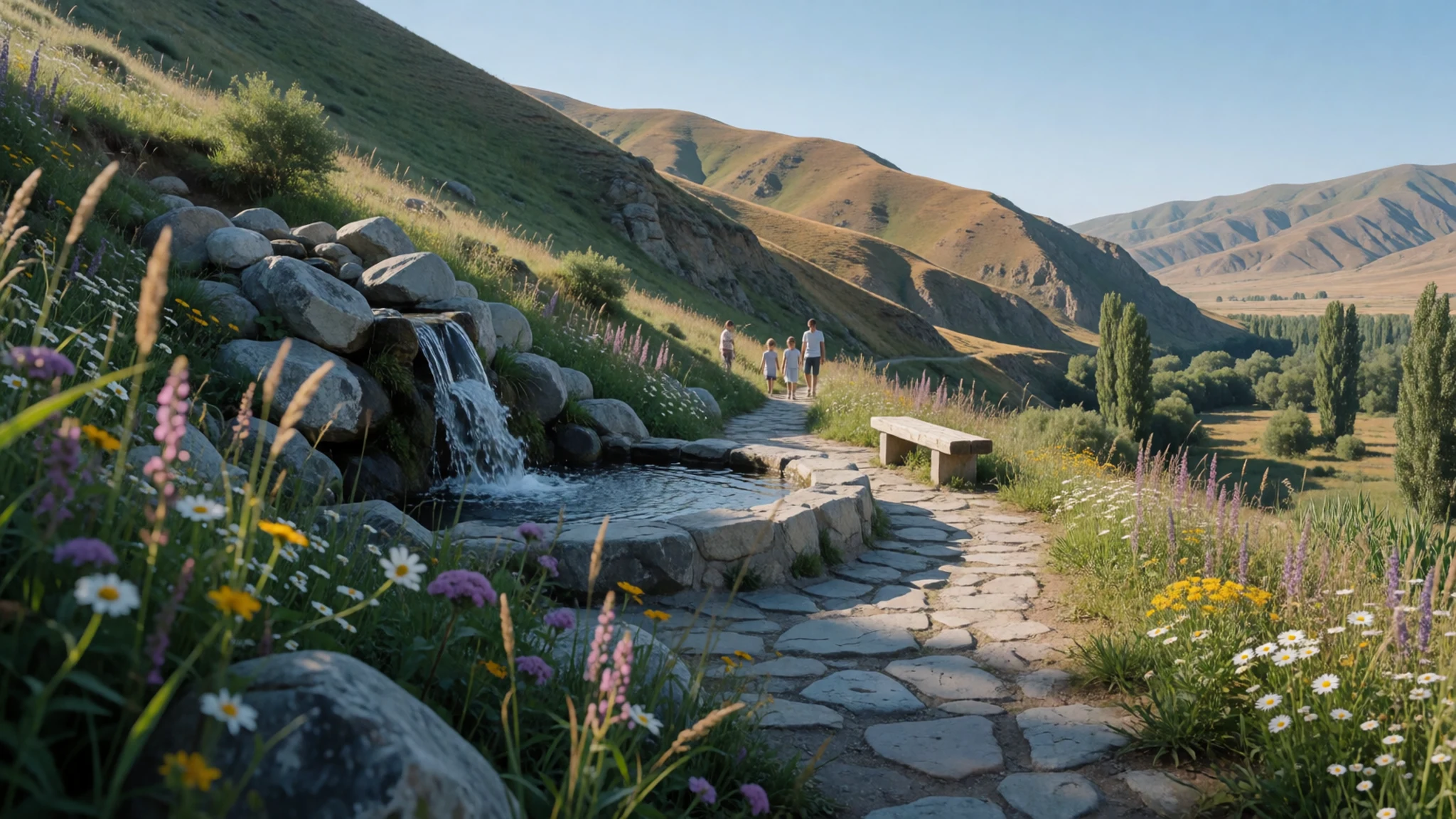
Culture
Culture in Uzgen blends Kyrgyz traditions of hospitality with the Islamic heritage of the old Karakhanid town. Mazars, the shrines of saints and notable figures, remain places of pilgrimage, and families may be seen praying quietly at them. Hospitality is real: a guest is offered tea and bread, and refusing everything can seem curt, so a visitor who cannot stay long does well to accept at least a cup. Daily life centres on the bazaar, the chaikhana (tea house) and meals shared around a table. Kyrgyz traditions of horsemanship, felt-making and the oral epic Manas run strongly across the country, though Uzgen itself is more a town of farmers, traders and builders. As in much of the Ferghana Valley, Kyrgyz and Uzbek communities live close together, and Russian is also heard in the street. Religion is practised mostly in a moderate and private way, but prayer is part of the day's rhythm, and the old minaret is a reminder that this was once a town of real religious and political weight. Local people tend to be curious about foreign visitors and often start conversations, usually with warmth rather than any sales pitch. Dress modestly, take your shoes off before entering any mosque or mazar, and ask permission before photographing people, especially women and worshippers.
What to wear
Dress in Uzgen draws on Kyrgyz and Uzbek traditions. The best-known Kyrgyz garment is the kalpak, a tall white felt hat with black trim, worn by men on holidays, at weddings and at ceremonies. A chapan, a quilted coat, was the traditional outer layer, while married women once wore the elechek, a large white turban-style headdress. Uzbek communities in the valley are known for bright silk and cotton fabrics woven with blurred, feathery ikat patterns, and for the embroidered doppi skullcap. Most of this is now saved for celebrations, costume displays and festivals. Everyday dress in town is plain and practical: trousers or jeans and shirts for men, suits for formal occasions, and long skirts or dresses for many women, often with a headscarf, especially among older women. Visitors should dress for a hot, dry valley in summer, with light, loose clothing that covers shoulders and knees, a brimmed hat and sunscreen. Spring and autumn evenings can be cool, so carry a layer, and winters call for a proper coat. At the mosques and mazars, women should carry a scarf for covering the hair, and men should avoid shorts. Sturdy, closed shoes suit the uneven ground around the ruins, and slip-on footwear makes removing them at religious sites easier.
What to eat
- Plov — Tea houses and bazaar eateries, at lunchtime
Rice cooked with carrot, onion and meat in a heavy cauldron, served in a communal heap. Rice is central to Ferghana Valley cooking, and plov is the dish for celebrations. Look for it at lunchtime, when tea houses and bazaar eateries serve it until it runs out.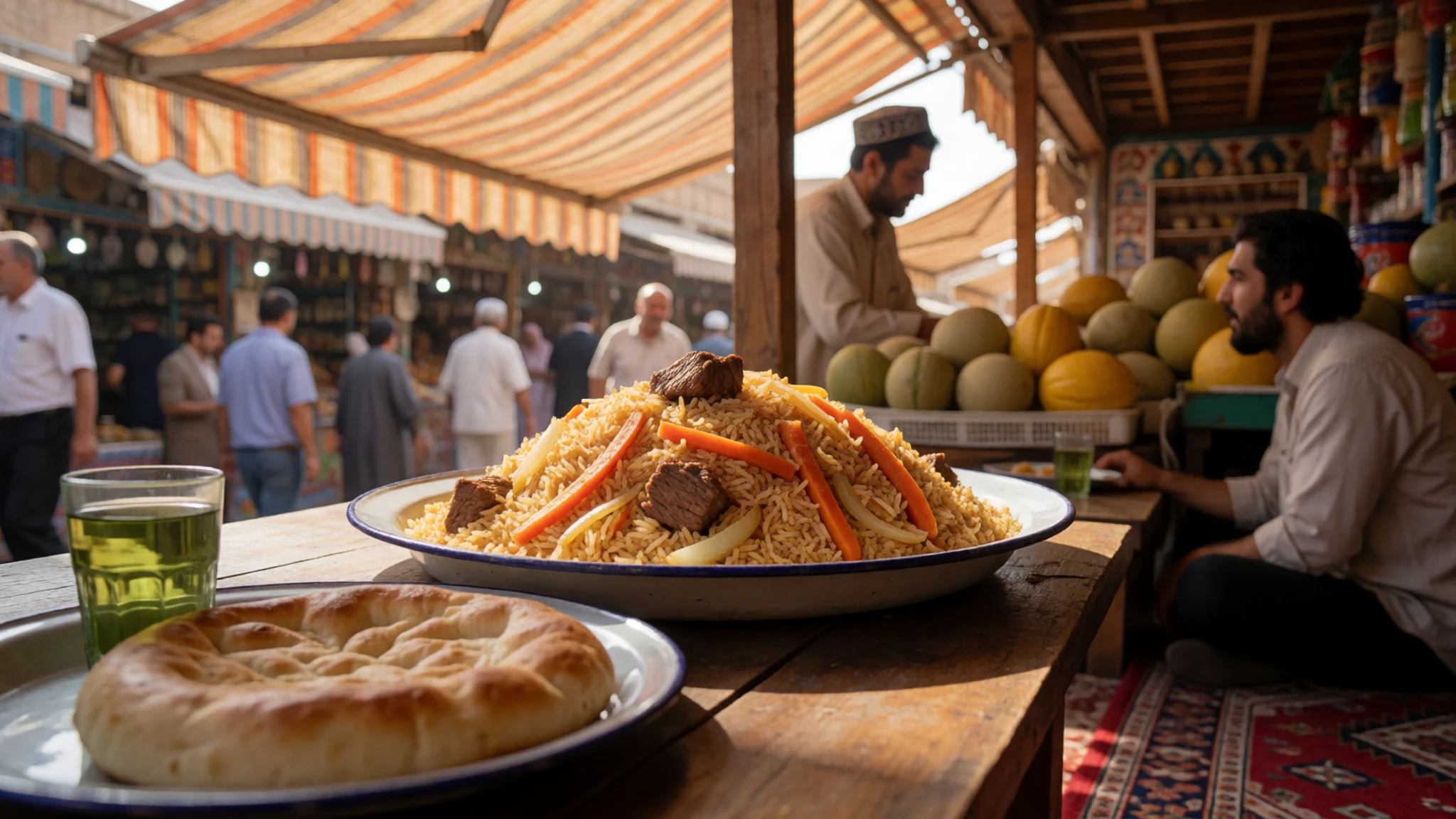
- Lagman — Eateries near the bazaar and bus station
Hand-pulled wheat noodles in a broth or stir-fried with beef, peppers and onions, a dish shared across Central Asia. Eateries near the bazaar and bus station tend to offer it, in a soup version or a drier one. Ask for vinegar and chilli on the side.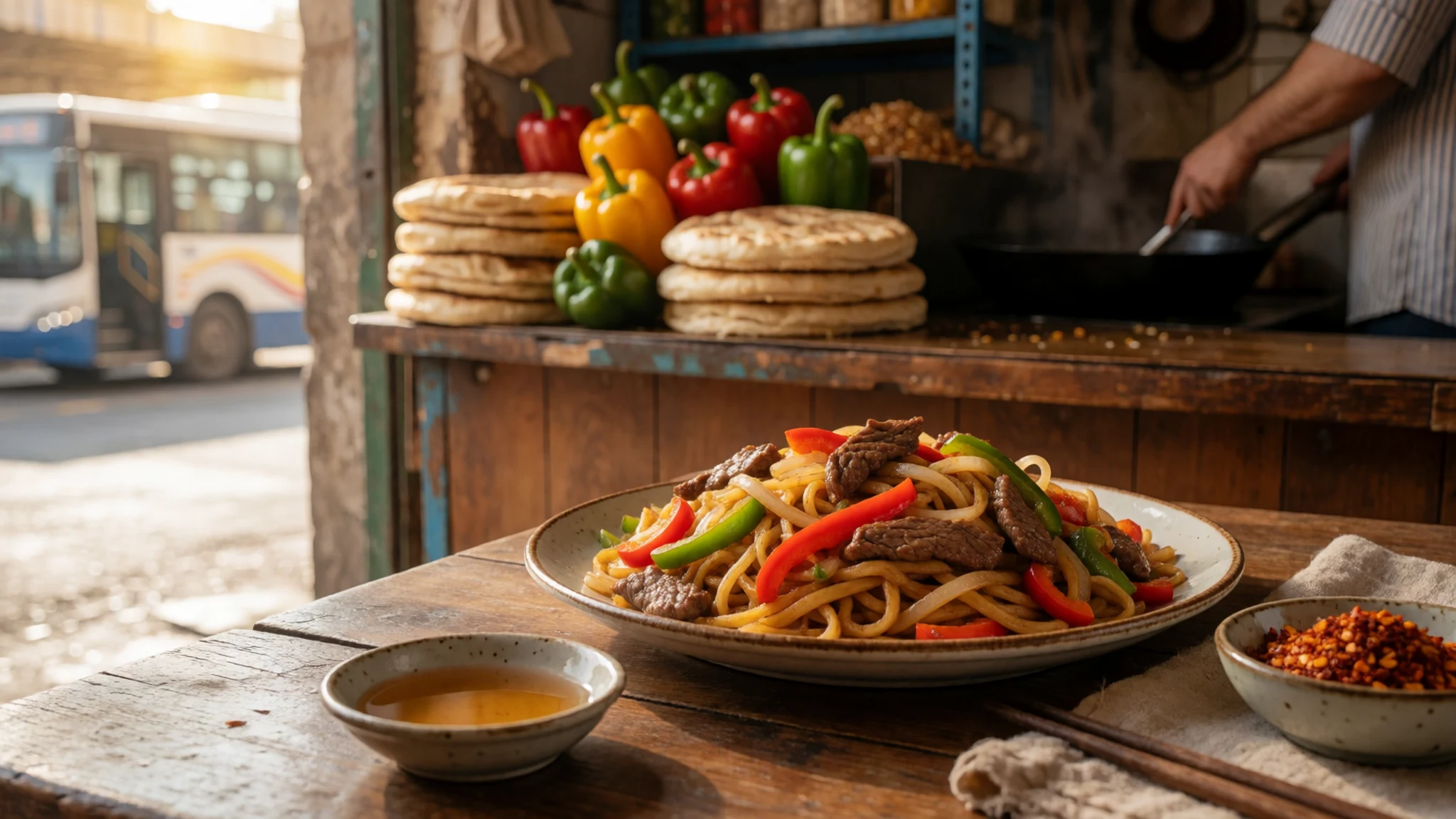
- Samsa — Bazaar stalls and street sellers, mornings
Baked pastry parcels of minced meat and onion, sometimes pumpkin, cooked against the walls of a clay oven. Buy them hot from bazaar stalls or street sellers in the morning, and eat them standing up with a cup of tea. - Non — Small bakeries and bazaar corners
Round flat bread baked in clay ovens and stamped with a pattern. It is on every table and used to scoop and share. Bakers sell it from small bakeries and bazaar corners, and it is best bought warm, within minutes of leaving the oven. - Manty — Tea houses and family-run eateries
Steamed dumplings filled with chopped lamb or beef and onion, served with sour cream or a tomato sauce. Tea houses and family-run eateries serve them, usually in portions of several. They are filling, so one plate often makes a full meal.
Plan it
Best time. April–June and September–October. Summers are hot and dry, and most precipitation falls in winter and the adjoining months, so spring and early autumn give mild days for walking the ruins.
How long. 1
Getting there. Fly to Osh, the nearest airport (check current schedules), then take a marshrutka (shared minibus) from the Osh new bus station to Uzgen; they leave frequently. Confirm the current fare locally.
Budget. low
Tips
- Go in the morning for cooler air and a quieter complex
- Carry cash in local currency for the bus, bazaar snacks and small entry fees
- Bring water, a hat and sun protection in summer, as shade is limited around the ruins
- Check opening hours and the entry fee locally, since no official website is listed
- Use Osh as a base and combine Uzgen with other stops in the Ferghana Valley
Etiquette
- Cover shoulders and knees, and carry a scarf for mosques and mazars
- Remove shoes before entering religious buildings
- Ask before photographing people, especially women and worshippers
Nearby
Sources
- Wikidata Q765887 (CC0)
- Wikipedia (rev 1376960017) (CC BY-SA 4.0)
- Wikivoyage (rev 4877795) (CC BY-SA 4.0)
- Photo: Өзгөн шаары — Mirzoulugʻbek (CC0 1.0)
- Photo: 12th century mausoleum, Uzgen, Kyrgyzstan — Nikolaus (CC BY 3.0)
- Photo: Relief map of Kyrgyzstan — NordNordWest, Виктор_В (CC BY 3.0)
- Photo: West Asia non political with water system — DEMIS Mapserver, पाटलिपुत्र (CC BY 3.0)
- Photo: Relief Location map of Asia — Uwe Dedering (CC BY 3.0)
- Photo: Minaret at the Uzgen archeological architectural museum ensemble — Ekrem Canli (CC BY 3.0)
- Photo: Ana-Qizil (Oʻzgan tumani) — Mirzoulugʻbek (CC BY-SA 4.0)
- Photo: Ana-Qizil (Oʻzgan tumani) 4 — Mirzoulugʻbek (CC BY-SA 4.0)


