Trongsa Dzong
Trongsa Dzong, Bhutan
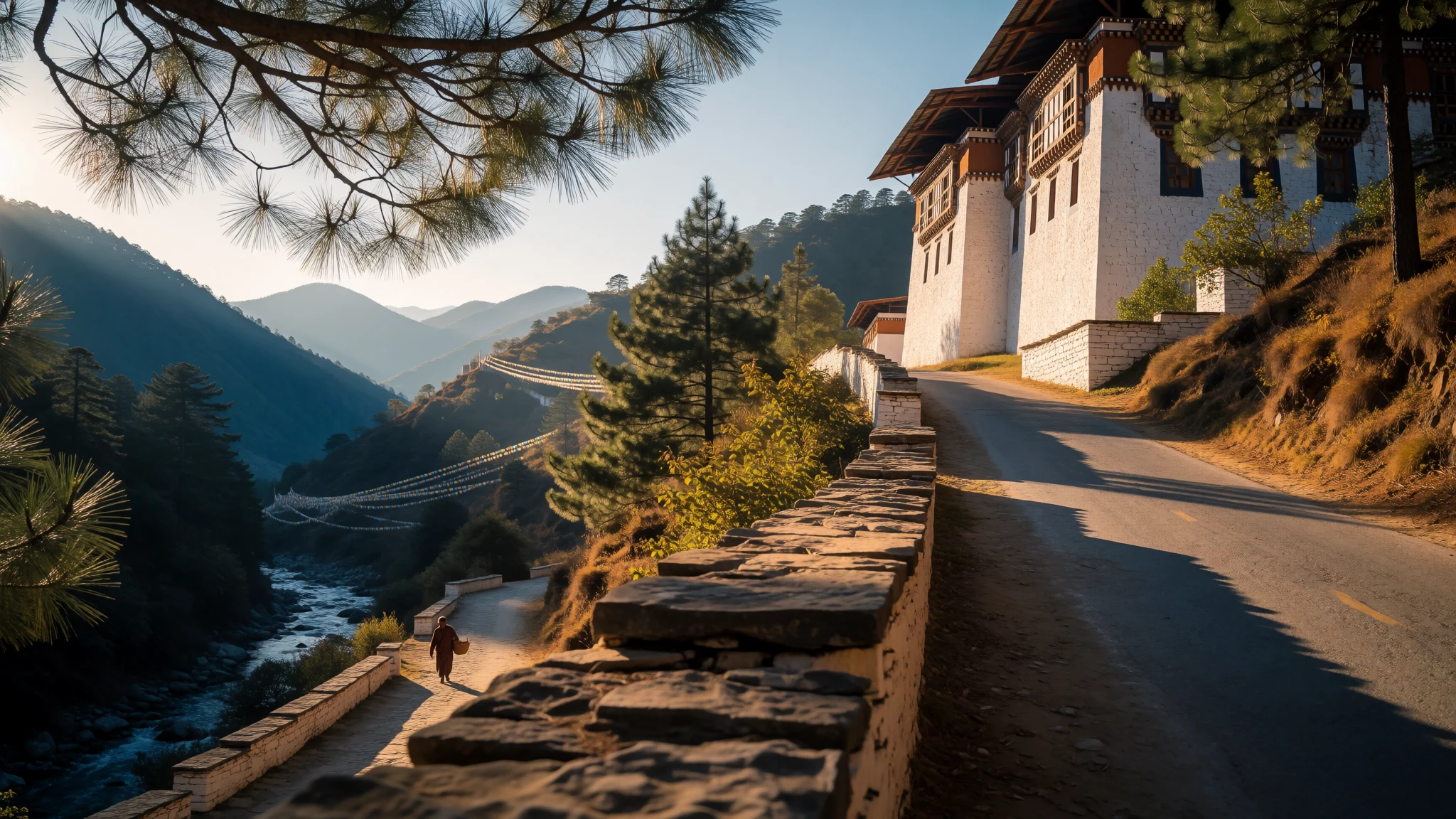
Trongsa Dzong guards the old east-west road through central Bhutan, a fortress-monastery still tied to the monarchy.
The place
Trongsa Dzong stands on a wooded spur above the Mangde Chhu, where the central valley narrows and the old east-west route had to pass under its walls. The white complex steps down the ridge as a chain of courtyards, each set a little higher than the last, so that roofs, galleries and lookouts stack above the gorge. From the town the buildings read as one long fortress; from the highway that still threads this corridor they sit directly below the road. That position is the reason for the site. Trongsa is often explained as meaning something close to a new village, and the dzong is both monastery and government seat, the Bhutanese arrangement in which monks and civil officials share a single walled compound. Painted timber window bays break the white plaster. Cantilevered roofs throw deep shade onto the galleries beneath them. Prayer flags on the surrounding ridges shift in the valley wind. The district has the climate of an inland mountain region: bright, cool weather in spring and autumn, a wet summer when cloud hangs on the passes, and a winter that turns the higher ground quiet and cold. The town is small, strung along the slope beneath the walls, with the highway as its main street and the river far below. The approach is slow. The road climbs and falls for a long stretch before the dzong appears, so travellers often use Trongsa as an overnight halt between the west of the country and Bumthang, then stay long enough to walk the courtyards rather than only seeing them from a bend in the road.
Its story
Trongsa Dzong became powerful because its penlop, the governor based on this ridge, held the main passage between Bhutan's western valleys and the east. Travellers, traders and armies moving along that line had to pass within reach of the walls, so the lord of Trongsa could shelter them, slow them or draw duty from them. The office grew strong across generations and settled in the Wangchuck family. When the country later drew its competing governors and its dual religious and civil leadership into a hereditary monarchy, the family that took the crown was the one already rooted here. The title of Trongsa Penlop stayed alive. Heirs to the throne have continued to bear it before they rule, which keeps the dzong tied to succession and not only to memory. Daily life inside the walls was always divided, and still is. One range of rooms belongs to the monastery: novices, ritual and the keeping of the year's festivals. Another belongs to administration: stores, offices and the work of the district. The national capital lies well to the west, yet Trongsa Dzong has not become an empty monument. Higher on the same hill, the Ta Dzong was raised as a watchtower to protect the main fortress. It now holds displays on the monarchy, so the walk up from the mother dzong turns a defensive outwork into a telling of how governors of this valley became kings. On festival days the courtyards fill with cham, masked dances offered for the district. On ordinary days the pace is lessons, paperwork and prayer, with monks and officials crossing the same thresholds.
What to see
- Trongsa Dzong from the town — Trongsa town
Trongsa Dzong, seen from the town slope, is a long white run of roofs and walls on a dark ridge above the Mangde Chhu. The highway passes above, so the clearest sight often comes from a bend among houses rather than from a formal gate. Tiered eaves show how the courtyards climb the spur. Clear weather opens the gorge under the walls; cloud leaves the building resting in the trees.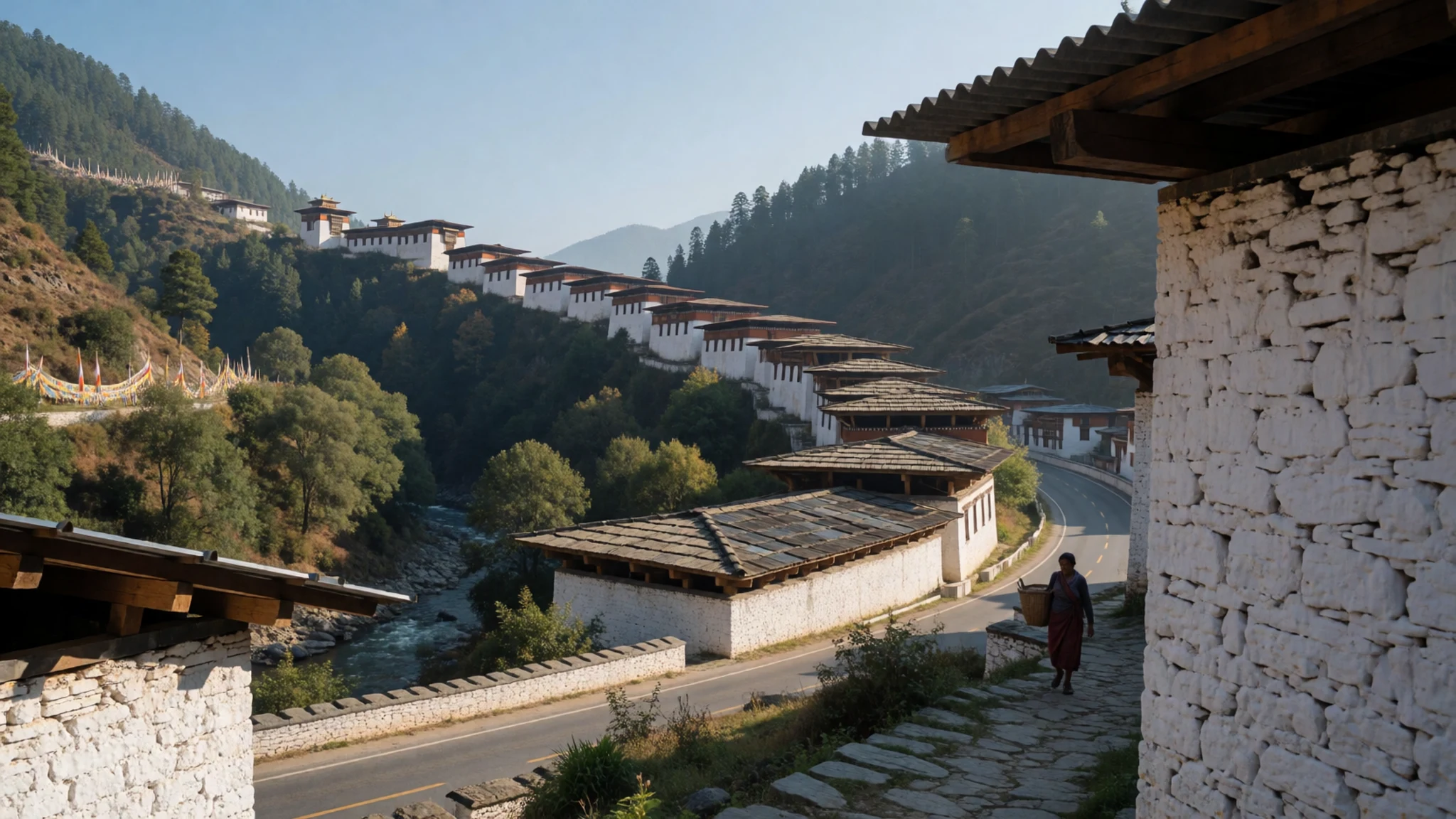
- The inner courtyards — inside Trongsa Dzong
Inside Trongsa Dzong, courtyards rise one after another up the ridge, linked by stairs, galleries and heavy doorways. White walls close each court, with painted timber windows and deep eaves that keep the stone paving in shade for much of the day. Some ranges hold temples, others the rooms of district administration, and those uses sit side by side rather than in separate compounds.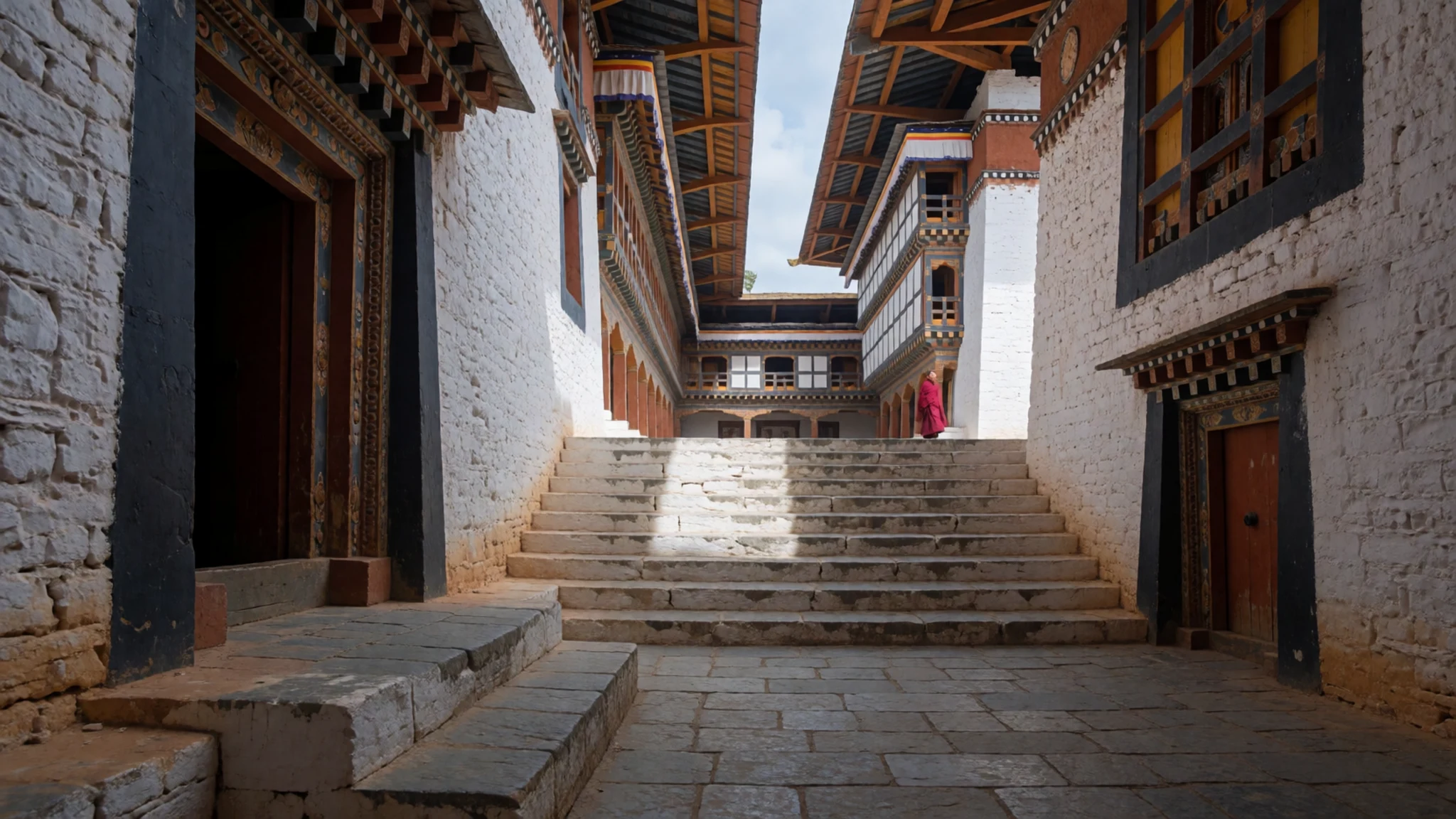
- Ta Dzong — the slope above the main dzong
The Ta Dzong stands higher on the hill above Trongsa Dzong, a watchtower built so defenders could see the mother fortress and the road below. Its position explains the older military role of the site: the main walls were not left to watch themselves. The tower now holds displays on the Wangchuck monarchy, and the short climb from the dzong is part of the visit.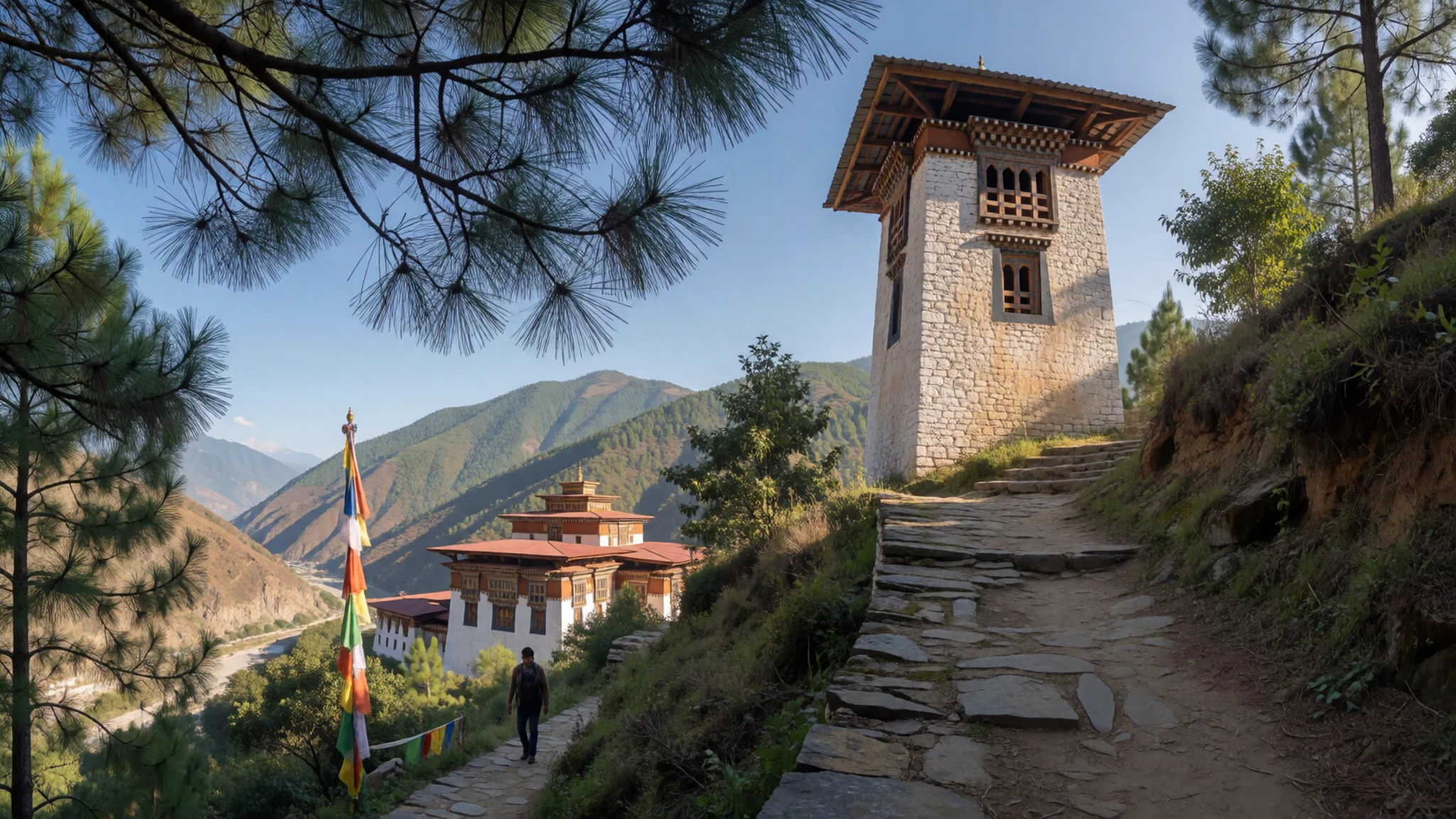
- The lhakhangs — within the dzong
The lhakhangs inside Trongsa Dzong are the religious heart of the complex, set among the administrative ranges rather than apart from them. Butter lamps, painted timber and textile hangings mark rooms that monks still use, so a visit is to a working shrine and not a cleared gallery. On ordinary days some inner rooms stay closed to outsiders.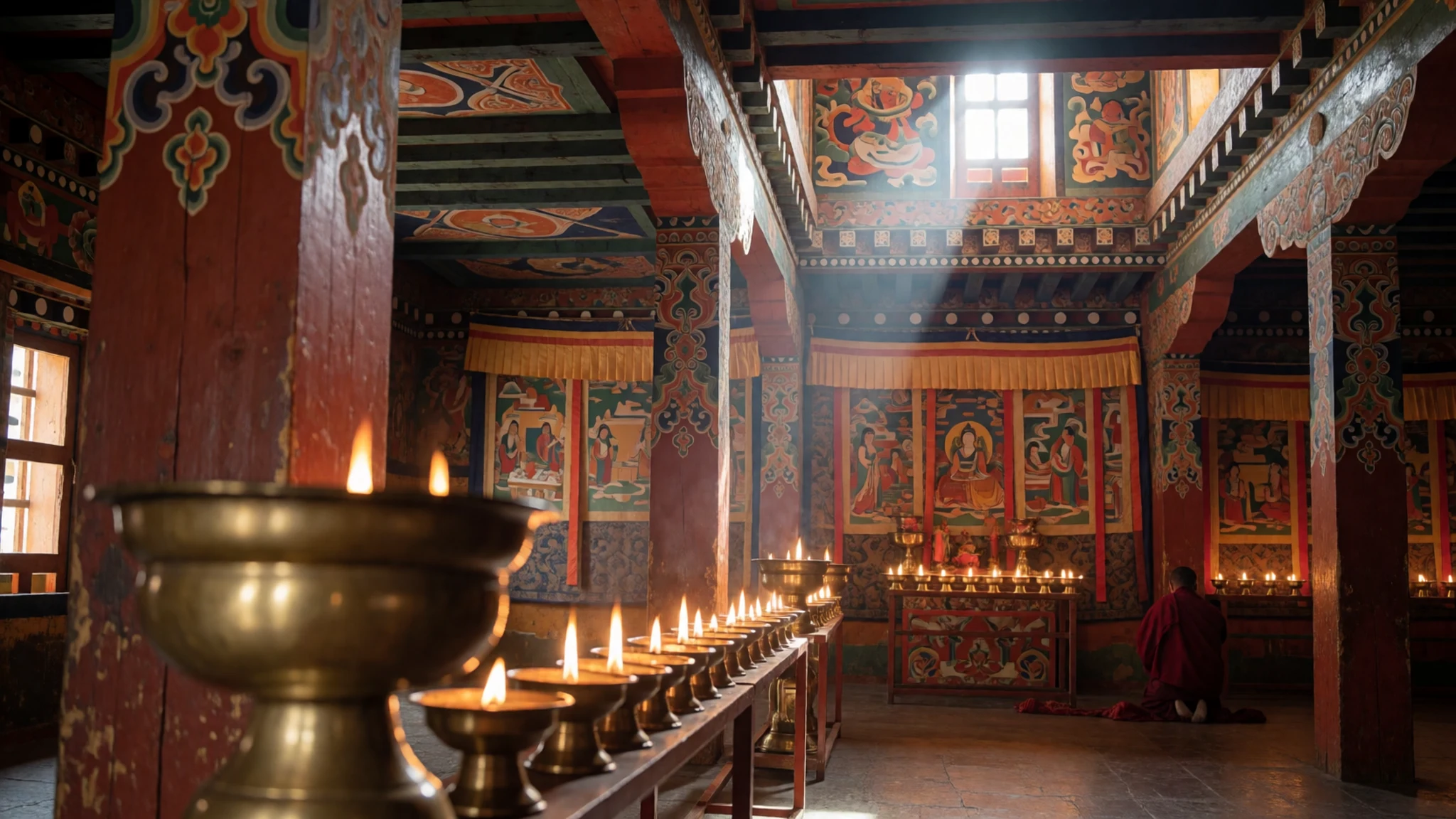
- Pele La — Black Mountains, west of Trongsa
Pele La is the high pass in the Black Mountains on the highway west of Trongsa Dzong, and it is a long climb before the road drops toward the Mangde valley. A chorten and lines of prayer flags mark the saddle, which is the image most travellers remember when weather closes in.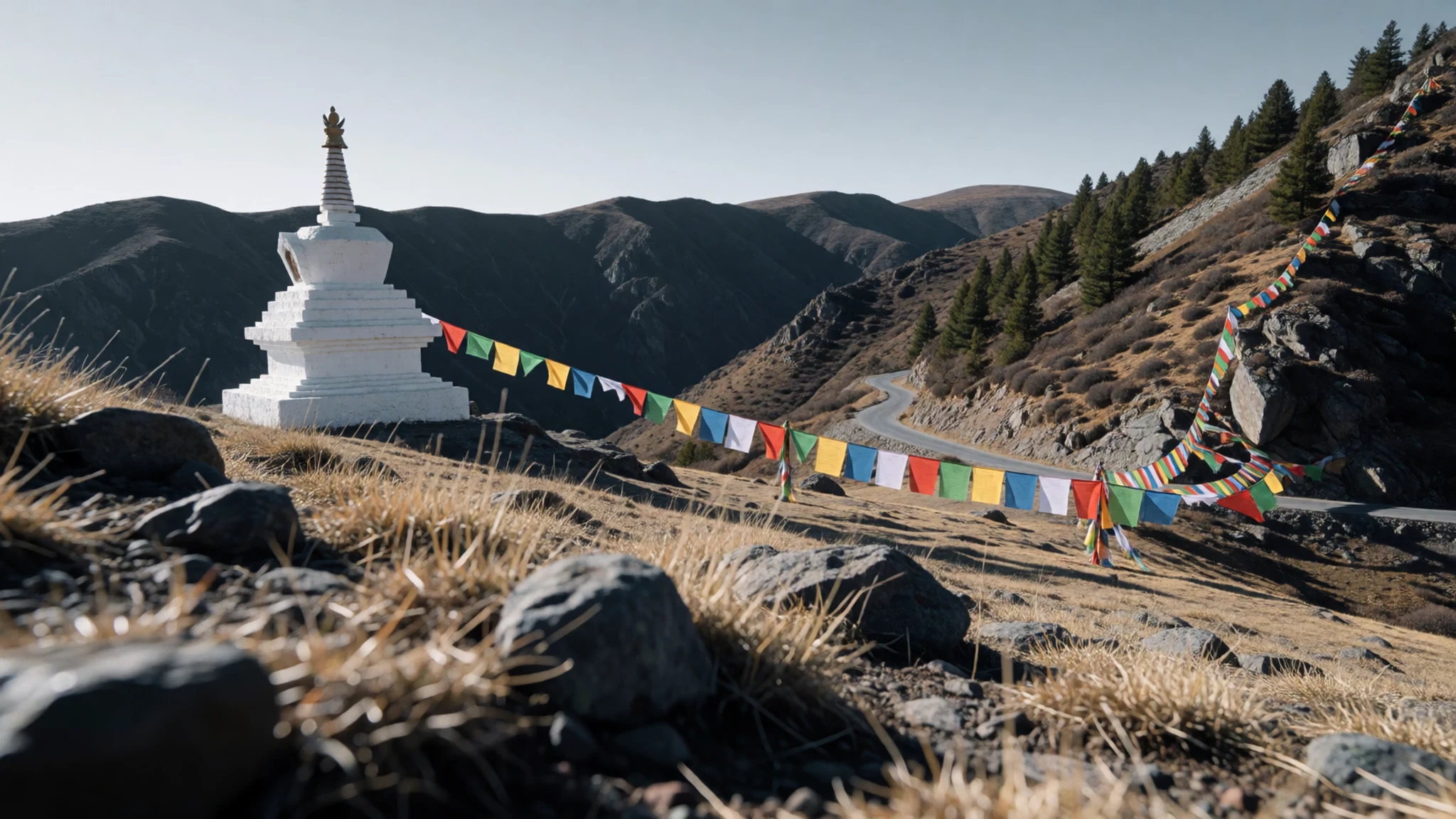
Culture
Trongsa Dzong is a living centre of Drukpa Kagyu Buddhist practice as well as a district stronghold, and the culture around it follows from that double life. Monks keep the shrines, the calendar of rituals and the training of novices inside the walls, while lay officials carry on the civil work of the valley. The main public expression of this shared ground is the tshechu, the festival at which cham dances are performed in the courtyards for the protection and good fortune of the district. Masks depict protective deities, animals and moral tales; the audience is local families as much as travellers, and people return to the same court their grandparents used. Outside festival time the tone is quieter: circumambulation, butter lamps, and the ordinary courtesy owed to a place where people worship and work. National dress appears at the dzong and at offices as a mark of formality, and Bhutanese visitors treat the courtyards with the same care they would give a village temple. Visitors should remove shoes and headwear before entering a lhakhang, walk clockwise around shrines, and ask before photographing monks or people at prayer.
What to wear
Trongsa Dzong is a place where Bhutanese national dress is still the formal clothing of the courtyard, the office and the festival. Men wear the gho, a knee-length robe of woven wool or silk, folded and belted with a kera so that a pouch sits above the waist, with knee-high socks and leather or cloth shoes. Women wear the kira, a wrapped length of cloth, over a wonju blouse and under a tego jacket, with a rachu cloth at the shoulder for formal occasions. The textiles are the point of pride in central Bhutan: mathra and related plaids, stripes, and supplementary-weave patterns in silk, raw silk and cotton, often made on backstrap or frame looms in the weaving districts around Bumthang and Trongsa. What people wear now is a split wardrobe. In government offices, schools and the dzong, national dress remains the rule on working days, so the streets of Trongsa fill with gho and kira in the morning. Away from those duties, especially among younger residents, jeans, trainers, puffer jackets and knitted layers are ordinary, and drivers and road workers dress for weather and dust rather than for ceremony. A visitor does not need to buy a gho or a kira, though rented national dress is sometimes worn at a tshechu. For the dzong, covered shoulders and knees, shoes that can come off easily at a chapel door, and a warm layer for wind on the ridge are the practical answer.
What to eat
- Ema datshi — small eateries along the main road in Trongsa town
Ema datshi is the dish most closely tied to a Bhutanese table: green or red chillies stewed with cheese, served hot with rice. In Trongsa it turns up in small eateries along the main road and in the dining rooms of lodges that serve travellers overnighting under the dzong.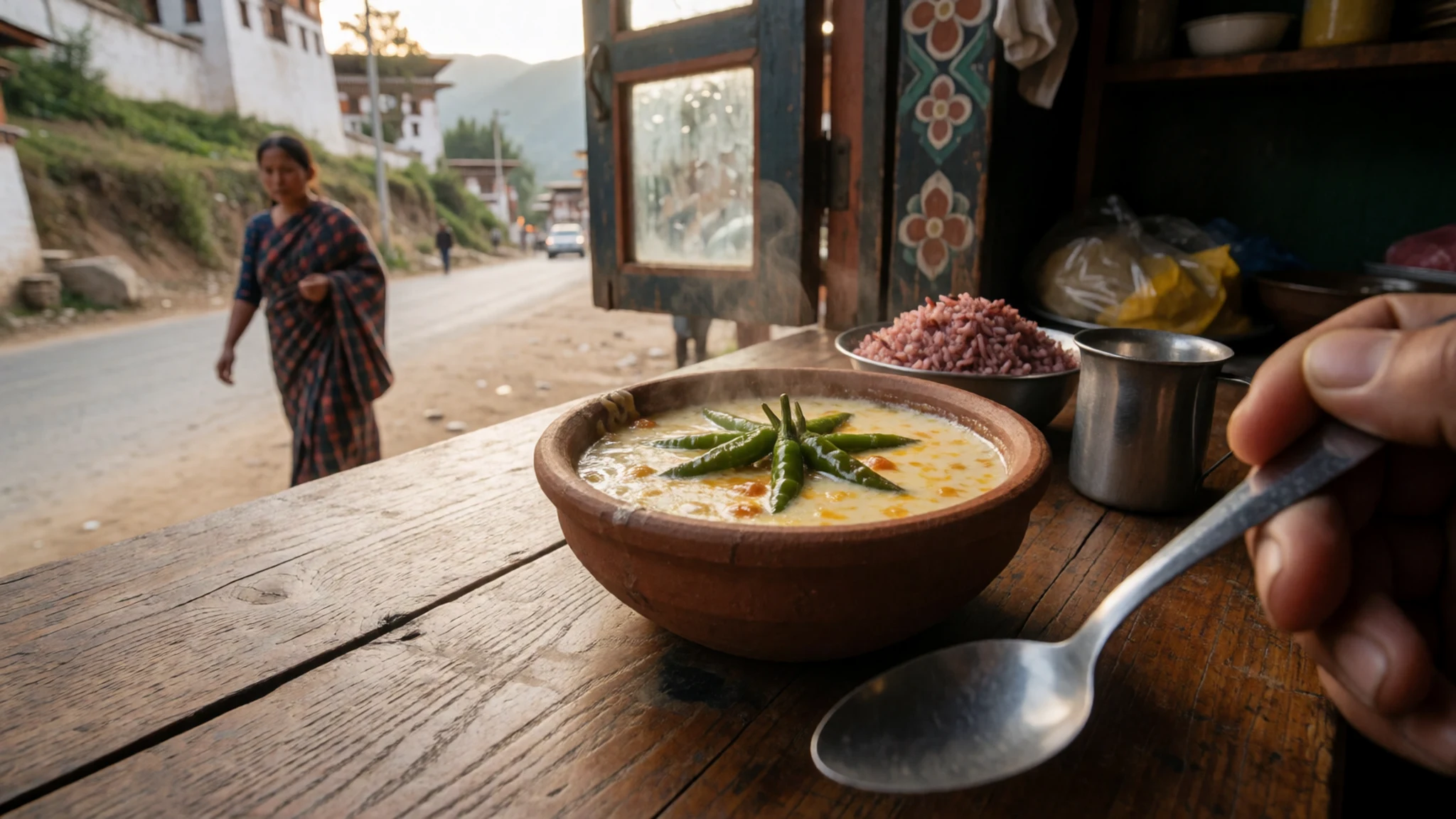
- Red rice — eateries on the town highway
Red rice, grown in Bhutanese valleys and served heaped beside stews, is the grain that anchors lunch and dinner around Trongsa Dzong. The colour comes from the bran left on the grain, and the texture is nutty and slightly chewy.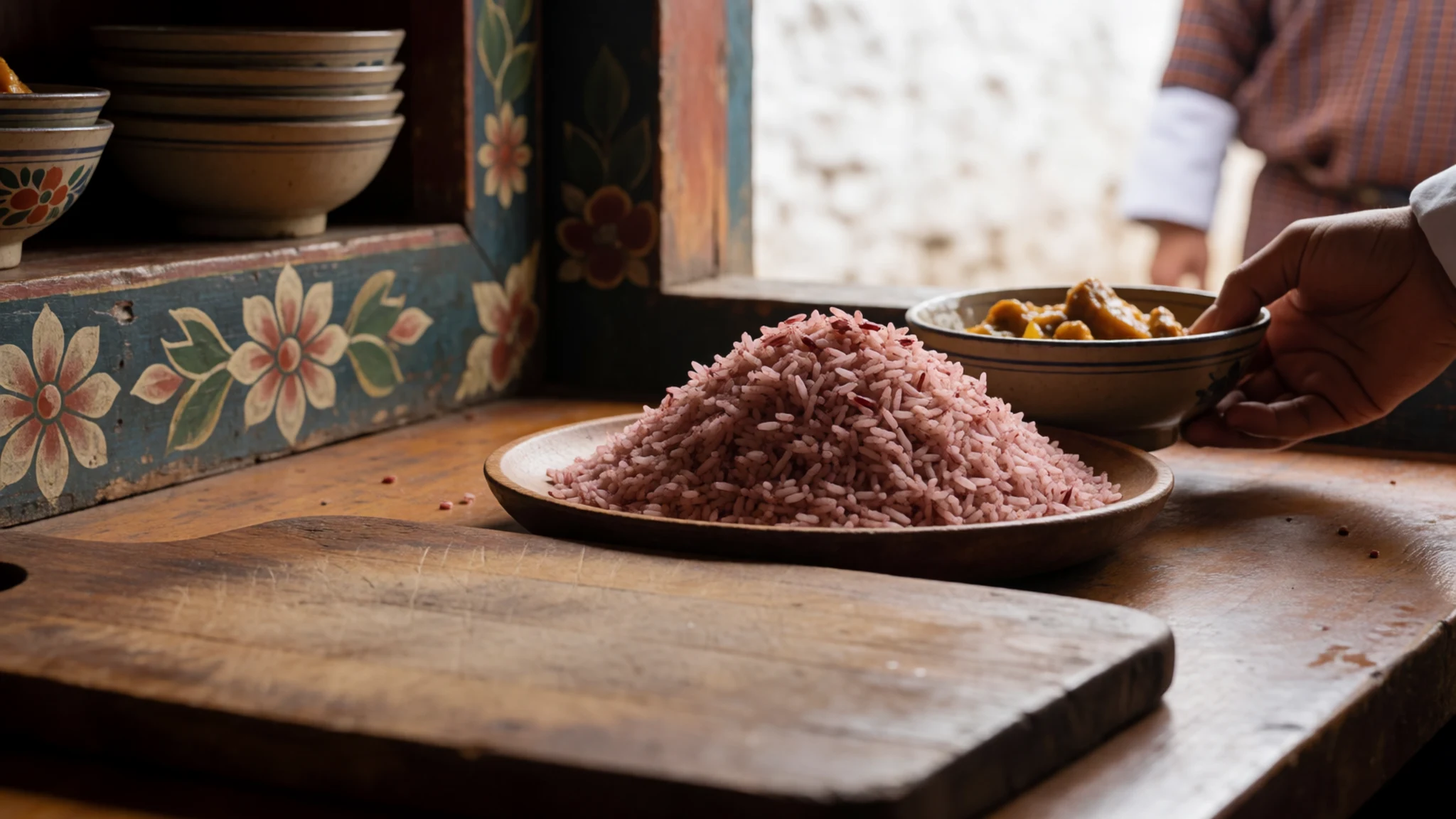
- Phaksha paa — simple eateries in Trongsa town
Phaksha paa is pork cooked with chillies, and often with radish or other vegetables, until the meat is soft and the sauce is red. Around Trongsa Dzong it is a home dish that also appears on the menus of simple eateries in town when meat is in the kitchen. - Momos — tea stalls and small eateries on the main street
Momos, steamed dumplings filled with minced meat or vegetables, are the snack of tea stalls and small eateries along the main street of Trongsa. They suit a break on the long road east or west, when a full meal is too slow. - Suja — homes and local eateries near the dzong
Suja, butter tea churned with salt, is the drink offered to guests in homes and at gatherings near Trongsa Dzong, and it also appears in eateries that cater to local regulars rather than only to the highway. The taste is savoury, not sweet.
Plan it
Best time. November through February are the clearest months for Trongsa Dzong; June is the hottest, July the wettest, and November the most comfortable. June to September brings the monsoon, when cloud, rain and landslides can close the highway. Winter is bright but cold, especially on Pele La.
How long. 2–3
Getting there. Fly into Paro, Bhutan's international airport, then travel by road east through Thimphu and Wangdue Phodrang, crossing Dochu La and Pele La before the highway drops to Trongsa. The nearer domestic strip is Bathpalathang, by Jakar in Bumthang, followed by a shorter road west. There is no airfield in Trongsa itself, so the last leg is always by road.
Budget. high
Tips
- Confirm that the passes on the east-west highway are open; summer rain and landslides interrupt the road
- Carry cash for meals and small shops in Trongsa town; card payments are not something to rely on
- Go into the dzong in the morning, before road traffic and visiting groups pick up
- Pack a warm layer; the town and the high passes are not the same temperature
- Confirm tshechu dates, which follow the lunar calendar, if the dances are the reason for the stop
- Foreign visitors should check the official permit rules before travel; most journeys are arranged, not independent
Etiquette
- Remove shoes and hats before stepping into a lhakhang
- Walk clockwise around chortens and shrines
- Ask before photographing monks, worshippers or chapel interiors
- Cover shoulders and knees inside the dzong
- Speak quietly where monks are studying or praying
Nearby
Sources
- Wikidata (CC0)
- Wikipedia: Trongsa Dzong (CC BY-SA 4.0)
- Wikivoyage: Trongsa (CC BY-SA 4.0)