Lunana
Lunana, Bhutan
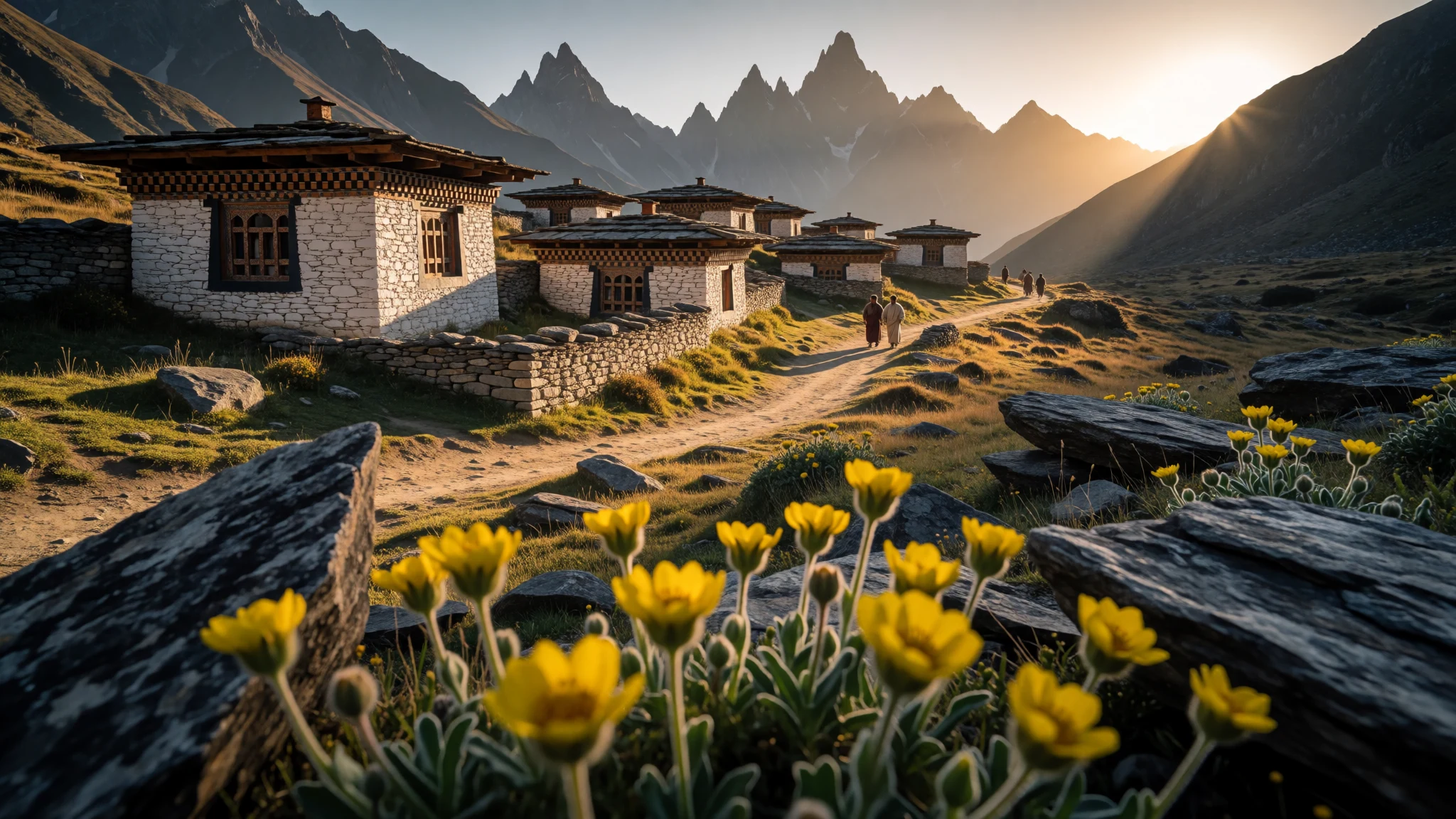
Experience one of the most remote settlements in the Himalayas, where traditional yak-herding culture thrives amidst staggering mountain solitude.
The place
Lunana is a secluded village located in the Gasa District of northwestern Bhutan. Perched at a high altitude, it serves as the capital of its own gewog. The settlement is defined by its isolation; it is a place where the pace of life is dictated by the seasons and the needs of livestock. The local economy relies heavily on the sale of cattle and the harvesting of caterpillar fungus, a prized medicinal find in the high alpine meadows. Residents also cultivate hardy crops such as buckwheat, potatoes, radishes, and turnips, though the short growing season limits their output. Because the winters are so severe, some villagers migrate to lower valleys to find warmth and sustenance until the spring thaw. The environment is damp and rugged, with significant annual precipitation that keeps the surrounding landscapes lush but challenging to navigate. For most, Lunana remains a distant dream, accessible only to the most intrepid trekkers or those with a deep connection to the land. It is a settlement that maintains a traditional way of life, largely untouched by the rapid modernisation seen in Bhutan's urban centres like Thimphu. The atmosphere is one of quiet resilience, where the bond between the people, their yaks, and the mountains is the central pillar of existence.
Its story
The story of Lunana is inextricably linked to the geography of the Great Himalayas. For generations, the people of Lunana have lived in a delicate balance with an environment that is as beautiful as it is inhospitable. Their heritage is closely tied to the Ngalop people of western Bhutan, whose customs and spiritual practices mirror those of Tibet. This connection is visible in everything from the architecture of their stone homes to the deep-rooted practice of Vajrayana Buddhism. In recent years, the village gained international attention as the setting for the film 'Lunana: A Yak in the Classroom', which highlighted the poignant contrast between urban aspirations and the raw, honest simplicity of remote village life. Beyond the screen, the real story of Lunana is one of survival and spiritual contentment. The philosophy of Gross National Happiness, championed by the Bhutanese monarchy, finds a literal expression here; while they lack material wealth, the community relies on mutual aid and a profound respect for nature. Life revolves around the movement of herds and the cyclic nature of the mountain weather. To visit Lunana is to step back into a time when the world felt vast and mysterious, and where the roar of a distant avalanche is the only sound that breaks the silence of the high peaks.
What to see
- Laya Gasa Trek — Gasa District
This demanding route is the primary way to reach the remote areas of Gasa and Lunana. It takes travellers through high passes and alpine lakes, offering some of the most pristine mountain scenery in the kingdom.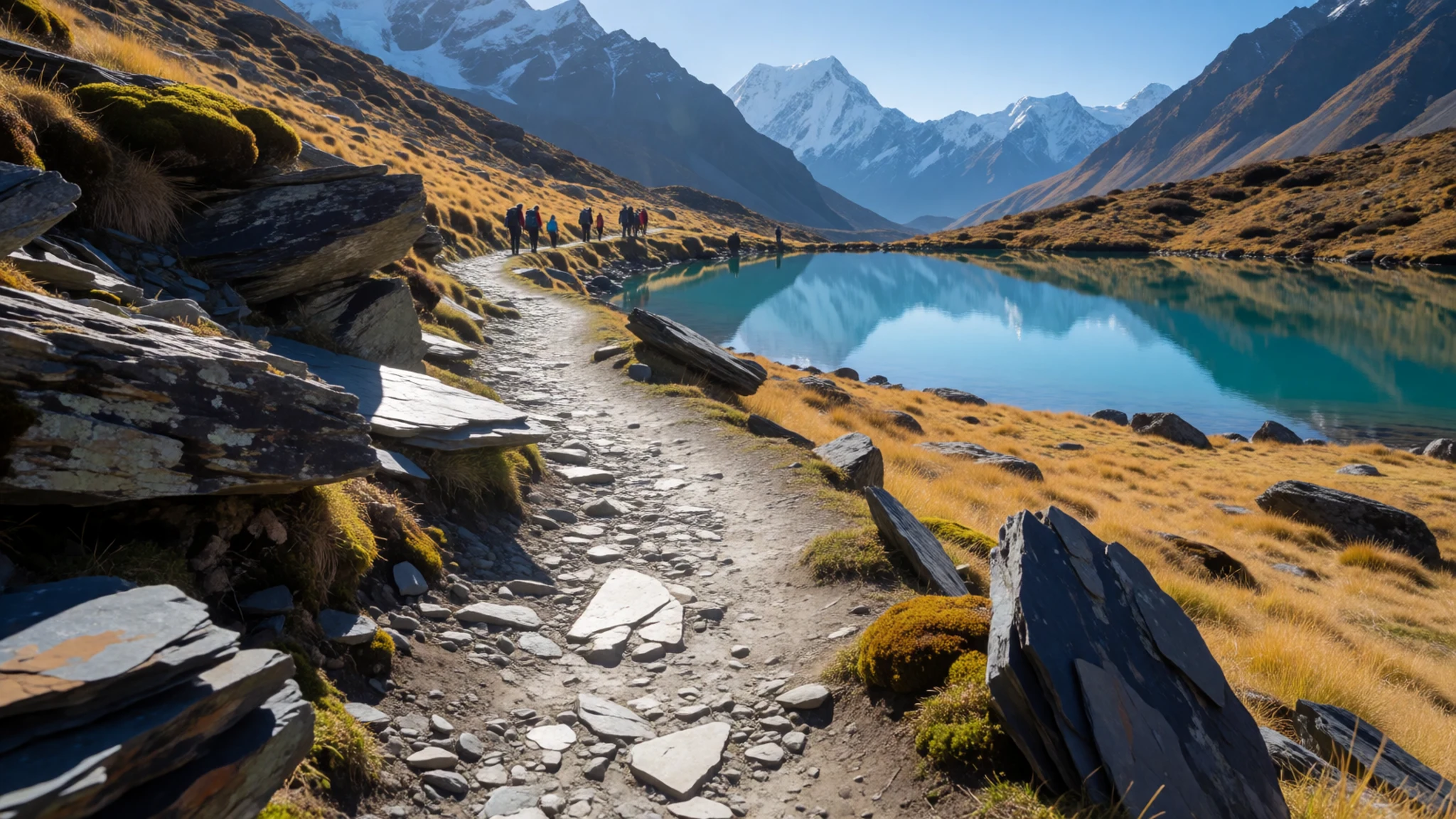
- Local Yak Herding Grounds — Lunana Village
Observing the daily rhythms of the yak herders provides insight into the village's survival. The yaks are essential for transport, milk, and wool in this thin air.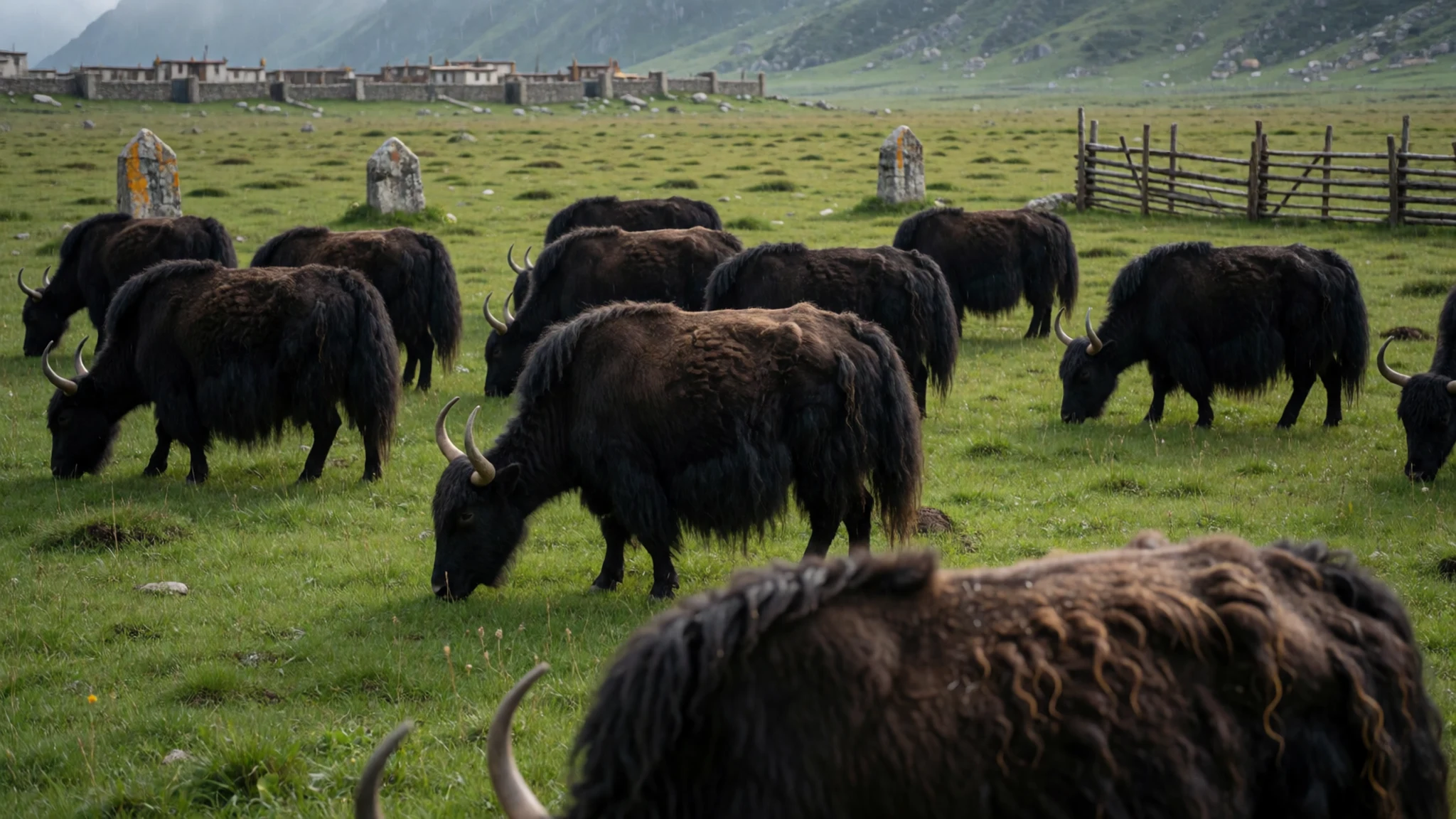
- Village Monasteries — Lunana Village
Small, local shrines and monasteries dot the landscape, serving as the spiritual heart of the community and reflecting the Tibetan-influenced Buddhist architecture of the region.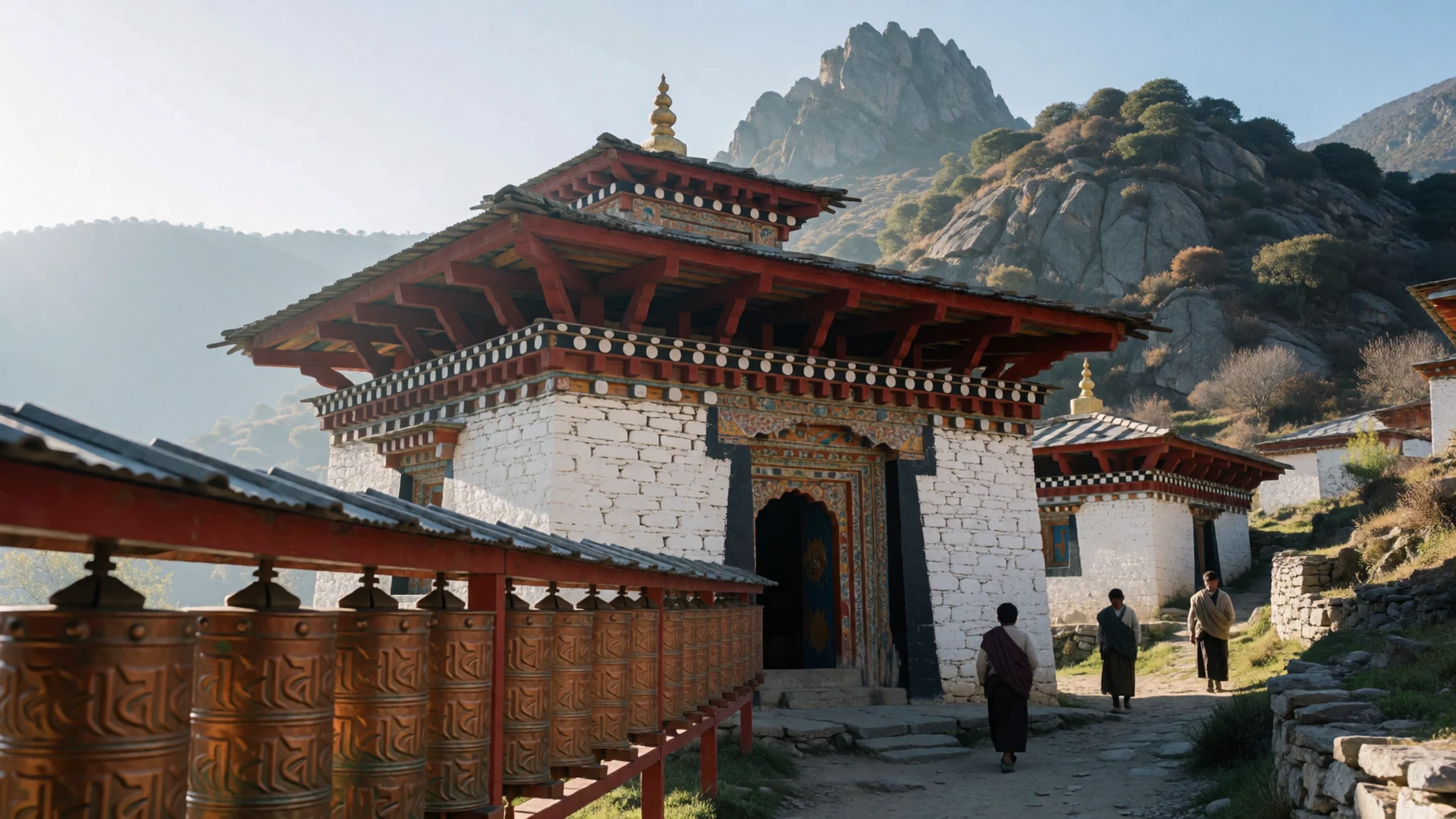
- High Alpine Meadows — Lunana Gewog
The surrounding slopes are where locals forage for the valuable caterpillar fungus. These meadows are breathtaking in the summer months when wildflowers bloom beneath the snow-capped peaks.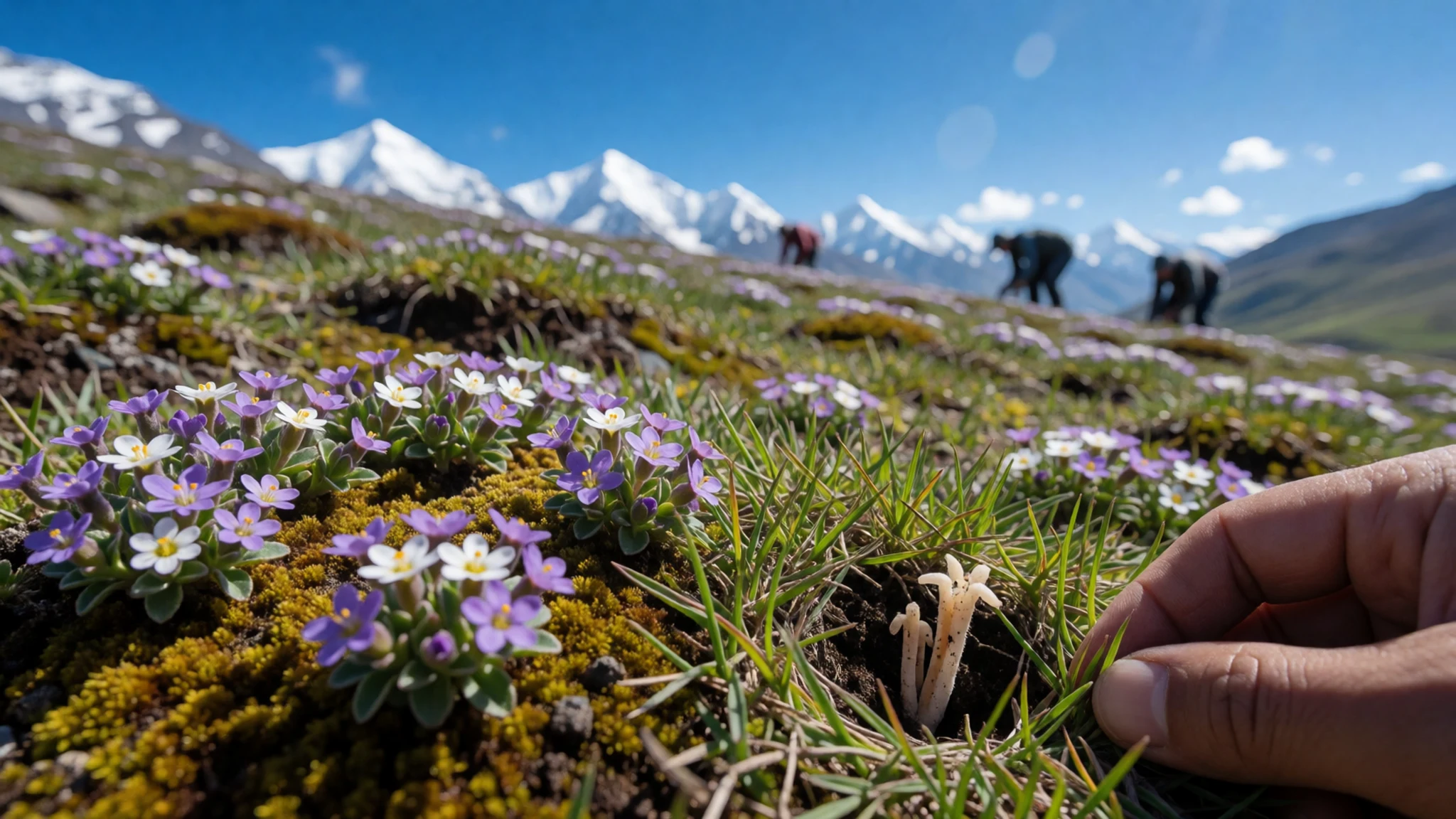
Culture
Culture in Lunana is deeply rooted in Vajrayana Buddhism and the traditions of the Ngalop people. Life is governed by a strong sense of hierarchy and respect, particularly toward elders and the royal family, who are held in the highest esteem. The spiritual landscape is dotted with mani stones and stupas; it is essential to interact with these with care. The community values harmony and a holistic approach to well-being, mirroring the national philosophy of Gross National Happiness. In this remote outpost, the social fabric is woven through shared labour and religious festivals. Visitors will find a society that is modest, hospitable, and cautious of influences that might disrupt their peaceful equilibrium. Because the region is so isolated, the local dialect may vary slightly from the national language, Dzongkha. When interacting with residents, a soft tone and a patient manner are highly appreciated. Always pass mani stones and prayer wheels by keeping your right side nearest to the object and turning the wheels clockwise.
What to wear
Traditional dress in Lunana is designed for warmth and utility. Men typically wear the gho, a knee-length robe tied at the waist, while women wear the kira, a long woven dress. These garments are often made from heavy wool or thick textiles to withstand the biting Himalayan cold. In a village as remote as Lunana, these traditional styles are not just for ceremony but are the daily uniform. Modern clothing, such as fleece jackets and synthetic trekking gear, has filtered in through guides and trade, but the traditional silhouettes remain dominant. For a visitor, clothing must be highly functional. Layering is essential, as temperatures can swing wildly between a sunny afternoon and a freezing night. Sturdy, waterproof hiking boots are non-negotiable for the rugged terrain. When visiting local shrines or homes, modesty is required; long trousers and long sleeves are appropriate. A warm hat and gloves are necessary even in the summer months, given the extreme altitude.
What to eat
- Ema Datshi — Any village home
The national dish consisting of spicy chillies and local cheese. In Lunana, yak cheese is often used to provide a richer, saltier flavour.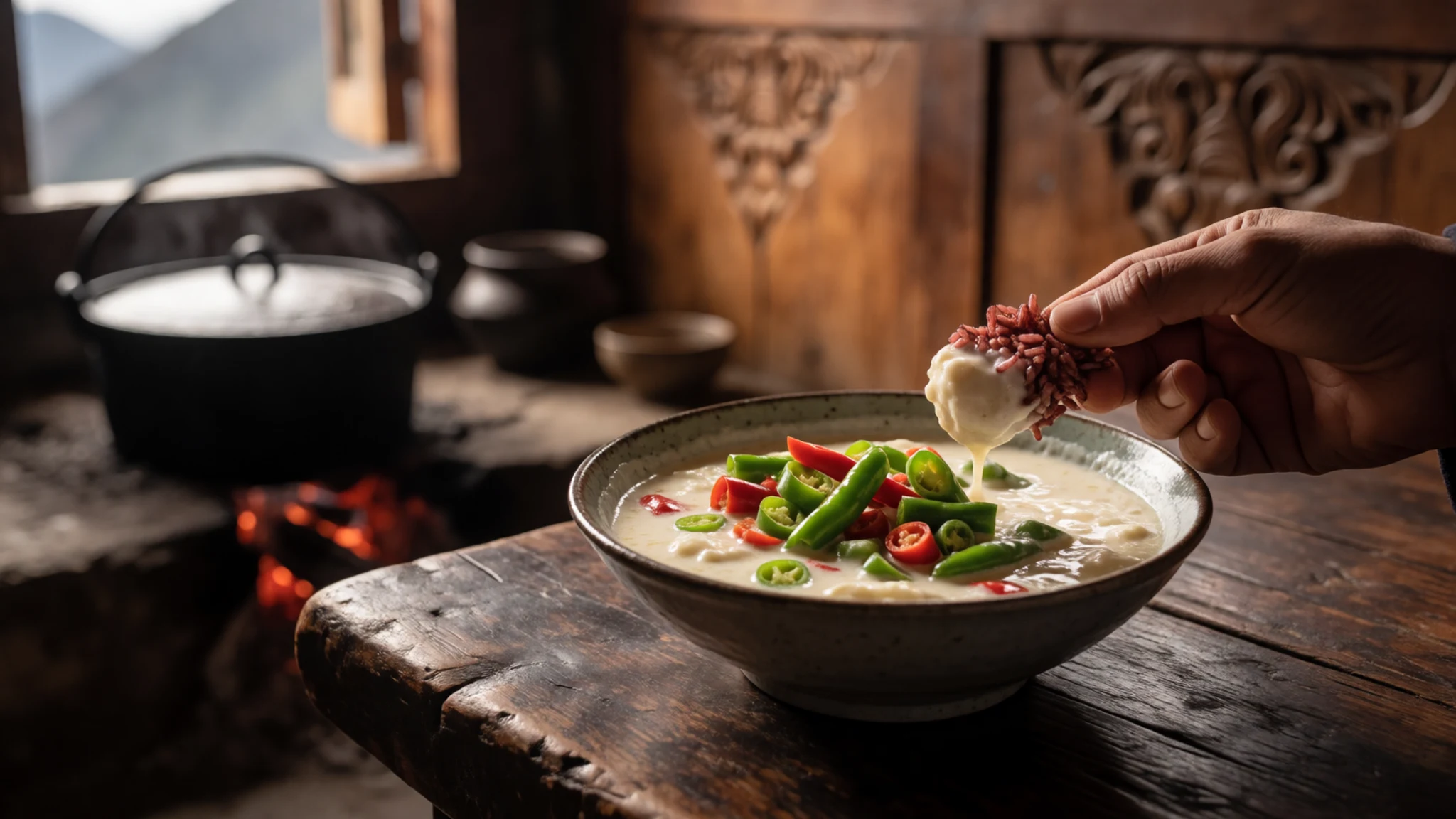
- Red Rice — Local households
A nutty, hearty staple grown in the highlands. It is served with almost every meal as the primary source of energy.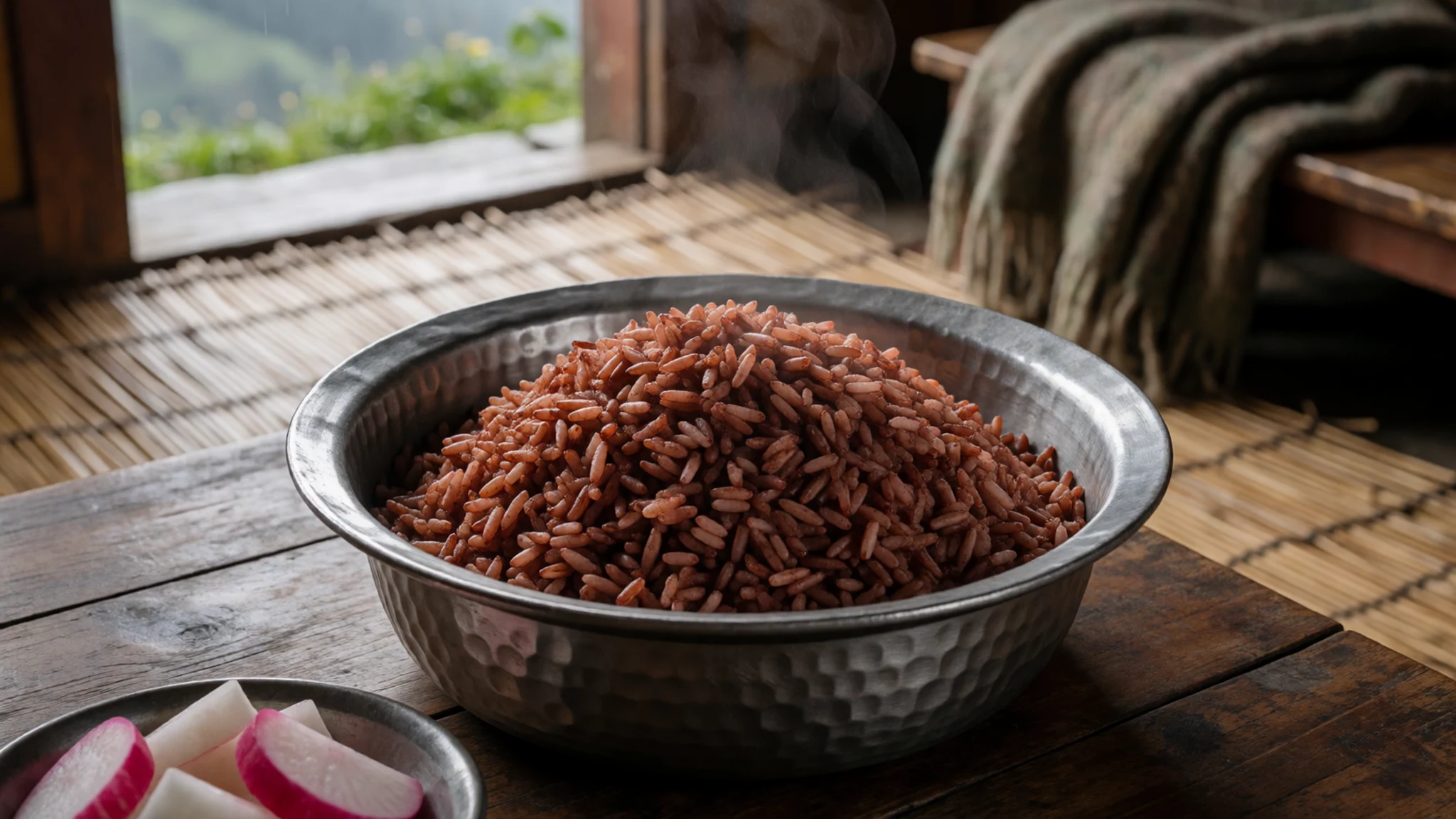
- Suja (Butter Tea) — Village kitchens
A salty, creamy tea made with butter and salt, designed to keep the body warm and hydrated in the thin mountain air. - Momos — Local eateries
Steamed dumplings filled with meat or cabbage, often served with a pungent chilli sauce for extra heat. - Ara — Rural homes
A potent local spirit brewed from rice or corn, often served warm during the cold winter months.
Plan it
Best time. March–April and October–November offer the clearest skies and most stable trekking conditions; winter is too severe for most visitors.
How long. 14–21
Getting there. Fly into Paro, then travel by road to Gasa, followed by a multi-day trek to reach Lunana.
Budget. high
Tips
- Prepare for extreme altitude; acclimatisation is mandatory
- Carry a high-quality sleeping bag rated for sub-zero temperatures
- Ensure your guide is experienced with the Lunana route
- Bring plenty of cash as there are no ATMs in the mountains
- Pack a personal first-aid kit including altitude sickness medication
Etiquette
- Dress modestly with shoulders and knees covered
- Ask permission before photographing local residents
- Avoid speaking ill of the royal family or religion
Nearby
Sources
- Wikidata Q6703636 (CC0)
- Wikipedia (CC BY-SA 4.0)
- Wikivoyage (CC BY-SA 4.0)