Jichu Drake
Jichu Drake, Bhutan
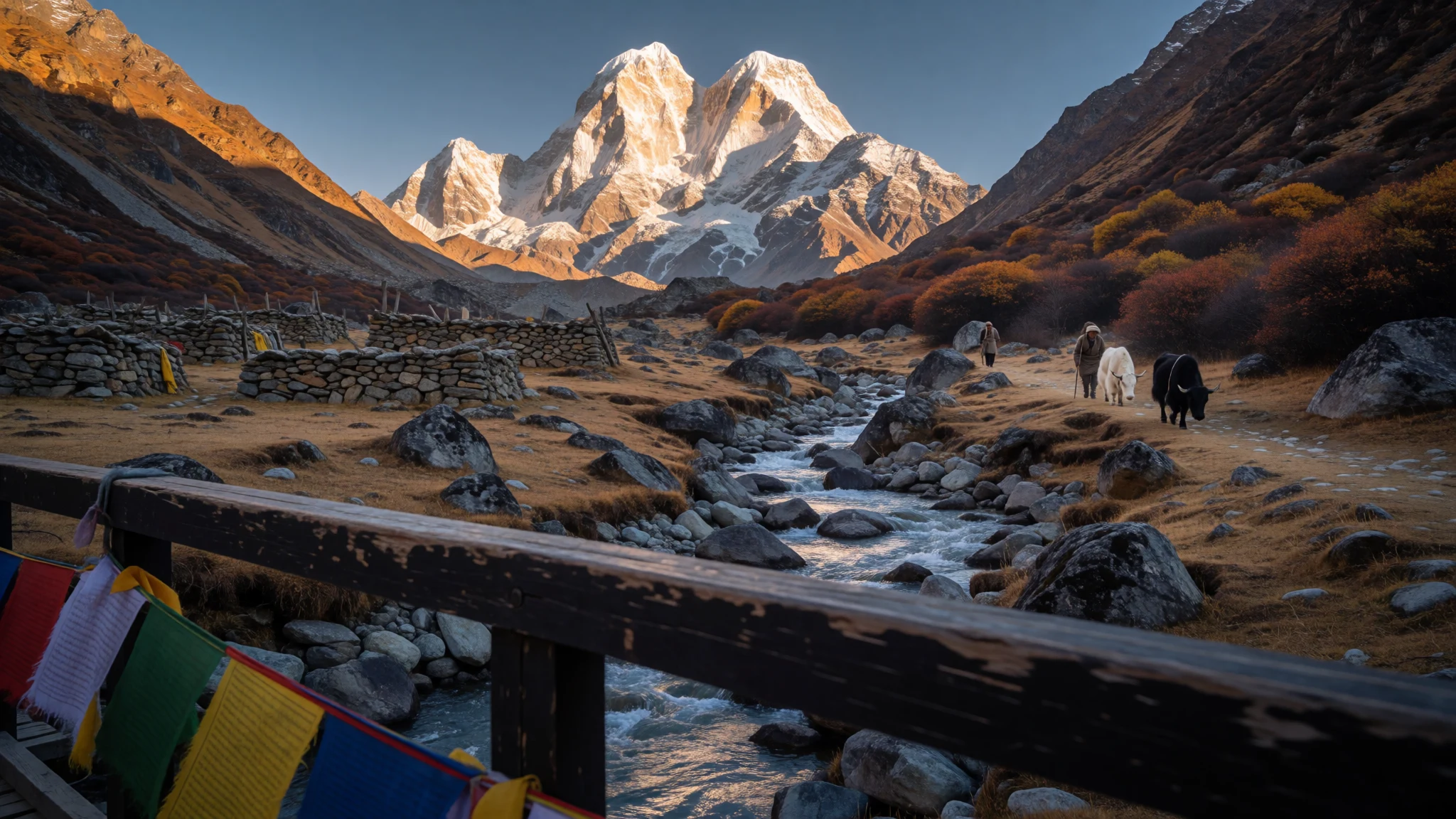
Jichu Drake is a sacred, twin-summited Bhutanese peak, best met on the Jomolhari trek, where it towers over a high camp.
The place
Jichu Drake is a Himalayan peak in the far west of Bhutan, standing at 6790 m in the facts used for this reading. Published heights differ from book to book, so it is wise to treat any single figure with some caution. The mountain has two summits, with the lower one lying to the south, and from the right angle it looks like a pair of white horns above the valley floor. It sits beside Jomolhari, the better-known peak of the area, and the two are usually seen as a pair, one broad and massive, the other sharper and more broken.
Nobody lives on the mountain itself. The settlements below belong to the Paro side of Bhutan, a farming region of terraced fields, apple orchards and whitewashed houses. Higher up, the land turns to yak pasture, stone corrals and seasonal herders' shelters, and then to boulder fields and glacial lakes before the ice begins. Most visitors see the peak from the trail to Jangothang, a high camp in a wide, windy basin where the mountain fills the northern sky.
The peak is rarely climbed. Bhutan treats its high summits as the homes of local deities, and that tradition keeps the mountain a place to be looked at rather than conquered. The walker's reward is the view, and the view depends heavily on weather, with cloud often arriving by mid-morning. Anyone planning a visit should expect cold nights, thin air and a few days when the summit stays hidden.
Its story
Jichu Drake is far more than a landmark in Paro, because local belief holds it to be the home of a protective deity for the valley and its surroundings. Farmers and herders have long spoken of the mountain as a presence that watches over them, and respect for it shapes how the high ground is used. Climbing the summit is not part of the picture, and the mountain's role is to look down on the valley rather than to be conquered.
The peak carries several names, which hints at how many communities have laid claim to it. Kungphu, Shumkang and Tseringegang all appear in older accounts, and some of the names point to a link with longevity and a female spirit. Spellings in English vary widely, which is why maps and guidebooks give Jichu, Jitchu and Jitchu Drakye for the same summit.
The best-loved tale explains the double summit. The mountain, it is said, was a teasing character who pestered a young woman at her loom. She lost patience and struck him on the head with the wooden beater used to pack the weft threads tight, and the blow split the top in two. The story is told with humour, and it ties the mountain to weaving, which remains a central craft in Bhutanese households. It also shows the local habit of reading the landscape as a set of characters with moods, grudges and relationships, rather than as bare rock and ice.
What to see
- Jangothang camp — Jigme Dorji National Park, Paro side
Jangothang is the usual place to meet the mountain, a high basin of grass and stone where Jichu Drake dominates the skyline. Trekkers camp here, and there is a footbridge close by from which the peak is often photographed. Mornings are usually the clearest.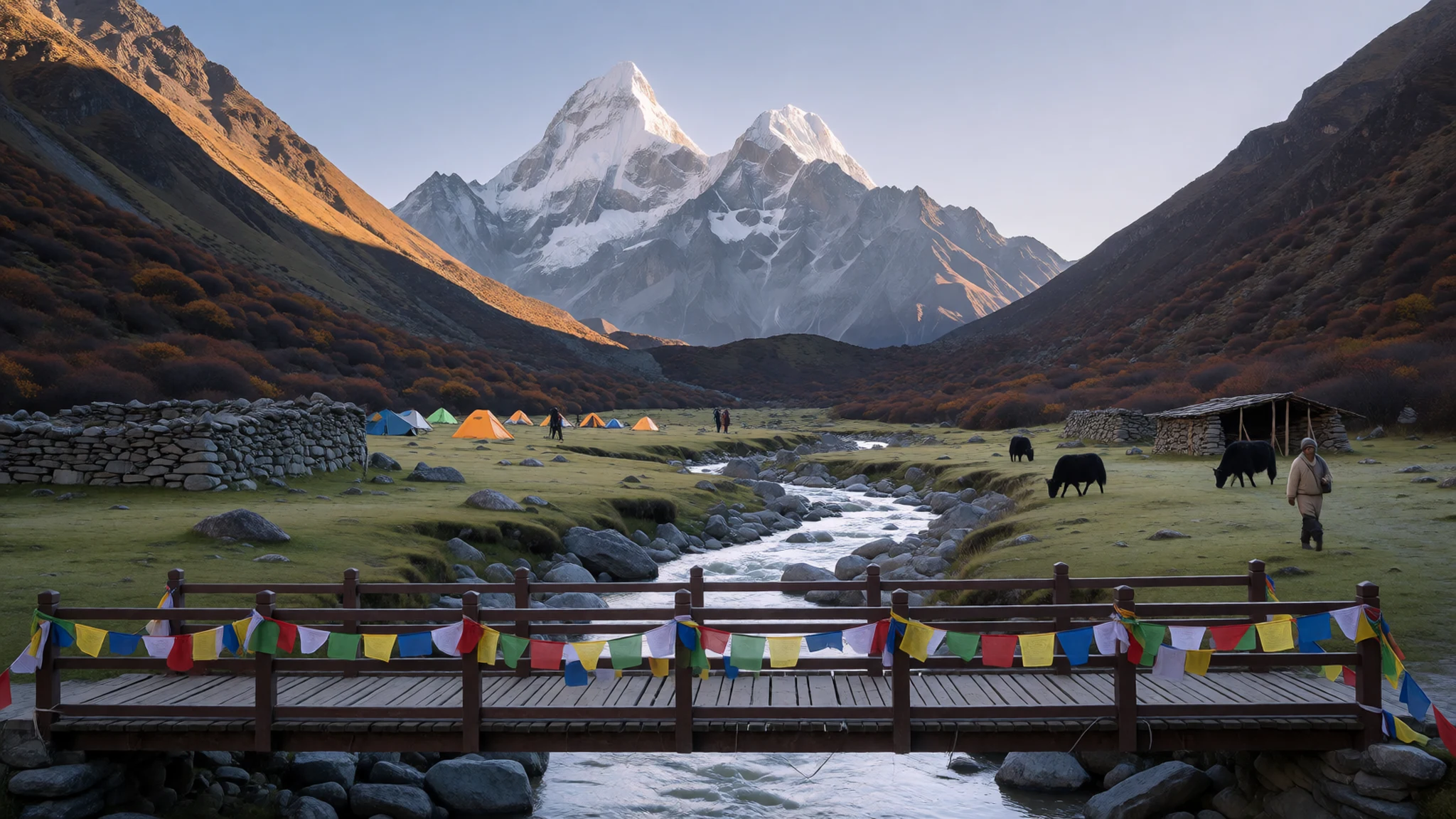
- The south face — South of the summit, high Paro valley
From the southern side the peak shows its double summit most clearly, with the lower top set below a steep, ribbed wall of snow and rock. This view comes toward the end of the climb to the high camps, and it rewards a slow, steady pace rather than hurrying for a photograph.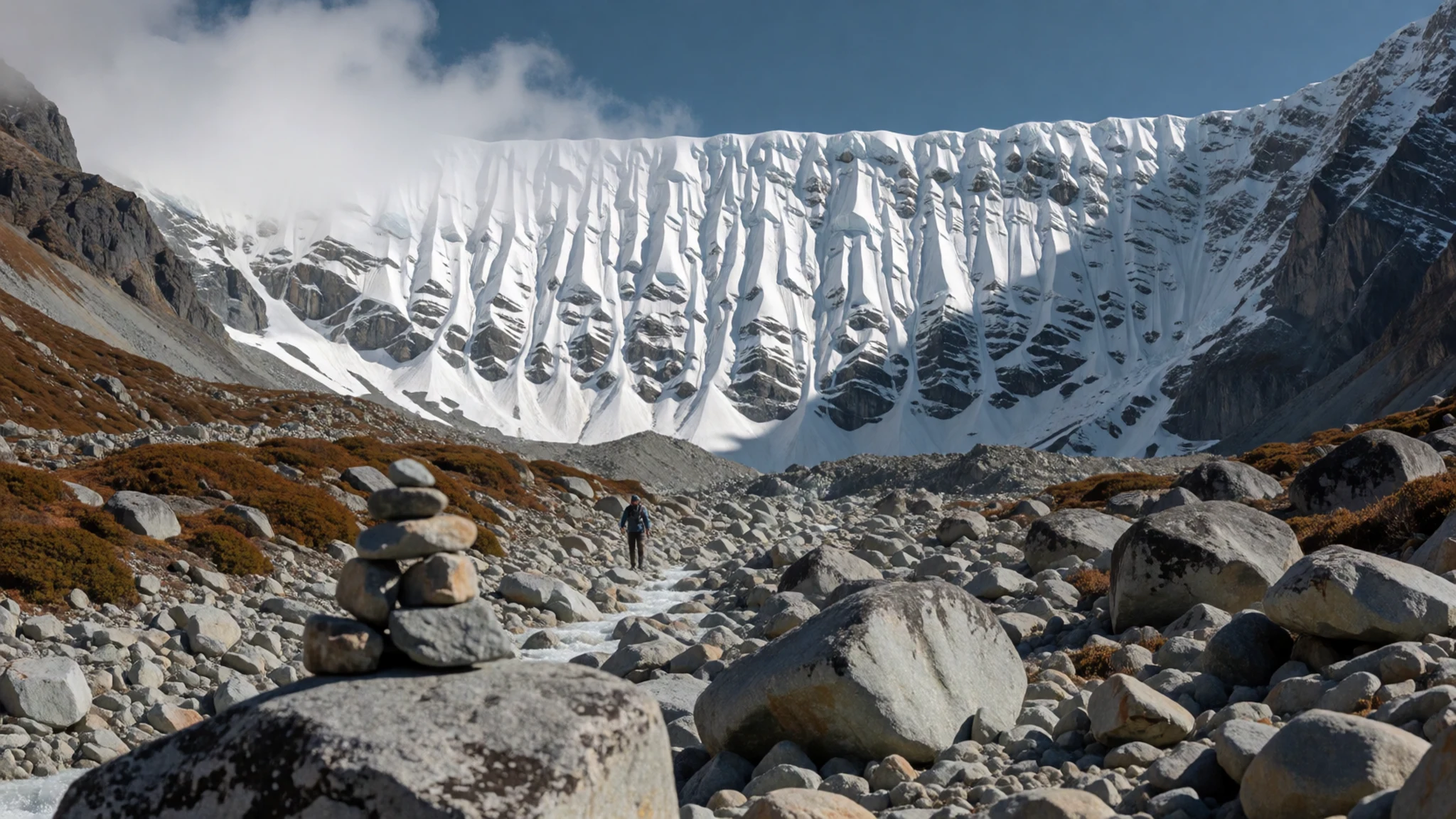
- Jomolhari — Jomolhari trek corridor
Jomolhari stands next to Jichu Drake and is considered its companion peak. Seen together, the two make the strongest argument for doing this walk. Viewpoints on the trail show them side by side, and clear evenings often colour both summits pink before dark.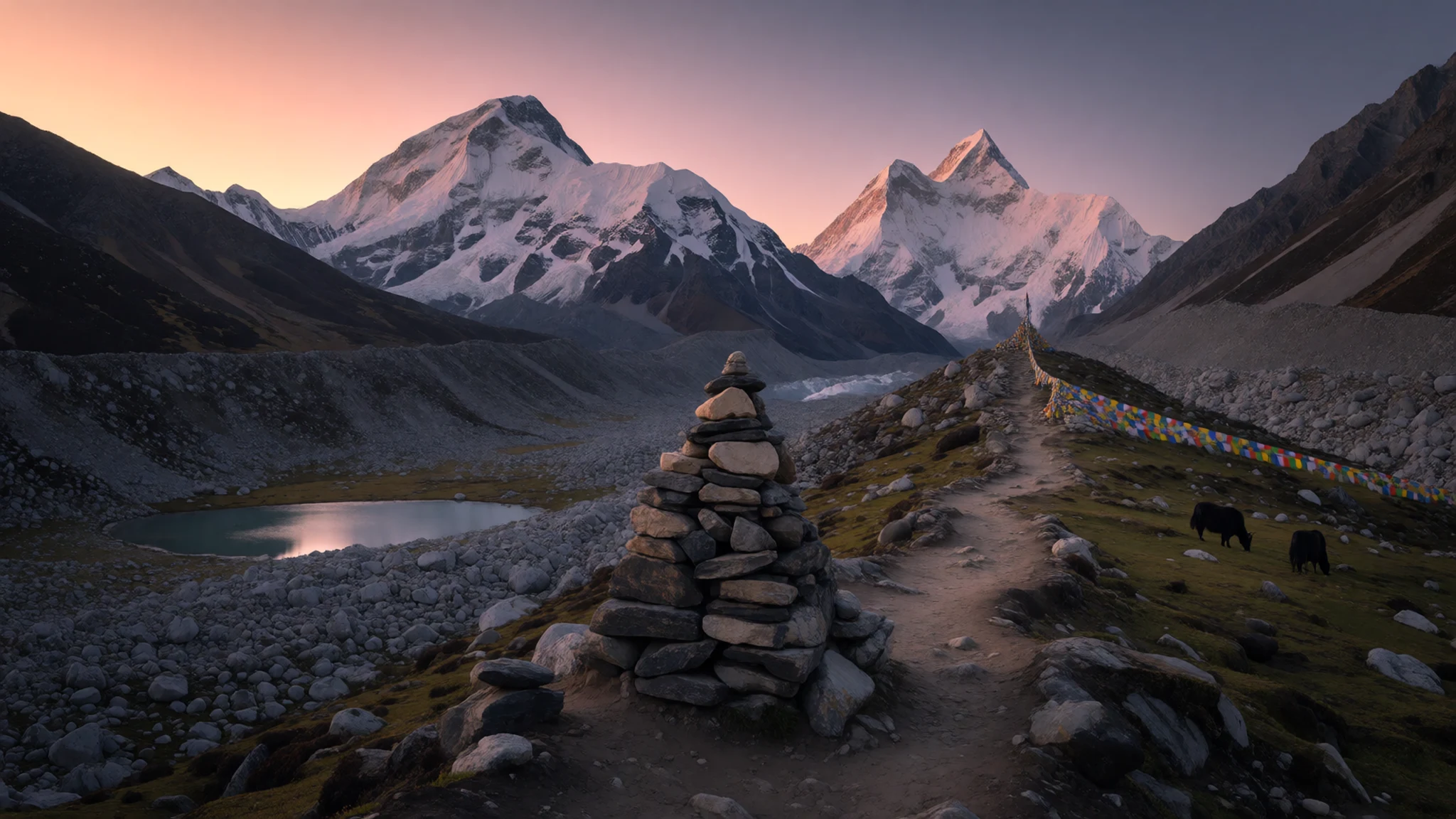
- Paro valley — Paro district
Paro is the gateway for the trek and a pleasant place to spend a day beforehand. Rice terraces, farmhouses and the river lead up toward the mountains, and wandering the lanes helps the body adjust a little before the real climbing starts.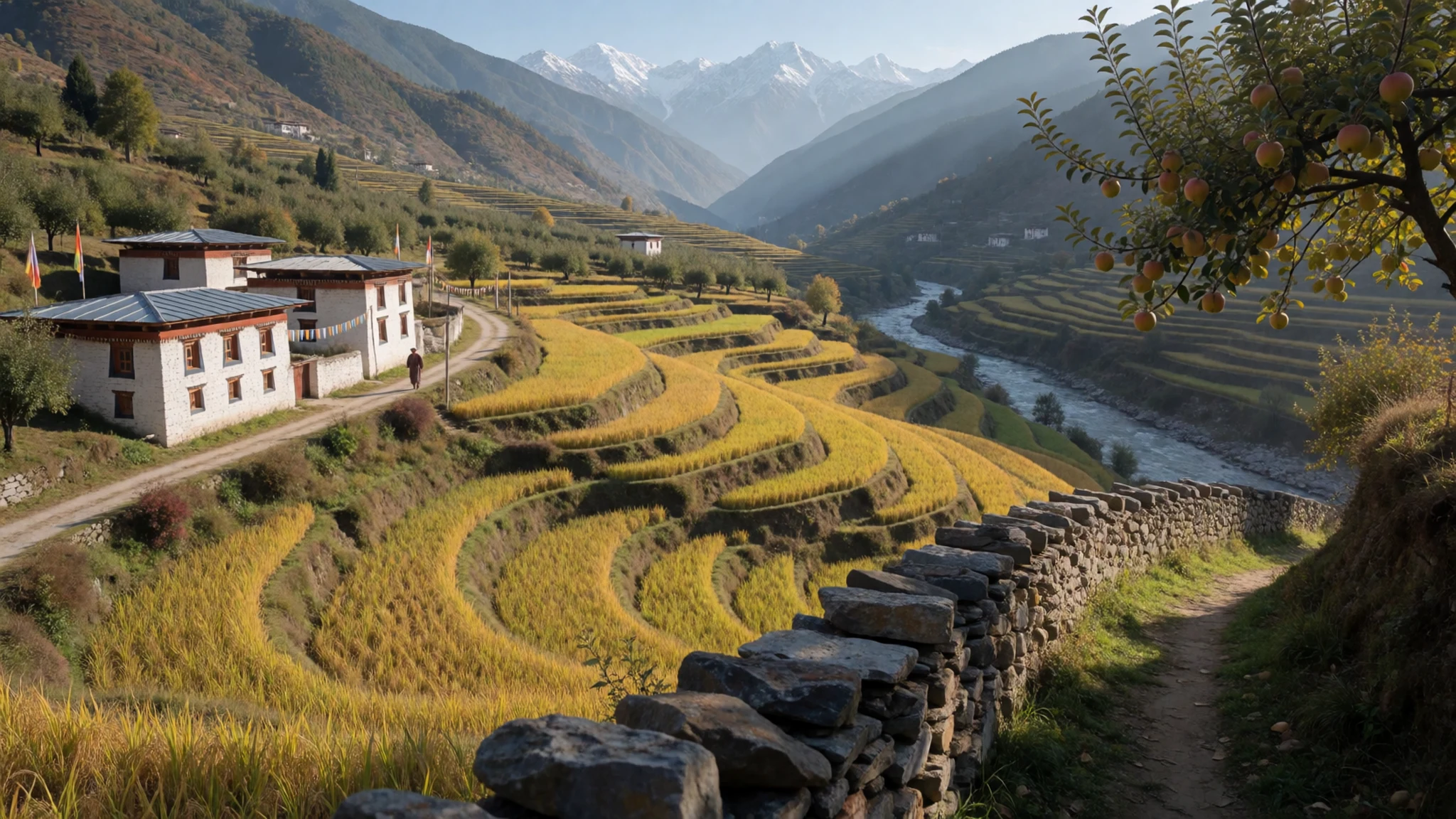
- Taktsang monastery — Above Paro valley
The monastery clings to a cliff above the Paro valley and is a good acclimatisation walk before heading high. The path climbs through pine forest to viewpoints across the valley. Check official sources for access rules, and go early to avoid the busiest hours.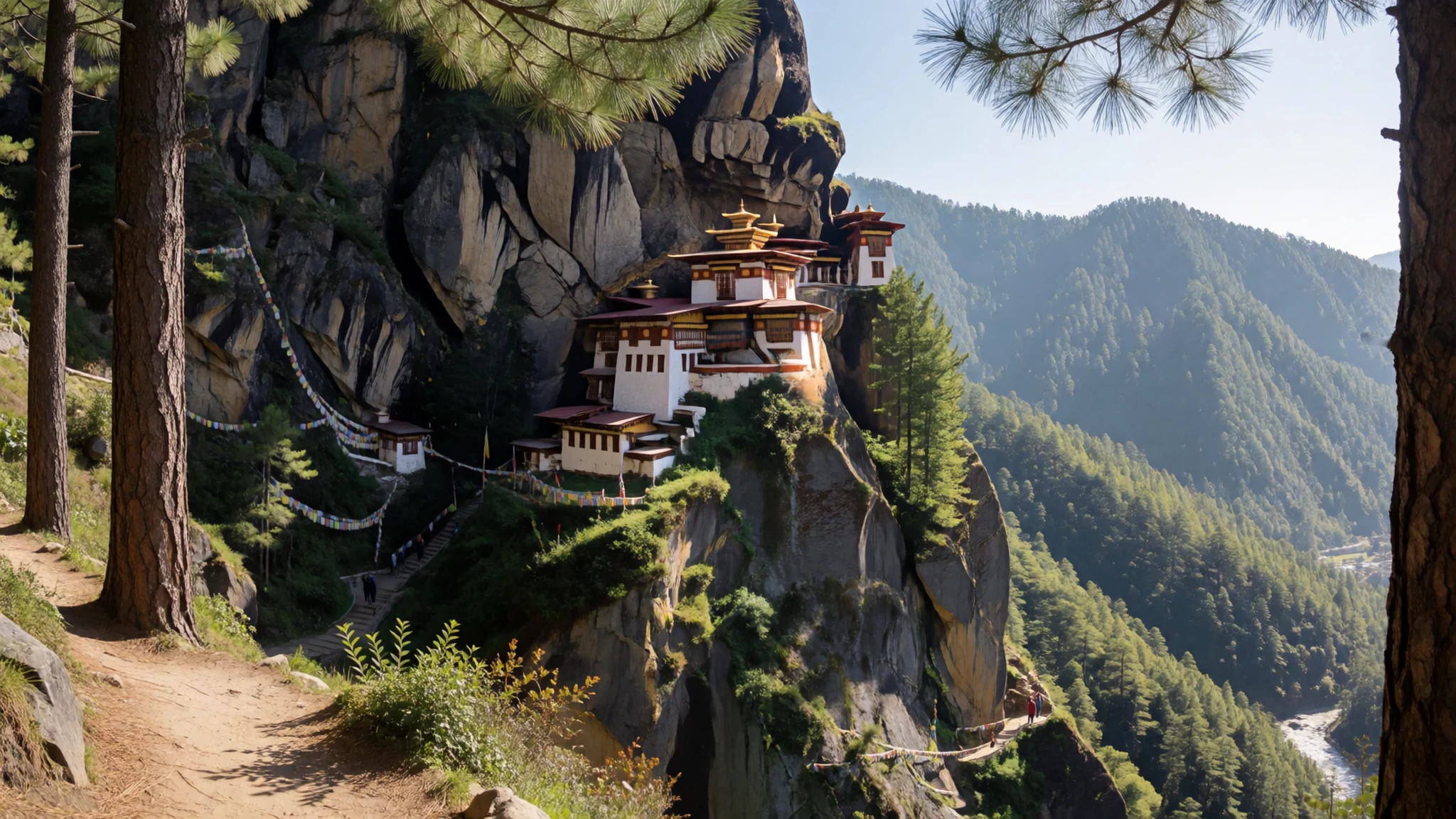
Culture
Jichu Drake sits inside a Buddhist culture in which mountains are inhabited, not merely tall. Locals in Paro speak of the peak as a guardian deity, and that belief shapes everyday behaviour, from the way people talk about high pastures to the offerings left at passes. Strings of prayer flags mark the trail, each flutter understood to carry blessings on the wind. Stone cairns, mani walls inscribed with mantras and small shrines appear along the route, and walkers are expected to keep them on their left side as they pass.
Herding remains part of life in the high valleys. Families bring yaks up to the summer pastures and live in simple stone and timber shelters, and travellers sometimes share tea or a short conversation at these stops. Butter tea, dried cheese and warm hospitality are offered freely, and a small gesture of thanks matters more than any payment. Festivals in the lower valleys, usually built around masked dances at the local monastery, give a fuller picture of how faith and community fit together.
Trek crews are an important part of the experience. Guides, cooks and horsemen are typically local, and many have strong views about the mountain and its stories. Asking them about the legends of the peak is a good way to learn, and the answers differ from household to household.
On the trail, walk clockwise around mani walls and chortens, keep voices low near shrines, and never point a camera at a person without asking first.
What to wear
Jichu Drake lies in a country where traditional dress is still worn daily in many settings. Men wear the gho, a knee-length robe tied at the waist with a belt called a kera, and women wear the kira, a long wraparound dress fastened at the shoulders, often with a short jacket called a toego. The cloth is commonly handwoven cotton, wool or silk, and the patterns, colours and weights vary by region and season. Weaving remains a living craft, and the loom features in the legend of the mountain itself. In Paro, formal occasions, temple visits and government offices still call for traditional dress.
On the mountain slopes, practical clothing wins. Herders wear heavy woollen layers, sturdy boots and sometimes yak-hair garments suited to the cold, and in towns many younger people mix western clothes with traditional pieces, saving the gho and kira for festivals and official work.
Visitors should dress for altitude first. Pack warm base layers, a fleece or down jacket, a windproof and waterproof shell, a hat, gloves and sunglasses, because mornings can be freezing while afternoon sun is strong. Broken-in walking boots are essential on the rocky trail. For monasteries and dzongs in Paro, wear long trousers or skirts, cover the shoulders, and be ready to remove hats and shoes at the door.
What to eat
- Ema datshi — Family-run eateries and farmhouses in Paro
Chillies cooked with local cheese in a rich, spicy stew, often called the national dish of Bhutan. It is served with rice at almost every meal, and the heat can be considerable. Look for it in farmhouse kitchens and any family-run eatery in Paro.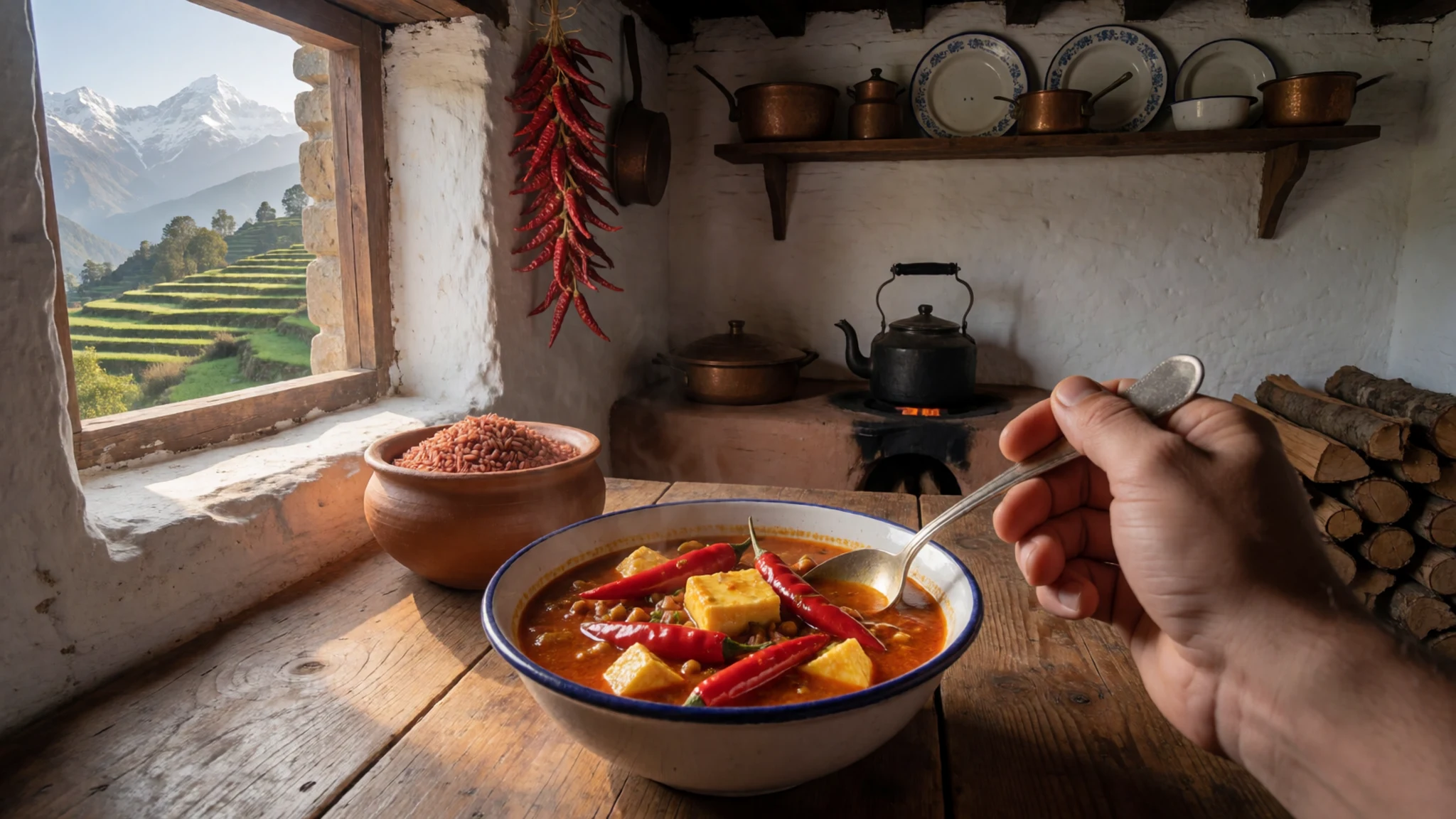
- Red rice — Trek camp kitchens and Paro restaurants
A nutty, slightly chewy rice grown in the valleys of western Bhutan and eaten with most meals. It soaks up the sauce from stews and curries, and gives a filling base for long walking days. Expect it on trek menus and in any home kitchen.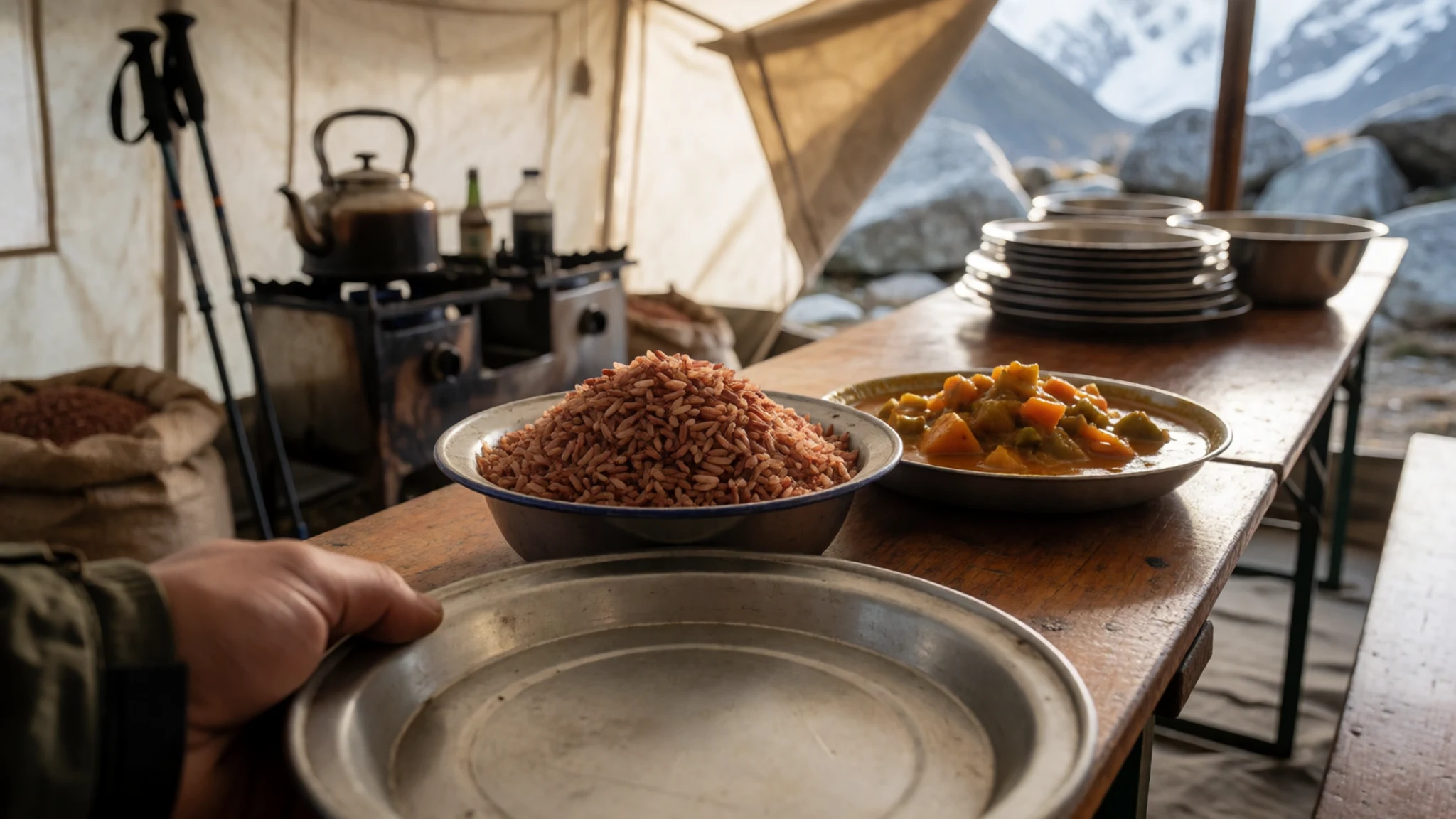
- Momo — Paro town cafés and trek camp kitchens
Steamed dumplings filled with cheese, vegetables or meat, usually served with a fiery chilli dip. They are a common snack and a reliable first meal after a long day. Cooks at trek camps often make them to order. - Phaksha paa — Local restaurants in Paro
Pork cooked with dried chillies and radish or greens, a hearty dish that suits cold weather. The meat is often smoky and fatty, so it pairs well with plain rice. Ask a restaurant in Paro whether it is on the menu that day. - Suja — Herders' shelters, monasteries and farmhouses
Butter tea, made by churning tea with butter and salt until it turns creamy. It tastes closer to a thin soup than to the milky tea most visitors expect, and it is welcome at altitude. Herders and monastery hosts often offer it.
Plan it
Best time. April–May and October–November, when skies are clearer and temperatures workable for trekking; summer brings monsoon cloud and rain, and winter brings deep cold and snow on the high passes.
How long. 7–9
Getting there. Fly into Paro International Airport, the only international airport in Bhutan, then travel by road from Paro to the trailhead with a licensed operator. The last stretch to the high camps is on foot.
Budget. high
Tips
- Book through a licensed Bhutanese tour operator, as independent trekking is not generally permitted; check the official tourism site for current rules.
- Allow rest days for acclimatisation and ascend slowly.
- Start walking early, because cloud usually builds by mid-morning.
- Carry cash for small purchases in Paro, as there are no shops on the trail.
- Bring a water bottle and purification, and drink steadily at altitude.
Etiquette
- Pass mani walls and chortens with the structure on your left.
- Ask before photographing people, especially at shrines and in herder households.
- Do not leave litter, and carry out what you carry in.
Nearby
Sources
- Wikidata Q6921510 (CC0)
- Wikipedia: Mount Jitchu Drake (rev 1369569922) (CC BY-SA 4.0)
- Wikivoyage: Jichu Drake (CC BY-SA 4.0)
- Steve Pastor, Jitchu Drakye from bridge above Jangothang, Wikimedia Commons (CC BY 3.0)
- Ian Cochrane, South aspect of Jichu Drake, Wikimedia Commons (CC BY 2.5)

