Chimi Lhakhang
Chimi Lhakhang, Bhutan
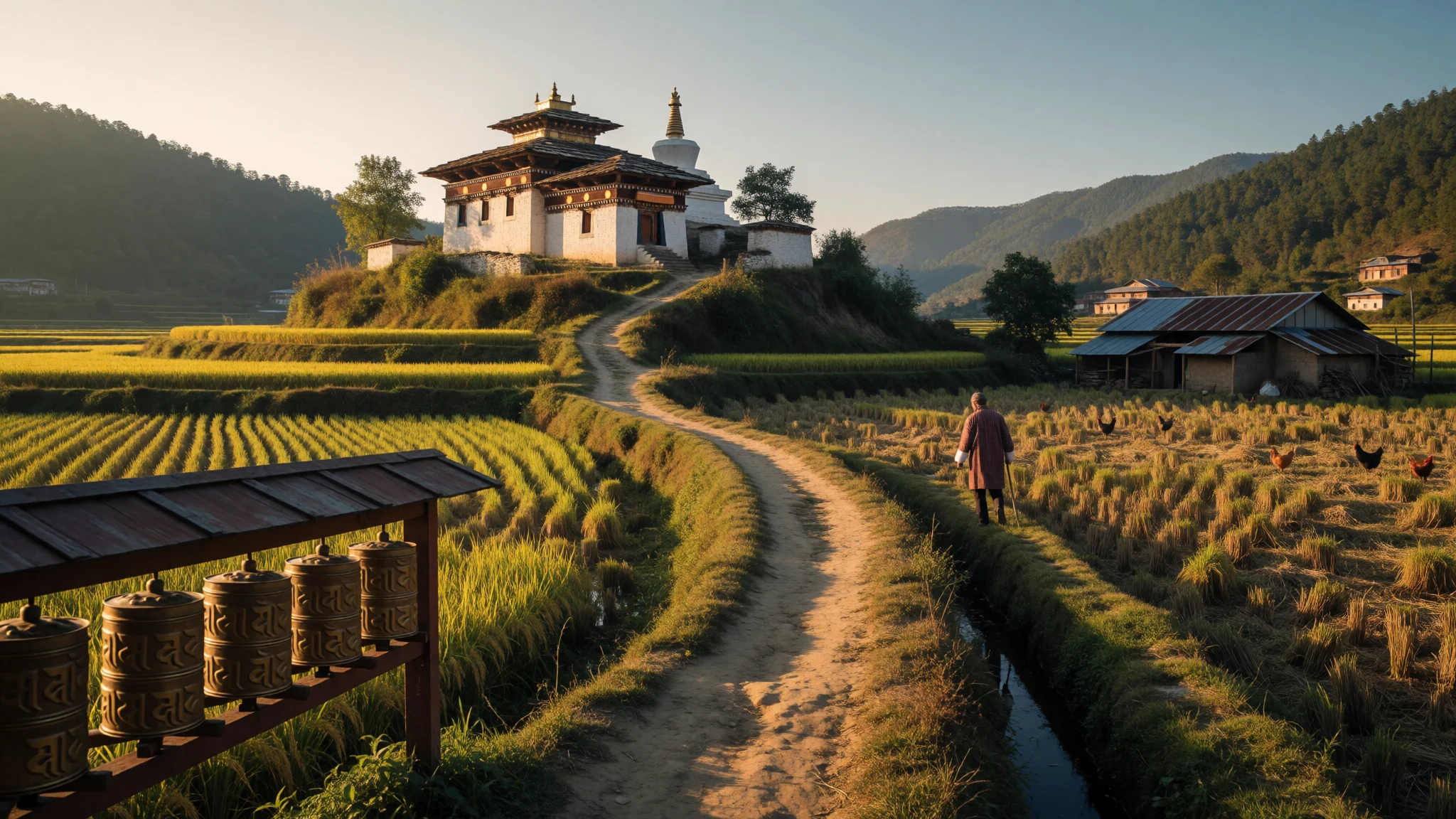
Chimi Lhakhang is a small fertility temple on a hillock, reached by a field-edge walk and dedicated to Bhutan's irreverent Divine Madman.
The place
Chimi Lhakhang is a small Buddhist temple in Punakha District, western Bhutan, close to the village of Lobesa. It stands on a rounded hillock above the valley floor, and the approach is the memorable part. From the hamlet of Sopsokha, a muddy, dusty path crosses farmland where rice and mustard grow, then climbs to whitewashed walls, a line of prayer wheels and a chorten. The temple was founded in 1499. Its Dzongkha name is spelled in several ways in English, including Chime Lhakhang, and it is also called Khimey Lhakhang. Across Bhutan it is known first as a fertility temple. Couples hoping for a child travel here from far away, and many Indian and British visitors arrive in small groups with a driver and guide, so mid-morning can feel busy while early mornings are quieter. The site is a short drive from Punakha town, and the walk itself is gentle but slippery after rain. Inside, the temple is modest: butter lamps, painted walls, a few statues and the keepers who give blessings. It is a working place of worship rather than a museum, and village life carries on around it, with children walking to school, farmers in the paddies and dogs asleep on the path. Nobody comes for grand architecture. The draw is the setting, the humour of its patron saint and the ordinary farming valley around it.
Its story
Chimi Lhakhang goes back to the late fifteenth century, though the stories around it feel older than the walls. A lama of the Drukpa Kagyu school, Ngawang Chogyal, built the temple in 1499 on ground blessed by his cousin Drukpa Kunley, a wandering teacher remembered as the Divine Madman. Kunley rejected polite monastic manners. He taught through songs, jokes, drinking and deliberately shocking behaviour, aiming to puncture pride and hypocrisy, and many Bhutanese still tell tales of him with affection. Tradition says he came down from Dochu La to deal with a demoness who had taken the form of a dog and was troubling the valley. Once she was overpowered, the dog was buried under a mound, and the hillock gave the temple its older name, which joins the Dzongkha word for dog with the idea of a heap of earth. A second version speaks of a spirit from the pass that he pinned beneath a boulder close to where the chorten now stands. Kunley also brought a carved wooden phallus from Tibet. It is kept here, decorated with silver, and serves as the temple's blessing tool. The painted phalluses on house walls across Bhutan trace back to his teaching and are meant to deflect gossip and the evil eye. Locals tell these tales with a grin, which is exactly how Kunley would have wanted them told.
What to see
- The temple and its blessing — Hillock above Sopsokha, near Lobesa
Chimi Lhakhang itself is compact and quickly seen, but worth lingering in. Look at the painted walls and the butter lamps, then accept the blessing if a keeper offers it. Couples hoping for children are the usual recipients, though others are welcome to receive it too. Early morning is calmest.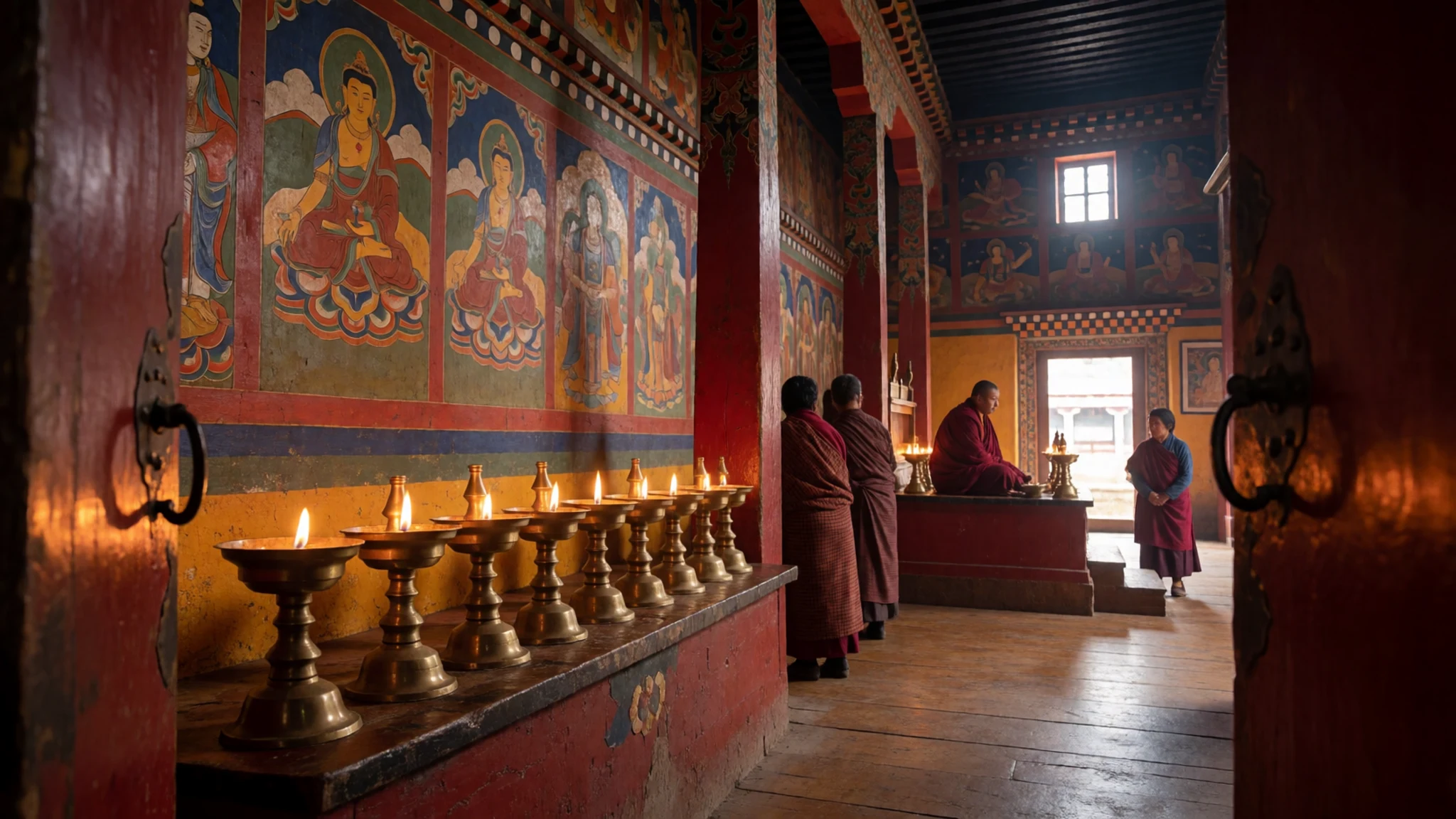
- The chorten — Beside the temple, on the hillock
Chimi Lhakhang's chorten is tied to Drukpa Kunley, who is said to have built it while blessing the site. Walk around it clockwise, as local people do, and notice how it stands close to the spot where the troublesome spirit was said to be pinned.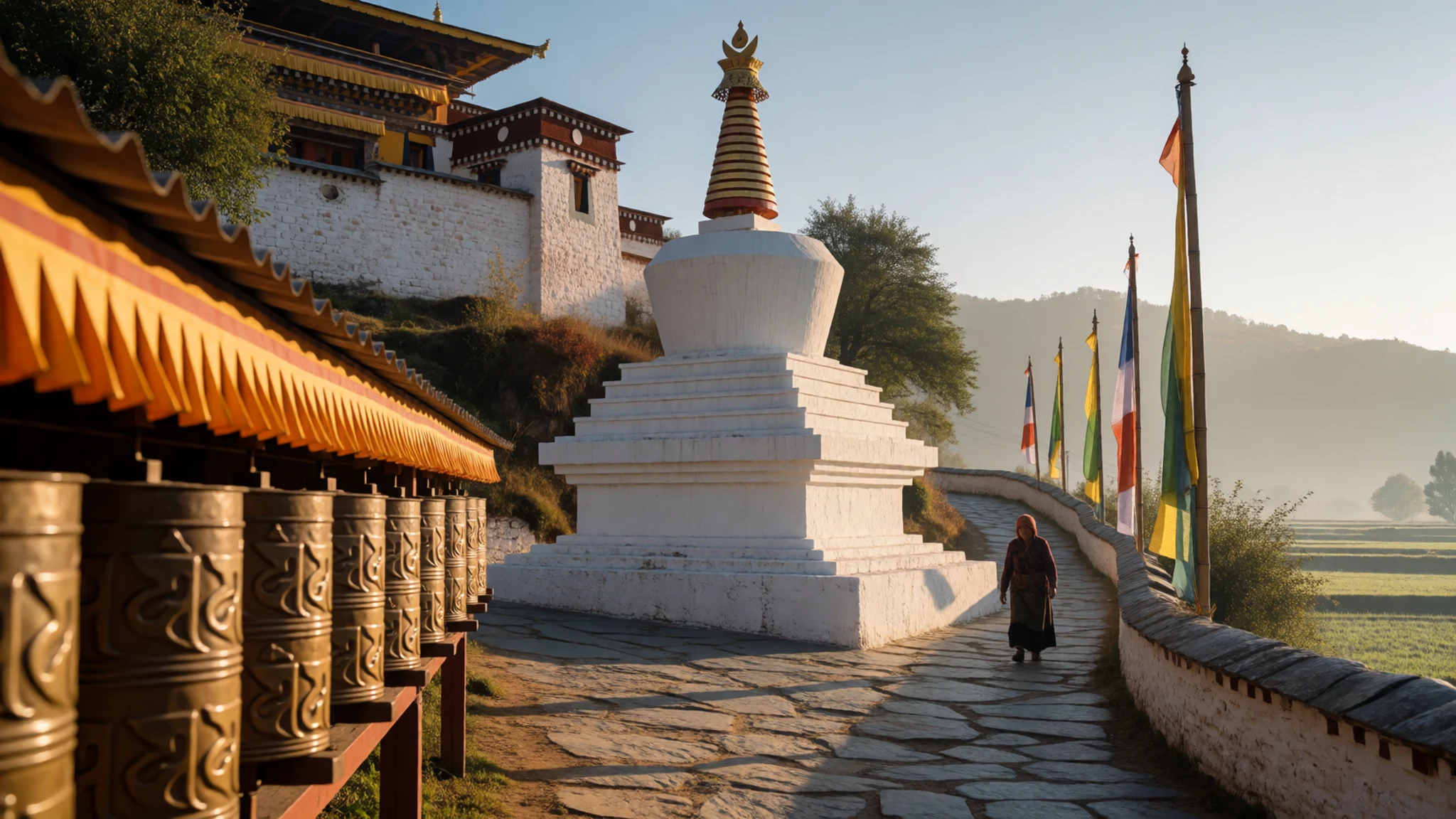
- The field path from Sopsokha — Between Sopsokha and the hillock
The walk to Chimi Lhakhang runs past rice paddies, mustard fields and farmhouses, and it is half the visit. The path is muddy after rain and dusty when dry. Allow time to stop, watch farm work and look back at the hillock as it rises from the fields.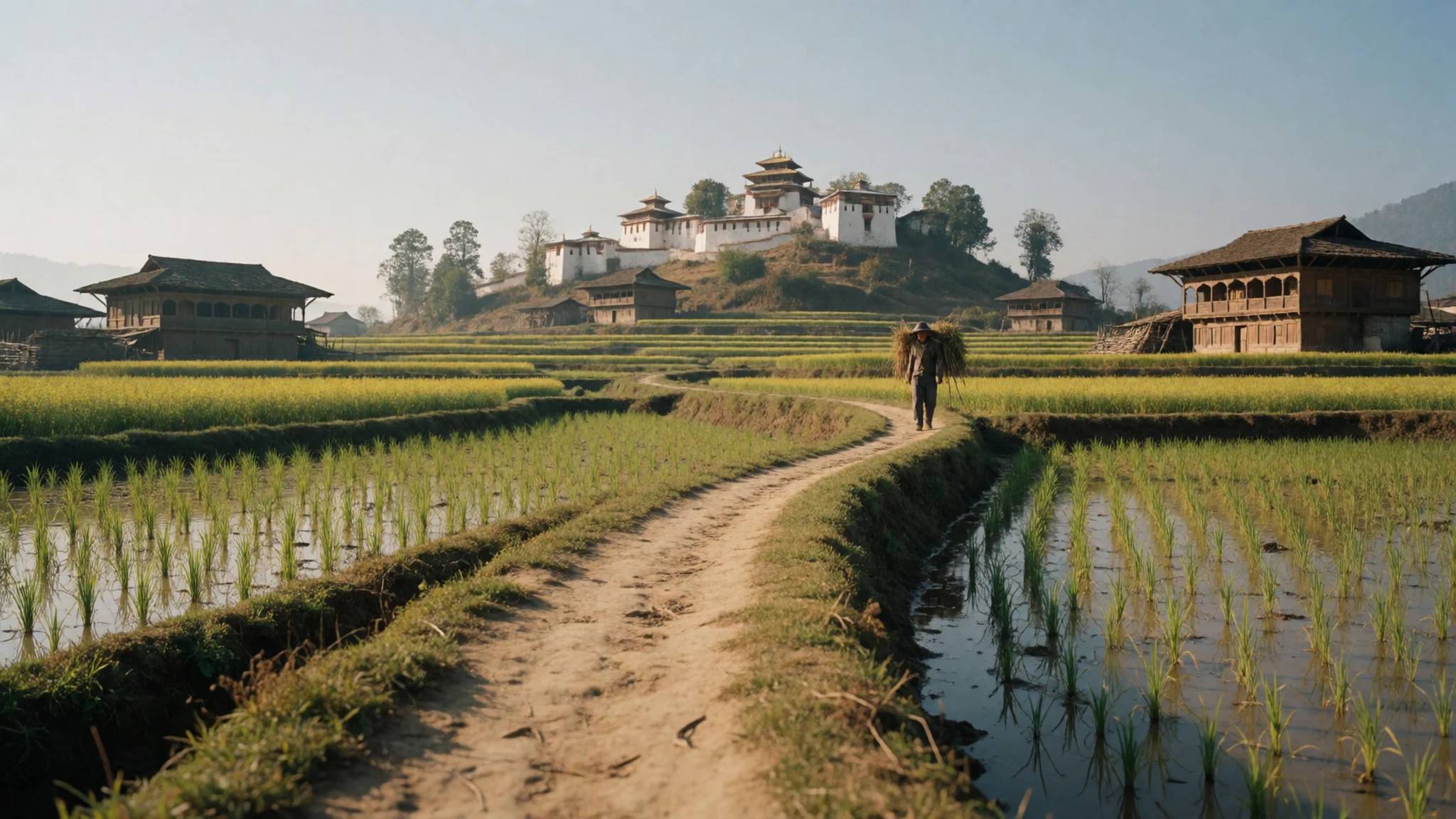
- Punakha Suspension Bridge — Pho Chhu / Mo Chhu rivers, near Punakha
A long pedestrian suspension bridge near Punakha town carries prayer flags over one of the rivers. It sways a little underfoot, so it suits people comfortable with heights. Many visitors simply sit and watch the water. It combines easily with a trip to Chimi Lhakhang in the same day.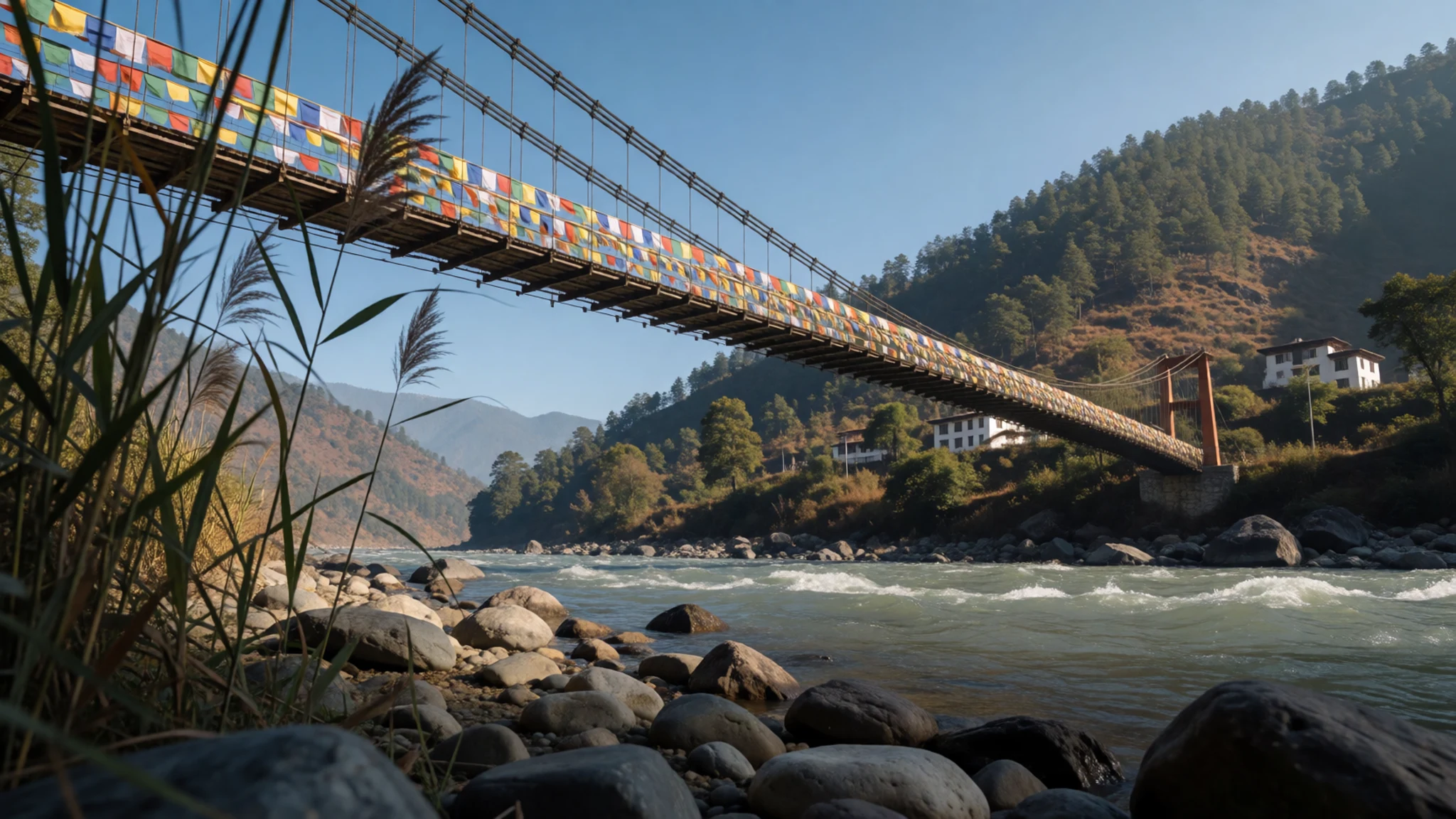
- Punakha Dzong — Punakha, at the meeting of the Pho Chhu and Mo Chhu
Punakha Dzong is the fortress-monastery on a river island in town, a short drive from Chimi Lhakhang. Its whitewashed walls, wooden balconies and courtyards show monastic and administrative Bhutan at work. Dress modestly, expect checks at the entrance, and ask your guide about access to inner courtyards, which can change.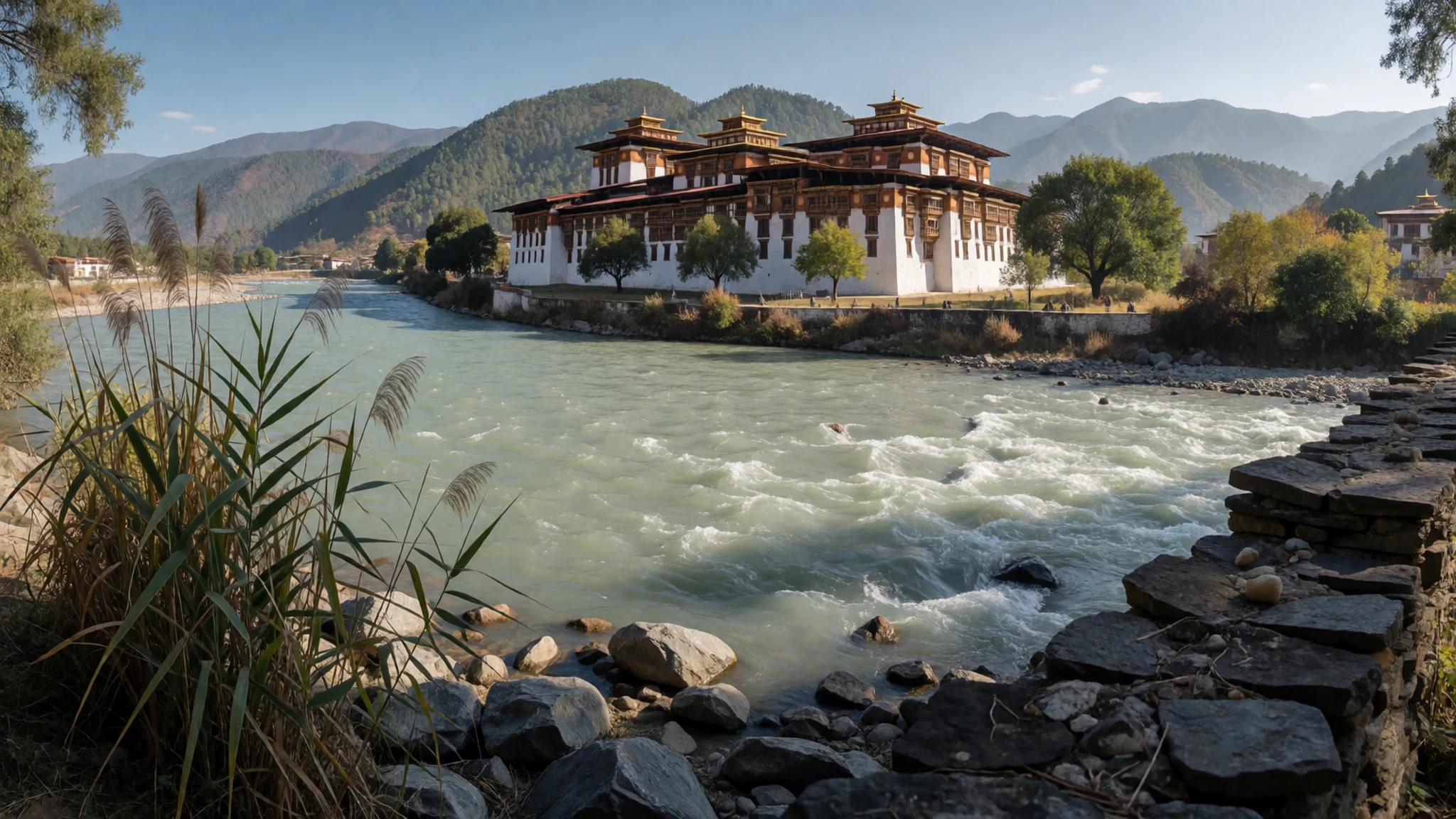
Culture
Chimi Lhakhang sits inside Drukpa Kagyu Buddhism, the school that shapes much of Bhutanese religious life, and the temple's character comes from Drukpa Kunley, the Divine Madman. Kunley's teaching mixed laughter, song and shock, and the phallus symbols seen here and on farmhouses across the valley come from that tradition. They are protective charms against the evil eye and gossip, not jokes at the visitor's expense, and Bhutanese families treat them matter-of-factly. For many local people, the temple matters most as a place to ask for a child. Couples come to receive a blessing from the wooden phallus that tradition says Kunley brought from Tibet, and some choose the name of a newborn here. Pilgrims light butter lamps, spin prayer wheels and circle the chorten clockwise, always keeping the sacred object on their right. Prayer flags along the path carry mantras that are thought to travel on the wind. Village life continues around the site, so the atmosphere is part devotion, part neighbourhood, and quieter in the early morning than at midday. Small donations in the offering box are customary, and the keepers appreciate patience when a family is mid-ritual. Take the symbolism seriously, even when guides tell the stories with a smile. Remove your shoes and hat before stepping inside the temple, keep voices low, and ask the keeper before taking any photograph indoors.
What to wear
Chimi Lhakhang sits in a region where traditional dress is still part of everyday life. Men wear the gho, a knee-length robe belted at the waist and folded to form a pouch at the chest. Women wear the kira, an ankle-length wrapped dress fastened at the shoulders, usually with a short jacket and a shawl. Both are woven from cotton, wool or silk, with checks, stripes and patterned borders that signal region and occasion. National dress is expected in schools, offices and dzongs, and on formal or festival days, so a visit to a temple often brings out the best cloth. Away from formal settings, people in the Punakha valley farm in practical gear: rubber boots, fleeces, waterproofs and caps. Younger people mix jeans and trainers with the gho or kira for work, while family outings often involve a mix of both. Visitors do not need national dress, but should dress modestly for the temple and for Punakha Dzong. Cover shoulders and knees, avoid revealing tops and shorts, and carry a light scarf or shawl if useful. Wear sturdy shoes with grip for the muddy field path, and choose a pair that slips off easily at the temple door. Pack layers and a rain jacket, because valley weather changes quickly between seasons.
What to eat
- Ema datshi — Any Bhutanese eatery in Khuruthang or Punakha town
Chimi Lhakhang's valley eats ema datshi daily: green or red chillies simmered in a soft local cheese. It is hot, rich and served with rice. Ask for it mild if chillies are a worry, and expect even the gentle version to carry heat.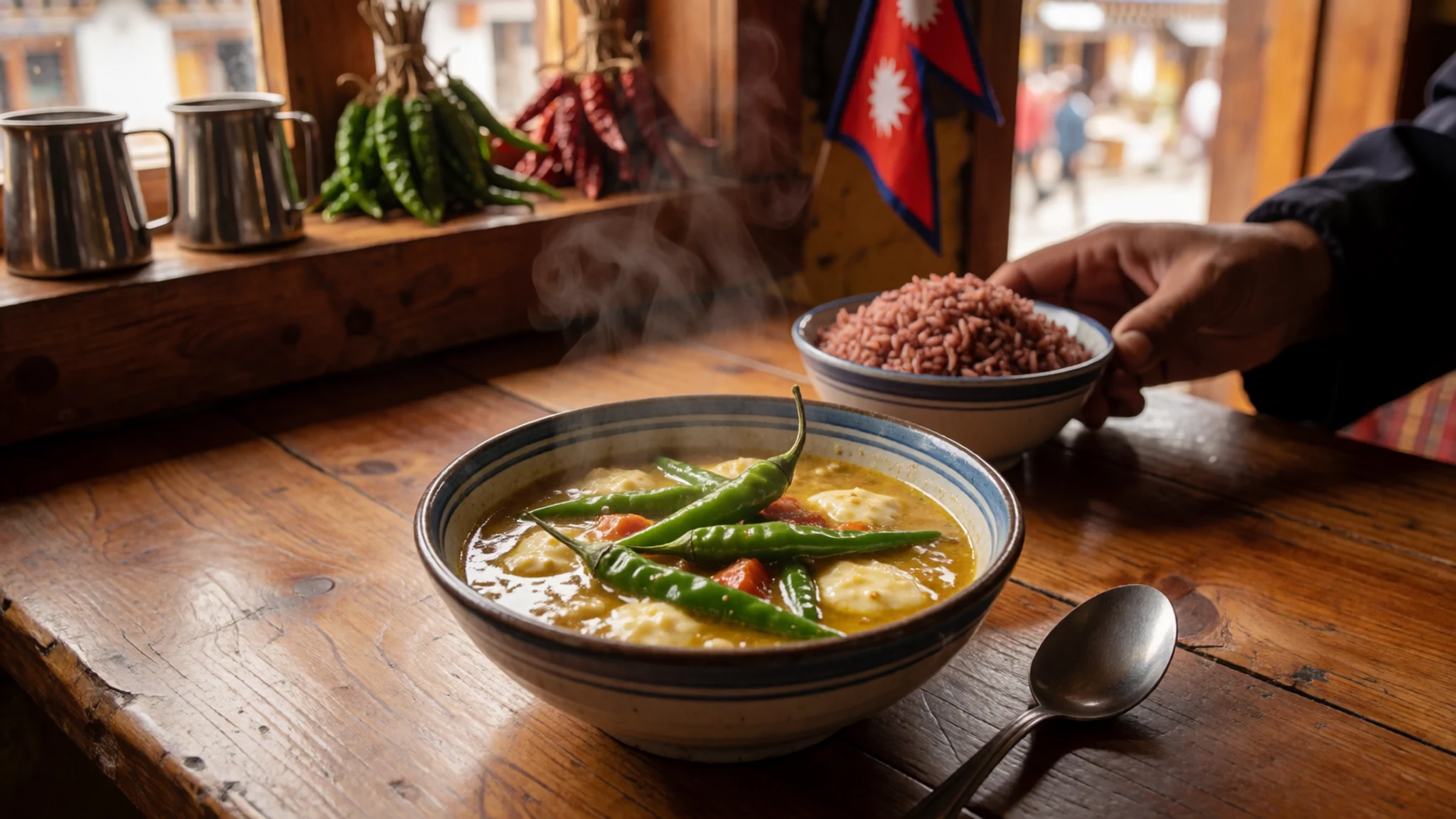
- Red rice — Farmhouse meals and village restaurants along the valley
Red rice is the staple grain of the Bhutanese table, grown in paddy fields like those along the path to Chimi Lhakhang. It has a slightly nutty flavour and a soft, sticky texture. Eat it with curries, stews and vegetable dishes.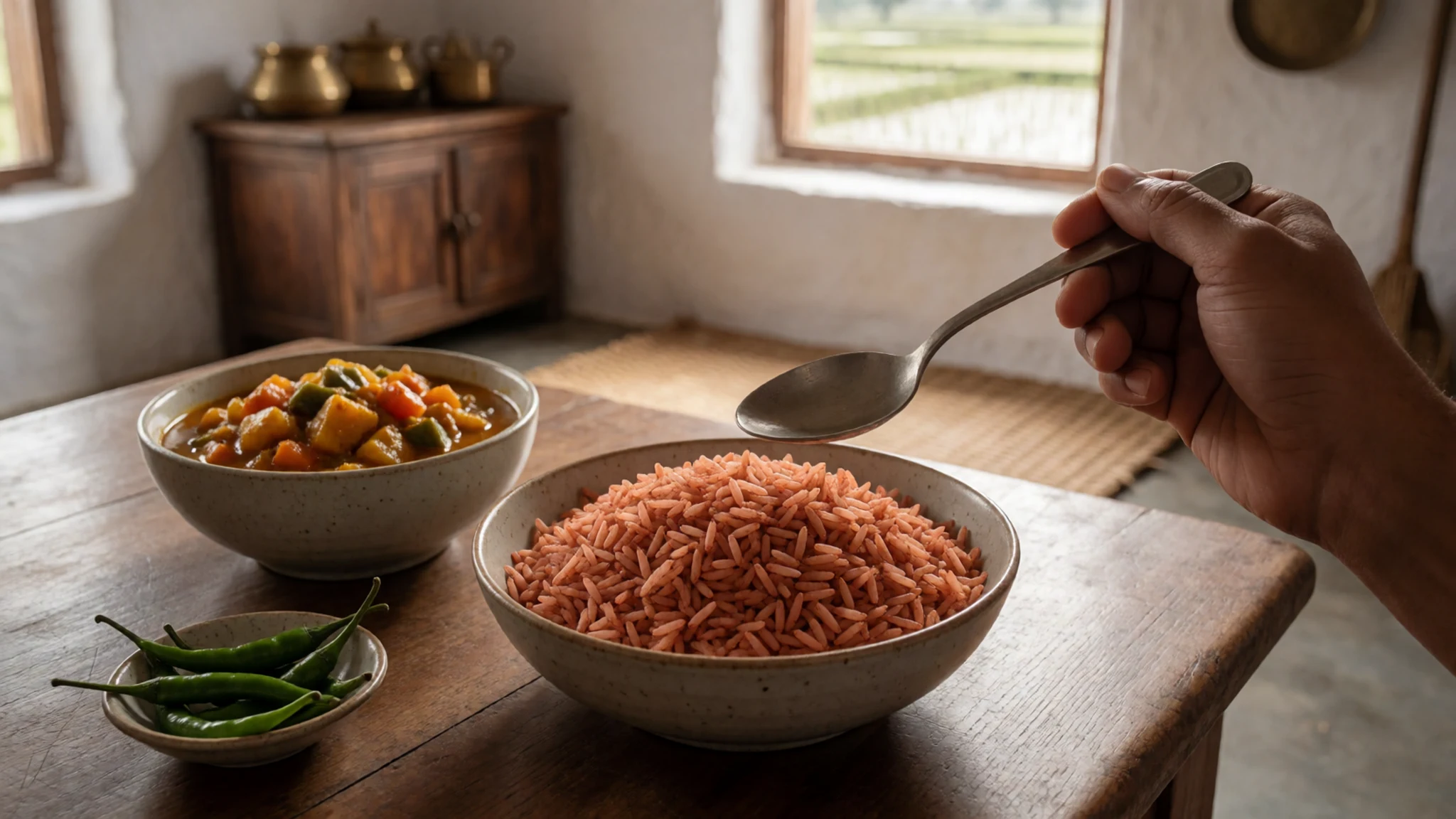
- Phaksha paa — Home-style eateries around Punakha
Phaksha paa is pork cooked with dried chillies and often radish or greens. It is smoky, spicy and rich, and usually comes with red rice. Vegetarian visitors can ask about alternatives, such as mushrooms or potatoes cooked in a similar style. - Momo — Small eateries near the Punakha suspension bridge and in town
Momo are steamed dumplings, filled with meat or vegetables and served with a chilli dip. They are a safe, familiar choice after a morning's walk. Eateries near the suspension bridge also offer noodles, soup and fried rice for visitors wanting something lighter. - Butter tea (suja) — Offered at homes, temples and roadside stalls
Suja is a salty tea churned with butter, served hot in small cups. It tastes closer to soup than to Indian chai, and many people need a few sips to adjust. It warms you in cool mornings and is a typical sign of hospitality.
Plan it
Best time. March–April and October–November, when the valley is generally drier and the walk across the fields is more comfortable; summer brings rain, mud and leeches in some areas, and winter mornings can be cold.
How long. 1–2
Getting there. Fly to Paro, then travel by road to Thimphu. From Thimphu, shared taxis and buses cross Dochula Pass to Khuruthang, about one and a half to two hours, and a taxi or car takes you on to the Sopsokha trailhead, from where the temple is a short walk along the field path. Check current visa and entry rules with Bhutan's official tourism authority before booking.
Budget. mid
Tips
- Go early in the morning for quiet light and fewer groups
- Wear shoes with good grip, as the field path turns muddy after rain
- Carry cash for offerings, small purchases and roadside tea
- Bring drinking water and sun protection, since the path has little shade
- Combine the visit with Punakha Dzong and the suspension bridge in one day
Etiquette
- Remove shoes and hats before entering the temple and keep your voice low
- Walk clockwise around the chorten and prayer wheels
- Ask before photographing people or the inside of the temple
Nearby
Sources
- Wikidata Q5099371 (CC0)
- Wikipedia: Chimi Lhakhang (rev 1367022845) (CC BY-SA 4.0)
- Wikivoyage: Punakha (rev 5165185) (CC BY-SA 4.0)
- Photo: Chimi Lhakhang - temple dedicated to Lama Drukpa Kuenlay, David Broad (CC BY 3.0)
- Photo: Chimi Lhakhang, Bhutan 02, Bernard Gagnon (CC BY-SA 4.0)
- Photo: Chimi Lhakhang, Bhutan 05, Bernard Gagnon (CC BY-SA 4.0)
- Photo: Panoramic view of Chimi Lhakhang, Jyotishkardey (CC BY-SA 4.0)
- Photo: Chimi Lhakhang (Divine Madman) Monestary, amanderson2 (CC BY 2.5)
- Photo: Chimi Lhakhang, Bhutan 01, Bernard Gagnon (CC BY-SA 4.0)
- Photo: Chimi Lhakhang, Bhutan 03, Bernard Gagnon (CC BY-SA 4.0)
- Photo: Chorten in Chimi Lhakhang, Bhutan 04, Bernard Gagnon (CC BY-SA 4.0)


