Bumthang
Bumthang, Bhutan
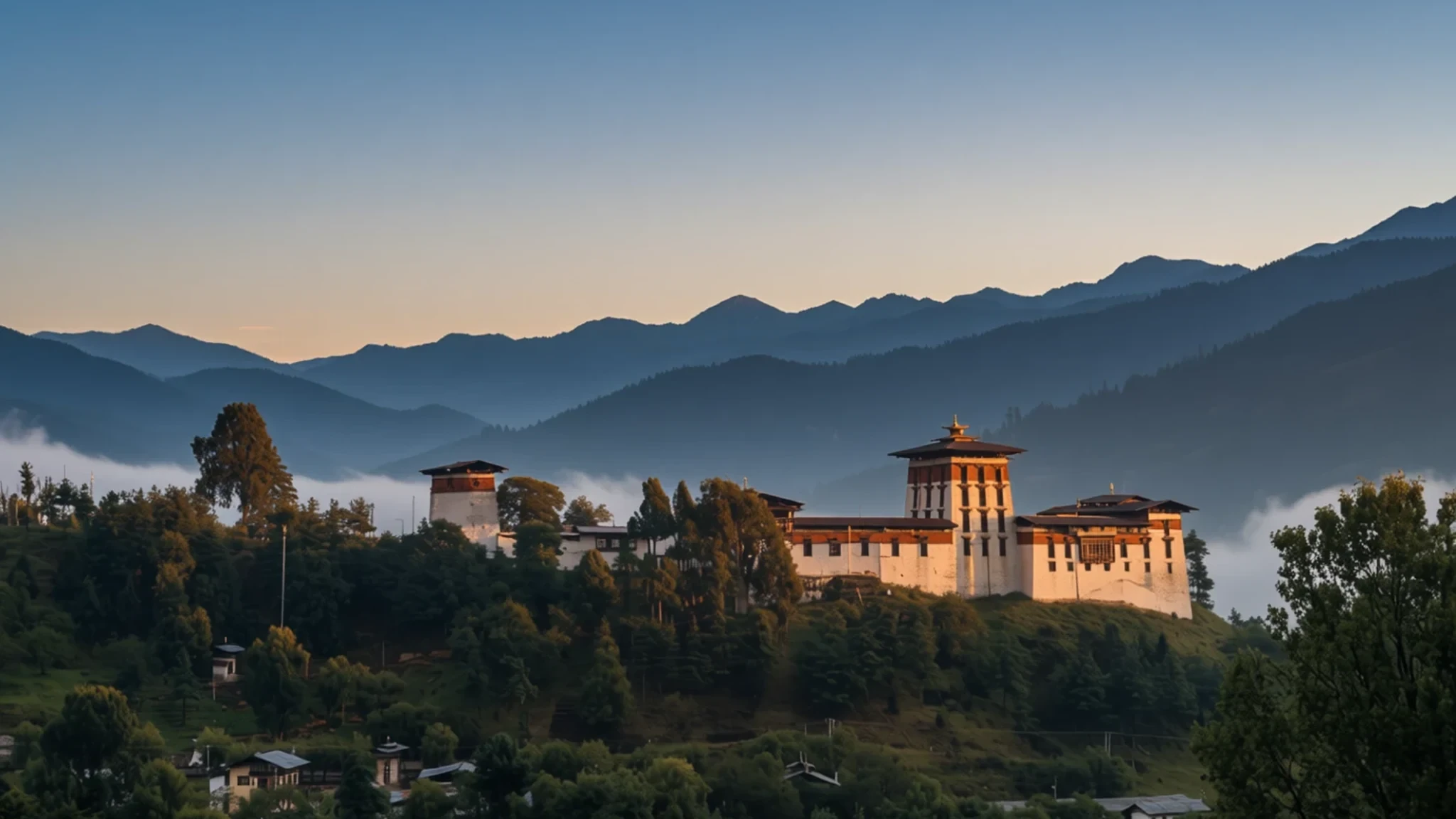
Bumthang is central Bhutan's valley country of temples, buckwheat fields and festival grounds, reached by high passes or a short domestic flight.
The place
Bumthang sits in central Bhutan as a cluster of broad valleys rather than a single town. The lived-in centre is Jakar, also called Chamkhar, where a white-walled dzong watches the Chamkhar Chu and the shops, schools and farmhouses gather below it. Around that core the land opens into the valleys of Chokhor, Chhume, Tang and Ura, each with its own villages, lhakhangs and a slightly different pace. Valley floors carry buckwheat, potatoes and barley, with apple orchards near the houses and fir forest, including dark stands of Abies densa, climbing toward the passes. Wangdicholing Palace, a royal residence among those firs, recalls the district's ties to Bhutan's ruling families as well as to its monasteries. Light is sharp in the dry months, and mornings start cold even when the afternoon is mild; in the wet months cloud sits on the ridges and the fields turn deep green. Jakar is small enough to walk. The rest of the district is short drives or, on some side paths, a pony. Archery grounds at the edge of town fill with noise and coloured scarves on match days. Black-rumped magpies work the fields and the roofs. Bumthang reads as a working rural district that holds well-known temples: cows on the road, wood smoke, and a market street that closes early.
Its story
Bumthang's story is told through its temples and the saints who are said to have worked in these valleys. Tradition places Guru Rinpoche, Padmasambhava, at Kurjey, where he meditated in a cave and left a body-print in the rock while subduing a local spirit that was troubling the valley; the temple complex that grew there is still a place people come to worship. Jambay Lhakhang, a short distance across the Chokhor fields, belongs to an older layer of the same Buddhist history: local telling links it to the Tibetan king Songtsen Gampo and to a set of temples meant to pin down a demoness whose body was mapped across the Himalaya. Later centuries belong especially to Pema Lingpa, the treasure-revealer born in the Tang valley, who is said to have drawn hidden texts from Mebar Tsho, the Burning Lake, with a lamp in his hand, and who founded Tamshing as a seat of his teaching. The paintings and the dances associated with him are still maintained by local communities, and his lineage remains part of how families here explain their festivals. The name Jakar, castle of the white bird, is tied to a story in which a white bird rose and settled on the ridge, marking the site of the dzong. Around these narratives the district lived an ordinary history of trade over the passes, taxation through the dzong, and royal attention at Wangdicholing. What a visitor meets now is that mixture: a government dzong, a string of lhakhangs still in daily use, and villages that host masked dances whose dates follow the lunar calendar rather than a fixed poster.
What to see
- Jakar Dzong — Jakar, Chokhor
Jakar Dzong in Bumthang, called the castle of the white bird, sits on a ridge above Chamkhar and houses the administration and a temple. The white walls and central tower are the clear view from the road below. Visitors usually see the exterior and the courtyards; the lhakhang may be closed to casual entry, so ask on the day. Come early for a quiet compound before the offices fill.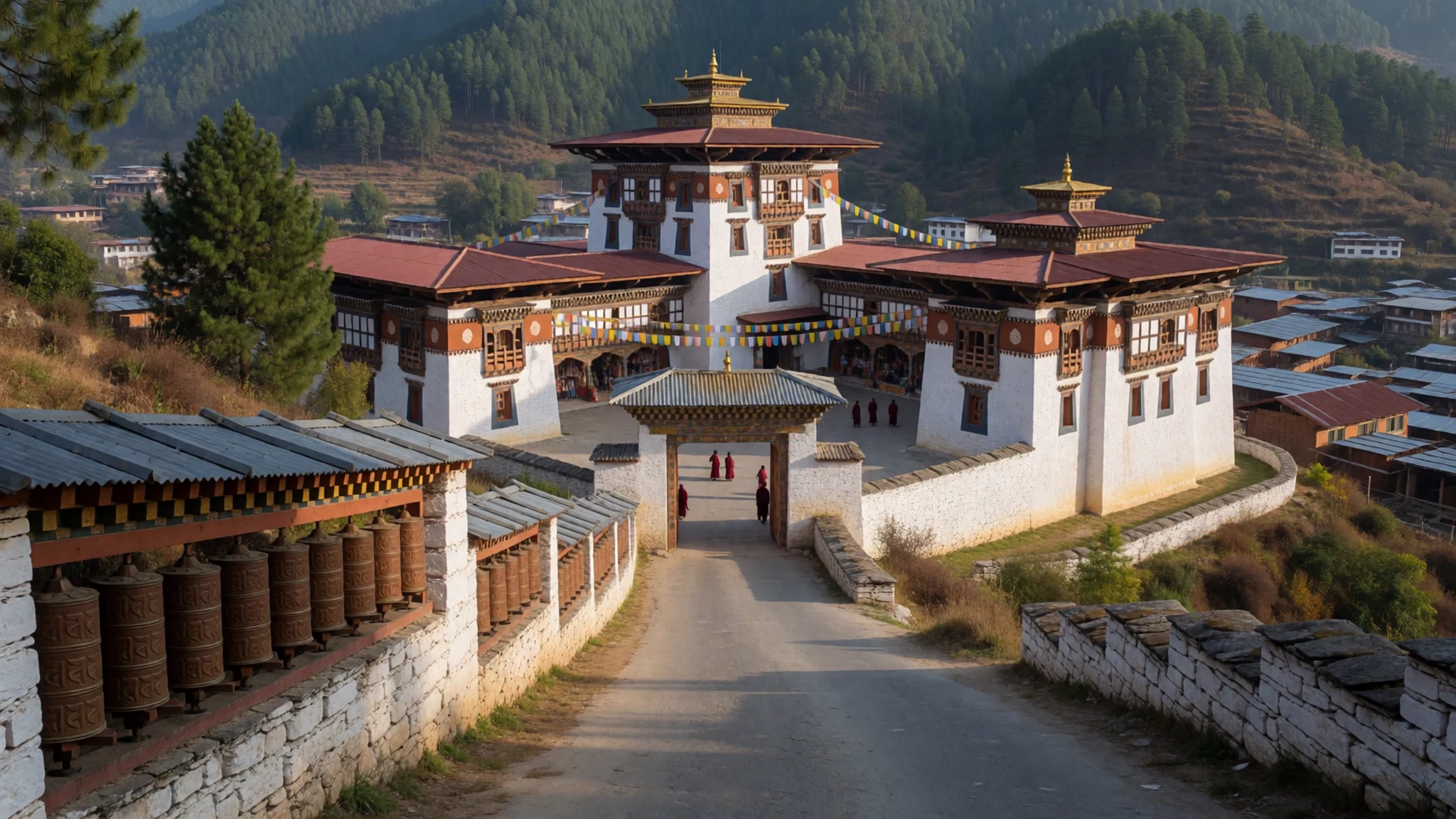
- Kurjey Lhakhang — Kurjey, Chokhor
Kurjey Lhakhang in Bumthang marks the cave where Guru Rinpoche is said to have left a body-print in the rock. The complex is a row of temples against the cliff, with a wide courtyard and prayer wheels, facing cypress trees and the river fields. Pilgrims walk the circuit when the gates are open. Shoes and hats come off at the door, and the walk around the buildings is clockwise.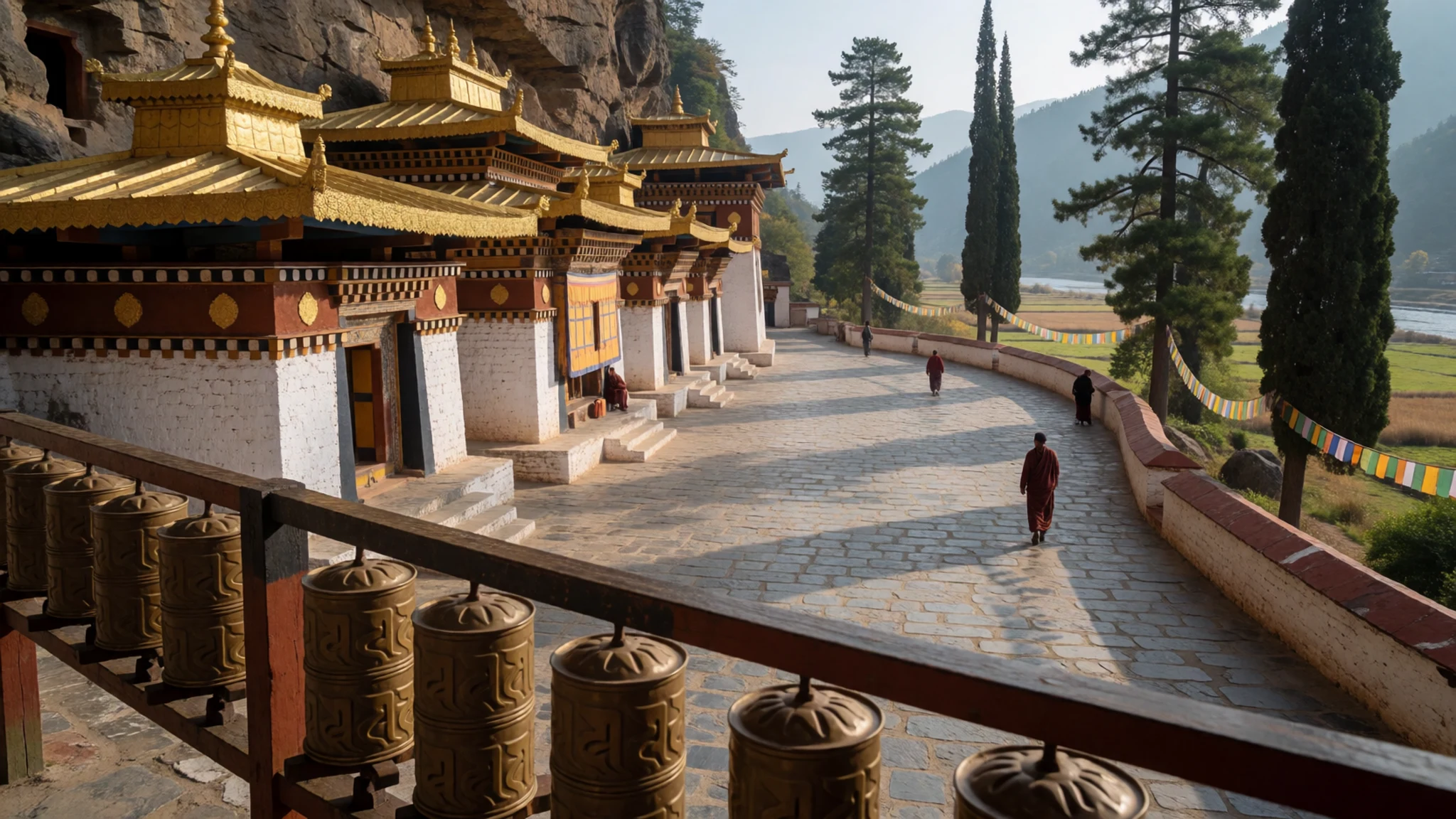
- Jambay Lhakhang — Chokhor
Jambay Lhakhang in Bumthang stands in the Chokhor fields, a low temple that local tradition links to Songtsen Gampo. Prayer wheels line the courtyard. At the annual Drup the same ground becomes a dance floor for the community, then returns to a quiet chapel of butter lamps and a caretaker. Ask before any interior photograph, and walk the circuit clockwise.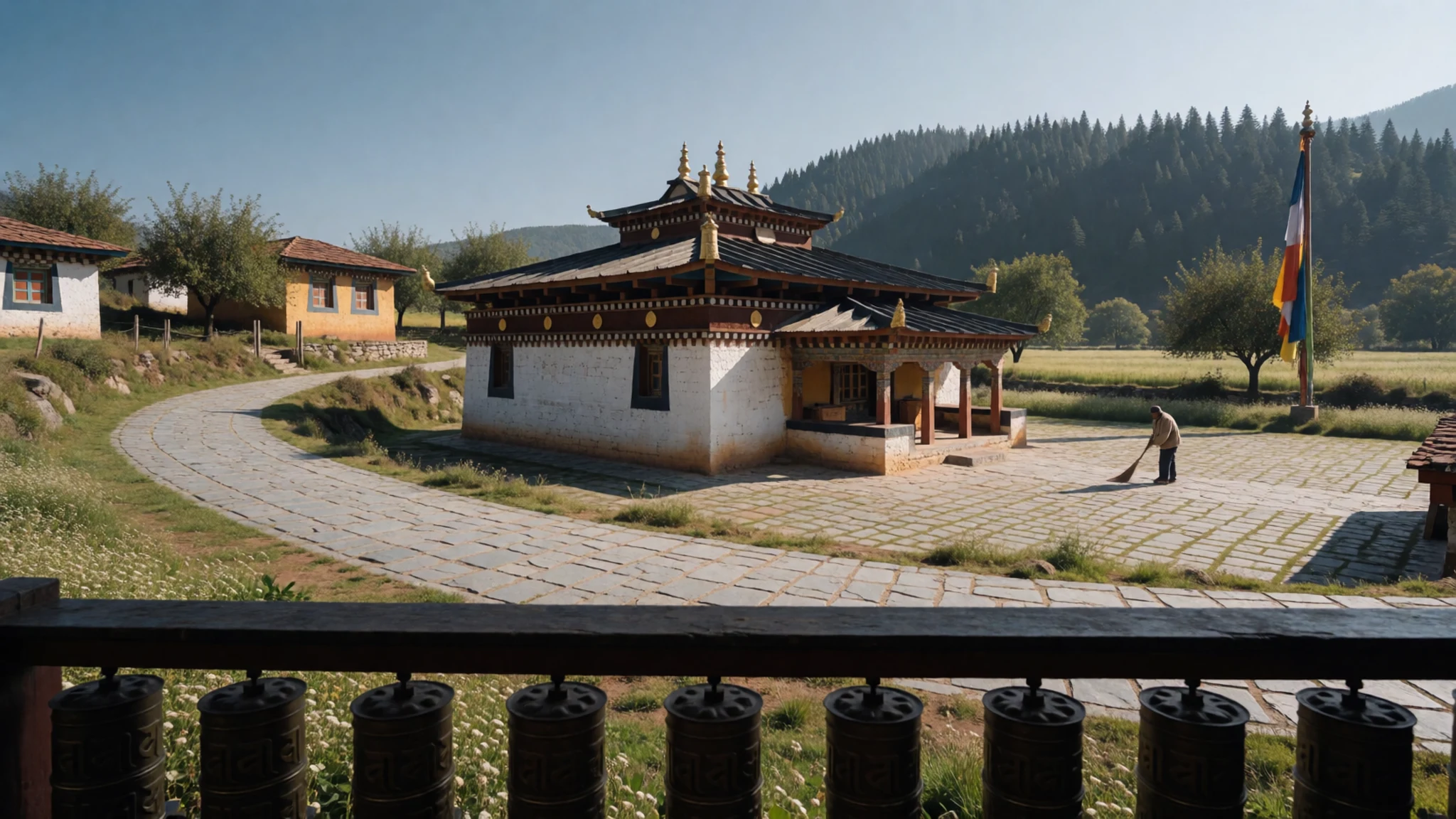
- Tamshing Lhakhang — Chokhor
Tamshing Lhakhang in Bumthang, founded by Pema Lingpa, stands across the river from Kurjey. The draw is the wall paintings, still in a small working temple rather than a gallery. A guide will usually point out the upper floor and the chain mail linked to the saint, if the caretaker has opened them. Follow any instruction about which floor to enter, skip flash, and do not touch the paint.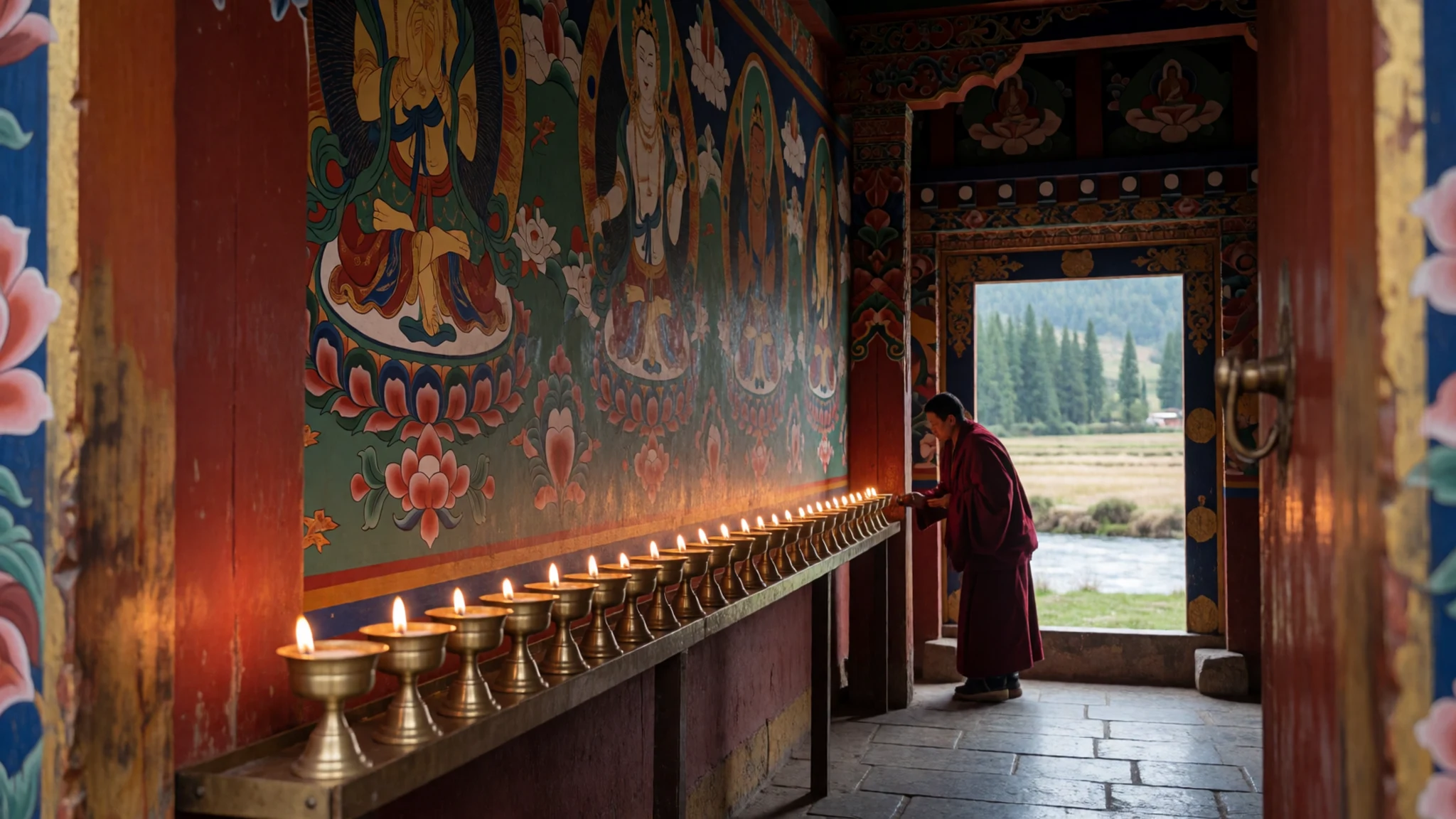
- Mebar Tsho — Tang
Mebar Tsho, the Burning Lake, is a dark pool in Bumthang's Tang gorge, not a wide lake. The story told on the bank is that Pema Lingpa went into the water holding a lit butter lamp and came out with concealed texts, the flame still burning. Prayer flags line the path down from the road. Keep to the path and leave the bank quiet for anyone praying.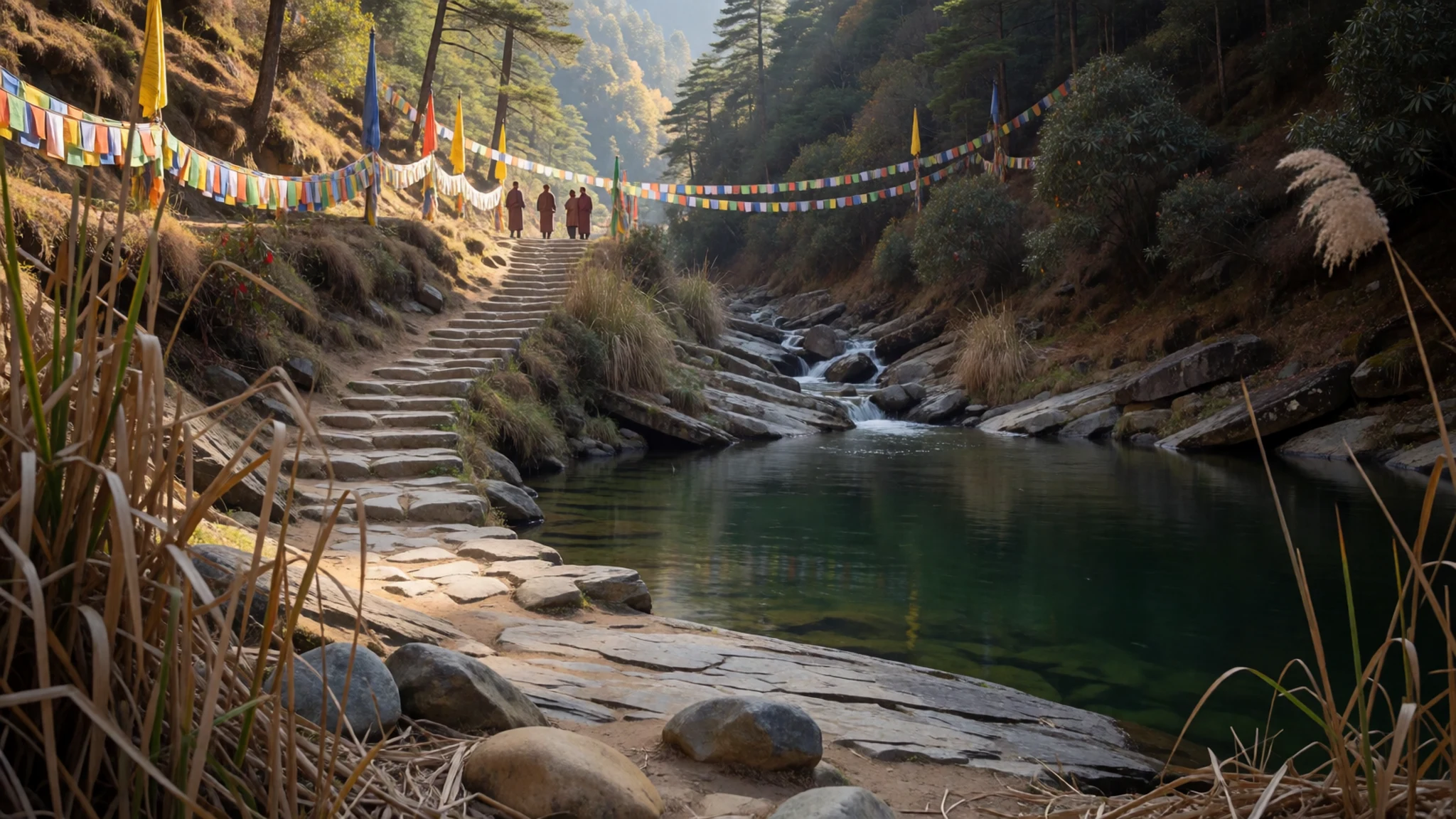
- Wangdicholing Palace — Jakar
Wangdicholing Palace, a former royal residence on the edge of Jakar in Bumthang, stands among firs of Abies densa. Most visits are a view from the grounds: white walls through dark trees, quieter than the temples nearby. The house is a reminder of the district's ties to the court. Ask before entering any open room, and stay out of locked or private wings.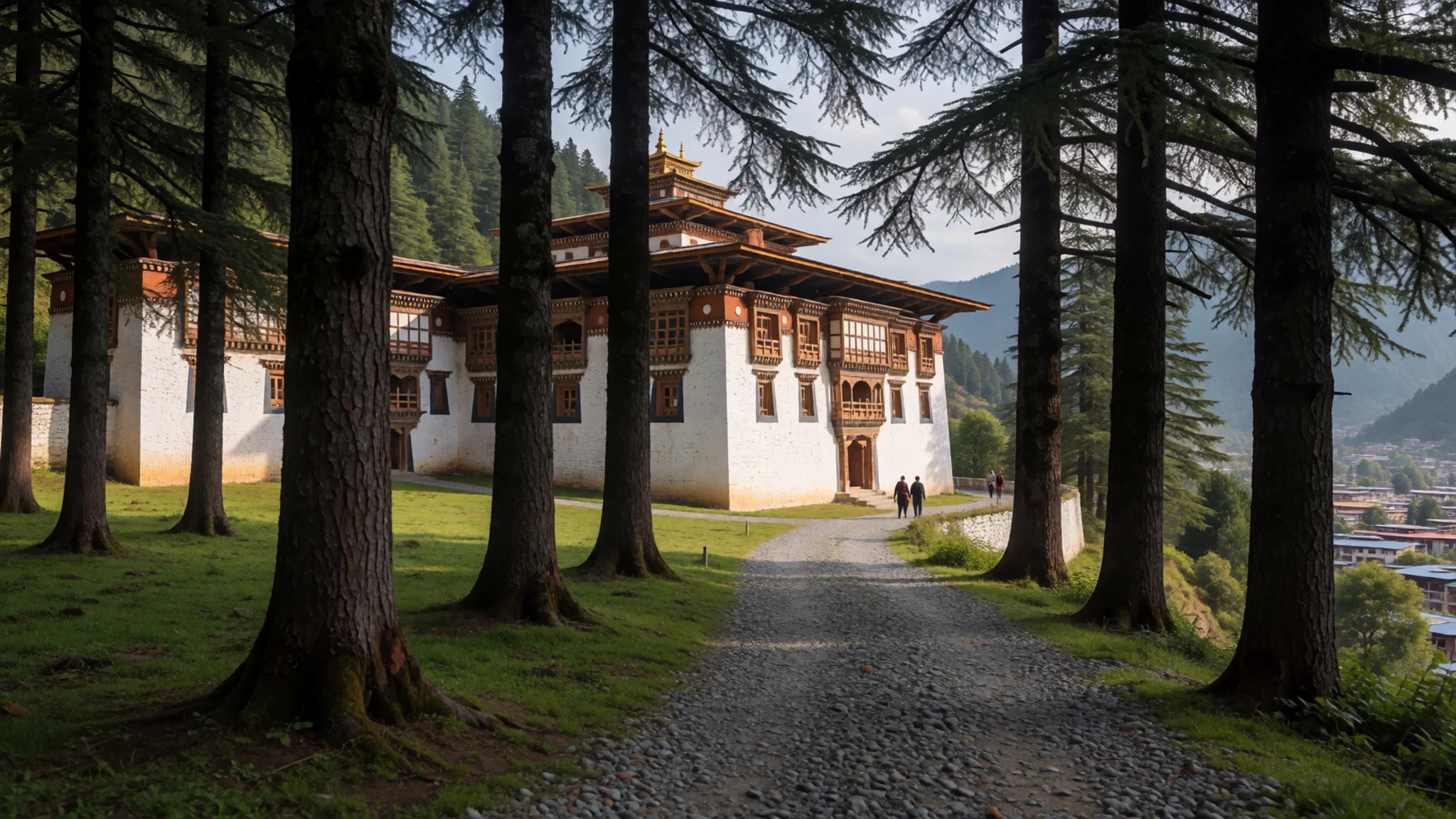
Culture
Bumthang's public life turns on Vajrayana Buddhist practice and on a few large gatherings in the lunar calendar. Households maintain household shrines, and the lhakhangs are community property as much as monuments: butter lamps are offered on ordinary mornings, and masked cham dances appear when a festival occupies the courtyard. Jambay Lhakhang Drup, the Ura Yakchoe and smaller valley festivals bring archers, dancers and relatives home at once; the dates shift each year, so the month matters more than a printed day. Archery is the sport that fills the gaps between those events. Matches on the Bumthang grounds are loud, with singing, teasing and scarves, and they show how the valleys socialise outside the temple. Yathra weavers in Chhume and neighbouring villages still produce the heavy woollen cloth that used to be blankets and coats for cold rooms. Dzongkha is the national language, while Bumthangkha is what many families speak at home, and English will get a visitor through a shop in Jakar more often than through a farmhouse kitchen. In a lhakhang in Bumthang, take off shoes and hats, walk clockwise, and ask before you photograph people or the altar.
What to wear
Bumthang dresses, on formal days, in Bhutan's national code. Men wear the gho, a knee-length robe folded into a pouch at the waist and held with a kera belt, plus long socks and, in the cold months, a wool jacket. Women wear the kira, a length of woven cloth wrapped and pinned at the shoulders over a wonju blouse, with a short jacket when the valley is cold. The textile particular to these valleys is yathra, a heavy wool cloth, often from yak or sheep fleece, woven in bold geometric bands around Chhume and made into jackets, bags and lap-wraps. Ceremonial scarves still mark rank: the kabney for men and the rachu for women, in colours tied to office, which a visitor should not copy. Weekdays in Jakar also show jeans, puffer coats and trainers, especially among younger people, while the gho and kira remain the dress for school, the dzong, festivals and many offices. A visitor's useful kit is layers. Mornings in Bumthang run cold, midday sun is strong, and temple courtyards are stone. Shoulders and knees should be covered at a lhakhang, with a warm layer, a light rain shell, and shoes that slip off at the door. Socks are the usual way to cross a shrine floor.
What to eat
- Hoentay — farmhouses and festival stalls in Chokhor and Chhume
Hoentay is Bumthang's buckwheat dumpling, filled with turnip leaves, cheese and chilli, then steamed or cooked in a pan. Farmhouse kitchens and festival stalls serve it more readily than the small eateries in Jakar. The dough tastes of the grain and the filling is salty and hot.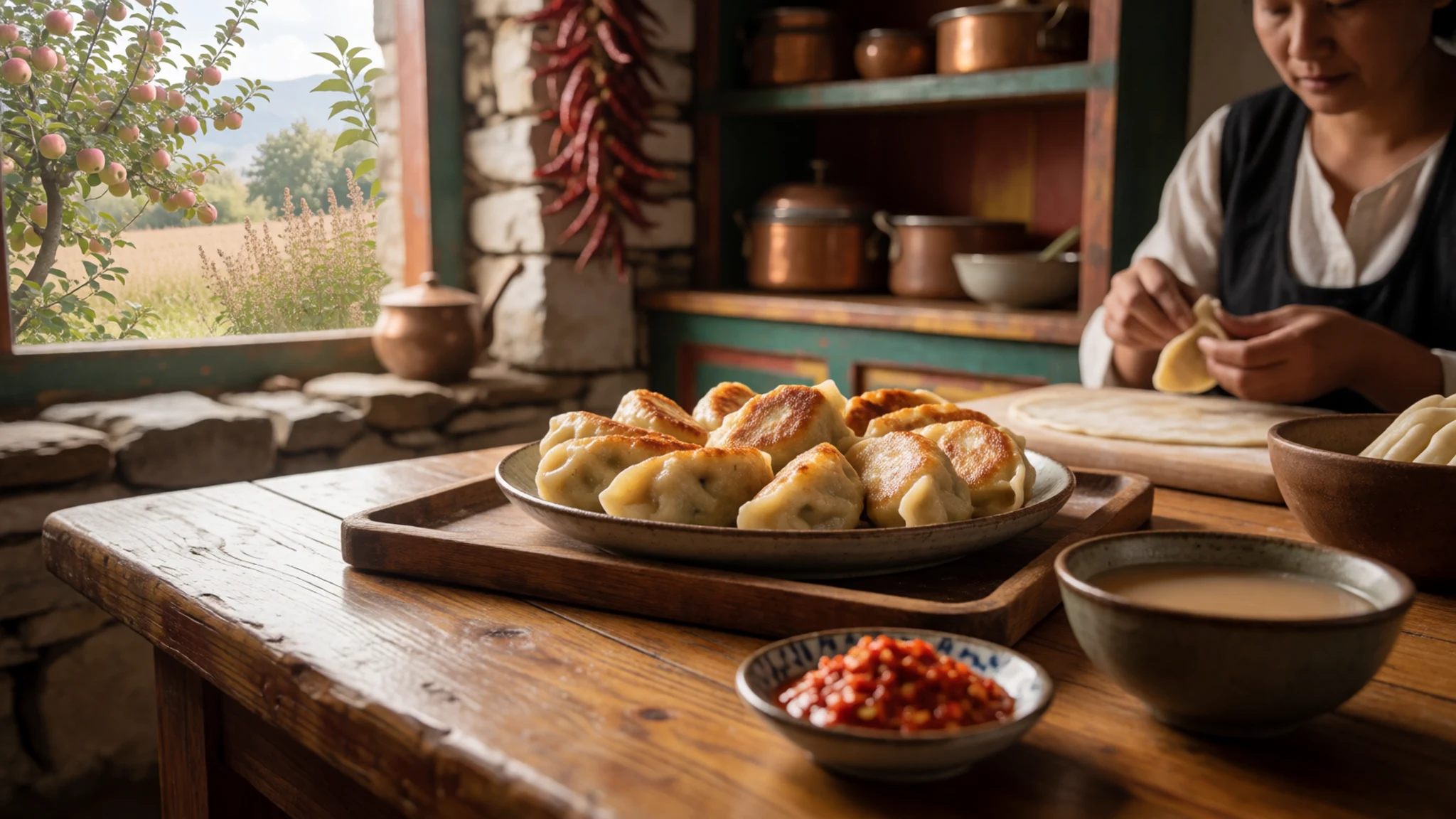
- Puta — village kitchens and simple eateries in Jakar
Puta is buckwheat noodle in a chilli-and-cheese sauce, a local cousin of ema datshi built on Bumthang grain. Homes and plain eateries around Jakar serve it when the dough has been made that day. It is firmer than a wheat noodle and often sits beside red rice.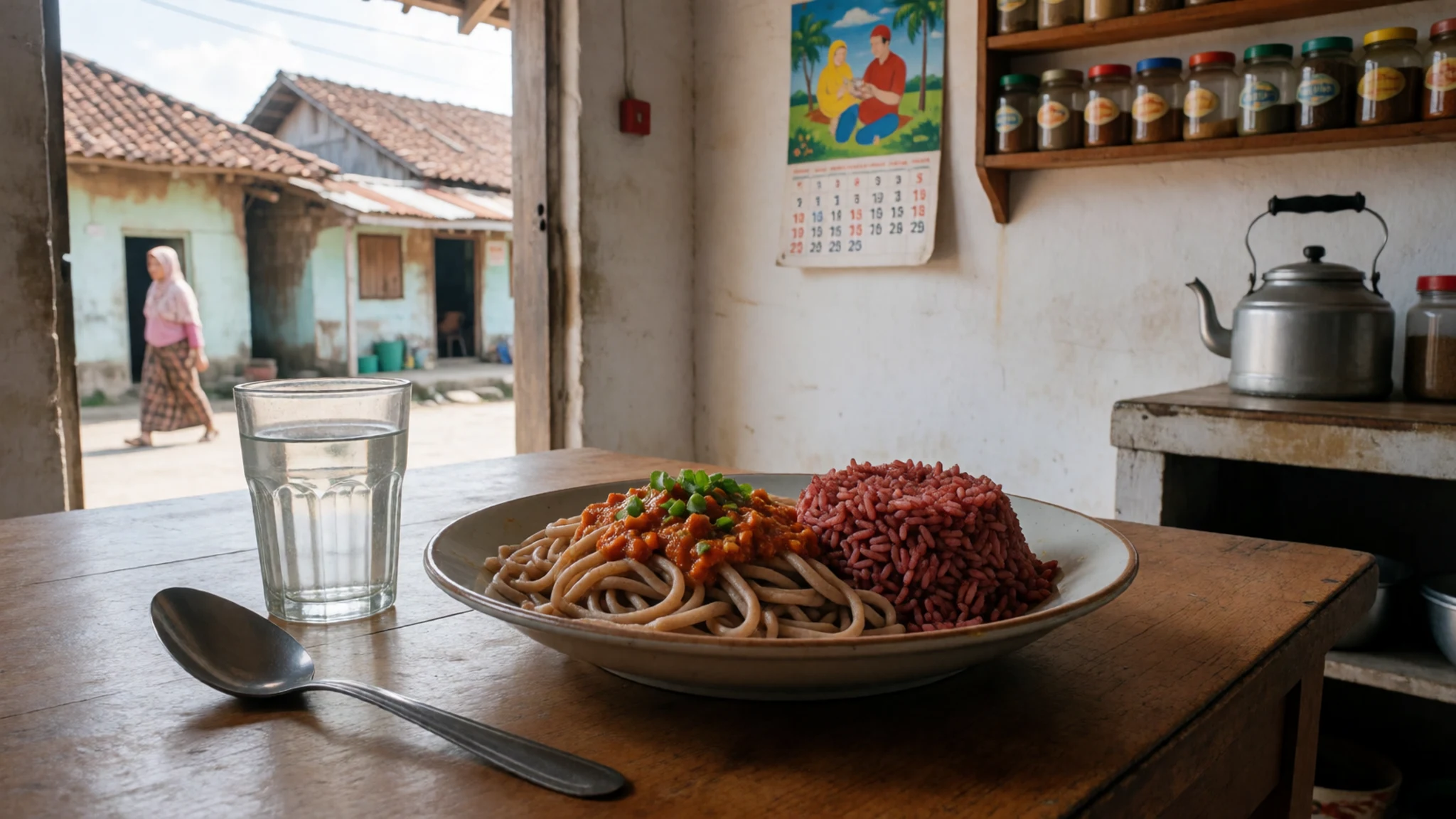
- Khuli — farmhouses in Chokhor and Tang
Khuli are Bumthang buckwheat pancakes from a griddle, eaten with butter, honey or ema datshi. Farmhouses that host visitors serve them at breakfast, and festival stalls cook them when a crowd wants something quick. Local honey is the usual partner. - Ema datshi — eateries and homes in Jakar and the valleys
Ema datshi, chillies stewed with cheese, turns up beside meals across Bumthang whether the grain is rice or buckwheat. Kitchens use a local cow's-milk cheese and vary the heat. A small eatery in Jakar will almost always have it; a farmhouse serves it with the vegetable in season. - Suja — homes, festival tents and roadside tea stalls
Suja, Bumthang butter tea, is offered as a welcome rather than as a sweet drink. In Bumthang a cup appears at the farmhouse door, in a festival tent and at some roadside stalls. The taste is savoury. Drinking a little is the polite start; the rest can be left.
Plan it
Best time. April and May bring clearer skies and orchard blossom to Bumthang, and October and November bring harvest festivals and drier paths. Winter mornings are very cold. The summer monsoon wets the passes and the valley trails.
How long. 3–4
Getting there. Bumthang is reached from Paro International Airport by road across the high passes, with many itineraries stopping a night in Wangdue Phodrang or Trongsa before the last stretch into Jakar. Bathpalathang, the domestic airfield a short drive from town, sometimes has flights from Paro; they depend on the weather, so confirm with the airline or a licensed operator.
Budget. high
Tips
- Arrange travel with a licensed Bhutanese operator, and check the official tourism authority for the current entry rule before booking.
- Festival dates follow the lunar calendar and move each year, so reserve a room in Jakar once the month is fixed.
- Carry cash, because card machines are uncommon past a few shops in Jakar and small lhakhangs do not take them.
- Keep the arrival day easy, since the valleys sit high and the pass road is tiring.
- Treat a Bathpalathang flight as weather-dependent and keep a road alternative ready.
Etiquette
- Remove shoes and hats inside lhakhangs, and walk clockwise around temples, chortens and mani walls.
- Ask before photographing people, monks or a shrine interior, and do not use flash on paintings.
- Cover shoulders and knees at religious sites, and leave ceremonial kabney and rachu scarves to those who hold the rank.
Nearby
Sources
- Wikidata (Bumthang) (CC0)
- Wikipedia — Bumthang District (CC BY-SA 4.0)
- Wikivoyage — Bumthang (CC BY-SA 4.0)
Wildlife
- Black-rumped magpie (animal)
The black-rumped magpie is a smart black-and-white bird with shimmering blue-green wings and tail, and, unlike most of its cousins, no white on its lower back. In Bumthang, look for it busy in the fields and along the roofs. It raises one family a year, with eggs laid between April and June. Watch from a polite distance, keep your voice low, let your guide show you where to look, and never feed it. - Black-rumped magpie (bird)
The black-rumped magpie is a smart black-and-white bird with shimmering blue-green wings and tail, and, unlike most of its cousins, no white on its lower back. In Bumthang, look for it busy in the fields and along the roofs. It raises one family a year, with eggs laid between April and June. Watch from a polite distance, keep your voice low, let your guide show you where to look, and never feed it.