Haa Valley
Haa Valley, Bhutan
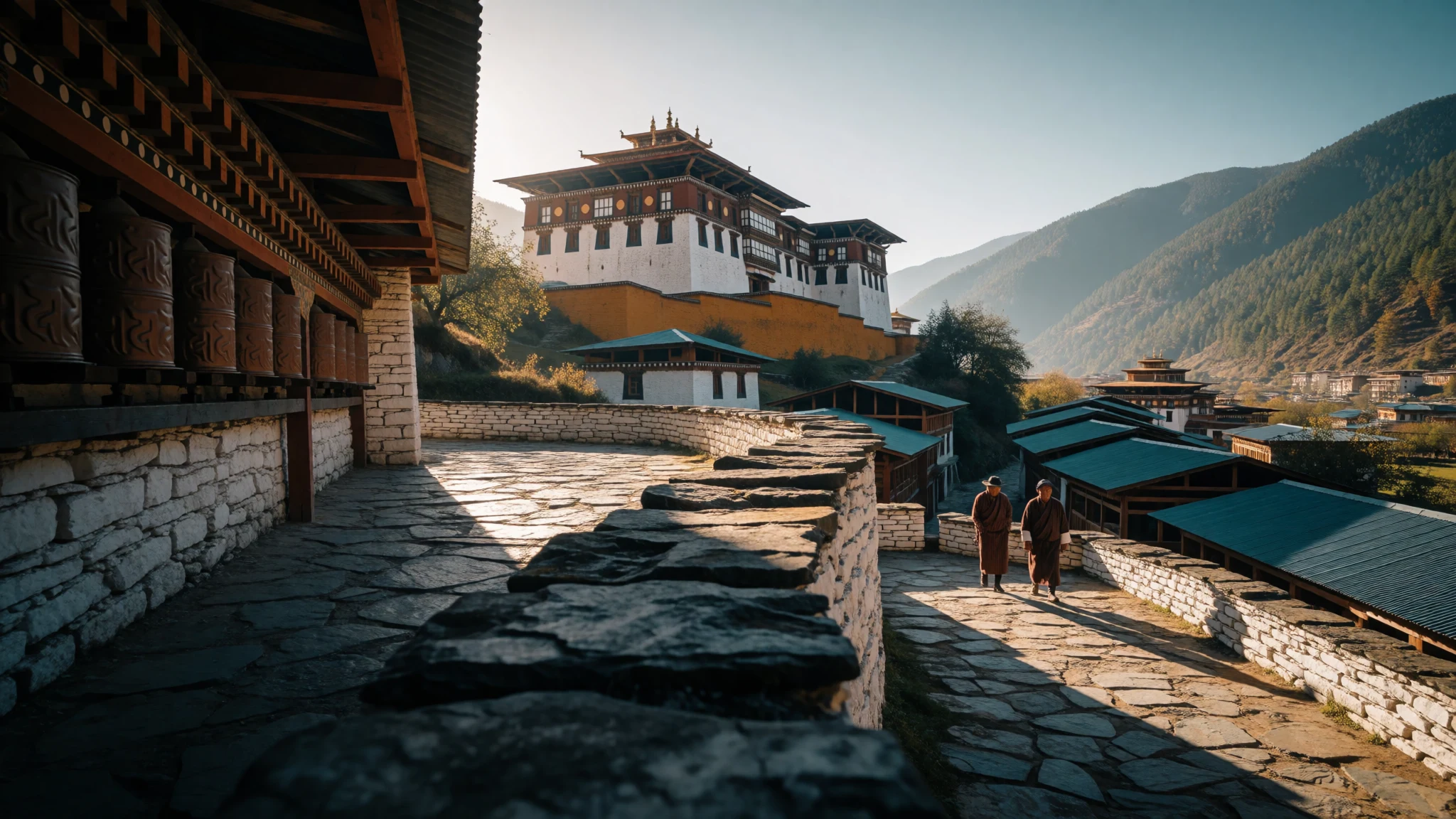
Haa Valley is a high, quiet western valley of apple orchards, whitewashed temples and the river Ha Chhu, still off the usual Bhutan circuit.
The place
Haa Valley lies in western Bhutan, a long trough of pasture, pine and river gravel that the Ha Chhu drains towards the south. Winters in Haa Valley bring hard frost and snow on the upper slopes, and even summer evenings cool quickly once the sun drops behind the ridges. Apple orchards ring the villages, and yak and cattle herds move between the valley floor and higher grazing as the seasons turn. The administrative centre is the small town of Haa, also written Ha, strung along the river with a dzong, a handful of shops and a post office rather than a large bazaar.
The landscape reads as open meadow more than steep gorge. Forested spurs close the view to the east and west, while the river flats give the town room to spread. Uesu Gewog, just beside the town, holds the paired temples that anchor local worship. Further hamlets sit in side valleys, each with a lhakhang and a cluster of farmhouses. A protected area, the Torsa tract, borders the district on the western side.
Life here follows the agricultural year. Households dry chillies and turnips, store buckwheat, and keep cattle close to the house in the cold months. The road from Paro crosses a high pass before it drops into the valley, so Haa feels set apart from the busier western towns even though the distance is not great.
Its story
Haa Valley explains itself through its guardian, Ap Chundu, a local deity whose stories are still told in the villages and enacted at festival time. In one local telling, an army came over the high ground from Tibet and the people of the valley had no force to match it. Ap Chundu is said to have been a deity of disasters, such as meteor storms and cyclones, who was eventually subdued by Guru Padmasambhava. Households keep his rites, and masked dances at the summer gathering renew the bargain between the valley and its protector.
The other origin story is built in timber and whitewash. Lhakhang Karpo, the White Temple, and Lhakhang Nagpo, the Black Temple, stand close together in Uesu Gewog. Tradition holds that they were raised as a pair to pin a troublesome spirit, each where a bird of the matching colour settled: white for Lhakhang Karpo, black for Lhakhang Nagpo. Pilgrims treat them as one visit: both doors, both courtyards, the same quiet rules of shoes and silence.
Wangchuk Lo Dzong, often called Haa Dzong, was raised for the valley by its Drungpa, Kazi Ugyen Dorje, and it still marks the town as the seat of administration and of the district monk body. What remains is local: a named guardian and two temples kept as a pair.
What to see
- Wangchuk Lo Dzong — Haa town
Wangchuk Lo Dzong, also called Haa Dzong, stands in the town of Haa. Its Drungpa, Kazi Ugyen Dorje, had it raised, and the white-walled compound still holds district offices and the monk body. The outer courtyards are the public face of the building; inner chapels keep the shoe-and-hat rule of any lhakhang.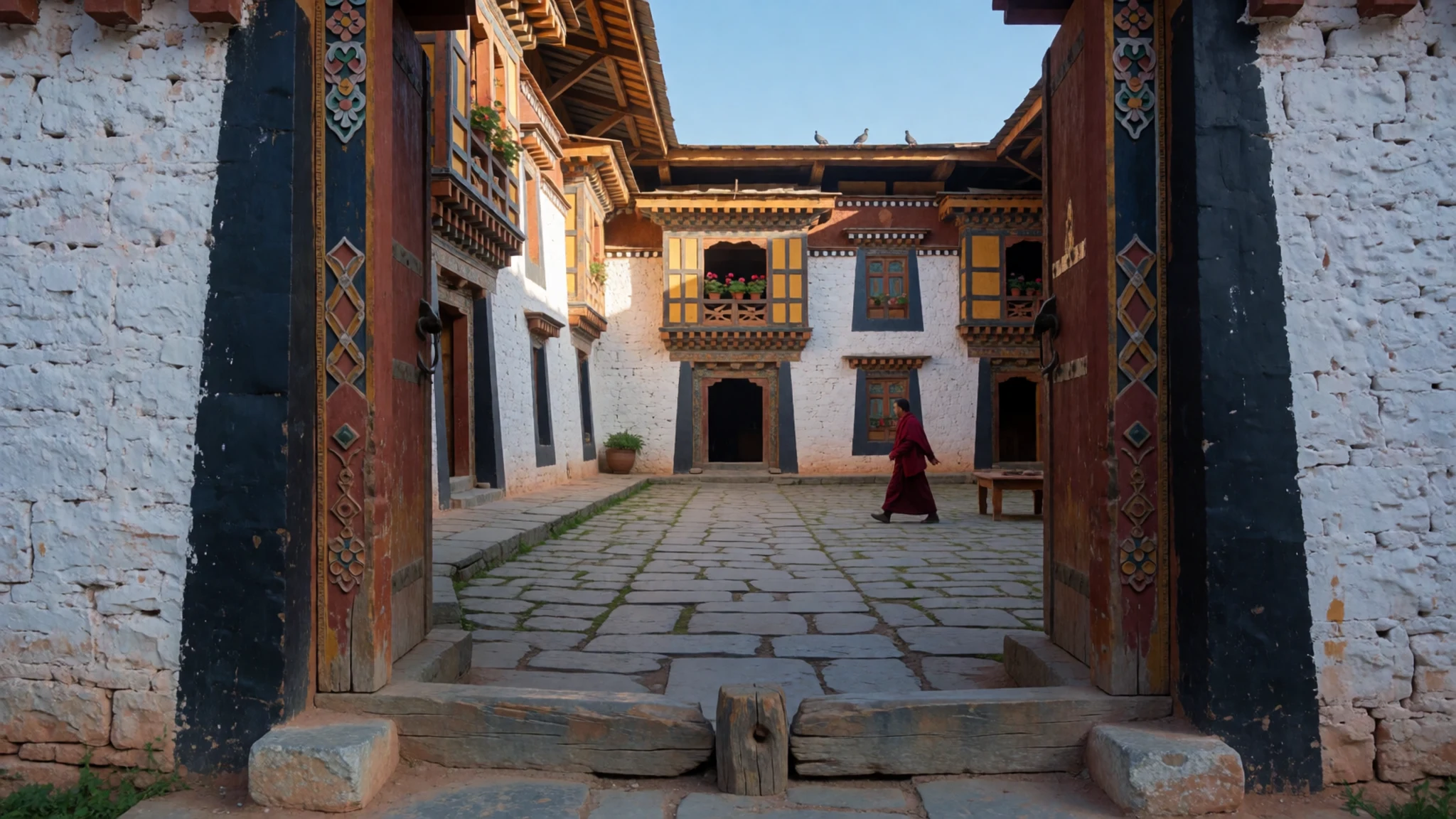
- Lhakhang Karpo — Uesu Gewog
Lhakhang Karpo, the White Temple, stands in Uesu Gewog beside the town of Haa. Tradition pairs it with Lhakhang Nagpo and places each temple where a bird of the matching colour settled. It is a working shrine, whitewashed and low, with a courtyard and prayer wheels, and people come to walk the circuit and leave a lamp.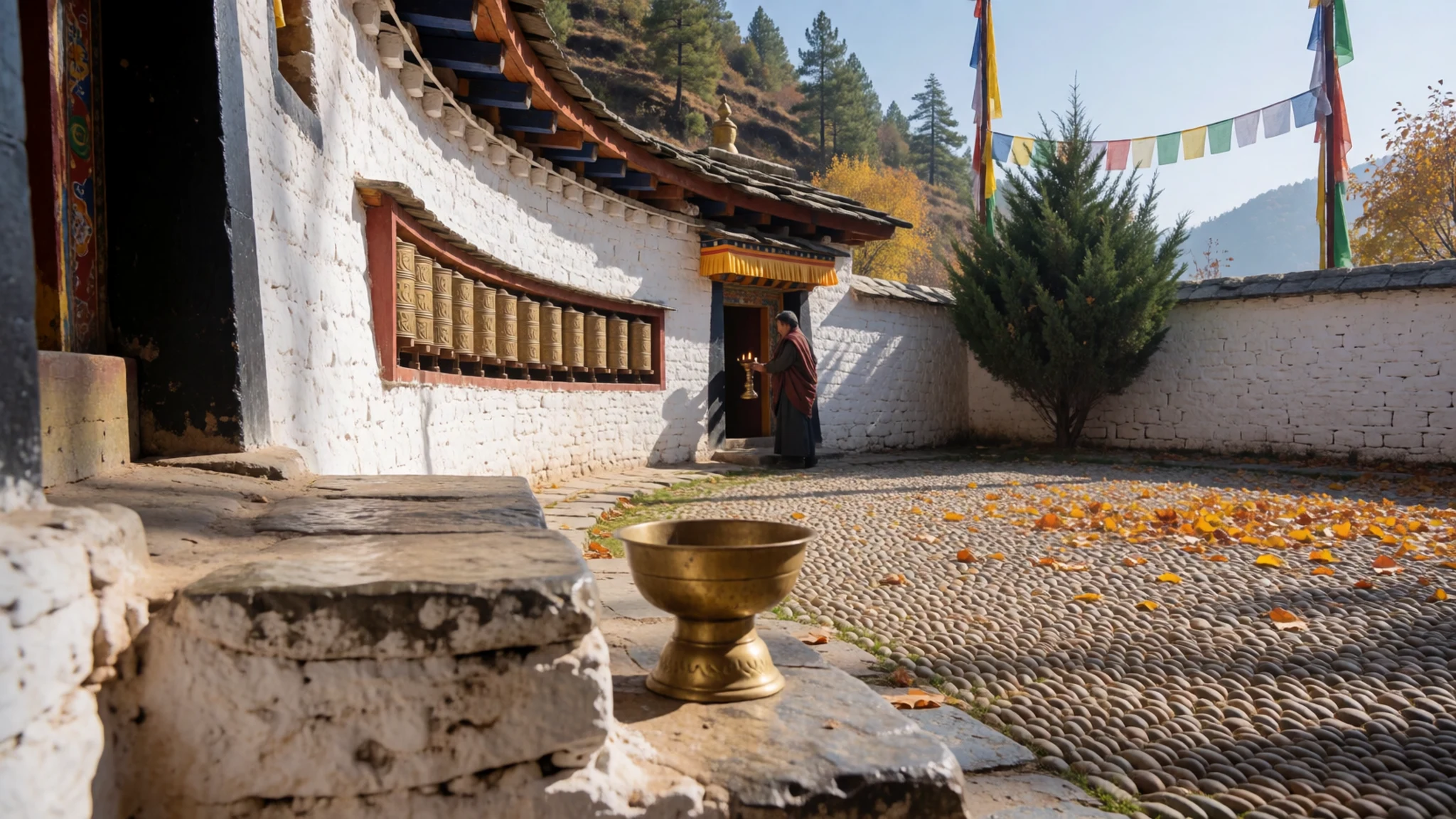
- Lhakhang Nagpo — Uesu Gewog
Lhakhang Nagpo, the Black Temple, stands near Lhakhang Karpo in Uesu Gewog of Haa Valley and completes the pair. In the local telling the two temples were raised together to hold a spirit in place, so the visit is the pair. The compound is village-scale, and the courtesies are the usual ones for a lhakhang: shoes off, hat off, and a clockwise walk.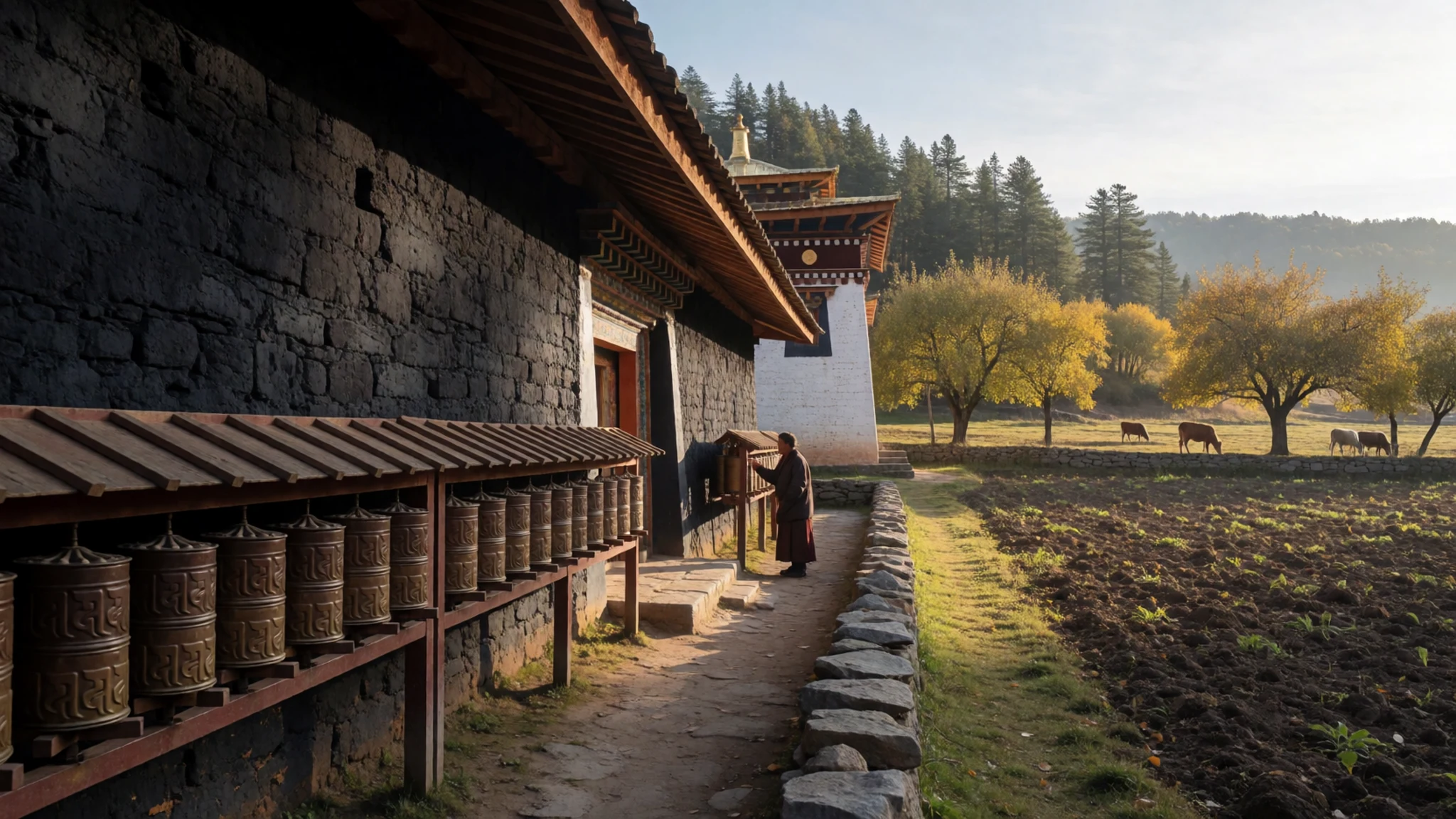
- Ha Chhu — Haa Valley floor
The Ha Chhu is the river that runs the length of Haa Valley and gives the place its name. Between pastures and wooded slopes it spreads into a broad bed rather than a tight gorge, which is why the valley feels open from the road. The town and the hamlets sit back from the banks on slightly higher ground.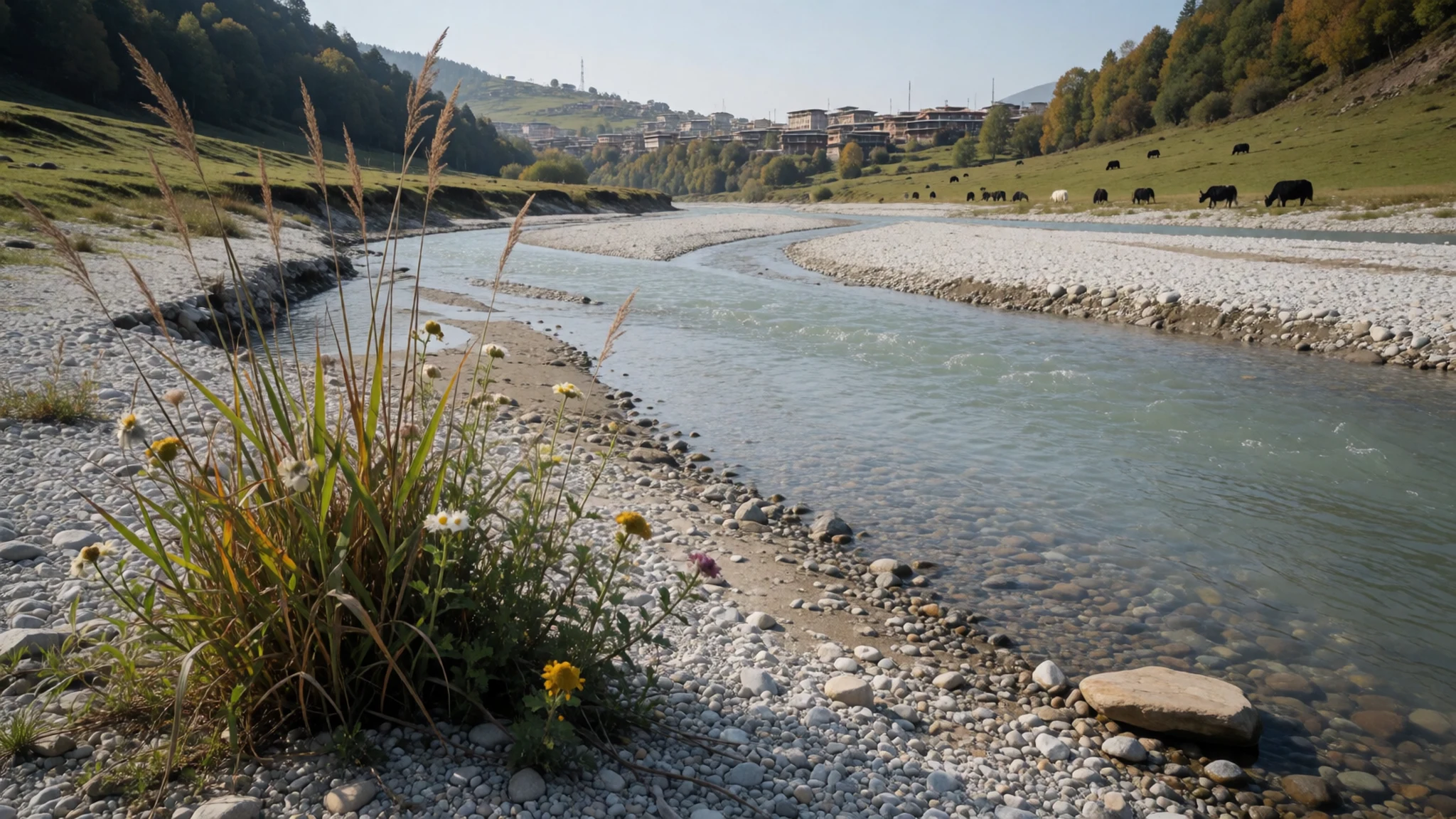
- Chele La — Pass road between Paro and Haa
Chele La is the high pass on the road between Paro and Haa Valley, and for many arrivals it is the way in. The climb leaves farmland behind and tops out among dwarf trees and open ridge, with prayer flags in the wind. A clear day gives a long view towards the Paro side and down into Haa.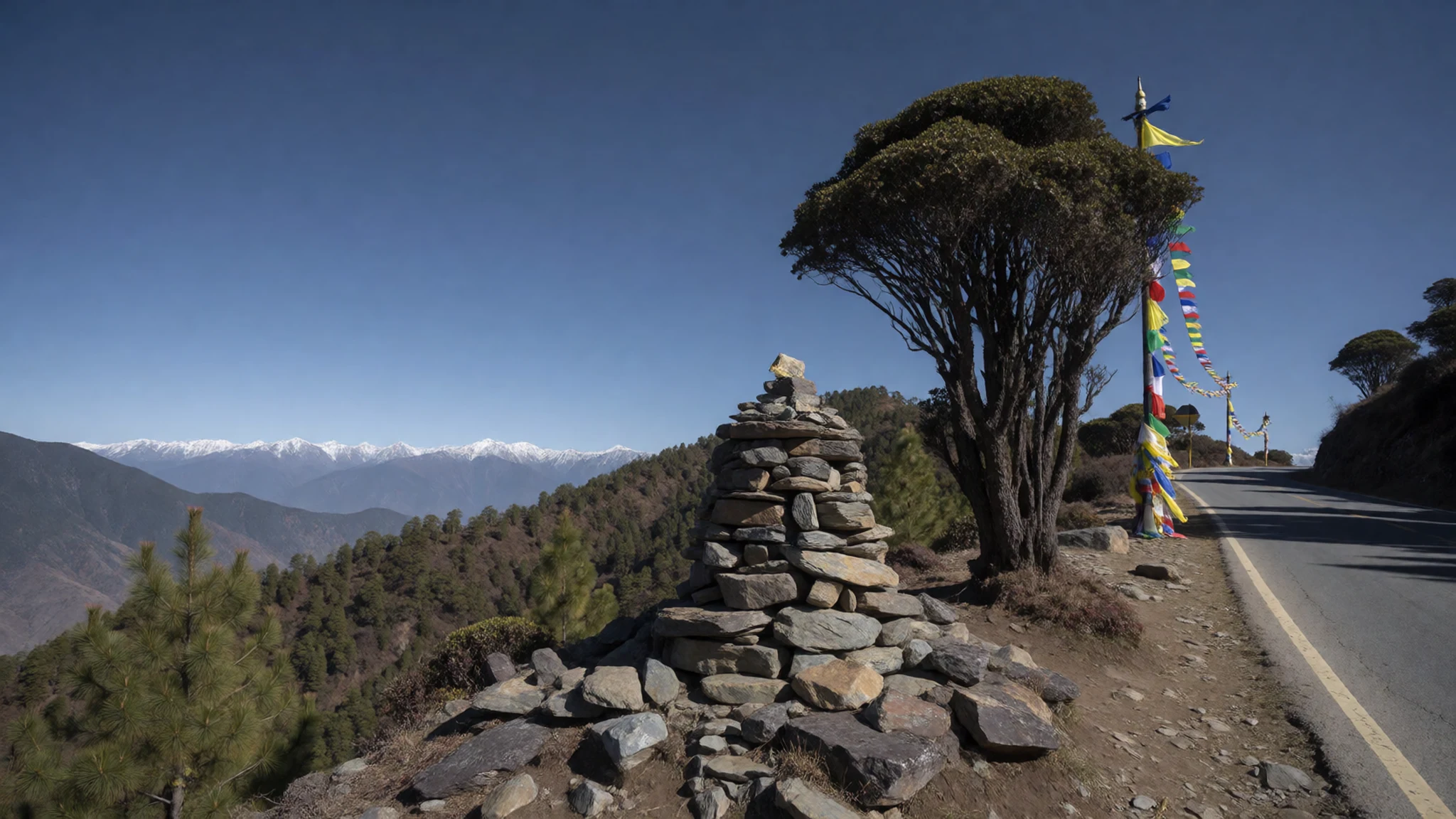
Culture
Haa Valley keeps a religious life that is both Drukpa Kagyu Buddhist and local. The lhakhangs hold the usual images, butter lamps and written texts, and households mark the calendar with offerings at home as well as at the temple. Alongside that sits Ap Chundu, the valley guardian, whose rites are not a side note. At the summer gathering, masked dances in the town tie that guardian to the public year, and people come in from the gewogs. Daily conduct is quieter: a clockwise turn of a prayer wheel, a lamp lit in the morning, a pause at a chorten on the road.
The valley is also a farming community, and that shapes manners more than any monument does. Families dry the harvest, share labour at house-building, and treat a visit to a village home as a hosted occasion, with tea poured before any request. Dzongs are seats of both monks and officials, so the compound is a workplace as well as a shrine. National dress appears at the office and at festivals; everyday clothes in the lanes are warmer and plainer.
Take shoes and hats off before you enter a lhakhang in Haa Valley, walk clockwise around chortens, and ask before you photograph people or the inside of a shrine.
What to wear
Haa Valley dresses as the rest of Bhutan does on formal ground, and more warmly the rest of the time. The traditional clothes are the gho for men and the kira for women. A gho is a robe hoisted to the knee and belted with a woven kera. A kira is a wrapped cloth pinned over a wonju blouse and a tego jacket. The cloth may be wool, cotton or silk. Weavers work stripes, checks and brocade for festivals and office. Wool matters here because the cold season is long, and heavier wraps still appear on the high grazing.
On an ordinary day in town the picture is mixed. Civil servants and anyone entering the dzong on business wear gho or kira, which remains expected in government offices and at festivals. In the lanes and the fields people add practical layers: sweaters, quilted jackets, boots, a scarf and a warm cap.
A visitor does not need to buy a gho or a kira to be welcome. Layers that can be added after sunset, a windproof layer on the pass, and shoes that slip off at a temple door are enough. At lhakhangs and inside the dzong, covered shoulders and covered knees are the comfortable standard, and a hat comes off with the shoes.
What to eat
- Hoentay — festival stalls and eateries in Haa town
Hoentay is Haa Valley's steamed buckwheat dumpling, filled with chopped turnip greens or similar leaves, cheese and chilli. Families make it for gatherings, and festival stalls in the town sell it hot. Town eateries serve it when the flour is in the kitchen.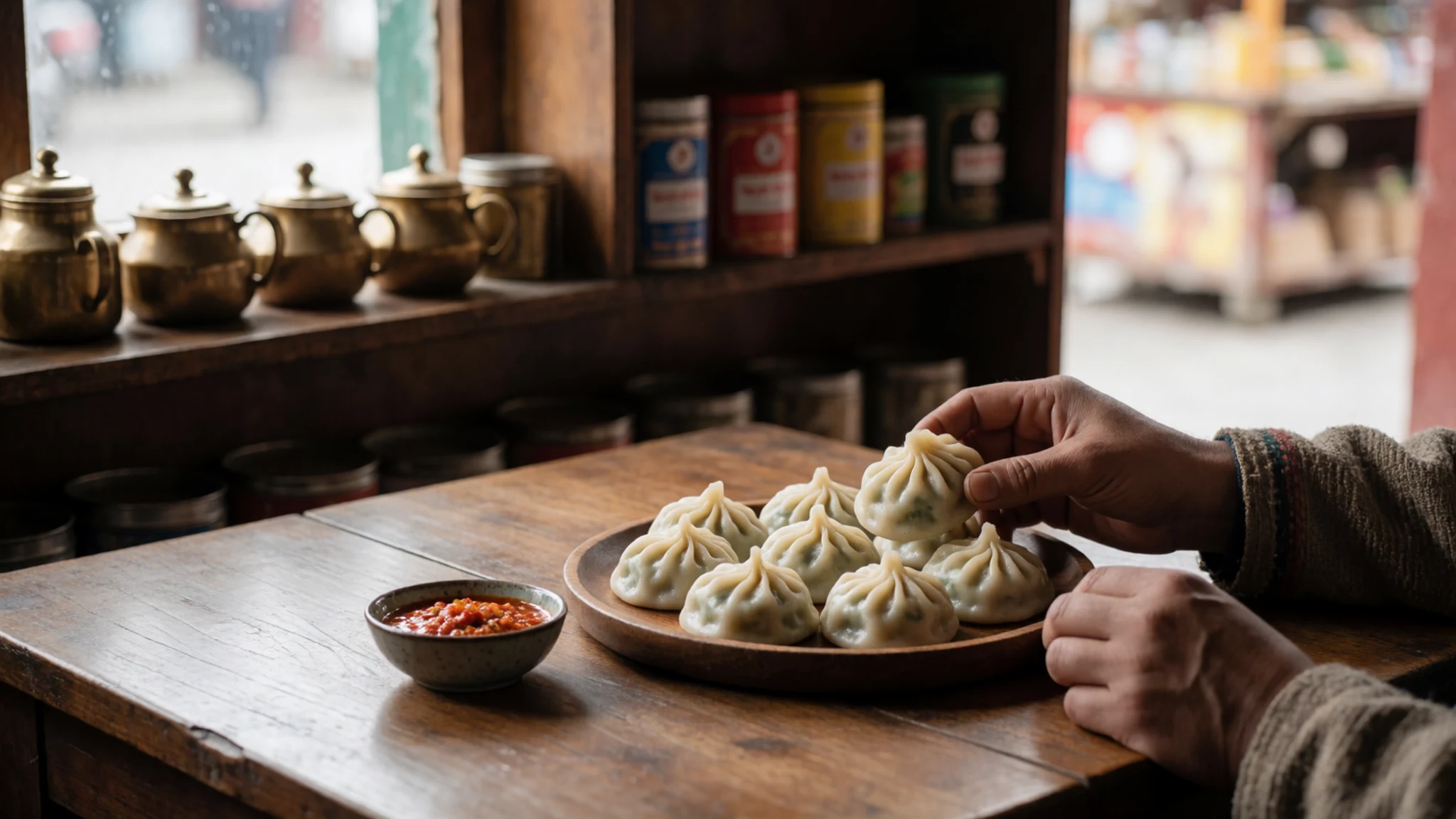
- Ema datshi — town eateries and home kitchens
Ema datshi is chillies stewed with cheese, the everyday dish of Haa Valley as of the rest of Bhutan. The cheese is often local, and the chilli heat is serious. Town eateries and home kitchens serve it with red rice at lunch.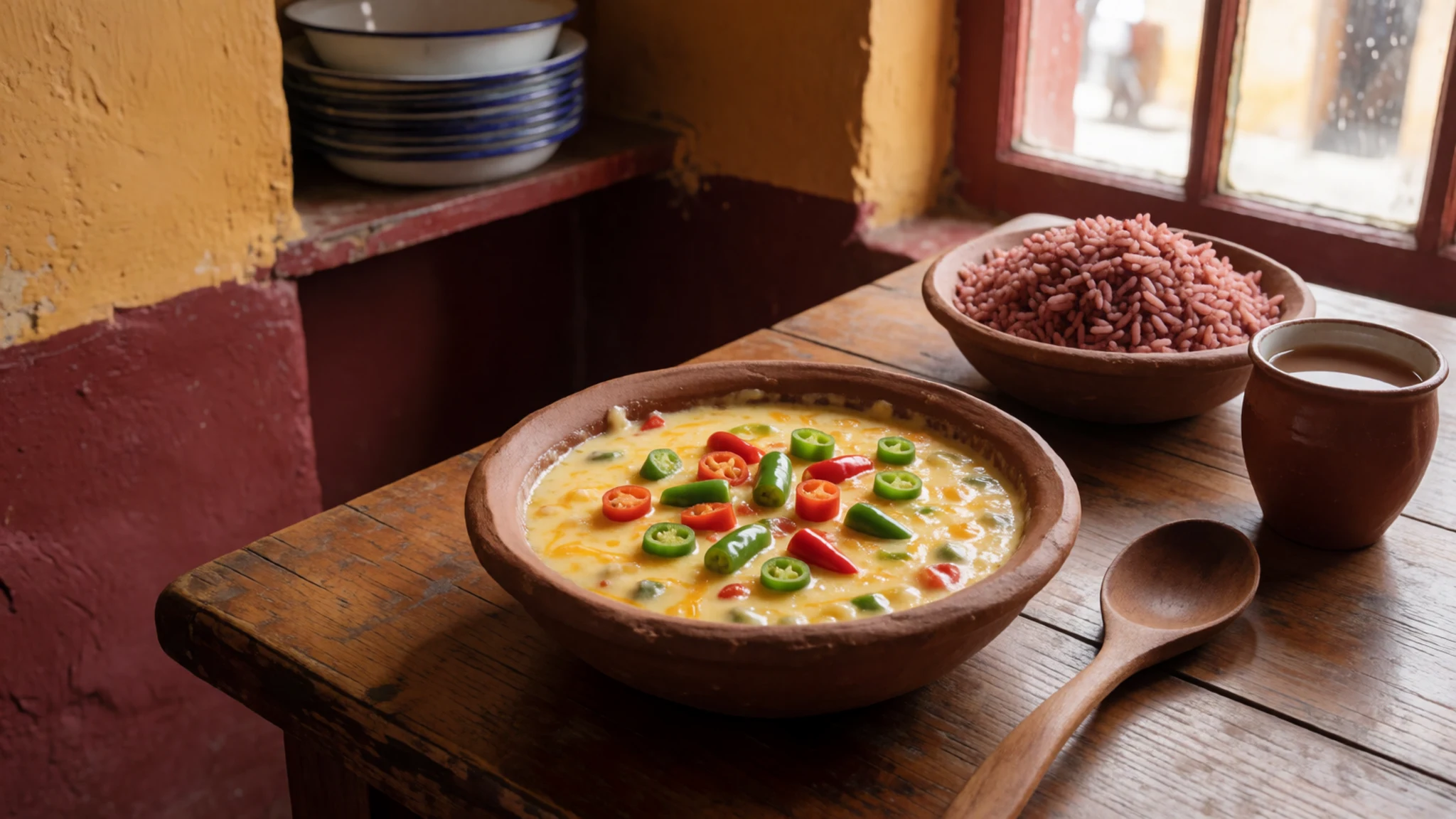
- Suja — village homes and festival stalls
Suja is the salted butter tea of Haa Valley, churned from tea, salt and a little butter into a savoury drink. Households offer it first to a guest, and festival stalls pour it from thermoses. A sip is the polite answer to the cup. - Shakam paa — town eateries and farm kitchens
Shakam paa is dried beef cooked with chilli in Haa Valley, where meat is air-dried so it keeps through the cold. The result is chewy, salty and hot. Town eateries and farm kitchens serve it with rice when dried meat is in store. - Puta — town eateries and home kitchens
Puta are buckwheat noodles in Haa Valley, served in a simple broth or dry with ezay, a chilli relish. Town eateries and home kitchens make them in cold weather, earthy and filling, often in the same places that steam hoentay. - Red rice — town eateries
Red rice is the grain under meals in Haa Valley, nutty and slightly chewy. Eateries in town serve it beside ema datshi or a meat dish at lunch, as a plain heap rather than a pilaf.
Plan it
Best time. Haa Valley suits a visit from March to May, when the valley floor greens and the hard cold eases, and from October to November, when the air is clearer and the ground drier. June to August is the wettest season, with July seeing the heaviest rains. December to February is harsh cold, with snow on the upper slopes and on the pass.
How long. 2–3
Getting there. Haa Valley's last leg is the road over Chele La, usually from Paro. Paro International Airport is the usual flight arrival. Hired cars and buses also come from Thimphu when the pass is open; in winter, confirm the road locally before setting out. Permits are arranged before travel — check the official tourism site.
Budget. high
Tips
- Arrange permits before you travel; Haa Valley is not somewhere you can decide to enter on the day.
- Pack warmer clothes than a lowland town would suggest; evenings cool quickly even after a mild afternoon.
- Ask locally about snow or slips on the pass before you commit to the drive, especially in winter.
- Carry cash for stalls, small shops and village tea; many of them do not take cards.
- If the summer dances are the reason for the trip, confirm the schedule on the official site, because the dates move.
Etiquette
- Take shoes and hats off before you enter a lhakhang or a chapel in the dzong.
- Walk clockwise around chortens, mani walls and temple buildings.
- Ask before you photograph people or the inside of a shrine.
- Keep shoulders and knees covered at religious sites.
Nearby
Sources
- Wikidata (CC0)
- Wikipedia (CC BY-SA 4.0)
- Wikivoyage (CC BY-SA 4.0)