Bumdeling
Bumdeling, Bhutan
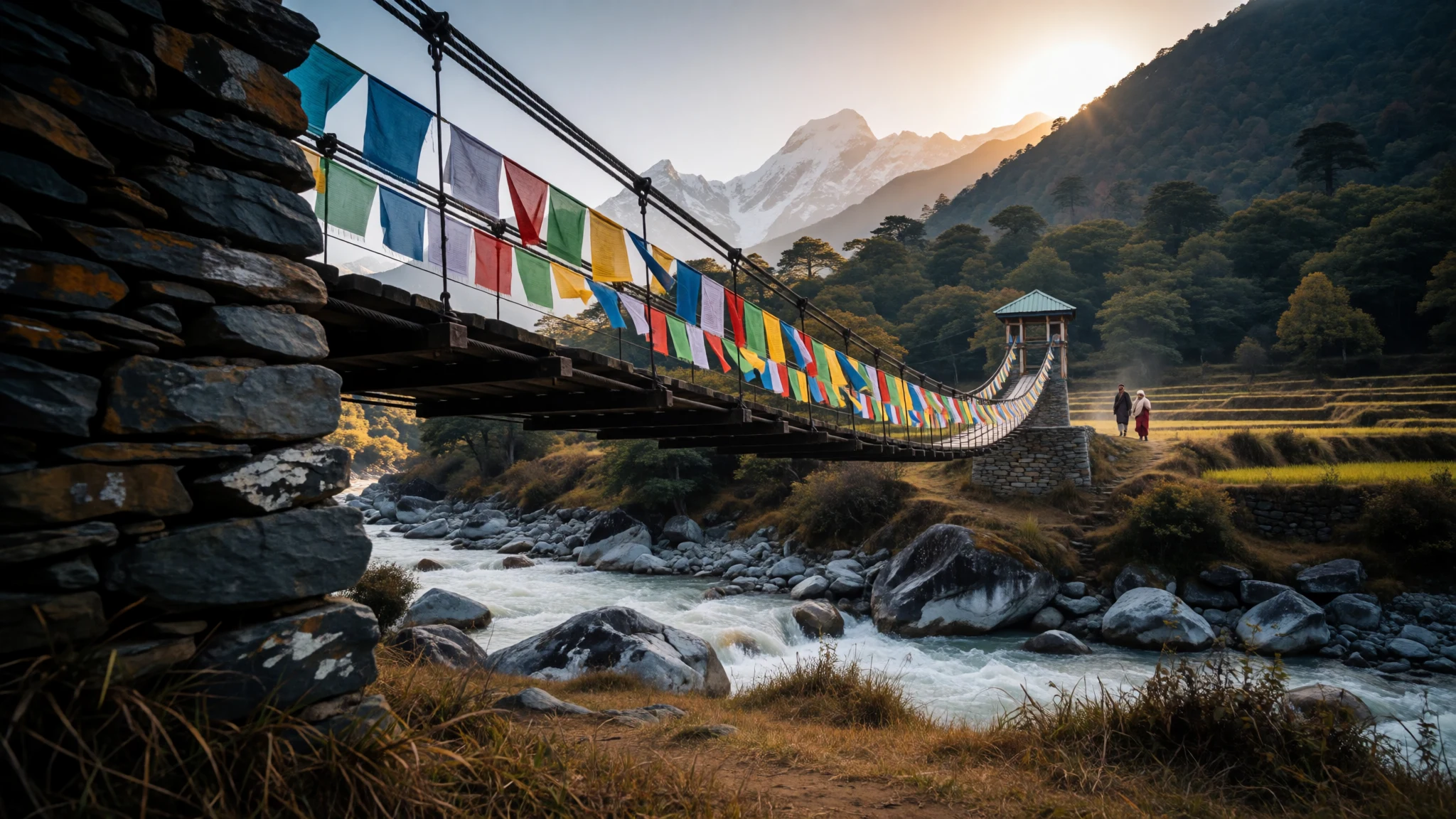
Bumdeling is a protected valley in eastern Bhutan where black-necked cranes winter, farms sit under forest, and snow peaks close the northern horizon.
The place
Bumdeling Wildlife Sanctuary lies in the north-east of Bhutan and takes in most of Trashiyangtse District, a country of steep valleys that drain towards the Drangme Chu river system. It was founded in 1998 to protect large stretches of Eastern Himalayan land that people have barely altered, and it still has farming villages inside it. The ground climbs from warm broadleaved forest in the south, through conifers and scrubby ridges, to alpine pasture, glacial lakes, scree and snow peaks in the north. That vertical range is the whole point: one protected area holds everything from river gorges to ice. The wildlife list includes blue sheep, snow leopard, red panda, musk deer and Himalayan black bear, but a visitor should expect to see far less than the list suggests, because most of these animals live high and keep out of sight. What many people do see, in winter, is the black-necked crane. Bumdeling is one of only two wintering sites for the species in Bhutan, and birdwatchers value it as an Important Bird Area. People live here too. Around three thousand households farm the flatter ground, which is why terraces and hamlets break up the forest. Temples and other religious sites are scattered through the sanctuary, so a trip tends to mix birds, walking and village life. Facilities are modest, roads are narrow and the weather often rewrites the plan. The name is spelled in several ways, including Bumdelling and Bomdeling.
Its story
The story of Bumdeling Wildlife Sanctuary is mostly about a state choosing to protect land before heavy pressure arrived. Bhutan formally founded the sanctuary in 1998, and it took in an earlier protected area, Kulong Chhu, which had covered mainly high alpine and subalpine ground. Joining the two put forest, farmland edges and glacier country under one manager. A park manager and staff were appointed that same year, and a first management plan followed a few years later. Drawing the boundary was the easy part. Many households already lived and farmed inside it, so the sanctuary had to work around fields, grazing, village paths and religious sites rather than clear them. That compromise still shapes the place. Conservation here means constant negotiation between residents and wildlife that raids crops and livestock. The cranes give the year its rhythm. They breed on the Tibetan plateau, drop into Bhutan's valleys for the cold months, then leave again. Across Bhutan the birds are treated with respect, and their return is read as a mark of the turning season. Bumdeling also sits on Bhutan's Tentative List for UNESCO inclusion, which is a waiting room rather than a status. Naturalists add a curious footnote: Ludlow's Bhutan swallowtail, a butterfly recorded nowhere else in the world, lives here.
What to see
- The bridge and prayer flags at the sanctuary gate — Bumdeling, Trashiyangtse District
A suspension footbridge strung with prayer flags marks the entrance to the sanctuary and is the picture most visitors take home. Cross it slowly, let the river noise settle, and notice how quickly the valley feels remote. Go early, when mist still sits low on the slopes.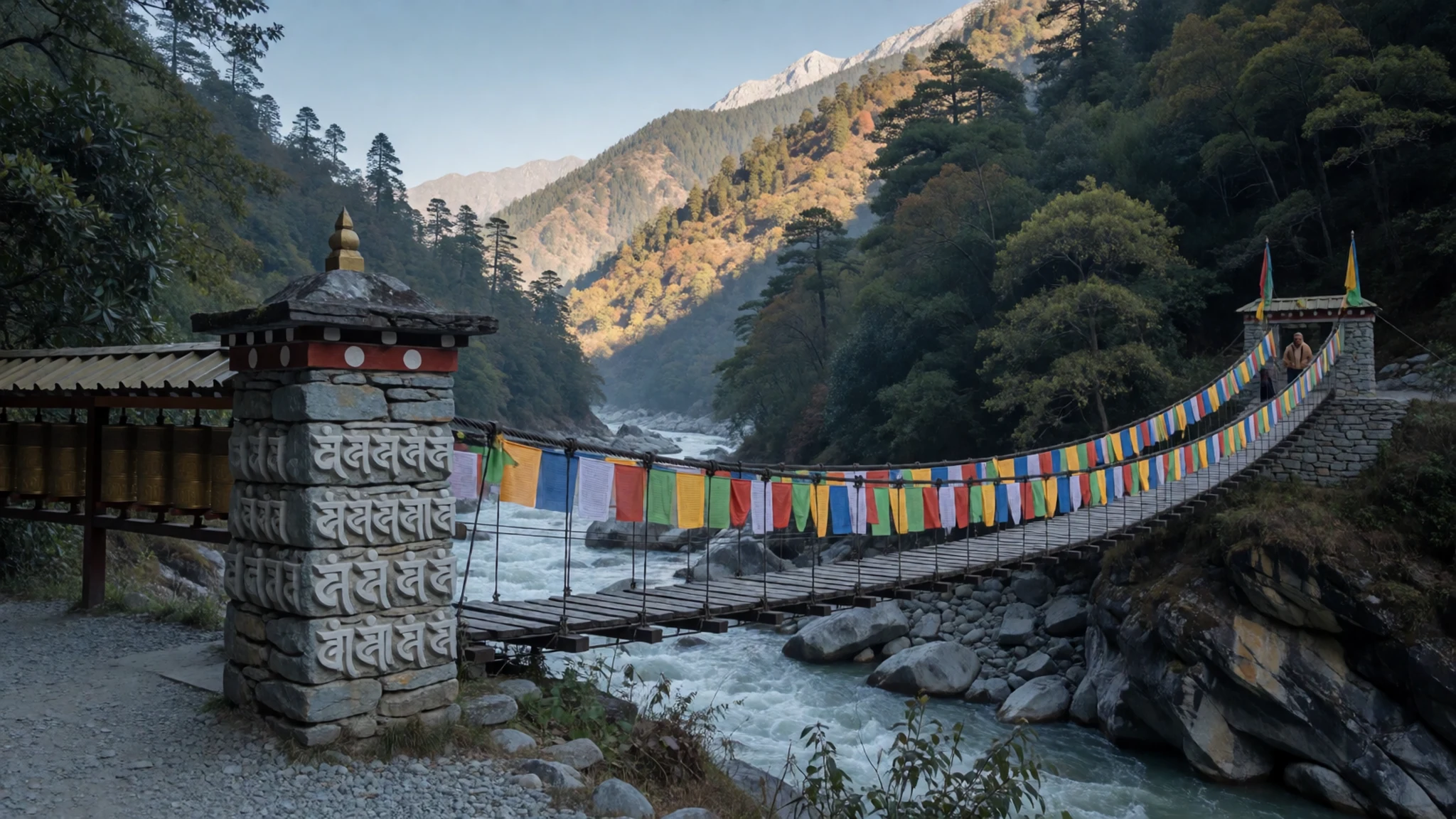
- Black-necked cranes in the winter valley — Bumdeling valley floor
From late autumn into winter, black-necked cranes feed on the open ground of the valley. Watching works best from a distance with binoculars, in the cold early hours. Local guides know where the birds are on a given week, and sightings are likely but never guaranteed.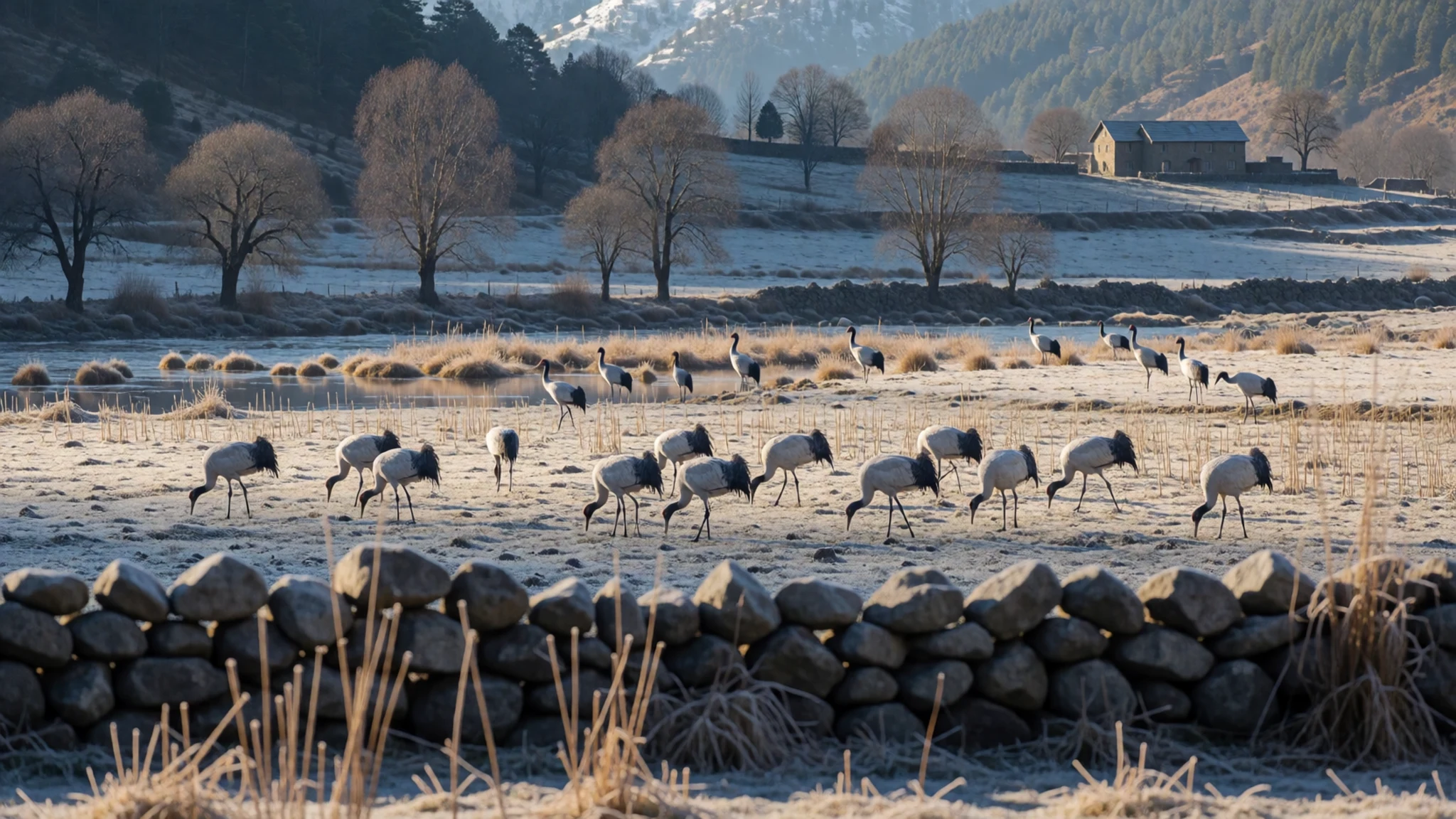
- Chorten Kora — Near Trashiyangtse town
Chorten Kora is a white stupa beside the river in the Trashiyangtse valley, circled by pilgrims who walk clockwise and spin prayer wheels. It is an easy stop on the road to the sanctuary and a good way to see everyday Buddhist practice in this part of Bhutan.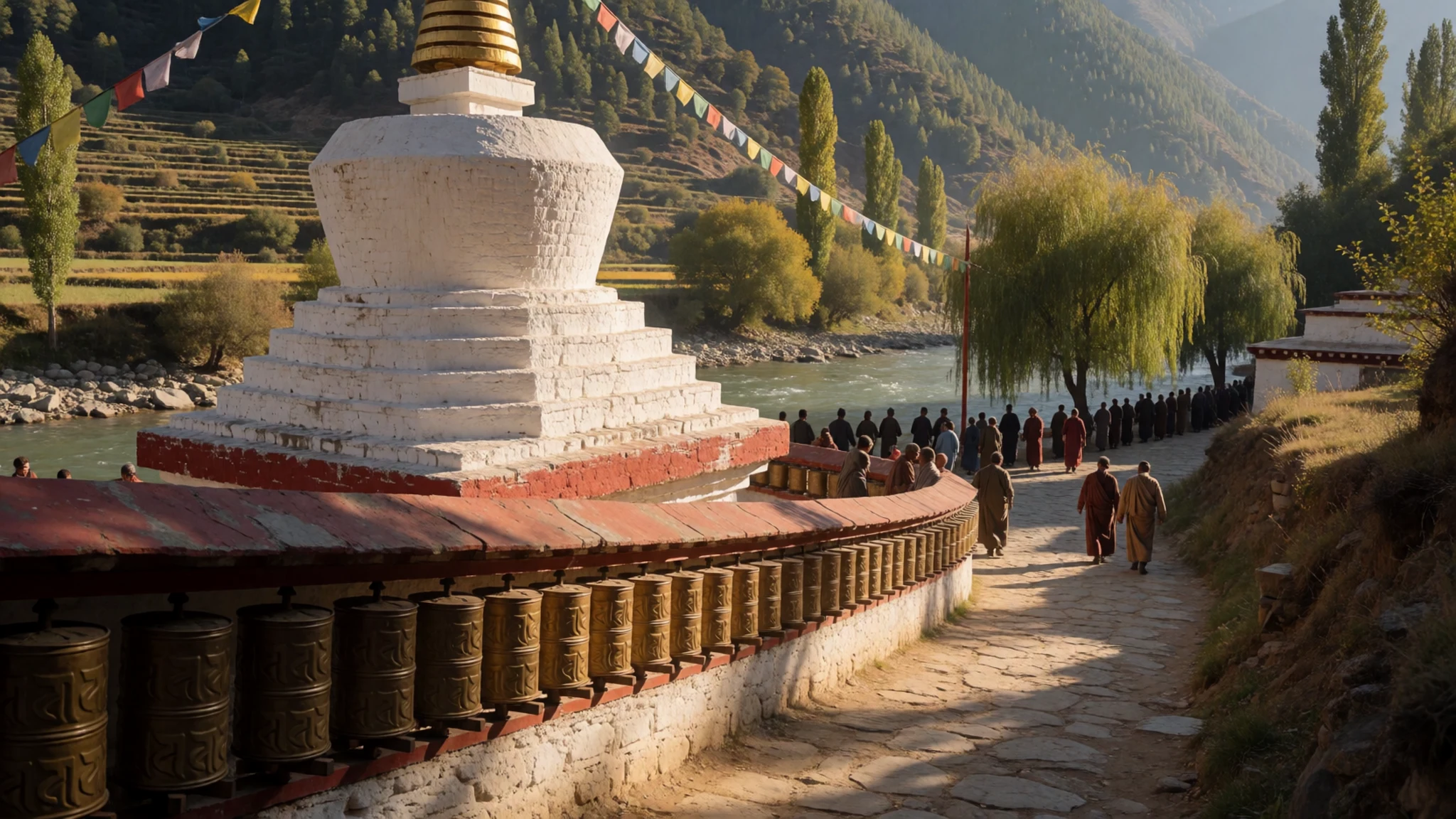
- Village walks through Bumdeling's terraces — Bumdeling Gewog
Footpaths link farmhouses, fields and small temples across the lower valley. Walking them shows the working side of the sanctuary: terraces, grazing animals, stacked firewood and forest edges where wildlife comes close. Allow time for slow tea stops, and let your guide handle introductions.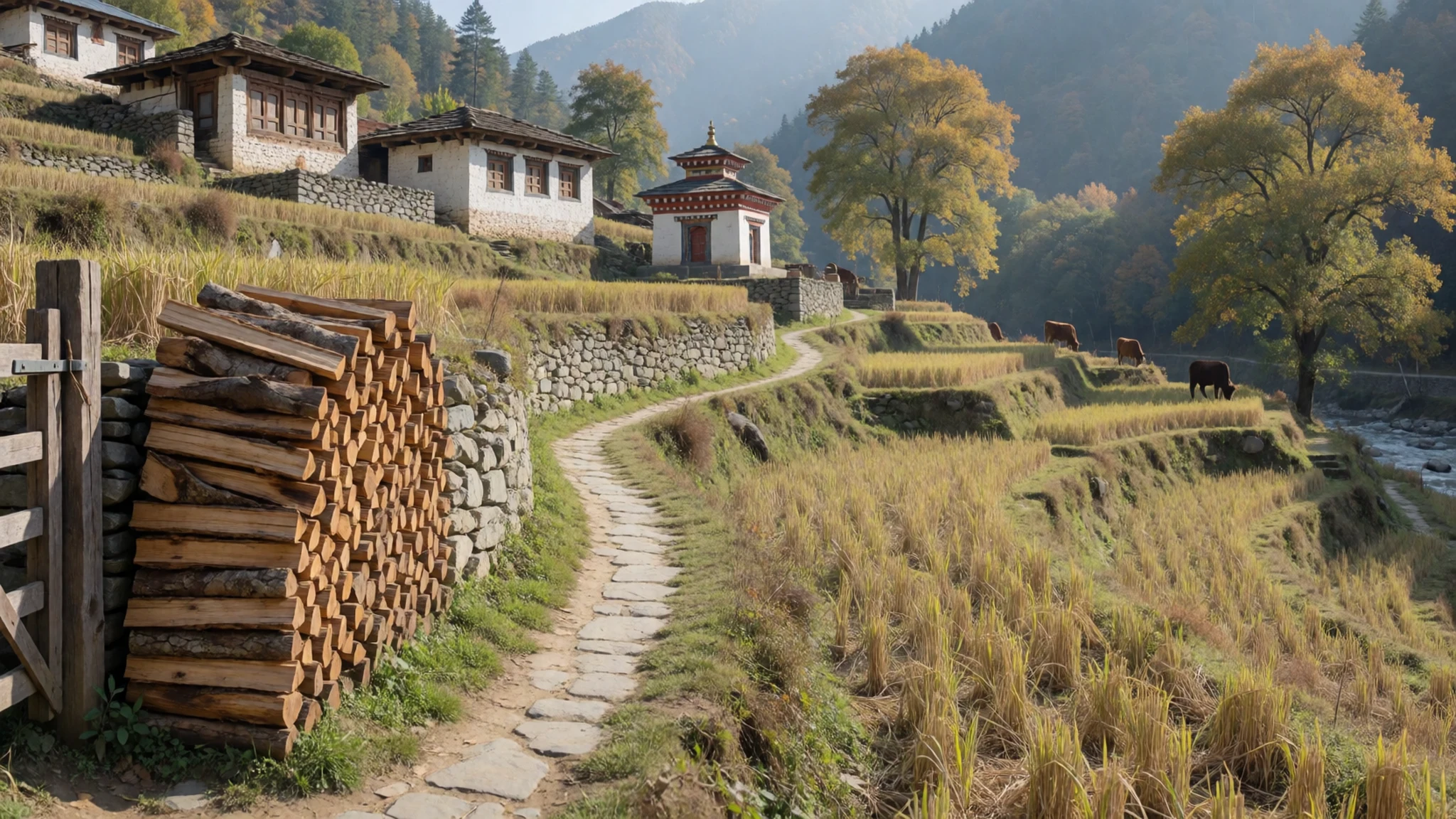
- The high alpine country — Northern sanctuary
The northern part of the sanctuary holds glacial lakes, scree slopes, pastures and snow peaks. It is trekking territory, not a day trip, and needs proper permissions, a guide and cold-weather kit. Even if you do not go, the shaded-relief map shows how steeply the land rises.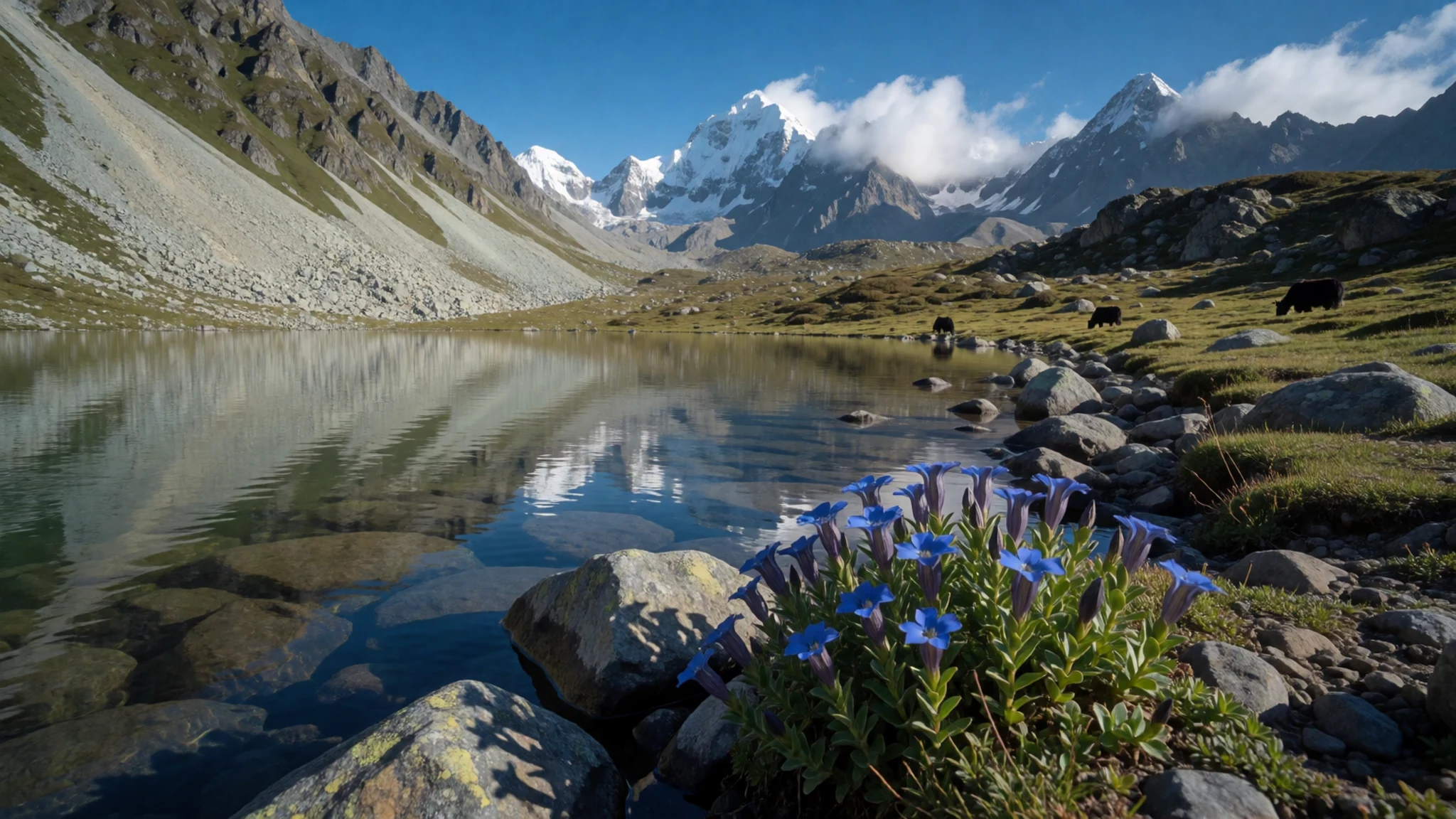
Culture
Bumdeling is a Buddhist valley, and religion shows up in small, practical ways: prayer flags on bridges, stone walls carved with mantras, prayer wheels beside paths and white stupas at river bends. People walk these structures clockwise, keeping them on the right, and visitors are expected to do the same. Farming still sets the calendar. Planting, harvest and winter retreat to lower houses shape daily life more than any tourist season does, and festivals follow the lunar calendar, so dates move from year to year. The cranes sit comfortably inside this world. Bhutanese tradition treats them as sacred, and killing or disturbing them is unthinkable to most residents. The sanctuary's rules fit that attitude: wildlife is watched, not chased. Hospitality is warm but unhurried. A host may offer tea, rice or home-brewed drink, and refusing everything outright can feel abrupt, so take a little and leave the rest politely. Dzong, temples and monastic buildings have their own rules, and a guide will explain which doors are open to visitors and which are not. The national language, Dzongkha, is common in official settings, but eastern Bhutan has its own tongues too, and a few words in any of them are appreciated. Alcohol is part of local social life, though it is never pressed on anyone who declines. Walk clockwise around every chorten, mani wall and prayer wheel, and ask before photographing people, monks or the inside of a temple.
What to wear
Bumdeling follows the national dress of Bhutan: the gho for men, a knee-length robe tied at the waist, and the kira for women, an ankle-length wrapped dress fastened at the shoulders and belted. Both are woven from cotton, wool or silk, and eastern Bhutan is known for its hand-woven patterned textiles, often made on backstrap or frame looms in village homes. Women add a short jacket, the tego, over a blouse, and men wear a scarf, the kabney, on formal occasions. Everyday clothes are more practical. Farmers wear rubber boots, fleece, jackets and woollen hats in the cold months, and many people change into gho or kira for school, office work, temple visits and festivals. Traditional dress is expected at official sites. A visitor needs layers above all, since mornings and evenings in the valley are cold, particularly in winter, and weather can turn quickly. Bring a warm hat, gloves, a windproof shell and a rain layer, plus sturdy waterproof boots with good grip for muddy paths and river crossings. Binoculars matter more than fashion, and muted colours help when watching birds. For temples and dzong, wear long trousers or skirts and shirts with sleeves, and expect to remove shoes and hats before entering. Sun at altitude is strong even when the air is cold, so pack sunglasses and sun cream.
What to eat
- Ema datshi — Any farmhouse kitchen or small eatery in Trashiyangtse town
Chillies cooked in a soft, salty cheese sauce, eaten with rice at nearly every meal. The heat is real, and visitors can ask for a milder version. It is Bhutan's national dish and a fair measure of how a kitchen cooks.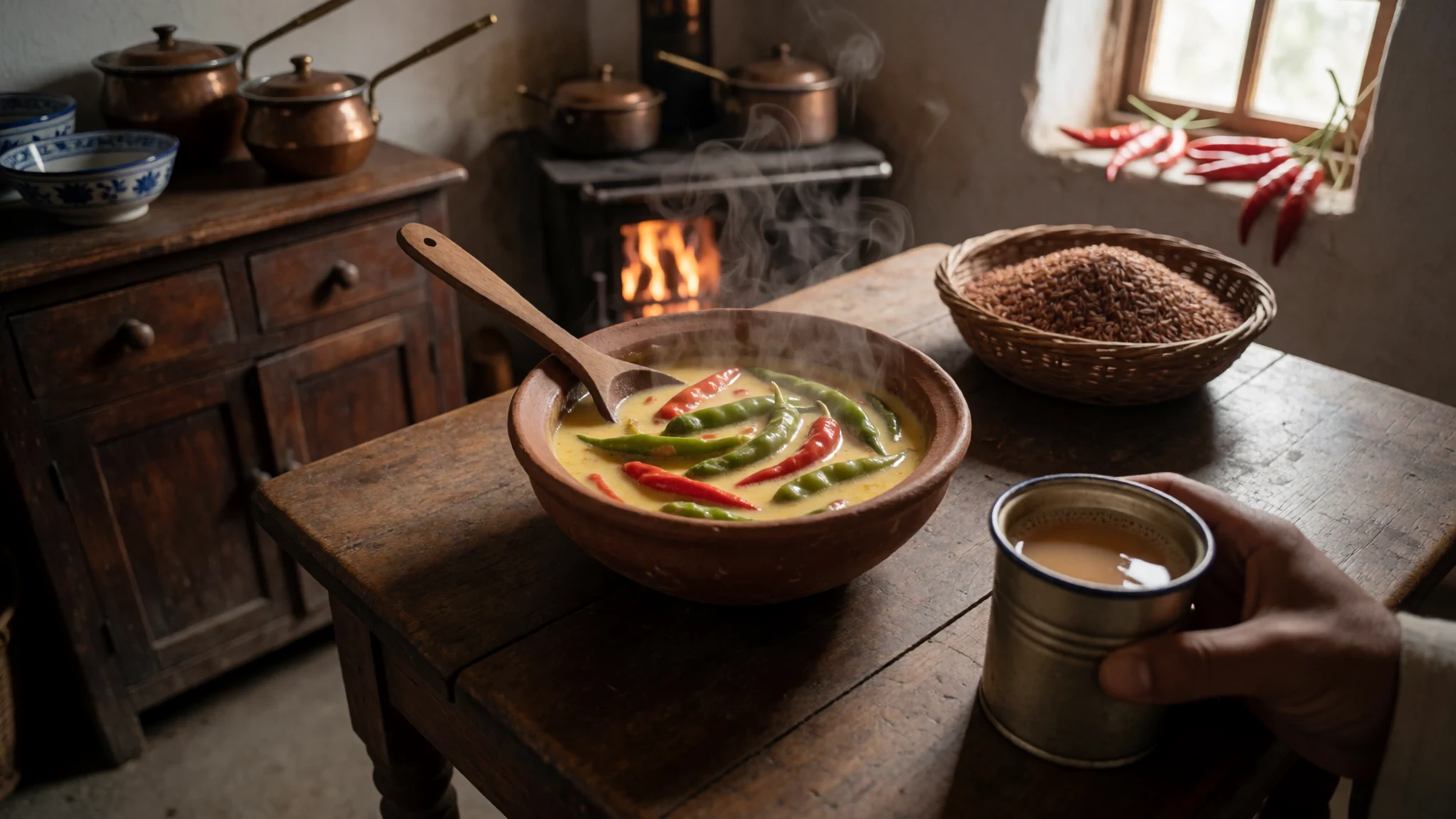
- Red rice — Served with most meals across the valley
Nutty, slightly chewy rice grown in Bhutan's valleys, usually the base of any plate. It soaks up the sauces of datshi and meat dishes, and is filling enough to carry a morning of walking.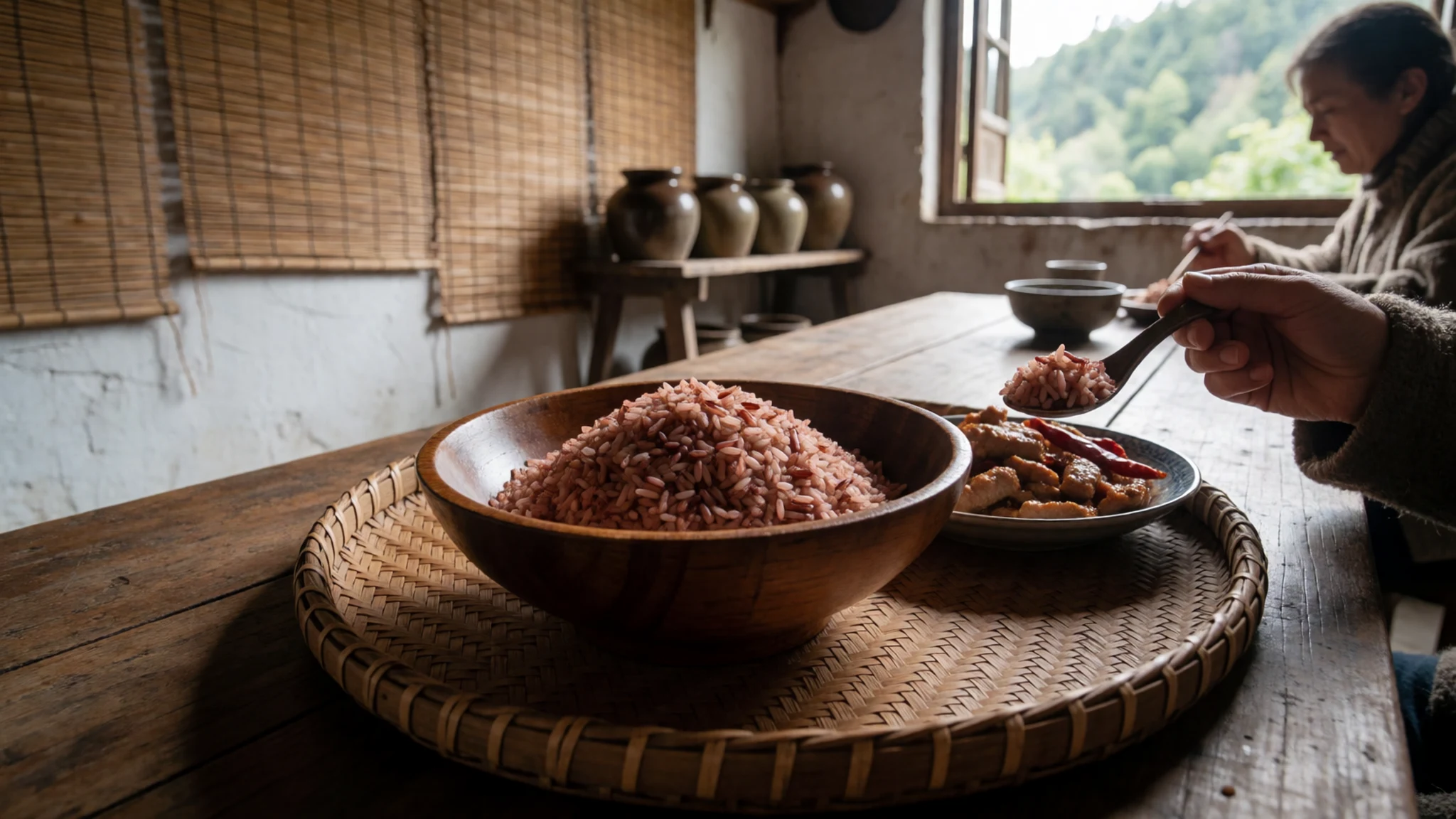
- Momo — Small eateries in Trashiyangtse town
Steamed dumplings filled with cabbage, cheese or meat, served with a chilli dip. They suit a cold afternoon and are common in eastern Bhutan, where they are made fresh in small kitchens. - Suja — Offered in homes, temples and tea stops
Salted butter tea, often served in small cups that get refilled before they are empty. It tastes more like soup than tea at first, but it warms quickly after a cold walk. - Buckwheat pancakes (khuli) — Village homes in the highland valleys
Thin, earthy pancakes made from buckwheat flour, a staple in higher eastern valleys. They are eaten plain or with chilli and cheese, and often appear at breakfast or as a snack on the trail.
Plan it
Best time. November to February for the wintering cranes, when days are clear but nights are cold; March can also be good as the valley wakes up, though weather turns changeable. Summer brings the monsoon, with rain, leeches and landslide-prone roads.
How long. 3–4
Getting there. Fly to Paro, Bhutan's international airport, or enter overland from Assam in India, then travel east by road via Trashigang to Trashiyangtse. The road is long and winding, so allow a full day or more. Ask your operator about domestic flights to eastern Bhutan, and check the official tourism authority for visa, permit and fee rules for your nationality.
Budget. mid
Tips
- Book through a licensed Bhutanese operator, since guides, transport and permits are tied together
- Pack warm layers and boots, as the valley is cold in the early morning and after dark
- Carry some cash, because cards and cash machines are scarce outside the larger towns
- Expect landslide delays on the roads and add a buffer day before any flight home
- Bring binoculars, and go out at first light when the cranes are most active
Etiquette
- Walk clockwise around chortens, mani walls and prayer wheels
- Keep well back from the cranes and never flush them for a photograph
- Ask before photographing people, and dress modestly for temples
Nearby
Sources
- Wikidata Q4099139 (CC0)
- Wikipedia: Bumdeling Wildlife Sanctuary (rev 1385953043) (CC BY-SA 4.0)
- Wikivoyage: Bumdeling Wildlife Sanctuary (rev 5263320) (CC BY-SA 4.0)
- Bridge to Bumdeling Sanctuary at Trashiyangtse, Christopher J. Fynn (CC BY-SA 4.0)
- Black-necked Crane, Eric Savage (derivative: Snowmanradio) (CC BY-SA 2.0)
- Topographic map of Bhutan (cropped), Gerald J. Coleman / CIA (Public domain)
- Topographic map of Bhutan, Gerald J. Coleman / CIA (Public domain)
- Bridge to Bumdeling Sanctuary (cropped), Christopher J. Fynn (CC BY-SA 4.0)
- Prayer flags on the bridge to Bumdeling Wildlife Sanctuary, muddum27 (CC BY 2.5)


Wildlife
- Black-necked crane (animal)
Picture a graceful grey-white bird with a black head, a red patch on its crown and long black legs: that is the black-necked crane. Winter is when many people see it in Bumdeling. Buddhist tradition reveres it, and Bhutan holds a festival in its honour. To watch it well, stay far back so it stays calm, speak softly, travel with a guide, and never feed it, however tame it seems.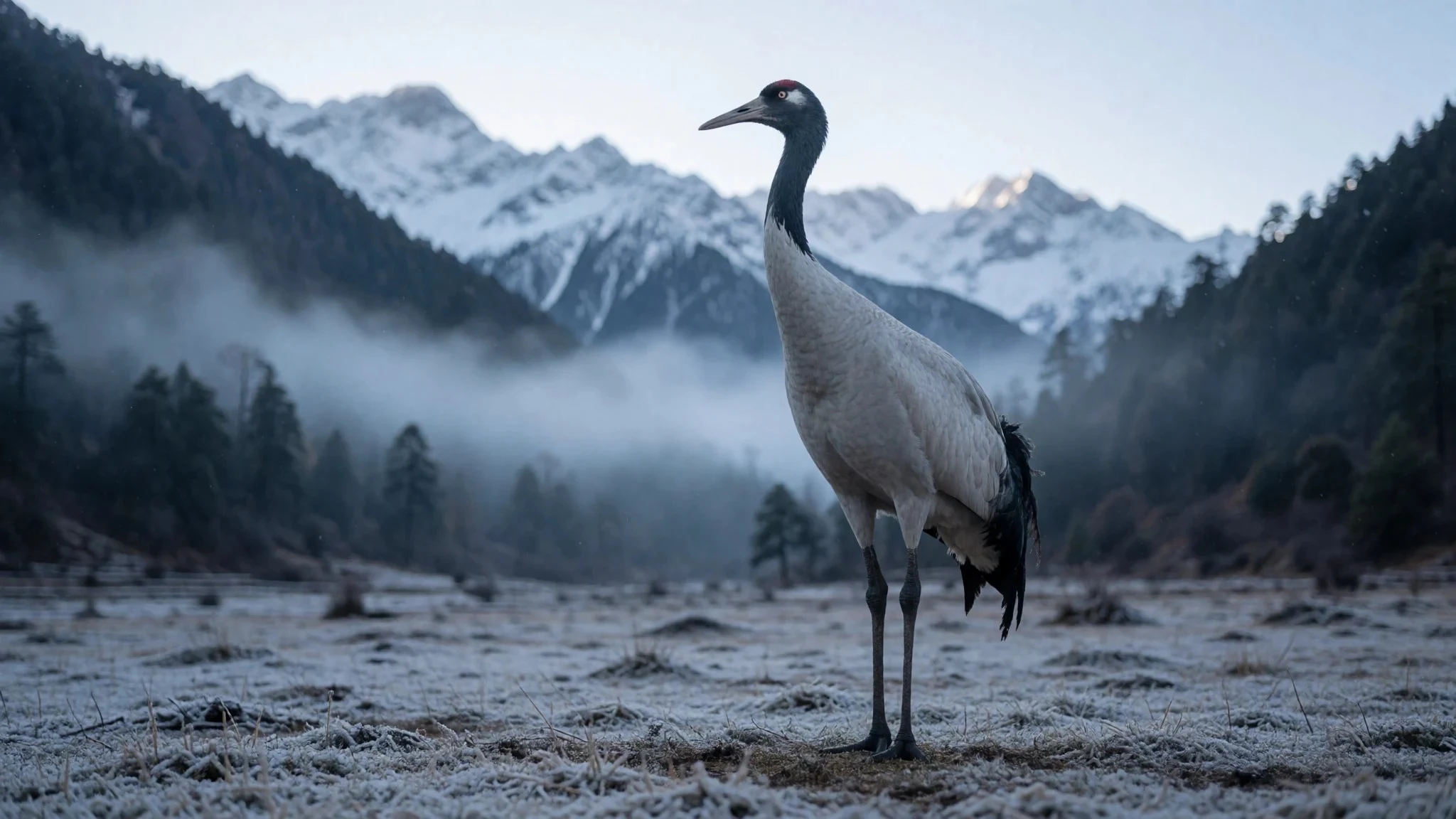
- Snow leopard (animal)
The snow leopard is a big, soft-looking cat in a thick pale-grey coat dotted with black spots, with small round ears and broad paws like snowshoes. In Bumdeling it lives high up and stays out of sight, so please do not expect to meet one. If luck is kind, watch from far away, stay silent, follow your guide's lead, and never try to feed or lure it closer.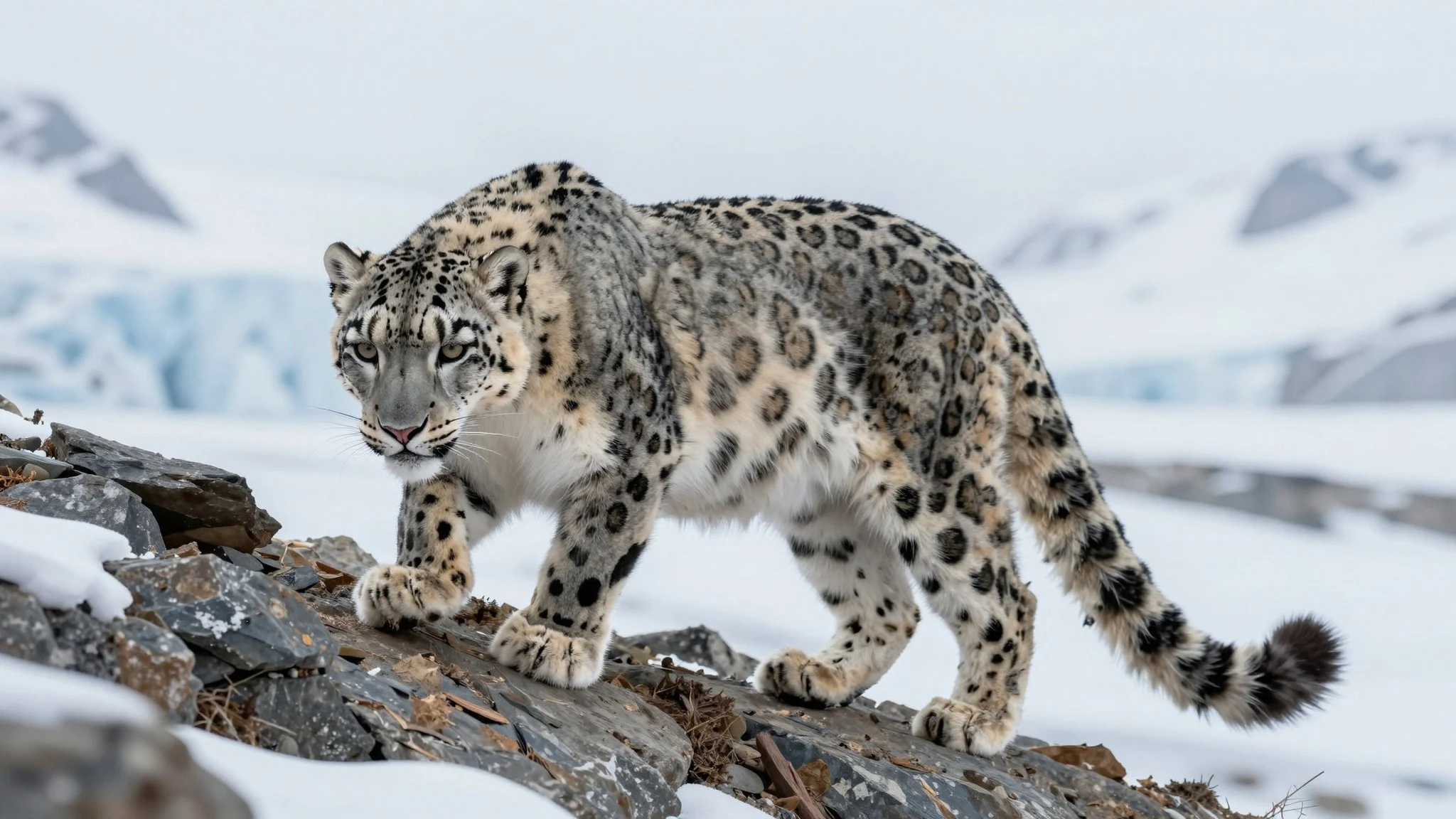
- Black-necked crane (bird)
Picture a graceful grey-white bird with a black head, a red patch on its crown and long black legs: that is the black-necked crane. Winter is when many people see it in Bumdeling. Buddhist tradition reveres it, and Bhutan holds a festival in its honour. To watch it well, stay far back so it stays calm, speak softly, travel with a guide, and never feed it, however tame it seems.