Jakar
Jakar, Bhutan
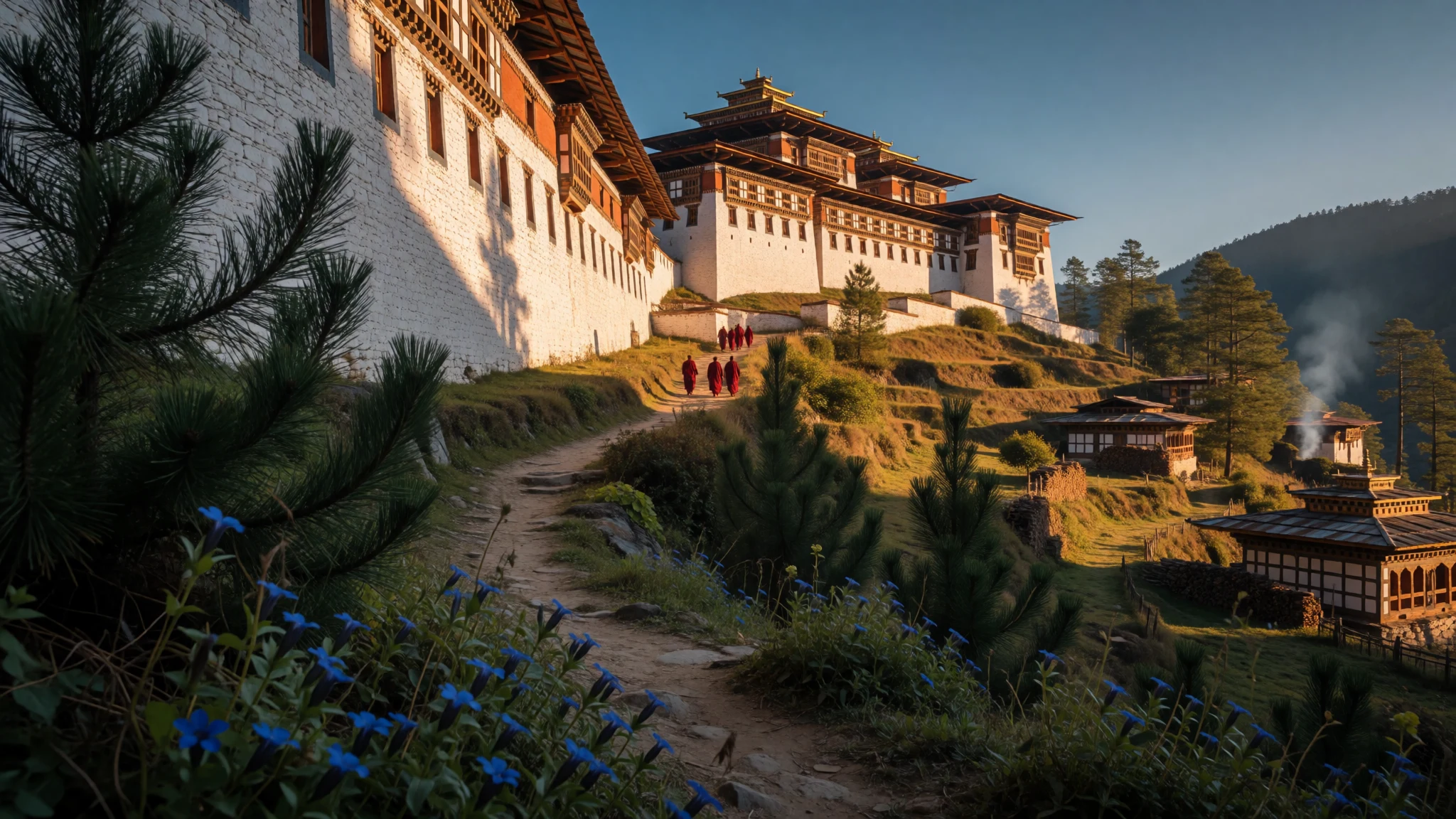
Jakar is a valley town in central Bhutan where Buddhist legend, a hillside fortress and apple orchards sit within easy reach of each other.
The place
Jakar is the district capital of Bumthang in central-eastern Bhutan, a small town in the broad, tree-covered Bumthang (Choekhor) Valley, 2,587 m above sea level. Its name, Bya-kar in Dzongkha (བྱ་ཀར་), means roughly "white bird", after a story of a bird settling on a spot and marking it as the right place for a monastery. Above the town sits Jakar Dzong, the regional fortress, which holds administrative and monastic offices and gives the valley its focal point. Below it, the cluster of villages that make up Jakar spreads across the valley floor. The bazaar runs along a street of low, single-storey buildings in the Chamkhar area, and newer buildings in traditional style were planned for the Dekiling area. Beyond that, the town is mostly guesthouses, craft shops and small lodges, because the valley draws a steady trickle of visitors without ever feeling crowded. To the north lies Wangchuck Centennial Park, a protected area, and the roads out of town climb towards forest and high pasture. The climate is subtropical highland, which at this height means cool air even when the sun is strong, cold winters and a greener, wetter summer. Culturally Jakar belongs to eastern Bhutan: Dzongkha is the language of schools and administration, but Bumthang and Brokkat are also spoken. The pace is slow and evenings are quiet. The main sights are close enough to reach on short drives or a flat walk. Anyone expecting a dramatic skyline will find instead a gentle, open valley, with farmland, prayer flags and temple roofs scattered across it.
Its story
Jakar's history is tied to the arrival of Buddhism in Bhutan. The town is regarded as the first place Guru Rinpoche visited, and after his stay the local ruler and people took up the faith, which is why Jakar is often called the birthplace of Buddhism in the country. Chakhar Lhakhang, a small and plain temple in town, marks the site of the Iron Palace of Sindhu Raja, the Indian king believed to have invited the master to Bhutan. The present building is credited to the treasure-revealer Dorje Lingpa. The town's name comes from a foundation tale: a white bird was seen roosting, and the monks read it as a sign that a monastery belonged there. A settlement and later a fortress grew around that spot. Pema Lingpa, a revered teacher of the Vajrayana tradition, was born in this area, and Tamshing Lhakhang nearby was established by him. Kurjey Lhakhang is built around a cave where Guru Rinpoche is said to have left a body imprint. Jambey Lhakhang belongs to a chain of temples that tradition says King Songten Gampo raised miraculously in a single night. Not all of this can be checked as documented history, and local accounts vary, but the stories are told with the confidence of daily life. Lhodrak Kharchhu, a large monastic college, now looks over the town, so teaching continues alongside the legends.
What to see
- Jakar Dzong — Above Jakar town
Jakar Dzong stands on a ridge above the town and serves as the regional fortress, with administrative and monastic offices inside. It was rebuilt after earthquake damage in the nineteenth century. Access for visitors can be limited, so ask locally. The walk up from the bazaar gives the clearest sense of how the valley is laid out.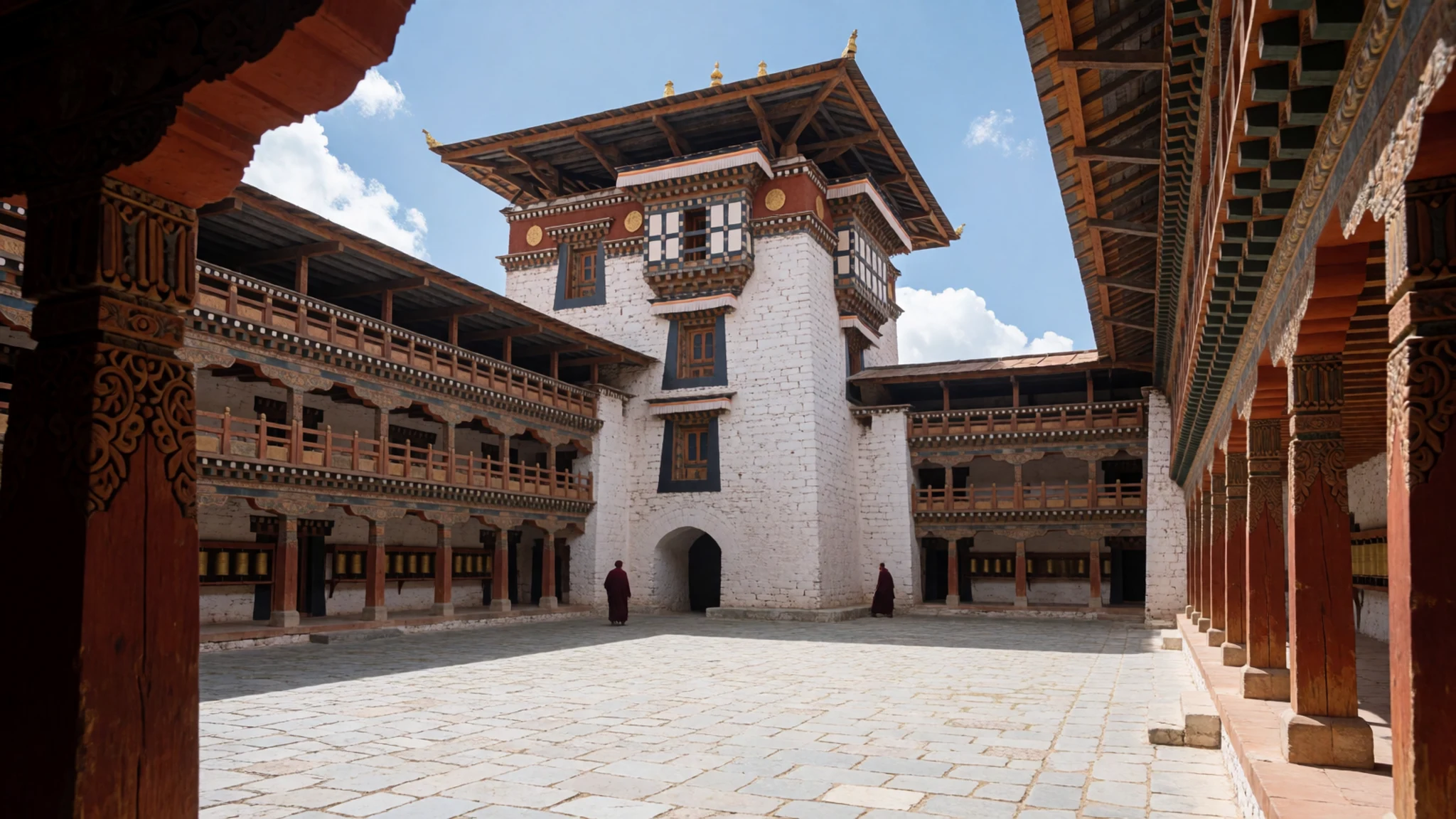
- Wangduecholing Palace — Jakar, Bumthang
Wangduecholing Palace was the principal residence of Bhutan's first and second kings and now works as a museum. Traditional displays sit beside modern interactive exhibits, giving a picture of royal and village life in the nineteenth century. Opening times and tickets change, so check locally before going. An hour or so is enough.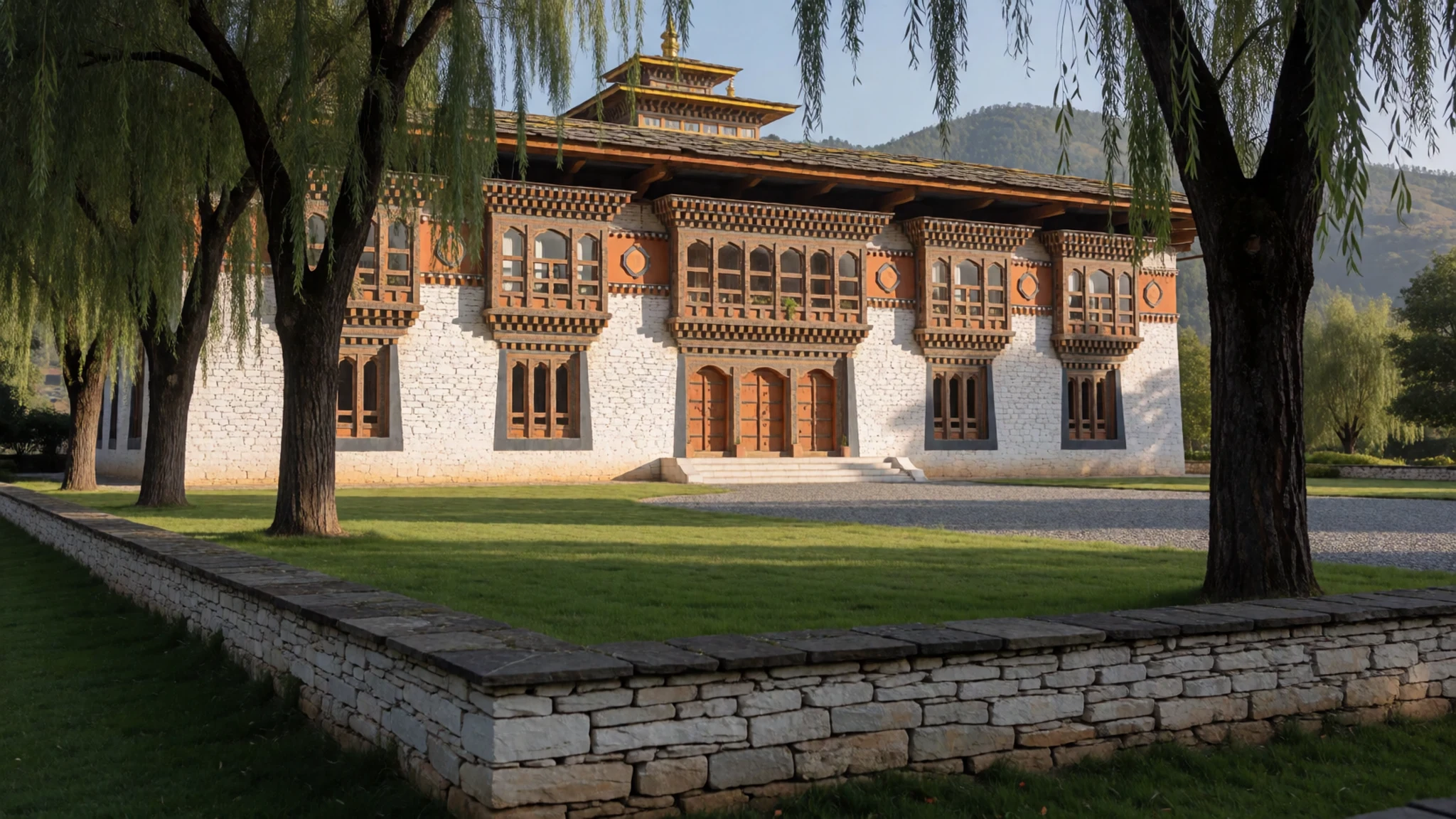
- Chakhar Lhakhang — Jakar town
Chakhar Lhakhang is a small temple in the town itself, built on the site of Sindhu Raja's Iron Palace. Nothing here is grand, which is partly the point: it shows how an ordinary shrine sits among streets and houses. A visit takes only a few minutes, and it pairs well with the bazaar.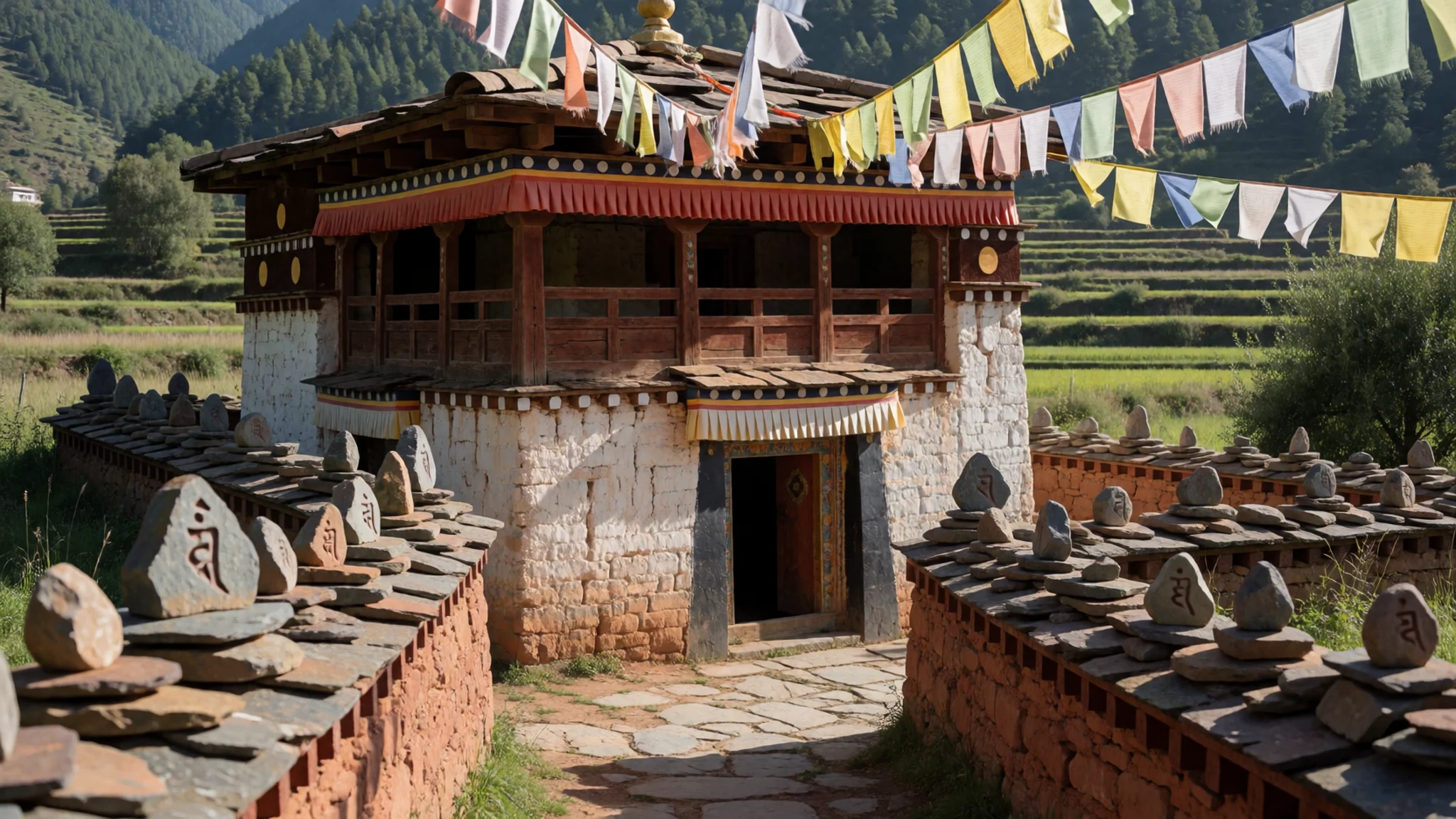
- Kurjey Lhakhang — Bumthang Valley, near Jakar
Kurjey Lhakhang is a deeply sacred temple complex a short drive from the town. The oldest of its buildings wraps around a cave holding the body imprint of Guru Rinpoche. Pilgrims walk clockwise around the buildings and spin the prayer wheels along the wall. Go early, when the courtyard is quiet.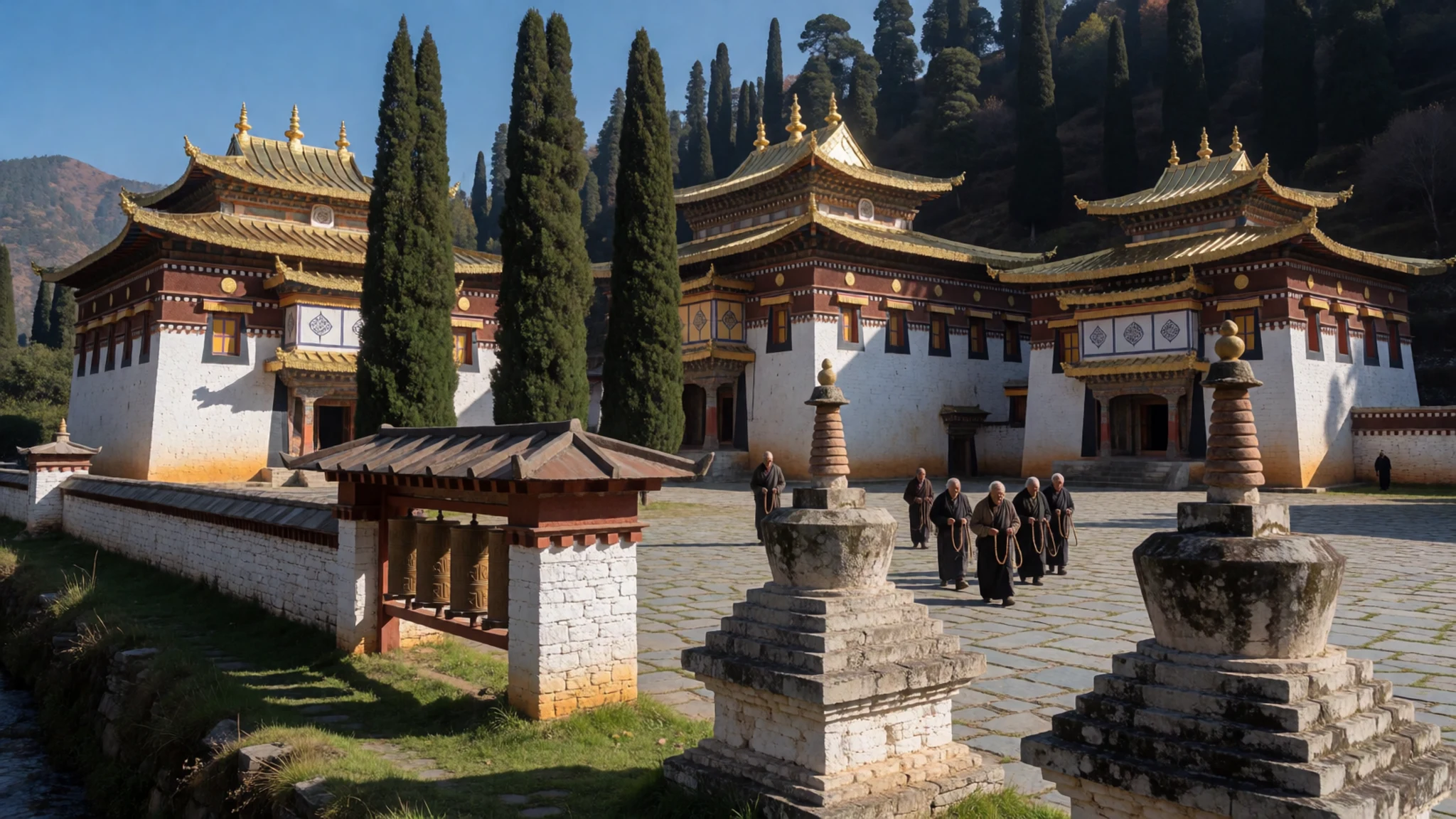
- Jambey Lhakhang — Bumthang Valley, near Jakar
Jambey Lhakhang is a monastery linked to the story of a chain of temples raised in one night by King Songten Gampo. Inside, butter lamps flicker against old painted walls, and the courtyard is calm. Local worshippers come and go all day, so keep voices low and give them space.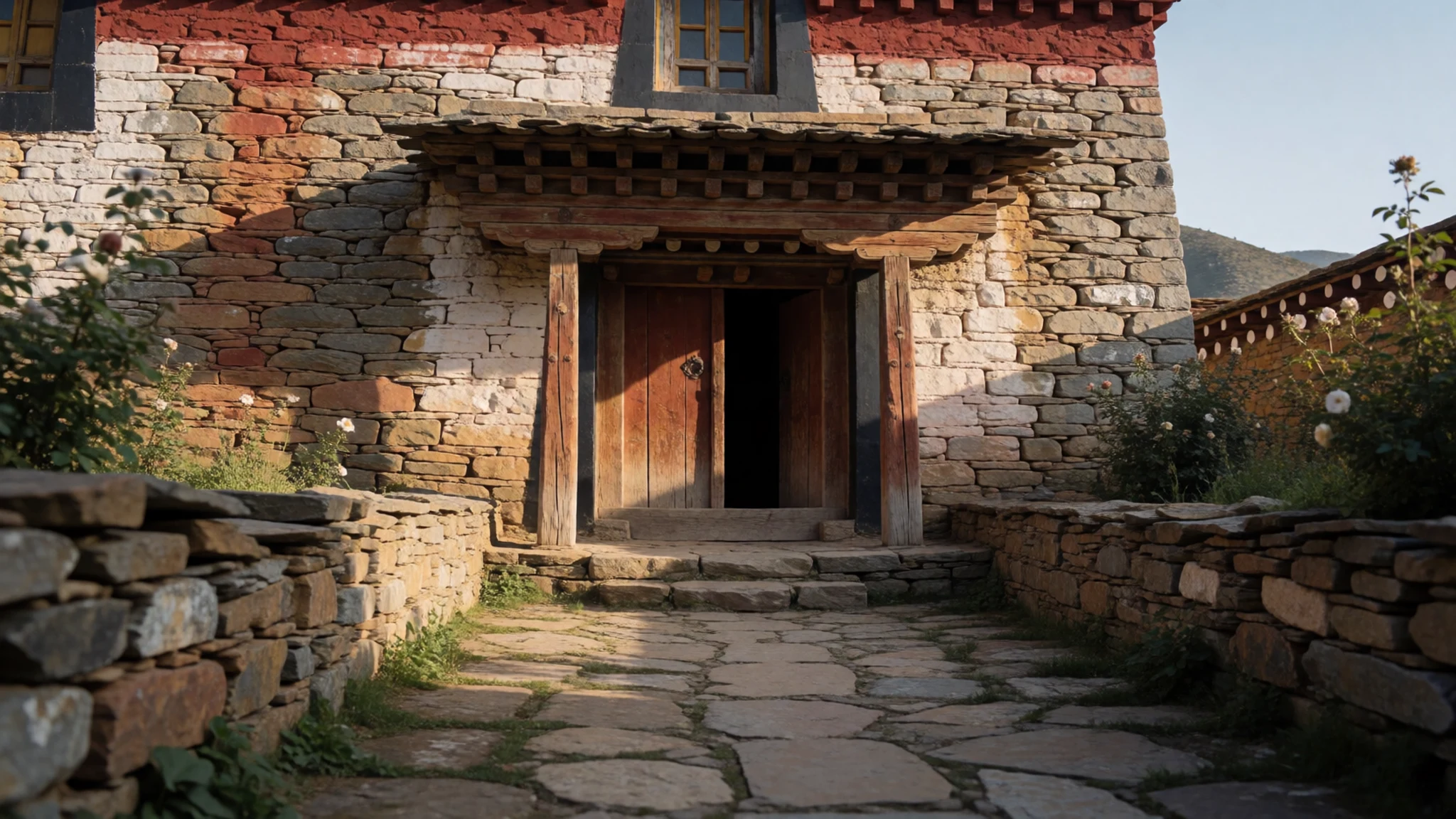
Culture
Jakar is culturally part of eastern Bhutan, and life in Bumthang follows farming seasons, monastery calendars and weaving. Dzongkha is the national language of schools and government, while Bumthang and Brokkat are spoken in homes and villages. Buddhism shapes the rhythm of the day: people walk clockwise around temples and stupas, spin prayer wheels, hang prayer flags on ridges and light butter lamps. Jakar is known across Bhutan for yethra, bright woven wool cloth with bold geometric patterns, made into jackets, blankets and bags and sold in craft shops and by weavers in nearby villages. Buying from a small shop or directly from a weaver supports the craft far more than mass-made souvenirs. Religious festivals, called tshechu, are community occasions with masked dance and families in their best clothes; dates follow the lunar calendar, so check them before building a trip around one. Hospitality is reserved rather than loud, and a smile and a quiet "kuzuzangpo la" (hello) go a long way. Inside any temple, take off your hat and shoes at the door, walk clockwise around sacred objects, and do not photograph the interior or the statues.
What to wear
Jakar, like the rest of Bhutan, has a national dress that people still wear daily. Men wear the gho, a knee-length robe hitched up and tied at the waist with a woven belt called a kera. Women wear the kira, an ankle-length wrapped dress fastened at the shoulders and worn with a blouse and a short jacket. Fabrics range from cotton and wool for everyday and winter wear to silk for festivals and weddings. In Bumthang, yethra, the bright woven wool the town is known for, turns up in jackets, shawls and bags. Government staff, teachers and students wear national dress to work and school, and everyone dresses in it for dzongs and festivals. Outside those settings, people in Jakar wear what suits a cool highland climate: fleeces, down jackets, jeans, trainers and rubber boots on farm tracks. Visitors should pack layers, since mornings and evenings are cold even when midday is sunny, plus a light rain jacket. For temples and dzongs, cover shoulders and knees, avoid shorts and sleeveless tops, and wear shoes that slip off easily. Sturdy soles help on uneven stone paths and muddy lanes.
What to eat
- Ema datshi — Local eateries in the Chamkhar bazaar
Chillies cooked in a soft, salty cheese sauce, eaten with rice and the national dish of Bhutan. The heat varies a lot, so ask for it milder if needed. Simple local eateries in the bazaar serve it at lunch and dinner.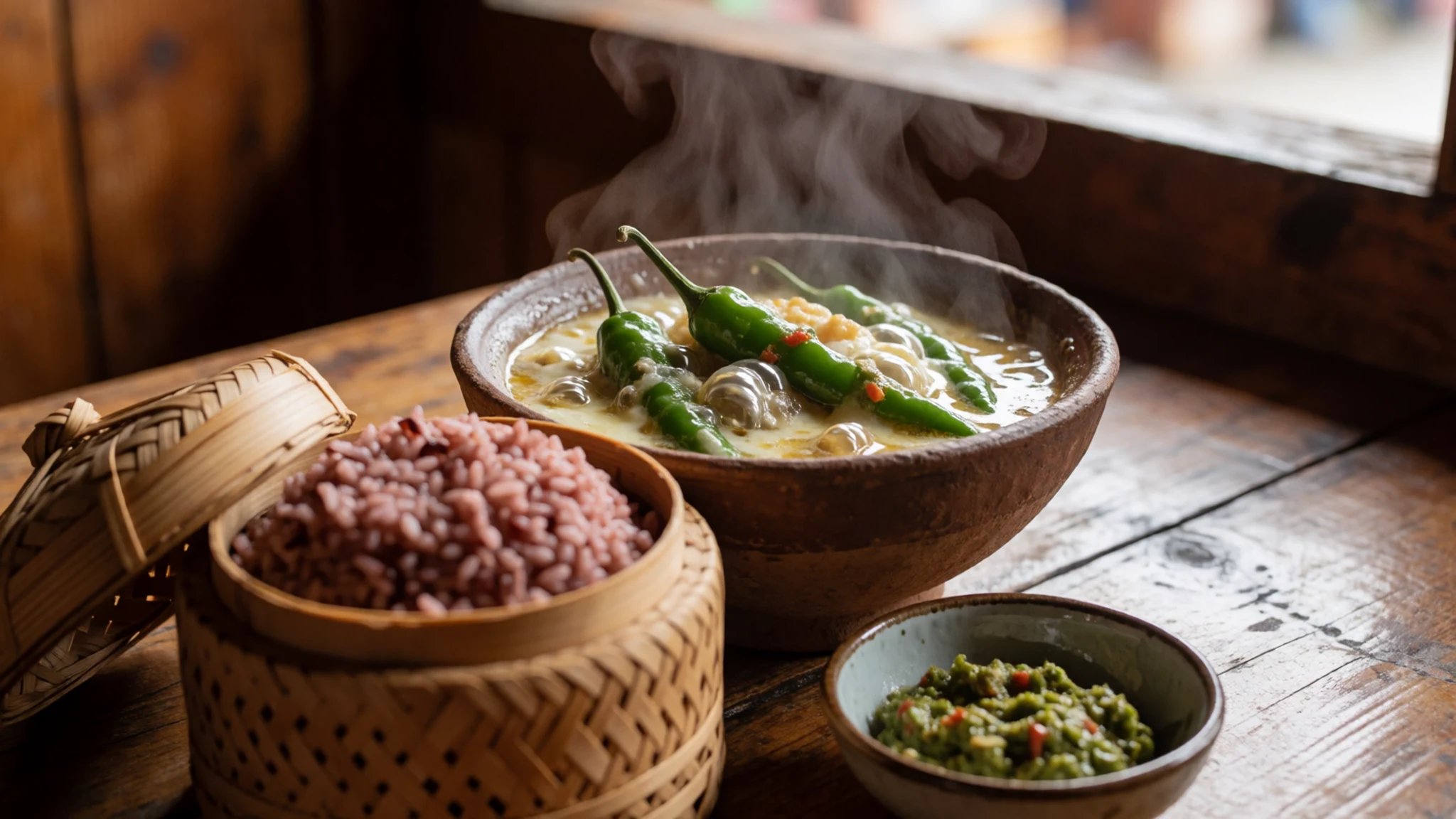
- Cheese and meat momos — Small restaurants in Jakar town
Steamed dumplings filled with either cheese or minced meat, served with a sharp chilli dip. They suit a cold evening well and are an easy order for first-time visitors. Small restaurants around the bazaar usually have them.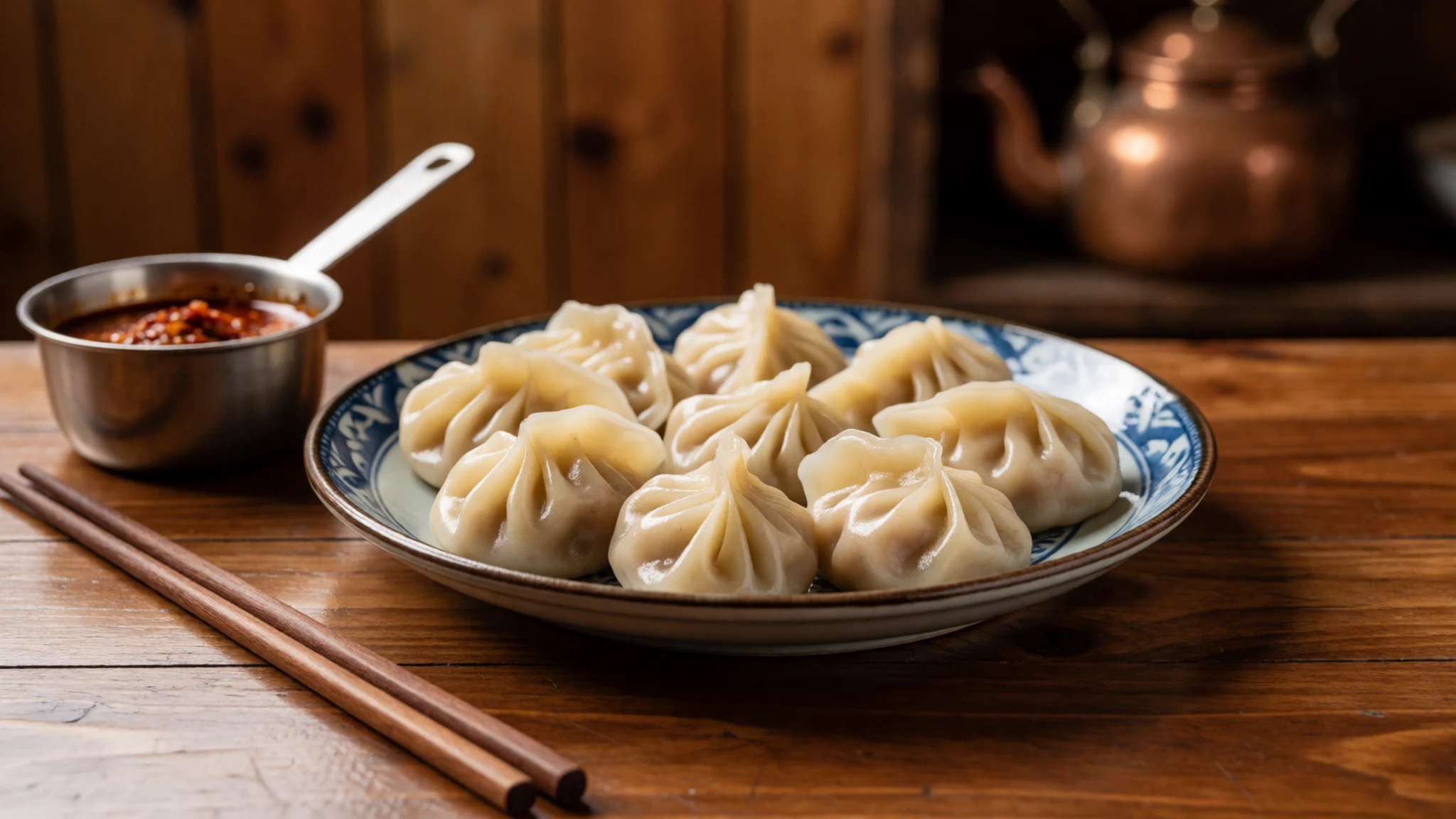
- Buckwheat pancakes (khuley) — Farmhouse meals and guesthouse breakfasts in the valley
Thin, earthy pancakes made from buckwheat, a crop of the cool central valleys. They are eaten plain or with chilli, egg or cheese, and appear at farmhouse meals and breakfasts. Ask whether a guesthouse or village home can make them. - Suja (butter tea) — Village homes and local tea stops
A salty, buttery tea churned with milk, served hot and often refilled before the cup is empty. It takes getting used to but warms you quickly at this height. Offered in homes, temples during festivals and some eateries. - Fresh apple juice — Guesthouses and cafes in season
Apples grow well in the cool valley, and juice is pressed in season. It is sweet, cold and simple, a good drink on a sunny afternoon. Ask at guesthouses and cafes, since availability depends on the harvest. - Cakes, coffee and local beer — Cafes along the main road and the edge of town
Jakar has a small cafe scene, with cakes, espresso coffees and pizza aimed at visitors. One cafe, a Swiss initiative, brews its own beer, while others focus on desserts. Good for a slow afternoon when the weather turns.
Plan it
Best time. March–April and October–November usually bring milder, clearer days, which suit temple visits and valley walks. Winter at this height is cold, and summer is greener but wetter, so rain gear matters.
How long. 2–3
Getting there. Druk Air flies from Paro to Bathpalathang Airport at Jakar on scheduled days, but flights are sometimes cancelled or delayed by weather, so check updates before leaving for the airport. By road, coaster buses and cars run from Thimphu, and the journey takes most of a day with a lunch stop. The last leg into town from the airport is a short drive.
Budget. mid
Tips
- Book flights and guides early, and keep a buffer day in case weather delays a flight
- Carry cash for small shops, craft stalls and village stops, since cards may not work everywhere
- Pack warm layers even in sunny months, as mornings and evenings are cold
- Visit temples early, when courtyards are quiet and pilgrims are making their rounds
- Check Bhutan's official tourism rules and visa requirements before booking
Etiquette
- Remove shoes and hats before entering a temple, and walk clockwise around sacred objects
- Ask before photographing people, and never photograph temple interiors
- Dress modestly at dzongs and temples, covering shoulders and knees
Nearby
Sources
- Wikidata Q2468415 (CC0)
- Wikipedia: Jakar (rev 1381308801) (CC BY-SA 4.0)
- Wikivoyage: Jakar (rev 5405623) (CC BY-SA 4.0)
- Jakar Dzong, Bhutan — Jean-Marie Hullot (CC BY 3.0)
- Post office of Bumthang town — Leovdvxxx (CC BY-SA 4.0)
- Bumthang houses — Jussi Rintanen (CC BY 3.0)
- A view of Jakar, Bumthang — Christopher J. Fynn (CC BY-SA 4.0)
- Jakar in Bumthang district (02) — Gerd Eichmann (CC BY-SA 4.0)
- Jakar in Bumthang district (04) — Gerd Eichmann (CC BY-SA 4.0)
- Jakar in Bumthang district (06) — Gerd Eichmann (CC BY-SA 4.0)
- Jakar in Bumthang district (08) — Gerd Eichmann (CC BY-SA 4.0)


