Thousand Islands
Thousand Islands, United States
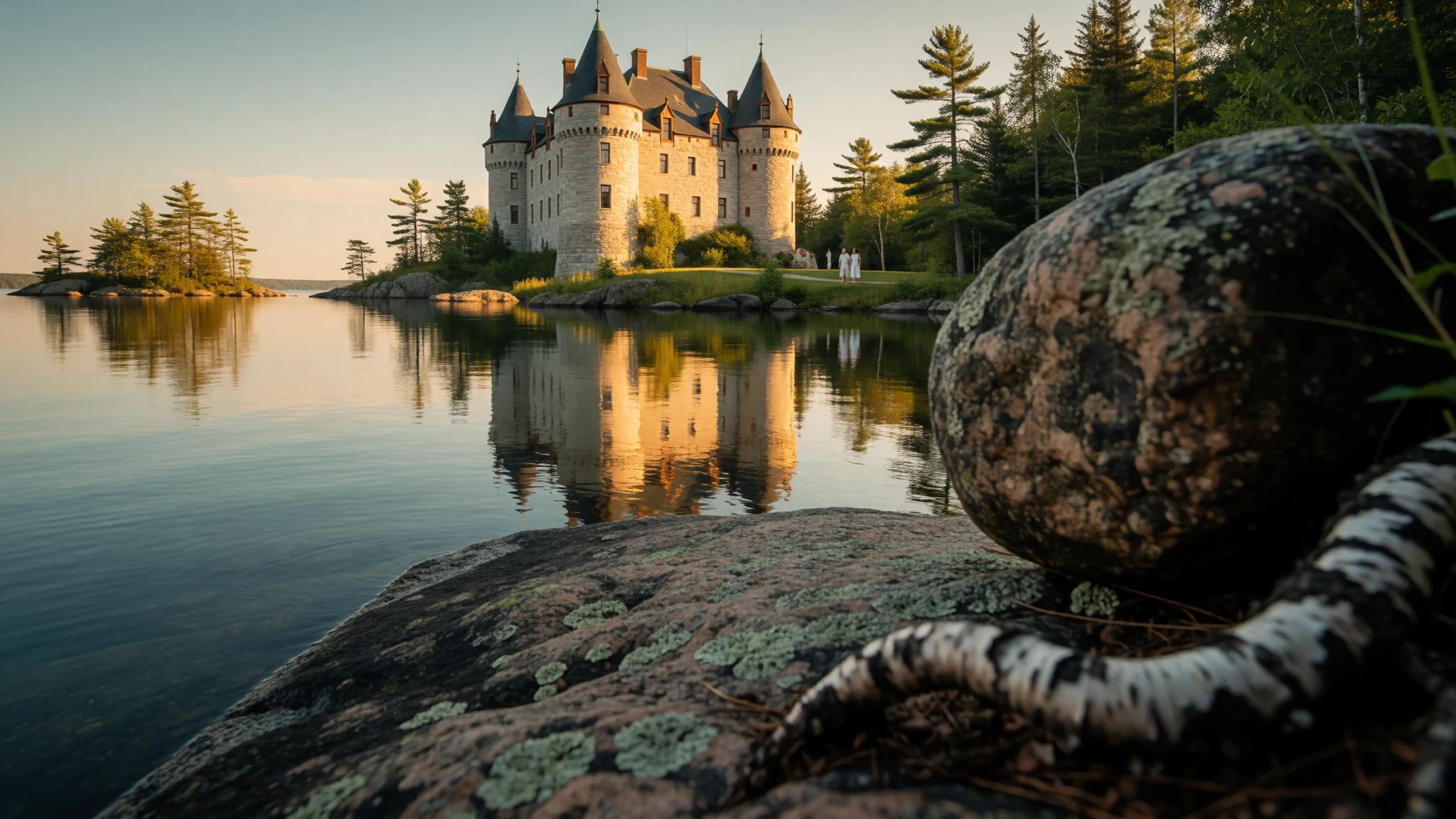
Thousand Islands scatters 1,864 islands across the Saint Lawrence, offering castles, quiet channels and boat trips between two countries.
The place
The Thousand Islands is an archipelago of 1,864 islands strewn across the Saint Lawrence River, just where it leaves Lake Ontario and starts its long run towards the sea. The international border cuts through the middle, so some islands belong to Ontario and others to New York State, and a small boat can pass between two countries with no ceremony at all. The scatter runs downstream from Kingston for about 80 km. The name is actually modest, because the official count follows a rule: an island needs a patch of land that stays above water all year and at least two living trees, which excludes many bare rocks. Sizes vary enormously. A few islands are big enough for villages, farms and golf courses; many carry a single cottage; others are a rock with a lone pine. Geologically, the islands are the tops of an ancient ridge, a branch of the Canadian Shield that crosses the river to join the Adirondack hills. Water is the real landscape. Narrow channels bring both shores close together, then the river opens into broad reaches where ocean-going ships pass along the Seaway. Kingston, Gananoque, Clayton and Alexandria Bay work as bases, each with boat docks and a short main street. The Thousand Islands Bridge crosses Wellesley Island and links the two countries by road, and the area is easiest to explore with a car and a boat trip or two.
Its story
The Thousand Islands were inhabited and visited long before European surveyors drew them. Members of the Iroquois Confederacy and the Ojibwa people knew the area, and the name Manitouana, often rendered as the Garden of the Great Spirit, comes from that earlier world. Later the river became a frontier between British North America and the young United States, and the War of 1812 left its mark on both banks. Fort Wellington at Prescott and the garrison on Chimney Island near Mallorytown are two of the sites, and museums on either side tell the story from their own shore. Once the fighting was over, the islands slowly changed from a border zone into a place for leisure. In the later Victorian years and the early decades of the following century, the area became a fashionable summer resort. Wealthy families came from New York City, joined by others from Chicago, Cleveland, Pittsburgh and Canadian cities, and they took holiday houses on the islands, some built on a scale that earned the name castle. Large hotels housed guests, while steamboats carried them on tours through the channels. Boldt Castle and Singer Castle on Dark Island survive as reminders of that era. Poets noticed the scenery too: Walt Whitman named the Thousand Islands among the pleasures of the St. Lawrence in Leaves of Grass. Today the same water carries working ships on the Seaway, and the old boat-tour tradition continues in modern form.
What to see
- Boldt Castle — Alexandria Bay area, New York
Boldt Castle stands on one of the islands and is seen best from the water, where its towers rise out of the trees. Boats leave from the American side, and Uncle Sam Boat Tours gives the closest access from the mainland. Check the operator's website for sailings, and expect the landing to be busy in high summer.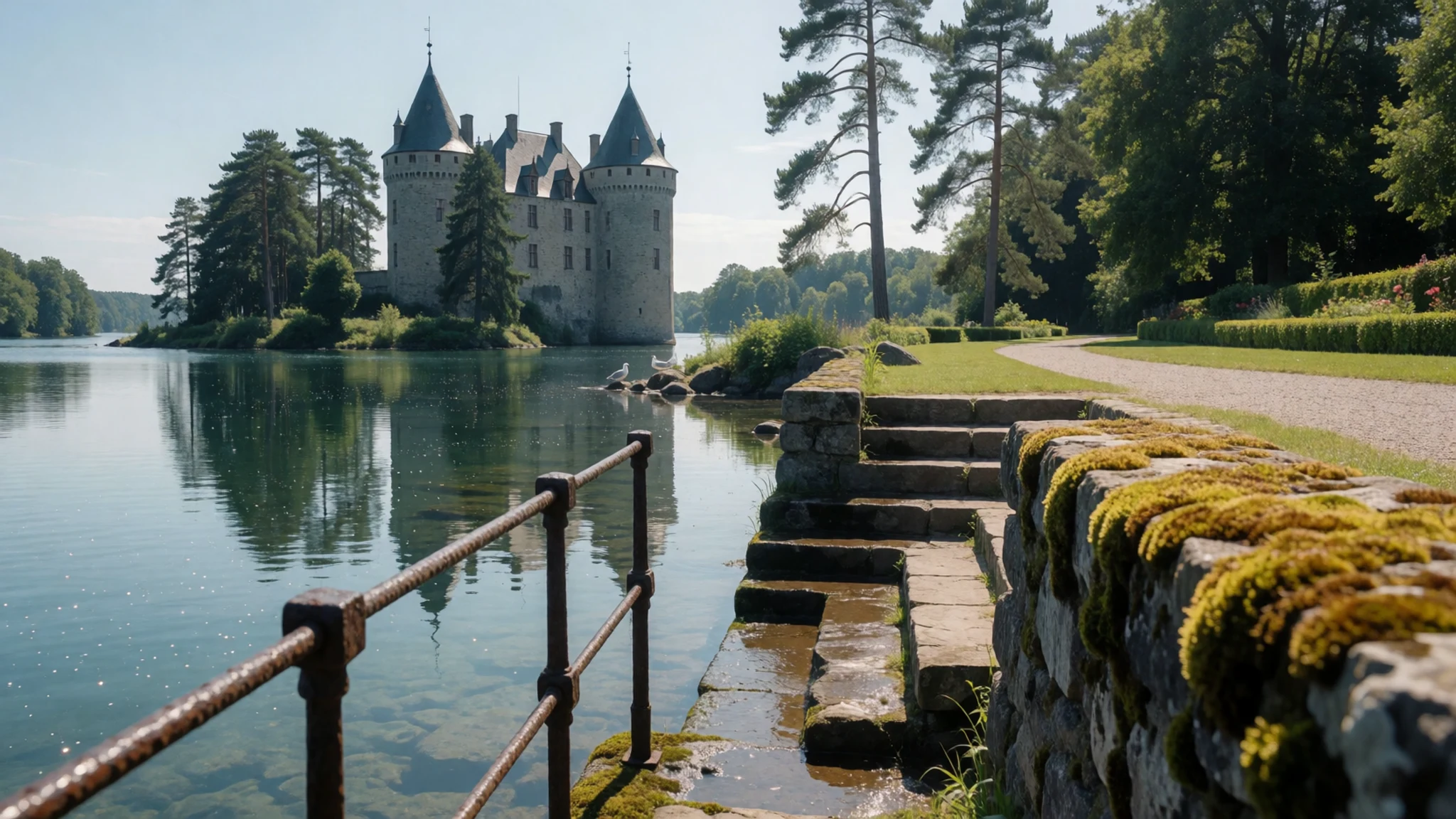
- Afternoon cruise from Gananoque — Gananoque, Ontario
Gananoque, on the Ontario shore, is a base for cruises that include Boldt Castle. Afternoon departures are especially good for light on the water and the islands. Operators such as Gananoque Boat Line run the trips, and some shorter tours of about an hour leave from Rockport. Book ahead in July and August.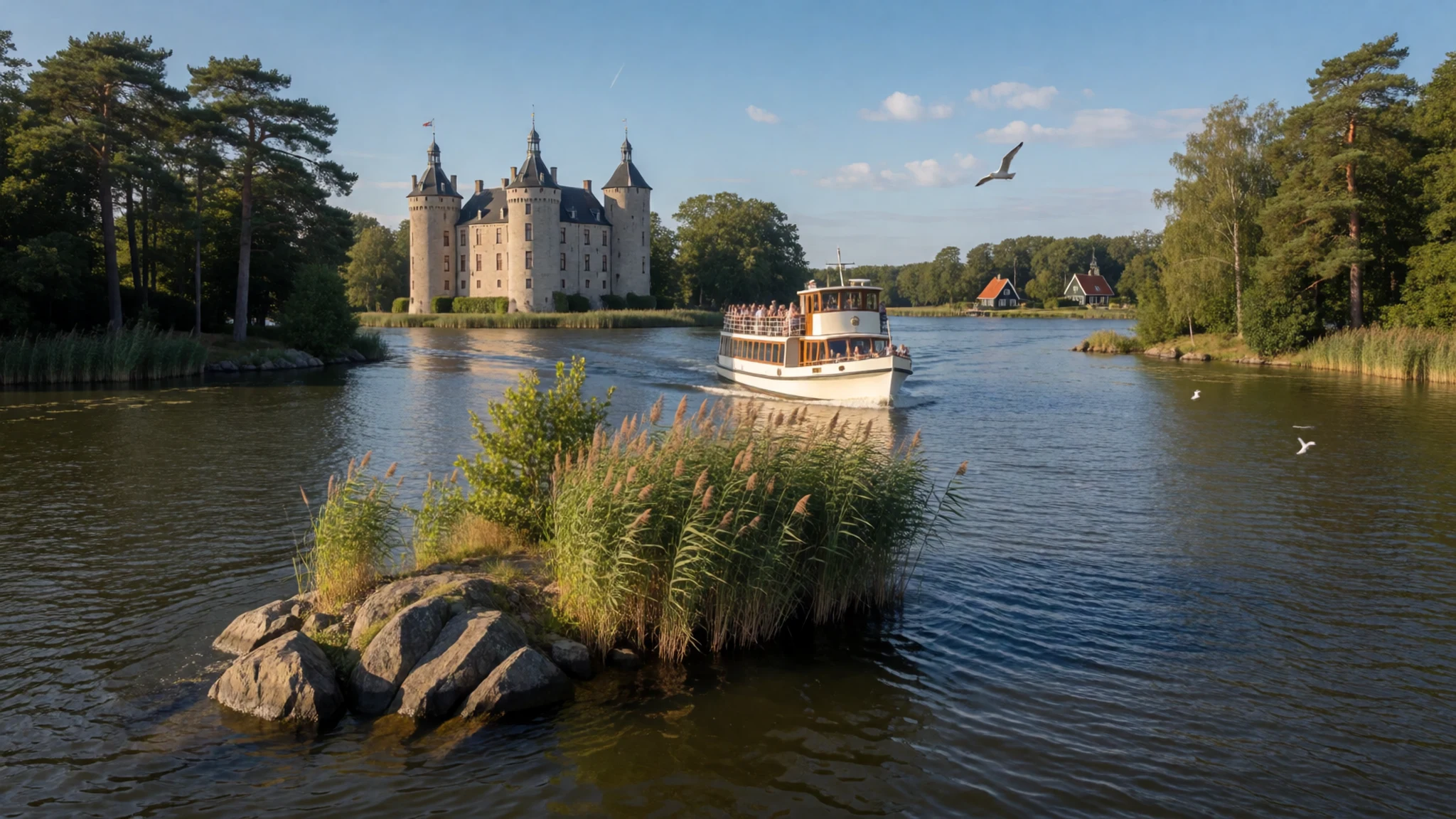
- Singer Castle on Dark Island — Dark Island, eastern Thousand Islands
Singer Castle stands on Dark Island, in the lower, eastern part of the archipelago close to the Seaway shipping channel. Its towers and stonework make a sharp contrast with the low wooded shoreline around it. It is reached by boat, so check with cruise operators about landing and tour arrangements before planning a day around it.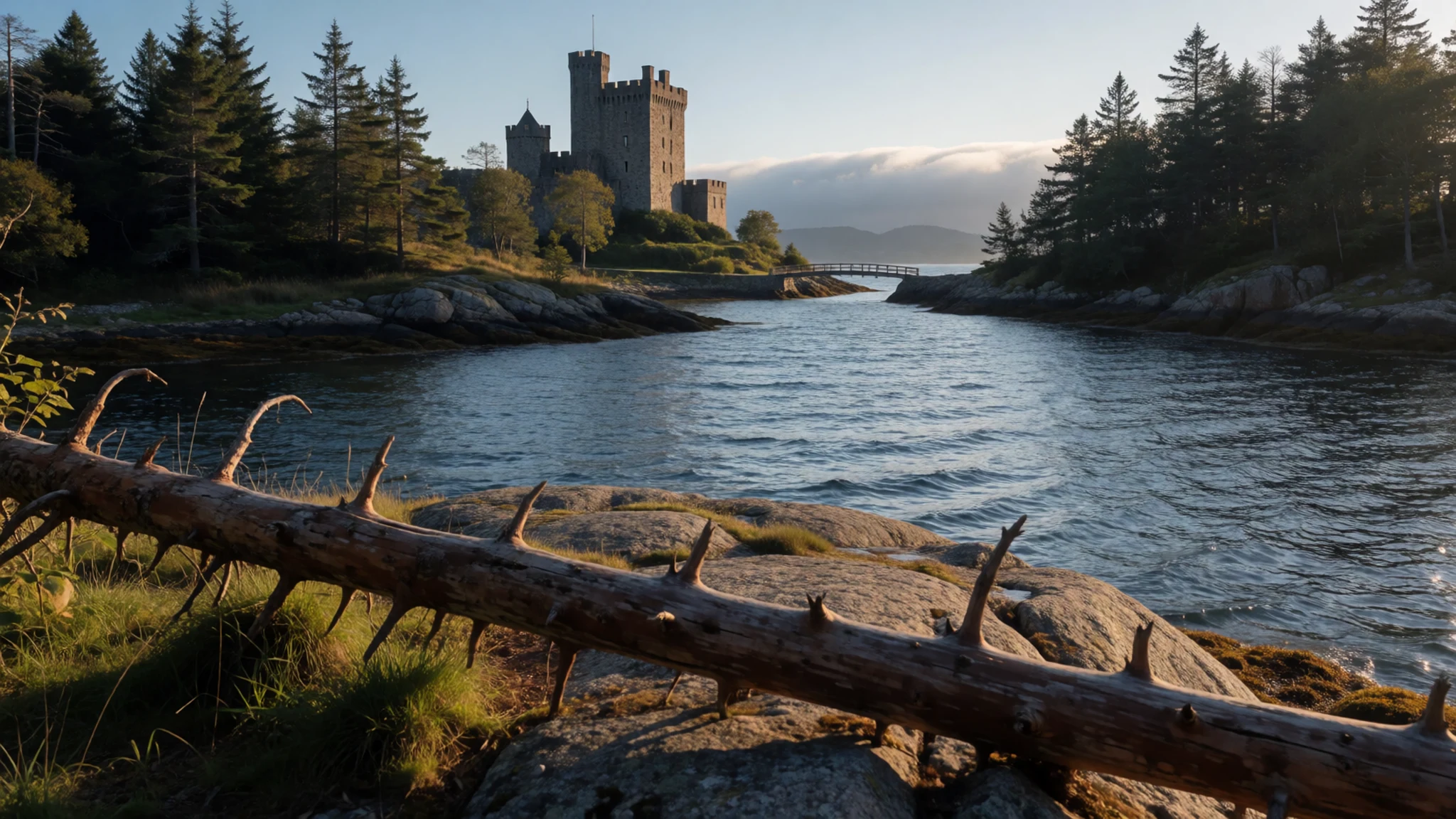
- Thousand Islands Bridge and Wellesley Island — Wellesley Island, New York
The Thousand Islands Bridge crosses the river by way of Wellesley Island and connects New York State with Ontario. Wellesley Island's eastern end has a yacht club and a golf course. A Canadian observation tower gives a wide view of the channels and islands, a useful first look before boarding a boat.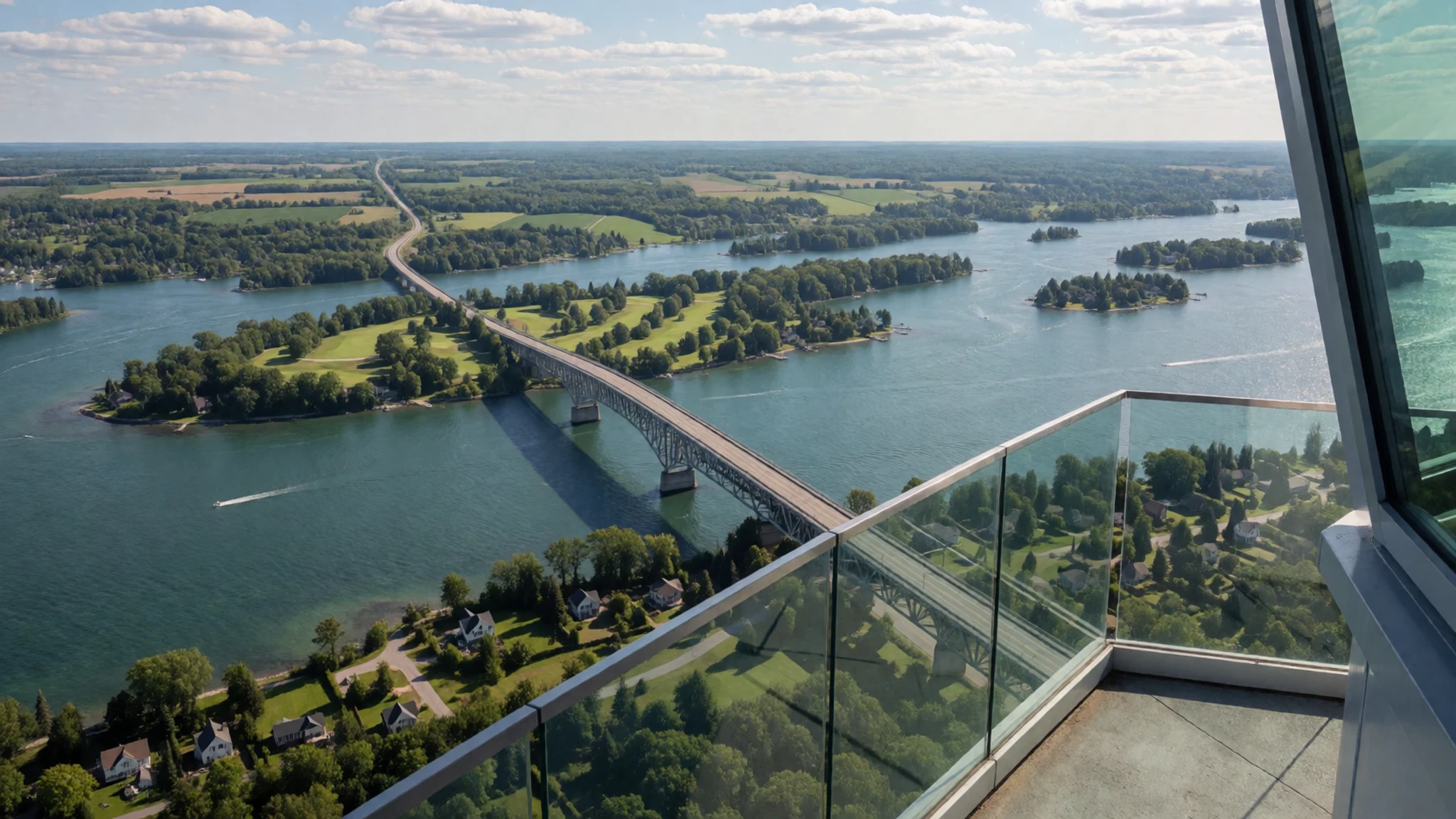
- St. Lawrence Islands National Park — Eastern Ontario shore
St. Lawrence Islands National Park of Canada protects a scatter of small islands on the Ontario side. It suits visitors who want quiet water rather than castles, and guided kayak trips and lessons are offered locally at extra cost. Watch for commercial ships and strong currents in the narrow channels.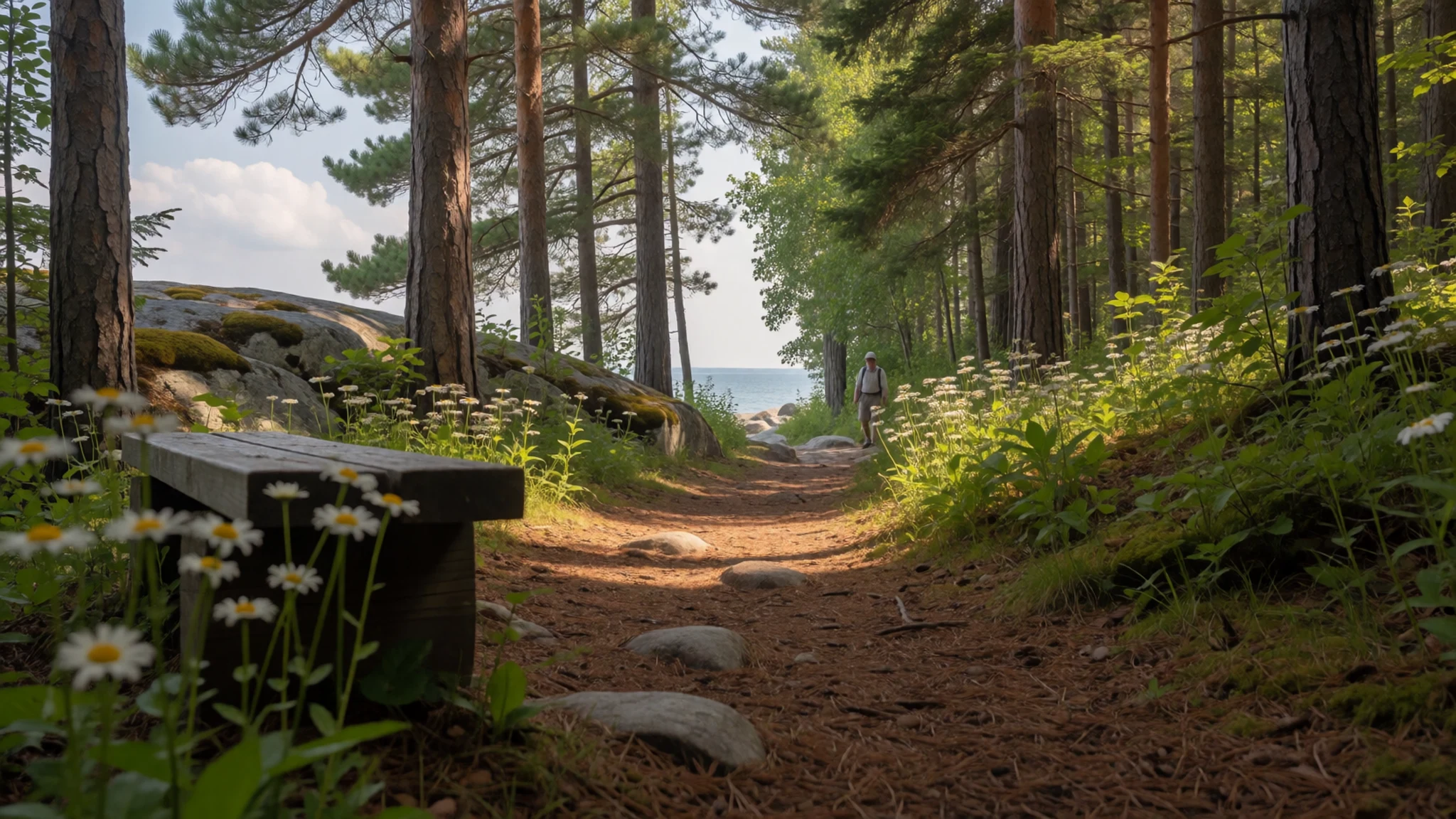
Culture
Thousand Islands culture grows out of the river and a border that locals treat as a line on the water. Communities on both shores share fishing, boating and the habit of summer life afloat, and in the warm months island life organises itself around docks, ferries and the weather. The older layer belongs to the Iroquois Confederacy and the Ojibwa, whose name Manitouana still appears in local history and interpretation. The resort age added another: steamboat excursions, grand hotels and castle-style summer houses, which today's boat tours still use to tell the area's story. Forts and museums from the War of 1812 on both sides of the river give history lovers a reason to cross the border. Life here is seasonal. Many businesses, from boat hire to island dining halls, open only in the warm months, and farmers' markets sell produce grown on nearby islands such as Amherst Island. Evenings are quiet, with water and wind for company, and visitors who come in the shoulder season find a calmer, slightly emptier version of the region. Conversations with locals often turn to river levels, shipping and the weather, and a question about the islands is usually welcomed. Treat private islands, docks and cottages as people's homes, and do not land or tie up on one unless it is clearly public or you have been invited.
What to wear
Thousand Islands has no single regional costume, so its dress story has three strands. The oldest belongs to the Haudenosaunee (Iroquois Confederacy) and Ojibwa communities of the region, whose ceremonial clothing uses ribbon work, beadwork, hide and cloth, and is worn at gatherings and ceremonies rather than on ordinary days. In the resort years, summer visitors dressed for the water in light cotton, linen and straw hats, and that look survives in the postcards and photographs of the era. Today people dress for boats and weather: shorts, T-shirts, fleeces, windproof jackets, boat shoes or sandals, and sunhats. Visitors should do the same, with layers. The river breeze can be cool even on a hot day, and a light waterproof is useful on deck. Flat, non-slip shoes are better than smooth soles on boat decks and castle stairs. Bring sun protection, and swimwear if you plan to use a beach or swim from a boat. No dress rules apply on cruises or castle tours, though covering shoulders is polite if you step into a church or attend a community ceremony. Insect repellent is worth packing for walks on wooded park islands.
What to eat
- Fish and chips — casual waterfront patios on Wolfe Island and in the river towns
Fish in crisp batter with thick chips is the standard patio meal on the islands. Wolfe Island's waterfront spots serve it facing the Kingston skyline, often with live music at weekends, which makes an easy lunch between boat trips.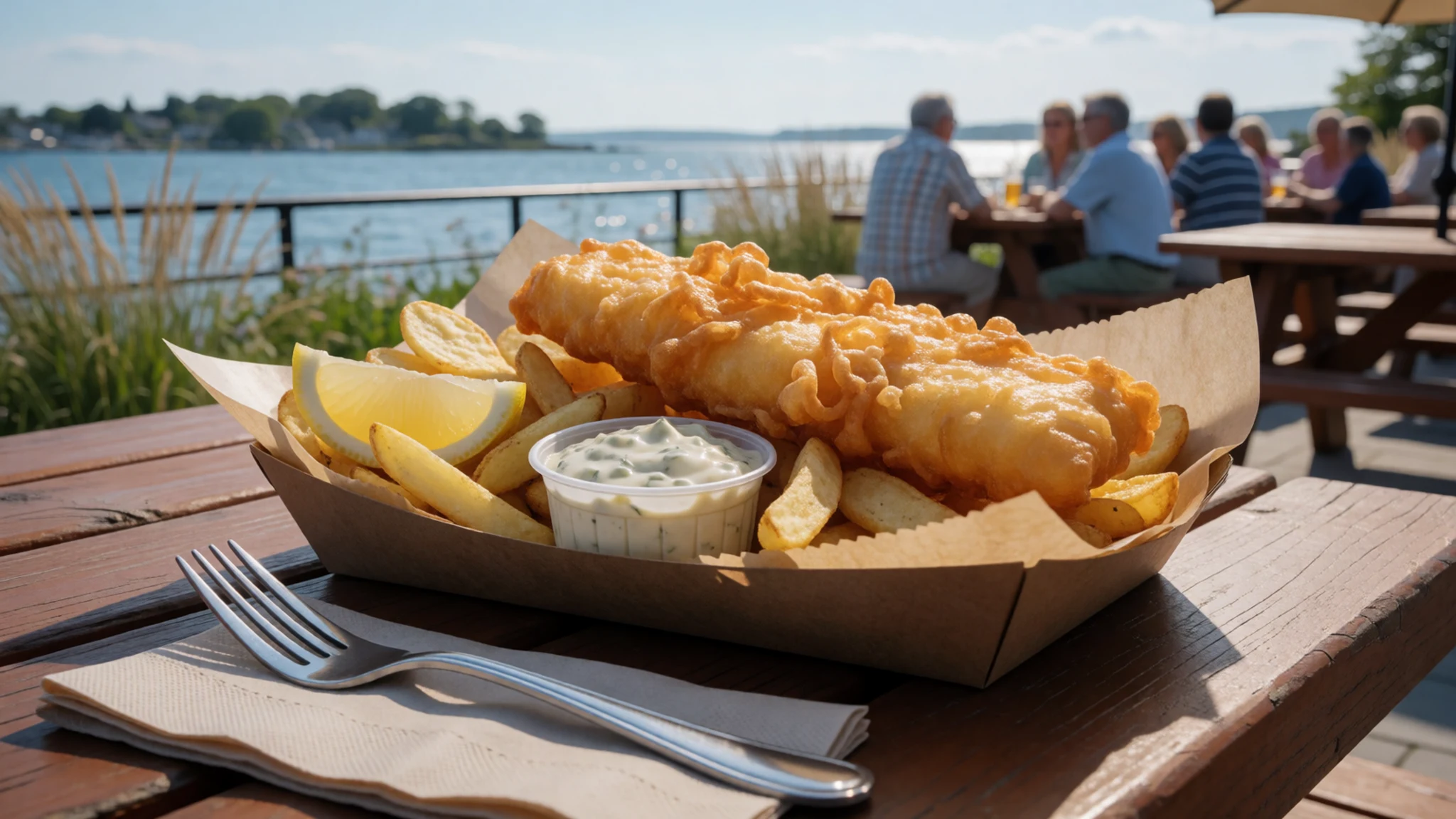
- Burgers — island pubs and riverside grills
Burgers are the other staple, grilled at island pubs and riverside grills on both shores. They are casual, filling and made for eating outdoors after a day on the water. Expect queues in July and August and plan lunch earlier or later than usual.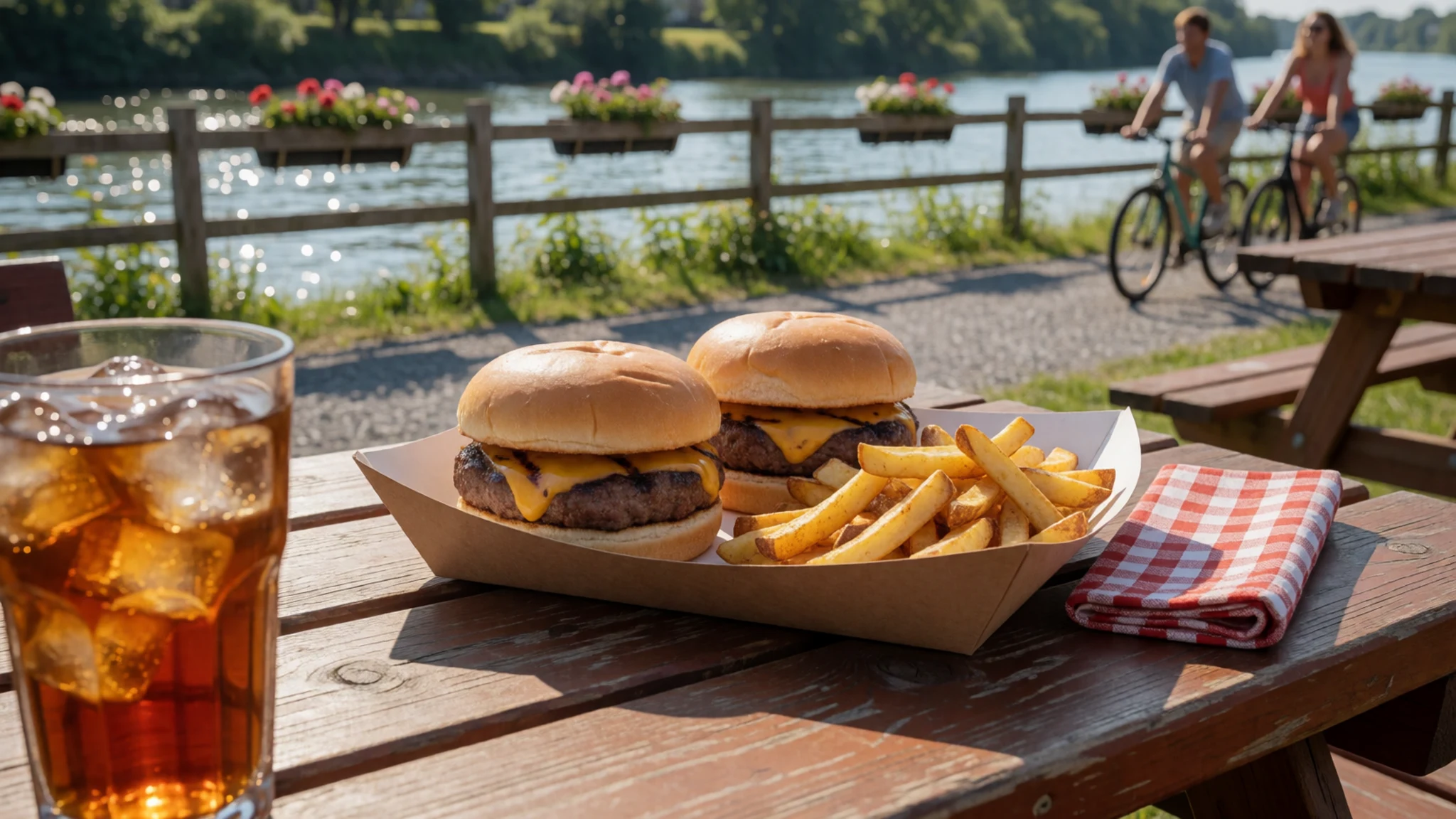
- Pizza and subs — a pub on Wolfe Island
Pizza, hot subs and sandwiches are the usual evening food at island pubs. Wolfe Island's pub-and-pizzeria type of place suits families and groups, and some add sing-along nights at weekends, so a quiet table is not guaranteed. - Farm vegetables and salads — farmers' market and farm dining hall on Amherst Island
Vegetables from Amherst Island farms reach the local farmers' market, and a seasonal farm dining hall serves meals when open, from Victoria Day in late spring to Labour Day in early September. Check ahead, as the island is small and everything is seasonal. - Coffee and ice cream — a tiny café on Wolfe Island's main street
Wolfe Island's small main-street café sells organic, fair-trade coffee, ice cream and desserts, often with a tiny patio. It suits a slow start before a cruise or a cool-down once the boats are back.
Plan it
Best time. Late May to September, when boats run full schedules and island businesses are open; July and August are warmest and busiest, while early September is calmer. Winters are cold, and many seasonal operators and dining halls close.
How long. 2–3
Getting there. Most visitors drive from Toronto, Montréal or northern New York State. Trains and buses reach Kingston, though not at its centre, and limited services run to Brockville and Watertown; many small towns need a car or a chartered bus. From the US, the interstate meets the river between Clayton and Alexandria Bay, and the Thousand Islands Bridge crosses to Ontario. In Ontario the main motorway is quickest, while the riverside parkway from Brockville is slower and prettier.
Budget. mid
Tips
- Book boat tours ahead for July and August, and check each operator's website for current sailings.
- Choose afternoon departures from Gananoque for better light on the water.
- Carry a passport: the border runs through the islands, and the bridge is an international crossing.
- Fishing needs a licence in both Ontario and New York State, and powerboat hire in Canada may require proof of competency.
- Bring layers and sun protection, and keep small craft out of narrow channels, where currents are strong.
Etiquette
- Treat private islands, docks and cottages as private property.
- Give commercial ships on the Seaway plenty of room.
- Take your rubbish back to the mainland.
Nearby
Sources
- Wikidata Q1050549 (CC0)
- Wikipedia: Thousand Islands (rev 1382092871) (CC BY-SA 4.0)
- Wikivoyage: Thousand Islands (rev 5432427) (CC BY-SA 4.0)
- Photo: Boldt Castle aerial, Teresa Mitchell; levels adjustment by Howcheng (Public domain)
- Photo: Thousand Islands 1898 touring map, Frank H. Taylor (Public domain)
- Photo: Gazebo, St. Lawrence Islands National Park, Shroha (CC BY 3.0)
- Photo: Thousand Islands Bridge, MJCdetroit (CC BY 3.0)
- Photo: Singer Castle, Ad Meskens (CC BY 3.0)
- Photo: Sunset over a small island, Moondigger (CC BY-SA 2.5)
- Photo: Thousand Islands map, Kelisi (CC BY-SA 4.0)
- Photo: Detroit Photographic Company postcard (Public domain)


