Thakhek
Thakhek, Laos
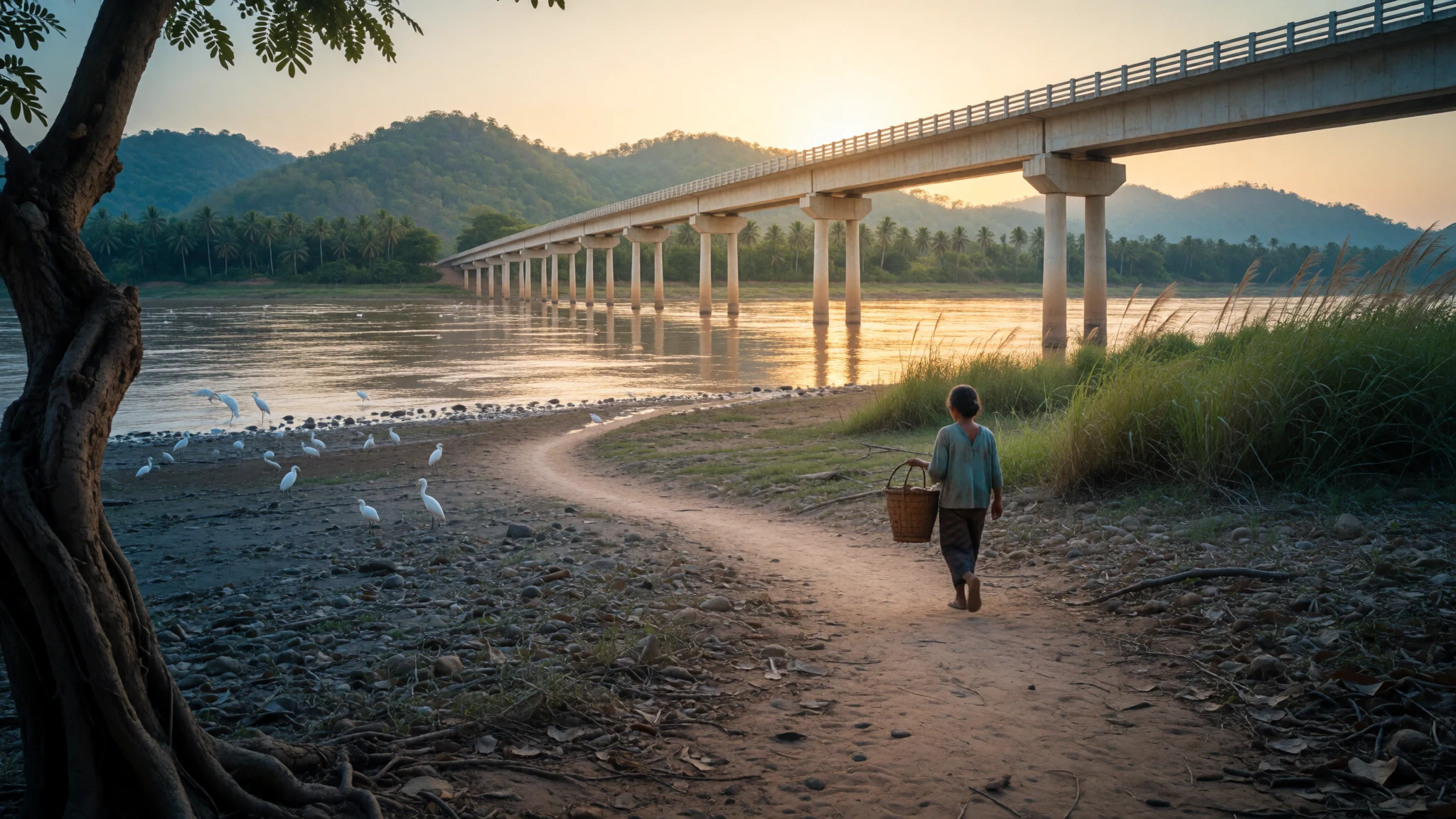
Thakhek is a quiet Mekong town of French-era shophouses, with Thailand a bridge away and limestone cave country close behind.
The place
Thakhek is the capital of Khammouane Province, a small town in south-central Laos on the Mekong, at an elevation of 137 metres. Across the river lies Nakhon Phanom in Thailand, and the two are joined by the Third Thai–Lao Friendship Bridge, which opened in November 2011. That link has made Thakhek a practical crossing point as well as a calm place to stop. The old centre has a clear character: French colonial offices, a few villas and rows of narrow shops, many of them faded and some patched with newer concrete. Traffic is light, mornings start early, and the riverfront fills with people once the day cools. Beyond the town the landscape turns to limestone, with steep karst ridges, caves and rice plains, which is why the province draws motorbike travellers. Heat is the honest caveat. From roughly March to May the afternoons are punishing, and the wet season brings heavy rain that can make rough roads miserable. The cooler, drier months from November to February are kinder for walking and cycling. Thakhek is not a town of big sights; its appeal is its pace, its colonial streetscape and its position as a base for caves and countryside. Services are modest, English is limited outside guesthouses, and cash is still the easiest way to pay for most things. Visitors who like a town that has not been polished for tourism tend to enjoy it, while those after nightlife or a long list of museums may find a day is plenty.
Its story
Thakhek has gone by several names. During the Lan Xang era it appeared as Sikhottabong, Muang Kabong and Lakhon, which suggests a settlement that mattered well before the French arrived. The reason is geography: a stretch of the Mekong with the Thai bank in sight made a natural place to land, trade and cross. Under French rule the town became an administrative centre, and the offices, villas and shophouses that give the old quarter its look date from that period. French policy also reshaped who lived here. Colonial administrators encouraged Vietnamese families to settle in Laos, and by 1943 Vietnamese residents made up 85% of Thakhek's population, a proportion that is hard to picture in a Lao provincial town today. The same logic of tying Laos closer to Vietnam lay behind a railway planned to run from Thakhek through the Mụ Giạ Pass to Tân Ấp in Quảng Bình Province. The line was never completed, but pieces of it can still be found in and around town, physical reminders of a project that stopped halfway. The modern chapter is about the river again. Work on the Third Thai–Lao Friendship Bridge began in 2009 and it opened on 11 November 2011, linking Thakhek with Nakhon Phanom in Thailand. Where crossing the Mekong was once a matter of boats, it is now a short drive, and the town has slowly become a stopping point on routes between Thailand, Laos and Vietnam.
What to see
- Mekong riverfront — Western edge of the town centre
Thakhek's riverside is the easiest introduction to the town. Locals walk, jog and sit here as the heat drops, and the Thai bank of the Mekong is plainly visible opposite. Go in the late afternoon for the light and the people-watching, and expect simple stalls rather than polished cafés.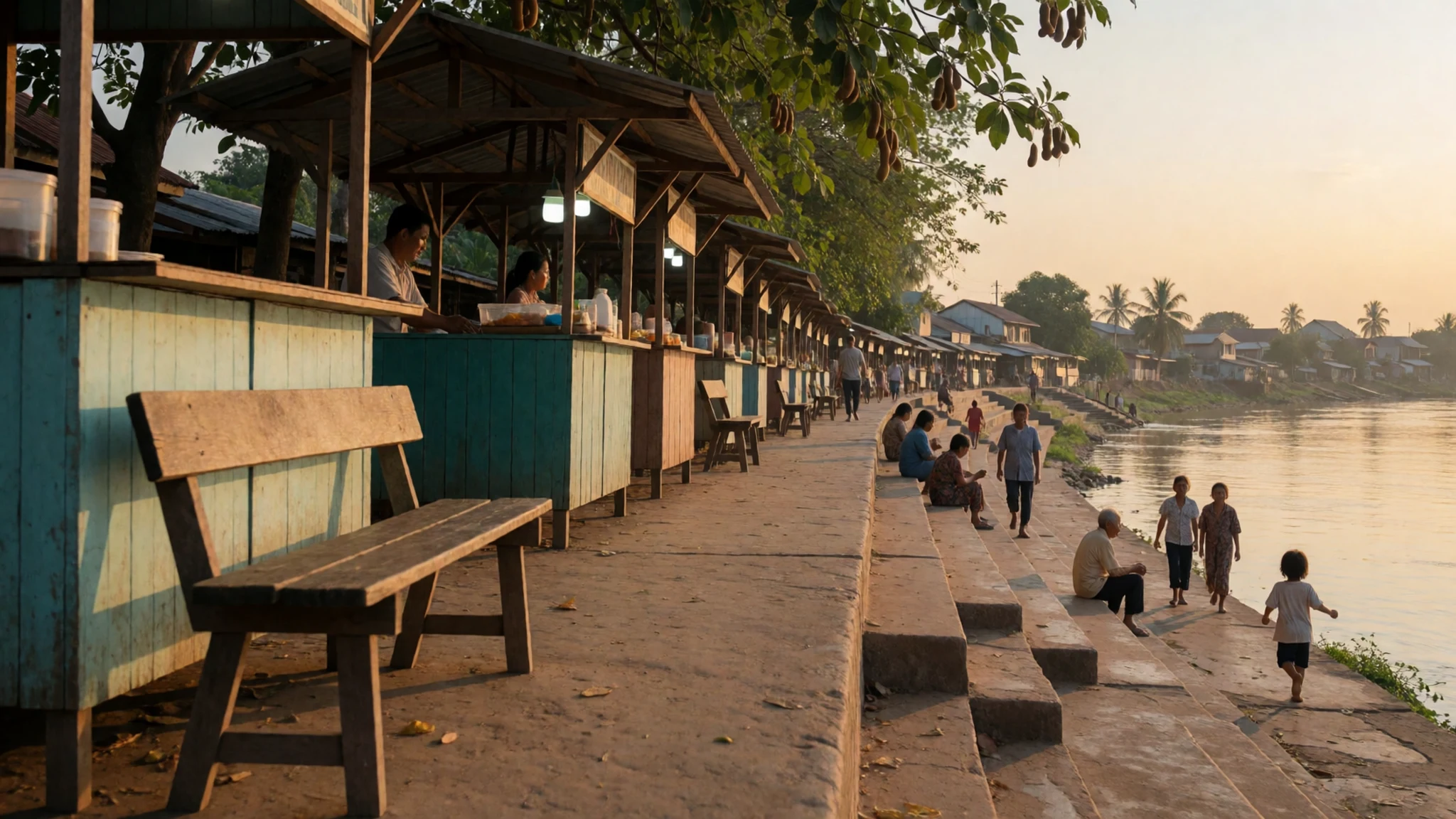
- Old colonial quarter — Streets behind the river
The French-era offices, villas and shophouses are the town's main architectural interest. Many are weathered, with shutters, tiled roofs and arcaded frontages, and some are still working shops. A slow walk of an hour or so covers it; early morning is coolest and the best time for photographs.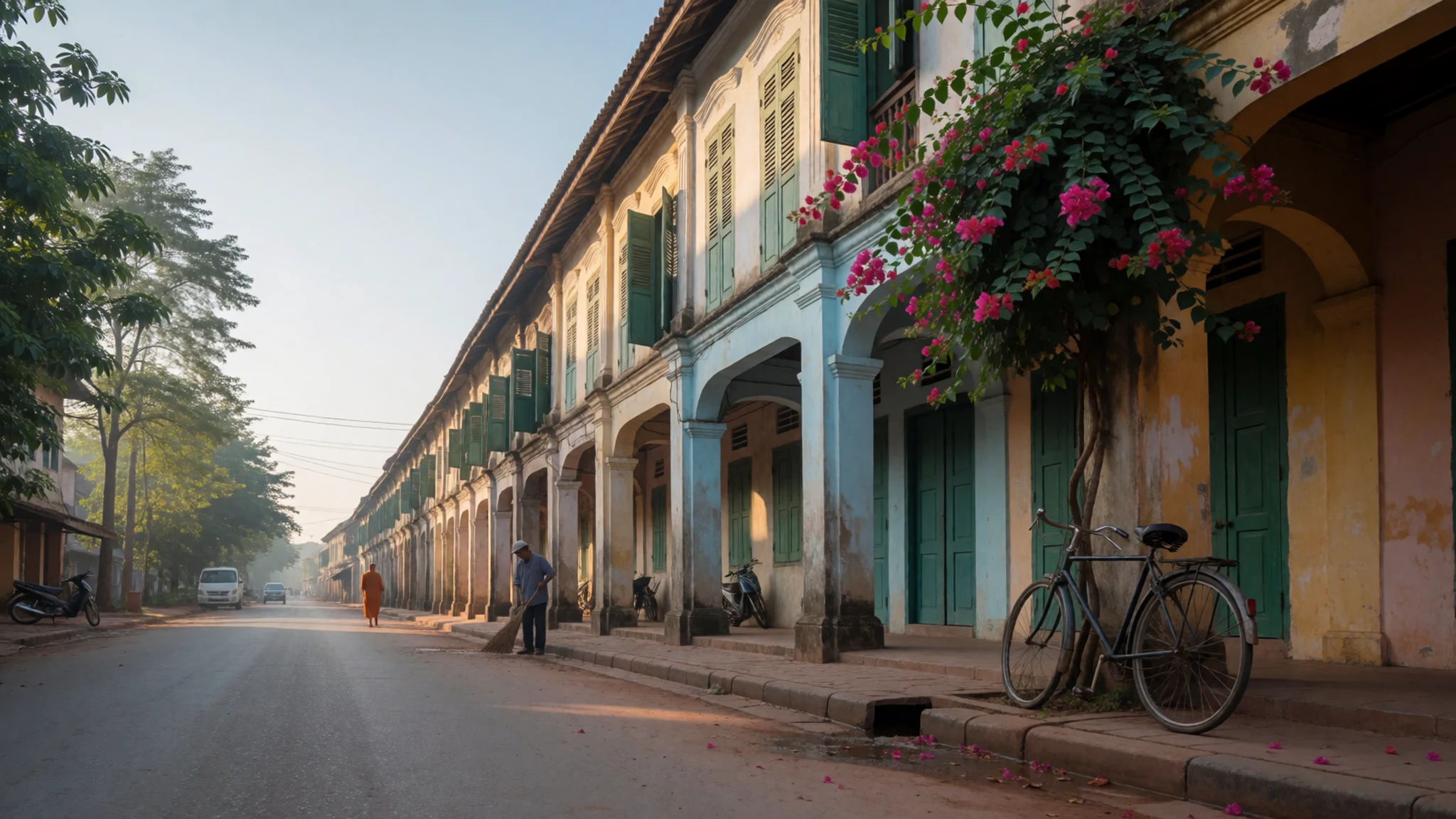
- Remnants of the Thakhek–Tân Ấp railway — In and near town
The railway to Vietnam through the Mụ Giạ Pass was planned but never finished, and traces survive in and around Thakhek. There is no polished heritage site, so ask at your guesthouse for current locations. It suits travellers who enjoy industrial history and unmarked ruins.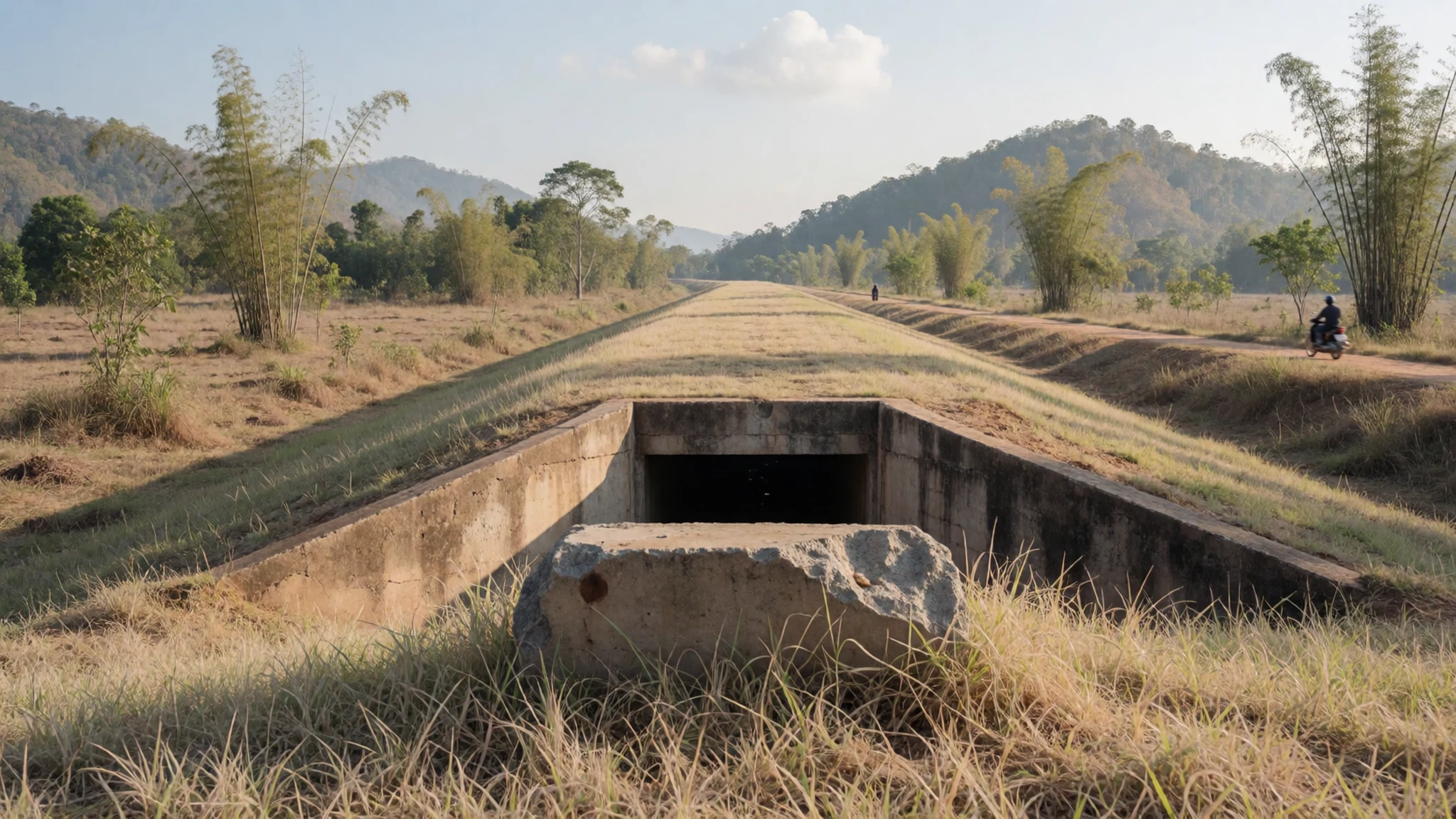
- Third Thai–Lao Friendship Bridge — On the Mekong, linking Thakhek and Nakhon Phanom
The bridge opened in November 2011 and carries road traffic between Laos and Thailand. It is more of a landmark than an attraction, but the view of the river from the approach shows why this crossing matters. Border formalities apply, so carry your passport and check visa rules in advance.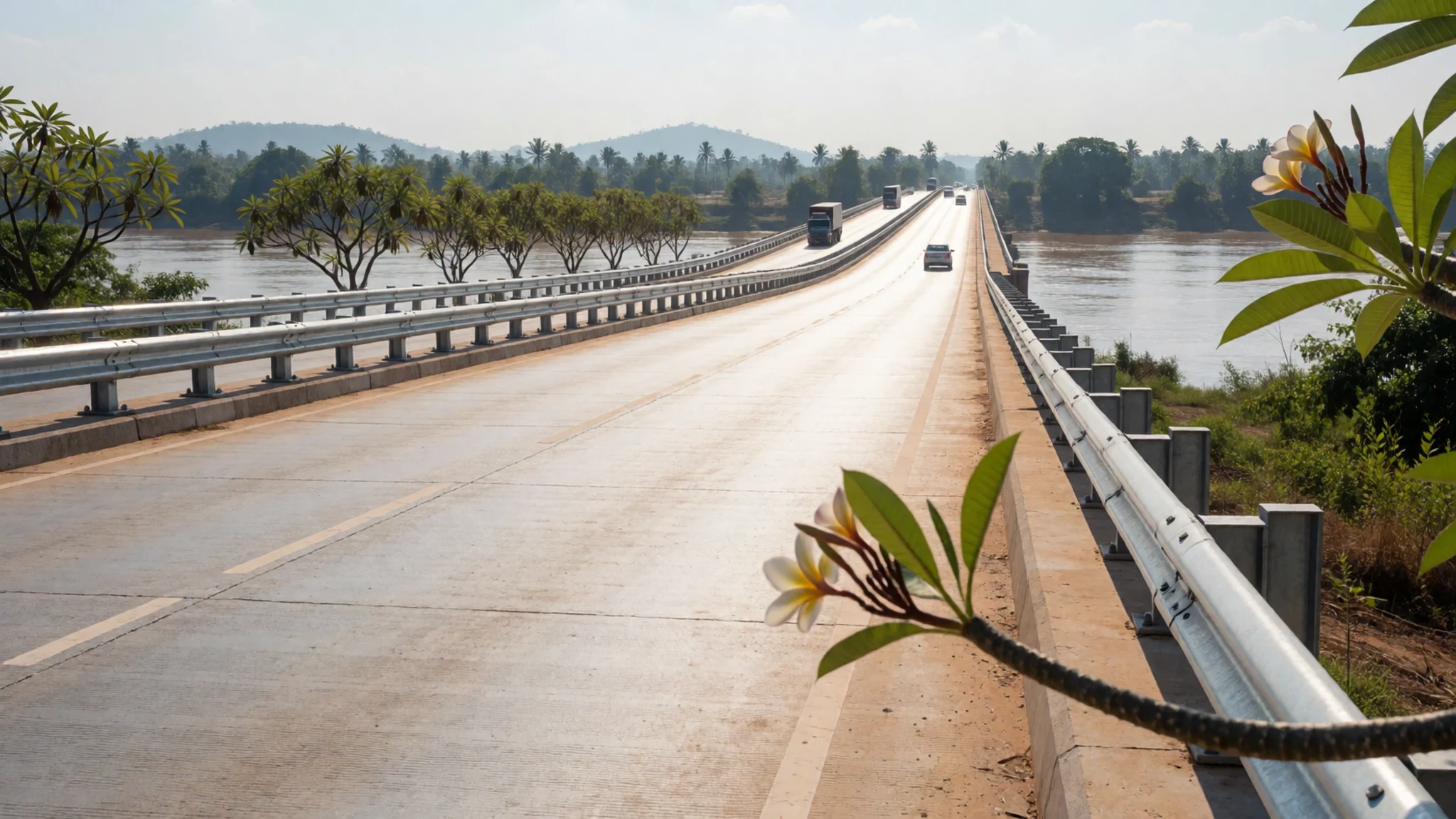
- Limestone caves of Khammouane — Countryside around the town
The province is known for karst cave country, and many visitors base themselves in Thakhek to reach it by motorbike or organised trip. Conditions change with the rains, and some routes are rough. Ask local guesthouses about current road and water levels, and take a torch and sturdy footwear.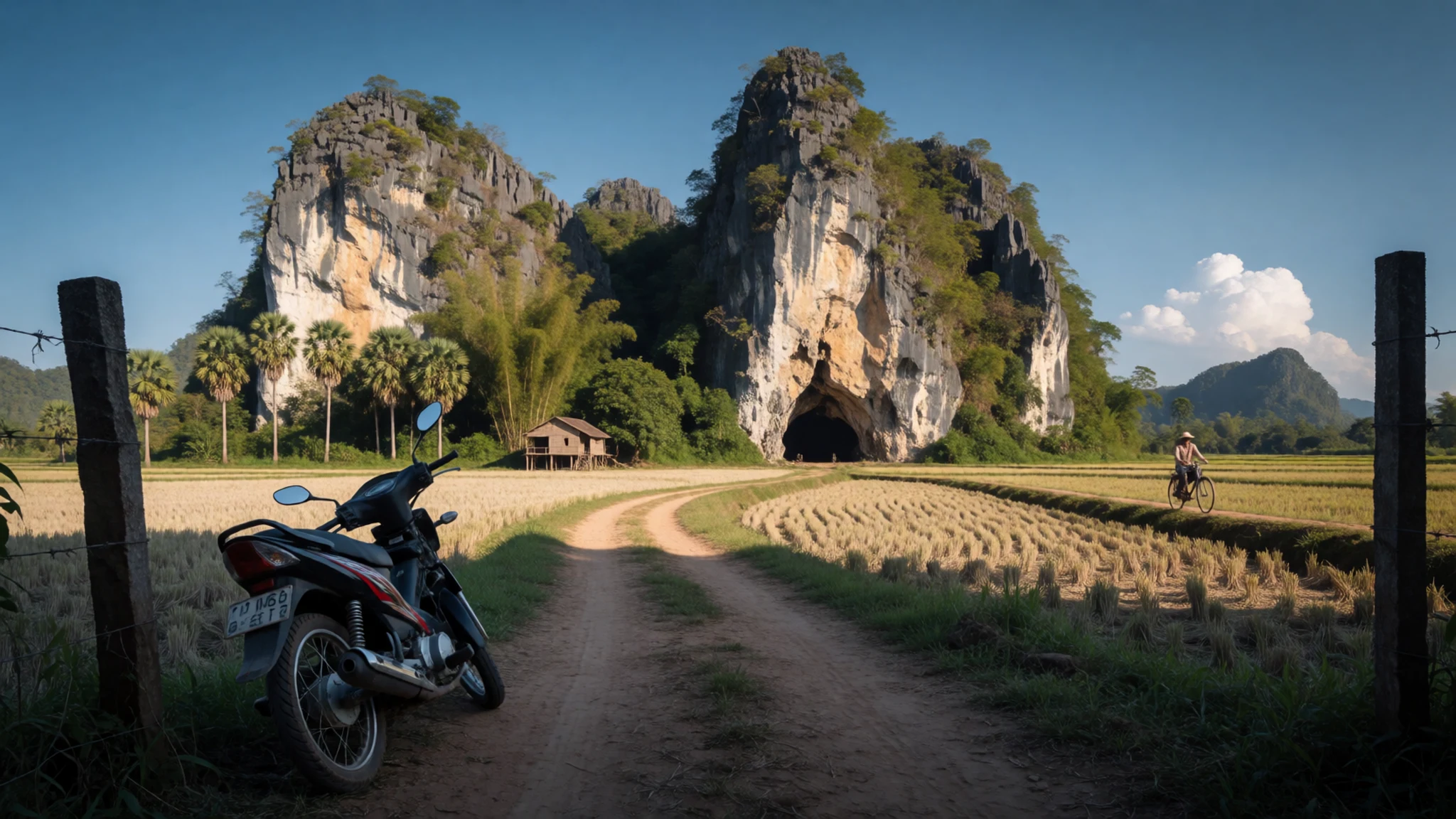
Culture
Thakhek is a Lao town with strong layers of other influences, and the mix is part of its identity. Lao Theravada Buddhism sets the rhythm of daily life, from monks collecting alms at dawn to festivals that fill temple grounds. Family and community matter, and polite, unhurried manners are valued over directness. The greeting is the nop, palms pressed together at chest height, with a higher position for elders and monks. The colonial past lingers in the buildings and in baguettes sold at breakfast, and the Vietnamese presence that grew under French policy left its mark on the town's family names, food and trading life. The Mekong ties the town to Thailand, and the bridge to Nakhon Phanom means Thai language, television and goods are part of everyday life. Rural customs remain strong in the surrounding villages, where communities often hold their own ceremonies, including the baci, a ritual in which strings are tied around the wrist to wish someone well. Alcohol, especially Beerlao and rice spirit, is a common part of celebrations. Tempers are kept in check in public; raising your voice rarely helps. Politics is not a casual topic, and the history of the Vietnam War era is still sensitive in parts of Laos, so listen more than you speak. Visitors should remove shoes and hats before entering a temple hall, and never point their feet at a Buddha image or a person's head.
What to wear
Traditional dress in Thakhek follows the wider Lao pattern. Women wear the sinh, a tubular wrapped skirt of handwoven silk or cotton, often finished with a decorated band at the hem and worn with a fitted blouse. Silk versions come out for weddings, temple festivals and formal occasions, and a pha biang, a narrow shawl worn over one shoulder, may complete the outfit. Men's formal wear is plainer: a collared shirt, sometimes with a woven sash or loose trousers for ceremonies. Villages in the wider region weave their own patterns and dye with plant colours, so textiles vary from place to place. In everyday life, most people in town wear practical modern clothes: T-shirts, jeans, shorts and trainers, with Thai styles easy to find across the river. Schoolgirls and many office staff still wear the sinh as a uniform, which keeps the tradition visible on weekdays. Visitors should dress for the heat and for modesty. Light cotton or linen that covers the shoulders and knees works for temples and for walking in town, and a sun hat helps from March to May. Choose sandals that slip off easily at temple doors, and bring sturdy shoes with grip if heading to caves or rough tracks, as limestone is slippery when wet. In the rainy season carry a light waterproof jacket, since sudden downpours are common. Swimwear should stay at the river or cave pools, not in town.
What to eat
- Khao niao with jeow — Morning market and roadside stalls
Sticky rice is the staple, eaten by hand and rolled into small balls. It comes in woven baskets alongside jeow, a chilli dip that can be smoky, sour or fishy. Find it at the morning market and almost any simple eatery.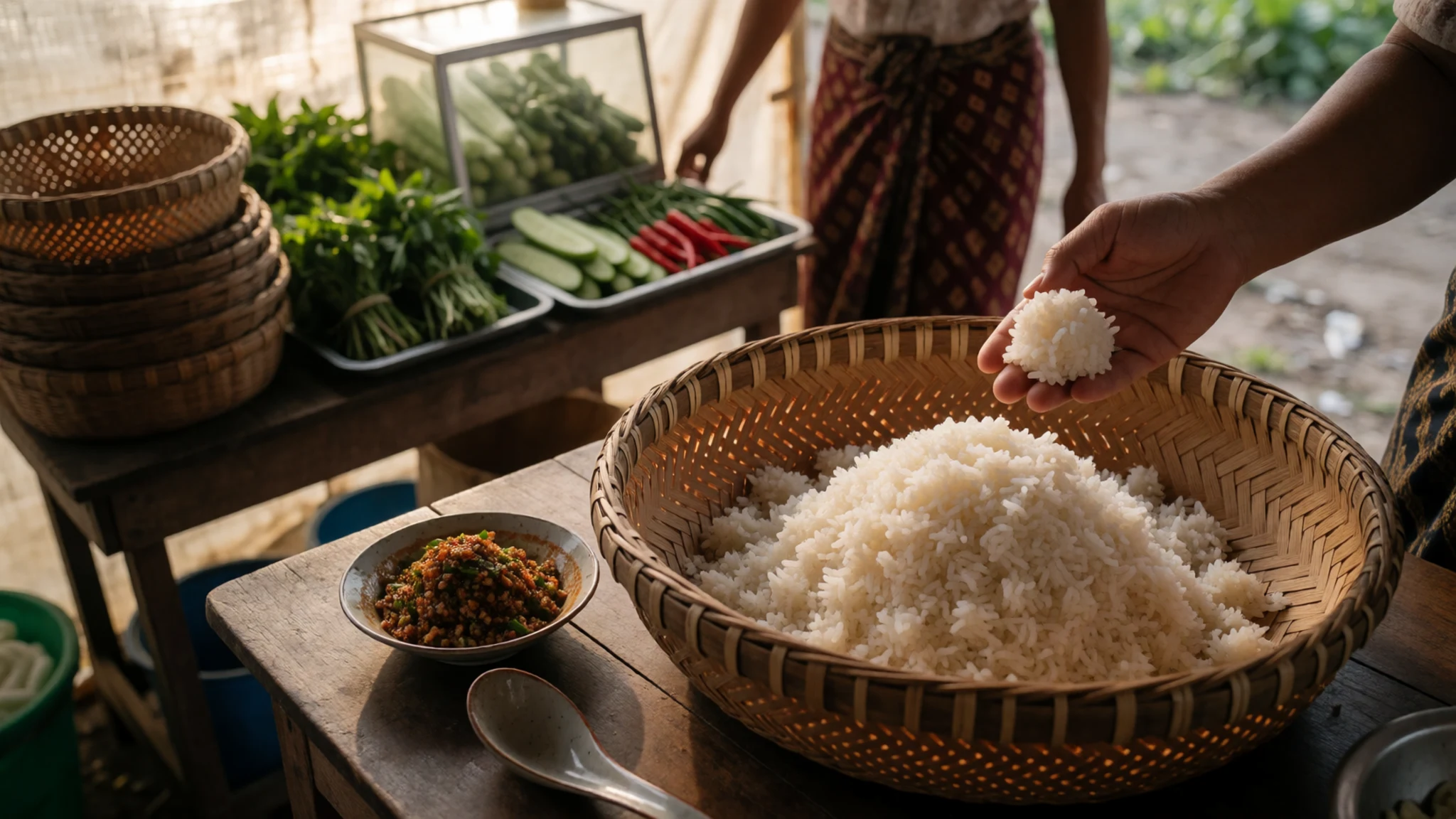
- Laap — Local eateries around town
Laap is a salad of minced meat or fish tossed with lime, herbs, chilli and toasted ground rice. It can be fiery, so ask for it mild if unsure. It is usually eaten with sticky rice and raw leaves, and is a good lunch.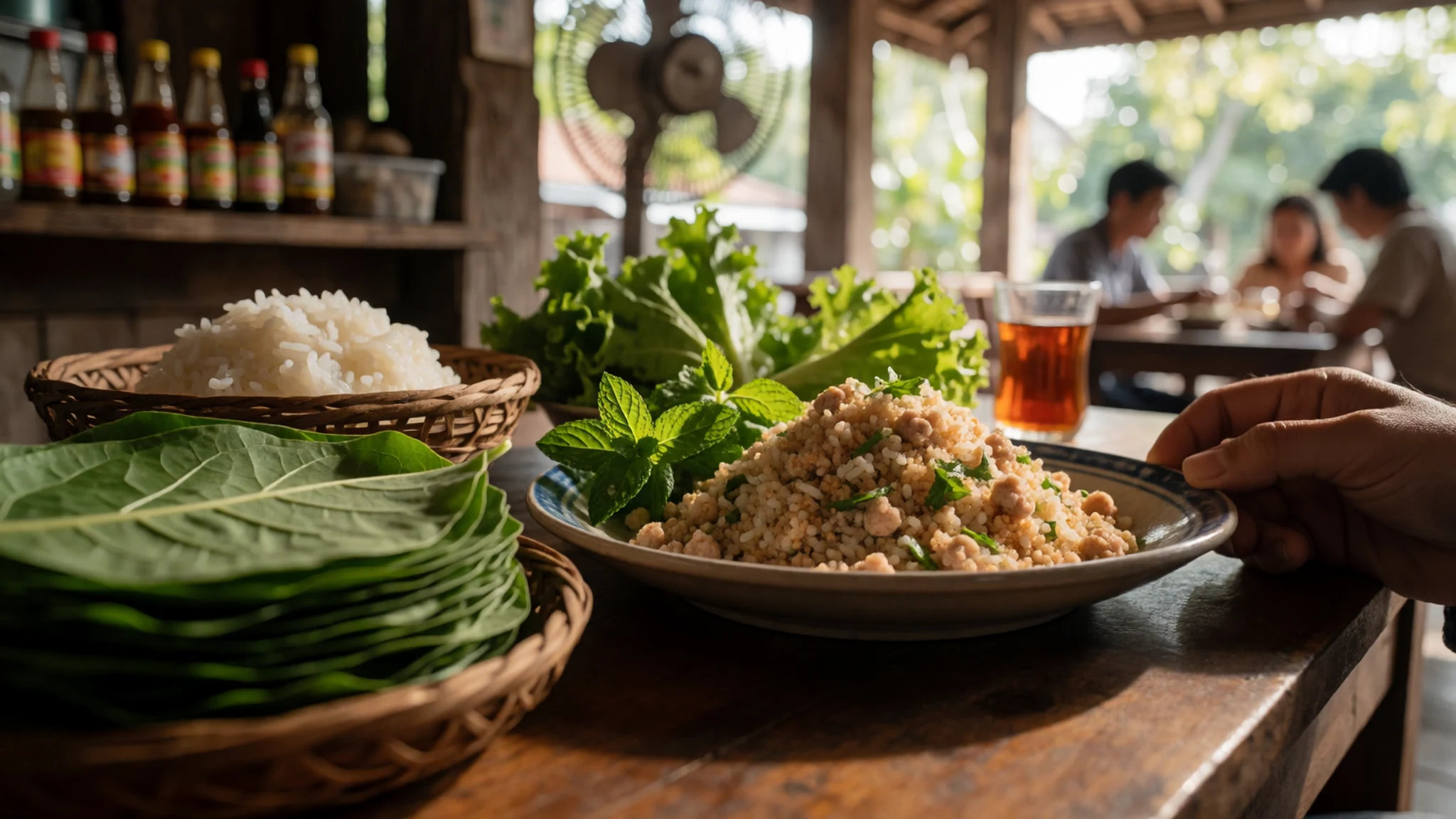
- Tam mak hoong — Street stalls and riverfront vendors
The Lao papaya salad is pounded in a mortar with chilli, lime, fermented fish sauce and sometimes crab. It is saltier and funkier than the Thai version, which many visitors prefer. Say if you want less chilli before it is pounded. - Khao piak sen — Noodle stalls near the market
A comforting bowl of thick, chewy rice noodles in a clear chicken broth, topped with fried garlic and herbs, with lime and chilli at the table. It is a common breakfast and feels right on a cool morning in the dry season. - Khao jee with pâté — Bakery carts and breakfast stalls
A baguette stuffed with pâté, vegetables and chilli sauce, a legacy of French rule that Thakhek's Vietnamese-influenced trading community helped popularise. It is cheap, filling and easy to eat on the move. Pair it with strong, sweet Lao coffee.
Plan it
Best time. November to February, when the weather is cooler and drier. March to May is hot, and the wet season from roughly June to October brings heavy rain that can affect rural roads and caves.
How long. 2–3
Getting there. Many visitors reach central Laos through Vientiane's Wattay International Airport, then continue south by road. Thakhek can also be reached across the Mekong from Nakhon Phanom in Thailand via the Third Thai–Lao Friendship Bridge, or overland from Vinh in Vietnam. Check current routes and border rules before travelling.
Budget. low
Tips
- Carry cash in small notes, as cards are rarely accepted outside larger places
- Start early to avoid the afternoon heat, especially from March to May
- Ask your guesthouse about road and cave conditions after rain before heading out
- Carry bottled or filtered water and a torch for cave visits
- Check visa and border-crossing rules with official sources before using the bridge
Etiquette
- Remove shoes and hats at temple doors and dress with shoulders and knees covered
- Keep your voice calm in public and greet elders with a nop
- Ask before photographing people, especially monks and villagers
Nearby
Sources
- Wikidata Q11824781 (CC0)
- Wikipedia: Thakhek (rev 1376959836) (CC BY-SA 4.0)
- Wikivoyage: Khammuan (rev 5297964) (CC BY-SA 4.0)