Termez
Termez, Uzbekistan
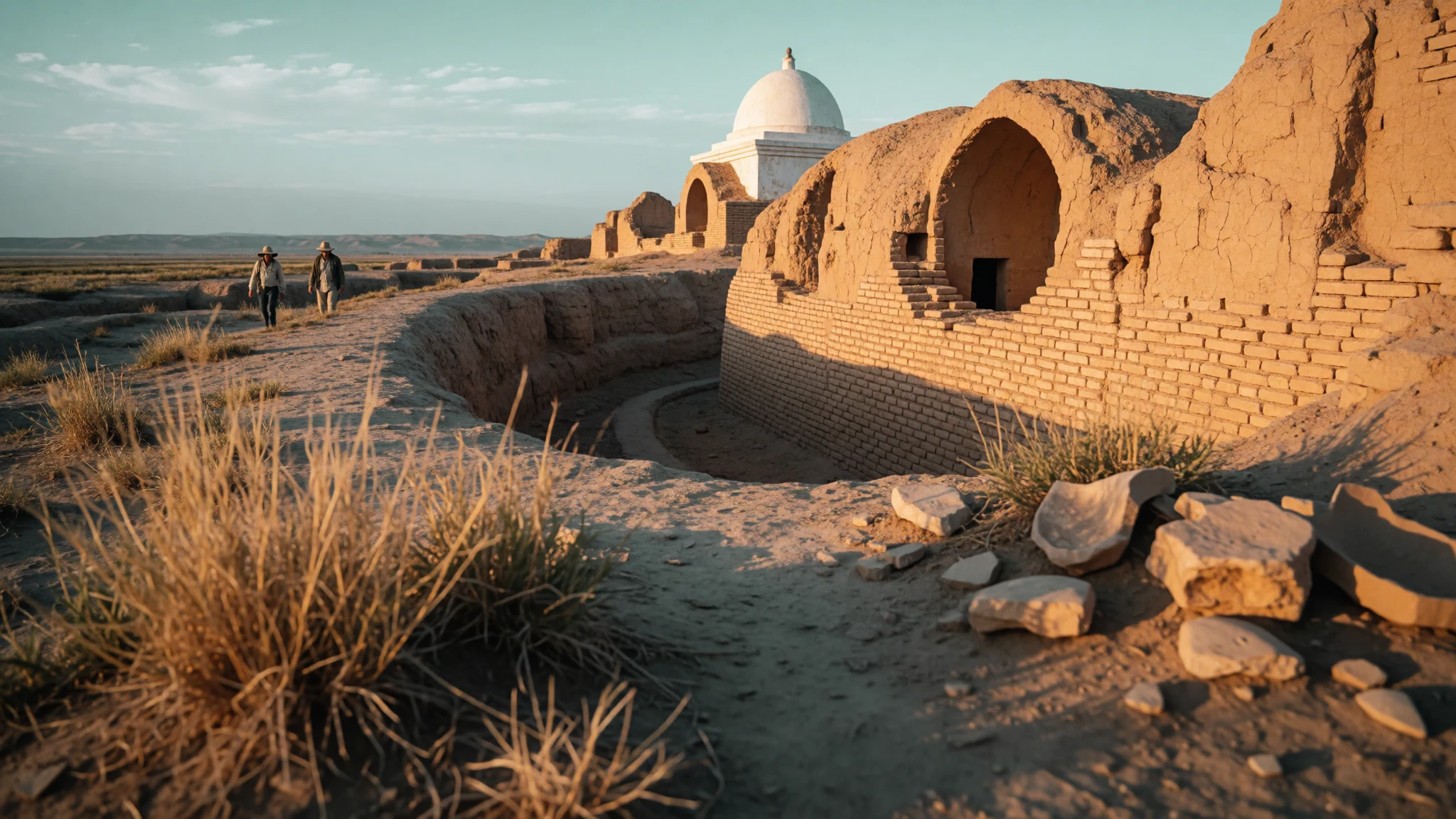
Termez is a border town on the Amu Darya where Greek, Buddhist and Islamic ruins lie scattered across a hot plain, with Afghanistan in view.
The place
Termez sits on the northern bank of the Amu Darya, the river the Greeks called the Oxus, in the far south of Uzbekistan, with Afghanistan visible on the opposite shore. About 136,200 people live in the modern city, at 302 m above sea level, and it is the administrative centre of Surxondaryo Region. It is first of all a border town. The Hairatan crossing is close, the railway and main roads funnel towards the river, and Soviet forces once used the city as a base for operations in Afghanistan. Customs posts and uniforms still shape daily life, and some areas near the frontier are closed to casual wandering.
The modern centre is an ordinary regional town of wide boulevards, plane trees, Soviet-era blocks and busy bazaars, dusty and very hot in summer. The reason to come is the ring of ruins around it. Old Termez, the earlier city, lies about 12 km west of the centre, and the plain and hills around it hold the remains of Buddhist monasteries, a stupa tower, a caravan halt and the shrine of a Sufi saint. A museum in town helps make sense of what lies in the ground outside.
Travel here is unhurried and low-key. Tourist services are modest, English is not widely spoken, and the sights are strung out along the river, so a day of sightseeing usually means arranging a taxi. The reward is space and quiet: most sites are visited by only a few people at a time. Termez works well as a two or three day stop on a loop through southern Uzbekistan, or as the last stop before a crossing into Afghanistan.
Its story
Termez has been a crossing point on the Amu Darya for a very long time, and its history is largely a record of who held that crossing. Wikidata gives a founding date of 498 BCE, though the earliest centuries are thinly documented, and a Persian epic even places the town in a mythical age. Alexander the Great's army moved through the region in 329 BC. Many scholars now identify Termez as his Alexandria on the Oxus, although others prefer Ai-Khanoum. Any Hellenistic remains probably lie buried beneath later layers. After Seleucid rule the area passed to the Greco-Bactrian kingdom, and under the Kushans the Bactrian language replaced Greek in administration.
The Kushan period was when Termez grew into an important stop on the Silk Road and a centre of Buddhism, known in Chinese sources as Ta-li-mi. Monasteries and stupas rose on the hills and beside the river, and the Gandharan artistic style arrived with the caravans. In 689 AD Arab armies took the city, and over the following centuries Islam and then Turkic rulers replaced the Buddhist order. The Karakhanids built a domed mausoleum over the grave of the ninth-century mystic Al Hakim At-Termizi, and the site has drawn pilgrims ever since.
In 1218 Shah Muhammad II of Khwarezm ordered the execution of Mongol envoys who had come to discuss trade, and Mongol conquest soon followed. The old city did not recover, and the modern town grew up to its east. Later rule passed through the Chagatai Khanate, the Timurids, the Khanate and Emirate of Bukhara, Russia and the Soviet Union, before Uzbekistan took over as the present state.
What to see
- Termez Archaeological Museum — Central Termez
The museum in Termez gathers finds from excavations at sites across Surxondaryo Region, and it is the sensible first stop. Buddhist sculpture, pottery and coins from the Kushan and Bactrian periods make the bare mounds outside much easier to read. Opening times change, so check locally before building a day around it.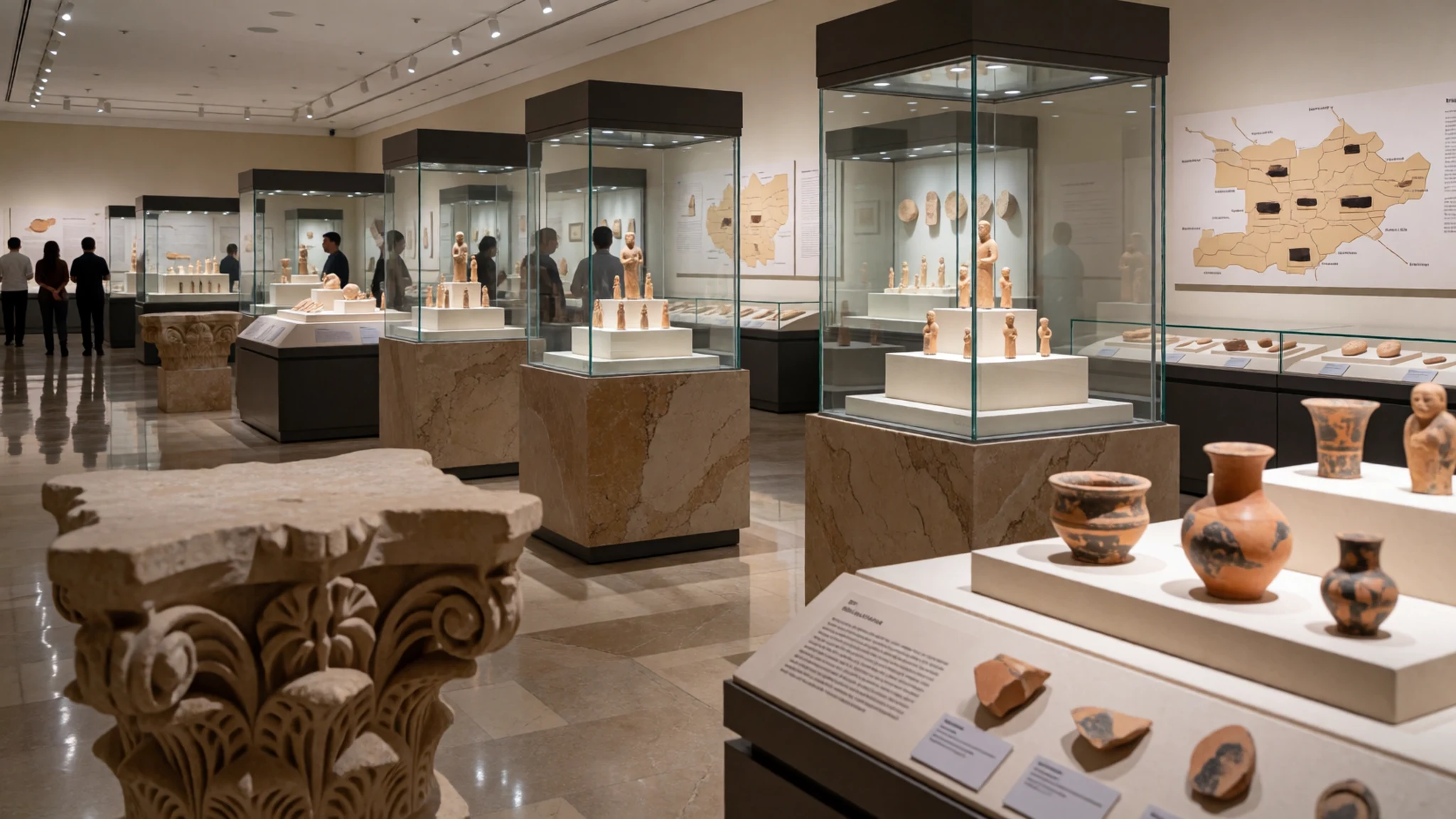
- Zurmala Stupa — North-west of the modern centre
The Zurmala Stupa is a squat, rounded brick tower on the plain north-west of the modern centre, what remains of a Buddhist monument raised around the third century AD. It was once faced with tiles. Visible from the road, it makes a short, easy stop and a good place to understand the scale of the old stupas.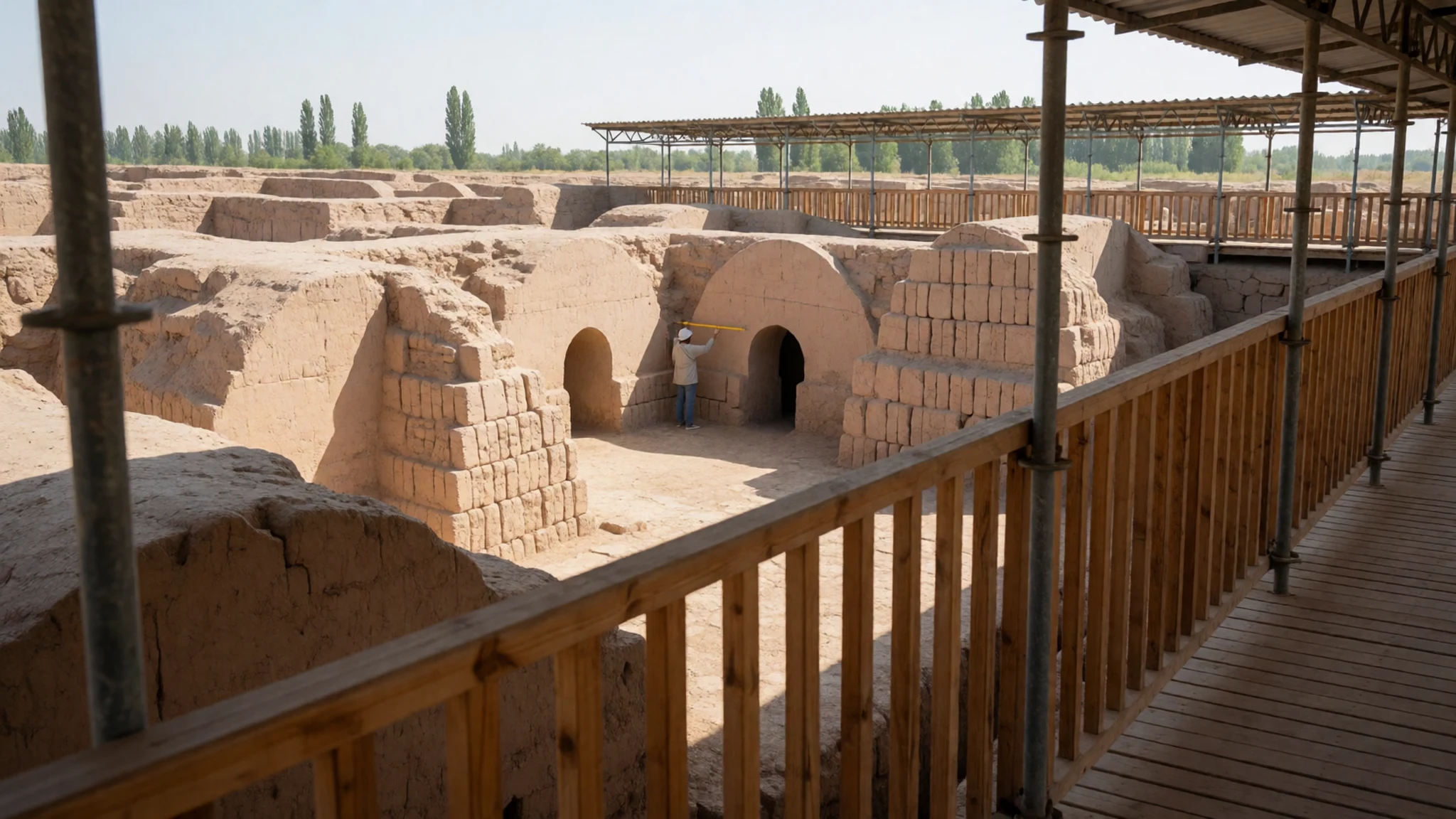
- Fayaz Tepe — Old Termez area, west of the centre
Fayaz Tepe is a Buddhist monastery from about the third century AD, partly rebuilt so that its stupa and layout can be followed on foot. It lies west of town, close to Kara Tepe and the shrine of Al Hakim At-Termizi, so the three combine well into one outing. A small entry and photography charge applies; confirm at the gate.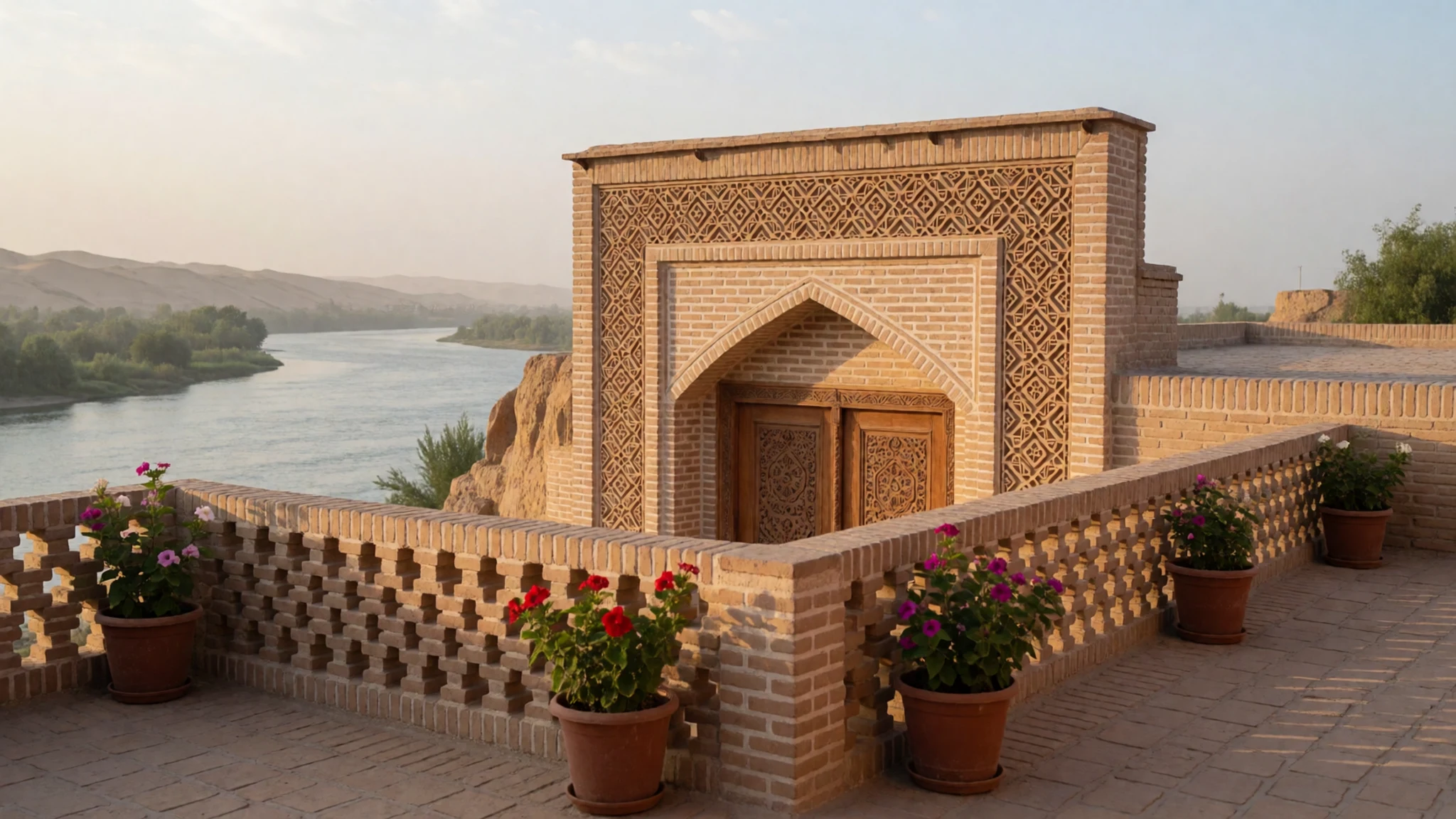
- Kara Tepe — Old Termez area, west of the centre
Kara Tepe is a Buddhist cave monastery spread across three low hills, begun in the late first century AD. It flourished for centuries and was abandoned after the Arab conquest. Much is eroded, so imagination helps, but the cells and passages cut into the rock and the open view over the river plain reward a slow walk.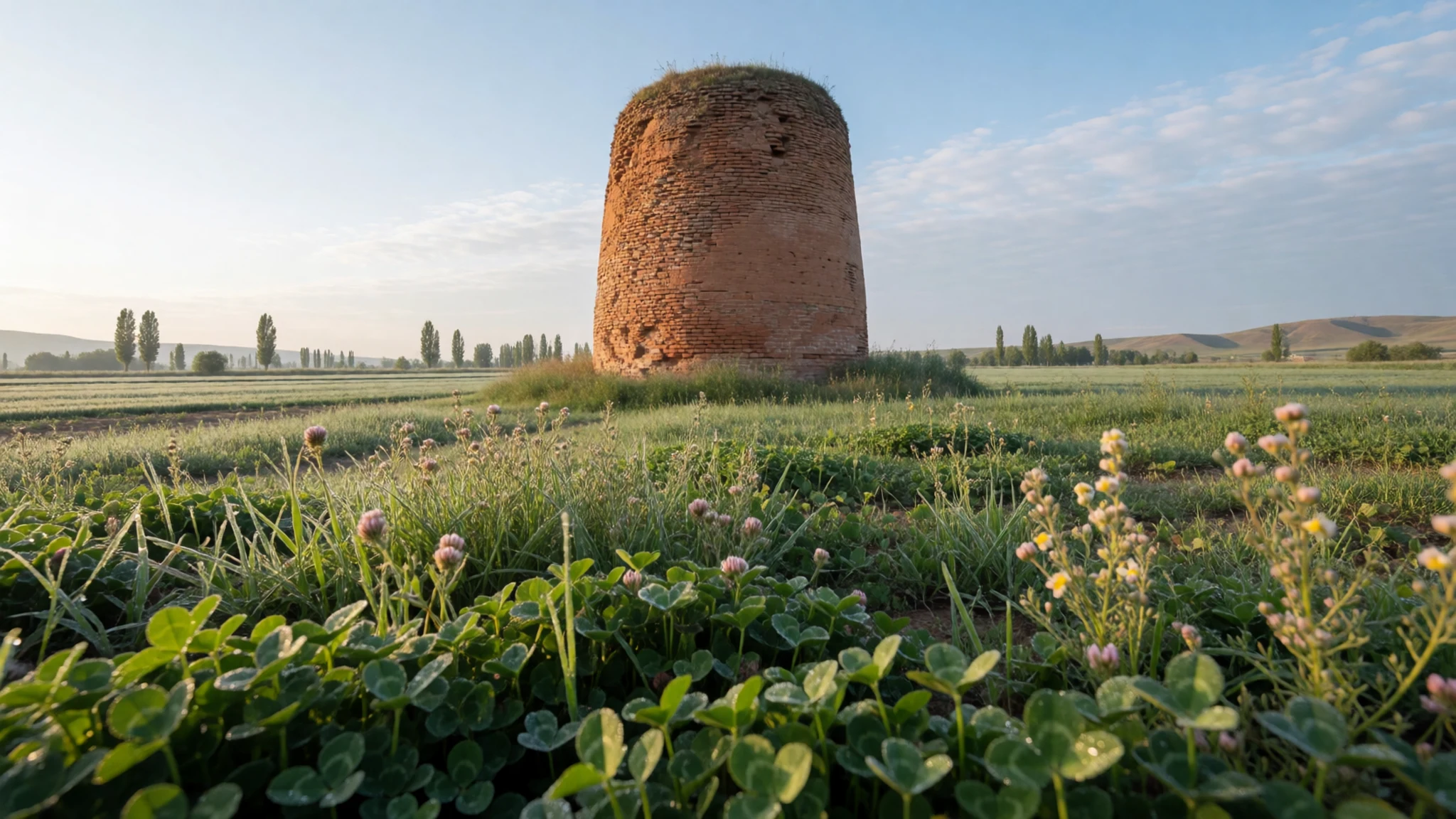
- Al Hakim At-Termizi complex — Old Termez, above the river
This complex stands on a hill above the Amu Darya and holds the mausoleum of a ninth-century Sufi saint. Pilgrims come throughout the year, and the terrace gives views across the water to the Afghan shore. It is an active shrine rather than a museum, so the mood is quiet and visitors should dress and behave accordingly.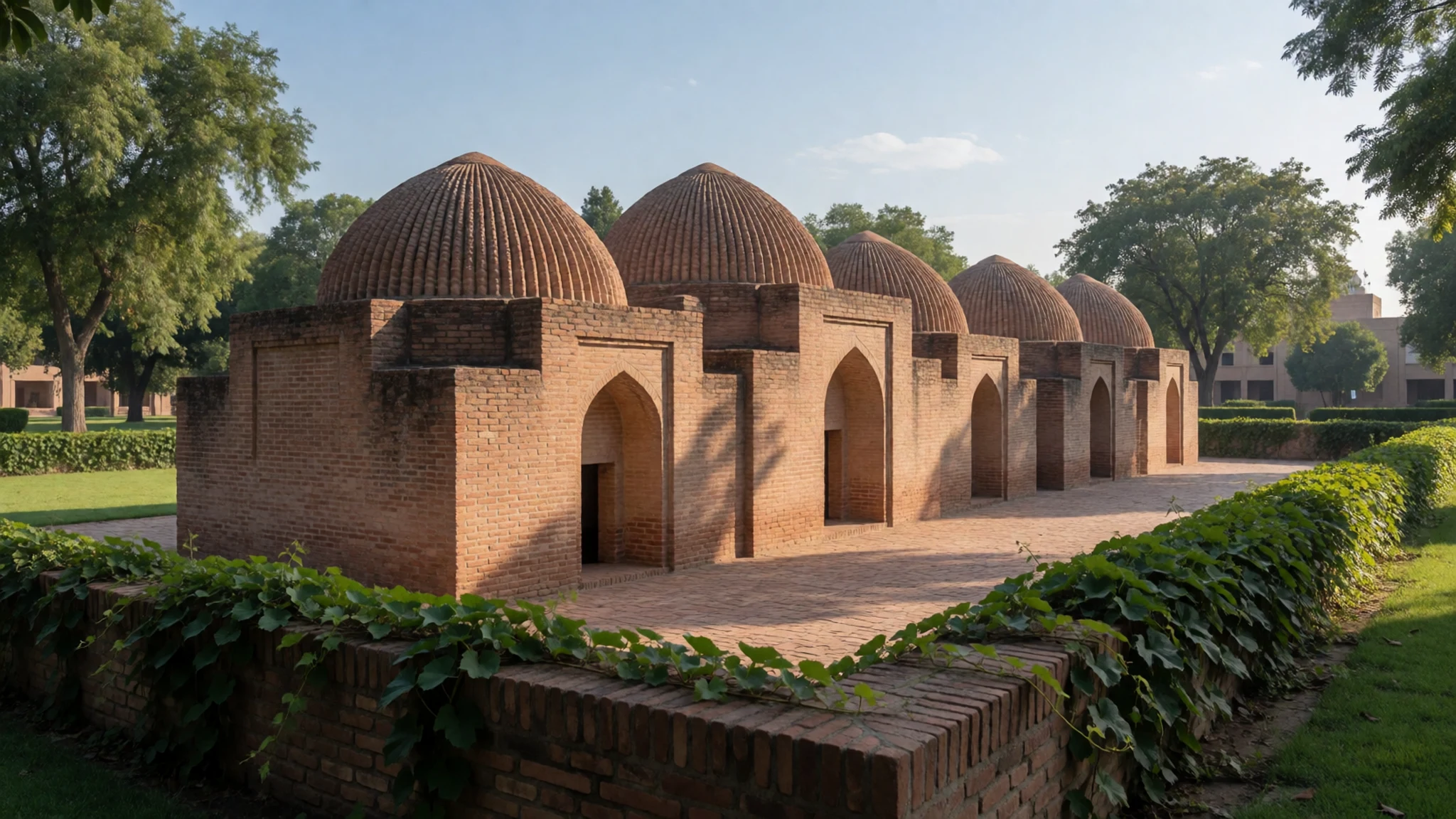
- Sultan Saodat ensemble — Eastern Termez
Sultan Saodat is the burial ground of a Termez clan of sayyids, regarded as descendants of the Prophet and deeply revered by Muslims. The group of funerary buildings sits on the eastern side of the modern city. It is less visited than the river-side shrine, and a calm, respectful visit suits it best.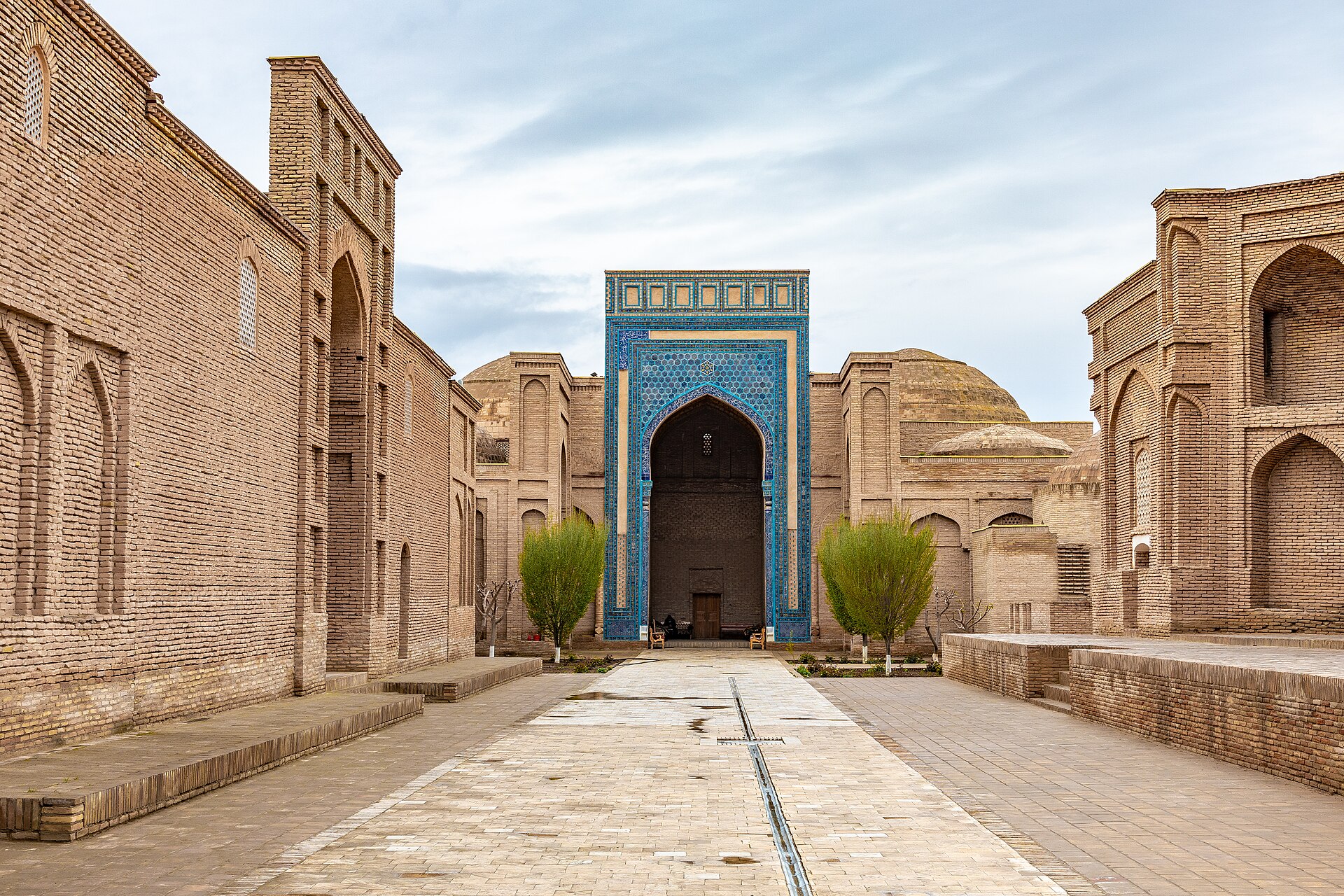
Culture
Termez is a Muslim-majority city where Uzbek and Russian are both heard in daily life, and its culture is shaped by its position on the frontier. For centuries it was a Buddhist centre, and the monastery ruins around it are a reminder of that. Today the city's religious life centres on Sufi tradition. The shrine of Al Hakim At-Termizi and the Sultan Saodat burial ground are places of real pilgrimage, with families visiting to pray, recite and sit in the courtyards, not simply to admire the architecture.
Hospitality is part of the social code. Tea is offered readily, bread is treated with respect and is never put face down or thrown away, and a guest who is invited into a home will usually be fed more than they can eat. A greeting with a hand on the heart is a warm and easy gesture for visitors to return. The border shapes behaviour too: soldiers and police are common, and people are used to being asked for papers.
The Soviet period left its own layer, visible in the street plan, the apartment blocks and the Russian still spoken by older residents. Museums and archaeological work in the region have also made local people proud of the Greek and Buddhist past beneath their feet.
At shrines such as Al Hakim At-Termizi and Sultan Saodat, cover shoulders and knees, remove shoes where asked, keep your voice low, and ask before photographing any worshipper; never photograph soldiers, the border or the bridge.
What to wear
Fashion in Termez draws on the wider Uzbek wardrobe, with local touches from the Surxondaryo valleys. Traditional dress for men includes the chapan, a long quilted cotton or silk robe, tied with a sash, and the doppi, a small embroidered skullcap. Women's festive dress uses ikat, the resist-dyed silk and cotton cloth known as adras and atlas, cut into loose long dresses with matching trousers, often topped with a bright headscarf. Suzani, hand-embroidered cloth, appears in wedding gifts and home furnishings rather than everyday clothes. These garments are most often worn at weddings, holidays and family celebrations.
On the street, daily dress is practical and fairly modest. Men wear shirts and trousers, and women wear long skirts or dresses, often in bold patterns, with a scarf. Younger people in the city favour jeans, trainers and fitted tops, and many older residents still wear a doppi or a lightweight robe. Summer heat shapes everything, so light, loose fabrics are the norm.
Visitors should plan around heat and religious sites. In summer, wear breathable cotton or linen with a hat and sunglasses, and carry a light scarf. At shrines, shoulders and knees should be covered, and women are usually expected to cover their hair; shorts and sleeveless tops are best avoided in town too. Sturdy closed shoes or trainers suit the dusty, uneven ground at the ruins, and they come off easily at shrine doors.
What to eat
- Plov — Plov centres and busy local eateries, mostly at lunchtime
Plov is the rice, carrot and meat dish at the centre of Uzbek eating, cooked in a large cauldron over a fire. In Termez it is a lunchtime staple, usually served in the late morning until it runs out, and a good test of any local eatery. - Shashlik — Charcoal grills along the main streets and near the bazaar
Shashlik is skewered lamb or beef grilled over charcoal and served with raw onion, flatbread and tea. It is simple, filling and widely available, and the smoke from the grills is often the first sign of a good evening spot. - Samsa — Bakery stalls and tandoor ovens at the bazaar
Samsa are baked pastries filled with spiced minced lamb and onion, traditionally cooked against the walls of a clay tandoor oven. They are eaten hot as a snack or a light lunch and are easy to buy while sightseeing. - Non — Neighbourhood tandoor bakeries and the main bazaar
Non is the round, domed flatbread of Uzbekistan, baked in a tandoor and often stamped with a pattern. It is eaten with every meal and is usually best straight from the oven, when it is crisp at the edges and soft in the middle. - Lagman — Tea houses and local lunch eateries
Lagman is a bowl of hand-pulled noodles in a thick broth of meat and vegetables. The dish came to the region from Uyghur cooks and is now a common lunch, especially welcome on cooler days.
Plan it
Best time. April–May and October–November. Summers are long and sweltering in this arid climate, and winters are short and cool, so spring and autumn make walking between the ruins far more comfortable.
How long. 2–3
Getting there. Termez has its own airport with domestic connections, so check current schedules. By rail, an overnight train runs from Tashkent but not every day, and the line from Samarkand runs overnight too, so check timetables. Buses and shared taxis also run from Samarkand and Bukhara. The last leg into the centre is by taxi from the station or bus stand.
Budget. low
Tips
- Check train and flight schedules close to travel, as services are not daily
- Visit the outlying ruins early in the morning to avoid the worst of the heat
- Carry cash for entry fees, taxis and market food, and keep small notes handy
- Carry plenty of water and sun protection, as there is little shade at the sites
- The city website, http://termizsh.uz/uz/?h=1, may help with local information; bring your passport for checkpoints
Etiquette
- Dress modestly and remove shoes where asked at shrines
- Ask before photographing people, and never photograph soldiers, the border or the bridge
- Accept tea and bread when offered, as refusing outright can seem rude
Nearby
Sources
- Wikidata Q491879 (CC0)
- Wikipedia: Termez (rev 1376405204) (CC BY-SA 4.0)
- Wikivoyage: Termez (rev 5324562) (CC BY-SA 4.0)
- Complex of Sultan Saodat — Farkhod Sayd (CC0 1.0)
- Termiz arxeologiya muzeyi — Yormatov Javohir (CC BY-SA 4.0)
- Fayaz Tepe, Stupa — Jona Lendering (CC0 1.0)
- Termiziy maqbarasi — Jonibek Qo'zimurodov (CC BY-SA 4.0)
- Hokim at-Termiziy mavsoleum — Kraftabbas (CC BY-SA 4.0)
- Qirqqiz qalʼasi — Jonibek Qo'zimurodov (CC BY-SA 4.0)
- North side of the Zurmala Stupa — Muso (CC BY-SA 4.0)
- Relief map of Uzbekistan — NordNordWest, Виктор_В (CC BY 3.0)


