Khiva
Khiva, Uzbekistan
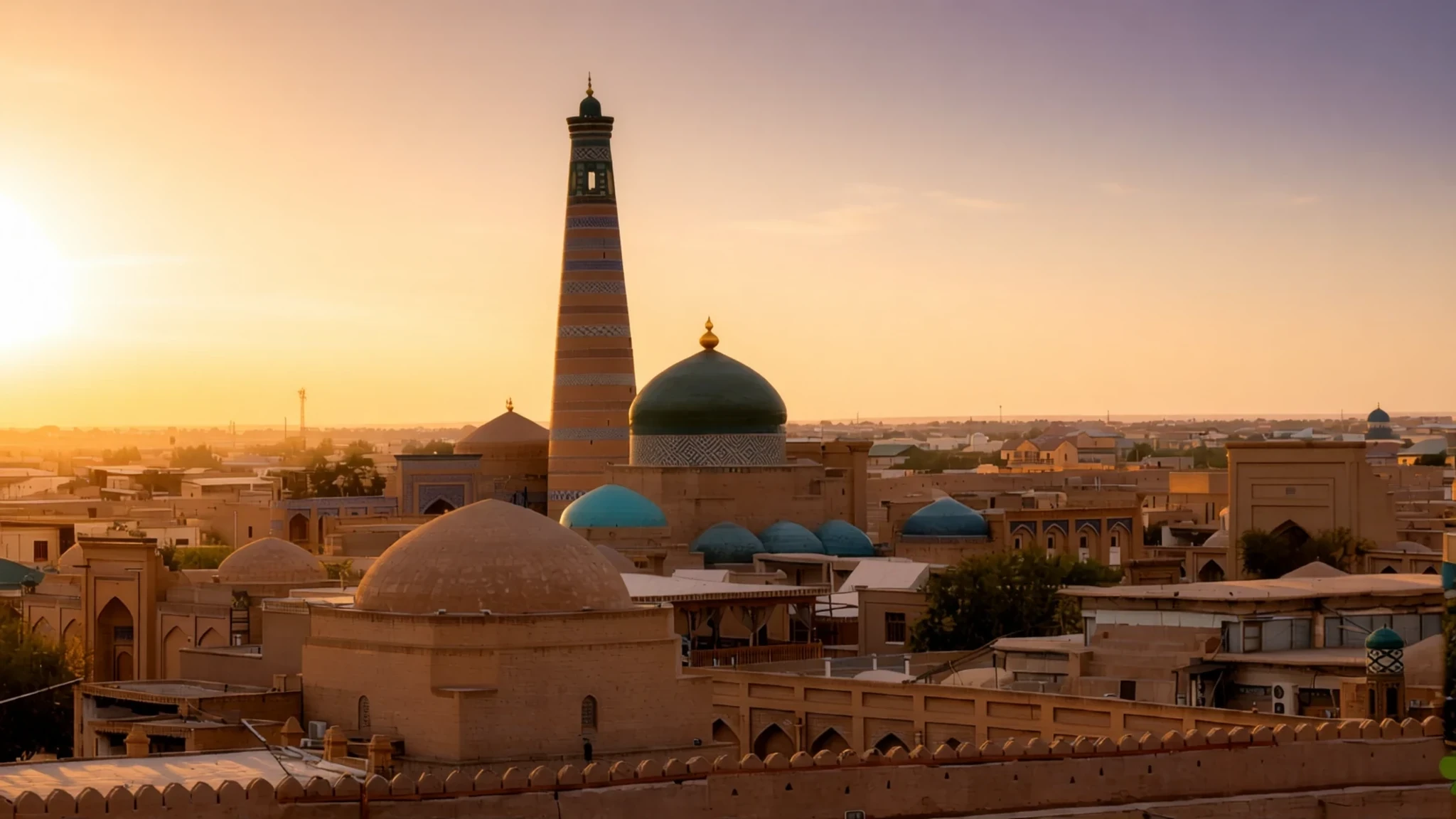
A walled Silk Road oasis where the old town still feels lived in, best seen early or late when the tour groups thin out.
The place
Khiva is a city of about 105,000 people in Khorezm, north-western Uzbekistan, sitting at around 109 metres above sea level on flat oasis land. Two landscapes meet here. Outside the walls, modern avenues and Soviet-era blocks carry everyday traffic. Inside them lies Itchan Kala, a walled old town of narrow brick lanes, minarets, carved wooden columns and domed bazaars packed closely together. The old town was the first site in Uzbekistan to be placed on the World Heritage List, and it remains the reason most visitors come.
The old quarter was heavily restored during the Soviet period, so it looks cleaner and more finished than a medieval town might have. Some people feel that smoothing removed texture; others argue it is the reason the buildings survived at all. Many houses now operate as guesthouses, and families still live along the quieter lanes, so the place is far from a stage set.
Irrigated fields around the town show how the oasis depends on water, while the desert lies only a short distance beyond. The climate is sharply seasonal: summers are hot and dry, and midday is best spent indoors or in shade. Day-trip coaches usually arrive mid-morning and leave by late afternoon, so the early and late hours belong more to residents and overnight visitors.
Its story
Khiva's history begins with settlement that archaeologists trace back to antiquity, and the city's own founding is dated to around 501 BCE. Early on, the region's ruling class spoke Khwarezmian, an Eastern Iranian language. Over the centuries Turkic peoples took power and gradually turned the area into a land where most people spoke Turkic.
The first written accounts of the town come from Muslim travellers who passed through it, and digs have turned up older habitation. Khiva grew into the seat of a khanate ruled by the Kongirad dynasty of Uzbek origin, and it held that role for generations. Its location on the edge of two deserts made it a crossroads, but the same caravan routes that carried goods also carried traders in people.
Slavery became a central part of the town's economy. Khiva and Bukhara were, for several centuries, leading centres of the captive trade, and Persians and Russians were among those seized and sold. Many captives worked on building projects inside what is now Itchan Kala, which is why its grand walls and palaces carry a painful history alongside their beauty.
Russia later pressed into the region and reduced the khanate to a protectorate. Khiva then served as the capital of the Khorezm People's Soviet Republic, and during the Soviet period the old town was restored, a process that shaped the look visitors see now. The astronomer and polymath al-Biruni is said to have been born in Khiva or in the nearby town of Kath.
What to see
- Kutli Murad Inak Madrasah — Itchan Kala, near the Kalta Minor
Built during the khanate and once among the wealthiest schools in Khiva, this madrasah owned a great deal of land that paid for its teachers and students. Its pupils lived in small cells around the courtyard, and the school's wealth shows in its scale. Stop here on the way to the Kalta Minor, then check the official site for current opening arrangements.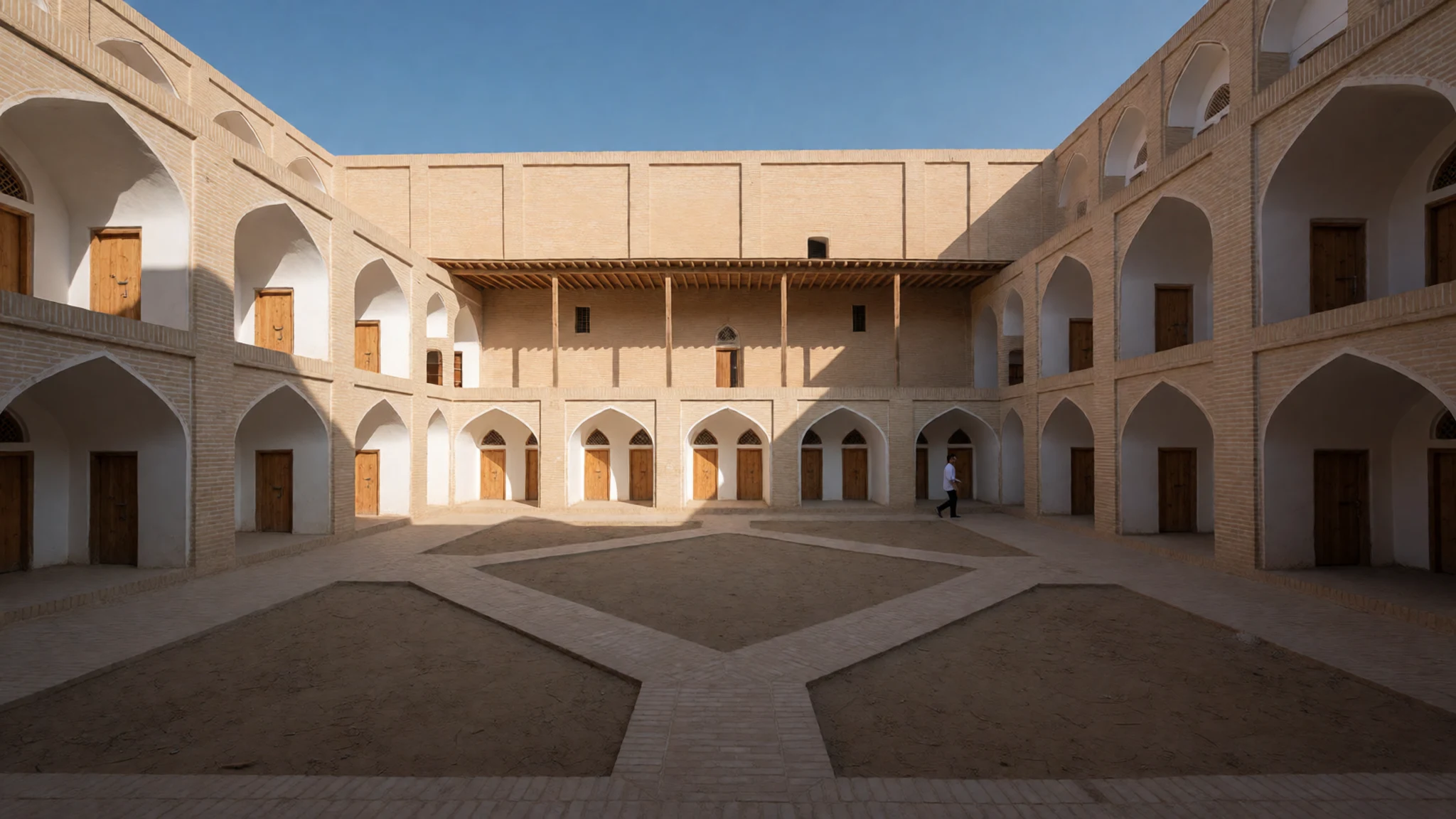
- Khan Anush Mohammed's Bath — Beside the Ak Mosque, Itchan Kala
Beside the Ak Mosque stands a domed building known as Khan Anush Mohammed's Bath. Most of it sits underground, which keeps the walls steadily warm and suited the climate of the oasis. Only the dome and a few openings show above the street, so it is easy to walk past. Look for it beside the mosque and ask the staff whether the interior is open.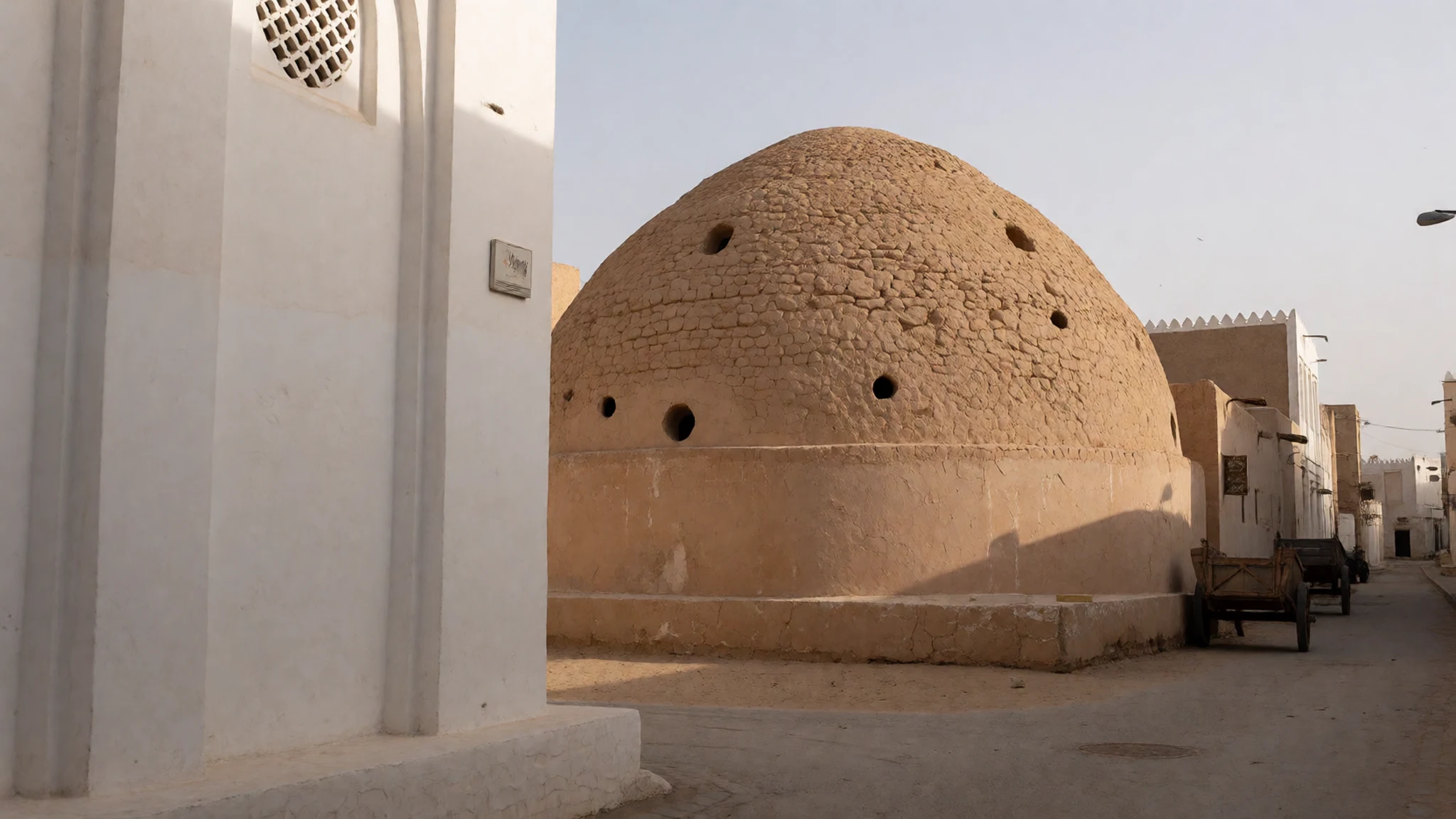
- Uch Avlija Mausoleum — Itchan Kala, in the old town lanes
Uch Avlija is known as the mausoleum of three holy men, or three great dervishes. Its portal and dome give a markedly medieval impression, which sets it apart from the more restored buildings nearby. Quiet and small, it rewards a slow look at the tilework and the entrance. Go early in the day, when the lanes around it are less busy.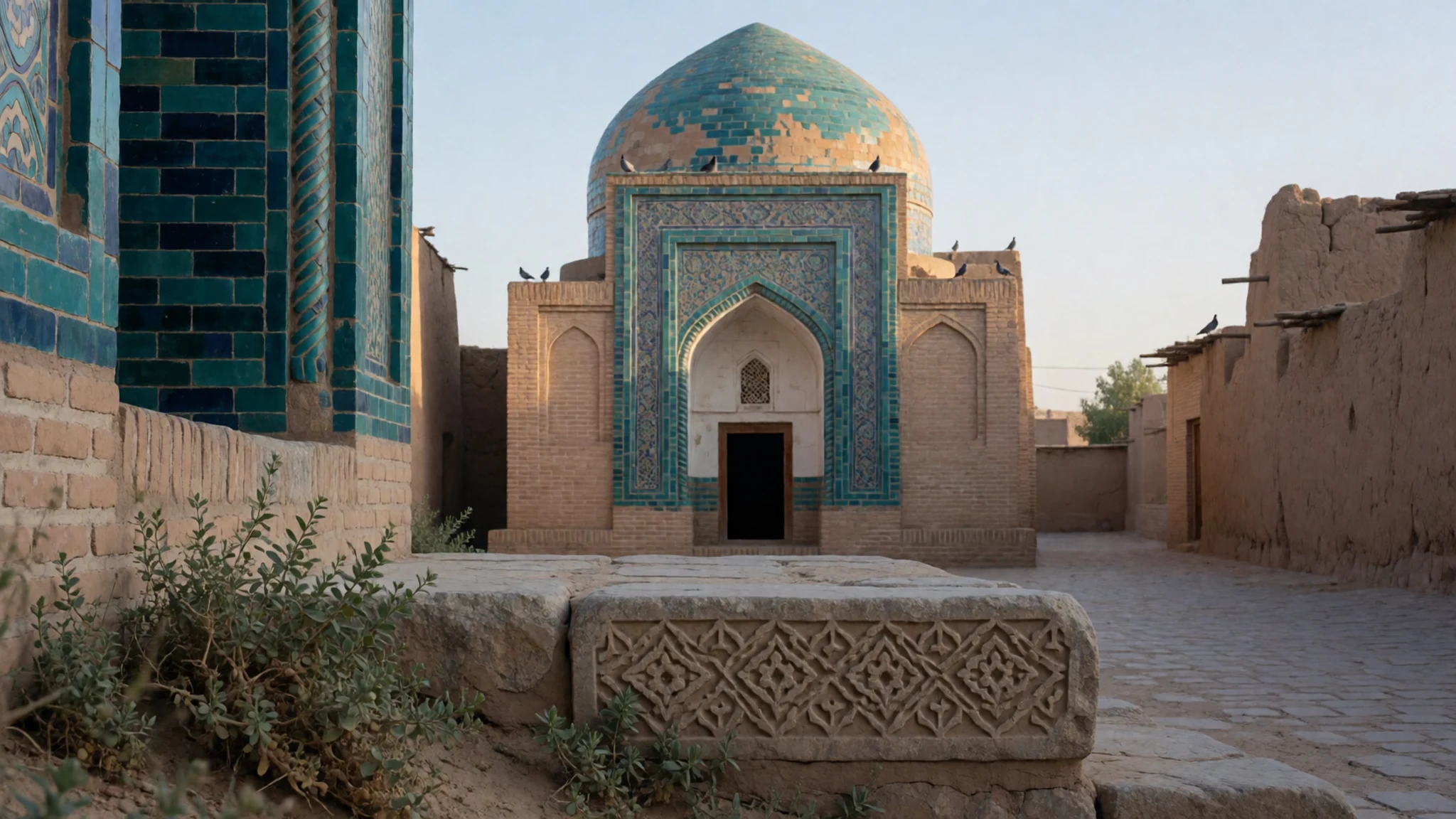
- Tash Chauli — Inside Itchan Kala
Tash Chauli means palace of stones, and it was the new palace of the khans. It was built during the reign of Khan Allakuli, in the later years of the khanate, and its courtyards and carved interiors show how the rulers lived. Take time over the rooms and courtyards, and carry water, because the open courtyards offer little shade.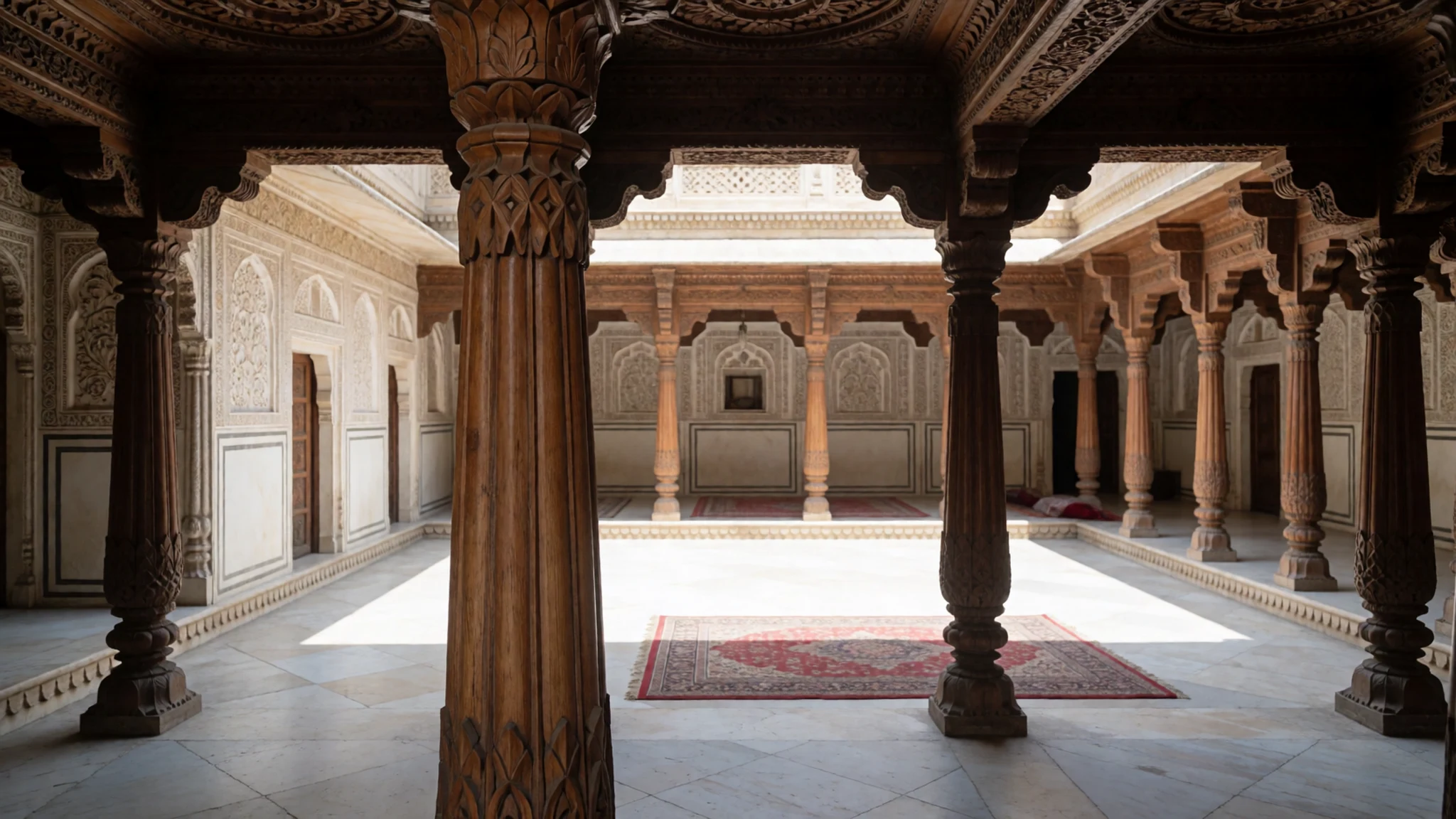
- Tim Allakuli Khan — Central lanes of Itchan Kala
The covered bazaar, known as Tim, is a domed arcade of small shops selling textiles, carpets, silver, ceramics and souvenirs. Bukhara, Persia and Russia were Khiva's most important trading partners, and the stalls still reflect a mix of influences. Bargaining is normal, but keep it friendly and accept a fair price gracefully.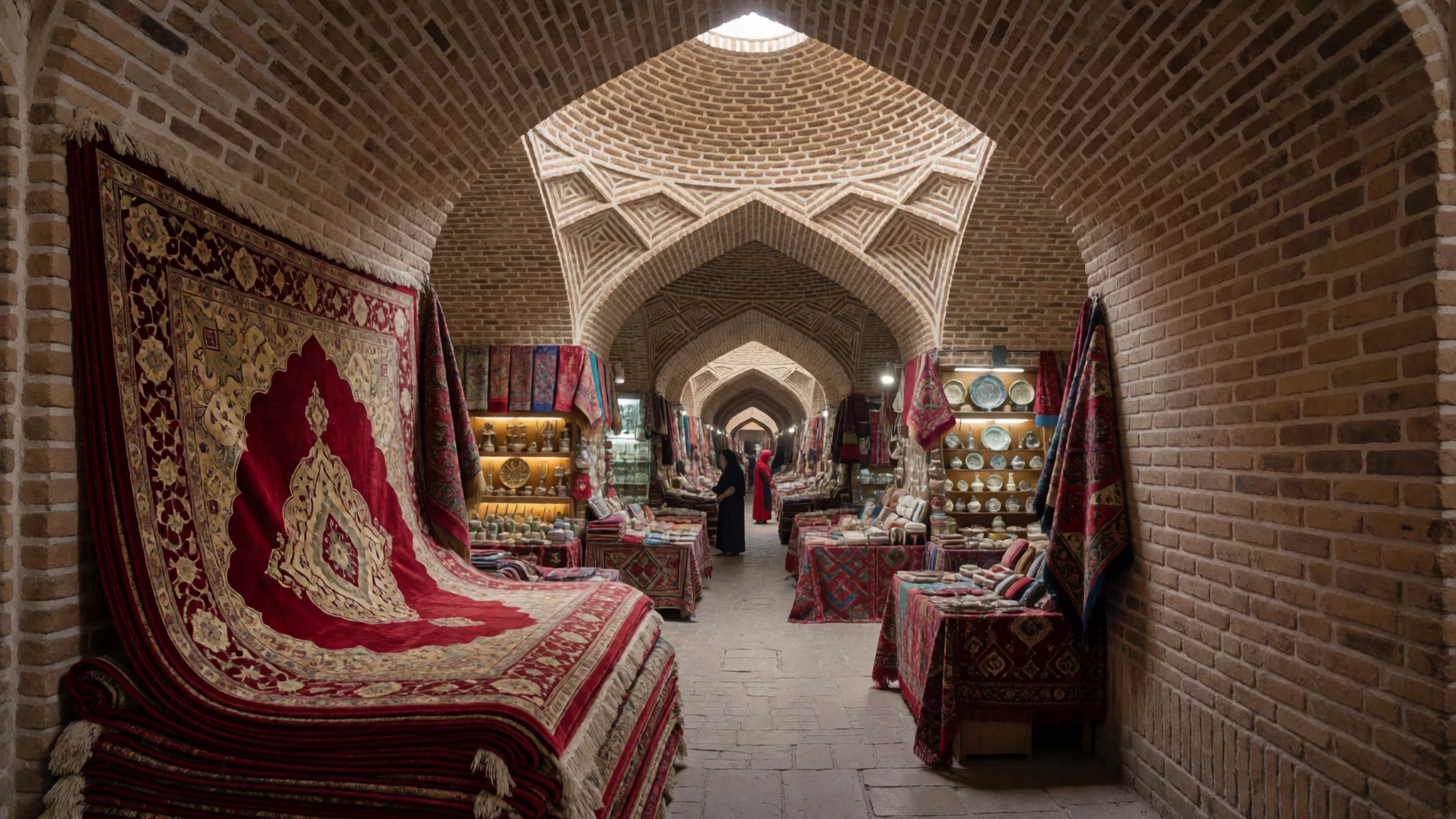
Culture
Khiva's old town is a living neighbourhood as well as a monument, and its mosques, madrasahs and mausoleums remain places of worship. Uzbekistan is largely Muslim, and people here range from devout to relaxed about religious observance, so it helps to read the room before acting. Greetings are warm and often lengthy, and older people are addressed with respect. Hospitality runs deep: an invitation to tea in a family home or a chaikhana is usually sincere, and the host will keep refilling the cup as a sign that the guest is welcome.
Photographing people deserves thought. Many residents are happy to be photographed, especially after a greeting, but some expect a small payment and some decline. Noise carries in the narrow lanes, so keep conversations moderate near homes and avoid loud music, particularly at dawn and in the evening when families are at home.
Bargaining is part of commerce in the bazaars and with taxi drivers, and it is done with humour rather than pressure. Religious sites expect quiet and modest dress. Take your shoes off before stepping onto the carpeted floor of any mosque, madrasah or mausoleum interior, and ask before photographing anyone at prayer.
What to wear
Traditional dress in Khiva follows the wider Uzbek and Khorezm style. Men traditionally wore the chapan, a long robe often lined or padded and striped in silk, with a doppa, the embroidered skullcap that remains the most common headwear for older men. Women wore long dresses called ko'ylak with trousers beneath, often in bright silks and cottons, and wrapped their heads in cloth. Local textiles are notable: ikat-dyed silk and cotton known as adras, and khan-atlas, a glossy silk, were woven for clothing and hangings. Embroidery decorated bridal and household textiles.
Today most people in Khiva wear European-style clothing for work and daily life. Men often pair trousers and a shirt with a doppa for weddings and holidays, and women mix modern dresses with headscarves, especially at religious sites. Older residents are more likely to be seen in the traditional long robes, and they come out for festivals and family occasions.
For a visitor, the climate comes first. Summers are very hot, so loose cotton or linen, a wide-brimmed hat and sunglasses make sense, while winters can be cold and call for a warm layer. At mosques, madrasahs and mausoleums, cover shoulders and knees, and carry a light scarf to cover the head when entering shrines. Footwear should be easy to slip off and sturdy enough for uneven brick, sand and cobbles.
What to eat
- Plov — Plov kitchens near the bazaar and the morning market
Uzbekistan's national dish: rice cooked slowly with lamb, carrot and onion, often in a huge cauldron over open fire. Locals often eat it at midday, and the best pots tend to sell out by early afternoon, so go early in the day.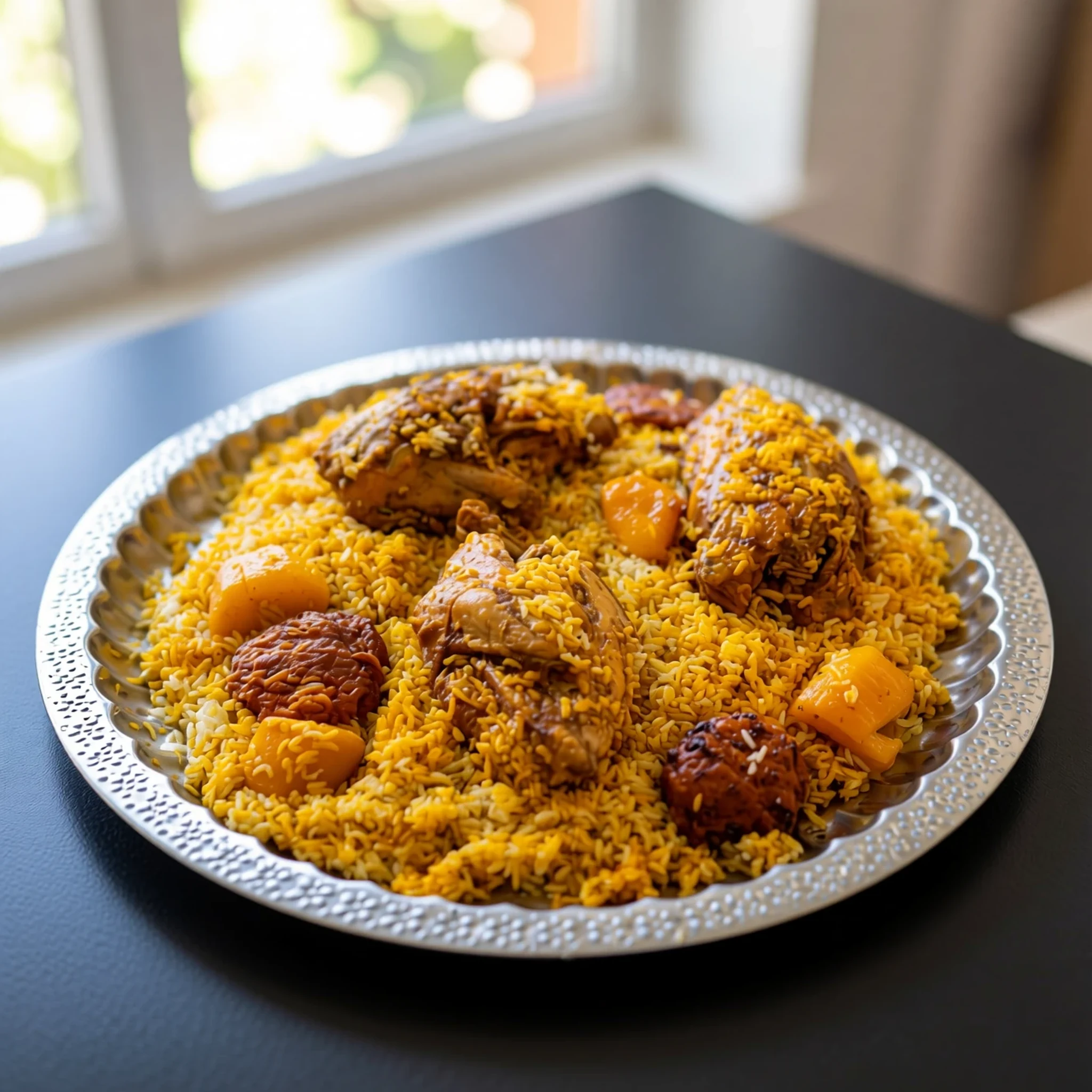
- Shurpa — Chaikhanas and eateries inside Itchan Kala
A clear, hearty soup of lamb, potato, carrot and tomato, often finished with fresh herbs and served with flatbread on the side. It is a cold-weather staple, and a bowl makes a good lunch after walking the walls in the autumn chill. Ask for it at a chaikhana.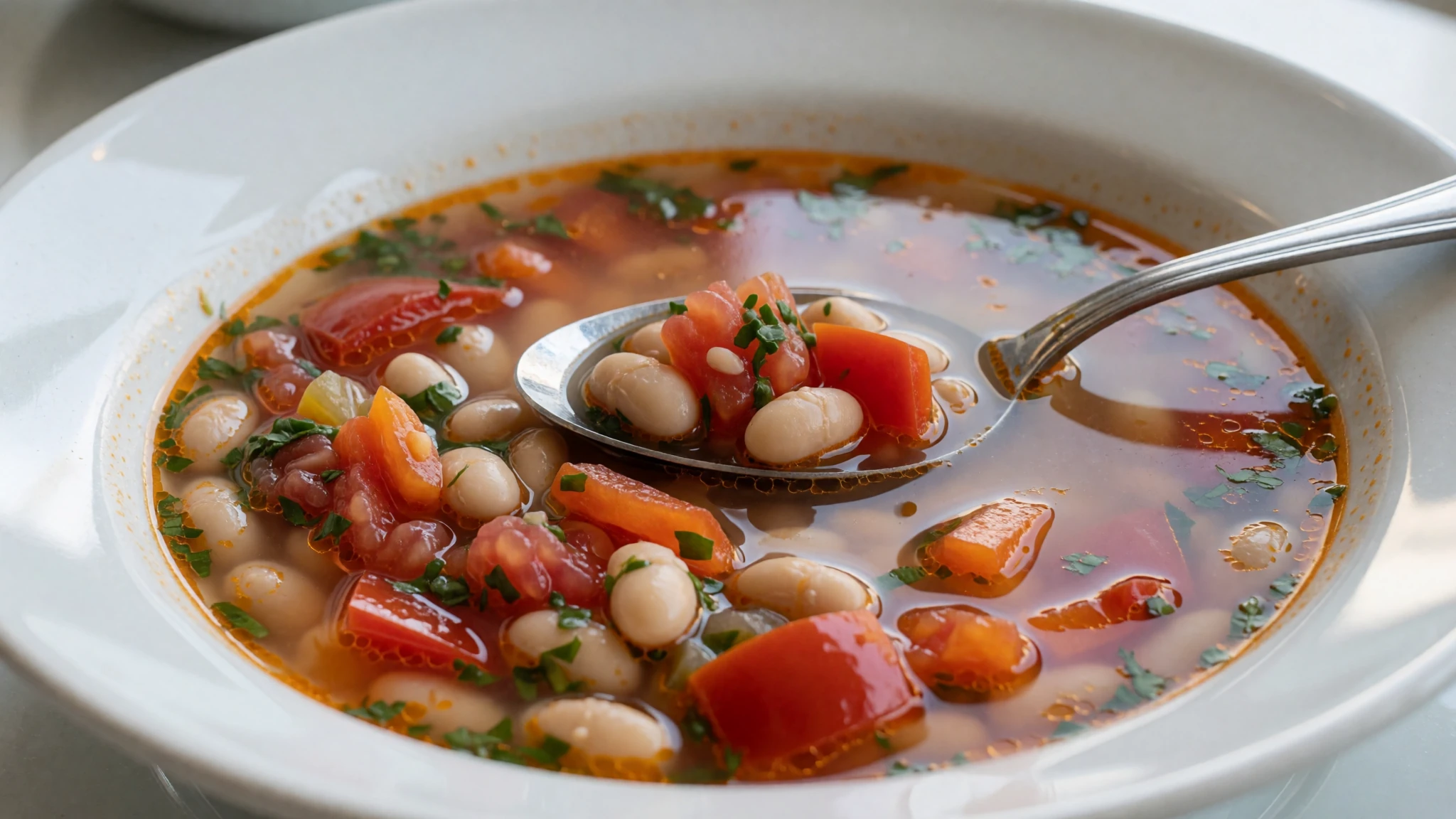
- Lagman — Noodle counters in the bazaar and eateries in the old town
Hand-pulled wheat noodles served either in a light broth with meat and vegetables or stir-fried in a wok with peppers, onion and beef. The stir-fried version is a quick, filling meal and a good way to try the local noodle tradition. - Somsa — Bakeries and street stalls along the main lanes
Triangular pastries filled with minced lamb and onion, baked against the hot walls of a tandir oven until the pastry blisters. They are sold hot from the oven and eaten standing up, which makes them an easy snack between sights. - Non — Bakeries and the morning market
Round, stamped flatbread baked in a tandir and torn by hand at the table. It is the constant companion of every meal in Khiva, and a warm loaf from the bakery is a cheap way to start the day. - Green tea in a chaikhana — Any chaikhana in Itchan Kala, especially those with raised platforms
Green tea poured into small bowls or cups and refilled without asking. Sitting cross-legged on a raised platform in a chaikhana, with a view of the lanes, is a central part of daily life here, and the tea is inexpensive.
Plan it
Best time. November is the most comfortable month to visit, with highs near 27 C, while July and August are the hottest months and March is the wettest. Summer is very hot and dry, and winter is cold.
How long. 2–3
Getting there. Fly into Urgench Airport, the nearest, with Uzbekistan Airways from Tashkent. From there a taxi or shared car covers the final stretch to Khiva, so agree the fare before you set off.
Budget. low
Tips
- Agree taxi fares before getting in; most drivers expect to haggle
- See the old town early in the morning or late in the afternoon, when the coaches have gone
- Carry cash in local currency for small shops, teahouses and taxis
- Drink bottled water and check that the seal is intact, as tap water is not safe to drink
- Plan indoor visits for the hottest part of the day and carry sun protection
Etiquette
- Remove shoes before entering mosques and mausoleums
- Ask before photographing people, especially worshippers
- Dress modestly at religious sites
Nearby
Sources
- Wikidata Q486195 (CC0)
- Wikipedia (rev 1379153824) (CC BY-SA 4.0)
- Wikivoyage (rev 5407087) (CC BY-SA 4.0)
- Walls of Itchan Kala (Doron) (CC BY 3.0)
- Panorama view of Khiva (Fulvio Spada) (CC BY-SA 2.0)
- Kaltaminor, Khiva (Petar Milošević) (CC BY-SA 4.0)
- Alla Kouli Khan madrasa (Davide Mauro) (CC BY-SA 4.0)
- Tim Allakuli Khan, Khiva (Petar Milošević) (CC BY-SA 4.0)
- Itchan Kala, Khiva (Petar Milošević) (CC BY-SA 4.0)
- Pakhlavan Makhmoud tombs (dalbera) (CC BY 2.5)
- Konya Ark towers, Itchan Kala (Petar Milošević) (CC BY-SA 4.0)


