Ayaz Kala
Ayaz Kala, Uzbekistan
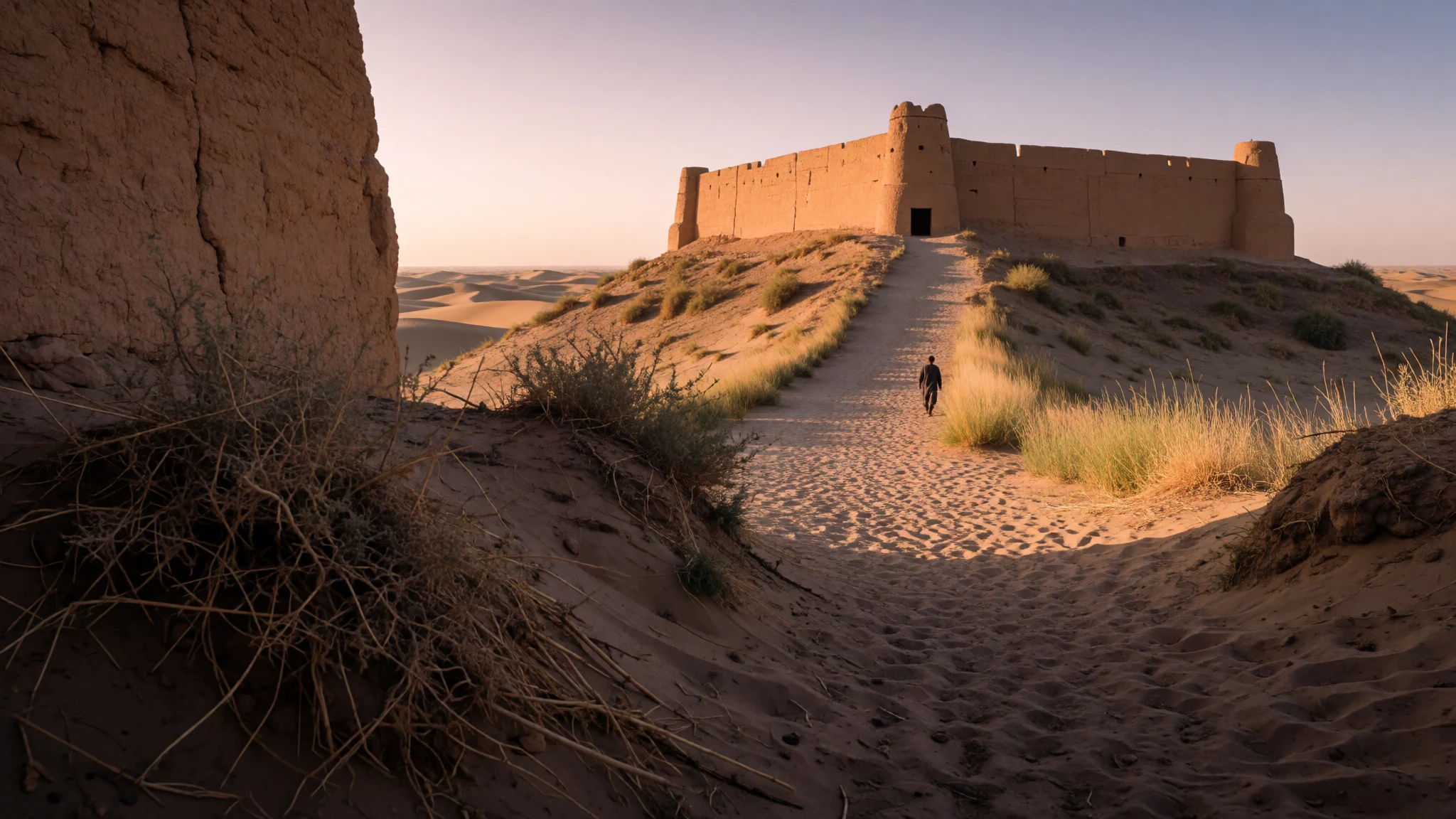
Ayaz Kala is a cluster of ancient mud-brick frontier forts on a desert hilltop, best reached on foot at sunset or sunrise.
The place
Ayaz Kala stands on a hilltop in Karakalpakstan, in northern Uzbekistan, looking out over the Kyzylkum Desert. It is a group of three mud-brick fortresses, built across a long span from the 4th century BCE to the 7th century CE, and all belonged to Khorezm, the old irrigated farming kingdom of this region. The site sits on the western flank of the Sultan-Uiz-Dagh hills, right where cultivated land gives way to sand. That edge position explains almost everything about it: the forts were frontier posts, set up to watch for nomad raids on the farms behind them.
Today the ground around the ruins is quiet. There is wind, a scatter of footpaths, and very little shade. The walls are the same colour as the hills, so at midday they nearly disappear into the landscape, and near sunset they turn orange and then pink. Ayaz Kala 1 is the main fortress on the high ground. Ayaz Kala 2 is a smaller fortress on a conical hill to its south-west. Footpaths link the sites, so a visit is mostly walking and looking rather than ticking off one monument.
Most visitors arrive from Khiva or Urgench, and many pair the fortresses with a night at the yurt camp nearby. The World Monuments Fund has put Ayaz Kala on its watch-list of endangered sites, which is easy to understand once the crumbling clay is seen up close. Summer heat is the main hardship, and winter brings cold and wind, so spring and autumn are the kindest seasons.
Its story
Ayaz Kala belongs to the frontier history of Khorezm, the farming kingdom that lay between the Kyzylkum Desert and the river country to the north. The first fortress, Ayaz Kala 1, dates to the end of the 4th century BCE or the start of the 3rd, when Khorezm had broken free of Persian rule. Its job was to shield irrigated settlements from nomads coming in off the steppe, among them the Saka of the Syr Darya delta.
The builders chose a hill about 100 m high, so sentries could watch the plains for miles. Inside the double wall ran a vaulted corridor, and in the 3rd century BCE the defences were strengthened with 45 half-elliptical watchtowers. The fortress seems to have stayed in military use until the 1st century CE, and local people may have kept sheltering there for centuries afterwards.
Part of the complex is credited to the Kushan Empire in the 2nd century CE, although how much they shaped it is still a matter of speculation. Excavators have also uncovered traces of houses, so the place was never purely a barracks.
Ayaz Kala 2 is later, from the 6th to 8th century CE, when the Afrighid dynasty of Khorezmshahs ruled. By then a class of landowners called dihqans, descended from old nobility or rewarded soldiers, held farming estates known as rustaq and lived in small fortified houses. The oval fortress on its conical hill belongs to that more feudal world. After the forts lost their purpose they were left to wind and rain, and mud-brick does not forgive neglect, which is why the whole site now sits on a watch-list.
What to see
- Ayaz Kala 1 — Ellikqala District, Karakalpakstan
The main fortress stands on a hill about 100 m high and dates to the late 4th or early 3rd century BCE. Its rectangular enclosure has a double wall with a vaulted corridor between the layers. A gateway flanked by two towers opens into a small chamber ringed by high walls, where archers could fire down on intruders.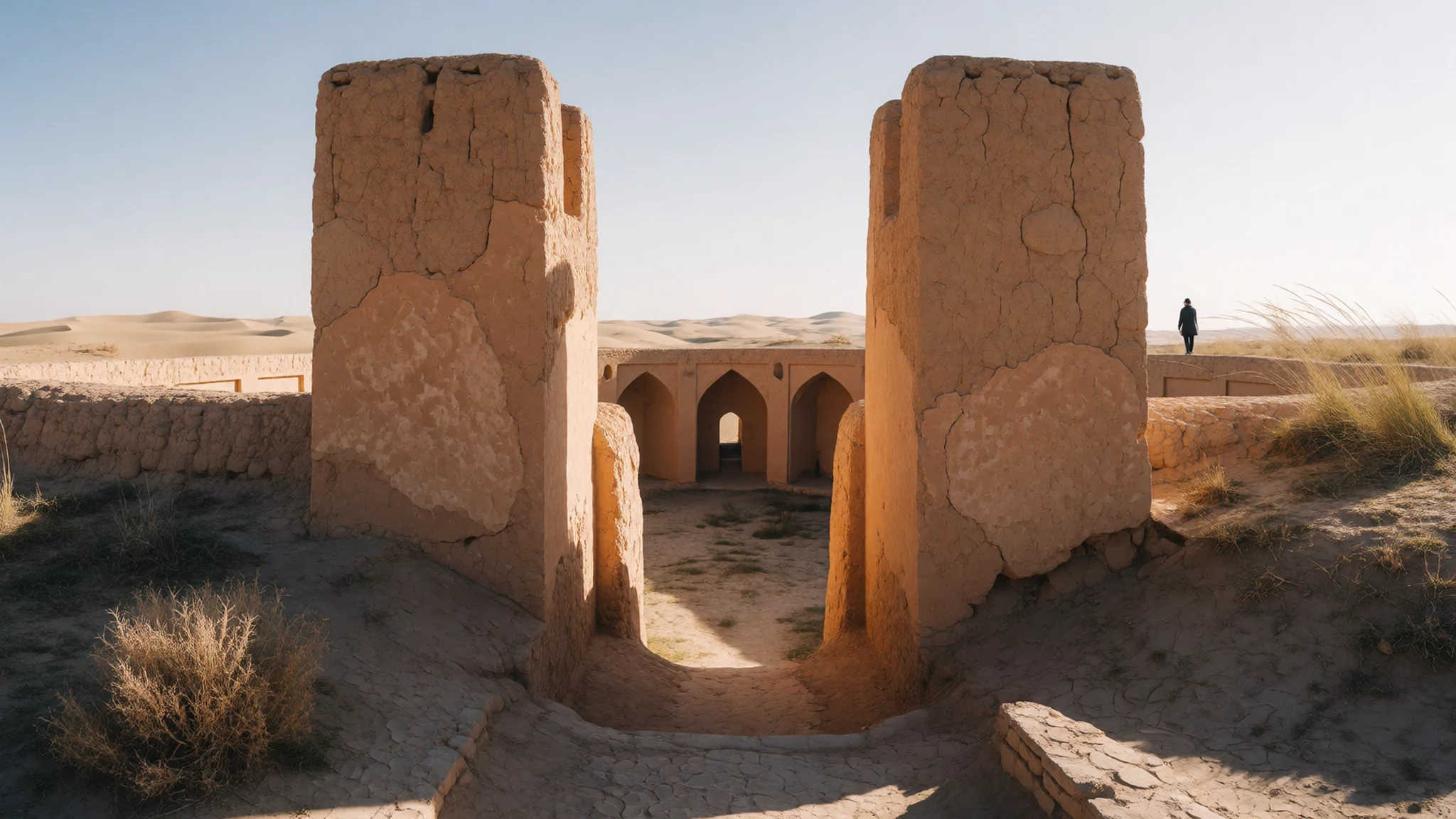
- The walls and watchtowers — Around Ayaz Kala 1
Along the outer wall of Ayaz Kala 1, the half-elliptical watchtowers added in the 3rd century BCE can still be read as bumps in the clay, 45 of them in all. Walking along the foot of the wall shows how a small garrison covered a long perimeter, and why the base was built so thick.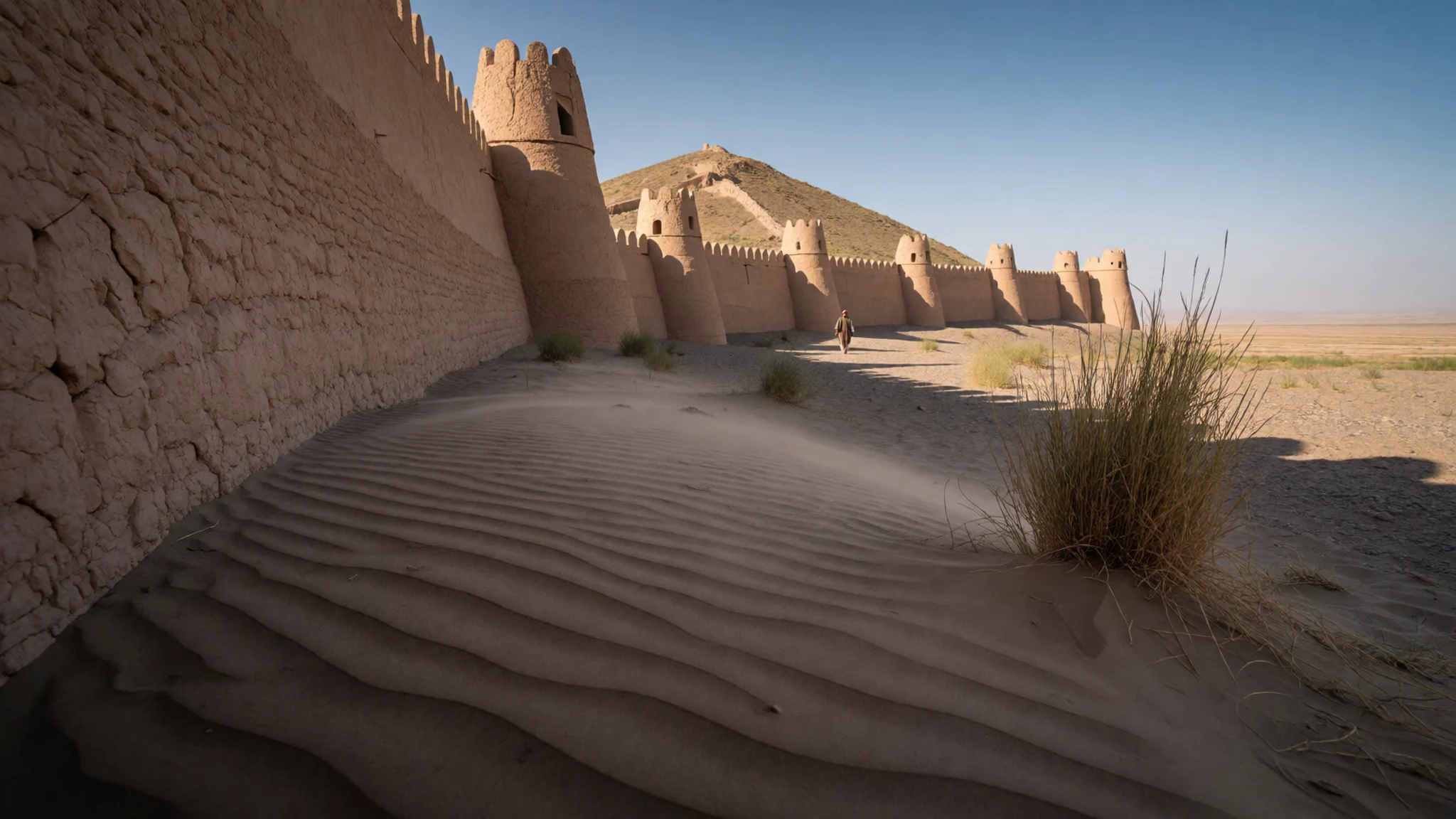
- Ayaz Kala 2 — South-west of Ayaz Kala 1
This smaller fortress crowns a conical hill south-west of the first, and was built in the 6th to 8th century CE under the Afrighid rulers. It is oval in plan, with an entrance on the south-western side. It reflects a later world of landowning families, the dihqans, living in fortified houses on their estates.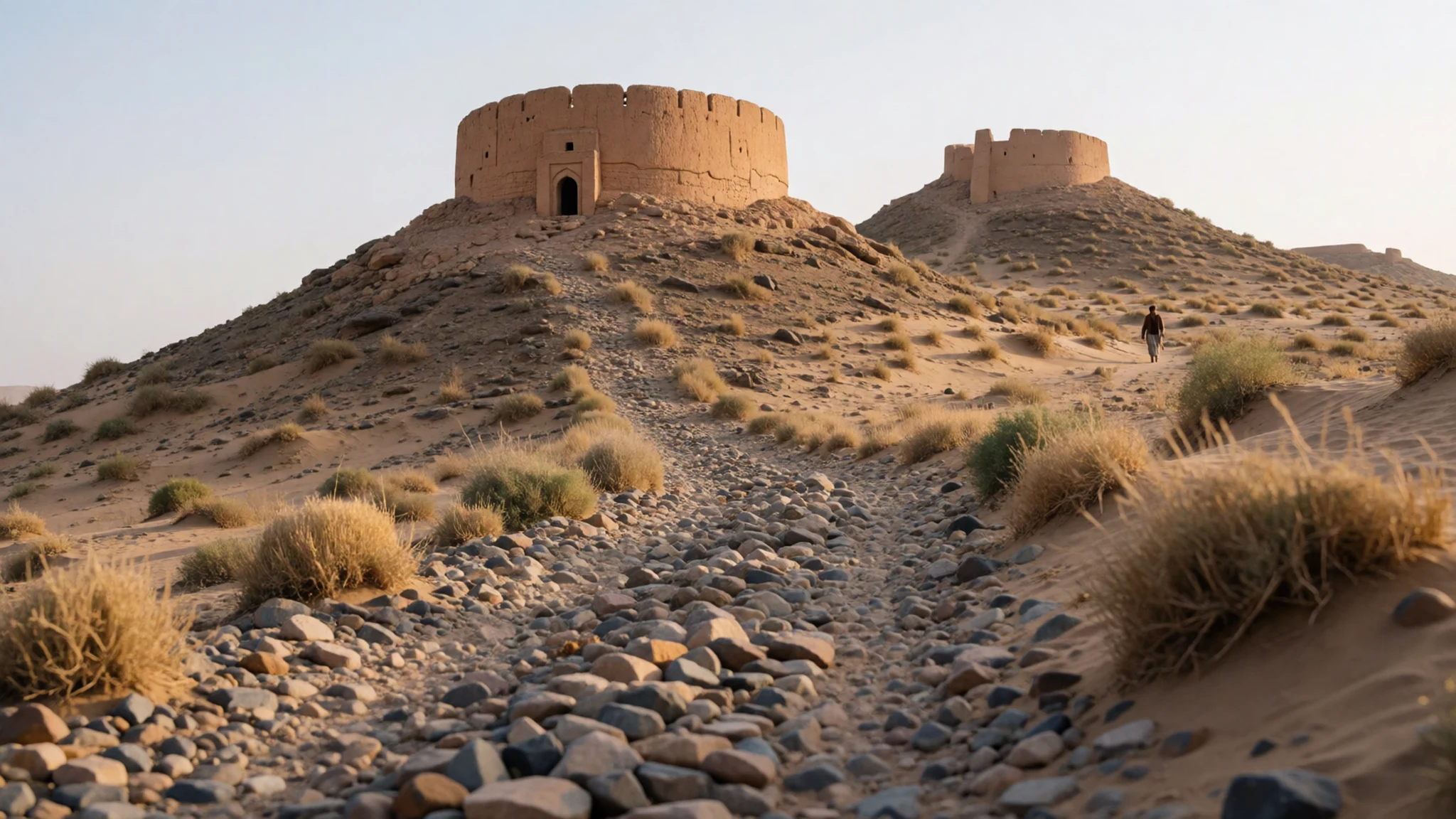
- Toprak-Kala — Karakalpakstan, south-west of Ayaz Kala
Toprak-Kala is an excavated town dating from the 1st to 5th century CE, a drive away across the plain. Less of it stands above ground than at the fortresses, but it helps explain how a settled town, rather than a border post, fitted into Khorezm. It suits a driver and a spare half-day.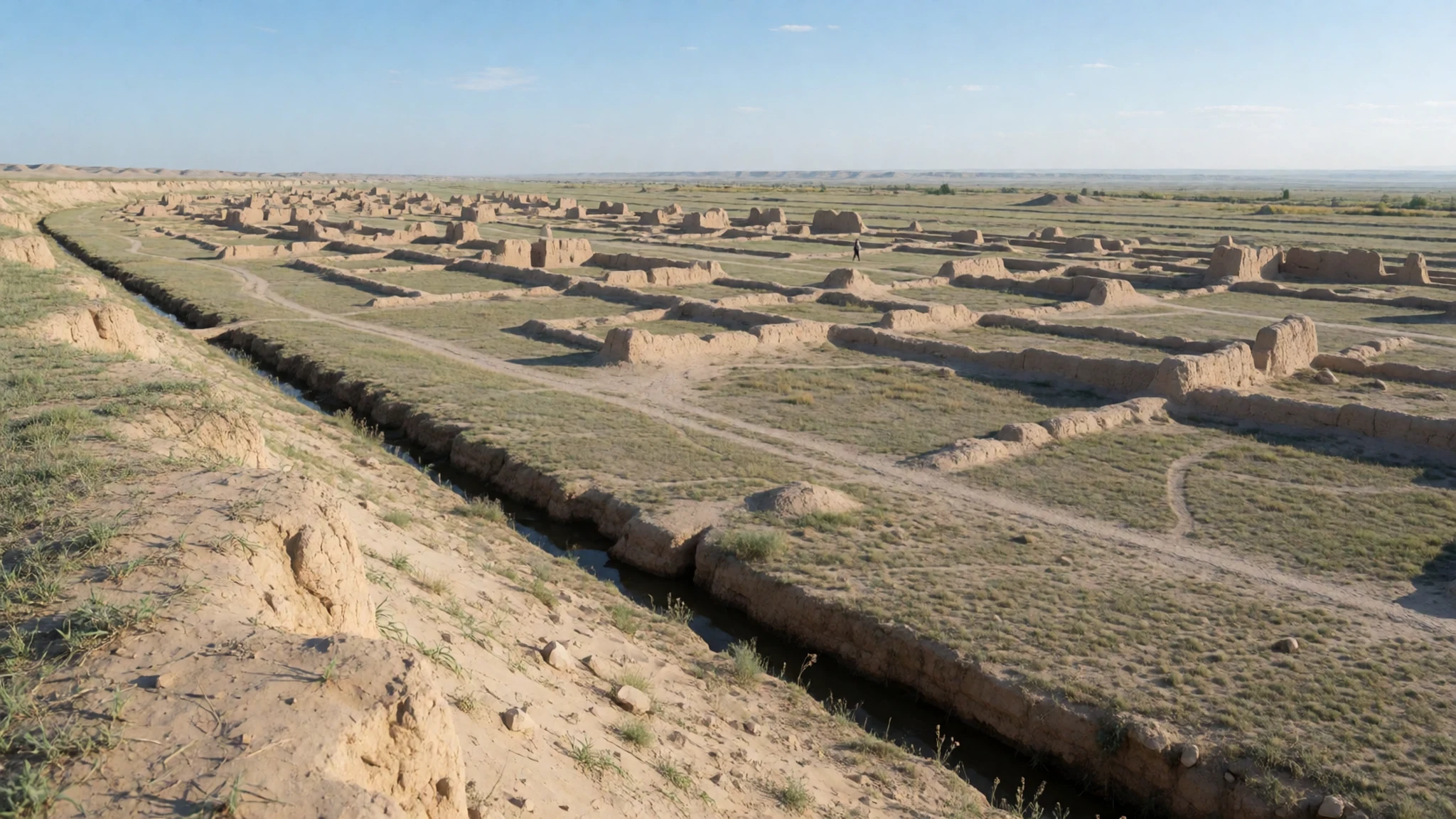
- The yurt camp and sunset view — Foot of the hills near Ayaz Kala
The yurt camp at the end of a sand track gives an easy base beside the fortresses. The hours around sunset and dawn are when the walls change colour and the desert opens out below. With no town lights, the night sky is clear on cloudless evenings, and the silence is part of the experience.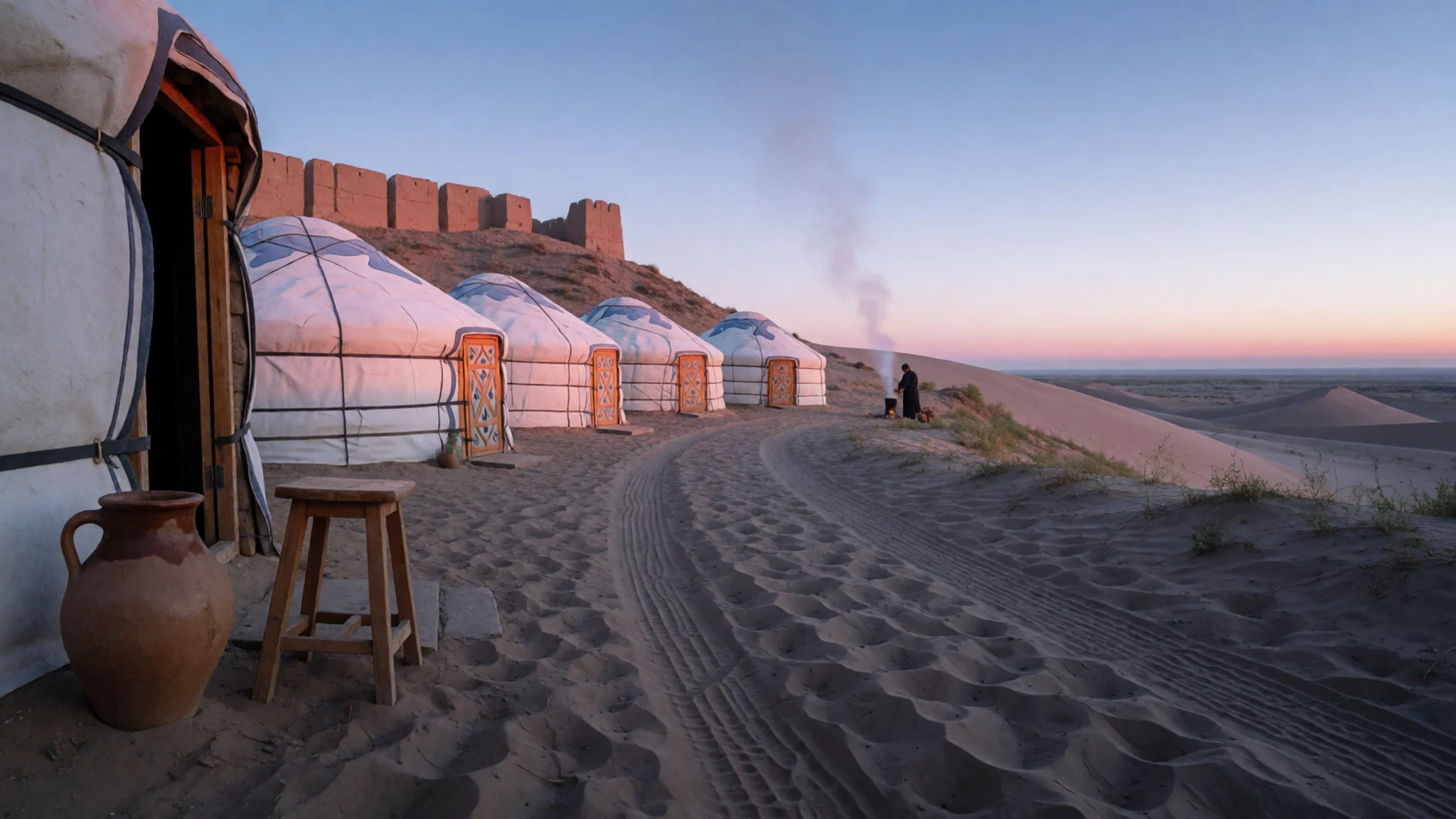
Culture
Ayaz Kala sits in Karakalpakstan, an autonomous republic within Uzbekistan whose people, the Karakalpaks, have their own language, music and oral epics, distinct from the Uzbek traditions of Khiva and Bukhara. The fortresses are far older than either, and the wider region is often called by its ancient name, Khorezm, a land that lived by irrigation canals drawn from the river. Local guides tend to talk about the forts in that long frame, as part of a farming civilisation that defended its fields against the desert.
The site is not a living shrine, but it is a heritage landscape that people care about, and the clay is fragile. Rain, wind and many footsteps wear it down, which is part of the reason it has been flagged as endangered. Visits here are quiet and slow. Evenings at the yurt camp often involve shared meals, tea and conversation with hosts, and a little curiosity about the region's history is welcomed.
Nearby villages are working farming communities rather than tourist stages, so a polite greeting in Uzbek or Russian goes a long way, and so does asking before pointing a camera at anyone's home or family. Hospitality is a point of pride in this part of Central Asia, and accepting tea or bread when offered is usually taken as a courtesy.
Stay on the existing footpaths and never climb on or lean against the crumbling mud-brick walls, because they are fragile and easily damaged.
What to wear
Ayaz Kala lies in Karakalpak and Khorezm country, where traditional dress is tied to the region's textiles. Karakalpak women's festive clothing includes richly embroidered dresses and the tall bridal headdress called the saukele, worn for weddings and celebrations. Men in Khorezm traditionally wore the telpek, a tall shaggy sheepskin hat suited to cold winters, together with striped quilted robes called chapan. Cotton and silk were the main fabrics, and the silk-cotton weave known as adras is still made in the wider region. These garments mostly appear today at festivals, weddings, folk performances and in museums and craft shops.
Everyday dress in nearby towns is plain and practical: trousers or long skirts, shirts, and light jackets, with many women wearing headscarves or loose patterned dresses, and some men in simple caps. Younger people wear jeans and trainers. Clothing is modest by habit, though not strict.
For a visit, sun and sand set the rules. Wear a wide-brimmed hat or cap, sunglasses, and loose, light, long-sleeved clothing in cotton or linen. Sturdy closed shoes or trainers with grip are best for dusty slopes and loose stones. Bring a warm layer, because desert nights and spring and autumn mornings can be cold, and a proper coat in winter. Shoulders and knees covered is a sensible choice for rural villages and when visiting local homes, for both men and women.
What to eat
- Shivit oshi — Local eateries in Khiva and Urgench
Bright green noodles made with dill, a Khorezm speciality, served with a meat or vegetable stew and sour yoghurt. It is a lighter, fresher dish than the usual rice-and-meat plates of the region.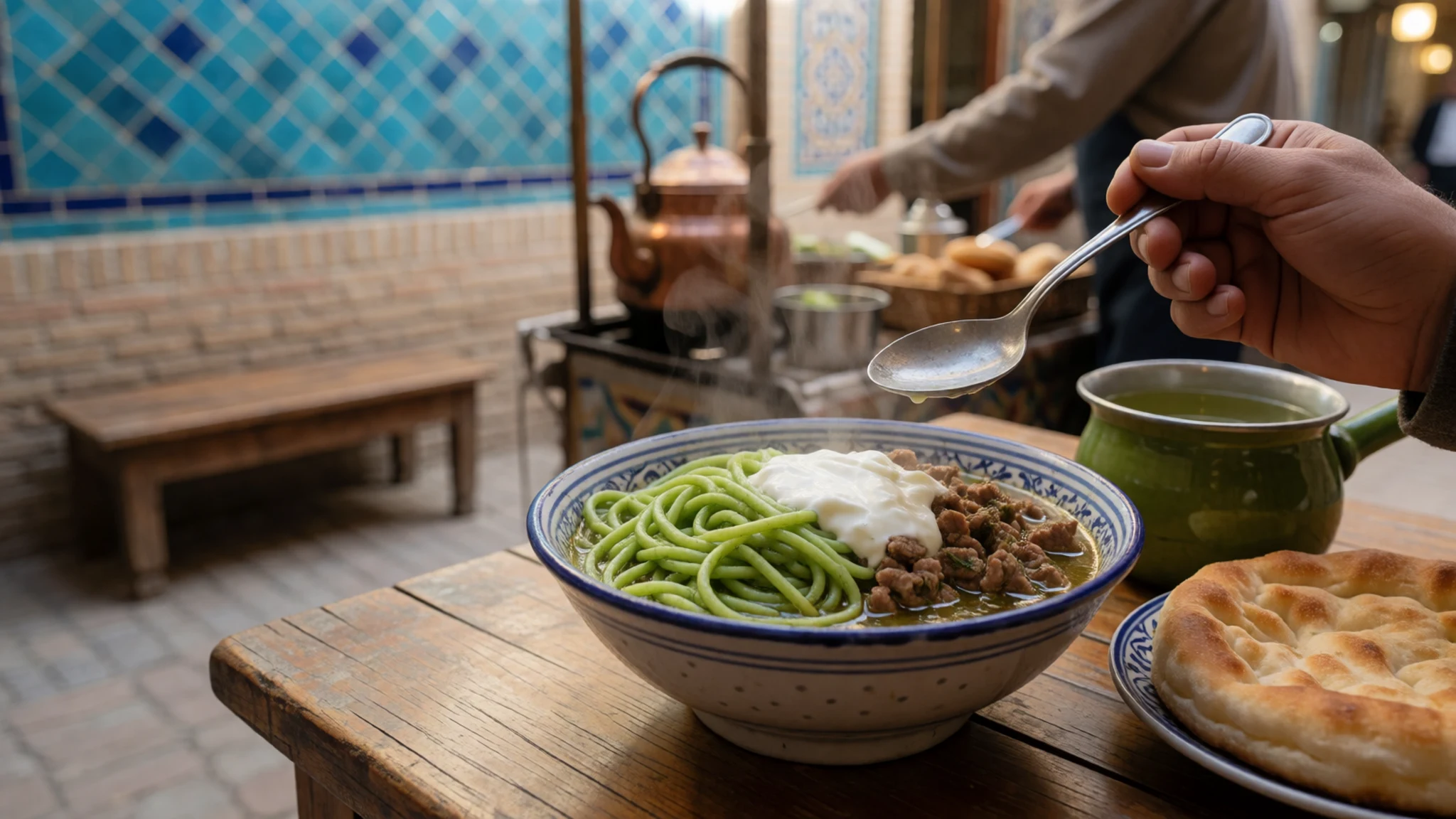
- Tukhum barak — Family-run eateries in Khiva and Urgench
Dumplings filled with egg and herbs, typically boiled and served with yoghurt or a spiced sauce. They are a good vegetarian option in a region where meat dominates many menus.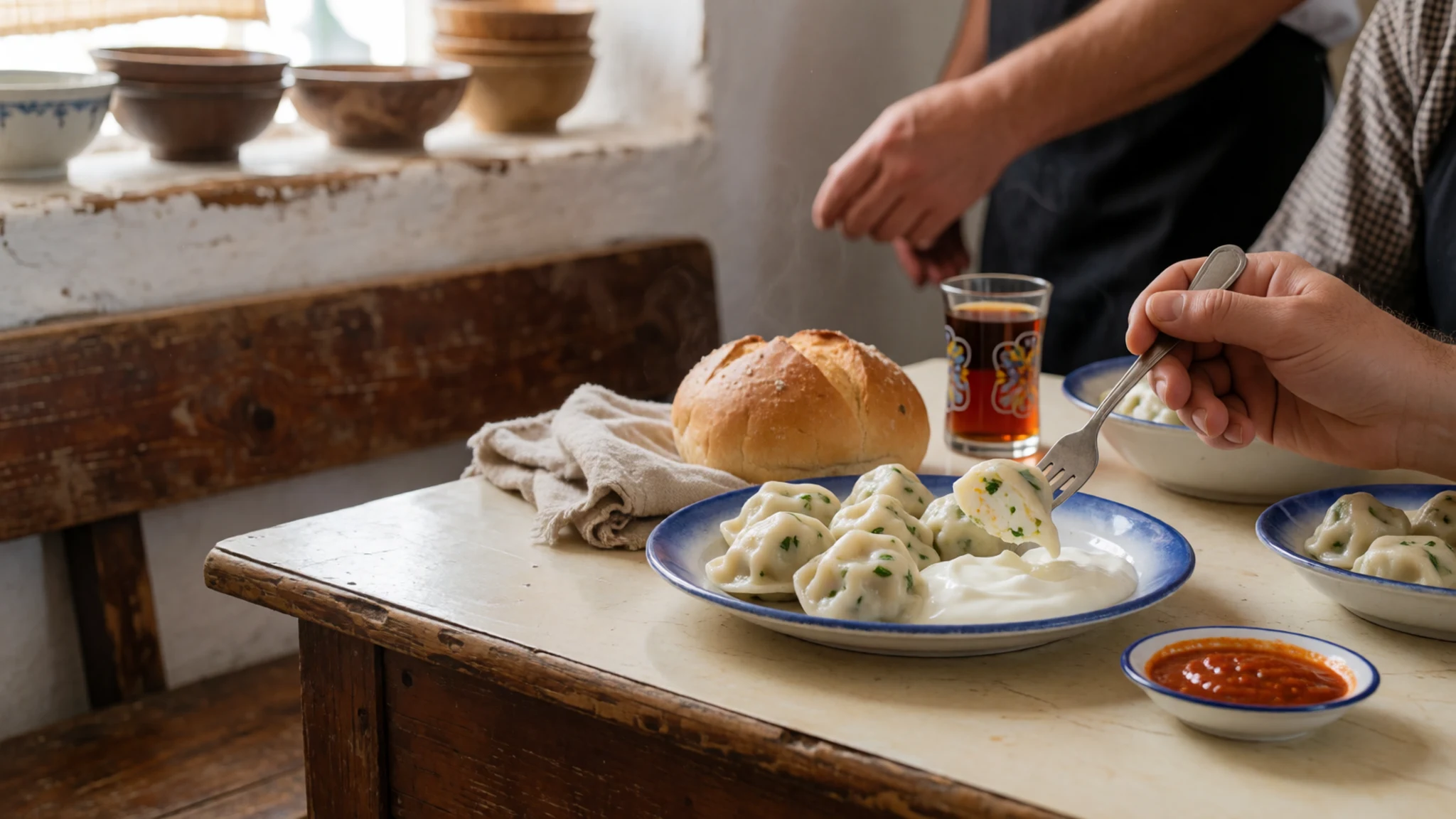
- Plov — Lunchtime plov eateries and the yurt camp dinner table
Rice cooked with carrot, onion and meat in a large pot, with regional variations from town to town. Khorezm versions can differ in the rice and spicing from those of Samarkand or Bukhara. - Tandoor bread (non) — Bazaar bread stalls and roadside villages
Round loaves baked against the walls of a clay oven, crisp outside and soft inside. Eaten warm with tea, they appear at almost every meal and are sold at stalls on the road to the fortresses.
Plan it
Best time. April–May and September–October are the most comfortable, with warm days and cooler evenings. Summer is very hot with little shade at the site, and winter is cold and windy, so dress for it if visiting then.
How long. 1–2
Getting there. Fly to Urgench, the nearest main airport, or base yourself in Khiva. From either, a driver takes the road via Biruni and Buston, mostly surfaced, then a short sand track to the yurt camp. Footpaths link the fortresses from there.
Budget. low
Tips
- Visit early morning or late afternoon, when the light is soft and the heat is lower
- Carry plenty of water, sun protection and a hat, as there is almost no shade on the hill
- Arrange a driver in advance, as public transport to the site is limited
- Bring cash for the yurt camp and village stalls, as cards are unlikely to work
- Check current entry arrangements and any site rules with a local operator before travelling
Etiquette
- Stay on the footpaths and do not climb on the clay walls
- Ask before photographing local people or their homes
- Accept tea or bread when it is offered, as a courtesy
Nearby
Sources
- Wikidata Q792827 (CC0)
- Wikipedia: Ayaz-Kala (rev 1379866081) (CC BY-SA 4.0)
- Wikivoyage: Ayaz-Kala (rev 5300248) (CC BY-SA 4.0)
- Photo: Fortress Ayaz-Kala 2, Bernard Gagnon (CC0 1.0)
- Photo: West Asia non political with water system, DEMIS Mapserver, पाटलिपुत्र (CC BY 3.0)
- Photo: Relief map of Uzbekistan, NordNordWest, Виктор_В (CC BY 3.0)
- Photo: Ayaz Kala dans le Khorezm, Jean-Pierre Dalbéra (CC BY 2.5)
- Photo: Ruins of Ayaz Kala, octopuzz (CC BY 2.5)
- Photo: Nukus - Khiva, view from Ayaz Qala, Arian Zwegers (CC BY 2.5)
- Photo: Fortress of Ayaz Kala 3, Valery Fassiaux (Public domain)
- Photo: Fortress Ayaz-Kala 1, Bgag (CC0 1.0)


