Aydarkul
Aydarkul, Uzbekistan
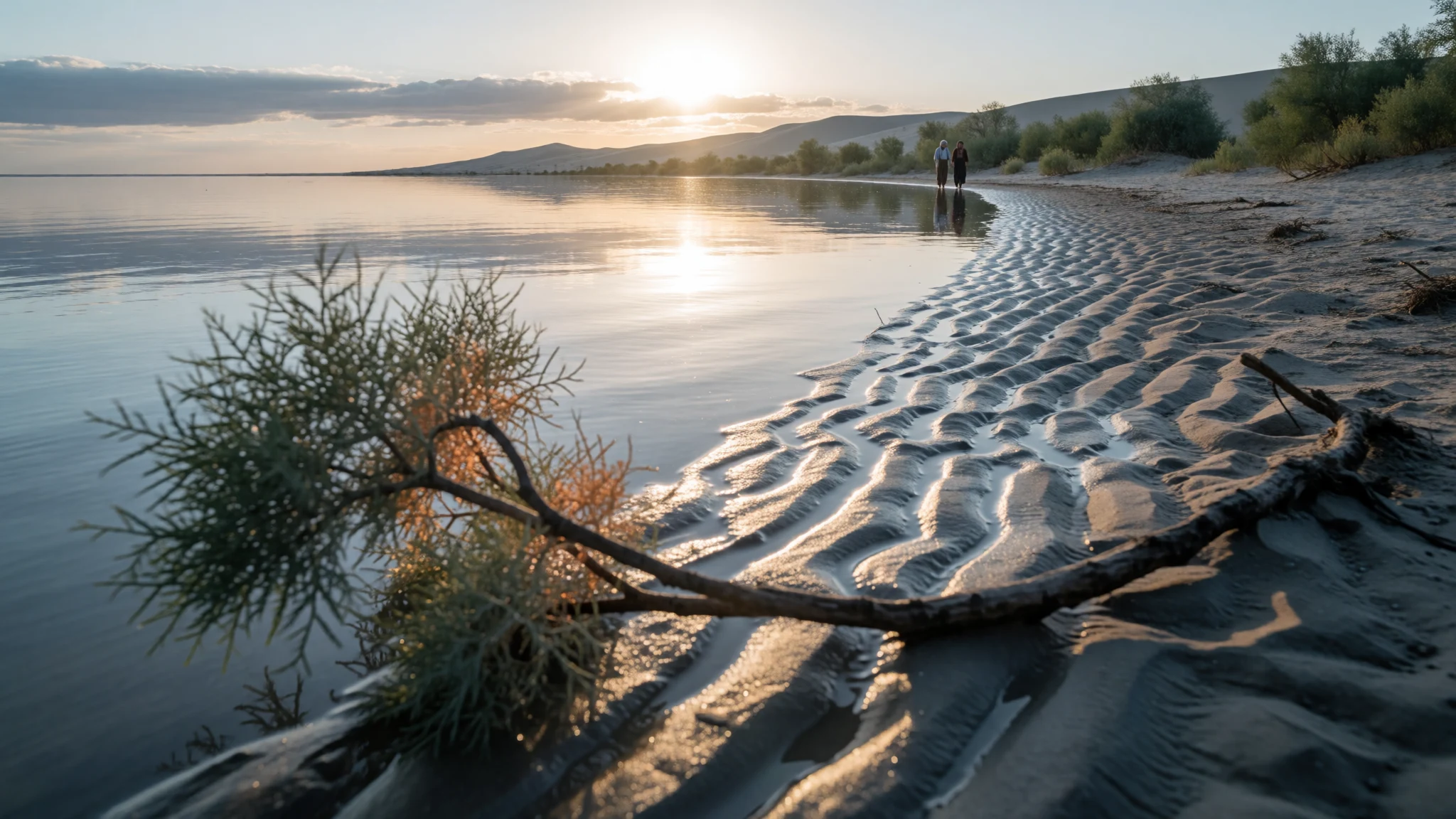
Aydarkul is a vast man-made lake in the Kyzylkum desert, with sandy beaches, yurt camps and birdlife, and it makes an easy overnight pause on the Silk Road.
The place
Aydarkul lies in the Kyzylkum desert of Uzbekistan, in the Jizzakh region, at an elevation of 241 m. It is a lake that has no natural business being here: a man-made body of brackish water, one of three in the Aydar-Arnasay system alongside Arnasay and Tuzkan, which together cover about 4,000 square kilometres of low desert basin. From the shore the scale is hard to take in. Water runs out to the horizon, pale sand sits on one side and scrubby tamarisk on the other, and the line between sky, lake and dune softens in the haze.
Because the water is brackish rather than fully saline, it evaporates readily, which gives the shoreline a slightly damper and cooler summer feel than the dry country around it. Sandy beaches ring parts of the lake, and that is why locals sometimes call it a sea set down in the sand. Visitors come to swim, to watch the sunset, to eat fish near the water and to sleep in yurt camps. The Arnasoy bird reserve nearby rewards anyone who brings binoculars.
It is not a polished resort. Facilities are simple, distances are long, and the landscape is flat and open with very little shade. Heat in July and August is serious, and wind can lift sand off the beach. Spring and autumn are kinder. Aydarkul works best as a night or two between Tashkent and the Silk Road cities, not as the centrepiece of a long holiday.
Its story
The story of Aydarkul is one of water going somewhere the planners had not quite intended. The lake belongs to the Soviet period, when the rivers of Central Asia were dammed, diverted and channelled to irrigate cotton and other crops across steppe and desert. When surplus water from the Syr Darya system had to be released, it flowed into low basins in the south-eastern Kyzylkum and slowly pooled there. Those basins became the lakes of Aydar, Arnasay and Tuzkan. Nobody drew them up as a holiday destination; they began as an overflow solution and were later treated as reservoirs in their own right.
Life around them reorganised itself. Fishing took hold, birds arrived in large numbers and a protected area was set up for them around Arnasoy, while herding families and small settlements gained a fresh source of water in country that had been dry. The lakes also changed the local air, bringing a moister summer and the occasional rain cloud, and some accounts credit that moisture with helping the northern Aral Sea recover.
The picture is mixed. A desert lake is a gain for fishers, birdwatchers and travellers, yet it also stands as a reminder of how much of the region's water was redirected, and why the Aral Sea shrank in the first place. Aydarkul is therefore both a pleasant place to swim and a quiet lesson in what large irrigation schemes leave behind.
What to see
- The sandy beaches — Lake shore, Arnasoy district
Aydarkul has long stretches of pale sand along its shore, and the water is clean and salty enough to float in easily. The shallows warm up well in summer. Facilities are basic, so the beaches suit a quiet swim and a picnic rather than a day of loungers, and shade must be brought along.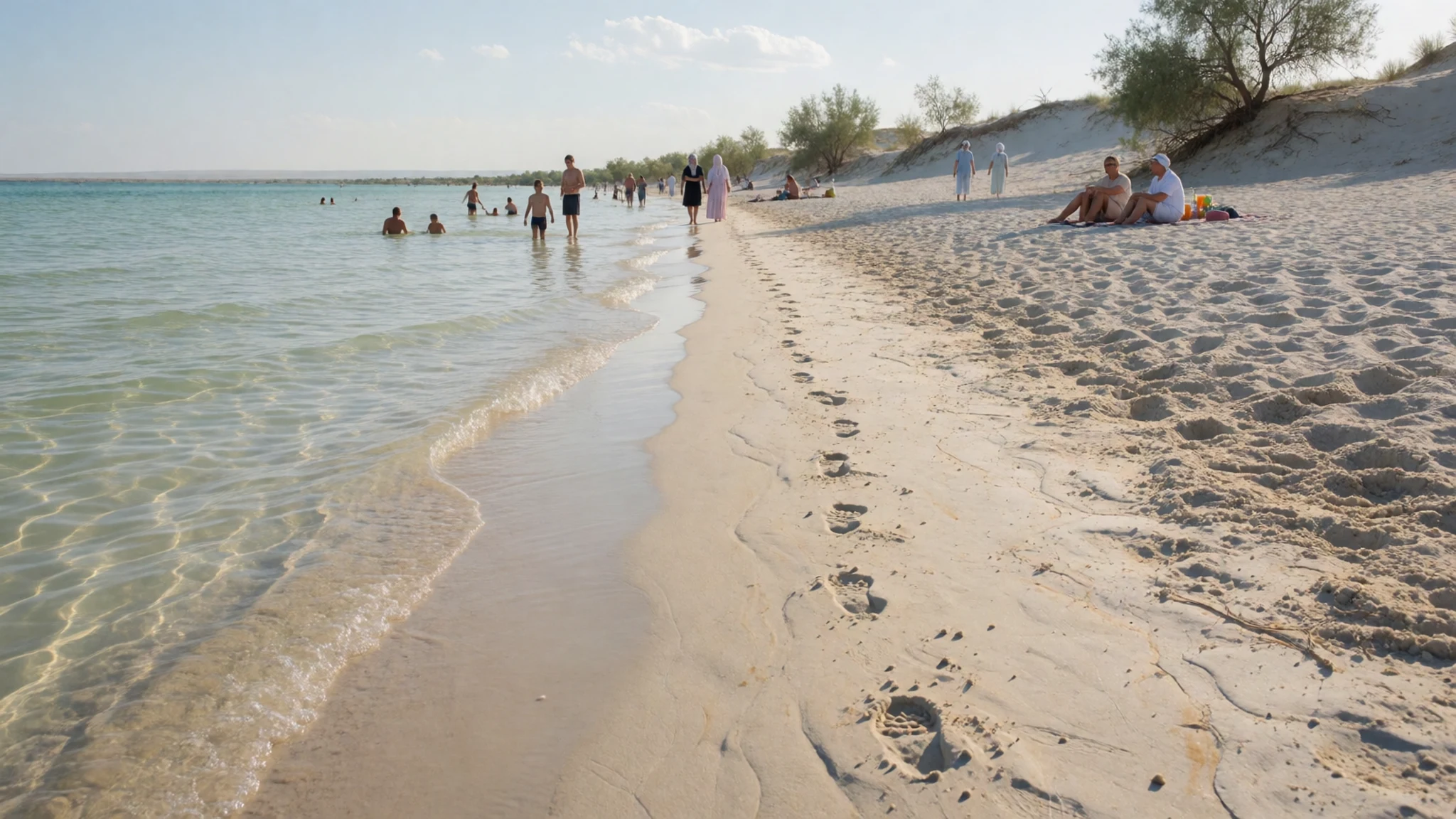
- Sunset over the water — Western shore
With no hills or buildings in the way, the sky does the work at Aydarkul. Around dusk the lake turns from steel grey to copper and the far shore dissolves. It is the best reason to stay overnight rather than make a day trip, and evenings cool pleasantly after hot afternoons.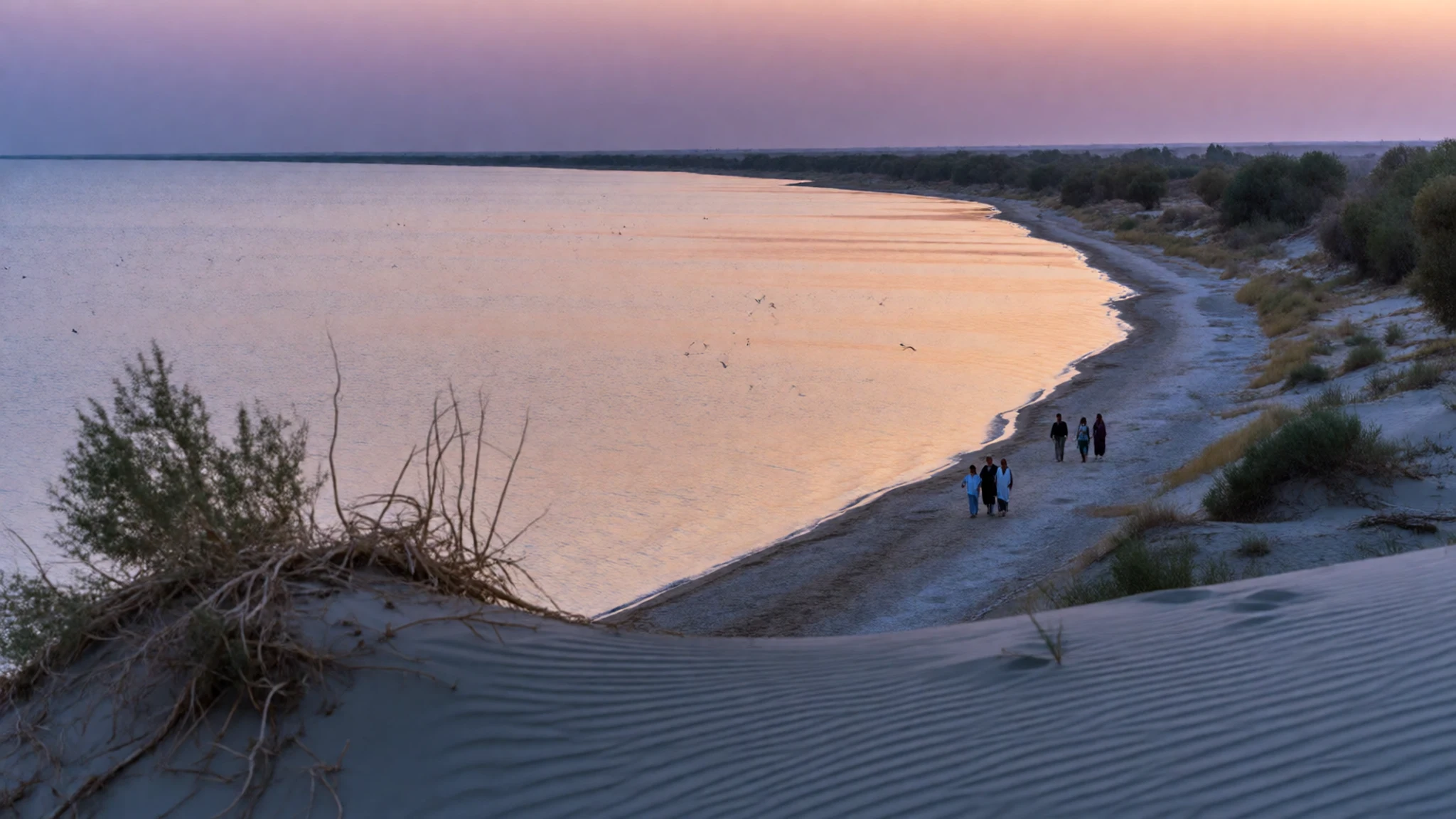
- Arnasoy bird reserve — Arnasoy district, Jizzakh region
The protected area around Arnasoy covers wetland and desert edge, and it draws waterbirds, especially in migration seasons. Binoculars help, and an early start gives the best light and the calmest water. A local guide or camp host can point to accessible viewing spots and explain which areas are restricted.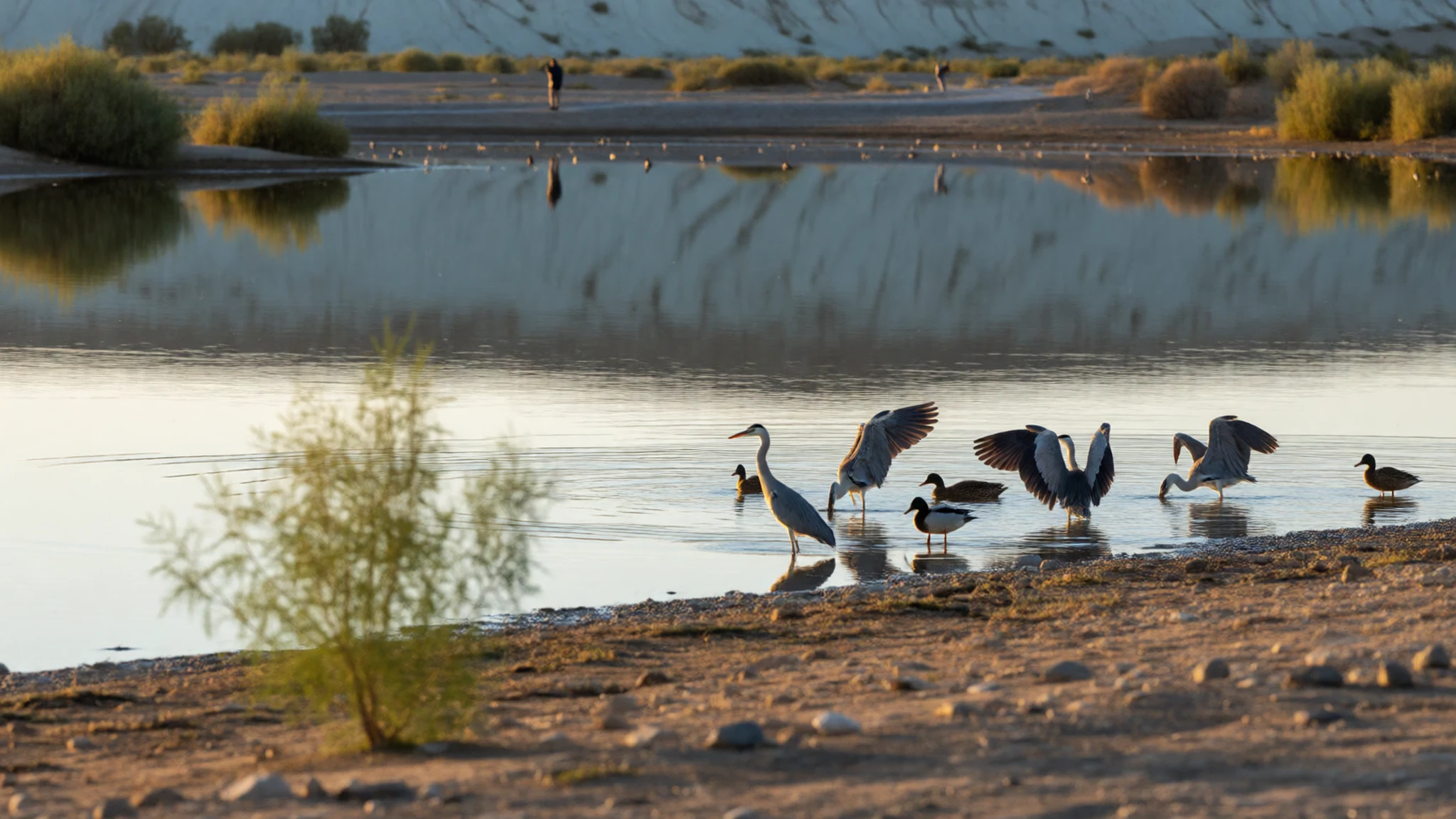
- Tamarisk and desert shoreline — Shoreline edge
Where the beach gives way to scrub, hardy desert plants cling to the sand, among them tamarisk with its feathery pink flowers and licorice-like Psoralea shrubs. A slow walk along this fringe shows how narrow the green strip is, and how quickly the lake gives way to open desert.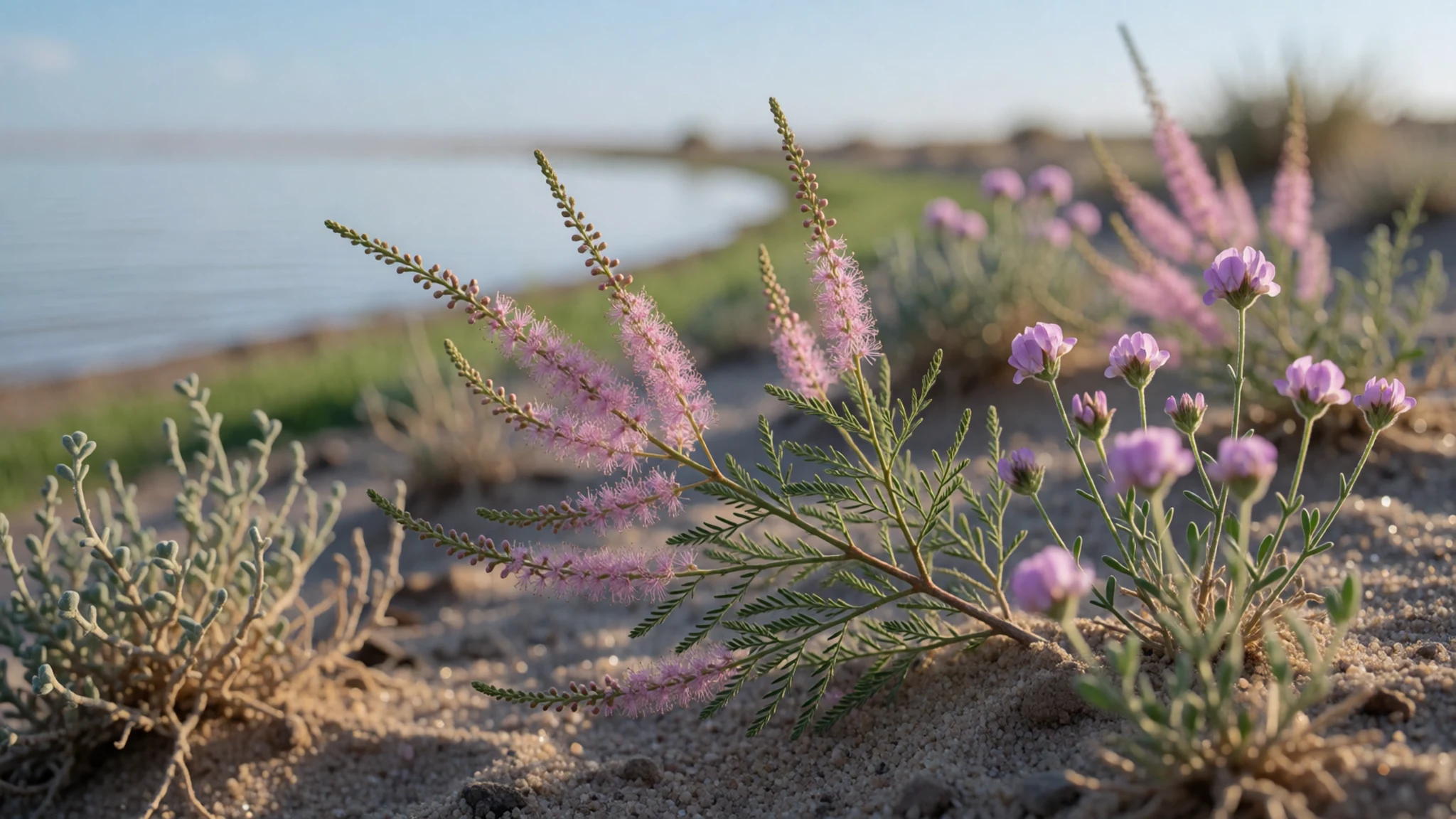
- A night in a yurt camp — Lakeside camps
Simple yurt camps stand near the water, offering felt tents, shared meals and a very dark sky for stargazing. Comfort is basic and bathrooms are often shared. Staying one night lets the lake be seen at dusk and dawn, and the camp can usually arrange a boat trip, fishing or a short desert walk.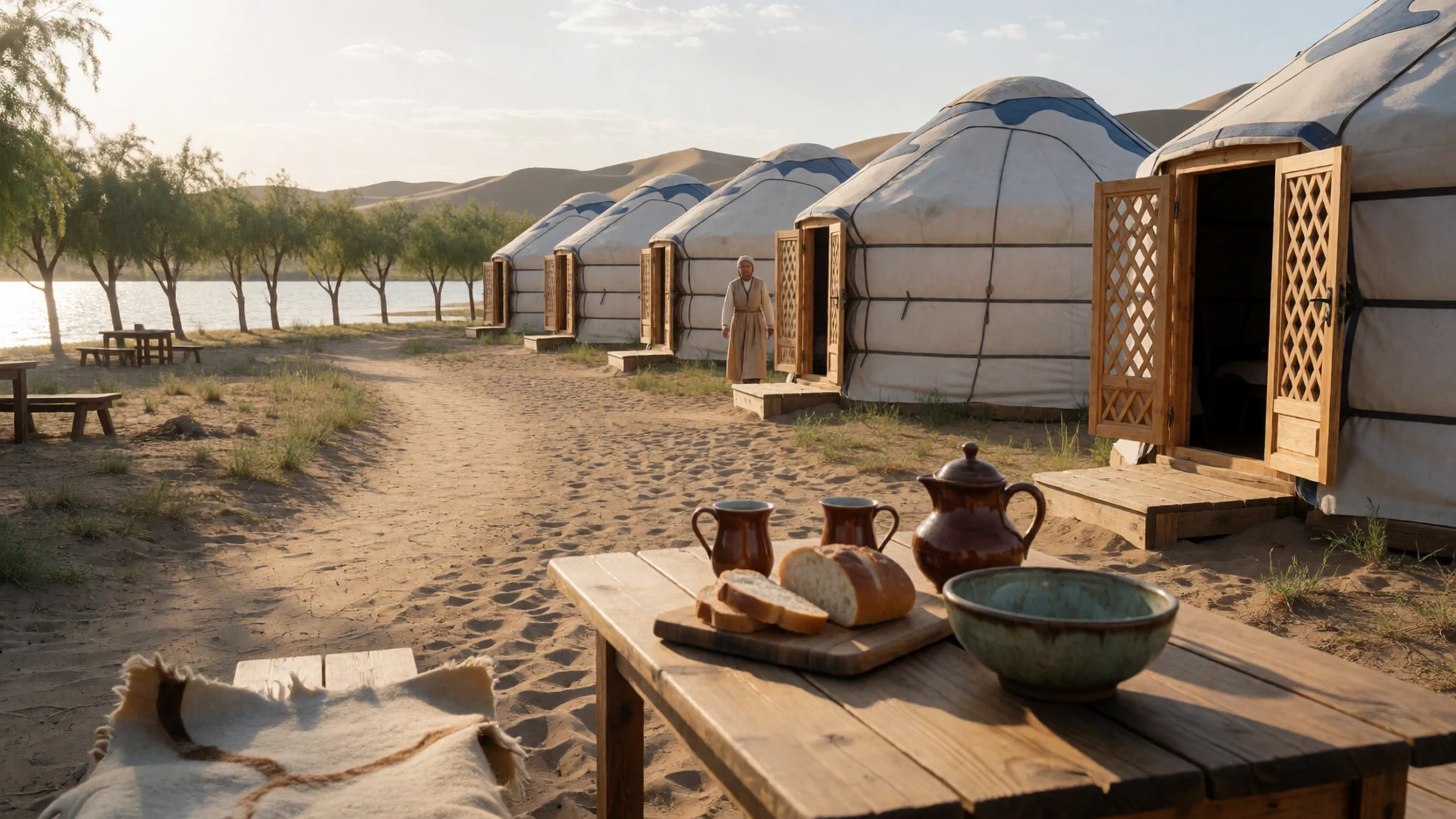
Culture
Aydarkul sits in a region where hospitality is a point of pride. A guest who arrives at a camp or a family home is usually offered green tea, flatbread, dried fruit and sweets before any business is discussed, and refusing everything can seem curt. Accepting a little, with thanks, is the polite course. Meals are often shared from central dishes, and the eldest person present is customarily served first.
The lakeside communities are mostly rural, and life follows the pattern of herding, fishing and farming that suits an arid area. Uzbek is the main language, with Russian widely understood among older people and in towns, and a few words of greeting go a long way. Families are generally conservative in dress and behaviour, even at a beach, and the atmosphere on the shore is relaxed but modest.
The lake itself is a modern creation, so there are no ancient shrines on its banks, but nearby Silk Road towns carry a long tradition of craft, especially embroidery, ceramics and bread-making. Bread (non) is treated with respect: it is not placed face down or thrown away carelessly, and a broken piece is shared rather than wasted. Small gestures like these are noticed and appreciated.
Remove your shoes before stepping onto the carpets and felt of a yurt or guest room, and ask before photographing people, especially women and children.
What to wear
Around Aydarkul, traditional dress draws on wider Uzbek textile traditions. Women's festive clothes use ikat silks and silk-cotton blends known as adras and atlas, with bold, blurred patterns in bright colours, and households in the region prize suzani, the large embroidered cloths that hang as wall coverings or cover beds. Men traditionally wear the chapan, a quilted striped robe, and the doppi, a small embroidered skullcap. These are worn for weddings, festivals and formal visits rather than every day.
Everyday clothes today are practical and plain. Men wear shirts, trousers and tracksuit tops, often with a flat cap or doppi; women wear long dresses or skirts, trousers under a tunic, and a headscarf for sun and dust. Younger people in the towns dress much as they would in any city, with jeans and trainers.
Visitors should plan for heat, sun, sand and cool evenings. Light, loose cotton or linen with long sleeves protects better than shorts and a vest, and a wide-brimmed hat and sunglasses are essential in summer. Swimwear is fine on the beach, but a shirt and a wrap or sarong for walking back to camp is more respectful, especially for women. Sandals with a back strap suit the sand, while closed shoes are useful for walks in the scrub. Bring a fleece or shawl for the evening, and a scarf to shield the face on windy days.
What to eat
- Plov — Yurt camp kitchens and roadside eateries
Uzbekistan's rice dish of lamb or beef, carrots and spices, cooked in a large cauldron over a flame. It is the usual meal for guests and celebrations, and camp kitchens near the lake often serve a version at lunchtime or dinner.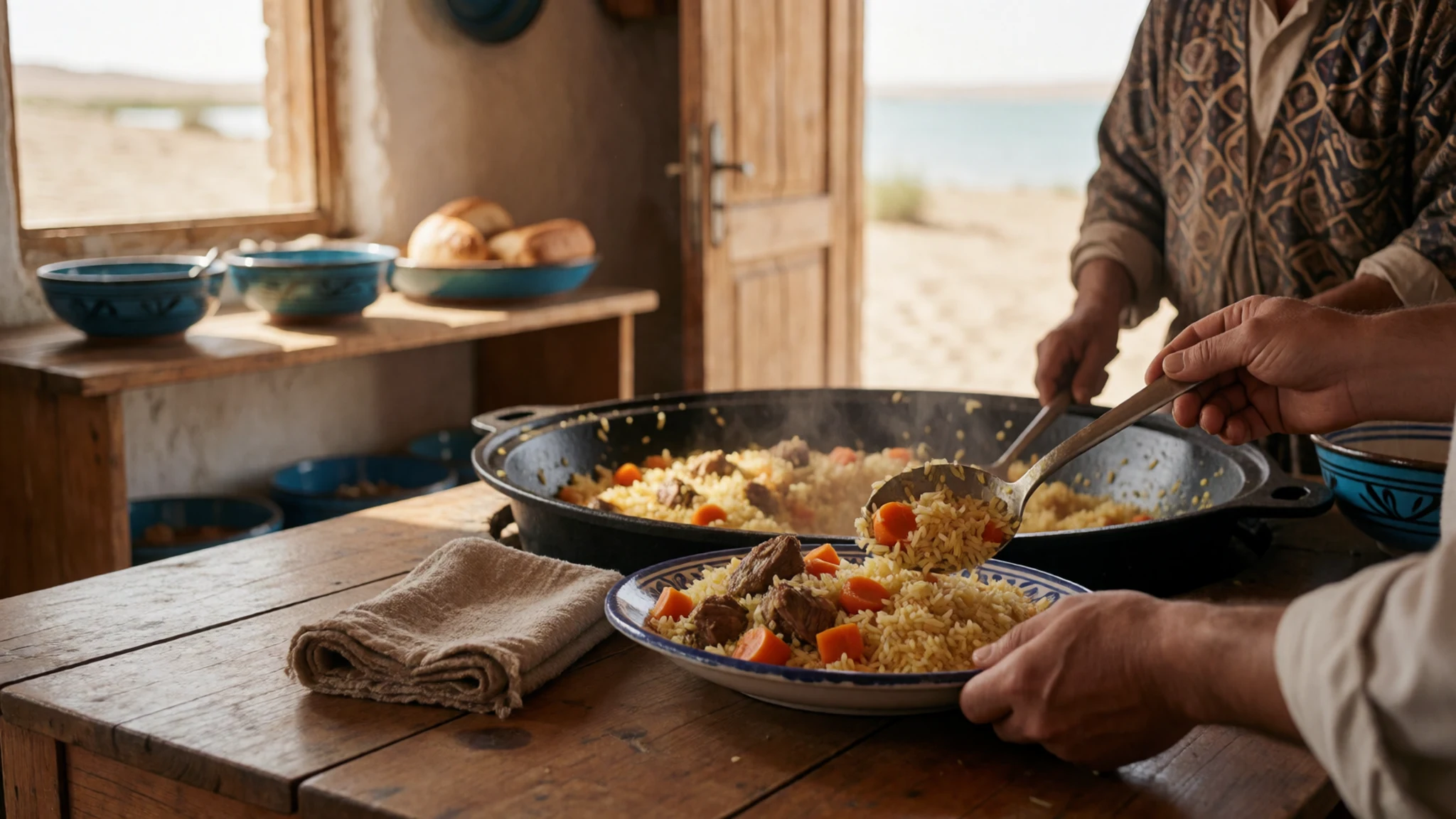
- Grilled lake fish — Lakeside camps and fishers' stalls on the shore
Fish from the Aydar-Arnasay lakes, commonly carp, is grilled or fried whole and served with bread, onions and fresh herbs. Locals also smoke or dry some of the catch. It is the clearest taste of the lake itself.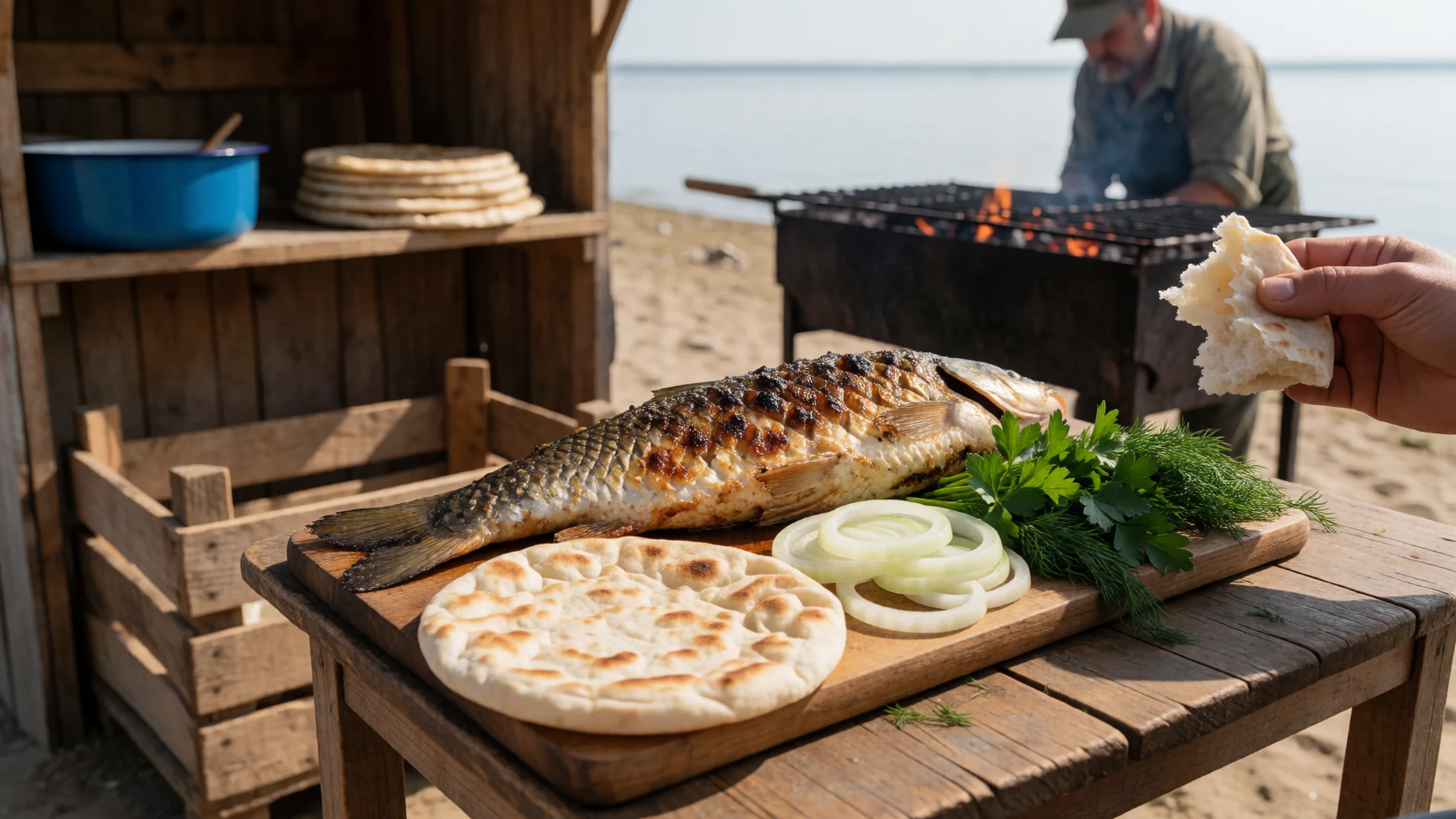
- Shashlik — Roadside grill stands on the route from Jizzakh
Chunks of marinated lamb or beef, or minced kebabs, grilled over coals and served with raw onion rings and flatbread. A reliable meal in the countryside, usually cooked to order, so a short wait is normal. - Non (flatbread) — Village bakeries and market stalls
Round, thick flatbread baked in a clay oven (tandoor), often stamped with a pattern and sprinkled with sesame or nigella seeds. It comes with every meal and keeps well for a day, which makes it good picnic food by the water. - Shurpa — Camp kitchens and family-run roadside eateries
A hearty soup of lamb or beef on the bone, with potatoes, carrots and herbs. It is warming on a cool evening and a good way to start a meal at a camp after a long day in the sun and wind.
Plan it
Best time. April–May and September–October, when days are warm and the desert is not oppressive. July and August are hot and exposed with little shade, and winter is cold and windy, with the shore at its quietest.
How long. 1–2
Getting there. Fly to Tashkent, then travel by road towards Jizzakh and on to Arnasoy district and the lake. Many visitors reach it from Samarkand or Bukhara by car or with an arranged transfer, sometimes combined with a visit to Nurata. Roads in the last stretch can be rough, so confirm directions with the camp.
Budget. low
Tips
- Book a yurt camp ahead in spring and autumn, and ask the host to arrange transport from the nearest town
- Bring sun protection, a hat and plenty of drinking water, as shade and shops are scarce
- Carry cash in small notes, because cards and cash machines are unreliable near the lake
- Keep the swim and bird walks for early morning or late afternoon, when it is cooler and the light is softer
- Pack a light layer for the evening and a scarf or buff for windy days
Etiquette
- Remove shoes before entering a yurt or guest room
- Dress modestly away from the beach, with covered shoulders and knees
- Ask permission before photographing people, and take rubbish away with you
Nearby
Sources
- Wikidata Q280771 (CC0)
- Wikipedia: Aydar Lake (rev 1365862214) (CC BY-SA 4.0)
- Wikivoyage: Uzbekistan (CC BY-SA 4.0)
- Photo: Lake Aidar, Uzbekistan (Jabez at English Wikipedia) (Public domain)
- Photo: Aydar Lake (David Holt) (CC BY-SA 2.0)
- Photo: Relief map of Uzbekistan (NordNordWest, Виктор_В) (CC BY 3.0)
- Photo: Arnasoy davlat ornitologiya buyurtma hududi (Feruza Murodova) (CC BY-SA 4.0)
- Photo: Psoralea Corylifolia around Aydarkol (Feruza Murodova) (CC BY-SA 4.0)
- Photo: Tamarix around Aydarko'l (Feruza Murodova) (CC BY-SA 4.0)
- Photo: Aydar Lake shore (Feruza Murodova) (CC BY-SA 4.0)
- Photo: Aydarko'l desert surroundings (Feruza Murodova) (CC BY-SA 4.0)


