Moynaq
Moynaq, Uzbekistan
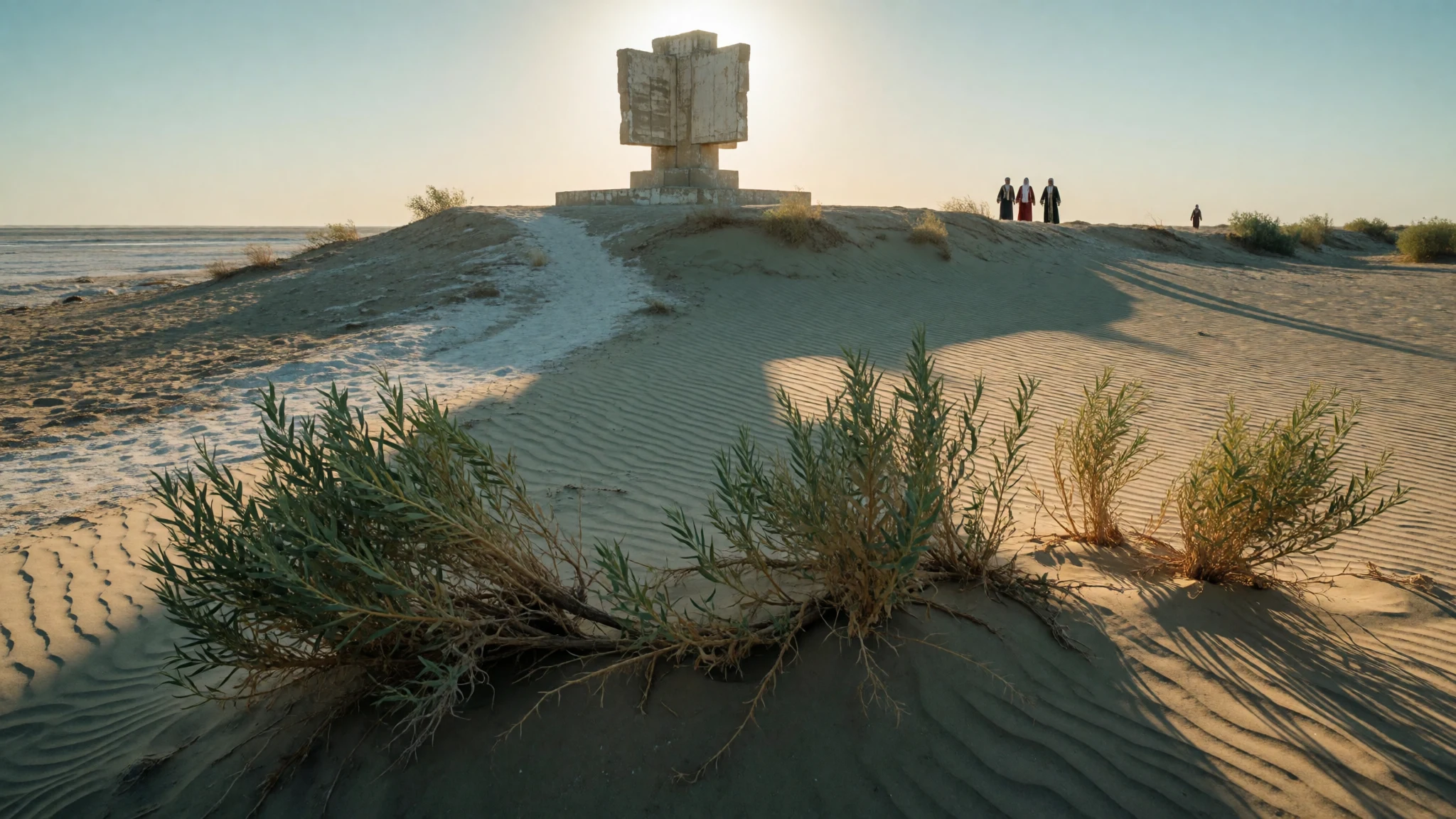
Moynaq is a former port stranded in desert, where rusting ships on dry sand make the Aral Sea's disappearance impossible to ignore.
The place
Moynaq is a town in northern Karakalpakstan, the autonomous republic that covers the north-west of Uzbekistan. It stands about 50 metres above sea level on flat, pale, salt-crusted ground, and about 13,500 people live there. The name appears in several spellings, including Muynak in Russian and Moʻynoq in Uzbek, so signs and maps rarely agree. For decades the town was a working port, with a harbour, a cannery and ships heading out onto the Aral Sea. Today the shoreline has retreated so far that the harbour sits in desert, and the old seabed beyond town is known as the Aralkum. The landscape is wide and quiet: low scrub, sand, wind and a skyline of rusting hulls. The town itself is small and plain, with Soviet-era buildings, modest houses, a few guesthouses and a museum. Most visitors come on a day trip from Nukus, the regional capital, spend a few hours at the ship graveyard and memorial, and leave before dark. That is a reasonable plan, though an overnight stay lets the light change over the wrecks, and early morning and late afternoon are good hours for photographs. Summers are hotter and winters colder than they were when the sea moderated the weather. Moynaq is not a pretty place in any conventional sense, and it does not try to be. It makes an abstract environmental story physical, and most people leave quieter than they arrived.
Its story
Moynaq owes its rise and its ruin to the same body of water. Fishing had long been part of life on the southern Aral Sea, and in the Soviet period the town grew into an industrial fishing and canning centre, with a harbour, a fleet and a workforce to match. Then, from the 1960s, Soviet planners redirected the Amu Darya and Syr Darya, the two rivers that fed the sea, to irrigate cotton fields across the region. Cotton was grown almost to the exclusion of other crops, and water that once reached the sea went into canals and fields instead. Without its inflow the sea began to shrink. What water remained grew saltier, and farm chemicals washed back into it, so the fish that supported Moynaq could not survive. The shoreline drew back from the harbour, slowly at first and then year after year, until the boats were left standing on sand. Jobs vanished, and most people who could leave did so. Those who stayed, mainly Karakalpaks, now live with dust blown off the exposed, polluted seabed, which brings health problems, and with harsher swings of temperature than the sea once allowed. The hulks that remain have become the town's emblem, and the museum keeps the memory of the working port. Moynaq's history is recent, documented and still unfolding, which gives the place an unusual immediacy for a town of its size.
What to see
- The ship graveyard — North end of Moynaq
The rusting hulls stand on dry, sandy ground at the north end of Moynaq, where the harbour once opened onto the sea. Trawlers and other working vessels lean at angles, stripped by weather. Walking among them in low light is the heart of a visit. Stay off the hulls, because the metal is sharp and unstable.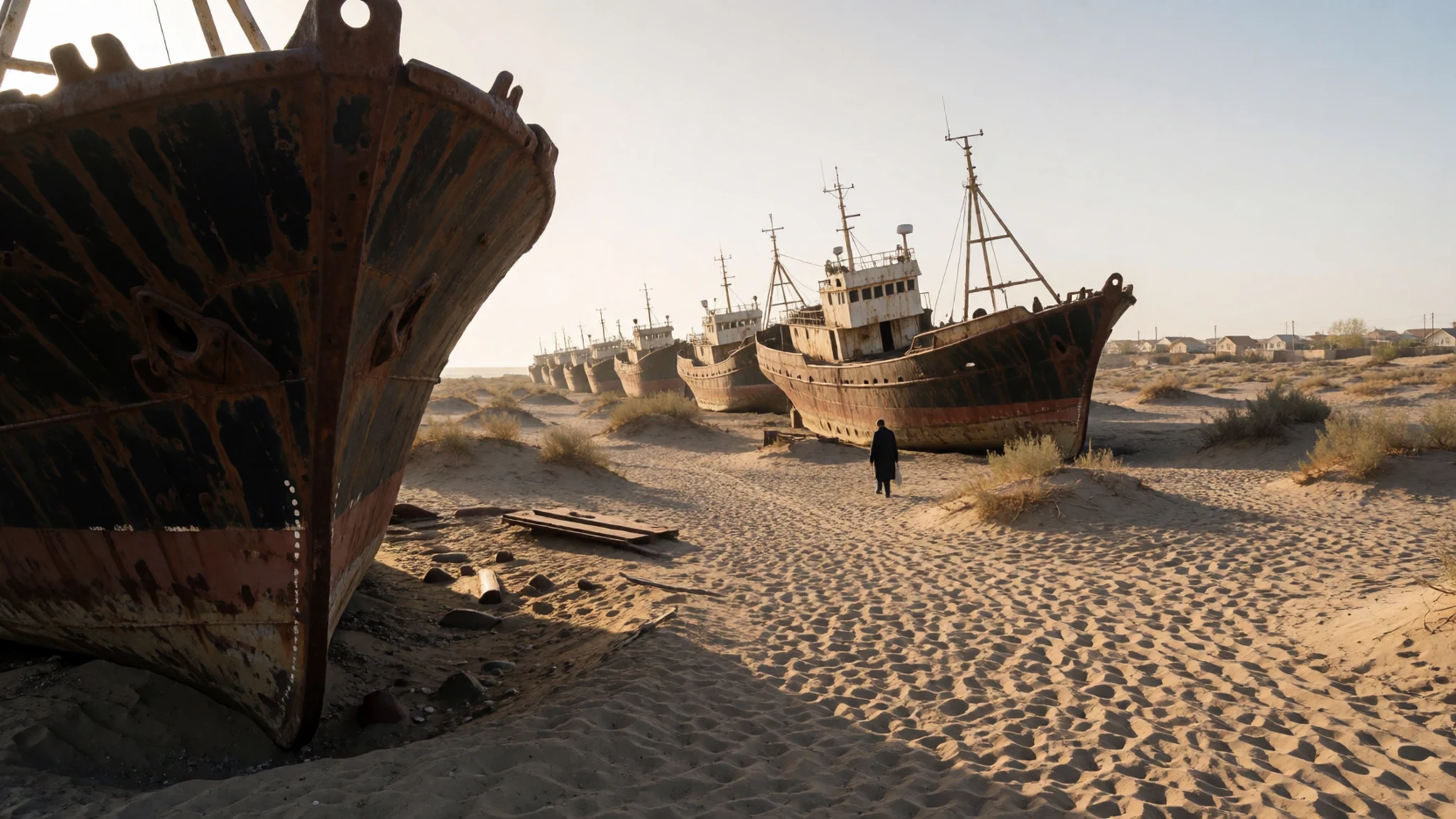
- Aral Sea Memorial — North end of Moynaq
The memorial stands above what was once the shoreline, among the abandoned ships, with a board that sets out the story of the sea. It makes a useful first stop, since it explains the ground in front of it. Wide views over the dry basin show how far the water has retreated.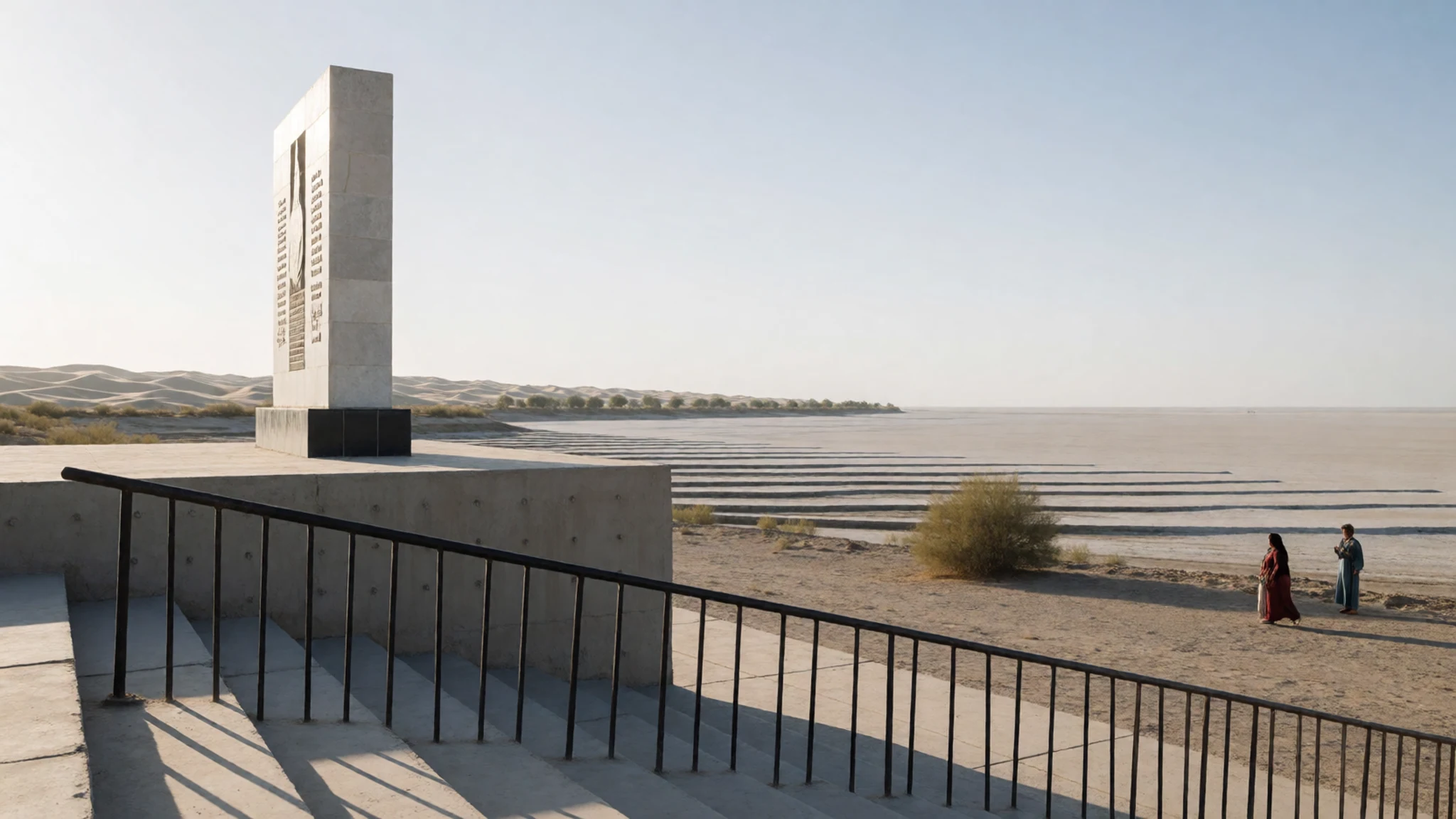
- Regional History and Aral Sea Museum — Moynaq town centre
This is a small, one-room museum in the town. Its paintings and photographs show Moynaq in busier times, and its displays cover the sea, the fishing industry and the damage that followed. Allow about an hour, and consider visiting before the ships, since the context makes the wrecks easier to read.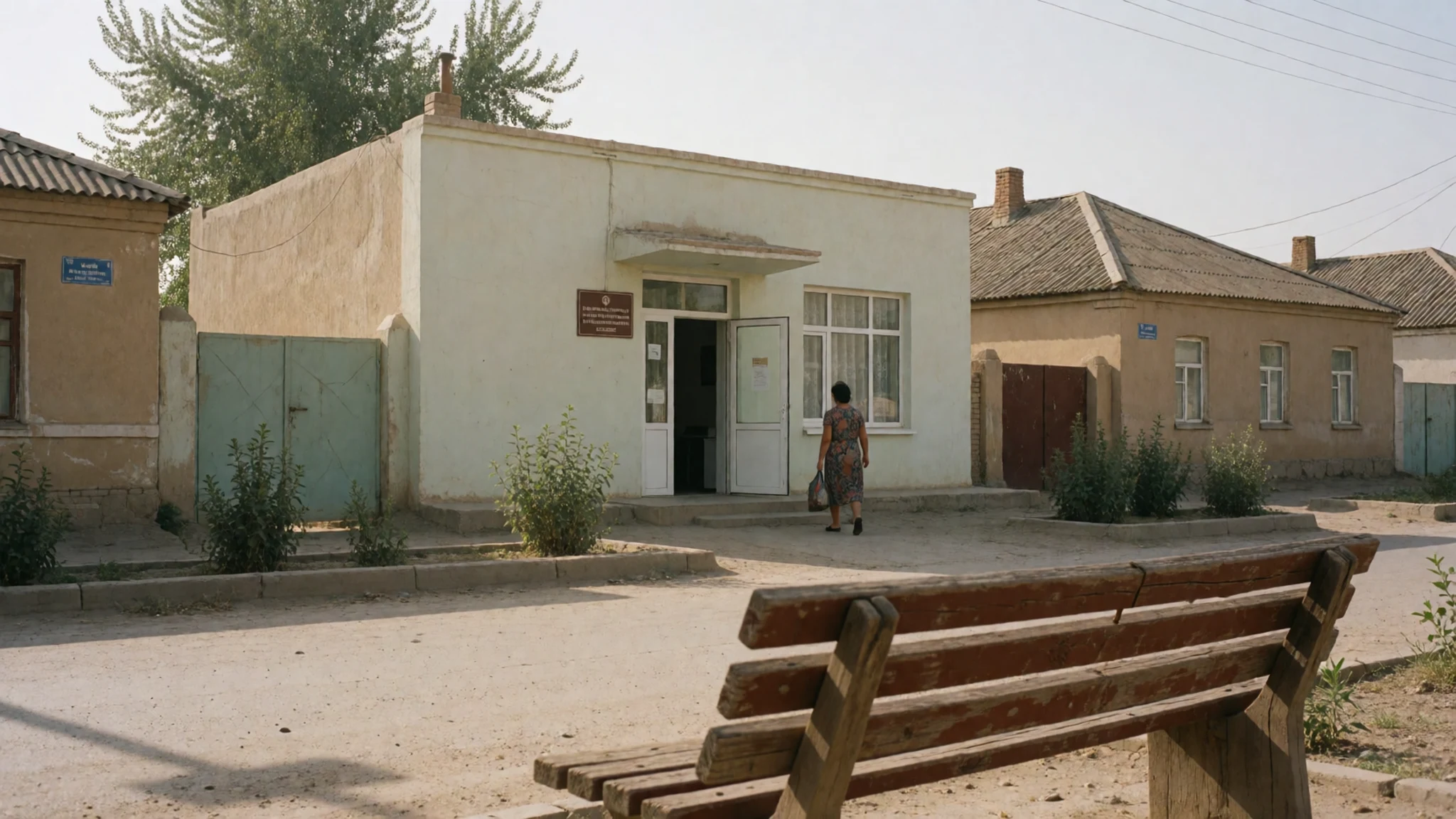
- The abandoned fish cannery — Moynaq town
The derelict cannery once gave the town much of its work. Its rusting machinery still sits where it was left, and the empty halls make the economic side of the disaster easy to grasp. Access and condition vary, so ask a driver or guesthouse host what is open and safe before wandering in.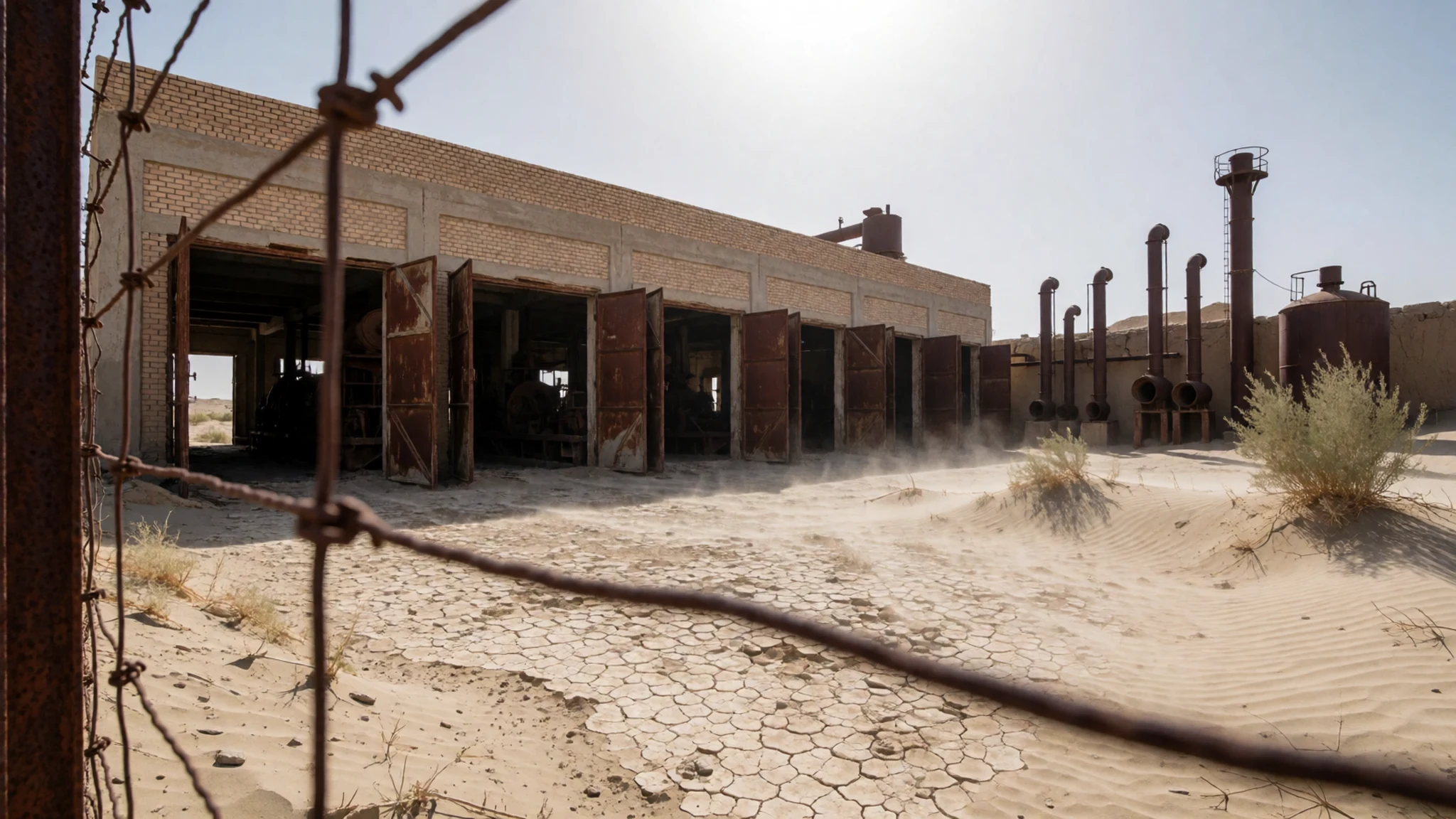
- Boat monuments and the town entrance — Town entrance and roadside
Around Moynaq, fishing boats have been set up as monuments, and the entrance to the town is marked in a similar spirit. They are quick stops on the way in or out, worth a few minutes for photographs, and they show how the town has turned its loss into its identity.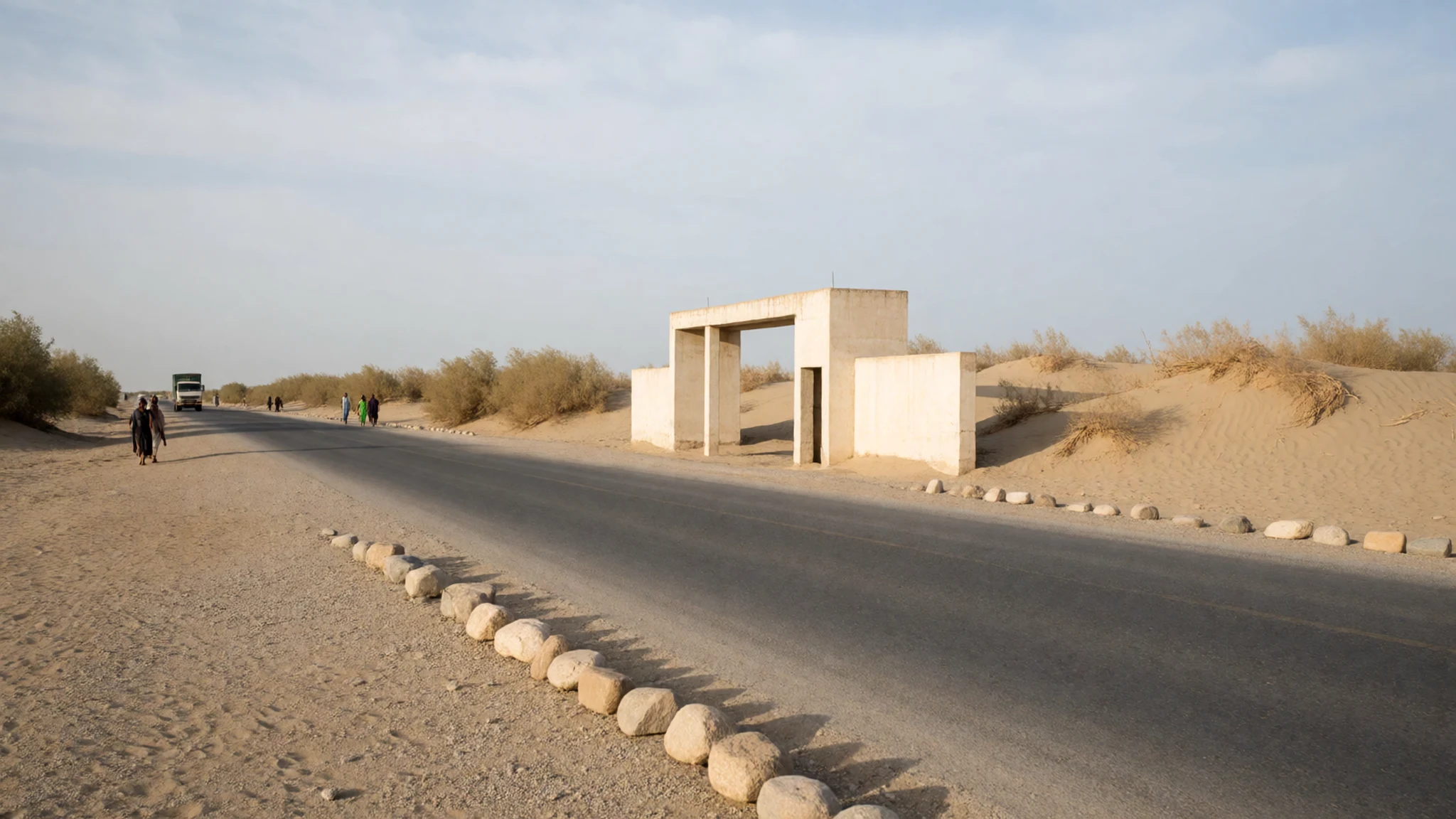
Culture
Moynaq's culture today blends Karakalpak tradition with the layers left by the Soviet decades and by the loss of the sea. Karakalpaks are the main community among the people who stayed, and the town belongs to an autonomous republic with its own language and identity inside Uzbekistan. Before the sea retreated, the local economy rested on fishing, but also on fur farming and rush mat making, as paintings and photographs in the town museum show. The ship graveyard and memorial work as a shared place of remembrance, a reminder that the human cost of the Aral Sea's decline is often overlooked in wider discussion of the disaster. Since 2018 Moynaq has also hosted Stihia, an electronic music festival held among the wrecks and joined by talks on art, science and technology. The name means an unstoppable force of nature, and it nods both to the ecological disaster and to music's power to gather people. Visitors will find a small, quiet town where hospitality is warm, but where the subject of the sea is personal rather than a spectacle. Treat the ships and memorial as a site of loss rather than a backdrop: stay off the unstable hulls, and ask before photographing residents.
What to wear
Moynaq's traditional dress belongs to the Karakalpak people, whose festive clothing is known for embroidery, bright silk and cotton, and elaborate headwear, including the tall bridal headdress called the saukele. Men's traditional outfits include robes and tall fur or sheepskin hats, worn today at weddings, festivals and cultural events rather than every day. In the town itself, everyday clothing is practical and plain: jeans, tracksuits, long-sleeved shirts, simple dresses and headscarves for many women, with heavy coats and fur hats when winter sets in. With no sea to soften the weather, summers are hotter and winters colder than the old coastal climate would suggest. A visitor should dress for sun, wind and dust. Light, loose cotton with long sleeves and long trousers or skirts suits both the heat and local modesty norms, and a scarf or buff helps when sand blows. Wear closed, sturdy shoes, since the ground around the ships is sandy and strewn with sharp metal. Bring a hat and sunglasses in the warm months, and warm layers with a windproof outer coat for winter. Covered shoulders and knees are respectful in town and at any mosque or shrine a guide takes you to.
What to eat
- Beshbarmak — Family guesthouses
Boiled meat served over wide, flat noodles with onion and broth, a staple of Karakalpak and wider Central Asian hospitality. It turns up at weddings and guest meals. Ask at a family guesthouse, which is often the easiest place to get it.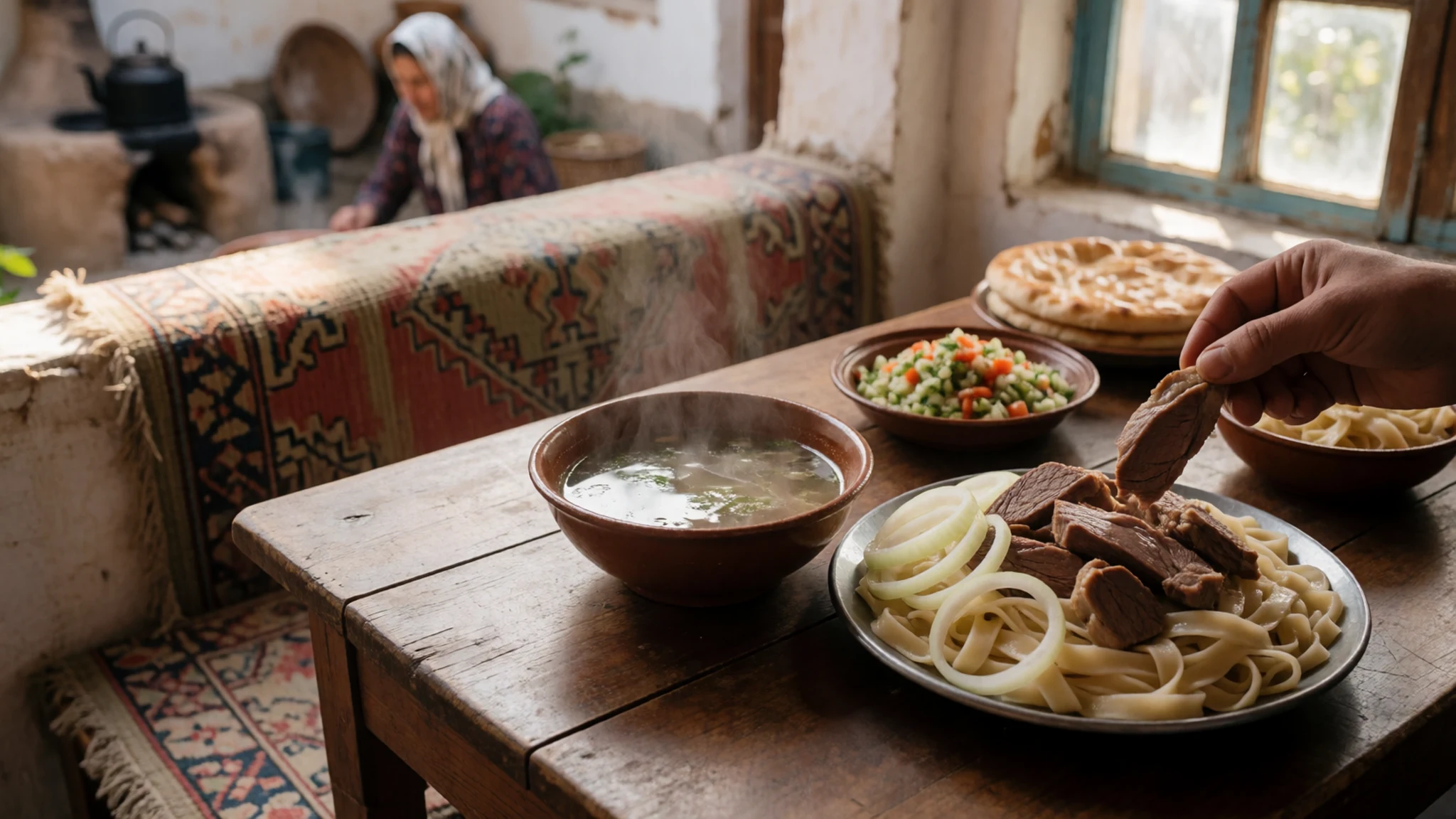
- Plov — Simple eateries in town
Rice cooked with meat, carrot and onion in a large pot, found across Uzbekistan. In Moynaq it makes a reliable, filling lunch before or after the ship graveyard, and it is usually available at a simple eatery in town.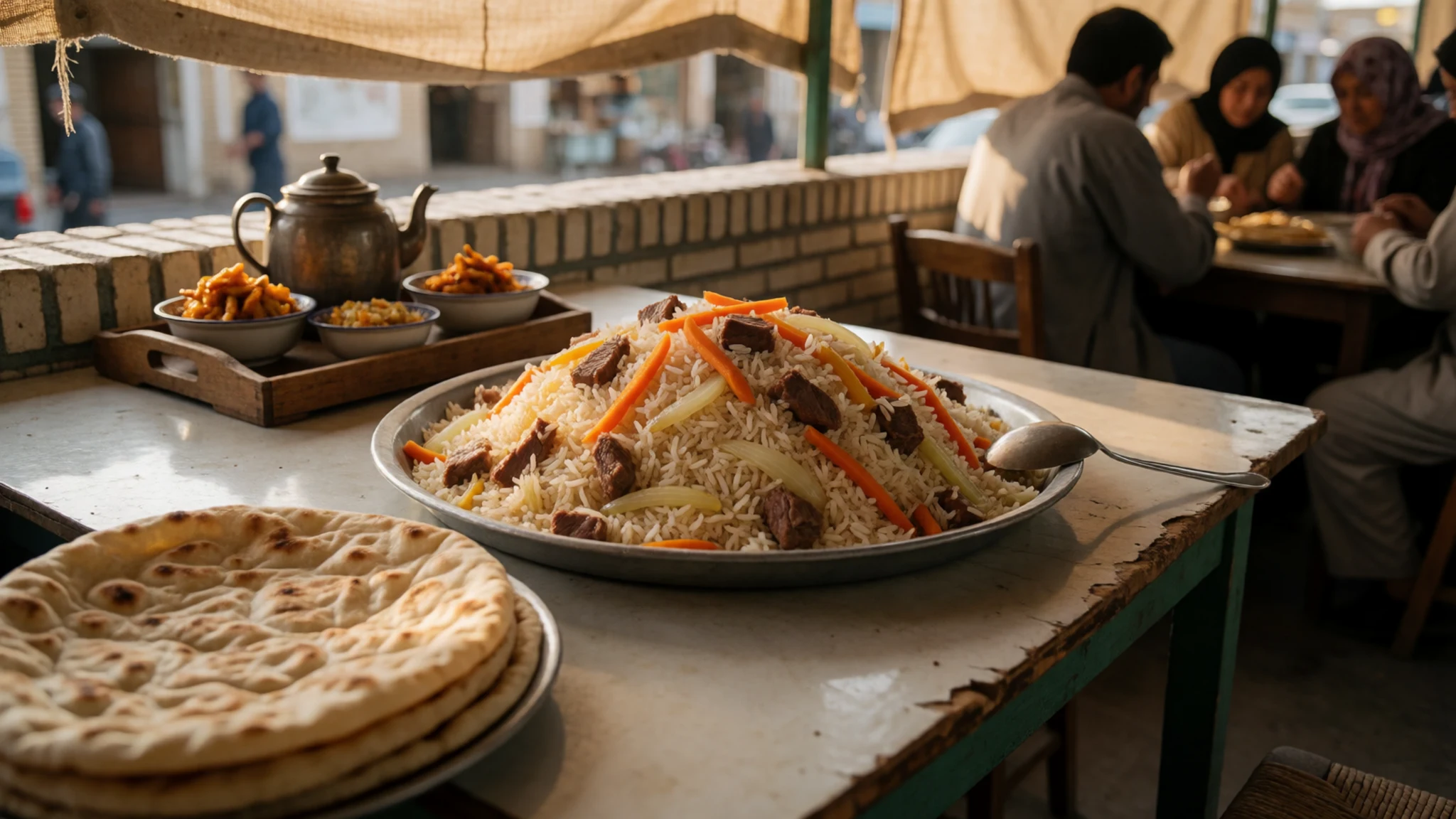
- Shurpa — Roadside eateries and tea houses
A meat and vegetable soup that suits cold days and long drives. It is a good choice in winter, when the wind across the dry seabed is sharp. Order it at a roadside eatery or tea house, usually with bread alongside. - Non — Bakeries and market stalls in town
Round bread baked in a tandoor oven, sold fresh from small stalls and bakeries and served with nearly every meal. Buy it warm and eat it with tea, an easy snack for the drive out to the ships and back. - Samsa — Street stalls and small bakeries
A baked pastry filled with minced meat and onion, sold from street stalls and small bakeries across Uzbekistan. It is easy to eat standing up, which makes it handy fuel before a walk among the wrecks.
Plan it
Best time. April–May and September–October, when temperatures are easier to bear. Summers are hotter than the old coastal climate would give, and winters are colder, with winds across the dry seabed.
How long. 1–2
Getting there. Fly to Nukus, the regional capital, or reach it by rail or road from elsewhere in Uzbekistan. The last leg to Moynaq is by road, either a hired taxi for the day or a shared bus from Nukus, taking a few hours each way. Check current departure times locally.
Budget. low
Tips
- Avoid tap water, which is heavily polluted; carry bottled water for the whole day
- Agree the taxi price before leaving Nukus, and in summer insist on a car with air conditioning
- Go early or late in the day for softer light and less heat, and bring sun protection
- Carry cash, as cards may not work in a small town
- Pack a scarf or buff in case wind lifts dust from the dry seabed
Etiquette
- Stay off the rusting hulls, which are sharp and unstable
- Ask before photographing residents
- Dress modestly, with shoulders and knees covered
Nearby
Sources
- Wikidata Q750989 (CC0)
- Wikipedia: Moynaq (rev 1382388203) (CC BY-SA 4.0)
- Wikivoyage: Moynoq (rev 4933987) (CC BY-SA 4.0)
- Photo: Moynaq Boats (Missaliona) (CC BY 3.0)
- Photo: Moynaq city entrance (Martijn Munneke) (CC BY-SA 2.0)
- Photo: Overheidsgebouw (Martijn.Munneke) (CC BY 2.5)
- Photo: Oude conservenfabriek (Martijn.Munneke) (CC BY 2.5)
- Photo: Moynaq, Aral Sea (Arian Zwegers) (CC BY 2.5)
- Photo: Moynaq, Aral Lake, Ship Wrecks (THORSTEN) (CC BY-SA 4.0)
- Photo: Vissersboot als monument (Martijn.Munneke) (CC BY 2.5)
- Photo: Moynaq Memorial (ChanOJ) (CC BY 3.0)


