Shahrisabz
Shahrisabz, Uzbekistan
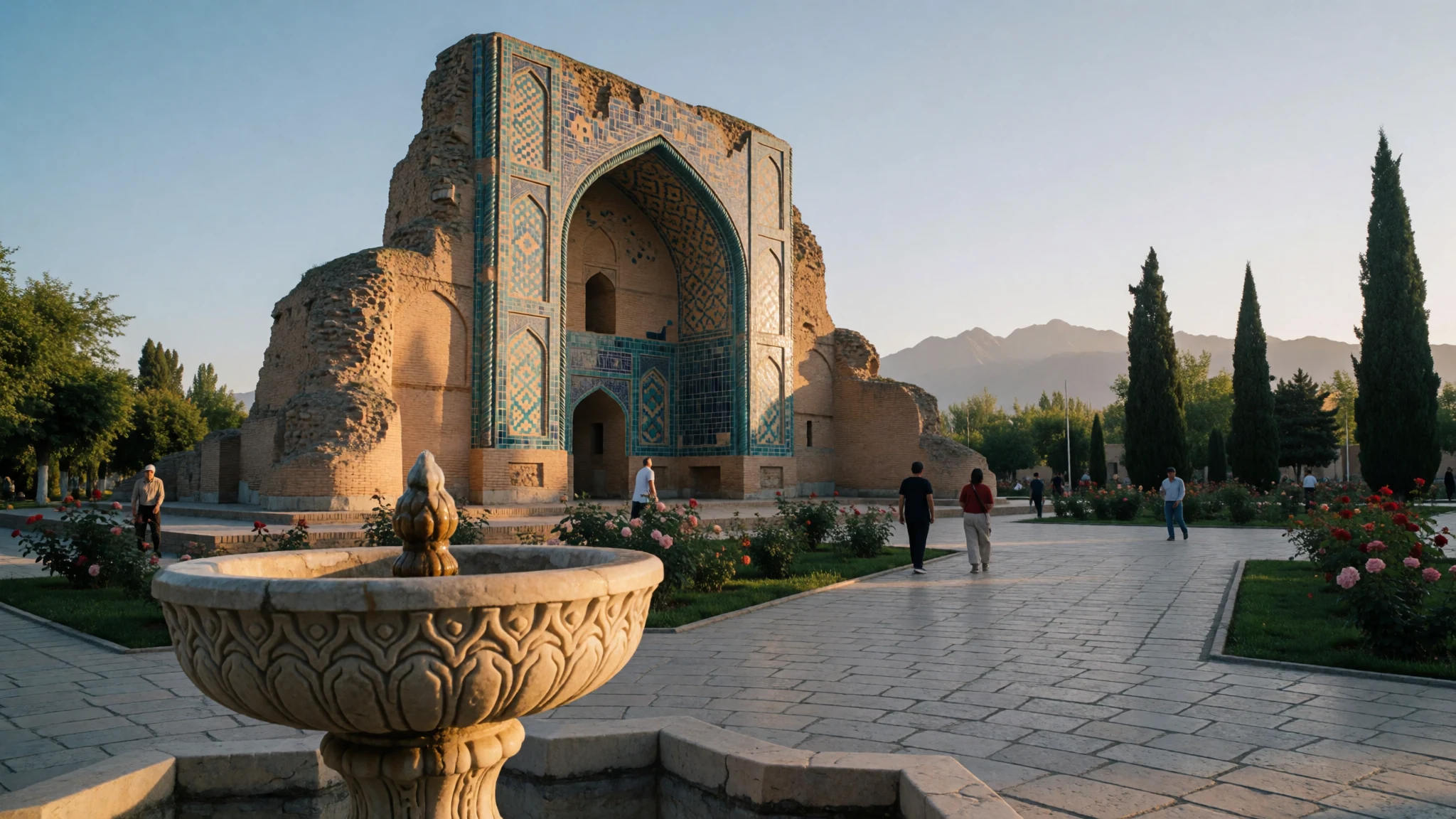
Shahrisabz is where Timur’s story turns into blue-tiled stone—an old city walkable as a Timurid heritage circuit.
The place
Shahrisabz (also written as Shakhrisabz) sits in Qashqadaryo Region of southern Uzbekistan, about 80 km south of Samarkand at 622 m elevation. It’s a small place by big-city standards—more like a historical settlement that grew around Timur’s family story—so the sightseeing feels concentrated and easier to stitch together in a few days.
The city’s present-day rhythm is quiet compared with the flashier hubs. That’s a good thing: mornings are calmer for photos around the grand Timurid remains, and the light can be kind before heat builds. The trade-off is that you’re often moving at site time (open courtyards, tomb complexes, museum-like buildings) rather than floating between cafés and long evening streets.
The big draw is the built language of the Timurid era: monumental portals, mosque-and-madrasa spaces, and burial complexes that look like they were designed to impress visitors from afar. You can still feel that it’s an old power centre—layers of history show up in the layout and in the way the city remembers its founders.
Even if the UNESCO label is what first pulls people in, the day-to-day experience is about texture and scale: carved stone, deep recesses, and the contrast between restored segments and the wider archaeological sense of place. Expect a lot of sun when the season turns hot and dry.
Its story
Shahrisabz’s story reads like a set of shifts in control and culture. In the earliest layers, the area shows traces of settlement by farming communities in the 1st millennium BCE. In medieval references, the town appears as Kesh, and later, Shakhrisabz becomes known by name in the Timurid period.
The city’s fame is tied directly to Timur. His connection isn’t just a postcard fact: Shahrisabz is presented as his birthplace area, and many landmarks are built around the memory of his family and the religious life that supported their legacy. That’s why the architecture here feels deliberately ceremonial—palace dreams and burial realities share the same urban map.
Long before Timur, the region mattered across empires. Documents linked to the Achaemenid era describe work on city walls, and Kesh functioned as an important urban centre connected to Sogdiana. Over centuries, rulers and travellers came and went, from Persian imperial contexts to episodes tied to Turkic khaganates. Later, Alexander the Great’s era is part of the wider historical framing for the region.
When the Timurid period arrived, it didn’t erase what came before; it reorganised the focus. The result is a city where you walk through time by following themes—power, devotion, family, memory—rather than a single linear “museum timeline”. If there’s one thing to keep in mind, it’s that the place is living history: people still treat these sites as meaningful, not just as ruins to tick off.
What to see
- Ak Saray Palace — Central Shahrisabz (Timurid palace area)
Ak Saray Palace dominates the imagination in Shahrisabz—its very name points to a “white palace”. It’s tied to Timur’s ambition, and it sits at the heart of the city’s Timurid symbolism. Even when you’re just walking the approach, the scale and plan make it feel like a statement that was meant to be seen from a distance.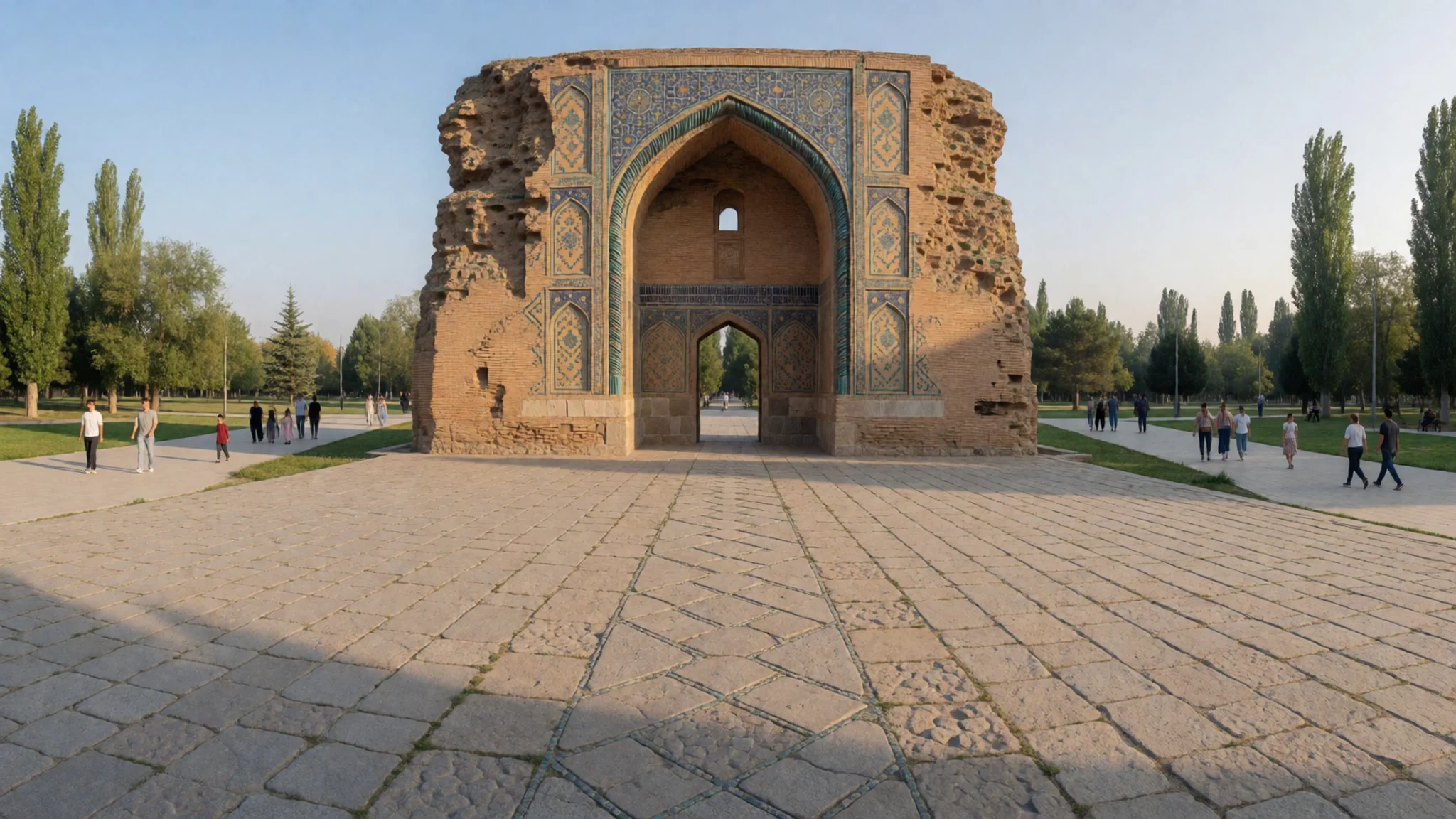
- Dorus Saodat Complex — Temurid memorial complex area
The Dorus Saodat Complex is the kind of place where buildings feel like biography. It’s associated with the burial and religious life of the ruling family, with spaces for prayer and a mosque setting within the wider ensemble. Walk slowly here: the compound’s layout helps you understand why memorial architecture in this region is as much about community as it is about individual names.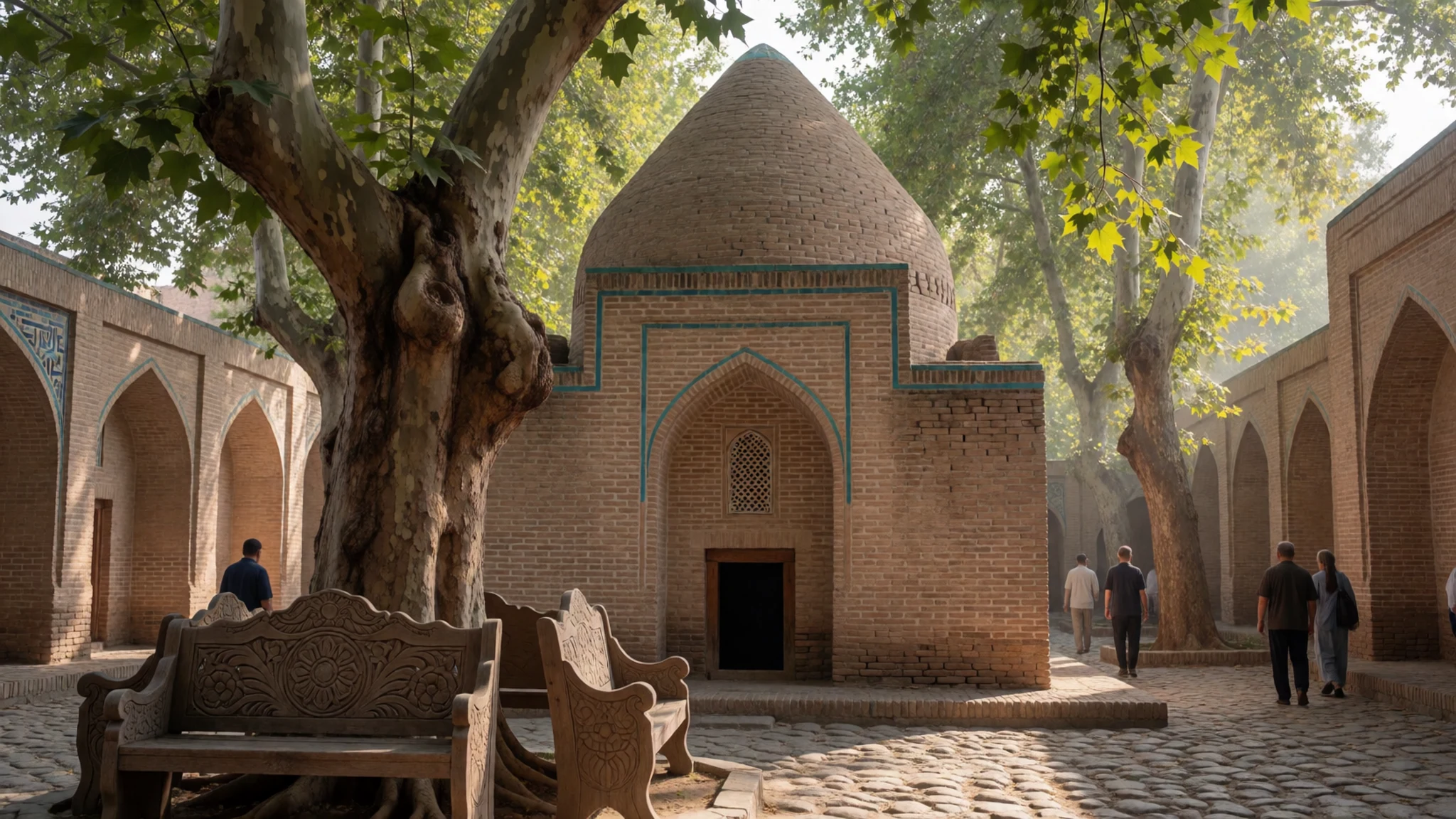
- Dorut Tilavat — Memorial ensemble district
Dorut Tilavat is part of the larger Timurid memorial landscape. As an ensemble connected to burials and religious buildings, it gives a quieter side to the big palace imagery. If the palace area feels outward-looking, Dorut Tilavat reads more inward: a route through courtyards and sacred spaces where the atmosphere shifts from grand spectacle to contemplative stillness.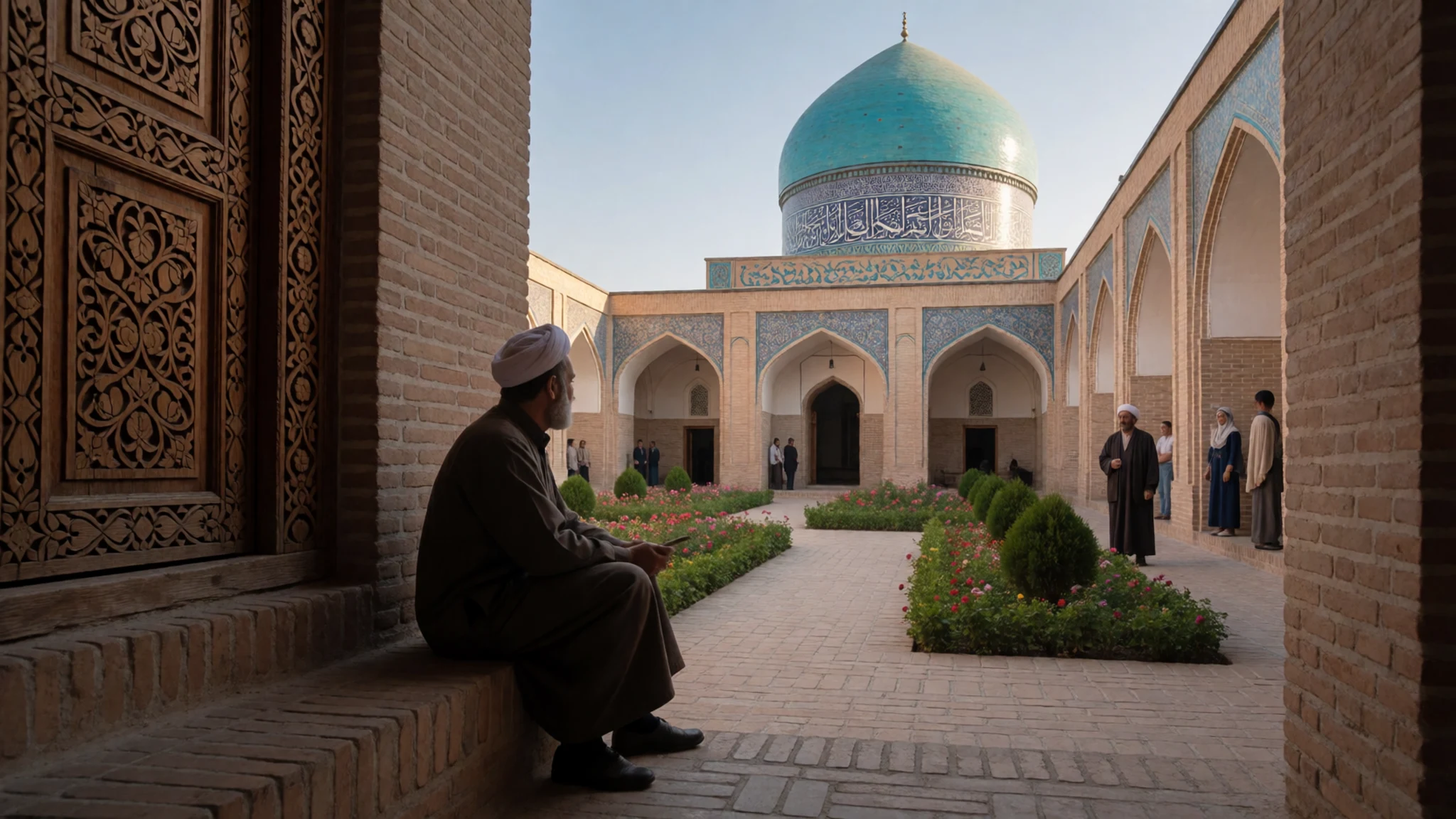
- Crypt of Temur — Near Dorus Saodat / memorial core
The Crypt of Temur is an underground stop that adds intensity to the visit. It includes a plain chamber with inscriptions on the arches. At the centre sits a stone casket marked with inscriptions relating to Timur. Descending into a covered, carved space is the moment you really feel how the city’s heritage narrative anchors on one person.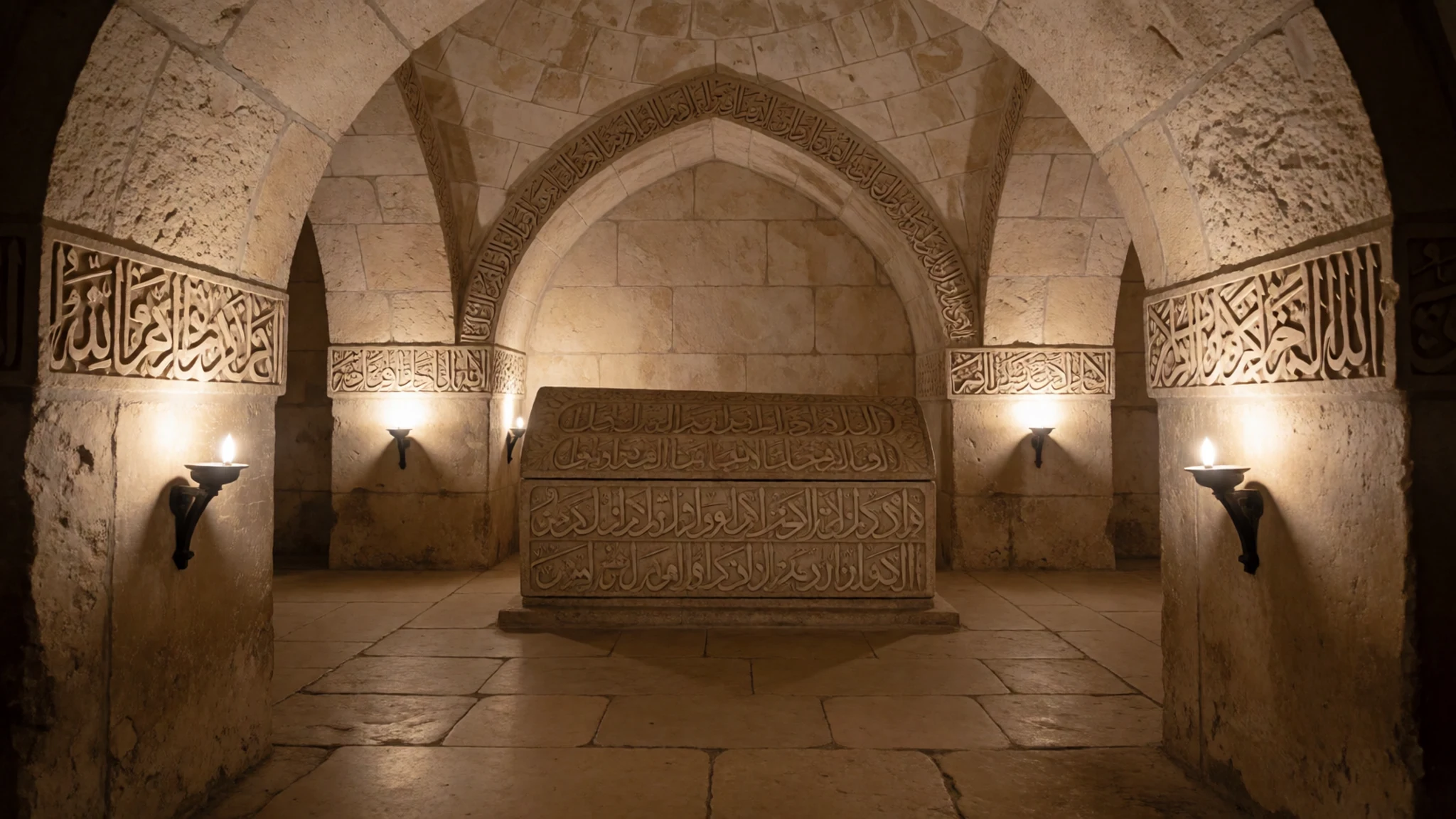
- Tomb of Jehangir — Memorial complex area
The Tomb of Jehangir is dedicated to Timur’s eldest son. The mausoleum’s form centres on a high square room with an arch aligned along the main axis, so the design leads the eye in a straightforward, intentional way. It’s a smaller stop than the palace ruins, but it’s a strong contrast: more intimate, more direct, and easier to spend a thoughtful few minutes in.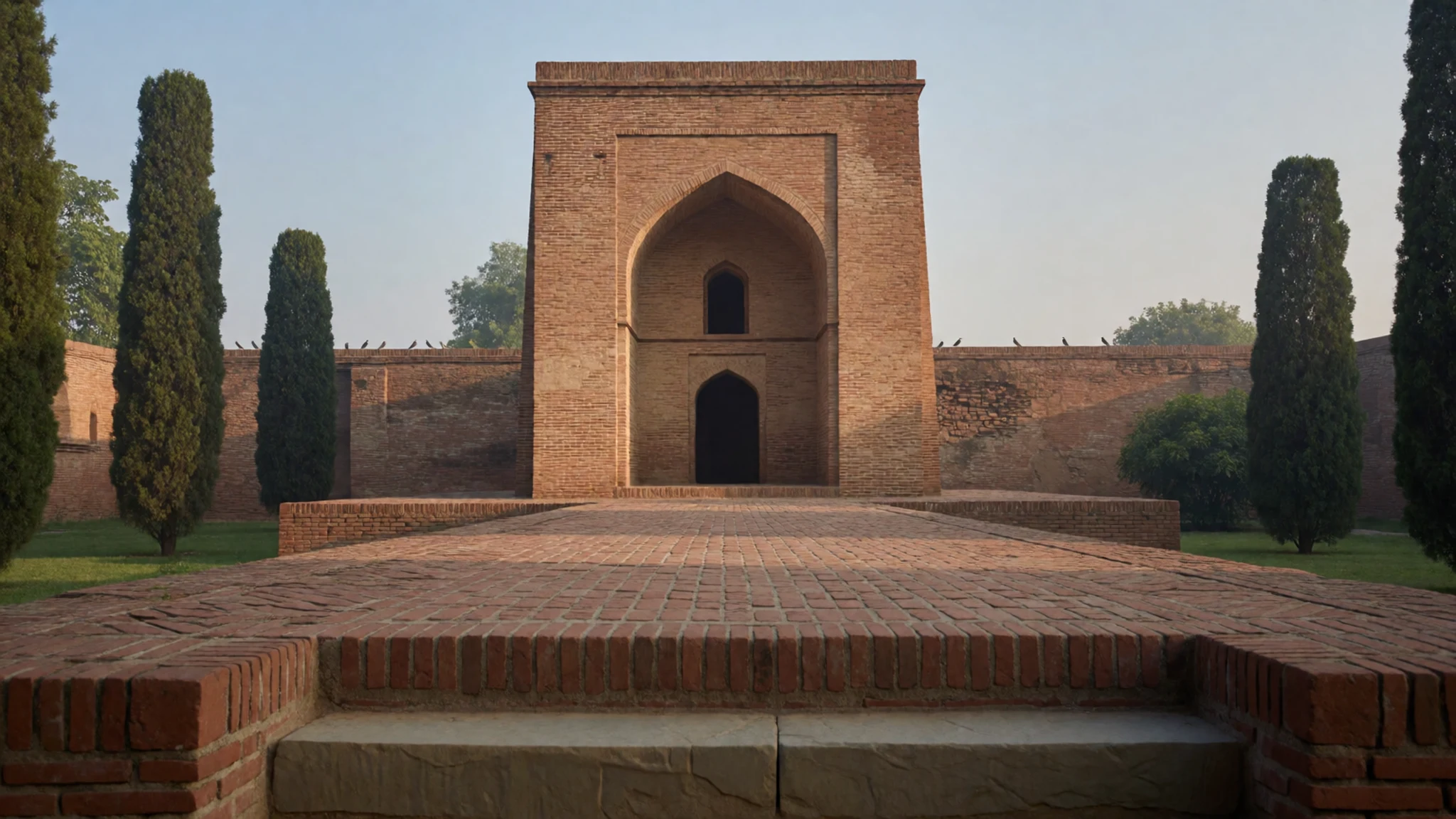
Culture
Shahrisabz’s culture is very tied to recognition and craft, not just sightseeing. The city has been highlighted through tourism channels linked to Uzbekistan’s broader cultural diplomacy, and it has also been publicly connected with embroidery through a crafts-focused event held in the city. The point isn’t paperwork trivia: it helps explain why textiles and needlework show up as part of the local identity alongside monumental stone.
Timur’s legacy also shows up in official honours, reinforcing that the city’s narrative is still treated as a living one. That’s why, on many visits, the atmosphere around heritage sites feels more like respect than tourism theatre.
For day-to-day behaviour, expect a blend of everyday Uzbek life and visitors moving through sacred spaces. Dress modestly around religious buildings, keep voices low in tomb and mosque areas, and be patient if there are families spending time after sightseeing. Photography can be a little unpredictable from one corner to the next, so watch how others behave and ask when in doubt.
Visitor etiquette: Dress modestly and keep voices down in mosque and mausoleum areas; ask before photographing people close up.
What to wear
Traditional dress in Shahrisabz sits within the broader Uzbek world of embroidered, patterned garments. Many visitors notice decorative stitching and richly coloured fabrics that reflect local craft traditions. In daily life, you’ll still see regional styles on women and men, often with headscarves for modesty and elaborate embroidery on clothing items. In heritage areas, the visual effect is especially strong because the textiles stand out against stone courtyards.
What travellers actually see now: more variety than you’d expect, with younger people wearing modern shirts, jeans and breathable casual layers, alongside older generations dressing more traditionally for local life. For visitors, the key is not trying to “match” every local outfit, but dressing for sun and for sites that mix tourism with religious spaces.
What to wear: lightweight breathable layers for the hot, dry summer conditions, plus a scarf or shawl for covering shoulders or hair near sacred buildings. Closed-toe shoes are practical for uneven ground, and a light layer helps in cooler mornings or evenings when the air drops. If planning to enter memorial or mosque interiors, keep sleeves and hems reasonably covered and carry something that can be adjusted quickly for modesty checks.
What to eat
- Kulolik Chaikhana — Shahrisabz (tea-house/eatery)
Kulolik Chaikhana is a local-style eatery associated with the city. If you want a proper “chaikhana” feel, this is the sort of place to try Uzbek tea culture and simple plates, rather than expecting a menu geared to travellers.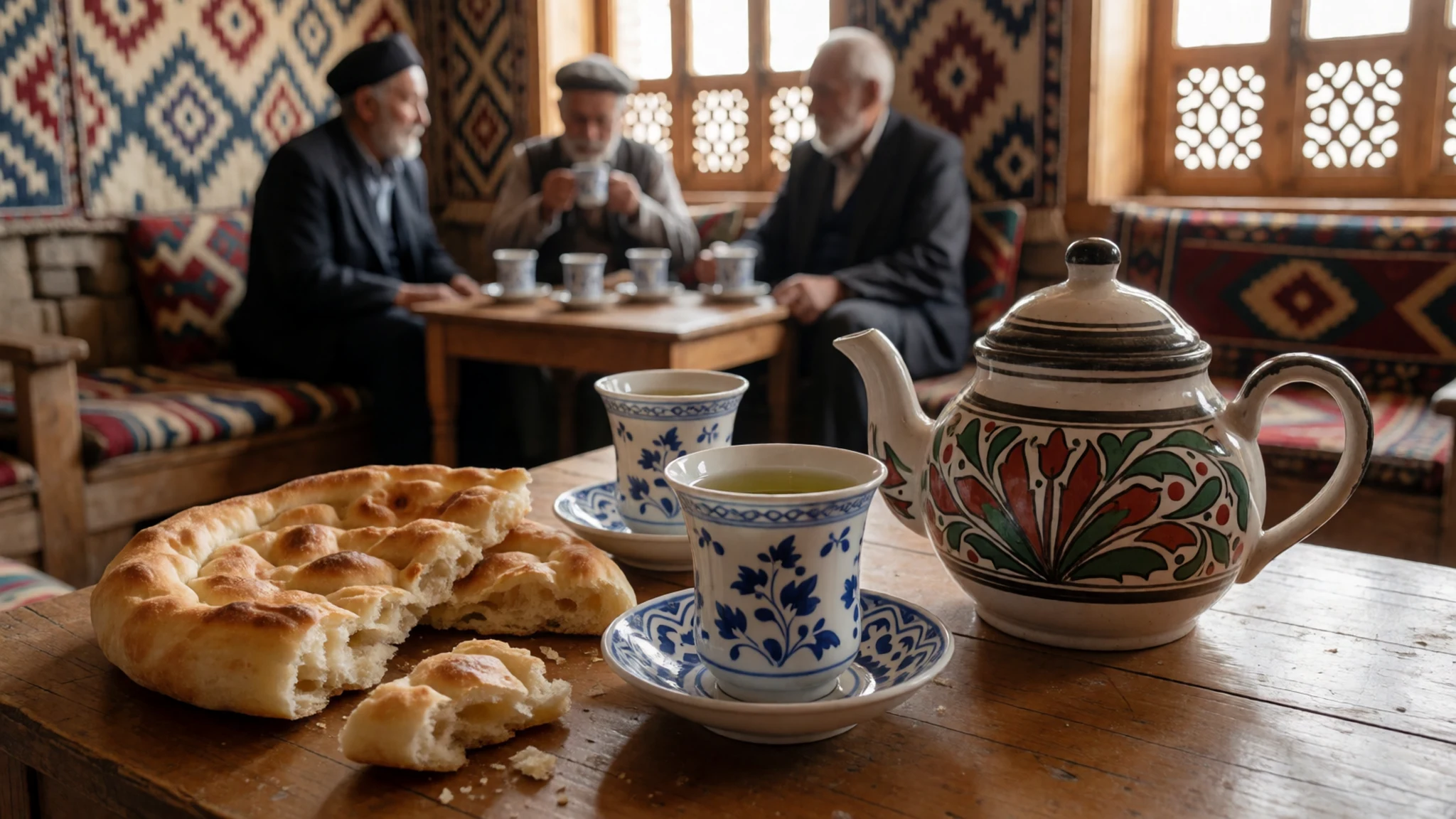
- Kafe Sharqona — Shahrisabz (grill restaurant)
Kafe Sharqona is a grill-focused restaurant known for meat-and-rice dishes, including chicken and lamb, in the kind of straightforward Uzbek comfort-food style that suits a walking day through heritage sites.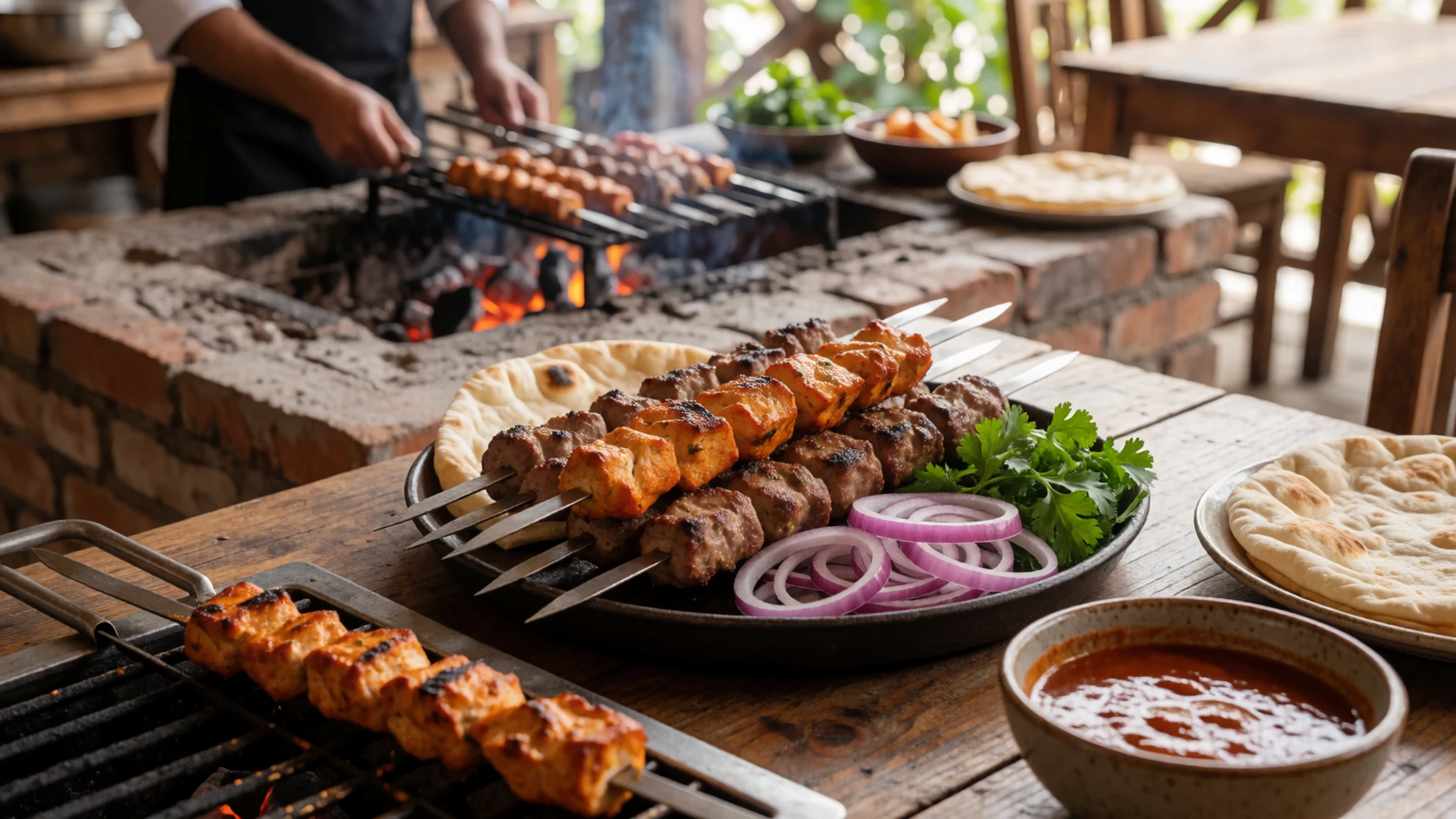
Plan it
Best time. April–May and September–October for the most comfortable temperatures; summer is very hot and dry, with the hottest month in July, and winters can be chilly.
How long. 3–4
Getting there. Fly into Samarkand, then use the shared taxi option from just outside the Registon Supermarket on So‘zangaron ko‘chasi for the last leg. If travelling from Bukhara, shared taxis go via Qarshi, with an additional change sometimes needed.
Budget. mid
Tips
- Start early in the day to beat the heat around the main Timurid complex areas.
- Plan visits by zone—palace ruins, then burial complexes—so the walking feels cohesive rather than rushed.
- Bring cash for small purchases and places that may not run card payments reliably.
Etiquette
- Remove shoes where you see a step up and slippers provided.
- Keep voices low in mausoleums and mosque areas.
- Ask before photographing people up close.
Nearby
Sources
- Wikidata Q569766 (CC0)
- Wikipedia (rev 1383520762) (CC BY-SA 4.0)
- Wikivoyage (rev 5237878) (CC BY-SA 4.0)
- Photo photos/01-ensemble-dorout-tilovat-shahrisabz-6018370667.jpg (CC BY 2.5)
- Photo photos/02-amir-temur-statue-and-ak-saray-monument-in-shahrisabz.jpg (CC BY 4.0)
- Photo photos/03-complex-of-dorut-tilavat-55474294886.jpg (CC BY 4.0)
- Photo photos/04-madrasa-shahrisabz.jpg (CC0 1.0)
- Photo photos/05-shakhrisabz-55474688850.jpg (CC BY 4.0)
- Photo photos/06-shahrisabz4.jpg (CC BY-SA 4.0)
- Photo photos/07-shahrisabz-shahridagi-chorsu-majmuasi-xiv-xv-asrlar.jpg (CC BY 4.0)
- Photo photos/08-shakhrisabz-55474473304.jpg (CC BY 4.0)


