Registan
Registan, Uzbekistan
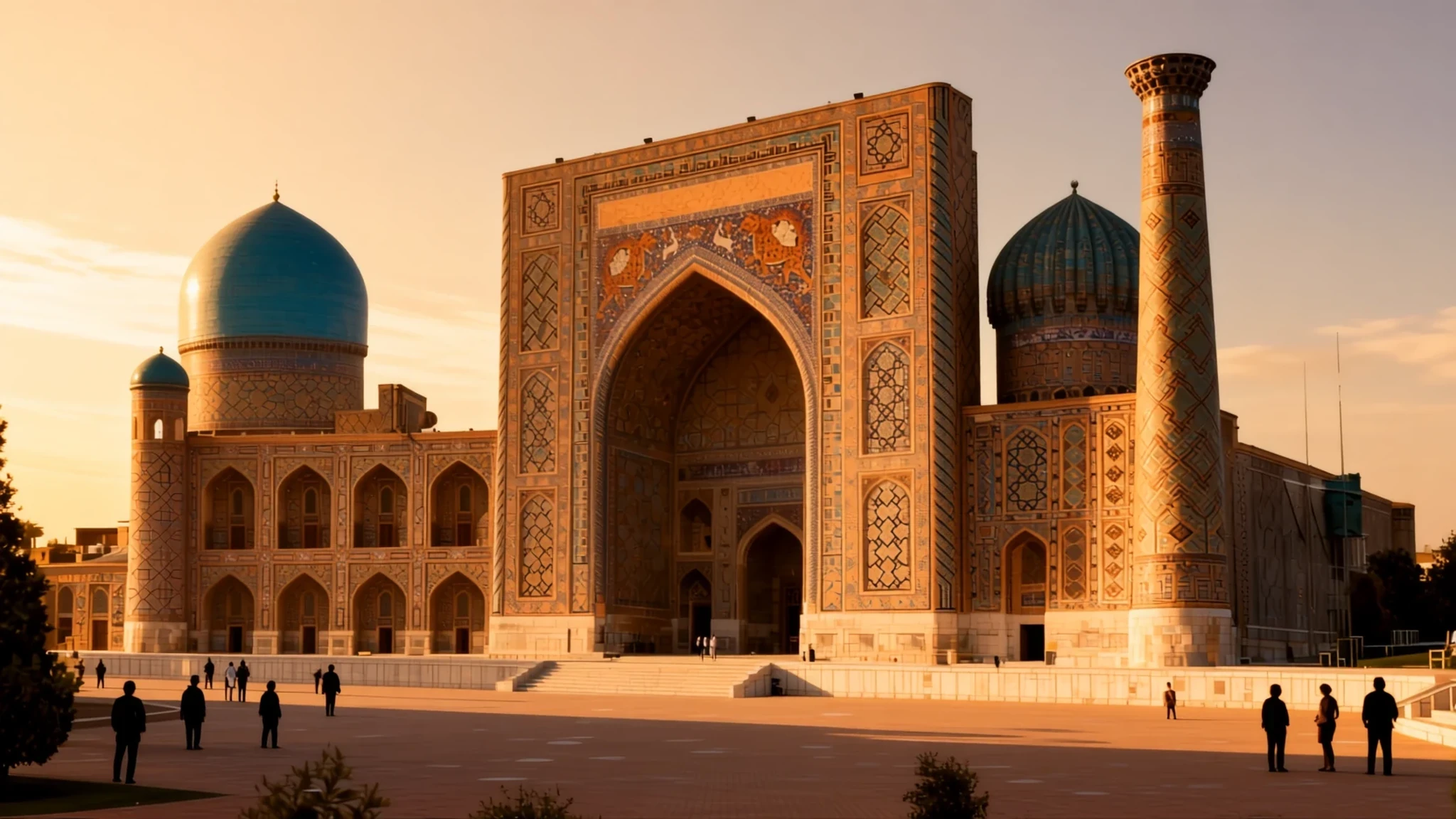
Three madrasas face each other across one square in Samarkand, a Timurid-era showpiece best seen in early light.
The place
The Registan is a public square in the centre of Samarkand, Uzbekistan. Its official name is Registan Square, in Uzbek Registon maydoni. For much of its history it was where the city conducted public business: officials read out decrees here, and crowds gathered for executions. In the Timurid period it stood at the heart of the state, and later it became the commercial and educational centre of the city.
Most of what remains is the frame of three madrasas, or Islamic schools, facing into an open space. The Ulugh Beg Madrasa belongs to the Timurid period, while the Sher-Dor and Tilya-Kori madrasas were added later under the Janid dynasty. Their façades are covered in glazed tile, and the portals rise into arches decorated with muqarnas, the honeycomb-like vaulting that gives the ensemble its depth.
The square is usually reached on foot from the old bazaar streets, and the monuments sit close enough to walk between in a morning. Visitors often find it opens out suddenly. Light changes the colours a great deal, and the site is busiest in late morning and near sunset, when tour groups thin out. Its size is easy to underestimate, so a slow circuit works better than a quick stop for photographs.
Its story
Samarkand's history reaches back long before the square existed. Settlement here goes back millennia, and the first town that could be called one emerged around the 8th century BC on the hill now known as Afrosiab. Its mud-brick walls did not hold off conquerors. Alexander the Great took the town in 329 BCE, and Sogdian and Arab forces later held it, the latter turning it into a major centre of Islamic learning. The Mongols under Genghis Khan destroyed it in 1220, yet it recovered. Under Timur, who made it his capital from 1369, the city grew into the seat of a far-reaching empire. The popular explanation of its name, 'stone fort', sits awkwardly with a city built largely of sun-baked mud.
The square itself took shape in this Timurid world. Some decades after the Mongol conquest, a Friday mosque went up on the ground that had been the scene of the Sarbadar uprising of 1365. Later the open space became the place where royal proclamations were read out, announced by blasts from huge copper horns, and where crowds watched punishments. Over time the three madrasas gave the square its present appearance, and it came to be remembered as the hub of the Timurid Renaissance.
What to see
- Registan Square — City centre, Samarkand
The square itself is the image most people hold of Samarkand, and it stands as a landmark of the old trade routes. The tiled madrasa façades are the reason to come, and the best light falls in early morning and late afternoon. The square became the city's main open space in the fifteenth century, once the older town on Afrosiab had been abandoned. Allow an hour or more to walk round it properly.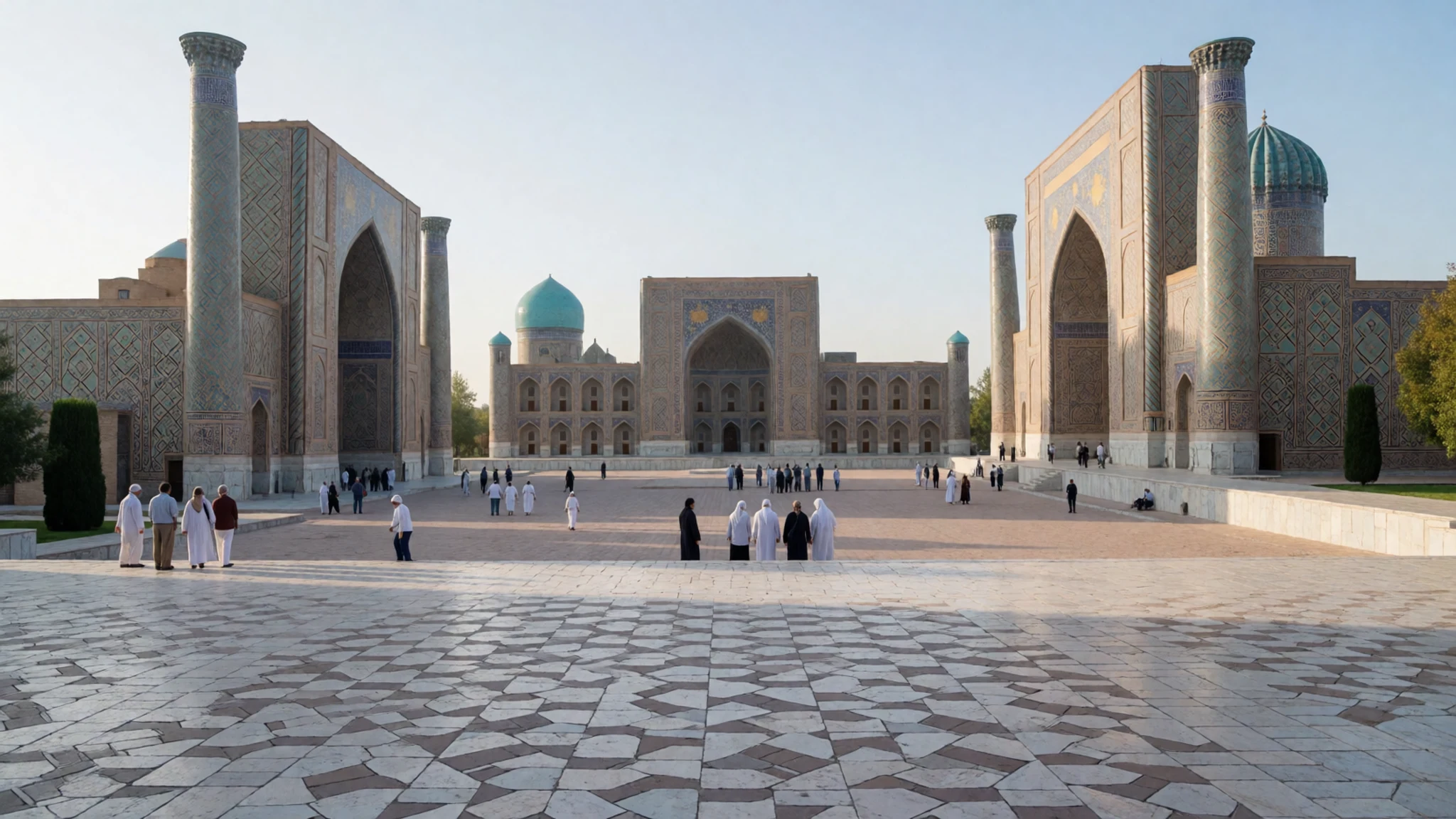
- Bibi-Khanym Mosque — Northeast of the square
Built after Timur's capture of Delhi in 1399, the mosque takes its name from his principal wife. The construction was hurried and the design gave trouble, so for well over a century repairs followed as pieces of masonry came loose. Visitors can still see the patched and restored parts, which tell the story of a building that was never quite finished in the way its patrons intended.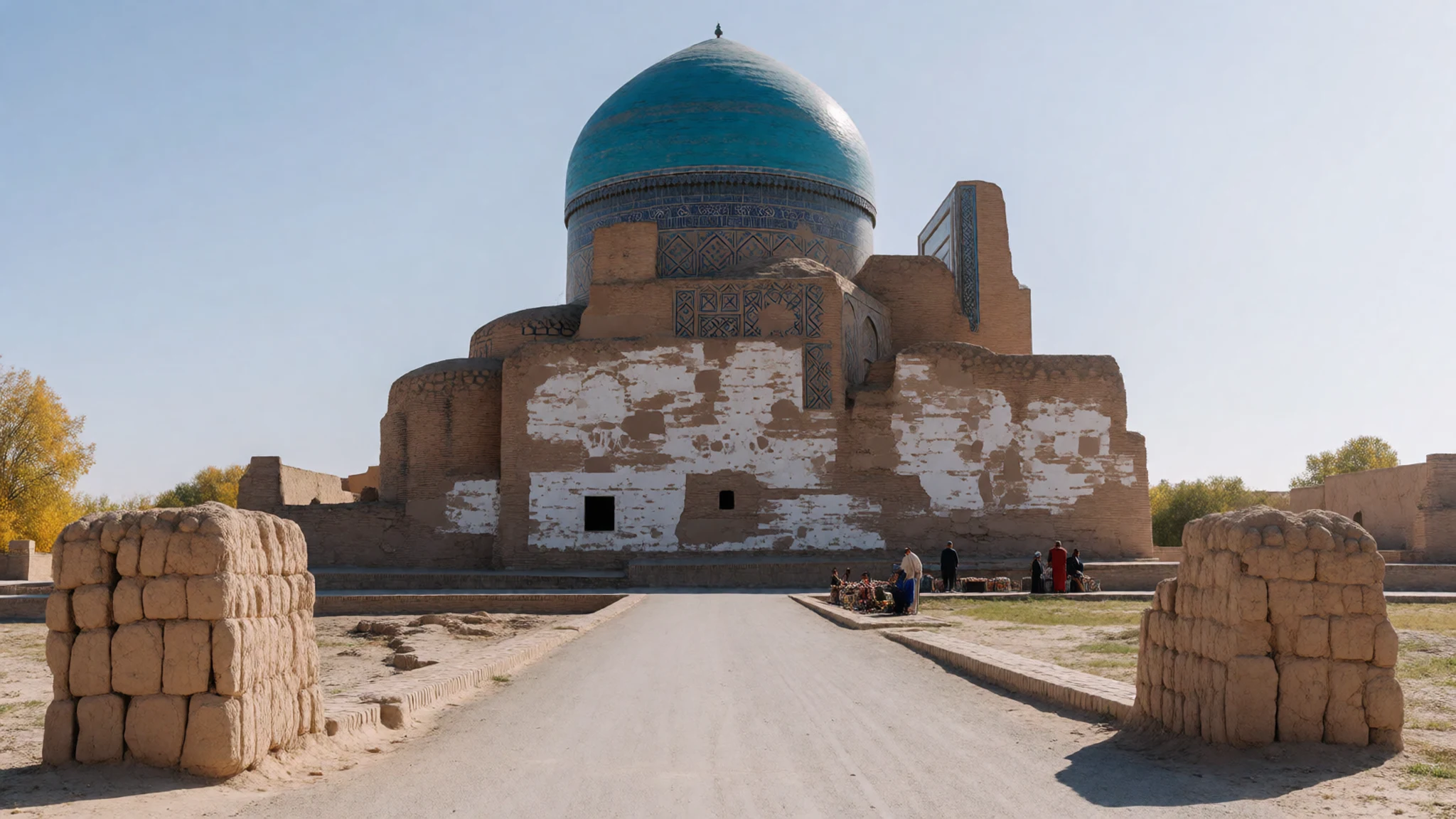
- Gur-e-Emir Mausoleum — South of the square, near the old town
This mausoleum holds the tomb of Timur, known in the West as Tamerlane, a warlord who usually planned his campaigns for spring and summer and spent the cold months away from the steppe. The interior and its tombs repay a slow visit. Check the official site for current opening hours and any fees before you go, since these change.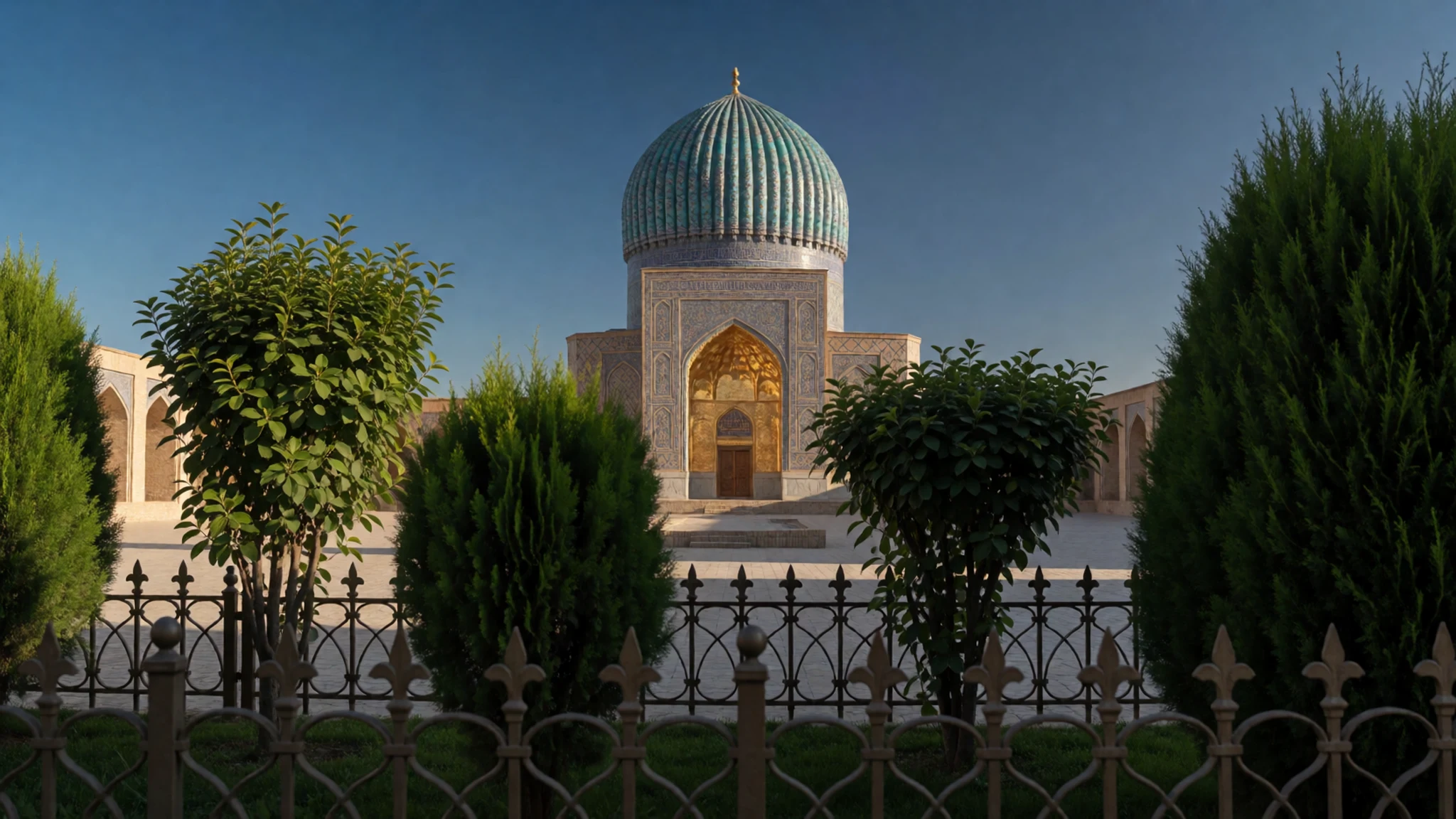
- Shah-i-Zinda Ensemble — Hillside south of Afrosiab
A necropolis climbs a small hill south of Afrosiab and takes its name from a cousin of the Prophet Muhammad. The best-preserved structures date from the fourteenth to sixteenth centuries, including the Kusam ibn Abbas complex and the Turkan Ago Mausoleum. The tiled passageway between the tombs shows the city's mosaic work at close range. Expect steps and steep ground.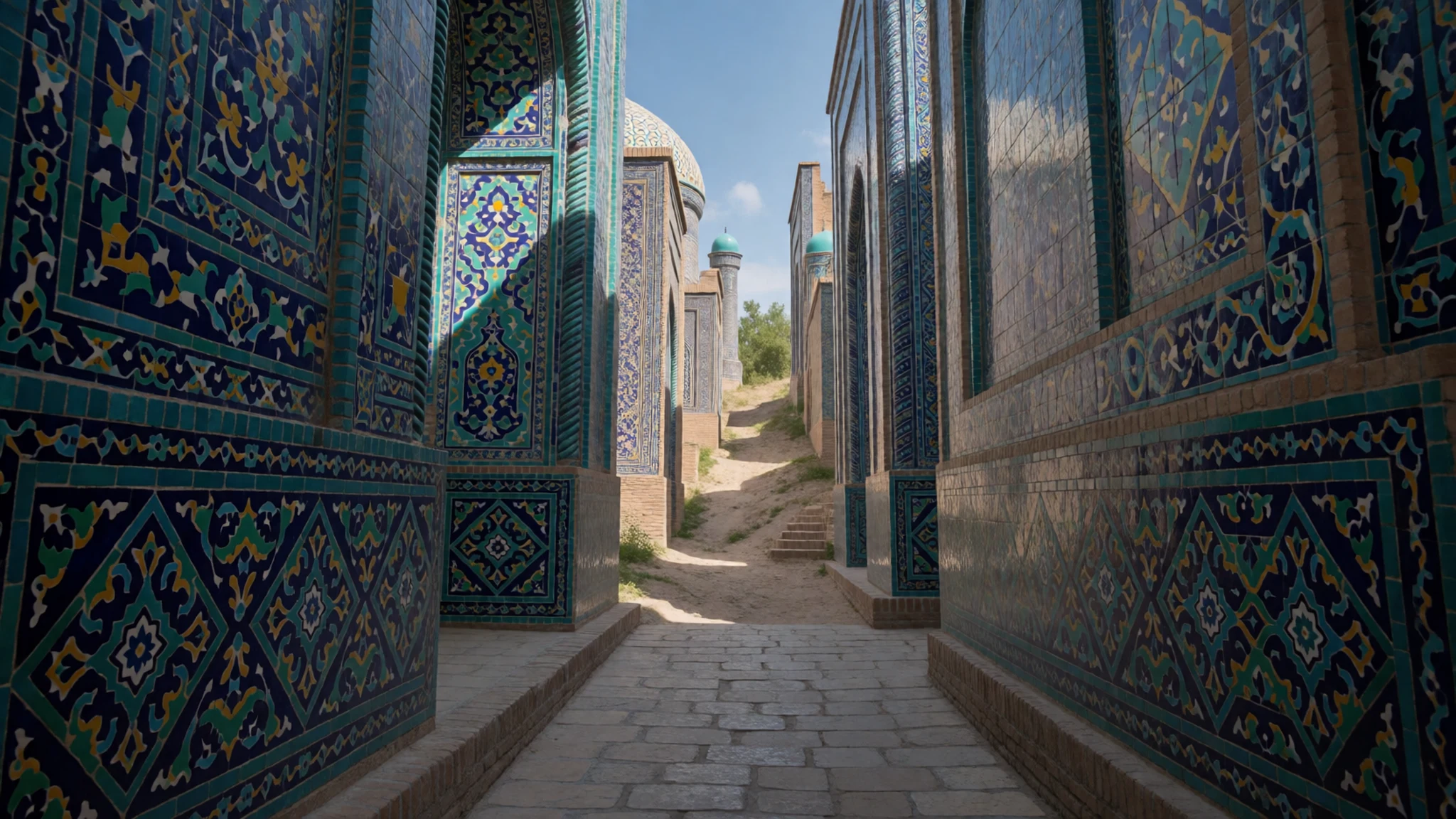
- Afrosiab — Northern edge of the modern city
The older city was settled from around the 8th century BC until the Mongols destroyed it in 1220. Today it is a low, grassy area within a triangle of mud-brick walls, each over 1 km long, and much of it is bare ditches and mounds. Come for the views and for a sense of how far back the city goes, rather than for standing monuments.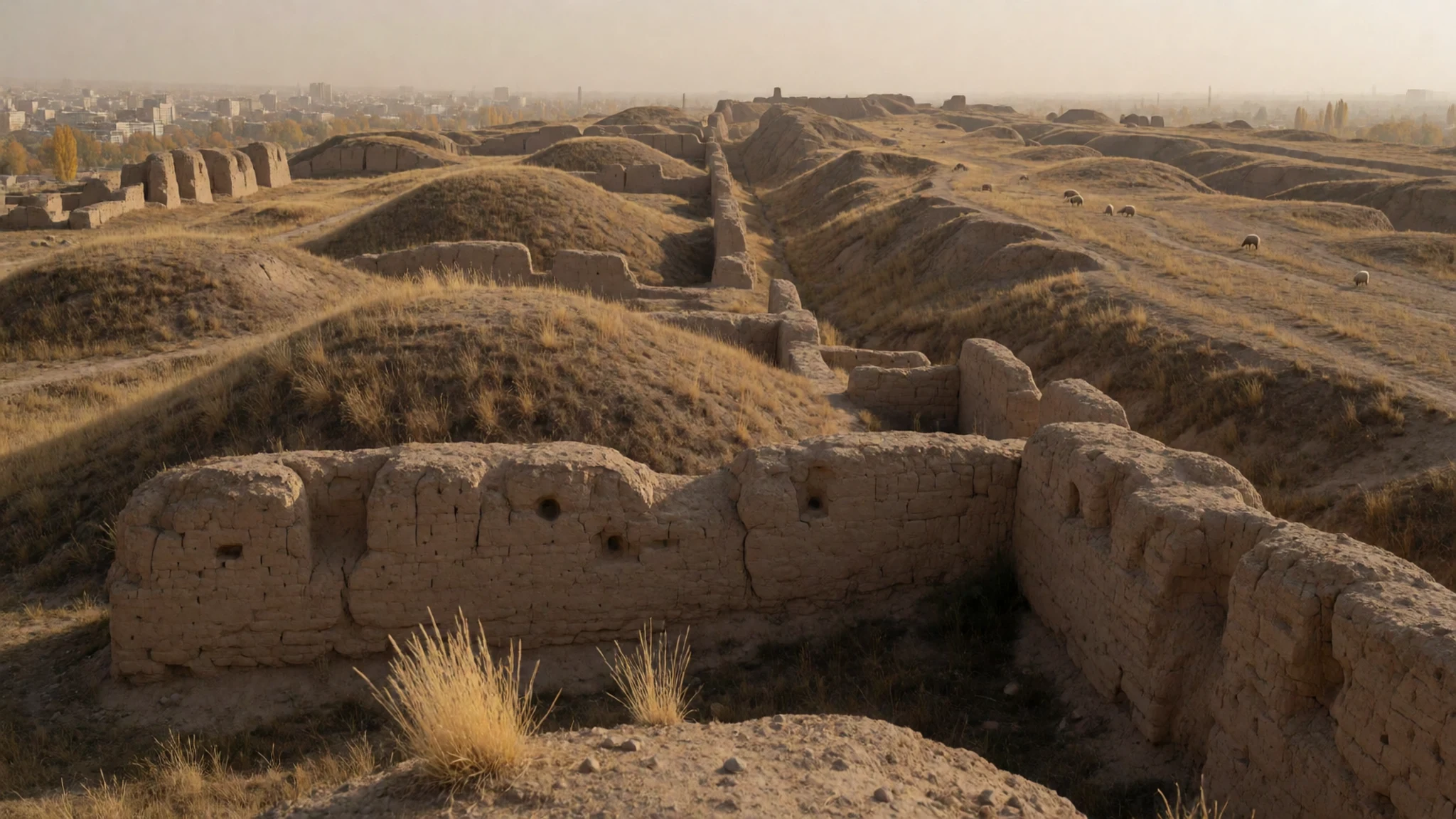
Culture
The Registan is a working heritage site as well as a monument, and locals use it as a meeting place for weddings, school trips and evening walks. The madrasas were built as schools of Islamic learning, and some of their interiors still hold religious associations, so behaviour that would pass unnoticed in a square elsewhere deserves more care here. Uzbek hospitality is strong, and a shared pot of green tea at a teahouse near the square is a common invitation; accepting it is a good way to meet people. Vendors sell souvenirs, dried fruit and textiles around the edges, and bargaining is normal at bazaar stalls though not in shops with fixed prices. Ask before photographing worshippers or anyone in a family group, and keep your voice low inside the mausoleums.
What to wear
In Samarkand, traditional dress has long been tied to the silk and cotton textiles that passed through its bazaars. The adras, a silk and cotton ikat cloth, is still woven and sewn into dresses and shirts. Men's festive wear often includes the chapan, a striped padded robe worn with a belt, and the embroidered skullcap known as the doppa completes the look. These are most often seen at weddings, festivals and religious holidays rather than in everyday life.
Most people in the city wear Western clothing day to day. Older residents are more likely to wear robes or skullcaps, while younger people dress much like the residents of any modern capital.
For a visitor, loose, breathable cotton that covers the shoulders and knees is the sensible choice. Carry a light scarf to cover your head or shoulders when you enter a mosque or mausoleum. Comfortable closed shoes matter more than fashion here, since the paving is uneven and dust gathers in the warmer months. A hat and sunglasses help in summer, and spring and autumn evenings can turn cool, so pack a light layer.
What to eat
- Plov — A dedicated plov house in the newer north of the city
Plov is the staple dish of Samarkand: rice cooked with meat and vegetables. Local cooks use plenty of oil and yellow carrots, which gives it a golden colour and a rich flavour. Go early at lunchtime, since the big pots can run dry before the afternoon.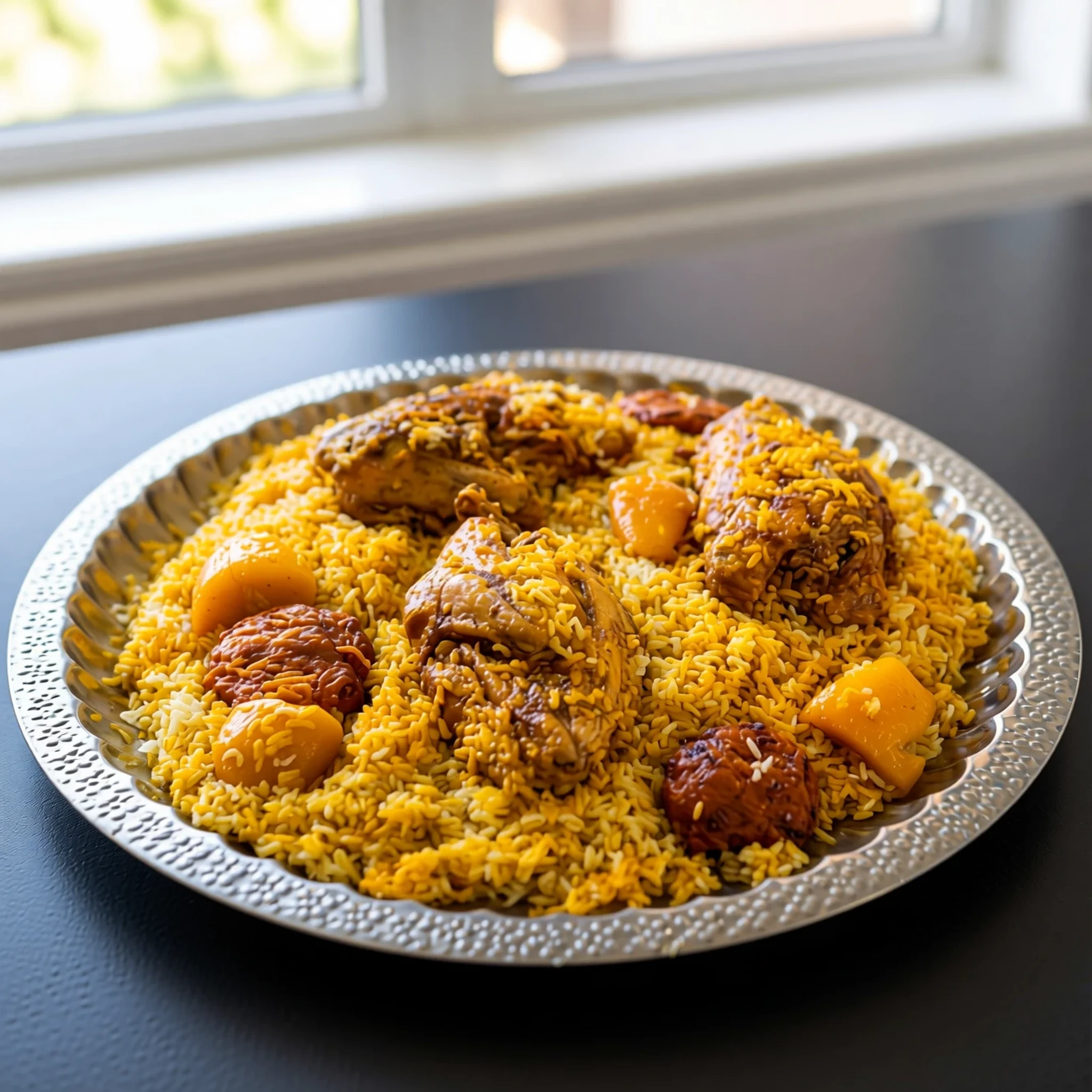
- Samarkand non — Bakeries and bread stalls near the bazaar
Non is the local bread, round and wide, stamped with patterns and baked in a clay oven. It goes with almost every meal and makes a good companion to tea. Fresh loaves come out of the oven in the morning and sell out quickly, so buy early if you want one warm.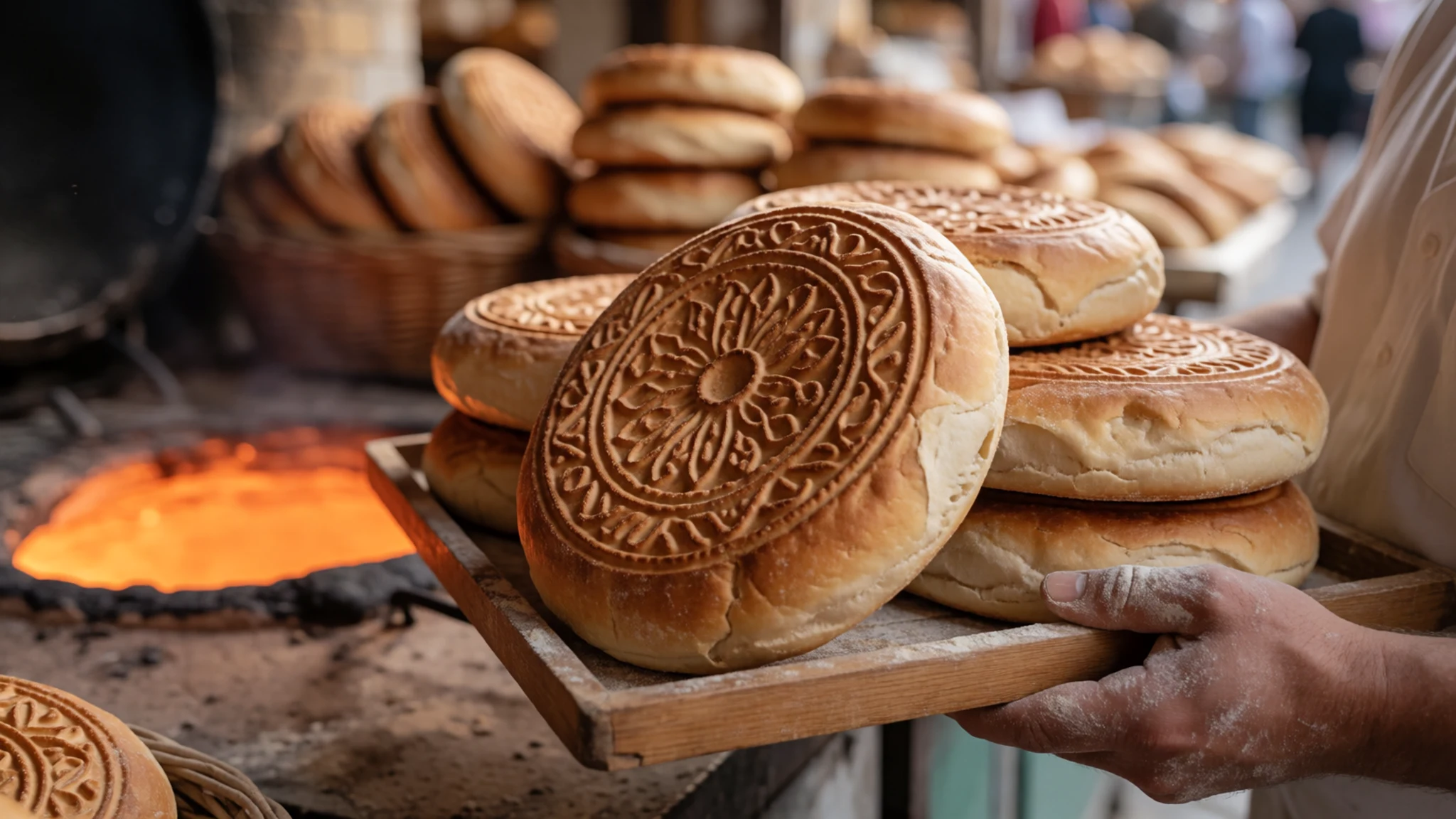
- Shashlik — Grill stalls in side streets a short walk from the square
Skewers of marinated meat, usually lamb or beef, grilled over charcoal and served with onion and bread. Grill stalls cook it in the evening, and beer or vodka often goes with it. It is a simple, filling choice after a long day of walking the monuments.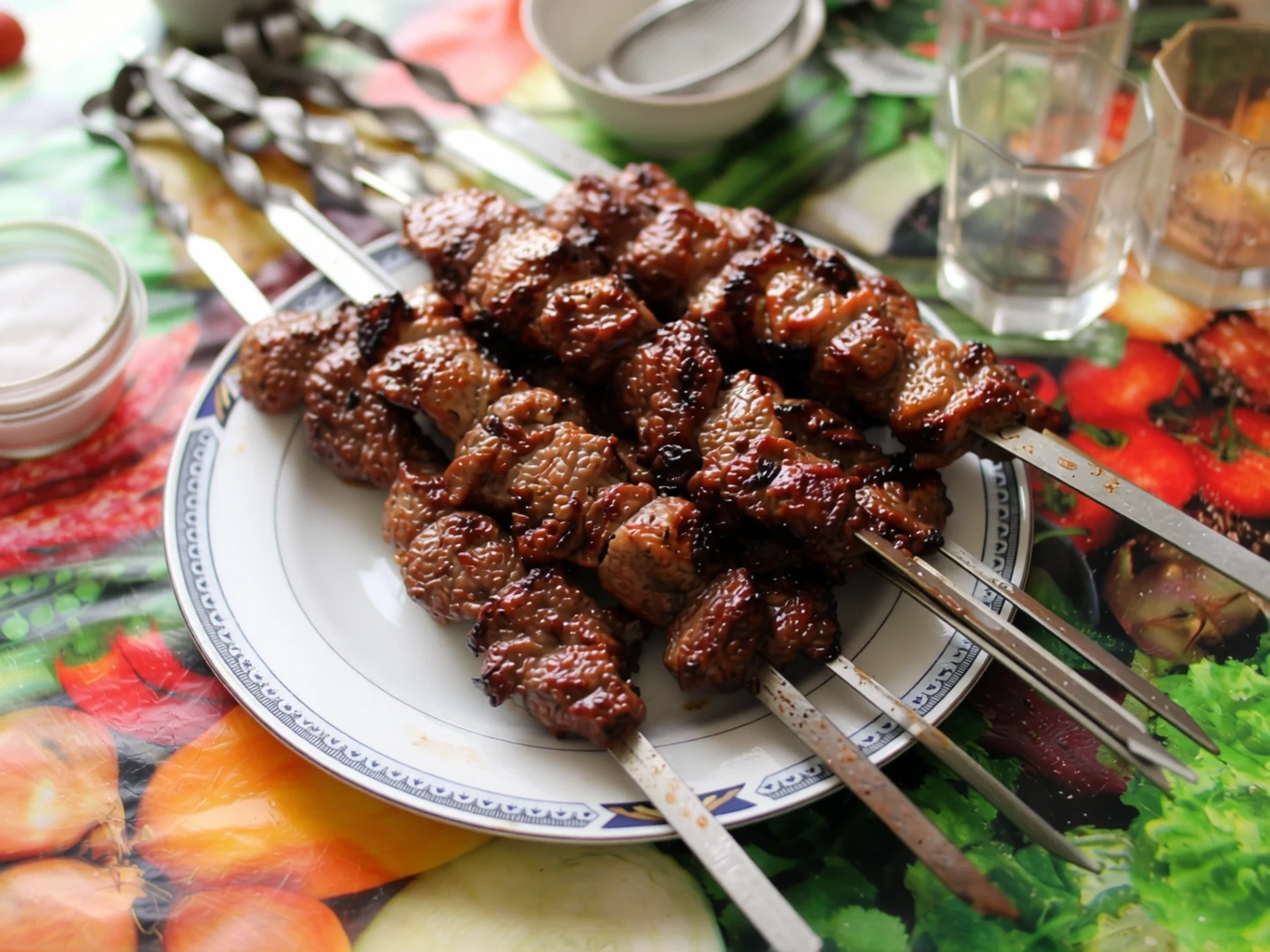
- Shurpa — A traditional eatery in the old town
A rich lamb soup with potatoes, carrots and onions, served hot in a deep bowl. It is a winter favourite, though many eateries serve it through the year. Ask for bread on the side and eat it slowly while the broth is still hot. - Green tea at a chaykhana — A teahouse near the square or the bazaar
Green tea is poured into small bowls or pots and drunk slowly, often with sweets or dried fruit. Teahouses, called chaykhanas, are where people spend long afternoons, and visitors are generally welcome to sit down for a cup. It is a good way to rest between sights.
Plan it
Best time. April and May, and September and October, when days are warm without the fierce heat of July and August. Winter brings freezing nights, and March is the wettest month, but there are far fewer visitors.
How long. 2–3
Getting there. Fly into Tashkent or take the train from there: four trains a day leave Tashkent Central, taking about four hours, and the Afrosiob is the quickest. Buses and shared taxis also run from Tashkent. The railway station lies about 5 km northwest of the centre, so take a taxi, tram or marshrutka for the last leg.
Budget. mid
Tips
- Go early in the morning, before the tour groups arrive
- Check the official site for current opening hours and fees before you travel
- Carry cash for small purchases and taxis, and ask whether cards are accepted before you order
- Book trains early, since they may sell out
- Drink plenty of water in the warmer months and bring a hat
Etiquette
- Dress modestly for mosques and mausoleums, covering shoulders and knees
- Remove your shoes where you see a step up into a prayer hall or where staff ask you to
- Ask before photographing people, especially worshippers
Nearby
Sources
- Wikidata Q1373583 (CC0)
- Wikipedia: Registan (rev 1381242790) (CC BY-SA 4.0)
- Wikivoyage: Samarkand (rev 5392338) (CC BY-SA 4.0)
- Registan in Samarkand, Bgag (CC0 1.0)
- The Registan Square in Samarkand, Gustavo Jeronimo / MrPanyGoff (CC BY 2.5)
- Maquette of the Registan Square, Mysportedit (CC BY-SA 4.0)
- Sher-Dor Madrasa and Ulugh Beg Madrasa, left side, Petar Milošević (CC BY-SA 4.0)
- Rajasthan3, Gilad Rom (CC BY 3.0)
- Sher-Dor Madrasa in Samarkand, Bgag (CC0 1.0)
- Tilya-Kori Madrasa in Samarkand, Bgag (CC0 1.0)
- Registan at night in Samarkand, Bgag (CC0 1.0)


