Kokand
Kokand, Uzbekistan
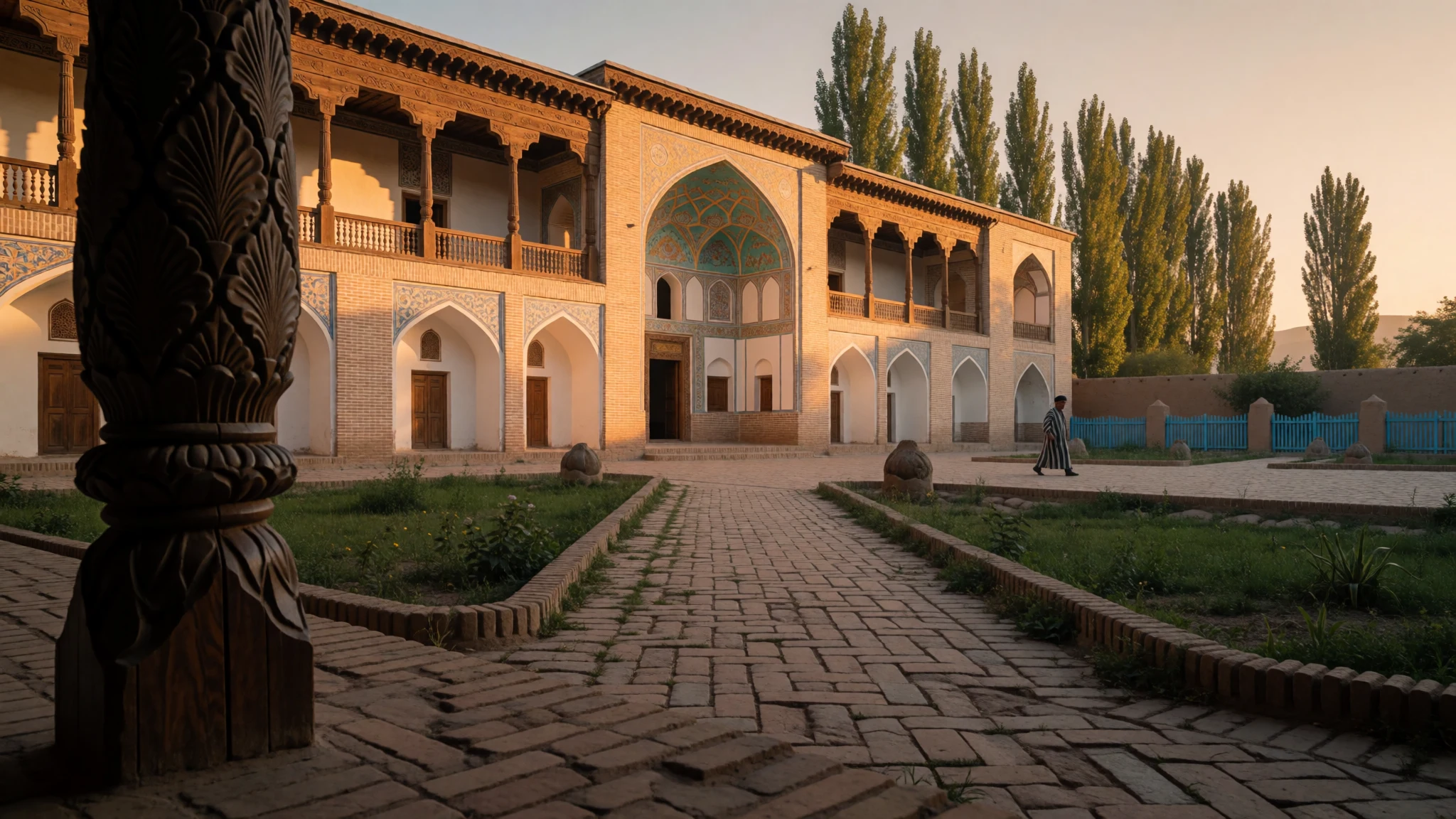
Kokand is a Silk Road trading town in the Fergana Valley, where a khan's palace, old madrasahs and a vast mosque sit among bazaars.
The place
Kokand sits at the south-western edge of the Fergana Valley in eastern Uzbekistan, a district-level city in Fergana Region with a population of about 322,000 in 2022. Tashkent lies roughly 228 km to the north-west, and Fergana city about 88 km to the east. The position explains almost everything about the town. Two ancient trade routes meet here, one climbing north-west towards Tashkent and the other running west through Khujand, so Kokand has long been the valley's main transport hub, and today's roads and railway still follow that logic. Its nickname, the City of Winds, is worth remembering on a dusty afternoon.
The centre is a working town more than a museum. Outdoor markets employ a large share of residents, many of them small traders, and the bazaar sets the rhythm of the day: busy mornings, a slow middle of the afternoon, tea-house evenings. Factories making fertilisers, chemicals, machinery and cotton goods sit on the edges, and newer districts, shops and cafes have spread over recent decades. Kokand is also a college town, with an institute, several colleges and lyceums, and a handful of museums.
The historic sights, a palace, a congregational mosque and several madrasahs, are gathered in the old centre rather than scattered across the city. Accommodation is limited and a little pricey for what it offers, so booking ahead matters. Many travellers treat Kokand as a one-night stop or a long day trip between Tashkent and the rest of the valley, which suits the town's modest scale.
Its story
Kokand's written record begins around the tenth century, when chroniclers knew it as Khavakand, a stop for caravans crossing Central Asia. Mongol armies wrecked it in the thirteenth century, and it recovered as a Silk Road market. Excavations at Eski Kurgan, Muyi Mubarak and other sites have turned up earlier pottery, a fortress wall of mudbrick and the base of a monumental building, which suggests people lived here long before the chronicles mention the town.
The present city grew from a fort founded in 1732 beside an older stronghold. By 1740 it was the capital of the Khanate of Kokand, a state reaching from Kyzylorda in the west to Bishkek in the north-east. The khanate's glory years ran from 1709 to 1876, when its rulers held land across parts of four modern countries, and the city became the valley's religious centre, with a great many mosques. Yakub Beg, born near Kokand, began as a soldier in the khan's army and later built his own kingdom around Kashgar.
Russian forces under General Skobelev took Kokand in 1883 and folded it into Russian Turkestan. In 1917 it became the seat of the Autonomous Turkestan government, which lasted little more than two months before Bolshevik troops crushed it in early 1918. Later in 1918 the city was burned and thousands of civilians were killed during the campaign against the Basmachi. In the 1920s Kokand was placed within the Uzbek republic, and some religious buildings were closed under Soviet rule; a number of them survive today.
What to see
- Palace of Khudayar Khan — Old centre
Khudayar Khan's palace in Kokand was once a sprawling residence, and only a fraction of its rooms survive. Those now serve as a museum, so the visit is short but rewarding for the decorated façade and the sense of how the khans lived. Allow an hour, and check the official listing for opening times.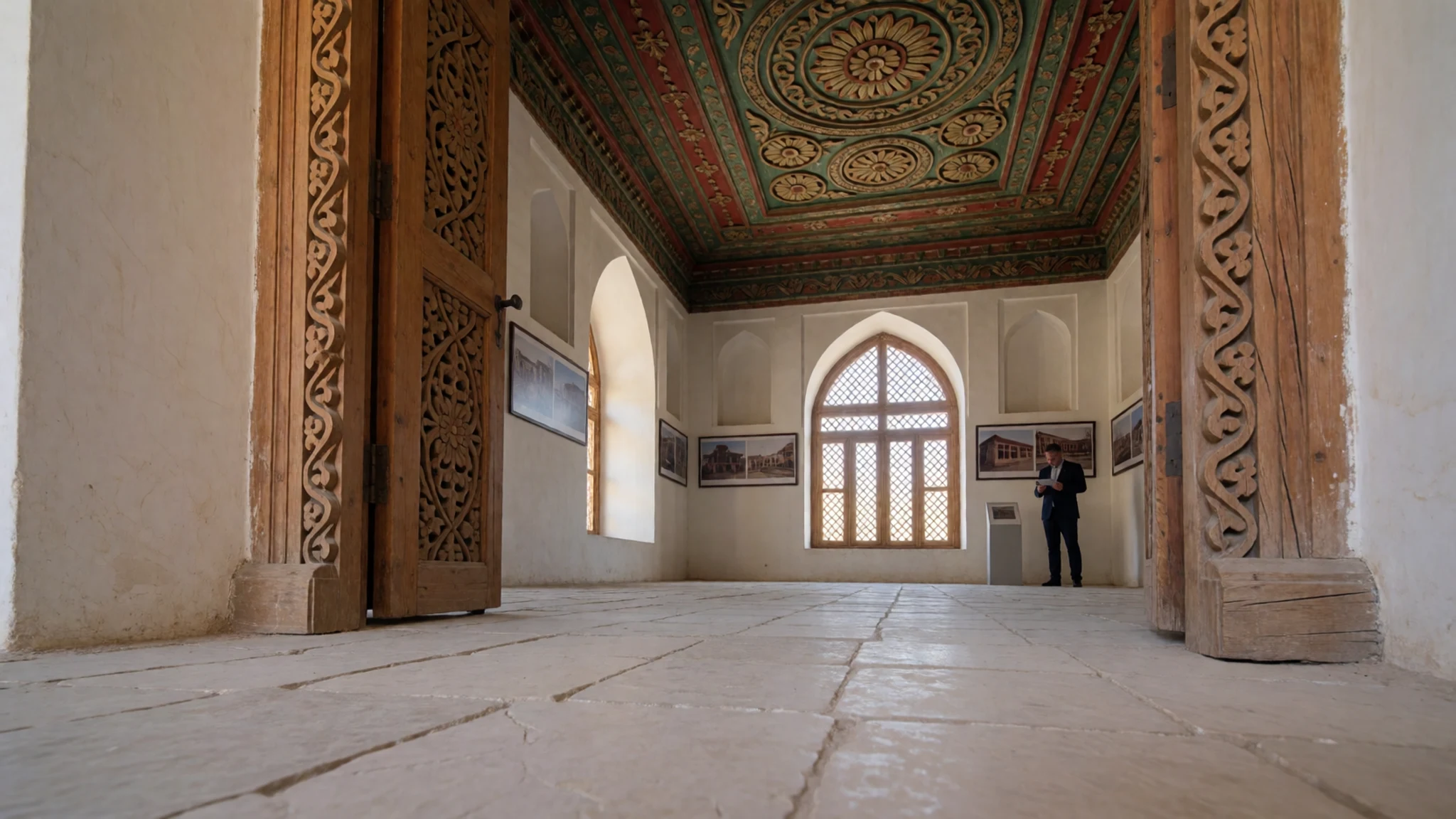
- Jummi Mosque — Old centre
Kokand's Friday mosque dates from the early nineteenth century and was built on a scale meant for thousands of worshippers at once. Its forest of slender wooden columns is the main draw. Visit outside prayer times, dress modestly, and expect to remove your shoes before stepping inside.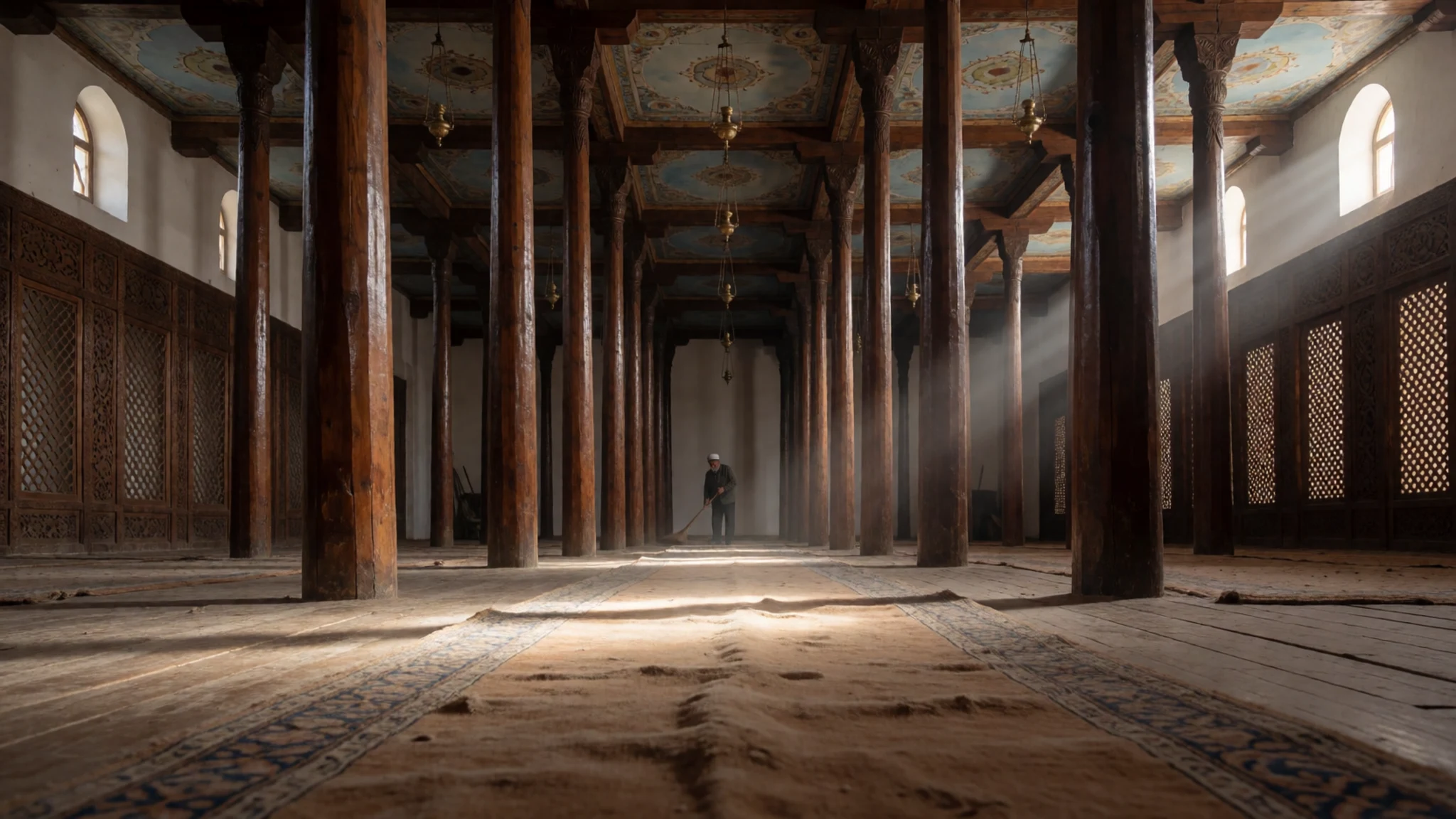
- Amin Bag Madrasah — Old centre
This Kokand madrasah was closed under the Soviets and later reopened as a religious school. A carved wooden gate leads into a courtyard with coloured tiled walls, a pleasant place to sit out of the sun. It is small, so combine it with the nearby museum and teahouses.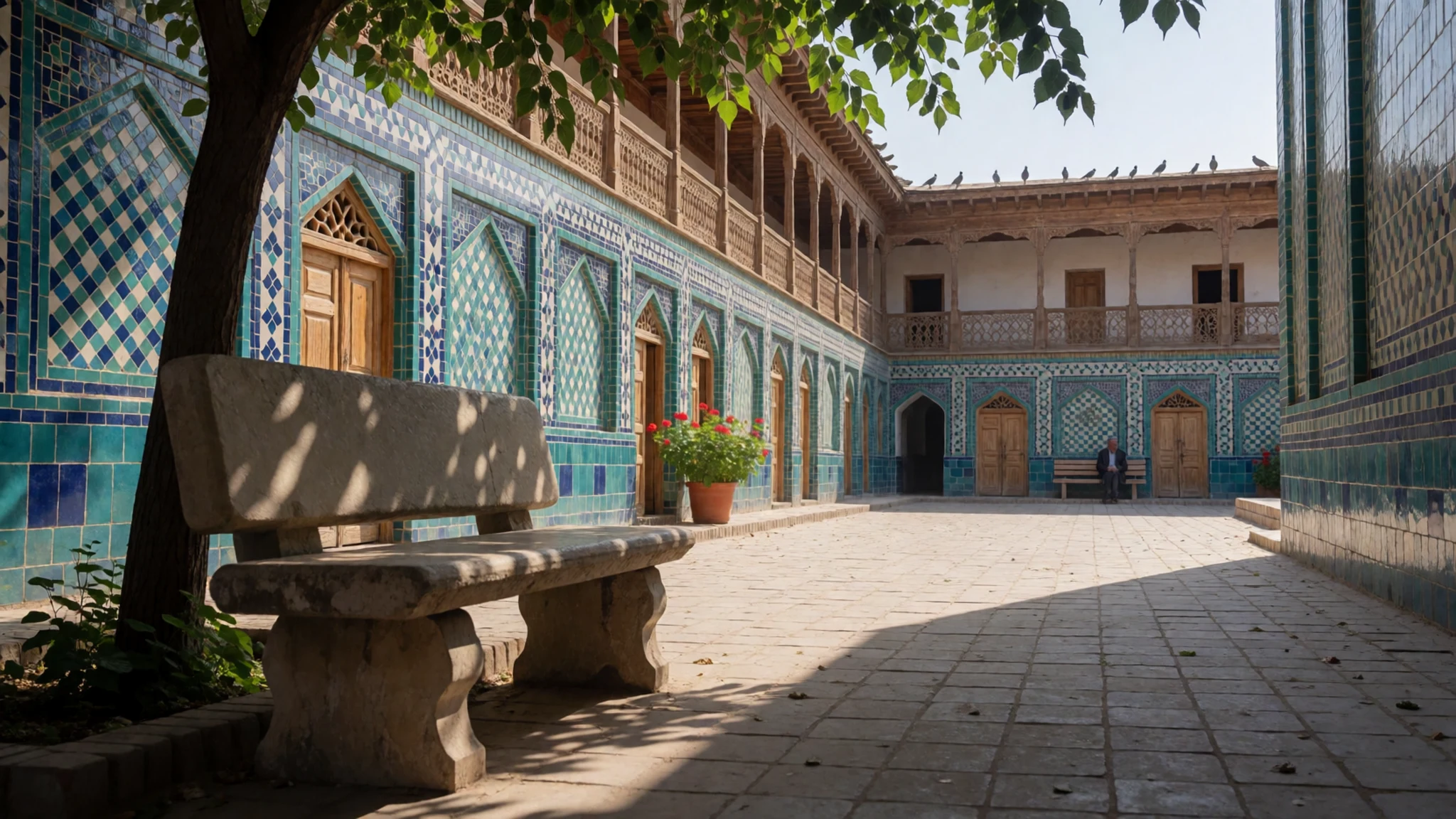
- Khamza Museum — Old centre
The museum in Kokand honours Hamza Hakimzade Niyazi, a poet and writer celebrated in the Soviet period. It is a useful stop for understanding how the twentieth century reshaped local culture, language and public memory. Labels may be mostly in Uzbek or Russian, so a translation app helps.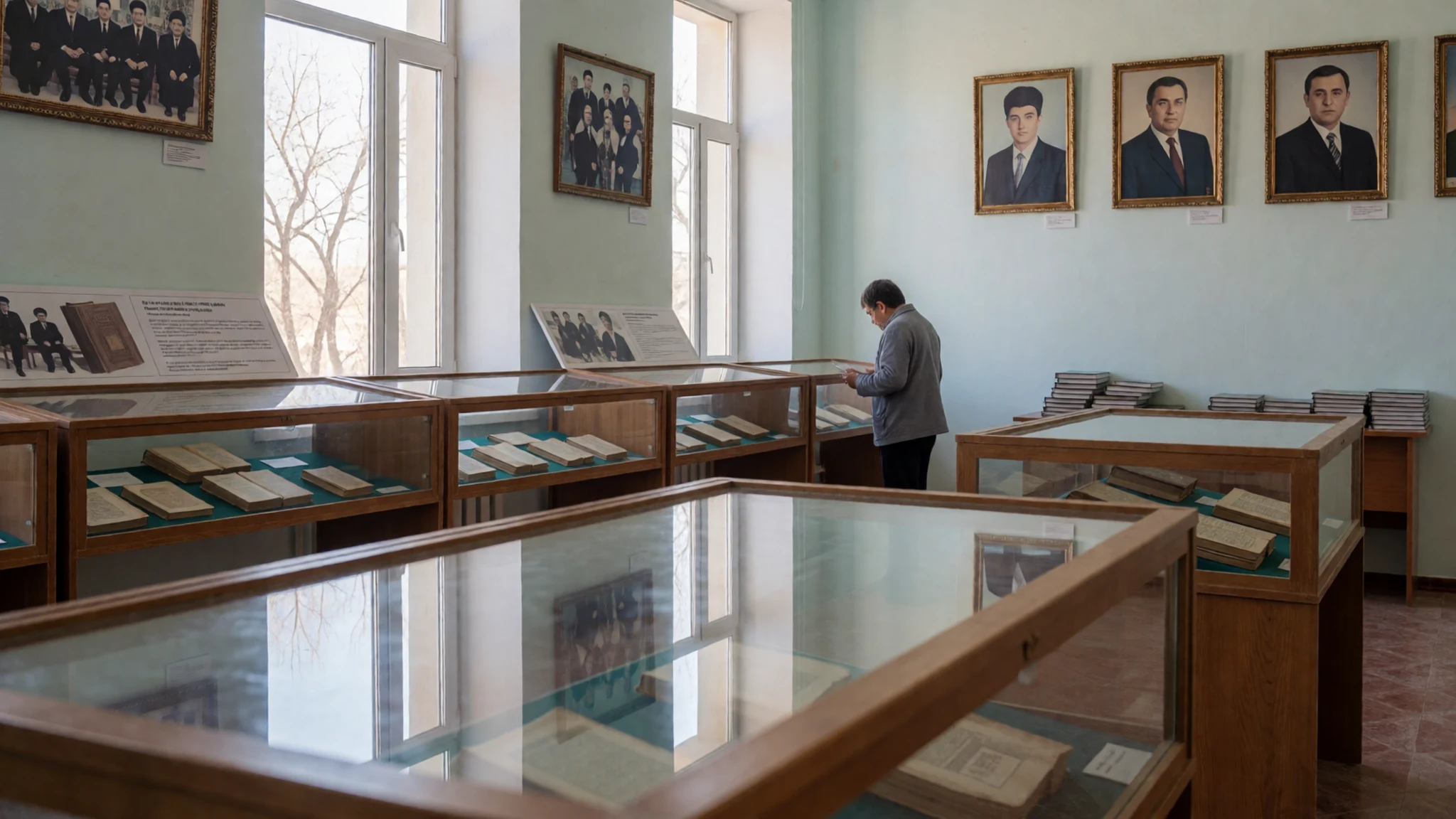
- Narbutabey Madrasah — Northern old town
Narbutabey Madrasah is one of the religious schools that remind visitors Kokand was once a major centre of learning in the valley. Its arched cells face an inner courtyard. Check on arrival whether it is open to visitors, as access to some Kokand monuments changes.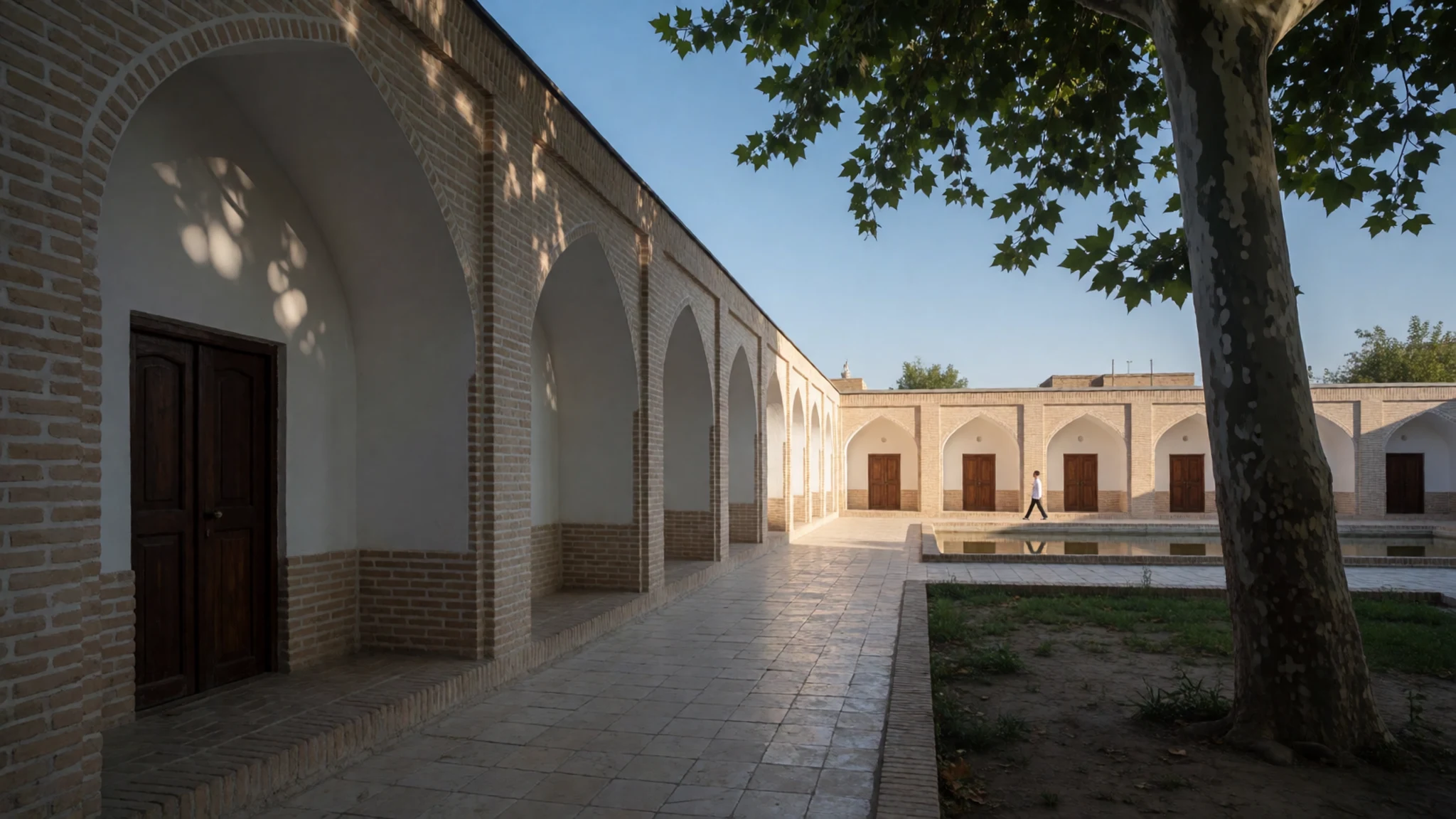
- Modari Khan Mausoleum and Dakhma-i-Shakhon — North-eastern old town
These two tombs lie close together and belong to the khanate's ruling family. They are quiet, compact places, good for seeing Kokand's funerary architecture and its tilework without the crowds. Combine them with the nearby madrasah on a single walk through the north-eastern part of town.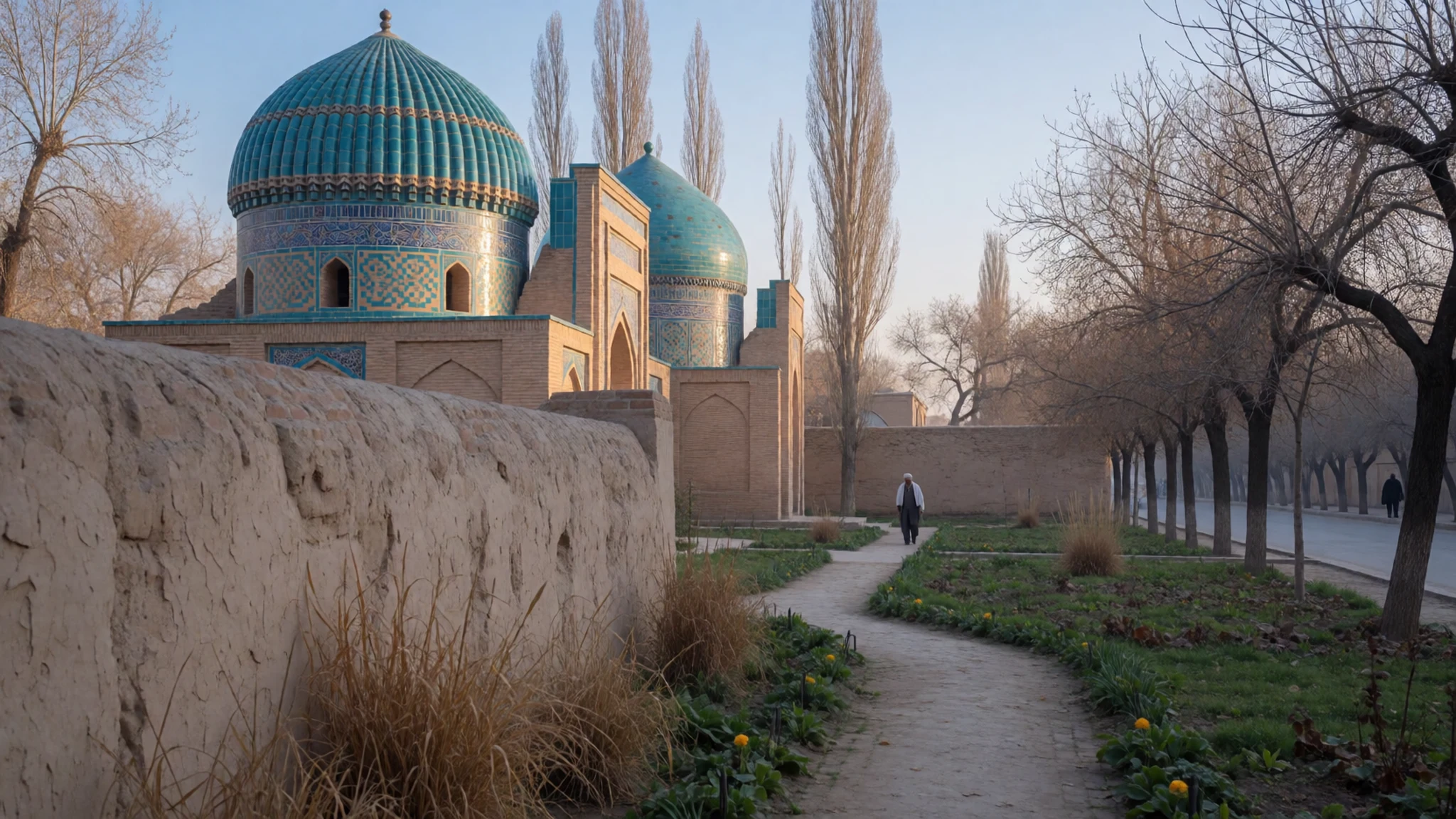
Culture
Kokand is a predominantly Muslim town, and religion shows in daily life through the call to prayer, the number of surviving mosques and madrasahs, and the pace of the working week around Friday prayers. The khanate made the city a centre of learning in the Fergana Valley, and the Soviet period closed or repurposed many religious buildings before some were reopened. That layered history, Uzbek, Tajik, Russian and Soviet, is visible in the architecture, the language heard in the bazaar and the names on museums.
Hospitality matters here. Guests are offered green tea and flatbread almost automatically, and refusing outright can seem abrupt; accepting a cup and a small bite is the polite way to begin any conversation. The tea house is the town's social room, where men gather for long conversations and families meet for weekend meals. Bargaining in the bazaar is normal but good-humoured, and a greeting before any request goes a long way. Markets also act as the city's employment engine, so many visitors will find themselves dealing with small traders who have run the same stall for years.
The Fergana Valley is conservative compared with Tashkent, and public affection and loud behaviour attract attention. Weddings and family celebrations are important, and passers-by may be invited to watch. Cover your shoulders and knees, take your shoes off before entering the Jummi Mosque or any prayer space, and ask before photographing people in the bazaar.
What to wear
In Kokand, as across the Fergana Valley, traditional dress is built around silk and cotton ikat. Atlas and adras, the bright, blurred-pattern fabrics woven in nearby valley towns, are made into women's dresses and the quilted chapan, the long striped robe worn by men. The doppi, a small embroidered skullcap, completes the outfit. These are mostly worn at weddings, festivals and family occasions, and by older men in everyday life.
Day to day, most people in Kokand wear ordinary modern clothes: trousers, shirts, long skirts and dresses, with jackets in winter. Many women cover their hair with a scarf, and men tend to dress neatly, particularly on Fridays. Younger residents follow Tashkent and wider regional fashion, and ikat appears in dresses, jackets and accessories, often mixed with plain pieces. Market stalls sell both everyday items and ready-made ikat, which makes a good souvenir.
Visitors should dress for the climate and for modesty. Summers are hot and dry, so light, loose cotton or linen with long sleeves and trousers or long skirts works better than shorts and bare shoulders. Winters can be cold, so bring layers. Carry a scarf for entering mosques, and wear comfortable, slip-on shoes, since shoes come off often and pavements are dusty and uneven around the old centre.
What to eat
- Plov — Tea houses and busy canteens near the bazaar
The valley's rice dish, cooked with carrot, onion and meat in a large cauldron. In Kokand it is usually a midday meal, served until it runs out. Look for busy canteens and tea houses where a cauldron is simmering at the door.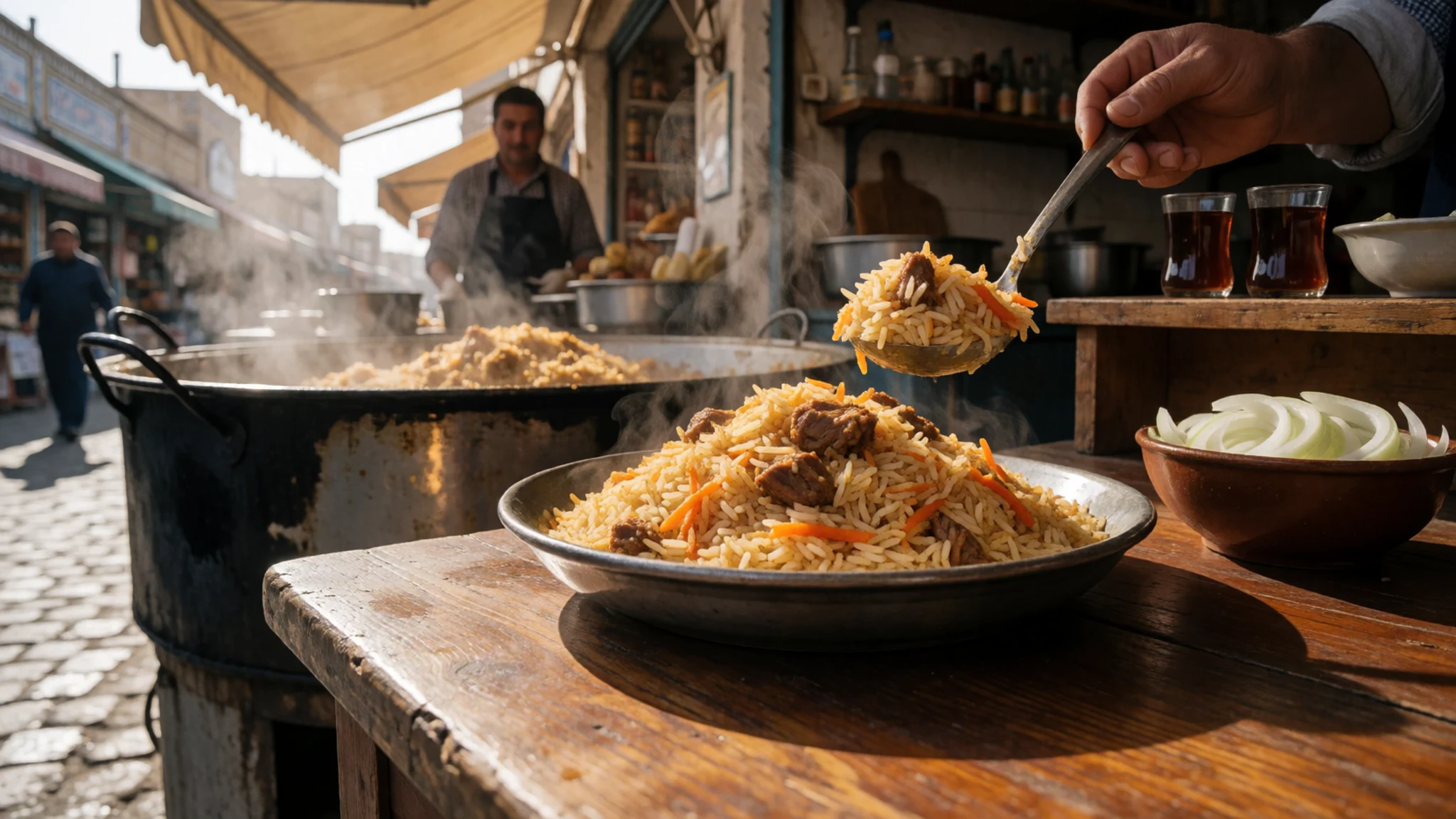
- Samsa — Bakery stalls in and around the main bazaar
Baked pastries filled with spiced meat, onion or pumpkin, traditionally cooked against the walls of a clay oven. They are a quick breakfast or snack, best eaten hot from the oven and often still crisp at the edges.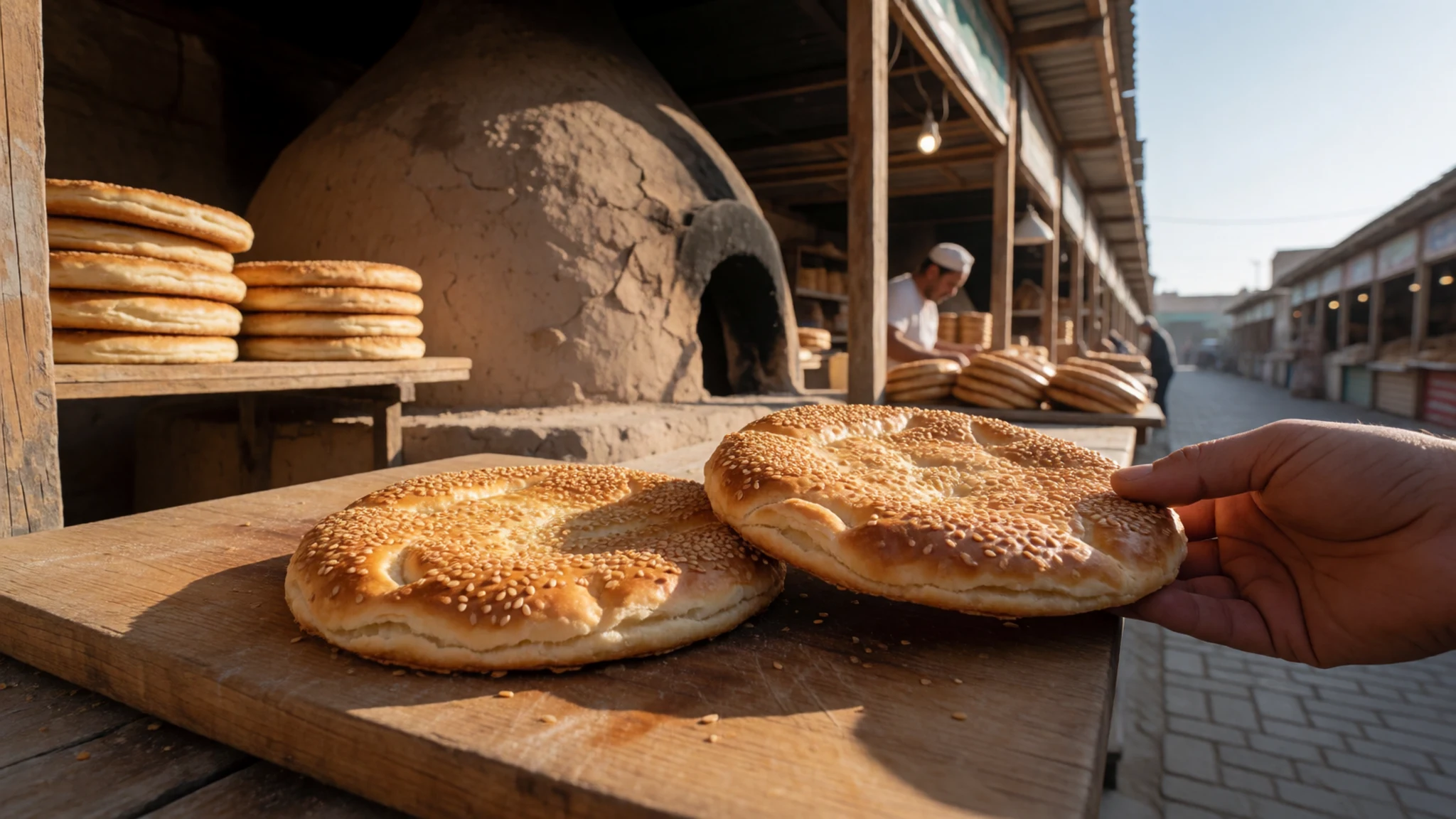
- Lagman — Local eateries in the old centre
Hand-pulled noodles in a rich broth or sauce with meat and vegetables. It is a hearty lunch or evening meal, and servings in local eateries are usually generous. Ask for it with or without chilli. - Non — Bread sellers in the bazaar and neighbourhood bakeries
Round, patterned flatbread baked in a tandoor and found on nearly every table. Fresh from the oven it is soft and chewy, and local bakers stamp each loaf. It is bought by the piece and eaten with almost everything. - Shashlik — Grill stalls and casual eateries around the bazaar
Skewered, grilled meat served with onion, bread and sometimes a tomato salad. It tends to be an evening dish, cooked over charcoal outside small eateries. Pair it with green tea rather than anything sweet.
Plan it
Best time. April–May and September–October are the comfortable months, with mild days for walking between sights; summer is hot and dry, and winter can be cold.
How long. 1–2
Getting there. Uzbek Railways runs daily trains from Tashkent; check the official timetable before travelling. Kokand also has an airport listed in Wikidata, but check current services before relying on it. Locally, taxis cover the last leg to the old centre.
Budget. low
Tips
- Book accommodation ahead, as Kokand has few places to stay and they fill up
- Carry some cash for markets, tea houses and small museums
- Drink bottled water rather than relying on the tap
- Visit the main sights in the morning, before the heat and the afternoon lull
- Check the museums' opening times locally, as they can change
Etiquette
- Remove shoes before entering mosques and prayer spaces
- Ask before photographing people, especially women and market traders
- Accept offered tea politely, even if you only take a sip
Nearby
Sources
- Wikidata Q20466377 (CC0)
- Wikipedia: Kokand (rev 1385636899) (CC BY-SA 4.0)
- Wikivoyage: Kokand (rev 5299356) (CC BY-SA 4.0)