Tamarin Falls
Tamarin Falls, Mauritius
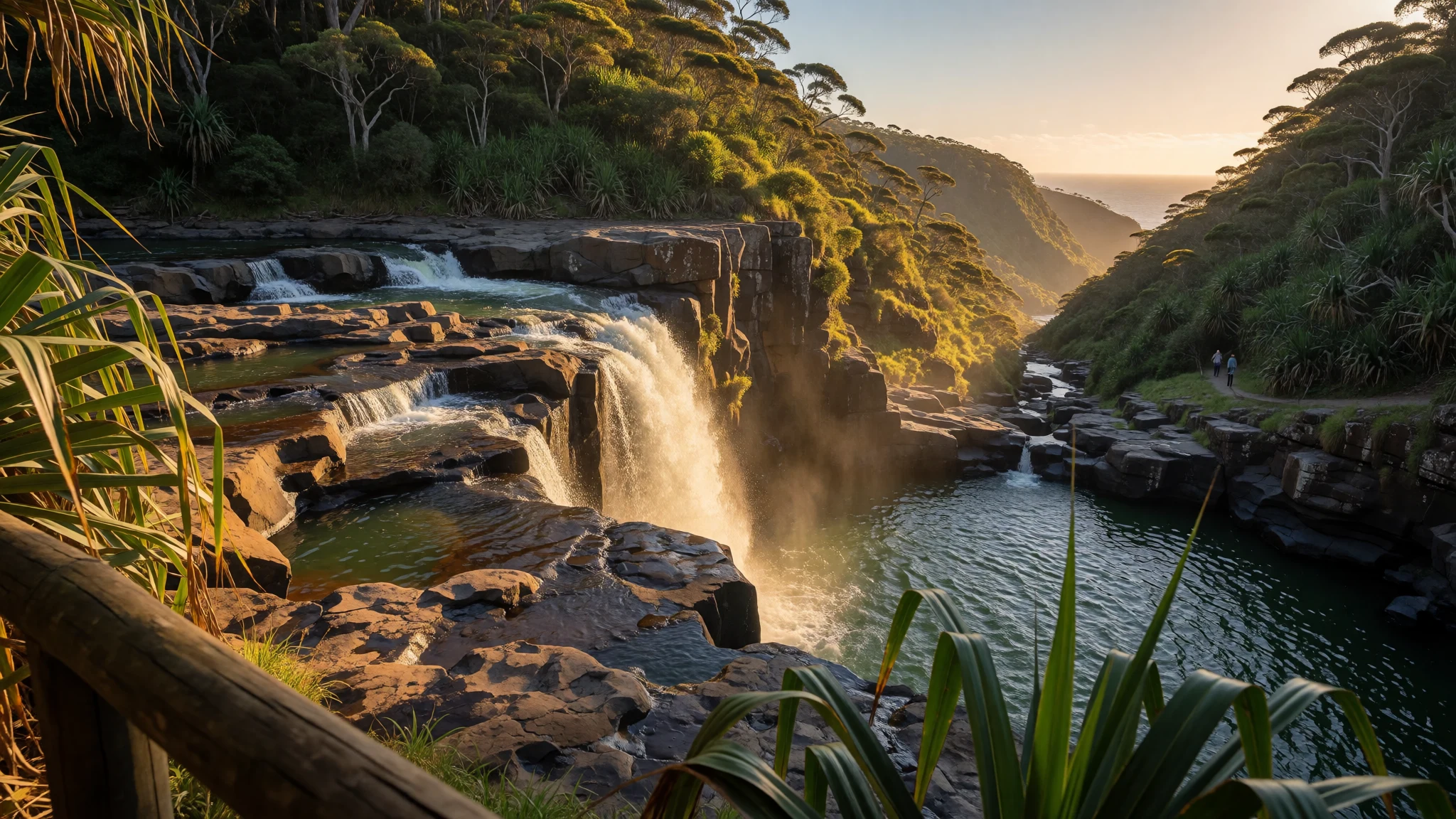
Tamarin Falls is a stepped river in Mauritius's cool green uplands, worth a half-day of walking away from the beach resorts.
The place
Tamarin Falls sits in the uplands of south-west Mauritius, on the Rivière Tamarin, a short way north-west of the lake called Mare aux Vacoas. Locals and older maps also call it Tamarind Falls. Rather than one plunge, the river drops in a series of seven cascades, stepping down through forest and basalt pools before it heads towards the coast near the village of Tamarin. The cascades are not all visible from one spot, which is part of the appeal: the best-known views come from a lookout on the plateau side, while the lower pools take real walking to reach.
The setting matters as much as the water. The island's interior is cooler and wetter than the beach strip, and the hills here are often wrapped in cloud by afternoon. Vegetation is dense, with remnant native forest mixed with introduced species, and the path can be muddy even in the drier months. Many visitors treat the falls as a day away from the resorts, combined with the crater lake at Grand Bassin, the nature parks near Rivière Noire or the west-coast beaches.
It is a lovely place but not a tame one. Water levels swing with rainfall, rocks are slick, and mist can hide the view entirely. Mornings tend to be clearer. The falls suit people who like a half-day of walking more than a roadside photo stop, and anyone who prefers an easy look can settle for the viewpoint and still see the river drop into the green valley.
Its story
Tamarin Falls belongs to an island whose recent history is unusually layered, and the valley it drains carries traces of all of it. Arab sailors knew of Mauritius from about the 9th century, though no firm date survives, and they left it uninhabited. Portuguese sailors sighted it in 1505 and did not settle either. The Dutch did, from 1598, naming the island after Maurits van Nassau. They stayed until 1710 and left behind sugarcane, macaques and Java deer. The dodo had been hunted out, and the ebony forests were heavily cut for timber.
The French arrived in 1712 and renamed the island Ile de France. Their main harbour grew into Port Louis, today's capital, and under Mahé de Labourdonnais, governor from 1735 to 1746, the colony prospered. The British attacked in August 1810 and lost the Battle of Grand Port, a French naval victory. They returned in December 1810 and took the island.
None of the sources used for this reading ties a single event to the falls themselves. Their story is the island's: a river running through uplands that came through centuries of clearance, sugar estates and introduced animals. The deer that browse the nearby reserves and the cane that fills the lowlands are both legacies of the colonial years. What remains of the original forest is patchy, which is one good reason to stay on the path and take litter away.
What to see
- Tamarin Falls viewpoint — Uplands above Tamarin, south-west Mauritius
The main draw is the series of cascades on the Rivière Tamarin. The easiest way to see them is from the lookout on the plateau side, where the valley opens out below. Reaching the lower pools means a long, slippery walk through forest, and a local guide is sensible. Check current access locally and go early, before cloud builds.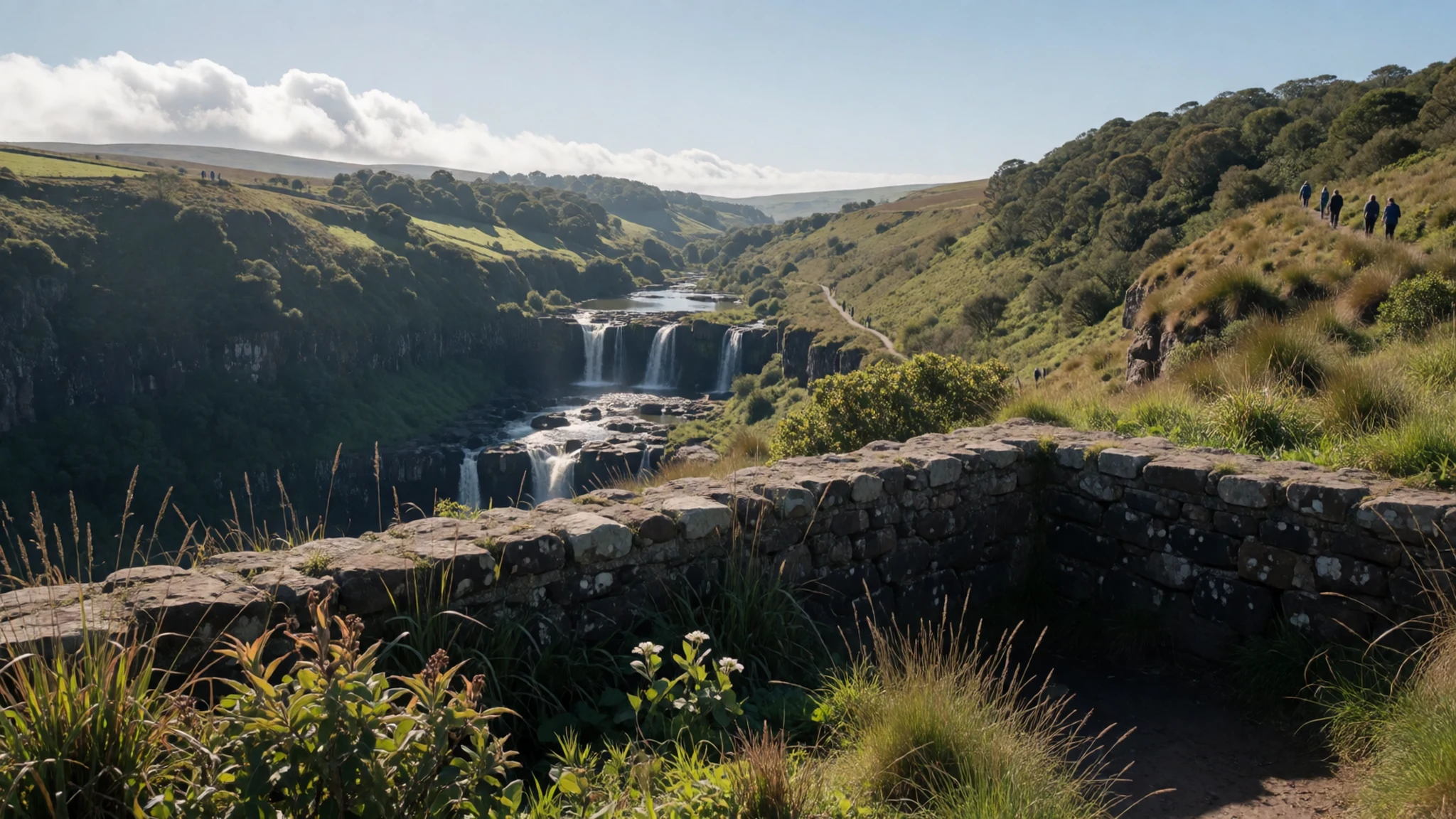
- Casela Nature & Leisure Park — Rivière Noire district
Casela lies in the Rivière Noire district, a short drive from the falls on the west side. It is a family-friendly park holding birds from several continents, giant tortoises and other animals. Treat it as a relaxed half-day addition rather than a wilderness experience, and check the official site for what is currently offered.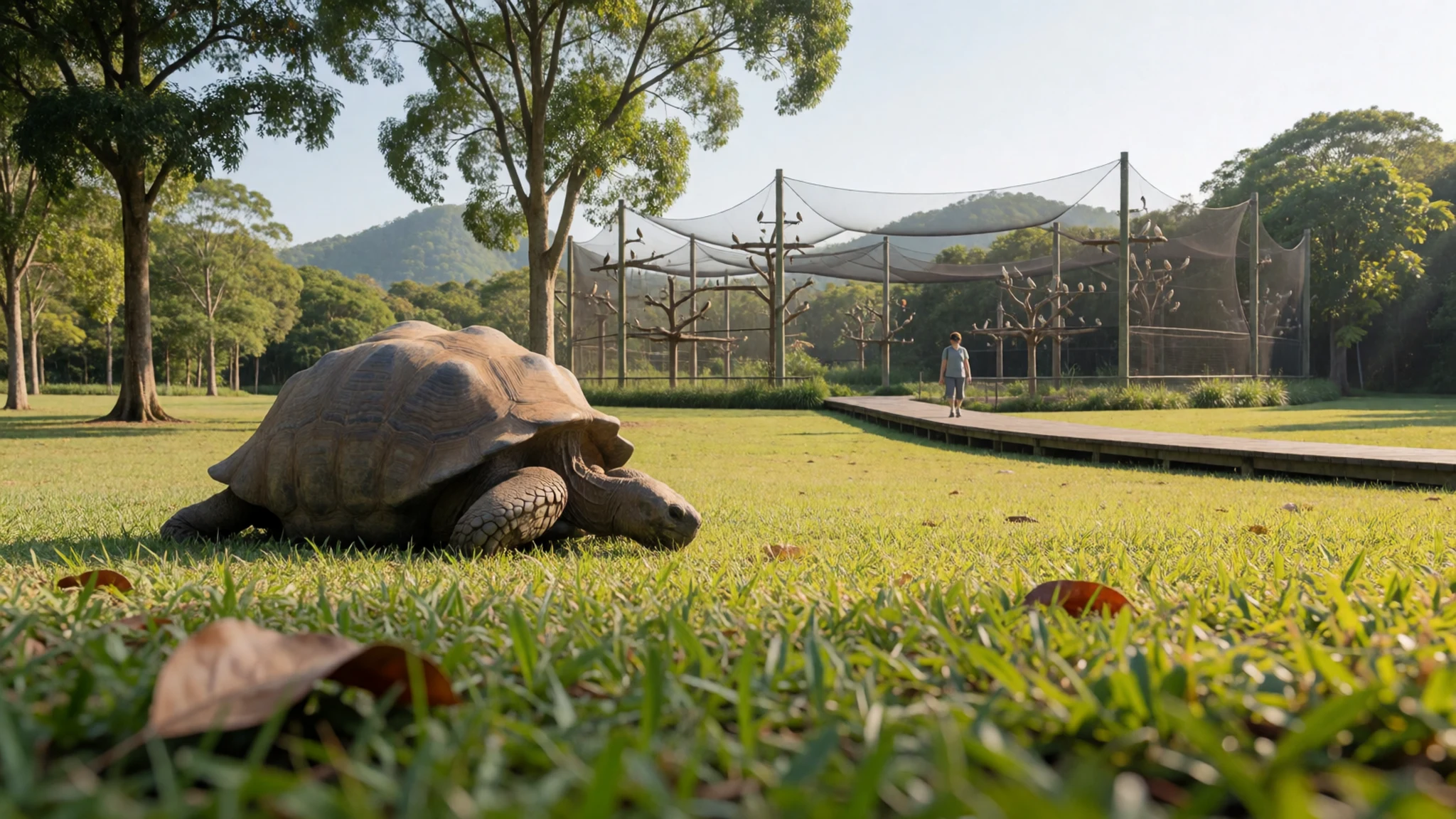
- Yemen Reserve — Near Rivière Noire
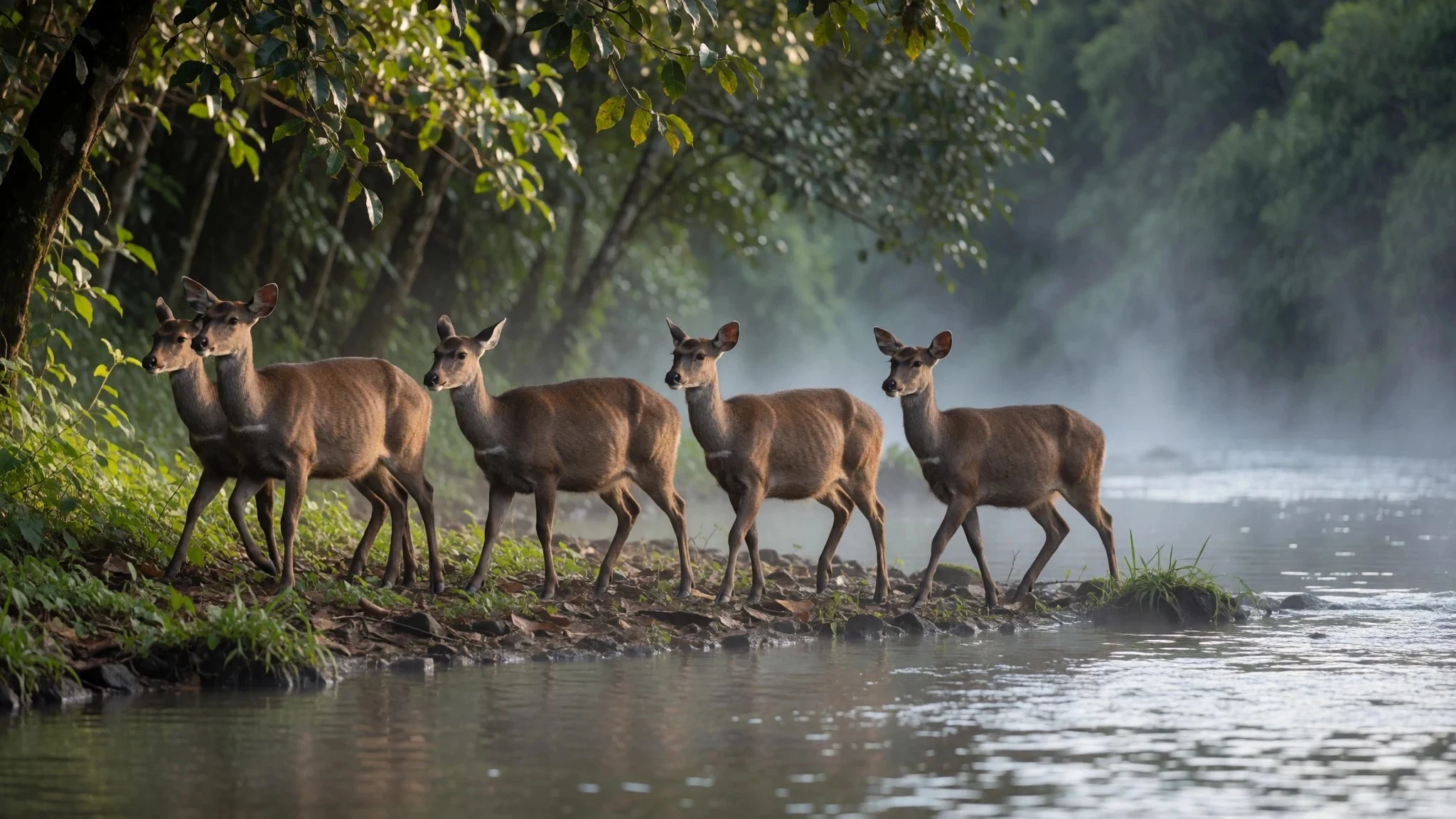
Yemen Reserve is a game reserve that is smaller than some on the island but good for close views of deer herds and Mauritian wildlife. The deer descend from animals brought in during Dutch rule, which links the visit neatly to the island's history. Mornings and late afternoons are cooler for walking.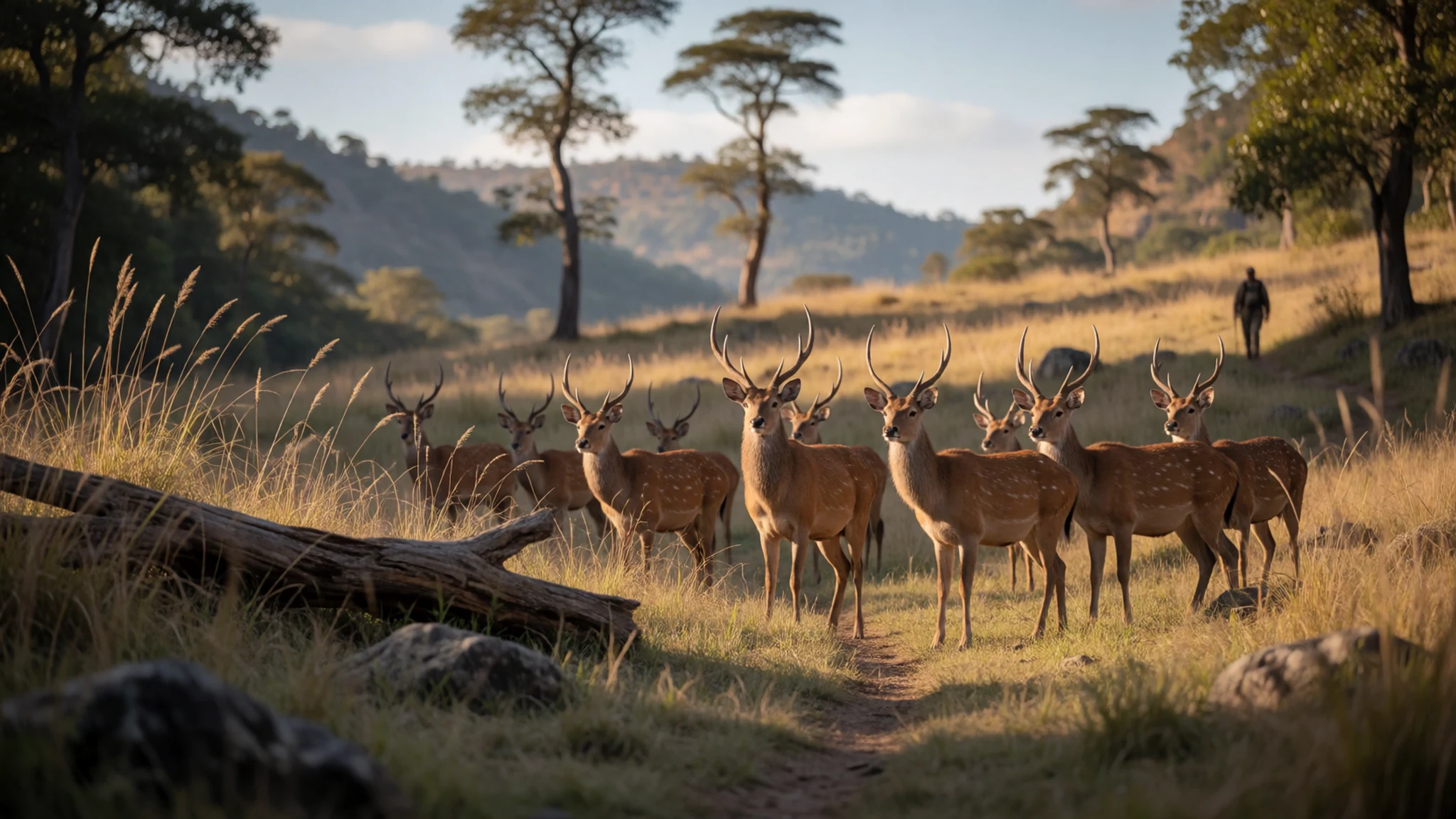
- Ganga Talao (Grand Bassin) — Southern uplands, south-east of the falls
Ganga Talao is a natural lake resting inside the crater of an extinct volcano. It is a sacred site for Hindu Mauritians, with shrines around its shore, and it pairs naturally with the falls on a day in the uplands. Dress modestly, and expect heavy crowds during festivals.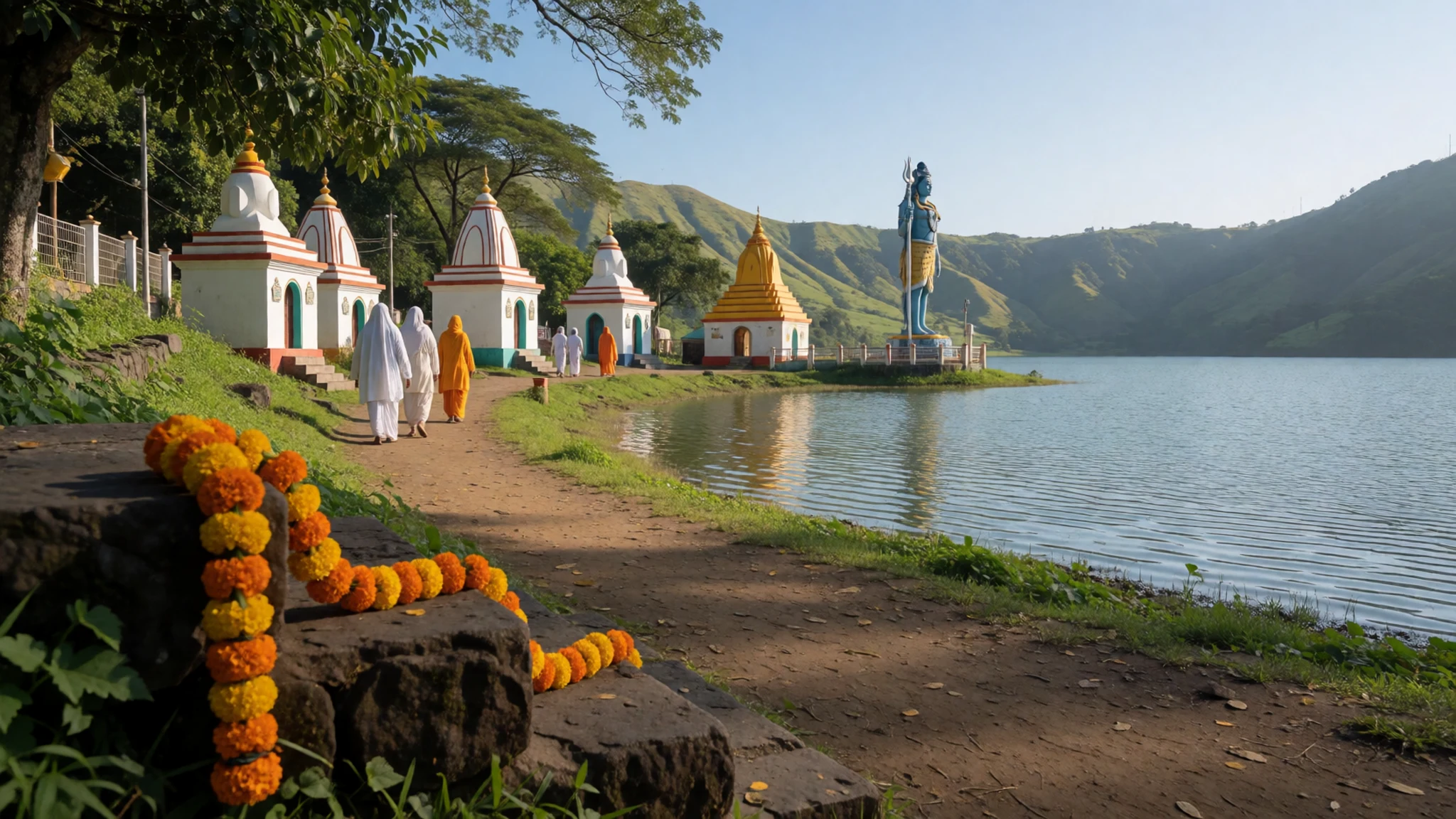
- Eureka — Moka, central uplands
Eureka is a Creole residence built in 1830, set among the central uplands near Moka. Its wooden galleries and period rooms show how a well-off family lived in the sugar era, and the inland air is cooler than the coast. Check the official site for opening arrangements before making the trip.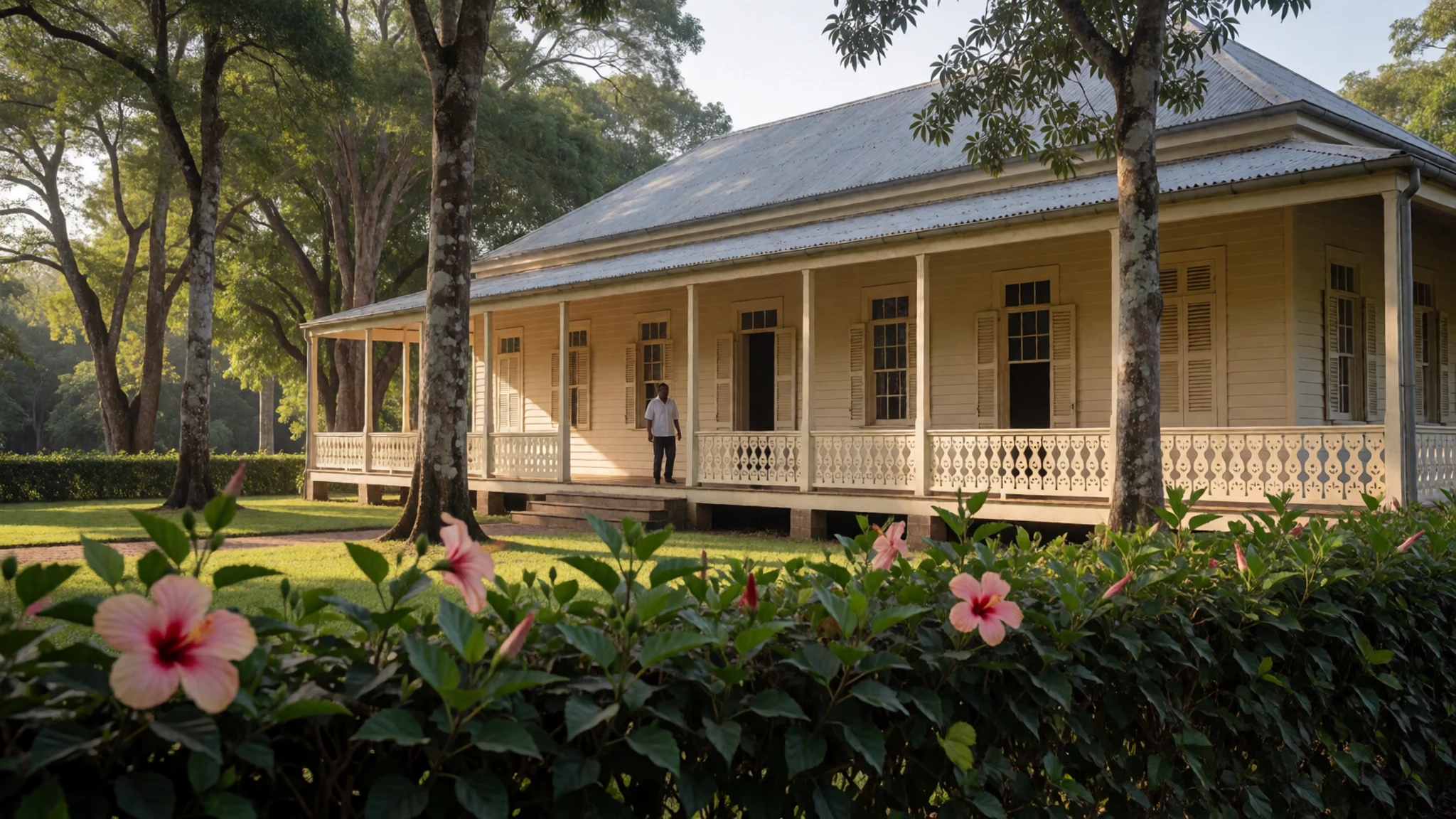
- SSR Botanical Garden, Pamplemousses — Pamplemousses, north
The garden at Pamplemousses was founded by Pierre Poivre in 1770 and holds plants found only in Mauritius, alongside fish, deer and tortoises. It lies far to the north, a long drive from the falls, so it works best as a separate day combined with the northern coast.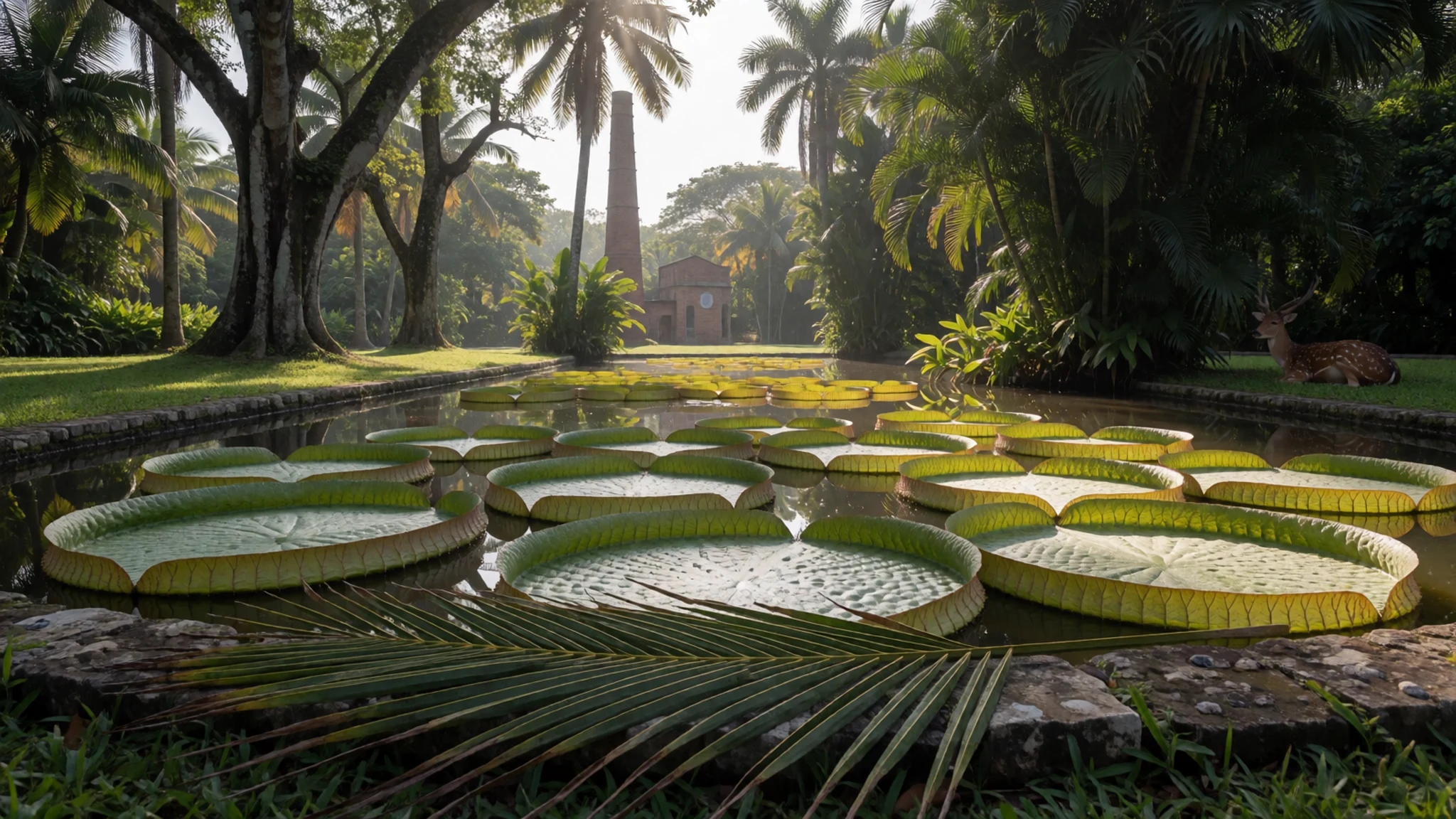
Culture
Culture around Tamarin Falls is Mauritian in the broad sense: a mix of Indian, African, Chinese and French heritage that shows in language, religion, festivals and food. Most people speak Mauritian Creole at home, with French and English used in business, school and the media. Hindu, Christian, Muslim and Buddhist communities live side by side, and temples, churches, mosques and pagodas often stand within a short drive of one another. Public holidays follow this mix, so a visit may coincide with Divali, Eid, Chinese New Year or Christmas.
Ganga Talao, the crater lake south-east of the falls, is a major Hindu pilgrimage place, and large crowds walk there for Maha Shivaratri, usually in February or March. Sega, the drum-driven song and dance with roots in Creole and enslaved communities, is performed at hotels and at beach gatherings. Life in the uplands around the falls is quieter than on the coast, with small farms, vegetable plots and roadside stalls, and it feels more local than the resort belt. Hospitality is warm, and a greeting in Creole or French is appreciated. At Hindu temples and lake shrines such as Ganga Talao, remove your shoes, cover your shoulders and knees, and ask before photographing worshippers or offerings.
What to wear
Fashion around Tamarin Falls mixes inherited dress with easy tropical clothing. Traditional dress follows community lines. Indo-Mauritian women wear saris, often cotton for daily use and silk or blends for weddings and festivals, and salwar kameez are common too. Men may wear a kurta at religious events. Creole sega dress has full, tiered skirts in bright cotton and printed fabrics, sometimes with a head wrap, and appears at dance shows and cultural events. Some Chinese Mauritian families wear qipao-style outfits at New Year.
Day to day, most people wear light cotton shirts, shorts or jeans, with sandals or trainers; office wear is smart but short-sleeved in the heat. Dress is relaxed in coastal towns and more conservative inland and at places of worship.
For the falls, visitors should wear quick-drying clothes and trainers or walking shoes with real grip, since rocks and mud are slippery. A hat, sun cream, insect repellent and a light rain jacket for sudden upland showers all earn their place. Swimwear is fine for the pools, but pack a towel and dry clothes. Away from the beach, cover up a little in towns, and carry a scarf or sarong for temple visits.
What to eat
- Dholl puri — Street stalls and small snack shops in any town, especially at lunchtime
A thin flatbread filled with ground yellow split peas, folded around curry, pickle and chutney. Of Indian origin, it has become an everyday Mauritian street meal, the local answer to fish and chips, and it is cheap, filling and easy to eat on the move.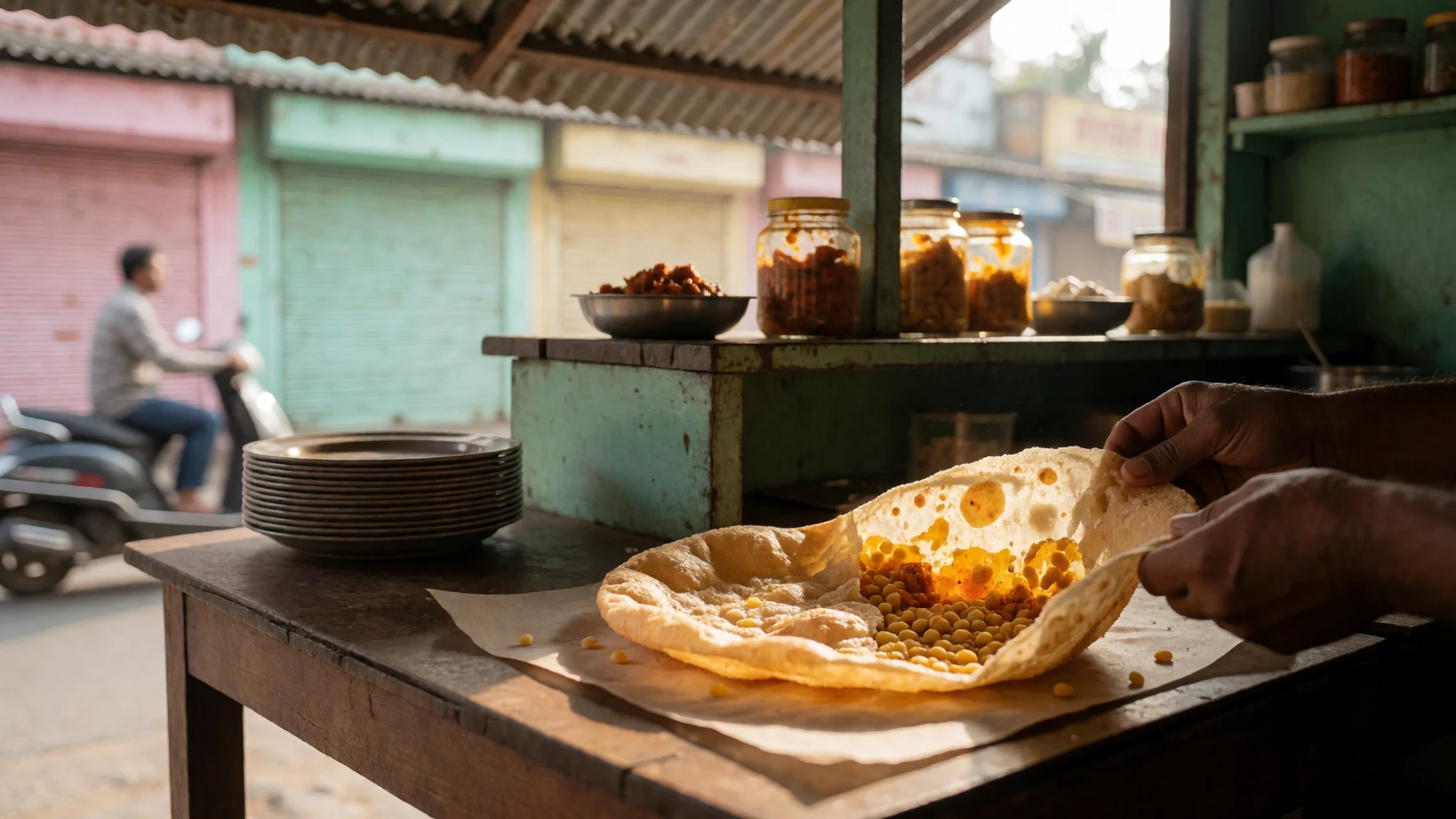
- Gateaux piments — Roadside snack vendors and market stalls
Small fried balls of split peas, chilli and herbs, related to the Indian vadai. Crisp outside and soft within, they are usually sold hot in paper bags and often tucked into bread with chutney. A good snack before or after a walk.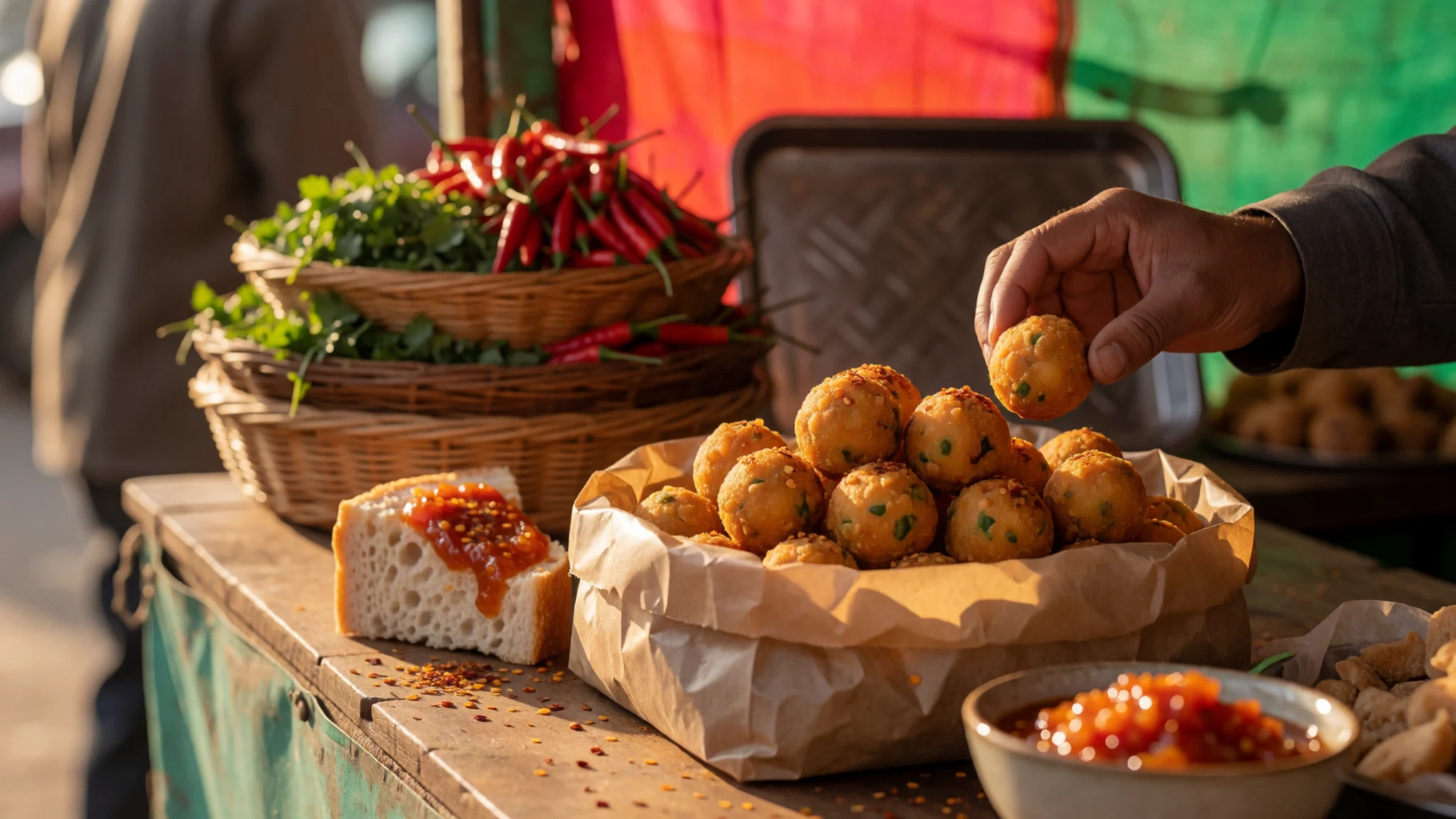
- Biryani — Eateries run by the Muslim community, and at celebrations
A Mughal-rooted dish of spiced rice layered with meat and potatoes. In Mauritius it is closely tied to the Muslim community and often served for festivals and family gatherings. Look for it at neighbourhood eateries where locals queue at midday. - Octopus curry — Seaside eateries on the west coast and in fishing villages
Tender octopus cooked in a Creole-style tomato and spice sauce, usually served with rice. It is also sold on the street inside bread. Coastal villages near Tamarin are a natural place to try it after a morning in the hills. - Farata with curry — Home-style eateries and market food stalls
Farata is the local name for paratha, a soft layered flatbread eaten with vegetable or meat curries, lentil dal and pickles. Spices such as cardamom, cinnamon and cloves, with thyme and curry leaves, give the curries depth. A simple, satisfying meal.
Plan it
Best time. September to November and May to June are the cooler, drier months, when the trail is firmer and the weather steadier. The falls carry more water after rain, but wet-season paths are muddy and slippery. Cyclone season runs roughly from January to March, so avoid it.
How long. 1–2
Getting there. Fly into Sir Seewoosagur Ramgoolam International Airport on the south-east side, then travel by taxi or hire car across the island to Tamarin and up to the uplands near Mare aux Vacoas. There is no rail; the last stretch is by road.
Budget. mid
Tips
- Start early, because cloud and heat build by midday and the lookout is clearer in the morning
- Go with a local guide for the lower trail, and check current access arrangements before setting out
- Carry water, snacks and some cash for roadside stalls, as cards are less useful away from the coast
- Wear shoes with proper grip, since wet basalt and mud are slippery
- Combine the falls with Ganga Talao or the Rivière Noire parks to make a full day
Etiquette
- Stay on the path and carry your litter out
- Ask before photographing people, especially at temples
- Cover shoulders and knees and remove shoes at places of worship
Nearby
Sources
- Wikidata Q27760988 (CC0)
- Wikipedia: Tamarin Falls (rev 1188674213) (CC BY-SA 4.0)
- Wikivoyage: Mauritius (rev 5410845) (CC BY-SA 4.0)
Wildlife
- Java deer (animal)
The Javan rusa is a large deer, and rusa is simply the Malay word for deer. It comes from Indonesia and Timor-Leste, but it lives here as a reminder of Mauritius's colonial past, browsing in the reserves near Tamarin Falls. Which season or hour suits it best is not known to us, so ask a local guide. Keep a respectful distance, stay quiet and unhurried, and never feed it, so it stays wild and calm for the next visitor.