Coin de Mire
Coin de Mire, Mauritius
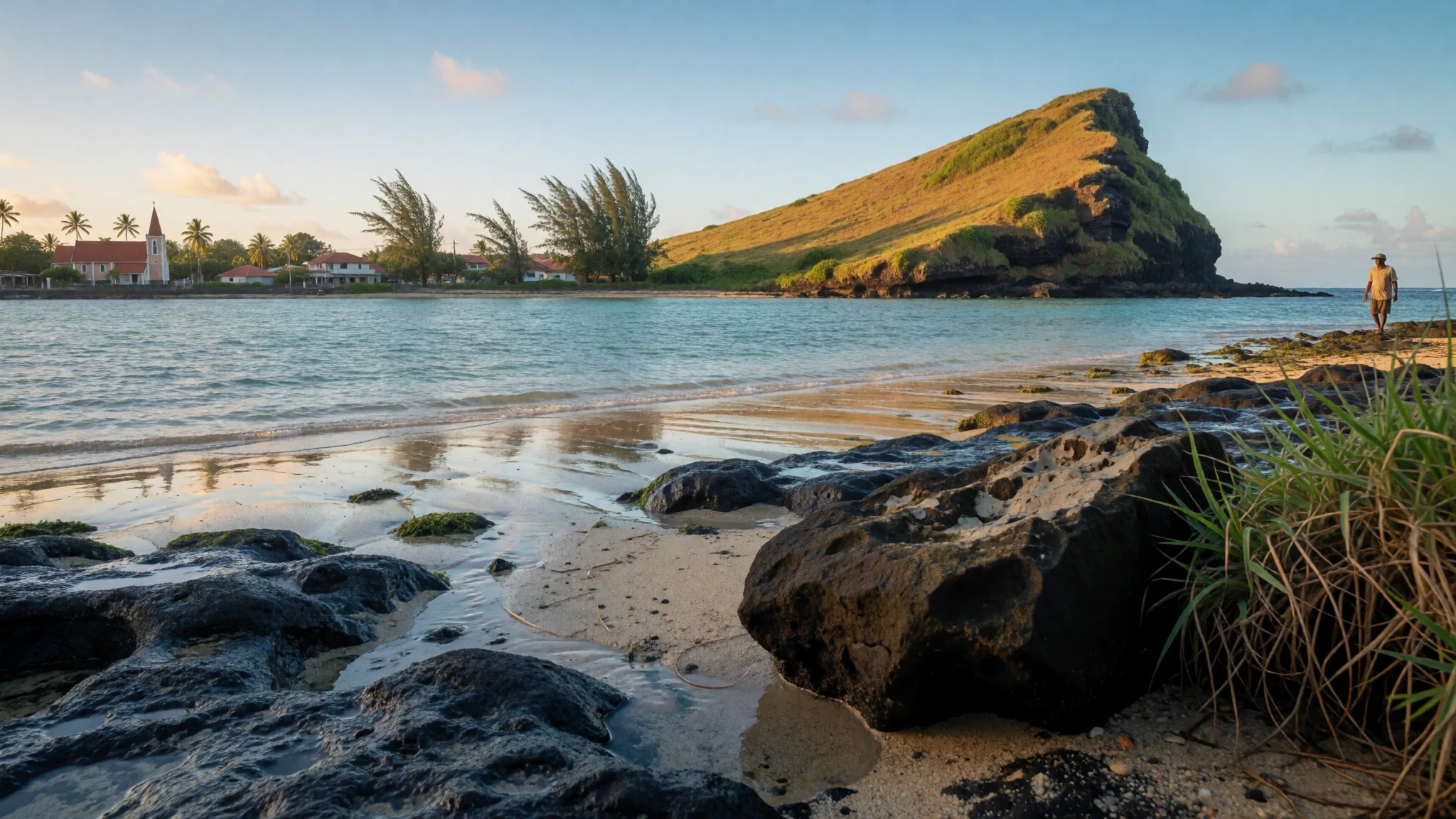
Coin de Mire is a wedge-shaped island off northern Mauritius, best seen from a boat, with clear water and reef fish around it.
The place
Coin de Mire is an uninhabited island off the northern tip of Mauritius, sitting in the Indian Ocean beyond the fishing village of Cap Malheureux. It is one of roughly 130 small islets and rocks scattered around the coasts of Mauritius, Rodrigues, Agalega and St Brandon, and it is the one most visitors actually see, because it fills the horizon from the north-coast beaches. Its shape does the work of a landmark: a lopsided wedge, sloping gently on one side and dropping in cliffs on the other, covered in scrub and grass rather than forest. Its English name, as Wikidata labels it, is Gunner's Quoin. The island is uninhabited, so the experience is about the water around it rather than the land. Boats from the north coast circle it, and the sea nearby is where snorkellers and divers go for reef fish and the Mauritian anemonefish. The island is covered in scrub and grass, though it still holds remnants of a sugar plantation from the Dutch era. Conditions matter. The channel between the mainland and the island can be rough when the south-east trade winds blow hard, trips get cancelled at short notice, and the sun on open water is fierce by midday. The beaches facing the island are busy at weekends and in the school holidays, but the island itself stays quiet, with only a few boats and the seabirds that wheel around the cliffs for company.
Its story
Coin de Mire carries a gunner's name. A quoin is the wedge placed under the breech of a cannon to raise or lower its aim, and sailors who saw the island from the sea thought its profile matched that block of wood. The French name and its English twin, Gunner's Quoin, both describe the same silhouette. That tells a lot about how the island has been used: as a mark for ships rather than a place to live. Mauritius itself had no native population before European ships arrived. It passed through Dutch, French and British hands, and each power left names and maps behind. Small islets like this one were useful as navigation points, since a ship coming from open water could line up the wedge against the northern coast and judge its approach. The village of Cap Malheureux, opposite, takes its place in local memory from the period when the British took the colony from the French, and the island stands in the background of that story. Despite remnants of a sugar plantation, Coin de Mire kept its scrub, its cliffs and its nesting birds, remaining an uninhabited landmark. What visitors see today is therefore close to what sailors saw long ago: a green wedge on the horizon, a narrow channel and a lot of weather.
What to see
- The view from Cap Malheureux — Cap Malheureux, north coast
The most familiar view of Coin de Mire is from the shore at Cap Malheureux, where the red-roofed church sits in the foreground and the wedge of the island rises behind it across the water. Early morning gives calmer light and fewer people. Standing there costs nothing, and the village has simple places for a cold drink.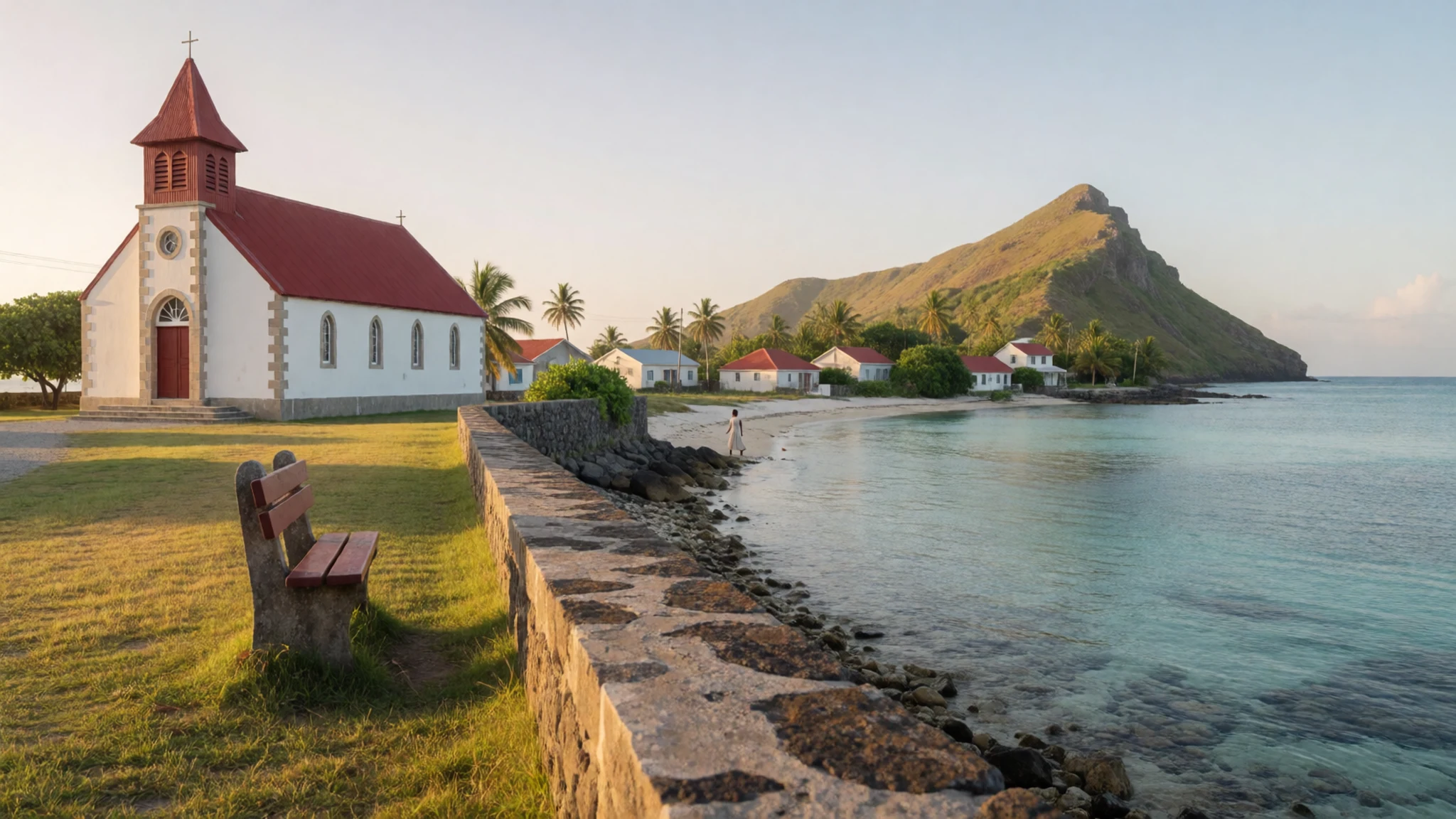
- A boat circuit around the island — Boats from the north coast
A boat trip around Coin de Mire is the usual way to see the island up close. Skippers run from the north-coast beaches, head round the cliffs and pause where seabirds sit on ledges. Landing is not permitted, so the value is in the angle. Book through a licensed operator and check the weather that morning.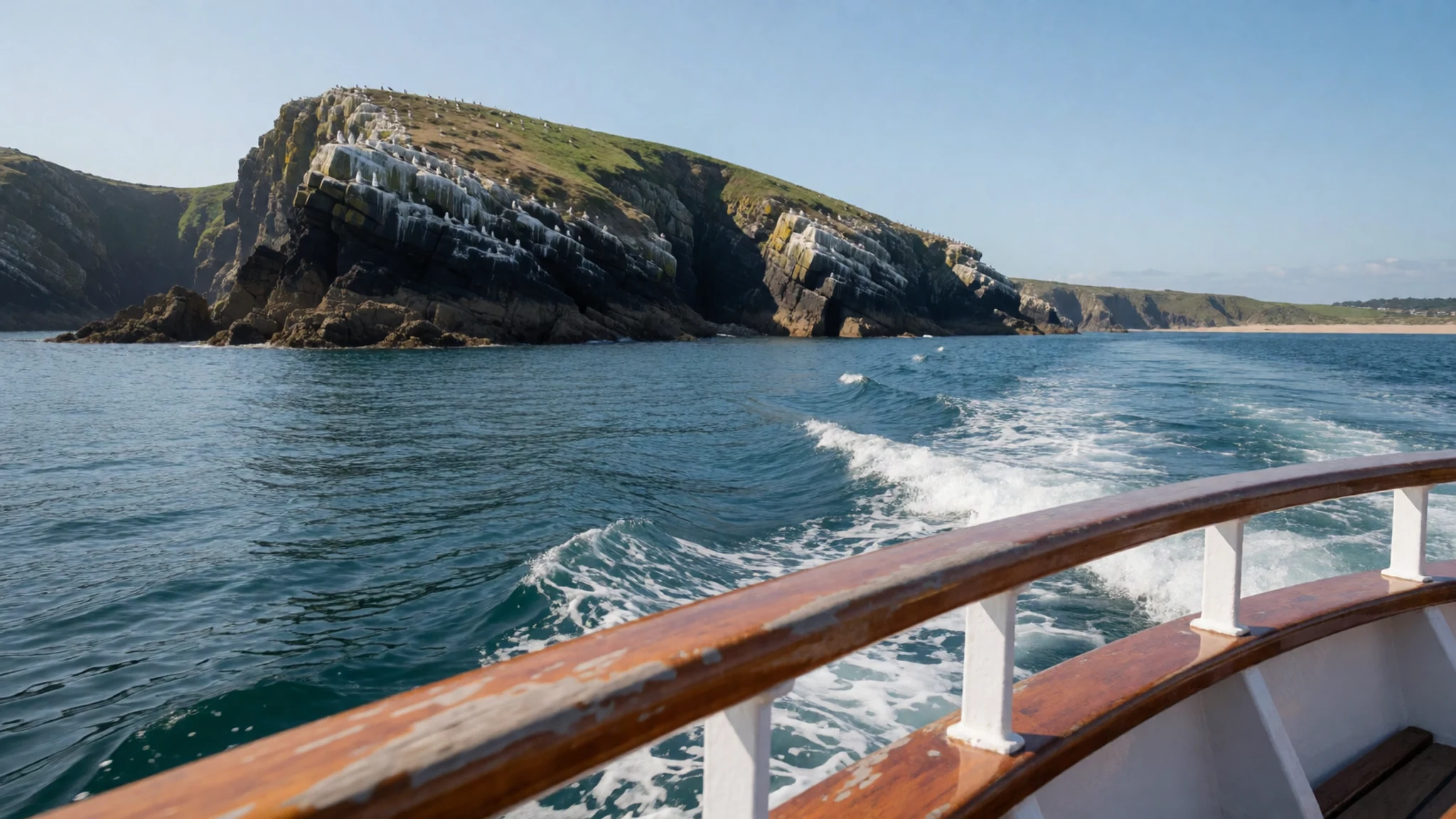
- Snorkelling near the rocks — Waters around the island
The water near Coin de Mire has clear patches over rock and coral, good for snorkelling when the sea is flat. Reef fish gather close to the rocks, and the Mauritian anemonefish lives among sea anemones nearby. Operators usually supply masks and fins, but check what is included and ask about currents before getting in.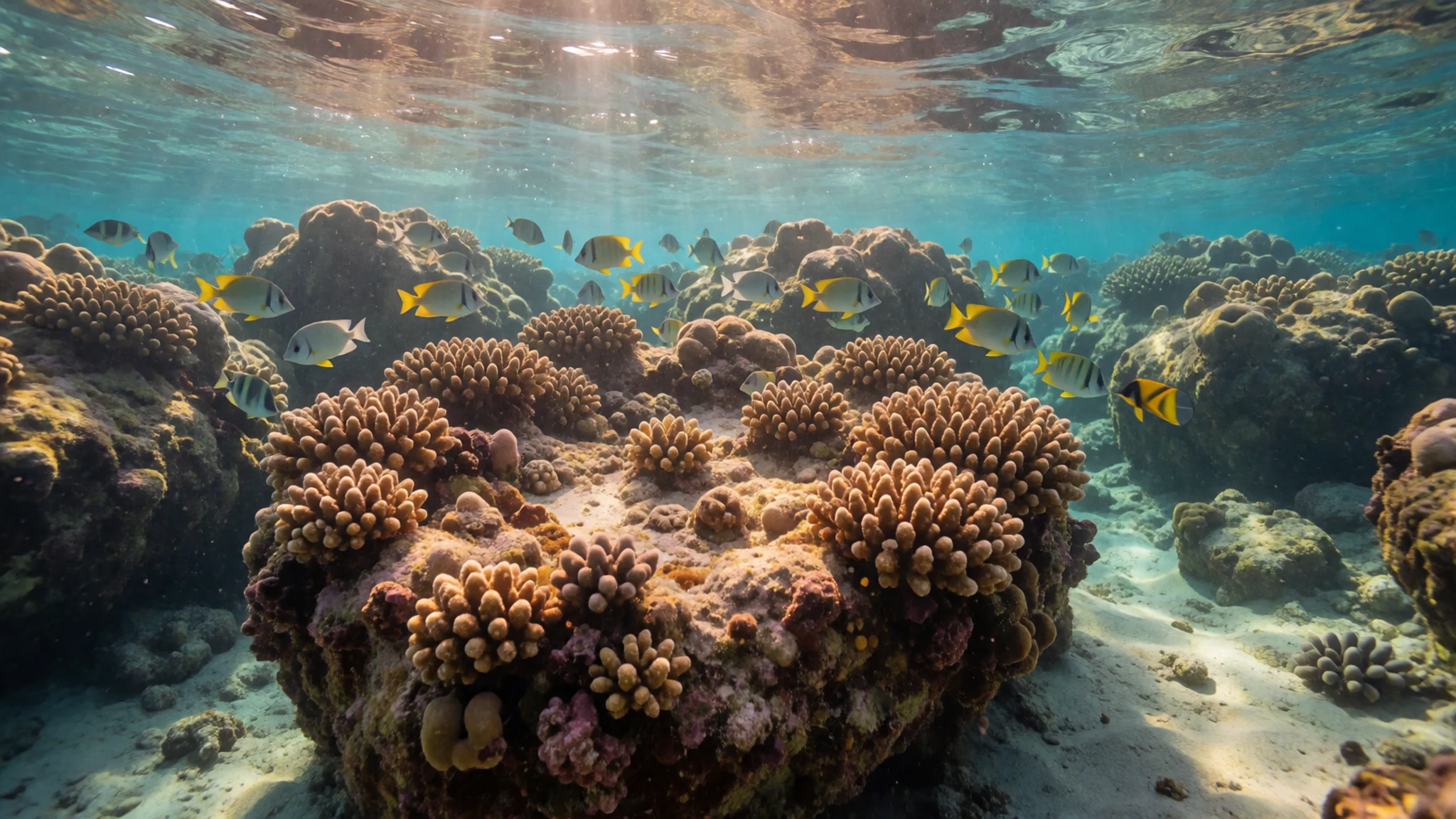
- Diving the island's flanks — North coast dive centres
Divers use the waters around Coin de Mire for rock formations and the fish that collect around them. Dive centres on the north coast run the trips and set depth and experience rules, so check certification requirements with them directly. Visibility changes with swell and season, so flexible dates help.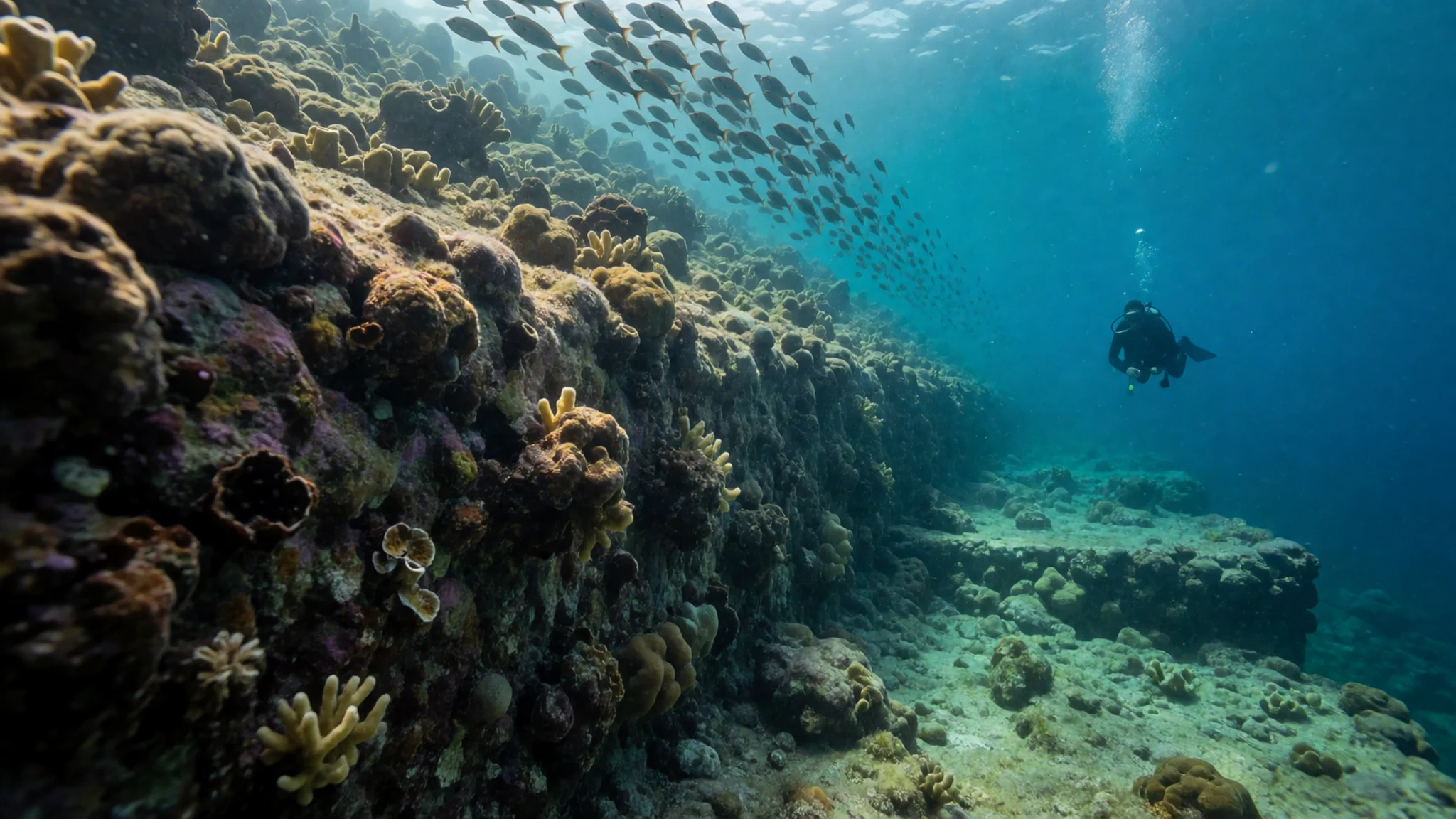
- Anemonefish close-up — Shallow reef near the island
Photographs taken near Coin de Mire show a large Mauritian anemonefish living in a sea anemone, with small damselfish of the species Dascyllus trimaculatus tucked in beside it. The scene is easiest to find on a guided snorkel, since guides know where the anemones sit. Look without touching; the animals are easily stressed.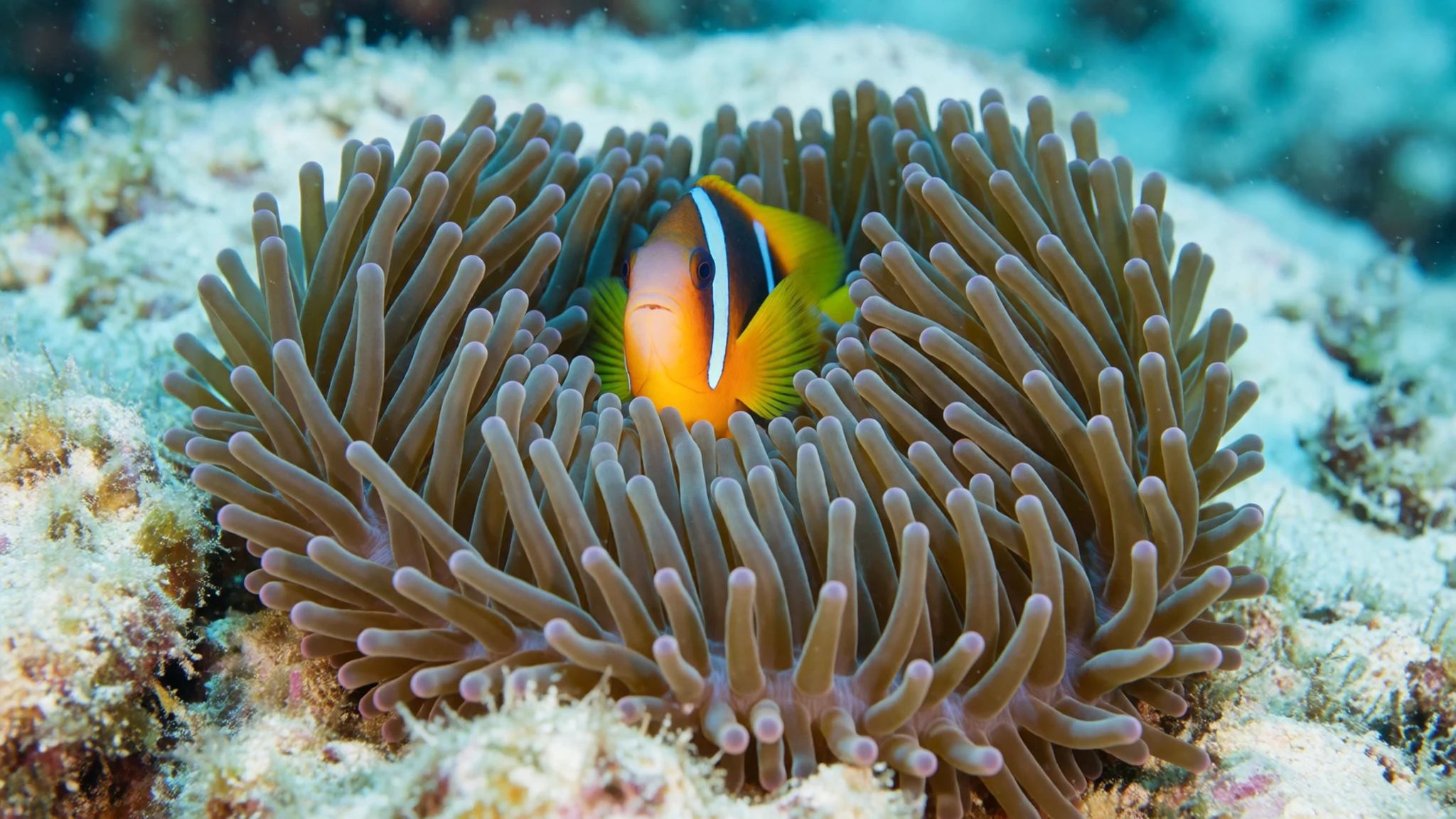
Culture
Coin de Mire belongs to the culture of the north coast of Mauritius, a place shaped by fishing, farming and, more recently, tourism. Mauritian society is a mix of people of Indian, African, Chinese and European descent, and that shows in language, food and festivals. Most people speak Mauritian Creole at home, with French and English used in schools, shops and offices, so a few words of Creole are welcomed warmly. Cap Malheureux, the village facing the island, has a small church whose red roof is among the most photographed details of the coast, and temples and mosques in nearby villages serve other communities. Fishing boats still work these waters, and some of the skippers who take visitors out are from fishing families who know the weather and the reef well. The island itself carries no buildings or shrines, but it still holds remnants of a sugar plantation, and respect for the site is part of local pride. Sunday on the coast is family day, with picnics on public beaches, music and long lunches, which means quieter boat schedules in some places and crowded sand in others. Festivals of the different communities fall through the year, and the dates move with lunar calendars, so check locally rather than planning around them. Stay in the boat unless the skipper confirms in advance that a landing is permitted, and never take shells, rocks or feathers away.
What to wear
Coin de Mire has no dress of its own, but Mauritian clothing is a blend of traditions. Among Indo-Mauritian families, the sari and the shalwar kameez, in cotton and silk, are worn for weddings, temple visits and festivals. Creole tradition is tied to the sega, the local music and dance, for which women wear wide, bright skirts, often in cotton and checked madras-style fabric, with a simple blouse. These outfits appear at performances, in hotels and at cultural events rather than in daily life. Day to day, people on the north coast wear light cotton shirts, shorts, sundresses and sandals, with trousers and closed shoes for work and school. Swimwear stays on the beach; in villages and shops, a shirt or wrap is expected. A visitor heading for Coin de Mire by boat should dress for sun and spray: a long-sleeved sun shirt, a hat that ties on, sunglasses with a strap and reef-safe sunscreen. Non-slip sandals or reef shoes are better than flip-flops on a wet deck and on rocky entries. Bring a light waterproof layer, because wind on open water feels cool even on hot days, and a towel that dries quickly. For churches and temples near the coast, cover shoulders and knees, and carry a scarf or sarong that can serve both as a cover-up and as shade.
What to eat
- Dholl puri — Street stalls and village market corners
A thin, soft flatbread filled with ground yellow split peas, rolled around curry, chutney and pickle. It is Mauritius's everyday street snack and is sold at roadside stalls and market corners along the north coast, usually freshly made and eaten on the spot.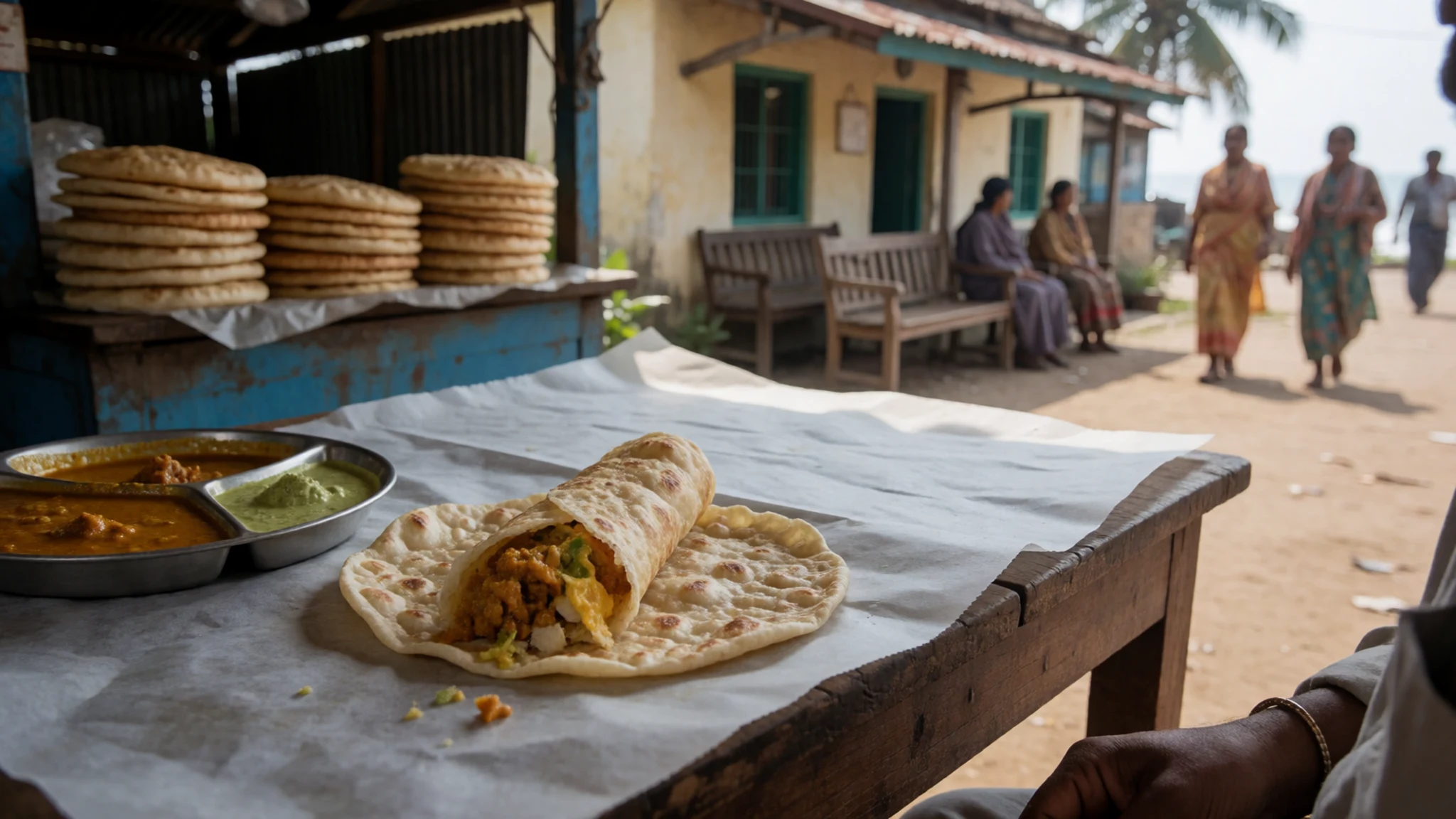
- Fish vindaye — Eateries in fishing villages near Cap Malheureux
Fried fish in a sharp, mustard-yellow sauce with onions, vinegar and turmeric, served cold or warm with rice. The dish carries the island's Indian and Creole heritage and is easy to find in eateries near the fishing villages.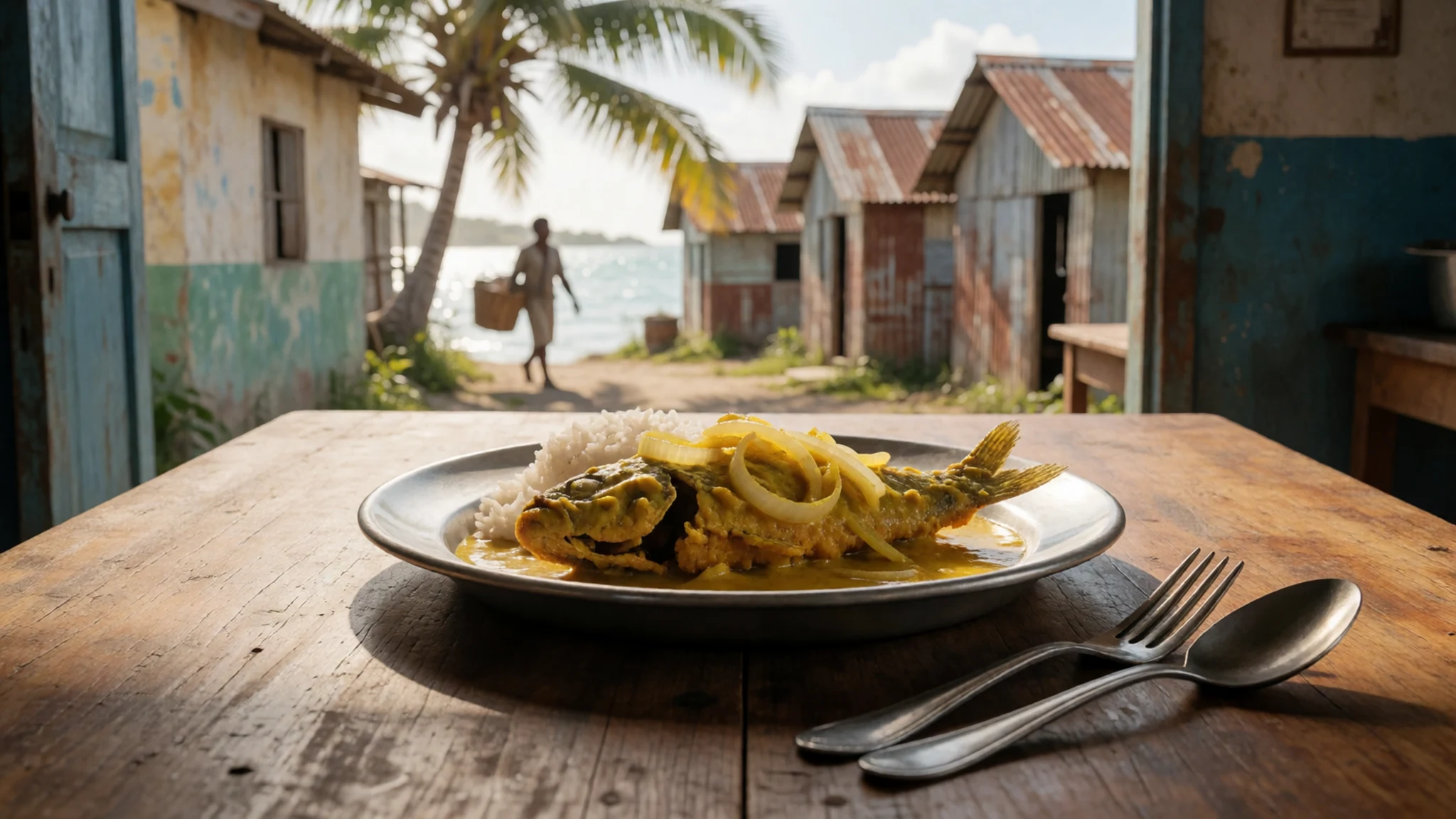
- Octopus curry — Small seaside restaurants on the north coast
Octopus cooked slowly in a tomato-based Creole curry with thyme, garlic and ginger until tender. It is a staple of home cooking and appears on the menus of small seaside restaurants across the island, often with rice and lentils. - Gâteaux piments — Beach kiosks and market stalls
Small fried fritters of split peas with chilli, herbs and onion, crisp outside and soft within. They are sold in paper bags as a snack and pair well with sweet chilli sauce or chutney while waiting for a boat. - Alouda — Street vendors and cafés in beach towns
A cold drink of milk, basil seeds, jelly and sometimes ice cream, flavoured with rose or vanilla syrup. It is sold by street vendors and cafés as a cooling treat after a hot morning on the water.
Plan it
Best time. August to November is the most comfortable period with milder heat; May to July are the coolest months. January to March is the hottest and wettest season, and the south-east trades can make the channel rough in the cooler months.
How long. 1–2
Getting there. Fly into Sir Seewoosagur Ramgoolam International Airport, then take a taxi or hired car north to Cap Malheureux or Grand Baie. The last leg is by licensed boat from the north coast; there is no regular ferry and landing is restricted.
Budget. mid
Tips
- Book boat trips through a licensed operator and ask about weather cancellations
- Go in the morning, when the sea is usually calmer and the light is softer
- Bring sun protection and drinking water, as there is little shade on open water
- Carry some cash for beach kiosks and small stalls, though larger operators take cards
- Weekends and school holidays are busier at the beaches facing the island
Etiquette
- Do not land on the island unless your skipper confirms it is permitted
- Do not touch or feed fish, anemones or seabirds
- Take all rubbish back to shore
Nearby
Sources
- Wikidata Q1554833 (CC0)
- Wikipedia: Coin de Mire (rev 1366292541) (CC BY-SA 4.0)
- Wikivoyage: Mauritius (CC BY-SA 4.0)
- Photo: CoinDeMire01.jpg, Liné1 (CC BY-SA 2.0)
- Photo: Amphiprion chrysogaster 01, Liné1 (CC BY-SA 1.0)
- Photo: Amphiprion chrysogaster 02, Liné1 (CC BY-SA 1.0)
- Photo: Amphiprion chrysogaster 03, Liné1 (CC BY-SA 1.0)
- Photo: Amphiprion chrysogaster 04, Liné1 (CC BY-SA 1.0)
- Photo: Amphiprion chrysogaster 05, Liné1 (CC BY-SA 1.0)
- Photo: Amphiprion chrysogaster 06, Liné1 (CC BY-SA 1.0)
- Photo: Amphiprion chrysogaster 07, Liné1 (CC BY-SA 1.0)


Wildlife
- Mauritian anemonefish (animal)
The Mauritian anemonefish is a clownfish, a little fish that lives inside a sea anemone as if the anemone were its house. Near Coin de Mire, photographs show a large one at home in an anemone, with small damselfish sheltering close by. It can reach 17 cm, about the length of a hand. No season or time of day is recorded, so look closely whenever you visit. Keep a respectful distance, stay quiet and still, and never feed it. - Threespot dascyllus (animal)
The threespot dascyllus, nicknamed the domino, is a small damselfish with a name like a game piece. It is widespread across the Indo-Pacific. Near Coin de Mire, photographs show these little fish snuggled beside a big Mauritian anemonefish in its anemone, so check the anemones carefully. No season or time of day is recorded. Keep your distance, stay calm and quiet, and never feed them.