Le Morne
Le Morne, Mauritius
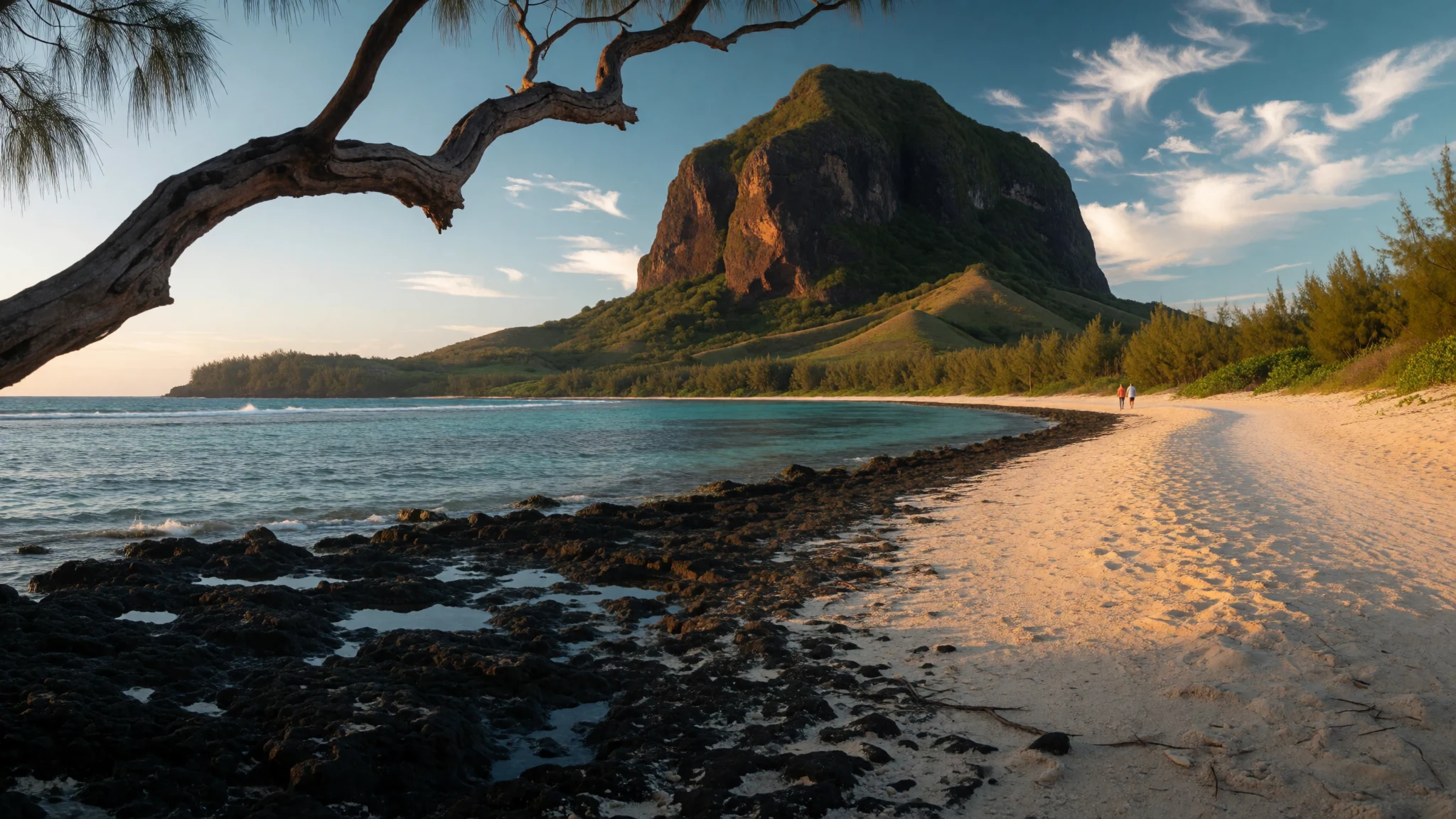
Le Morne is a sheer basalt mountain above a turquoise lagoon, and the place where Mauritius remembers the people who escaped slavery.
The place
Le Morne is a rocky peninsula on the far southwestern corner of Mauritius, and the mountain at its heart, Le Morne Brabant, rises 556 metres straight from the shore. It is a single block of volcanic basalt with a flat top, sheer cliffs, and caves and overhangs scattered across its flanks. Seen from the coast road it looks like a dark wall at the end of the land. Around it the sea is shallow and pale, held inside a reef-fringed lagoon whose colour shifts from milky turquoise to deep blue as the bottom drops away. The peninsula has its own microclimate: it is often drier and windier than the green plateau behind it, which is why kitesurfers favour it. The slopes shelter native plants that grow almost nowhere else, the mandrinette among them. Resorts and small villages sit on the flat ground at the foot, and fishing boats still work the lagoon. Le Morne is on the UNESCO World Heritage List, and the reason is as much memory as scenery. Most people arrive for the beaches and the view, but the mountain makes more sense as a place with a past. Mornings are usually clearer and cooler, while cloud often gathers around the summit later in the day, and the foot of the mountain gets busier around midday when tour groups arrive.
Its story
Le Morne takes its present name from the Brabant, a Dutch East India Company ship that ran aground on this coast, but the name matters less than the story the mountain holds. During the long period when Mauritius depended on enslaved labour, the cliffs and caves of Le Morne became a refuge for people who escaped the plantations. These communities, known as maroons, lived on the summit plateau and in the overhangs, which were hard to reach and easy to defend, surviving on what the slopes and the sea could give them. Oral tradition tells of the day officials climbed toward the summit to announce that slavery had ended. The maroons, who had every reason to fear patrols, are said to have taken the approach for a hunt and leapt from the cliffs rather than be recaptured. Historians treat the details with care, but the account is told across the island and shapes how the mountain is regarded. For many Mauritians, Le Morne is a memorial landscape for the descendants of people brought from Africa, Madagascar and India, and the abolition anniversary is marked every year. The UNESCO inscription recognises that meaning, not just the peninsula's striking shape. A visit goes better with that in mind: quietly, with some reading beforehand, and not only as a backdrop for photographs.
What to see
- The summit of Le Morne Brabant — Le Morne peninsula
The flat top of the mountain gives a wide view over the lagoon, the reef and the open ocean beyond. The climb is steep, rocky and fully exposed to the sun. Ask locally about current access rules and whether a guide is needed, start at first light, and turn back if cloud closes in.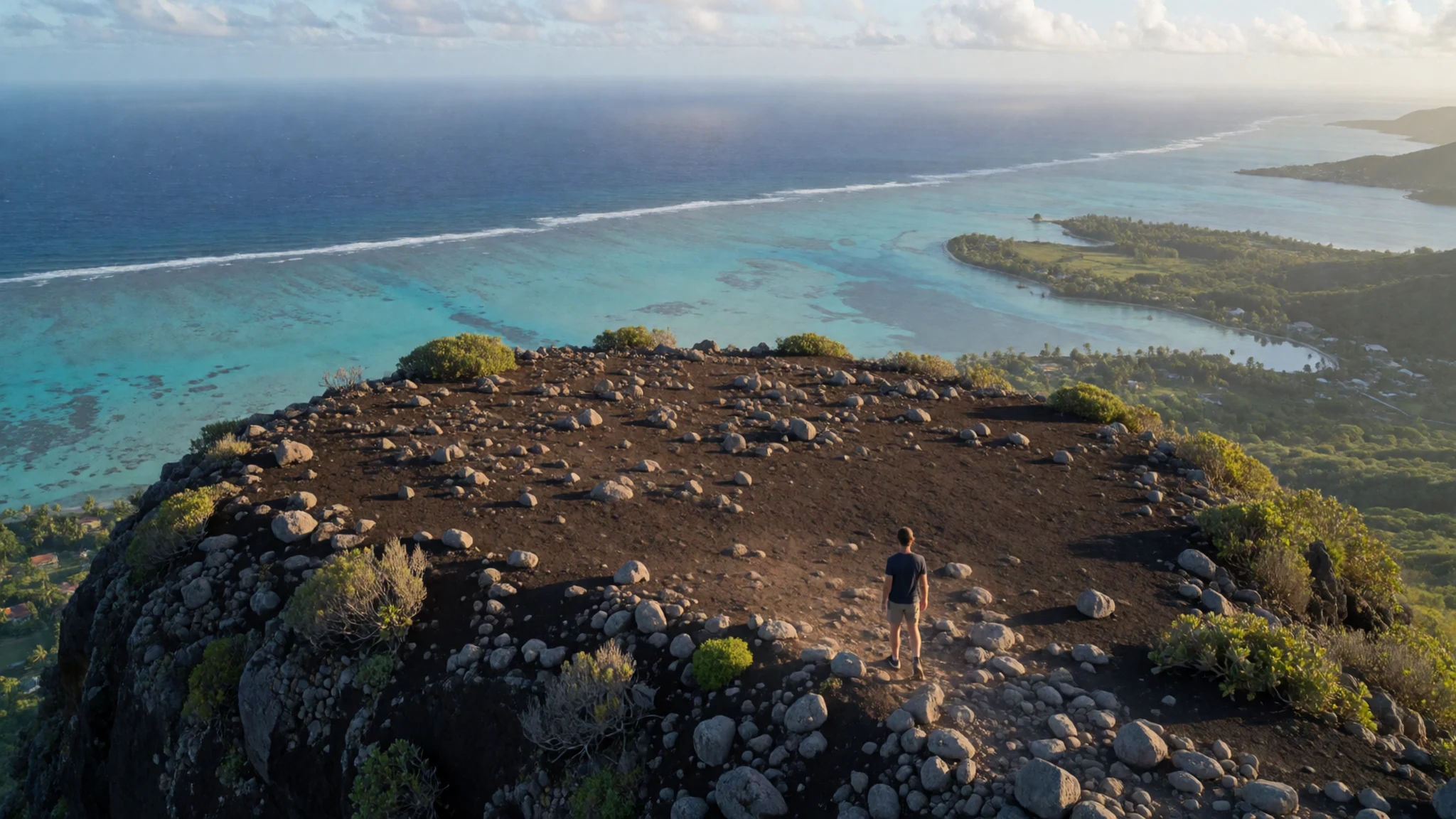
- The lagoon and kitesurfing — Lagoon off Le Morne
The shallow water behind the reef is the peninsula's main playground. Kitesurfers use the steady winds on the lagoon, and schools operate along the shore for beginners. Even if you never fly a kite, watching the colourful sails against the dark mountain from the beach is a good way to spend an afternoon.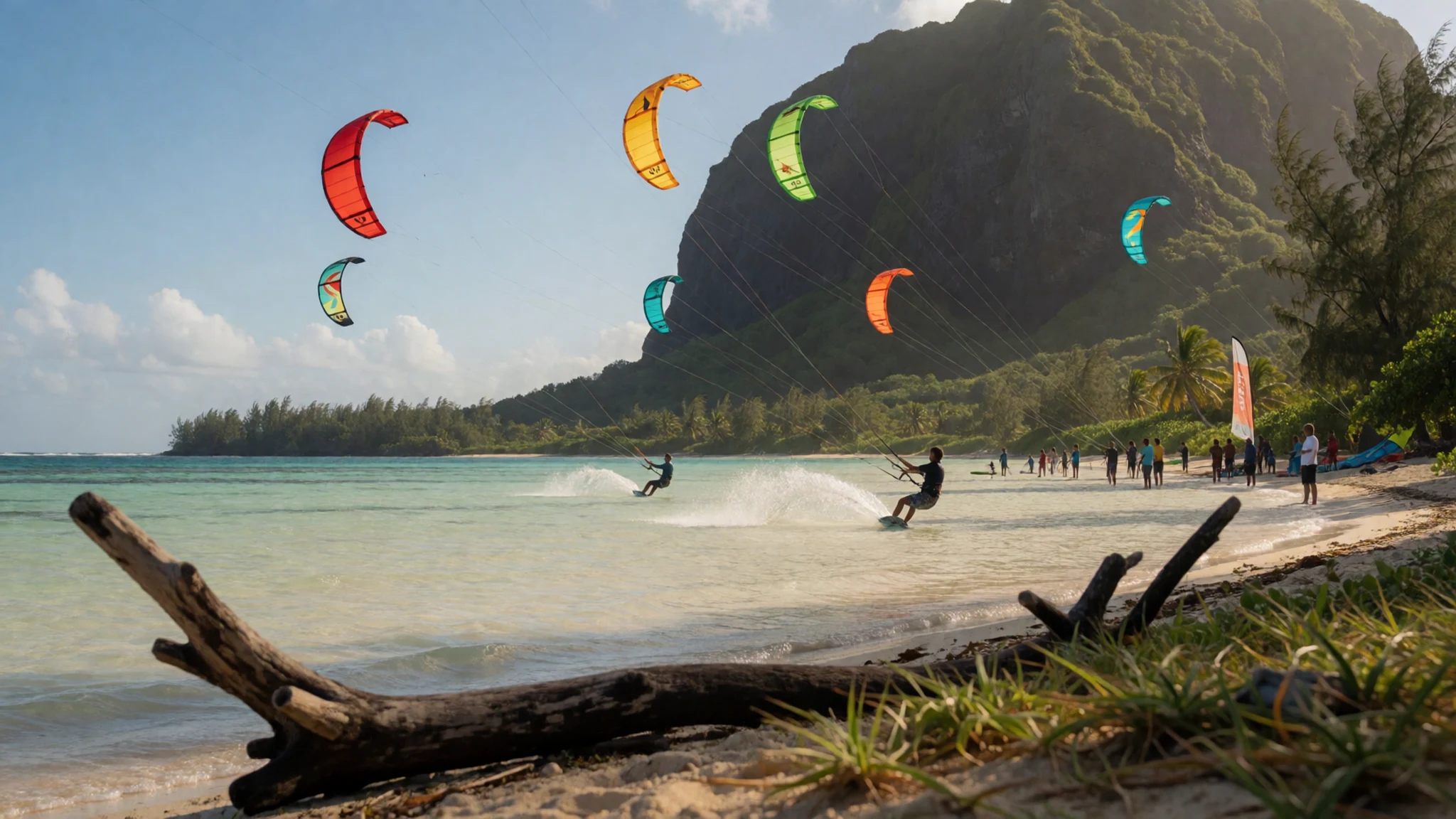
- The underwater waterfall illusion — Offshore, southwest coast
From the air, the sea off the southwest tip appears to pour over an edge into the deep. It is an effect of sand and silt drifting down the slope of the sea floor, not a real fall. Seaplane and helicopter flights are the usual way to see it; the photographs are striking, but weather and light decide the view.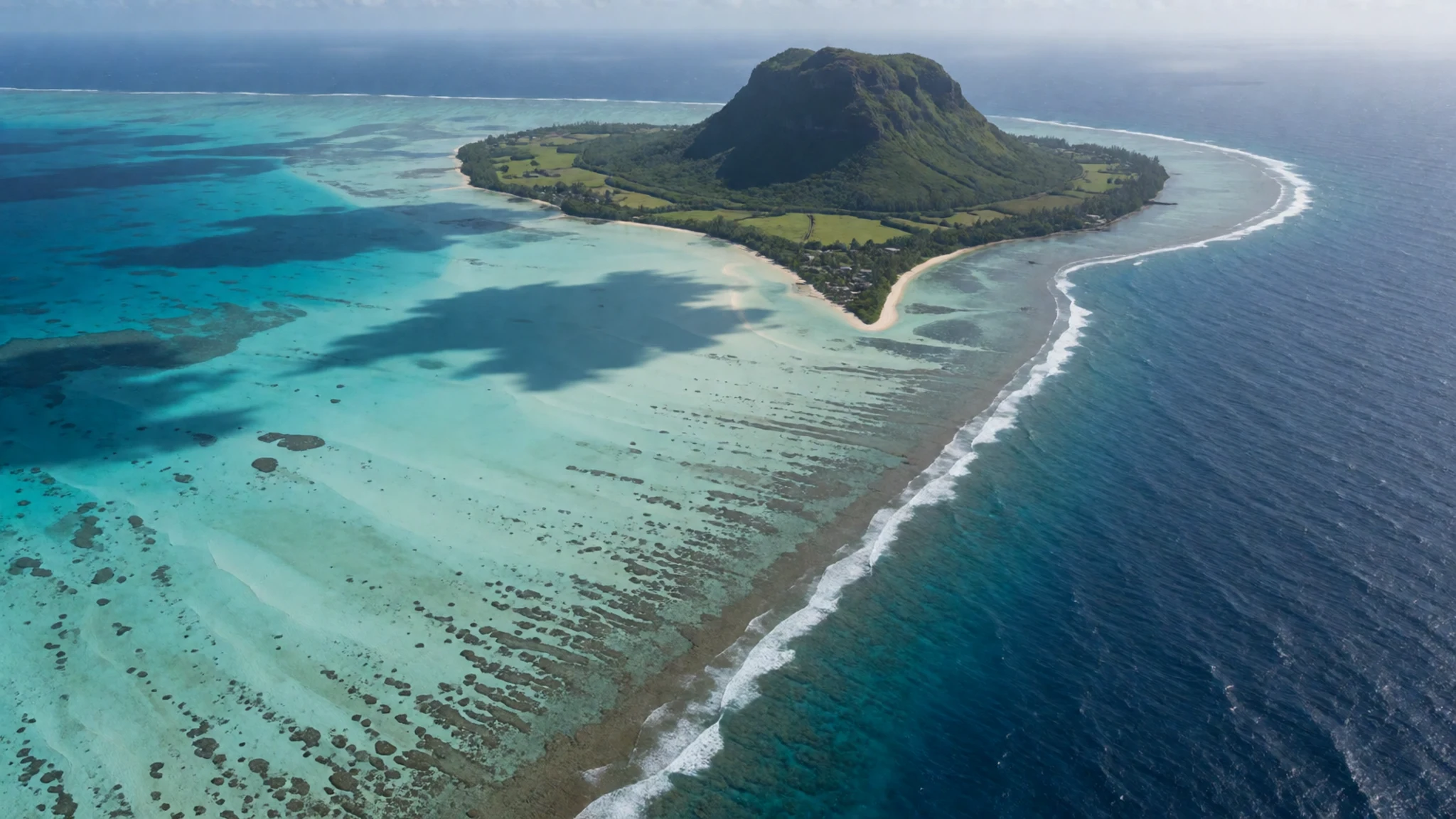
- Viewpoint from Chamarel — Chamarel uplands
From the hill country above Chamarel, Le Morne appears far below as a dark lump sticking into the blue. The forest viewpoints here are a calm way to take in the peninsula's shape and scale, without the heat of the climb. Mornings are best, before haze softens the outline.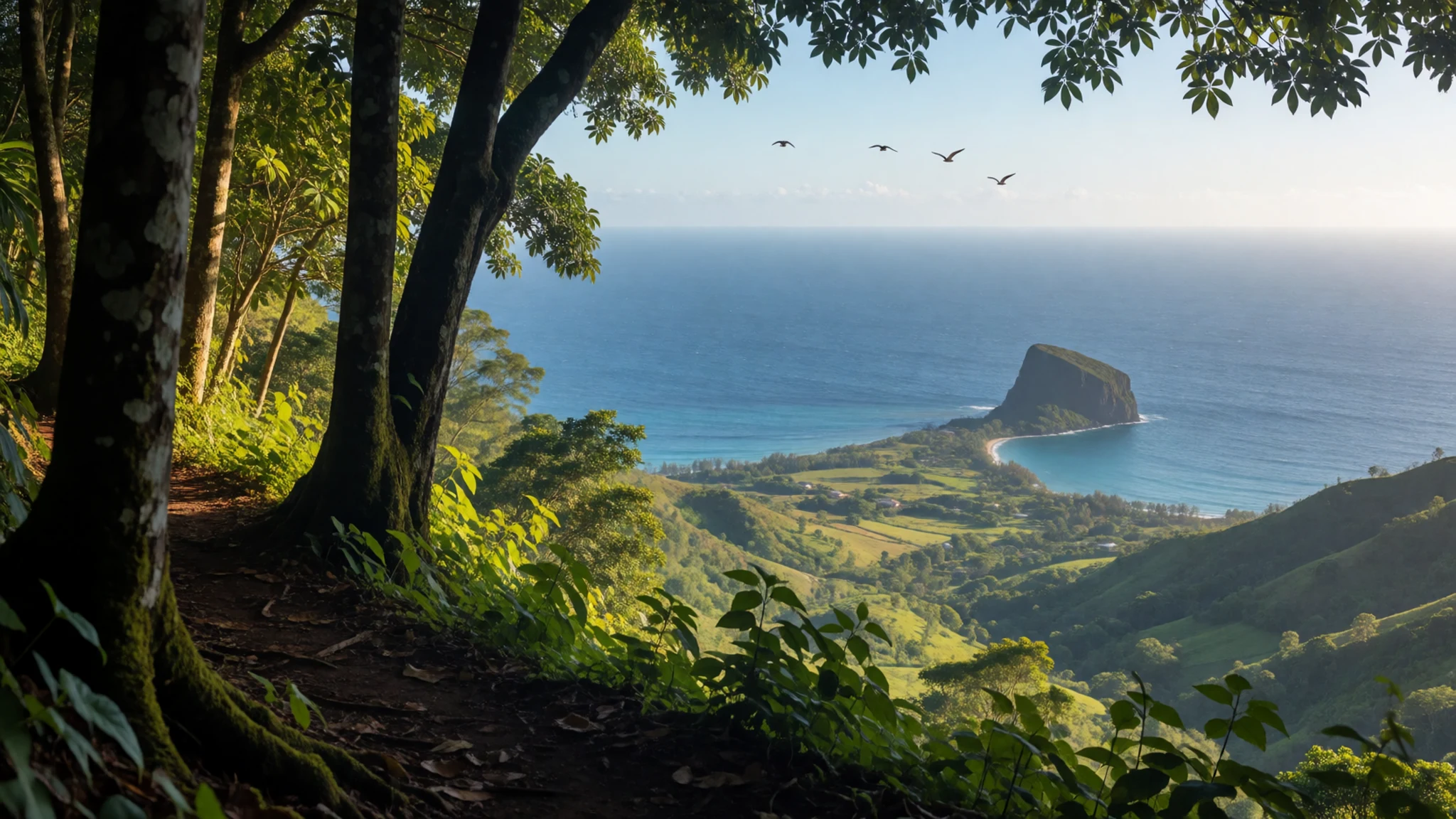
- The foot of the mountain — Base of Le Morne Brabant
A car park sits at the bottom of the mountain, and the paths and shoreline nearby are good for a slow walk. Look up at the caves and overhangs in the cliff and think about who sheltered in them. Use GPS to find the turning, as signs can be thin.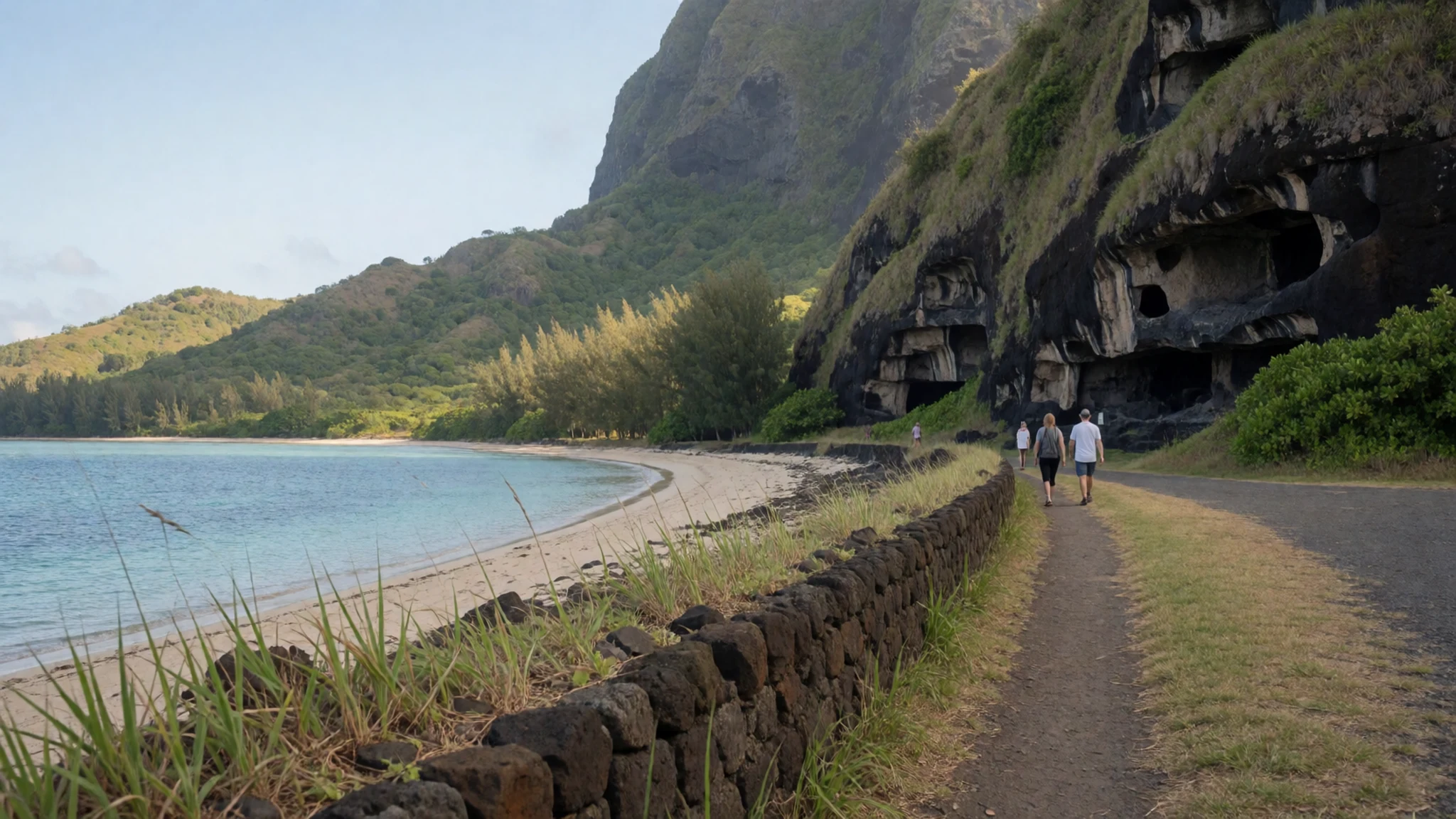
Culture
Le Morne sits inside a Mauritian society built from several migrations: Africa, Madagascar, India, China and Europe. Creole is the everyday language across the island, with French and English alongside it, and Hindu temples, churches, mosques and pagodas often stand a few streets apart. In the southwest, the local identity is closely tied to the Creole community, whose ancestors included enslaved people, and the mountain is treated as a place of remembrance rather than just a landmark. Sega, the island's music, grew out of that history. It is played with a hand-held ravanne drum and a shaker, and you may hear it at hotel evenings and beach gatherings; the rhythm is easy and the lyrics were once a way to speak about hardship. Family and food bring people together, and Sunday beach picnics are a regular sight at the public beaches. Religious festivals through the year, from Hindu and Tamil celebrations to Eid and Christmas, are shared widely and visitors are usually welcomed as onlookers. People are generally friendly and relaxed, and a greeting in Kreol or French is appreciated. At Le Morne, speak quietly near the mountain and its memorial sites, and ask before photographing local people or any ceremony.
What to wear
Mauritius has no single national dress, and what people wear reflects their roots. Many Indo-Mauritian women wear saris or shalwar kameez in cotton and silk for weddings, temple visits and festivals, while Muslim families may wear long tunics and head coverings at prayers. Creole tradition is best seen in sega performance: full, brightly coloured cotton skirts that swing with the dance, with loose shirts for men and a headscarf, often in a bold check or print. These are costumes now, mostly seen at shows and celebrations rather than on the street. Day to day, people on the coast dress for heat and humidity: light cotton shirts, shorts, sundresses, flip-flops, and in towns more neatly pressed trousers or skirts for work. Visitors should pack the same, with a few adjustments. Bring a wide-brimmed hat, sunglasses and a long-sleeved light shirt for the sun, which is strong even on cloudy days. Wear sturdy trainers or walking shoes with good grip if climbing, since the rock is hard and loose in places, and reef shoes for the lagoon. Carry a sarong or scarf to cover shoulders and knees when visiting temples or villages, and keep swimwear for the beach.
What to eat
- Dholl puri — Street stalls and takeaway counters in nearby villages
A soft, thin flatbread filled with ground yellow split peas, folded around curry, pickle or chutney. It is the island's classic street snack and good for a cheap, filling breakfast or lunch. Look for it from small stalls and takeaway counters in coastal villages.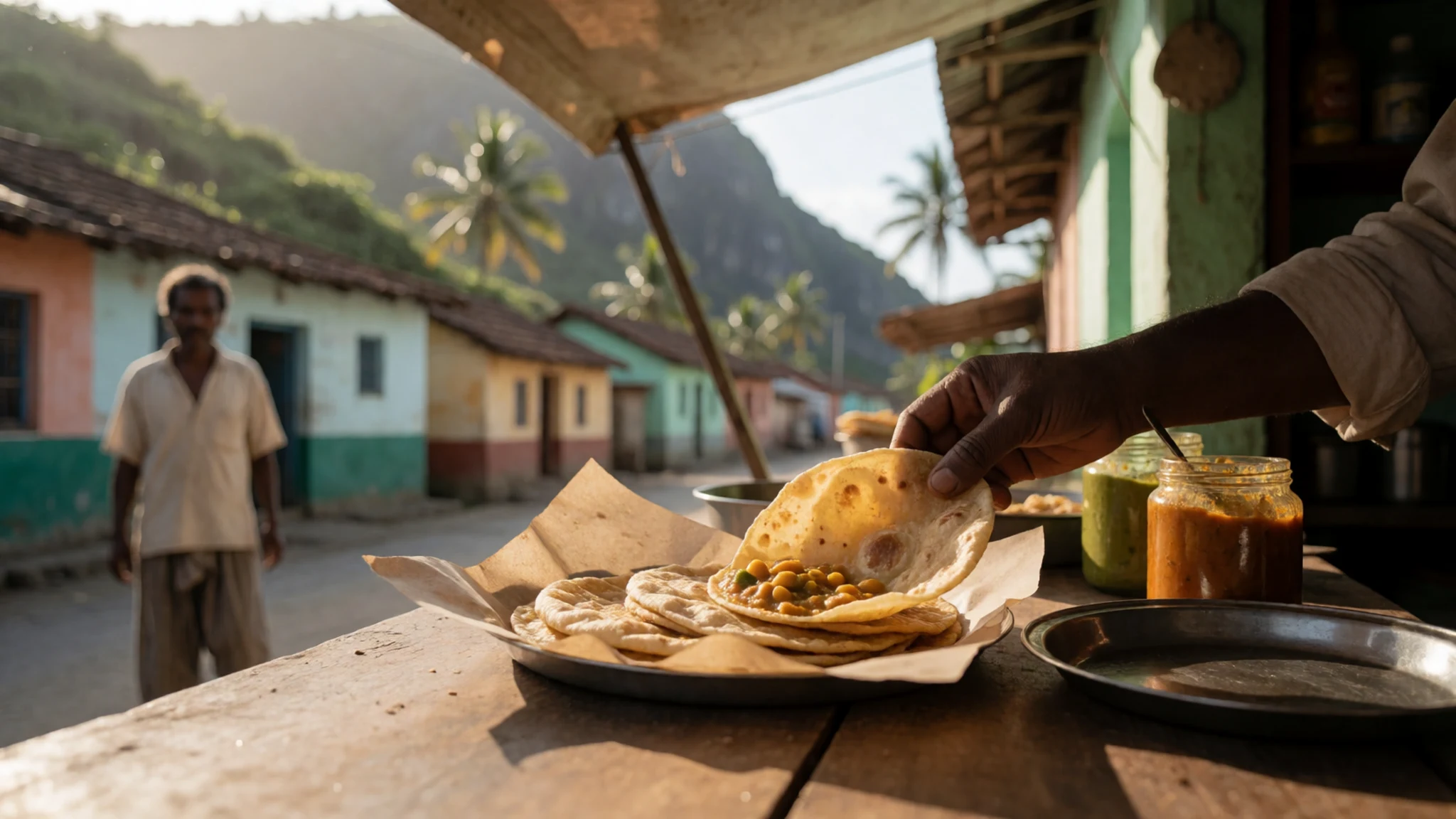
- Gâteaux piments — Roadside stalls and public beach kiosks
Small, crisp fritters made from split peas, chilli and herbs, eaten hot and often tucked into bread with chutney. They are a popular snack at the beach and at roadside stands, best bought freshly fried.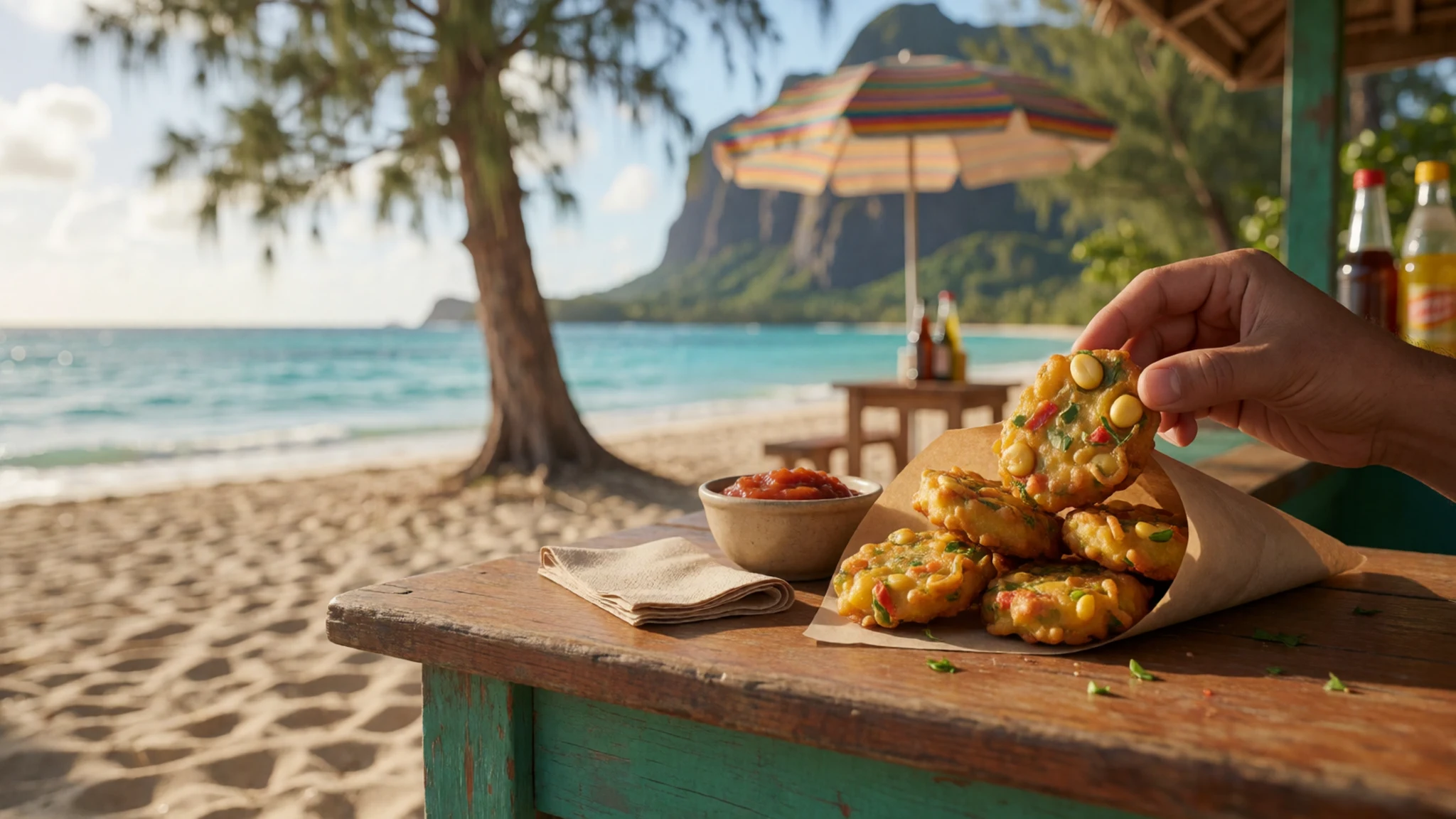
- Fish vindaye — Creole eateries and family-run restaurants along the south coast
Fish cooked with turmeric, mustard seed and vinegar, served cool or warm with rice or bread. The sourness and spice suit hot days. Local seafood is sold along the coast, and you will see this on many Creole menus. - Rougaille — Everyday Creole canteens and family-run eateries
A Creole stew of tomato, onion, garlic and thyme, cooked with fish, sausage or other meat and served with rice. It is home cooking at its simplest and most reliable, and a good order when unsure. - Mine frite — Casual eateries and night-time food stalls
Fried egg noodles with vegetables and your choice of chicken, prawn or egg, shaped by the island's Chinese-Mauritian cooks. It is a hearty meal that turns up at street stalls, casual eateries and takeaway counters. - Alouda — Street carts and small shops near public beaches
A cold, sweet drink made with milk, basil seeds, agar jelly and sometimes vanilla or rose syrup. It is the usual answer to heat and is sold from carts and small shops in towns and at beaches.
Plan it
Best time. May to June and September to November are the best months: temperatures are comfortable, rain is lighter and the climb is more bearable. The winter months from roughly June to September bring steadier winds that kitesurfers like. January to March is hot, humid and wet, and it is the main cyclone season, so check forecasts before booking.
How long. 2–3
Getting there. Fly to Sir Seewoosagur Ramgoolam International Airport in the southeast of Mauritius, then take a taxi or hire car across the island to the southwest. The last leg follows the coast road south; a car park sits at the foot of the mountain, and GPS makes it easier to find.
Budget. mid
Tips
- Start any climb at first light, before heat and cloud build up around the summit
- Ask locally about current access rules for the summit and whether a guide is needed
- Carry plenty of water, sun cream and a hat, as there is little shade on the mountain
- Bring some cash for roadside stalls and small shops, though hotels and larger restaurants take cards
- Book kitesurfing lessons and flights over the lagoon ahead in the windy months
Etiquette
- Treat the mountain as a memorial and keep voices low near its caves and cliffs
- Ask before photographing people, and dress modestly when visiting temples or villages away from the beach
- Take rubbish back down with you and stay on marked paths to protect the native plants
Nearby
Sources
- Wikidata Q1129992 (CC0)
- Wikipedia: Le Morne Brabant (rev 1366154901) (CC BY-SA 4.0)
- Wikivoyage: Le Morne Brabant (rev 5329612) (CC BY-SA 4.0)
- Photo: Le Morne Peninsula in Mauritius, dronepicr (CC BY 2.5)
- Photo: View of Le Morne Brabant from Ebony Forest Chamarel, S Molteno (CC BY-SA 4.0)
- Photo: Le Morne Mauritius from Helicopter HDR, Christopher Brown (CC0 1.0)
- Photo: Le Morne Brabant viewed from Ebony Forest Chamarel, S Molteno (CC BY-SA 4.0)
- Photo: Aerial view of the Indian Ocean on the southwest part of Mauritius, dronepicr (CC BY 2.5)
- Photo: Aerial view of the landscape of Mauritius, dronepicr (CC BY 2.5)
- Photo: Aerial view of the peninsula Le Morne in Mauritius, dronepicr (CC BY 2.5)
- Photo: Aerial view of the southwest coastline of Mauritius with an underwater waterfall, dronepicr (CC BY 2.5)


