Rochester Falls
Rochester Falls, Mauritius
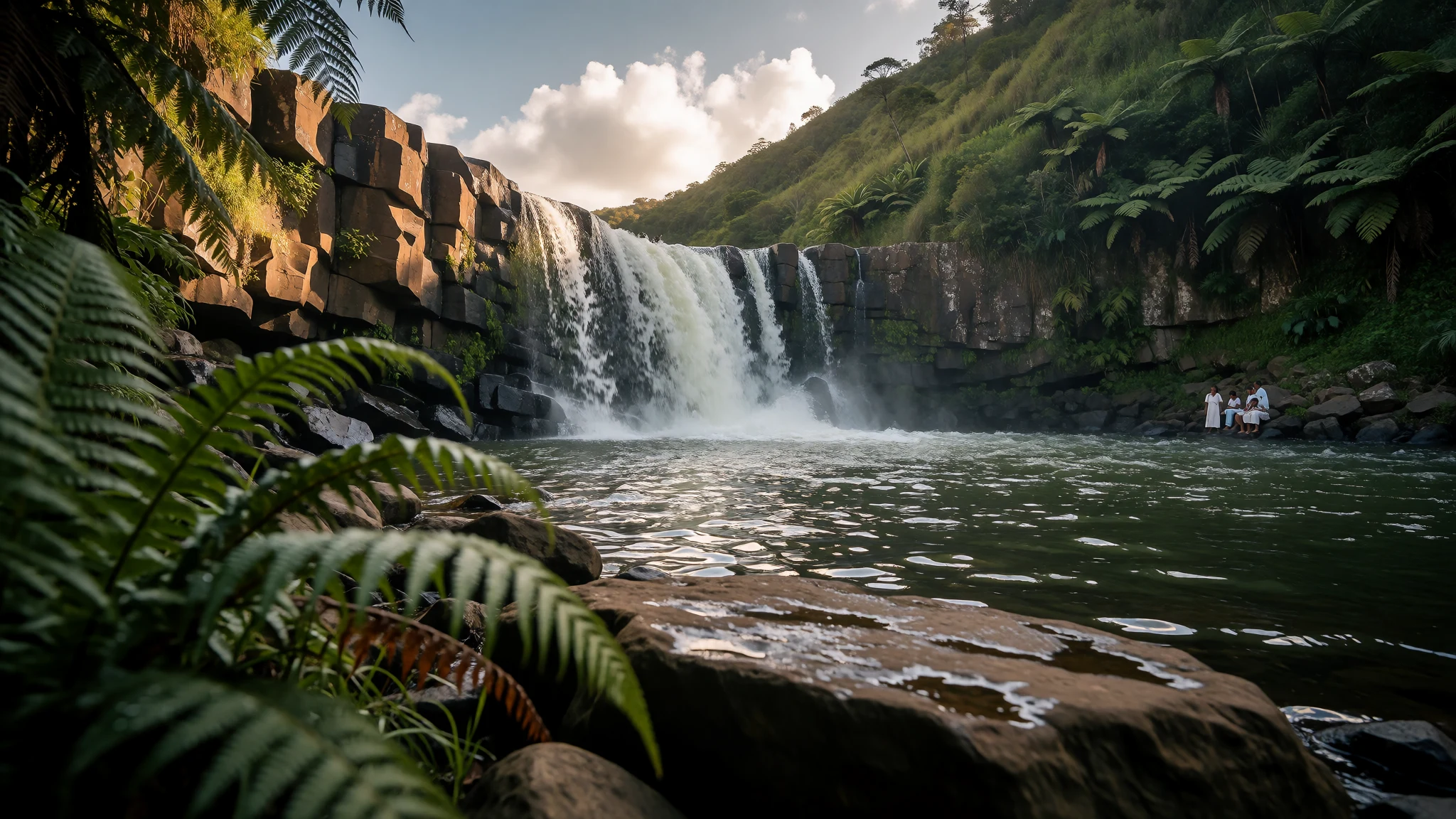
Rochester Falls is a short, easy stop in southern Mauritius, worth it for the wide curtain of water over geometric basalt.
The place
Rochester Falls lies in the Savanne district in the south of Mauritius, where the Savanne River drops over a broad ledge of dark rock about 2.5 km from the coastal town of Souillac. The drop is modest, about 10 m, and the interest lies in the width of the curtain and the shape of the stone. The basalt has broken into tidy angular blocks and short columns, so the cliff looks built rather than carved. The site sits about 152 m above sea level, which brings a little relief from coastal humidity, though the air is still warm and damp. This is a short stop, not a day out. Most people walk down from the car park, look from a couple of viewpoints, perhaps scramble to the pool, and leave within the hour. Weekends and school holidays bring local families, picnics and minibus groups, and the pool edge gets noisy. Weekday mornings are calmer and the light on the water is softer. How the falls look depends on rain: after a dry spell the water thins into several narrow streams, while after heavy rain it spreads across the whole ledge and turns the colour of tea. The rock is slick in any weather. Around the falls the landscape is a quiet mix of sugar cane, scrub and small villages, an everyday side of southern Mauritius that the northern beach resorts rarely show. It pairs well with Souillac's coast or the crater lake at Grand Bassin to fill a day.
Its story
Rochester Falls belongs to an island built by volcanoes, and its square-cut rock is the clearest sign of that origin. Basalt lava that cools evenly contracts and cracks into columns, and over time the Savanne River has worked along those cracks, peeling away blocks and leaving the stepped, geometric ledge seen today. A photograph from the site shows columns only about 50 centimetres tall, a reminder that the effect comes from many small units rather than one grand cliff. The human story of the island around it is a series of arrivals. Arab sailors are credited with finding Mauritius in the 9th century, though nobody knows the exact year, and they left it empty. A Portuguese sailor sighted it in 1505, and still nobody settled. The Dutch claimed it in 1598 and named it after Maurits van Nassau. They left in 1710, and their legacy included sugarcane, introduced deer and monkeys, and badly thinned ebony forest. The dodo was already extinct by then. The French arrived in 1712, and the plantation economy that followed is a large part of why cane fields still fringe the roads in the south. The sources used for this reading do not explain how the falls got the name Rochester, so that remains a small mystery of the map.
What to see
- The main viewpoints at Rochester Falls — Savanne district
The falls are best taken in from the upper viewpoint first, where the full width of the ledge is visible, and then from the path down towards the pool. After rain the water covers the whole rock face. In dry weeks it breaks into separate streams, which shows the stone better.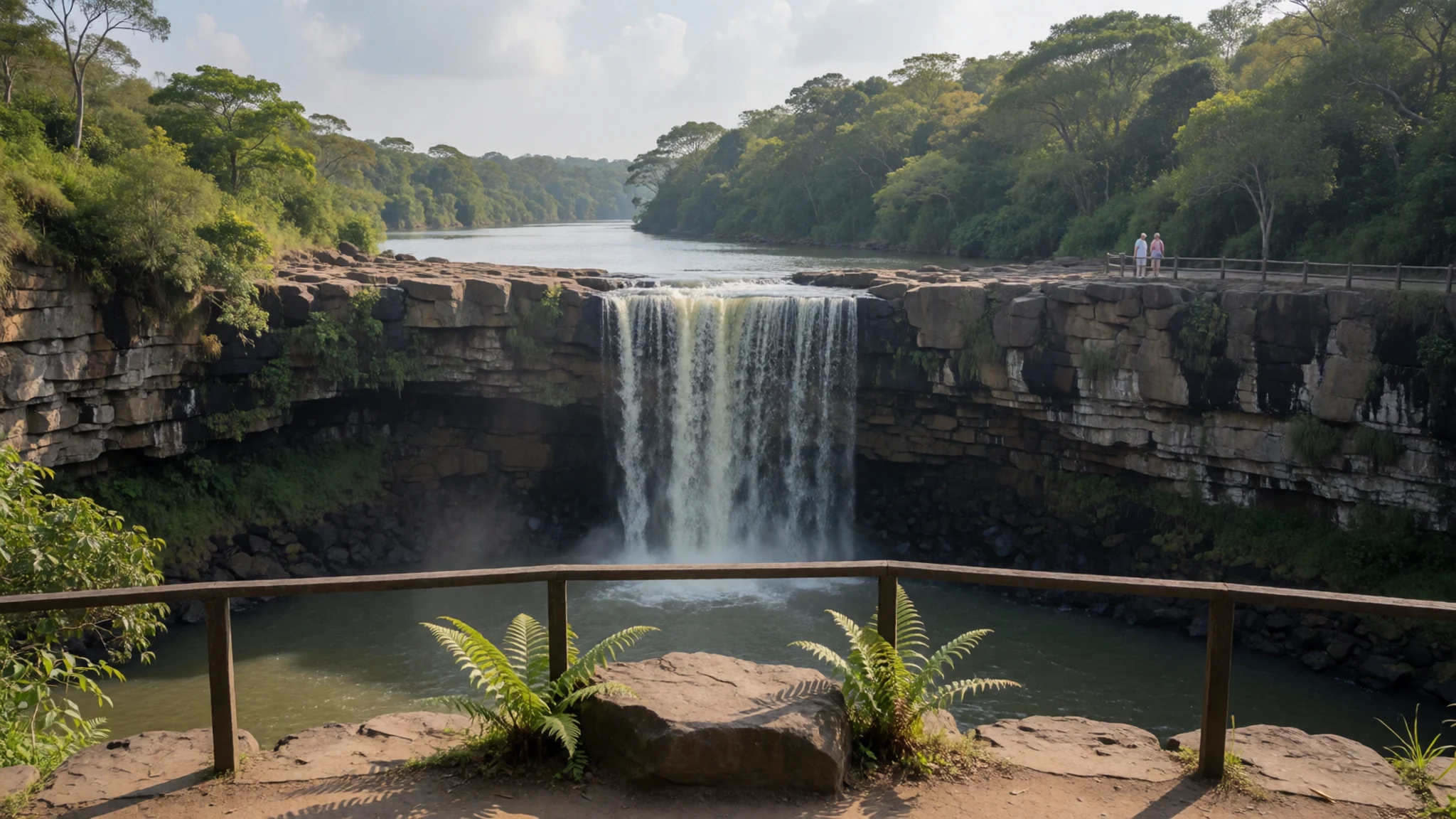
- Basalt columns at the base — Below the falls
Look closely at the rock beside the water. The lava has cooled into straight-sided columns, some only about 50 centimetres tall, stacked like cut stone. It is the best place to see why this fall looks so geometric. Keep to dry patches, as the surfaces are slippery.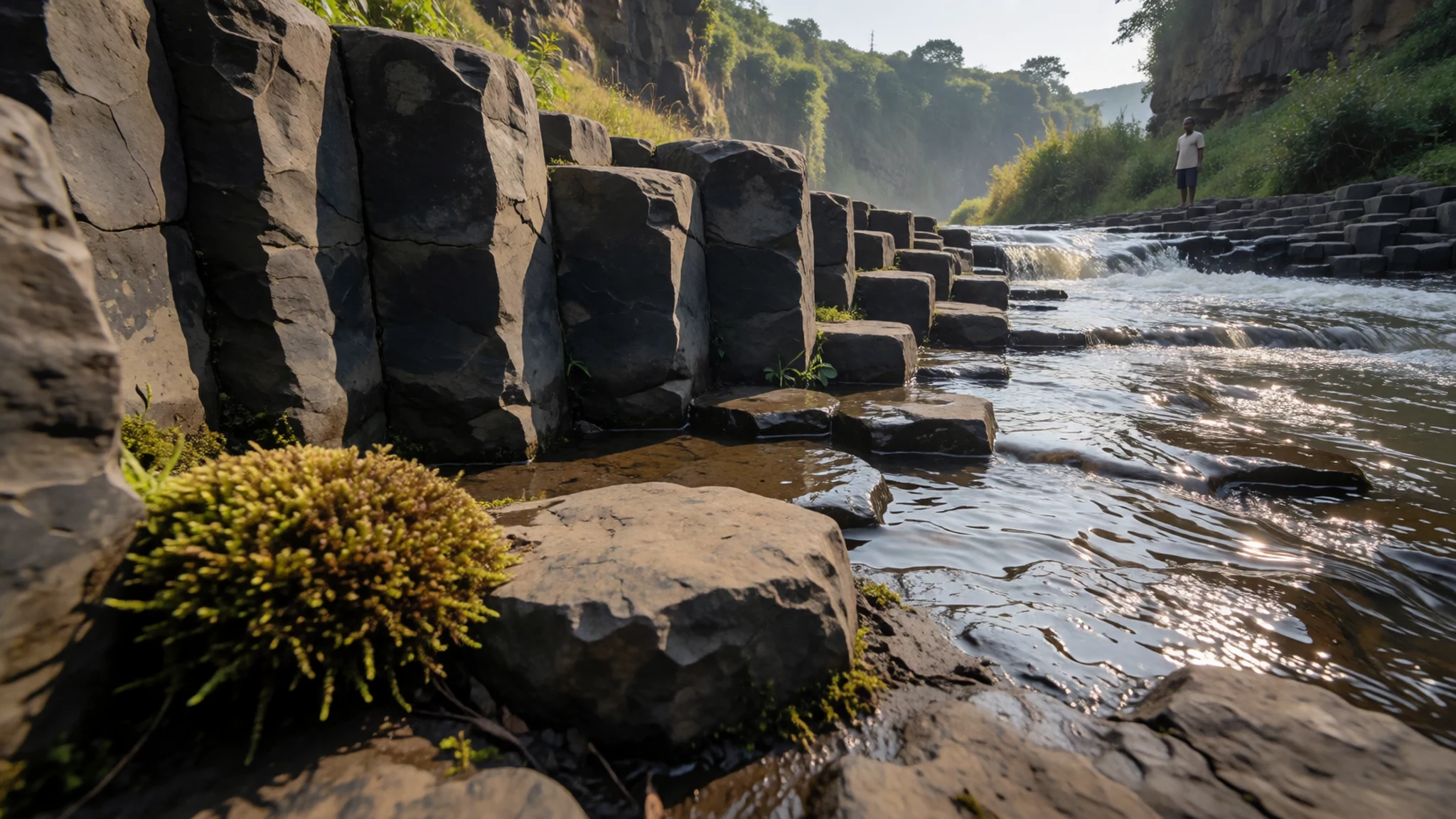
- Souillac — South coast, Savanne district
Souillac is the nearest town and a natural base for the falls. It is a quiet coastal settlement with a seafront and a mix of everyday shops and small eateries. A walk along the shore after the falls gives a sense of local life away from the resort belt.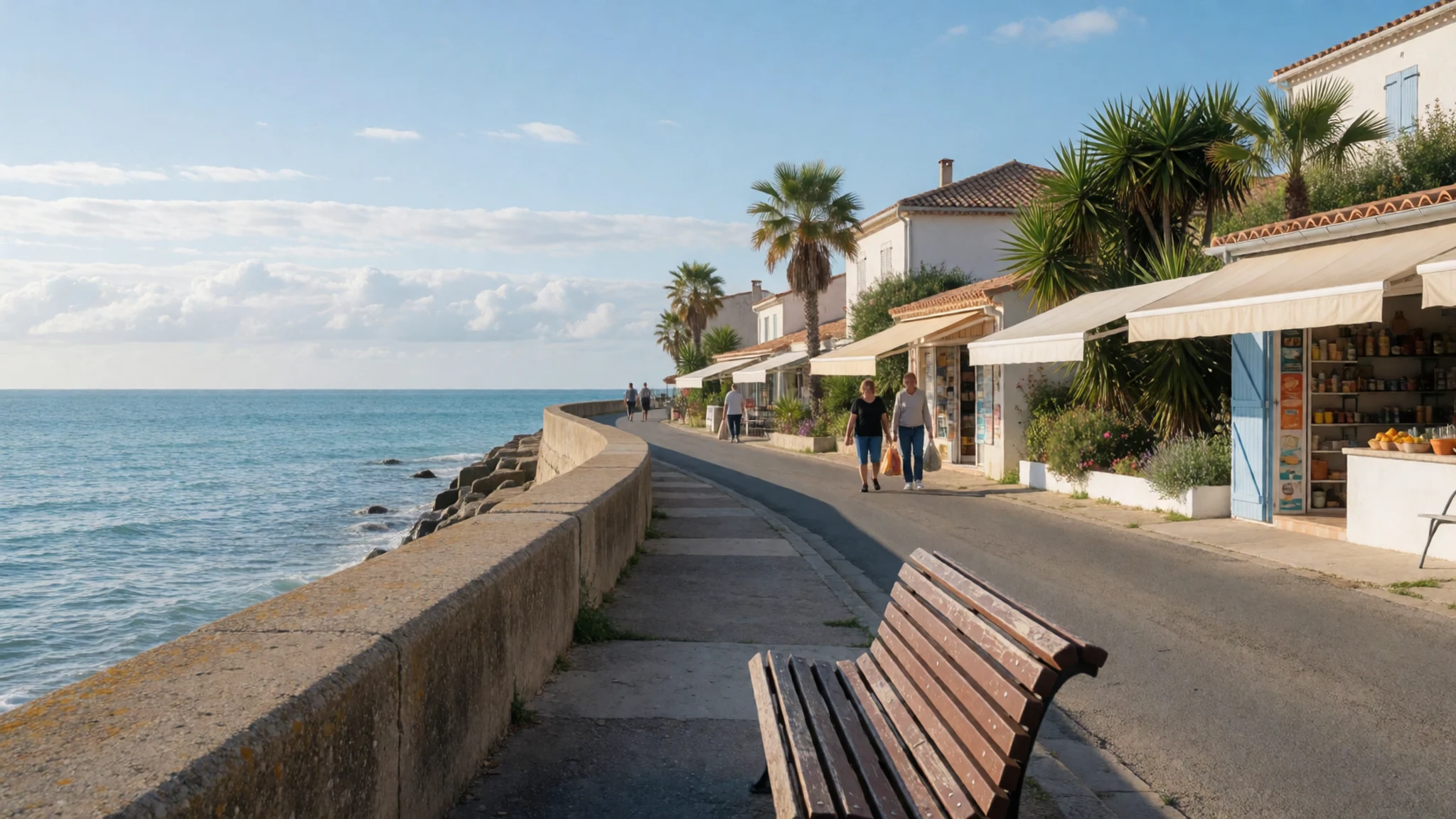
- Ganga Talao (Grand Bassin) — Central highlands
This natural lake fills the crater of an extinct volcano and is a major Hindu pilgrimage site, with shrines and offerings around its edge. It is a longer drive from Rochester Falls but easy to combine in one day. Dress modestly and move quietly near worshippers.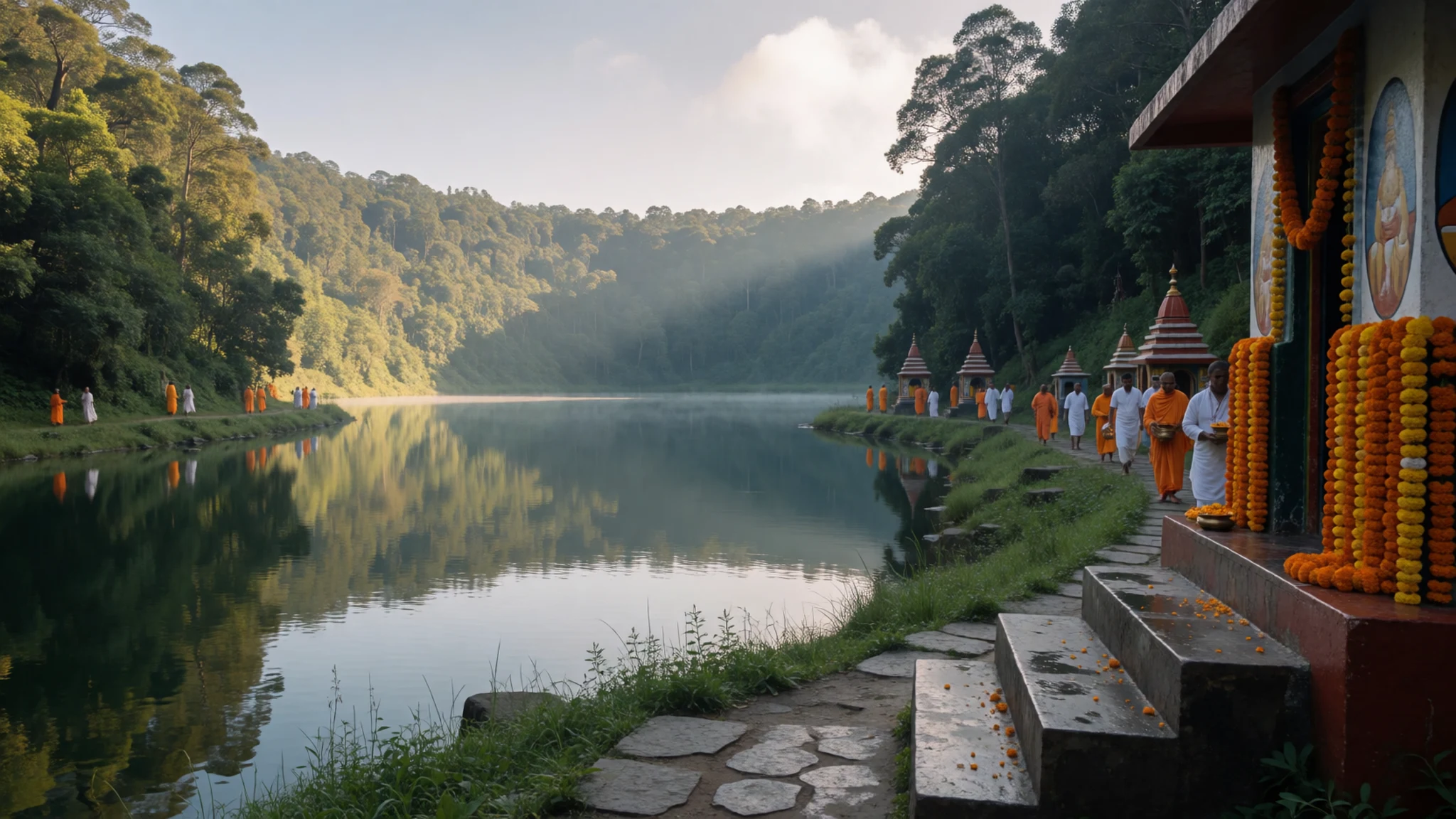
- Eureka — Moka, central Mauritius
Eureka is an old Creole house built in 1830, now open to visitors as a window onto plantation-era domestic life, with period rooms and gardens. It sits well inland, so treat it as a separate outing rather than a quick add-on to the falls. Check opening arrangements locally before going.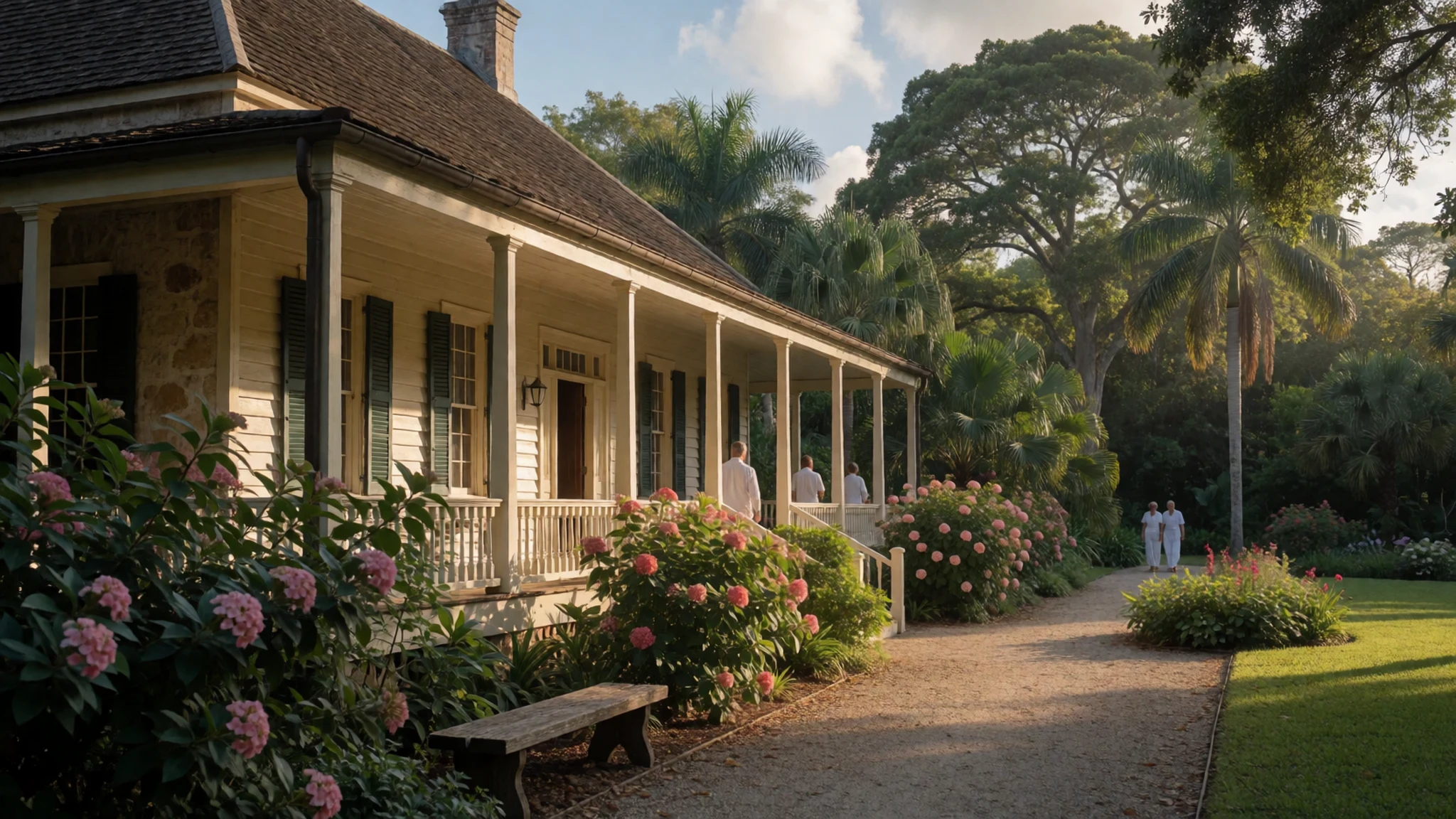
Culture
Rochester Falls sits in a country where several heritages share daily life, and the south shows it quietly. Mauritian Creole is the everyday language, French and English are widely used, and many families trace roots to India, Africa, China or France. Hindu temples, mosques, churches and pagodas stand within a short drive of each other, and festivals are often shared across communities. At the falls the culture is mostly weekend leisure: families lay out food, play music from phones and swim, and the pool works as a local bathing spot rather than a protected showpiece. Sugar once defined the surrounding landscape, and cane fields still frame the road views on the way. Further north, the crater lake at Ganga Talao is a pilgrimage site for Hindus, where visitors meet offerings and small shrines. Conversation with strangers is easy and friendly, often starting in French or Creole and moving into English. Mornings begin early on the island, and by afternoon the heat slows things down, so sights are quieter then. Roadside vendors near popular places are usually good-humoured, and a polite refusal is understood. At Rochester Falls, keep music low, carry your rubbish out, and ask before photographing people who are bathing or picnicking.
What to wear
Rochester Falls draws a mix of dress, because Mauritius does. There is no single national costume; traditional clothing follows the island's heritages. Women of Indian descent wear saris and shalwar kameez, in cotton for daily wear and silk for weddings and religious festivals, while men wear kurtas on the same occasions. Creole heritage is associated with sega, the island's music and dance, performed in wide, bright cotton skirts and loose shirts. Chinese Mauritian families may mark festivals with red and traditional garments. Everyday wear now is light and practical: cotton shirts, shorts, sundresses, linen trousers and sandals, with school uniforms and office shirts in the towns. Beachwear is normal at the coast but less so inland, where people in villages dress a little more covered. For a visit to the falls, wear quick-dry clothes and bring swimwear if wading is planned. Shoes with grip matter more than style, since the basalt is slick and the path can be muddy; sturdy sandals or trainers beat flip-flops. A light rain jacket is useful through the year, and a hat and sun cream help on the open ledges. If the day also takes in Ganga Talao or any temple, carry a scarf or shawl and wear something that covers shoulders and knees.
What to eat
- Dholl puri — Roadside stalls and market vendors in Souillac and other towns
A thin flatbread filled with ground split peas, folded around yellow split-pea curry, pickle and sometimes a bean or vegetable curry. It is the island's classic quick lunch, eaten by hand and easy to find near any busy road or market.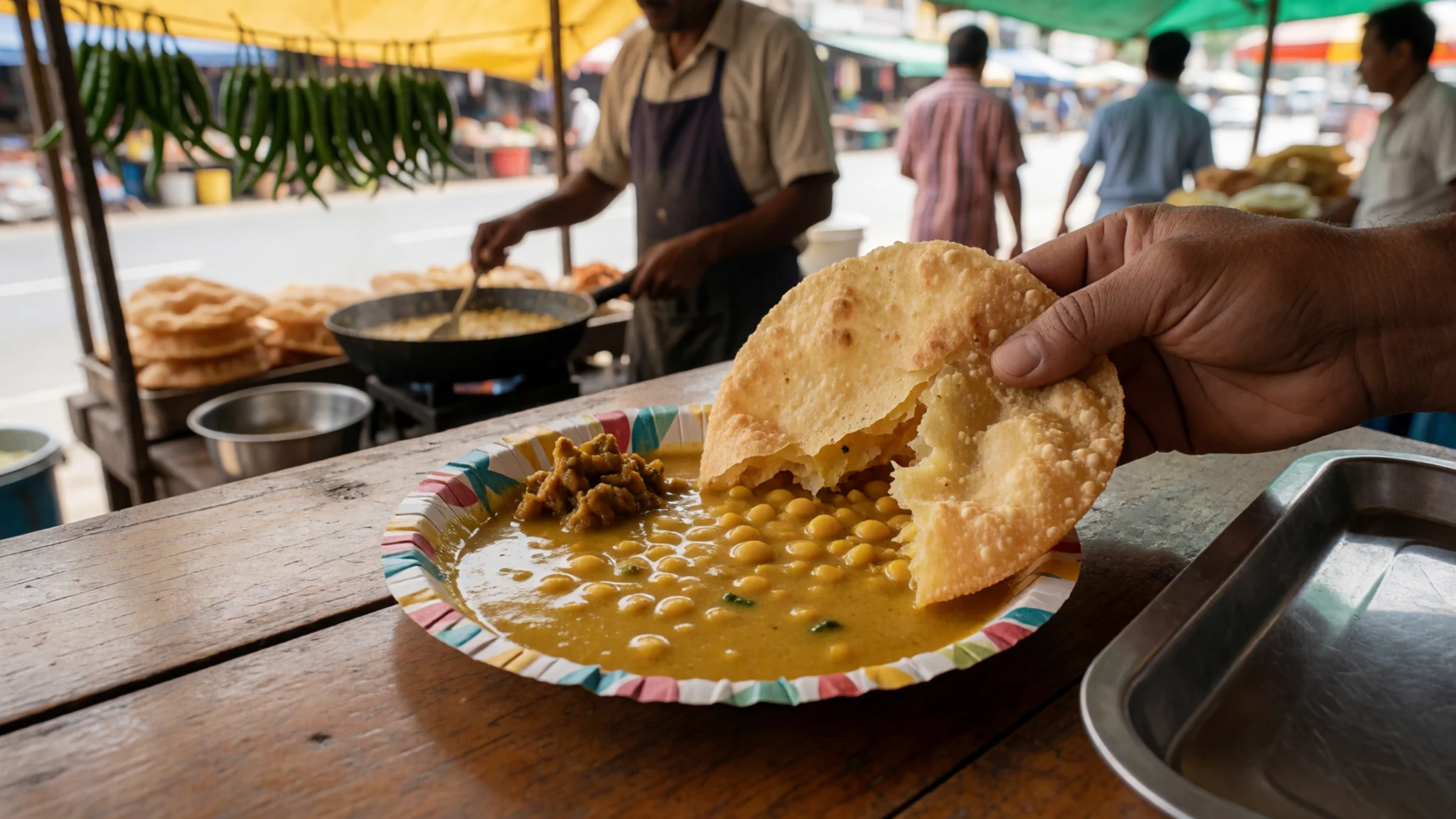
- Farata with curry — Small eateries and breakfast stalls across the south
Farata is the local name for paratha, a soft layered flatbread, torn and used to scoop up curries or lentils. It turns up at breakfast and lunch, often with vegetable, fish or chicken curry and a spoon of chutney.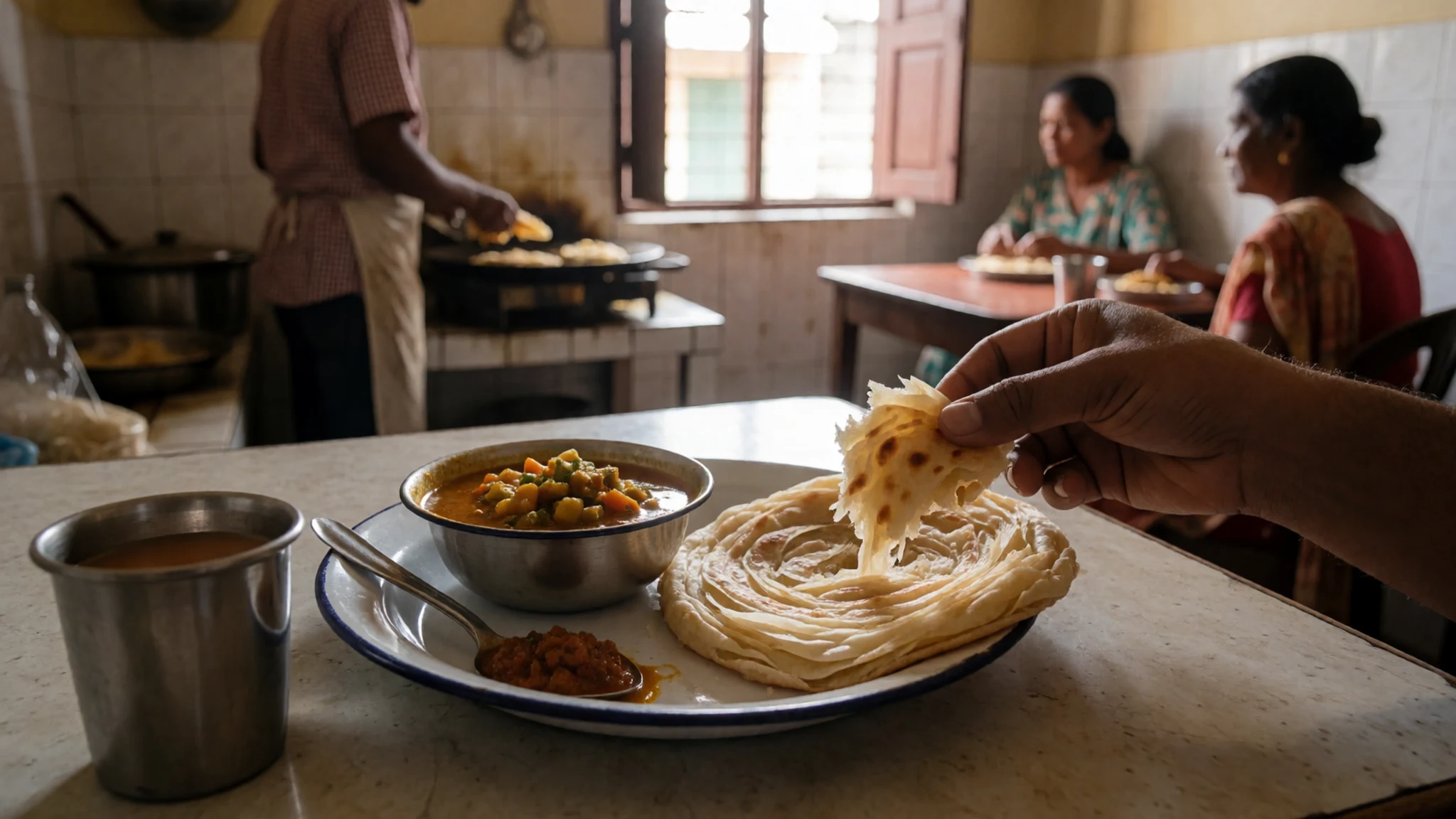
- Rougaille — Family-run Creole eateries and home-style lunch places
A Creole tomato stew built on onion, garlic, thyme and ginger, cooked down until thick and served over rice with fish, sausage or chicken. It shows the French-influenced side of local cooking and is a good test of any Creole kitchen. - Gâteau piment — Street vendors and market stalls, usually sold in paper cones
Small fried balls of split-pea batter, spiced with green chilli and herbs, crisp outside and soft within. Eaten as a snack between sights, often with chutney. They are best hot, so buy from a stall with a steady queue. - Alouda — Beach kiosks, market drink stalls and street carts
A cold, sweet drink of milk, basil seeds and jelly pieces, often flavoured with rose or vanilla. It comes from the Indian and Muslim culinary heritage and is a welcome way to cool down after the walk to the falls.
Plan it
Best time. May–June and September–November are generally the more comfortable months, with milder temperatures and less humidity than the hot, wet summer. After heavy rain the falls are fuller but the rock is more slippery, and in dry spells the flow thins.
How long. 1
Getting there. Fly into Sir Seewoosagur Ramgoolam International Airport near Mahébourg, then drive or take a taxi south to Souillac and on to the falls. Buses reach Souillac; the last leg to the falls is easiest by hired car or taxi.
Budget. low
Tips
- Go on a weekday morning to avoid the weekend crowds and get softer light
- Wear shoes with grip and keep off wet basalt near the edge
- Carry some cash and water, as facilities near the site are basic
- Check recent rainfall before going, as the flow changes a lot
- Combine the visit with Souillac and Ganga Talao to make a full day
Etiquette
- Take your rubbish with you and keep music low
- Ask before photographing people who are bathing or picnicking
- Dress modestly if the day includes Hindu temples or Ganga Talao
Nearby
Sources
- Wikidata Q22082406 (CC0)
- Wikipedia: Rochester Falls (rev 1341109951) (CC BY-SA 4.0)
- Wikivoyage: Mauritius (rev 5410845) (CC BY-SA 4.0)
- Photo: Rochester falls - waterfall on Mauritius (Maral10 assumed) (Public domain)
- Photo: Basalt columns at Rochester Falls (laurence comte) (CC BY 3.0)
- Photo: Rochester Falls, Mauritius 2 (Hansueli Krapf) (CC BY 3.0)
- Photo: Near Rochester Falls (Hansueli Krapf) (CC BY 3.0)
- Illustration: The waterfall of the Savanne River (Karl Girardet) (Public domain)
- Photo: Rochester Falls (Sualkdd) (CC BY 3.0)
- Photo: Rochester Falls near Souillac Savanne (Lukas von Daeniken) (CC BY-SA 2.0)
- Photo: Rochester Falls (Гульнара Бектемировна) (CC BY 4.0)


