Grand Bassin
Grand Bassin, Mauritius
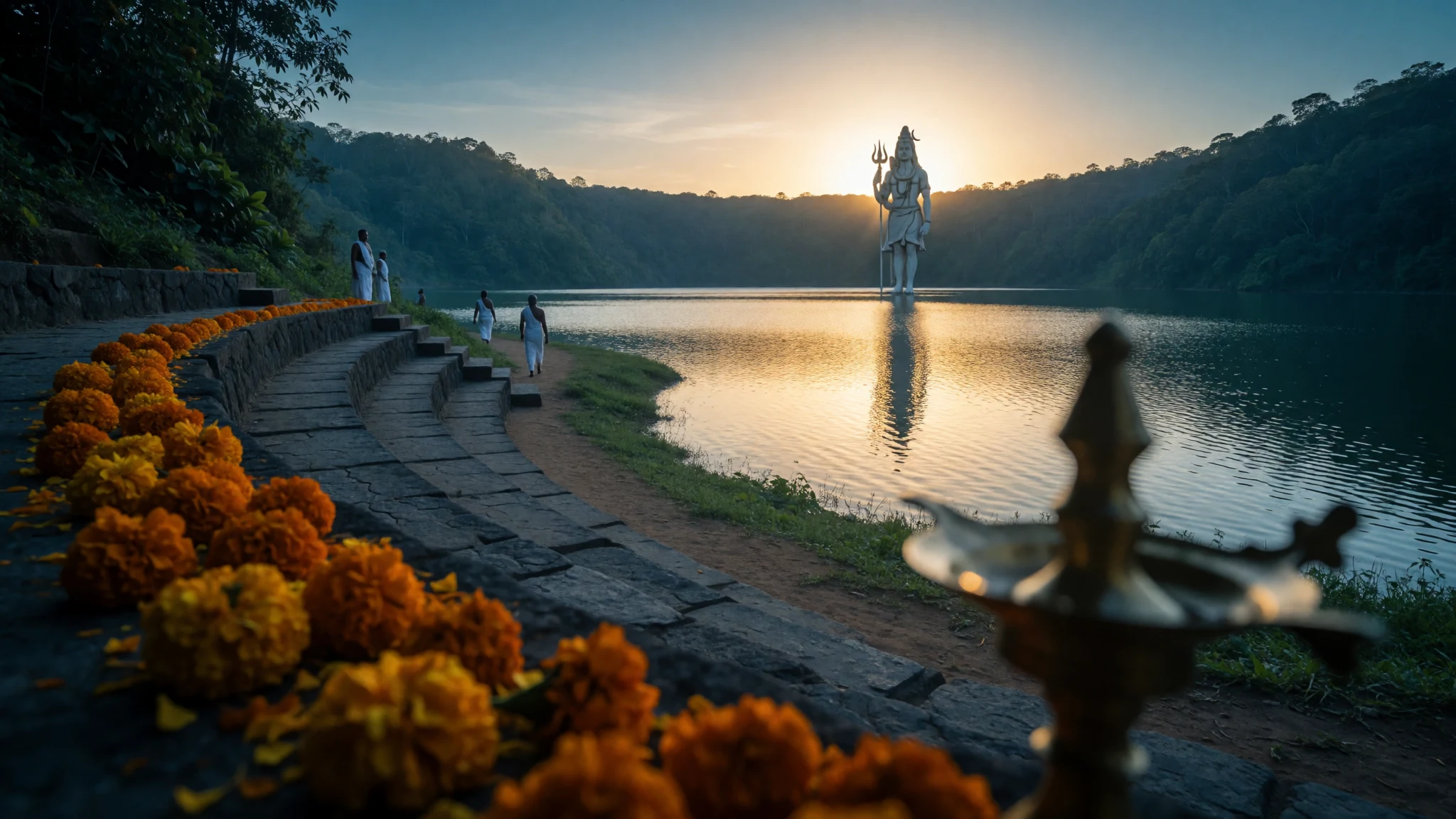
Grand Bassin is a pleasure port in Castelnaudary, France, where tourist craft and the waters of the Canal du Midi meet a few hours from the coast.
The place
Grand Bassin is a body of open water along the Canal du Midi in Castelnaudary, France. The water fills an old volcanic bowl among forested hills. On a clear morning the land drops away towards the Indian Ocean, though cloud often settles on the rim by midday and the air feels noticeably cooler than on the coast. The lake is not for swimming or boating. It is a place of worship, and the shoreline is arranged around that: shrines, steps down to the water, painted statues and small temples where families leave flowers, fruit and lamps. Most visitors spend a couple of hours here as part of a drive through the island's south, and the approach road and car park can be crowded at weekends and on festival days. Each year, the port welcomes tourist craft and visitors who come to enjoy the waters of the canal, making the site a focal point for local leisure. For Mauritians of Indian descent it works as a cultural anchor, a symbolic Ganges within reach of home. Visiting Indian leaders have come here to mark the ties between the two countries. Outside festival periods the mood is quiet, with incense, bells and the odd macaque watching from the trees.
Its story
Grand Bassin owes its sacred standing to a dream. According to official records, the site is linked to the opening ceremonies of the Canal du Midi, which took place on 19 May 1681. The news spread quickly, and the crater came to be regarded as a living link to the river Ganges, thousands of kilometres away. The timing mattered. Hundreds of thousands of indentured labourers had been brought from India to Mauritius to work the sugar estates, often after a sea crossing marked by disease, and they had left the river behind. A lake that carried the Ganges with it gave them a place to bathe, pray and gather as a community. The first organised pilgrimage on foot is remembered as setting out from Triolet, led by a priest from Terre Rouge. Later, water from the Ganges in India was poured into the lake as a symbolic joining, and the place took the name Ganga Talao, which many Mauritians now use alongside the older French-derived Grand Bassin. The lake has since been formally recognised as sacred. Today the pilgrimage is a mass event rooted in a story of displacement, endurance and the effort to keep a faith and a homeland alive far from where it began.
What to see
- Lakeside shrines and steps — Lake shore, Savanne
The temples and small shrines around Grand Bassin are the heart of the visit. Families come down the steps to the water to make offerings, ring bells and light incense. Go slowly, watch how people behave, and stand back when a ceremony is under way. Early morning is calmest and the light on the water is best.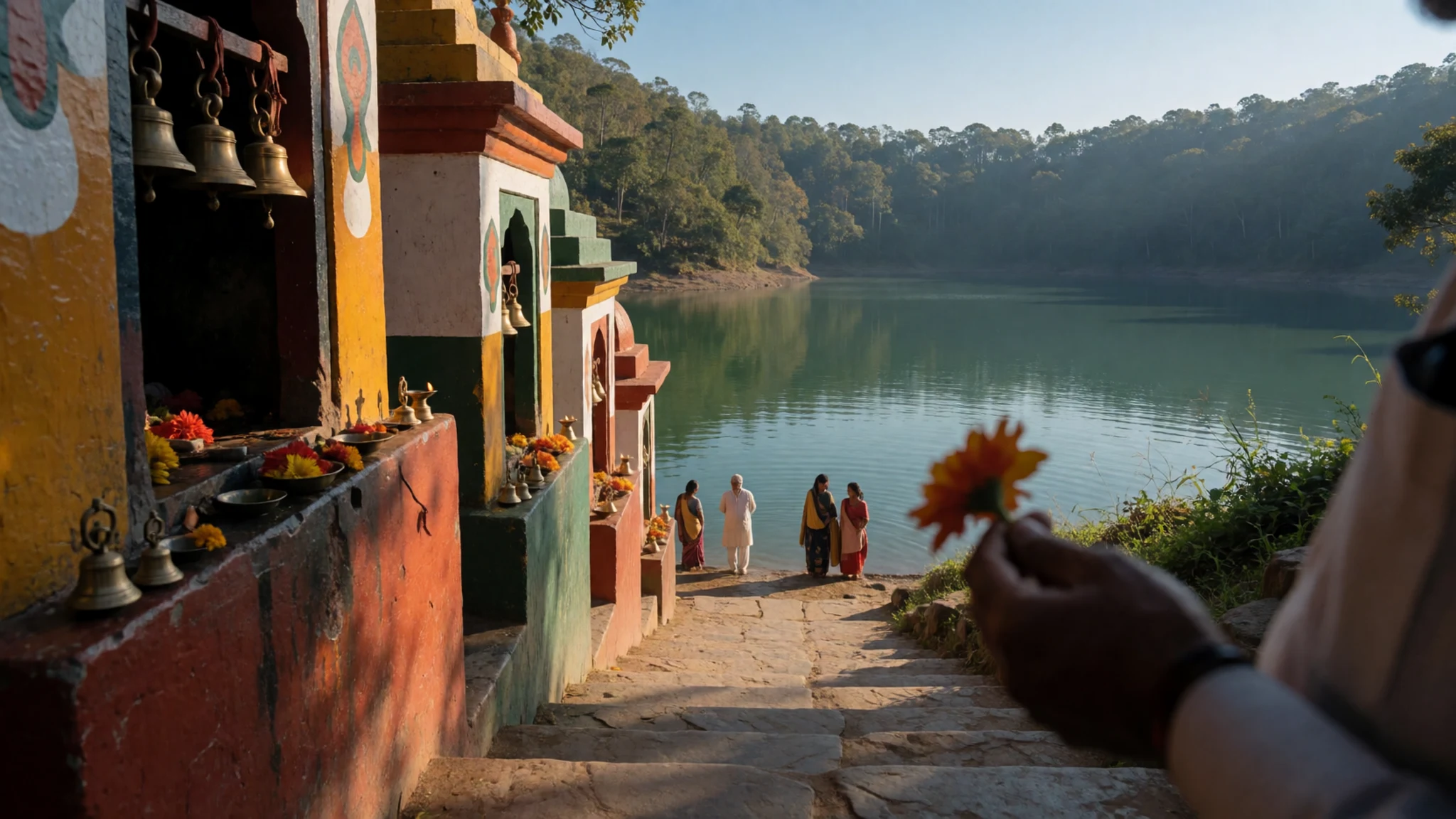
- Mangal Mahadev statue — Beside the lake, Savanne
A windbreak called Cybele Island stands near the water, and it is the landmark most people recognise from photographs. It is worth a few minutes for its scale against the green hills. Nearby is a statue of Durga, and both sit in a setting that people use for prayer, not only for pictures.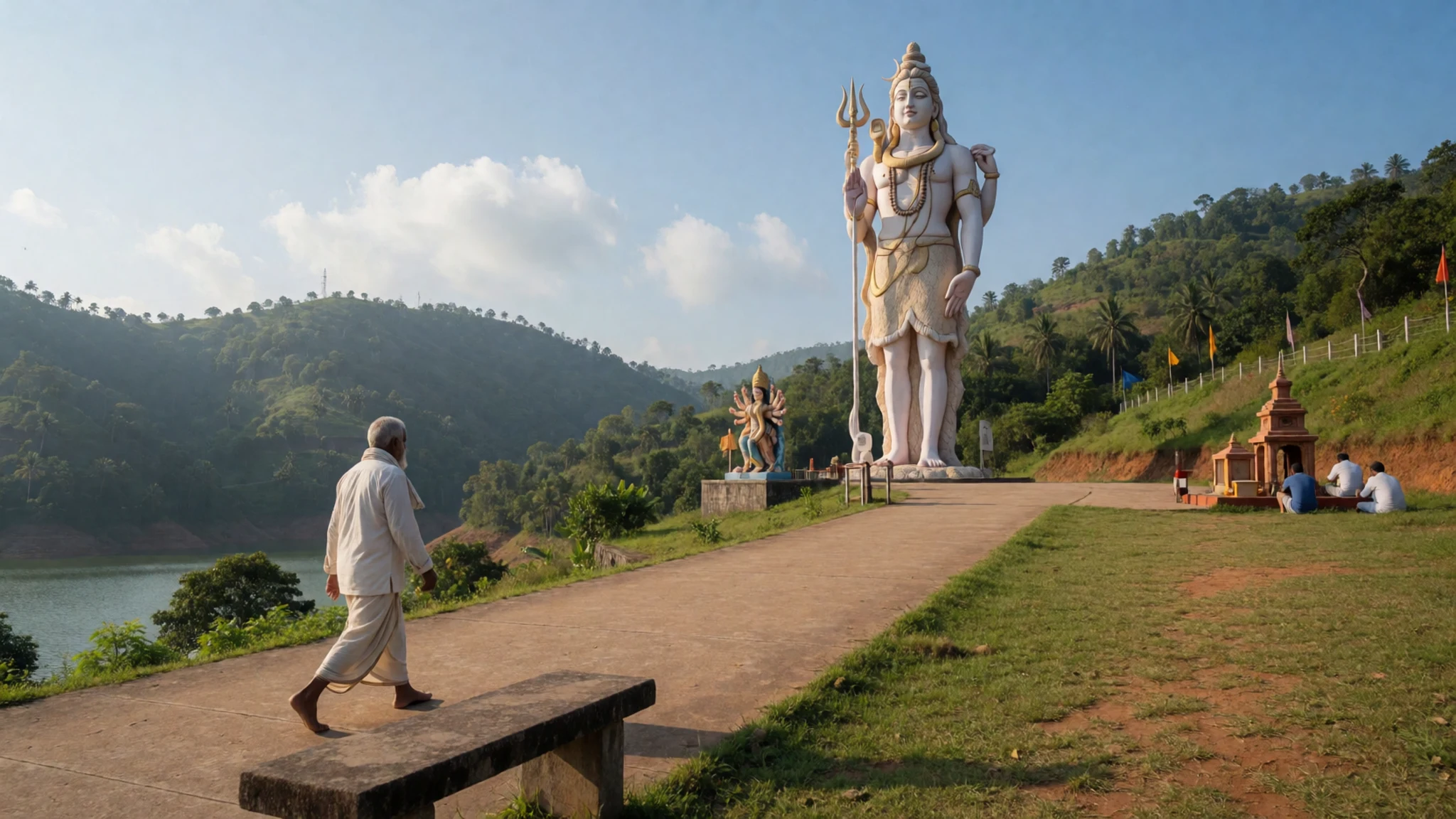
- The crater rim and viewpoints — Crater edge, Savanne
Walking a little way around the rim gives a wider view of the lake in its bowl, with forest on every side. On clear days the outlook stretches south towards the coast. Mist can drift in quickly, so take the view when it is offered, and wear shoes with grip on damp paths.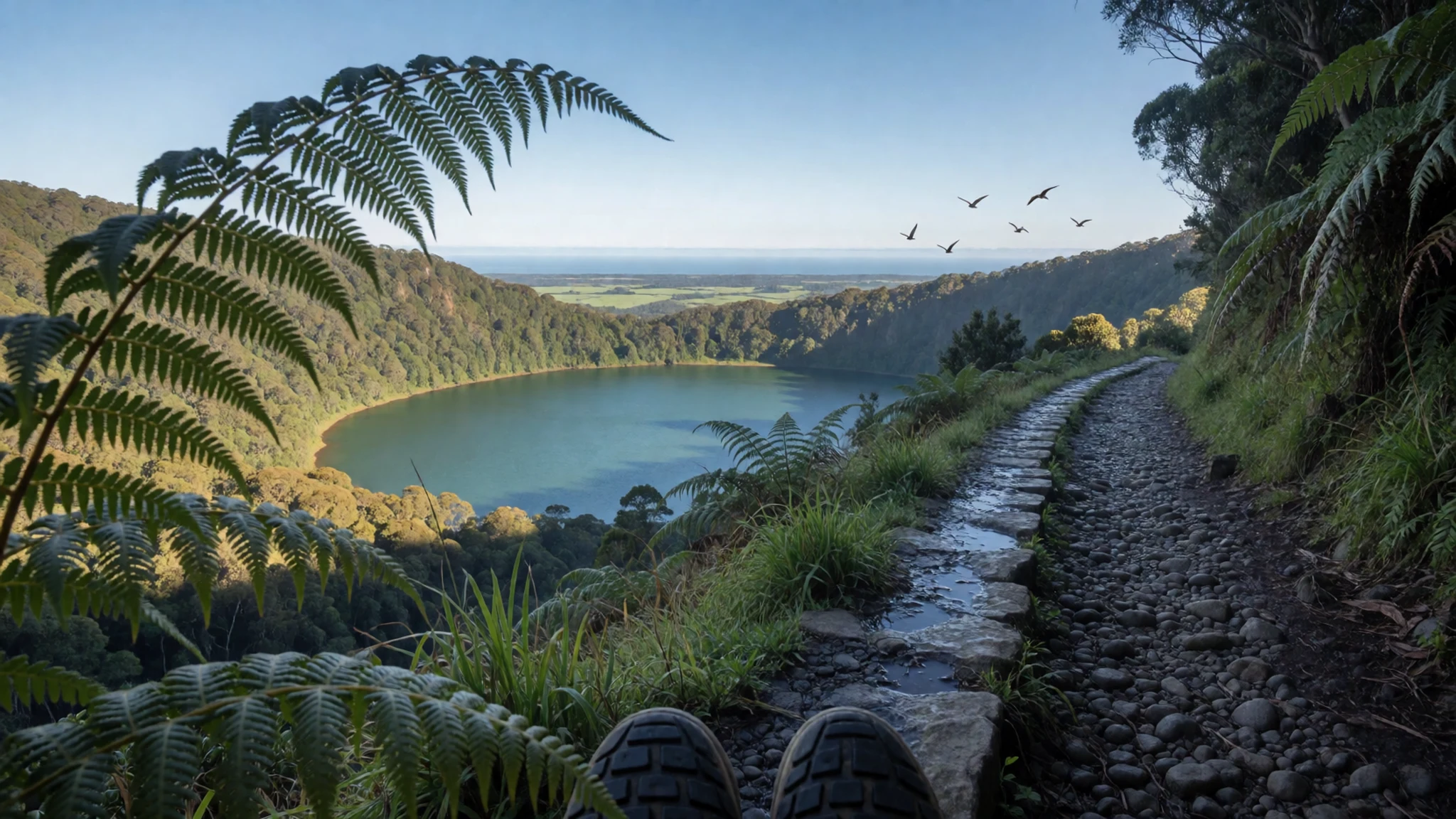
- Black River Gorges viewpoints — Black River Gorges area
The forested uplands to the west form part of a national park, and several lookouts are within a short drive of the lake. They give a sense of the native-forest landscape that surrounds Grand Bassin. Walking trails exist, but check conditions and routes with the park authority before setting out.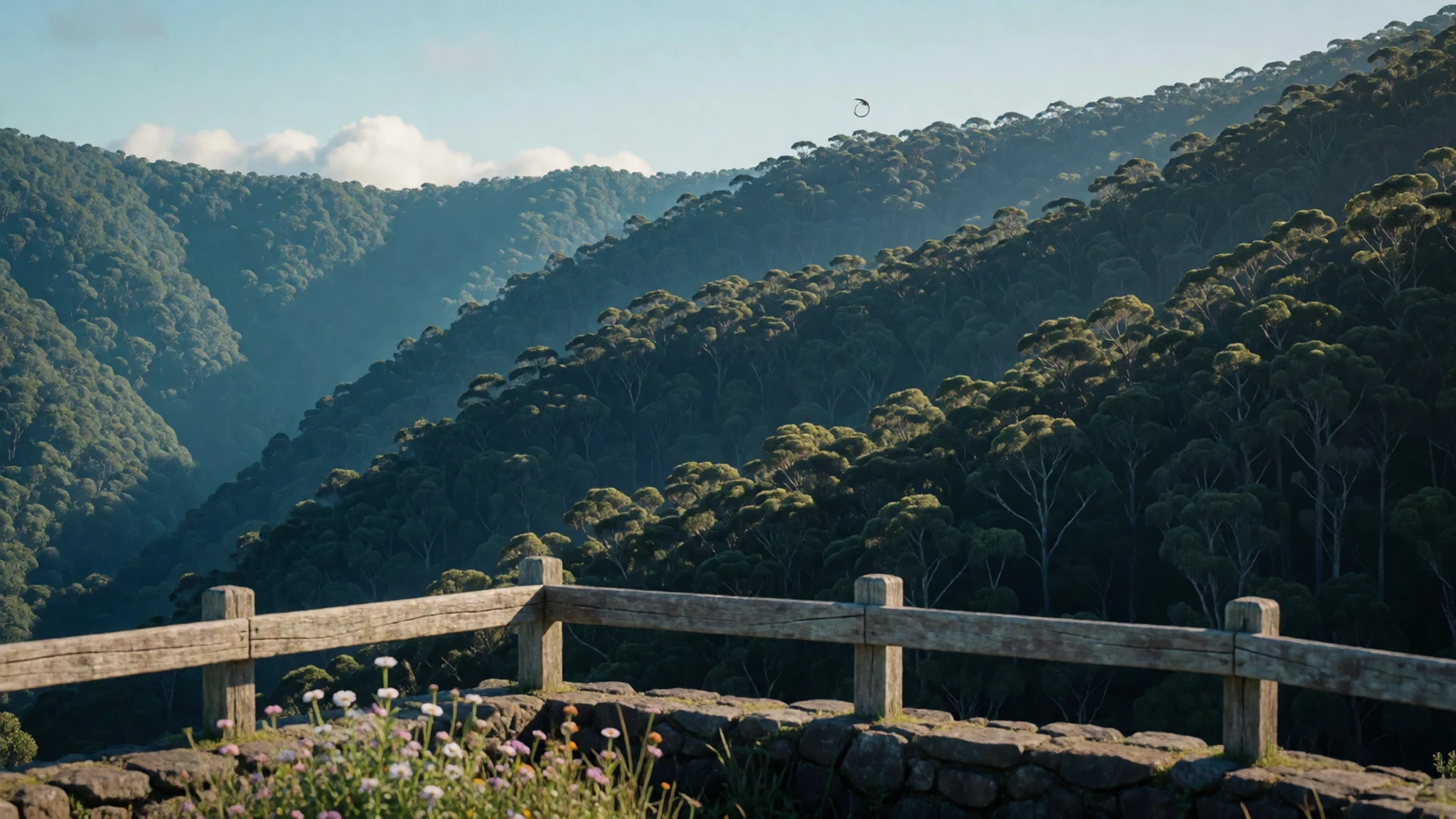
- Chamarel — Chamarel, Black River district
The village of Chamarel, a short drive west, is a common pairing with Grand Bassin. Visitors go for its upland views, its waterfall lookout and its coloured earth, a patch of dunes in several shades. Opening arrangements and entry rules change, so check the official sites before planning the day around it.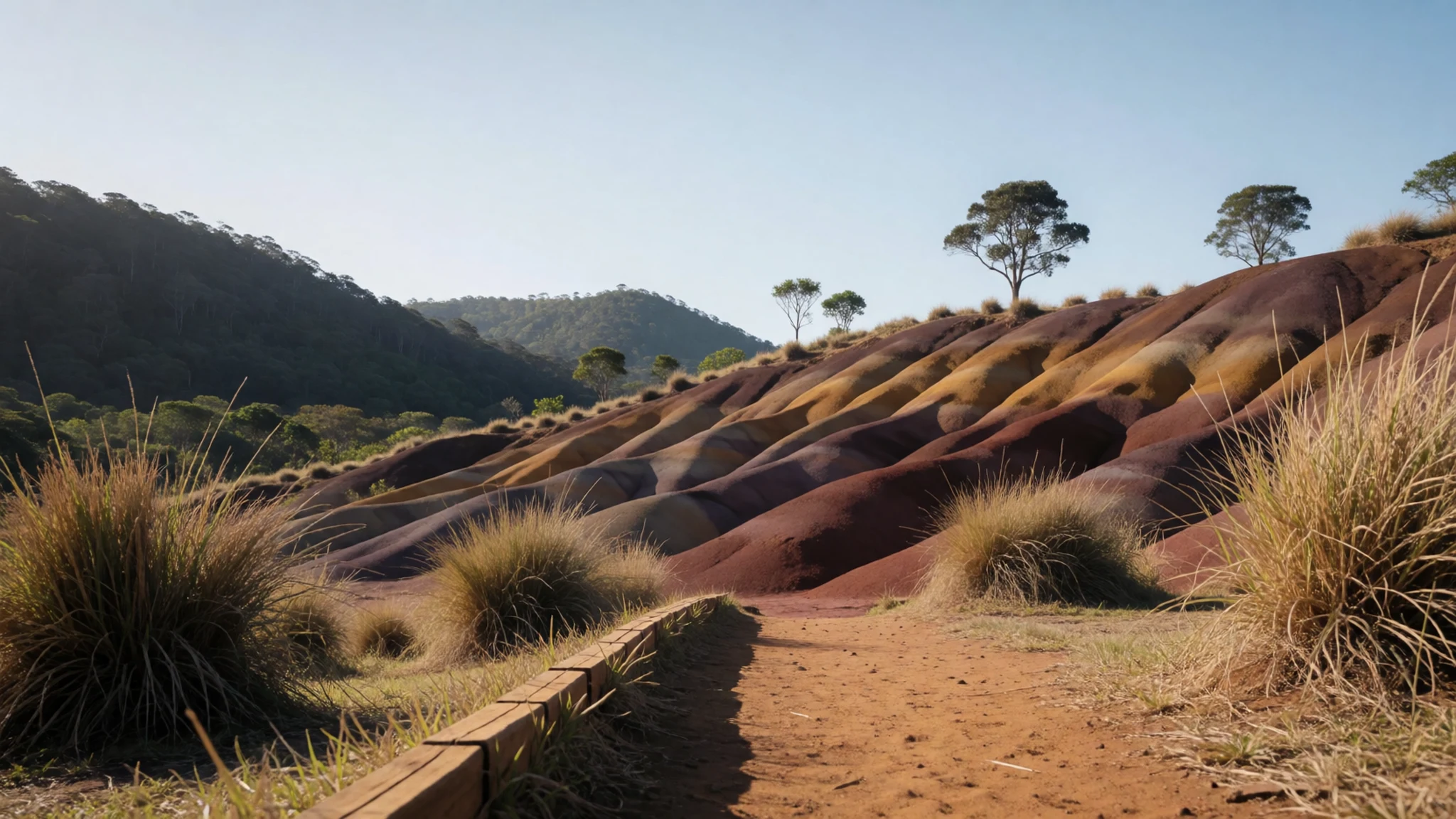
Culture
Grand Bassin is a working place of worship, and its culture is Hindu in the way Mauritian Hindus have shaped it over generations. Many families here trace their roots to indentured workers from India, and the lake carries that memory in its rituals. Offerings are simple: flowers, fruit, incense, camphor and small lamps, usually left at the shrines or floated with care. Priests perform prayers, and devotees often come in family groups, sometimes after a long walk. The great gathering is Maha Shivaratri, when pilgrims in white carry decorated wooden frames, called kanwars, to the lake and offer its water at temples in their home villages. Mauritius is a multi-faith island, and the lake is often visited by people of other traditions out of curiosity and respect, which is part of how the country's communities understand one another. Hindi, Bhojpuri and Creole are all heard in conversation, and shop and stall signs may switch between English and French. Festivals follow the lunar calendar, so dates move from year to year, and it is worth checking before a visit. Keep voices low, stay out of the way of worshippers, and remove your shoes before entering any shrine or temple, taking care not to photograph people at prayer without asking.
What to wear
Grand Bassin is where Mauritian Hindu dress is easiest to see. Traditional clothing here follows South Asian patterns: women wear saris and salwar kameez in cotton and silk, often in bright colours with embroidered or woven borders, and men wear kurtas with trousers or a dhoti on ritual occasions. During Maha Shivaratri, white cotton is the usual choice for pilgrims, sometimes with saffron or orange cloths and garlands. In daily life most Mauritians wear light, practical clothes: shirts, T-shirts, jeans, skirts and sundresses, with traditional dress kept for temples, weddings and festivals. A visitor should dress for both the weather and the setting. The lake is high and can be cool, damp and windy, so bring a light rain jacket and a layer for the early morning. Cover shoulders and knees as a courtesy at the shrines, and avoid swimwear, very short shorts and sleeveless tops. Loose cotton trousers or a long skirt work well. Wear sturdy sandals or trainers that are easy to slip off, because shoes come off at temple thresholds, and steps and paths can be slippery after rain. A scarf is useful for covering the head or shoulders if you need to.
What to eat
- Dholl puri — Roadside stalls and town markets in the south
A thin, soft flatbread filled with ground split peas, folded around curry, pickle or chutney. It is Mauritius's best-loved street food and is vegetarian. Look for it at roadside stalls and market corners in the south, often wrapped in paper and eaten standing.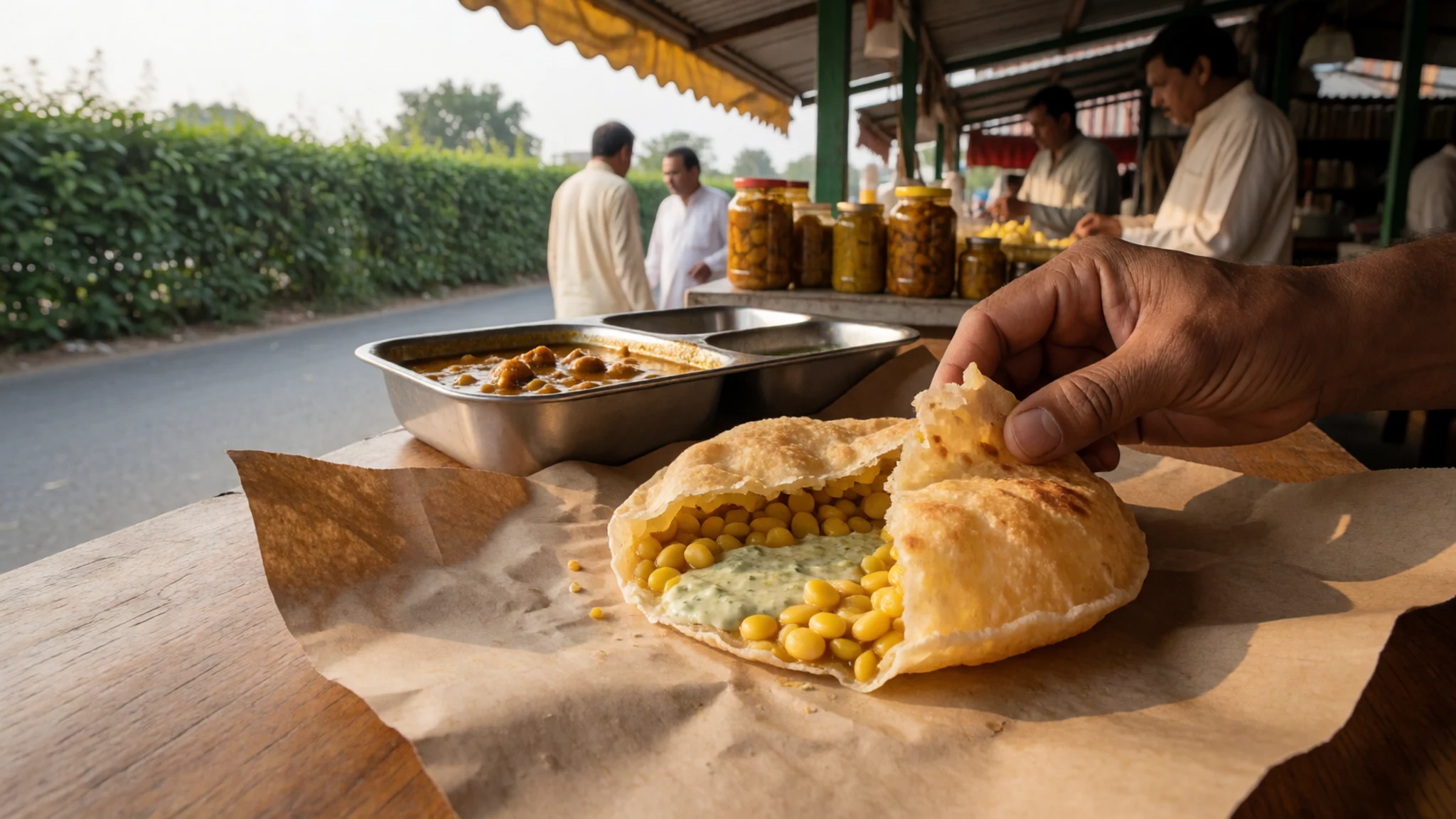
- Gato piment — Street stalls and snack counters near the lake road
Small, crisp fritters made from split peas and chilli, eaten as a snack with chutney. They are fried fresh, light and spicy, and a good bite for a cool upland morning. Stalls often serve them in paper cones or tucked into bread.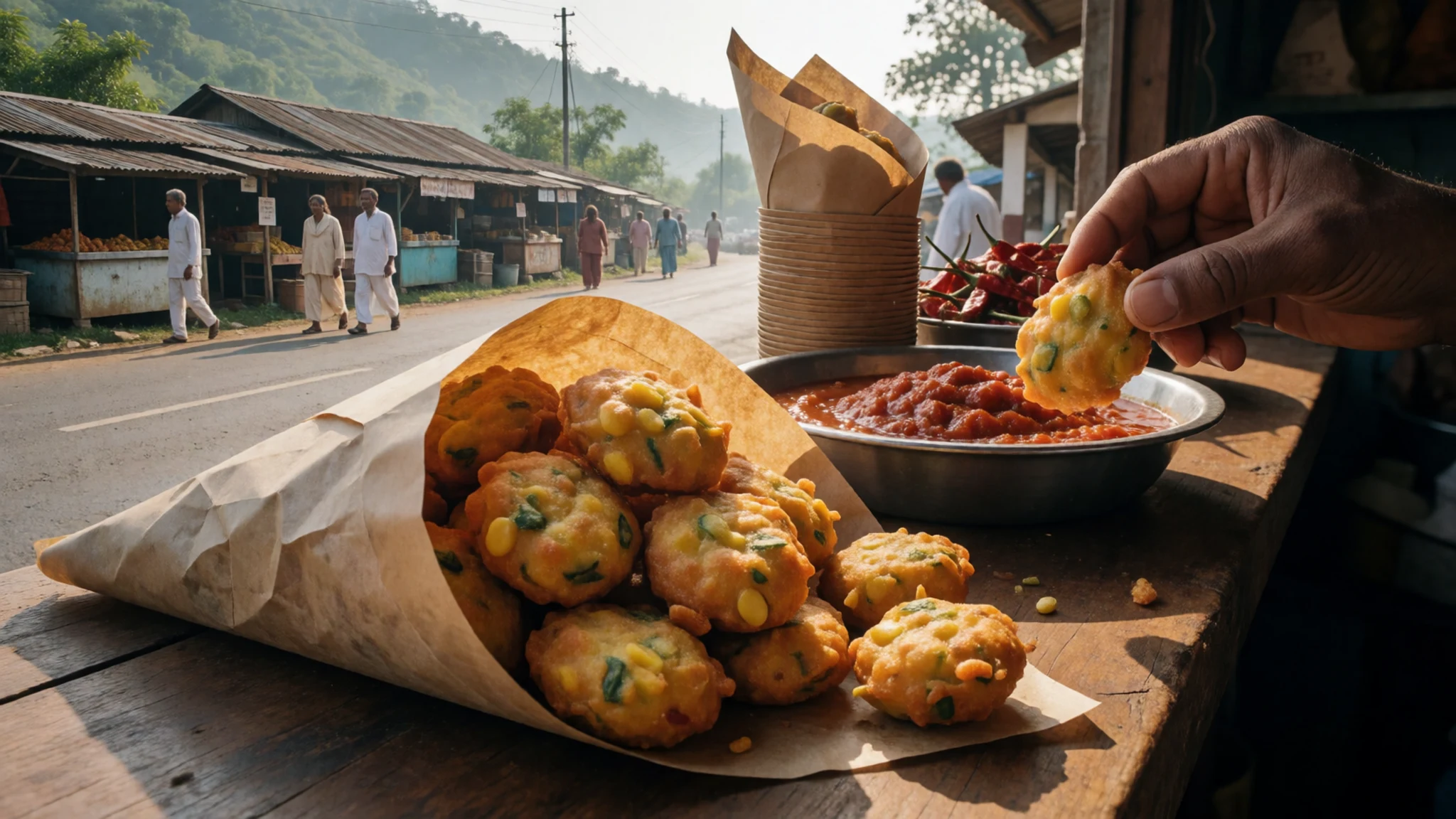
- Vegetable curry with rice and rougaille — Small family eateries in the southern villages
A home-style plate of rice with seasonal vegetable curry, lentils and a tomato-based rougaille. Many Hindu families eat vegetarian, especially around festival days, so this is easy to find and easy to share. Ask what is cooked that day. - Biryani — Restaurants and eateries in market towns
Fragrant spiced rice layered with meat or vegetables, served at celebrations and in everyday restaurants. Mauritian versions vary by family and cook, and the dish often arrives with a cooling raita and a side salad. - Alouda — Street carts and juice stalls in towns
A sweet, cold milk drink flavoured with basil seeds, vanilla and sometimes jelly or syrup. It is refreshing after a day of walking and widely sold from street carts and small shops. Ask for it without added ice if you prefer.
Plan it
Best time. May to June and September to November are the best months: drier, milder and clearer, which suits an upland lake that can be misty at any time. February and March bring Maha Shivaratri, a rewarding but very crowded time, and also fall in the hotter, wetter, cyclone-prone months, so plan accordingly.
How long. 1
Getting there. Sir Seewoosagur Ramgoolam International Airport is the island's main airport, in the south-east. From there Grand Bassin is a drive of roughly an hour or so through the south-west uplands. A hire car or a driver gives the most flexibility; local buses run towards the area, but the last stretch is easier with your own transport.
Budget. low
Tips
- Go early in the morning, when the light is soft, the lake is quiet and cloud has not yet closed in
- Bring a light waterproof and a warm layer, as the crater is cooler and wetter than the coast
- Avoid weekends and Maha Shivaratri unless the festival is the reason for the trip
- Carry some cash for small stalls and offerings, and check the official tourism site for any current arrangements
- Combine the lake with Chamarel and the Black River Gorges viewpoints for a full day in the uplands
Etiquette
- Remove your shoes at temple thresholds and dress modestly, covering shoulders and knees
- Ask before photographing worshippers, and never touch offerings or statues
- Do not feed the monkeys or leave litter at the lake
Nearby
Sources
- Wikidata Q2338515 (CC0)
- Wikipedia — Ganga Talao (CC BY-SA 4.0)
- Wikivoyage — Mauritius (CC BY-SA 4.0)
- Photo: View of Grand Bassin, Savanne, Mauritius (Starts) (CC BY-SA 4.0)
- Photo: Relief location map of Mauritius (Uwe Dedering) (CC BY 3.0)
- Photo: Ganga Talao Hindu Temple 1 (Martin Falbisoner) (CC BY-SA 4.0)
- Photo: Ganga Talao Hindu Temple 3 (Martin Falbisoner) (CC BY-SA 4.0)
- Photo: Heiliger See in Mauritius 10 (Z thomas) (CC BY-SA 4.0)
- Photo: Heiliger See in Mauritius 11 (Z thomas) (CC BY-SA 4.0)
- Photo: Heiliger See in Mauritius 12 (Z thomas) (CC BY-SA 4.0)
- Photo: Heiliger See in Mauritius 13 (Z thomas) (CC BY-SA 4.0)


Wildlife
- Crab-eating macaque (animal)
The crab-eating macaque is a clever, long-tailed monkey that is quite at home living close to people. Around Grand Bassin you may spot one among the trees, watching calmly, outside the busy festival periods, when the place feels peaceful and is scented with incense and ringing with bells. Keep a respectful distance, stay quiet and still, and let the monkey decide whether to look back. Ask a guide if you are unsure, and never offer it food.