Île aux Aigrettes
Île aux Aigrettes, Mauritius
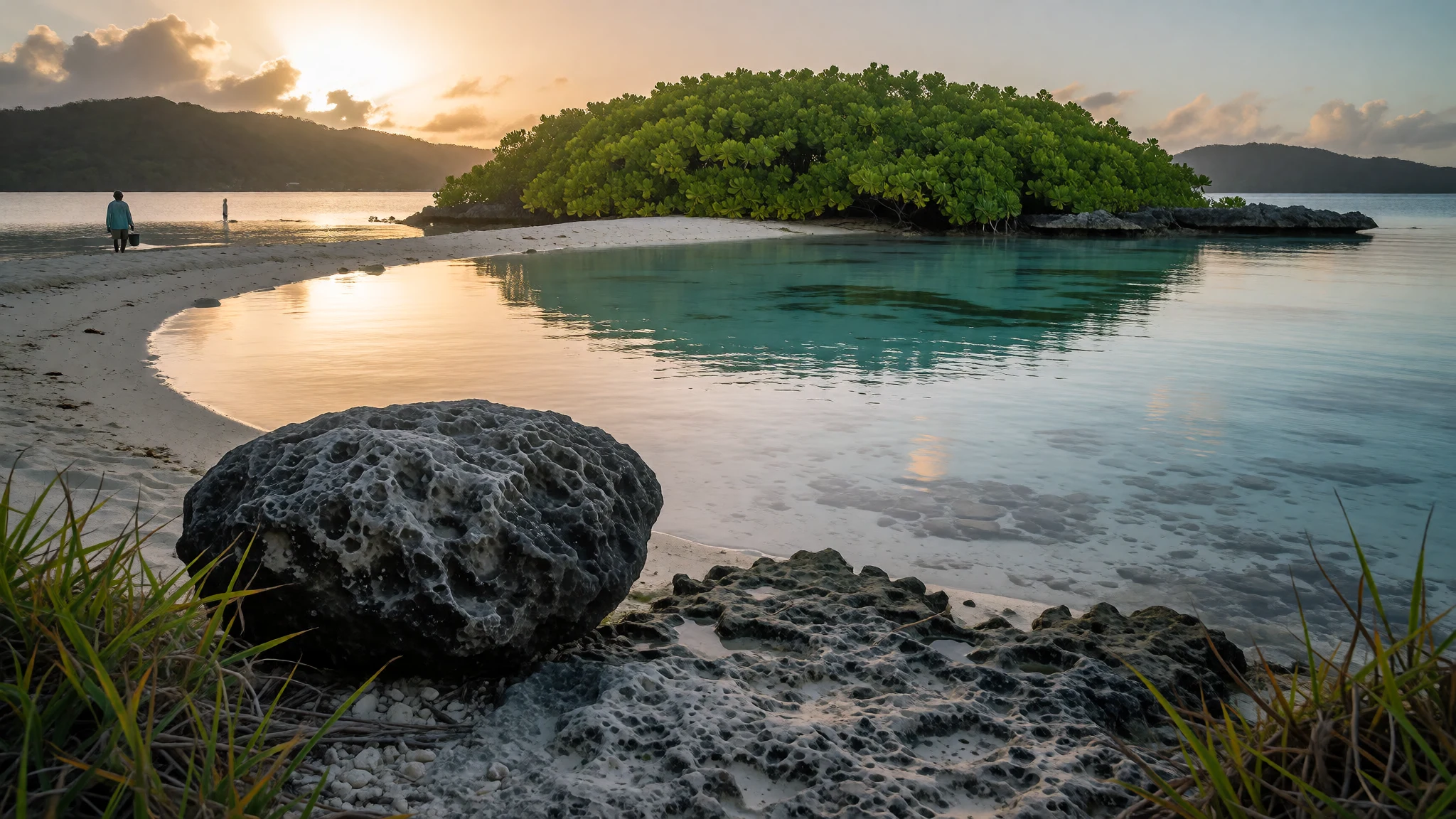
Île aux Aigrettes is a small coral islet where guided walks reveal native forest, rare birds, day geckos and giant tortoises, close to Mahebourg.
The place
Île aux Aigrettes is a small coral islet in the bay of Grand Port, just off the south-east coast of Mauritius and within sight of the town of Mahebourg. It covers about 27 hectares and lies roughly 850 metres from the shore. Most of Mauritius is volcanic, but this islet is low and flat, built of coral limestone, and that geology shapes everything on it: dry-forest trees with small, tough leaves, rooted in thin pale soil. Today the island is managed for conservation. Scientists work on restoring native forest and on protecting rare birds and reptiles, and the same place also takes visitors on guided walks. Both Mauritians and travellers from abroad make the short boat crossing. The visit is slow and quiet. Paths wind through shade, guides stop often to point out a gecko on a trunk or a bird in the branches, and glimpses of the lagoon show between the trees. There is little height and only a modest canopy, so the heat builds towards midday. Facilities are minimal and the programme depends on weather and sea conditions on the day. It suits people who enjoy noticing small things, not those who want a list of big sights.
Its story
Île aux Aigrettes carries a compressed version of the story of Mauritius. The main island was uninhabited and densely forested when Arab sailors and later Portuguese ones passed by. The Dutch took possession in 1598 and landed in the south-east, in the very bay that holds this islet. They left in 1710, and the animals and crops that arrived with settlers, such as deer, macaques and sugarcane, did lasting damage to the native plants and wildlife. Forest on the main island shrank to scraps. The islet, small and separate, kept a remnant of the coastal dry forest that once ringed much of the country. Its later story is one of repair. Invasive plants and animals have been cleared, native trees replanted, and species that had dwindled were bred and returned to the wild. Giant tortoises were brought in to take on the grazing role of the island's long-lost native tortoises. Visiting now means walking through a restoration project in progress. The forest is real but also tended, and the guides tend to be frank about what has been lost, what is recovering and how much work is still going on behind the scenes.
What to see
- Pink pigeon — Forest paths, Île aux Aigrettes
The pink pigeon is the bird most visitors hope for. Its pale pink-washed plumage and reddish eye show up against the green leaves, and birds living on the islet have been part of a recovery programme. Guides usually know where to look, so keep voices low and let them lead.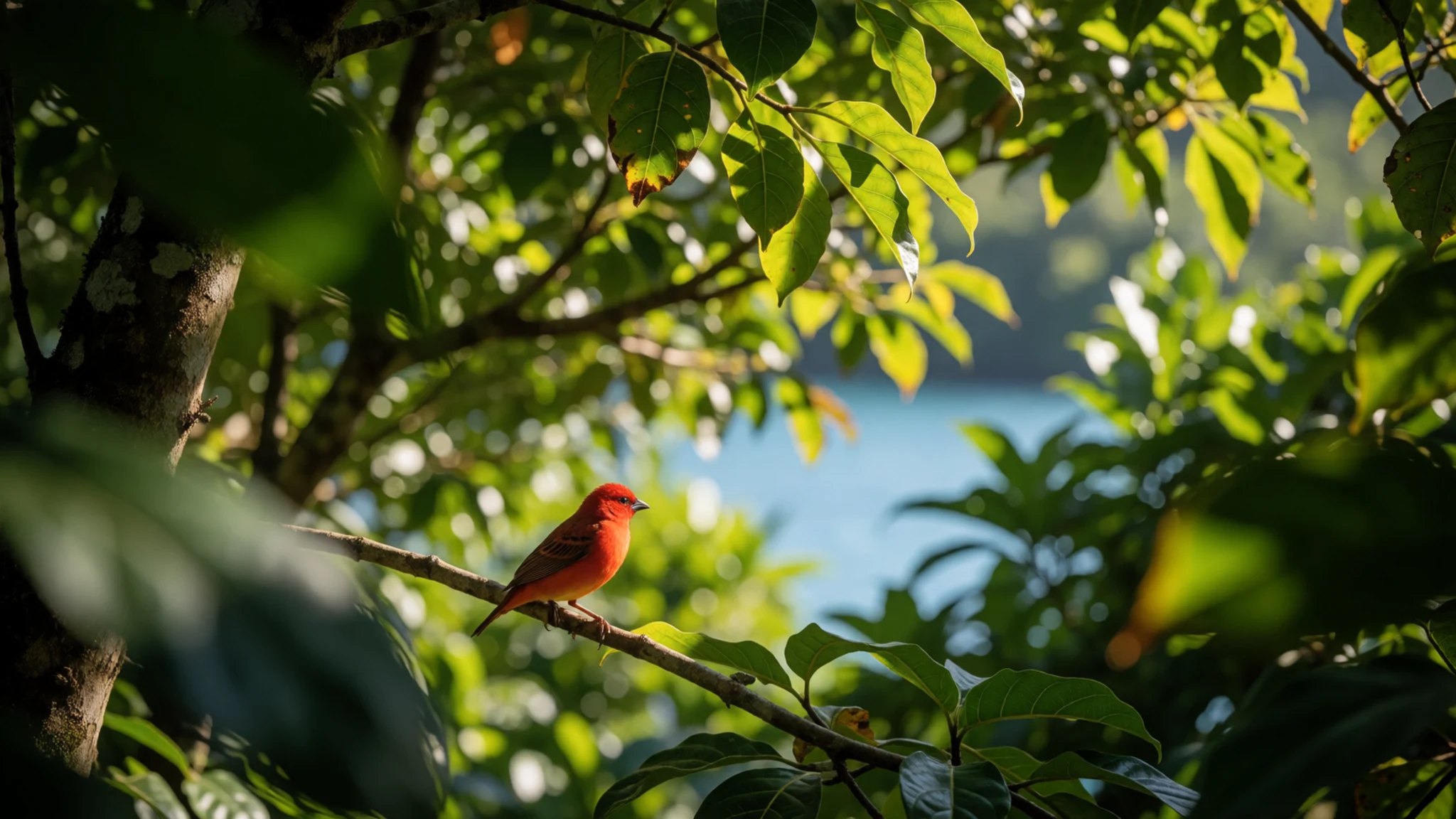
- Mauritius fody — Dry forest, Île aux Aigrettes
The male Mauritius fody is a small bird with a bright red head and breast against olive-brown wings. It darts between low branches and is easier to spot in the breeding season, when the male's colours are strongest. A patient guide and a pair of binoculars make a real difference.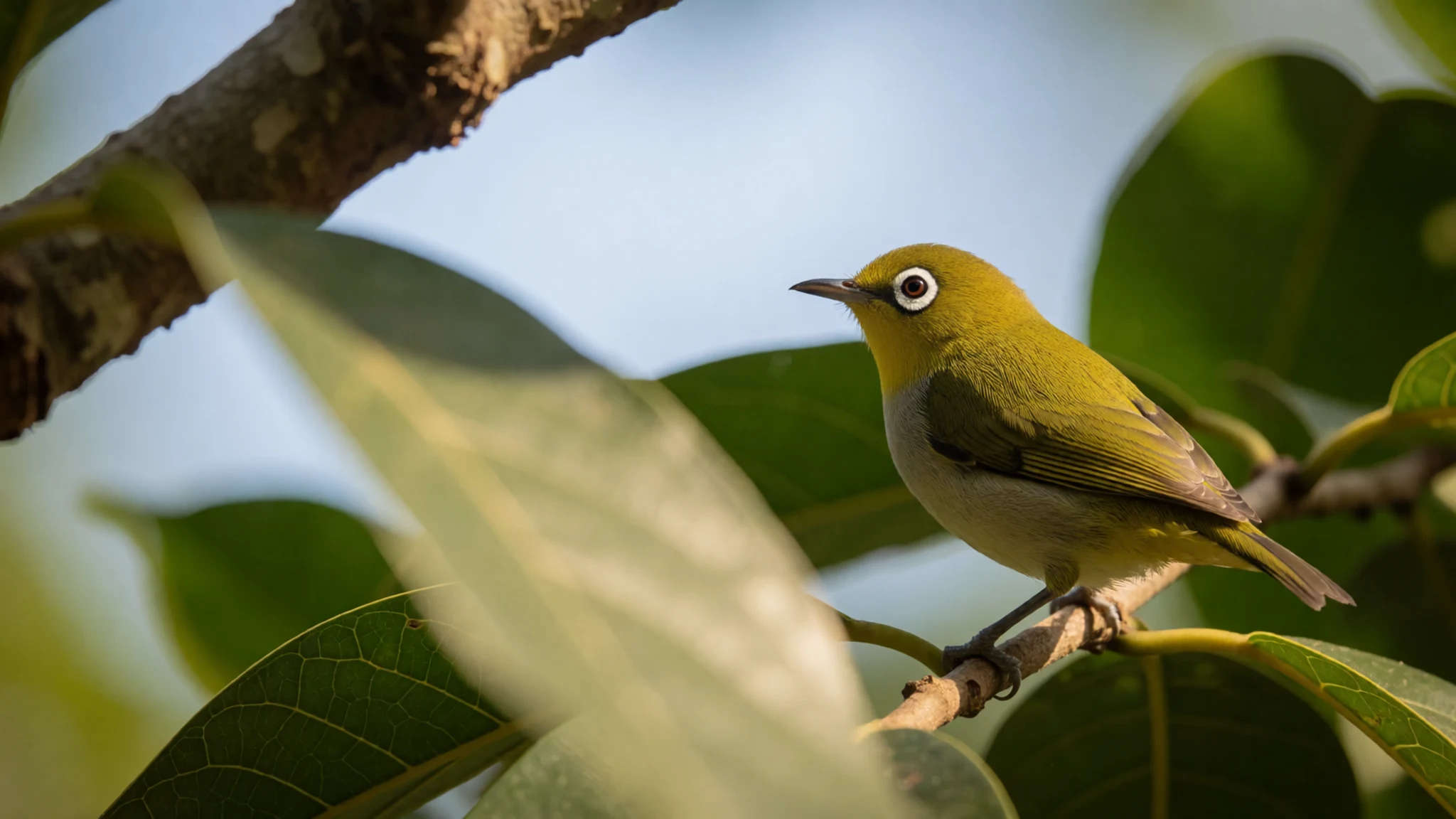
- Ebony trees — Forest interior, Île aux Aigrettes
Native ebony, known locally as bois d'ébène, grows here as small, slow trees with dark wood and glossy leaves. The islet's own ebony species, Diospyros egrettarum, shows how plants adapt to thin coral soil. Guides explain why these trees were once cut down so heavily on Mauritius.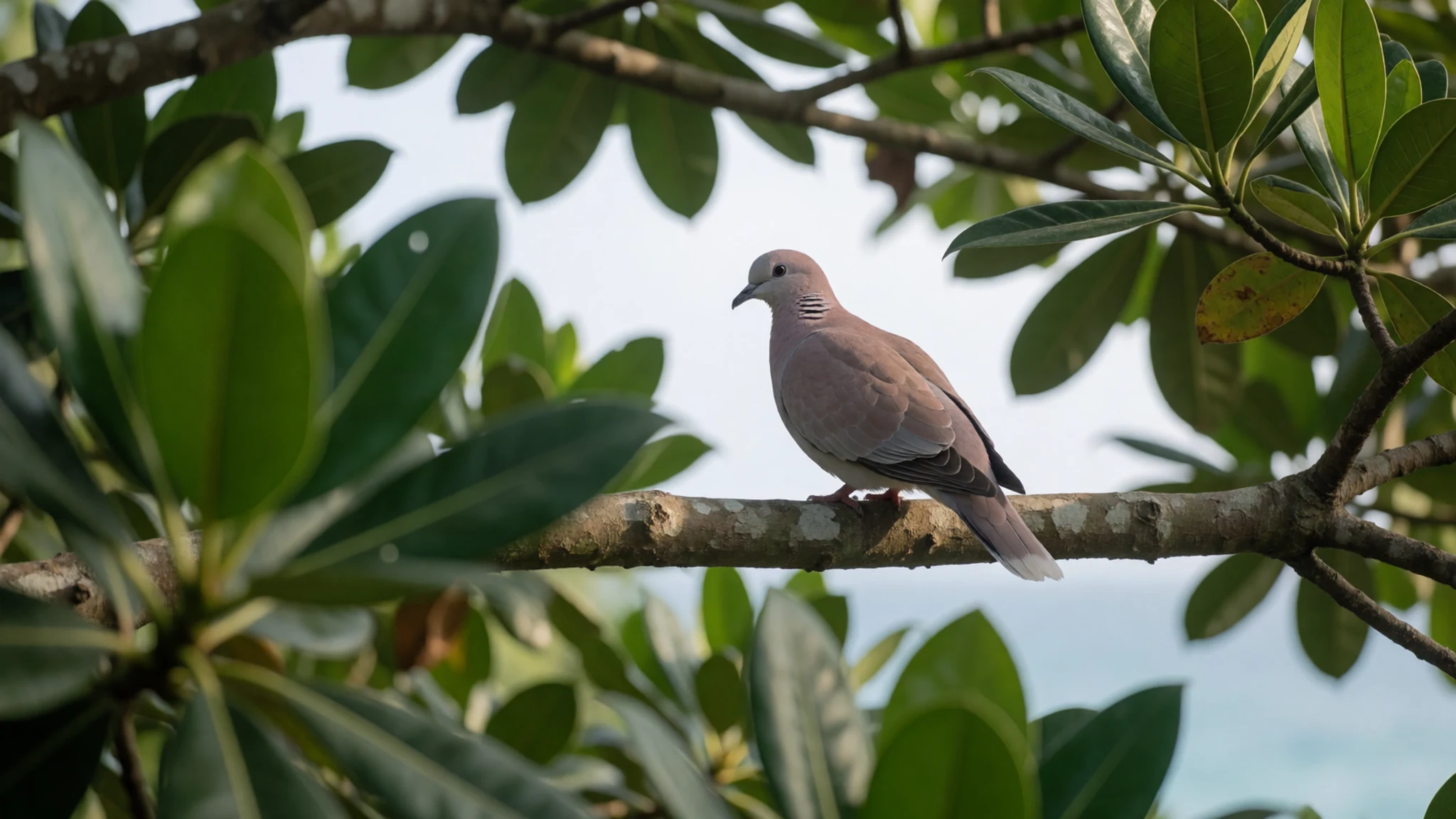
- Aldabra tortoises — Open clearings, Île aux Aigrettes
Large Aldabra tortoises wander parts of the islet, grazing and slowly shifting seeds around. They are not native to Mauritius, but they stand in for extinct giant tortoises that once shaped the forest. Keep a respectful distance, and never touch or ride them.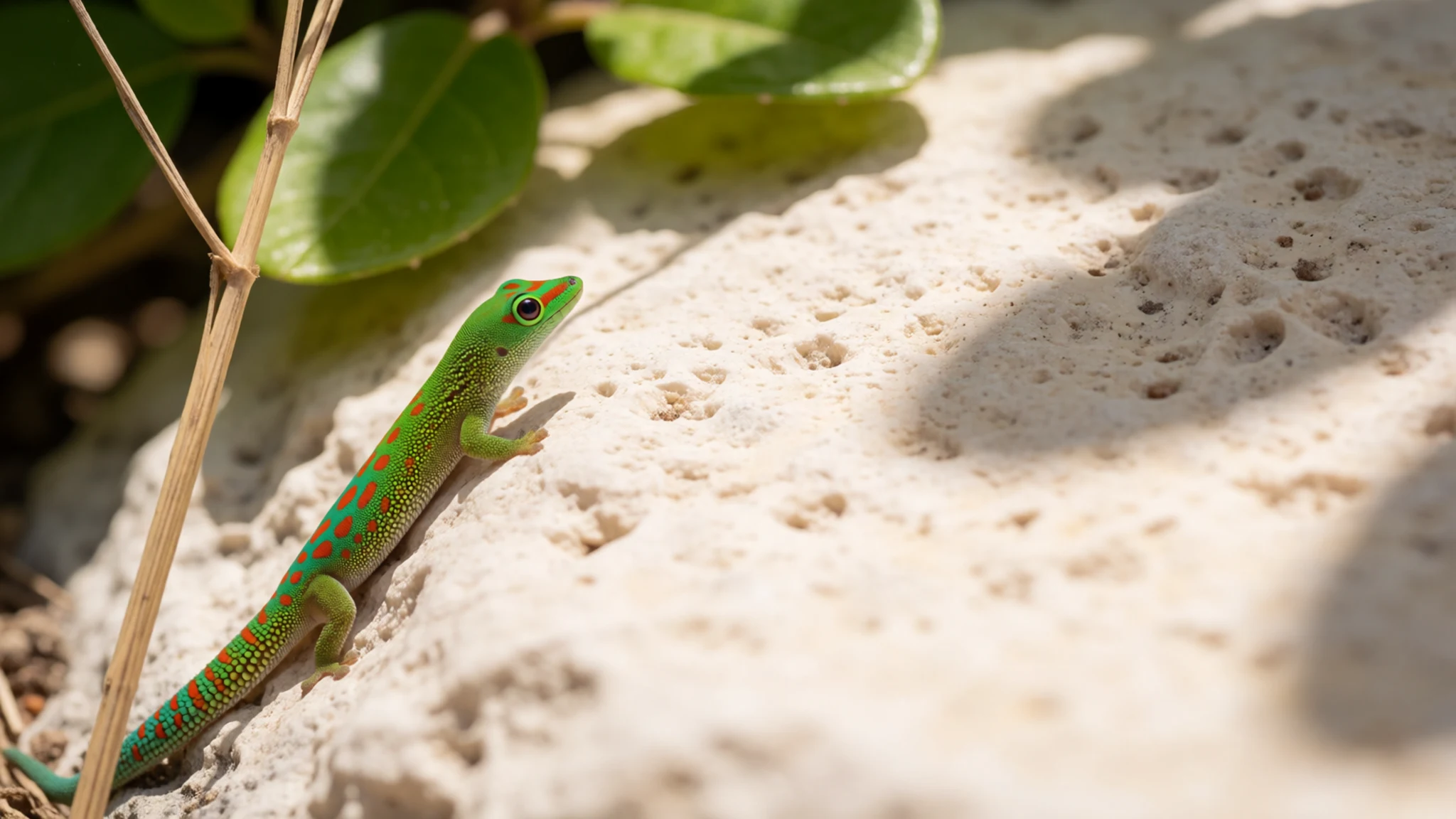
- Ornate day gecko — Trunks and shaded posts, Île aux Aigrettes
The ornate day gecko is a daytime lizard with a green back marked with orange-red, often seen clinging to tree trunks and fence posts. It is quick but curious, and a guide can usually find one within a few minutes. Photographs work best from a respectful distance.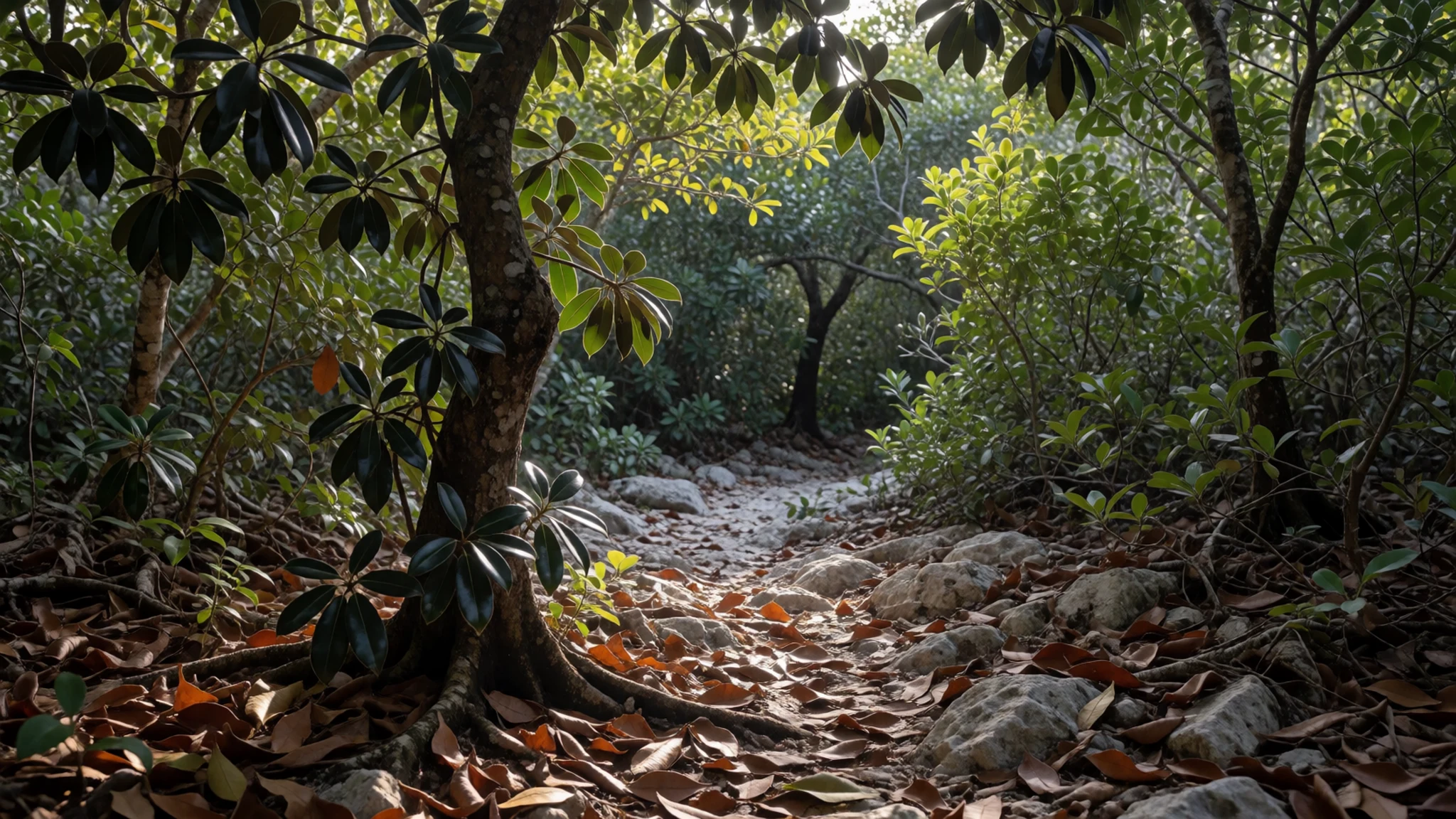
Culture
Île aux Aigrettes is a working conservation site, so its culture is mostly one of careful attention, and that sits inside the wider mix that makes Mauritius what it is. The country's people trace roots to India, Africa, China and France, and daily life carries all of it: Creole and Bhojpuri are spoken alongside French and English, and temples, mosques, churches and pagodas stand in the same towns. Mahebourg, the nearest town, has a local feel, with a waterfront, a market and a history tied to the bay where the Dutch first landed. On the islet itself the culture is that of field science. Guides, rangers and researchers explain their work, and many Mauritians come to see species and trees that few people ever encounter in the wild. Visits are structured, with small groups, set routes and briefings about what not to touch. That discipline is part of the experience, and it keeps fragile ground and nesting birds undisturbed. Conversations with guides are often the best part of the trip, so ask questions and listen for the stories behind particular trees and birds. Stay on the marked paths, carry out all rubbish, and follow your guide's instructions about distance from birds, tortoises and young plants.
What to wear
Mauritian traditional dress reflects the island's many communities. Among Indo-Mauritian families the sari, and for some the shalwar kameez, in cotton or silk, are worn at weddings, religious festivals and family occasions. Creole heritage is associated with the sega, danced in long, full, brightly coloured skirts, usually in cotton or similar light cloth. Chinese-Mauritian and other communities have their own festival clothing, often worn on special days rather than every day. In daily life, most people wear what suits a warm, humid climate: light shirts, cotton dresses, shorts, jeans in cooler months and plenty of sandals. Office and school clothing is neat and conservative. Beachwear is for beaches, and people usually cover up in towns and at places of worship. For a visit to Île aux Aigrettes, comfort matters more than style. Wear light, breathable clothing in muted colours, long enough to protect against sun and insects. Closed shoes or sturdy sandals suit uneven coral rock and root-crossed paths, and a hat and sunglasses help in the open stretches. Bring a light rain layer, since showers can pass through quickly. Take a swimsuit if your tour includes swimming, and pack sunscreen and repellent. If you also plan to enter a temple or mosque on the mainland, carry a scarf or light wrap and trousers or a long skirt.
What to eat
- Farata with curry — Mahebourg market and small roadside eateries
Farata is the local name for paratha, a soft flatbread eaten with curries, pickles or chutneys. It reflects the Indian roots of Mauritian cooking and makes a filling breakfast or lunch. Look for it at roadside stalls, market food counters and small eateries around Mahebourg.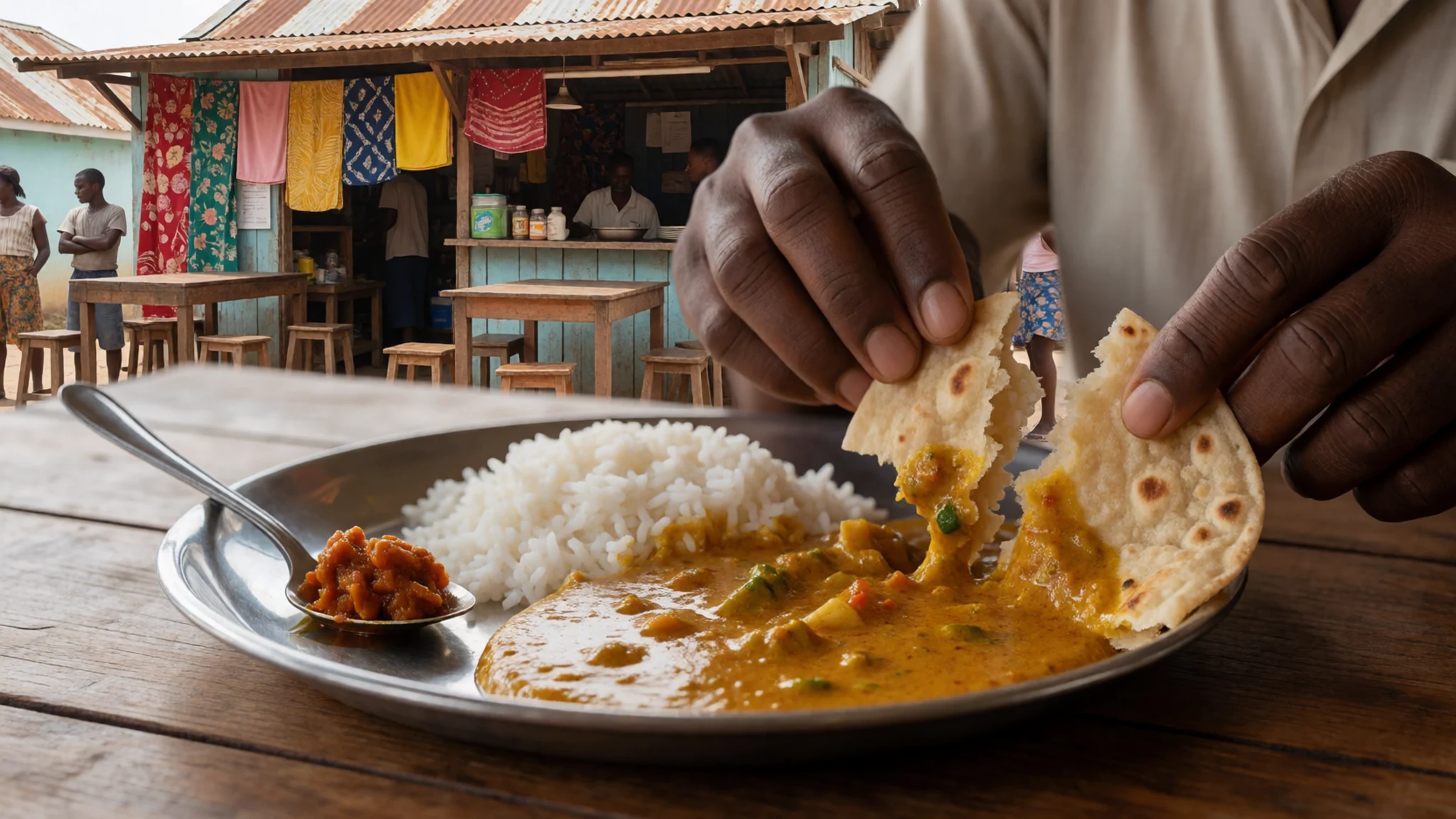
- Rice and curry — Local eateries and canteen-style restaurants
A plate of rice with a vegetable, fish or meat curry is an everyday meal. Spices such as cinnamon, cardamom and cloves are common, with thyme and curry leaves adding fragrance. Family-run eateries and canteen-style restaurants serve it in many versions.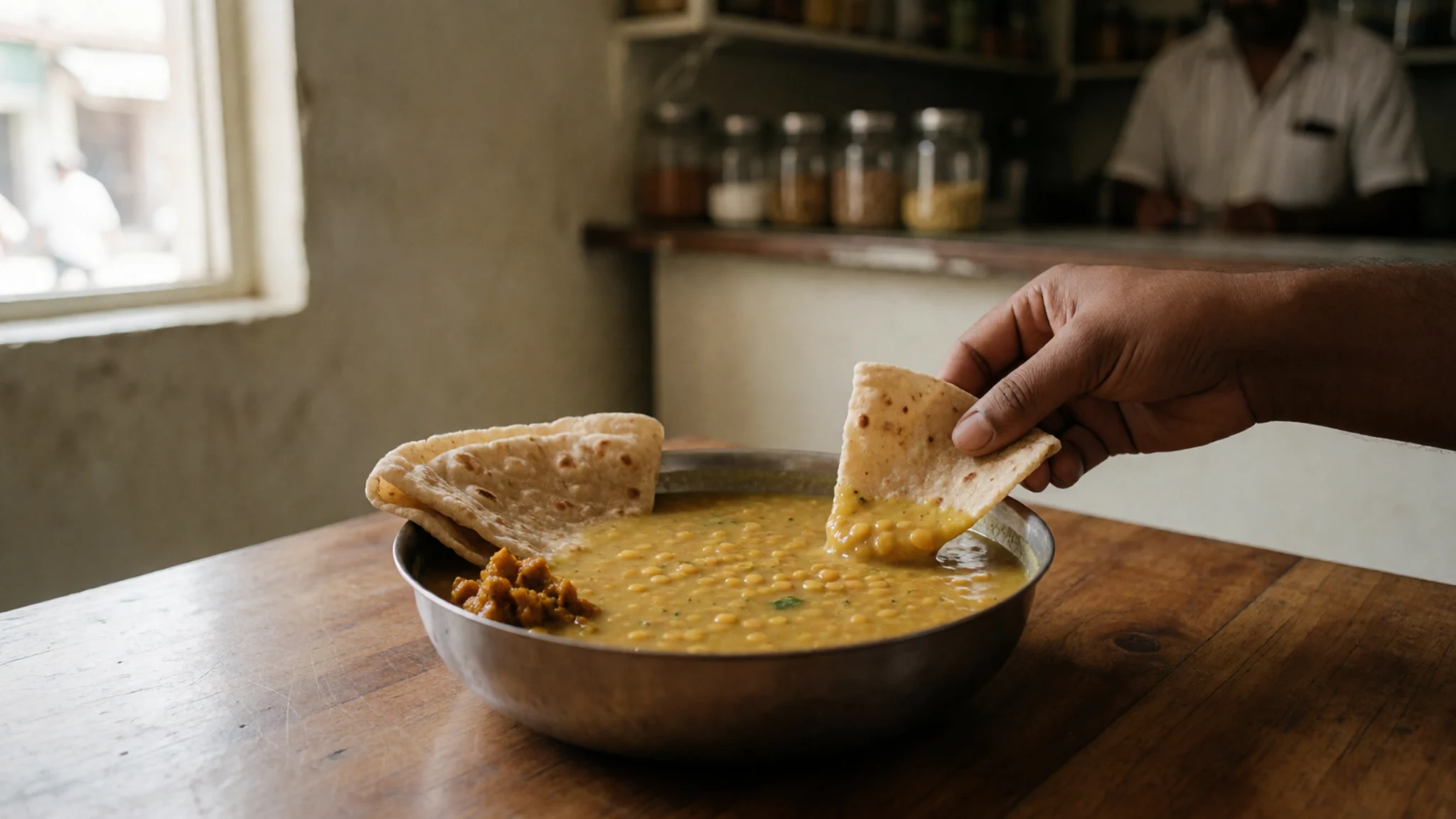
- Dal — Home-style eateries and market stalls
Dal, a soup or stew of lentils, differs according to the type of lentil used and what is stirred in. It comes with rice or flatbread and often a spoonful of pickle. It is a gentle, comforting dish, and a good choice for vegetarians. - Fried rice and noodles — Chinese-style restaurants in Mahebourg and nearby towns
Chinese cooking has left a clear mark here, and fried rice and noodle dishes appear on many menus, often with local touches. Restaurants may advertise one cuisine but mix influences, so portions and flavours vary. They suit a quick, sociable meal after a morning on the water. - Pickles and chutneys — Served alongside meals at most local eateries
Small bowls of pickled vegetables, chilli and fresh chutney come with many meals and add heat and sourness. They reflect how Indian, Creole and Chinese tastes blend on the same table. Try a little first, as the chilli can be strong.
Plan it
Best time. May–June and September–November are usually comfortable, with milder heat and less humidity than the summer months. Summer, roughly December–March, is hotter, wetter and carries cyclone risk, so check the forecast and the operator before booking.
How long. 1
Getting there. Sir Seewoosagur Ramgoolam International Airport lies close to Mahebourg, so the islet is among the easier reserves to reach from the airport. From Mahebourg, a short boat crossing takes visitors to the islet on a booked tour. Check with the operator for meeting point and timing.
Budget. mid
Tips
- Book the guided visit ahead, as the islet only takes small groups
- Start with a morning slot, when it is cooler and birds are more active
- Bring water, sun protection and insect repellent, as there is little shade at the landing
- Carry cash and a card for the mainland, as small stalls may not take cards
- Check weather and sea conditions on the day, as boats may not run in rough seas
Etiquette
- Stay on the marked paths and follow the guide
- Keep your distance from birds, tortoises and nests, and never feed wildlife
- Take all rubbish back with you
Nearby
Sources
- Wikidata Q292203 (CC0)
- Wikipedia: Île aux Aigrettes (rev 1364347559) (CC BY-SA 4.0)
- Wikivoyage: Mauritius (rev 5410845) (CC BY-SA 4.0)
- Mauritius fody (Foudia rubra) male — Charles J. Sharp (CC BY-SA 4.0)
- Mauritius olive white-eye (Zosterops chloronothos) — Charles J. Sharp (CC BY-SA 4.0)
- Pink pigeon (Nesoenas mayeri) — Charles J. Sharp (CC BY-SA 4.0)
- Mauritius ornate day gecko (Phelsuma ornata) — Charles J. Sharp (CC BY-SA 4.0)
- Diospyros egrettarum — S Molteno (CC0 1.0)
- Polyscias maraisiana canopy — Abu Shawka (CC BY 3.0)
- Aldabra tortoise, Ile aux Aigrettes — Abu Shawka (CC0 1.0)
- Gastonia mauritiana, Ile aux Aigrettes — Abu Shawka (CC BY 3.0)


Wildlife
- Pink pigeon (animal)
The pink pigeon is a rare Mauritian pigeon, and the only one of its island family still alive today. It is another special bird to hope for on Île aux Aigrettes, though the notes do not say in which season or at what time of day it is seen. Careful conservation work has helped it recover from the brink. Watch from a distance, stay calm and quiet, follow your guide, and never offer it food. - Mauritius fody (animal)
Think of the Mauritius fody as a small, rare bird from the weaver family that belongs only to Mauritius and is in danger of being lost. It is one of the birds visitors hope to find on Île aux Aigrettes, though the notes do not say which season or hour suits it best. Watch from a polite distance, keep your voice low, stay with your guide, and never feed it, so it can go about its day undisturbed. - Mauritius fody (bird)
Think of the Mauritius fody as a small, rare bird from the weaver family that belongs only to Mauritius and is in danger of being lost. It is one of the birds visitors hope to find on Île aux Aigrettes, though the notes do not say which season or hour suits it best. Watch from a polite distance, keep your voice low, stay with your guide, and never feed it, so it can go about its day undisturbed. - Pink pigeon (bird)
The pink pigeon is a rare Mauritian pigeon, and the only one of its island family still alive today. It is another special bird to hope for on Île aux Aigrettes, though the notes do not say in which season or at what time of day it is seen. Careful conservation work has helped it recover from the brink. Watch from a distance, stay calm and quiet, follow your guide, and never offer it food.