Tadoussac
Tadoussac, Canada
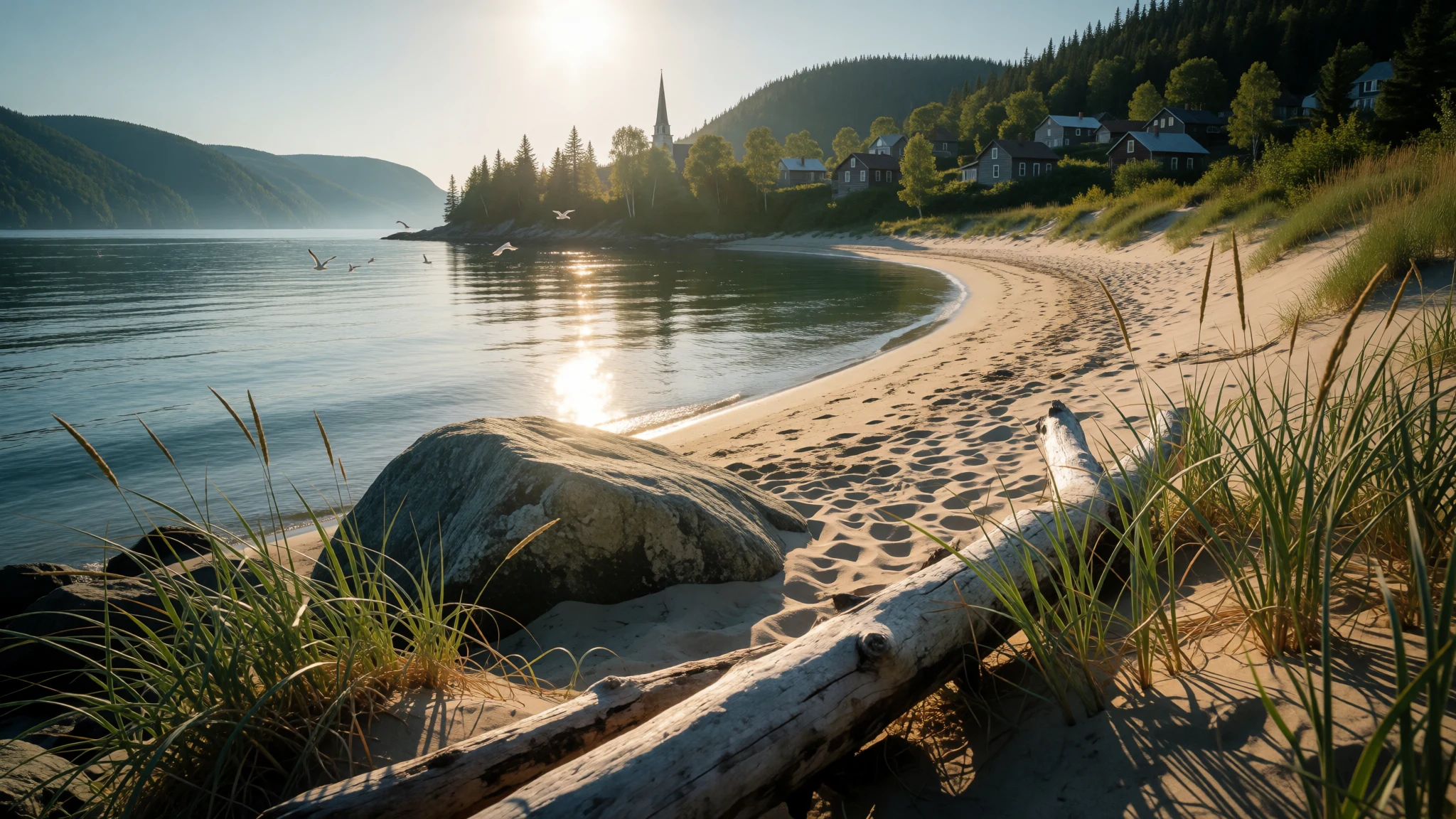
Tadoussac is a small Quebec village where a fjord meets the St Lawrence, with whale boats, old trading history and cold clear water.
The place
Tadoussac sits on the north shore of the St Lawrence estuary, in a sheltered bay where the Saguenay fjord empties into the wider river. The village is tiny, with a population of 804, and most of it tilts down a slope toward the water: wooden houses, a church spire, a small lake tucked among the lanes. Behind it rise forested hills and pale sand dunes. In front, the water changes from green to near black where the fjord's cold depths meet the estuary. Three regions meet here: the Côte-Nord stretching east, Saguenay–Lac-Saint-Jean to the west, and Charlevoix across the river. Much of the surrounding land is wilderness or protected parkland, and the area includes Canada's first national marine park. The nearest real city is Saguenay, roughly 100 kilometres to the west. Summer is the busy season. Boats leave the quay for whale-watching, terraces fill with visitors from across Quebec and beyond, and the lanes feel crowded by village standards. Outside high summer the place quietens a great deal, and many seasonal businesses close. The fjord road leading west has no services and no mobile signal. Tadoussac suits slow walking, cold air off the water, long looks at the bay and a cheerful lack of nightlife. It does not suit anyone wanting a packed itinerary of museums, shops or big-name attractions.
Its story
Tadoussac was a meeting place long before French maps gave it a name. Innu families used the bay as a sealing base when Jacques Cartier arrived in 1535, and Basque crews later hunted whales in the river and traded hides along the shore. By the closing years of the sixteenth century, more than a thousand people from Algonquin, Etchemin and Montagnais communities gathered each summer to barter furs. They developed a shrewd habit: let the first ship wait, and sell only once several rivals had arrived and begun bidding against each other. The historian Bruce Trigger ranks the place first among North American fur markets around 1600. The French settlement itself began in 1599, when the merchant François Gravé Du Pont and the naval captain Pierre de Chauvin de Tonnetuit, holding a royal monopoly, built on the shore at the fjord's mouth. The first winter was cruel, and only five of the sixteen original settlers lived through it. In 1603 a feast at Tadoussac brought Gravé together with Samuel de Champlain and leaders of the Innu, Algonquin and Etchemin peoples, a meeting still remembered in the region's history. In 1615 Récollet friars founded a mission here, named after a cross. The municipality as it exists today carries a founding date of 1899 in Wikidata, which is a reminder that the village has been rebuilt and reshaped many times over the centuries.
What to see
- Tadoussac bay and the Sentier de la Plage — Village centre and bay
The bay is the village's main attraction, and the simplest way to see it is on foot. The Sentier de la Plage is a one-kilometre trail through the heart of Tadoussac to Pointe-Rouge, passing dunes, shoreline and views across the water. Go early, when light is soft and the village is quiet.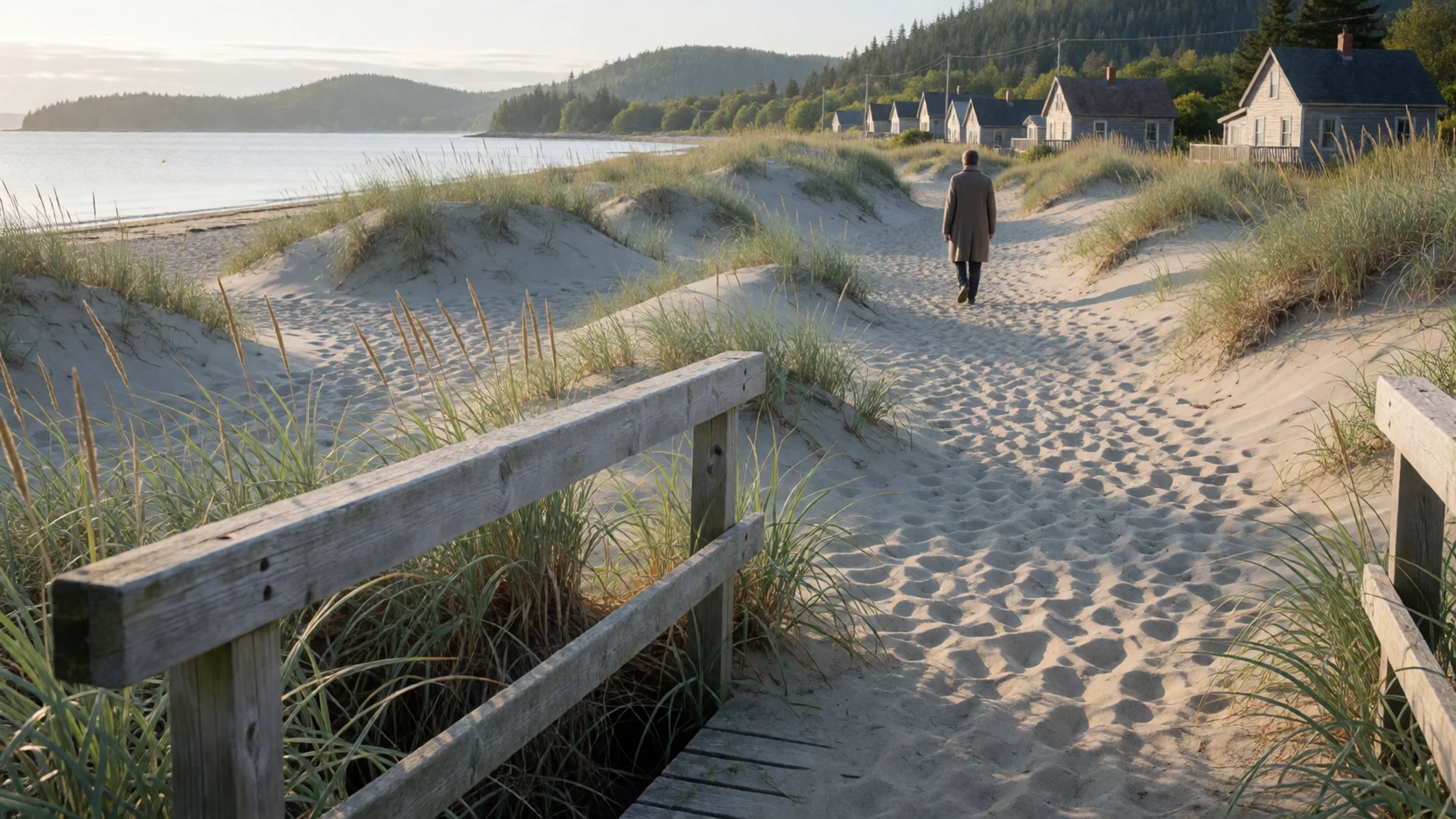
- Chapelle de Tadoussac — Old village
Also called the chapel of the Indians, this small wooden church was built in the middle of the eighteenth century and is a national historic site. It recalls the mission era, when the bay was a seasonal gathering point. Visits are short, so pair it with a stroll through the old streets nearby.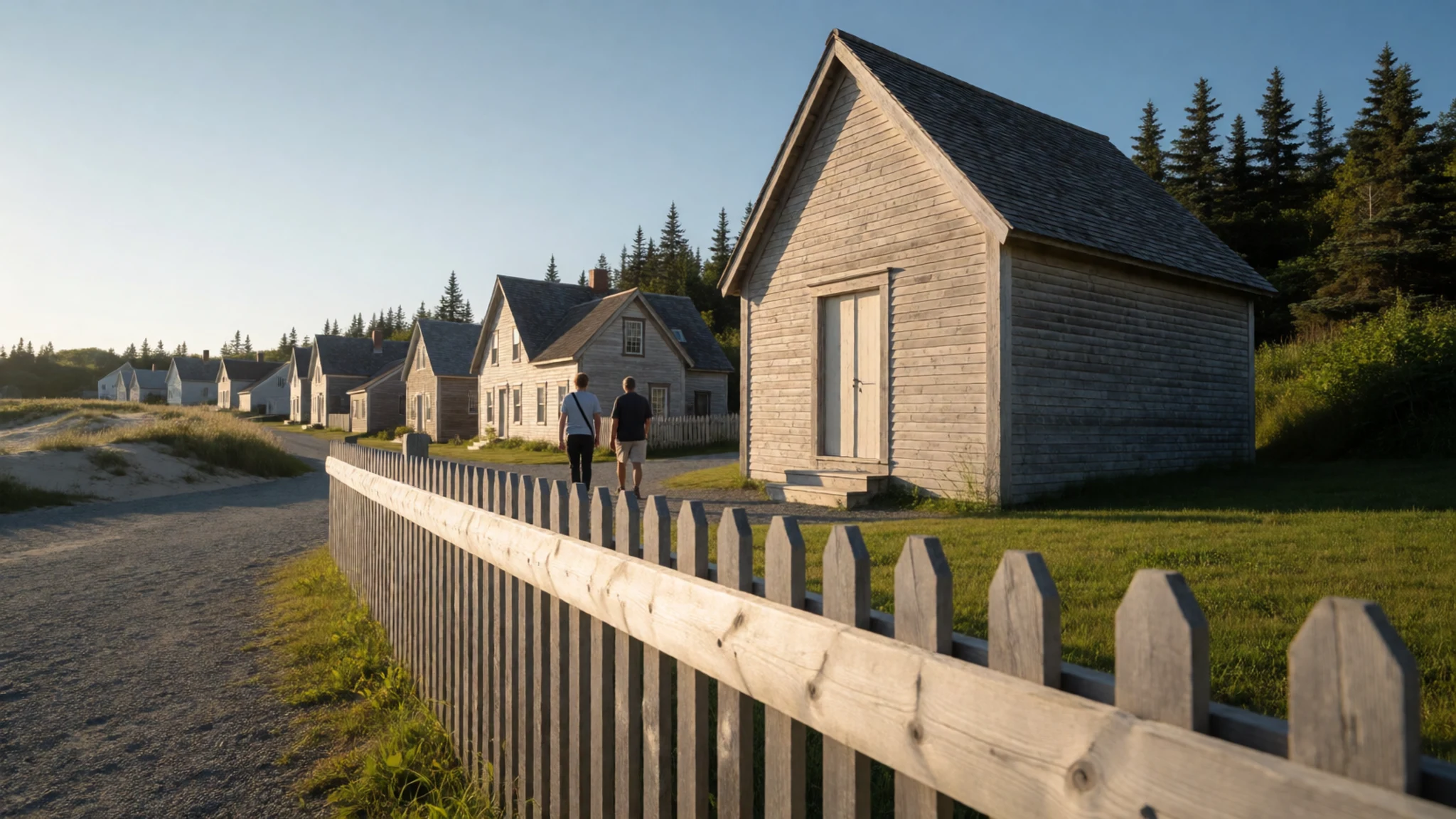
- Marine mammals interpretation centre — Waterfront
This centre explains the whales and other marine mammals that live in the St Lawrence, and it is a sensible first stop before getting on a boat. Several operators run whale-watching trips from the quay, some in small boats of up to 12 passengers. Check cancellation terms and facilities when booking.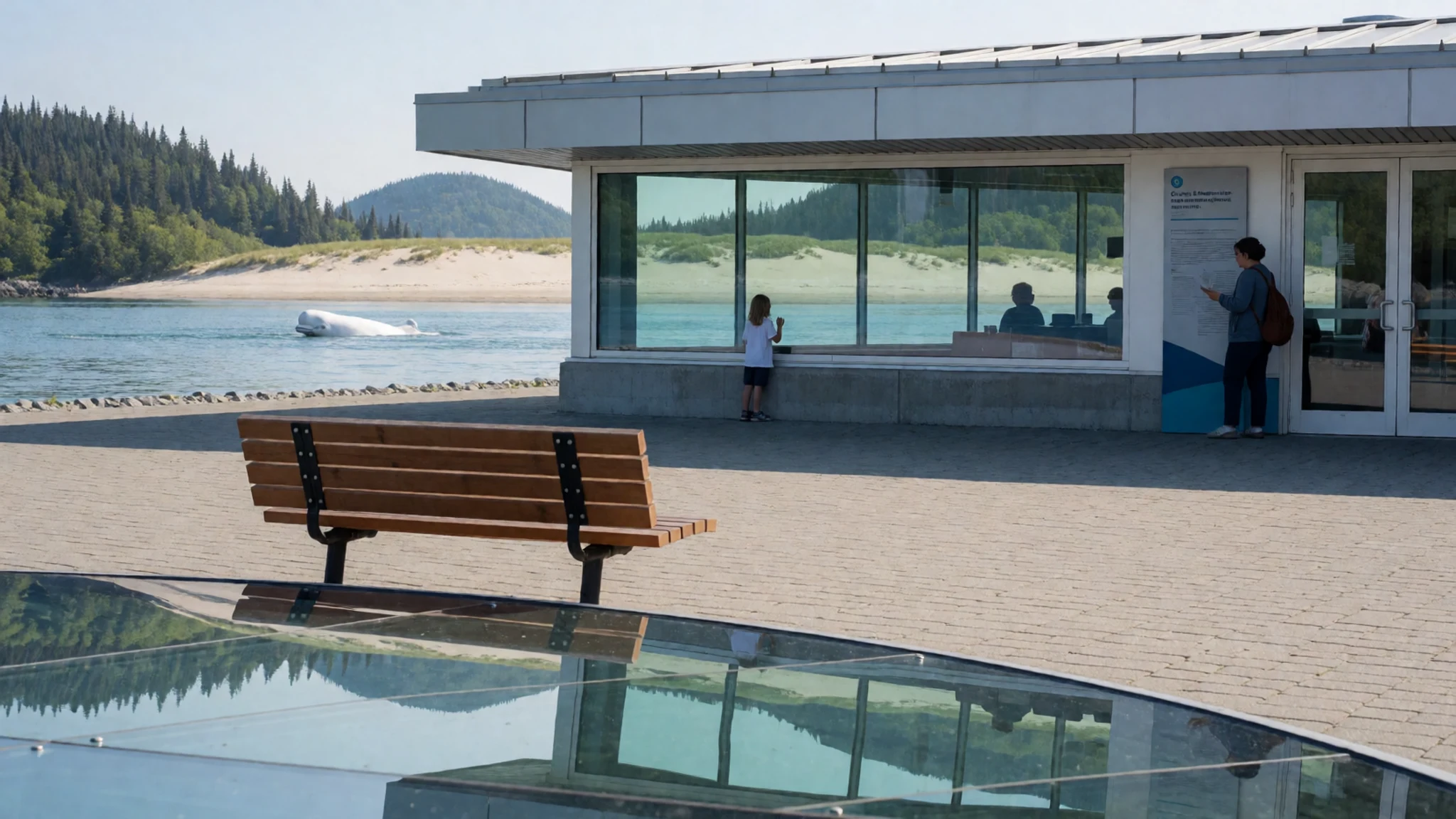
- Phare du haut-fond Prince — Estuary, off the village
Locals call this lighthouse la Toupie, the spinning top. It stands in open water at the mouth of the Saguenay fjord, and it is best seen from a boat tour rather than from land. The lighthouse makes a handy marker for how wide the river is here.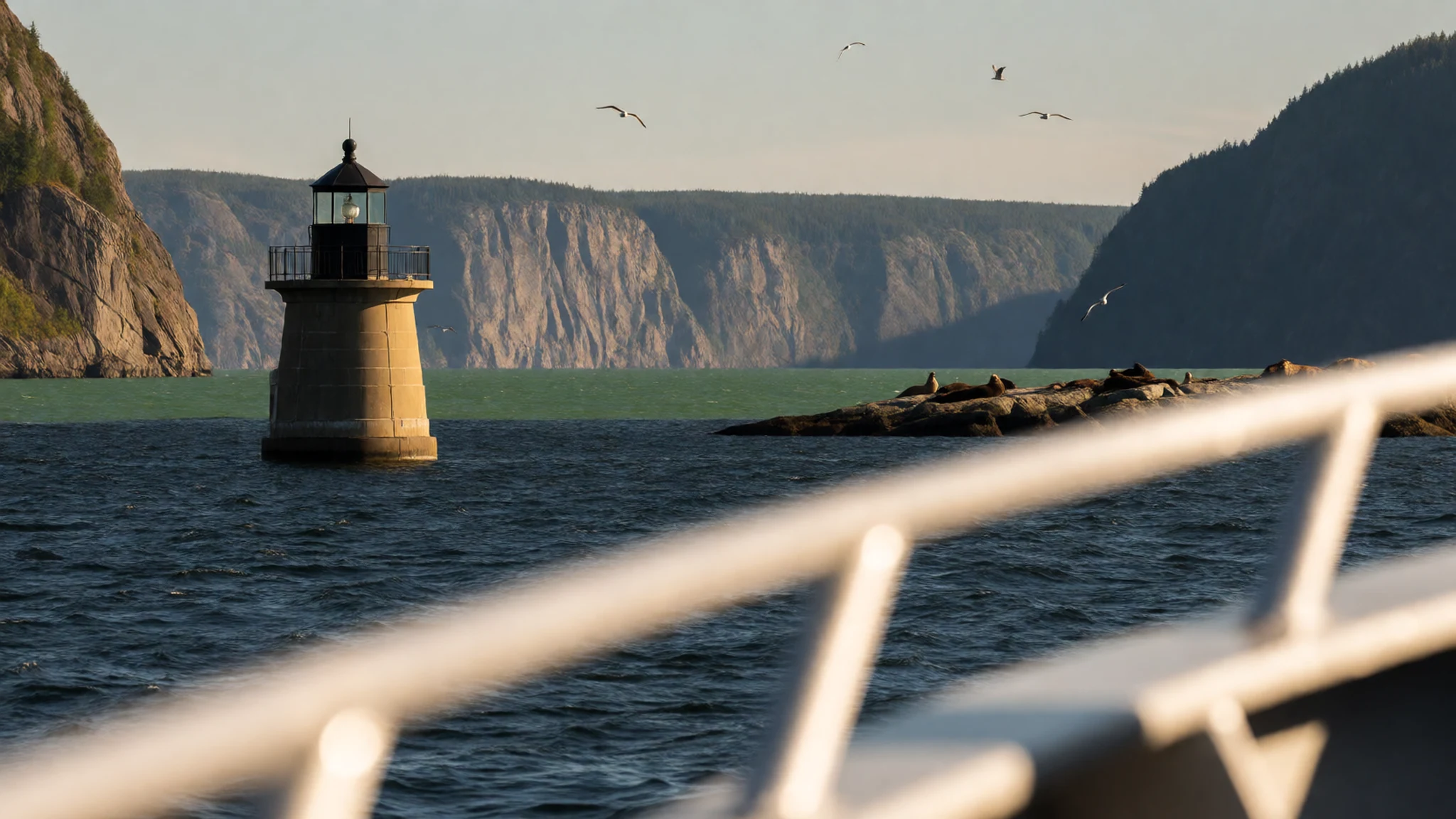
- Sea kayaking on the fjord — Fjord and estuary
Guided kayak trips set out from the village into the Saguenay fjord and the estuary, from half-day paddles to multi-day packages. The water is cold and tides are strong, so a guide matters. The pace gives time to look at the cliffs and watch for seals and whales.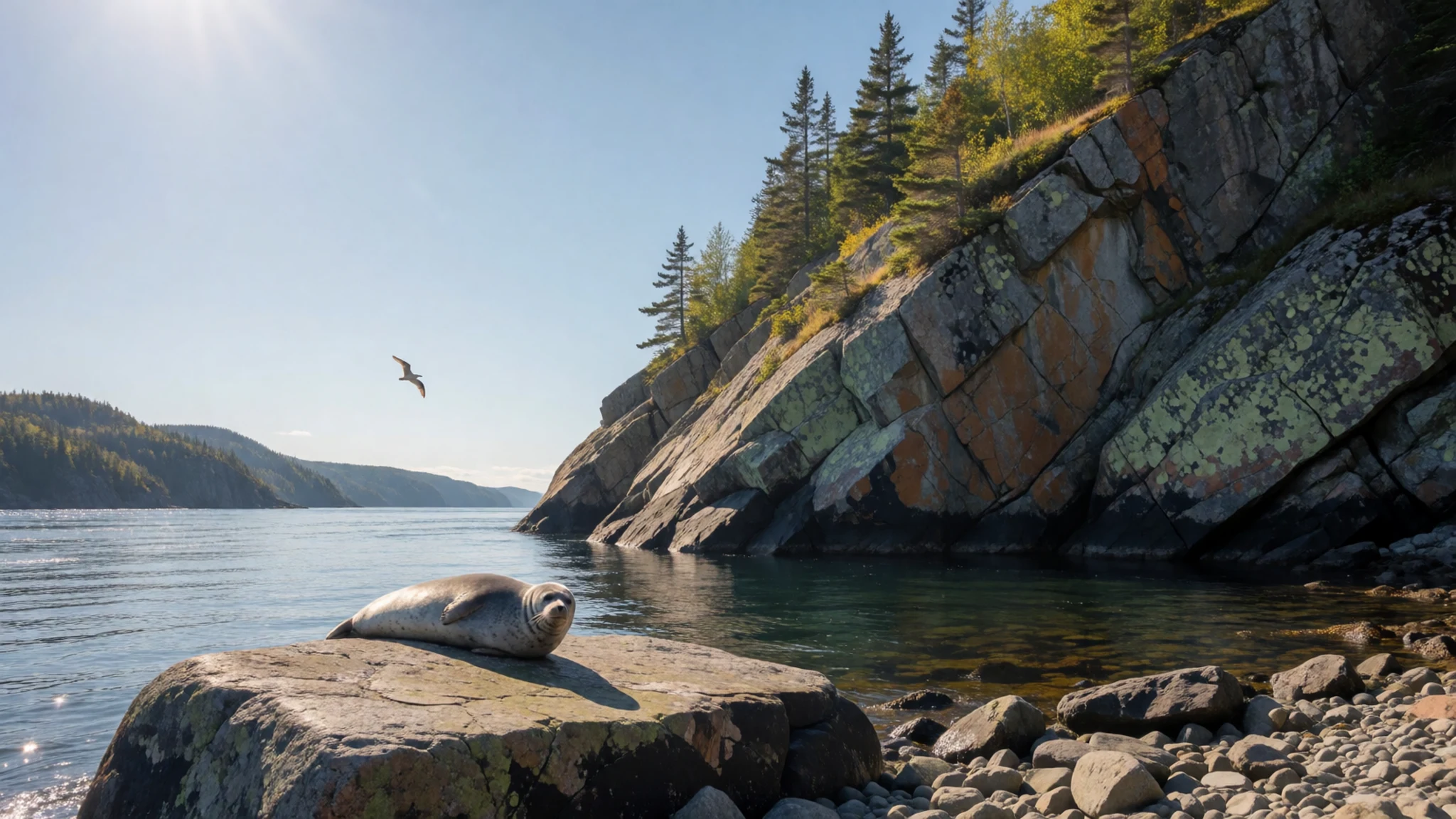
Culture
Tadoussac is a French-speaking village, and daily life runs in French. English is widely understood in the busy summer months, but a first greeting in French goes down well and costs nothing. The village's culture is layered. Innu communities have used this coast for far longer than the French have written about it, and the old chapel and the trading history are tied to that meeting of peoples. Later centuries added Catholic parishes, summer holidaymakers and the working life of boats, fishing and tourism. Today the main rhythm is seasonal. In summer the quay is lively with whale-watching departures, and families sit on terraces late into the long evenings. In the colder months the place feels private and small, and some businesses shut for the season. Visitors will notice how much the community treasures its bay, its old wooden buildings and its quiet. People here are used to travellers, but they also live here year-round, and tend to appreciate visitors who slow down rather than rush through. The local mix of hospitality, strong coffee and seafood is easy to enjoy without any special knowledge. Weather decides plans on the water, so conversations about wind, fog and tides are normal and worth listening to. Greet people with a friendly bonjour before asking for anything in a shop or on a boat, and keep your voice low inside the old chapel.
What to wear
Tadoussac has no single village costume, but two older traditions shape its dress history. Innu clothing was historically made from tanned animal hides, later mixed with wool trade cloth, and decorated with beadwork and painted or sewn designs. Today such pieces appear mainly at ceremonies and community gatherings. French Quebec's best-known traditional textile is the ceinture fléchée, a woven wool sash with an arrow pattern, now worn mostly at winter festivals and heritage events. Everyday clothing in the village is practical and weather-led: fleece, windproof jackets, wool socks, jeans, rubber boots in wet weather, and caps or woollen hats. Locals dress for wind and cold water more than for fashion, and the mood is casual even at dinner. Visitors should pack in layers, even in July and August, because the air on the water can be chilly and a boat tour can feel colder than the village. A windproof, waterproof outer shell is the most useful item, with a warm hat and light gloves for early departures. Sturdy walking shoes with grip suit the dunes, trails and wet quay. Sun protection also matters on open water. There is no strict dress code, though covered shoulders and a respectful manner suit a visit to the old chapel or a church.
What to eat
- Seafood platters — Family restaurants near the waterfront
Seafood is the local speciality, usually served as a plate of fish and shellfish from the cold St Lawrence waters. Family restaurants near the waterfront and main lanes serve it in generous portions, often with a terrace in summer for evening light.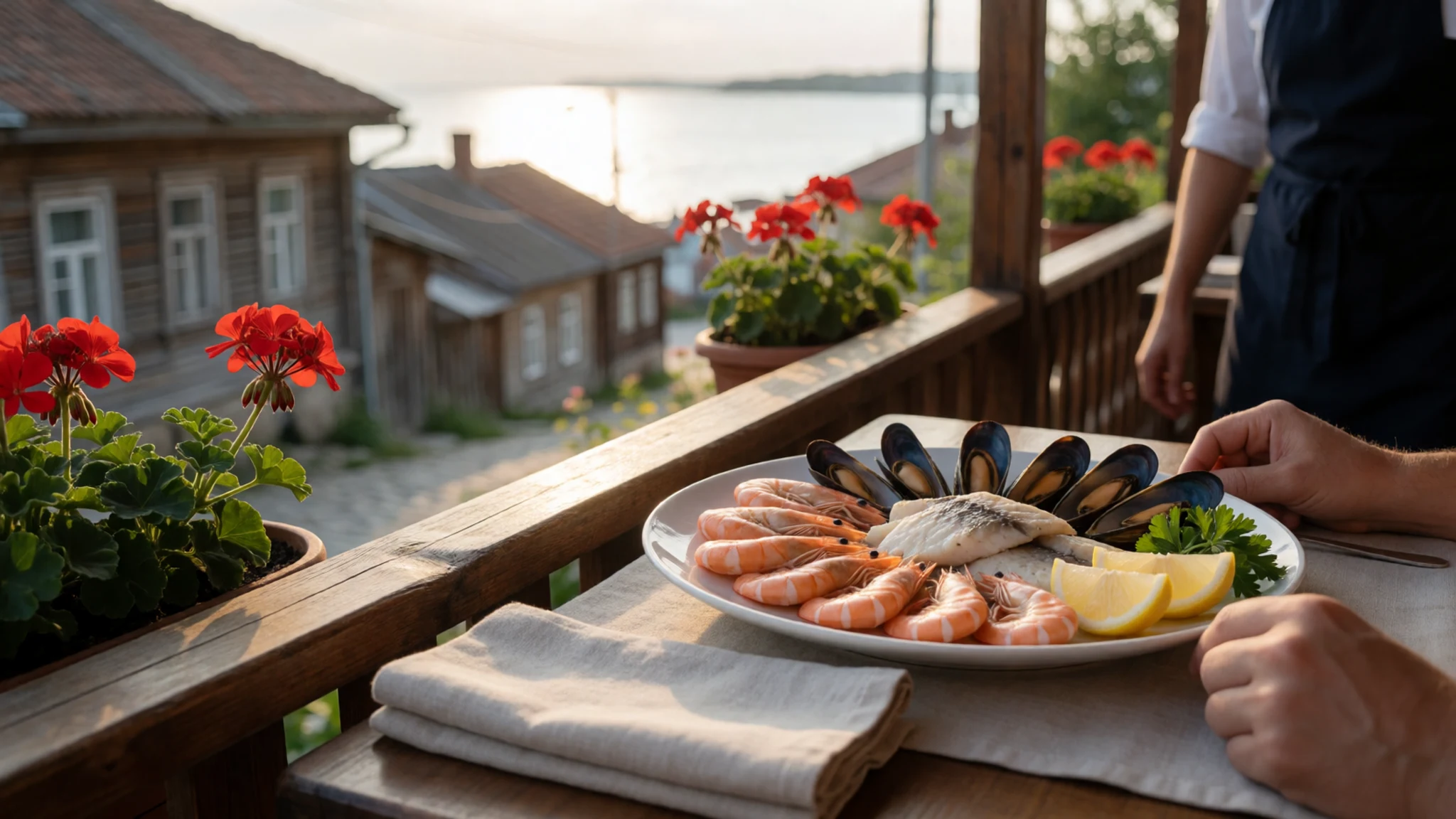
- Lobster — Terrace restaurants in the village centre
Lobster appears on many summer menus, simply boiled or grilled and served with melted butter and a side of potatoes or salad. It is a sensible celebratory meal after a day on the water, and terraces in the village are the most pleasant place to eat it.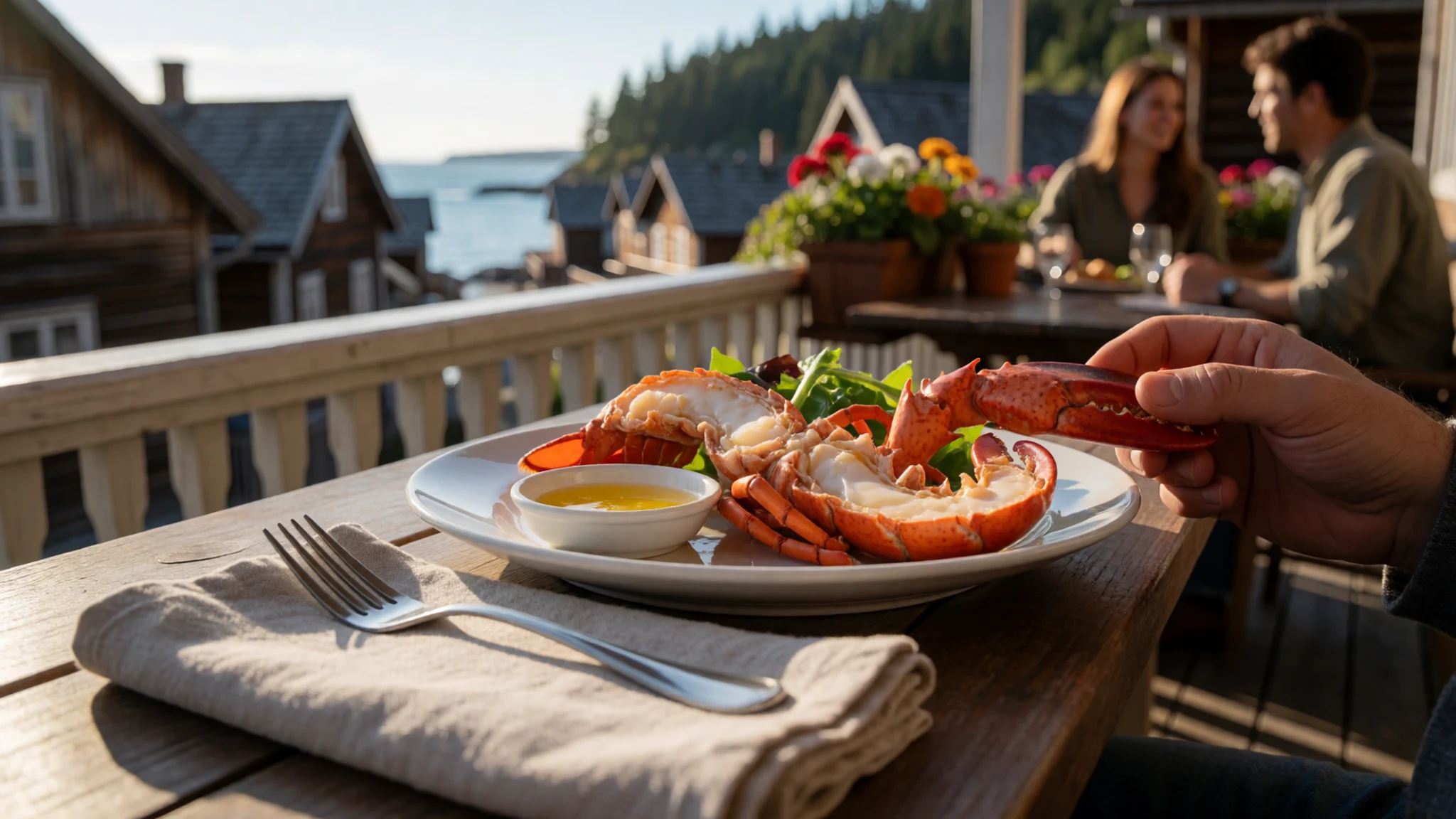
- Caribou and game — Restaurants offering regional cuisine
Some restaurants serve regional game, including caribou, often grilled or in slow-cooked dishes with local vegetables. It tastes richer and leaner than farmed meat, and is a way to taste the Côte-Nord beyond seafood. - Grilled steak — Gourmet and grill-style restaurants
Several restaurants pair seafood with steak from the grill, a reliable choice for anyone who does not eat shellfish. It is usually served with chips or roast potatoes and a simple salad. - Traditional Quebec buffet — Buffet restaurant in the village
A buffet-style restaurant serves traditional Quebec home cooking, with hearty hot dishes, vegetables and desserts. It suits a group with mixed tastes, or a big meal after a morning of hiking or paddling. - Café sandwiches and coffee — Cafés on the main streets
Village cafés serve sandwiches, soups and strong coffee, often with seats outside on warm days. They are handy for a quick lunch before a boat departure or for a warm-up after being on the water.
Plan it
Best time. June to September, when whale-watching boats run and the estuary is at its mildest; July and August are the busiest and warmest, while outside summer many seasonal businesses close and the weather turns cold.
How long. 2–3
Getting there. Fly into Quebec City or Montreal and hire a car, then drive east along the north shore of the St Lawrence. The free ferry across the Saguenay fjord runs year-round and lands you in Tadoussac. A separate ferry links Rivière-du-Loup on the south shore with Saint-Siméon on the north.
Budget. mid
Tips
- Book whale-watching and kayak trips ahead in July and August, and read each operator's cancellation terms
- Fill the fuel tank and download maps before driving the fjord road, which has no services and no mobile signal
- Pack layers and a windproof shell, since it is cold on the water even in summer
- Expect a wait at the ferry in peak season and allow extra time
- Check the village website, http://www.tadoussac.com, for seasonal opening details
Etiquette
- Greet people in French first, then switch to English if needed
- Follow the crew's instructions on whale-watching boats and keep noise low near wildlife
Nearby
Sources
- Wikidata Q1857392 (CC0)
- Wikipedia: Tadoussac (rev 1379262479) (CC BY-SA 4.0)
- Wikivoyage: Tadoussac (rev 5419395) (CC BY-SA 4.0)
- Photo: Panoramic view of Tadoussac bay, Selbymay (CC BY 3.0)
- Photo: Tadoussac, QC 2026, Hayden Soloviev (CC BY 4.0)
- Photo: Map of Côte-Nord Region of Québec, Hanhil / Gordalmighty (CC BY 3.0)
- Photo: Tadoussac circa 1612, Project Gutenberg etext 20110 (Public domain)
- Photo: Tadoussac, Quebec (1900), Internet Archive Book Images (Public domain)
- Photo: Vue de Tadoussac depuis le fleuve St-Laurent, Chris-13 (CC BY 3.0)
- Photo: Trade outpost in Tadoussac, TCY (CC BY-SA 2.5)
- Photo: Tadoussac, at the mouth of the Saguenay, Frank Hamilton Taylor (Public domain)


Wildlife
- Beluga whale (animal)
The beluga is a pale white whale from the cold northern seas, nicknamed the sea canary because it sings out in high, bright calls, like a bird under the water. It is a cousin of the narwhal. The reading says a slow pace leaves time to scan the cliffs and water for whales, so look patiently. Keep a respectful distance, stay quiet, go with a guide, and never feed it.