Tad Lo
Tad Lo, Laos

Tad Lo is a slow, river-and-forest village on the Bolaven Plateau, where waterfalls, weaving and homestays make a gentle stop in southern Laos.
The place
Tad Lo is a small village in Salavan Province, in southern Laos, set along a river on the Bolaven Plateau. It is not a town in any real sense: a single main lane, a scatter of guesthouses and homestays, a few eateries, and the sound of water never far away. The village takes its name from the falls that sit close to it, and the whole place is organised around them. Three waterfalls are found in and around the village: Tad Hang, Tad Lo and Tad Soung. The first two are an easy walk from the lanes, while Tad Soung lies further out and needs a longer walk or a ride. Around the water, the land is green and cooler than the lowland plains, with coffee-growing country not far away on the plateau. Life here moves at the pace of the river. Mornings are for walking and swimming where conditions allow, afternoons for sitting on a guesthouse terrace, and evenings for a simple Lao meal. Visitors tend to stay a couple of nights as part of a loop around the plateau, often arriving from Pakse. There is little nightlife and little pressure to do anything, which is much of the appeal. Honest caveats: the falls change character with the seasons, the village is basic, and mobile signal and cash machines cannot be taken for granted.
Its story
Tad Lo has no grand monument or founding date to anchor its story, and it is better understood through the people and the river. The Bolaven Plateau has long been home to several upland communities, among them Katu and other groups, who farmed, hunted and gathered in the forests above the Mekong lowlands. Their villages, languages and textile traditions differ from those of the Lao majority on the plains, and that mix is still visible around Tad Lo today. For most of its life the river here was simply a resource: water for rice and gardens, fish for the table, a place to wash and cool off at the end of a hot day. Travel came later. As backpackers and independent travellers began to loop around the plateau, families in the village opened rooms in their own homes, then built simple bungalows beside the water. That pattern, local households running small guesthouses and eateries, still defines the place. More recently, villagers and residents have built tools to help visitors find their way, including a tourism office for guided treks and an independent local guide that lists places which can be contacted directly rather than through commission-taking agents. The result is a modest tourism economy that remains close to village life. Tad Lo is a good example of how a quiet river community can welcome visitors without turning into something else entirely.
What to see
- Tad Hang — Tad Lo village
Tad Hang is one of the two falls near Tad Lo village and can be reached on foot without a guide. The river here runs over broad rock steps, and the sound carries well before the water comes into view. Swimming is sometimes possible, but depth and current change with the rains, so ask locally first.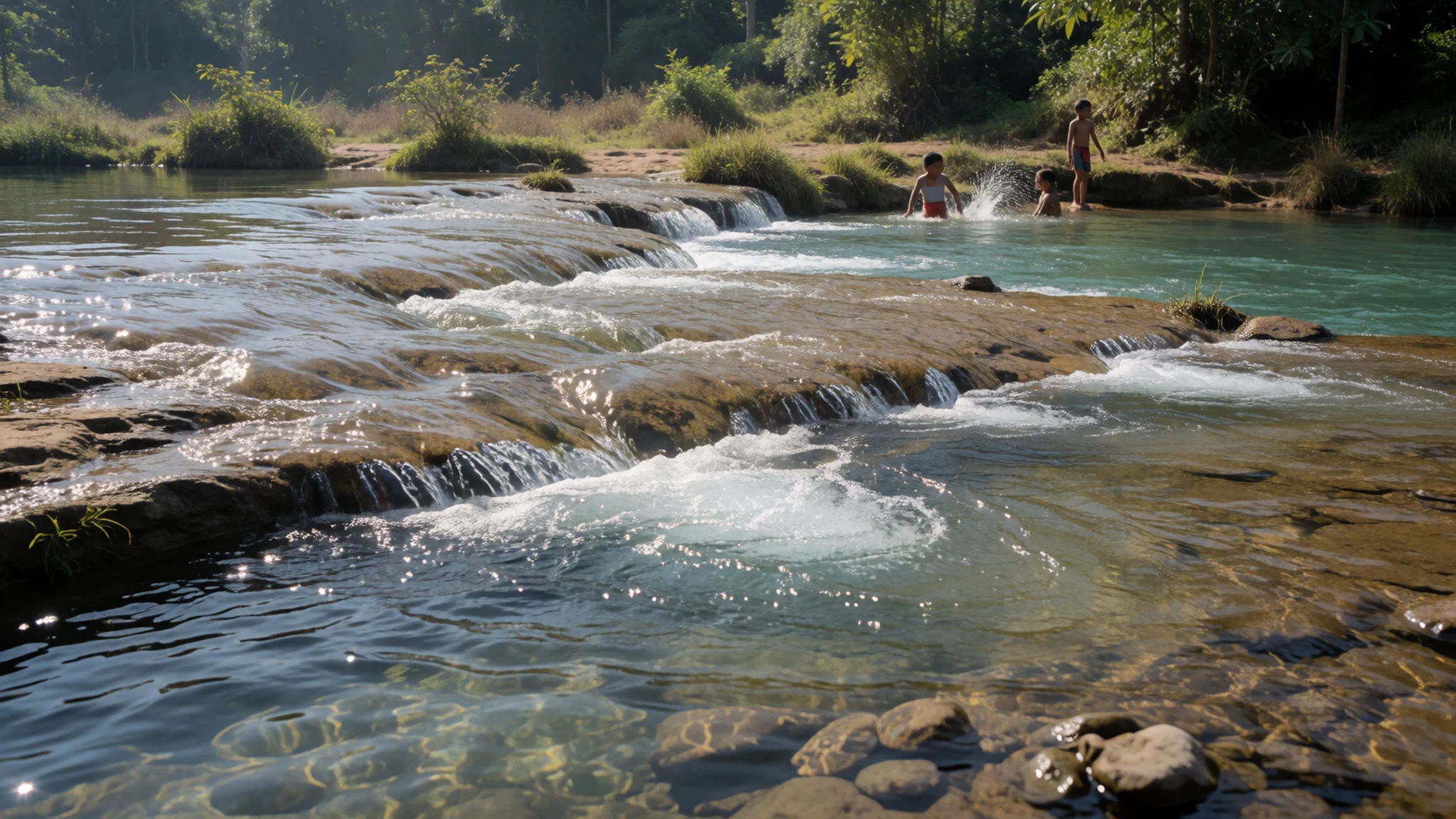
- Tad Lo waterfall — Tad Lo village
The fall that gives the village its name sits a short stroll from the guesthouses. After the wet season it runs full and loud; late in the dry season it thins to a few veils over dark rock. Both moods are worth seeing. Wear shoes with grip, because the rocks near the water are slick.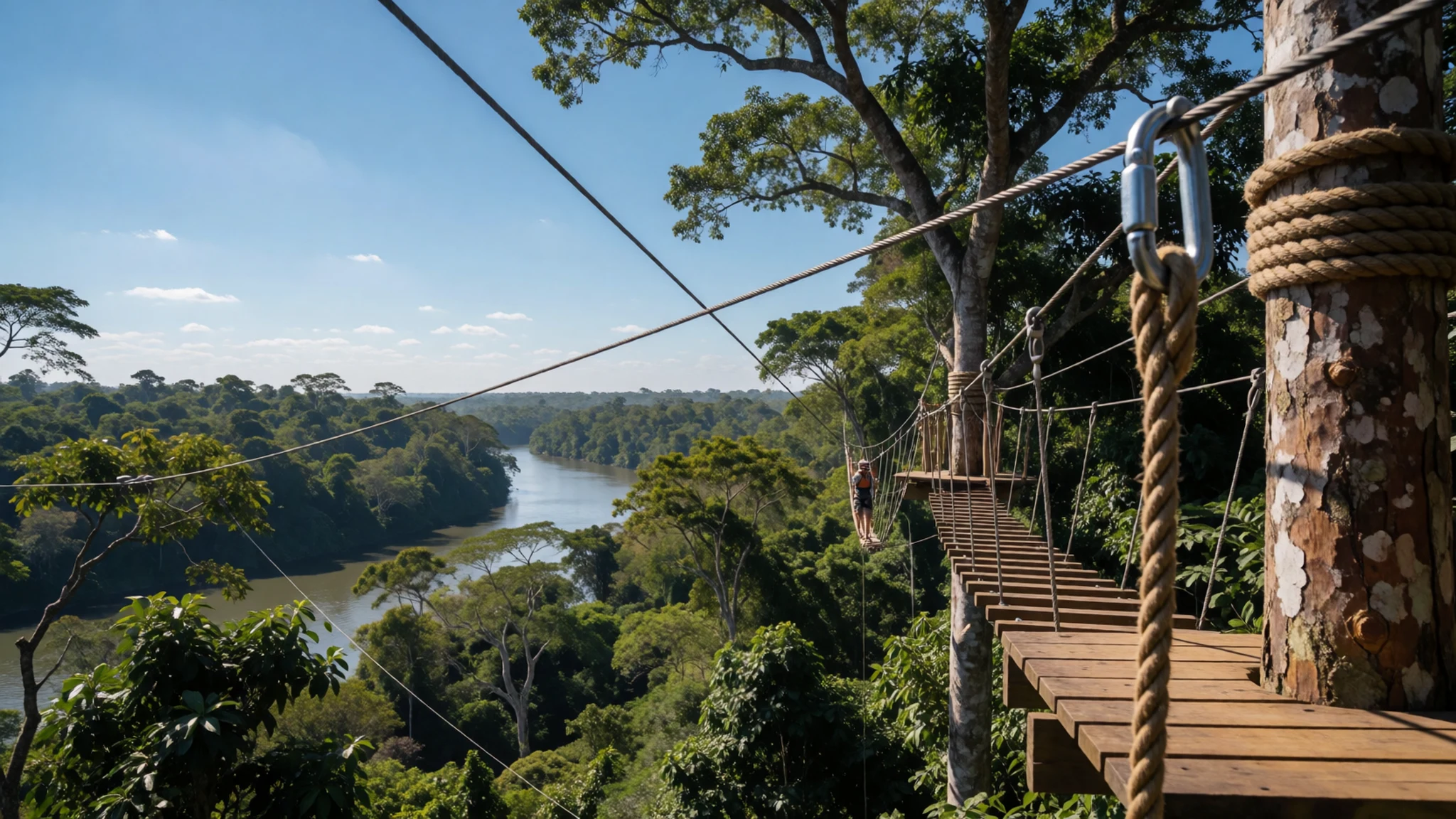
- Tad Soung — Outside the village, upstream
Tad Soung is the more distant of the three falls and rewards the extra effort with fewer people. It can be reached by a longer walk, by motorbike or by other local transport. Arrange the route and a return plan with your host, and carry water, as shade is patchy.
- Guided forest treks — Tad Lo village and surrounding forest
The village tourism office can put visitors with local guides for outings that vary from a short ramble to a full day among forest paths and neighbouring villages. A guide adds plant names, local history and a sense of which tracks are safe after rain. Book a day ahead where possible.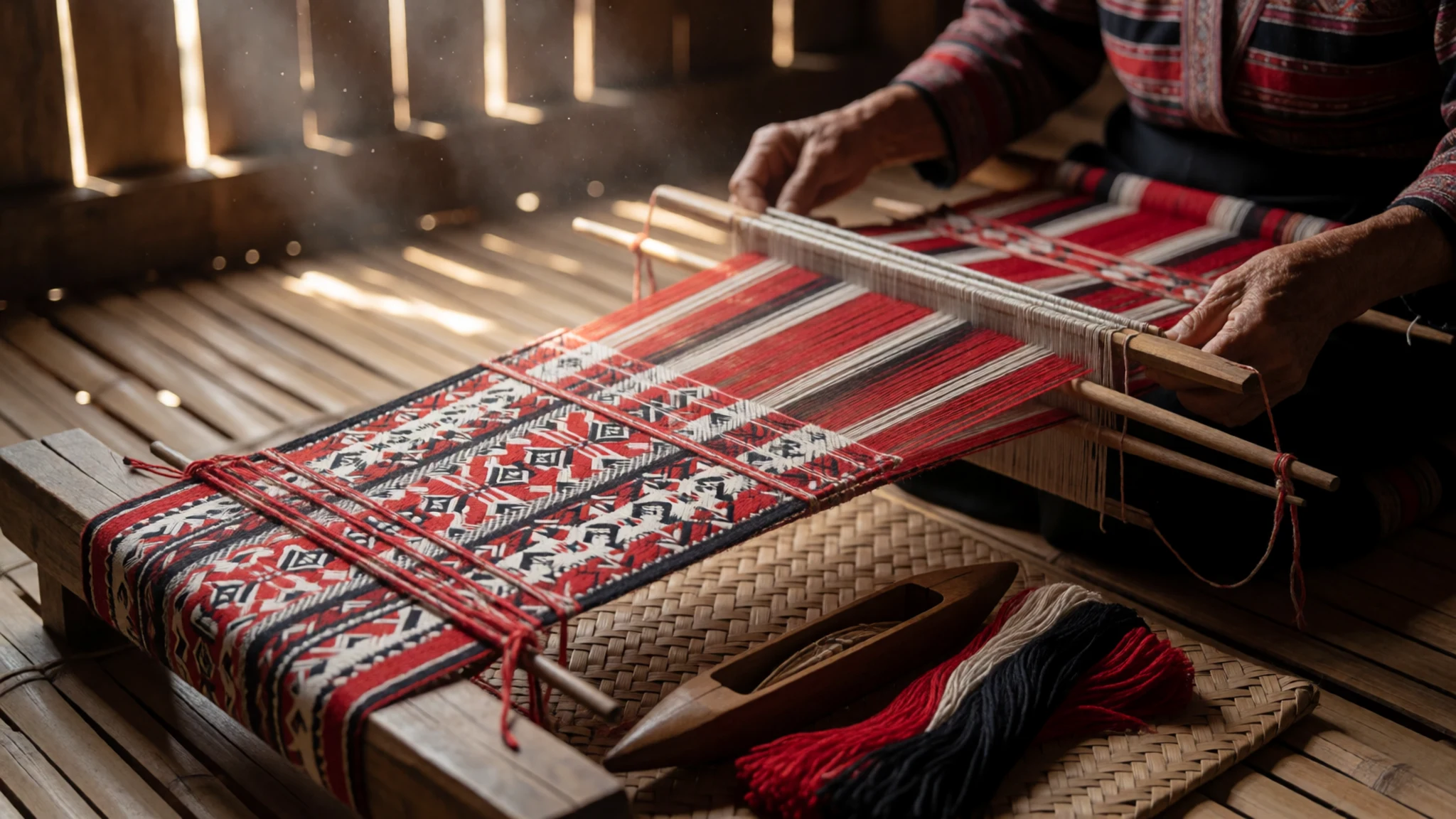
- Katu weaving workshop — Tad Lo village
Local Katu weavers offer sessions where visitors can see how thread becomes cloth and try the loom themselves. It is an unhurried way to understand the textiles of the plateau, and buying directly from the maker puts money straight into the household that produced the piece.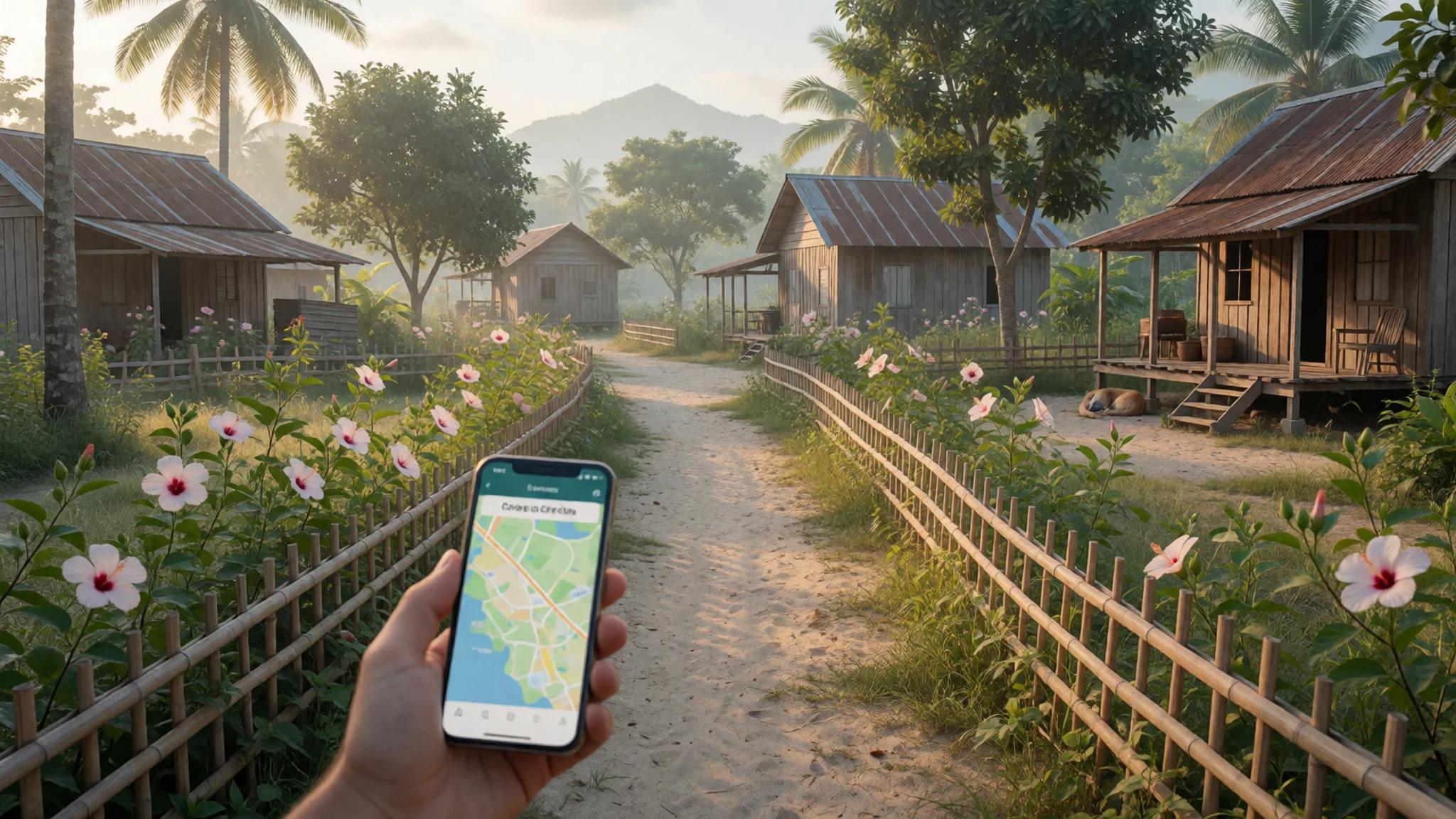
- Fandee Island treetop course — Lakeside, near Tad Lo village
Fandee Island, just a walk from the village, has a lakeside restaurant, tree houses and a canopy course of ziplines and rope bridges. Advance booking is not usually needed, though checking on the day is sensible. It suits families and anyone wanting a break from waterfall walking.
Culture
Tad Lo sits in a part of Laos where lowland Lao customs and the traditions of upland communities overlap. Many households are Buddhist, with merit-making and temple festivals marking the calendar, while some upland communities also keep older spirit beliefs tied to forest, river and house. Rivers and waterfalls are not just scenery in this tradition; they can be places with their own presence, and local people may ask visitors to behave respectfully near them. Hospitality is central. Homestays are run by families, meals are often shared, and a visitor who greets people with a smile and a few words of Lao is received warmly. Sticky rice is the staple, eaten by hand, and food is typically passed around a table rather than served in individual portions. Village life follows daylight: people rise early, work in gardens and fields, and quieten down in the evening, so late-night noise is unwelcome. The pace can feel slow to newcomers, but patience is expected and rewarded; plans for transport and guides are often settled in conversation rather than on paper. Craft matters here too. Weaving is a skill passed between women, and pieces carry patterns that identify family and community. Buying one is a way to support that living tradition. Ask before photographing villagers or their homes, keep your voice low near houses and temples, and never touch someone's head or point your feet at a person or a shrine.
What to wear
Tad Lo's traditional dress comes from two strands. Lowland Lao women wear the sinh, a wrapped tubular skirt in woven silk or cotton, usually for festivals, weddings, temple visits and formal work; the patterned hem is often the showpiece. Among Katu and other upland communities, handwoven cloth in bold bands of colour, sometimes decorated with beads, is worn for ceremonies and special days, and the weaving itself is done on simple looms in family homes. Daily wear today is far more casual. Villagers dress for work and heat in T-shirts, lightweight trousers or sarongs, rubber sandals and wide-brimmed hats for the fields, with traditional pieces kept for occasions. Visitors should dress for a warm, humid plateau where the weather can turn quickly. Lightweight, quick-drying clothes work best, with a thin waterproof layer for the wet months. Shoulders and knees should be covered when walking through the village or visiting a temple, and swimwear is best kept to the water's edge, with a sarong or shirt over it afterwards. Footwear matters more than fashion: sturdy sandals with grip or light trail shoes are far safer on wet rock than flip-flops. Bring insect repellent and a hat. Evenings can be cooler than expected, particularly in the dry-season months, so a light long-sleeved top is worth packing.
What to eat
- Sticky rice (khao niao) — Any homestay or village eatery
Steamed glutinous rice, served in a small woven basket and eaten by hand. It is the base of nearly every Lao meal in Tad Lo. Look for it at any homestay table or village eatery, where it arrives warm and wrapped in a cloth.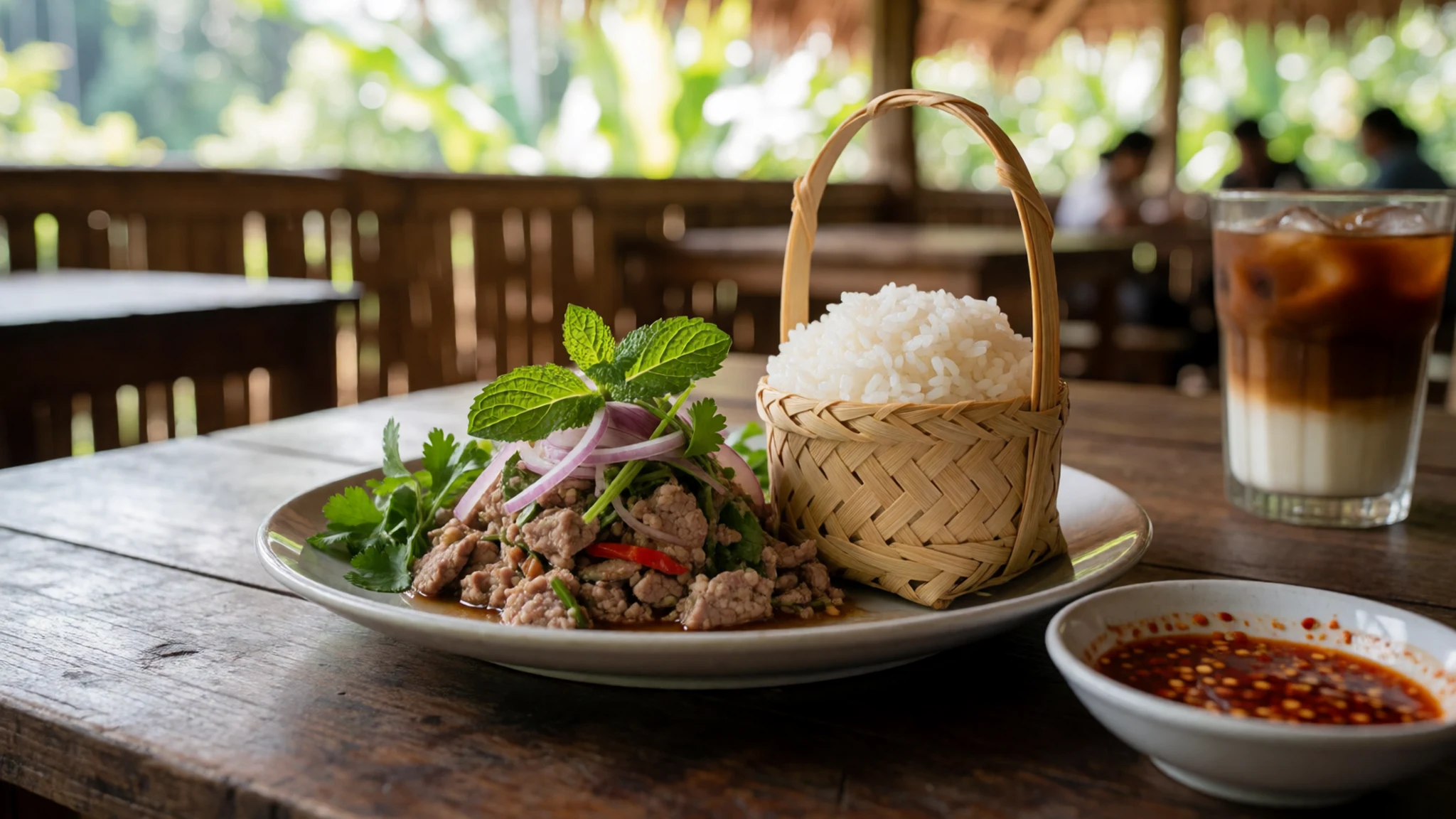
- Laap — Family-run restaurants along the main lane
A minced-meat salad, usually chicken, pork or fish, mixed with lime, fresh herbs, chilli and toasted ground rice. It is sharp, herby and eaten with sticky rice and raw vegetables. Ask for the spice level to be adjusted before it is made.
- Grilled river fish — Riverside guesthouse restaurants
Fish from local waters, often wrapped in herbs and cooked over charcoal, then served with a chilli dip called jaew. Availability depends on the catch, so ask what is fresh that day rather than expecting a fixed menu. - Tam mak hoong — Village eateries and roadside stalls
Lao-style green papaya salad, pounded in a mortar with chilli, lime, fish sauce and garlic. It is saltier and funkier than its Thai cousin. Made to order, so tell the cook how hot to go. - Plateau coffee — Guesthouse terraces and lakeside cafés
The Bolaven Plateau is a coffee-growing area, and many places in Tad Lo serve a strong local brew, often with condensed milk over ice. Tea and fruit juices are also common. A good way to start a morning before a waterfall walk.
Plan it
Best time. November to February is the most comfortable window: the rains have eased, the paths are drier and the falls still carry water. March and April grow hot, while the wet months bring fuller falls but muddy tracks, higher rivers and less reliable swimming.
How long. 2–3
Getting there. Fly to Pakse, then take a bus towards Salavan and ask the driver to stop at the turn-off for Tad Lo, near Ban Khoua Set on the main road. From there a short side road leads to the village; a tuk-tuk is often waiting, or the walk is manageable with light luggage.
Budget. low
Tips
- Bring enough cash before arrival, as there was no cash machine in the village at the last check; some guesthouses accept QR payments
- Check river conditions locally before swimming, since depth and current change with season and recent rain
- Departures back towards Pakse run in daylight and change often, so confirm times with your host the evening before
- Walk to the nearer falls in the morning, when it is cooler and quieter
- Consider a local guide for the longer forest routes, and book through the village tourism office or a guesthouse
Etiquette
- Greet hosts and villagers with a smile, and ask before taking photographs of people
- Dress modestly in the village and cover up after swimming
- Keep noise down in the evenings and take litter away with you
Nearby
Sources
- Wikidata Q14235953 (CC0)
- Wikivoyage — Tadlo (rev 5326194) (CC BY-SA 4.0)
- Wikipedia — Tad Lo (CC BY-SA 4.0)