Surin Islands
Surin Islands, Thailand
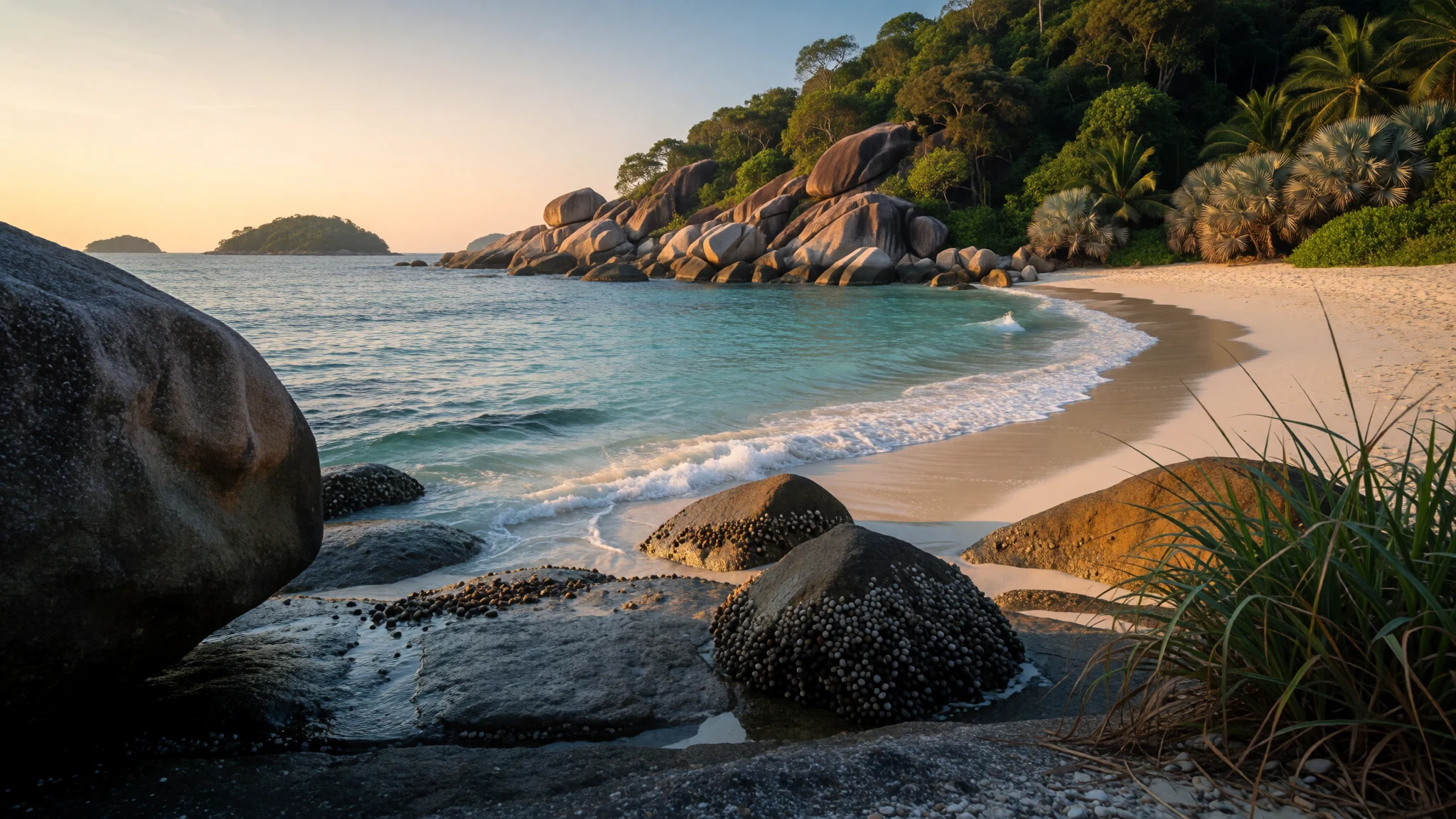
Surin Islands is a protected Andaman Sea archipelago where clear reefs, turtle beaches and a Moken sea-nomad community make a simple, quiet island stay.
The place
The Surin Islands lie in the Andaman Sea, roughly 55 km off the Thai mainland, and fall under Phang Nga province. Five islands make up the group, but two dominate: Ko Surin Nuea and Ko Surin Tai, divided by a channel about 200 m wide that dries out at low tide. The smaller three are Ko Khai, Ko Glang and Ko Chi, and older maps often use other names for them, such as Ko Torinla, Ko Pachumba and Ko Satok. Two rocky islets, Hin Kong and Hin Rap, complete the cluster. The whole area is protected as Mu Ko Surin National Park, and about three-quarters of it is sea rather than land. That ratio explains the place: it is about reefs, not roads. The islands are granite, pushed up where tectonic plates collided in the distant past, so the shores are rocky headlands and steep green slopes with sandy bays between them. Myanmar's waters begin a few kilometres to the north, and the Similan Islands lie about 100 km to the south. Accommodation is simple, in park bungalows and tents, with two campsites on Ko Surin Nuea. There is no town, no nightlife and patchy phone signal. Most visitors come to snorkel, some to dive, and many simply to sit on quiet beaches. The park only opens in the dry months, so the season is short and the popular bays can feel crowded in peak weeks.
Its story
The story of the Surin Islands has three layers: rock, people and protection. The rock came first. Geologists think a collision between the Burma and Sunda plates during the Mesozoic era crumpled the crust along what is now Thailand's west coast, shoving up granite islands and leaving underwater pinnacles scattered offshore. One of these, the limestone pinnacle of Richelieu Rock about 45 km from the mainland, is a well-known dive site and carries the name of Admiral Andreas Richelieu, a foreigner who rose to command the Thai Navy. The people came next. The Moken, a sea-nomad community, have long lived and travelled by boat in these waters, and a Moken settlement remains on the islands today. Their boats and their knowledge of the sea belong to the place as much as the reefs do, and the village deserves to be treated as a home rather than a sight. Protection arrived in 1981, when the islands were declared a national park to safeguard the fragile marine habitat. Green and hawksbill turtles still visit to nest on the beaches, and a few rare Olive Ridley turtles laid eggs here in the 1990s. Some stretches are closed to diving while conservation projects run, and the whole park shuts for the rainy season. The rules can feel strict on a short trip, but they are the reason the reefs and beaches are still worth the long boat ride.
What to see
- Ko Surin Nuea — Northern main island
Ko Surin Nuea is the northern of the two main islands and the one with the park's bungalows, tents and campsites. Its sheltered bays have calm, clear water, and snorkelling from the beach is the main pastime. Expect shared facilities, simple meals and a quiet evening routine once the day boats leave.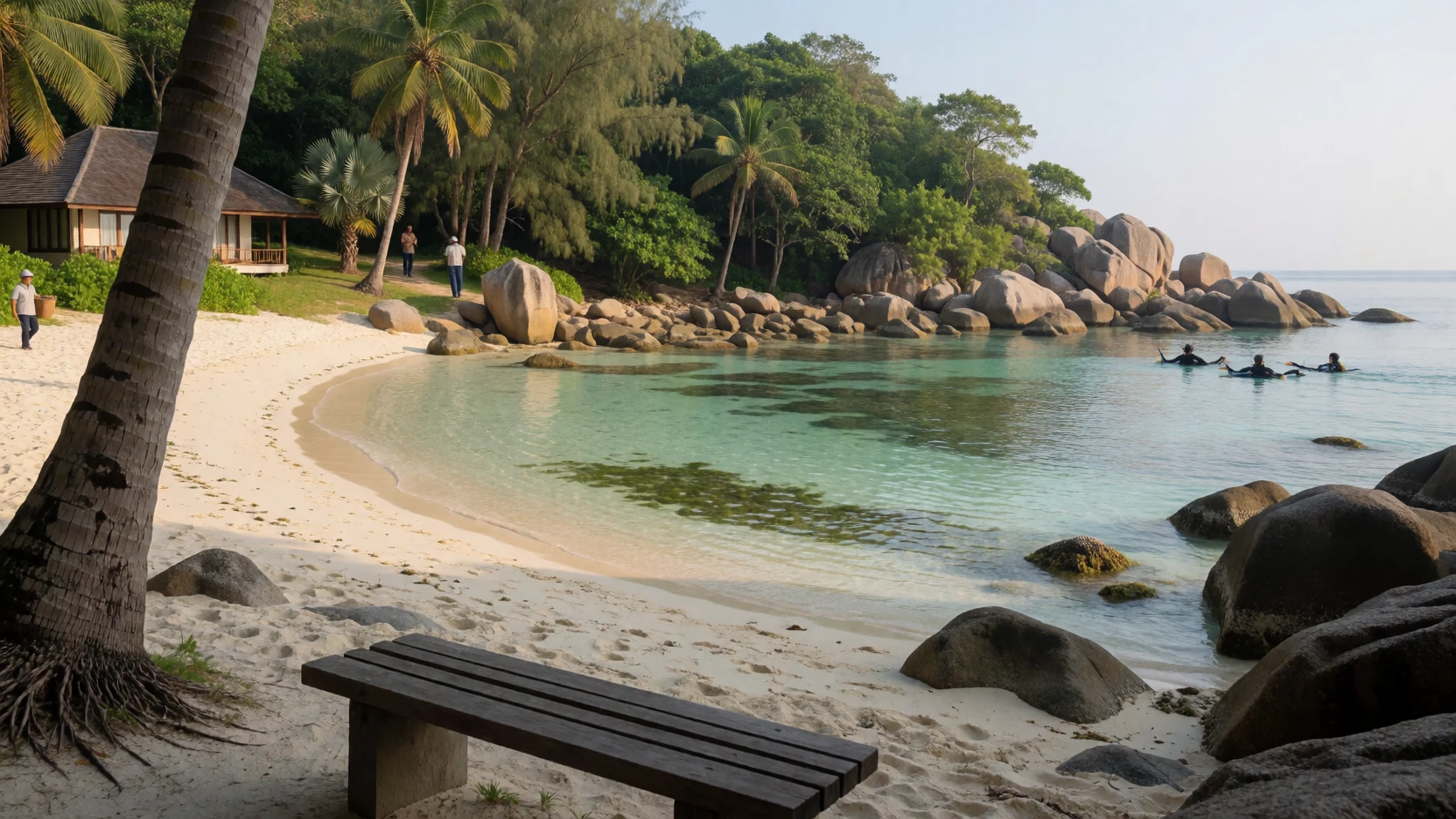
- Ko Surin Tai and the tidal channel — Southern main island
Ko Surin Tai is the southern main island, separated from its neighbour by a channel about 200 m wide that dries at low tide. Rocky coves and forested slopes make it feel wilder than the northern island. It is also where the Moken community lives, so keep to paths and be considerate.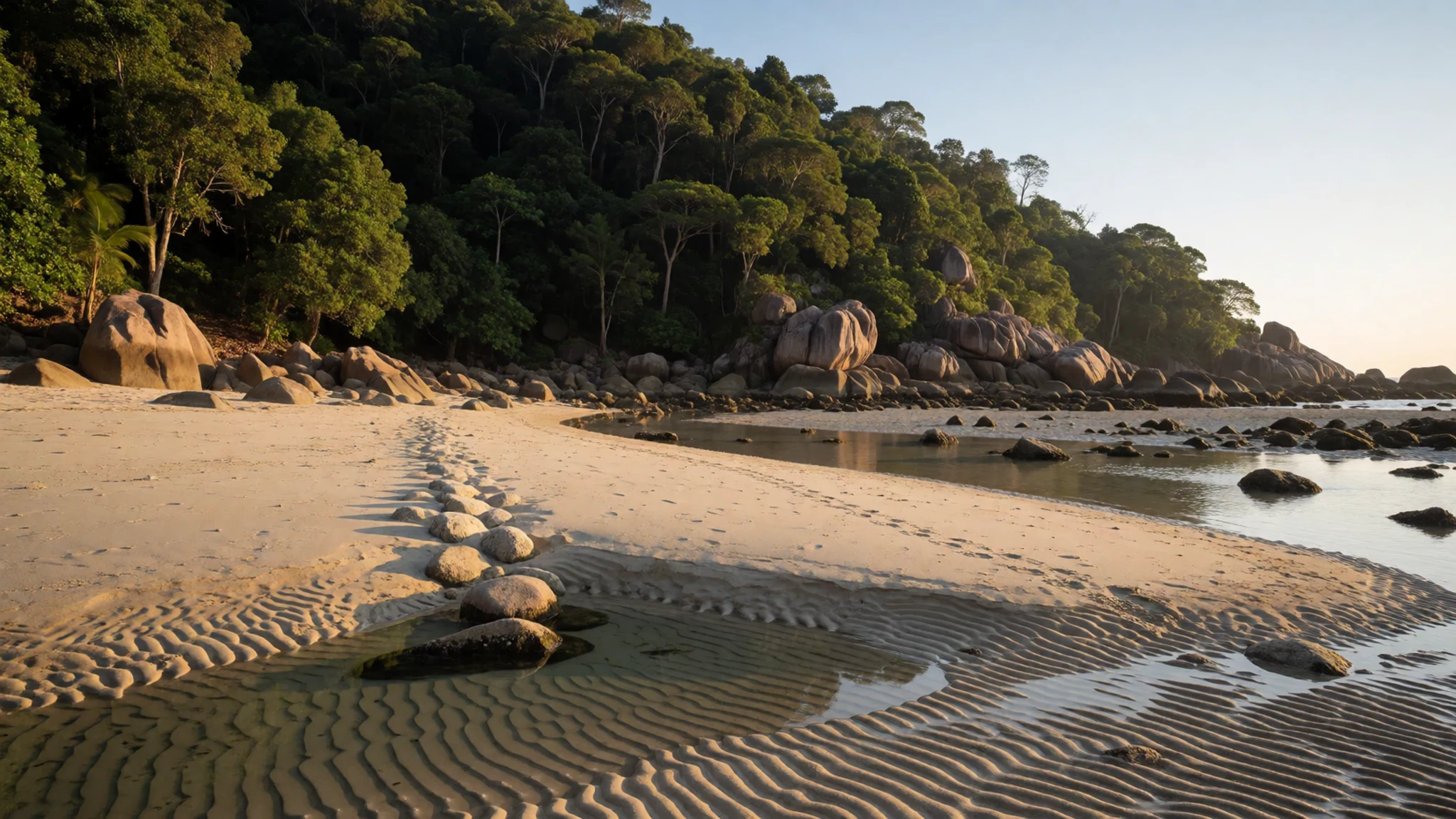
- The Moken boats and village — Ko Surin Tai
The Moken are sea nomads, and their wooden boats are a familiar shape in these waters. A visit to the Moken settlement on Ko Surin Tai gives context to the islands that reef-watching alone does not. Ask before photographing people or homes, and treat the village as a community rather than a display.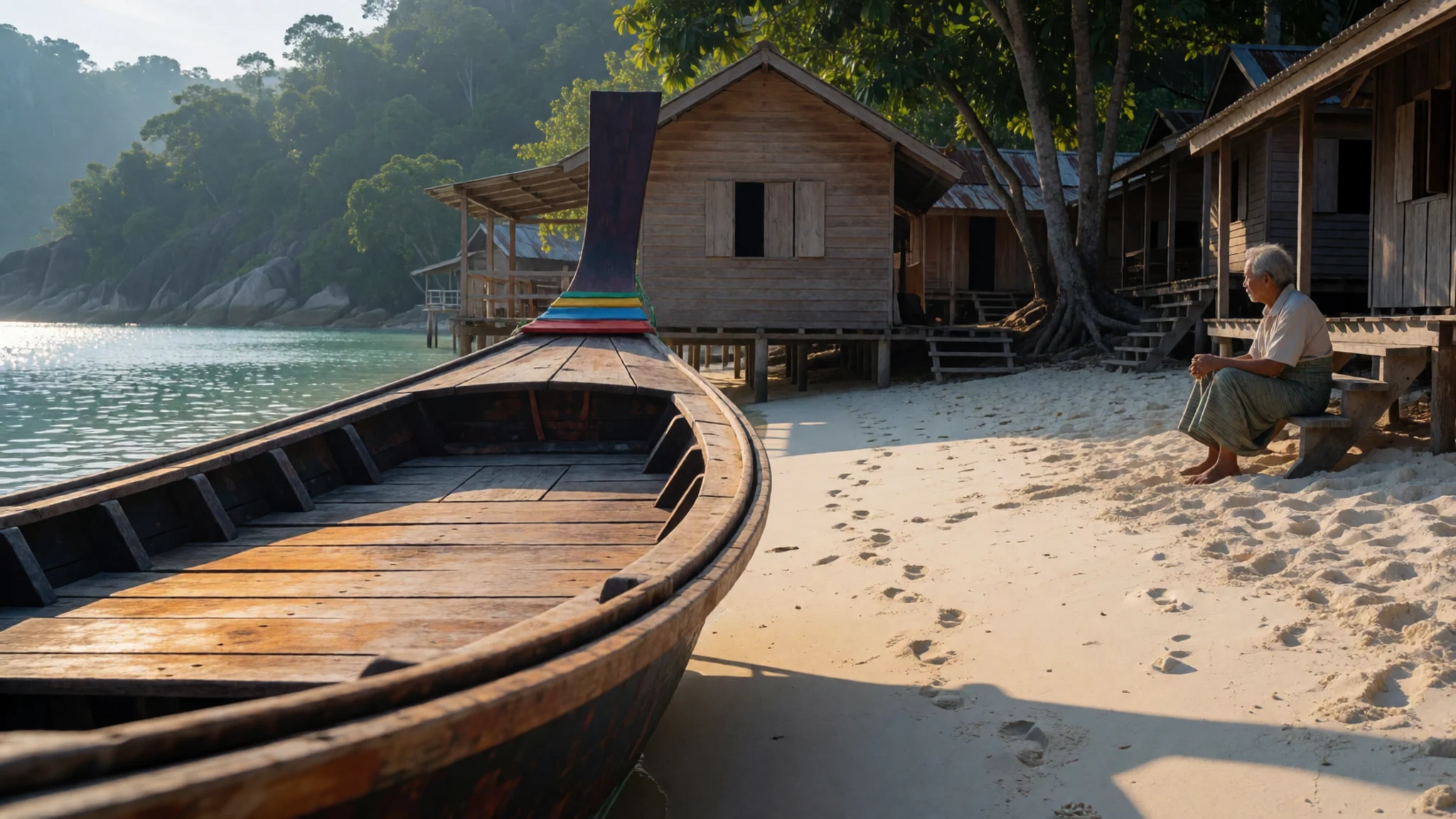
- Richelieu Rock — Open sea east of Ko Khai
Richelieu Rock is a limestone pinnacle about 45 km from the mainland, east of Ko Khai, and a draw for divers. It sits in open water, so conditions depend on currents and the season. Most people reach it on liveaboard or dive trips from the mainland. Snorkellers should ask operators whether it suits them.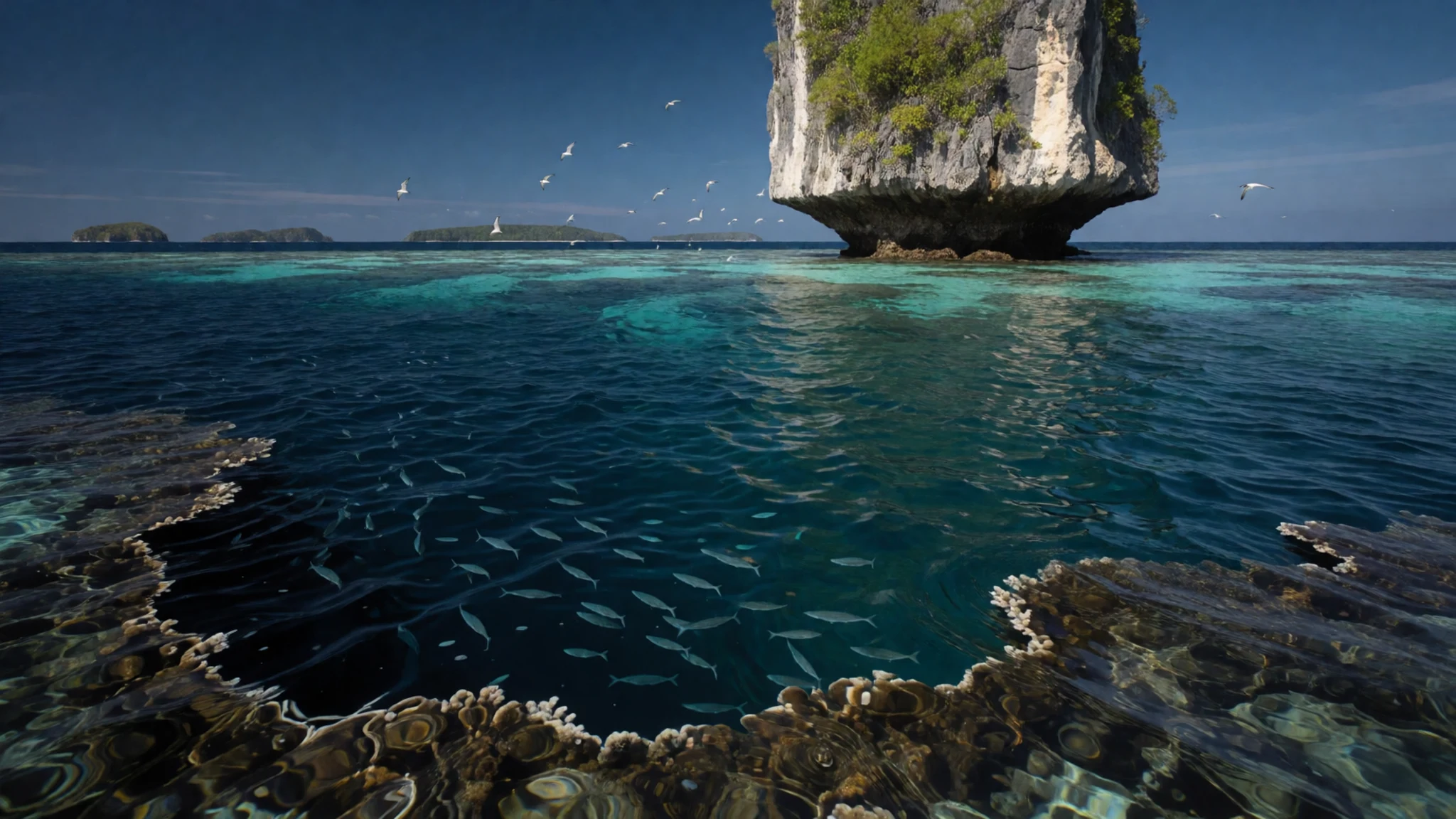
- Night sky and low-tide reefs — Beaches of Ko Surin Nuea
With no town lights, the islands offer a clear view of the Milky Way on calm nights, and at very low tides coral flats can show above the surface. Both reward patience. Stay on marked paths, never walk on live coral, and carry a torch with a dim or red setting.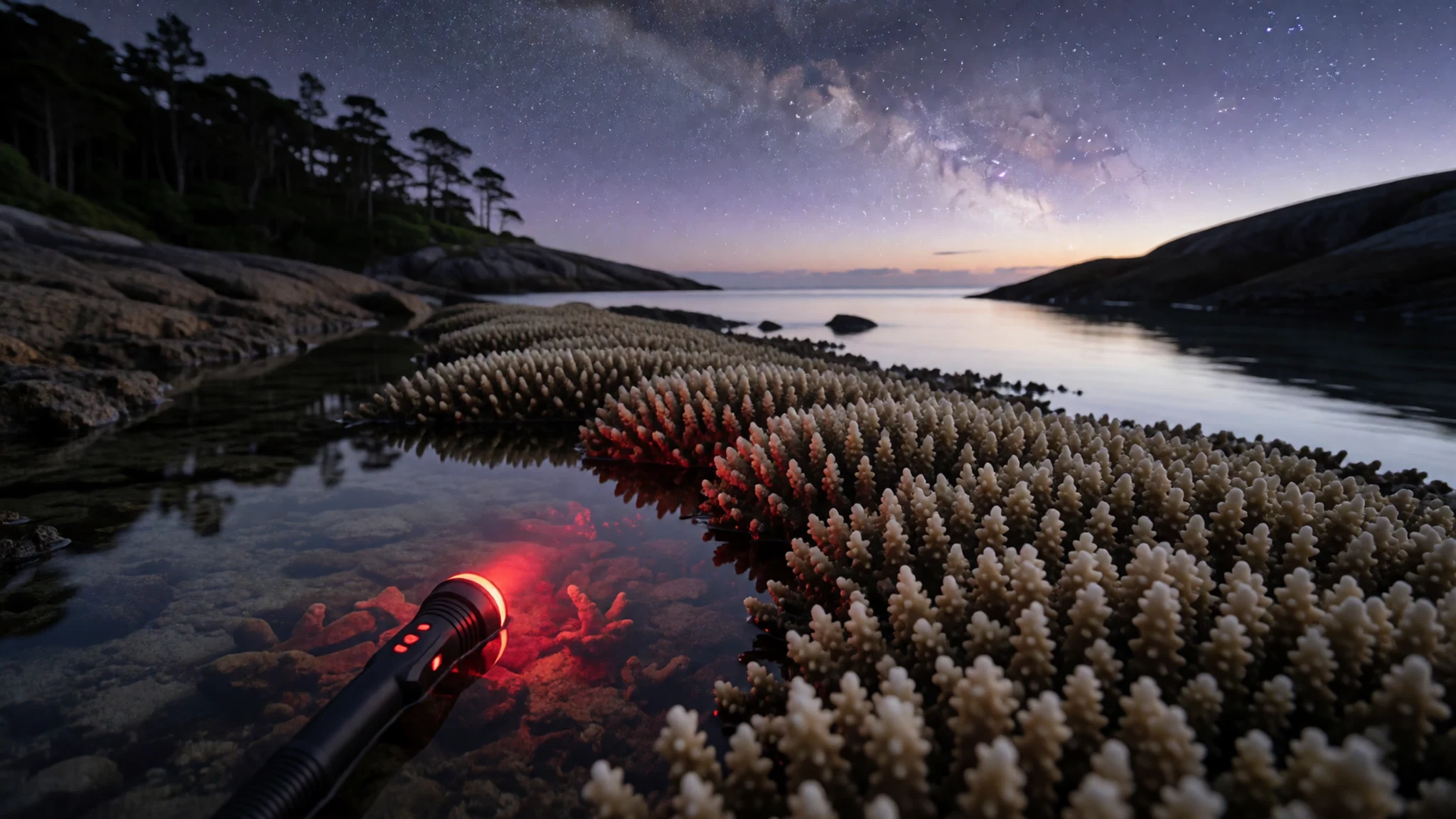
- Dolphins on the crossing — Waters around the park
Dolphins are sometimes seen from boats in the Andaman Sea around the park, usually on the crossing or during island-hopping trips. Sightings are never guaranteed. Boat crews know the signs, so ask them to slow down rather than chase, and to keep engines in neutral when animals come near.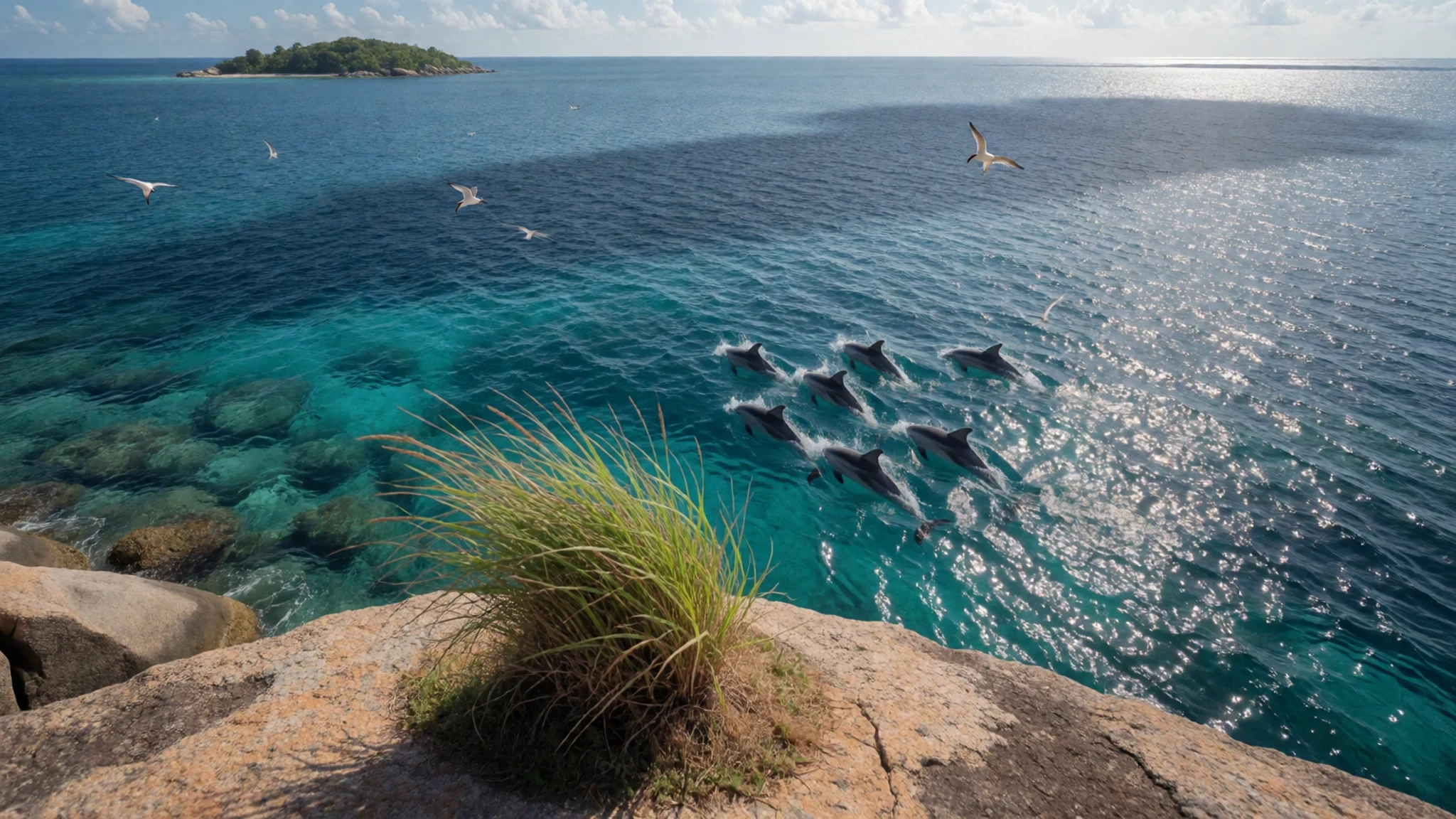
Culture
Culture on the Surin Islands is shaped by two things: the Moken people and the national park. The Moken are sea nomads whose lives have followed the sea, the seasons and the monsoon, moving between islands and open water in wooden boats. A Moken community lives on the islands today, and fishing and boat-making remain part of daily life. The Moken language, boat-building skills and knowledge of tides and marine life are handed down within families and are not staged for tourists. The park adds a second culture, one of rangers, short seasons and shared rules: early boats, shared bungalows, quiet after dark and rubbish carried back to the mainland. Thai hospitality shows up in small ways, such as a ranger's greeting, a meal shared at a campsite or a boatman who waits until everyone is back on board. The dry-season opening sets the rhythm, with the islands busy from mid-November and quiet again once the rains return. Because there is little commercial life, evenings are slow, with stars, card games and early nights. Visiting means adapting to that tempo and respecting the people who live here year-round. Ask permission before photographing Moken people or their homes, and never touch, feed or remove anything from reefs, beaches or turtle nests.
What to wear
Fashion on the Surin Islands is practical rather than ornamental. There is no formal island costume, and the Moken, who live by the sea, have traditionally worn simple, practical clothing suited to sun, salt and boats rather than ceremonial dress. In wider southern Thailand, traditional clothing includes the pha sin, a tube skirt in cotton or silk, and the chong kraben, a wrapped, trouser-style cloth for men; these appear at festivals and weddings on the mainland, not on the islands. What people wear now is modern and casual: shorts, T-shirts, rash vests, sarongs and wide-brimmed hats, with park rangers in uniform. Visitors should dress for heat, sun and water. Pack lightweight cotton or quick-dry clothes, a long-sleeved rash vest for snorkelling, a hat and reef-safe sun protection, and sandals or water shoes for rocky shores and boat jetties. Swimwear is fine on beaches and boats, but add a sarong or shorts when walking around camp, eating, or visiting the Moken village, where modest clothing is polite. A thin layer helps on windy crossings and cool evenings. Bring a dry bag for clothes and electronics, because spray on the boat is common, and keep a spare dry set for the return journey. Camp life is informal, so nothing smart is needed.
What to eat
- Khao pad — Park eating area on Ko Surin Nuea; eateries in Khuraburi
Khao pad is fried rice with egg, garlic and a choice of chicken, prawn or squid, served with lime and chilli fish sauce. It is the easy, filling meal at the park's eating area on Ko Surin Nuea and at mainland eateries in Khuraburi before the boat.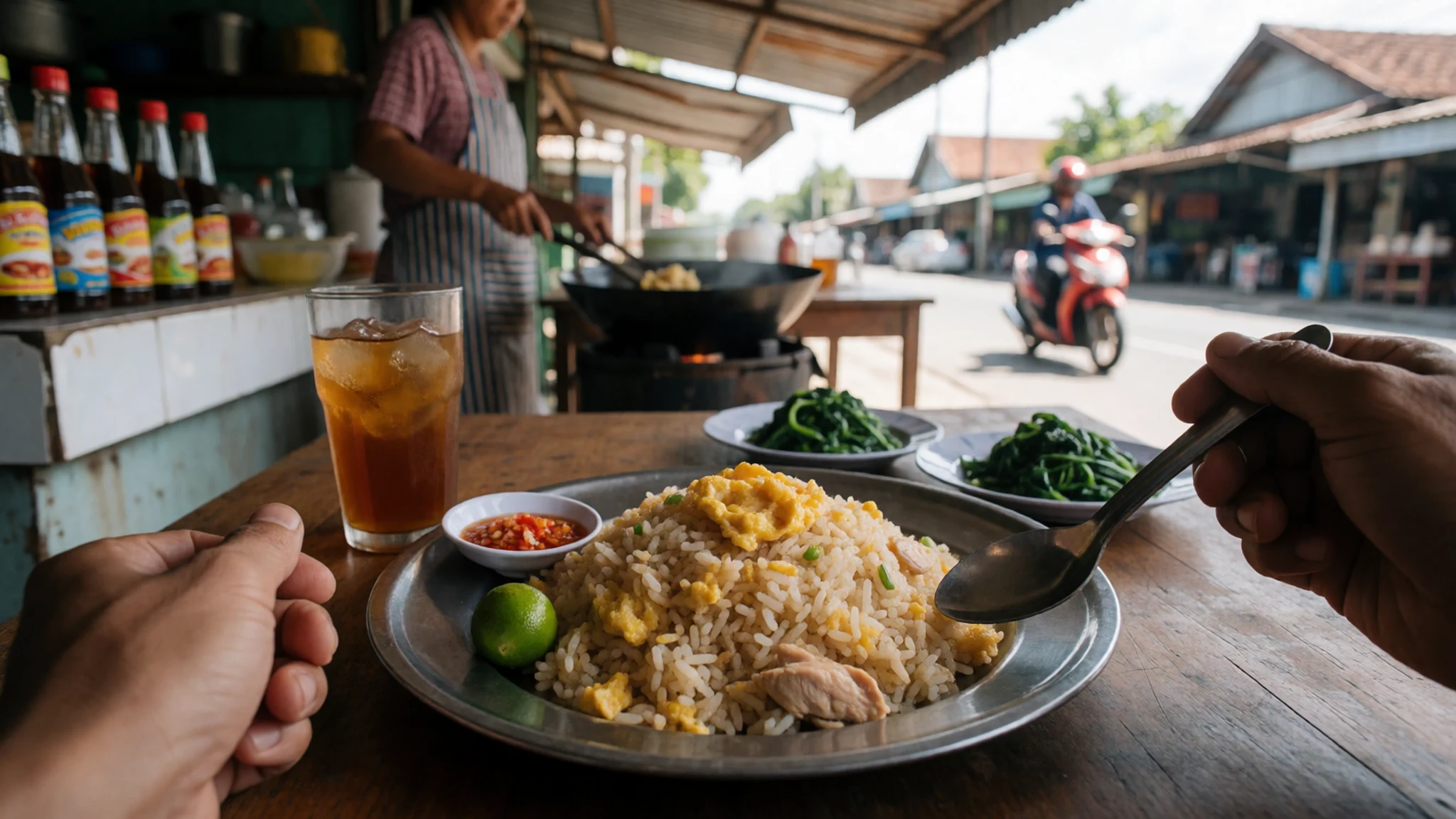
- Grilled fish — Seafood eateries on the mainland coast and the park's eating area
Fresh fish, often a whole snapper or mackerel, is grilled over charcoal and served with rice, lime, chilli dip and a simple salad. Catches depend on the day's boats, so the choice varies. It suits a beach evening better than a heavy meal after snorkelling.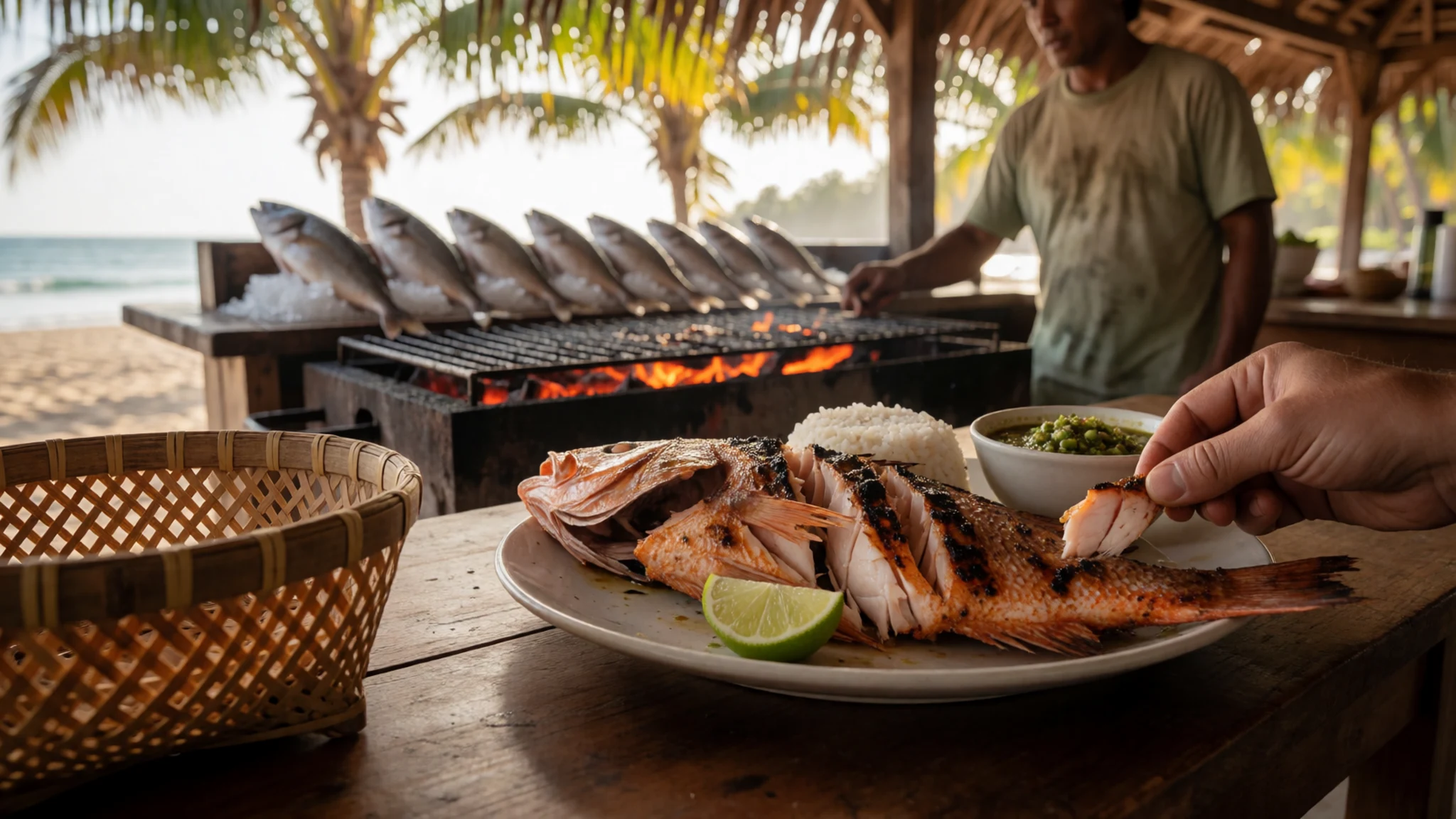
- Tom yum goong — Park kitchens and seafood eateries near Khuraburi
Tom yum goong is a hot-and-sour prawn soup with lemongrass, galangal, kaffir lime leaf and chilli. Ordered with rice, it makes a full meal. Park kitchens and mainland seafood eateries near Khuraburi cook it, and spice can be reduced if asked politely. - Pad kra pao — Camp kitchens and any roadside eatery in Khuraburi
Pad kra pao is stir-fried minced pork, chicken or seafood with holy basil, garlic and chilli, usually topped with a fried egg over rice. It is a quick everyday lunch at camp kitchens, and the heat level is easy to adjust. - Fresh tropical fruit — Markets and shops in Khuraburi; park eating area
Pineapple, watermelon, papaya and mango, in season, are sliced and served cold as a welcome finish to hot days. Supplies on the islands can be limited, so many visitors buy extra from shops and markets in Khuraburi before boarding the ferry.
Plan it
Best time. Mid-November to April, when the park is open and the seas are calmer; the hot season builds from mid-February into May. The rainy season runs from mid-May to October, with about 1,350 mm of rain a year, and the park is closed through the wet months, so check its official dates before booking.
How long. 2–3
Getting there. Fly to Phuket, the usual airport for this coast, then travel north by road to Khuraburi, Khao Lak or Ko Phra Thong. The last leg is a ferry or speedboat from the Khuraburi pier, about a 10-minute transfer from the town centre, or a day trip or liveaboard from Khao Lak.
Budget. mid
Tips
- Book bungalows or tent space well ahead through the park's official channels, as the season is short
- Carry enough cash for the trip, since there are no banks on the islands
- Bring drinking water, a reusable bottle and a dry bag for the boat crossing
- Start snorkelling early, when the water is calmest and the bays are quieter
- Check the official park site for current opening dates, closed dive areas and boat times
Etiquette
- Do not touch, stand on or collect coral, shells or turtle eggs
- Ask permission before photographing Moken people or their homes
- Carry all rubbish back to the mainland
Nearby
Sources
- Wikidata Q25046183 (CC0)
- Wikipedia: Surin Islands (rev 1378854624) (CC BY-SA 4.0)
- Wikivoyage: Surin Islands (rev 5314189) (CC BY-SA 4.0)
- Photo: A Moken boat at Surin Island, by Ronnakorn Potisuwan (CC BY-SA 1.0)
- Photo: Night sky at Koh Surin, by Shane WP Wongperk (CC BY-SA 4.0)
- Photo: Dolphins in the Andaman Sea, by Doremee.suthatta (CC BY-SA 4.0)


Wildlife
- Green turtle (animal)
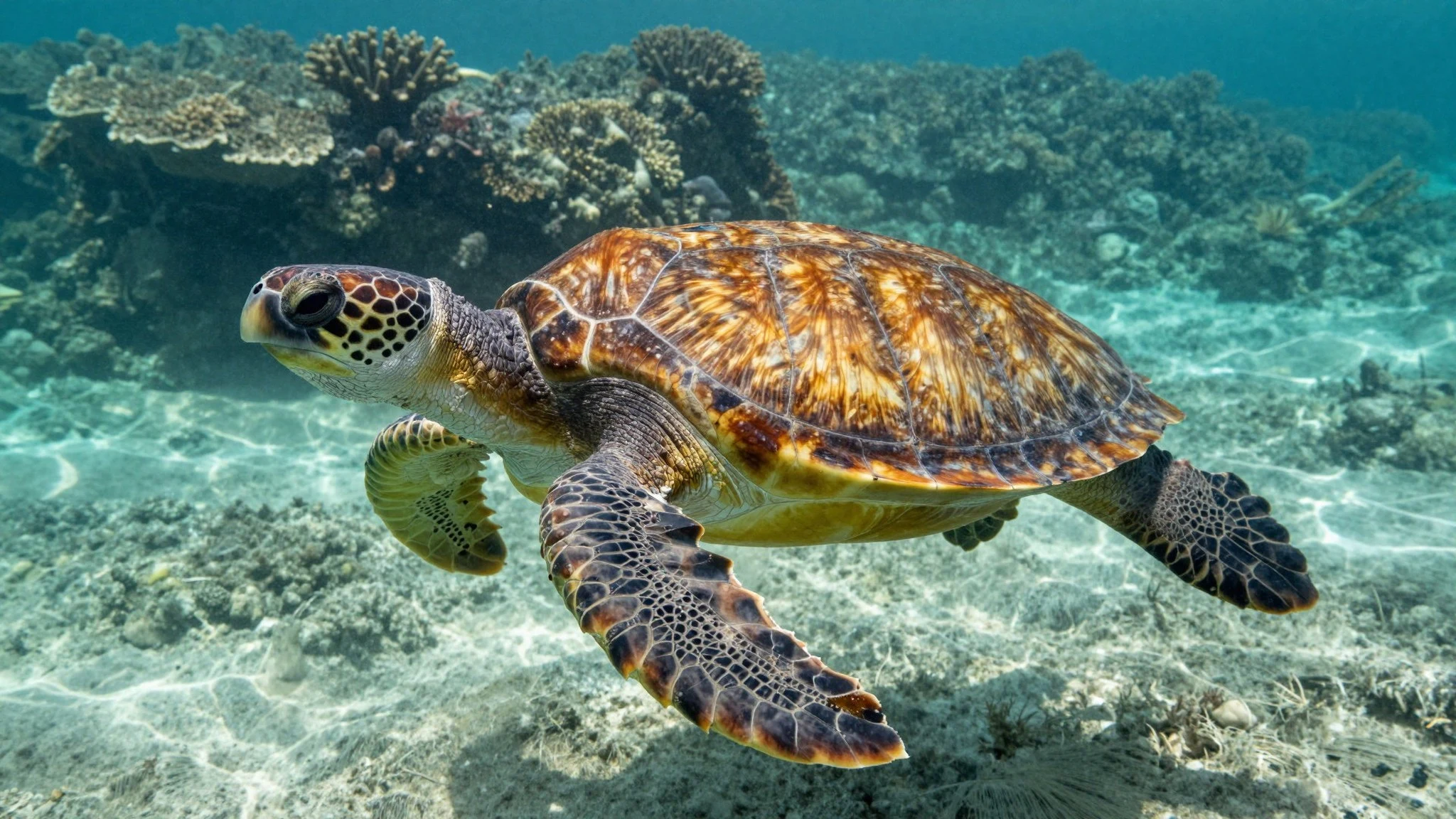
The green turtle is a big sea turtle that munches only seagrass, and it is named for the green tinge of its fat, not for its shell, which is olive to black. In the Surin Islands, green turtles still come ashore to lay their eggs on the beaches. Ask your guide when nesting is likely, as timing is not something we can promise. Keep a respectful distance, stay quiet, follow your guide, and never feed or touch them.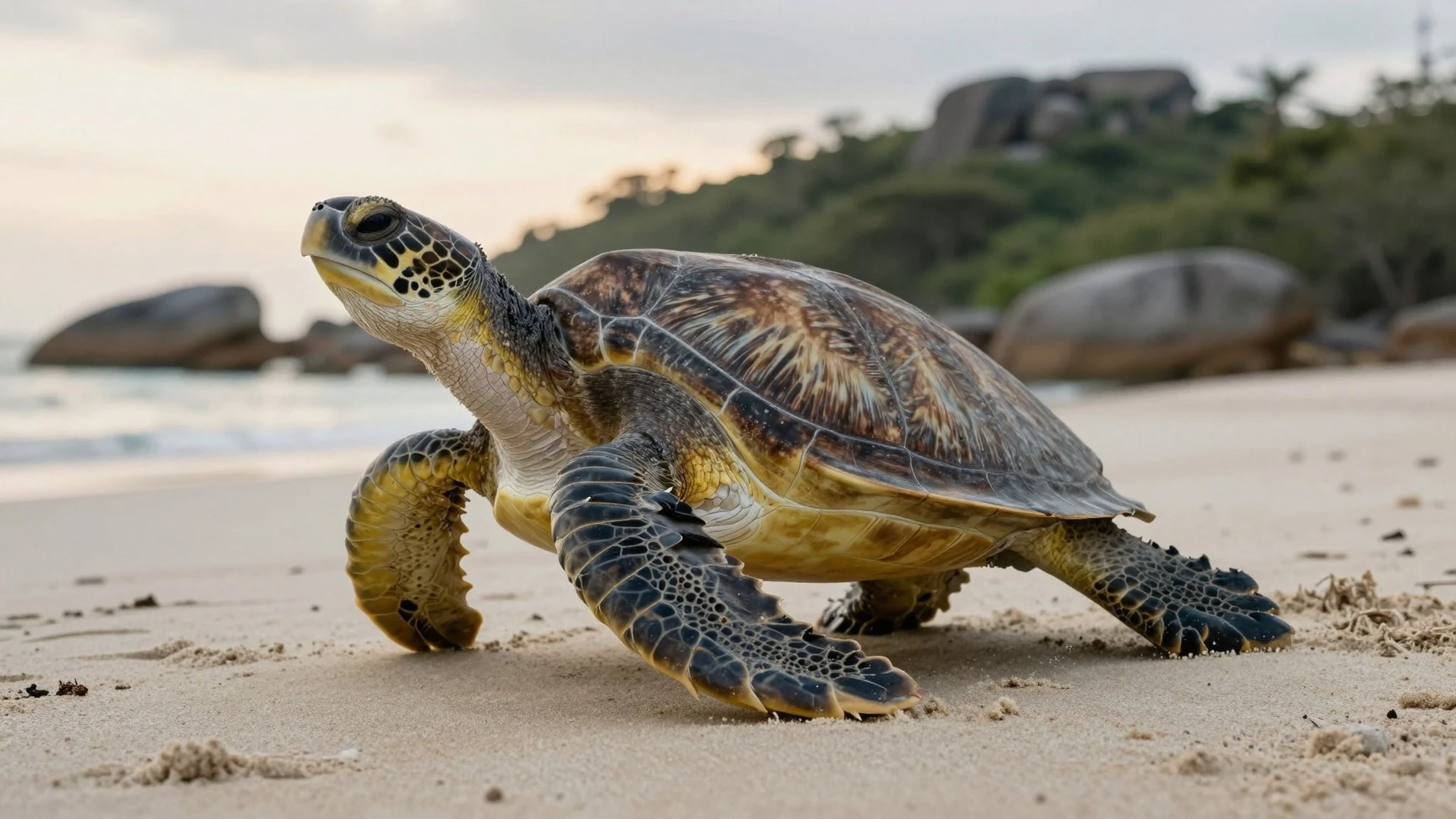
- Hawksbill turtle (animal)
The hawksbill is a sea turtle so threatened that it is listed as critically endangered, which makes every sighting precious. It lives in warm tropical seas and river mouths, and in the Surin Islands it still comes to nest on the beaches. We have no reliable word on the season or time of day, so ask your guide what to expect. Stay well back, keep voices low, let the guide lead, and never feed or disturb it.