Stowe
Stowe, United States
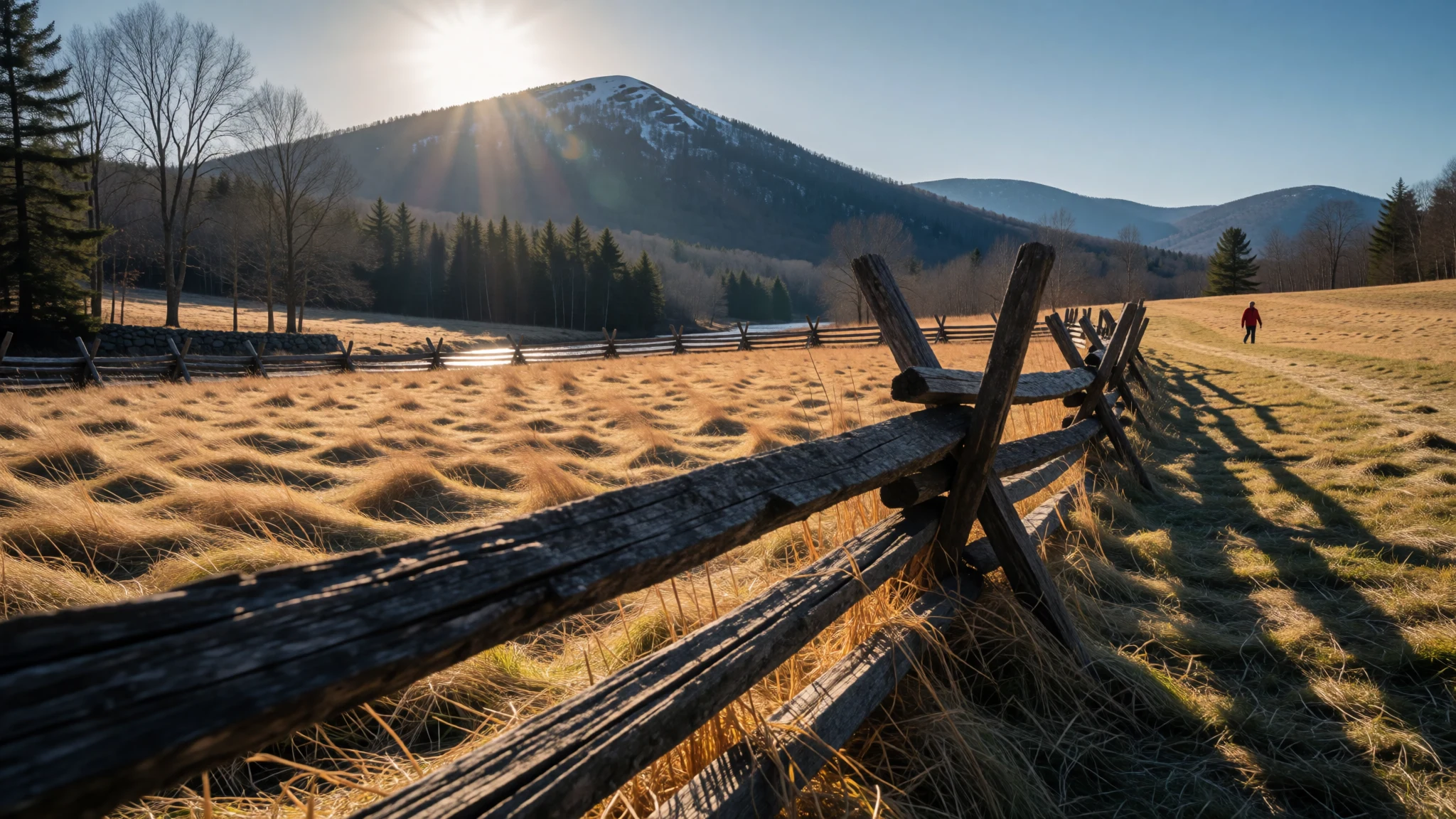
Stowe is a Vermont mountain village where autumn colour, serious skiing and working-farm New England sit within a short drive of each other.
The place
Stowe is a small town in Lamoille County, northern Vermont, with a population of 5223 and a village centre at an elevation of 295 metres. It occupies a broad, fertile valley, with Mount Mansfield and the rest of the Green Mountains rising to the west and the lower Worcester Range along the eastern side. Mansfield is the highest peak in Vermont, and its long ridgeline is the backdrop to most views in town. The village stands beside the Little River, which picks up a West Branch and then runs south towards Waterbury Reservoir. Two state roads meet here, so traffic bunches up on winter weekends and on autumn Saturdays when the leaves turn. Skiing is why most people have heard of Stowe, and the town has long carried a nickname that claims the sport for the whole eastern side of the country. The resort has runs on Mansfield and on neighbouring Spruce Peak. Away from the slopes, the place is a New England town in the familiar mould: a white-steepled church, a main street of shops and eateries, farmland on the valley floor and dense woods above. It is compact. The village can be walked in under an hour, and the real scale only shows once the road climbs towards the mountain. Visitors should expect big seasonal swings, with quiet mud-season weeks in spring and full lodges in peak foliage and snow months.
Its story
Stowe received its charter in 1763 from Benning Wentworth, governor of New Hampshire, which then claimed the territory that became Vermont. Before settlers arrived, the valley belonged to Abenaki people, and no place names from the original language survive in the town. Settlement picked up after the French and Indian War, and by the end of the eighteenth century most of the land had been sold. Early Stowe lived on timber and farming. Forests were felled for fields and pasture, and a great many sheep grazed the hillsides. When wool lost its price, farmers turned to dairy, and many dairy farms worked the valley. As farming later shrank, woodland crept back over much of the cleared ground, which explains the thick green slopes seen today. Tourism began early. By the middle of the nineteenth century, visitors were coming for the mountain scenery. A summit hotel on Mansfield went up shortly before the American Civil War, and a toll road followed. A huge village hotel, the Mansfield House, burned down late in that century, and an electric railway once carried passengers and freight between Waterbury and the village until the Depression years. Summer trade carried the economy through the First World War, and soon afterwards Stowe held its first Winter Carnival, with ski jumping and skating. That event pointed the town towards the snow business that now defines it.
What to see
- Mount Mansfield — West of the village, Green Mountains
Mount Mansfield is Vermont's highest peak and the reason for the town's whole identity. Summer visitors can hike its ridge, drive the toll road or ride the gondola for the view across the valley. Weather changes fast up top, so carry a windproof layer even on a sunny morning.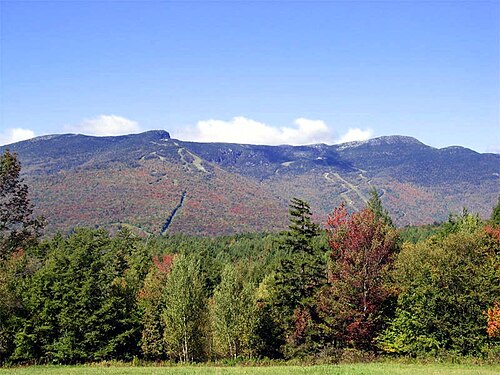
- Stowe Mountain Resort — Mansfield and Spruce Peak, west of the village
The resort spreads across Mansfield and Spruce Peak and is the engine of the winter economy. Lift queues build on holiday weekends and when fresh snow falls, so weekday skiing is calmer. Outside winter, the lifts and trails serve walkers and mountain bikers. Check the resort's own site for current operations. - Trapp Family Lodge — Hillside west of the village
The Trapp Family Lodge was founded by the Austrian family whose story inspired The Sound of Music, and descendants still run it. The Alpine-style building sits high above the valley with open views. Walkers and cross-country skiers use its trails, and non-guests can usually stop for a meal or a walk.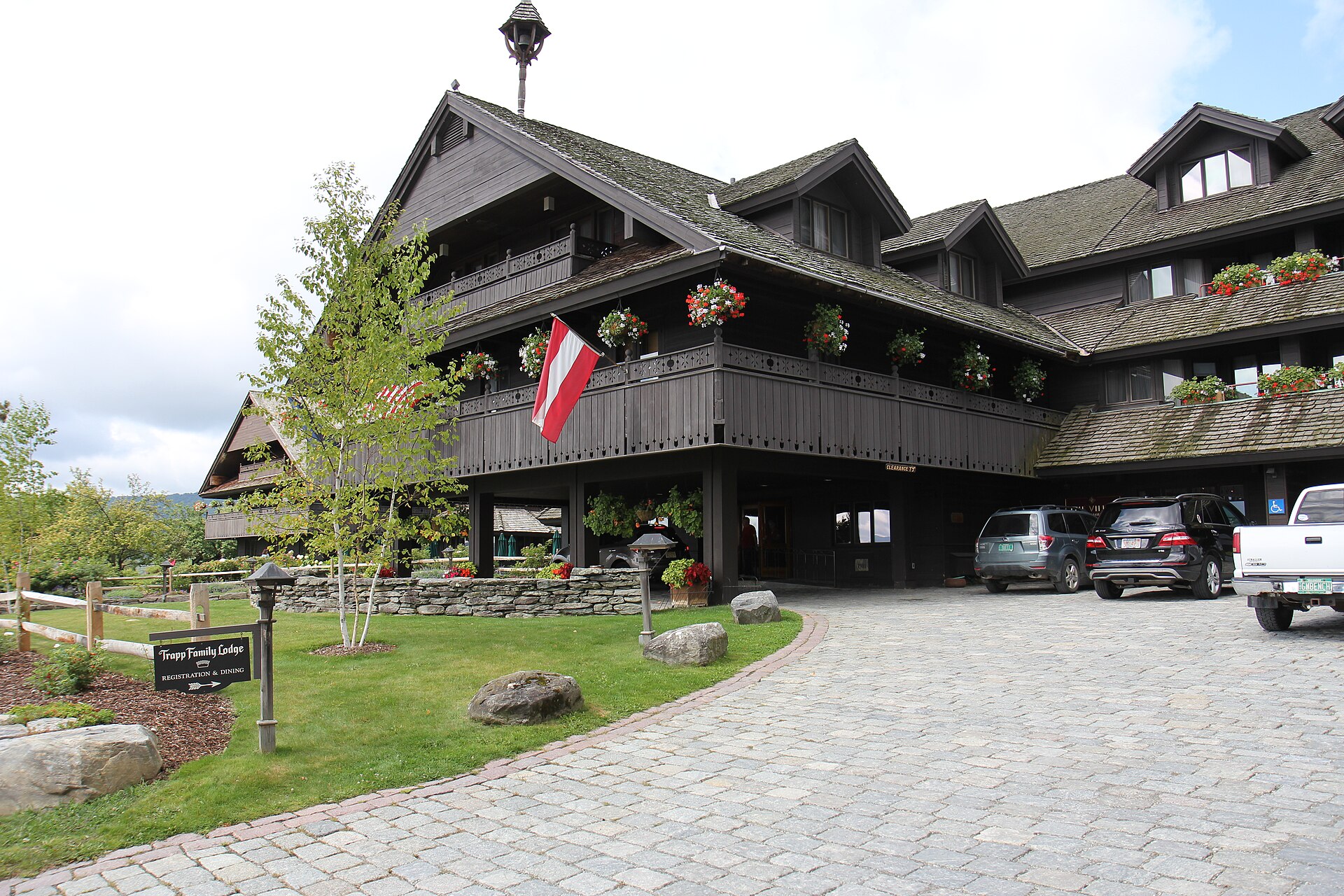
- Vermont Ski and Snowboard Museum — Village centre
This small museum tells the story of Vermont's ski culture through old equipment, clothing and photographs. It suits a grey afternoon or a day when the lifts are closed by wind. Displays are rotated, so the content changes from visit to visit, and opening times are best checked online. - Stowe village and Community Church — Village centre
The village centre is the place to get a feel for Stowe on foot, with its white-steepled church, small shops and the Little River nearby. A paved recreation path runs through the valley and suits walkers, runners and cyclists in warm months, and becomes a quiet winter route when snow settles.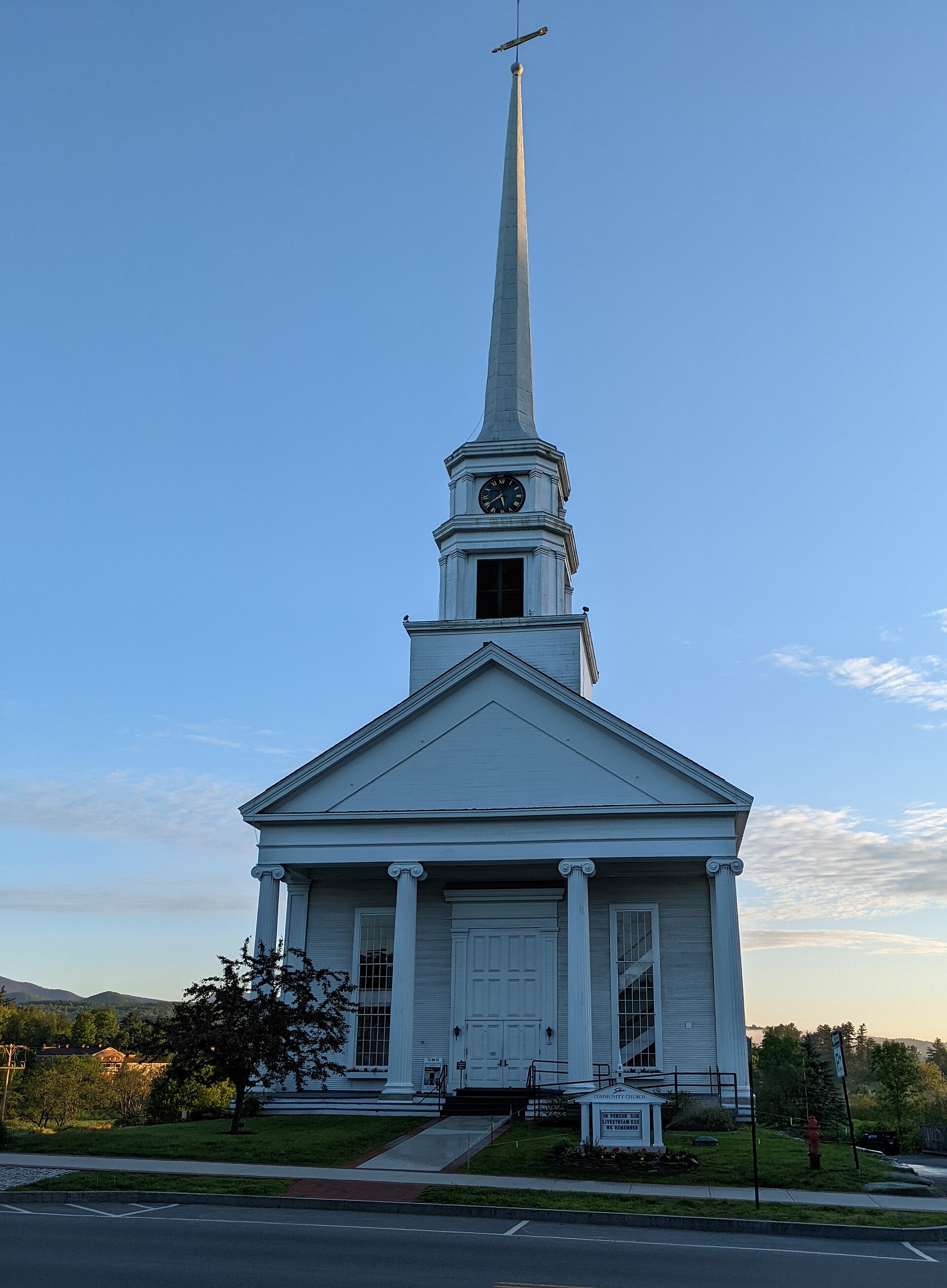
Culture
Stowe's culture is a blend of Vermont farm heritage and a century of ski-resort hospitality. The older layer shows in the working dairy farms, the sugarhouses that boil maple sap in late winter, and the town-meeting tradition, in which residents debate local budgets in person. The newer layer is outdoors-first: people here plan their weeks around snow, trail conditions and the river. Many locals work in hospitality, so service is friendly and relaxed rather than formal. The Austrian influence is real too. The von Trapp family settled on a hillside here after leaving Europe, and their lodge made Alpine food, music and chalet architecture part of the local picture. Seasonal events follow the calendar, from the Winter Carnival tradition to autumn harvest fairs. Politically and socially Vermont leans towards conservation, local produce and small business, and visitors will see that in farm stands, craft breweries and rules protecting views and land. Conversation tends to be easy, and strangers on trails usually greet each other. Weekend crowds and second-home owners shape the village, but it still keeps a community rhythm, with school events, church suppers and town committees. Mud season in spring and the quiet weeks after foliage are when locals take a breath, and many businesses shorten their hours or close. On the recreation path and trails, keep to the right, close gates behind you and stay off private farmland.
What to wear
Stowe has no formal traditional dress, but its working clothes tell the story. Vermont's sheep-farming past left a taste for wool, and woollen shirts, felted mittens and knitted hats remain the local classics, along with checked flannel from farm and logging life. Austrian influence arrived with the von Trapp family, and loden wool jackets and the occasional dirndl still appear at lodge events and festivals. Day to day, residents wear practical outdoor gear: fleece, insulated jackets, waterproof boots, jeans and caps, with clean casual clothes for dinner. Nobody dresses up much, even in the better restaurants. Ski season adds bright shells and helmets, and the après-ski crowd swaps boots for warm knitwear. Visitors should dress in layers, since mountain weather can swing quickly even in summer. In winter, bring a proper insulated coat, thermal underlayers, waterproof gloves, a hat and boots with good grip, as pavements and paths turn icy. Autumn needs a warm jacket for cool mornings, and spring mud calls for waterproof footwear. Summer is mild and humid, so light clothes, a rain jacket for thunderstorms, sun protection and insect repellent for trails are sensible. Churches and restaurants have no strict dress rules; tidy casual clothing is fine everywhere.
What to eat
- Maple syrup — Roadside sugarhouses and farm stands in the valley
Maple syrup is Vermont's signature sweetener, boiled down from sap in late winter. Visitors pour it over pancakes, stir it into coffee or buy a bottle to carry home. Sugarhouses often offer tastings in season, and graded syrups range from delicate and pale to dark and strong. - Farmhouse cheddar — Farm shops and village general stores
Vermont cheddar comes from dairy country and ranges from mild to sharply aged. It turns up on cheese boards, in sandwiches and in breakfast omelettes. Farm shops usually let customers taste before buying, and a block travels well for a picnic on the trail. - Cider and cider doughnuts — Orchard farm stands and cider mills near the valley roads
Apple cider is pressed locally in autumn and sold fresh, often alongside warm cider doughnuts. The pairing is a ritual of foliage season. Cider mills can be crowded on peak weekends, so arrive early in the day for the freshest batch. - Craft beer — Brewpubs and taprooms in and around the village
Vermont has a strong craft-beer scene, and the Stowe area has brewpubs pouring hazy pale ales and seasonal lagers. These are relaxed places for burgers and pub food after a day on the slopes. Many serve flights, which suit anyone wanting a small taste of several. - Diner breakfast — Casual local breakfast and lunch counters on the main roads
A big breakfast is the standard fuel for skiing and hiking: eggs, bacon or sausage, potatoes, toast and a stack of pancakes with syrup. Local breakfast counters are friendly and busy at weekends, so expect a short wait on snowy mornings. - Ice cream — Scoop shops in the village and the well-known factory nearby
Vermont's ice-cream habit is strong, and scoop shops in Stowe sell flavours made with local dairy. A cone is a normal treat even in cool weather. Larger factory visits near the valley are popular with families, so check the maker's site for tours.
Plan it
Best time. Late September to mid-October for autumn colour, and January to March for reliable snow and skiing; winters are very cold and summers mild and humid, with thunderstorms most likely in July, while spring brings mud and quieter villages.
How long. 2–3
Getting there. Burlington International Airport (BTV) is the nearest major airport, a short drive from Stowe. The Vermonter train stops at Waterbury, a short drive from the village, and a hired car or taxi covers the final stretch. Most visitors drive from Montreal or Boston, taking a motorway to Waterbury and then the valley road north.
Budget. high
Tips
- Book lodging well ahead for peak foliage weekends and holiday ski weeks
- Start mountain walks early, because afternoon thunderstorms are common in summer
- Carry a warm layer and a waterproof shell even on sunny days, as the weather changes quickly on Mansfield
- Mid-week visits avoid the worst traffic and lift queues
- Check the official town site and individual attractions for current opening times
Etiquette
- Keep to the right on the recreation path and give walkers and cyclists room
- Leave gates as you found them and stay off private farmland
- Tip restaurant and bar staff, as service workers in the United States rely on tips
Nearby
Sources
- Wikidata Q550498 (CC0)
- Wikipedia: Stowe, Vermont (rev 1374938399) (CC BY-SA 4.0)
- Wikivoyage: Stowe (rev 5419001) (CC BY-SA 4.0)
- Photo: Stowe, VT, from the southeast — Ascended Dreamer (CC BY-SA 4.0)
- Photo: Fall in New England — Patrick (CC BY 2.5)
- Photo: Stowe Middle High School sign — Cwmeier (CC BY-SA 4.0)
- Photo: Stowe Community Church, 2022 — Seasider53 (CC BY-SA 4.0)
- Photo: Mount Mansfield — Redjar / Jared C. Benedict (CC BY-SA 2.0)
- Photo: The Trapp Family Lodge — Royalbroil (CC BY-SA 4.0)
- Photo: 1960 Chevrolet Corvette in Stowe, VT — Patrick Breen (CC BY 2.5)
- Photo: Cucumber Seedlings — Breanna Larow (CC BY 3.0)


