St. Simons Island
St. Simons Island, United States
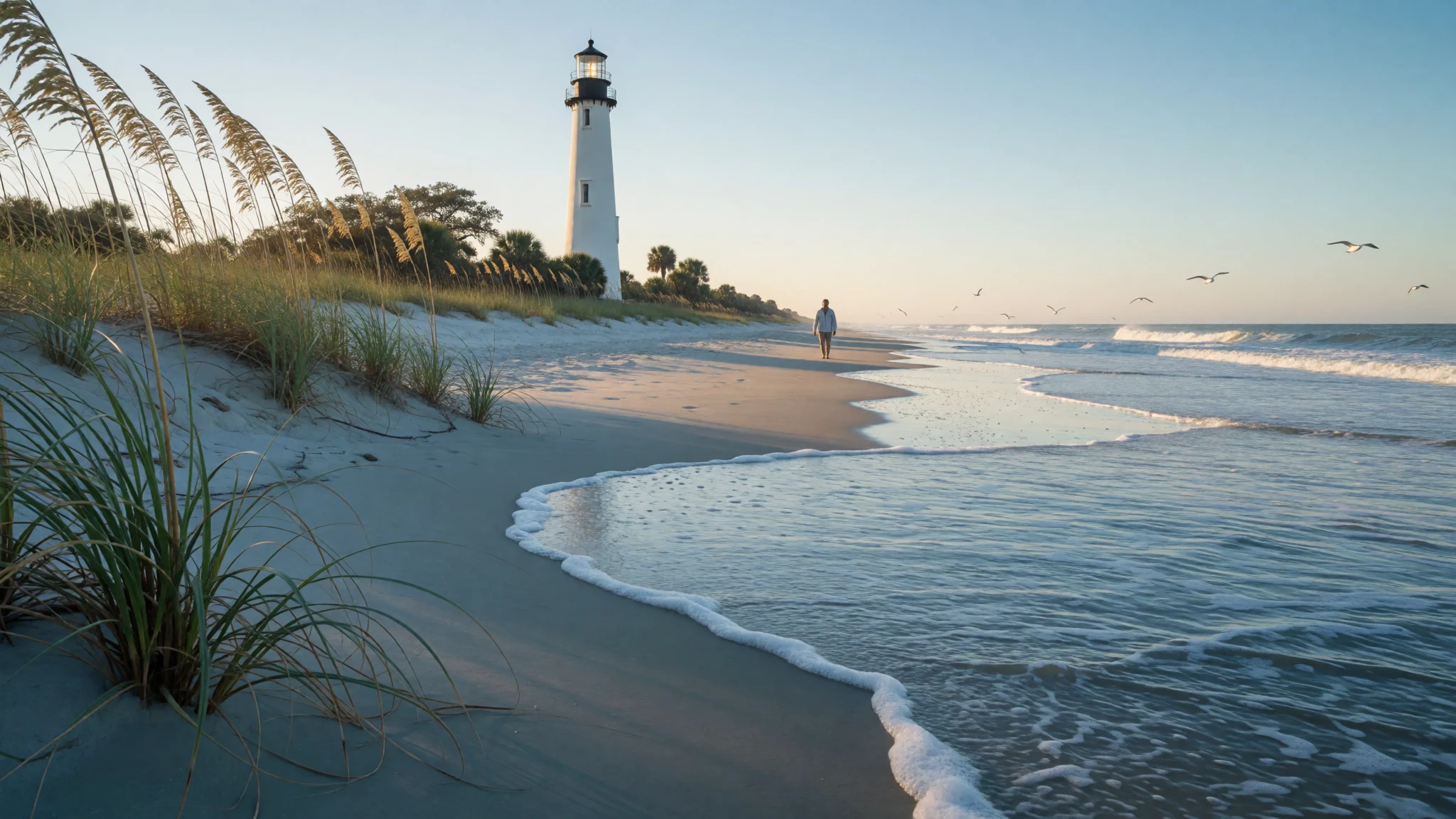
St. Simons Island is a low, oak-shaded Georgia barrier island of tidal marsh, gentle beaches and layered history, best for slow days by the water.
The place
St. St. Simons is a barrier island on Georgia’s coast, sitting about halfway between Savannah and Jacksonville. It belongs to the Golden Isles, a group that also includes Sea Island, Jekyll Island, and the private islet Little St. Simons. Locals often call it simply the Island. It works both as a seaside resort and as a town where people live all year, so schools, churches and shops sit close to the beach rather than apart from it. Most building is on the southern half, where the pier, the village centre, the lighthouse and the main beaches cluster. The northern half is quieter, a patchwork of salt marsh, tidal creeks and woodland that also holds much of the island's archaeology and old plantation land. The ground is low and flat, at an elevation of 13 m, so the appeal comes from water and trees rather than views: live oaks hung with Spanish moss, marsh grass that turns gold in autumn, and mudflats that change with every tide. A causeway links the island to the mainland city of Brunswick, and it is the main pinch point on summer weekends and holidays. A good share of homes are second homes or holiday lets, so the island fills in the warm months and feels noticeably emptier in winter, when some businesses may keep shorter hours. Summer is hot and humid with afternoon thunderstorms. The sea is warm, but the water is tea-brown rather than clear, as on most of this coast. Families, golfers, cyclists and anglers make up most of the visitors, and the pace is gentle rather than lively.
Its story
St. Simons Island has been lived on for thousands of years, and the evidence is clearest at Cannon's Point on the northern end, where a shell ring from the Late Archaic period survives. Archaeologists have traced a long sequence of pottery styles there, running through to the late seventeenth century, when Native American occupation of the site appears to end. Who the islanders were is still debated. Writers in the early twentieth century called them Guale, while later work suggests that the people of the island, by the late sixteenth century at least, belonged to the Mocama, with Guale groups possibly arriving afterwards. Europeans began arriving in the sixteenth century, and the island later passed through Spanish, British and American hands, leaving behind forts, churches and ruined plantation houses. In the plantation era, cotton and other crops were grown by enslaved Africans, and their labour built much of what survives, including quarters made of tabby, a hard mix of lime, sand and oyster shell. Many descendants stayed on the coast, and Gullah Geechee culture, with its own language, foodways and crafts, remains part of the region's identity. After the Civil War the plantations broke up, timber and mills came and went, and in the twentieth century the island turned toward tourism and retirement as road links to the mainland improved. That layering is why a single afternoon can take in a Native shell ring, a British fort site, a nineteenth-century lighthouse and a golf resort.
What to see
- Fort Frederica National Monument — Northern St. Simons Island
Fort Frederica National Monument, on the island's northern side, preserves the footprints of a British colonial town and its fort beside a quiet river. Low tabby walls, cellar holes and street lines lie under shady oaks, with signs explaining who lived where. Check the National Park Service site for opening details and any fees.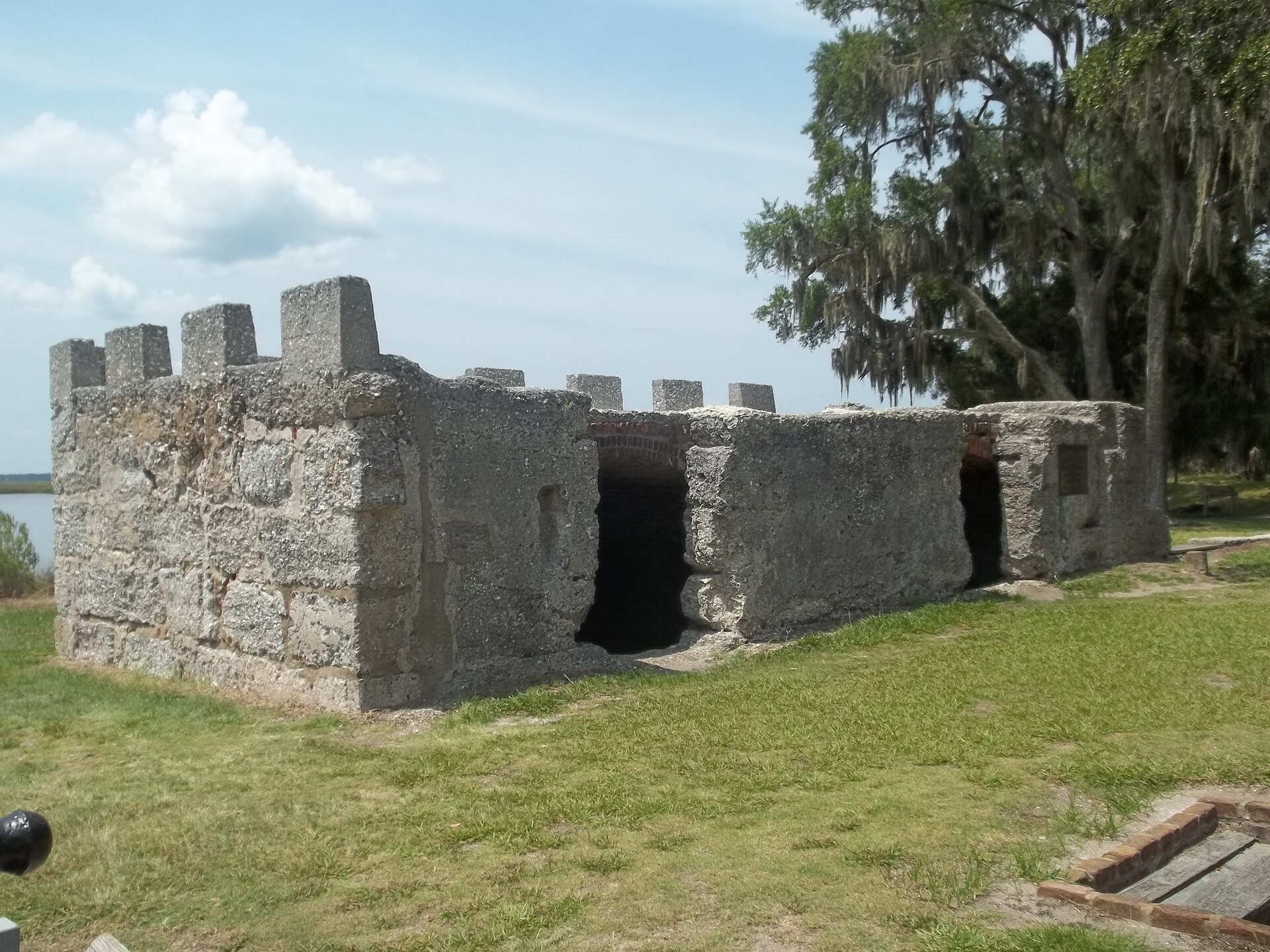
- St. Simons Island Light — Southern tip, near the pier
St. Simons Island Light is a white tower at the southern end, close to the pier, with an adjoining keeper's house that now holds a small museum. A spiral stair leads up to a view over marsh, sea and village roofs. Hours and ticketing change, so check the museum's official site first.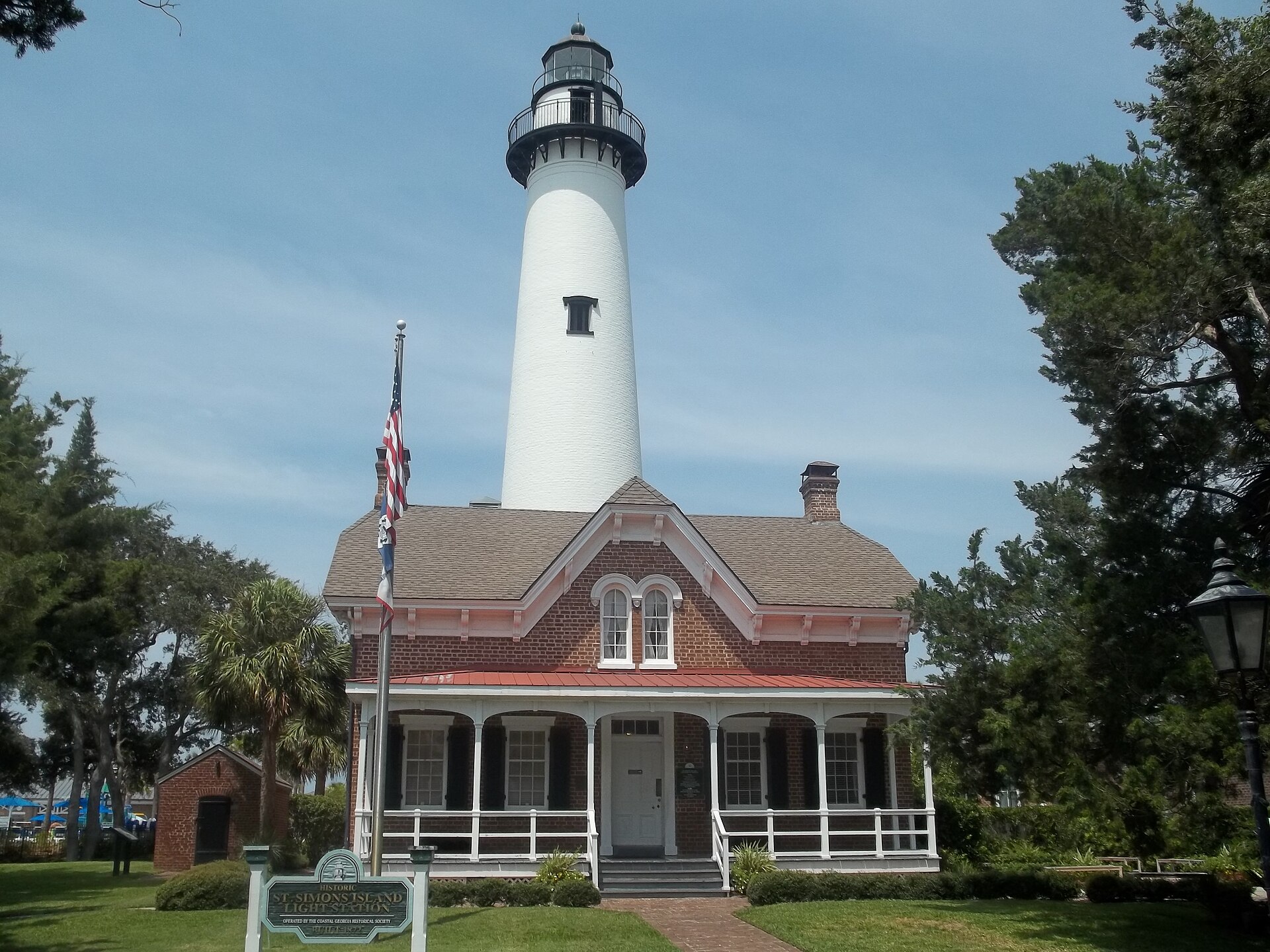
- Christ Church and the Wesley Oak — Central island, off Frederica Road
Christ Church on St. Simons Island is a small Episcopal church among old live oaks and a burial ground, and a nearby marker records the Wesley Oak, linked to the preaching of John Wesley in the colonial period. The grounds are shady and peaceful. It is a working church, so visit outside services.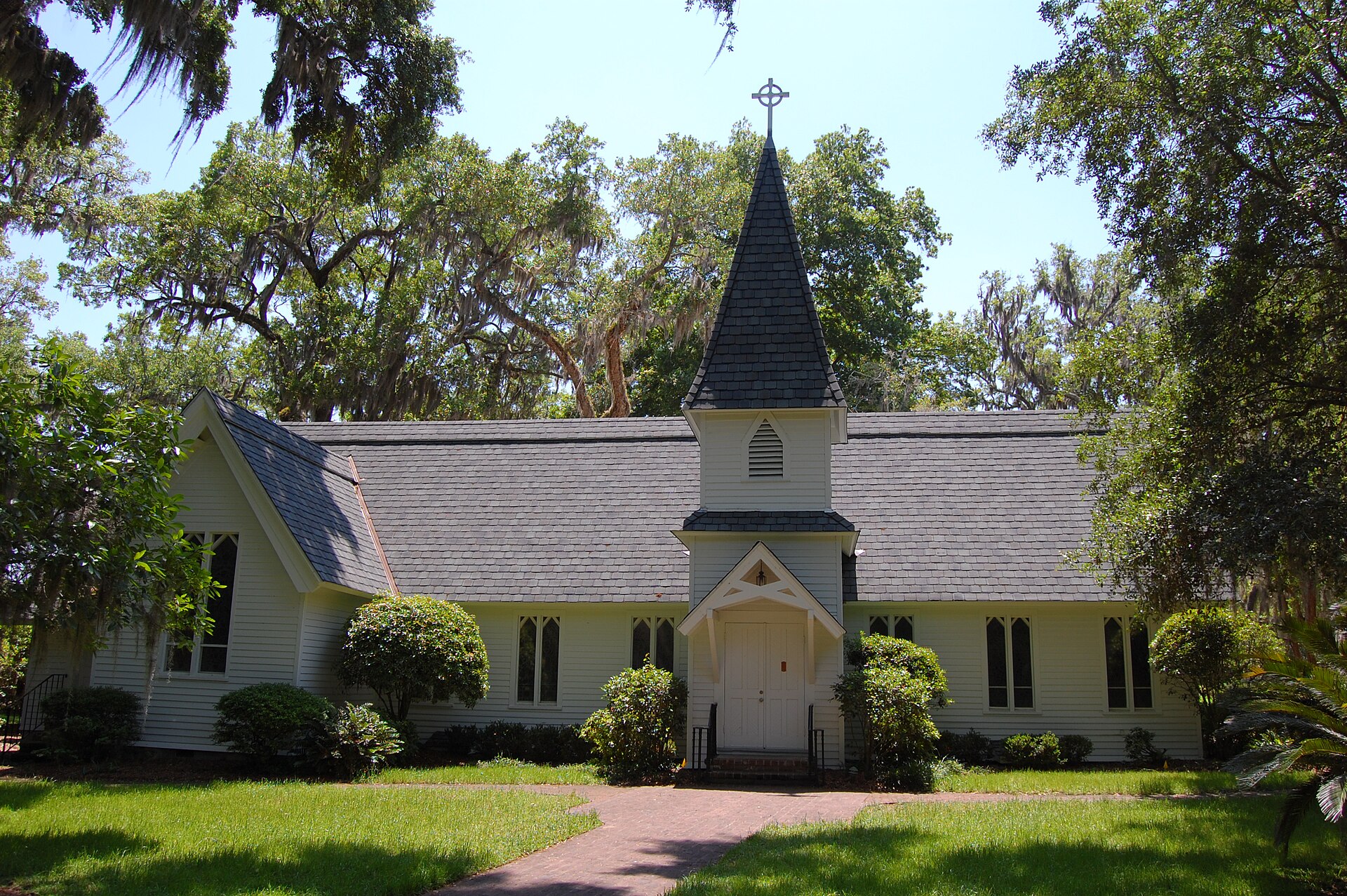
- Tabby House — Island roadside, near the old plantation lands
The Tabby House on St. Simons Island is a surviving slave house built of tabby, a mix of oyster shell, lime and sand. It is a plain, low building, and a sober reminder that the island's plantation wealth rested on enslaved labour. Read the marker, and check locally whether the interior can be visited.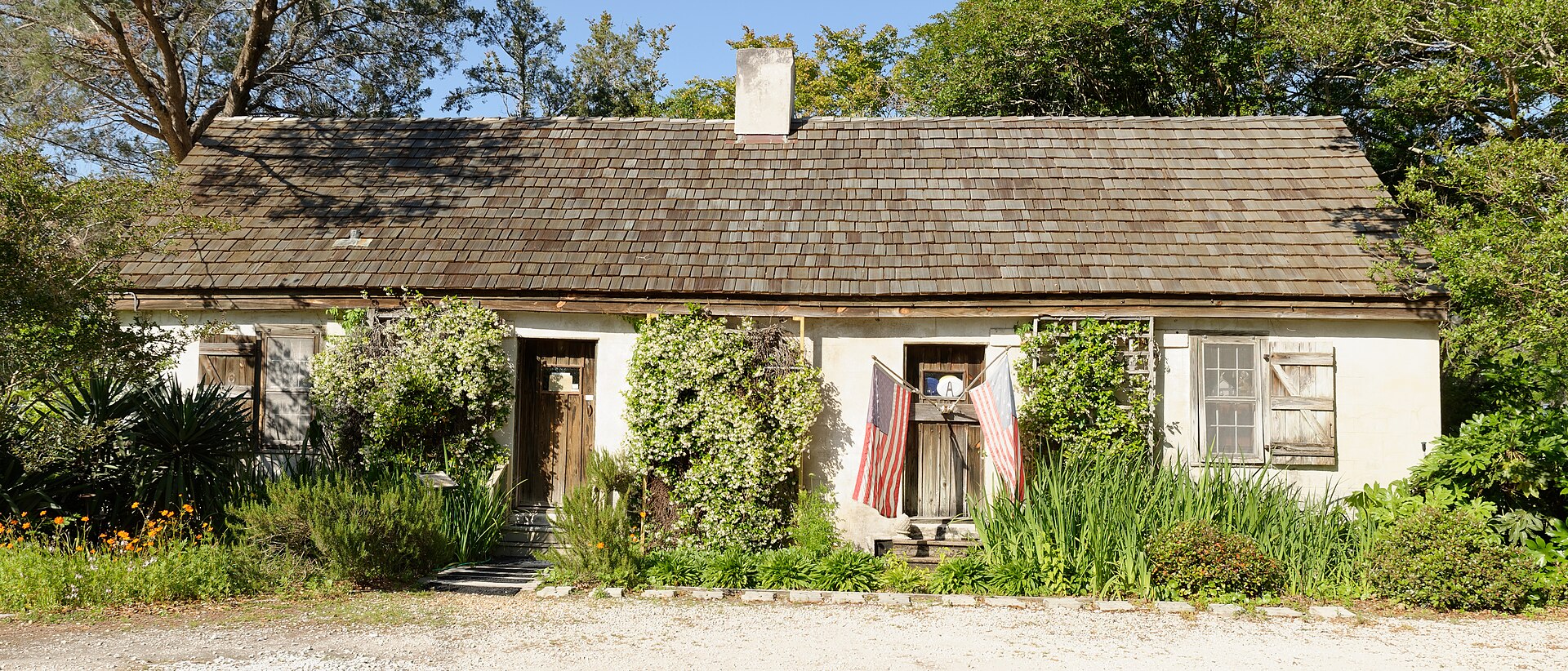
- Pier Village and the beaches — Southern tip
Pier Village sits at the southern tip of St. Simons Island and is its social centre, with a fishing pier, shops, eateries, the Casino building and Postell Park, which hosts craft shows. The beaches here are wide at low tide and narrow at high tide, so check tide tables. Early mornings are calmest.
Culture
St. Simons Island draws artists and writers, and its cultural life is more local than grand. Painters and photographers work from the scenery of marsh, oaks and shoreline, and several island galleries show their work. Glynn Visual Arts, a non-profit, runs exhibits, festivals and classes in painting, pottery, photography, jewellery and more. The Literary Guild of St. Simons Island organises events for writers, and The Island Players, a community theatre group, stages productions at the Pier Village Casino Theatre. Craft fairs are held through the year in Postell Park, in front of the Casino building, and live music turns up in bars and restaurants, especially on warm evenings. Beneath the leisure side runs a deeper heritage: Native American shell rings, British colonial forts, and the Gullah Geechee communities descended from enslaved Africans on this coast. Churches such as Christ Church still anchor community life, and everyday manners are the easygoing courtesy of the American South: greetings from strangers, patience in queues and traffic, and a relaxed attitude to time. Tipping restaurant staff is customary, and a service charge is not usually added to the bill. Visitors should stay on boardwalks and dune crossings, keep clear of nesting birds and turtle areas, and leave the sea oats alone, since they hold the dunes together.
What to wear
St. Simons Island has no single regional costume, but its clothing story follows the coast. Sea Island cotton, a fine long-staple cotton grown along this stretch of the Atlantic shore, gave the region a name for light, smooth cloth. Gullah Geechee dress and crafts drew on cotton, indigo dye, head wraps and quilting, and sweetgrass basketry is the best-known craft that survives. Traditional dress now appears mostly at heritage events and festivals rather than daily. Day to day, people wear relaxed coastal clothes: linen shirts, cotton sundresses, shorts, polo shirts for golf, and boat shoes or sandals, with seersucker and pastels for church, weddings and smarter dinners. Swimwear stays on the beach rather than in the village. For a visit, pack light cotton or linen that dries quickly, a wide-brimmed hat, sunglasses and strong sunscreen, since shade is patchy on the sand. Add insect repellent for marsh evenings, sandals for the beach, and closed shoes for forts, trails and the lighthouse stair. A light rain jacket helps in summer storms, and a sweater covers cool winter evenings. Churches appreciate modest dress, so covered shoulders and knees are a safe choice, and restaurants usually expect a shirt and shoes.
What to eat
- Shrimp and grits — Village restaurants and marsh-side seafood eateries
Shrimp and grits is a coastal staple: local shrimp over creamy stone-ground corn grits, often with bacon, peppers or a buttery sauce. It turns up on brunch and dinner menus alike and is a good first order. - Lowcountry boil (Frogmore stew) — Seafood shacks and family-style dining rooms
A Lowcountry boil, also called Frogmore stew, combines shrimp, sausage, corn and potatoes cooked together in a spiced pot, then tipped out to be eaten by hand. It is casual, messy and made for sharing. - She-crab soup — Seafood restaurants around the village
She-crab soup is a rich cream soup of crab meat and roe, often finished with a splash of sherry. It is a long-standing Southern coastal dish, usually served in a small cup before the main course. - Peach cobbler — Diners and family restaurants on the island
Peach cobbler is Georgia's summer dessert, soft baked peaches under a biscuit or cakey crust, often with vanilla ice cream. It is best in the warmer months, when the fruit is in season. - Coca-Cola cake — Local restaurants and bakeries
Coca-Cola cake is a chocolate cake with cola in the batter and a fudgy icing, a Georgia favourite since the drink was invented in the state. It tends to appear on menus outside peach season.
Plan it
Best time. April–May and October–November, when days are warm, the air is less heavy and storms are fewer. June–September is hot, humid and thundery, and hurricane season runs through November, so watch forecasts. Winter is mild but too cool for most swimming.
How long. 2–3
Getting there. Fly to Jacksonville International Airport to the south, or Savannah/Hilton Head International to the north; Brunswick's small Golden Isles airport has limited service. From any of them, drive along the coastal interstate to Brunswick, then cross the causeway onto the island. A car is the practical choice. Amtrak serves Savannah and Jesup, but both need onward road travel.
Budget. mid
Tips
- Cross the causeway early on summer weekends and holidays, when traffic backs up
- Check tide tables before walking or cycling on the beach, as the sand narrows sharply at high tide
- Carry water, sun protection and insect repellent, because biting midges are active around the marsh at dusk
- Book holiday lets and popular restaurants well ahead for summer and holiday weekends; cards are widely accepted
- Hire a bicycle, since the island is flat and the paths are easy
Etiquette
- Tip restaurant staff, as it is customary
- Keep off the dunes and leave nesting birds and turtle areas undisturbed
- Stay quiet and respectful at Christ Church and the Tabby House, which are places of worship and memory
Nearby
Sources
- Wikidata Q49676976 (CC0)
- Wikipedia: Saint Simons Island (rev 1381186821) (CC BY-SA 4.0)
- Wikivoyage: Georgia (state) (rev 5436176) (CC BY-SA 4.0)
- Christ Episcopal Church, St. Simons, GA — Jud McCranie (Bubba73) (CC BY 3.0)
- St. Simons Island Light — Ebyabe (CC BY-SA 2.5)
- St Simons Park marker — Bubba73 (Jud McCranie) (CC BY-SA 4.0)
- St Simons Park — Bubba73 (Jud McCranie) (CC BY-SA 4.0)
- Fort Frederica National Monument — Ebyabe (CC BY-SA 2.5)
- Wesley Oak historical marker — Bubba73 (Jud McCranie) (CC BY-SA 4.0)
- Tabby House — Jud McCranie (CC BY-SA 4.0)
- King and Prince Hotel — Ebyabe (CC BY-SA 2.5)


Wildlife
- Loggerhead sea turtle (animal)
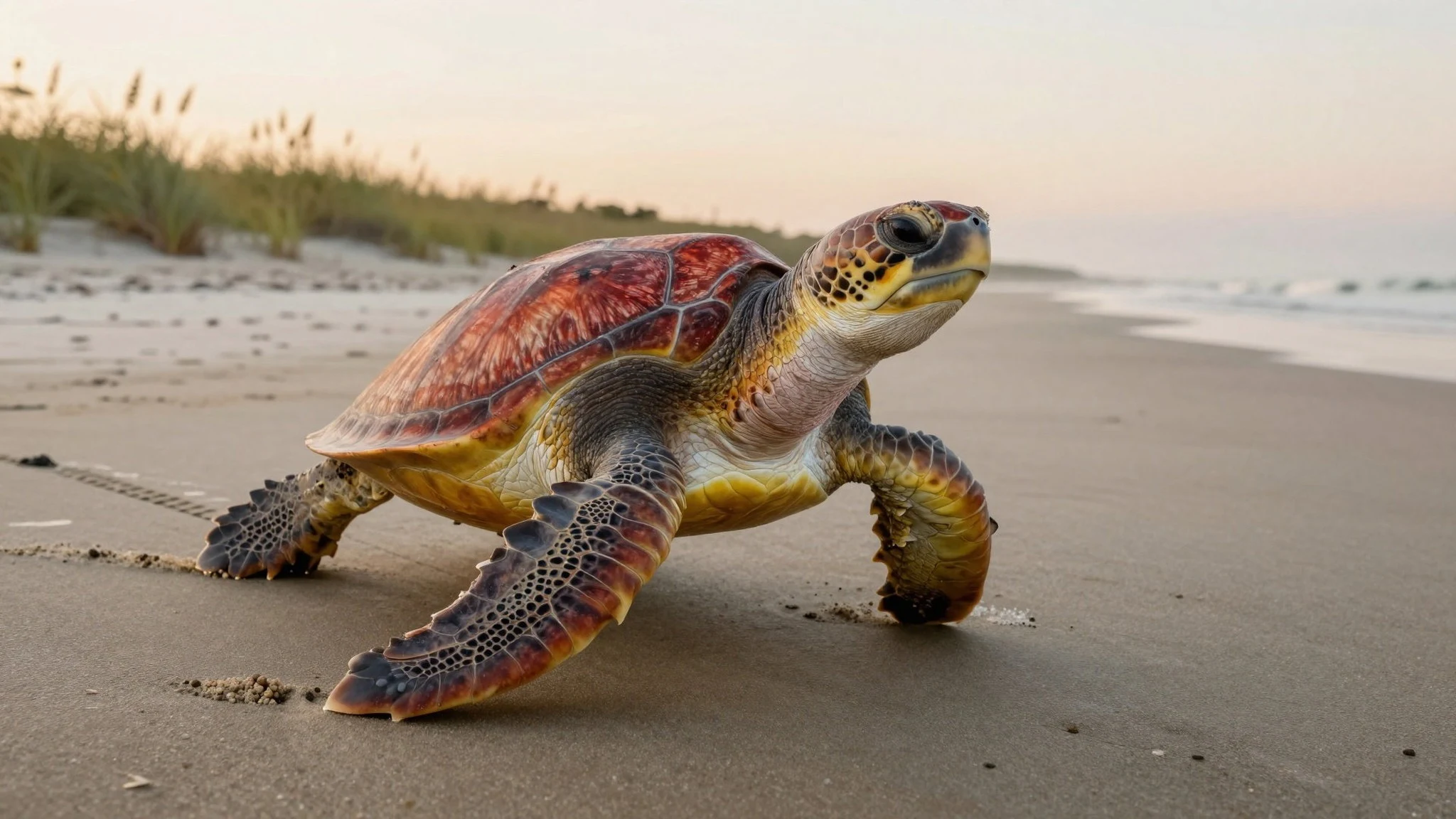
The loggerhead is a sea turtle, a great sea-going reptile that carries its reddish-brown shell like a home on its back. Its skin runs from yellow to brown, and grown males can be told from females by their thicker tails. On St Simons, watch from the boardwalks and dune crossings, and keep well clear of any areas set aside for turtles. Please leave the sea oats untouched, because they help hold the dunes together.