South Luangwa
South Luangwa, Zambia
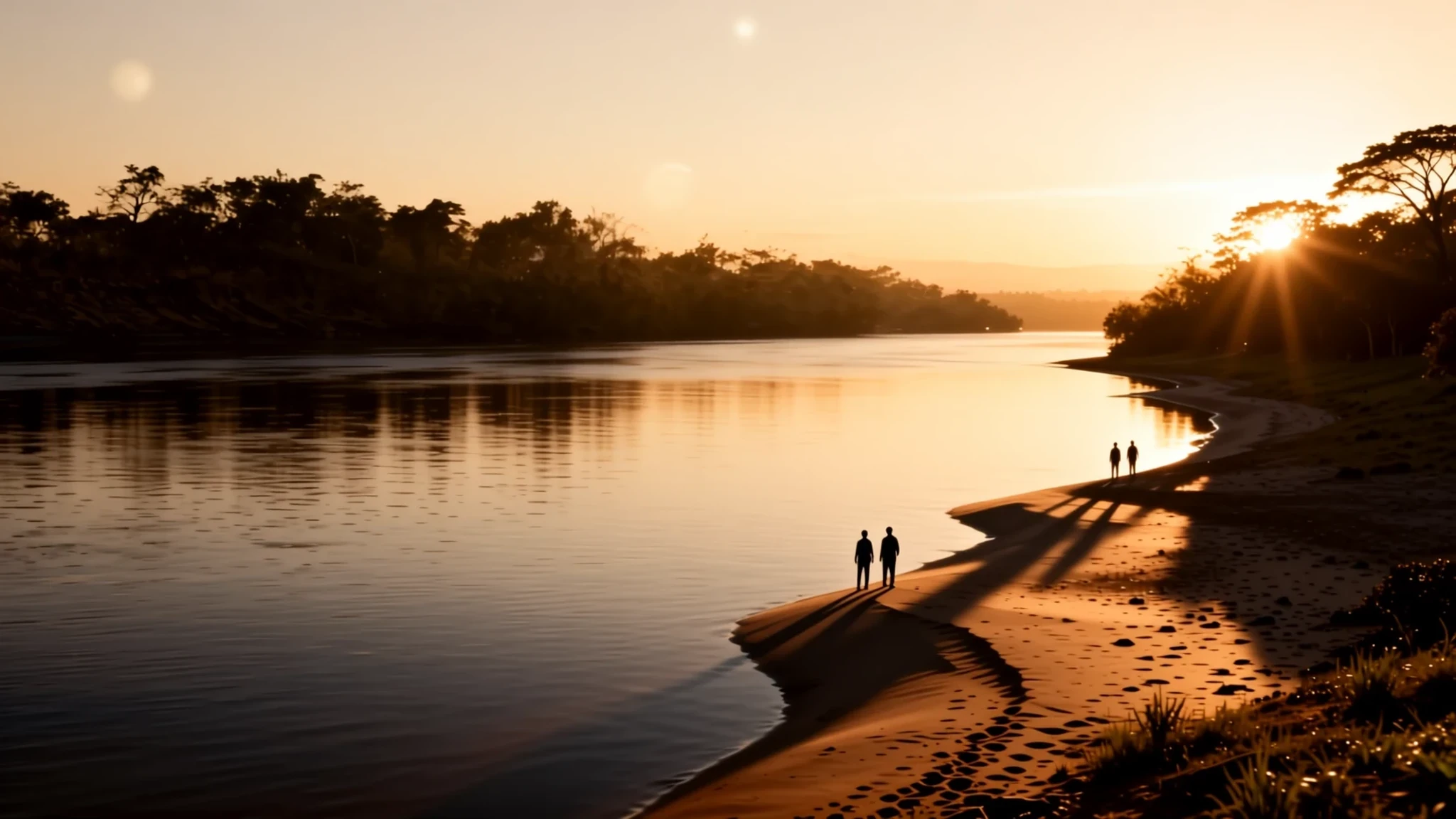
South Luangwa is a river valley of oxbow lagoons, walking safaris and animals that come to the water.
The place
South Luangwa is a national park in eastern Zambia, in the broad valley of the Luangwa River. The river bends through sand and leaves oxbow lagoons that still hold water after the channel has moved on. Mopane woodland covers much of the hotter, drier valley floor, and miombo the higher slopes and plateau; ebony, leadwood and winterthorn line the banks, and grassland fills the old courses. In the dry months the lagoons shrink, the grass thins, and animals come to the water in plain sight. In the rains the valley turns green, tracks soften, and many small camps shut because the bush is thick and the roads too wet for ordinary game driving.
Elephants strip mopane bark and cross the river in family groups. Lions hunt the lagoons. Leopards show up on night drives, when a spotlight picks out eyes in the grass. Hippos pack the pools and crocodiles lie on the sand. The valley has its own giraffe, Thornicroft's, and Cookson's wildebeest, a pale race of this same river country. Warthogs, puku, impala and buffalo fill the ground between the larger hunters. Carmine bee-eaters nest in the banks when the season suits them.
Visitors stay in camps along the river or pass through Mfuwe, the town at the gate. Viewing is with a guide: a vehicle at dawn, dusk and after dark, or a walk with an armed scout. The pleasure of South Luangwa is how close that daily movement of animals comes to a quiet vehicle or a careful walk on the sand.
Its story
South Luangwa's story is about a river people stopped treating only as a hunting ground. Hunters and traders had long used the Luangwa valley. Later, colonial game laws made stretches of it into reserves: animals protected, local communities pushed toward the edges. The modern park grew from those reserves. Mfuwe became the practical door. The northern part, in Chief Nsefu's country, became an early place where visitors entered under rules rather than with a rifle.
The walk is the chapter the valley still tells. Norman Carr, a warden who made his life here, argued that a visitor on foot with a trained scout would value the animals more than a visitor who came only to shoot. A chief agreed to try the idea on his land. That trial became the walking safari: a small group, a scout with a rifle for safety, no promise of a named animal, and a pace set by tracks in the sand. Simple camps followed, and later more comfortable ones. The night drive became the other half of the same habit, because so many hunters in this valley move after dark.
The story is still a neighbour's story. Elephants raid maize and mangoes when forage is poor. Guides, trackers, cooks and mechanics in Mfuwe depend on the camps. The river keeps moving its banks, lagoons still dry, and camps still close when the mud is deep. South Luangwa's reputation was built by walking quietly beside that river.
What to see
- Luangwa River — Luangwa River
South Luangwa is organised around the Luangwa River, a wide sandy channel with hippos in the pools and crocodiles on the bars. Old bends become oxbow lagoons, and in the dry months those lagoons draw elephants, buffalo and antelope to drink while lions wait in the thickets. A crossing with a guide shows how the park depends on one river.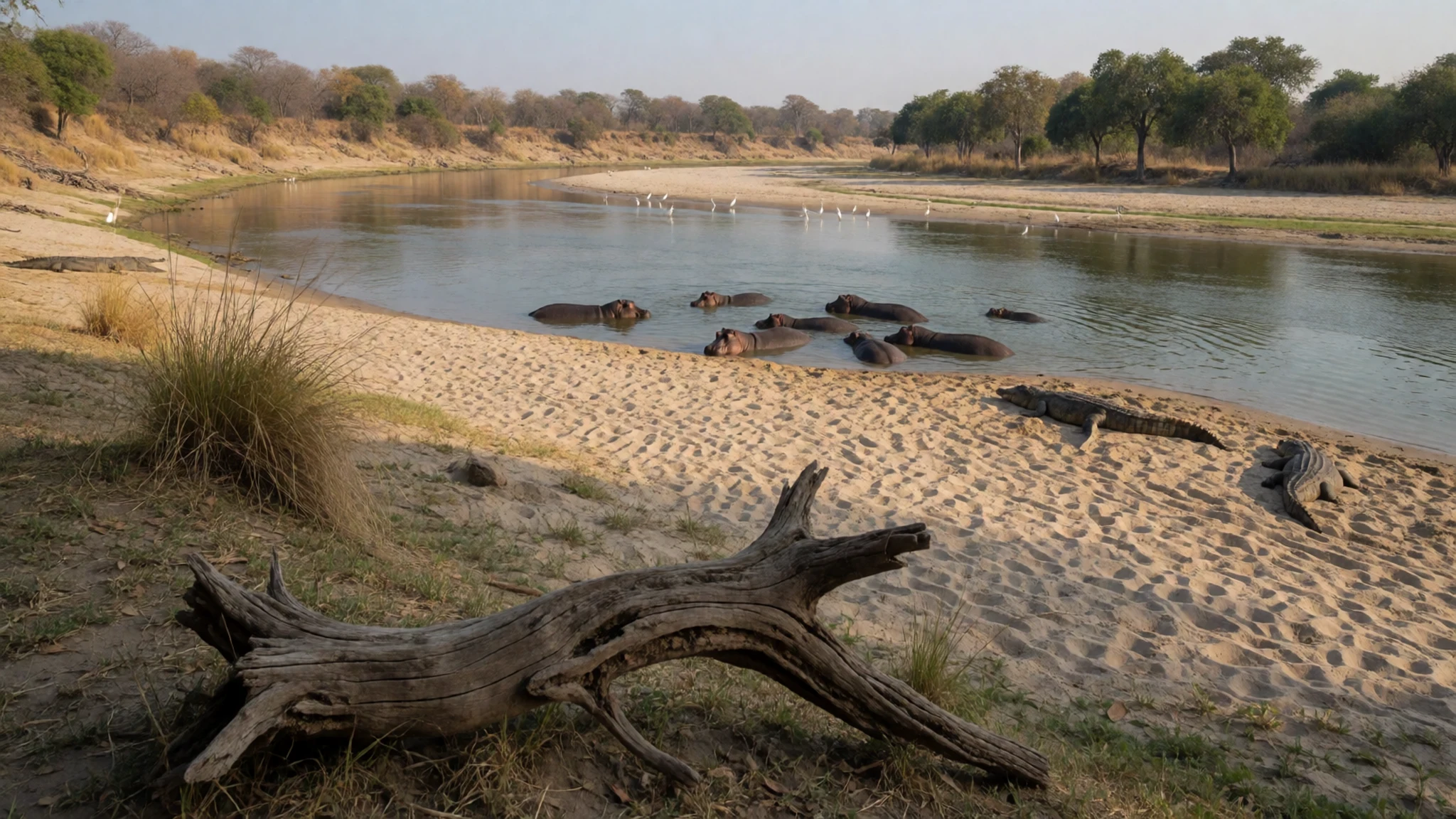
- Mopane woodland — Mopane woodland
South Luangwa's mopane woodland looks plain until the elephants' work shows. In the dry months the trees stand grey-green, and many trunks are bare where bark has been stripped for food. Shade is thin, grass is short, and warthogs, impala and giraffe are easy to pick out between the stems. This is the ordinary bush between the riverbank camps and the higher ground.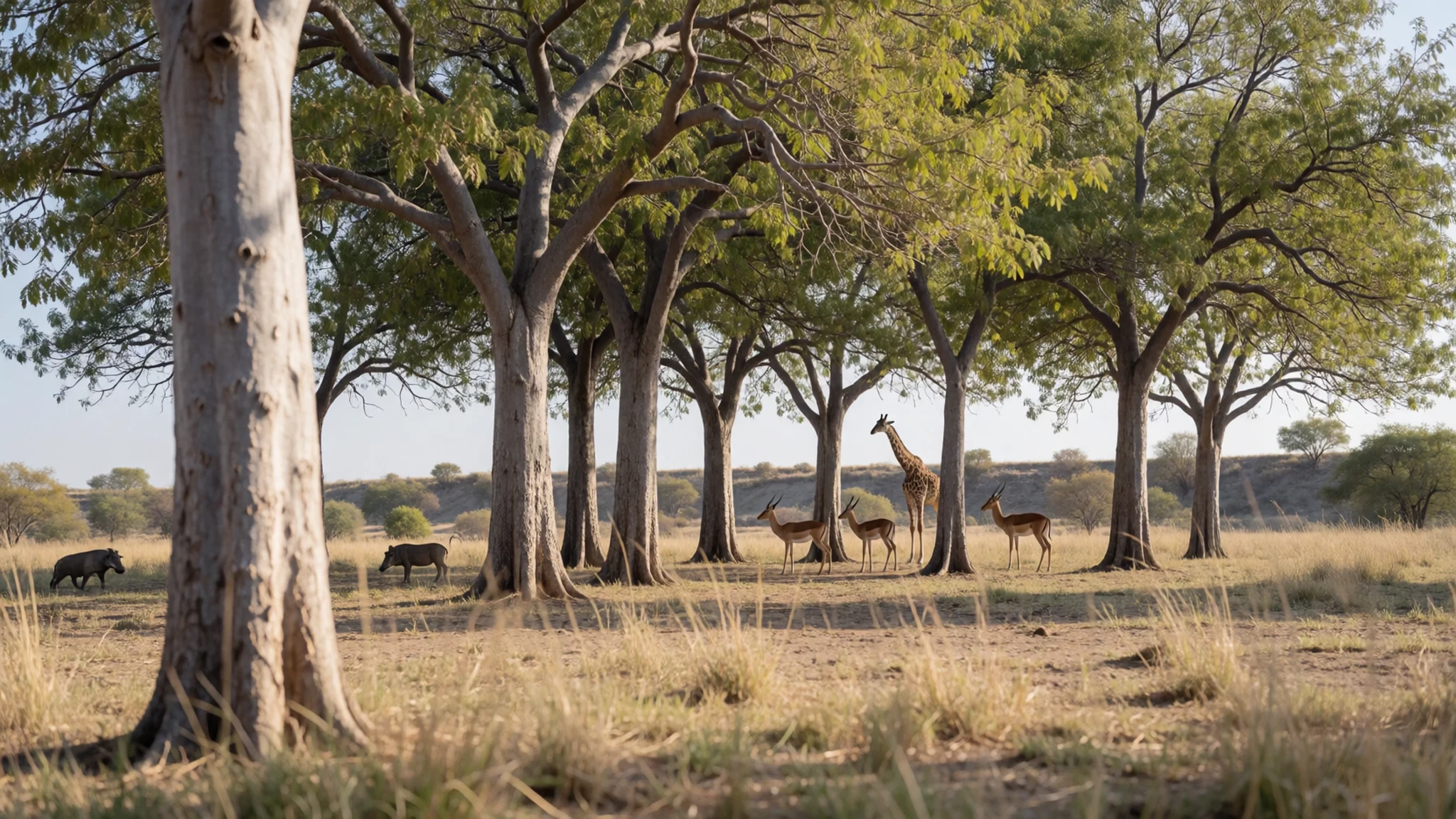
- Walking safari — Bush tracks with a scout
South Luangwa treats the walking safari as a craft. A scout goes first, rifle ready, and a small group follows at a distance that opens or closes as the tracks require. The outing may be a short loop to a lagoon or a longer morning along a dry riverbed. The scale is dung, prints and the line an animal took through the grass.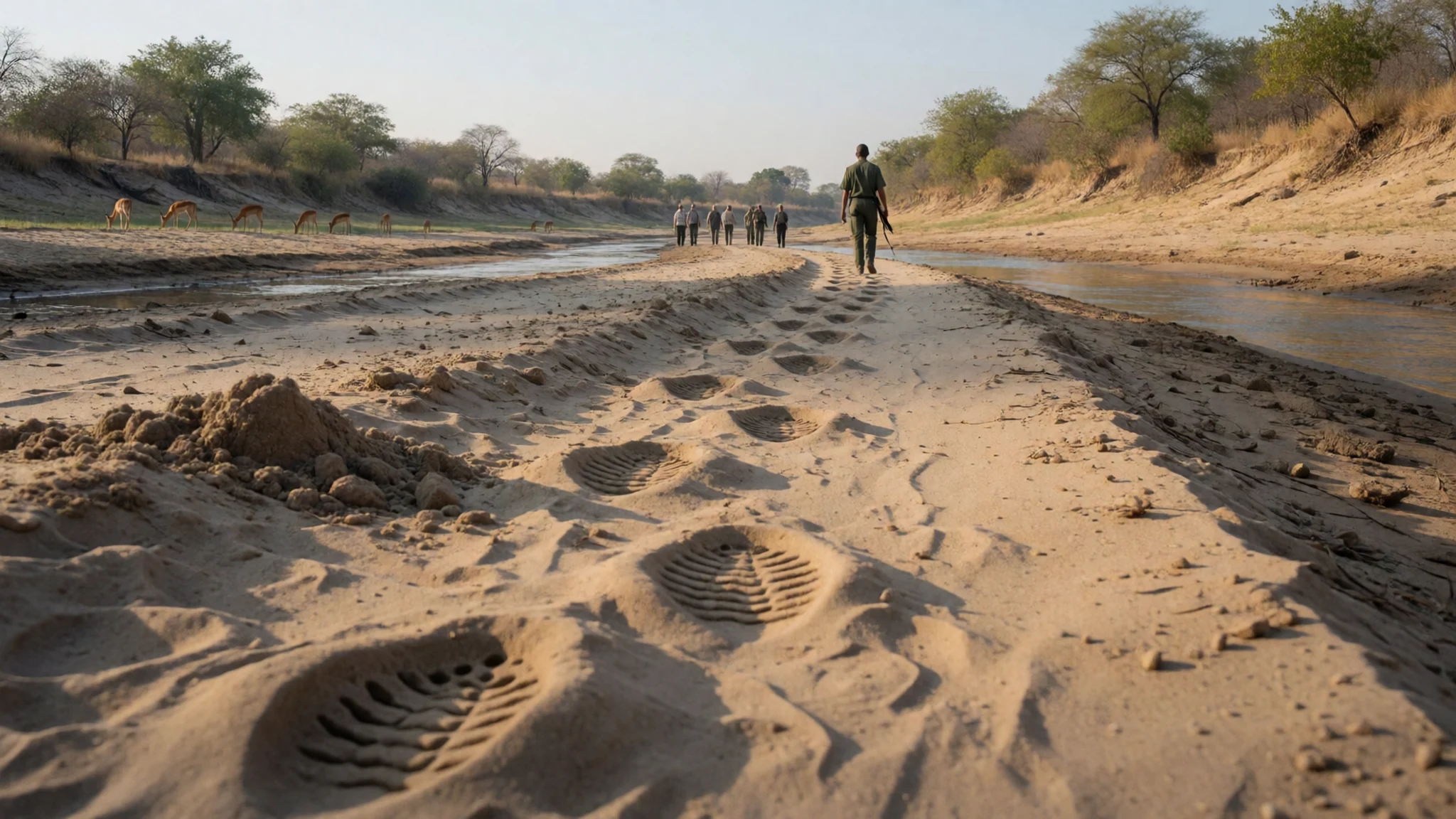
- Night drive — Camp tracks after dark
South Luangwa after dark is another park. Guides may use a spotlight, and the beam finds leopard, civet, genet, hyena and hippos still away from the water. Drives leave from the camps, stay on permitted tracks, and turn back when the guide closes the loop. A warm layer suits the river air once the sun has gone.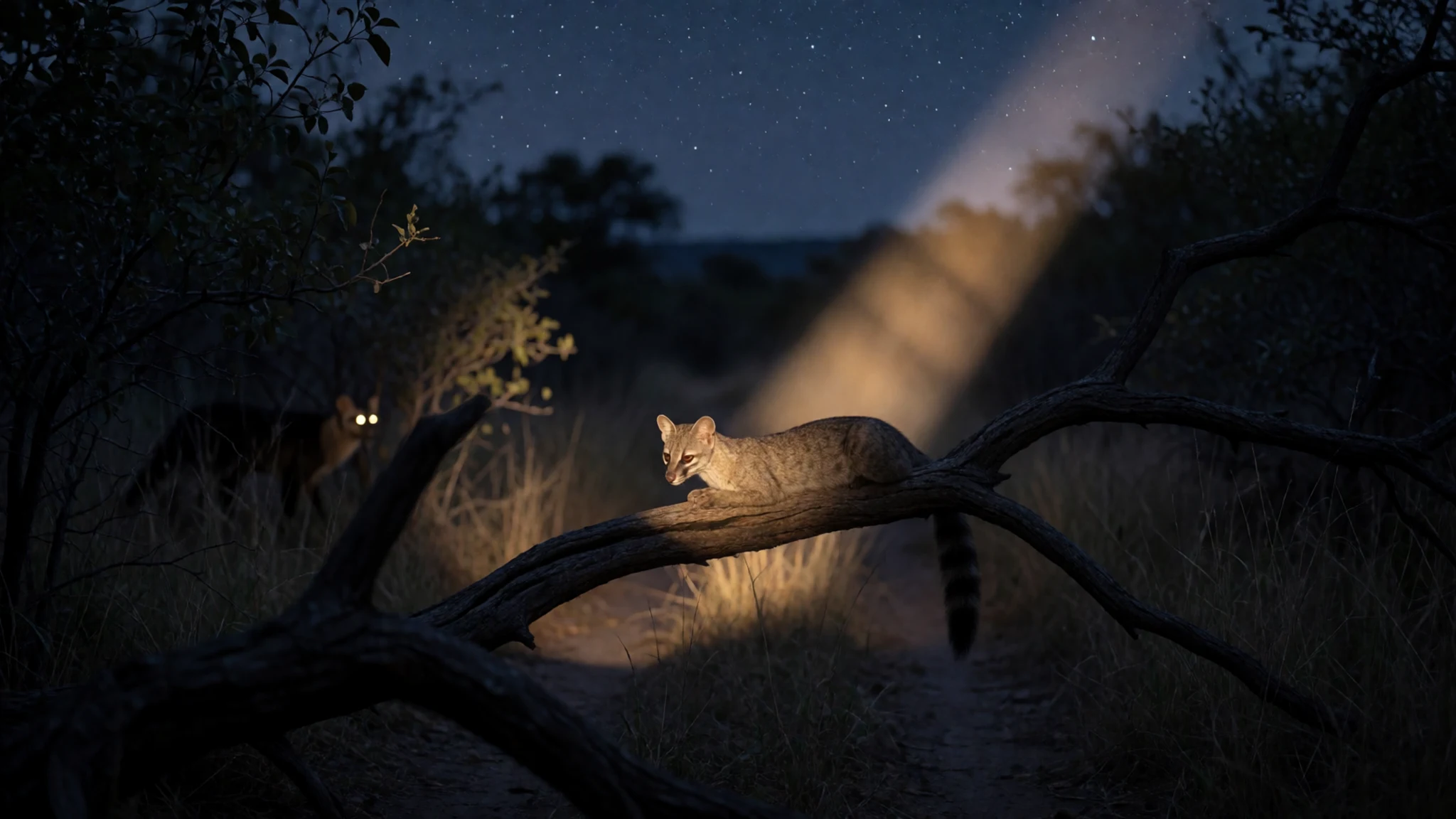
- Mfuwe gate and the bridge — Mfuwe
South Luangwa is entered, for most visitors, at Mfuwe. The gate is paperwork and a map: fees are handled here or by the camp, and the rule about staying in the vehicle is set out. Past the gate a bridge crosses the Luangwa, and the camps on the western side begin. The town outside has the airport, the market and the people who staff the camps.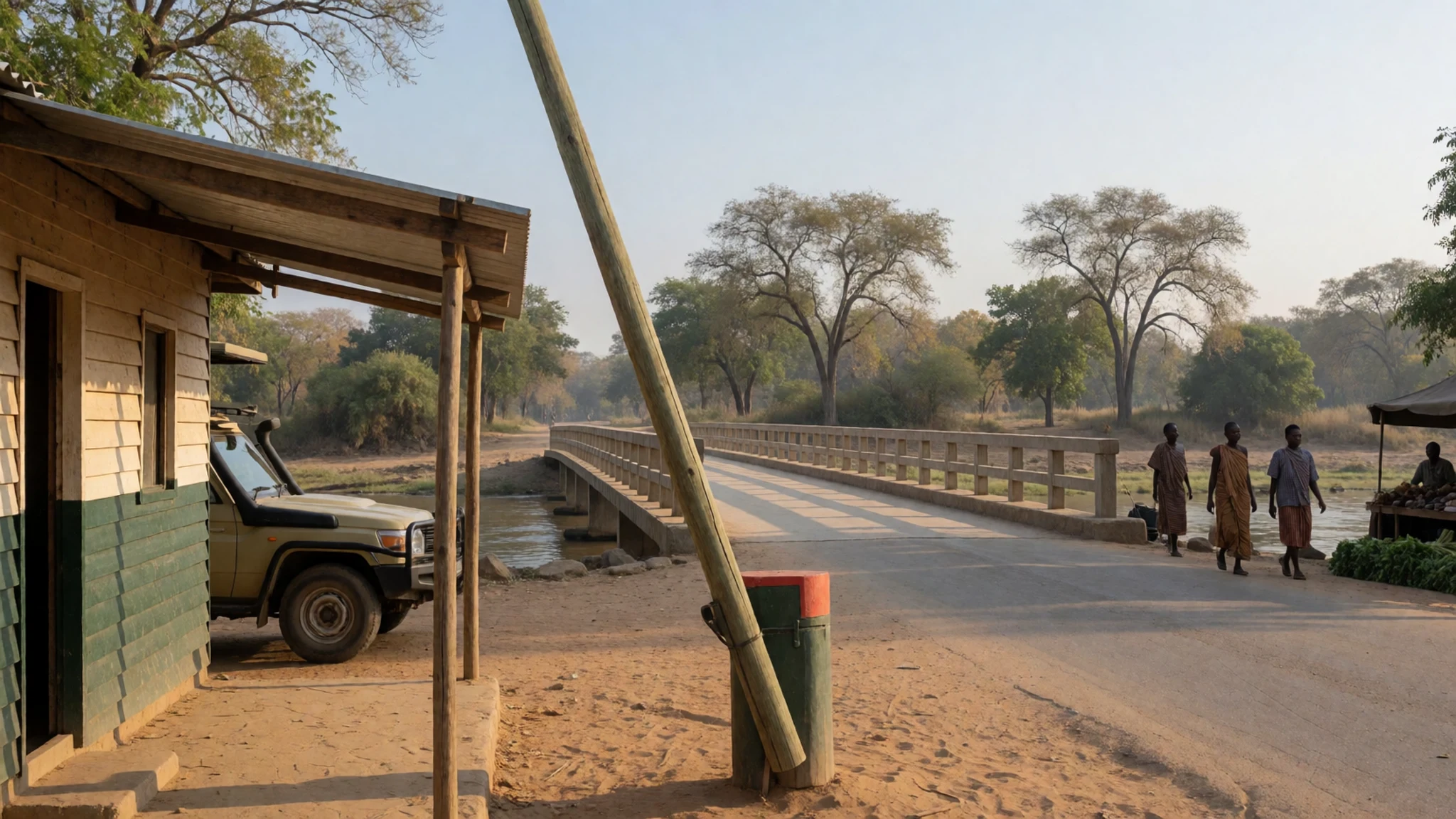
- Lagoons in the late afternoon — Oxbow lagoons
South Luangwa in the late afternoon is when the vehicles slow down together. Light falls across the mopane, warthogs trot toward their burrows, and herds drift to whatever water remains. Guides switch off the engine and wait. The skill is knowing which lagoon still holds water and which track the elephants used at midday.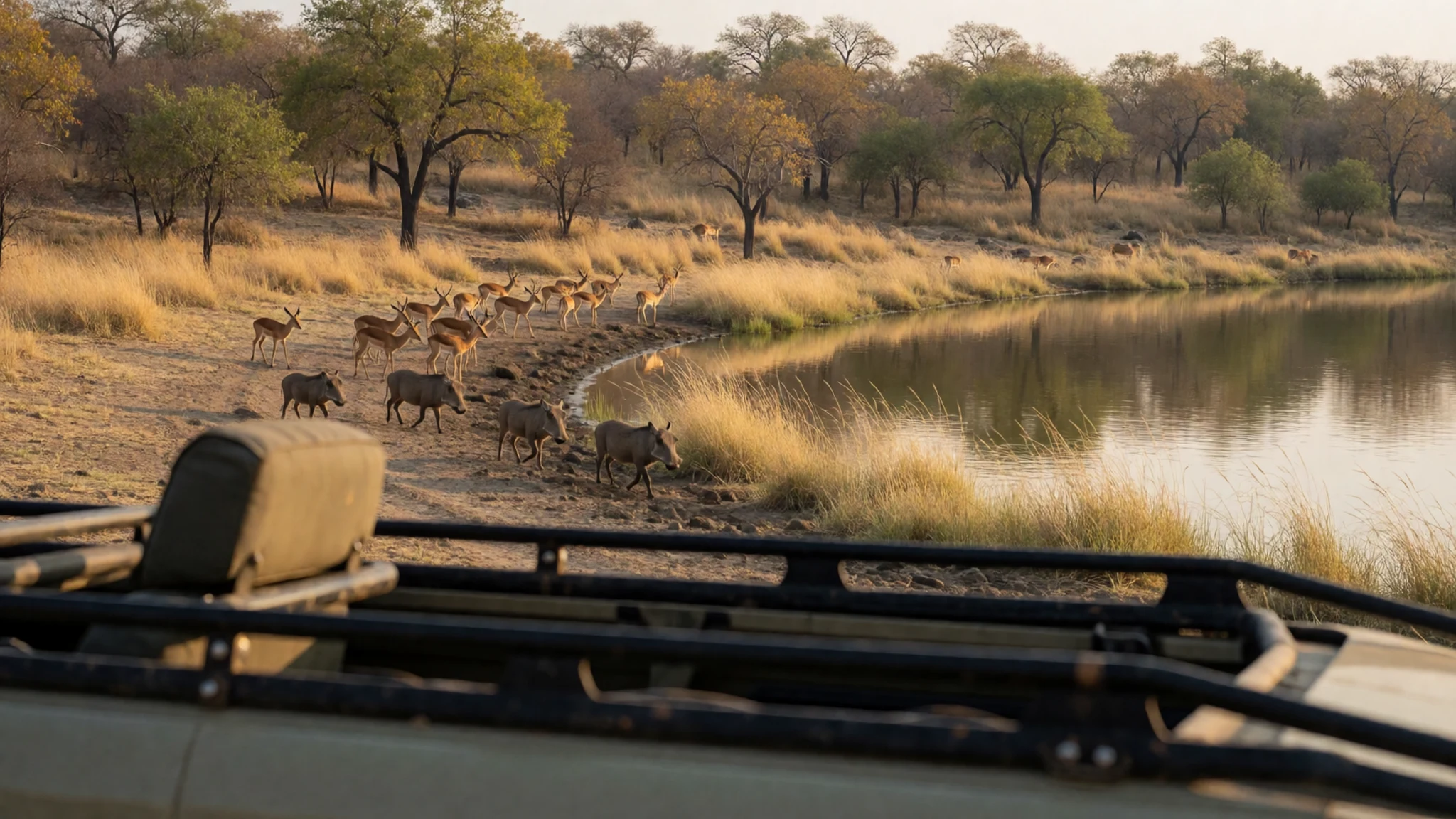
Culture
South Luangwa sits in the country of the Kunda people, with Bemba, Chewa and Nsenga communities in the towns around the valley. Chiefs still matter. Land, disputes, and the old agreement that let visitors walk in Nsefu's area all pass through traditional authority as well as the state park service. Mfuwe is where those worlds meet: a market town, an airport, and families whose wages come from guiding, tracking, kitchens and workshops.
Wildlife here shares a valley with farms. Elephants leave the park and raid maize and mangoes; lions sometimes take livestock; people fish and farm up to the boundary. Camp staff speak about animals with precision — which pride, which lagoon, which bull is in musth — because that knowledge is the job and a local skill. Evenings in camp stay quiet on purpose. Radios stay low, voices drop when a leopard is on a kill, and the walk to a tent is done with a guard.
In Mfuwe, greet people, ask before you photograph anyone, and follow a scout's word at once when an animal is close.
What to wear
South Luangwa's countryside still uses the chitenge for ceremonies and for many ordinary days: a cotton wrap printed with wax-resist patterns. Women wear it as a skirt, a headcloth or a sling for a child. The cloth is bought in Mfuwe market and in Chipata, and the prints change for funerals, weddings and church. Men more often wear a shirt and trousers, with a jacket for a chief's meeting and a chitenge as a wrap at home or in the fields. Bark cloth and hide sit in ceremonial memory rather than on the weekday street.
Work clothes are practical. Guides and scouts wear khaki or olive drill, boots, and a fleece on cold mornings. In town, T-shirts, jeans and trainers sit alongside a chitenge kept for Sundays and family gatherings.
A visitor should dress for dust, sun and a cold open vehicle. Neutral cotton — stone, khaki, olive — hides dust and avoids a bright glare. Long sleeves and long trousers help with sun and mosquitoes. Closed shoes suit camp and a walk, where thorns and sand punish sandals. White clothing and camouflage are poor choices in the bush. A warm layer for dawn matters more than anything smart.
What to eat
- Nshima — Mfuwe eateries and camp kitchens
Nshima is the staple around South Luangwa: stiff maize porridge, rolled into a mound and eaten with the hand beside a relish. Camps cook it for staff and for guests who ask, and Mfuwe eateries serve it at midday with the greens or beans of the day.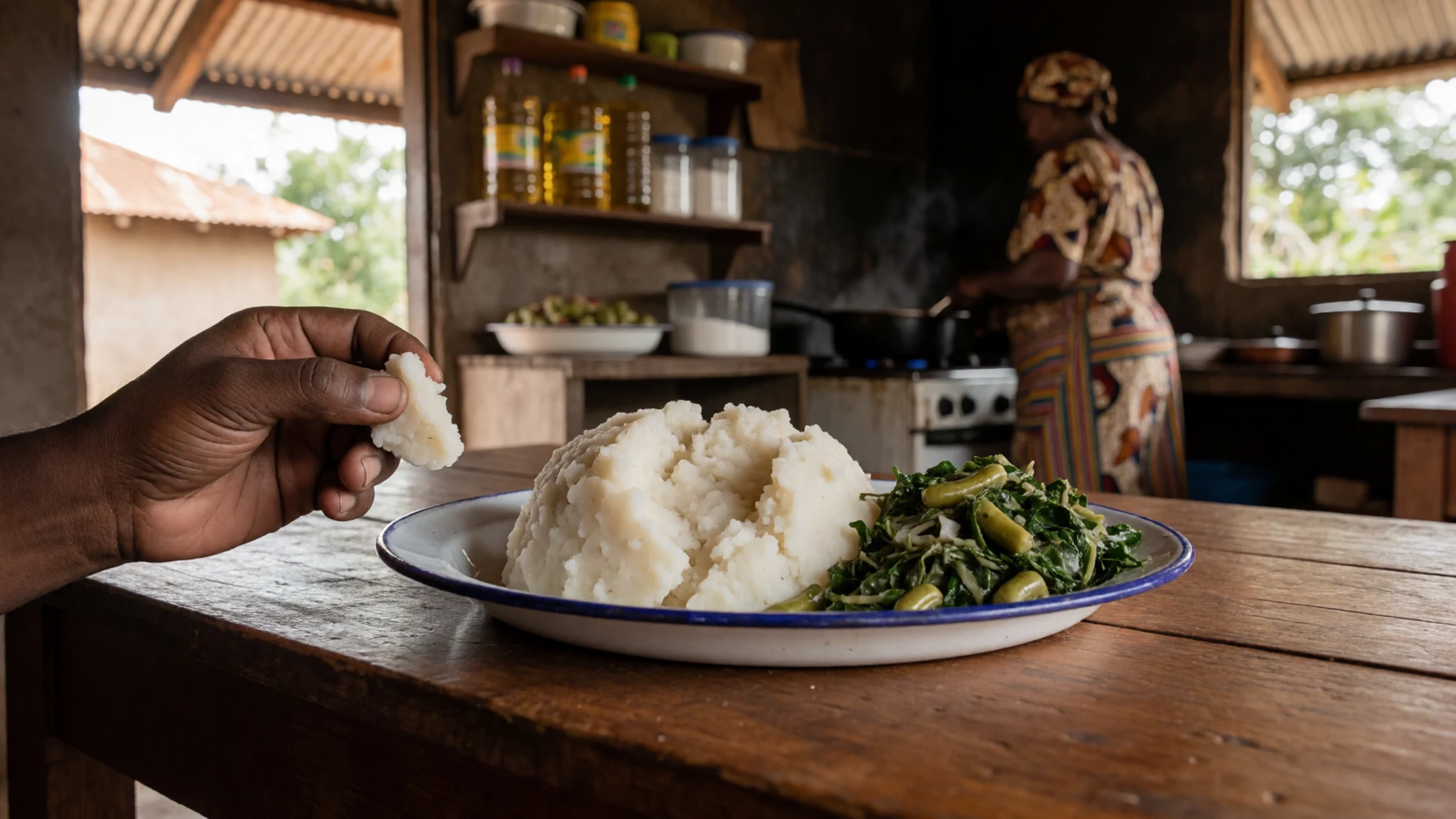
- Ifisashi — Camp kitchens and Mfuwe market stalls
Ifisashi is the relish most often beside nshima around South Luangwa: pumpkin leaves or other greens simmered in groundnuts until the sauce is thick and nutty. It is mild and filling. Camps serve it on Zambian menus, and Mfuwe stalls sell the leaves and the nuts.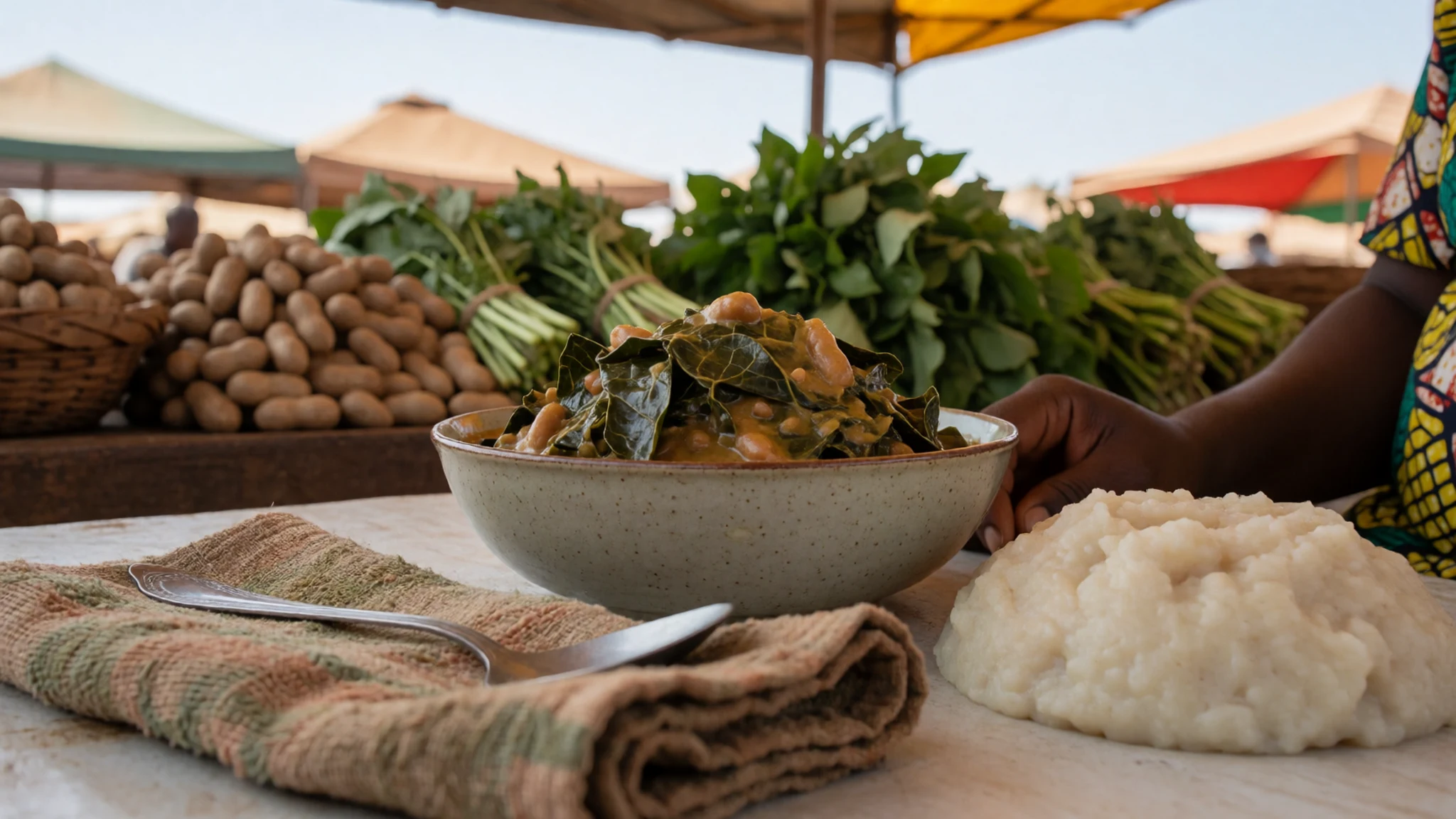
- Village chicken — Mfuwe eateries and camp kitchens
Village chicken, stewed with tomato and onion, is the celebration dish in South Luangwa's gateway town. The bird is smaller and firmer than a commercial one, and it comes with nshima. Mfuwe eateries and camp kitchens cook it when a Zambian meal is wanted. - Kapenta — Camp kitchens and Mfuwe shops
Kapenta, tiny dried lake fish, is not from the Luangwa, yet plates around South Luangwa rely on it because it keeps and fries quickly in oil and tomato. Camps use it as a relish with nshima, and shops in Mfuwe sell it by the bag. - Mangoes — Mfuwe market stalls and camp breakfast tables
Mangoes mark the hot months around South Luangwa. Trees in Mfuwe and the villages drop fruit, children sell it by the road, and elephants notice the same trees. Camps put mango on the breakfast table when the branches are full. Ripe fruit from a market stall is the simple sweet. - Grilled bream — Camp kitchens and Mfuwe shops
Grilled bream or tilapia appears in South Luangwa's camp kitchens more often than fish taken from the park river, because fishing there is not a visitor pastime. The fillet is usually plain, with lime or a tomato relish. Mfuwe shops sometimes stock it frozen for the same pan.
Plan it
Best time. June to October is the dry season in South Luangwa: short grass, low lagoons and animals near the river. May to August is cool and dry, the most comfortable stretch of the peak. October is the hottest month and January the wettest; November and December are hot and humid as the rains begin, January to April is the green season, only some camps close, and the long grass makes driving harder even though migrant birds are numerous.
How long. 3–4
Getting there. South Luangwa is reached through Mfuwe airport on a flight from Lusaka, then a camp vehicle over the bridge to the gate and on to the lodge. A road trip from Chipata or Lusaka can end at the same gate if a driver knows the last stretch.
Budget. high
Tips
- Book the camp, and any walk, well before the dry months; good camps fill and many shut in the rains.
- Take the early drive and the night drive; the middle of the day is hot and the animals rest.
- Treat South Luangwa as malarial: cover up at dusk and arrange prophylaxis before travelling.
- Carry kwacha for the Mfuwe market; card machines are a camp convenience and patchy in town.
- Drink the camp's treated water and stay seated until a guide says it is safe to stand.
Etiquette
- Stay in the vehicle unless a guide invites you to step down.
- Do not whistle, call or play animal sounds to draw a cat closer.
- Ask before photographing people in Mfuwe, and keep voices low near a kill.
Nearby
Sources
- Wikidata (CC0)
- Wikipedia (CC BY-SA 4.0)
- Wikivoyage (CC BY-SA 4.0)
Wildlife
- Elephant (animal)
The African bush elephant is the biggest animal that walks on land, with a long trunk that works almost like a hand and big ears that help it stay cool. In South Luangwa, you may see families stripping bark from mopane trees or crossing the river together. Keep a respectful distance, stay quiet and let your guide decide where to park, so the herd carries on undisturbed. Never offer food; wild elephants should stay wild, and calm watching is always rewarded.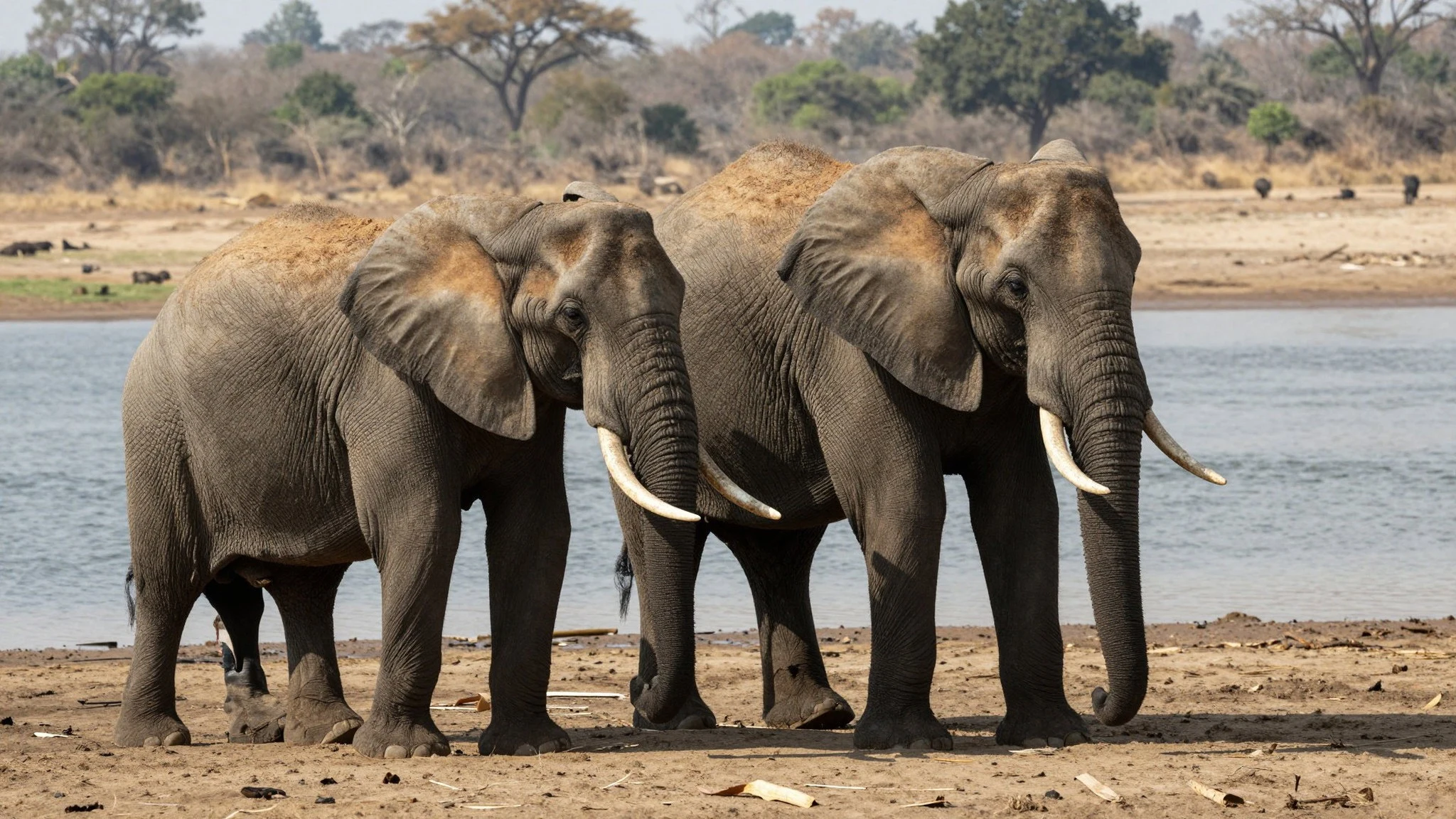
- Lion (animal)
The lion is a big cat with a tufted tail, and the male is the one with the shaggy mane around his head and shoulders. In South Luangwa, lions hunt around the lagoons, so those watery places are good spots to scan with your guide. Stay in the vehicle, keep your distance and your voice low, and let the cats go about their business without being crowded. Never feed or call to them; a quiet, patient watch is the best way to enjoy them.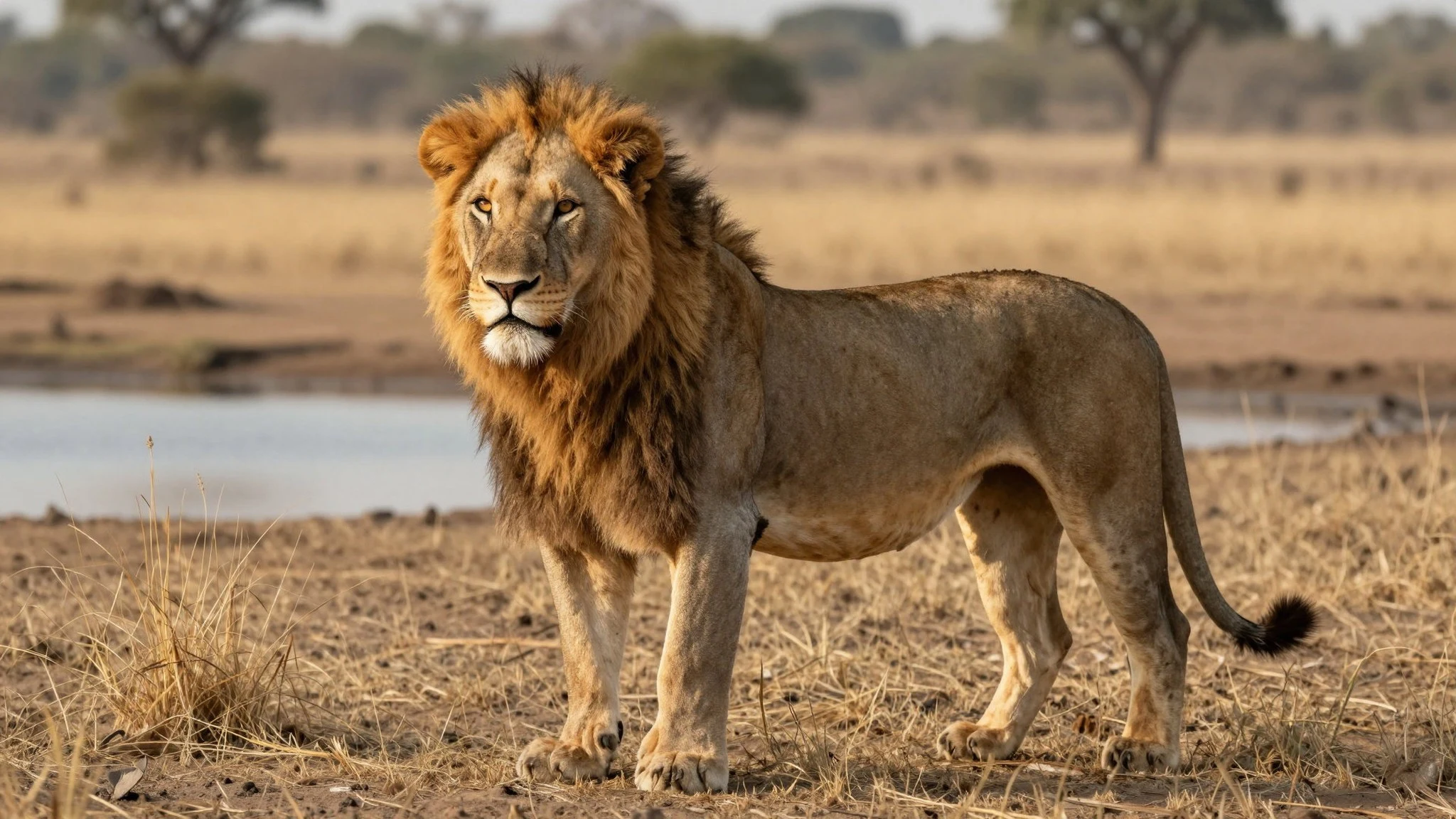
- Southern carmine bee-eater (bird)
The southern carmine bee-eater is a bird of Africa south of the equator, once thought to be the same species as its northern cousin. In South Luangwa it nests in the banks, but only when the season suits it, so ask your guide whether birds are nesting. Watch from a good distance with binoculars, stay quiet so nesting birds are not frightened, and never feed them or disturb the banks.