Ngonye Falls
Ngonye Falls, Zambia
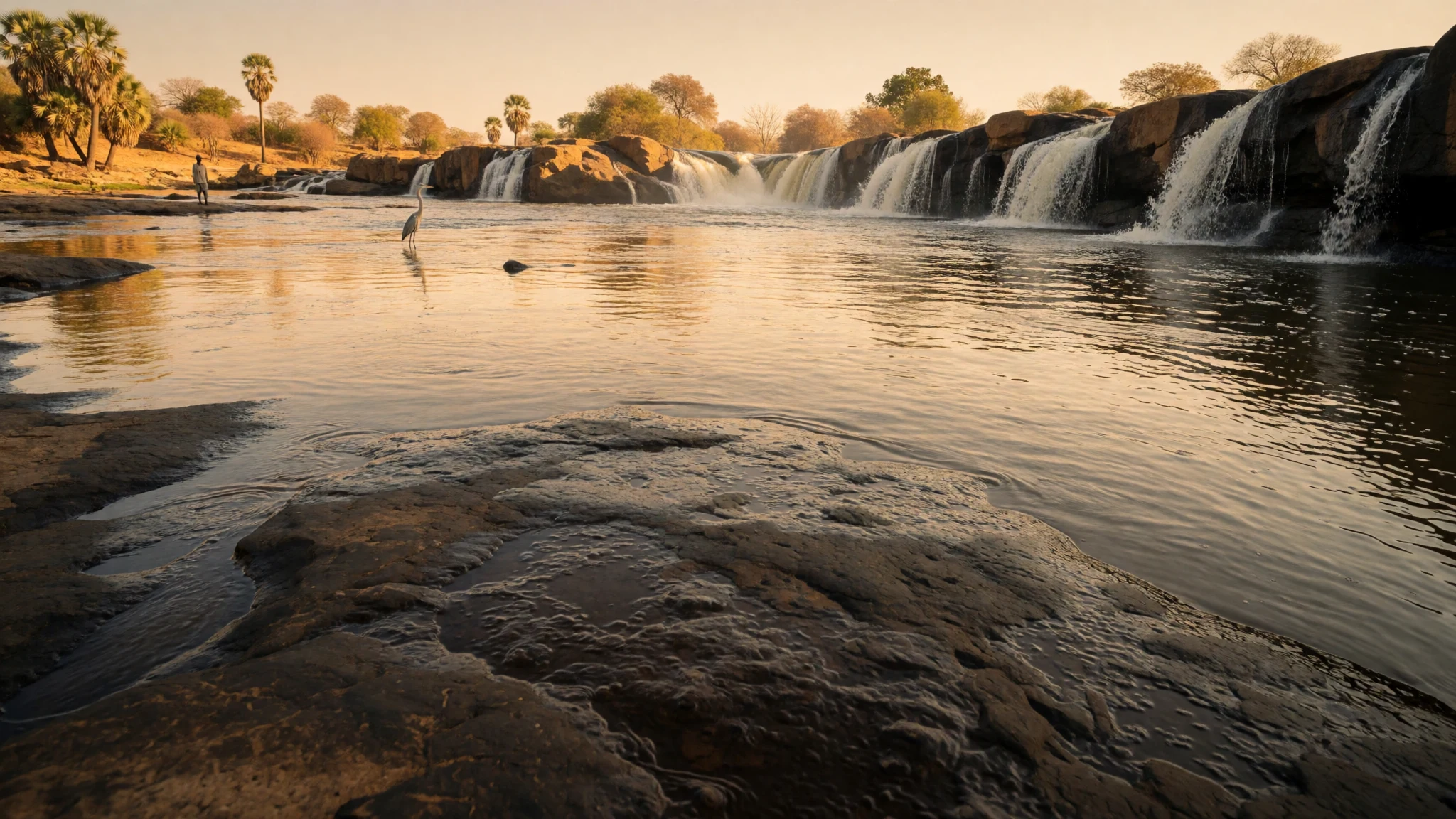
Ngonye Falls spreads the Zambezi into a wide crescent of white water, in quiet Western Province, far from the crowds at Victoria Falls.
The place
Ngonye Falls, also called Sioma Falls, sits on the Zambezi in Zambia's Western Province, close to the town of Sioma and well upstream of Victoria Falls. The river here lies at about 974 metres above sea level, in flat Kalahari country in the south of Barotseland. The drop itself is modest. What impresses is the breadth: the water arrives as a wide crescent, split into many channels by dark rocky outcrops, so spray and noise come from every direction rather than from a single plunge. Upstream, the Zambezi runs broad and shallow over pale sand. Downstream, it is squeezed into sandstone gorges and turns to fast white rapids. That contrast, a calm sheet above and a churning corridor below, is a useful way to read the whole landscape. Ngonye is far less visited than its famous neighbour, mostly because reaching it takes effort. From Lusaka it is a long day by road, and the final stretch is rural. The reward is space: few other visitors, birdsong over the river noise, and a waterfall that is still part of daily life for the communities along its banks. A community partnership park looks after the area around the falls, so access, guides and any fees are arranged locally and are worth checking before travel. Water levels change through the year, and so does the character of the place, from a thundering curtain after the rains to a lace of channels and bare rock late in the dry season.
Its story
Ngonye Falls owes its shape to a hard layer of sandstone lying across the course of the Zambezi. Over a very long time the water has worked at the edges and cracks of that rock, leaving a stepped ledge and a scatter of outcrops where softer material was carried away. Below the ledge the river has cut gorges into the same stone, which is why the rapids downstream are so confined and fast. The falls carry two names, Ngonye and Sioma, the second taken from the nearby town, and both turn up on maps and in conversation. The surrounding land is part of Barotseland, the homeland of the Lozi people, whose life has long followed the river and its floodplain through fishing, farming on the margins and travel by boat. Northern Rhodesia of the colonial period became Zambia at independence, but the rhythm of the river mattered more locally than any border drawn on a map. Because the falls lie far from the main tourist route through Livingstone, they stayed little known outside the region. More recently, the community partnership park has given nearby villages a role in caring for the site and receiving visitors, so that interest in the falls can bring some benefit locally. The story here is less about famous explorers and more about slow geology and a working river: a landscape still being shaped, and still depended on, by the people who live beside it.
What to see
- The main crescent — Ngonye Falls, near Sioma
The broad arc of the falls is the reason to come. Water pours over a low sandstone ledge in dozens of separate streams, some smooth, some broken into foam. Viewpoints near the rim give the width of it; the aerial photographs show the full curve, which is hard to grasp from the ground.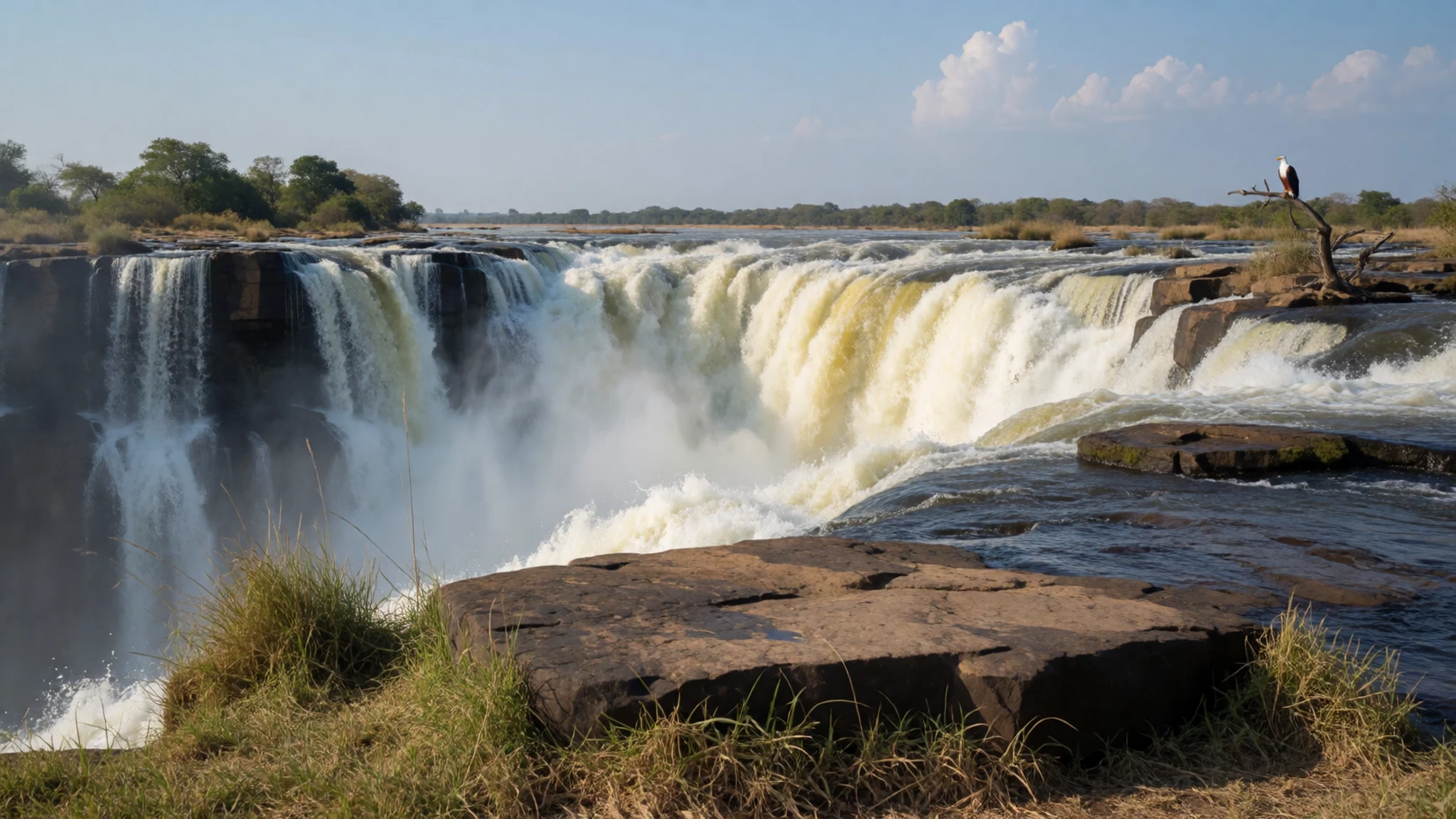
- Rocky outcrops and channels — Along the lip of the falls
Dark rocks divide the falls into separate channels, and their layout changes with the water level. In the dry season more stone shows and the flow thins to ribbons; after the rains the gaps fill and the outcrops become islands in the spray. Take care on wet, algae-slick rock.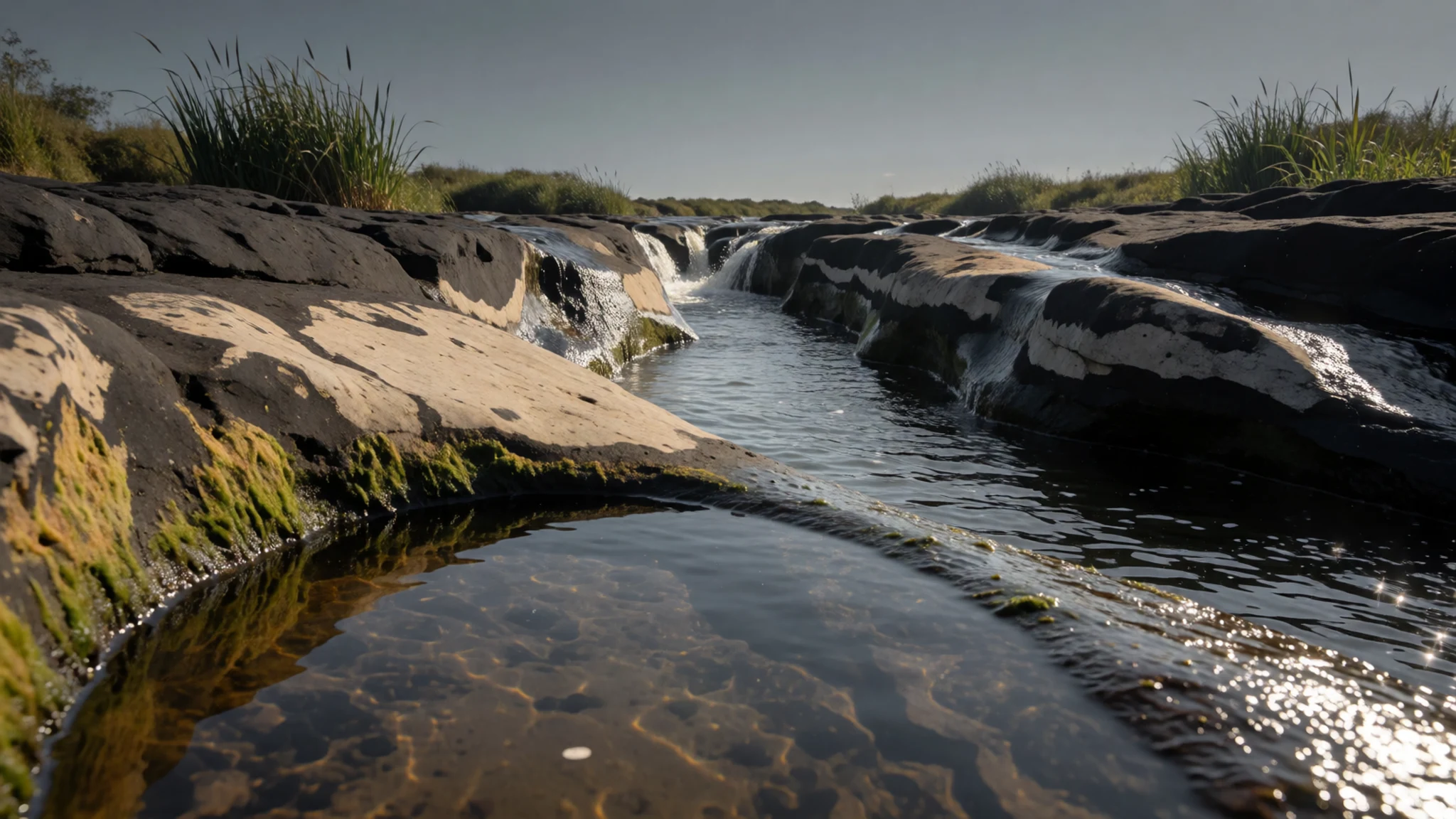
- The gorges and rapids below — Downstream of the falls
Beneath the ledge the Zambezi is hemmed in by sandstone walls and turns to fast white water. The contrast with the wide, slow river above is striking. Stay well back from the edges, as the rock can crumble and the current is powerful. Local guides know the safe approaches.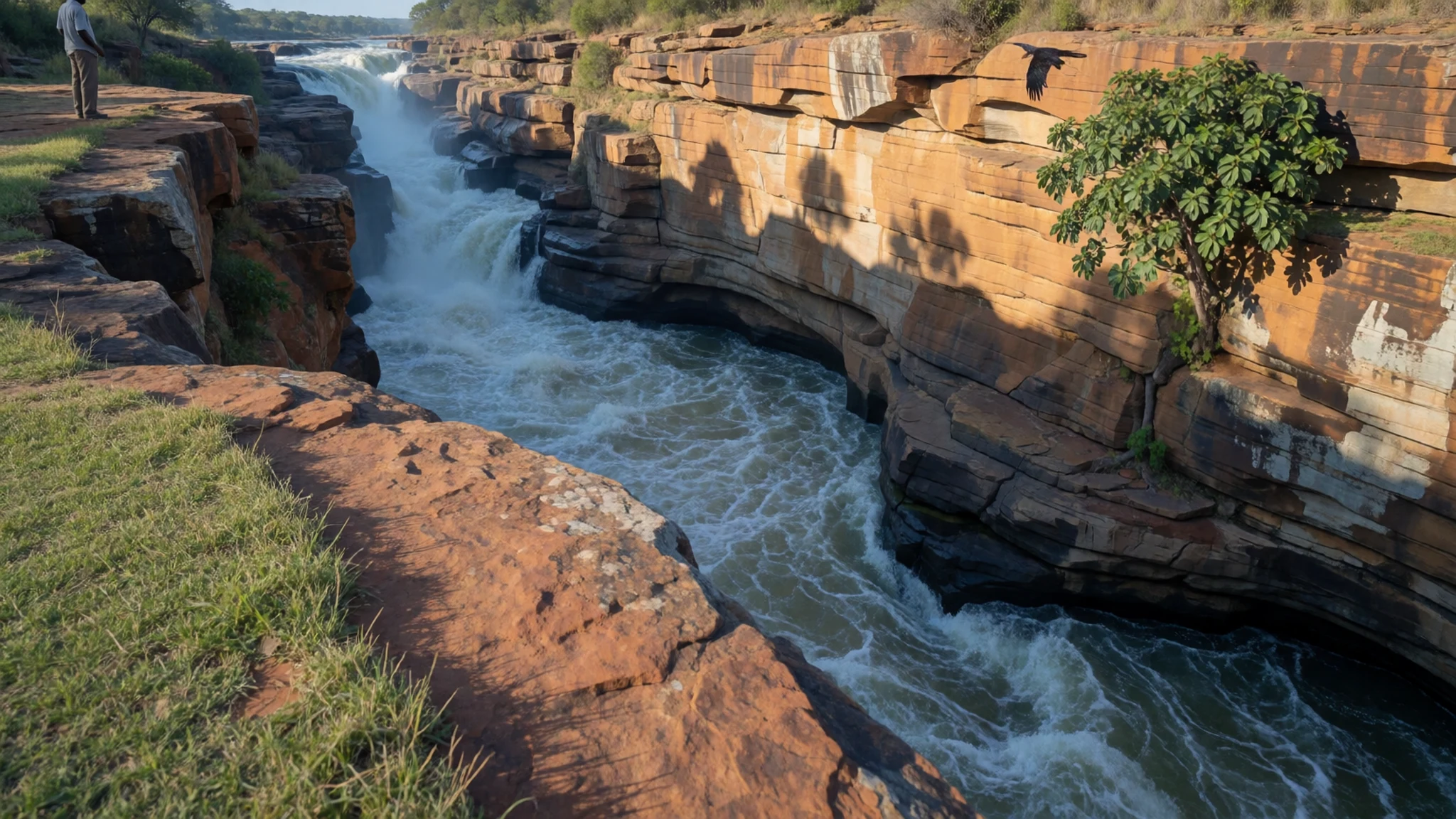
- The wide river upstream — Upstream of Ngonye Falls
Above the falls the Zambezi spreads out, shallow and sandy, across Kalahari country. It is a quiet stretch, good for watching birds along the banks and seeing local boats go about their day. Early morning light on the water is especially calm and photogenic.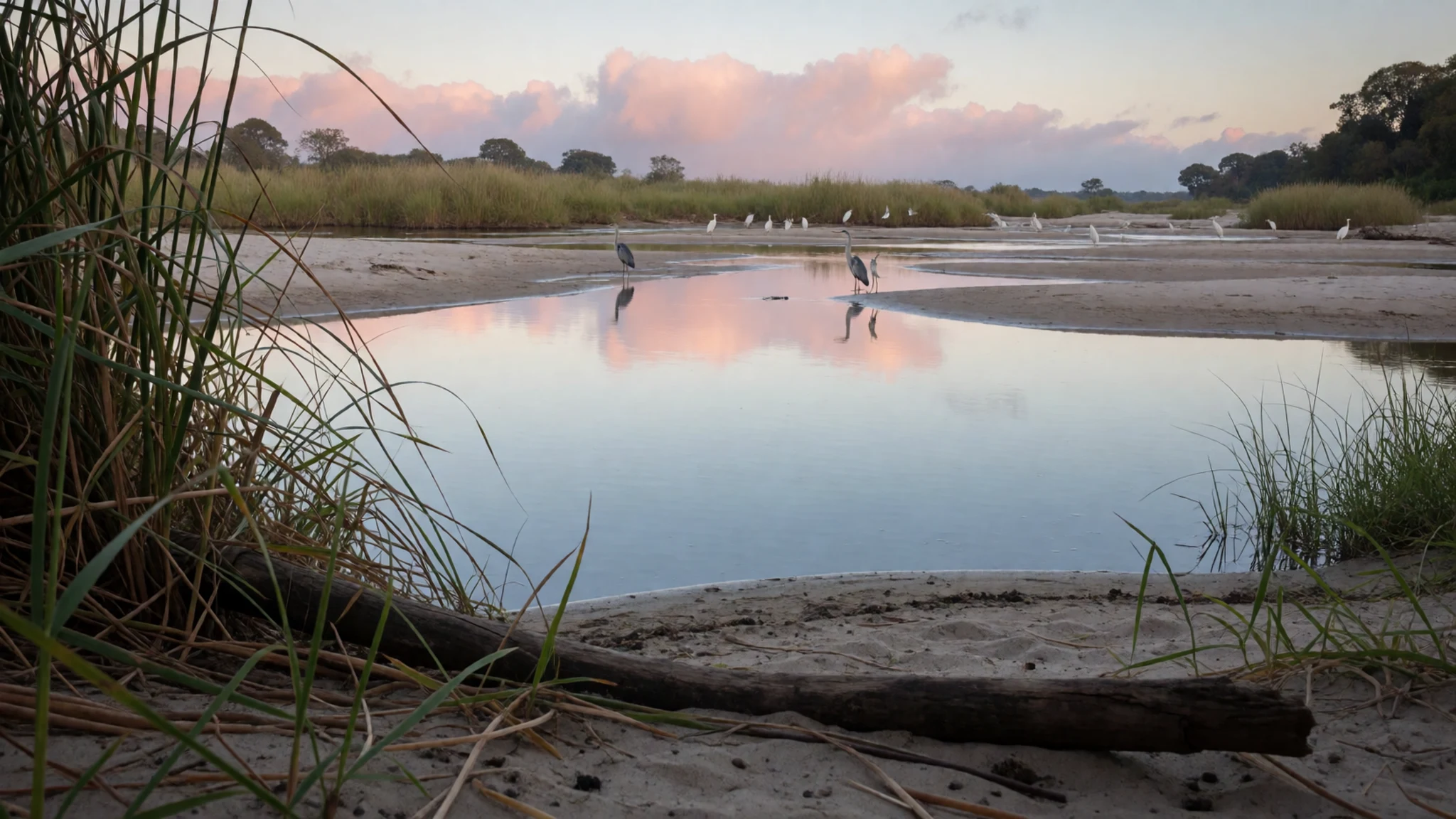
- Sioma and the community park — Sioma, Western Province
Sioma is the nearest town and the practical base for the falls. The Ngonye Falls Community Partnership Park is managed with the local community, so this is the place to ask about access, guides and current arrangements, and to buy supplies before heading to the river.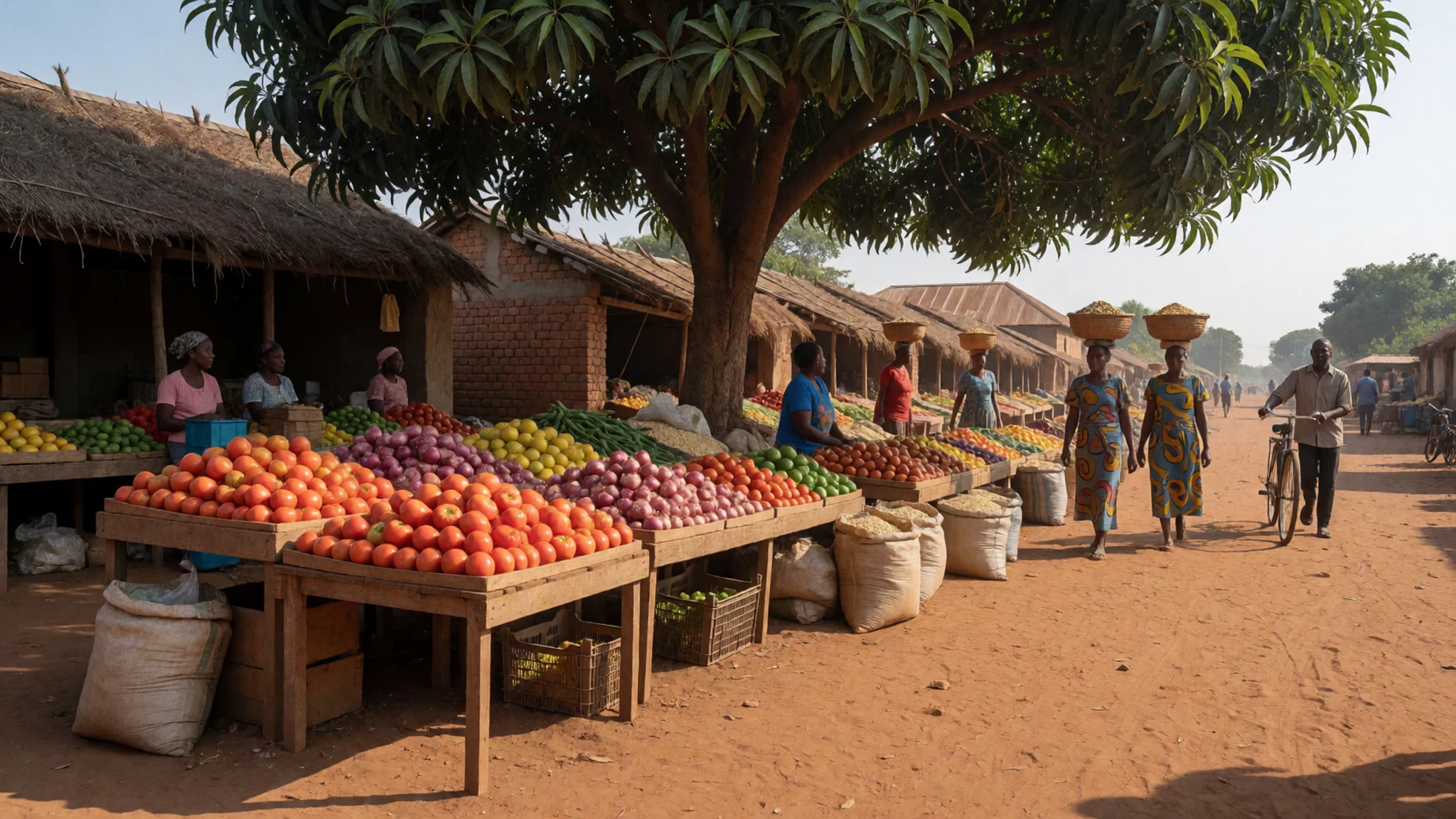
Culture
Ngonye Falls lies in Barotseland, where Lozi traditions sit alongside wider Zambian customs, and visitors will notice how much courtesy matters in everyday encounters. Society is fairly traditional, with respect shown to elders, and older men in particular. Visitors, especially foreign ones, are often treated with extra deference, a habit with colonial roots that is now mostly just politeness. It can feel awkward, but the kindest response is to accept the hospitality graciously. People are also openly curious. Children may call out to a stranger, adults may ask many questions about home and family, and conversations can be long. Treat it as friendliness, not intrusion. Handshakes are common and often lasting; some people keep hold of a hand through the whole conversation as a sign of connection, with no other meaning. If it is uncomfortable, simply withdraw your hand with a smile. A respectful variation is to support your right forearm or wrist with your left hand while shaking. Riverside life around the falls runs on fishing, farming and small-scale trade, so a greeting and a few minutes of chat go a long way. Many villagers will gladly point out paths and explain how the river changes through the year. At Ngonye Falls, greet people with a handshake and ask permission before photographing anyone, especially in the villages around Sioma.
What to wear
Around Ngonye Falls, traditional dress draws on Lozi custom and on the printed cloth common across Zambia. Women wear the chitenge, a colourful printed cotton wrap, as a skirt, a head tie or a baby carrier. For ceremonies in Barotseland, such as the Kuomboka, women wear the musisi, a long wrapped dress in strong colours, while men may wear formal wraps and berets suited to royal occasions. Cloth is mostly cotton, bought from markets in Sioma or larger towns. Everyday clothing now is simple and practical: T-shirts, jeans, long skirts, sandals or trainers, and rubber boots for farm and river work. Many people dress neatly for church and market days, and chitenge are still worn at home and for celebrations. Visitors should dress for heat and for rough ground. Light, loose cotton in muted colours works well, with long sleeves and a hat for the strong sun, and a fleece for cool dry-season mornings. Sturdy shoes with good grip are essential, since rocks near the water are slippery and sandy tracks can be uneven. Quick-drying sandals suit paddling in the shallows. Modest clothing is appreciated in villages, so shoulders and knees covered is a sensible default. Swimwear is for the lodge or a guide-approved spot, not the village waterfront.
What to eat
- Nsima with relish — Local eateries and roadside stops in Sioma
Nsima is the staple across Zambia: a thick maize porridge rolled into a ball by hand and dipped in a stew called relish, made with beef, chicken, fish or vegetables. Local eateries in Sioma and at roadside stops serve it as a plain, filling lunch.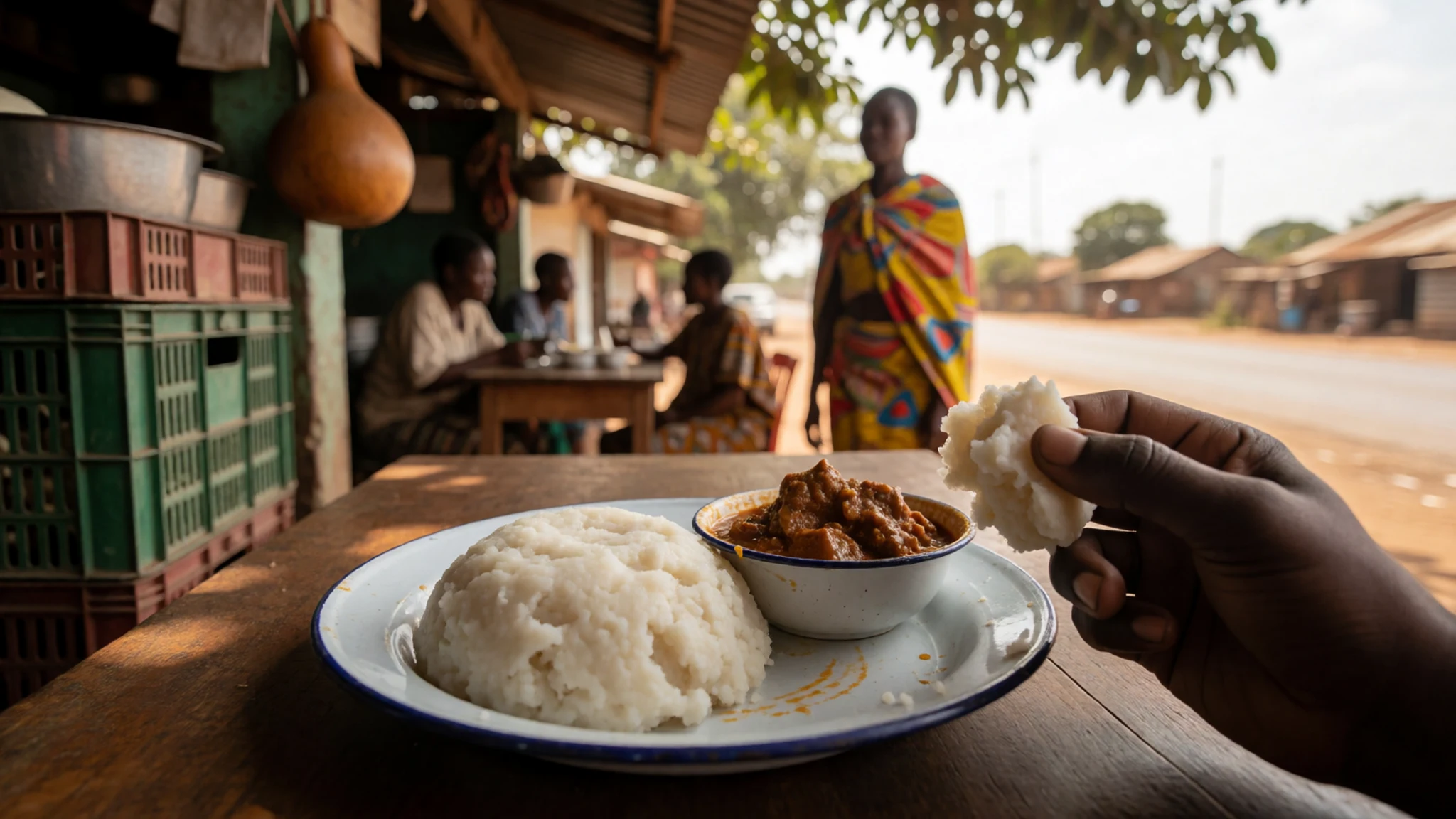
- Kapenta — Markets in Sioma and nearby towns
Kapenta are tiny dried fish, fried or stewed with tomato and onion, and eaten with nsima. They are salty, crunchy and cheap, a common source of protein for many families, and found at markets in dried heaps.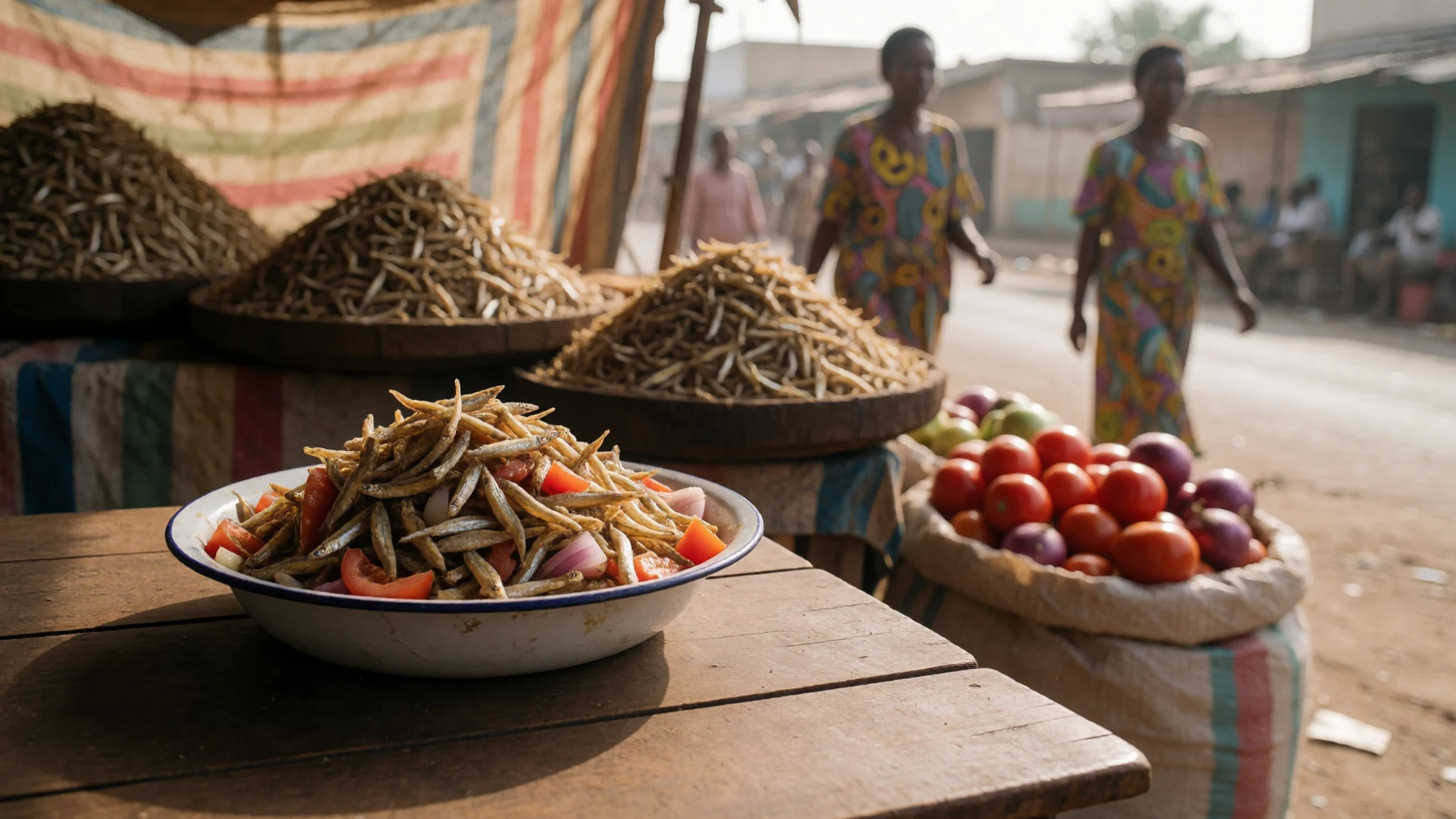
- Chibwabwa — Village homes and small local eateries
Chibwabwa is pumpkin leaves, cooked down with onion and tomato, sometimes with groundnuts for richness. It is a popular relish with nsima and tastes like earthy, slightly sweet spinach. Home cooking in villages is where it is best. - Ndelele — Local eateries and market food stalls
Ndelele, or okra, is cooked into a slippery, savoury relish that pairs well with nsima. The sticky texture surprises some visitors but is much loved locally. It is often served alongside beans or dried fish for a vegetable-based meal. - Fresh bakery bread — Bakeries in Sioma and larger towns on the route
Small bakeries in Zambian towns sell cheap fresh bread, handy for river picnics and early starts. Paired with tea or fried eggs, it makes an easy breakfast before the drive to the falls, and many travellers stock up in town first.
Plan it
Best time. May to October, the dry season, when skies are mostly clear, tracks are firmer and the rocks and channels are easiest to see. November to April is the rainy season: the river runs fuller and the falls look more dramatic, but roads can turn difficult.
How long. 1–2
Getting there. Fly to Lusaka or Livingstone, then continue by road to Sioma in Western Province; from Lusaka it is a long day's drive. The last stretch is on rural roads, so check conditions locally, and consider a high-clearance vehicle, especially in the rains.
Budget. mid
Tips
- Carry enough cash, as card machines and mobile networks can be unreliable around Sioma
- Bring plenty of drinking water, sun protection and snacks, since supplies near the falls are limited
- Ask locally about access and guides through the community partnership park, and check current arrangements before you set out
- Aim for early morning or late afternoon, when light is soft and the heat is easier to manage
Etiquette
- Greet people with a handshake and a few friendly words before asking for directions or help
- Ask permission before photographing people or their homes
- Stay on guided paths near the water, and avoid wet rocks and the gorge edges
Nearby
Sources
- Wikidata Q1650303 (CC0)
- Wikipedia, Ngonye Falls (rev 1362023443) (CC BY-SA 4.0)
- Wikivoyage, Zambia (rev 5367077) (CC BY-SA 4.0)
- Photo: Ngonye falls at Zambezi river, Zambia (aerial view), Petrtyl (CC BY 4.0)
- Photo: Ngonye falls at Zambezi river, Zambia (panoramic aerial view), Petrtyl (CC BY 4.0)
- Photo: Ngonye falls at Zambezi river, Zambia, Petrtyl (CC BY 4.0)
- Photo: Ngonye Waterfalls in Sioma, Anayawa Nyambe (CC BY-SA 4.0)
- Photo: Ngonye Waterfalls, Anayawa Nyambe (CC BY-SA 4.0)
- Photo: Zambezi river with Ngonye falls in Sioma district, Western province, Zambia, Petrtyl (CC BY 4.0)


