Kasanka
Kasanka, Zambia
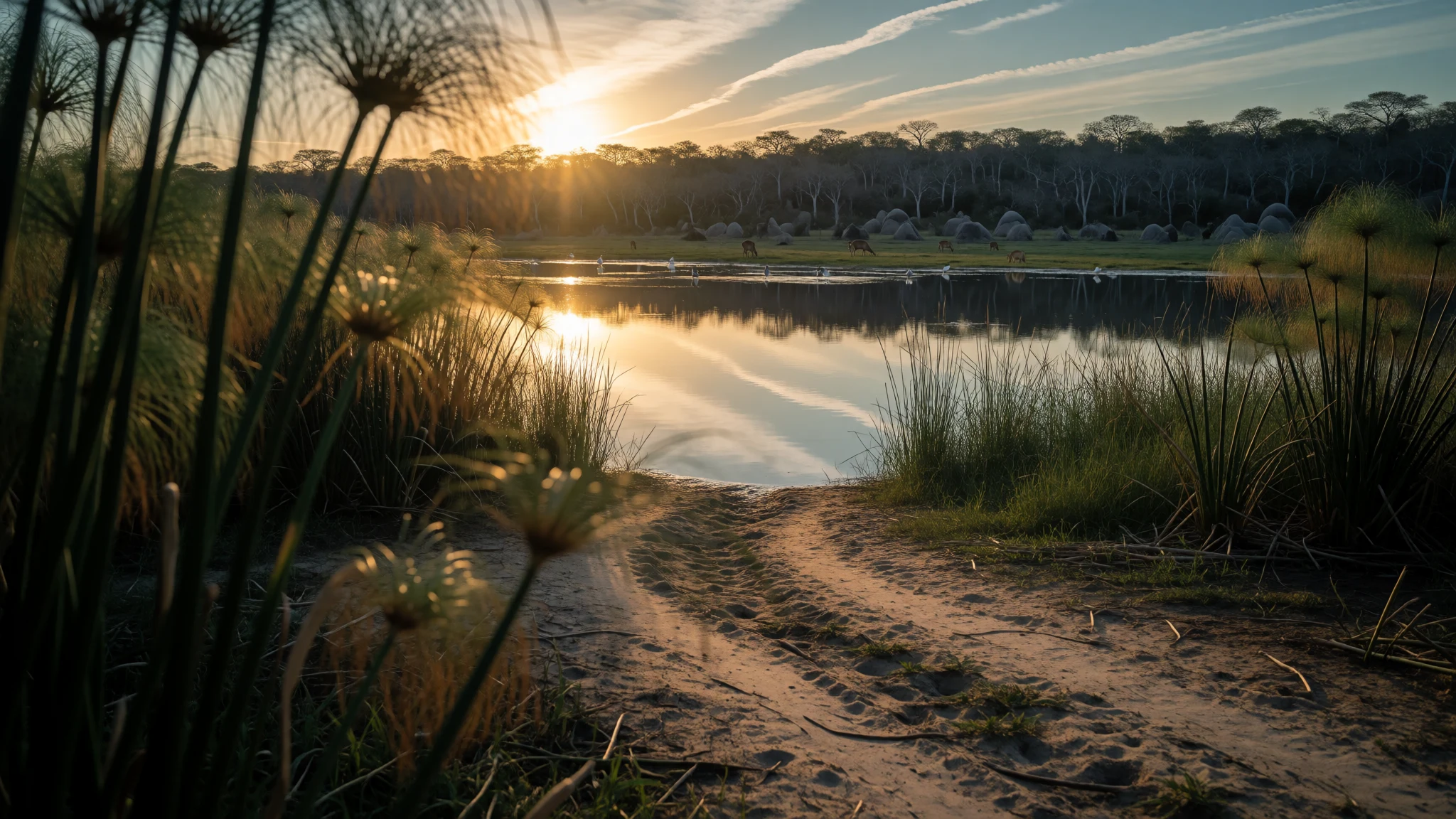
Kasanka is a small, quiet Zambian park where close to ten million fruit bats pour into the evening sky each year.
The place
Kasanka National Park sits in Zambia's Central Province, in Chitambo District, at an elevation of about 1,221 m. It is a compact park by African standards, a patchwork of miombo woodland, open grassland, papyrus swamp and small pockets of evergreen forest, threaded with rivers and shallow lakes. Wasa is the biggest of the lakes. The Luwombwa is the river that carries the park's water out through the north-western corner, eventually joining the Luapula and so the Congo system. The park belongs to the wider Bangweulu ecosystem, yet its water is not directly connected to the Bangweulu wetlands themselves.
The feel here is quiet rather than grand. Roads are sandy tracks, camps are small and mostly run by the trust that manages the park, and days are organised around hides, boat trips and walks rather than convoys of vehicles. Wildlife is varied: elephant, hippo and the swamp-dwelling sitatunga are on the record, along with puku, zebra and buffalo, and 471 bird species have been logged. The star turn is seasonal. From roughly October to December, close to ten million straw-coloured fruit bats gather in a patch of swamp forest called Mushitu, and the evening sky fills with them.
Reaching Kasanka takes effort. The park is a long way from Lusaka, facilities are modest, and few other visitors share the place, which is much of its appeal.
Its story
Kasanka National Park has an unusual history among Zambian reserves, because a charitable trust rather than a government department looks after it day to day. The land was established as a national park in 1971, but a park on paper still needs rangers, vehicles, fuel and money to be more than a line on a map.
In 1986 a privately funded body, the Kasanka Trust, took on that work. It operates in partnership with Zambia's national parks and wildlife department, and Kasanka became the first national park in the country run under a private-public arrangement. The trust has since handled all management responsibilities, from patrols to visitor camps.
One visible result is the return of animals that had dwindled. The trust reintroduced several species, and zebra and buffalo have done best. Walkers and drivers now meet them on the grassland, alongside the puku and sitatunga that never left.
The other story is the bats. Straw-coloured fruit bats travel to Mushitu forest every year for about three months, and the count is put at close to ten million, which Wikipedia describes as the largest mammal migration in the world. Estimates differ from year to year and between sources, so the number is best read as a rough scale rather than a census.
A model like this depends on people turning up, paying their way and treating the place gently. Anyone who visits Kasanka is, in a small way, part of how it stays protected.
What to see
- Mushitu bat roost — Mushitu forest, central park
The swamp forest of Mushitu is the reason most people come. Around dusk the fruit bats leave their roost in streams and the sky turns dark with wings, then they return at dawn. Viewing is from set spots and platforms with a guide. Timing is tight, so go in October to December.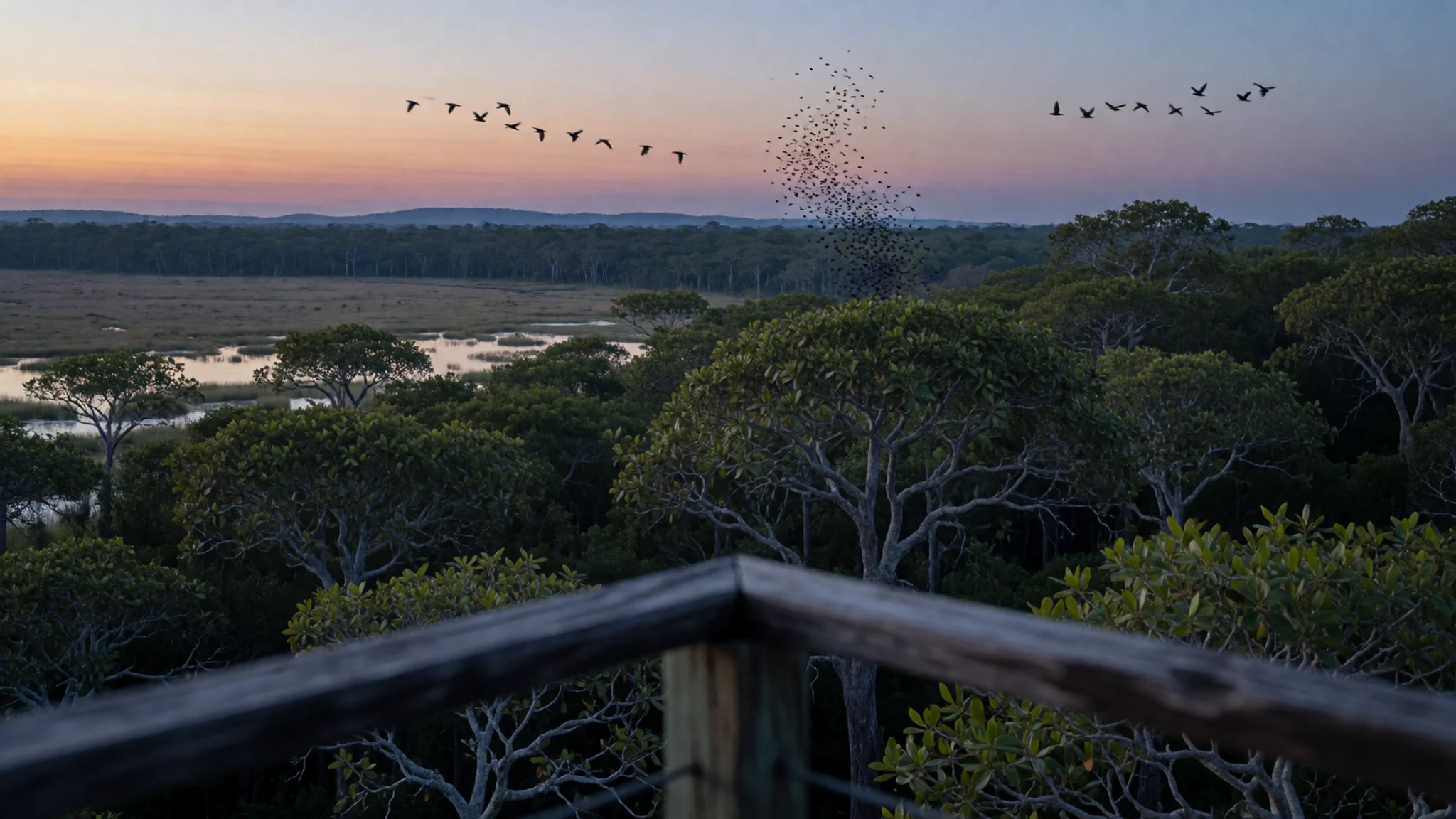
- Wasa Lake and the Wasa River — Wasa Lake, park interior
Wasa is the largest of the park's shallow lakes, fringed with reeds and papyrus. Water birds gather here, hippo grunt in the channels, and the lake edges are good for quiet sitting with binoculars. Early morning is cooler and the light is soft over the water.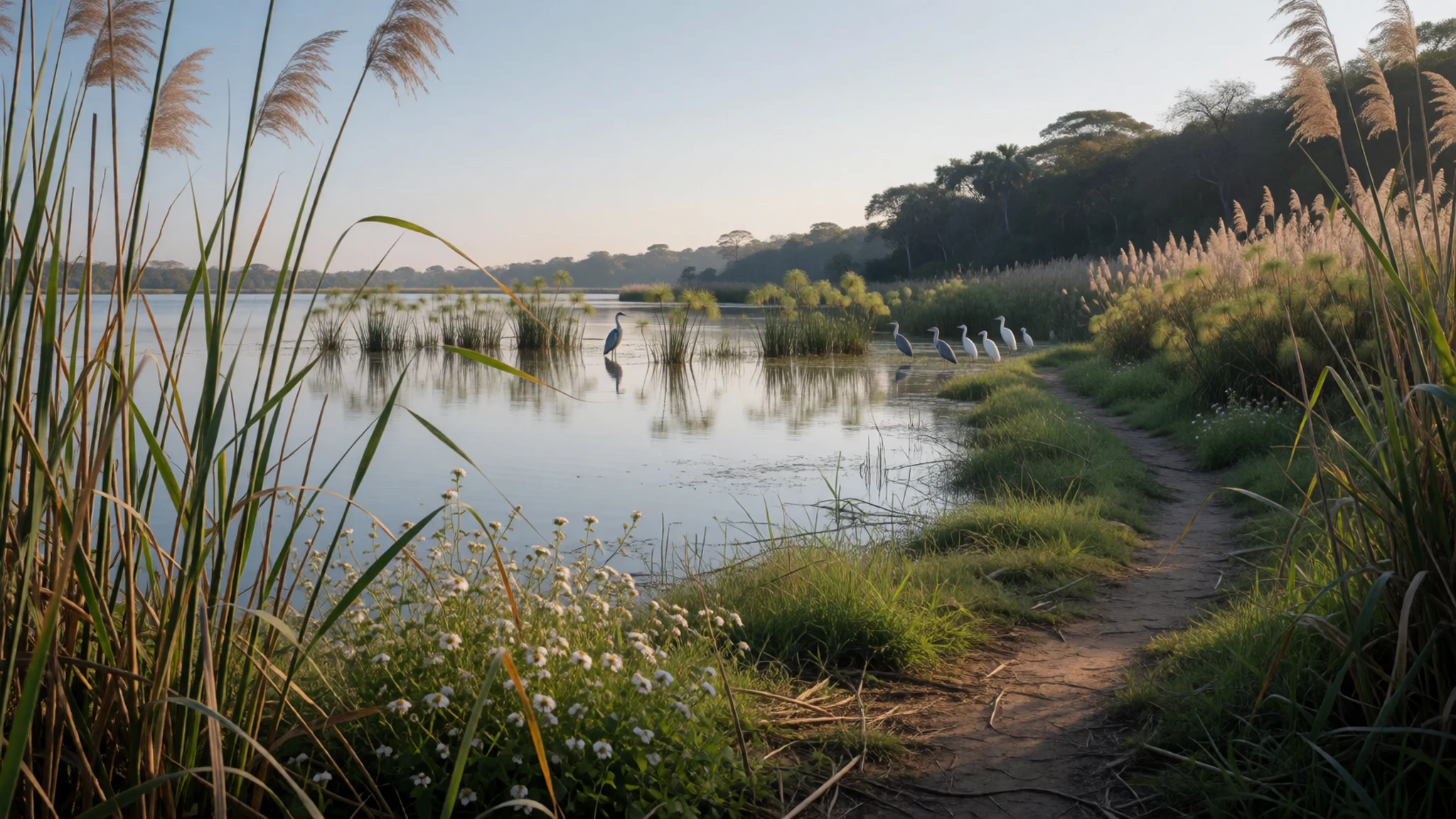
- Miombo woodland and termite mounds — Woodland tracks across the park
Much of Kasanka is open miombo woodland, dotted with tall termite mounds that serve as lookouts for small antelope and as nesting sites for birds. A walk with a guide explains the trees, the insects and the tracks, and gives a slower sense of the landscape than a drive.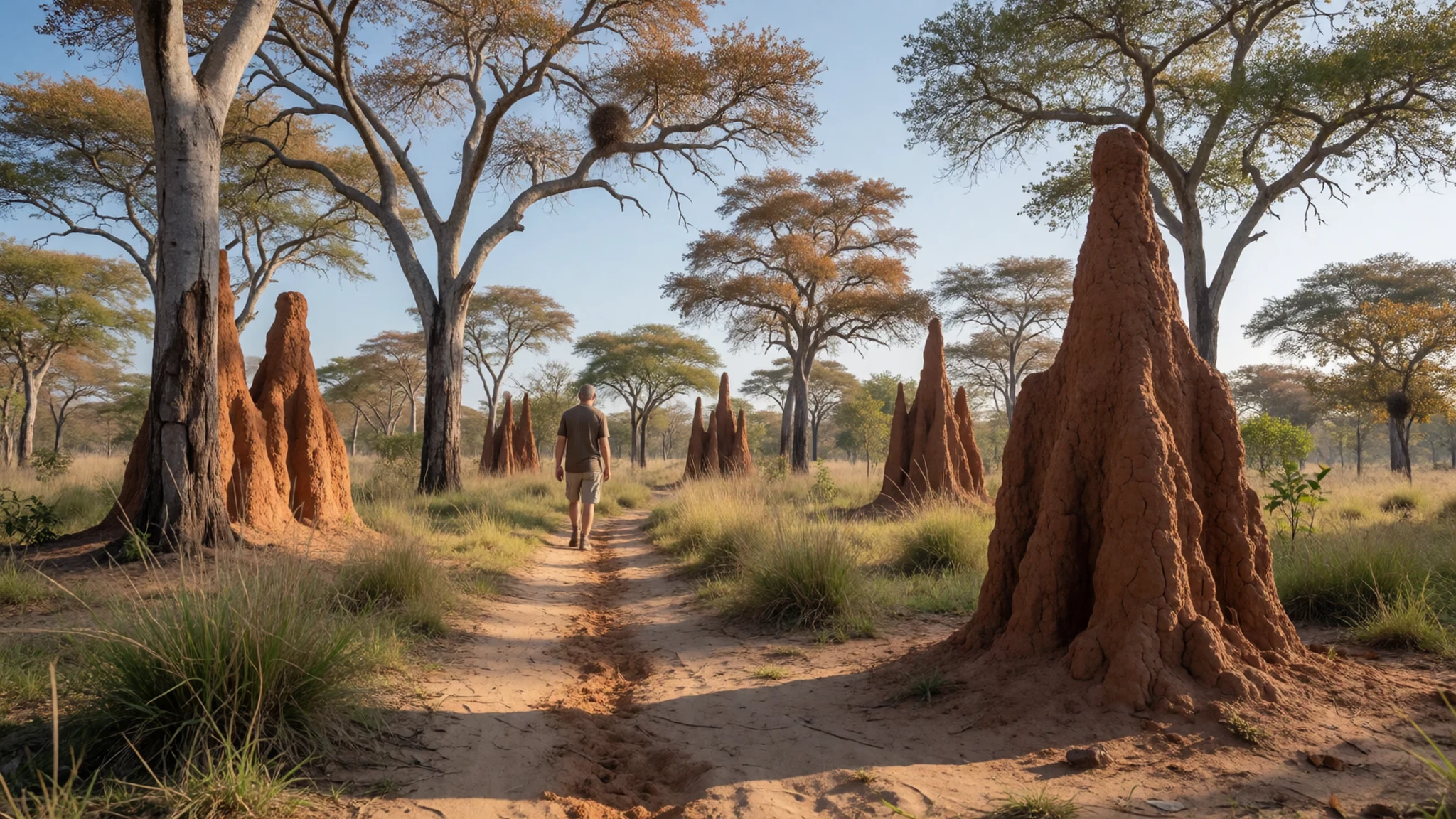
- Puku on the floodplain — Open grassland and floodplain edges
Puku, a golden-brown antelope of damp grassland, are among the animals most often seen here. Herds graze along the edges of wetlands, and males whistle when alarmed. They are easy to watch from a vehicle or a hide, especially in the cooler hours of the day.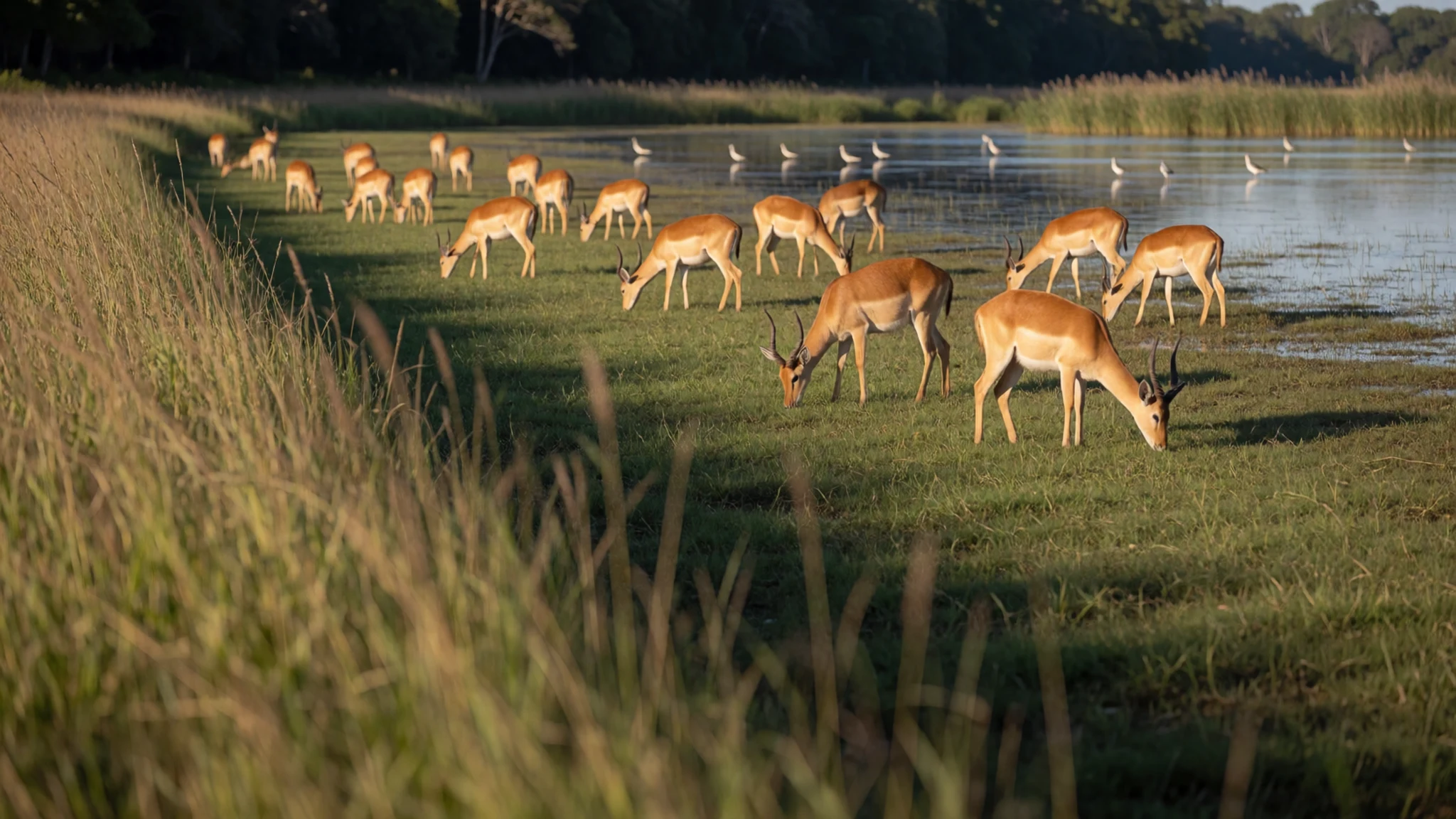
- Luwombwa River — North-western park boundary
The Luwombwa is the main river of the park and its only outlet, leaving through the north-western corner. Its banks hold gallery forest and riverside birds, and it ties Kasanka into the larger Congo basin story. Check with the trust about which stretches are open to visitors.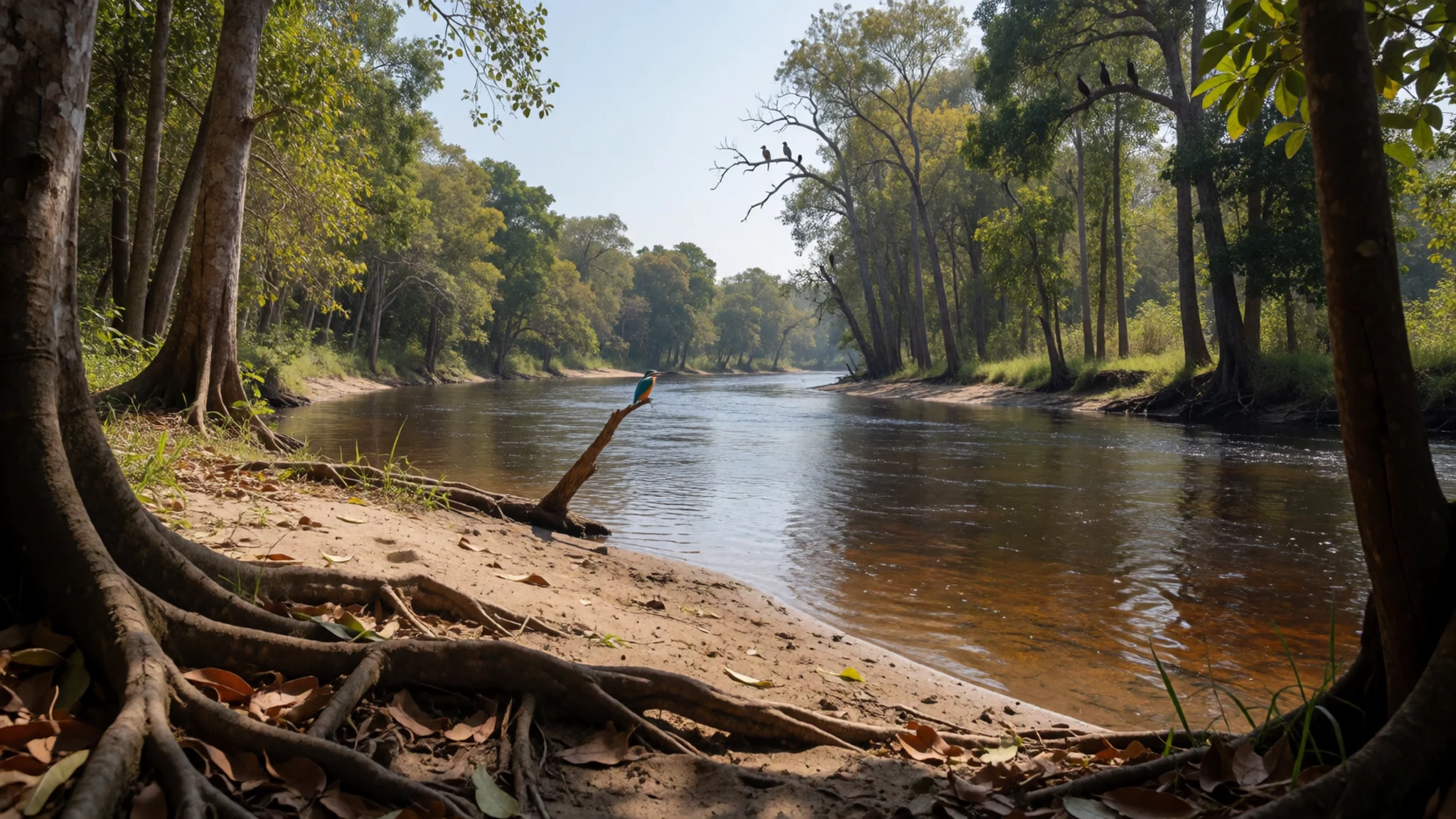
Culture
Kasanka National Park lies in rural Central Province, where most contact with local people happens on the road in and in the villages around the park boundary. Zambian society is traditionally respectful of age and seniority, and elders in particular are greeted with care. Visitors often find themselves treated with generous courtesy, sometimes more than feels comfortable, and the usual advice is to accept the hospitality with thanks.
People are curious and friendly. Children may call out mzungu, which means a white or foreign person, and adults may ask plenty of questions about where you come from and why. It is usually meant warmly, and a smile and a few questions back go a long way. Learning a greeting in the local language is appreciated.
Handshakes matter. Zambians often shake hands at length and may keep holding hands through a conversation, which signals friendliness rather than anything else. A respectful form is to support your right forearm or wrist with your left hand while shaking. If a long handshake feels uncomfortable, withdrawing your hand gently is fine.
Inside the park, the culture is that of conservation and quiet. Staff and guides work long days to run small camps, and the trust's rules, such as keeping to tracks and keeping distance from animals, exist for the animals' sake as much as visitors' safety.
Etiquette: greet people politely with a handshake and a few words before asking for anything, and ask before photographing anyone, especially in villages outside the park.
What to wear
Kasanka National Park is a wildlife reserve rather than a town, so fashion here means what is worn in the surrounding villages and what suits the bush. The everyday cloth across Zambia is the chitenge, a printed cotton fabric sold in lengths. Women wrap it as a skirt, tie it as a headscarf, or use it to carry a baby on the back. Men wear it less often, though shirts made from similar prints appear at celebrations. Bright patterns carry messages and are chosen for weddings, funerals, church and community events.
Day to day, people in rural Zambia mostly wear practical Western-style clothing: T-shirts, trousers, dresses, and rubber or plastic sandals. Women often add a chitenge wrap over their clothes for work at home or in the fields. Smart clothes are kept for church and special occasions.
For a visitor, the aim is comfort and cover. Light, long-sleeved shirts and long trousers in neutral colours such as khaki, olive and sand help against sun, grass seeds and insects. Dark blue and black are best avoided where tsetse flies are active. Bring a wide-brimmed hat, sunglasses and a warm layer, since early game drives can be chilly. Closed shoes or light boots suit sandy tracks and walks, and sandals are fine around camp. Bring a rain jacket if travelling late in the year. In villages, covered shoulders and knees are polite for everyone.
What to eat
- Nsima with relish — Camp kitchens and local eateries in nearby towns
Nsima is a thick maize porridge, rolled into a ball with the right hand and dipped into a relish of vegetables, beans, chicken, beef or fish. It is the staple meal across Zambia and the one most often served at camps and small roadside eateries.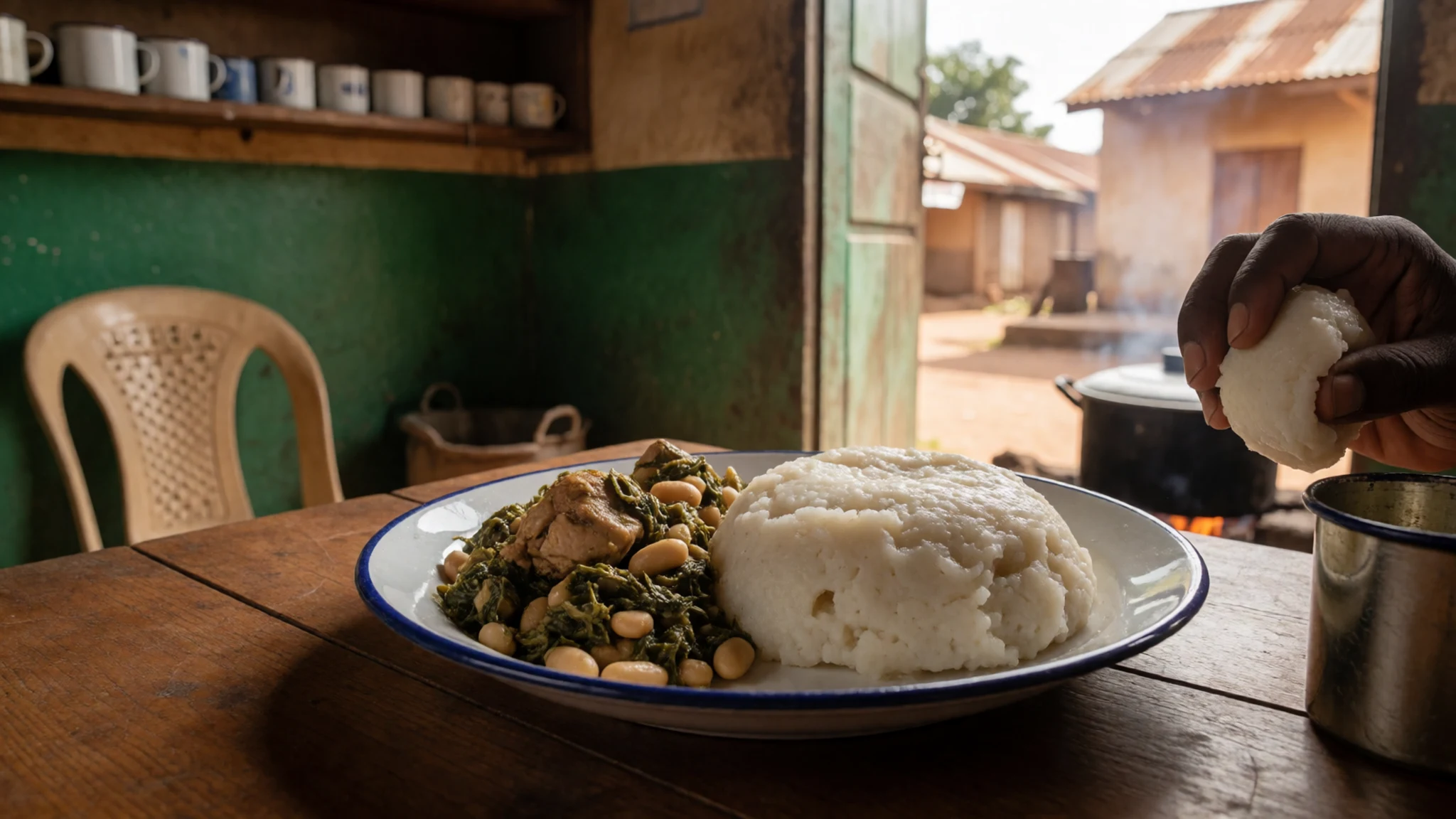
- Kapenta — Local markets and roadside eateries
Kapenta are tiny dried fish, fried or stewed with tomato and onion, giving a salty, savoury relish for nsima. They are an affordable protein across the country and a good first taste of everyday Zambian cooking.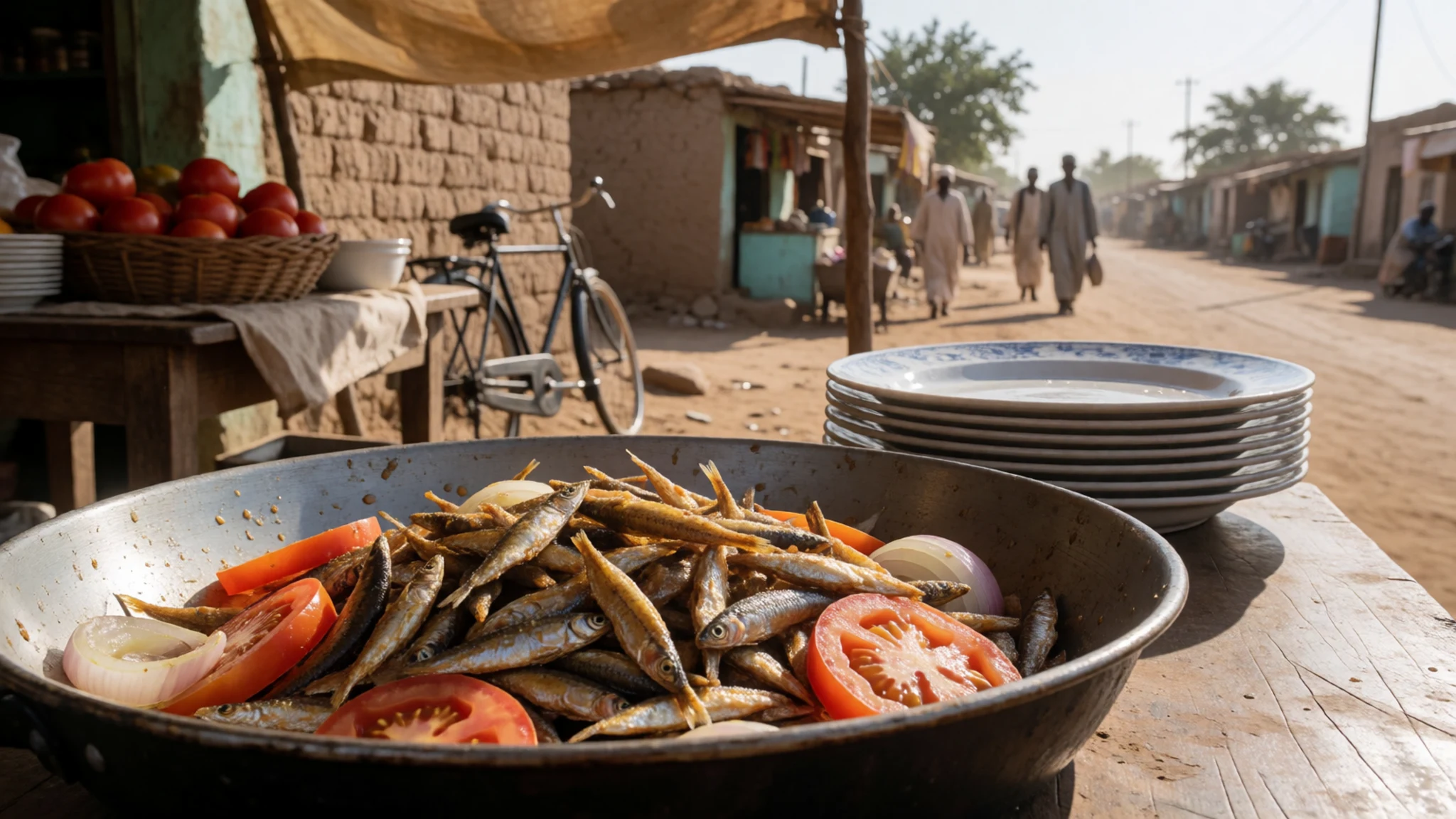
- Chibwabwa — Village homes and small local restaurants
Chibwabwa is pumpkin leaves cooked down into a green relish, often with groundnuts or tomato. Mild and slightly earthy, it is a common side for nsima in rural homes and a good choice for vegetarians. - Bean relish — Market food stalls and local eateries
Beans simmered with onion and tomato make a filling relish for those not eating meat or fish. It is the everyday dish for many households, and is plain, hearty and easy to find alongside nsima. - Nsima porridge at breakfast — Home kitchens and lodges that serve local breakfasts
At breakfast, nsima is sometimes thinned into a hot porridge, occasionally with a little sugar. It is warming on cool mornings and suits an early start before a game drive or bat-watching trip. - Fresh bakery bread — Bakeries in towns on the road to the park
Small bakeries in Zambian towns turn out cheap fresh bread, a useful and tasty snack for the road. Stock up before heading into the park, since the nearest shops are a long drive away.
Plan it
Best time. Late October to early December for the bat migration, when the sky fills at dusk. This is the dry season turning towards the first rains, so expect heat in the day and building humidity. Dry months give easier game viewing, as animals gather near water.
How long. 3–4
Getting there. Fly to Lusaka, then travel north by road for a long day through towns such as Serenje, and finish on sandy park tracks. The park has an airfield, which suits charter flights. Ask the Kasanka Trust about transfers and current road conditions before setting out.
Budget. mid
Tips
- Book camps well ahead for October to December, since bat season is when space is tightest
- Carry enough cash and fuel, as there are few shops or cash points near the park
- Bring insect repellent, sun protection and plenty of drinking water
- Be at the bat viewing spot well before dusk and bring binoculars
- Check visa rules for your nationality before travel, and confirm with the Zambian embassy
Etiquette
- Keep to park tracks and follow your guide's instructions around animals
- Greet people politely and ask before photographing anyone
- Keep voices low at the bat roost so the animals are not disturbed
Nearby
Sources
- Wikidata Q1734819 (CC0)
- Wikipedia: Kasanka National Park (rev 1362778759) (CC BY-SA 4.0)
- Wikivoyage: Zambia (rev 5367077) (CC BY-SA 4.0)
- Photo: Kasanka (Mehmet Karatay) (CC BY-SA 1.0)
- Photo: Termite mounds (Mehmet Karatay) (CC BY-SA 1.0)
- Photo: Wasa River (Mehmet Karatay) (CC BY-SA 1.0)
- Photo: Kobus vardonii (Ryanvanhuyssteen) (CC BY-SA 4.0)
- Photo: Eidolon helvum (Fritz Geller-Grimm) (CC BY-SA 2.5)
- Photo: Kasanka puku (Mehmet Karatay) (CC BY-SA 1.0)
- Photo: Kasanka National Park Bat feast 2 (Sybryn) (CC BY-SA 4.0)
- Photo: Kasanka National Park Bat feast (Sybryn) (CC BY-SA 4.0)


Wildlife
- Straw-coloured fruit bat (animal)
The straw-coloured fruit bat is a large, yellowish-brown bat, like a small flying mammal wrapped in straw. In Kasanka they arrive between October and December, resting by day among the trees of Mushitu, a small pocket of swamp forest, and filling the sky as evening comes. Up to ten million may gather. Watch from a respectful distance, keep your voices low so the colony stays settled, go with a guide, and never offer them food. - Puku (animal)
The puku is a medium-sized, golden-brown antelope that likes to live where the grass stays boggy. It is one of the easiest animals to spot in Kasanka, so you have a good chance of meeting one. Keep a polite distance, move slowly and speak softly so it stays calm, ask your guide where to look and how close is kind, and never feed it.