Kafue
Kafue, Zambia
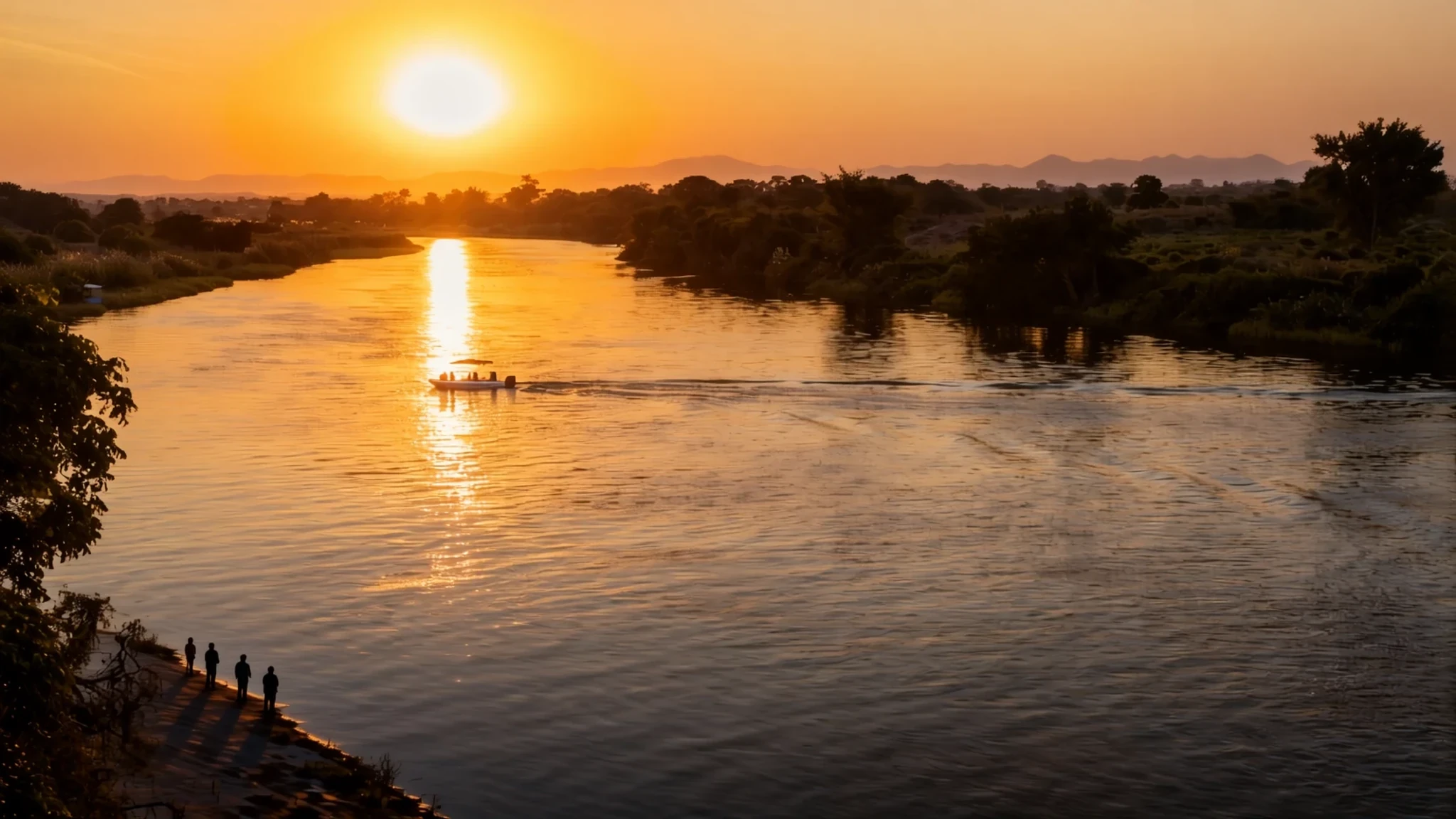
Kafue is a Zambian wilderness of river, woodland and plain, where animals still set the pace of the day.
The place
Kafue, in central Zambia, is less a single viewpoint than a whole landscape: the Kafue River and the national park that takes its name, mostly miombo woodland with a few small dambos, and the Busanga Plains as the seasonal floodplain. The ground reads as open woodland rather than closed forest, with tall grasses, scattered trees and long sightlines once the rains have passed and the grass has been grazed or burned. Water organises the country. The river, its lagoons and the plains that flood and then dry give herds somewhere to drink and predators somewhere to wait. Antelope are the everyday sight: puku on the wetter grass, impala at the woodland edge, roan on the open ground, with elephant, buffalo, lion, leopard, wild dog and hyena using the same country at another scale. Hippo and crocodile belong to the river. In the rains the tracks soften, the grass stands high and much of the life is heard before it is seen; in the dry months the cover thins, burns open the views and animals gather nearer remaining water. There is little ambient noise beyond insects, birds and a camp generator. The pleasure is slow: hours on a rough track, a herd that does not move off, a sunset that turns the grass copper. Kafue suits people who want space and will travel for it. Distance from the Copperbelt and from the capital is part of how the place still feels.
Its story
Kafue takes its name from the river, which has long been a route, a fishery and a boundary for people living along it. Communities tied to this country include Ila and Tonga herders and farmers toward the flats and the south, and Kaonde and other woodland peoples nearer the northern and western bush. Cattle, fishing and movement with the flood shaped settlement more than any monument. Colonial authorities later set woodland and plain aside as a game reserve and then as a national park, drawing a legal line around hunting and settlement that neighbouring communities still live beside. The river was also put to other work. A dam at Itezhi-Tezhi stores water for power and for irrigation further downstream, and the flood on the Kafue Flats, the wide wetland beyond the park toward the town of Kafue and the Zambezi, has been altered by that control. Inside the park itself, protection arrived with few roads and fewer permanent camps. Hunting pressure, thinly spread patrols and years of little outside attention left some areas quieter of wildlife than the habitat suggests, while a handful of riverside and plains camps kept a thin thread of travel alive. Conservation partnerships and local agreements have since tried to make wild animals worth more alive than hunted, and the outcome is uneven: some sectors are carefully hosted, others still feel scarcely visited. A visitor meets that unfinished bargain: a park that can feel empty of people, a river both wild and managed, and gate communities for whom animals are neighbours, income and, at times, a cost. Kafue's history is not a ruin to tour. It is a negotiation among flood, pasture, electricity and protection, and it is still under way.
What to see
- Kafue National Park — central Zambia
Kafue National Park is the landscape behind the name: woodland, plain and river, met from a slow track rather than a viewing deck. Roads are sandy or rutted and camps sit far apart. Wildlife appears in that space, with long gaps between sightings, so the visit is built around time in the vehicle.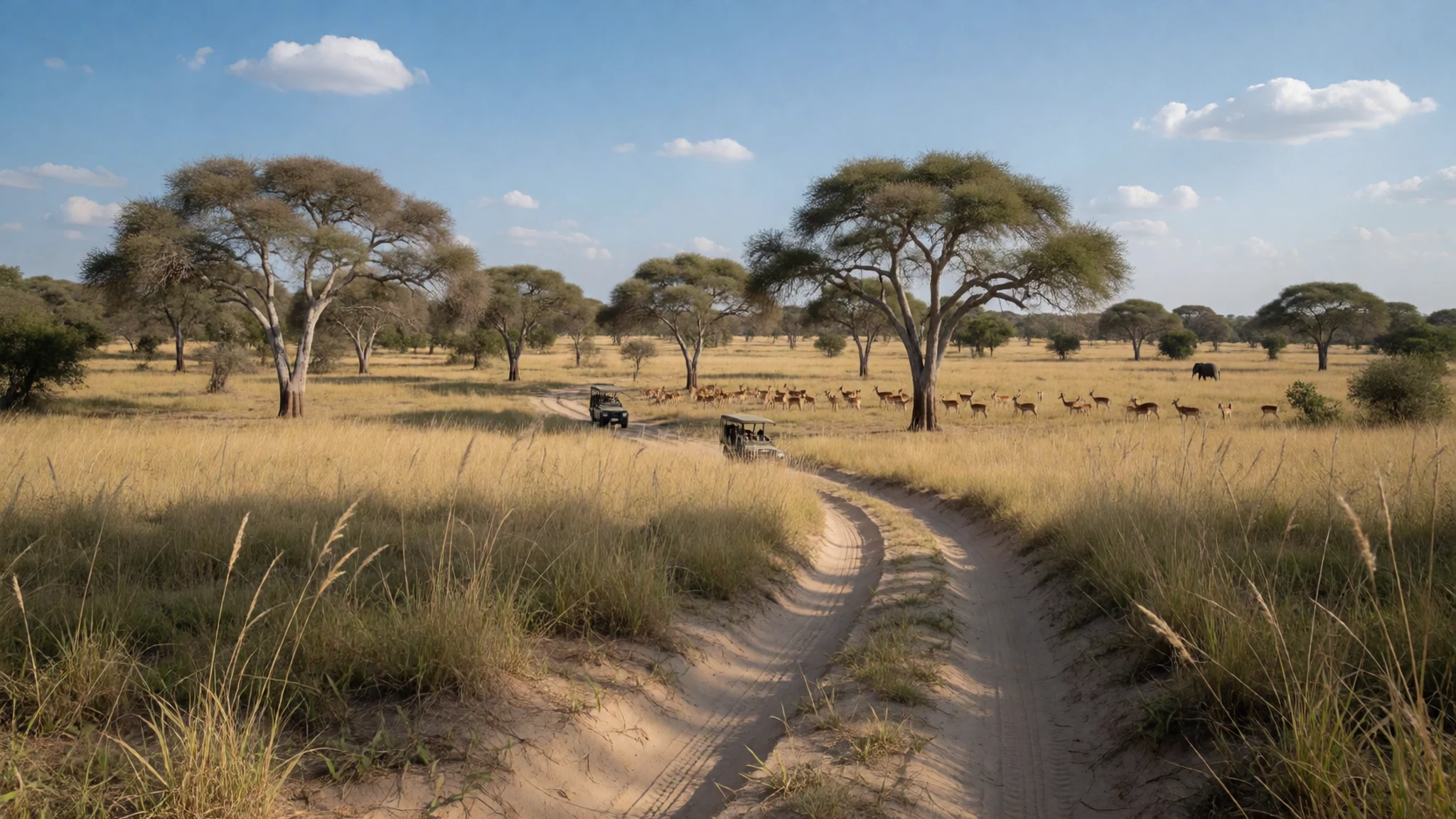
- Kafue River — through the park
The Kafue River is the spine of Kafue National Park. Boats from riverside camps look for hippo, crocodile and waterbirds, and for elephant coming to drink. Banks change with the season, high water in the rains and exposed sand once the level falls. Some camps fish for bream when the rules allow.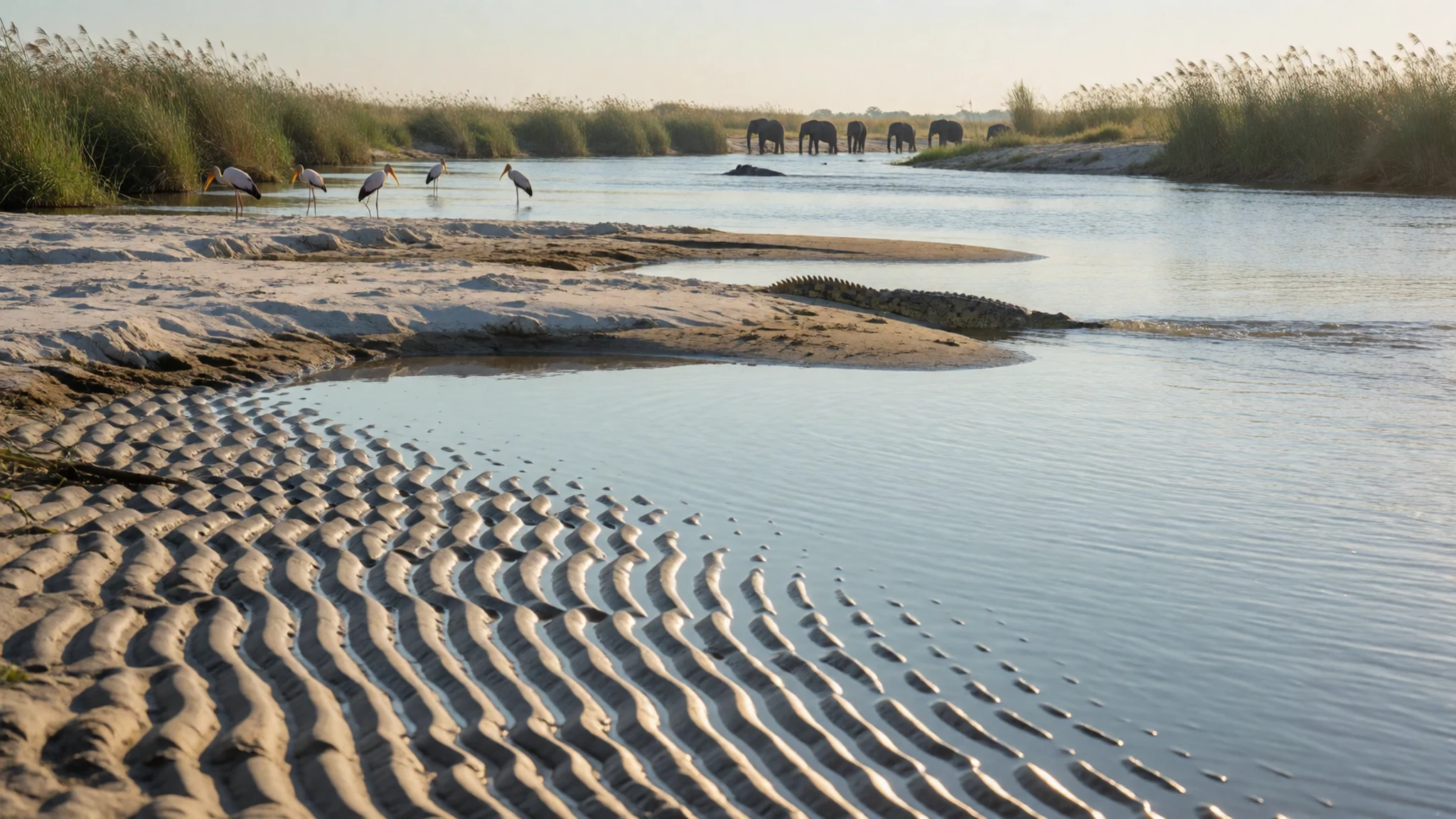
- Busanga Plains — north of the park
The Busanga Plains, inside Kafue in the far north-west along the Lufupa, are seasonally flooded grassland: wide grass, channels and islands of palm and termite mounds. When the water drops, grazers move into the open and predators follow, so itineraries often spend a few nights here. Vehicles cross in the dry months; earlier the ground can still be too soft.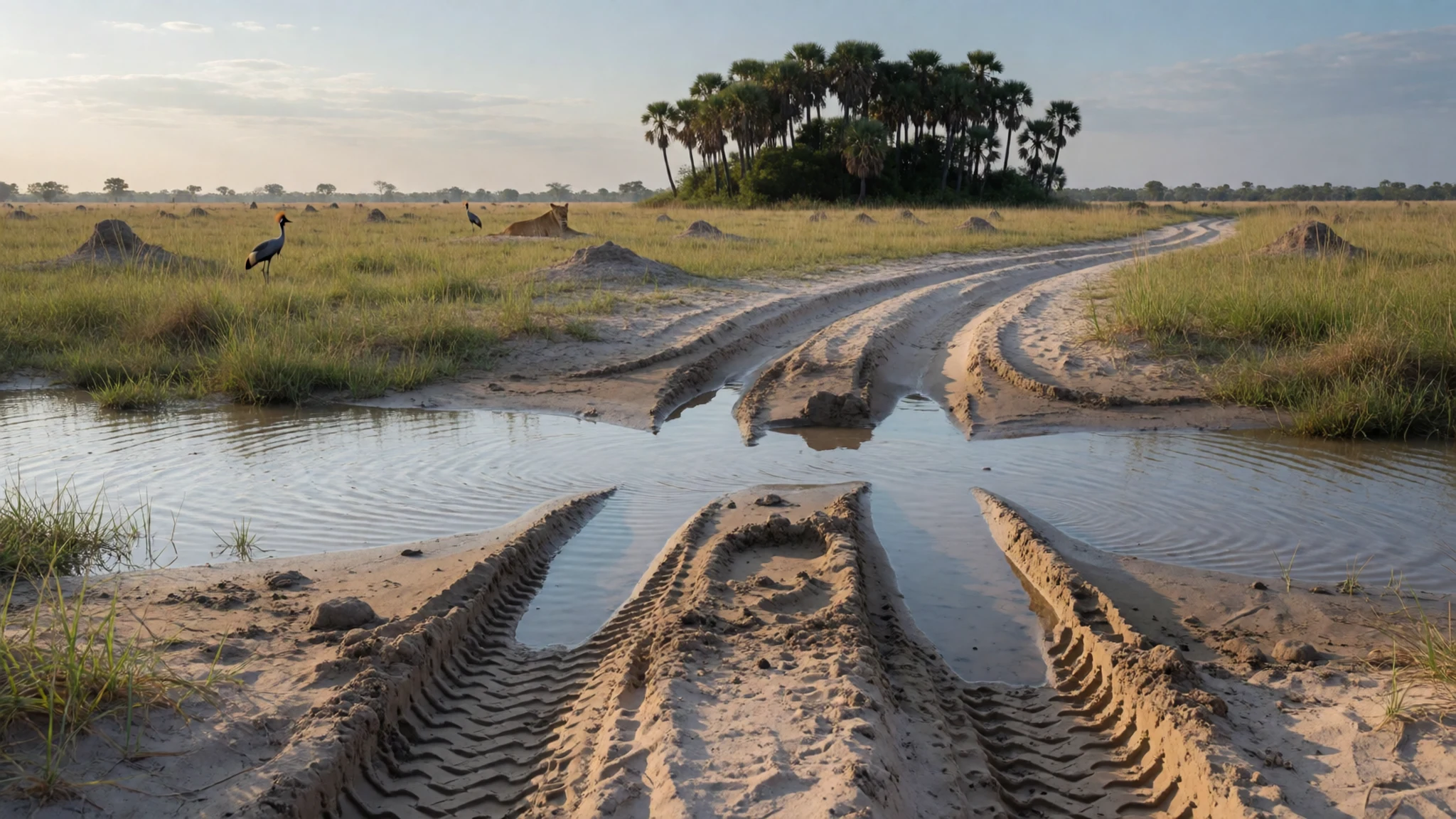
- Lake Itezhi-Tezhi — southern edge of the park
Lake Itezhi-Tezhi lies on the southern side of Kafue, a broad reservoir behind the dam on the river. The shore woodland is used for game drives, the water for birds, hippo and sunsets that take the heat out of the day. It is a practical southern base, and the tracks beyond it still need a sturdy vehicle.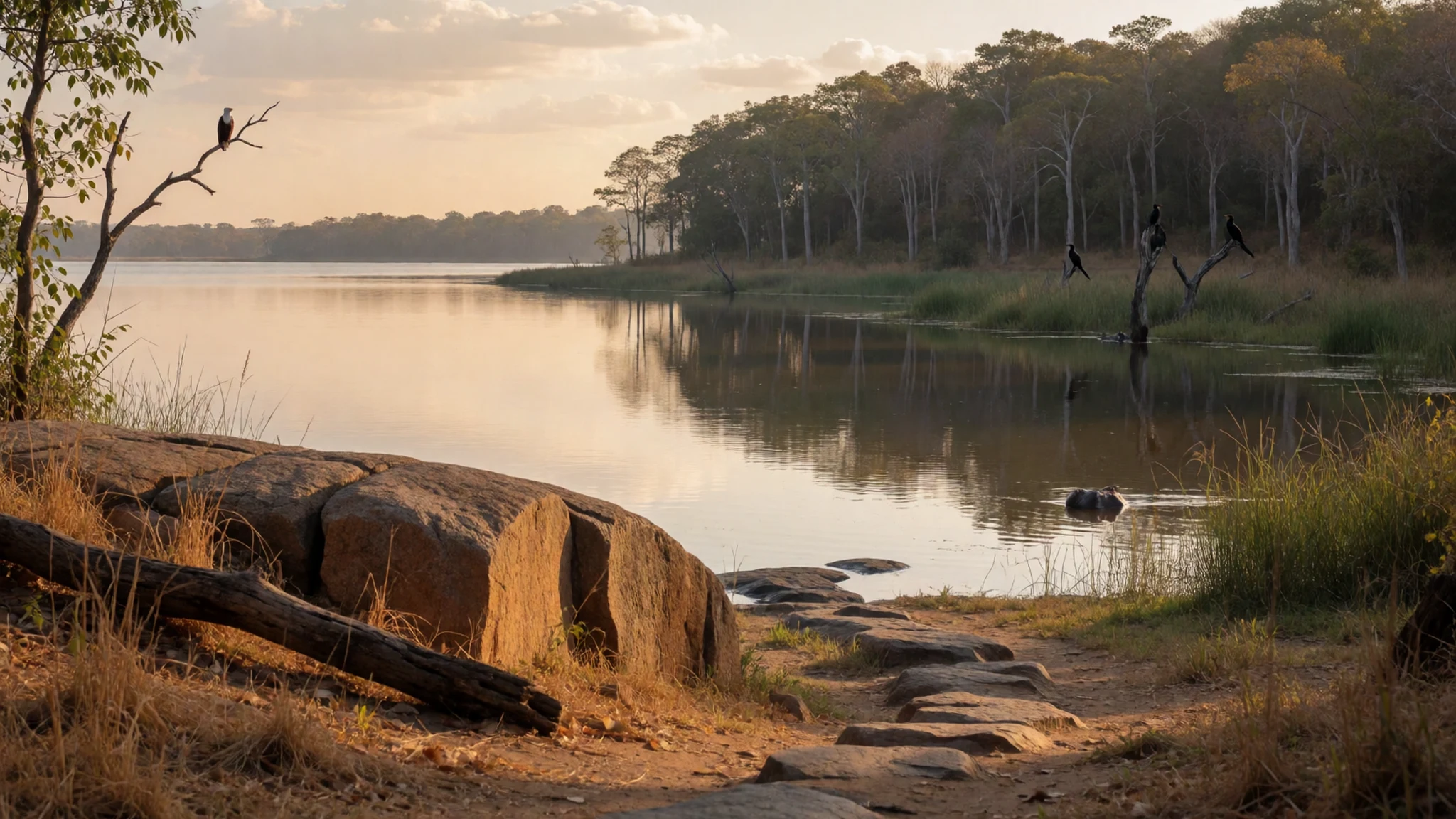
- Mumbwa savannah — Mumbwa approaches, east of the park
The savannah on the Mumbwa side of Kafue is where many first drives happen: open grass, woodland edge and mixed herds. Puku use the wetter clearings, impala the thicker edge and roan the more open ground. Elephant pass through and leave signs that smaller animals then work over. Sightings come unhurried, which is the ordinary pace of this park.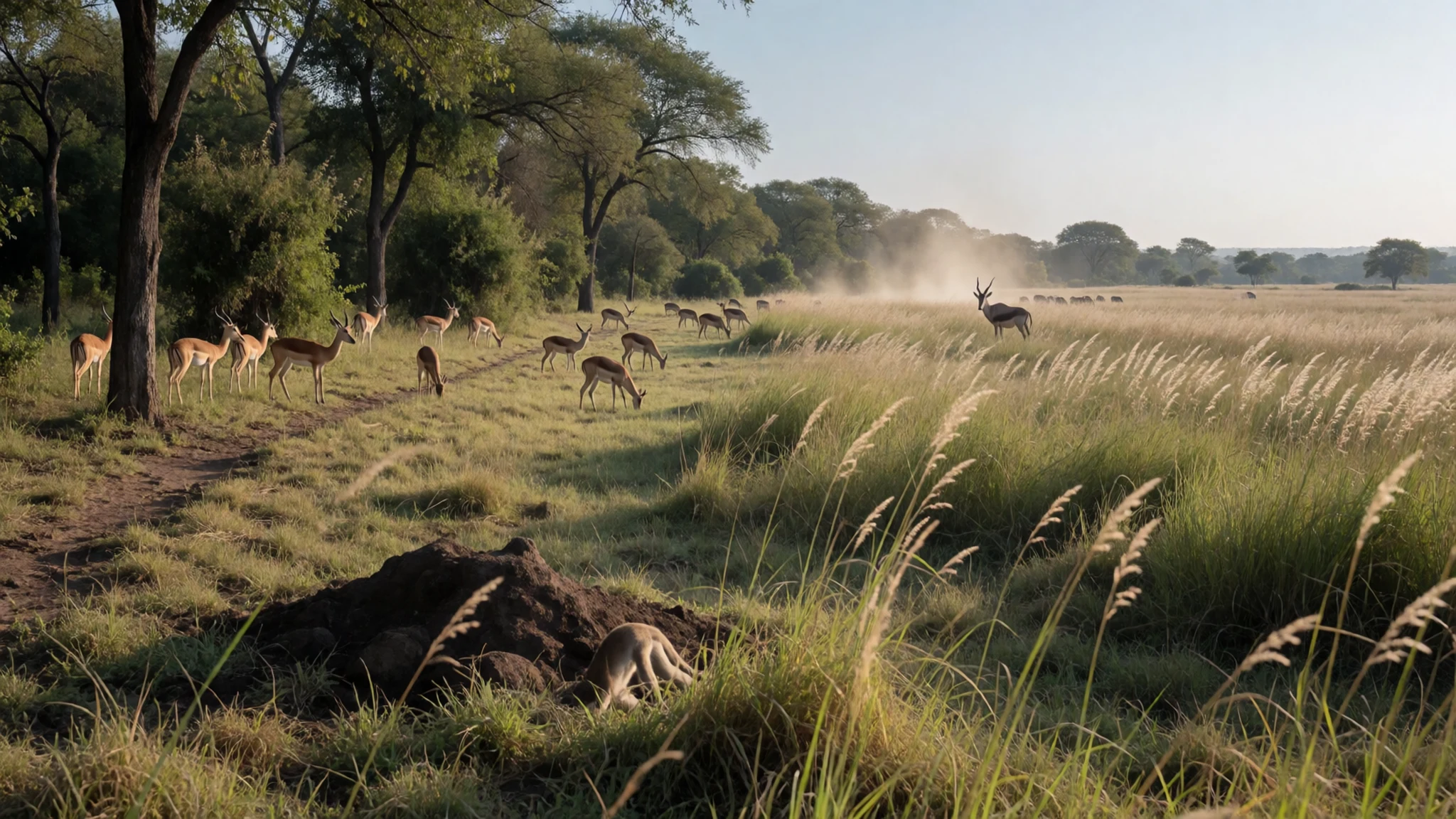
Culture
Kafue sits in a rural culture of farming, cattle, fishing and small trade, not in a city calendar of festivals. Ila and Tonga communities live toward the flats and the south, Kaonde communities toward the woodland of the north and west, and English is the language of lodges, permits and town business. Daily life at the gates follows the seasons: planting with the rains, burning and grazing as the grass dries, fishing when the river allows. Camp routine is Zambian hospitality on a safari clock, with early tea, a guide reading the road, staff who know the trees, and nights that end when the power does. Some concessions employ people from nearby villages and support local services; a guide can explain that arrangement better than any drive. Baskets, wood carving and printed cloth appear at lodges and gate markets in modest amounts. Christianity shapes Sundays in the towns, while older ideas of land, rain and ancestors still surface in ceremony and conversation. On a game drive in Kafue, remain seated unless the guide invites you out, keep voices low, and ask before photographing any person.
What to wear
Kafue has no court dress of its own. Clothing follows Zambian custom and the practical needs of bush and town. Women wear chitenge, a printed cotton wrap, as a skirt, a baby-carrier, a headcloth or a work cloth, bought in city markets and used in the gate towns. Men may wear a chitenge shirt at a celebration; everyday town dress is trousers and a collared shirt, and field clothes are older layers that can take dust and thorns. Wax-print dresses and suits come out for church and weddings in Mumbwa, Itezhi-Tezhi and the other gate towns. Camp staff wear boots, khaki or green shirts and a fleece at dawn. Visitors do well to follow that practical lead. Neutral colours, among them khaki, olive, brown and dull blue, show less dust and less glare than white. Long trousers and closed shoes help with grass, thorns and insects, and a hat plus a shirt with sleeves beats beachwear. Dry-season mornings can be cold enough for a jumper, while midday needs shade. Covered shoulders and knees are the comfortable choice if a stop includes a village or a church. Leave white trainers for Lusaka; loose sandals are a poor idea around camp after dark.
What to eat
- Nshima — camp dining rooms and home kitchens in the gate towns
Nshima is the staple around Kafue, a stiff maize porridge eaten with the fingers beside a relish. Camps serve it at lunch or dinner, as homes do in Mumbwa and Itezhi-Tezhi. It is plain and filling; the flavour sits in the dish alongside.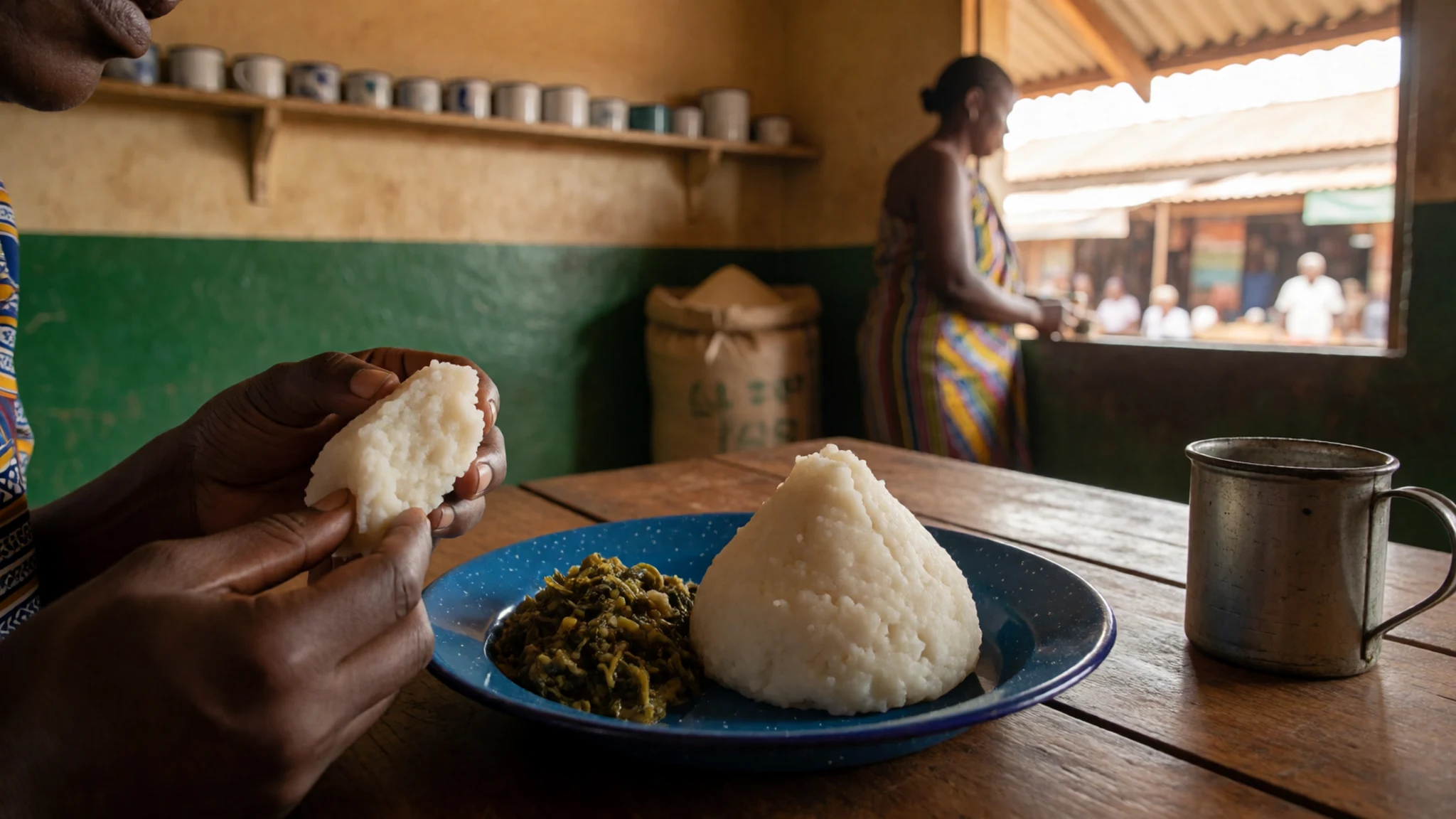
- Ifisashi — camp kitchens and small eateries in the gate towns
Ifisashi is a groundnut and greens relish eaten around Kafue when pumpkin leaves are in season. The sauce is rich and mildly sweet, and it is spooned over nshima. Camps cook a version, and small eateries in the gate towns serve it after a market day.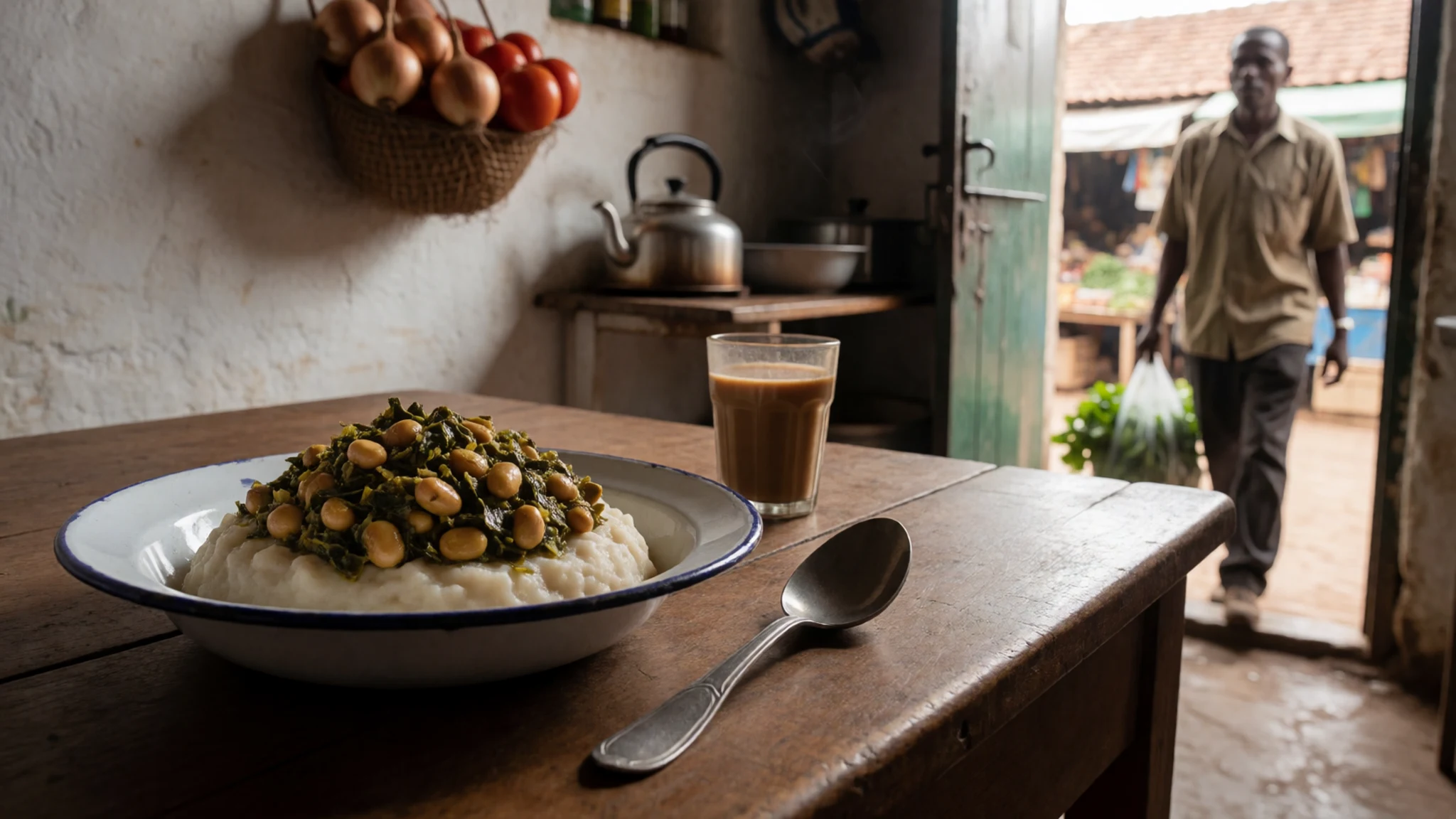
- Kapenta — town markets and market eateries in Mumbwa and Itezhi-Tezhi
Kapenta, tiny dried freshwater fish, are everyday protein with nshima around Kafue. They are sold dried in town markets and cooked in a tomato and onion sauce. Camps sometimes serve them; a market eatery in Mumbwa or Itezhi-Tezhi is the ordinary place to try them. - Kafue bream — riverside camps and simple eateries in the gate towns
Bream from the Kafue river system is grilled, fried or stewed, and it is the fish that belongs to this water. Camps may serve a catch when the rules allow. In the gate towns, simple eateries are the place to ask for it. - Village chicken — home kitchens, gate-town eateries and camp menus
Village chicken around Kafue is stewed with tomato, onion and a little chilli, then eaten with nshima. Homes serve it for gatherings, and small eateries in the gate towns keep it as a steady plate. Camps add it when the kitchen is cooking local food.
Plan it
Best time. June to October is the sensible window at Kafue: tracks firm up, the grass drops and wildlife stays closer to water. June to August mornings are cold, May to July is the most comfortable stretch, and October is the hottest month. November to March brings rain, December and January the wettest, with tall grass, birds and slow or closed tracks.
How long. 4–5
Getting there. Kafue is usually reached via Kenneth Kaunda International Airport in Lusaka, then by road through Mumbwa to the eastern gates, or on toward Itezhi-Tezhi for the lake and the south. The last leg is a rough park track and needs a high-clearance vehicle. Some camps arrange a light aircraft to a bush strip; the operator sets that up.
Budget. high
Tips
- Book a camp and a vehicle ahead for the dry months at Kafue.
- Give the road from Lusaka most of a day, and do not expect a game drive on arrival.
- Carry cash for fuel and markets; card payments are a poor bet past Lusaka.
- Ask a clinician about malaria prevention before travelling, and drink water the camp has treated or a sealed bottle.
- Use early morning and late afternoon for drives; the middle of the day is hot and quiet.
Etiquette
- Stay in the vehicle on a Kafue drive unless the guide says a stop is safe.
- Do not feed animals or try to draw them closer.
- Ask before photographing people, including camp staff.
- Carry rubbish back to camp and leave no food on the track.
Nearby
Sources
- Wikidata (CC0)
- Wikipedia (CC BY-SA 4.0)
- Wikivoyage (CC BY-SA 4.0)
Wildlife
- Impala (animal)
The impala is a medium-sized antelope with a glossy, reddish-brown coat, and the males wear slender horns that curve like the arms of a lyre. In Kafue it prefers the thicker edge of the woodland, rather than the wetter clearings where puku graze. I cannot say which season or time of day is best, so ask your guide. Keep a respectful distance, stay quiet and unhurried, go out with a guide, and never feed it.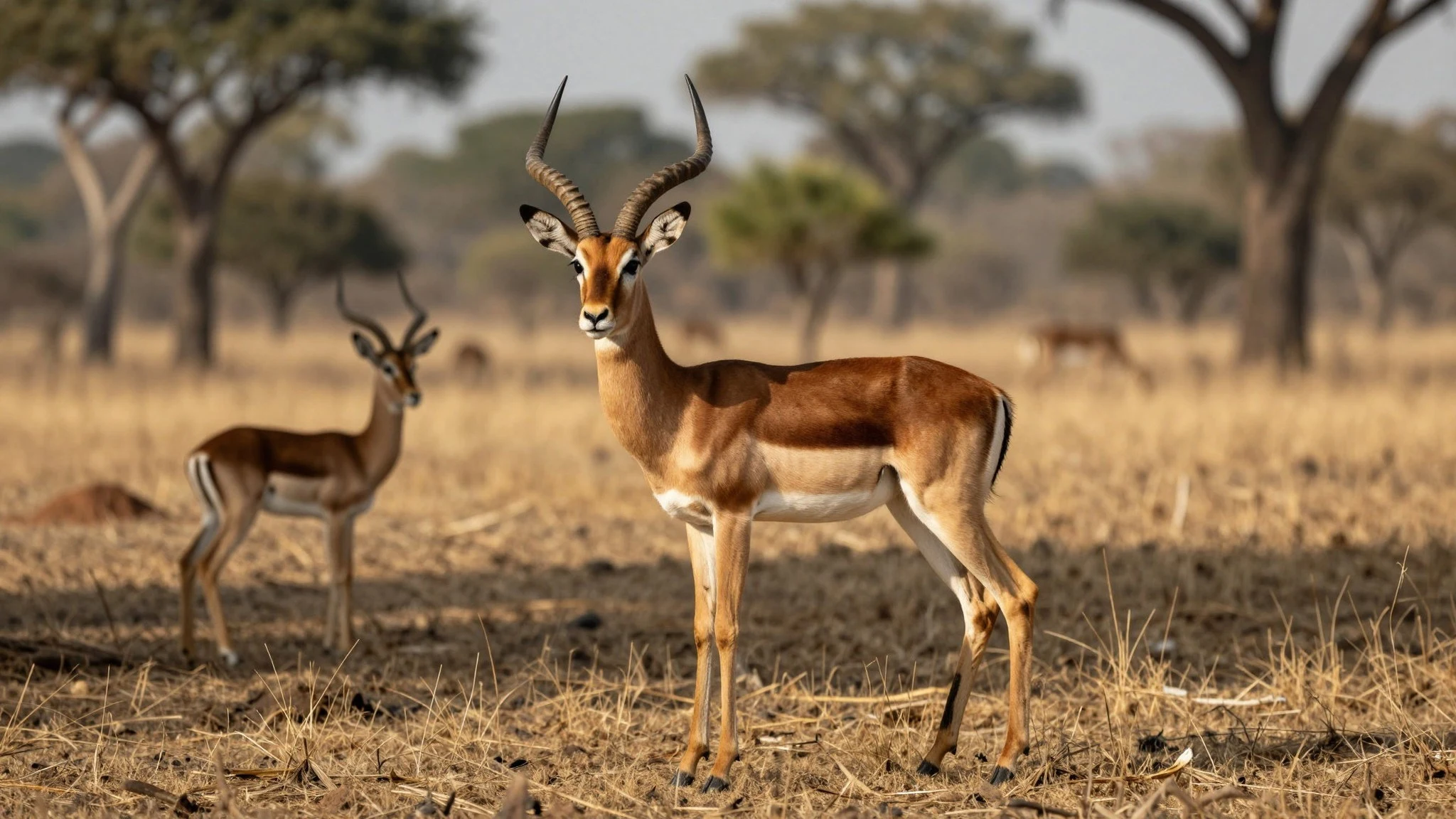
- Puku (animal)
The puku is a medium-sized antelope that loves damp grassland, a gentle grazer of the water meadow. In Kafue it is one of the everyday sights, found on the wetter grass and in the soggy clearings, where you may see it going about its day among larger neighbours. The best season and hour are not something I can promise, so ask your guide. Watch from a respectful distance, keep your voice low and your movements slow, go out with a guide, and never feed it.