Sonargaon
Sonargaon, Bangladesh
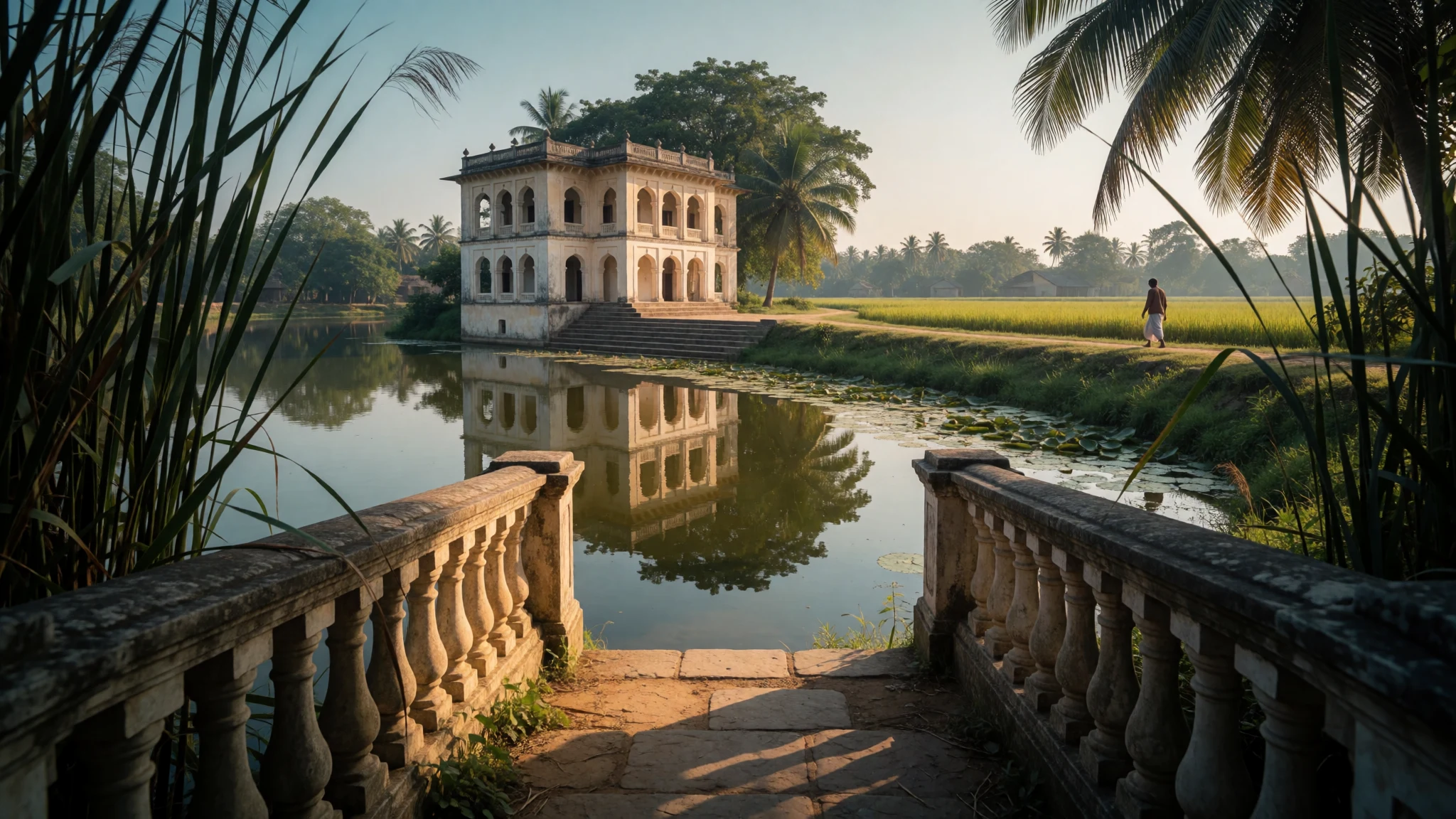
Sonargaon is a quiet, crumbling side of Bengal: a medieval capital and river port whose ruined merchant street makes an easy day out from Dhaka.
The place
Sonargaon sits in the flat, water-laced country of central Bangladesh, in Narayanganj District, a short run east of Dhaka. The name means Golden Hamlet in Bengali (সোনারগাঁও), and the place is better thought of as a scatter of sites than a single town: a lane of decaying merchant houses, a few small mosques, shrines of Sufi saints, a lakeside mansion and a folk-art museum set in parkland. Between them lie paddy, ponds, brick kilns and village roads busy with rickshaws and auto-rickshaws. Historically the area mattered because of its rivers. It was a port and an administrative seat for eastern Bengal, and the villages around it were home to weavers who made muslin, the fine cotton cloth that carried the region's name far abroad. Wealth from that trade, and later from other commerce, left behind the buildings that visitors come to see. Wikidata files Sonargaon as both a village and an archaeological site, and that fits: little is polished, signs are sparse, and much of the pleasure lies in walking slowly and noticing details. Expect heat for much of the year and mosquitoes near water. Foreign visitors are rare, though Bangladeshi families and school groups arrive at weekends. Shade is thin along the main historic street, so the pace has to be gentle. A half-day to a full day of wandering suits it, as an unhurried excursion rather than a checklist.
Its story
Sonargaon's story runs from the edges of ancient trade maps to the colonial era. Greek and Roman writers described a trading centre in this part of Bengal, and archaeologists link it with the Wari-Bateshwar ruins to the north, close to an old course of the Brahmaputra. The name probably descends from the Sanskrit Suvarnagrama, and some scholars place the legendary land of Suvarnabhumi here, though that is one candidate among several. Local kingdoms, then the Sena and Deva dynasties, used the area as a base; the Deva king Dasharathadeva moved his capital here from Bikrampur in the medieval period. Muslim settlers arrived, and under the Delhi Sultanate Sonargaon gained a mint and a habit of hosting governors who broke away from Delhi. It later served as a capital of the Bengal Sultanate under Sultan Ghiyasuddin Azam Shah, and mosques and tombs from those years survive in modest form. Afterwards the Baro-Bhuyan chieftains, led by Isa Khan and his son Musa Khan, gathered here to resist Mughal expansion, and Sonargaon eventually became a Mughal district. Under British rule, prosperous Hindu merchants built townhouses along the Panam street, mixing European and Indian styles. Many of those families left at Partition, and the street has been ageing in the open air ever since.
What to see
- Panam City — Panam, Sonargaon
Panam City is a single long street of two-storey merchant townhouses, built in the colonial period for wealthy Hindu traders and left largely empty after Partition. Stucco flakes, banyan roots split walls and some façades lean. It is atmospheric and fragile, so go early, walk its full length and watch your footing on broken paving.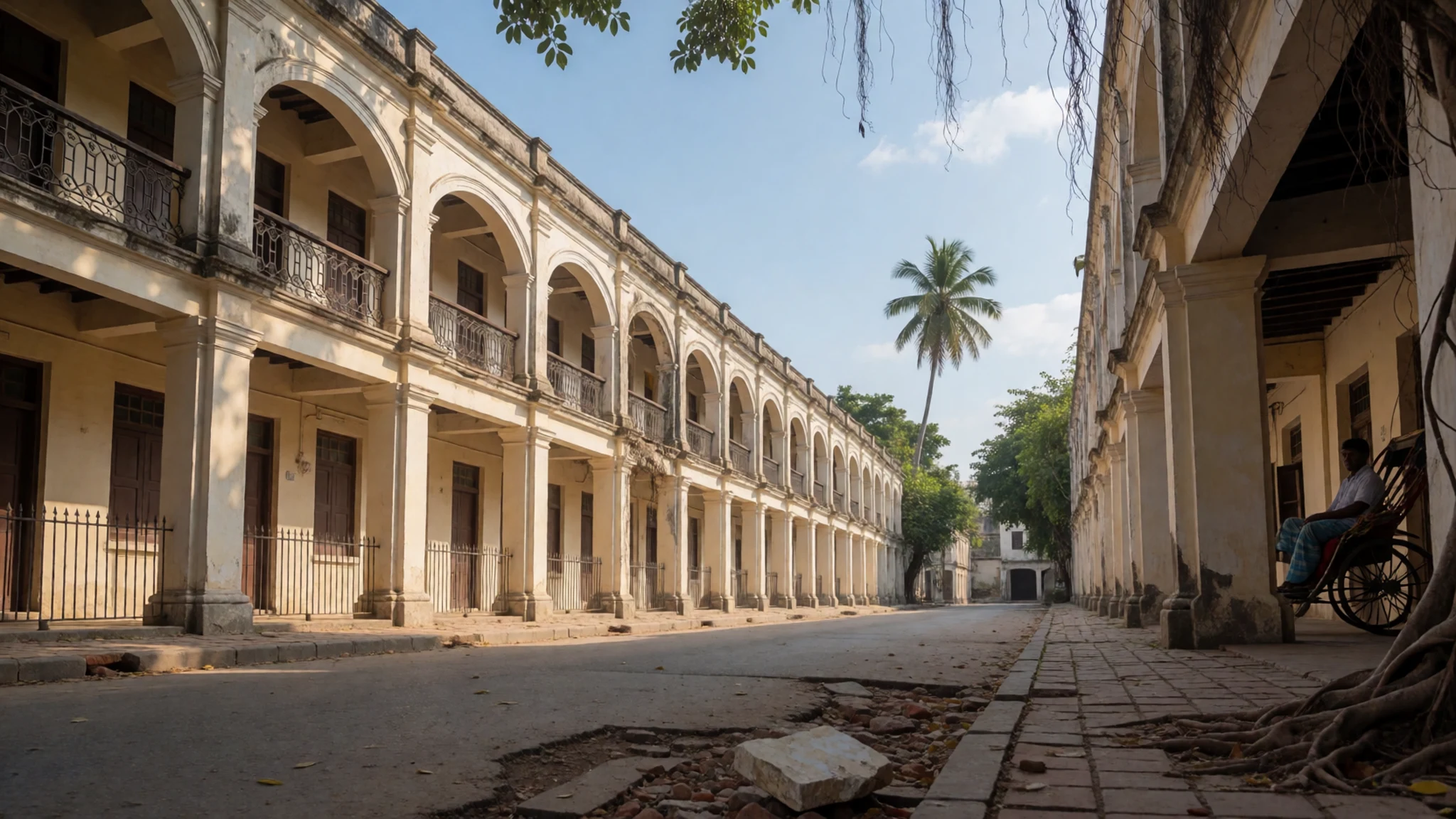
- Sadarbari — Near Panam, Sonargaon
Sadarbari is a zamindar's mansion built for a Hindu landowner, blending Indian, European and Mughal ideas. One entrance has steps running down to a still lake, while the other is decorated with mosaic. It is in better repair than most of Panam, which makes it a good place to study plasterwork, arches and tiles.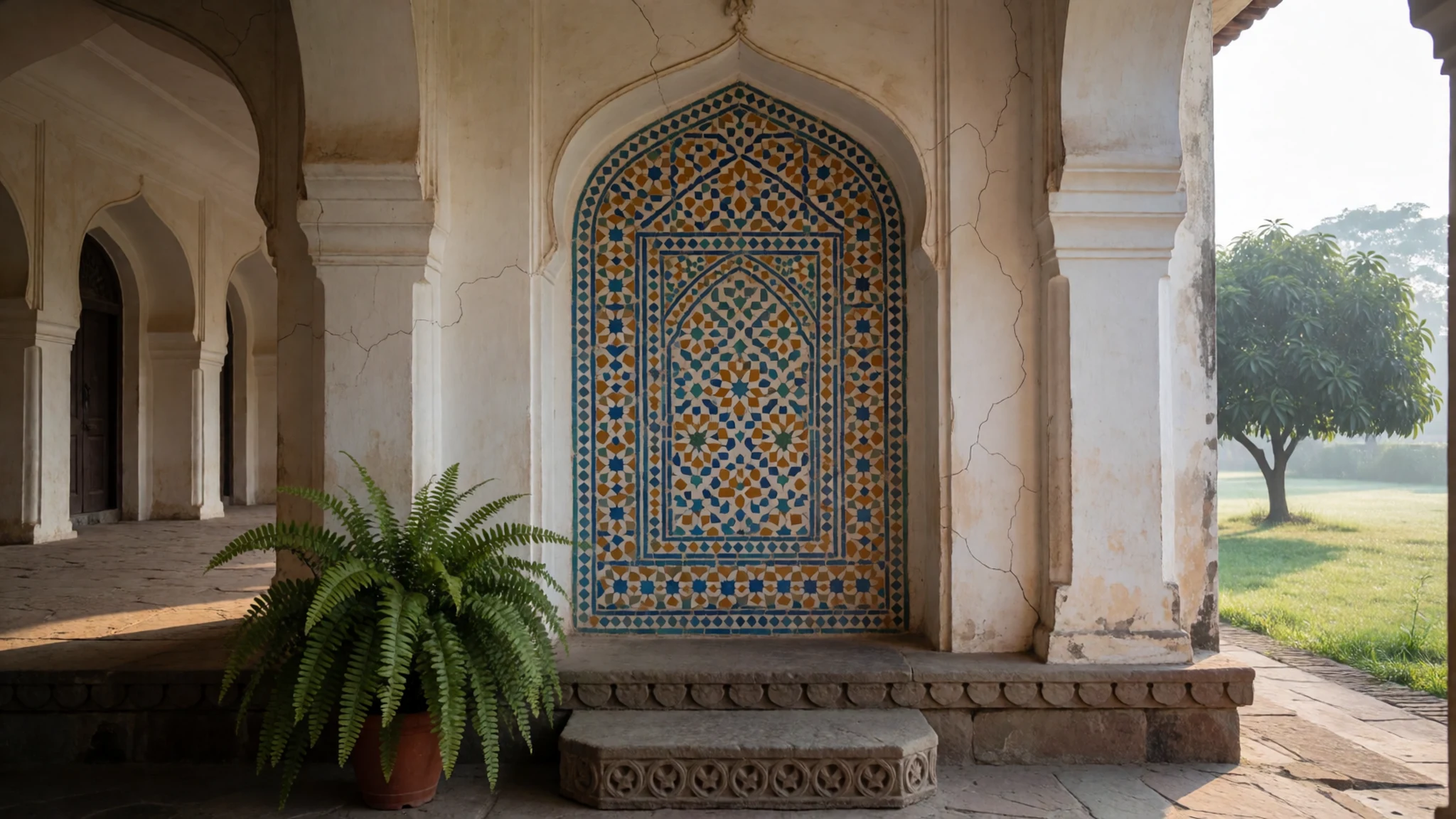
- Goaldi Mosque — Goaldi village, Sonargaon
Goaldi Mosque is a small, old mosque looked after by the government, in a village setting a short ride west of Panam. Its scale is modest, and its appeal lies in brickwork and quiet. Visitors are welcome if they behave respectfully, remove shoes and avoid prayer times.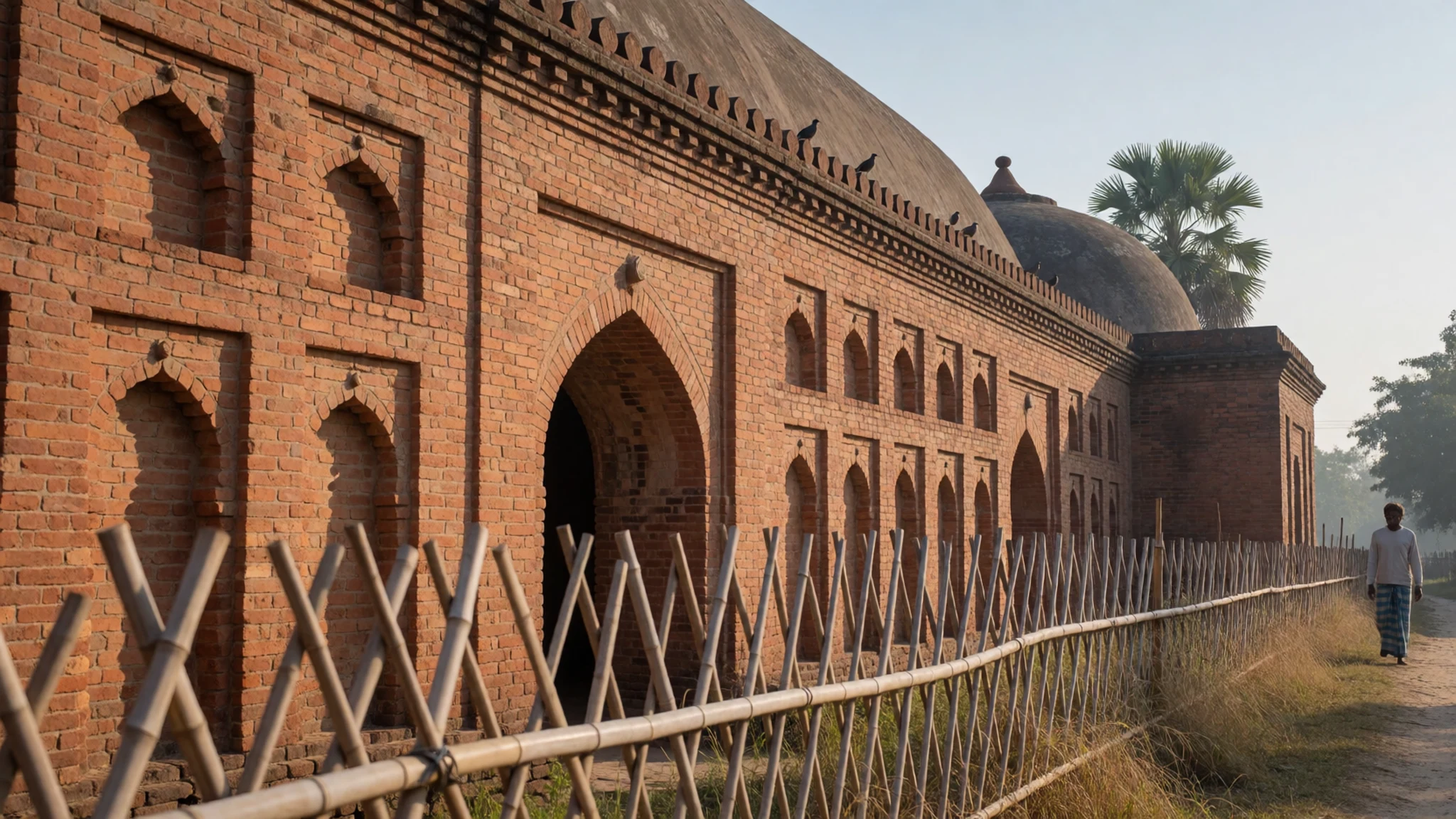
- Panch Pir Dargah — Sonargaon
Panch Pir Dargah holds the tombs of Sufi saints from the Mughal period, with an old mosque on the same site. Local pilgrims visit to pray and make vows, so it feels like a living shrine rather than a monument. Visit quietly, dress modestly and let worshippers take priority.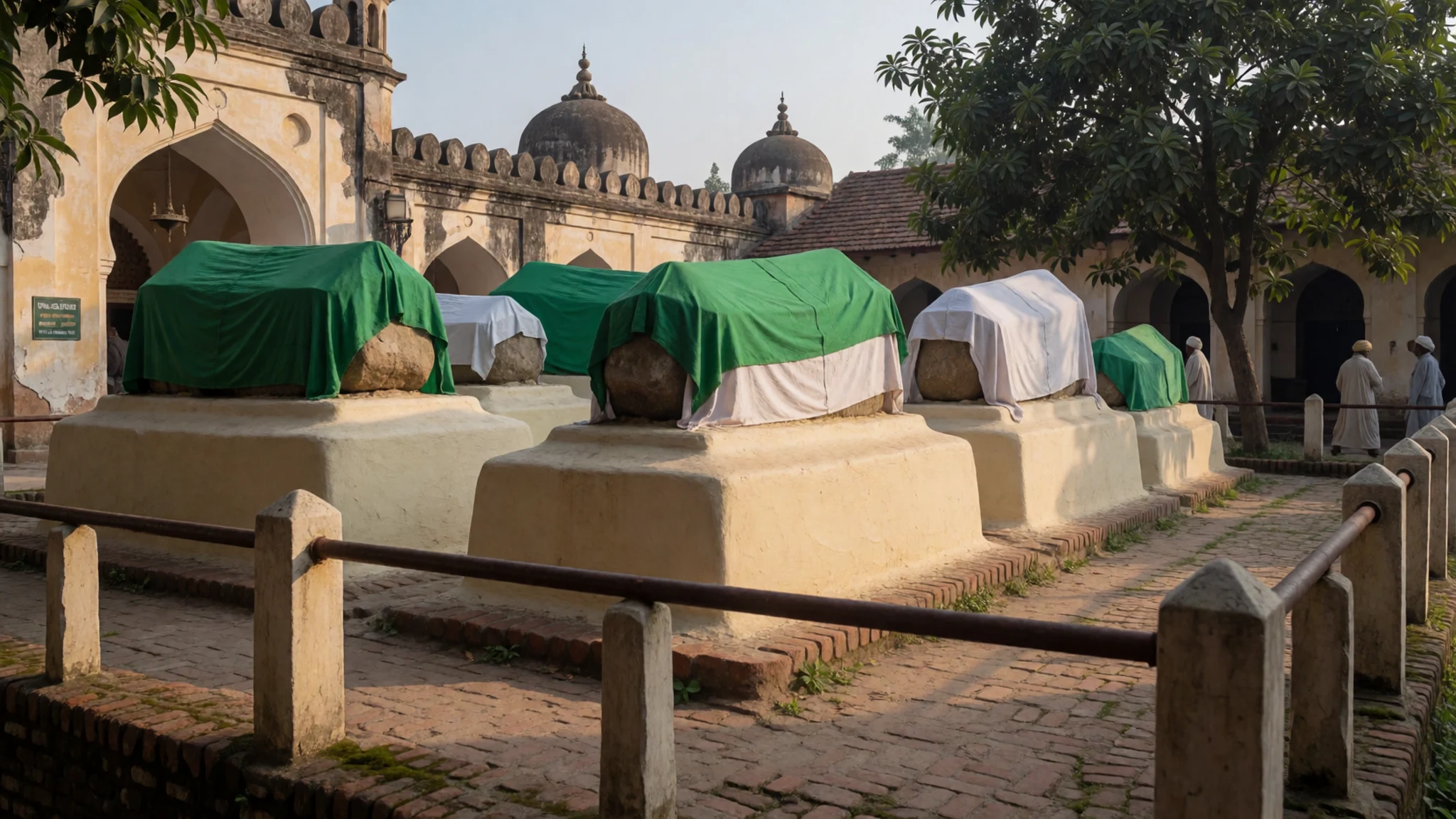
- Folk Arts and Crafts Museum (Lok Shilpa Jadughar) — Sonargaon
The Folk Arts and Crafts Museum, known locally as Lok Shilpa Jadughar, shows the traditional crafts of Bengal in a parkland setting. Textiles, pottery and woodwork are the kinds of objects to look for. Opening days can change around holidays, so check before making the trip your main goal.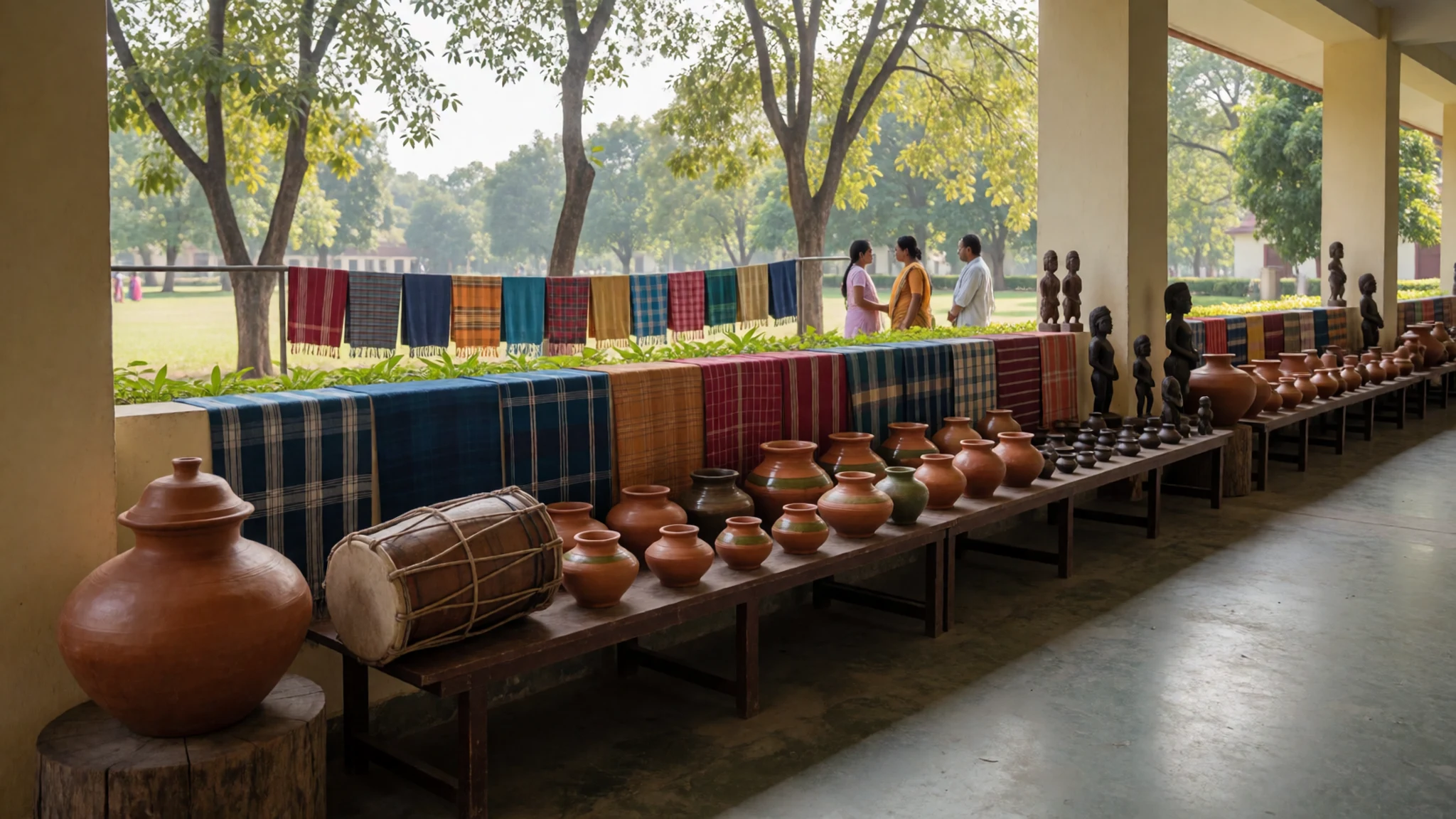
- Shiva shrine — North of Panam, Sonargaon
A tall Hindu Shiva shrine stands just north of Panam City, a reminder that Sonargaon's religious map is mixed. It is easy to combine with a walk along the Panam street. Treat it as a working place of worship: remove shoes, keep voices low and ask before taking photographs of devotees.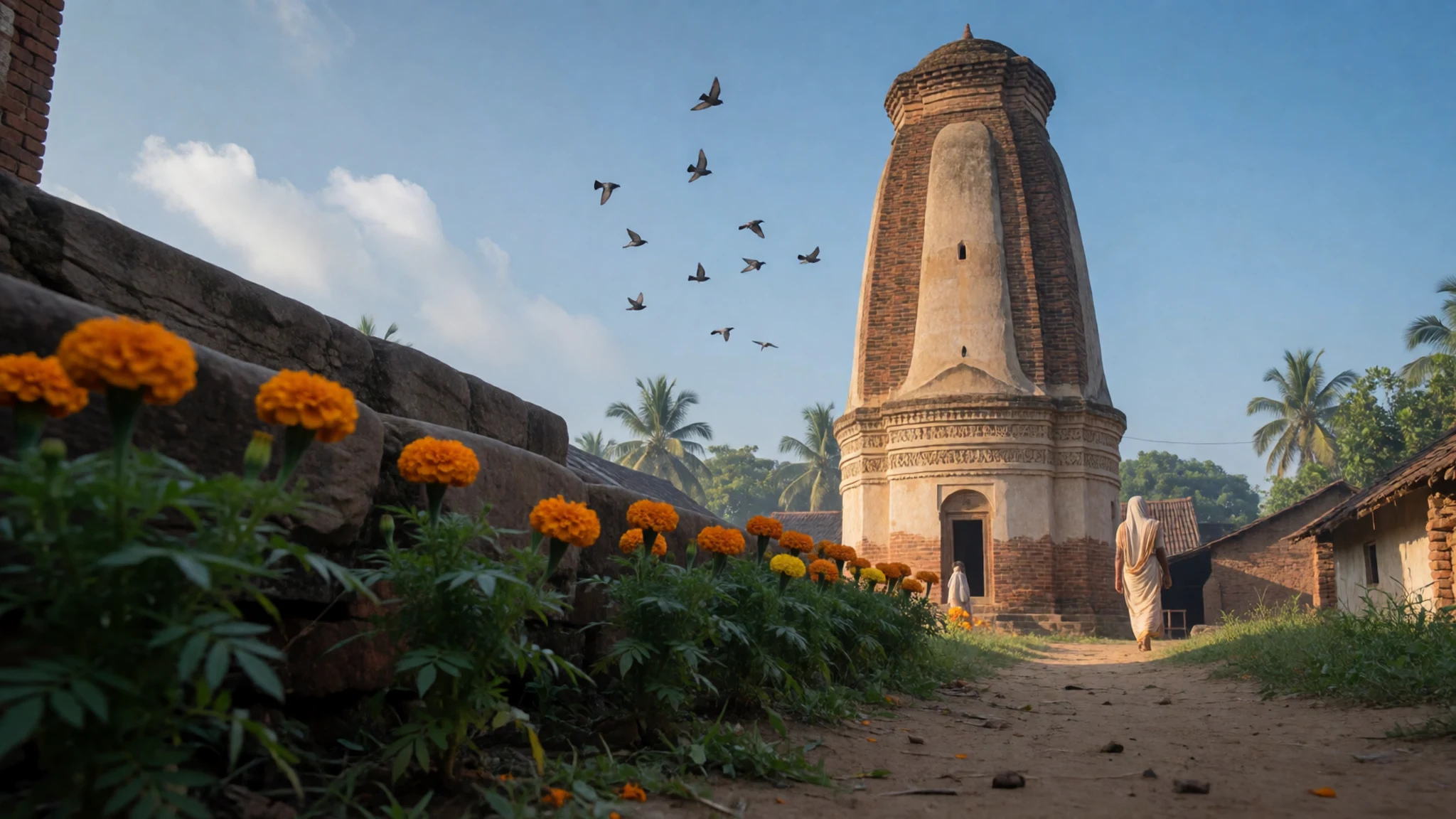
Culture
Sonargaon carries several layers of Bengali culture on one patch of ground: an early history under local dynasties, a sultanate-era Muslim court, Sufi devotion, and the merchant-gentry world of the colonial period. A Shiva shrine, a saint's tomb and an old mosque sit within a short ride of each other, and local people treat all of them as part of the neighbourhood rather than as museum pieces. The weaving tradition ties much of this together. Muslin from the surrounding villages once travelled to distant markets, and craft knowledge such as weaving, pottery, woodwork and embroidery still lives in households across the district, as the folk arts museum shows. Bengali is the everyday language, and a few words of greeting are met with real warmth. Tea stalls act as social hubs, where long conversations over cups of sweet milk tea are part of the day. Foreign visitors are uncommon, so curiosity is normal: people may ask visitors where they are from, offer directions or request a photograph together. Friday is the main day of congregational prayer, and village mosques and shrines are busier around midday. Sufi shrines may receive pilgrims who come to make vows or light incense, and quiet respect goes a long way. Remove your shoes before entering any mosque or shrine, cover your shoulders and knees, and ask before photographing worshippers.
What to wear
Around Sonargaon, traditional dress follows the wider Bengali pattern. Women wear the saree, usually cotton, with silk and fine Jamdani, a figured muslin woven in the Dhaka region and tied to the area's old weaving fame, kept for weddings, Eid and festivals such as Pohela Boishakh, the Bengali new year, when red and white are popular. Men wear the panjabi, a long collarless tunic in cotton or silk, with pyjama trousers, or the lungi, a wrapped cloth common in villages and at home. Day to day, most women in the district wear a salwar kameez with a dupatta, or a cotton saree in rural areas; many men wear shirt and trousers, with the lungi at home; younger people in towns choose jeans and T-shirts. Visitors should dress for heat and humidity but also for modesty: loose cotton or linen covering shoulders and knees, long sleeves against sun and mosquitoes, and a light scarf that women can drape over the head at shrines. Sturdy sandals or shoes that slip off easily suit both the broken paving of Panam and the shoes-off rule at religious sites. A hat, sunglasses and a compact umbrella double as sun and rain cover.
What to eat
- Shorshe ilish — Village rice eateries around Sonargaon
Hilsa fish cooked in a sharp mustard-seed paste, served with plain rice. It is a Bengali classic, seasonal and bony, so eat slowly. Ask for it at village rice eateries in the district, and check what is fresh that day.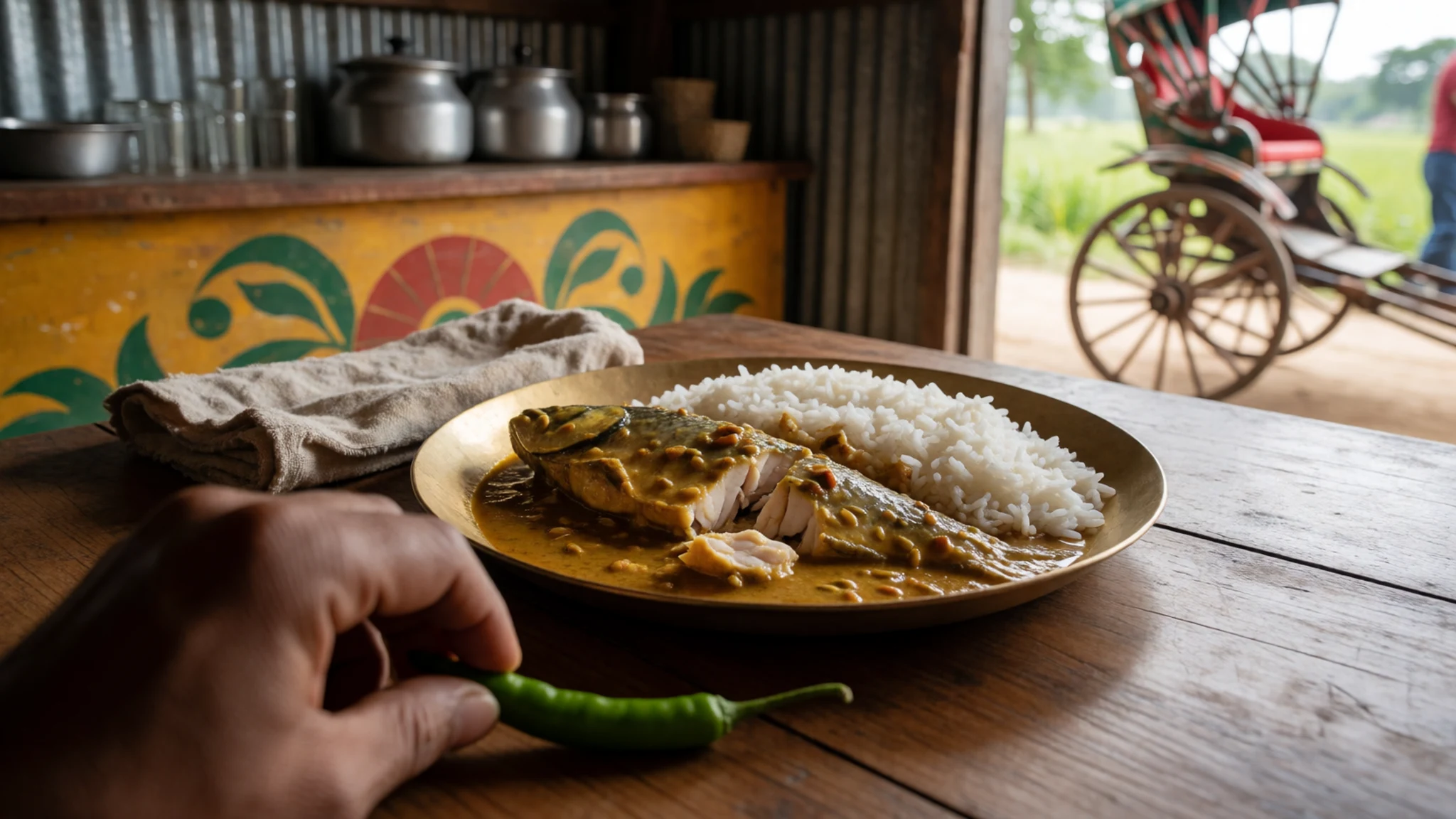
- Bhuna khichuri — Rice eateries along the Dhaka–Chittagong Highway near the bus stand
Rice and lentils fried with spices into a thick, fragrant plate, often served with beef or chicken and a salad. It is a filling lunch after a morning on foot, and common on rainy days and at festivals.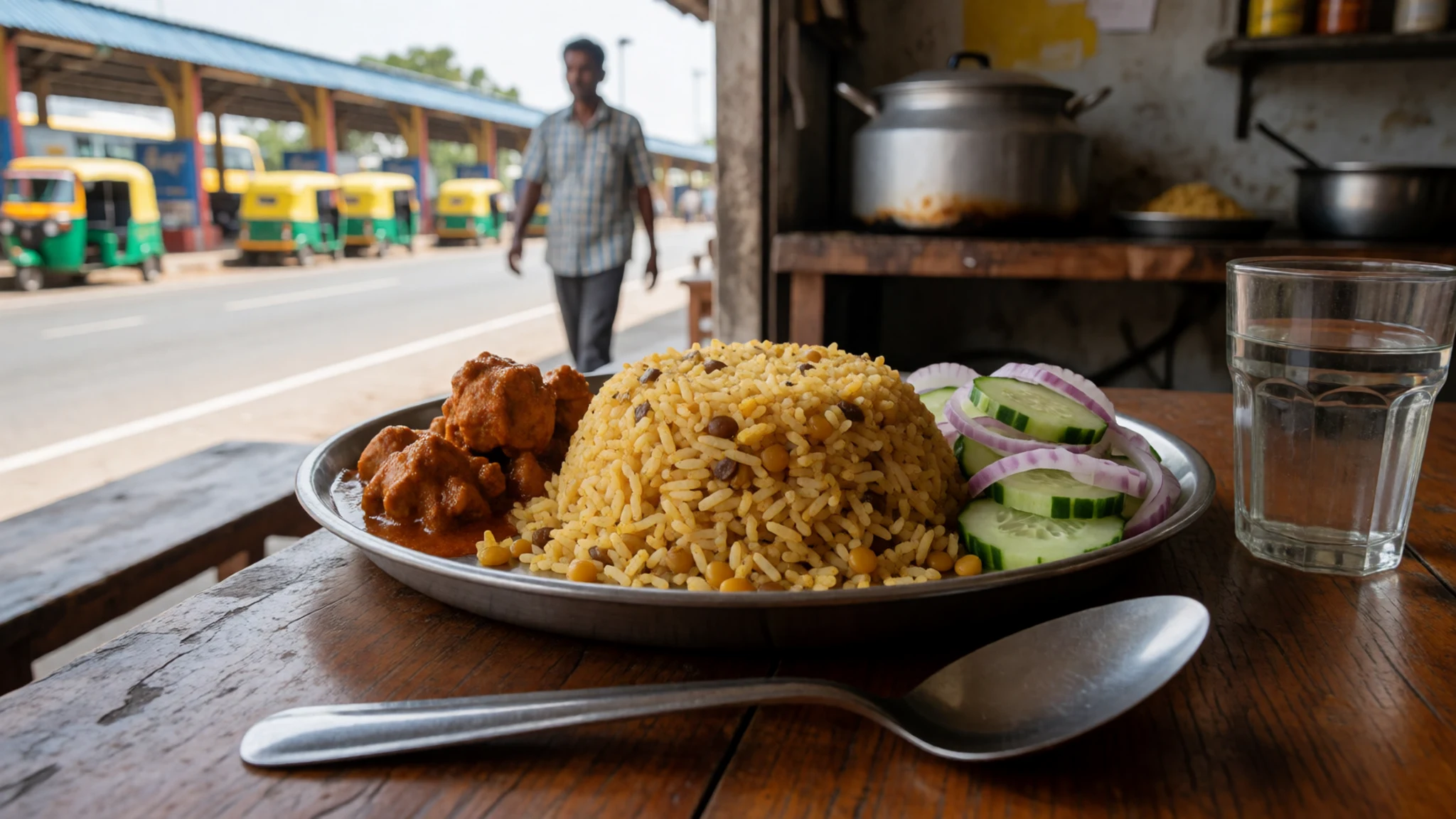
- Fuchka and chotpoti — Street stalls near bus stands and market lanes
Fuchka are crisp hollow shells filled with spiced potato and tamarind water; chotpoti is a tangy chickpea snack. Both are street food, so pick stalls with a busy turnover and avoid anything made with untreated water. - Singara and tea — Roadside tea stalls and shops near the highway
Singara is a triangular fried pastry stuffed with spiced potato or meat, eaten hot with sweet milk tea. It is the standard mid-morning pause in Bangladesh and an easy way to join the tea-stall conversation. - Mishti doi and sweets — Sweet shops in local market towns and along the highway
Mishti doi is set sweet yoghurt, often sold in clay pots, alongside milk sweets such as roshogolla. A small pot is a good way to cool down after a hot walk along the old street.
Plan it
Best time. November to February, when the weather is cooler and drier and walking the old street is comfortable. March to May is hot and humid, and the monsoon months bring heavy rain and muddy paths.
How long. 1–2
Getting there. Fly into Hazrat Shahjalal International Airport in Dhaka. For the last leg, frequent buses run to Sonargaon from Gulistan, Saidabad and other Dhaka bus stands, and tickets are usually bought at roadside counters. Traffic is unpredictable, so allow generous time. Say your destination is Mograpara, otherwise you may end up at the Pan Pacific Sonargaon Hotel in Dhaka instead. A hired car is the easier option for covering the scattered sites.
Budget. low
Tips
- Start in the morning, when it is cooler and the light on Panam's façades is best
- Carry small notes in cash; cards are unlikely to work at village shops and eateries
- Bring water, sun protection and mosquito repellent, and wear sturdy shoes for broken paving
- Check the folk museum's opening days before going, as they can vary around holidays
Etiquette
- Remove shoes before entering mosques, shrines and tombs
- Dress modestly with shoulders and knees covered, especially at religious sites
- Ask before photographing people, especially worshippers and women
Nearby
Sources
- Wikidata Q3350313 (CC0)
- Wikipedia: Sonargaon (rev 1374805473) (CC BY-SA 4.0)
- Wikivoyage: Sonargaon (rev 4986878) (CC BY-SA 4.0)
- Photo: Lok Shilpa Jadughar (Folk Arts Museum), Sourav Das (CC BY 2.5)
- Photo: Goaldi Mosque, Rayhan9d (CC BY-SA 4.0)
- Photo: Folk Art and Craft Museum, Sonargaon, Francisco Anzola (CC BY 2.5)
- Photo: Once upon a time in Panam City, Syed Sajidul Islam (CC BY-SA 4.0)
- Photo: Archaeological site of Panam City, Syed Sajidul Islam (CC BY-SA 4.0)
- Photo: Neel (Indigo) Kuthi at Mongalganj, Pinakpani (CC BY-SA 4.0)
- Photo: Ptolemy, Asia detail (Public domain)
- Photo: Destroying Palace of Panam City, JyotirmoyGolder (CC BY-SA 4.0)


