Skagway
Skagway, United States
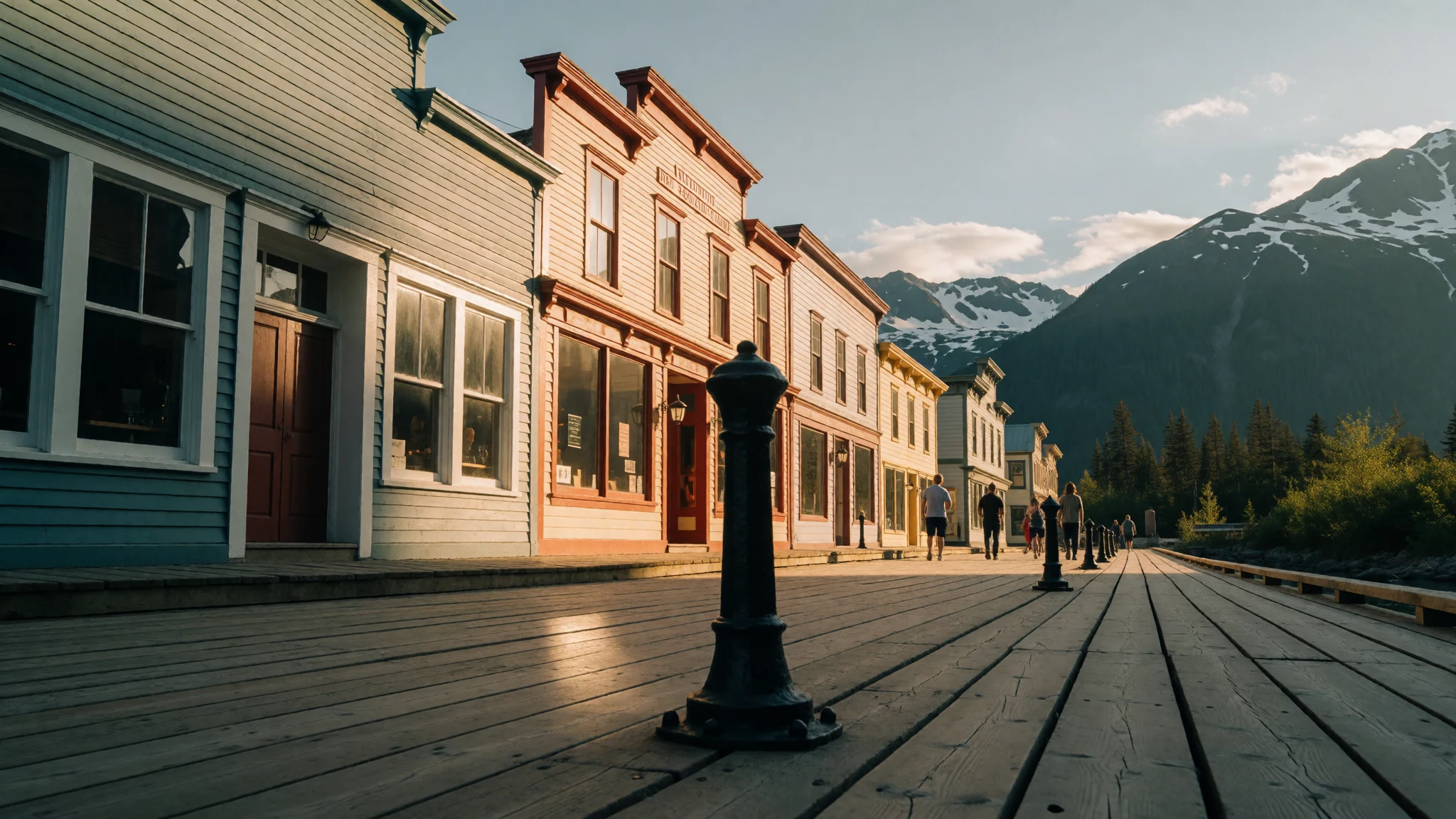
Skagway is a Gold Rush boomtown preserved in a mountain-ringed fjord, with a historic railway, Tlingit stories and wooden boardwalks.
The place
Skagway sits at the head of the Taiya Inlet on the Alaska Panhandle, a small port squeezed between steep mountains and salt water at an elevation of just 10 m. About 1164 people live here year-round, and the town feels like it: a grid of low wooden buildings, one main street and a harbour that is never far from view. In summer the population swells as seasonal workers arrive to serve the tourist trade, and cruise ships tie up almost daily, so the pavements along Broadway can be crowded whenever several ships are in. Tourism is the town's biggest economic sector, and most visitors arrive by sea. The only road out to the rest of the continent climbs into Canada towards Whitehorse in Yukon, passing through Carcross, so Skagway is something of a dead end by design. Its best-known landmark is the narrow-gauge White Pass and Yukon Route railway, which starts at the waterfront and now runs purely for visitors during the warm months. Beyond the old shopfronts, the surroundings are the real draw: the White Pass and Chilkoot trails, alpine lakes and glacier-cut valleys. Writers have used the setting too, and parts of Jack London's The Call of the Wild take place in this country. The weather is changeable, with wind funnelled down the inlet, and the shoulder months are quieter than high summer, though many businesses close when the ships stop coming.
Its story
Skagway takes its name from the Tlingit Shg̱agwei, a word tied to the rough water that strong north winds stir up in the Taiya Inlet. Tlingit tradition explains the wind through a woman called Kanagoo, nicknamed 'pretty woman', who turned herself to stone beside Skagway Bay. The rock formation now known as Face Mountain is her image, and her breath is said to be the gusts that blow towards Haines. Long before any town existed, the valley belonged to the Tlingit, who knew the mountain passes well. The modern settlement has its roots in Billy Moore, a steamboat captain who had worked earlier gold rushes. He surveyed the route later called White Pass, saw that a railway could follow it, and claimed land at the mouth of the Skagway River to wait for his moment. When word of Klondike gold spread, the town was founded in 1897 and filled with prospectors within months, all heading for the Yukon goldfields over the mountains. Skagway became a saltwater port, a supply depot and a place of saloons, gambling dens and swindlers, among them the notorious con man Jefferson 'Soapy' Smith. The rush faded quickly, but the railway built over White Pass outlasted it, hauling cargo for decades before turning to the tourist trade. Today the old buildings are preserved as part of a national historical park, and the story of that brief frenzy is told on almost every corner.
What to see
- Klondike Gold Rush National Historical Park visitor centre — Downtown, near the railway
Skagway's old railway depot now houses the park's main visitor centre. It is the best first stop for orientation: rangers explain the Gold Rush, and from here walking tours of the restored Broadway buildings usually start. Check the official park pages for current programmes.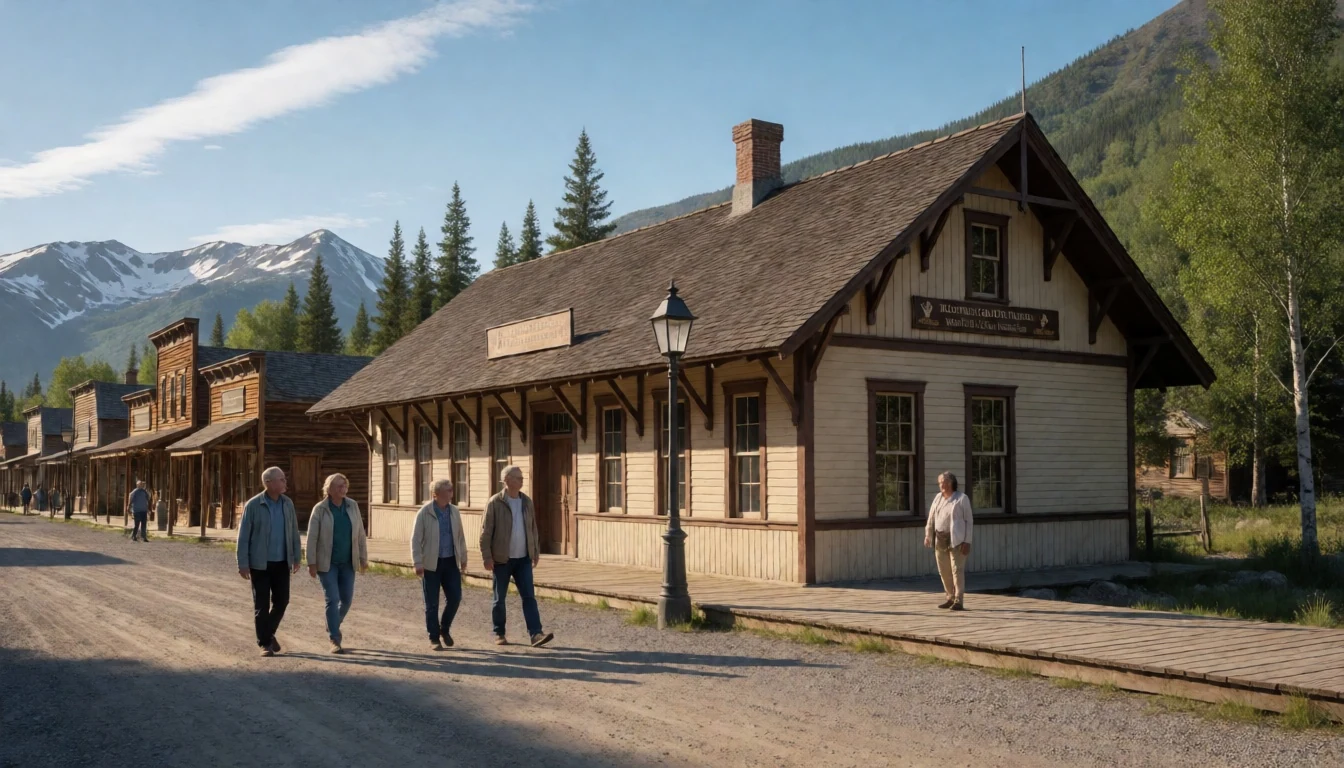
- Skagway Museum and Archives — Downtown
A compact local museum with a Tlingit canoe, Bering Sea kayaks, a Portland Cutter sleigh and Gold Rush tools, baskets, beadwork and carvings. It gives Indigenous and prospector history equal weight, and the archives help anyone tracing a Gold Rush ancestor.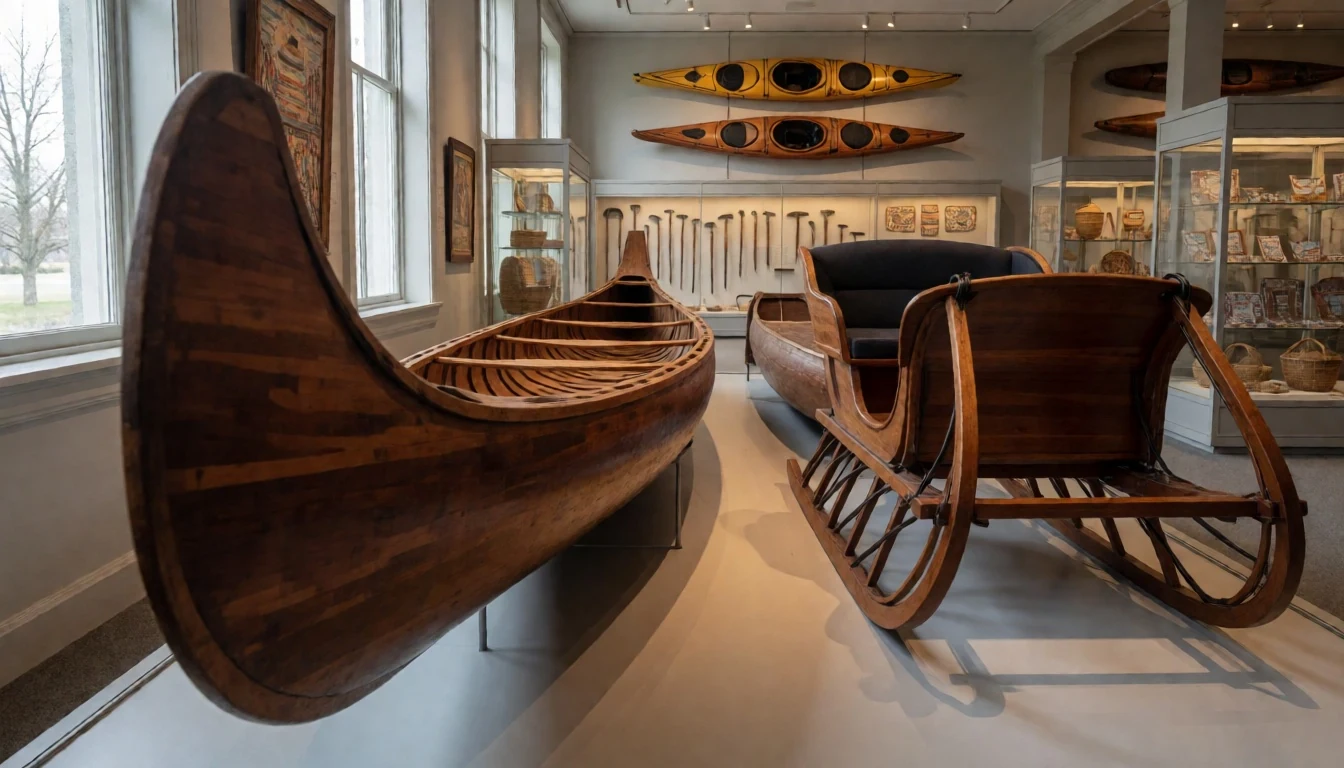
- White Pass and Yukon Route railway — Waterfront
The narrow-gauge line leaves from the waterfront and climbs the same pass that stampeders once crossed on foot. Carriages are vintage in style, and the views over canyons and waterfalls are the point. Book ahead in cruise season through the operator's official site.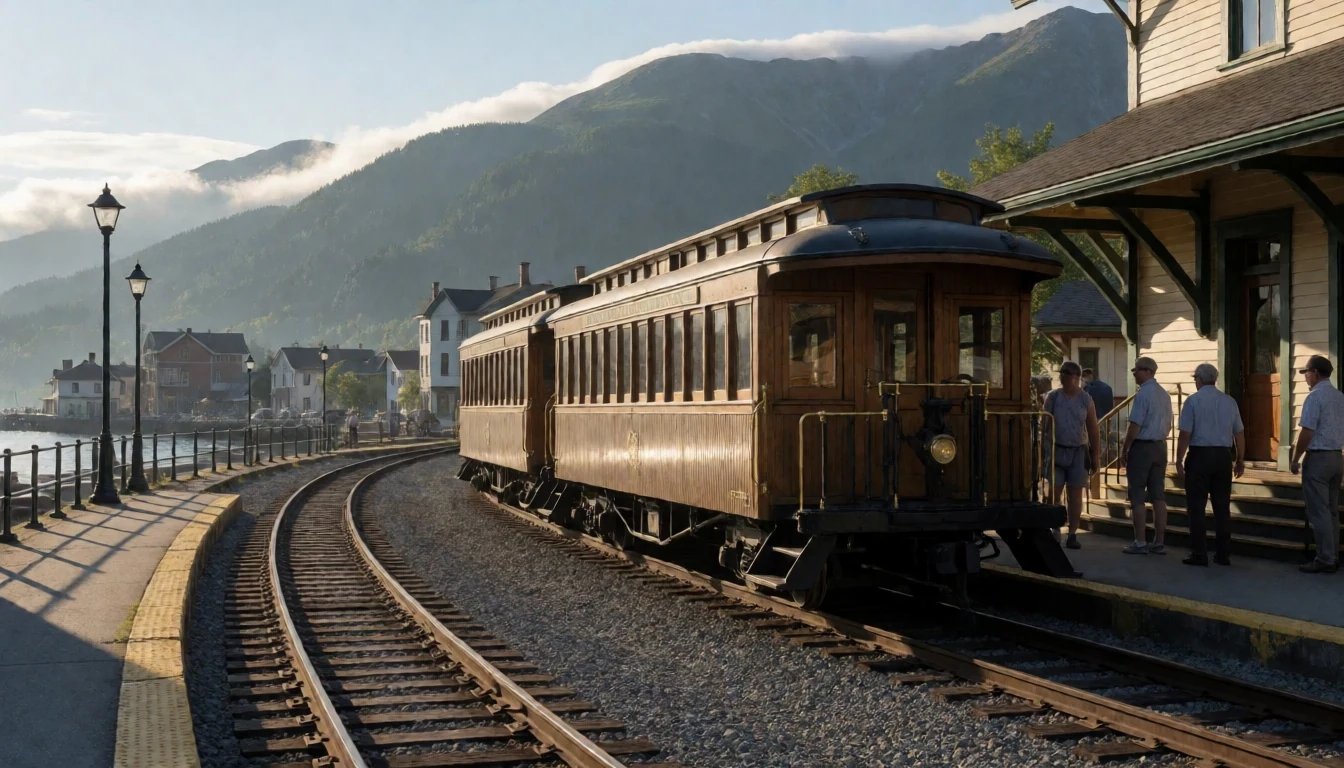
- Gold Rush Cemetery — North of town
A wooded cemetery just outside town, holding the grave of Jefferson 'Soapy' Smith and a boulder painted gold and billed as the largest nugget in the world, which is a joke. A short forest path leads on to a waterfall.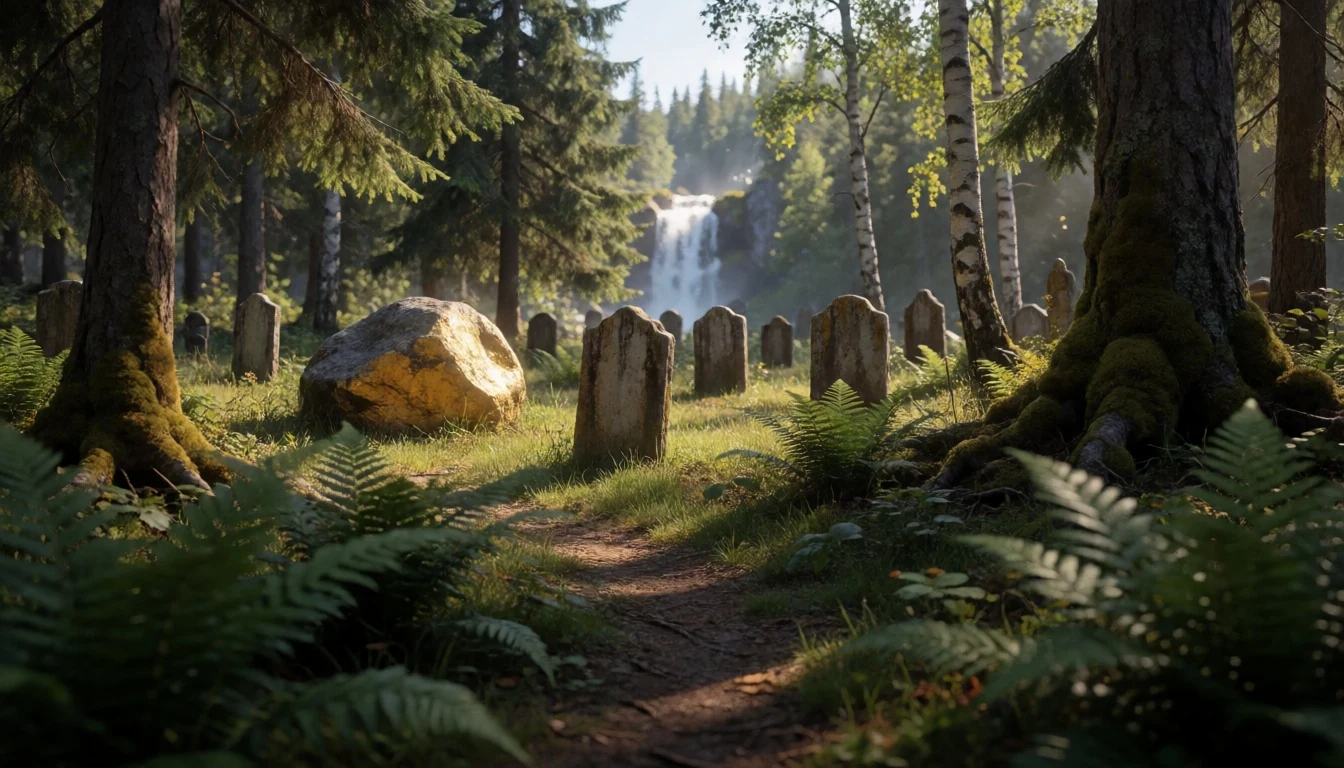
- Yakutania Point and Smuggler's Cove — West of downtown
A footbridge across the river mouth leads to easy trails, picnic spots and a fitness course along the shore. It is a quiet place to escape the crowds on Broadway, with views down the inlet and back to the mountains.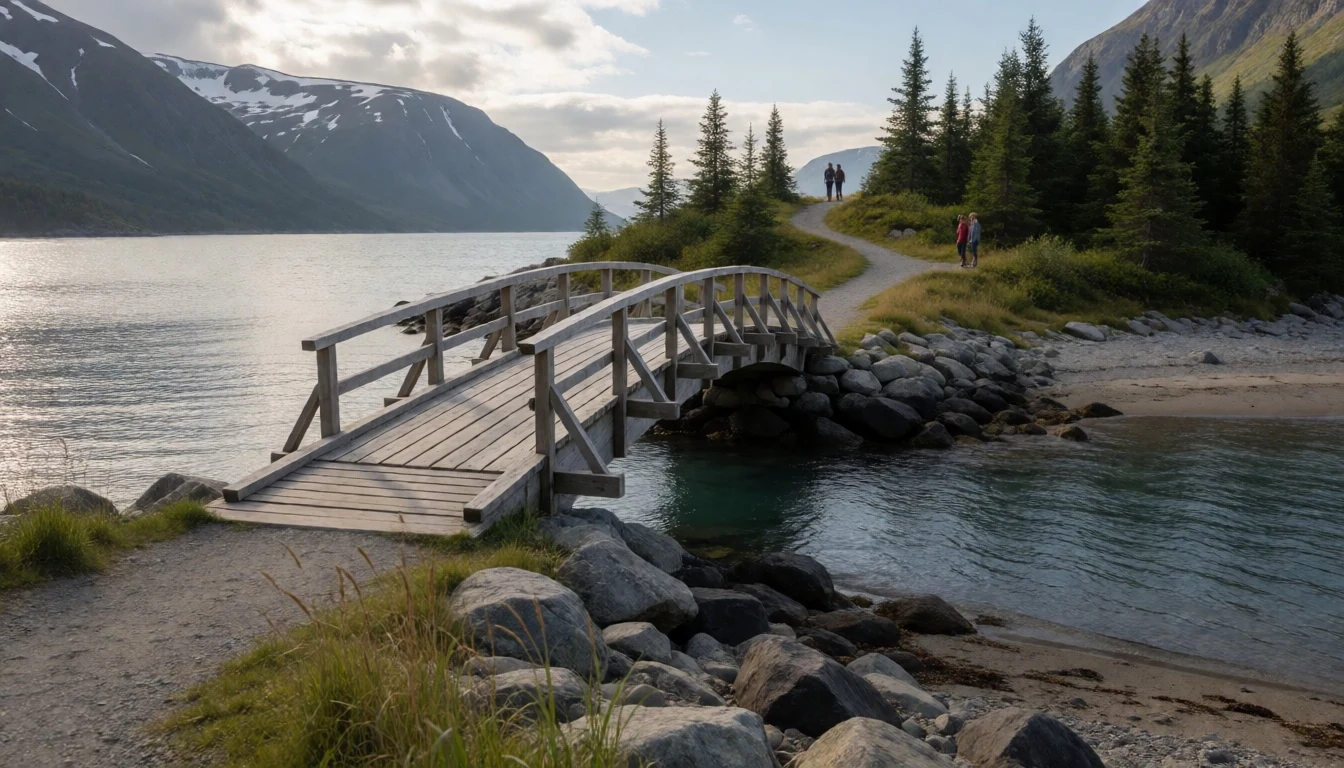
- Skagway Overlook — Hillside above town
A roadside turnoff with a viewing platform above the town. From here the grid of streets, the harbour and the ships lined up at the docks show how small Skagway is against the surrounding peaks. It is worth a stop on a clear day.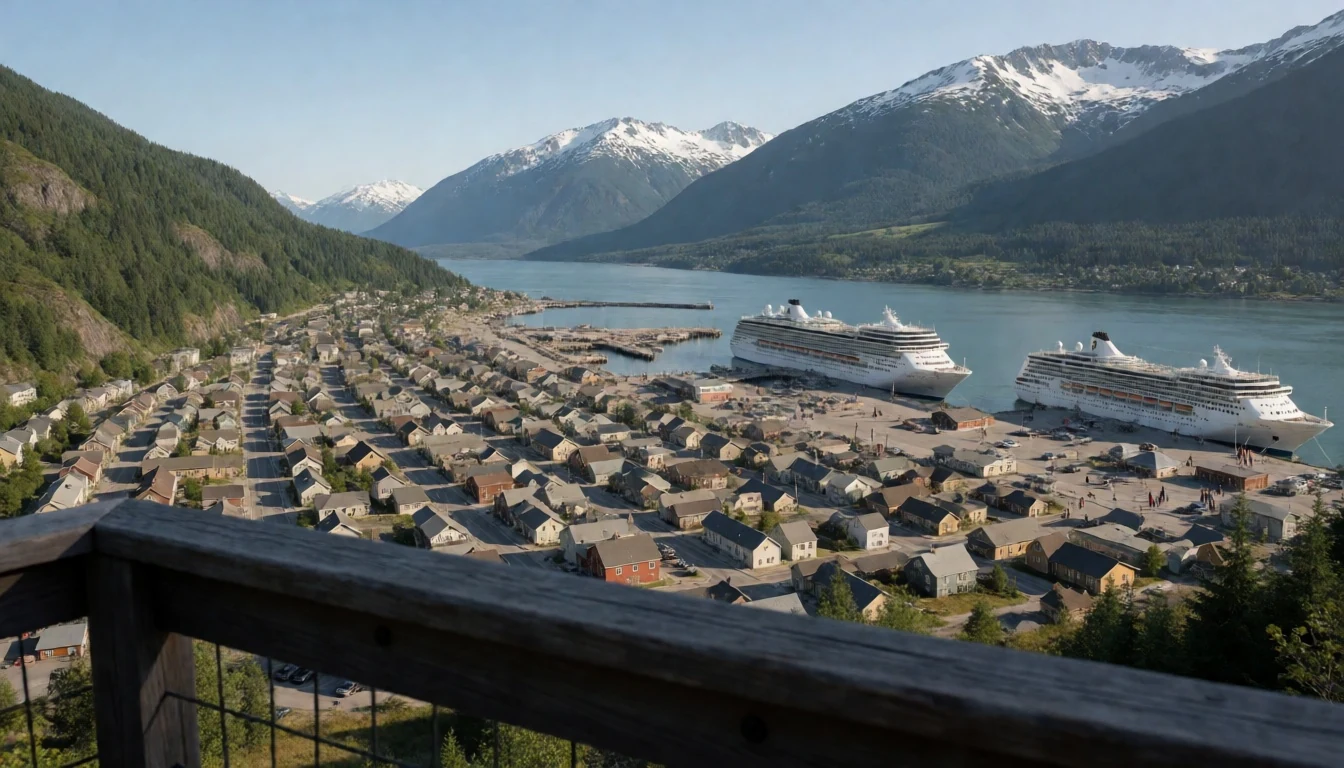
Culture
Skagway's culture layers two stories. The first is Tlingit, the Indigenous people of this coast, whose name for the place, Shg̱agwei, and whose tale of Kanagoo and Face Mountain are still part of how the town describes its own wind. The second is the Gold Rush, which left the town its identity: wooden false-front buildings, boardwalks, saloon shows and costumed guides. Many local businesses lean into that theatre, and some of it is pure fun, such as the saloon performers who play the 'ladies of the rush'. A smaller, year-round community lives underneath it, about 1164 people who run the shops, the railway and the harbour, and who say goodbye to the crowds each autumn. The Klondike Gold Rush National Historical Park gives the official telling, while the museum shows Tlingit objects and daily life alongside the prospectors' kit. Literary visitors come for Jack London, whose Klondike writing helped shape how the world pictures the north. Outdoor culture is strong too, with hiking the Chilkoot and White Pass routes a point of pride, and with fishing a normal part of local life. Expect a friendly, informal place where people chat in queues and on the train, and where businesses often close early once the last ship leaves. Be respectful when photographing local people or Tlingit cultural items, and ask before pointing a camera at anyone who is not part of a performance.
What to wear
In Skagway, traditional dress belongs to the Tlingit, whose ceremonial regalia includes Chilkat and Ravenstail woven blankets, made from mountain-goat wool and cedar bark, as well as button blankets of wool felt decorated with shell buttons and clan crests. These are worn at ceremonies and dances, and they are not costumes. The other 'traditional' look in town is theatrical: Gold Rush costume, with long skirts, corsets, waistcoats and bowler hats worn by saloon performers and guides during the summer. What people actually wear day to day is practical northern clothing. Locals favour fleece, waterproof jackets, rubber boots and wool hats, with a rain shell always to hand. Visitors off the ships dress much the same, with the occasional smarter outfit for a dinner on board. For a visit, the rule is layers. Summer days can be mild, but wind down the inlet and rain turn chilly quickly, so bring a waterproof jacket, a warm mid-layer and a hat. Comfortable, grippy shoes matter on wet boardwalks, and sturdy walking boots are needed for any trail. There is no formal dress code in town, but if you are invited to a Tlingit ceremony or visit a cultural centre, dress neatly and follow the host's lead. Out of season, bring proper winter gear, as storms can be sharp and the town is far from any large shop.
What to eat
- Halibut fish and chips — Casual fish eateries near the harbour and Broadway
Fresh local halibut in light batter with chips is the standard Skagway meal. It is easy to find in the casual fish eateries near the harbour and along the main street, and it suits the cool, damp days well.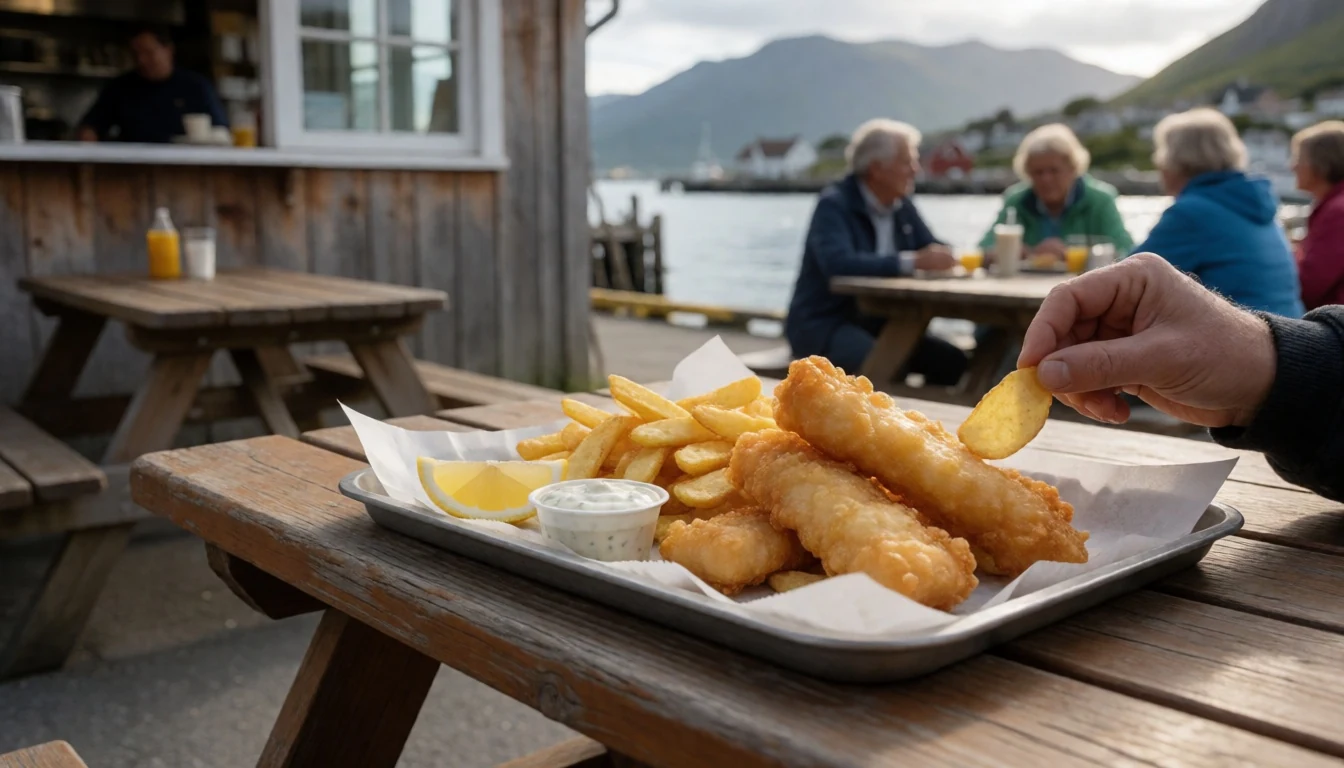
- Alaskan king crab — Seafood restaurants on the main street
Large crab legs, usually steamed and served with butter, are the town's indulgence. Seafood restaurants along the main street offer them, and the sweet, dense meat is worth the splurge for a special lunch.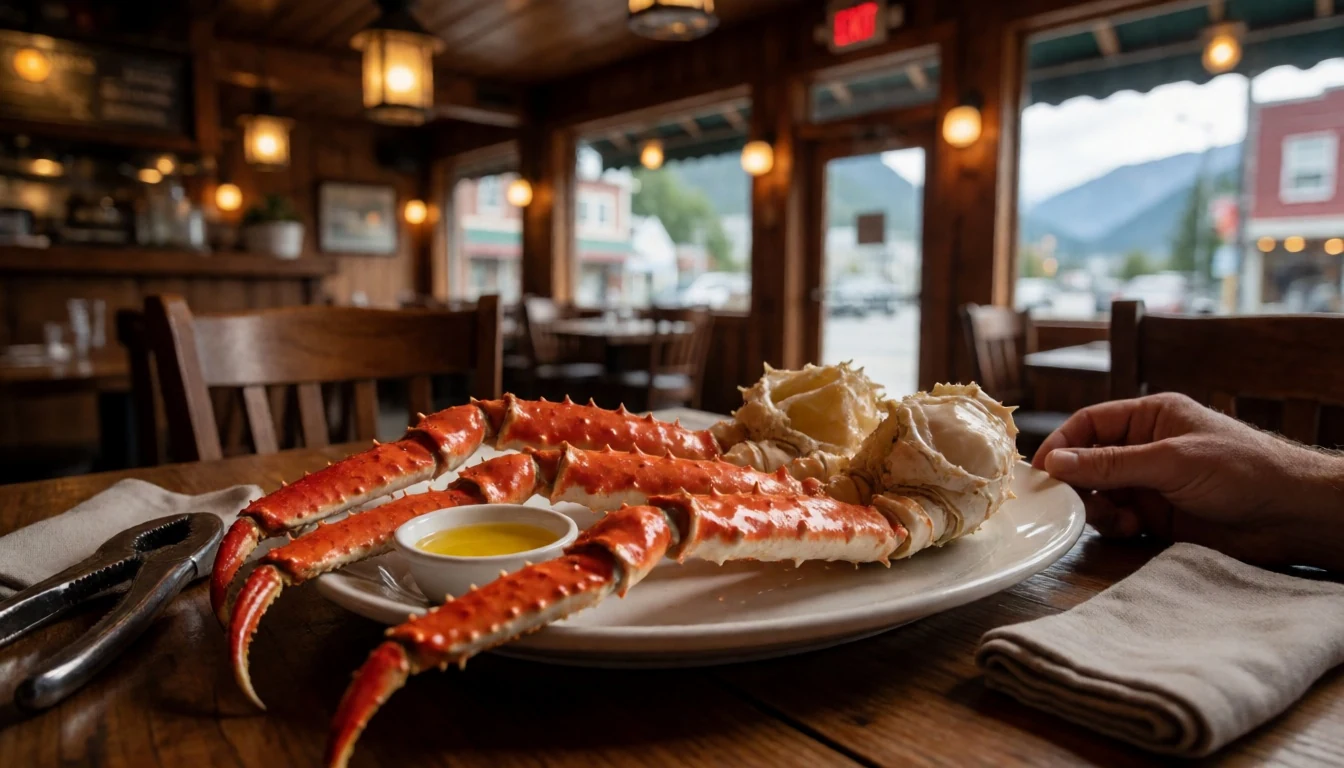
- Smoked salmon — Smokehouses and shops by the small boat harbour
Salmon cured and smoked over alder or similar wood is a staple across the Alaska coast. Look for it on boards, in chowders and in take-away packs from smokehouses and shops by the small boat harbour. - Seafood chowder — Cafés and restaurants along the main street
A thick, creamy bowl of fish, shellfish and potato, ideal after a wet walk or a train ride. Many cafés and restaurants on the main street keep a pot going through the lunchtime rush. - Local brews and saloon fare — Historic saloons on the main street
Several bars along the main street pour regional beers alongside burgers and plates of pub food. The old saloons add Gold Rush atmosphere and live shows, and make a lively evening stop once the crowds thin.
Plan it
Best time. May to September, when the cruise ships, the railway and most shops run; June and July are the longest days, while May and September are quieter and cooler. Outside that window many businesses close and the weather turns harsh.
How long. 1–2
Getting there. Most visitors arrive by cruise ship or Alaska Marine Highway ferry, which dock in town. Commuter flights come in from Juneau, and a single highway links Skagway through Carcross to Whitehorse in Yukon; the last leg from the dock or airstrip into downtown is a short walk or taxi ride.
Budget. high
Tips
- Book the railway through the operator's official site well ahead in cruise season
- Visit the main street early morning or late afternoon, when fewer ships are docked
- Carry a waterproof jacket, as rain and wind arrive quickly
- Take a card and a little cash, since small stalls may prefer either
- Check the official site, https://www.skagway.org/, for current events and what is open
Etiquette
- Ask before photographing local people or Tlingit cultural items
- Stay on marked trails and keep a safe distance from wildlife such as bears
- Treat preserved Gold Rush buildings as historic property, not props
Nearby
Sources
- Wikidata Q615975 (CC0)
- Wikipedia: Skagway, Alaska (rev 1386660412) (CC BY-SA 4.0)
- Wikivoyage: Skagway (rev 5418305) (CC BY-SA 4.0)
- Skagway aerial view — Christopher Michel (CC BY 2.5)
- Rail car in Skagway, Alaska — Cullen328 (CC BY-SA 4.0)
- Kirmses advertisement, Skagway 2009 — Notyourbroom (CC BY 3.0)
- Gold Rush Cemetery, Skagway — Diego Delso (CC BY-SA 4.0)
- Soapy Smith's parlor, Skagway 2009 — Notyourbroom (CC BY 3.0)
- Red Onion Saloon — Timkal (CC BY 3.0)
- Broadway Avenue, Skagway — Jet Lowe (Public domain)
- Princess Cruise Lines, Skagway — Timkal (CC BY 3.0)


