Shirley Heights
Shirley Heights, Antigua and Barbuda
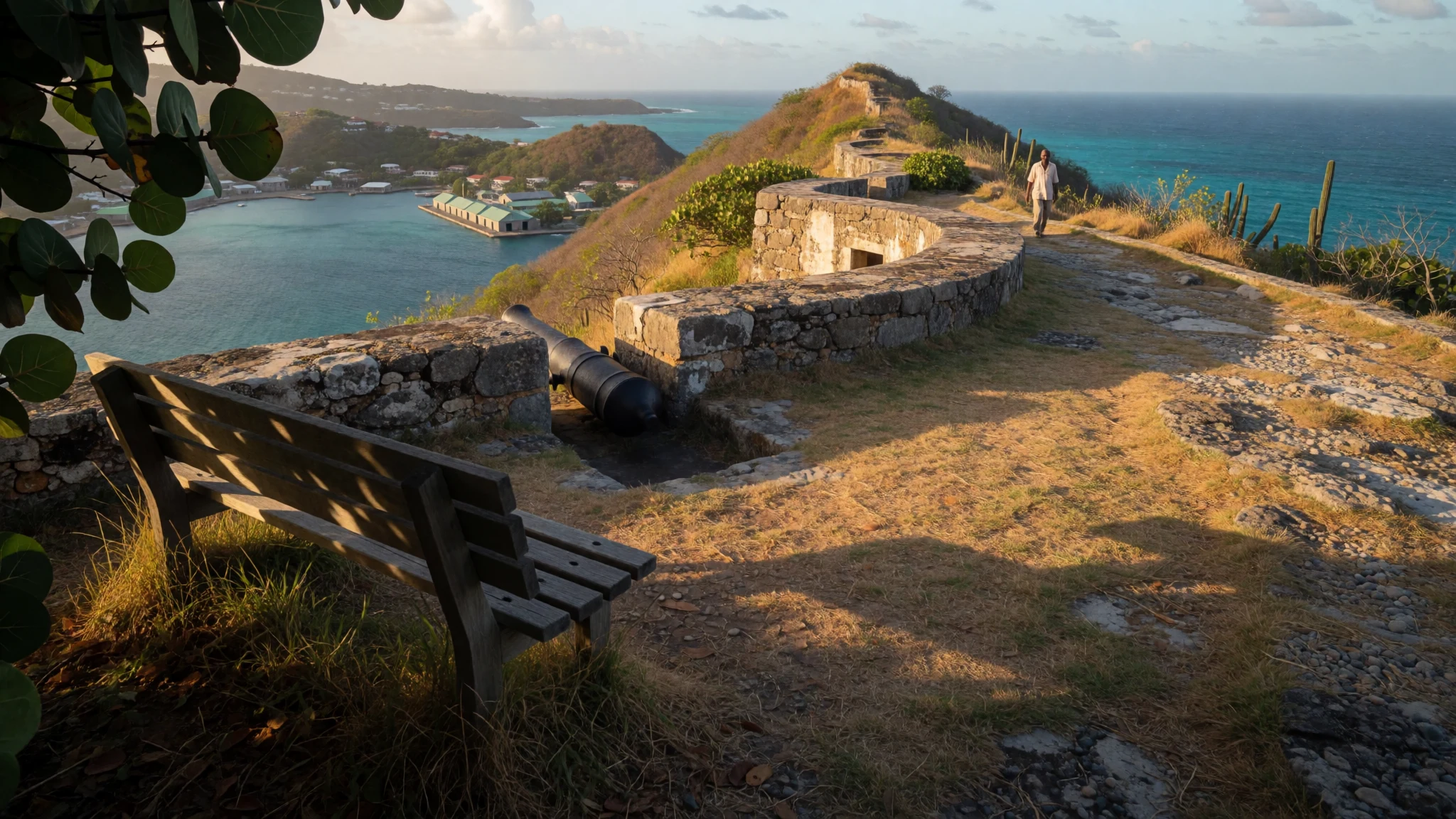
Shirley Heights is a low ridge in southern Antigua whose lookout shows the harbours, the sea and the island's shape in one sweep.
The place
Shirley Heights is a ridge on the southern edge of Antigua, in Antigua and Barbuda, rising 62 m above the sea. That is modest by any mountain standard, but on a small island it is enough to command two coastlines at once. From the lookout the land falls away to English Harbour on one side and the bays towards Falmouth on the other, with yachts moored in water that shifts from jade to deep blue as it gets deeper. The slopes are dry scrub and cactus rather than lush forest, and the wind rarely drops. The hill sits close to Nelson's Dockyard, the island's World Heritage Site, so most visits pair the two: harbour and dockyard below, viewpoint above.
Antigua is the island many people picture when they think of a small Caribbean destination. Tourism dominates the economy, the resorts cluster along the white-sand coasts, and locals like to say there is a beach for every day of the year. Shirley Heights offers something different from sand. It gives a sense of the island's shape and of why a naval power wanted this particular corner.
The climate is tropical marine, so temperatures change little through the year. The real variation is in rain and storm risk, with hurricanes and tropical storms possible between July and October. Expect strong sun, exposed ground with little shade, and a lookout that fills up around sunset. The nearest main town is St John's, on the other side of the island, so a visit here usually means a drive across Antigua, whether by rental car, taxi or organised tour.
Its story
Shirley Heights belongs to a long story of people competing for Antigua's sheltered southern harbours. Arawak communities lived on the island from at least a thousand years before the Common Era, and by the time Columbus passed by on his second voyage in 1493 the Kalinago had probably taken their place. Spanish and French attempts at settlement did not last. The English established a lasting colony in the later seventeenth century, and the island's future was then shaped by sugar.
Sugar plantations depended on enslaved African labour, and that system held until emancipation in the 1830s. The landscape still carries it: ruined stone sugar mills stand in fields across Antigua, and the descendants of the enslaved make up most of the population today.
The southern coast mattered because its deep, protected harbours suited warships, especially in hurricane season. The heights above English Harbour gave the British a vantage point over approaching ships, and fortifications and a garrison followed. Nelson's Dockyard below, restored and listed as a World Heritage Site, is the best-known survivor of that naval presence, and the hilltop positions look down on it.
In the early 1980s the islands left colonial rule and became a sovereign nation that remains a member of the Commonwealth. The old military ground is now a place for walking, picnicking and watching the sun go down, which is a quiet kind of afterlife for an outpost built to watch for enemies.
What to see
- Shirley Heights lookout — Shirley Heights, southern Antigua
The main viewpoint looks over English Harbour and the coast beyond, with moored yachts far below. Early morning is calm and mostly empty, while late afternoon brings the crowds and the best light. The ground is open and dry, so a hat and water matter more than a jacket.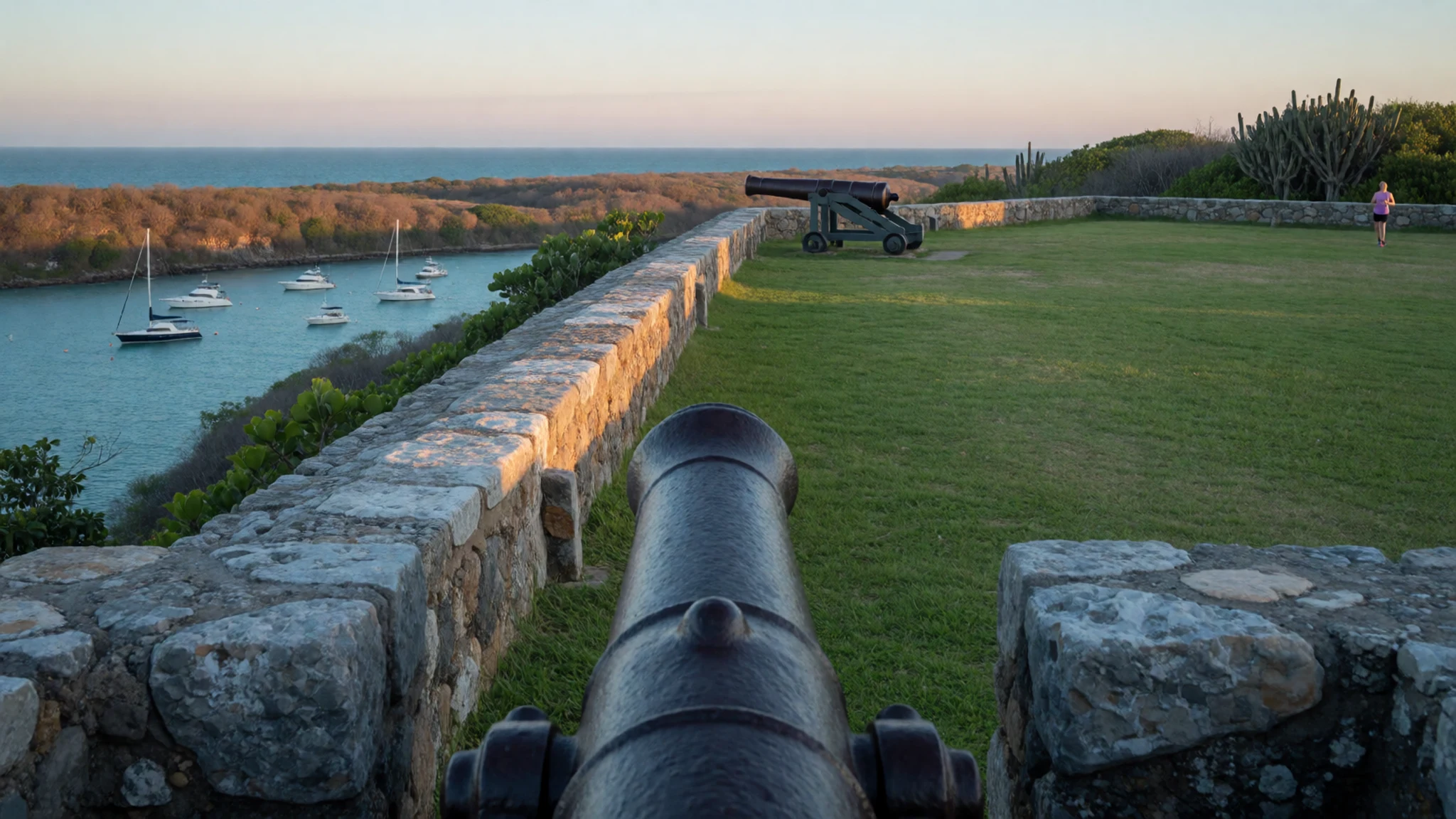
- Nelson's Dockyard — English Harbour
Below the ridge, this restored naval dockyard in English Harbour became Antigua's only World Heritage Site in 2016. Old stone storehouses and workshops now sit beside working marinas. It is easy to combine with the hilltop, and the walk between them is steep but short.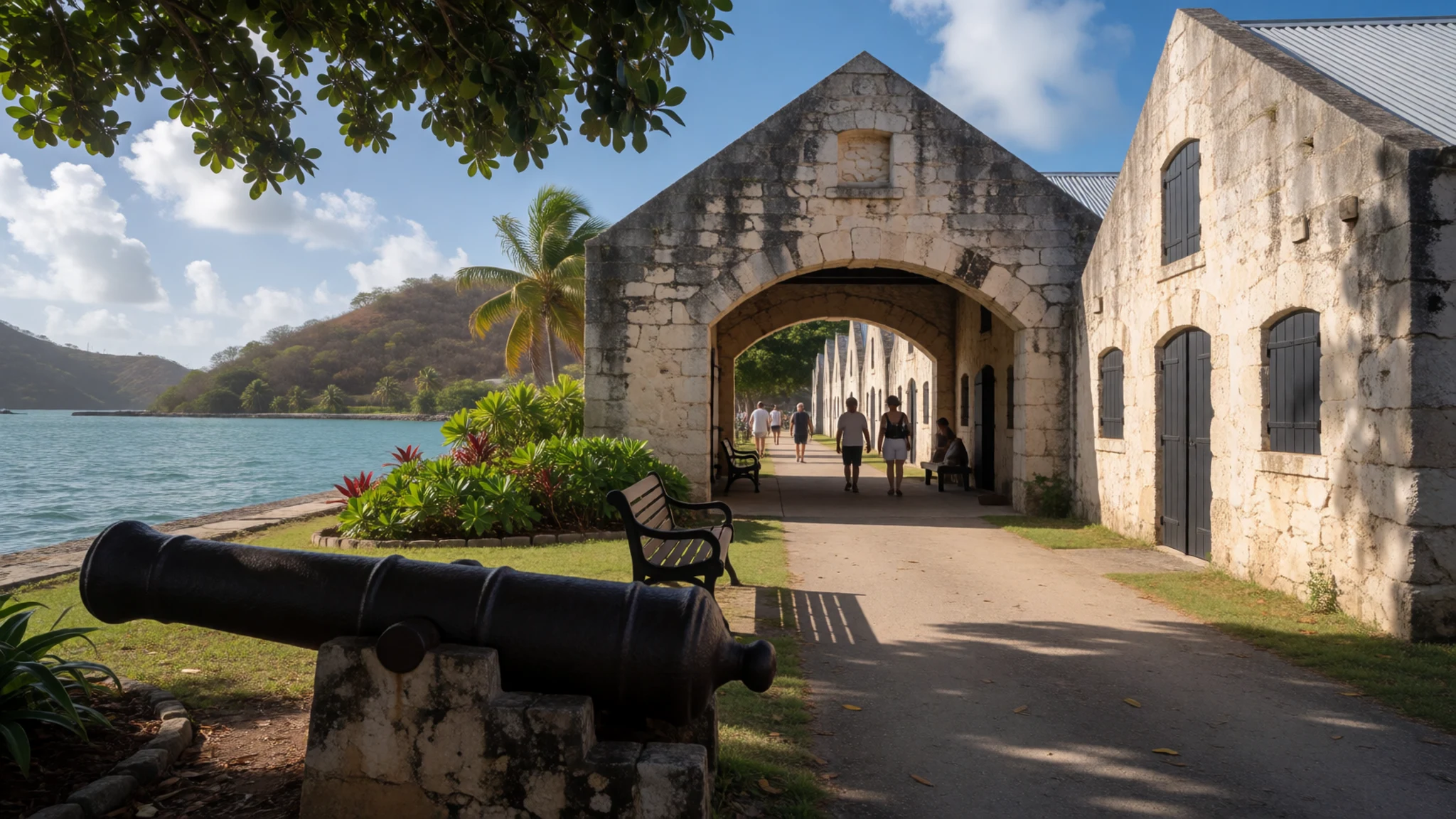
- Falmouth Harbour — Falmouth
The neighbouring bay is a gathering point for sailing boats, with a waterfront of cafés and chandlers. Looking at it from the heights gives a sense of how the two harbours sit side by side, and a short drive brings visitors down to the water.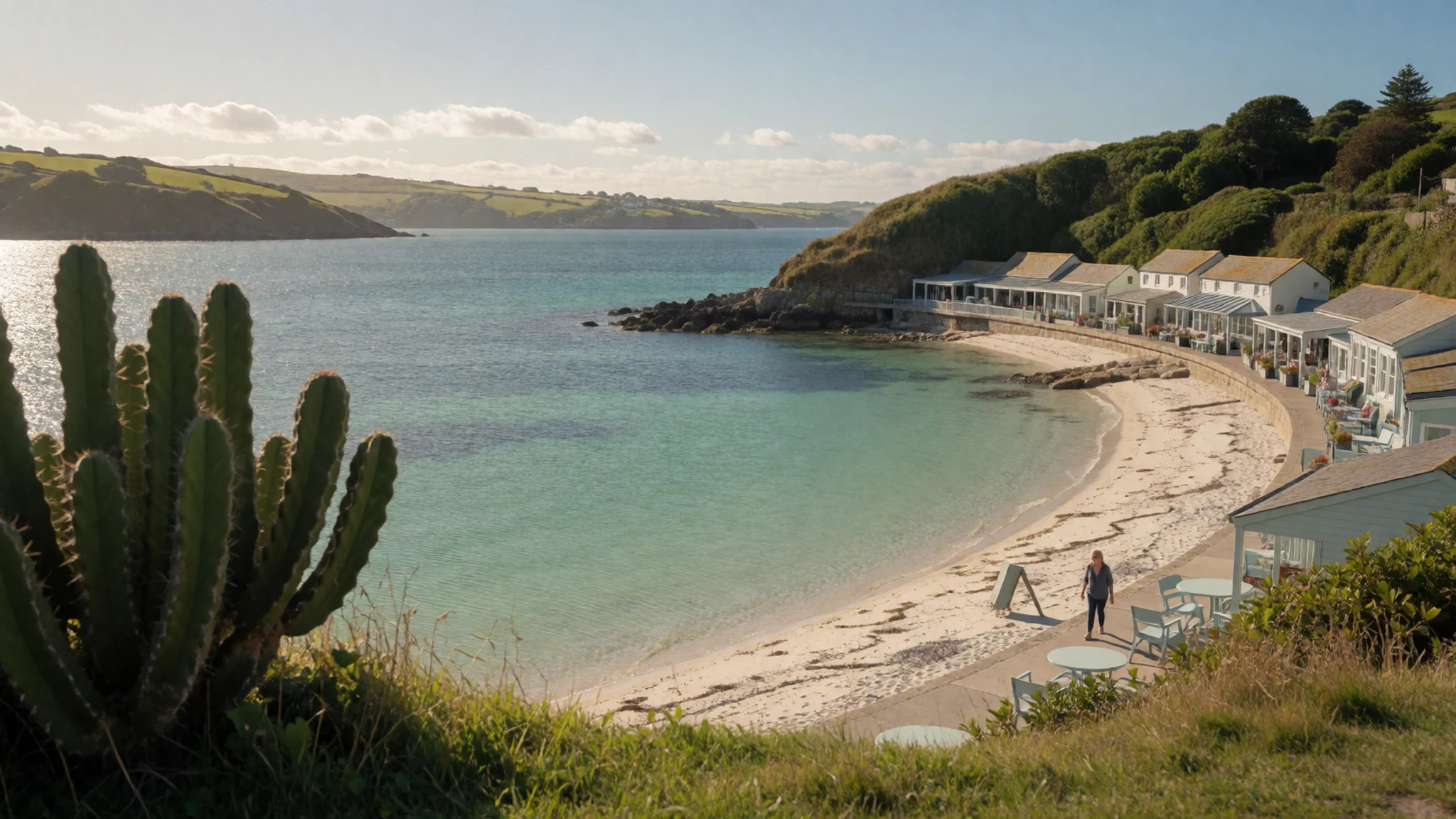
- Monk's Hill fort — Falmouth, above the bay
Another set of British defensive ruins stands above Falmouth, with views over the harbour and inland hills. It is quieter than Shirley Heights and suits travellers who like exploring overgrown stonework without a crowd. Sturdy shoes help on the uneven paths.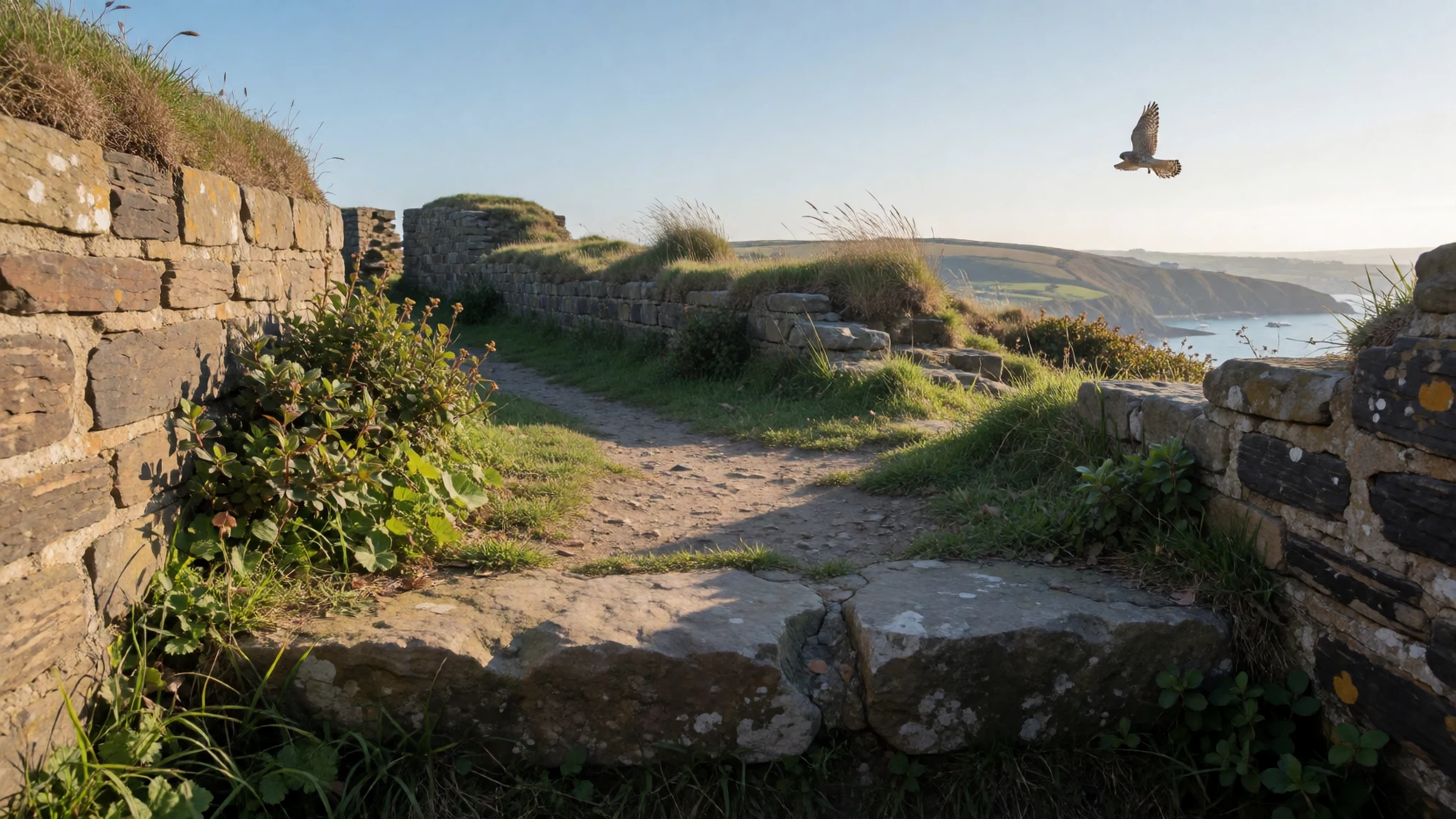
- Devil's Bridge National Park — Eastern Antigua
On the island's Atlantic side, waves have cut an arch into the limestone shore and blowholes throw spray into the air. The sea here is rough and unsuitable for swimming. It makes a good contrast to the calm harbours of the south, reached by a longer drive.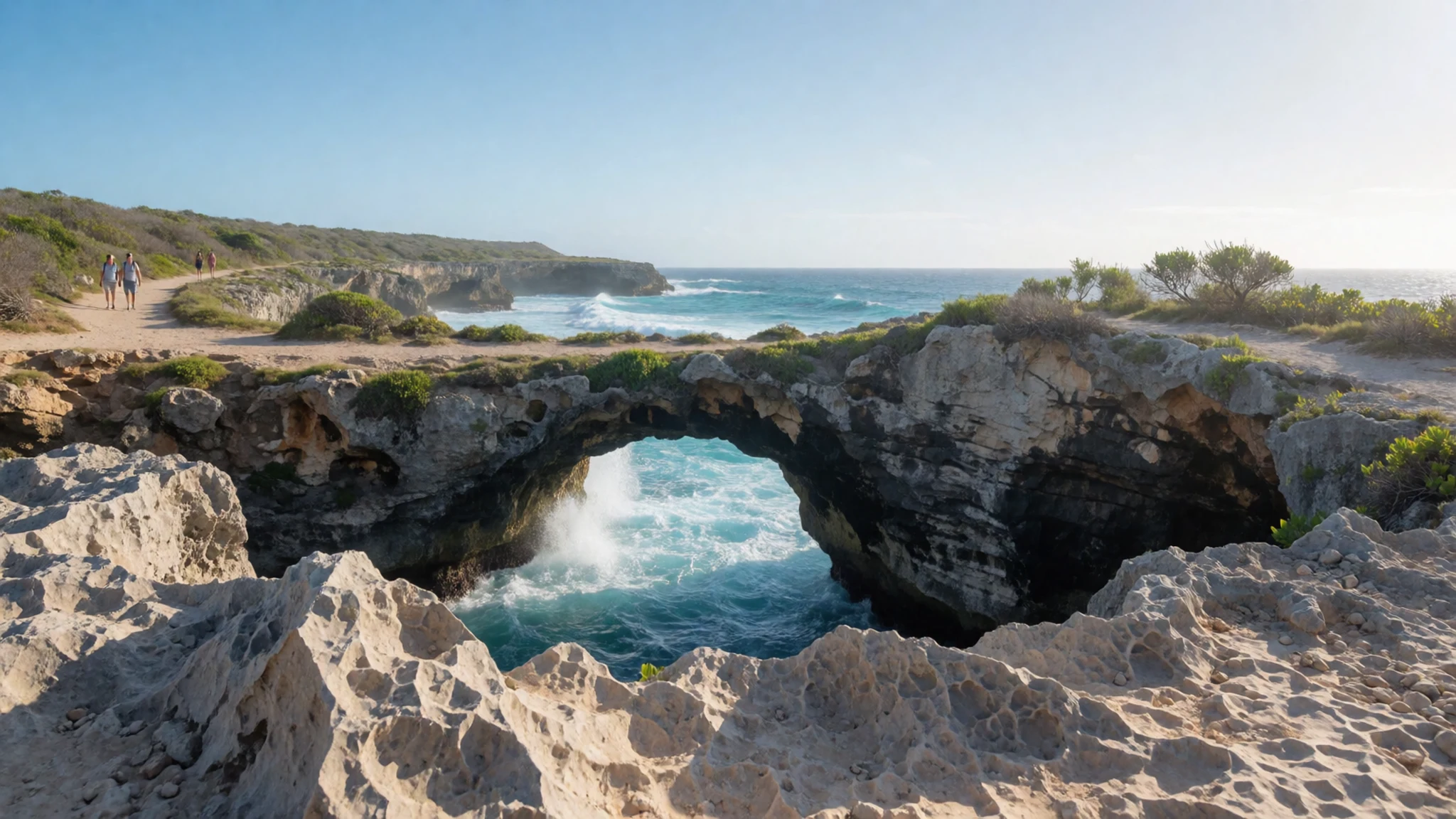
Culture
Shirley Heights sits in a country where everyday manners carry real weight. Antiguans are generally friendly and courteous, and the same courtesy is returned quickly when it is offered first. A greeting such as good morning or good afternoon comes before any question or request, whether in a shop, a taxi or a roadside stall, and please and thank you are expected as a matter of course.
Cricket is a national passion here, and the small country has produced players who are admired around the world. Mentioning the game is an easy way to start a conversation, and many locals enjoy a friendly argument about teams and matches. Music runs through island life too, from steel pans to calypso and reggae, and the hilltop gatherings at Shirley Heights are known for live bands and a barbecue atmosphere as the sun goes down.
The island's history is part of its identity. Sugar, slavery and emancipation are not distant topics, and the old plantation ruins and military sites are remembered as places where people lived and suffered as well as places of scenery. Visitors who show curiosity rather than treating them as a backdrop tend to get warmer answers.
Church matters on Sundays, and many families dress up and gather for long meals afterwards. Shops and some services may run on reduced hours, so planning ahead helps.
Greet people politely before asking for anything, and ask before photographing someone, especially at a market or a roadside barbecue.
What to wear
Shirley Heights does not have a single traditional costume that a visitor will see worn day to day. Antigua's older dress traditions grew from the Caribbean's mix of African, European and island influences, and are best seen at festivals and carnival, when bright cotton and satin outfits, beaded headpieces and elaborate feathered costumes take over the streets of St John's. Madras-style checked cotton and headwraps appear in folk performances and heritage events, rather than in ordinary life.
What people wear now is practical for heat. Light cotton shirts, linen trousers, sundresses and shorts are normal, and in towns people usually dress more neatly than visitors in swimwear might expect. On Sundays, church clothes are smart, with ironed shirts, dresses and hats. Swimwear belongs on the beach and boats, and it is common to cover up when walking through a town or entering a shop.
For Shirley Heights itself, the main concern is sun and ground. The hilltop is open, with little shade, so a hat, sunglasses and high-factor sunscreen matter at any time of year. Wear closed shoes or sturdy sandals for the stony paths around the old fortifications. The wind picks up at sunset, so a light layer is useful. Bring a small rain jacket if travelling between June and November, when showers come quickly and pass just as fast. Clothes that dry quickly are the sensible choice.
What to eat
- Fungie and pepper pot — local eateries around St John's
The national dish pairs fungie, a cornmeal mixture similar to polenta, with pepper pot, a thick stew of vegetables and meat. It is hearty, mild-spiced home cooking, best found at local eateries and Sunday family-style meals.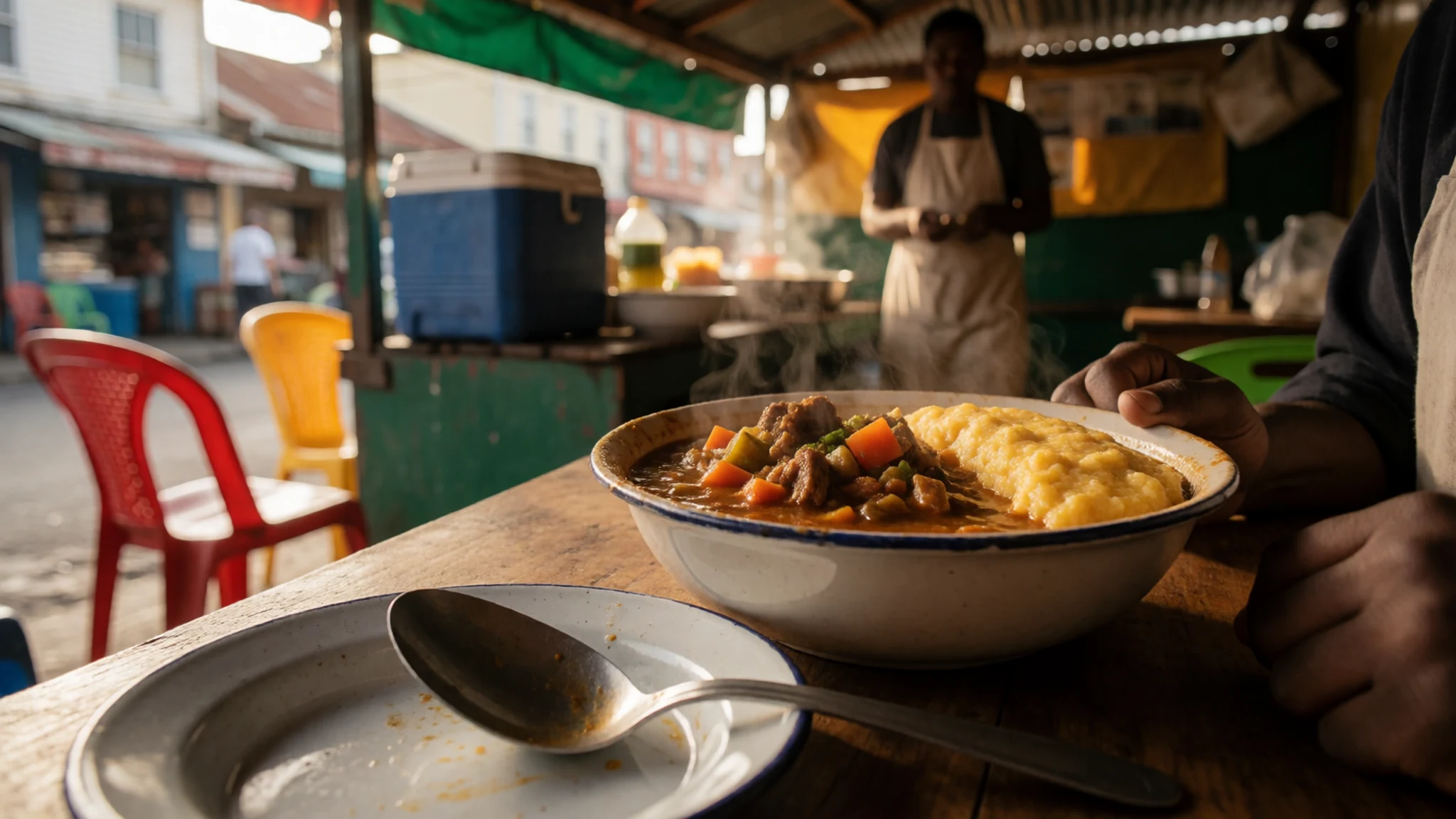
- Ducana and saltfish — local eateries and Sunday breakfast tables
Ducana is a sweet-potato and coconut dumpling, steamed in a leaf wrapper, and it is traditionally served with salted cod cooked with onions and peppers. The mix of sweet and salty is a classic island breakfast.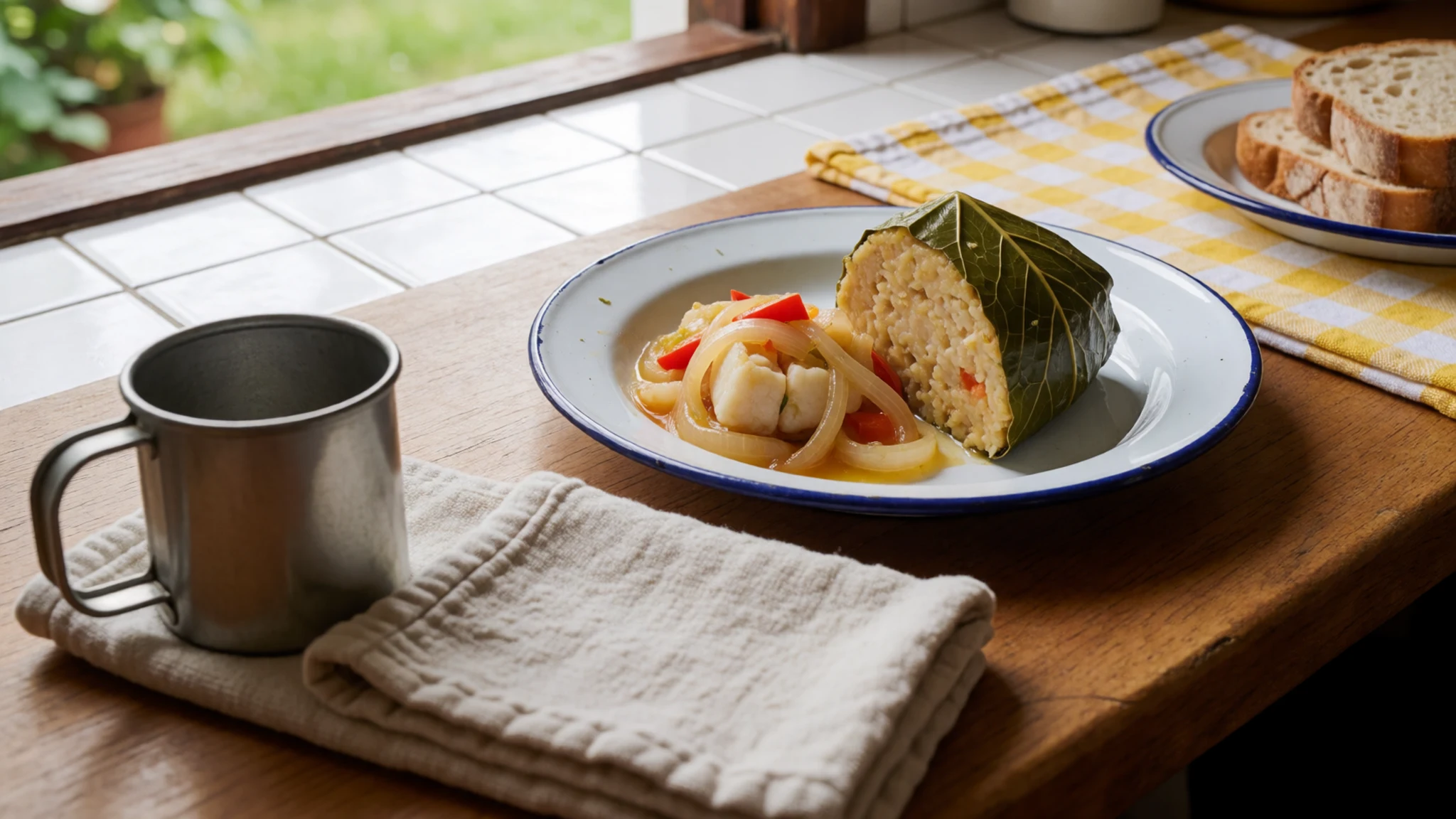
- Barbuda lobster — seafront restaurants in English Harbour and St John's
Lobster from Barbuda is grilled or served in rich sauces, and it turns up on the menus of many seafront restaurants. Seasons and supply vary, so ask what is fresh rather than assuming it is always available. - Roadside barbecue — main road junctions across the island
On Saturdays, informal grills appear at busy crossroads serving chicken, rice, dumplings and soup, sometimes with music playing. It is a casual, social way to eat and usually comes in simple takeaway portions. - Sugar cake and tamarind stew — market stalls and bakeries in St John's
Sugar cake is a chewy coconut sweet, often sold in small pieces, and tamarind stew is a tart, sticky preserve. Both are old-fashioned treats that make good snacks or small gifts.
Plan it
Best time. December to April is the drier, sunnier stretch and the busiest for visitors, with the tropical marine climate keeping temperatures steady all year. Hurricanes and tropical storms are possible from July to October, so those months carry more risk and some businesses slow down.
How long. 2–3
Getting there. Fly into V.C. Bird International Airport (ANU) on the north-east edge of St John's. From there Shirley Heights is a drive across the island to English Harbour, by taxi, hire car or organised tour; the final stretch climbs a short, winding road to the lookout.
Budget. high
Tips
- Go in the morning for quiet and cooler air, or late afternoon for sunset light and crowds
- Carry water, a hat and sunscreen, as the hilltop has little shade
- Combine the lookout with Nelson's Dockyard on the same trip
- Check the official Antigua and Barbuda tourism website for current events, entry rules and opening arrangements
- Secure bags and wallets, avoid walking with more cash than needed, and park rental cars in well-lit areas
Etiquette
- Greet people politely before asking questions or making requests
- Ask before photographing people
- Keep swimwear for the beach and cover up in towns
Nearby
Sources
- Wikidata Q21054832 (CC0)
- Wikipedia: Shirley Heights (CC BY-SA 4.0)
- Wikivoyage: Antigua and Barbuda (CC BY-SA 4.0)