Redonda
Redonda, Antigua and Barbuda
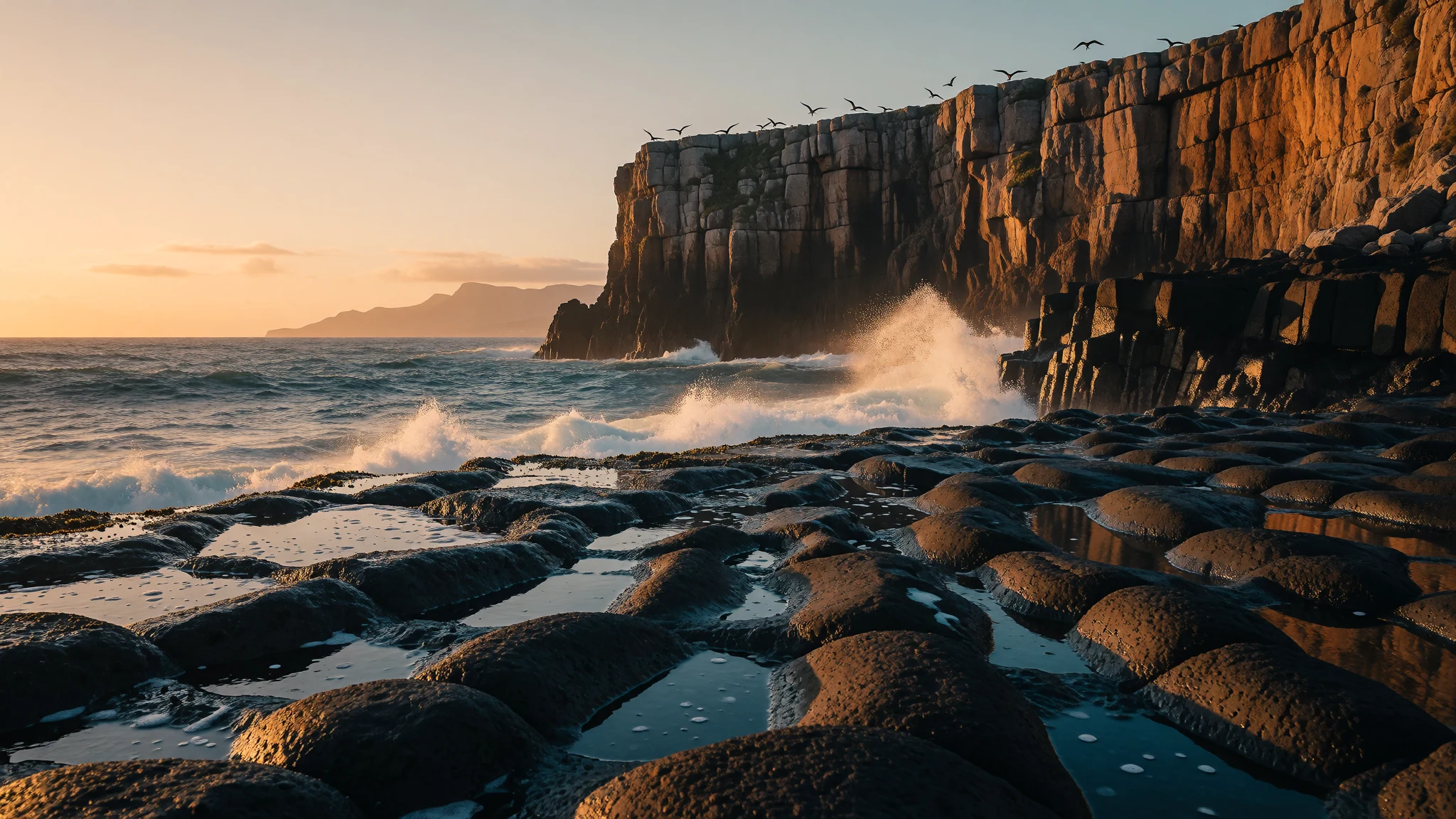
Redonda is a sheer uninhabited rock in the Leewards, seen from the sea and left to seabirds, cliffs and a literary kingdom.
The place
Redonda is a named island of Antigua and Barbuda, a steep uninhabited rock in the Leeward chain, and it does not resemble the beaches that draw people to the rest of the country. From the water it is a dark mass of cliff. The west, or leeward, coast is the face most boats follow: a wall dropping into the swell, with broken rock at the foot and almost nowhere to step ashore. Photographs from the sea show that wall in hard light, and a wider view places Montserrat on the horizon, so the island reads as a mark on a passage rather than a destination with streets.
Nothing on Redonda is arranged for a casual landing. There is no village, no pier built for visitors, and no shade to speak of once the sun is high. The surface is rough volcanic ground, cut by old mining scars and by the tracks of animals that should never have been there. Anyone who does go ashore is usually there for a purpose, a survey or a restoration crew, and even then the stay is short.
What the rock offers instead is emptiness and a living edge. Seabirds use the ledges, which is why the island's value is biological as much as scenic. The surrounding water is the real public space: a boat can circle, hold off the leeward side, and leave. That is the visit most people can honestly make. Redonda stays in Antigua and Barbuda's story because it is wild, awkward and oddly famous, not because a taxi can reach a beach there.
Its story
Redonda's fame is split between a mine and a made-up crown. The rock was worked for phosphate, the compacted residue of seabirds, and a small settlement clung to the slopes while the ore went out by ship. The workings did not last. Markets shifted, the settlement was abandoned, and the island returned to weather, with goats and rats left behind to strip the plants that had held the thin soil.
The other history is literary, and it is the one that travelled. Matthew Phipps Shiel, a novelist from Montserrat, carried the title of king of Redonda, after a tale in which his father had him crowned on the island as a boy. The title passed to the poet John Gawsworth, who treated the kingdom as a private court and handed imaginary dukedoms to writers he admired. None of this was a state. Antigua and Barbuda is the country; Redonda has no government of its own, no citizens on the rock, and no border post. The kingdom is a chain of literary claims, sometimes disputed by rival successors, and it matters because it kept an empty island in print.
What changed the ground itself was conservation, not coronation. Introduced goats and rats had grazed and hunted the place down. A restoration effort, led from Antigua with outside partners, took those animals off and let the plants and the nesting birds recover. Redonda is now looked after as a wild island rather than as a quarry or a throne. The story a visitor can trust is that mixed past: an industrial scratch that faded, a paper monarchy that never ruled, and a recent decision to leave the cliffs to wildlife.
What to see
- The island from the sea — Offshore, along the leeward coast
Redonda from the water is a single steep island with no harbour works and no beach resort spread along the foot of the cliffs. Boats keep off the rocks and let the west coast fill the view: dark stone, a broken shoreline, and open sea on every side. Clear weather keeps the cliff line sharp, and Montserrat may show in the distance.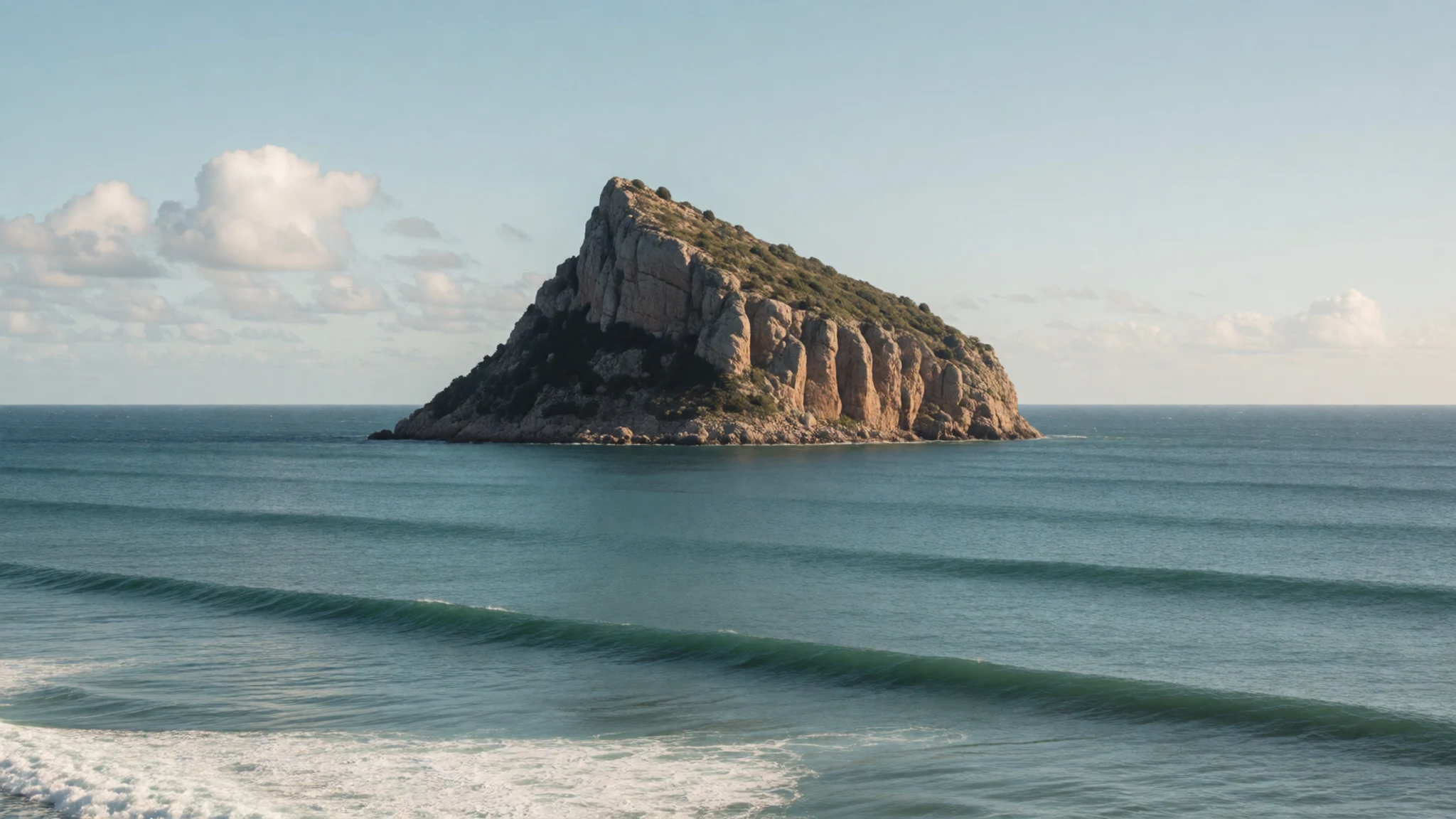
- West cliffs — West coast
The west coast of Redonda is a leeward cliff, bare enough that every ledge shows. This is the side photographers work, because the island puts its whole flank towards the channel and the light can sit on the rock without a town in the way. Boats hold off the rocks and watch the splash zone, where dry stone turns dark.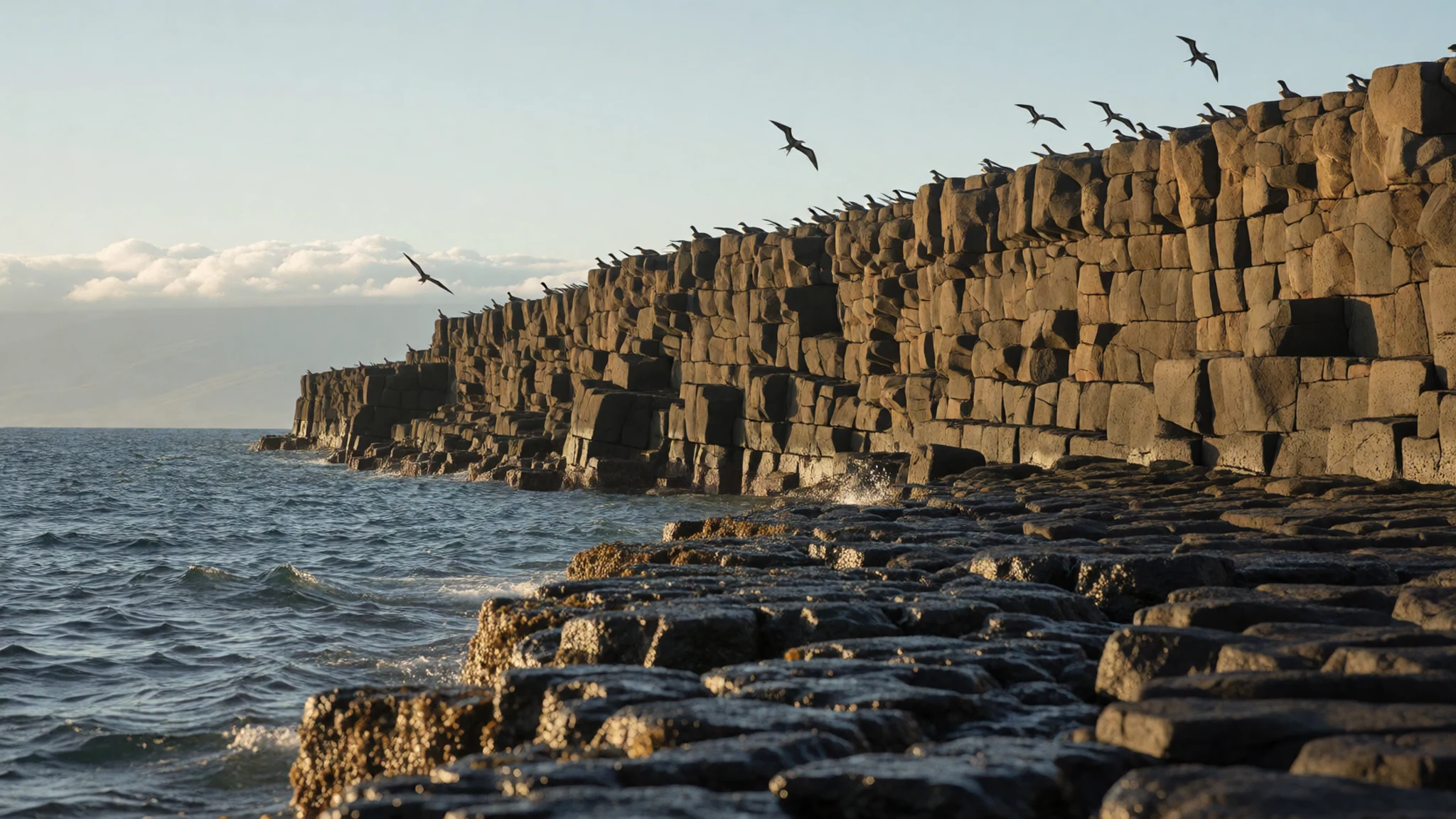
- Cliff foot — Foot of the west cliffs
A closer pass along Redonda's west coast shows the base of the cliff rather than the whole profile: blocks of rock, a narrow wash of white water, and no sand to speak of. This is why a landing is a specialist job. The sea works straight against the stone, and any step ashore depends on a rare calm and on someone who already knows the cuts in the rock.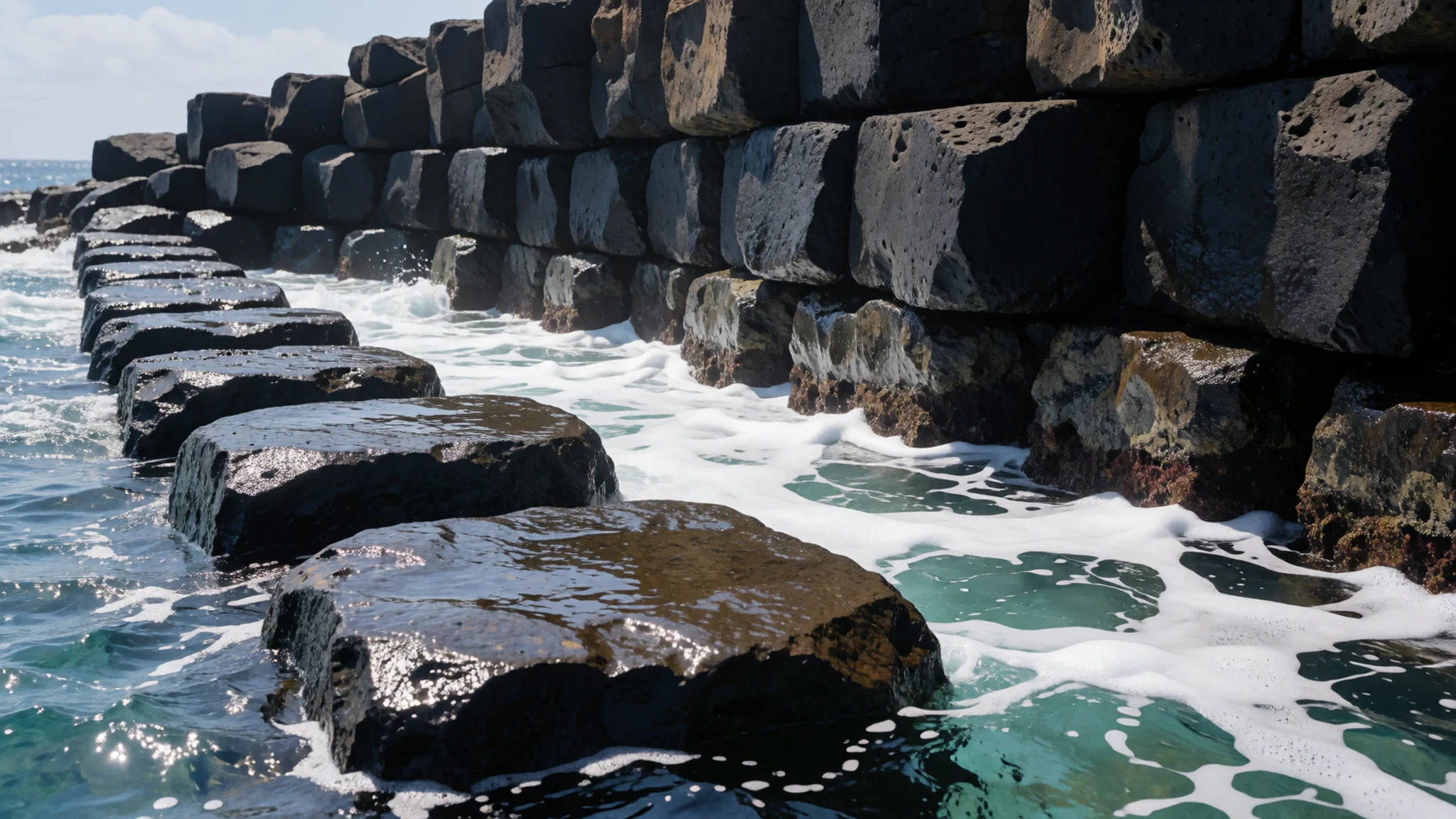
- Montserrat beyond — Seaward of the island, towards Montserrat
From a distance Redonda is a small uninhabited outline, and on a clear day Montserrat sits beyond it. The pairing puts the island in its channel. Redonda is a hard rock in a busy channel of the Leewards, with a larger, lived-on island in sight. That long view suits most travellers, from a boat that never needs to close the cliffs.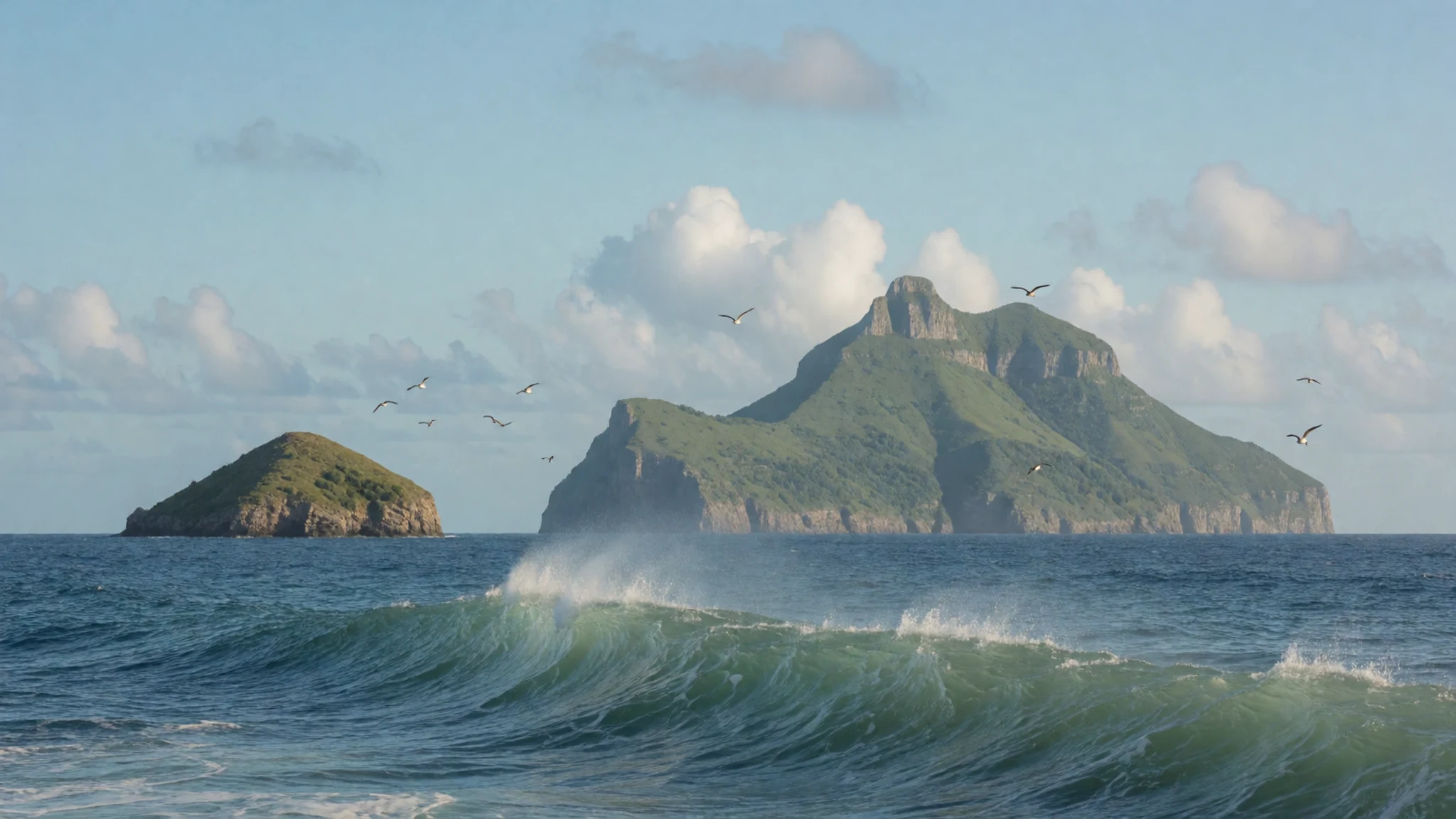
- A circuit by boat — A boat circuit of the island
A circuit of Redonda by boat shows that the far side is cliff as well, with no beach waiting. The leeward west coast is the easier place to linger; the windward side takes more swell. There is no buoyed trail and no swimming stop. The boat turns back to Antigua when the looking is done, which is the whole visit.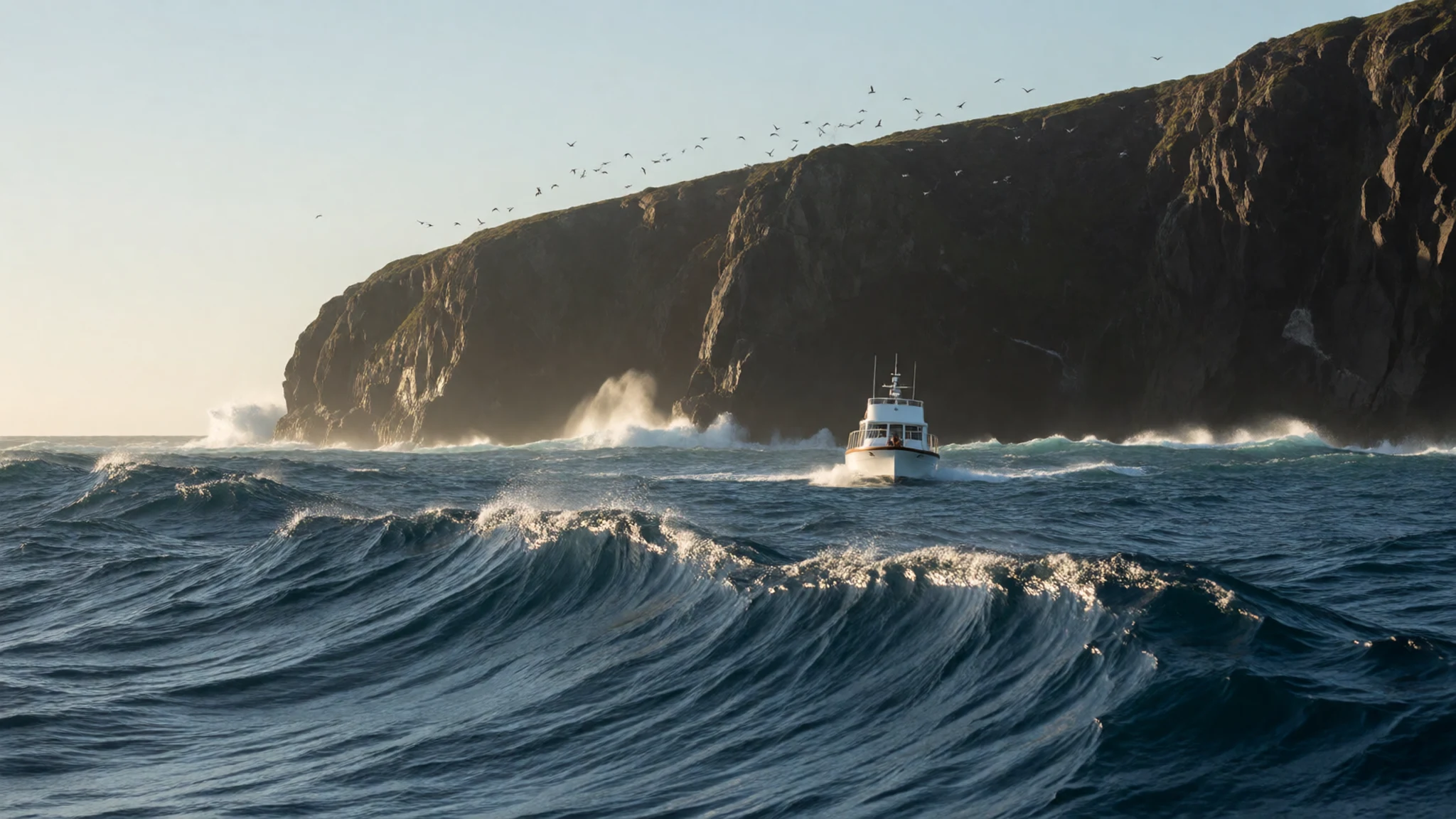
Culture
Redonda has no living community, so its culture sits in a pair of places: on the page, and on Antigua, the island people actually inhabit. The so-called kingdom is a literary pastime. Writers have passed a title around, invented peers, and argued over succession, all without taxing anyone or passing a law. Antiguans and Barbudans do not organise daily life around that game. National culture is Caribbean: Christian calendars, cricket, carnival, calypso and a Creole English that mixes African, British and island turns of phrase. Emancipation, independence and the hurricane calendar shape public memory far more than a paper crown on an empty rock. What belongs specifically to Redonda is the idea of leaving it alone. The restoration of the island, after goats and rats had thinned the vegetation, is a cultural choice as well as a scientific one: a small country deciding that this island should stay wild. Many people on Antigua treat that absence as a point of pride. If a boat does approach, do not try to put people ashore for a photograph, and do not fly a drone at nesting cliffs.
What to wear
Redonda has no weavers, no market and no festival ground, so dress on the rock is whatever a work party can stand in the sun. The clothing tradition that matters is Antigua and Barbuda's, and it is what people wear when they talk about the island from home. Carnival costume is the spectacular end: bright cotton, feathers, beads and a lot of skin, made for the road in St John's rather than for a cliff. Everyday traditional cloth is simpler cotton, worn as a headtie or a full skirt when schools and cultural groups dress for independence days. African print and a British-influenced formal cut both appear in those outfits, which are for occasions, not for the boat. People on Antigua wear light cotton and linen, T-shirts, shorts, sundresses and practical sandals, with a hat once the trade wind drops. Redonda's visitors, almost all of them on deck rather than on the rock, should copy the sensible end of that wardrobe and ignore the carnival end. A shirt with sleeves, a hat, sunglasses and a layer that blocks the wind are worth more than a swimsuit, because the outing is a passage, not a swim stop. Footwear should grip a wet deck. If a permitted landing is ever on offer, add long trousers and closed shoes: the ground is loose, sharp and full of scrub, and bare legs fare badly.
What to eat
- Fungee and pepperpot — Cookshops around St John's and the public market
Fungee and pepperpot is the plate to eat on Antigua after a day off Redonda: a firm cornmeal dumpling beside a peppery stew of salt beef or pig tail. Find it in a cookshop around St John's or at the public market. The rock has no kitchen.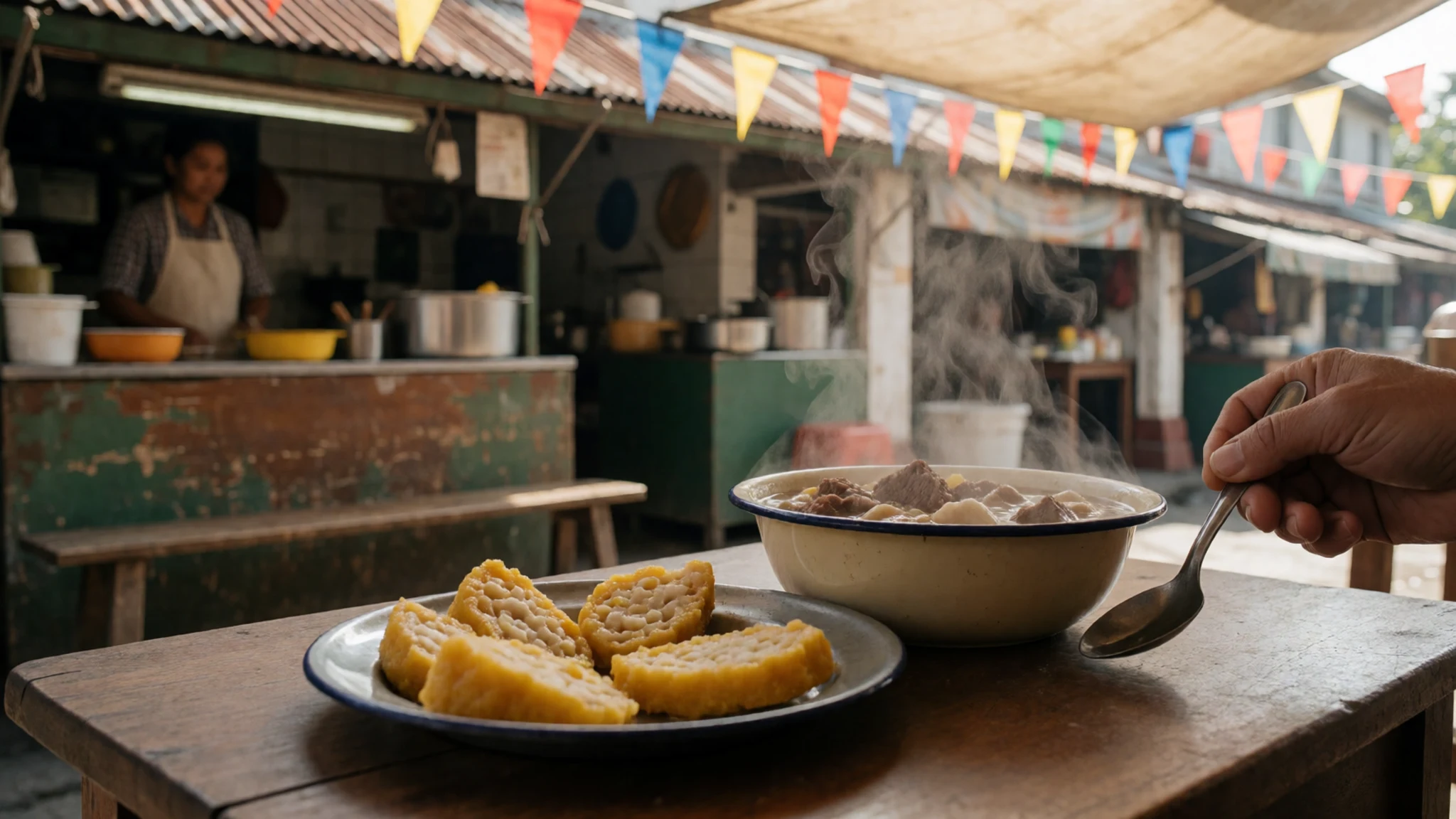
- Ducana — St John's public market
Ducana is the sweet boiled pudding to carry off Antigua towards Redonda: grated sweet potato and coconut, spiced, wrapped in a leaf and cooked until firm. Vendors sell it at the St John's public market, often beside saltfish.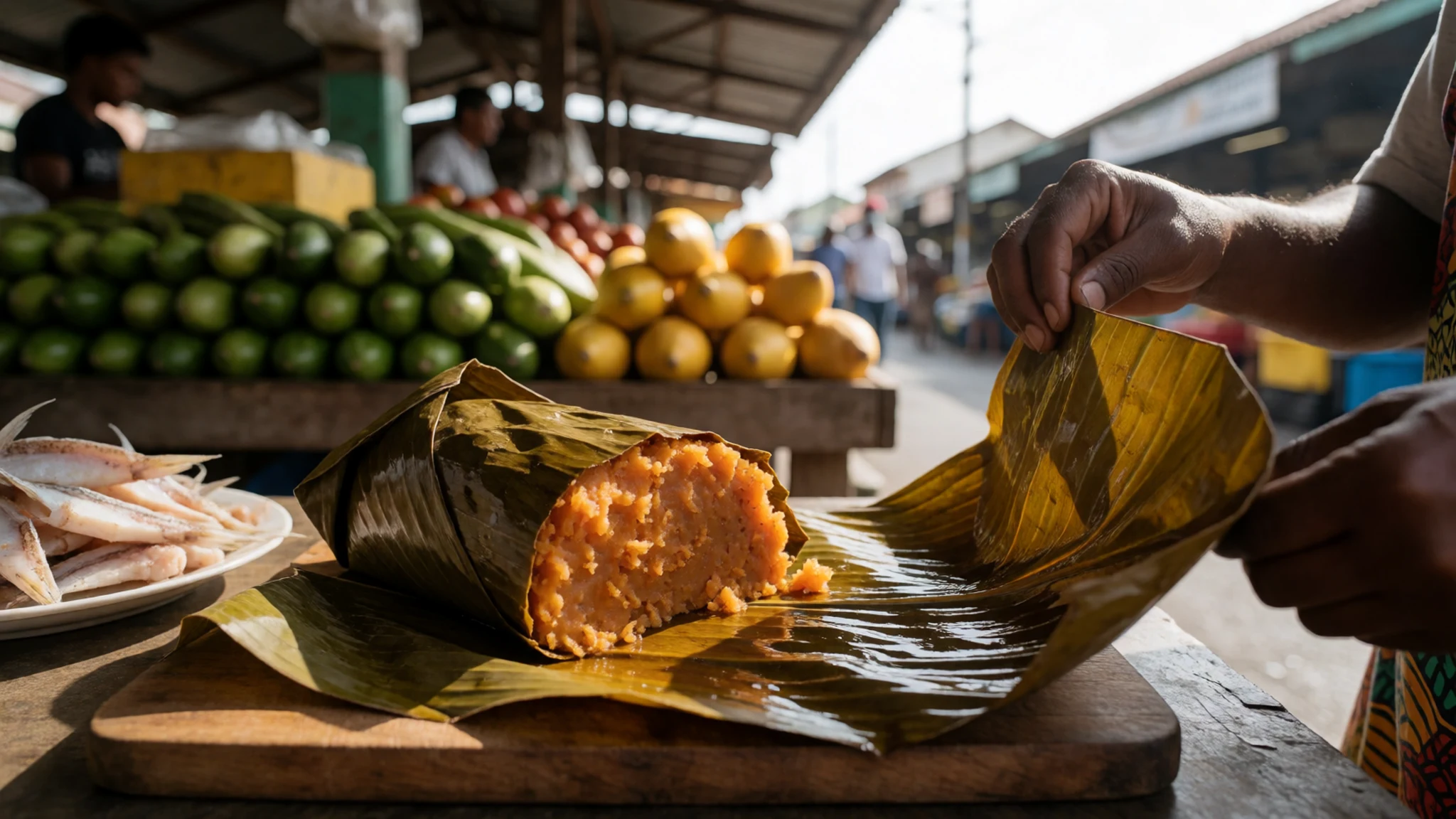
- Goat water — Village cookshops and weekend stalls around St John's
Goat water is the goat stew Antiguans share at a fete, and the bowl to seek on Antigua before or after Redonda, with bread and a clove-warm gravy. Village cookshops and weekend stalls around St John's are the places. - Saltfish — St John's public market and nearby lunch rooms
Saltfish is dried cod fried or stewed with onion, pepper and tomato, the everyday plate on Antigua when Redonda is only a boat ride away. The public market in St John's and small lunch rooms nearby sell it by the plate. - Antigua black pineapple — St John's market and roadside stalls
The Antigua black pineapple is a local variety sold at the St John's market, and the fruit to take on a boat towards Redonda. It does not grow on the rock, which has no farms. A cut fruit from a stall travels; a whole one does not.
Plan it
Best time. The drier, more settled part of the year suits a boat; hurricane season is a poor time to approach an exposed rock with no shelter. Check a current marine forecast before leaving Antigua, because Redonda offers no harbour if the weather turns.
How long. 1–2
Getting there. Fly into V. C. Bird International Airport on Antigua, then arrange a boat with a licensed operator in Antigua. Redonda has no scheduled ferry and no airstrip. The last leg is a daylight sea passage, usually along the west coast. Montserrat shows in the distance but is not the usual departure point.
Budget. high
Tips
- Check the marine forecast the day before, and stay in port if the swell is heavy.
- Book the boat ahead in the busy season; this is not a walk-up outing.
- Carry more drinking water than a normal outing needs, because Redonda has none.
- Take cash for cookshops and the market on Antigua; larger places take cards.
- Set out early enough that the return to Antigua is in daylight.
Etiquette
- Do not land without permission; Redonda is kept for wildlife.
- Stay clear of nesting cliffs and do not fly a drone at birds.
- Ask before photographing people on the boat or in the harbour.
- If the day includes a church on Antigua, cover shoulders and knees.
Nearby
Sources
- Wikidata (CC0)
- Wikipedia (CC BY-SA 4.0)
- Wikivoyage (CC BY-SA 4.0)